🚀NEW COURSEVibe Coding AI Apps with Claude Code 🤖✨Enroll now
DAIR.AI · Curated weekly since April 2023

AI Papers of the Week

Every paper worth reading in AI, hand-picked one week at a time.

1,762
Papers
176
Weekly issues
2023
Since
614 papers · ReasoningClear filters →
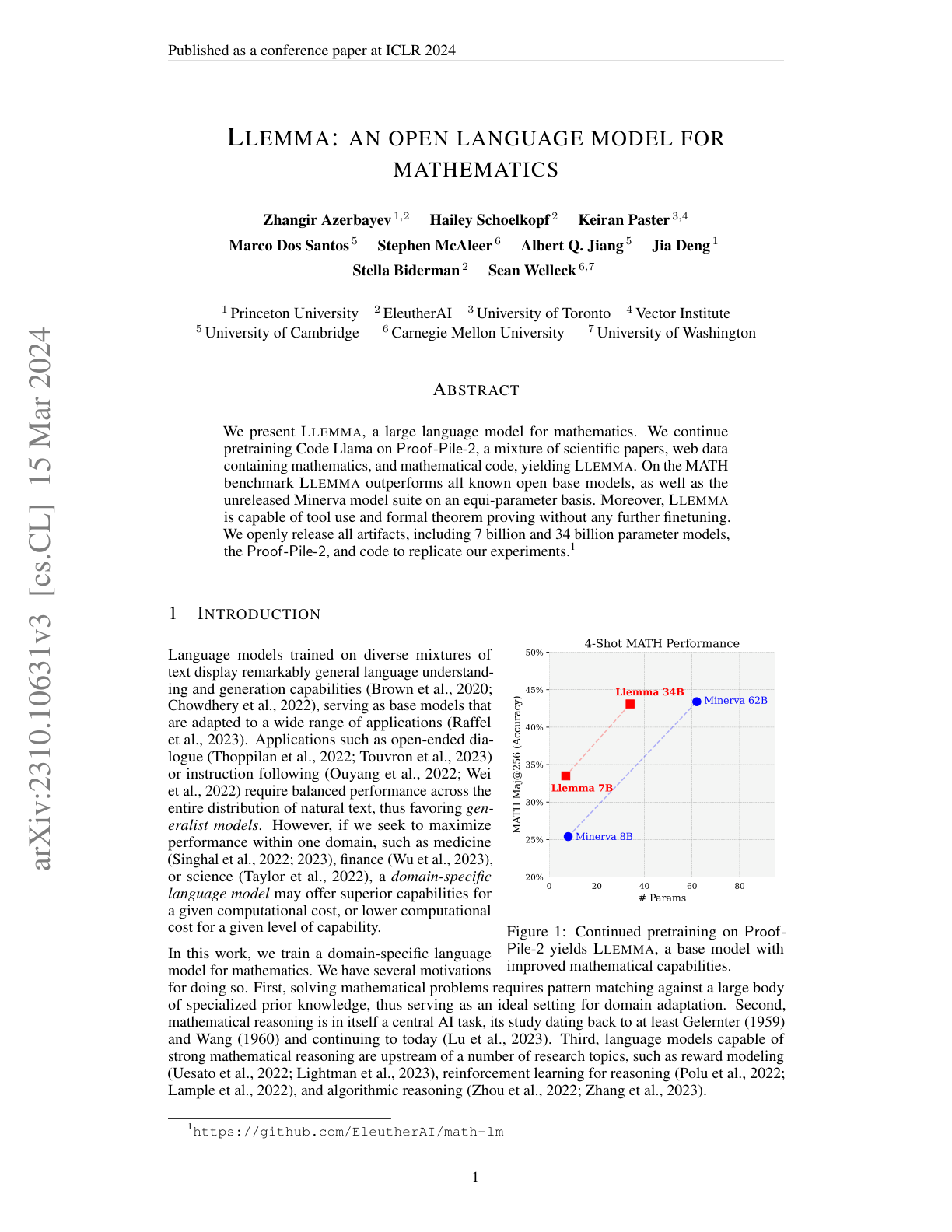
Measuring Higher Level Mathematical Reasoning

Measuring Higher Level Mathematical Reasoning

introduces Putnam-AXIOM, a new math reasoning benchmark with 236 Putnam Competition problems and 52 variations; even the best model considered (OpenAI's o1-preview) achieves only 41.95% accuracy on original problems and performs significantly worse on variations.

385Reasoning
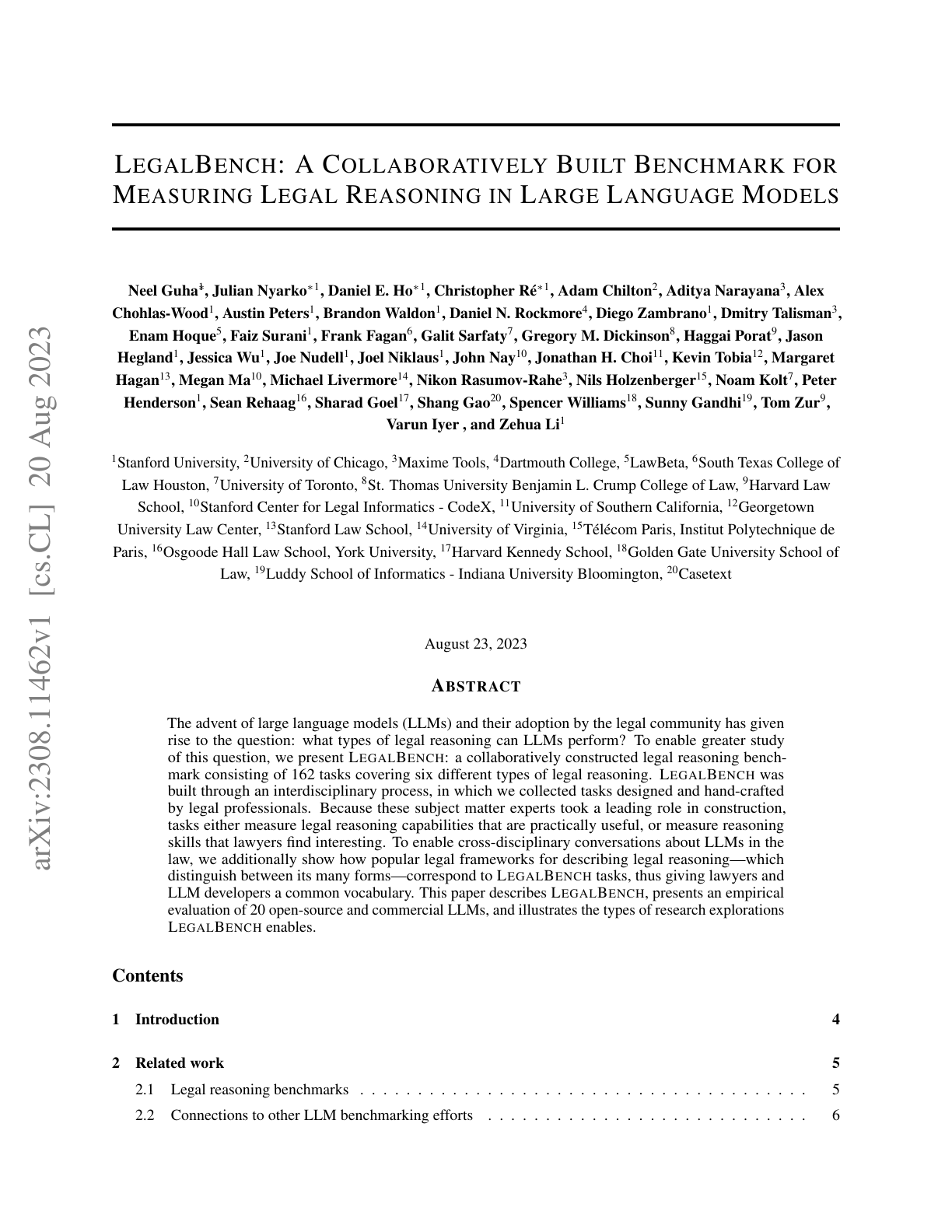
MEDEC

MEDEC

introduces MEDEC, a publicly available benchmark for medical error detection and correction in clinical notes, covering five types of errors (Diagnosis, Management, Treatment, Pharmacotherapy, and Causal Organism); it consists of 3,848 clinical texts, including 488 clinical notes from three US hospital systems; experimental results shows that Cluade 3.5 Sonnet performs better at detecting errors while o1-preview is better at correcting errors.

386Evaluation
HuatuoGPT-o1

HuatuoGPT-o1

presents a novel approach to improving medical reasoning in language models by using a medical verifier to validate model outputs and guide the development of complex reasoning abilities; the system employs a two-stage approach combining fine-tuning and reinforcement learning with verifier-based rewards, achieving superior performance over existing models while using only 40,000 verifiable medical problems.

387Reasoning
Empowering MLLM with o1-like Reasoning and Reflection

Empowering MLLM with o1-like Reasoning and Reflection

proposes a new learning-to-reason method called CoMCTS that enables multimodal language models to develop step-by-step reasoning capabilities by leveraging collective knowledge from multiple models; the approach was used to create Mulberry-260k, a dataset with explicit reasoning trees, which was then used to train the Mulberry model series; the method demonstrates strong performance on benchmarks, with the models showing improved reasoning and reflection capabilities.

388Reasoning
DRT-o1

DRT-o1

applies long chain-of-thought reasoning to machine translation, particularly for handling metaphors and similes across different cultures; the system uses a multi-agent framework with a translator working iteratively with an advisor and evaluator to produce better translations; testing with Qwen2.5 models showed significant improvements in BLEU and CometScore metrics, with DRT-o1-7B outperforming larger models like QwQ-32B-Preview.

389Agents
A Survey of Mathematical Reasoning in the Era of Multimodal LLMs

A Survey of Mathematical Reasoning in the Era of Multimodal LLMs

presents a comprehensive survey analyzing mathematical reasoning capabilities in multimodal large language models (MLLMs), covering benchmarks, methodologies, and challenges across 200+ studies since 2021.

390Reasoning
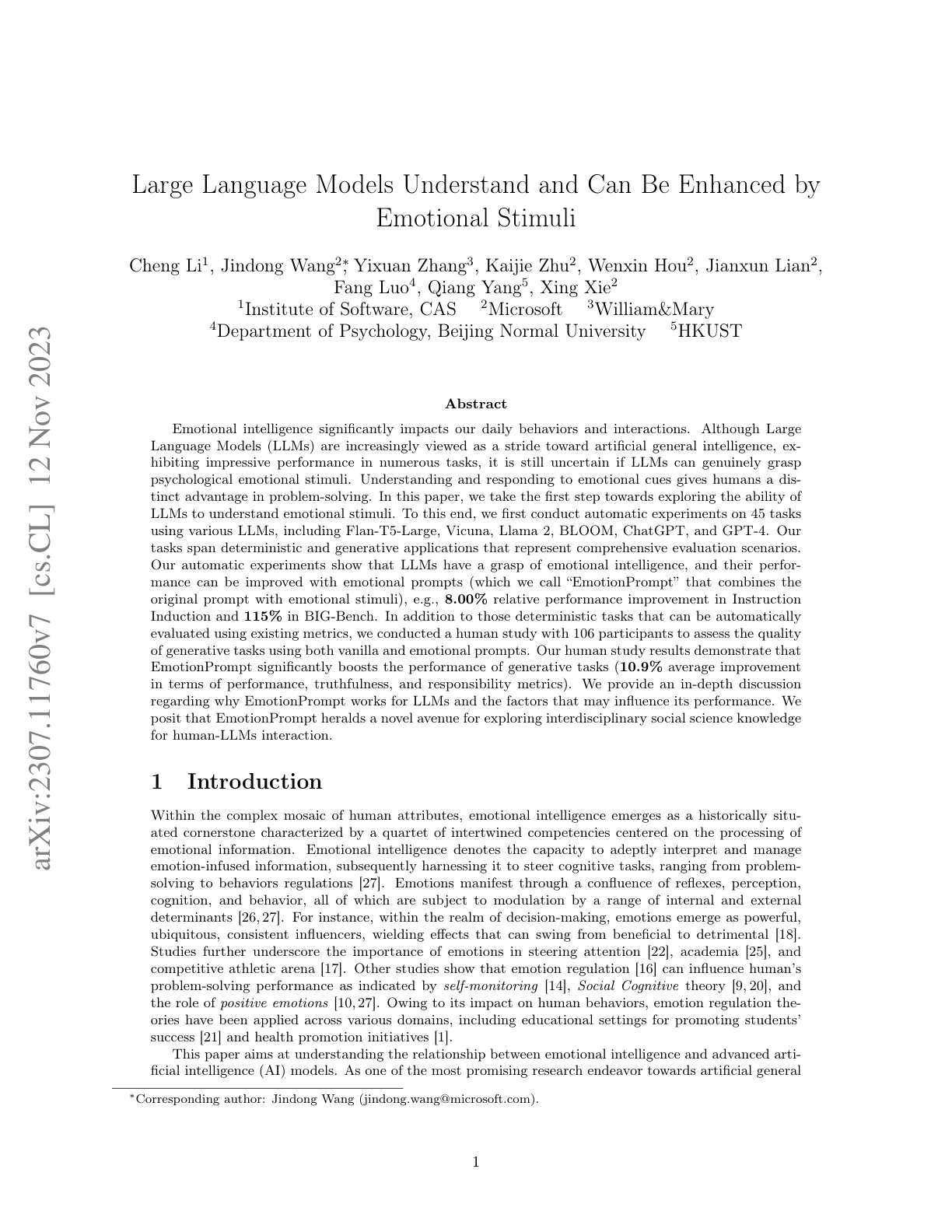
Training LLMs to Reason in a Continuous Latent Space

Training LLMs to Reason in a Continuous Latent Space

presents Coconut (Chain of Continuous Thought), a novel paradigm that enables LLMs to reason in continuous latent space rather than natural language; Coconut takes the last hidden state of the LLM as the reasoning state and feeds it back to the LLM as the subsequent input embedding directly in the continuous space; this leads to what the authors refer to as "continuous thought" which augments an LLM's capability on reasoning tasks; it demonstrates improved performance on complex reasoning tasks through emergent breadth-first search capabilities.

391Reasoning
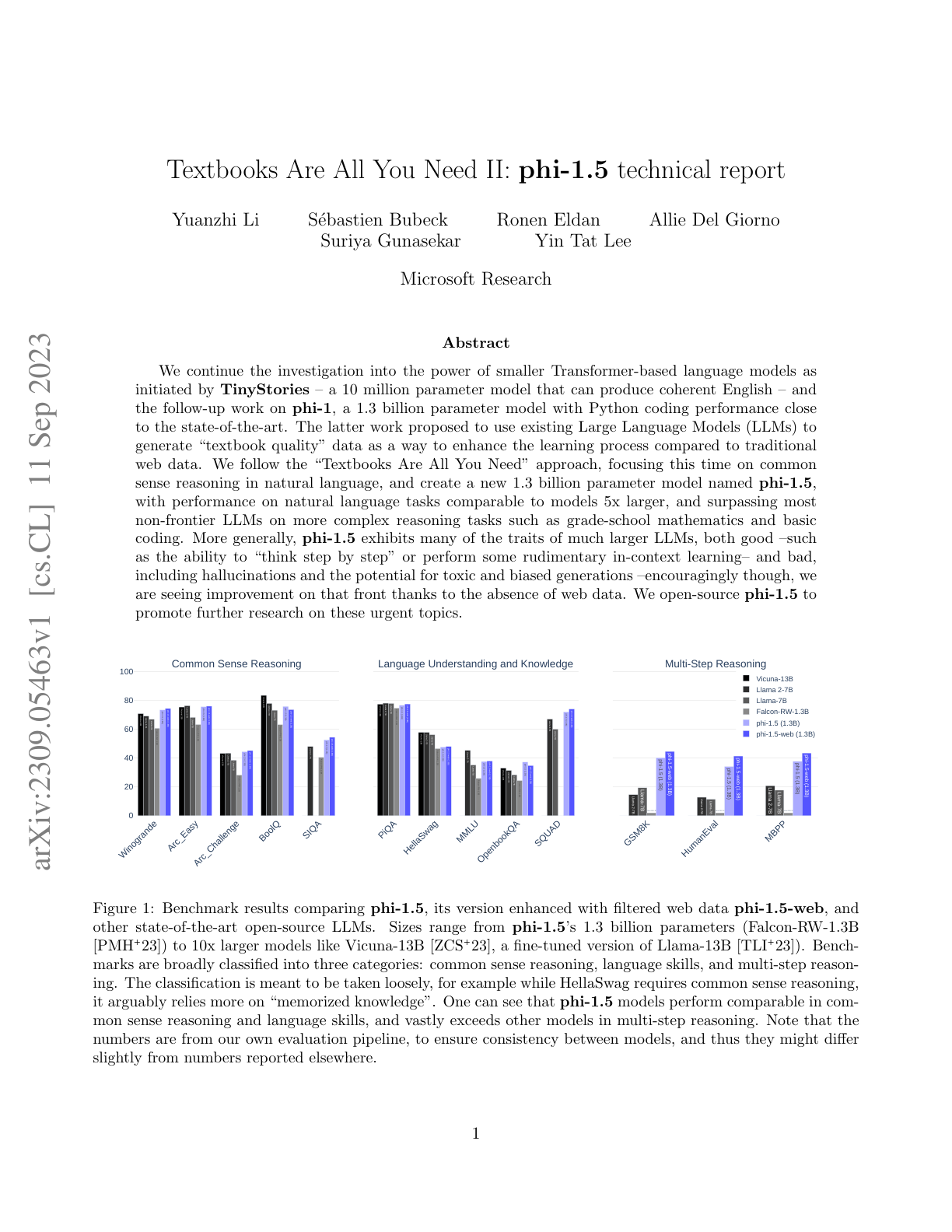
Phi-4 Technical Report

Phi-4 Technical Report

presents phi-4, a 14B model that surpasses its teacher model on STEM-QA capabilities. It also reports strong performance on reasoning-focused benchmarks due to improved data, training curriculum, and innovations in the post-training scheme.

392Evaluation
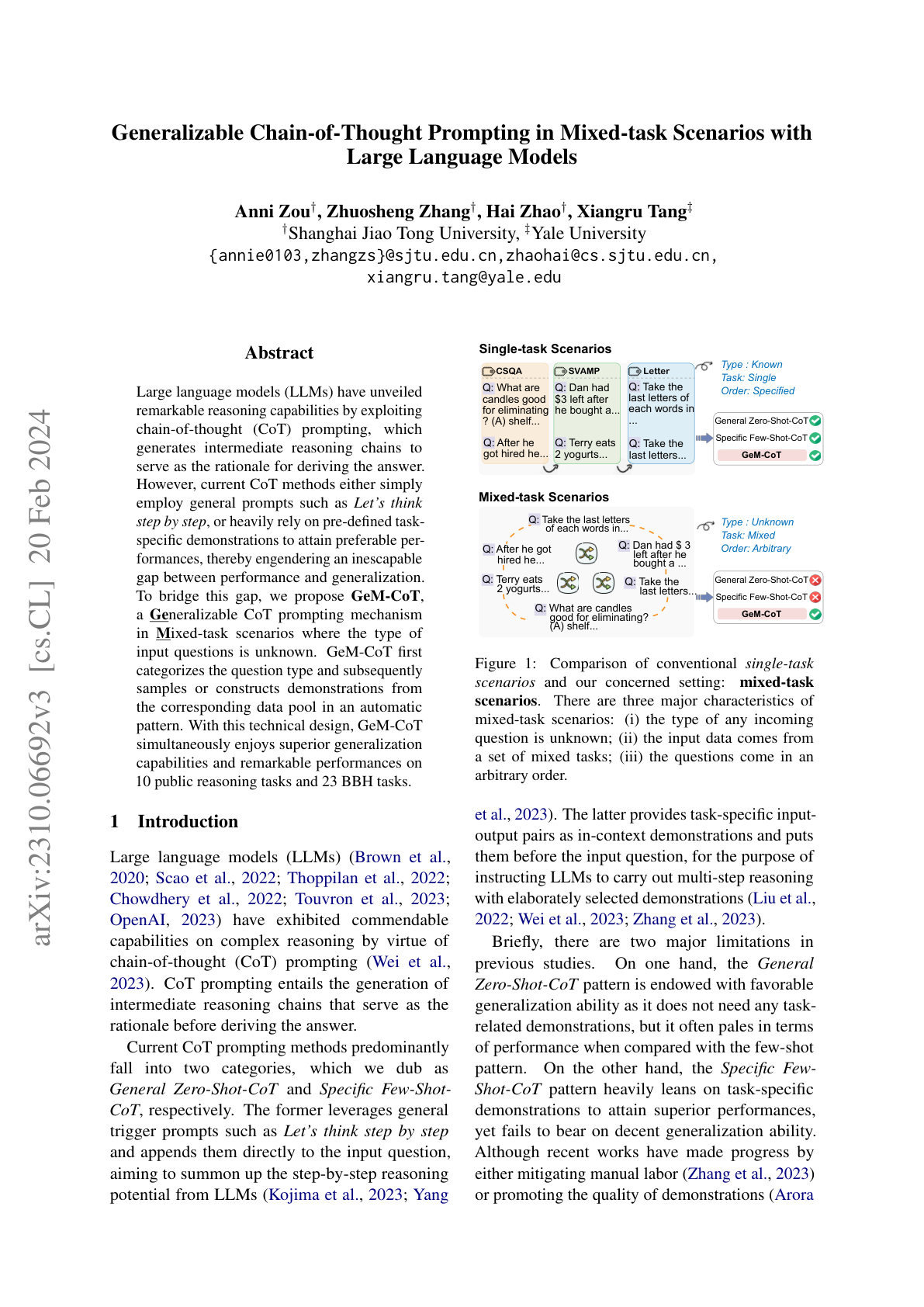
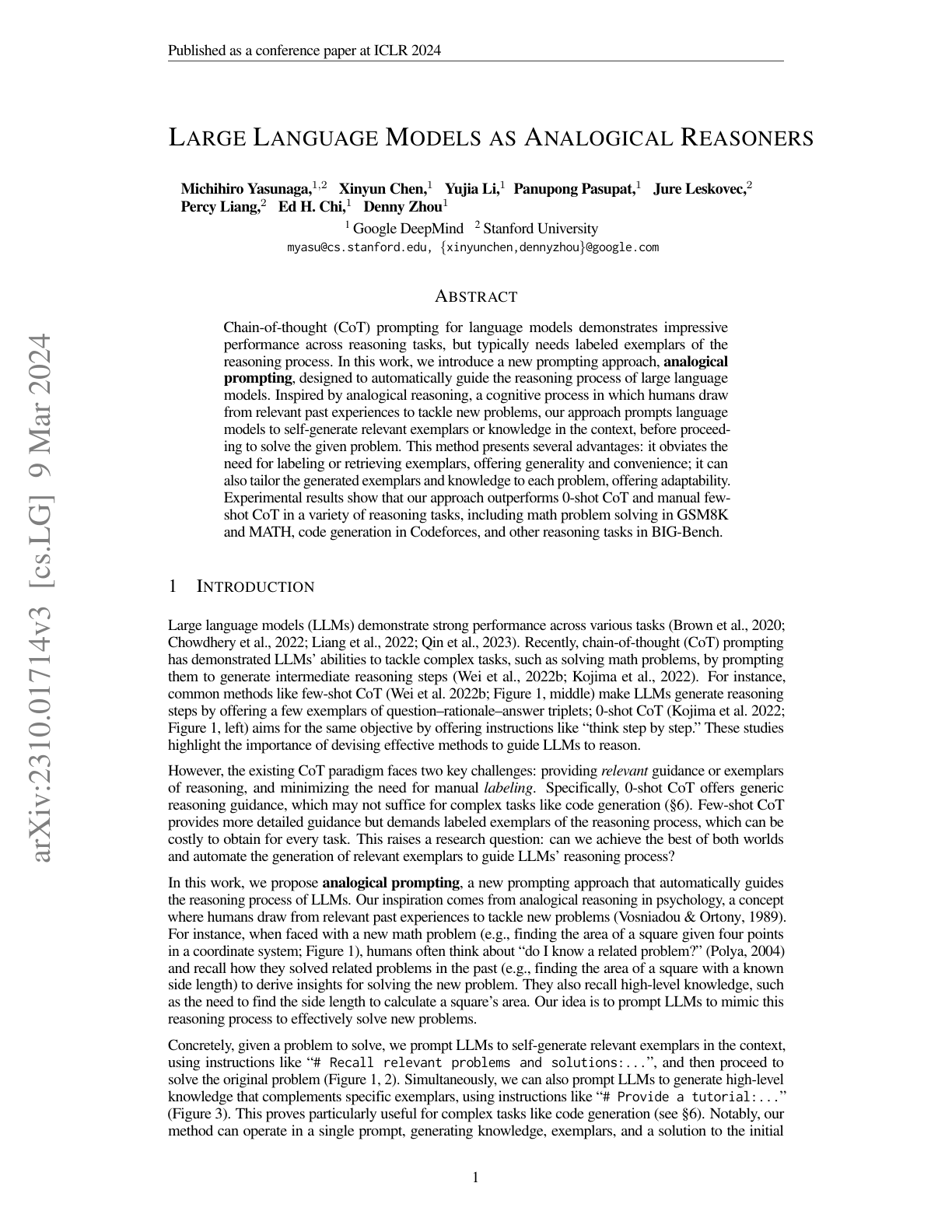
AutoReason Improves Multi-step Reasoning

AutoReason Improves Multi-step Reasoning

proposes a method to automatically generate rationales for queries using CoT prompting; this transforms zero-shot queries into few-shot reasoning traces which are used as CoT exemplars by the LLM; claims to improve reasoning in weaker LLMs.

393Reasoning
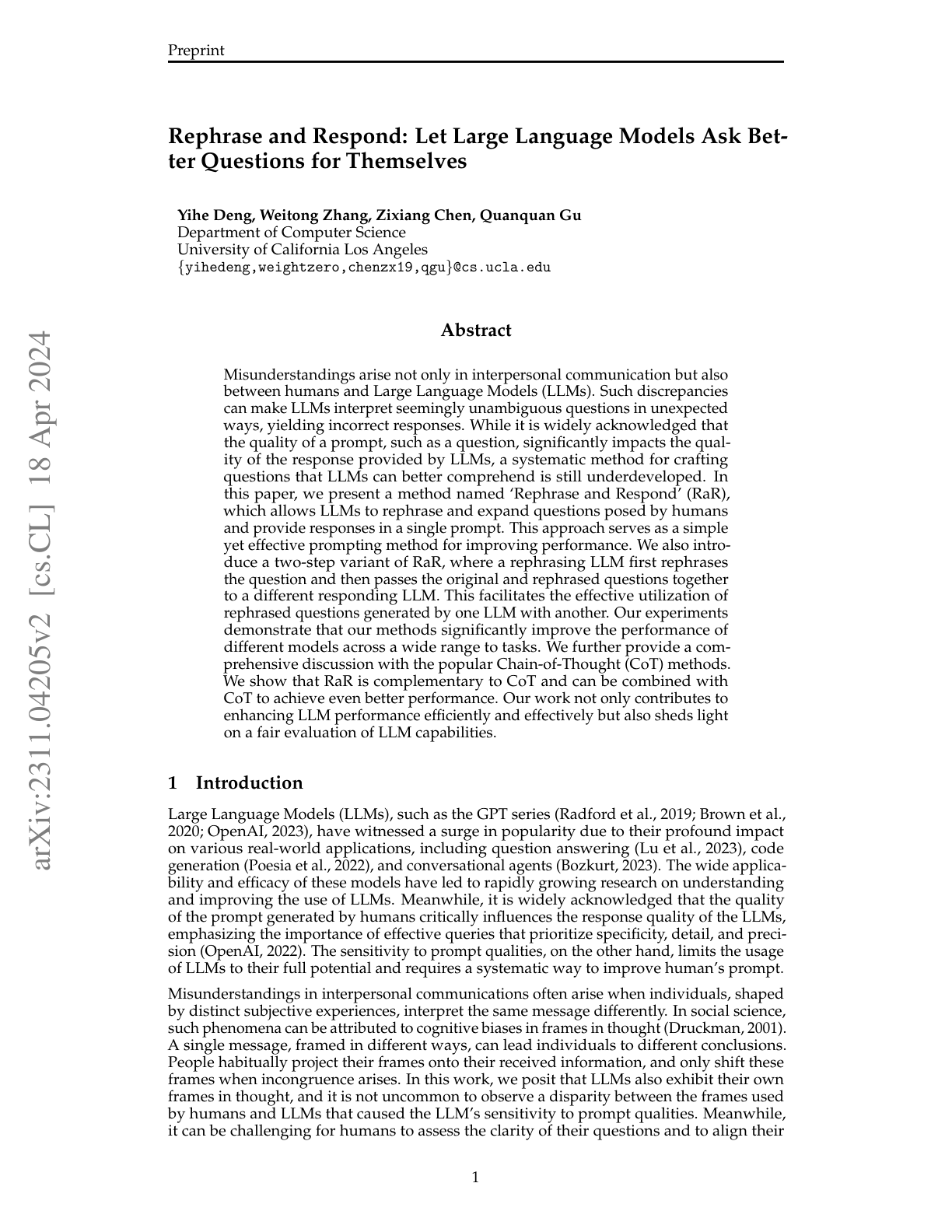
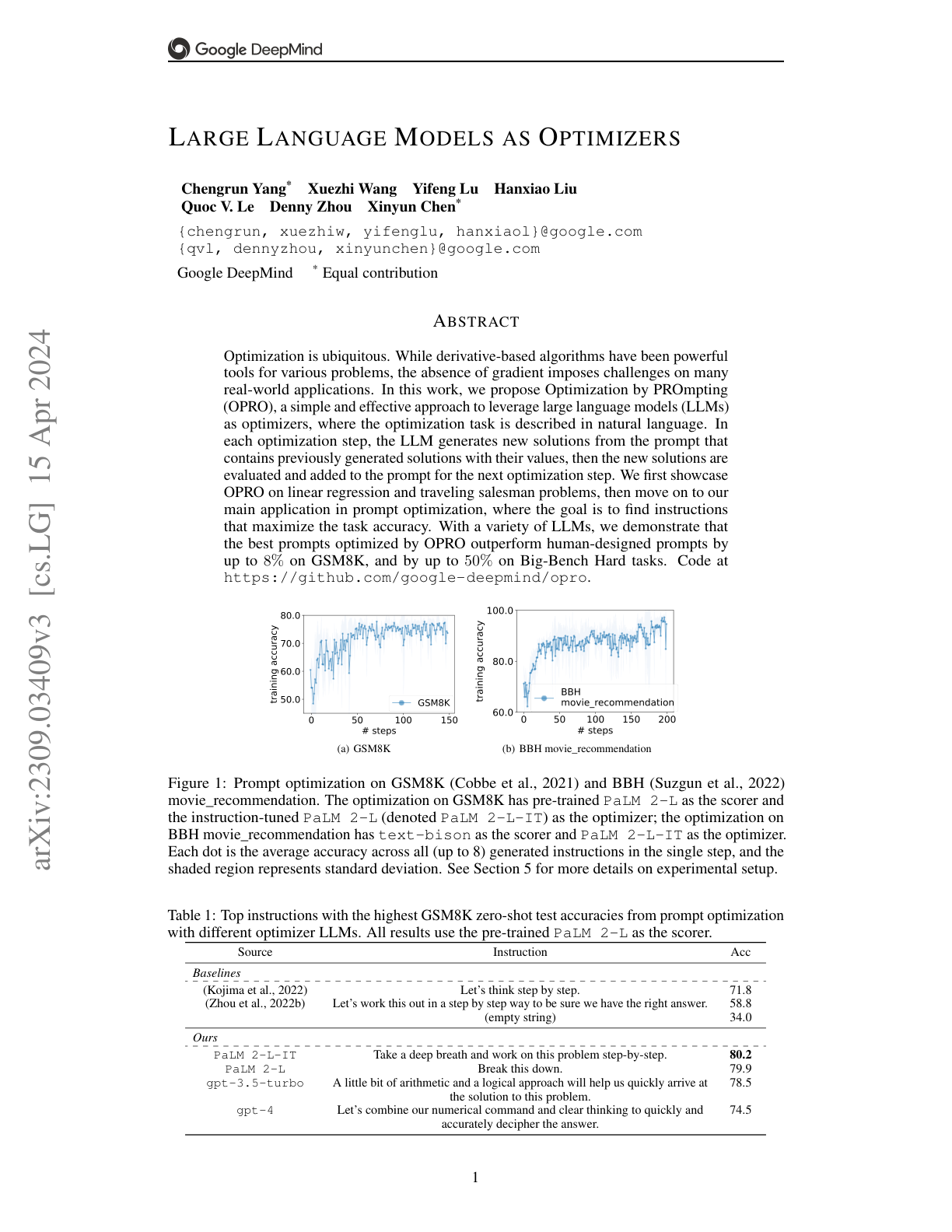
Does RLHF Scale?

Does RLHF Scale?

This new paper explores the impacts of key components in the RLHF framework. Summary of main findings: 1) RLHF doesn't scale as effectively as pretraining in LLMs, with larger policy models benefiting less from RLHF when using a fixed reward model, 2) when increasing the number of responses sampled per prompt during policy training, performance improves initially but plateaus quickly, typically around 4-8 samples, 3) using larger reward models leads to better performance in reasoning tasks, but the improvements can be inconsistent across different types of tasks, and 4) increasing training data diversity for reward models is more effective than increasing response diversity per prompt, but policy training shows diminishing returns after the early stages regardless of additional data.

394Reinforcement Learning
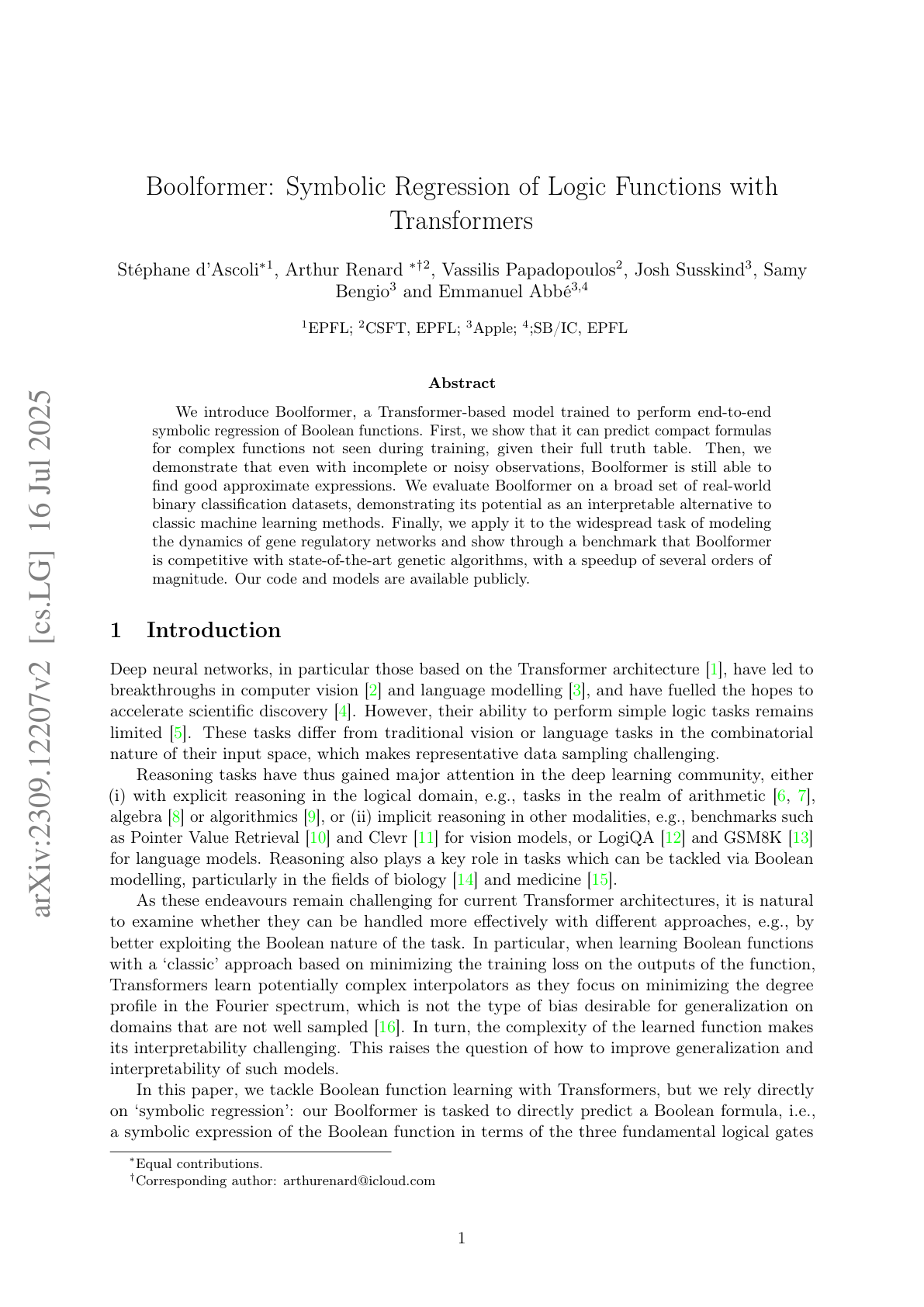
OpenAI o1

OpenAI o1

a model series trained with large-scale reinforcement learning to reason using chain of thought; o1 shows significant improvements across benchmarks related to math, code, and science; o1 is claimed to be 50% faster in generating thinking steps than o1-preview; results demonstrate that o1 is significantly better at reasoning tasks and produces more comprehensive and reliable responses.

395Reasoning
Reverse Thinking

Reverse Thinking

shows that training LLMs to learn "reverse thinking" helps to improve performance in commonsense, math, and logical reasoning tasks. It claims to outperform a standard fine-tuning method trained on 10x more forward reasoning.

396Reasoning
ALAMA

ALAMA

a new framework that helps language agents automatically learn when to use different mechanisms (ReAct, CoT, Reflection, etc.) for automatically completing tasks, improving on current approaches that use fixed or predefined mechanisms; the framework adaptively activates the appropriate mechanisms according to the potential characteristics of the task; experimental results demonstrate significant improvements in downstream agent tasks, including mathematical reasoning and knowledge-intensive reasoning.

397Reasoning
Retrieval-Augmented Reasoning for LLMs

Retrieval-Augmented Reasoning for LLMs

extends the rStar reasoning framework to enhance reasoning accuracy and factual reliability of LLMs; it leverages a Monte Carlos Tree Search (MCTS) framework with explicit retrieval-augmented reasoning to produce multiple candidate reasoning trajectories; then it leverages a retrieval-augmented factuality scorer to evaluate the factual accuracy of the reasoning trajectories; the trajectory with the highest factuality score is selected as the final answer by the system; on medical reasoning tasks, RARE (which uses Llama 3.1) surpasses larger models such as GPT-4; on commonsense reasoning tasks, RARE outperformed Claude-3.5 Sonnet and GPT-4o-mini, achieving performance competitive with GPT-4o.

398Retrieval
DataLab

DataLab

a unified business intelligence platform powered by LLM-based agents that integrates task planning, reasoning, and computational notebooks to streamline the entire BI workflow; the system achieves SOTA performance on research benchmarks and demonstrates significant improvements in accuracy and efficiency on real enterprise data from Tencent; achieves up to a 58.58% increase in accuracy and a 61.65% reduction in token cost on enterprise-specific BI tasks.

399Agents
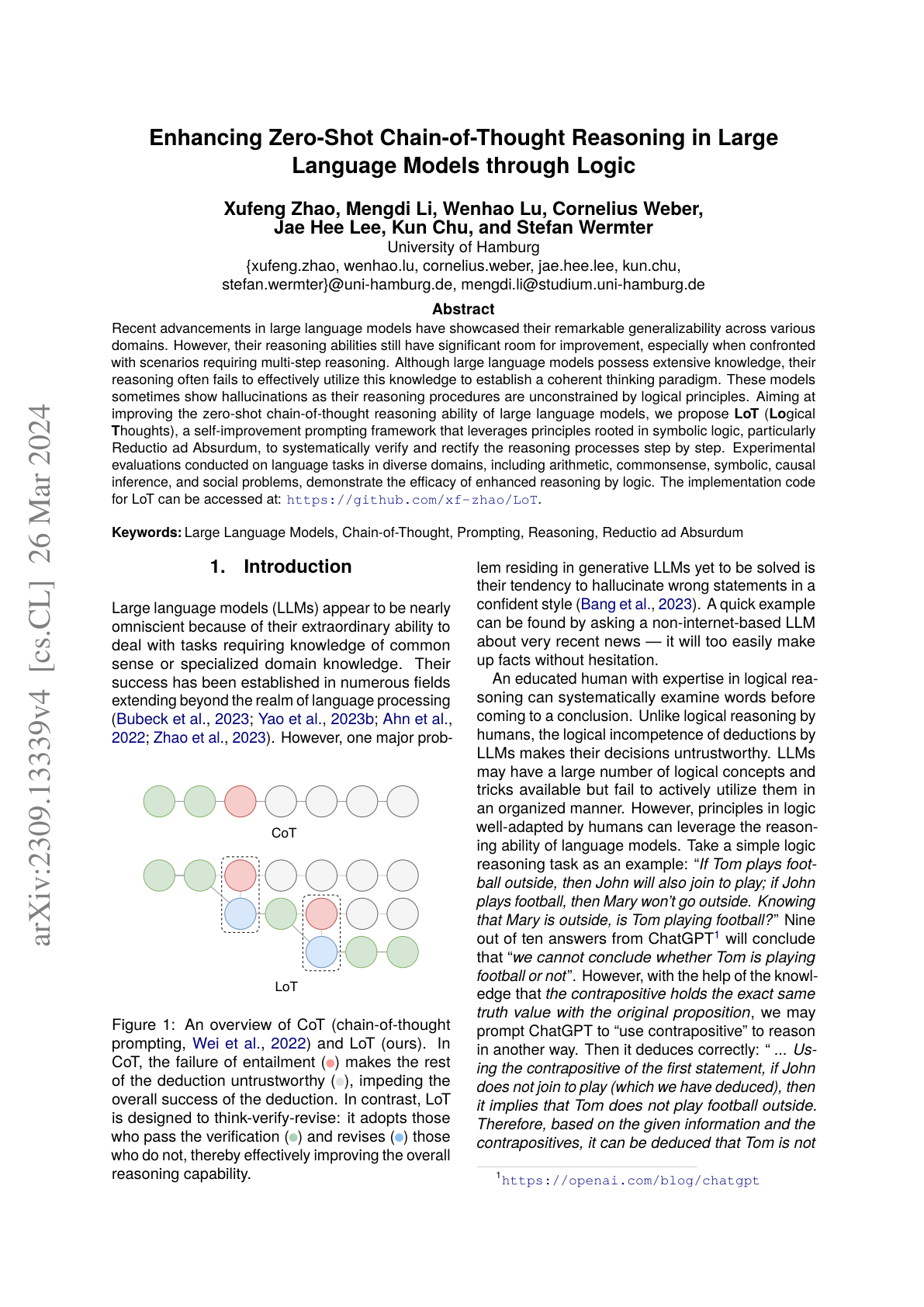
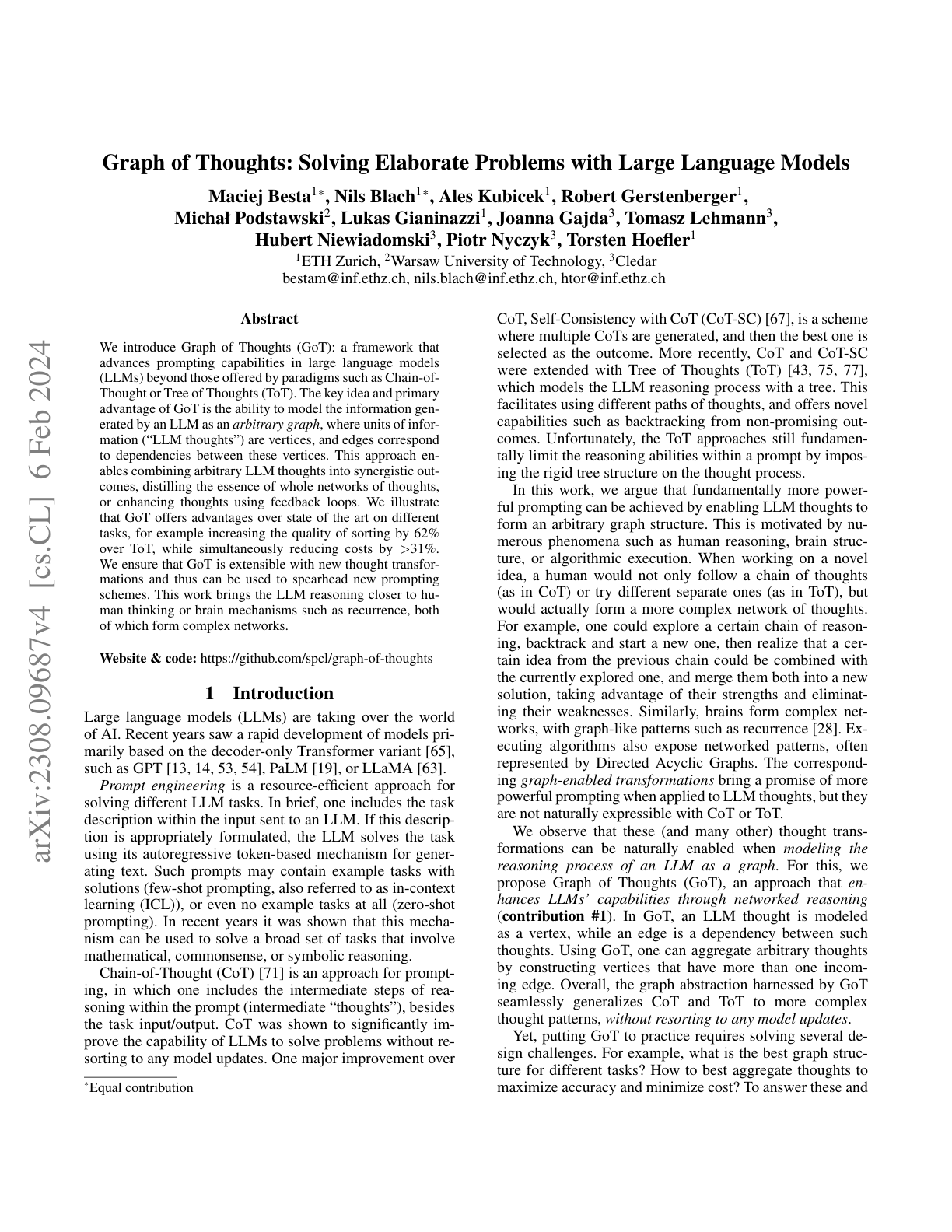
Procedural Knowledge in Pretraining Drives Reasoning in LLMs

Procedural Knowledge in Pretraining Drives Reasoning in LLMs

studies what documents in the pertaining influence model outputs; by looking at the pertaining data, it tries to understand better what kind of generalization strategies LLMs use to perform reasoning tasks; when performing reasoning tasks, it finds that influential documents contain procedural knowledge (e.g., demonstrating how to obtain a solution using formulae or code).

400Reasoning
o1 Replication Journey - Part 2

o1 Replication Journey - Part 2

shows that combining simple distillation from o1's API with supervised fine-tuning significantly boosts performance on complex math reasoning tasks; a base model fine-tuned on simply tens of thousands of samples o1-distilled long-thought chains outperform o1-preview on the American Invitational Mathematics Examination (AIME).

401Training
High-Level Automated Reasoning

High-Level Automated Reasoning

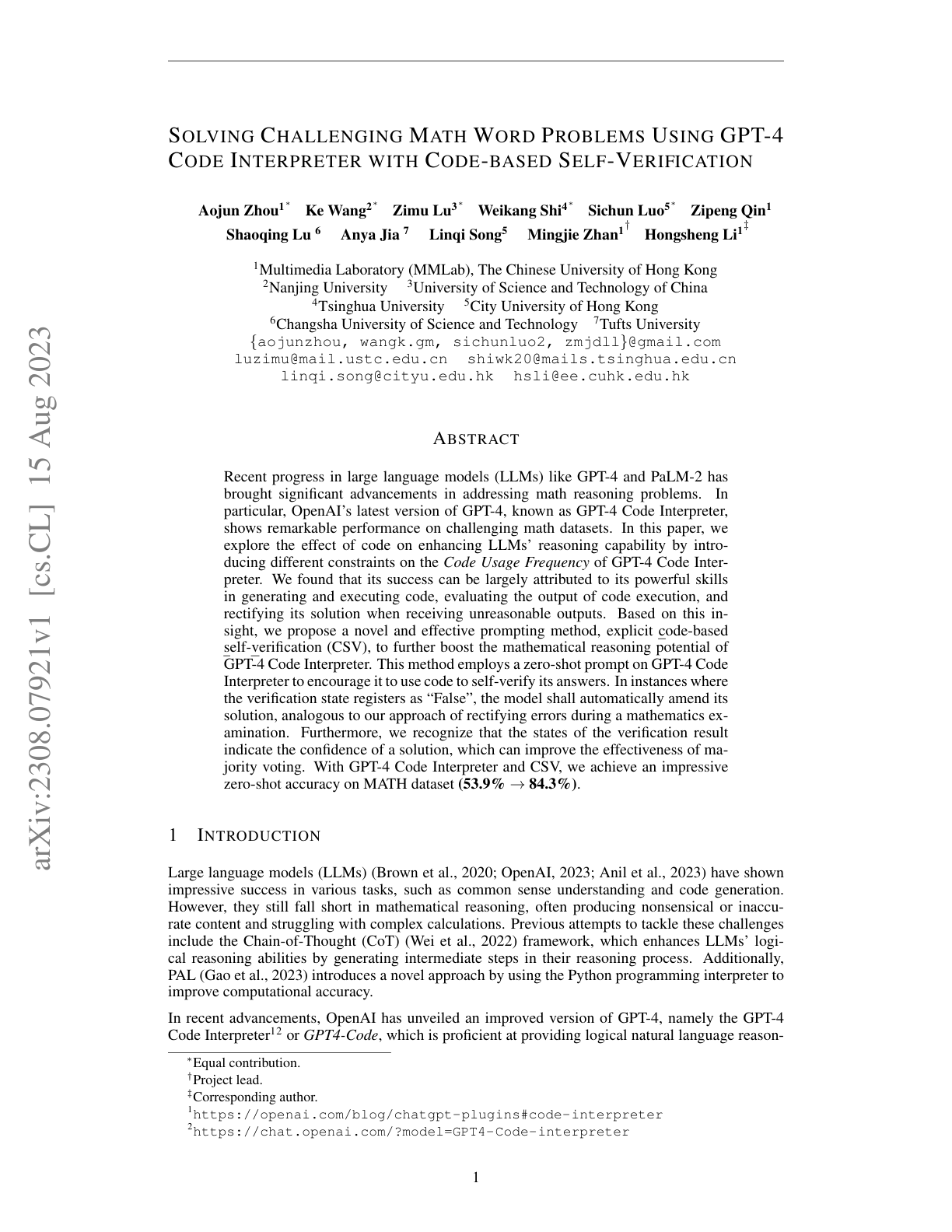
extends in-context learning through high-level automated reasoning; achieves state-of-the-art accuracy (79.6%) on the MATH benchmark with Qwen2.5-7B-Instruct, surpassing GPT-4o (76.6%) and Claude 3.5 (71.1%); rather than focusing on manually creating high-quality demonstrations, it shifts the focus to abstract thinking patterns; it introduces five atomic reasoning actions to construct chain-structured patterns; then it uses Monte Carlo Tree Search to explore reasoning paths and construct thought cards to guide inference.

402Reasoning
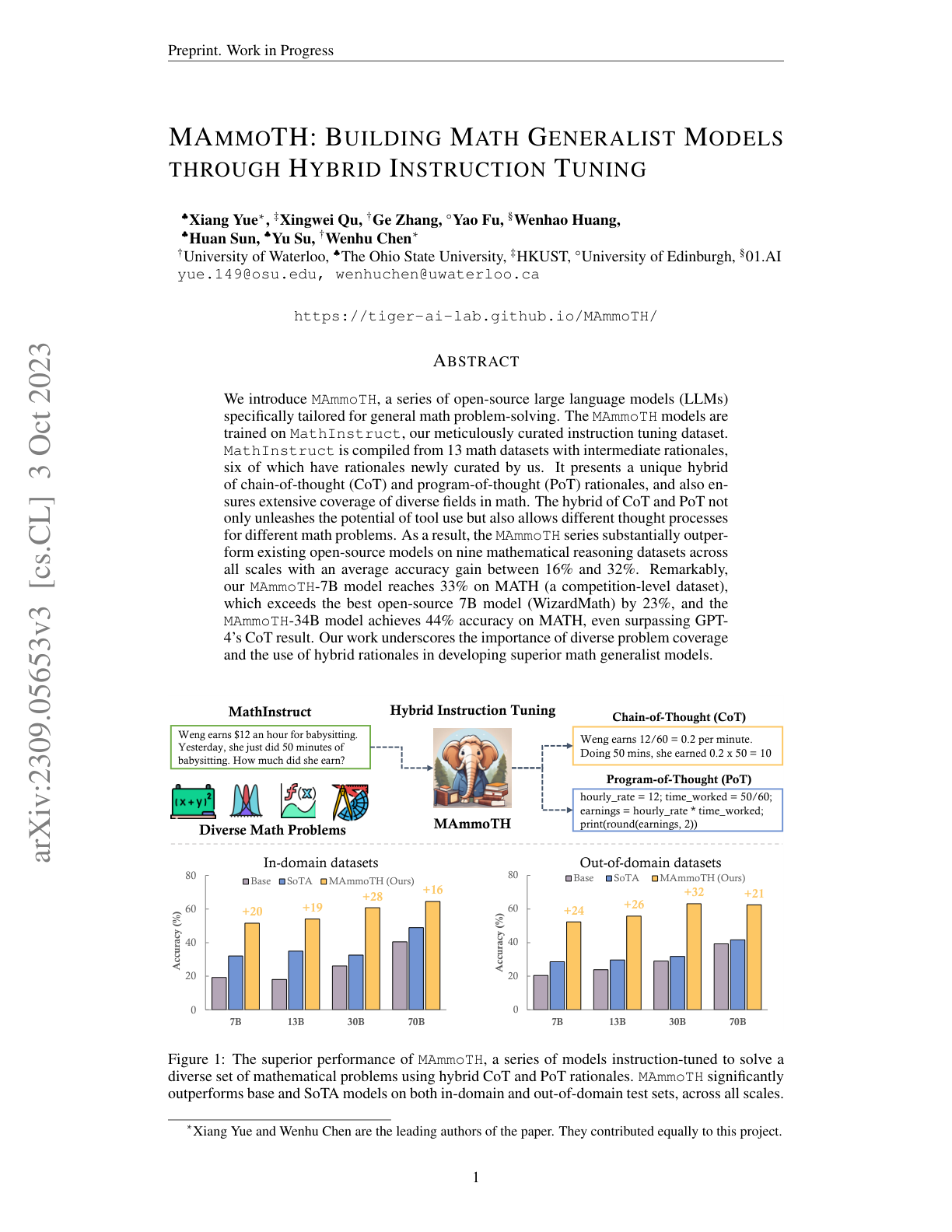
Towards Open Reasoning Models for Open-Ended Solutions

Towards Open Reasoning Models for Open-Ended Solutions

proposes Marco-o1 which is a reasoning model built for open-ended solutions; Marco-o1 is powered by Chain-of-Thought (CoT) fine-tuning, Monte Carlo Tree Search (MCTS), reflection mechanisms, and more recent reasoning strategies; Marco-o1 achieves accuracy improvements of +6.17% on the MGSM (English) dataset and +5.60% on the MGSM (Chinese) dataset.

403Reasoning
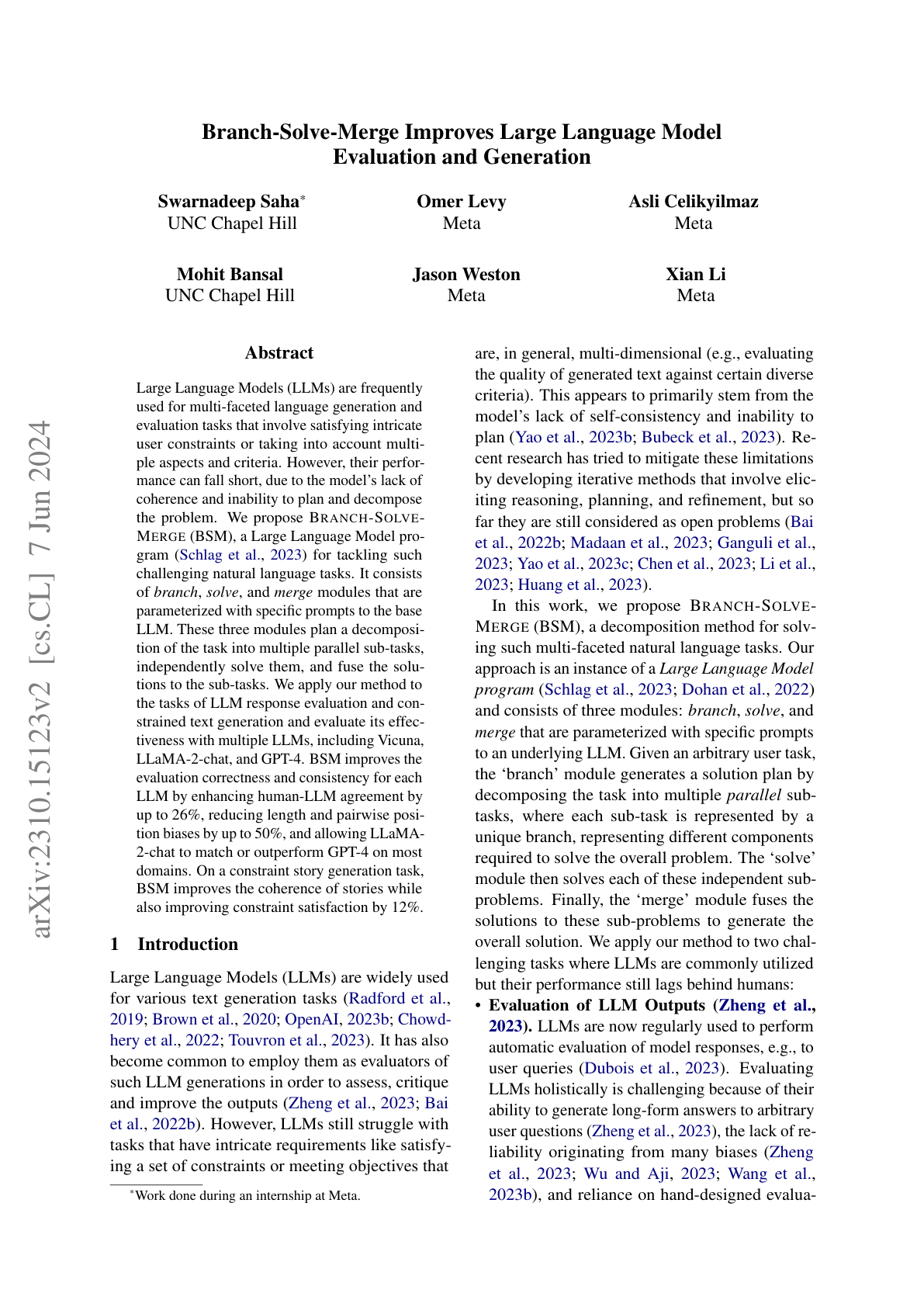
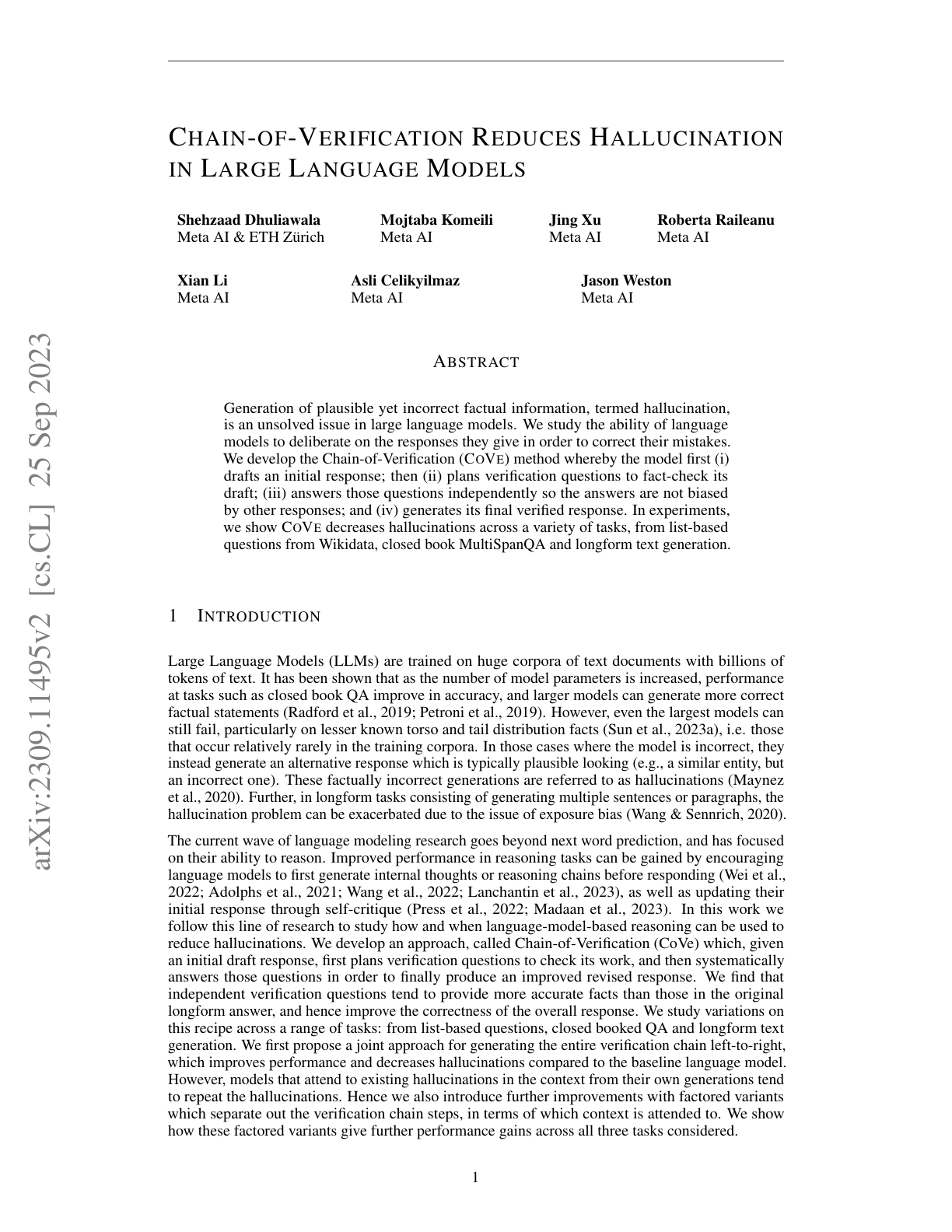
LLM-based Agents for Automated Bug Fixing

LLM-based Agents for Automated Bug Fixing

analyzes seven leading LLM-based bug fixing systems on the SWE-bench Lite benchmark, finding MarsCode Agent (developed by ByteDance) achieved the highest success rate at 39.33%; reveals that for error localization line-level fault localization accuracy is more critical than file-level accuracy, and bug reproduction capabilities significantly impact fixing success; shows that 24/168 resolved issues could only be solved using reproduction techniques, though reproduction sometimes misled LLMs when issue descriptions were already clear; concludes that improvements are needed in both LLM reasoning capabilities and Agent workflow design to enhance automated bug fixing effectiveness.

404Code
FinRobot

FinRobot

an AI agent framework for equity research that uses a multi-agent Chain-of-Thought prompting, combining data analysis with human-like reasoning to produce professional investment reports comparable to major brokerages; it leverage three agents: a Data-CoT Agent to aggregate diverse data sources for robust financial integration; the Concept-CoT Agent, for analyst’s reasoning to generate actionable insights; and the Thesis-CoT Agent to synthesizes these insights into a coherent investment thesis and report.

405Agents
Evo

Evo

a 7B parameter AI model designed to understand and generate DNA sequences across multiple biological scales; the model, trained on 2.7 million prokaryotic and phage genomes, can process sequences up to 131 kilobases long while maintaining single-nucleotide resolution, enabling it to understand both molecular-level interactions and genome-wide patterns; Evo demonstrates superior performance in predicting and generating functional DNA, RNA, and protein sequences, including the first successful AI-generated CRISPR-Cas complexes and transposable systems that have been experimentally validated.

406Reasoning
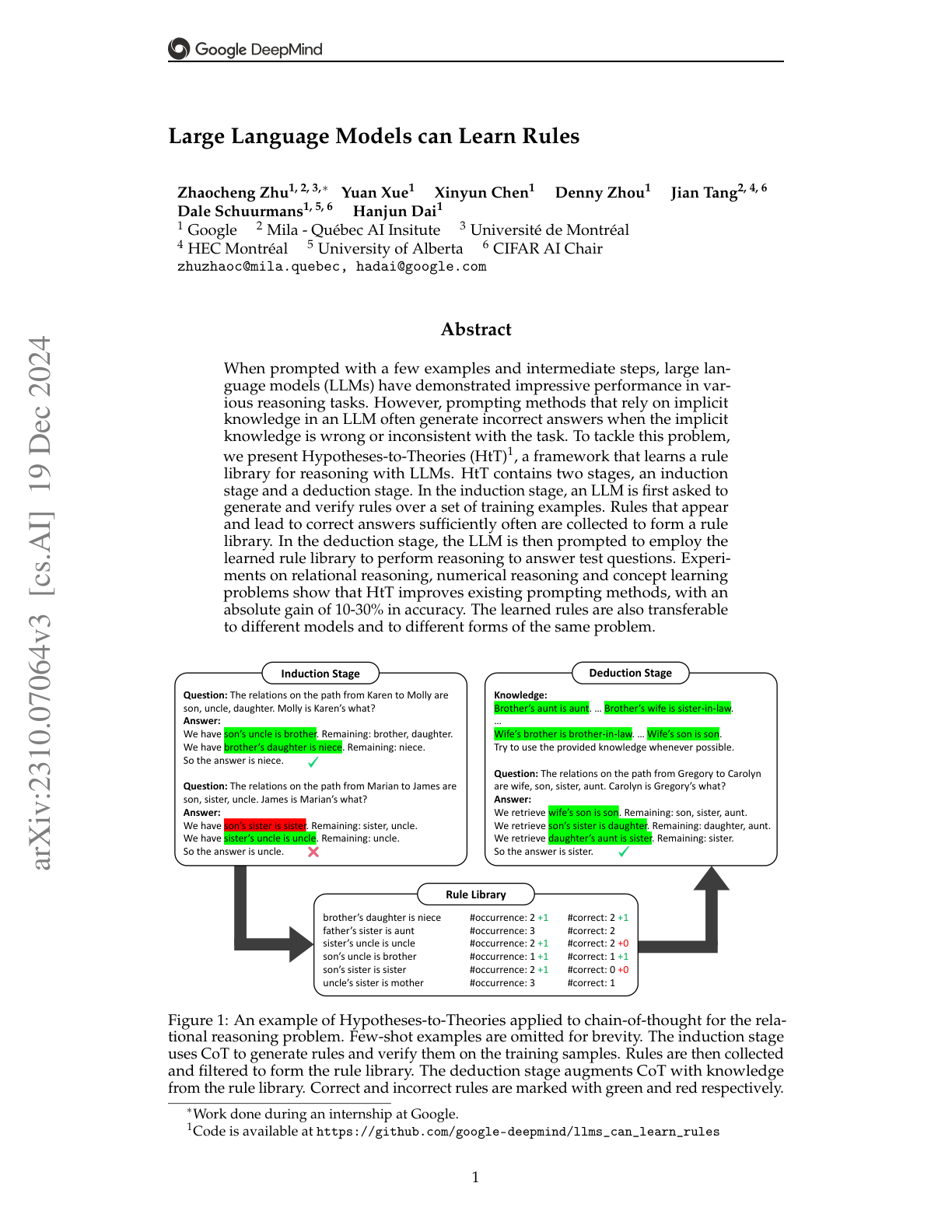
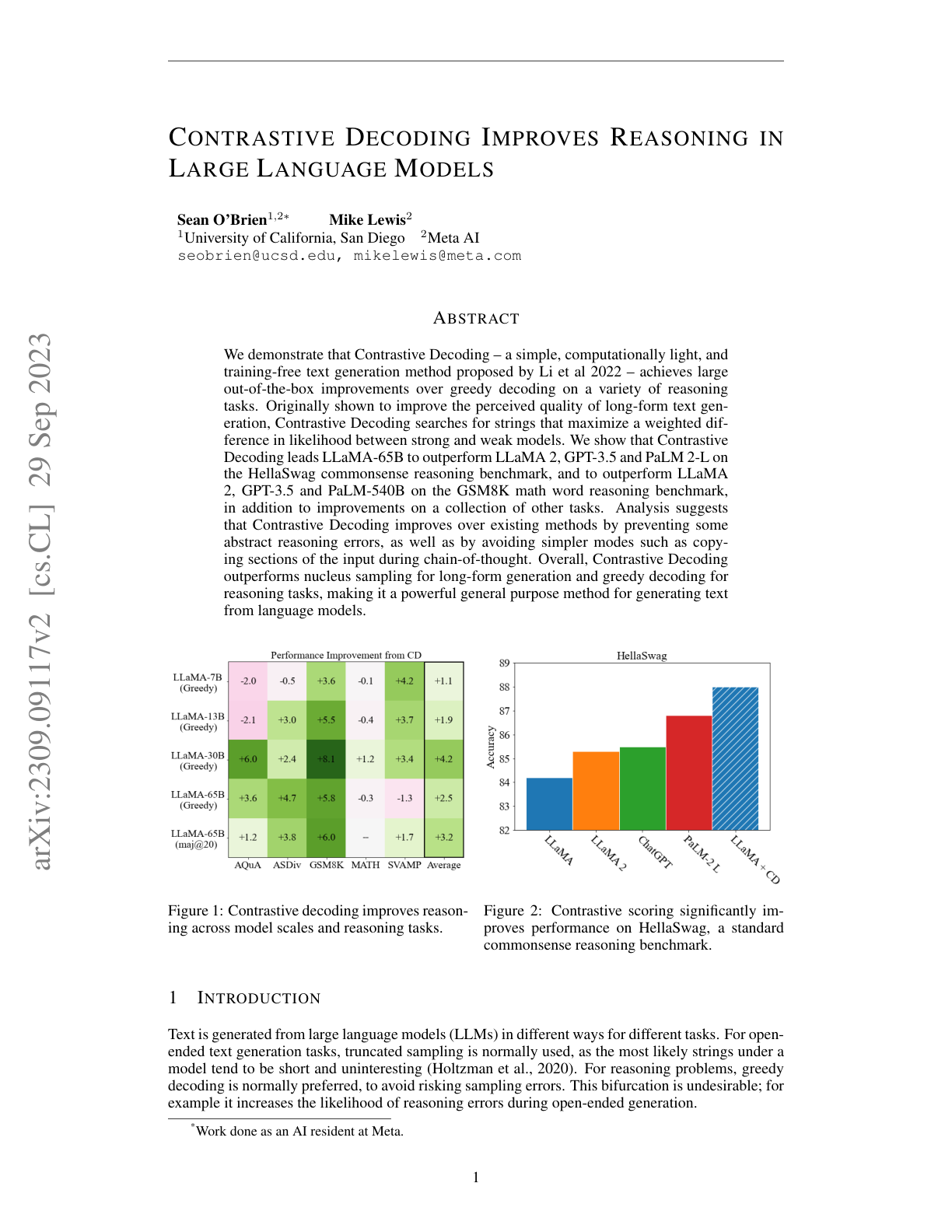
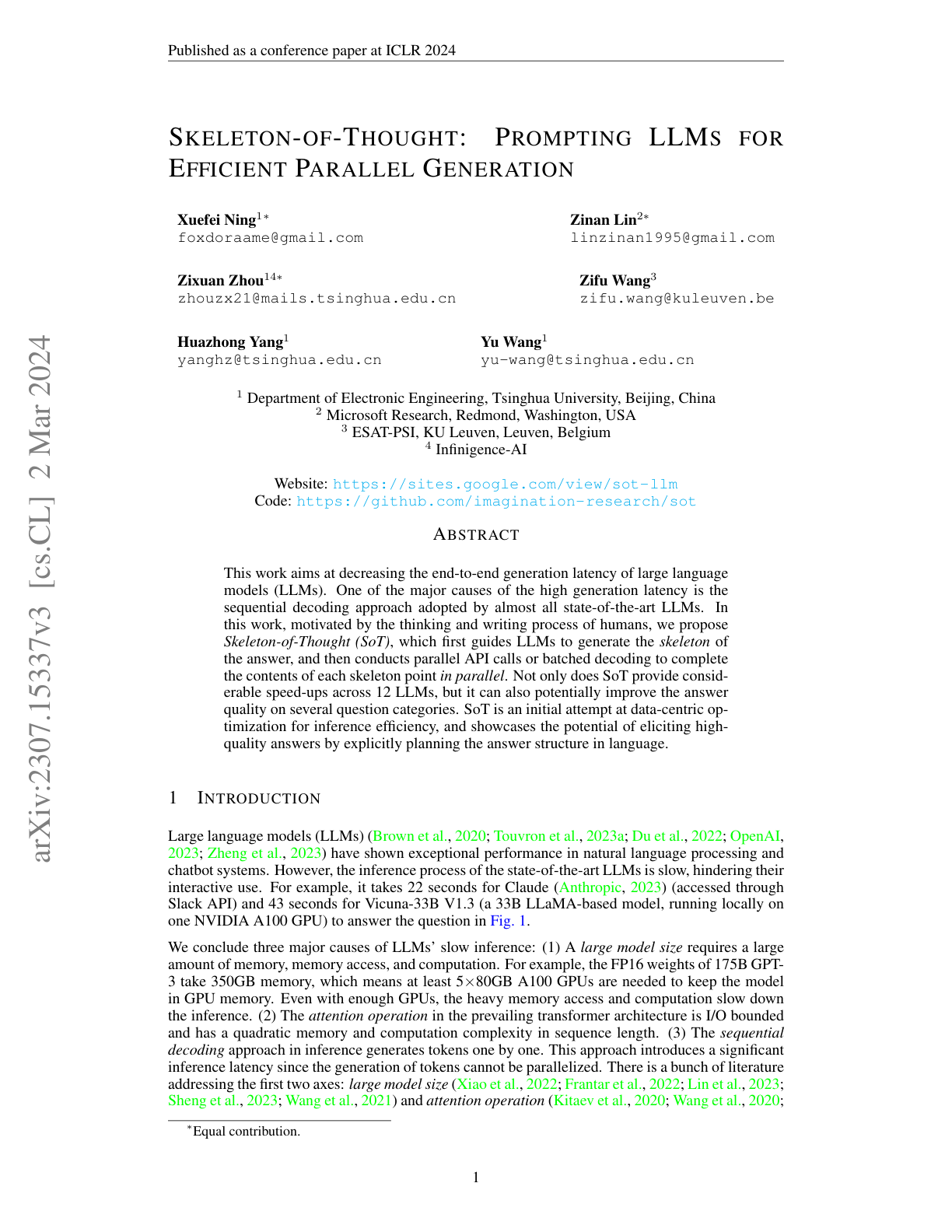
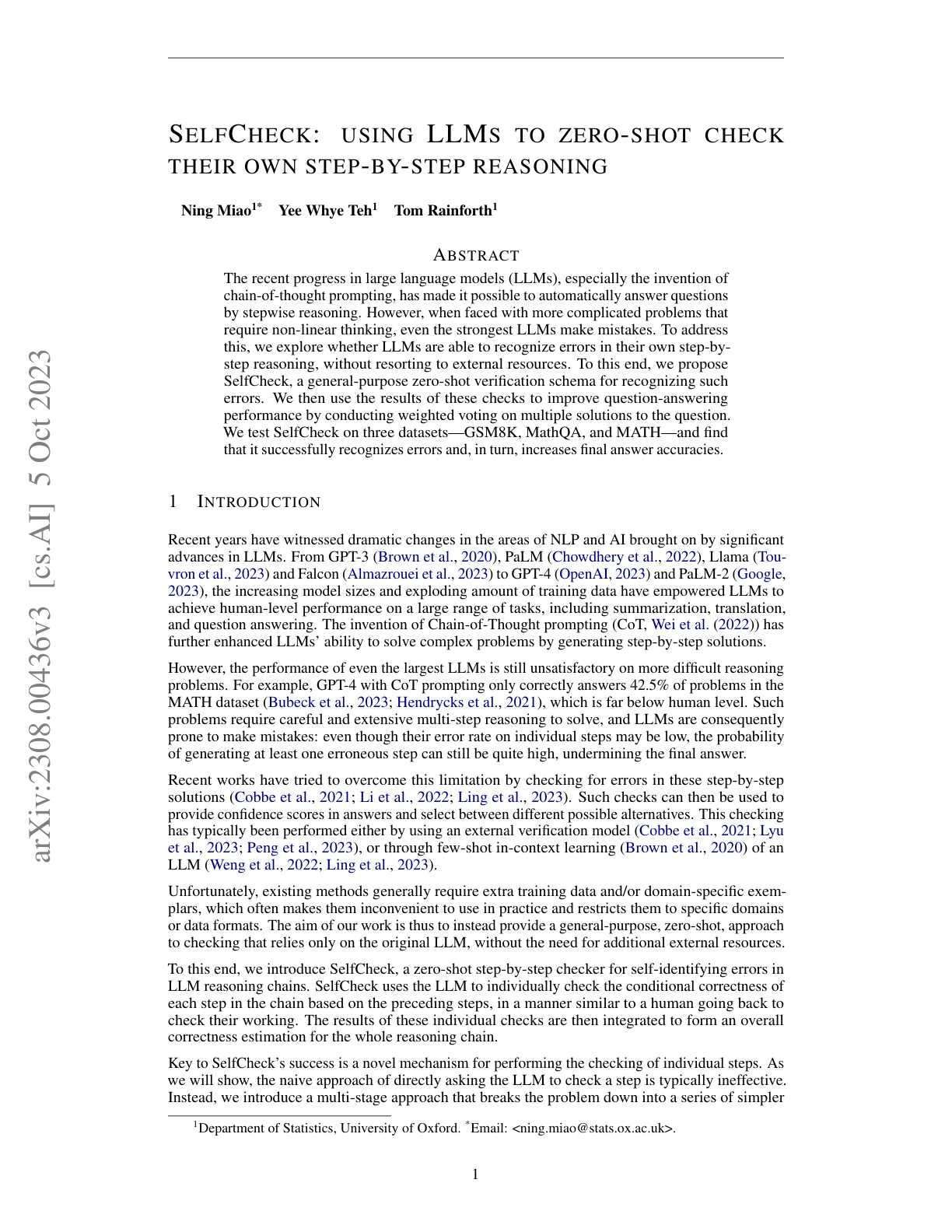
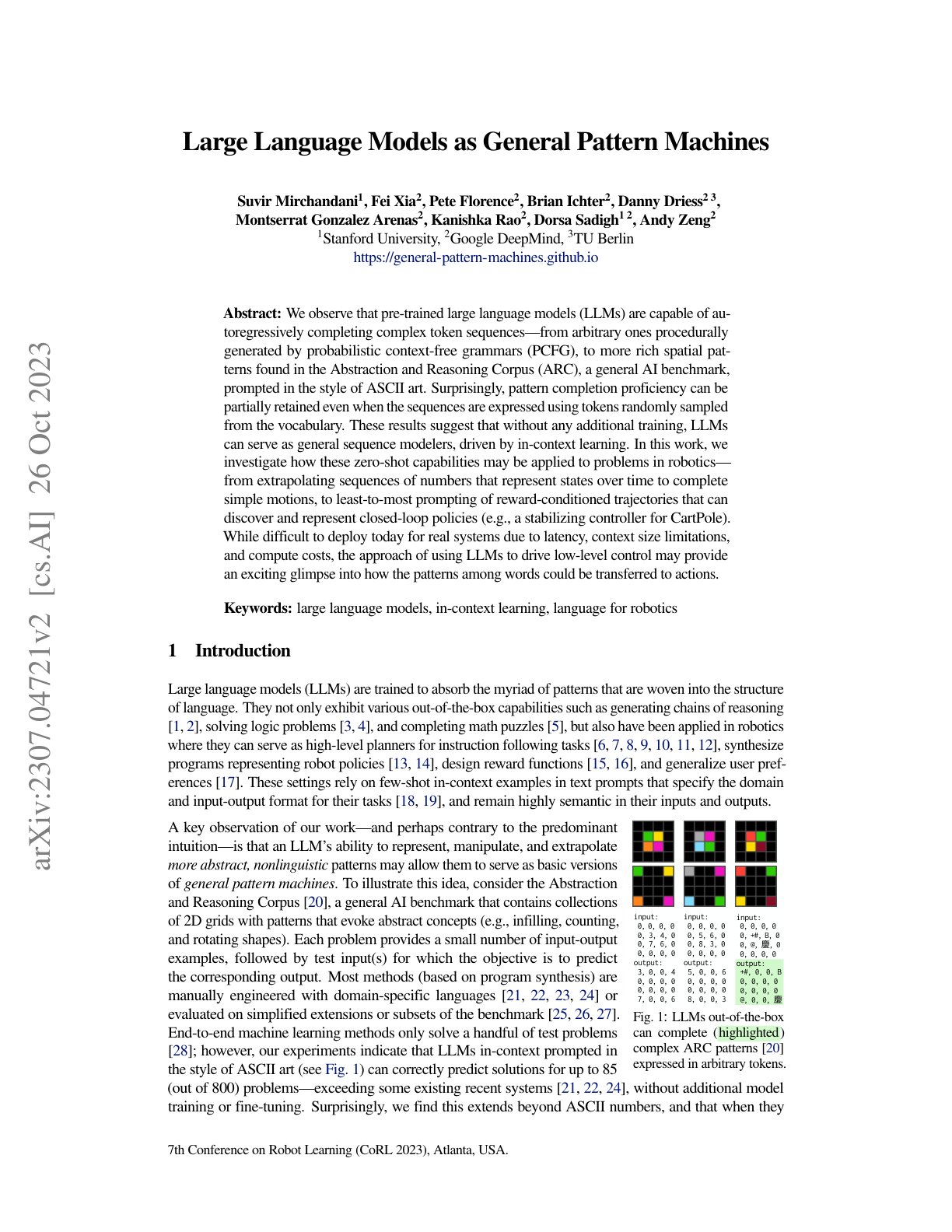
The Surprising Effectiveness of Test-Time Training for Abstract Reasoning

The Surprising Effectiveness of Test-Time Training for Abstract Reasoning

explores test-time training (TTT) - updating model parameters temporarily during inference - for improving an LLM's abstract reasoning capabilities using the ARC benchmark; identifies three crucial components: initial fine-tuning on similar tasks, auxiliary task format and augmentations, and per-instance training; TTT significantly improves performance, achieving up to 6x improvement in accuracy compared to base fine-tuned models; when applying TTT to an 8B LLM, they achieve 53% accuracy on ARC's public validation set, improving the state-of-the-art for neural approaches by nearly 25%; by ensembling their method with program generation approaches, they achieve state-of-the-art public validation accuracy of 61.9%, matching average human performance; the findings suggest that explicit symbolic search is not the only path to improved abstract reasoning in LLMs; test-time training applied to continued training on few-shot examples can be highly effective.

407Reasoning
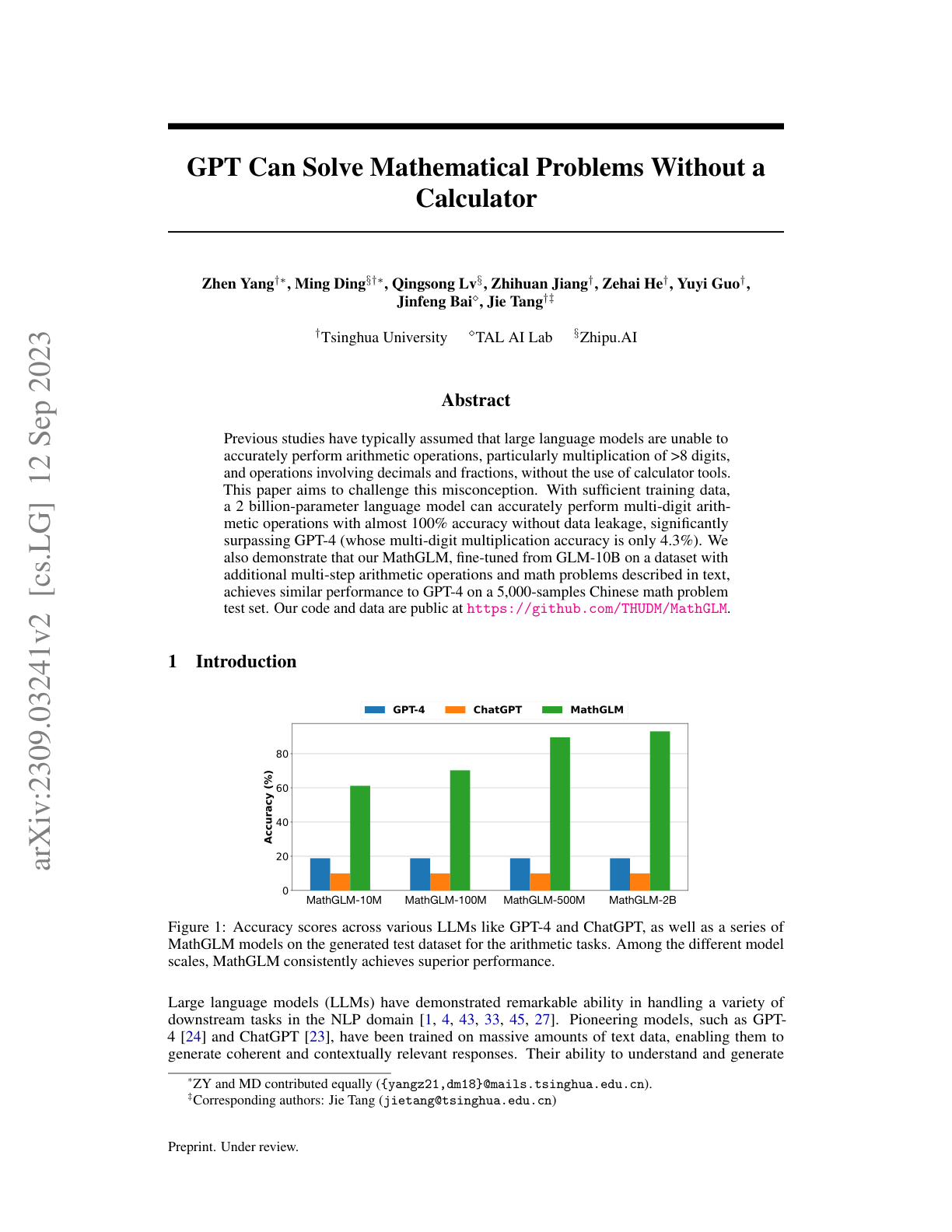
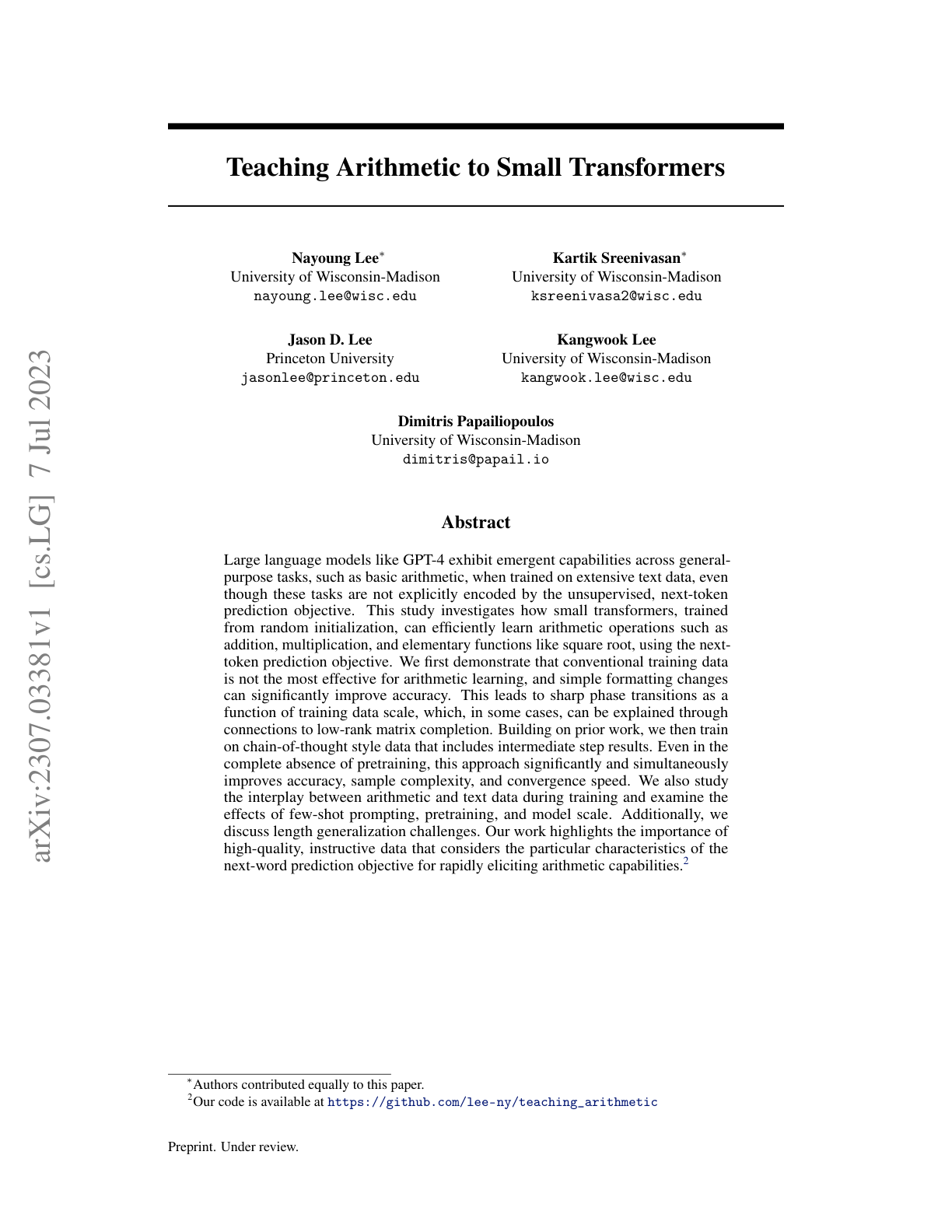
Number Understanding of LLMs

Number Understanding of LLMs

provides a comprehensive analysis of the numerical understanding and processing ability (NUPA) of LLMs; finds that naive finetuning can improve NUPA a lot on many but not all tasks; it also reports that techniques designed to enhance NUPA prove ineffective for finetuning pretrained models; explores chain-of-thought techniques applied to NUPA and suggests that chain-of-thought methods face scalability challenges, making them difficult to apply in practical scenarios.

408Training
176 weeks of AI research · papers per week
Week of Aug 17–23, 202610 papers →
Apr2023
May
Jun
Jul
Aug
Sep
Oct
Nov
Dec
Jan2024
Feb
Mar
Apr
May
Jun
Jul
Aug
Sep
Oct
Nov
Dec
Jan2025
Feb
Mar
Apr
May
Jun
Jul
Aug
Sep
Oct
Nov
Dec
Jan2026
Feb
Mar
Apr
May
Jun
Jul
Aug
Apr 2023Hover a week to inspect · select to openAug 2026