AI Papers of the Week
Every paper worth reading in AI, hand-picked one week at a time.
Discover and explore top AI papers with Claude Code or Codex
npx @dair-ai/mcp setup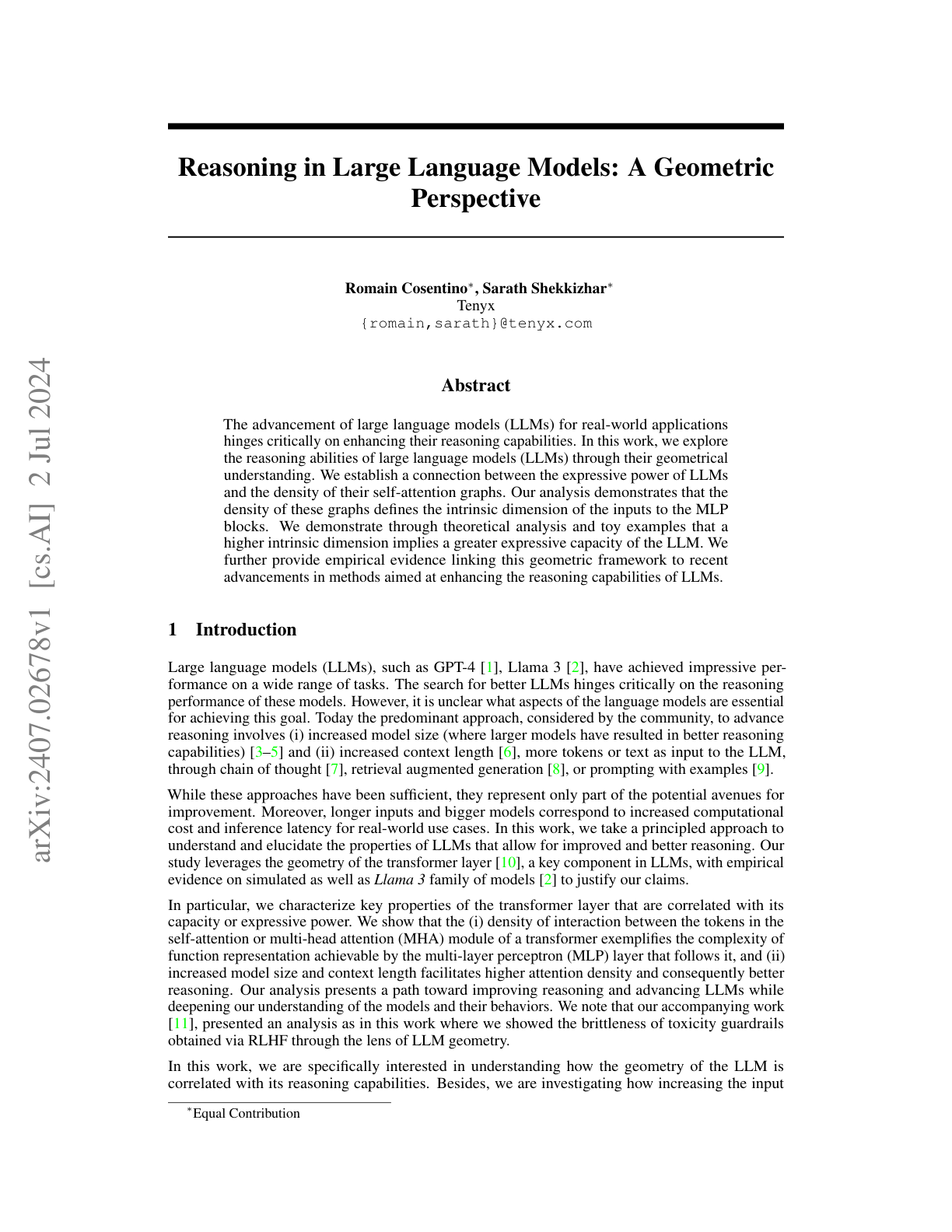
Reasoning in LLMs: A Geometric Perspective
explores the reasoning of LLMs from a geometrical perspective; reports that a higher intrinsic dimension implies greater expressive capacity of the LLM; reports that they establish a connection between the expressive power of LLMs and the density of their self-attention graphs; their analysis demonstrates that the density of these graphs defines the intrinsic dimension of the inputs to the MLP blocks.
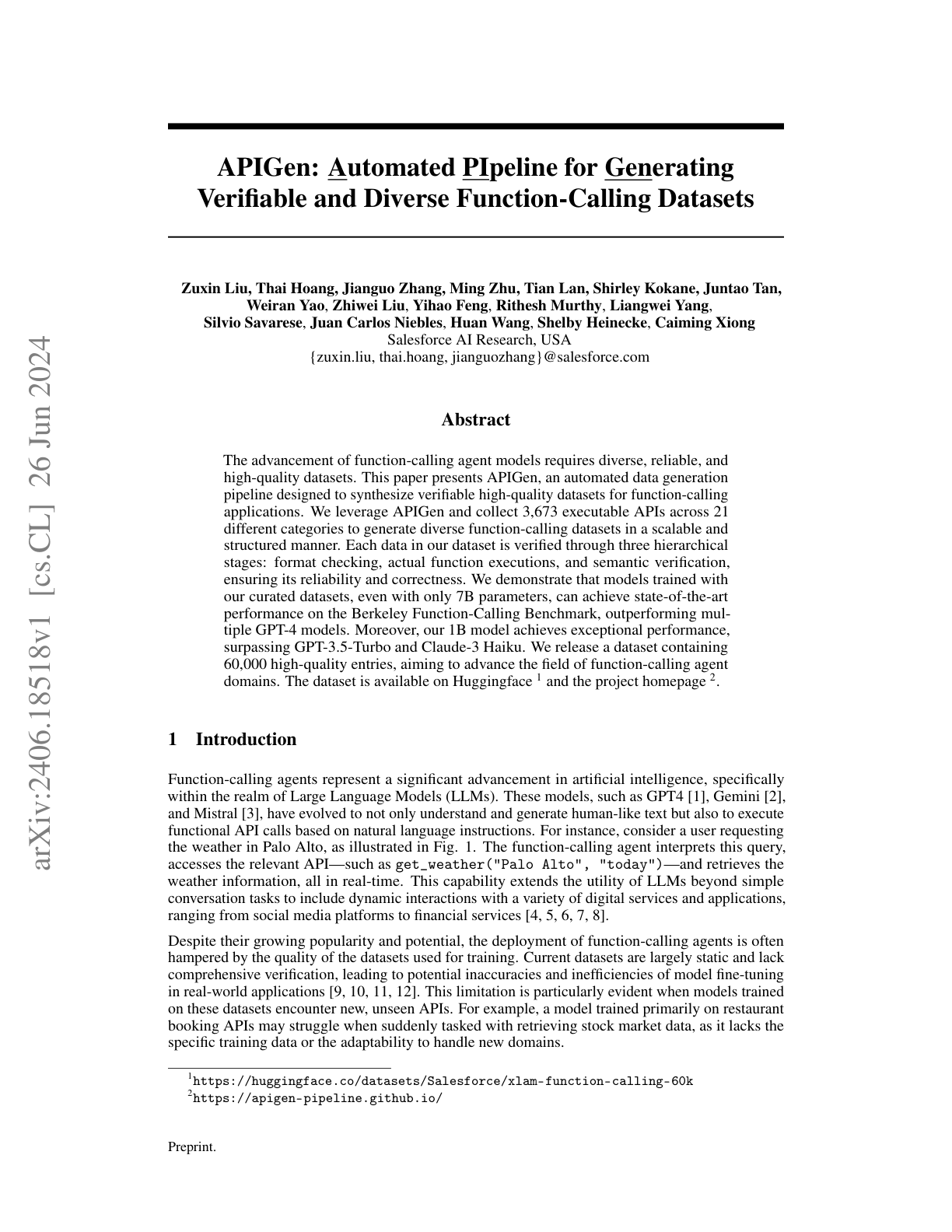
APIGen
presents an automated data generation pipeline to synthesize high-quality datasets for function-calling applications; shows that 7B models trained on curated datasets outperform GPT-4 models and other state-of-the-art models on the Berkeley Function-Calling Benchmark; a dataset consisting of 60K entries is also released to help with research in function-calling enabled agents.
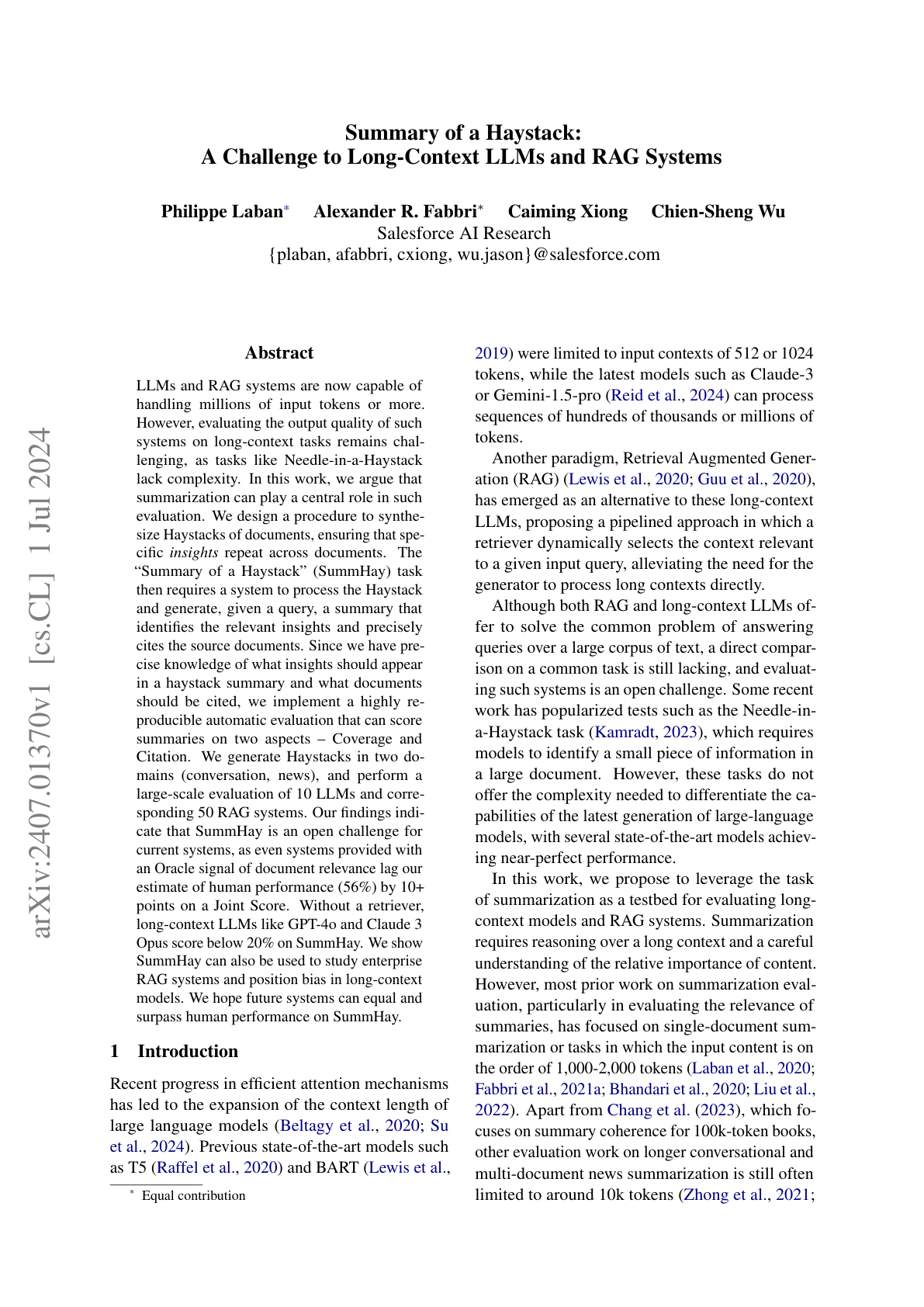
Summary of a Haystack
proposes a new task, SummHay, to test a model’s ability to process a Haystack and generate a summary that identifies the relevant insights and cites the source documents; reports that long-context LLMs score 20% on the benchmark which lags the human performance estimate (56%); RAG components is found to boost performance on the benchmark, which makes it a viable option for holistic RAG evaluation.
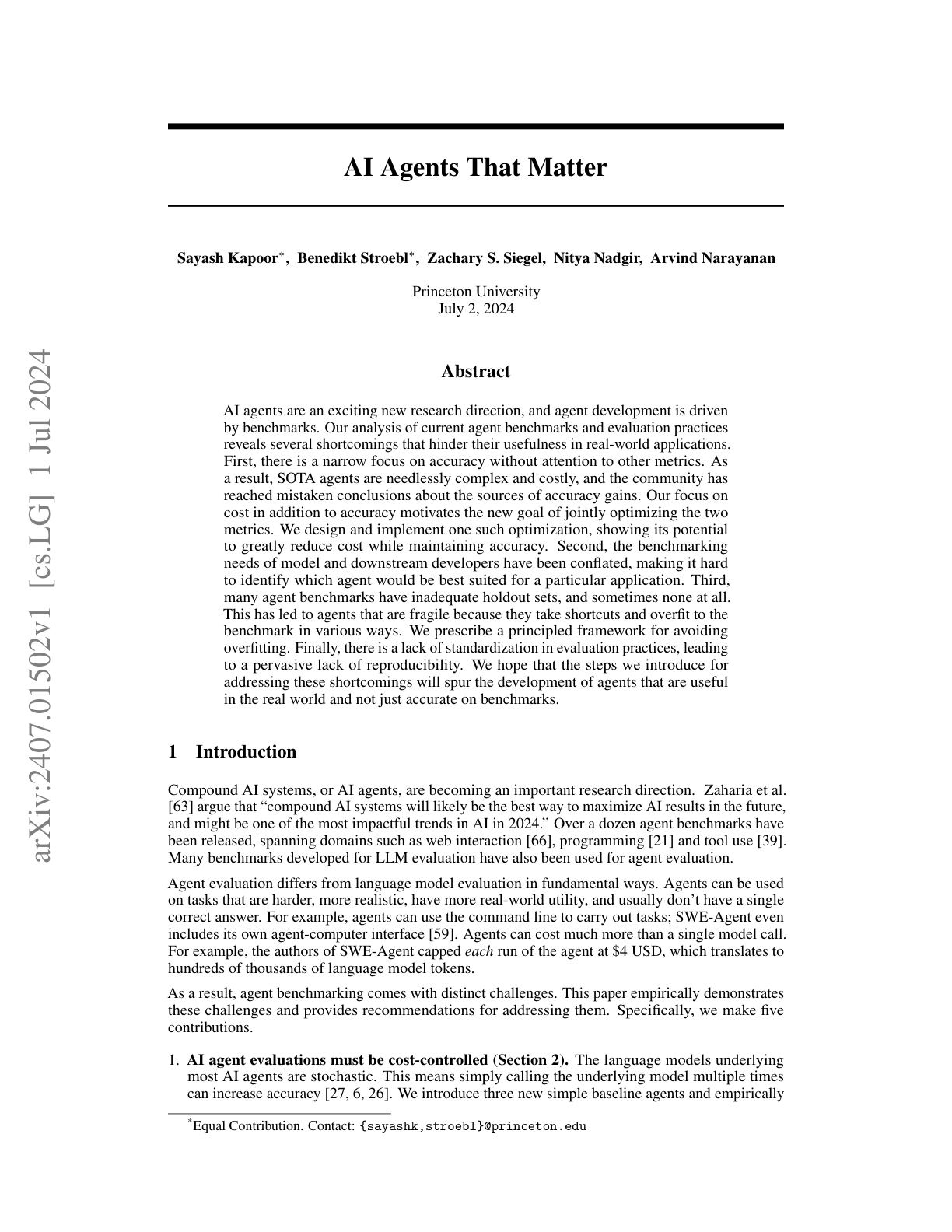
AI Agents That Matter
analyzes current agent evaluation practices and reveals shortcomings that potentially hinder real-world application; proposes an implementation that jointly optimizes cost and accuracy and a framework to avoid overfitting agents.
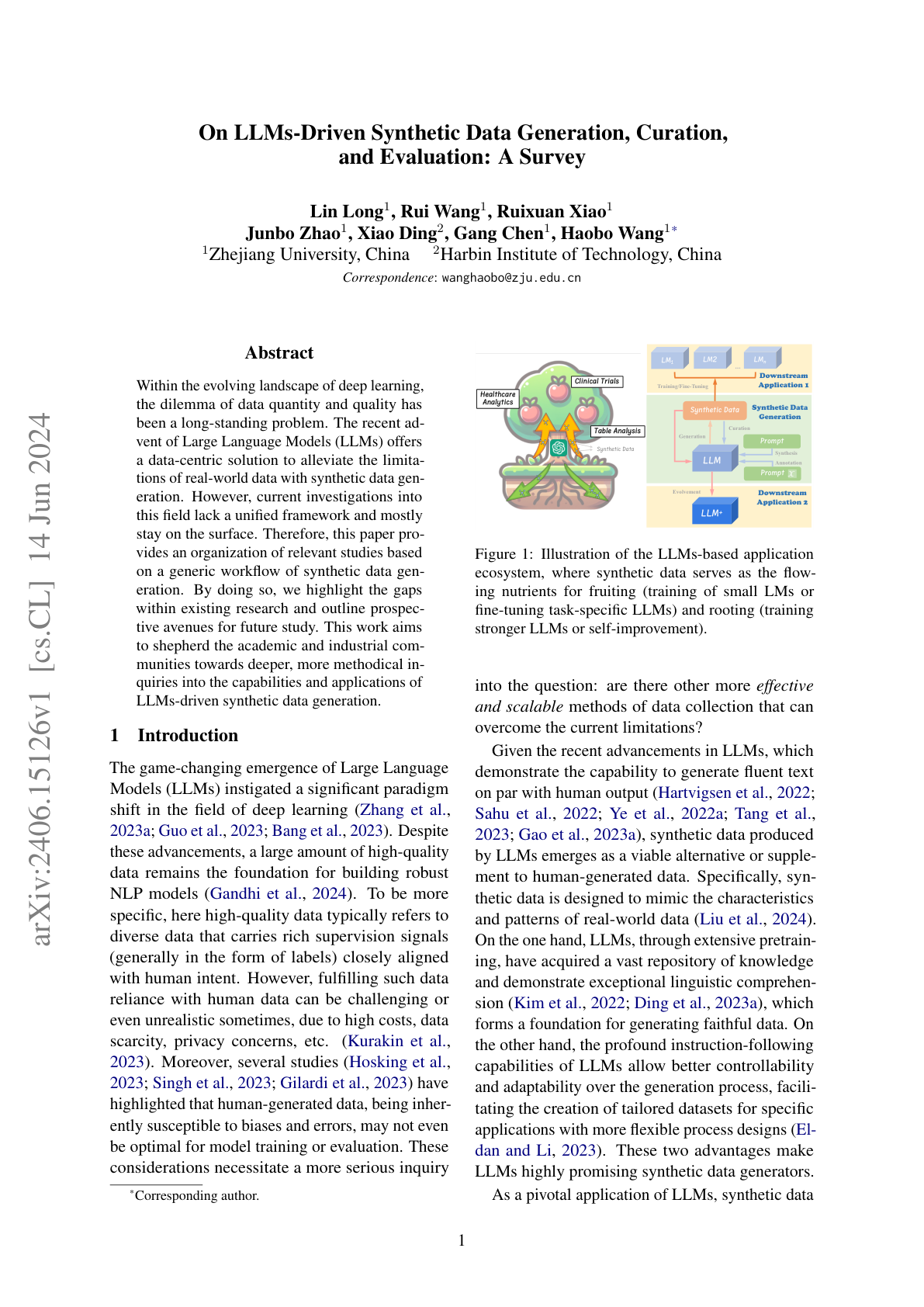
On LLMs-Driven Synthetic Data Generation, Curation, and Evaluation
survey on LLM-based synthetic data generation, curation, and evaluation.
Claude 3.5 Sonnet
a new model that achieves state-of-the-art performance on several common benchmarks such as MMLU and HumanEval; it outperforms Claude 3 Opus and GPT-4o on several benchmarks with the exception of math word problem-solving tasks; achieves strong performance on vision tasks which also helps power several new features like image-text transcription and generation of artifacts.
Nemotron-4 340B
provides an instruct model to generate high-quality data and a reward model to filter out data on several attributes; demonstrates strong performance on common benchmarks like MMLU and GSM8K; it’s competitive with GPT-4 on several tasks, including high scores in multi-turn chat; a preference data is also released along with the base model.
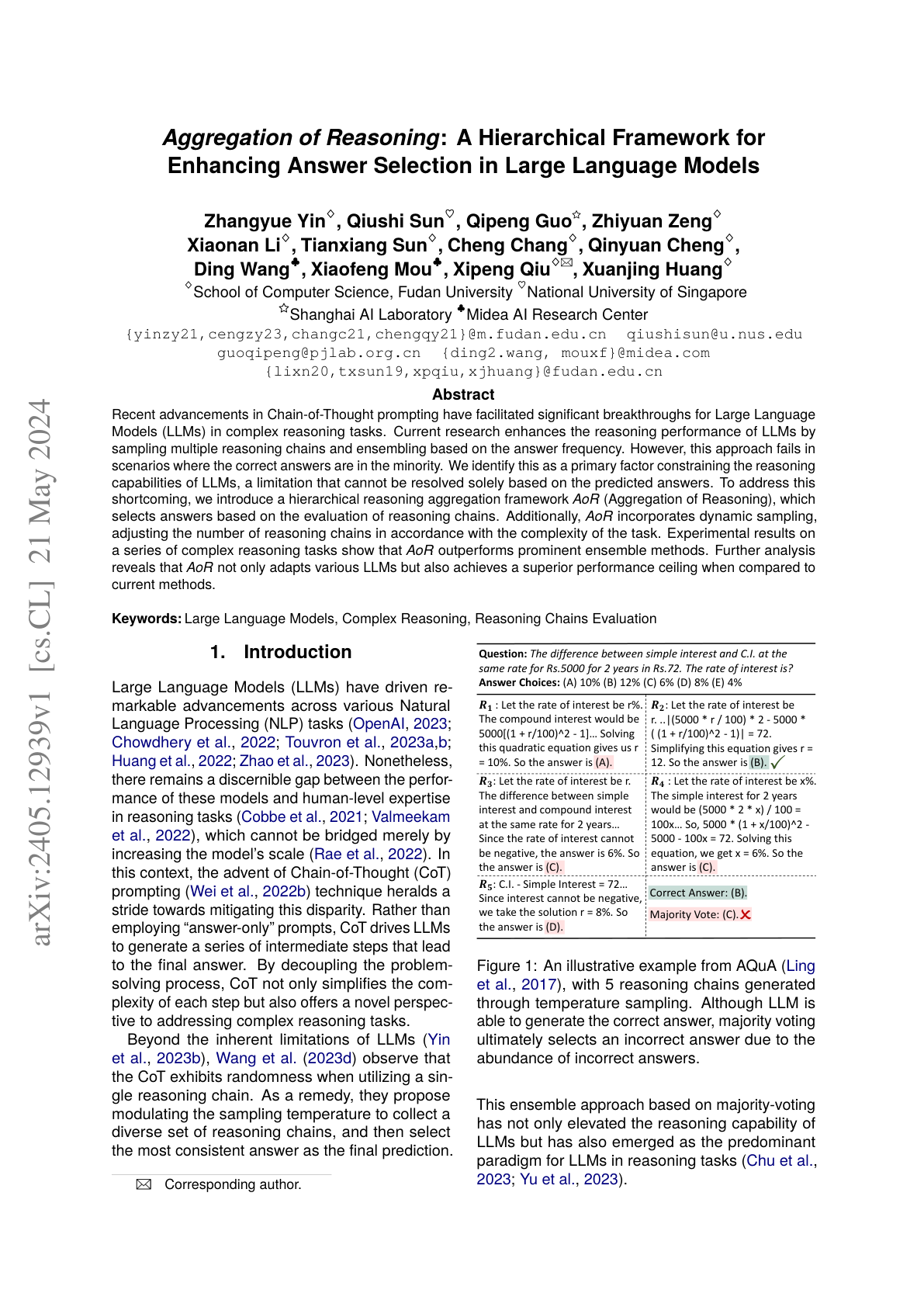
Enhancing Answer Selection in LLMs
proposes a hierarchical reasoning aggregation framework for improving the reasoning capabilities of LLMs; the approach, called Aggregation of Reasoning (AoR), selects answers based on the evaluation of reasoning chains; AoR uses dynamic sampling to adjust the number of reasoning chains with respect to the task complexity; it uses results from the evaluation phase to determine whether to sample additional reasoning chains; a known flaw of majority voting is that it fails in scenarios where the correct answer is in the minority; AoR focuses on evaluating the reasoning chains to improve the selection of the final answer; AoR outperforms various prominent ensemble methods and can be used with various LLMs to improve performance on complex reasoning tasks.
Guide for Evaluating LLMs
provides guidance and lessons for evaluating large language models; discusses challenges and best practices, along with the introduction of an open-source library for evaluating LLMs.
Med-Gemini
presents a family of multimodal models specialized in medicines and based on the strong multimodal and long-context reasoning capabilities of Gemini; achieves state-of-the-art performance on 10/14 benchmarks surpassing GPT-4 models; it achieves 91% accuracy on MedQA (USMLE) benchmark using an uncertainty-guided search strategy.
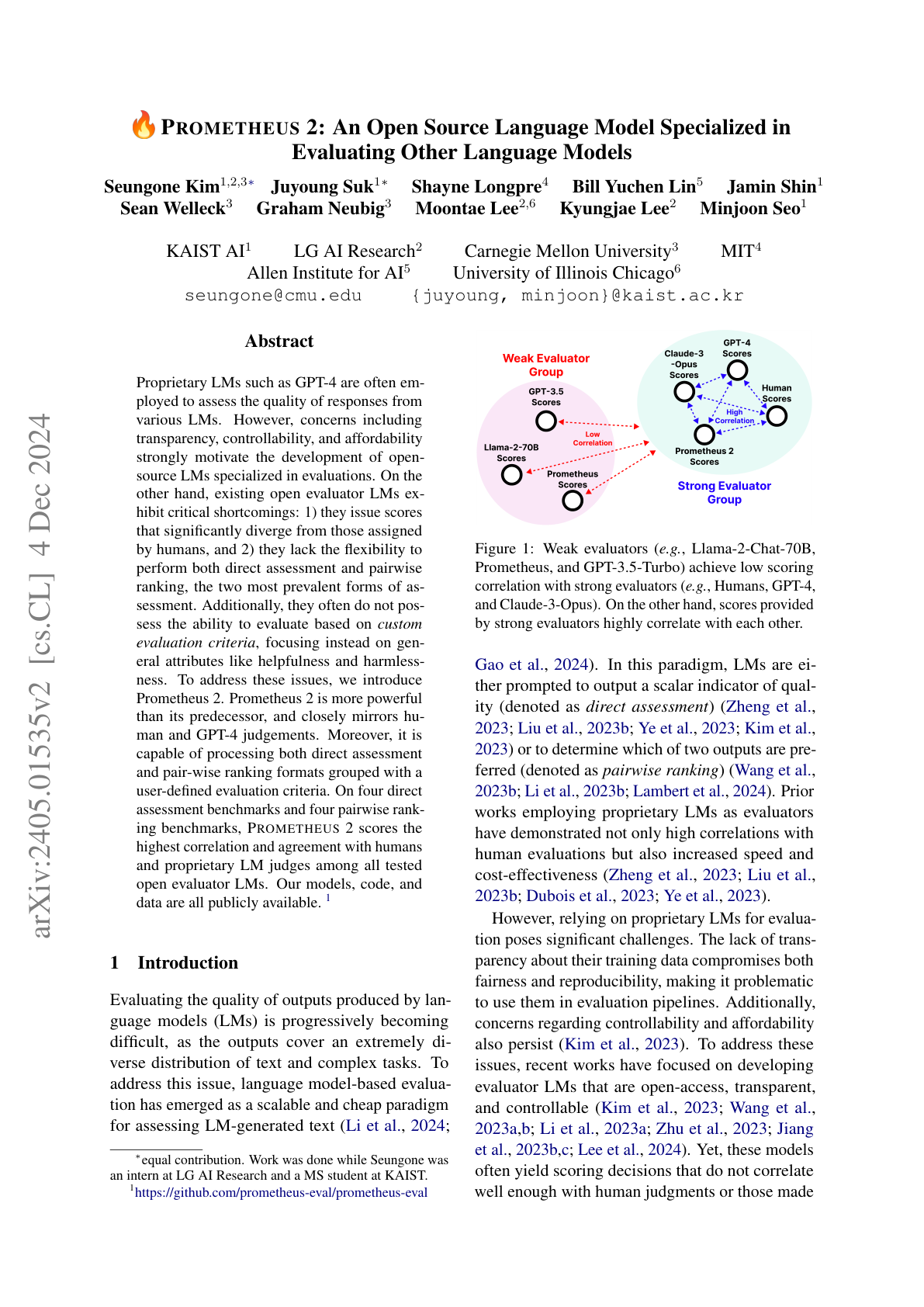
An Open-source LM Specialized in Evaluating Other LMs
open-source Prometheus 2 (7B & 8x7B), state-of-the-art open evaluator LLMs that closely mirror human and GPT-4 judgments; they support both direct assessments and pair-wise ranking formats grouped with user-defined evaluation criteria; according to the experimental results, this open-source model seems to be the strongest among all open-evaluator LLMs; the key seems to be in merging evaluator LMs trained on either direct assessment or pairwise ranking formats.
Multimodal LLM Hallucinations
provides an overview of the recent advances in identifying, evaluating, and mitigating hallucination in multimodal LLMs; it also provides an overview of causes, evaluation benchmarks, metrics, and other strategies to deal with challenges related to detecting hallucinations.
FineWeb
HuggingFace's FineWeb is a 15 trillion token English web dataset built from 96 CommonCrawl snapshots (2013-2024). In 1.8B-parameter ablations, models trained on FineWeb beat C4, RefinedWeb, Dolma, The Pile, SlimPajama, and RedPajama2 across aggregated benchmarks.
Llama 3
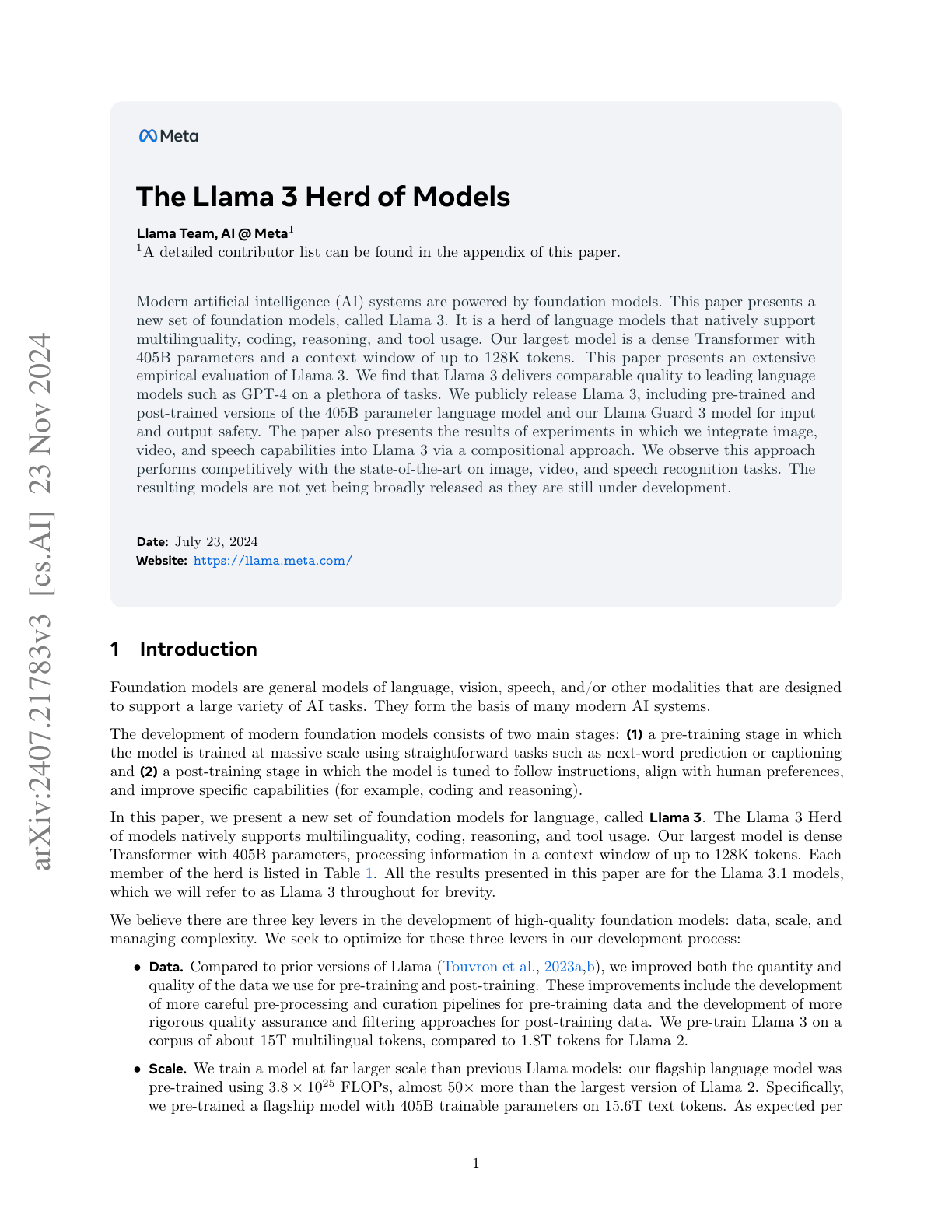
Meta's Llama 3 launches with 8B and 70B pretrained and instruction-tuned variants. Llama 3 8B beats Gemma 7B and Mistral 7B Instruct, and Llama 3 70B is competitive with Gemini Pro 1.5 and Claude 3 Sonnet on standard benchmarks.
OpenEQA
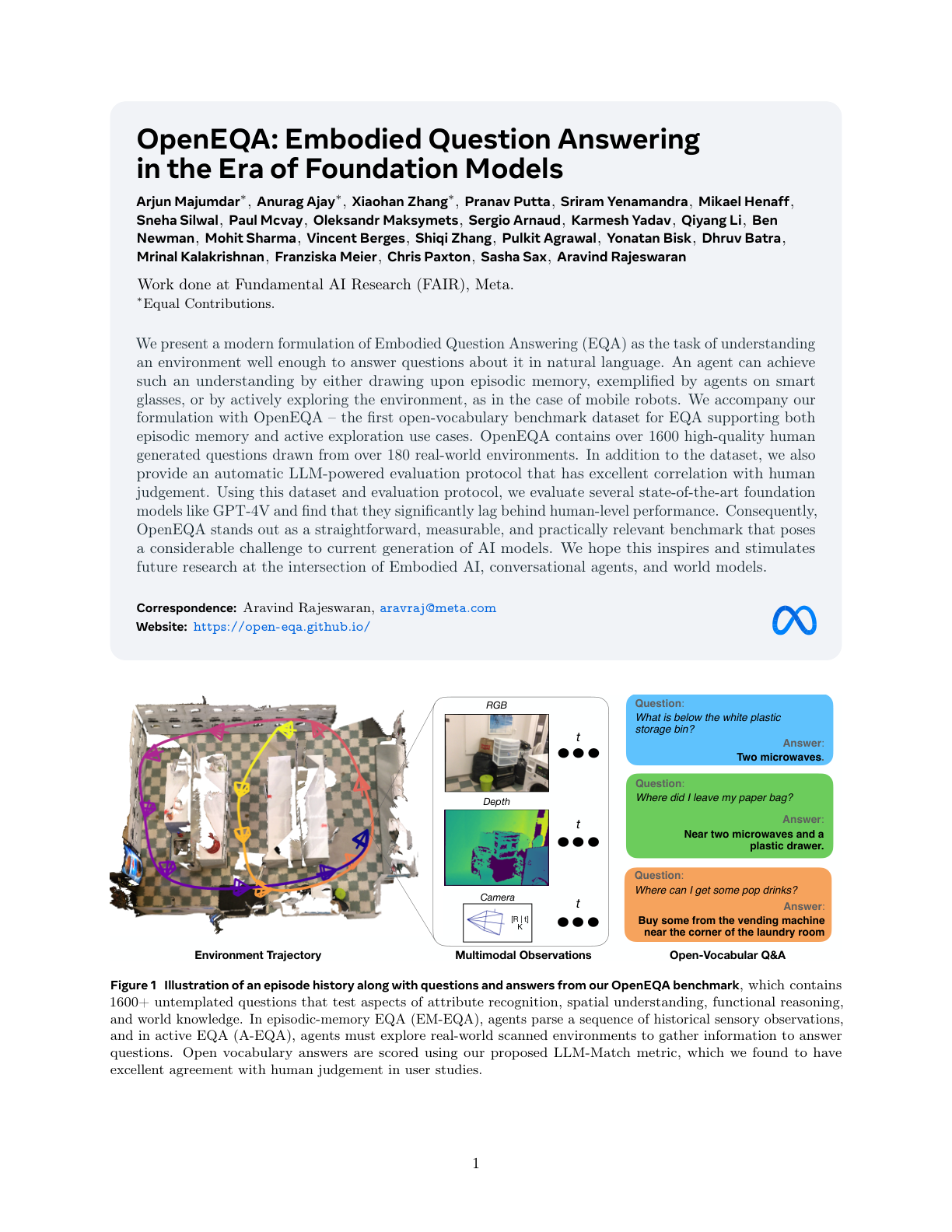
Meta's OpenEQA is an open-vocabulary benchmark for embodied question answering: 1,600+ human-written questions across 180+ real-world environments, with a calibrated LLM-as-judge metric that tracks human agreement closely.
Overview of Multilingual LLMs
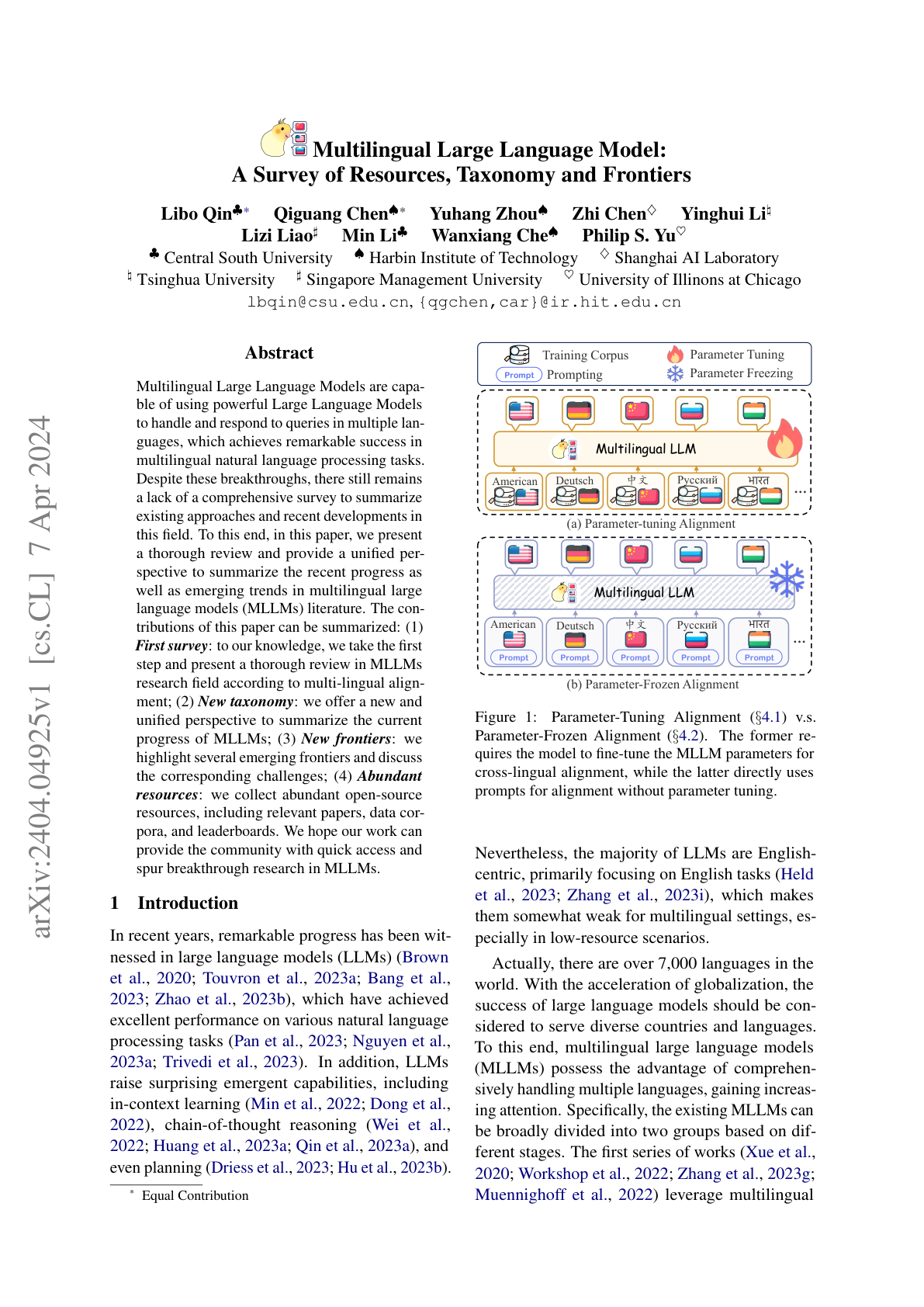
A first-of-its-kind survey on multilingual LLMs, organized by multilingual alignment principles rather than model-family hierarchy. The authors propose a unified taxonomy and collect open resources to accelerate future research.
JetMoE
MyShell's JetMoE-8B is an open MoE model trained for under $100K that matches or beats LLaMA2-7B, showing that competitive LLM training can be achieved on modest budgets with public data.
Grok-1.5
xAI's Grok-1.5 is the successor to the open-weight Grok-1, emphasizing long-context understanding and substantially stronger math, code, and reasoning performance.
Mini-Gemini
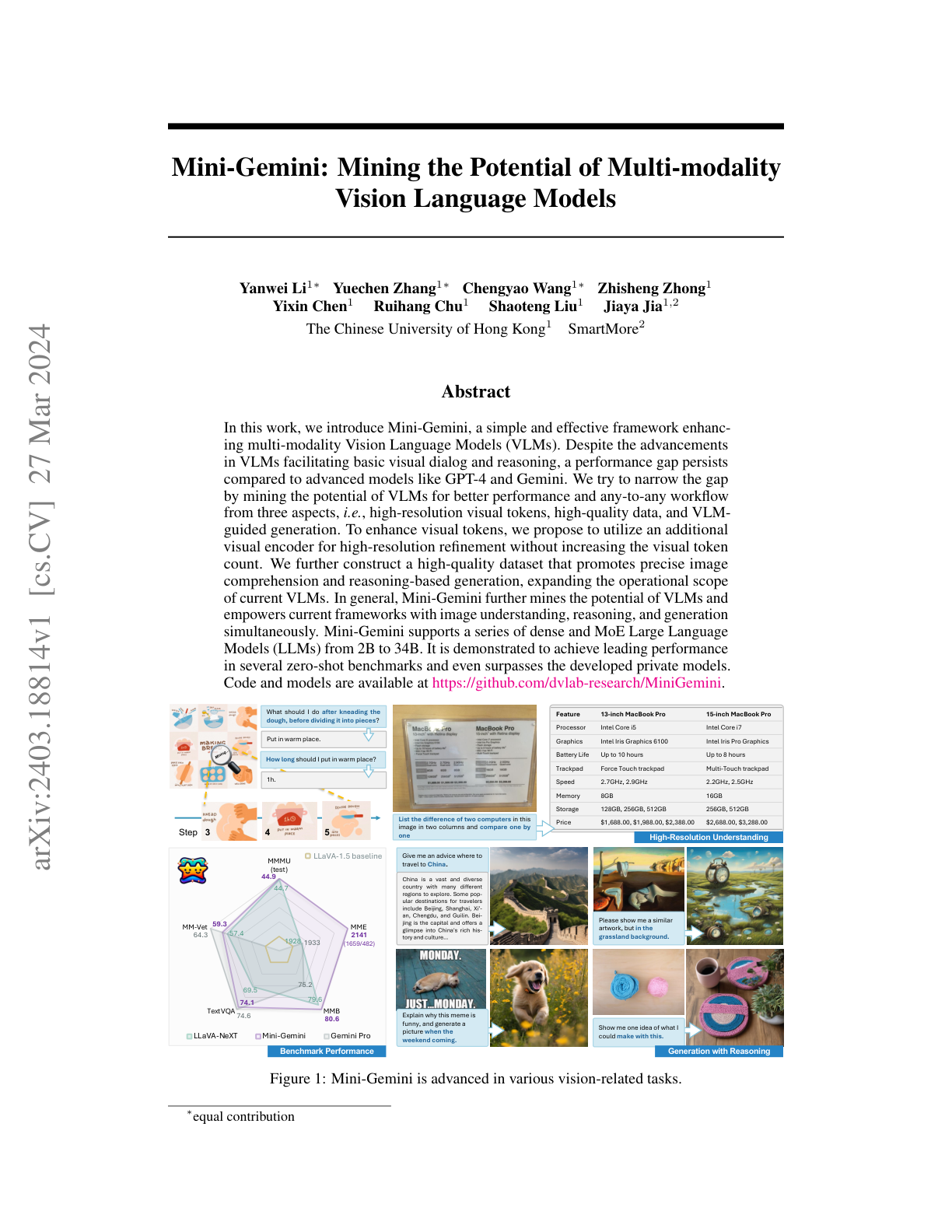
Mini-Gemini enhances vision-language models by adding a second high-resolution visual encoder that refines details without increasing the number of visual tokens consumed by the LLM.
Long-form factuality in LLMs
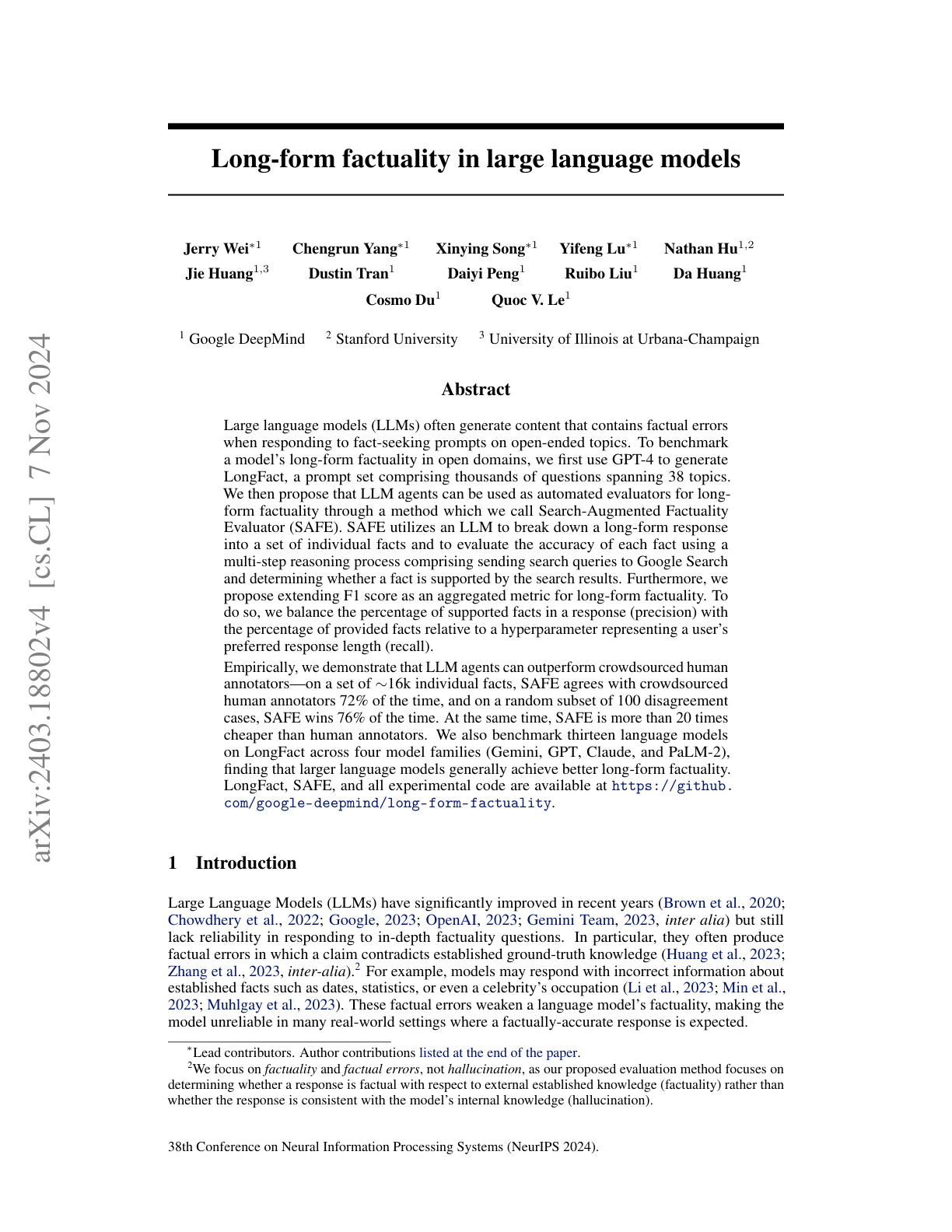
Google DeepMind introduces LongFact and SAFE, a prompt set and automated evaluator for judging whether the long-form answers of modern LLMs are actually factual.
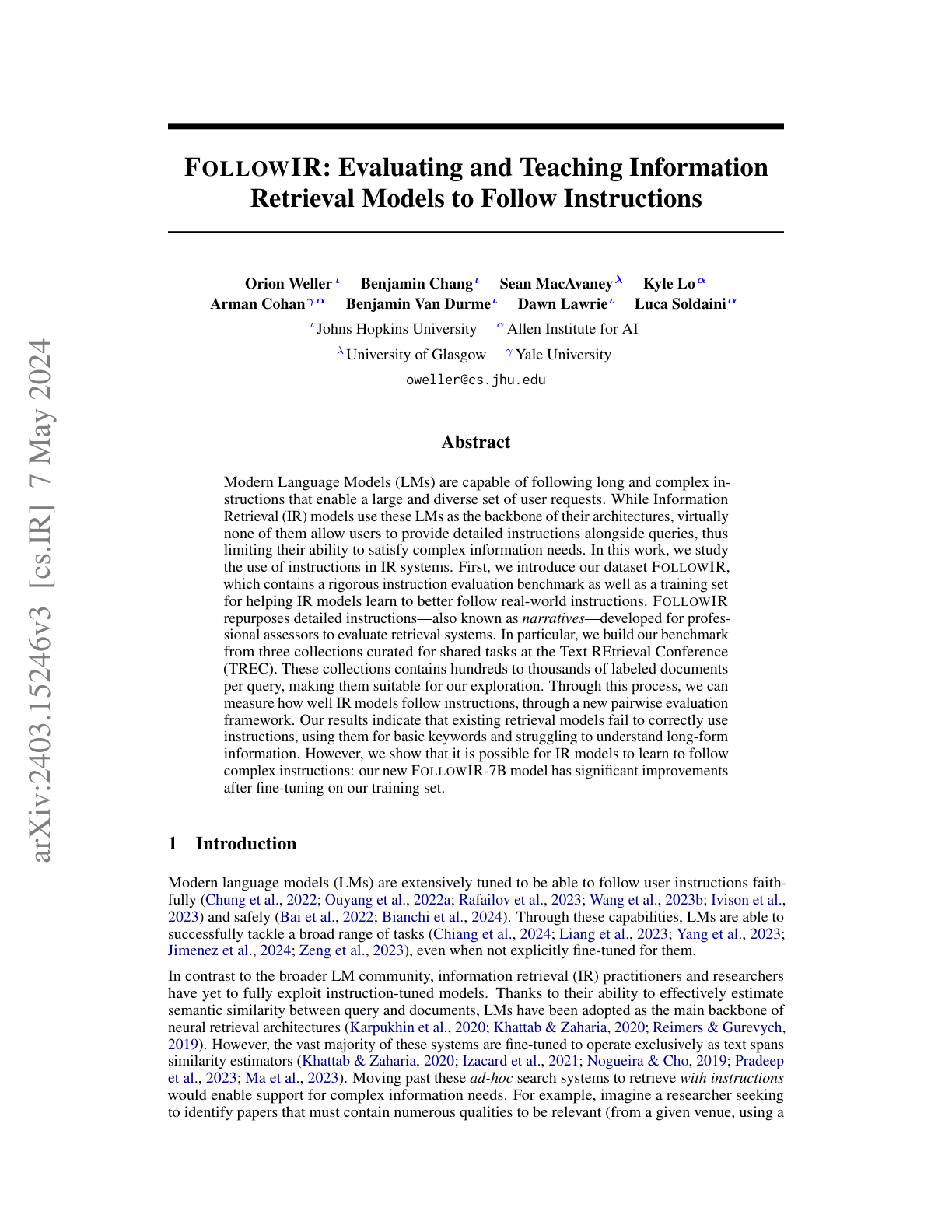
FollowIR
FollowIR is both a benchmark and a training set for teaching retrieval models to follow real-world, instruction-style queries rather than just match keywords.
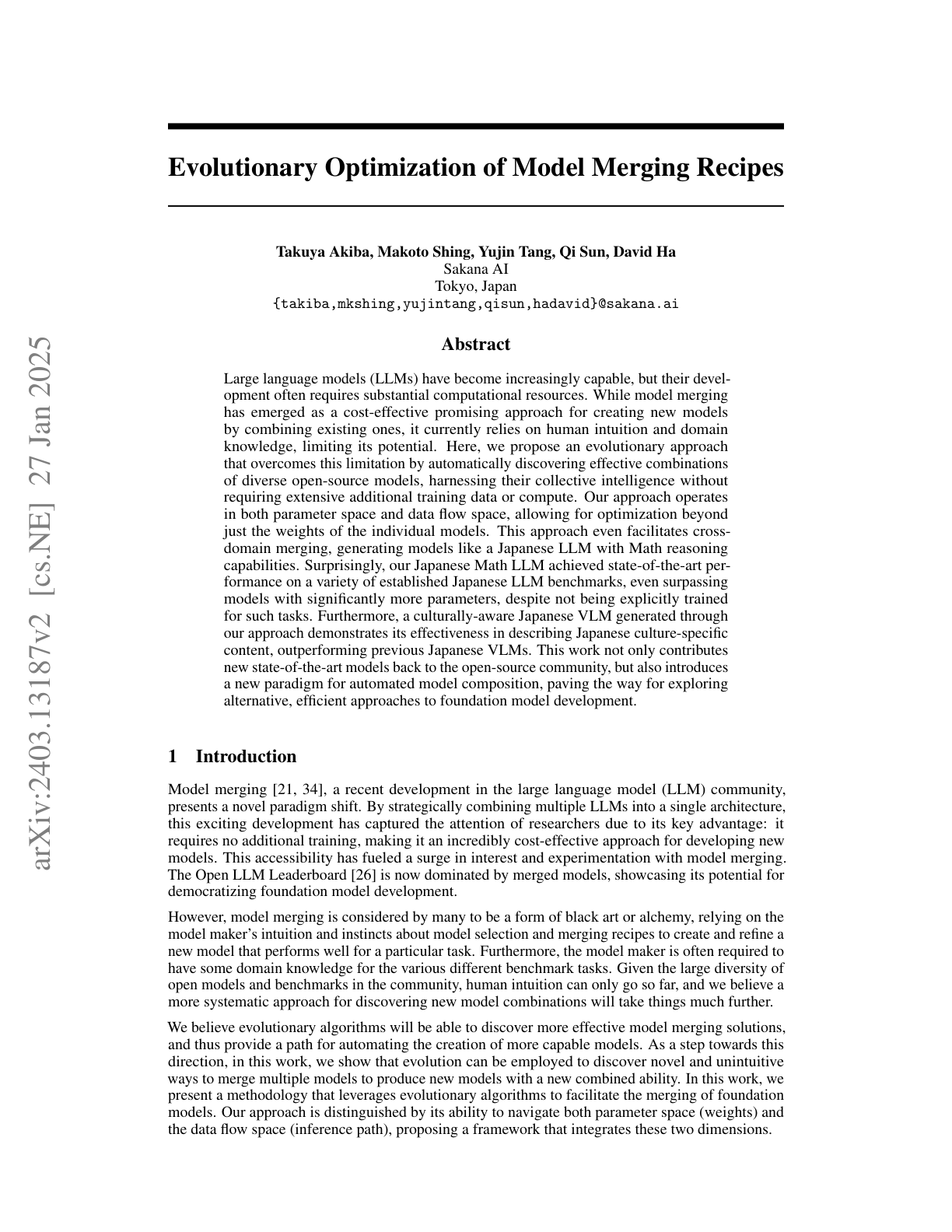
Evolutionary Model Merge
Sakana AI proposes using evolutionary algorithms to automatically discover effective merges of open-source models, producing strong composite models without any additional training.
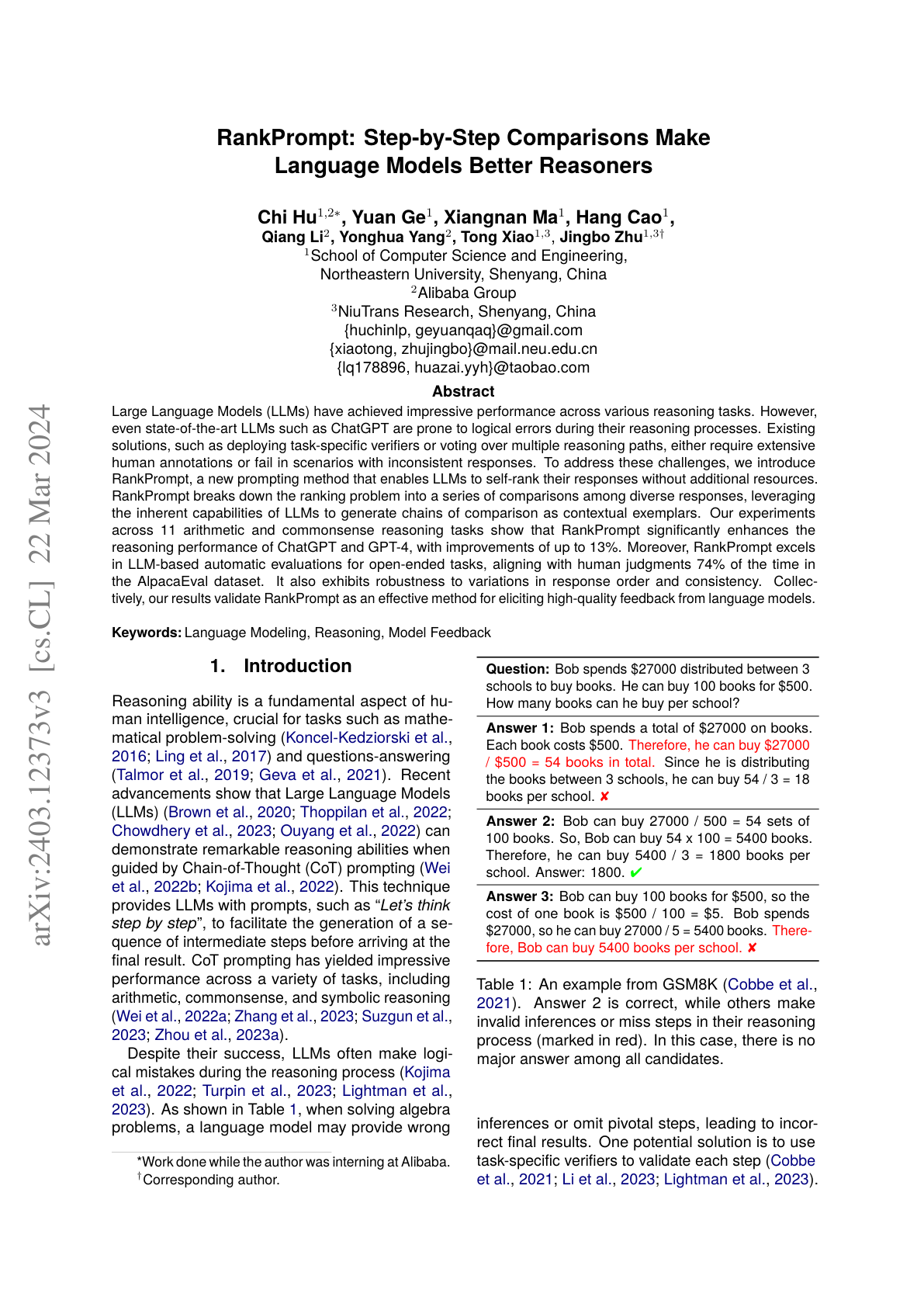
RankPrompt: Step-by-Step Comparisons Make LLMs Better Reasoners
RankPrompt is a prompting method that lets an LLM self-rank its own candidate answers via chains of pairwise comparisons, without needing an external verifier or additional fine-tuning.
LLMs Predict Neuroscience Results (BrainBench)
BrainBench asks both LLMs and human experts to predict the outcomes of neuroscience experiments from their abstracts, and finds LLMs outperform experts.