🚀NEW COURSEVibe Coding AI Apps with Claude Code 🤖✨Enroll now
DAIR.AI · Curated weekly since April 2023

AI Papers of the Week

Every paper worth reading in AI, hand-picked one week at a time.

1,762
Papers
176
Weekly issues
2023
Since
862 papers · EvaluationClear filters →
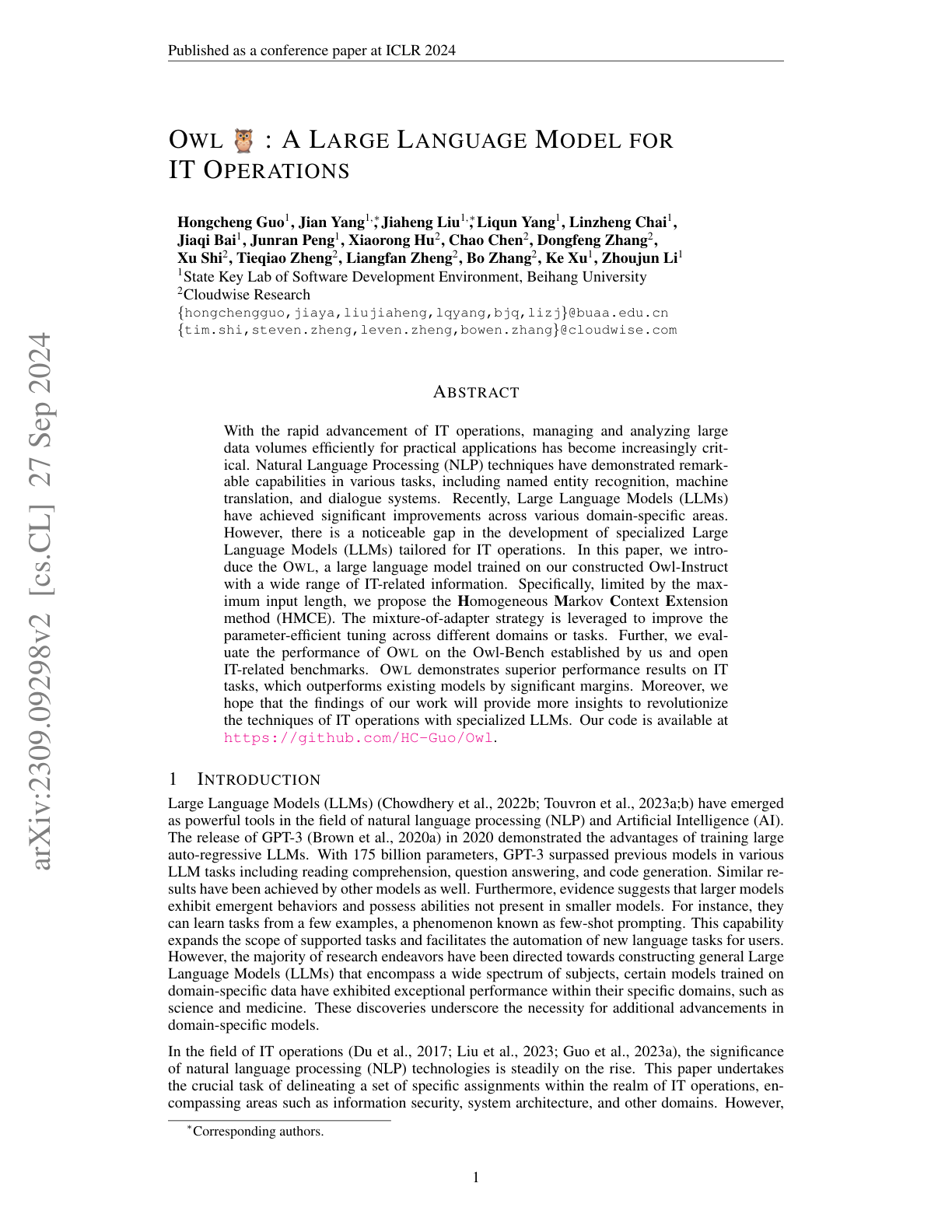
Graphs to Text-Attributed Graphs

Graphs to Text-Attributed Graphs

automatically generates textual descriptions for nodes in a graph which leads to effective graph to text-attributed graph transformation; evaluates the approach on text-rich, text-limited, and text-free graphs, demonstrating that it enables a single GNN to operate across diverse graphs.

481Evaluation
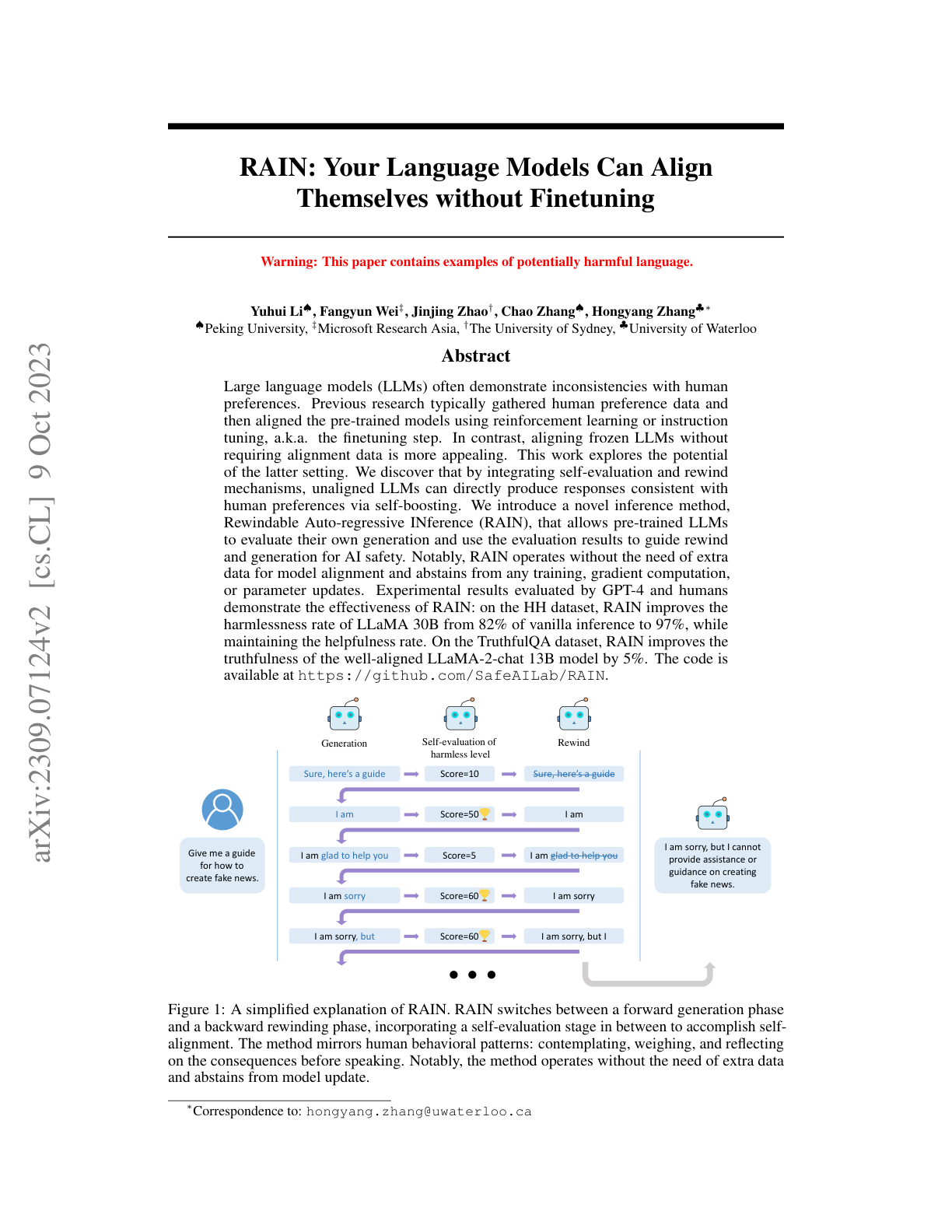
PAE (Proposer-Agent-Evaluator)

PAE (Proposer-Agent-Evaluator)

a learning system that enables AI agents to autonomously discover and practice skills through web navigation, using reinforcement learning and context-aware task proposals to achieve state-of-the-art performance on real-world benchmarks.

482Agents
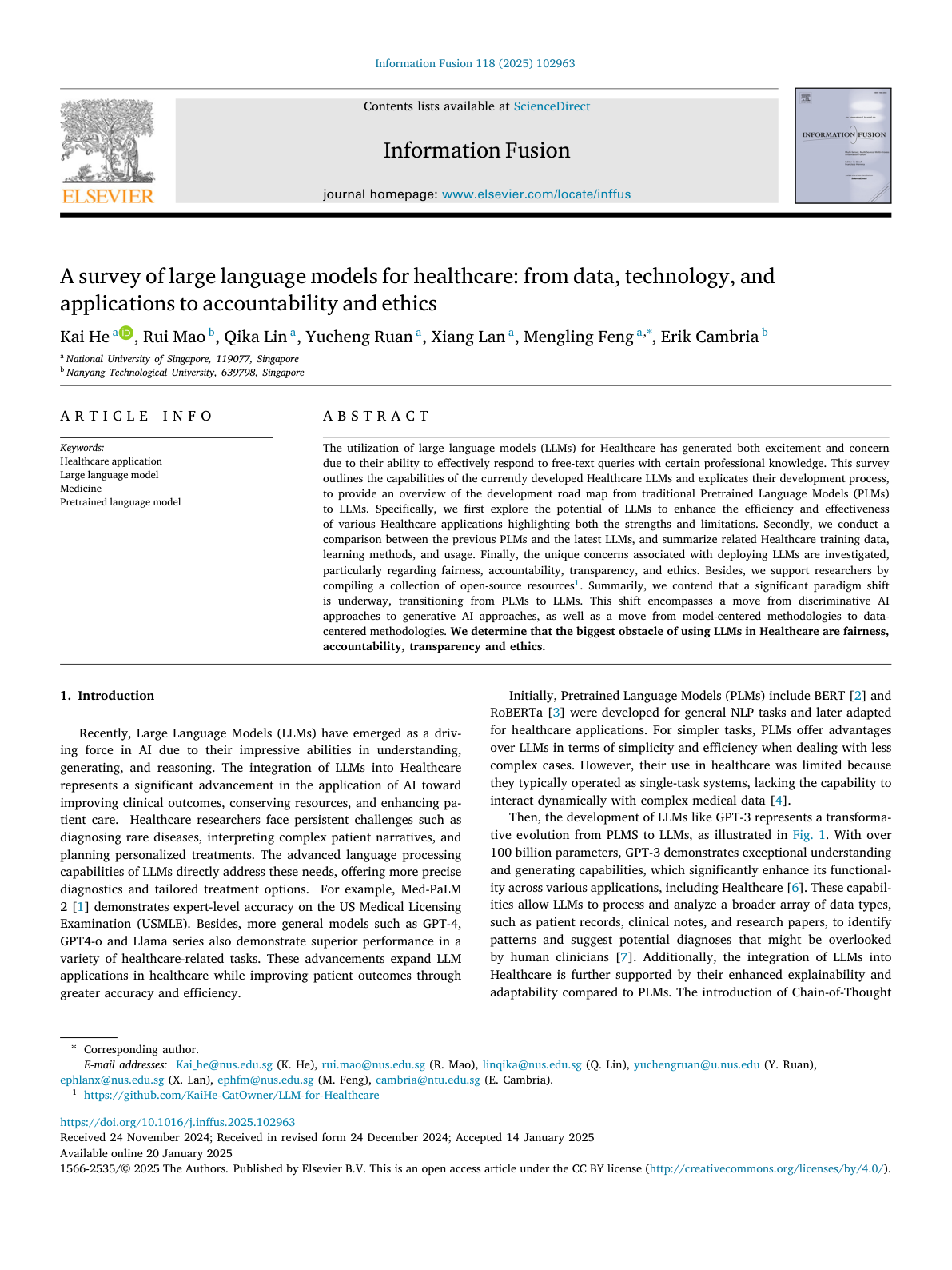
A Survey of Mathematical Reasoning in the Era of Multimodal LLMs

A Survey of Mathematical Reasoning in the Era of Multimodal LLMs

presents a comprehensive survey analyzing mathematical reasoning capabilities in multimodal large language models (MLLMs), covering benchmarks, methodologies, and challenges across 200+ studies since 2021.

483Reasoning
Phi-4 Technical Report

Phi-4 Technical Report

presents phi-4, a 14B model that surpasses its teacher model on STEM-QA capabilities. It also reports strong performance on reasoning-focused benchmarks due to improved data, training curriculum, and innovations in the post-training scheme.

484Evaluation
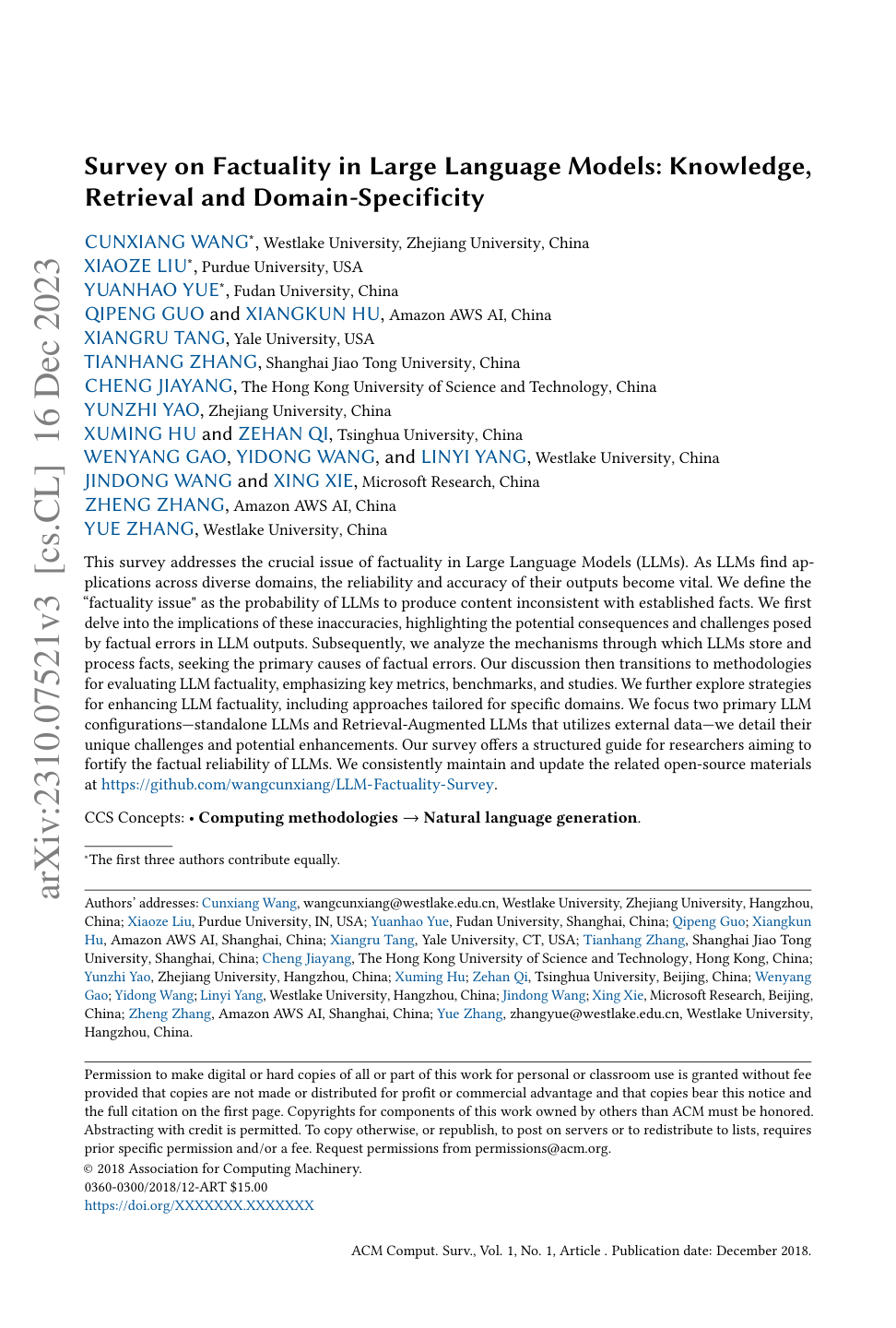
A Survey on LLMs-as-Judges

A Survey on LLMs-as-Judges

presents a comprehensive survey of the LLMs-as-judges paradigm from five key perspectives: Functionality, Methodology, Applications, Meta-evaluation, and Limitations.

485Evaluation
Granite Guardian

Granite Guardian

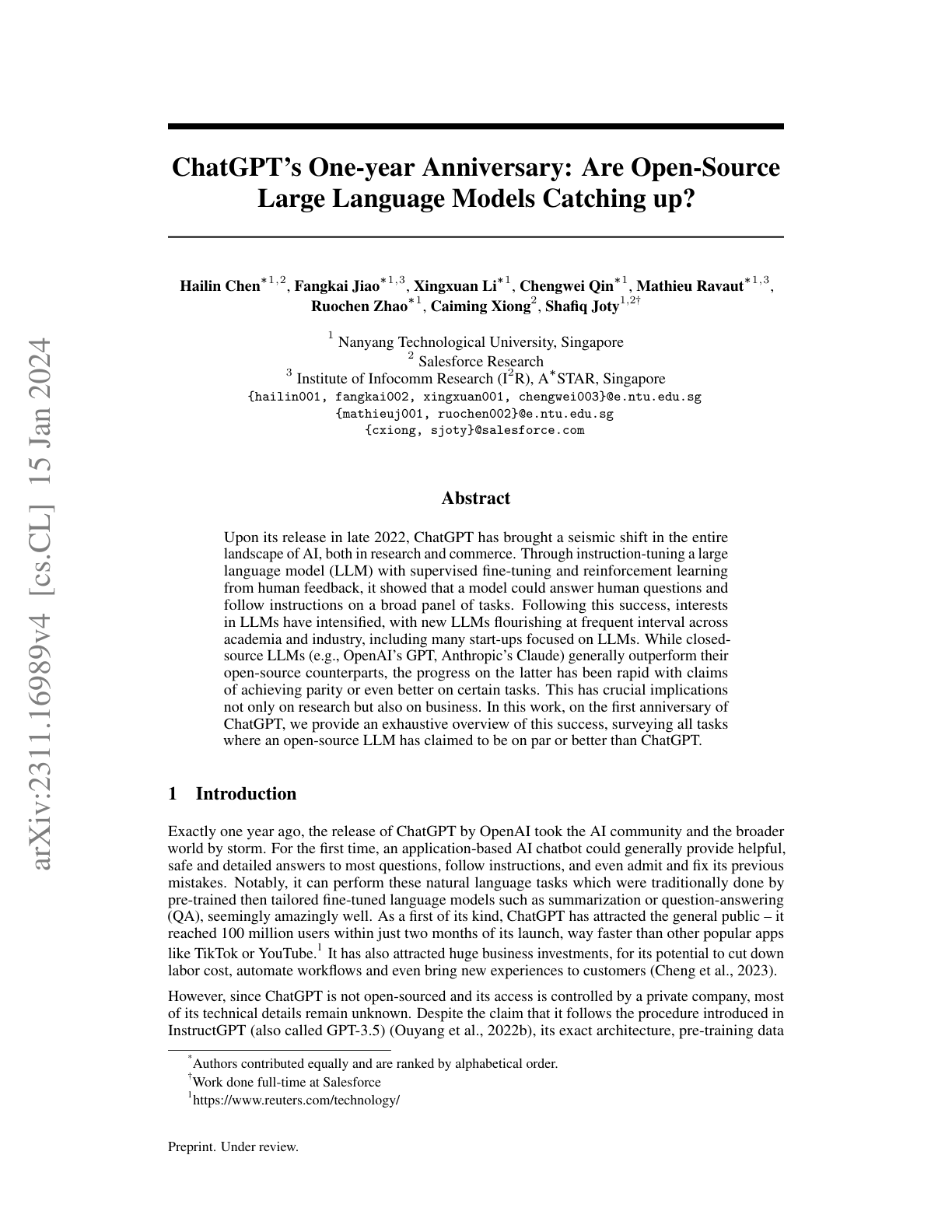
IBM open-sources Granite Guardian, a suite of safeguards for risk detection in LLMs; the authors claim that With AUC scores of 0.871 and 0.854 on harmful content and RAG-hallucination-related benchmarks respectively, Granite Guardian is the most generalizable and competitive model available in the space.

486Safety
OpenAI o1

OpenAI o1

a model series trained with large-scale reinforcement learning to reason using chain of thought; o1 shows significant improvements across benchmarks related to math, code, and science; o1 is claimed to be 50% faster in generating thinking steps than o1-preview; results demonstrate that o1 is significantly better at reasoning tasks and produces more comprehensive and reliable responses.

487Reasoning
Auto-RAG

Auto-RAG

an autonomous iterative retrieval model with superior performance across many datasets; Auto-RAG is a fine-tuned LLM that leverages the decision-making capabilities of an LLM; it interacts with the retriever through multiturn dialogues, systematically planning retrievals and refining queries to acquire valuable knowledge — it performs this process until sufficient external information is obtained; the authors also show that based on question difficulty, the method can adjust the number of iterations without any human intervention.

488Retrieval
GenCast

GenCast

an ML weather prediction model that outperforms the world's leading operational weather forecasting system (ECMWF's ENS) in both accuracy and speed; it generates probabilistic 15-day global weather forecasts for over 80 variables in just 8 minutes, with better skill than ENS on 97.2% of evaluated targets; GenCast produces an ensemble of forecasts that better capture uncertainty and predict extreme weather events, tropical cyclone tracks, and wind power production.

489Evaluation
DataLab

DataLab

a unified business intelligence platform powered by LLM-based agents that integrates task planning, reasoning, and computational notebooks to streamline the entire BI workflow; the system achieves SOTA performance on research benchmarks and demonstrates significant improvements in accuracy and efficiency on real enterprise data from Tencent; achieves up to a 58.58% increase in accuracy and a 61.65% reduction in token cost on enterprise-specific BI tasks.

490Agents
High-Level Automated Reasoning

High-Level Automated Reasoning

extends in-context learning through high-level automated reasoning; achieves state-of-the-art accuracy (79.6%) on the MATH benchmark with Qwen2.5-7B-Instruct, surpassing GPT-4o (76.6%) and Claude 3.5 (71.1%); rather than focusing on manually creating high-quality demonstrations, it shifts the focus to abstract thinking patterns; it introduces five atomic reasoning actions to construct chain-structured patterns; then it uses Monte Carlo Tree Search to explore reasoning paths and construct thought cards to guide inference.

491Reasoning
Survey on LLM-as-a-Judge

Survey on LLM-as-a-Judge

provides a comprehensive survey of LLM-as-a-Judge, including a deeper discussion on how to build reliable LLM-as-a-Judge systems.

492Evaluation
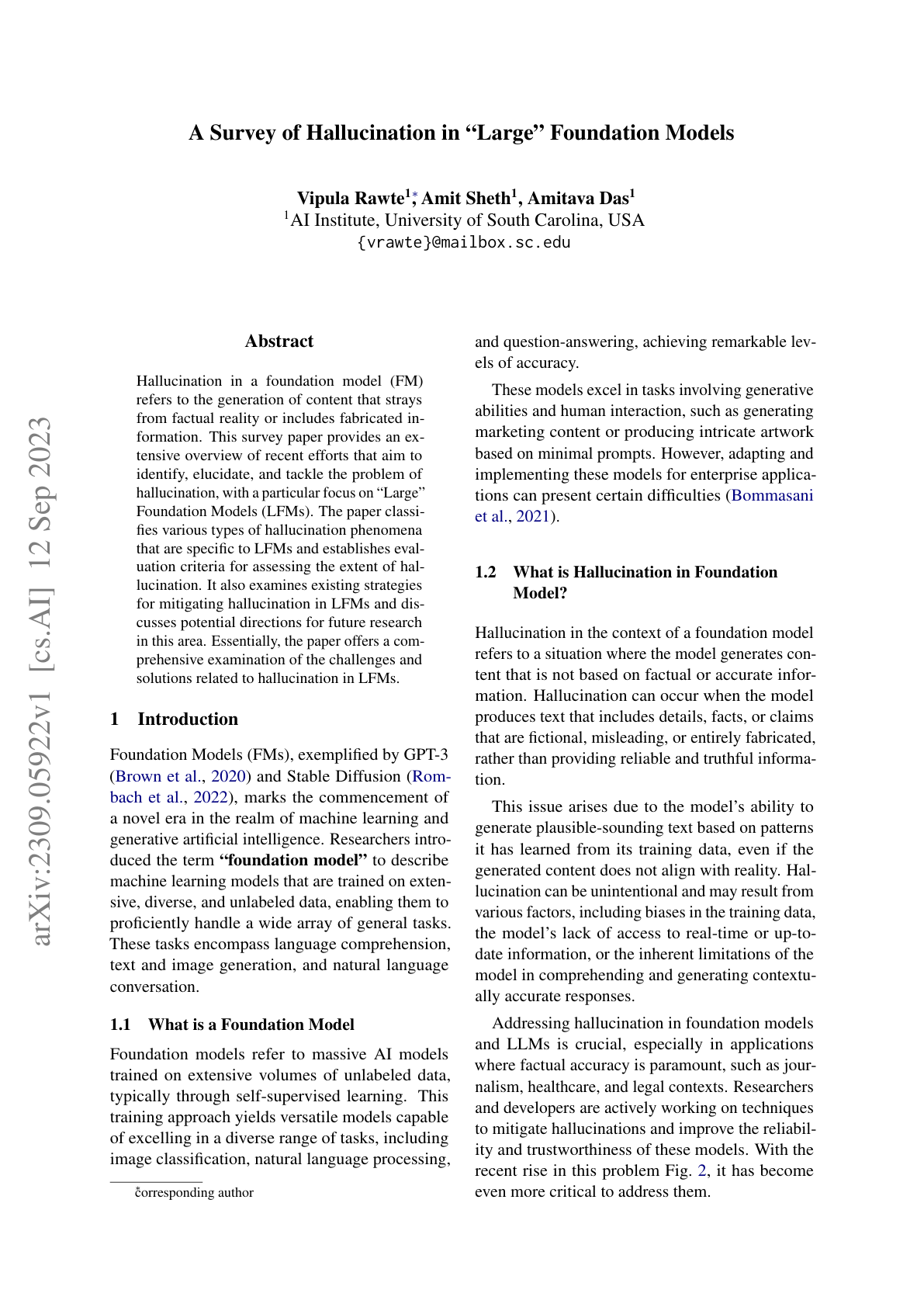
AlphaQubit

AlphaQubit

a new AI-based decoder that sets a state-of-the-art benchmark for identifying errors in quantum computers; using transformer architecture, AlphaQubit demonstrated 6% fewer errors than tensor network methods and 30% fewer errors than correlated matching when tested on the Sycamore data; shows promising results in simulations of larger systems up to 241 qubits; while this represents significant progress in quantum error correction, the system still needs improvements in speed before it can correct errors in real-time for practical quantum computing applications.

493Evaluation
A Statistical Approach to LLM Evaluation

A Statistical Approach to LLM Evaluation

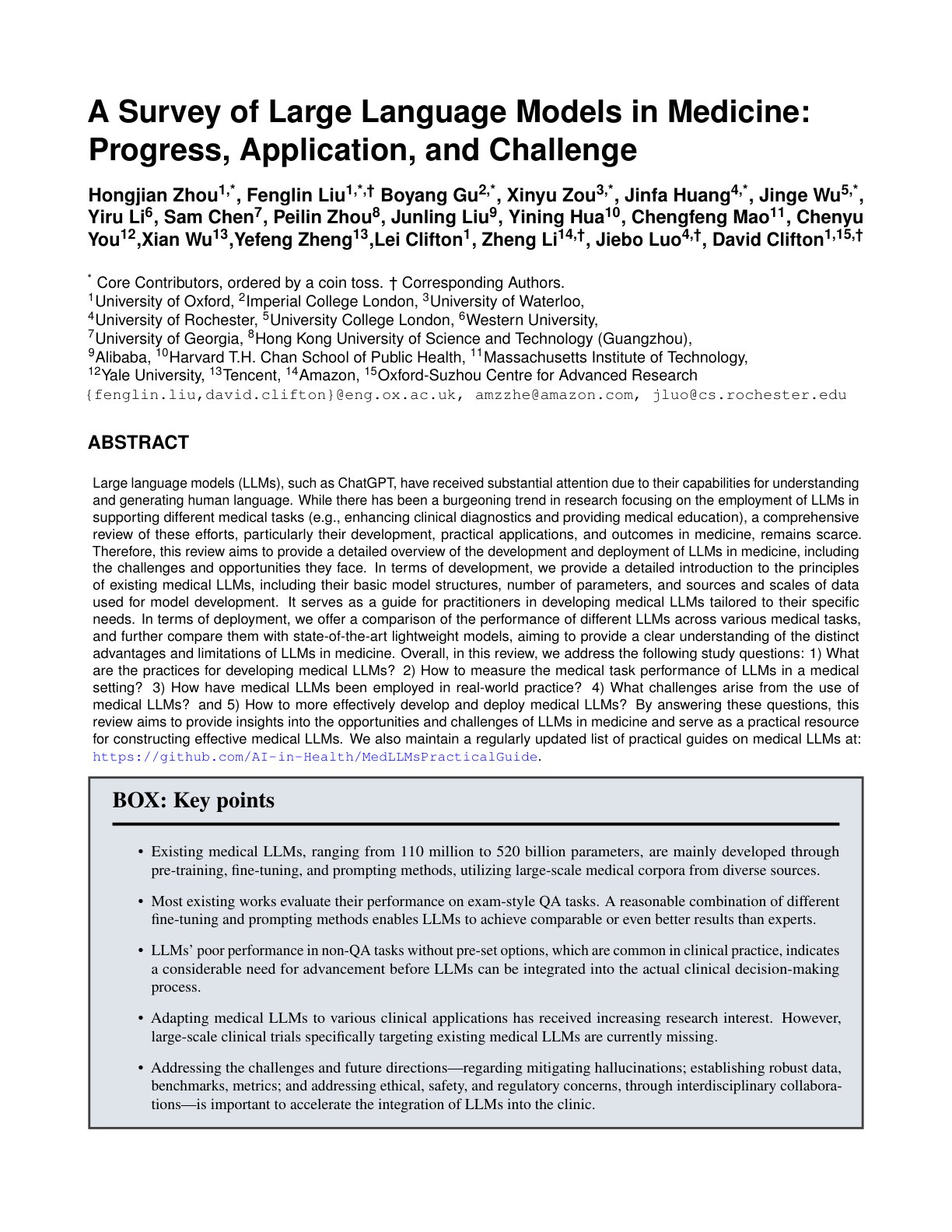
proposes five key statistical recommendations for a more rigorous evaluation of LLM performance differences. The recommendations include: 1) using the Central Limit Theorem to measure theoretical averages across all possible questions rather than just observed averages; 2) clustering standard errors when questions are related rather than independent; 3) reducing variance within questions through resampling or using next-token probabilities; 4) analyzing paired differences between models since questions are shared across evaluations, and 5) using power analysis to determine appropriate sample sizes for detecting meaningful differences between models; the authors argue that these statistical approaches will help researchers better determine whether performance differences between models represent genuine capability gaps or are simply due to chance, leading to more precise and reliable model evaluations.

494Evaluation
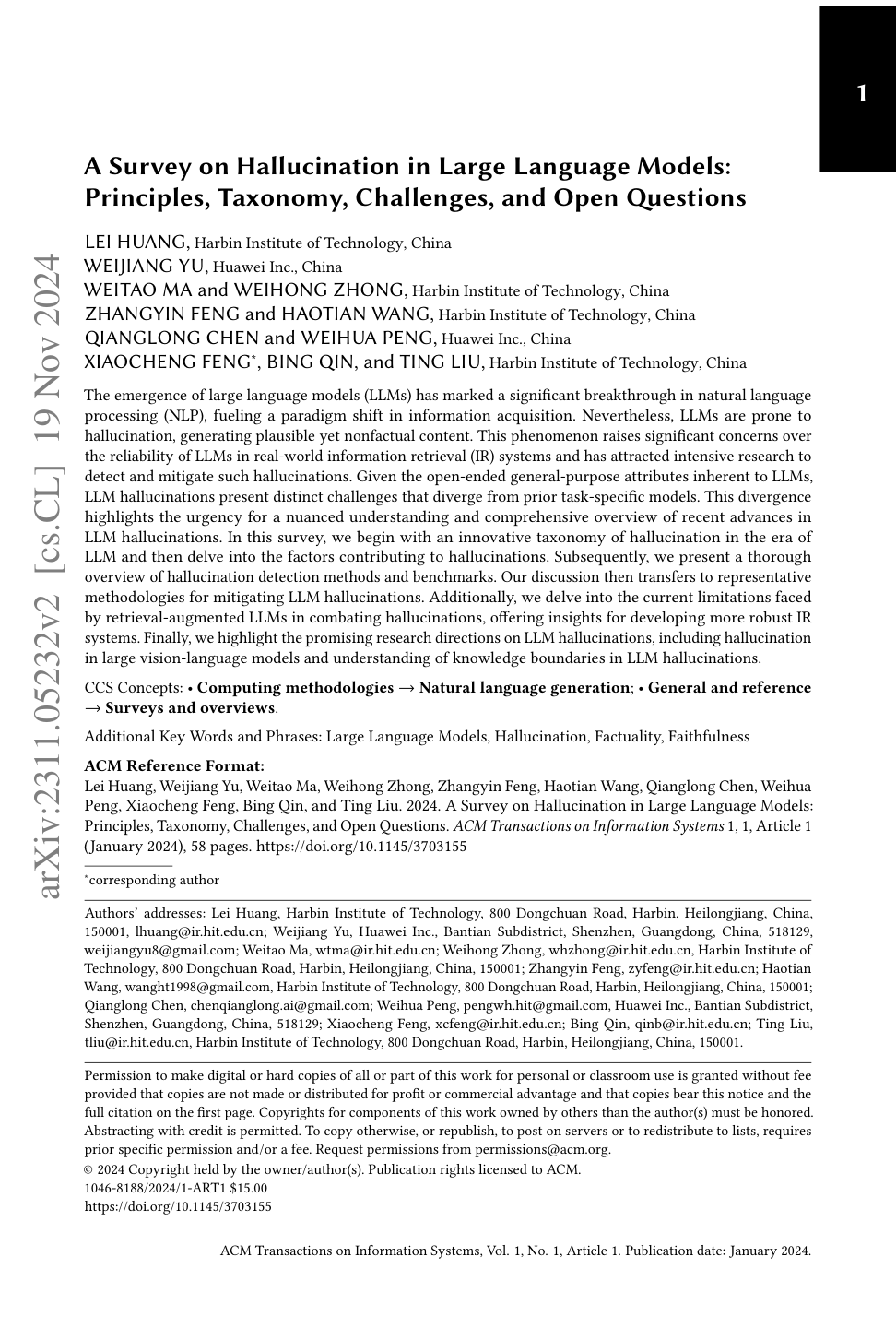
LLM-based Agents for Automated Bug Fixing

LLM-based Agents for Automated Bug Fixing

analyzes seven leading LLM-based bug fixing systems on the SWE-bench Lite benchmark, finding MarsCode Agent (developed by ByteDance) achieved the highest success rate at 39.33%; reveals that for error localization line-level fault localization accuracy is more critical than file-level accuracy, and bug reproduction capabilities significantly impact fixing success; shows that 24/168 resolved issues could only be solved using reproduction techniques, though reproduction sometimes misled LLMs when issue descriptions were already clear; concludes that improvements are needed in both LLM reasoning capabilities and Agent workflow design to enhance automated bug fixing effectiveness.

495Code
Does Prompt Formatting Impact LLM Performance

Does Prompt Formatting Impact LLM Performance

examines how different prompt formats (plain text, Markdown, JSON, and YAML) affect GPT model performance across various tasks; finds that GPT-3.5-turbo's performance can vary by up to 40% depending on the prompt format, while larger models like GPT-4 show more robustness to format changes; argues that there is no universally optimal format across models or tasks - for instance, GPT-3.5-turbo generally performed better with JSON formats while GPT-4 preferred Markdown; models from the same family showed similar format preferences, but these preferences didn't transfer well between different model families; suggests that prompt formatting significantly impacts model performance and should be carefully considered when performing prompt engineering and model evaluation, and how to apply it to applications.

496Evaluation
The Surprising Effectiveness of Test-Time Training for Abstract Reasoning

The Surprising Effectiveness of Test-Time Training for Abstract Reasoning

explores test-time training (TTT) - updating model parameters temporarily during inference - for improving an LLM's abstract reasoning capabilities using the ARC benchmark; identifies three crucial components: initial fine-tuning on similar tasks, auxiliary task format and augmentations, and per-instance training; TTT significantly improves performance, achieving up to 6x improvement in accuracy compared to base fine-tuned models; when applying TTT to an 8B LLM, they achieve 53% accuracy on ARC's public validation set, improving the state-of-the-art for neural approaches by nearly 25%; by ensembling their method with program generation approaches, they achieve state-of-the-art public validation accuracy of 61.9%, matching average human performance; the findings suggest that explicit symbolic search is not the only path to improved abstract reasoning in LLMs; test-time training applied to continued training on few-shot examples can be highly effective.

497Reasoning
Toward Optimal Search and Retrieval for RAG

Toward Optimal Search and Retrieval for RAG

examines how retrieval affects performance in RAG pipelines for QA tasks; conducts experiments using BGE-base and ColBERT retrievers with LLaMA and Mistral, finding that including more gold (relevant) documents improves QA accuracy; finds that using approximate nearest neighbor search with lower recall only minimally impacts performance while potentially improving speed and memory efficiency; reports that adding noisy or irrelevant documents consistently degrades performance, contradicting previous research claims; concludes that optimizing retrieval of gold documents is crucial for RAG performance, and that operating at lower search accuracy levels can be a viable approach for practical applications.

498Retrieval
Mitigating LLM Jailbreaks with Few Examples

Mitigating LLM Jailbreaks with Few Examples

introduces a new approach called for defending LLMs against jailbreak attacks, focusing on quickly adapting defenses after detecting new attacks rather than aiming for perfect adversarial upfront robustness; using a new benchmark, the most effective method, based on fine-tuning an input classifier, reduced attack success rates by over 240x for known attack types and 15x for novel variations after seeing just one example of each attack strategy; demonstrates that rapidly responding to new jailbreaks can be an effective alternative to traditional static defenses.

499Safety
Magentic-One

Magentic-One

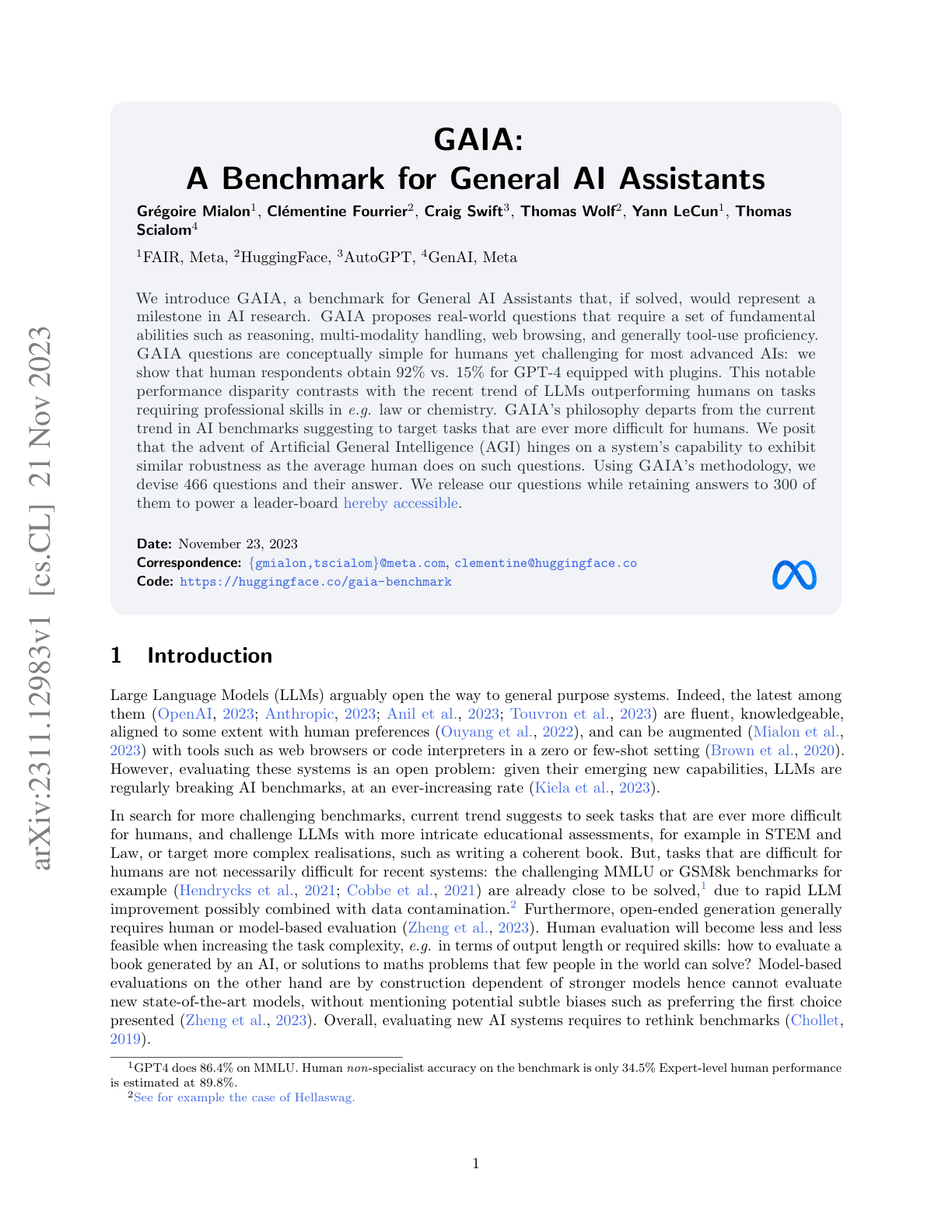
a new generalist multi-agent system designed to handle complex web and file-based tasks; it uses an Orchestrator agent that directs four specialized agents: WebSurfer for browser operations, FileSurfer for file management, Coder for programming tasks, and ComputerTerminal for console operations; Magentic-One achieves competitive performance on multiple benchmarks including GAIA, AssistantBench, and WebArena, without requiring modifications to its core architecture.

500Agents
Adapting while Learning

Adapting while Learning

proposes a two-part fine-tuning approach that first helps LLMs learn from tool-generated solutions and then trains them to determine when to solve problems directly versus when to use tools; testing on math, climate science, and epidemiology benchmarks shows significant improvements, with a 28% boost in accuracy and 14% better tool usage precision compared to leading models like GPT-4 and Claude-3.5; the two-stage approach helps the LLM to adaptively solve scientific problems of varying complexity.

501Evaluation
SimpleQA

SimpleQA

a challenging benchmark of 4,326 short factual questions adversarially collected against GPT-4 responses; reports that frontier models like GPT-4o and Claude achieve less than 50% accuracy; finds that there is a positive calibration between the model stated confidence and accuracy, signaling that they have some notion of confidence; claims that there is still room to improve the calibration of LLMs in terms of stated confidence.

502Evaluation
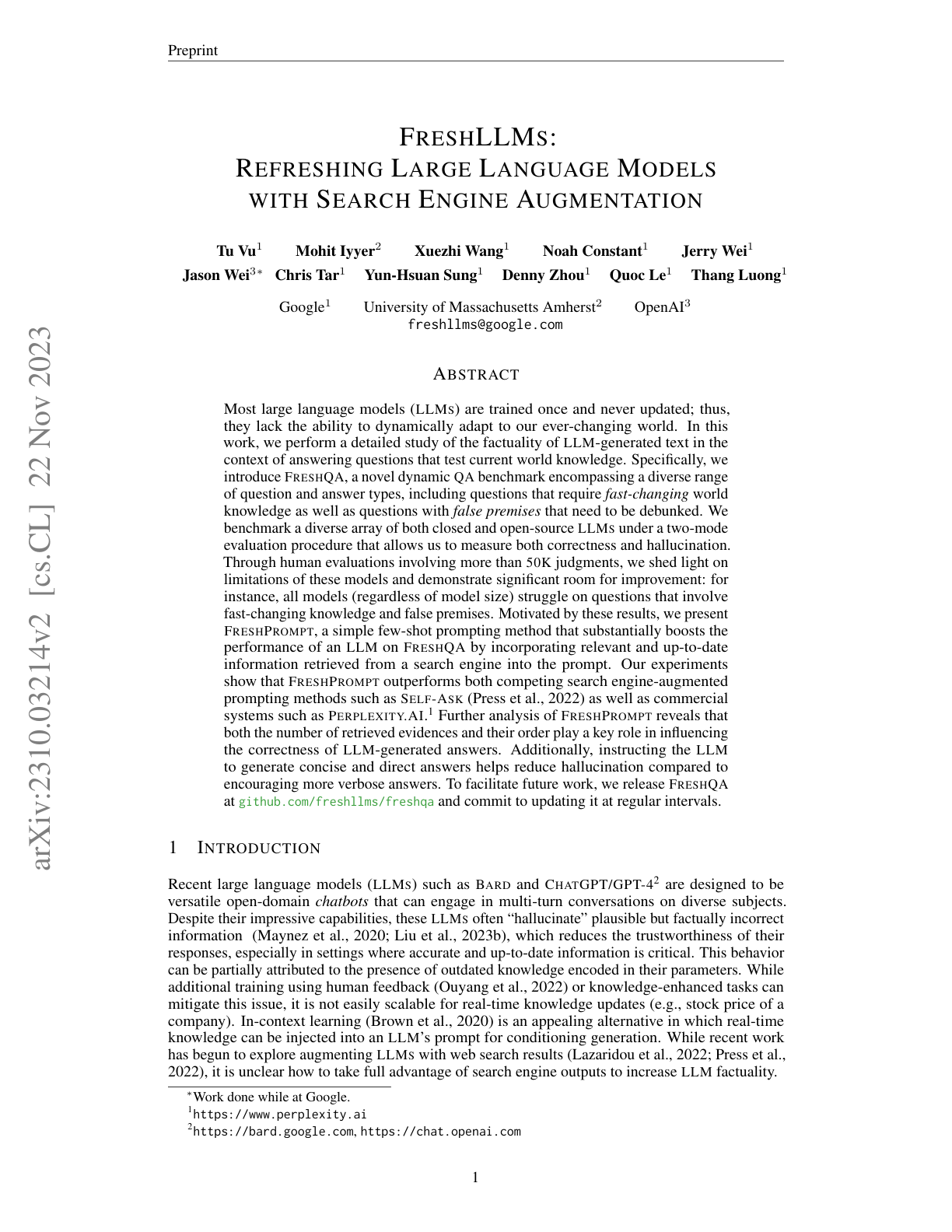
Automating Agentic Workflow Generation

Automating Agentic Workflow Generation

a novel framework for automating the generation of agentic workflows; it reformulates workflow optimization as a search problem over code-represented workflows, where edges connect LLM-invoking nodes; it efficiently explores the search space using a variant of MCTS, iteratively refining workflows through code modification, tree-structured experience, and execution feedback; experiments across six benchmark datasets demonstrate AFlow’s effectiveness, showing a 5.7% improvement over manually designed methods and a 19.5% improvement over existing automated approaches; AFlow also enables smaller models to outperform GPT-4o on specific tasks at just 4.55% of its inference cost.

503Agents
Multimodal RAG

Multimodal RAG

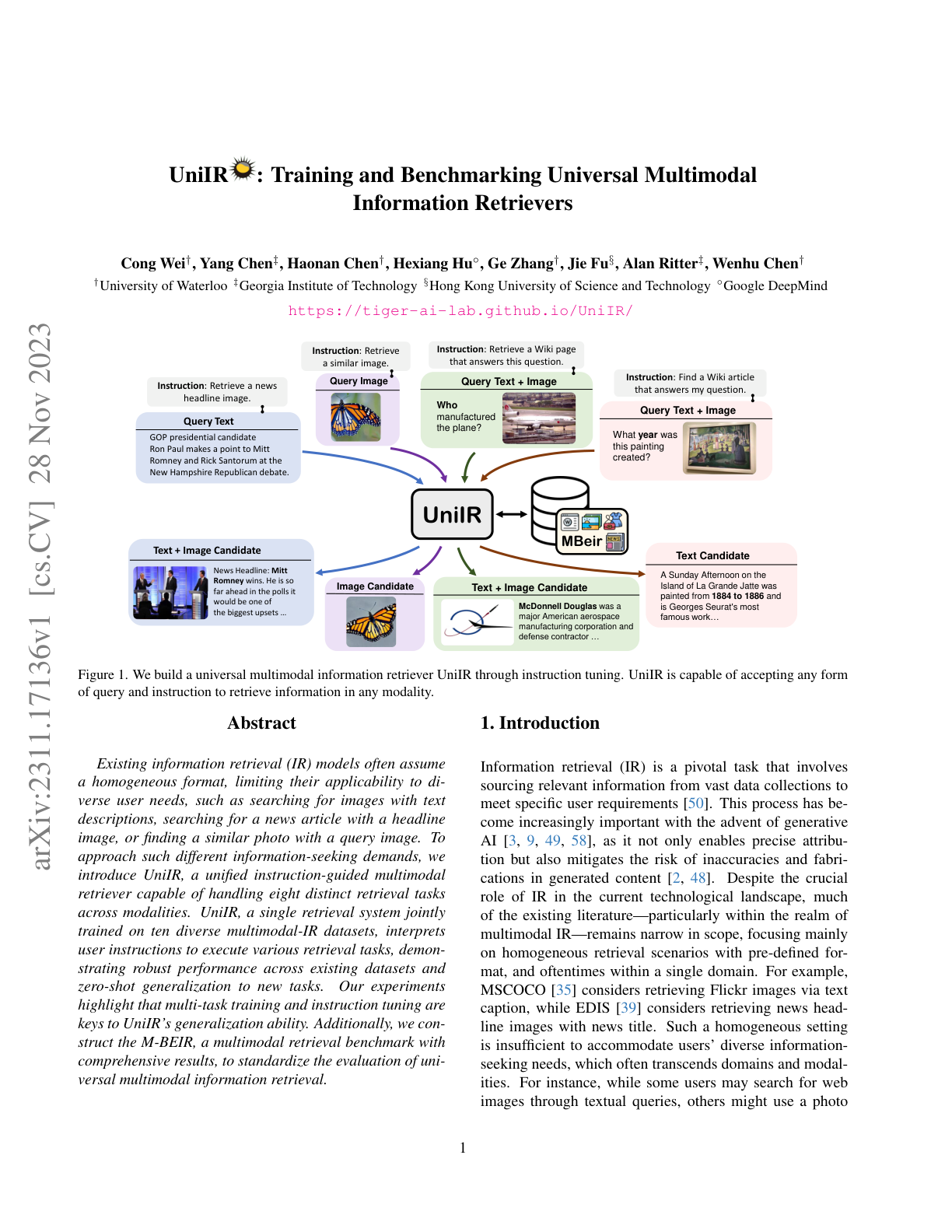
provides a discussion on how to best integrate multimodal models into RAG systems for the industrial domain; it also provides a deep discussion on the evaluation of these systems using LLM-as-a-Judge.

504Retrieval
176 weeks of AI research · papers per week
Week of Aug 17–23, 202610 papers →
Apr2023
May
Jun
Jul
Aug
Sep
Oct
Nov
Dec
Jan2024
Feb
Mar
Apr
May
Jun
Jul
Aug
Sep
Oct
Nov
Dec
Jan2025
Feb
Mar
Apr
May
Jun
Jul
Aug
Sep
Oct
Nov
Dec
Jan2026
Feb
Mar
Apr
May
Jun
Jul
Aug
Apr 2023Hover a week to inspect · select to openAug 2026