AI Papers of the Week
Every paper worth reading in AI, hand-picked one week at a time.
Llama 3
Meta's Llama 3 launches with 8B and 70B pretrained and instruction-tuned variants. Llama 3 8B beats Gemma 7B and Mistral 7B Instruct, and Llama 3 70B is competitive with Gemini Pro 1.5 and Claude 3 Sonnet on standard benchmarks.
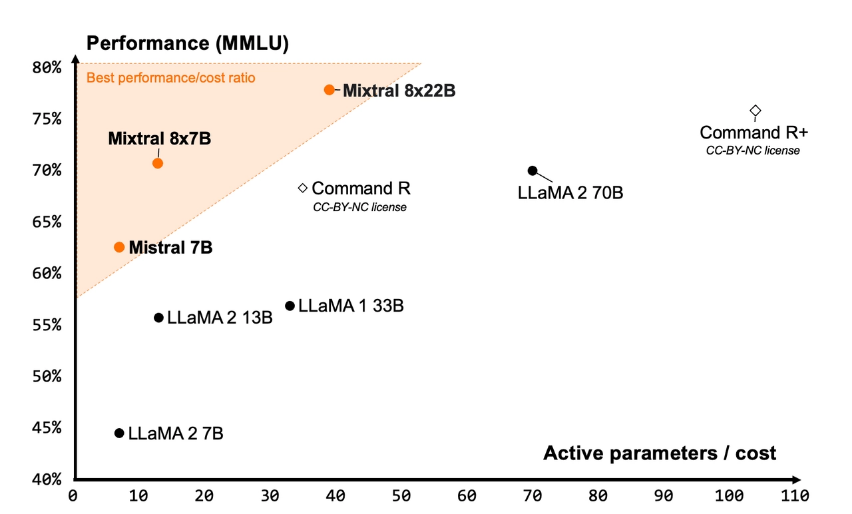
Mixtral 8x22B
Mistral's Mixtral 8x22B is a sparse Mixture-of-Experts model with 141B total / 39B active parameters and a 64K context window, released under Apache 2.0. It leads open models on MMLU and posts strong math, code, and multilingual numbers.
How Faithful are RAG Models? (ClashEval)
ClashEval constructs a 1,200-question benchmark across six domains with intentionally corrupted retrieved documents to measure when RAG helps and when it misleads GPT-4 and other top LLMs.
A Survey on Retrieval-Augmented Text Generation for LLMs
This survey organizes the RAG literature into a four-stage framework (pre-retrieval, retrieval, post-retrieval, generation) and traces the paradigm's evolution alongside open challenges.
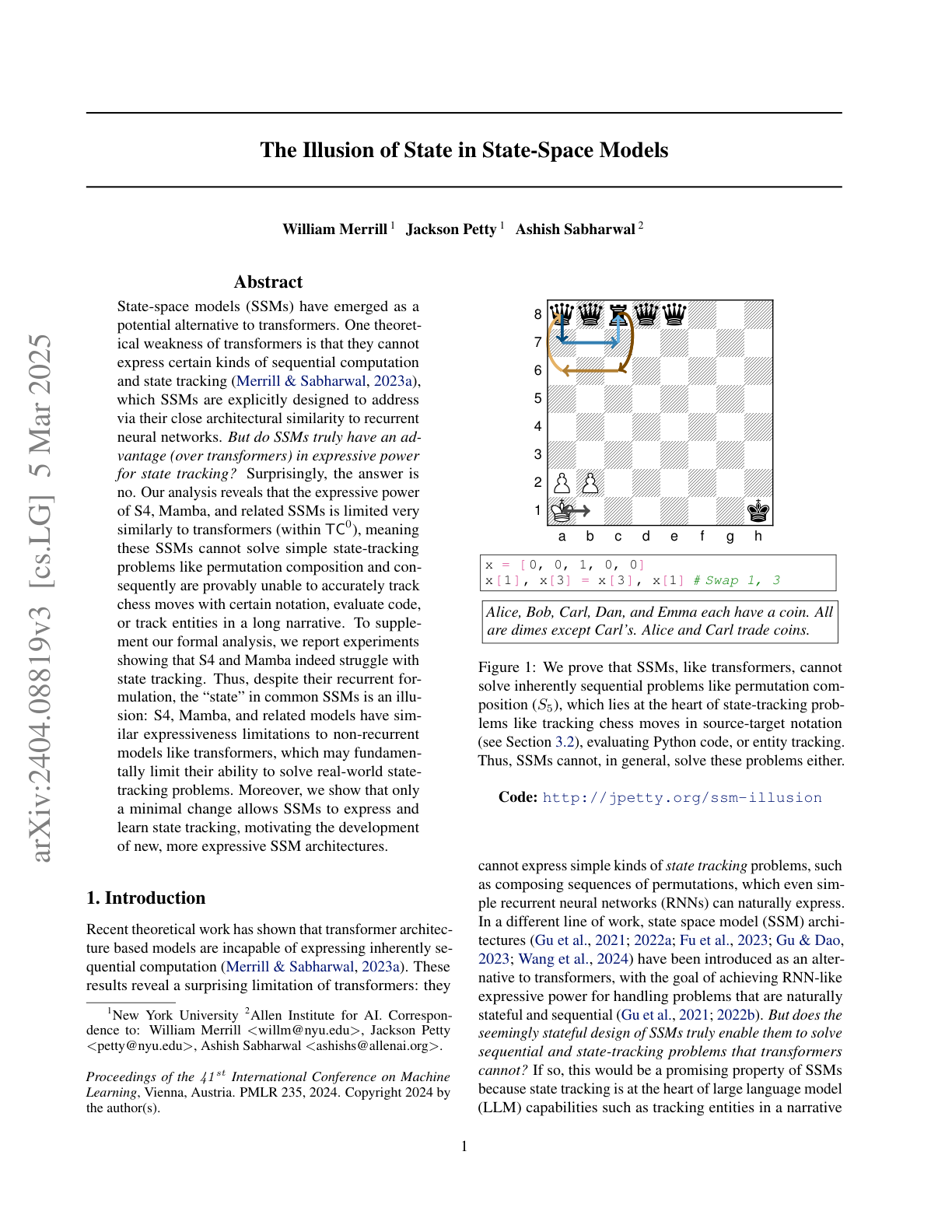
The Illusion of State in State-Space Models
This paper proves that modern state-space models (Mamba, S4, etc.) share the same expressive ceiling as transformers: they cannot compute anything outside the TC^0 complexity class, despite the RNN-like "state" vocabulary they borrow.
Emerging AI Agent Architectures
A short survey mapping the current landscape of LLM-based agent architectures, focused on reasoning, planning, and tool calling as the three capability pillars for complex agentic workflows.
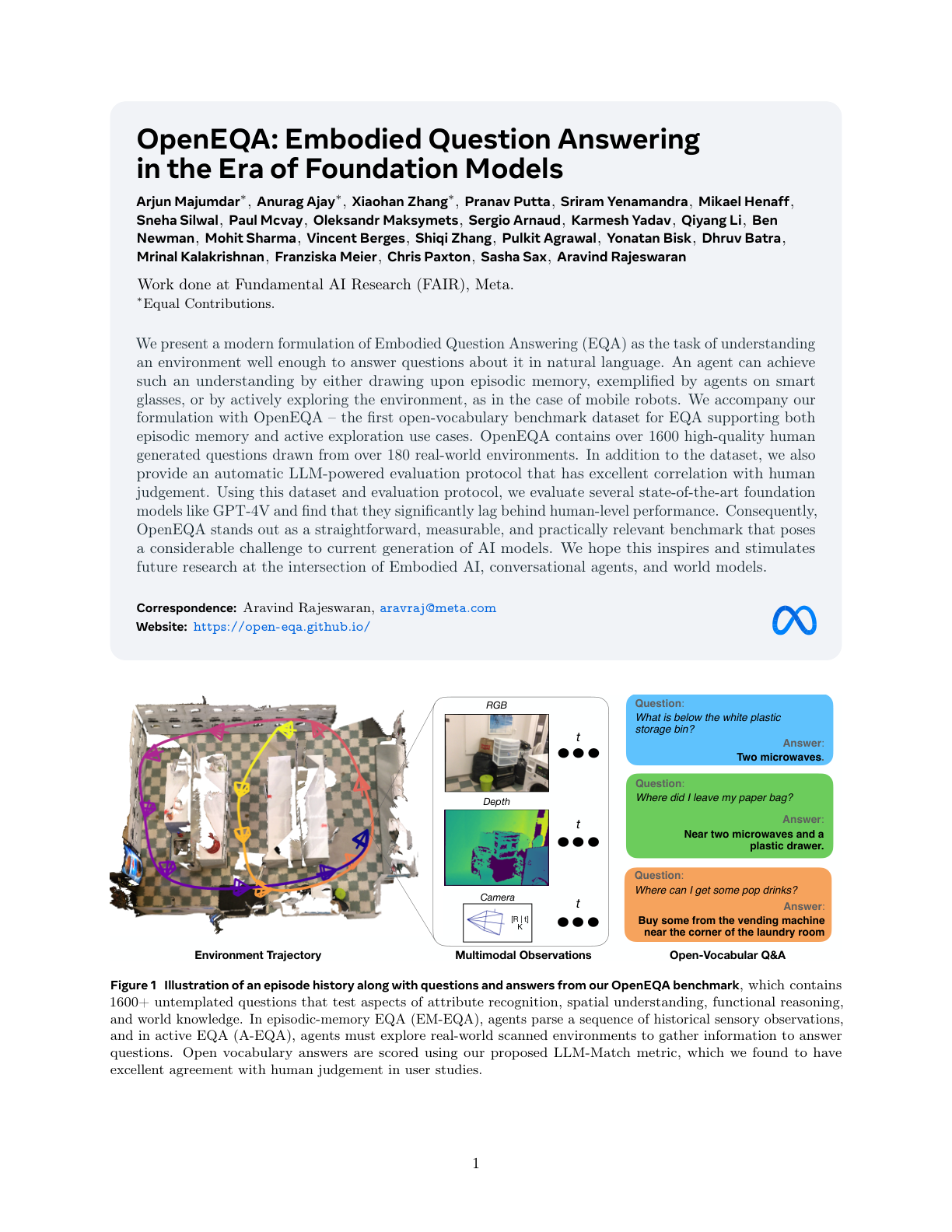
OpenEQA
Meta's OpenEQA is an open-vocabulary benchmark for embodied question answering: 1,600+ human-written questions across 180+ real-world environments, with a calibrated LLM-as-judge metric that tracks human agreement closely.

CodeGemma
CodeGemma is a family of open code LLMs built on Gemma, released in 2B (pretrained), 7B (pretrained), and 7B-IT (instruction-tuned) variants. The 2B model is optimized for low-latency code completion, and the 7B-IT model leads its weight class on HumanEval.
Best Practices and Lessons on Synthetic Data
Google DeepMind's survey-style position paper on synthetic data for LLMs. It covers applications, quality-assurance principles, and the open challenges of factuality, fidelity, bias, and privacy.
Reasoning with Intermediate Revision and Search (THOUGHTSCULPT)
THOUGHTSCULPT is a graph-based reasoning framework that combines Monte Carlo Tree Search with an explicit revision action, letting an LLM iteratively rewrite earlier thoughts instead of only extending them.
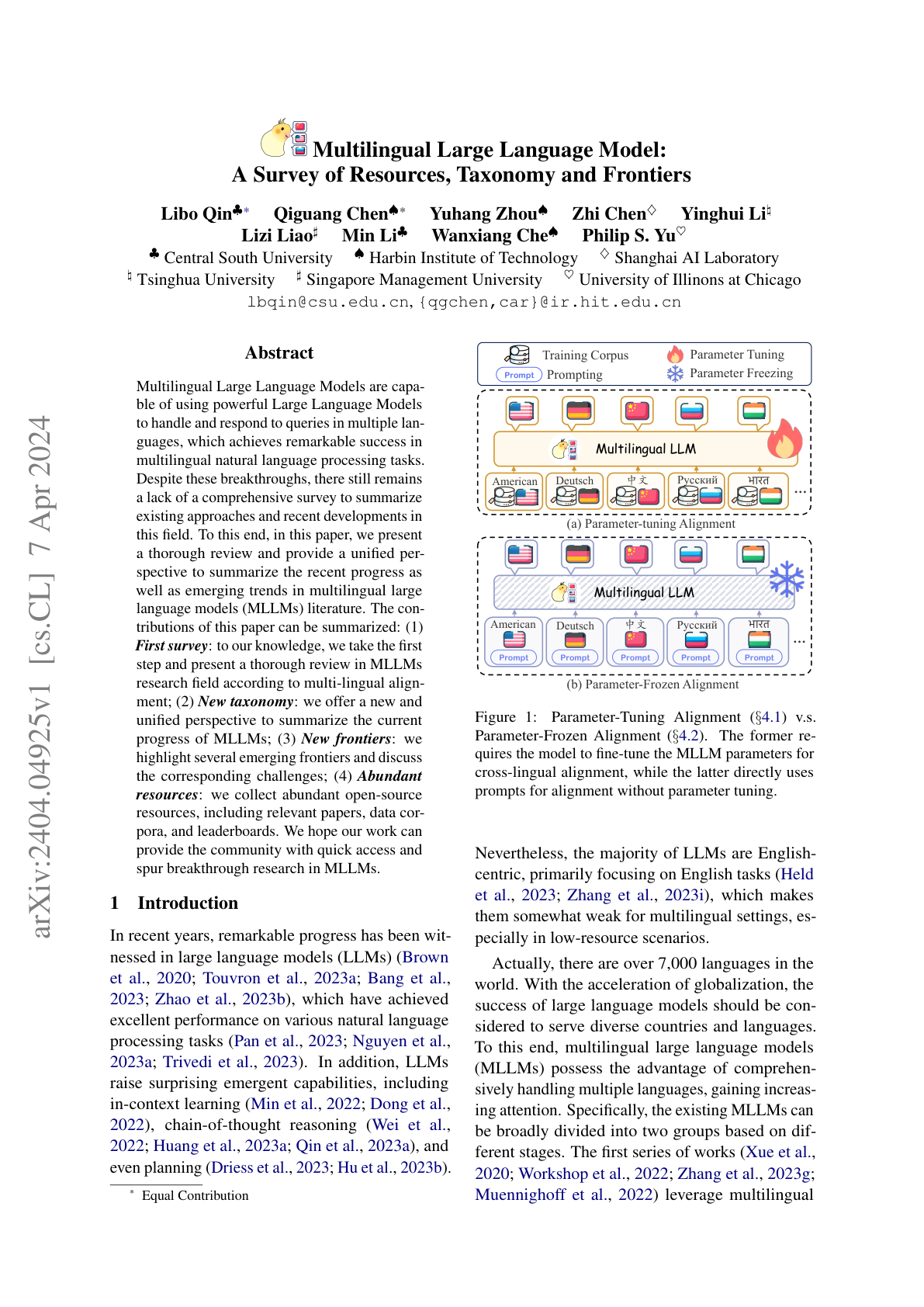
Overview of Multilingual LLMs
A first-of-its-kind survey on multilingual LLMs, organized by multilingual alignment principles rather than model-family hierarchy. The authors propose a unified taxonomy and collect open resources to accelerate future research.
The Physics of Language Models
This paper measures how many bits of factual knowledge a language model can store per parameter and finds a remarkably stable 2-bits-per-parameter ceiling, even after int8 quantization. A 7B model can therefore hold ~14B bits - more than the English Wikipedia and textbooks combined.
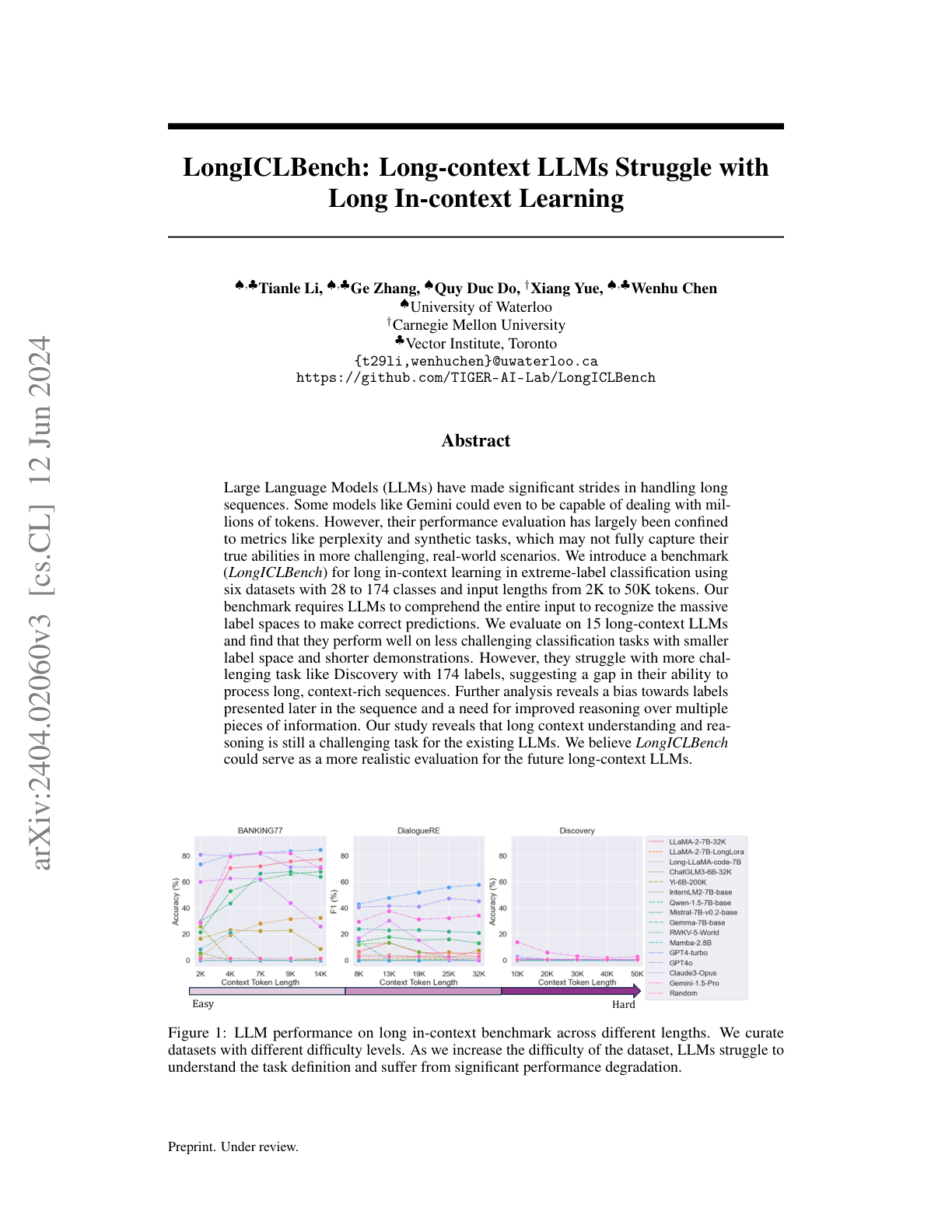
Long-context LLMs Struggle with Long In-Context Learning
LongICLBench stress-tests 13 long-context LLMs on extreme-label classification with up to 174 classes and 50K-token prompts, exposing sharp quality cliffs beyond 20K tokens.
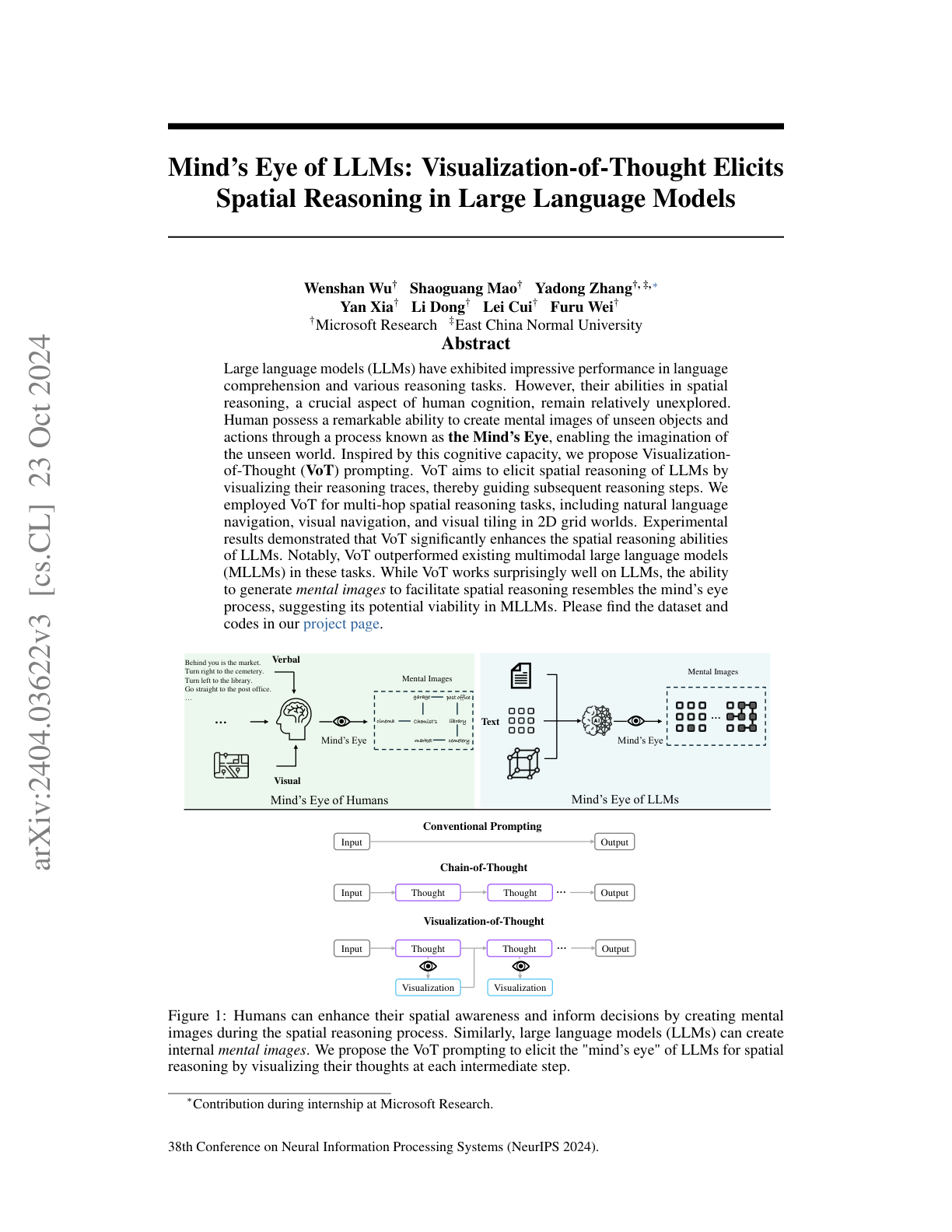
Visualization-of-Thought
Microsoft's Visualization-of-Thought (VoT) prompts LLMs to emit intermediate "mental images" of their reasoning state, lifting spatial-reasoning accuracy on grid-world tasks and beating multimodal baselines that actually see images.
JetMoE
MyShell's JetMoE-8B is an open MoE model trained for under $100K that matches or beats LLaMA2-7B, showing that competitive LLM training can be achieved on modest budgets with public data.
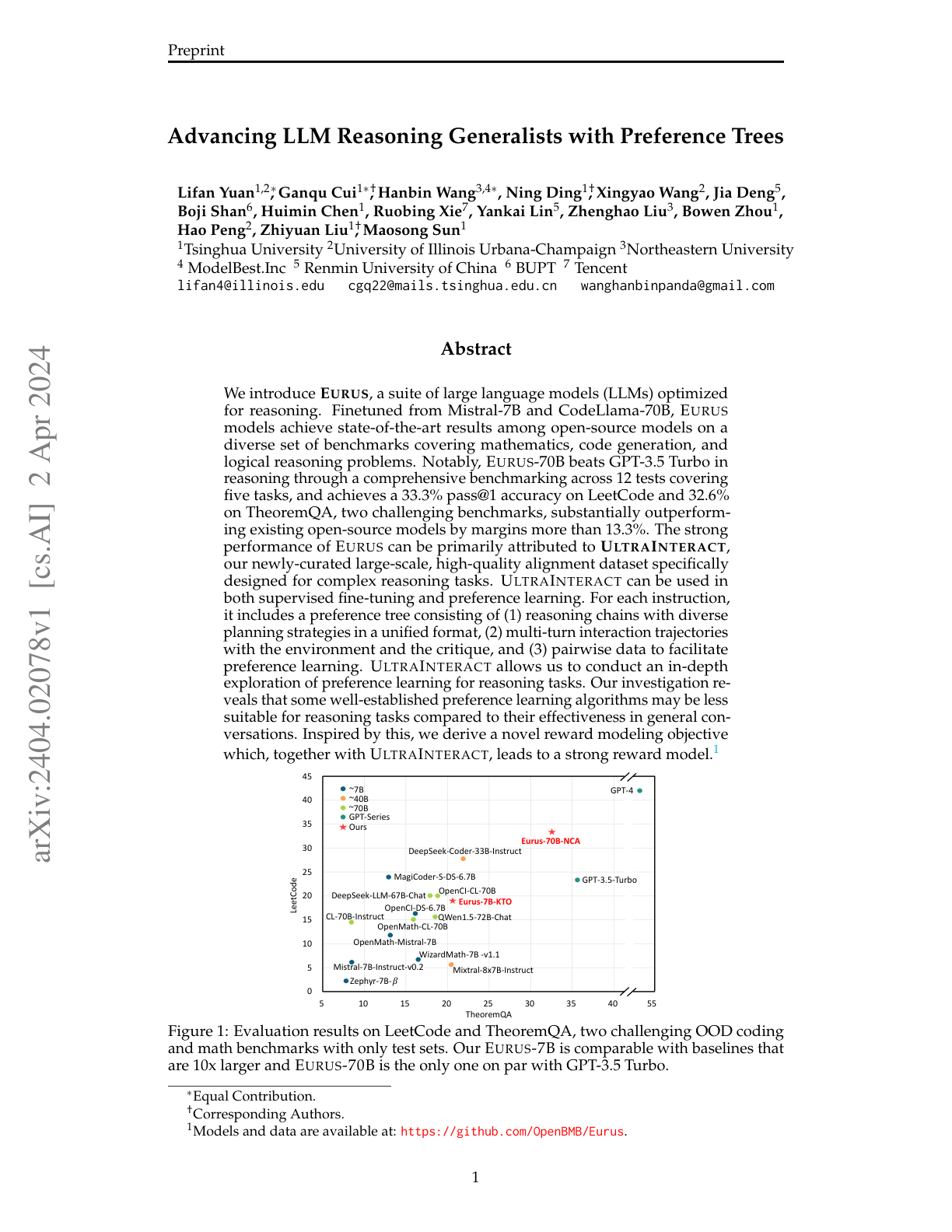
Advancing LLM Reasoning (Eurus)
OpenBMB's Eurus is a suite of reasoning-specialized LLMs (7B and 70B) fine-tuned on UltraInteract, a new alignment dataset built around preference trees for complex math, code, and logical tasks.
DBRX
Databricks releases DBRX, a 132B-total / 36B-active open Mixture-of-Experts LLM that beats established open models on MMLU, HumanEval, and GSM8K while delivering 2x faster inference than LLaMA2-70B.
Grok-1.5
xAI's Grok-1.5 is the successor to the open-weight Grok-1, emphasizing long-context understanding and substantially stronger math, code, and reasoning performance.
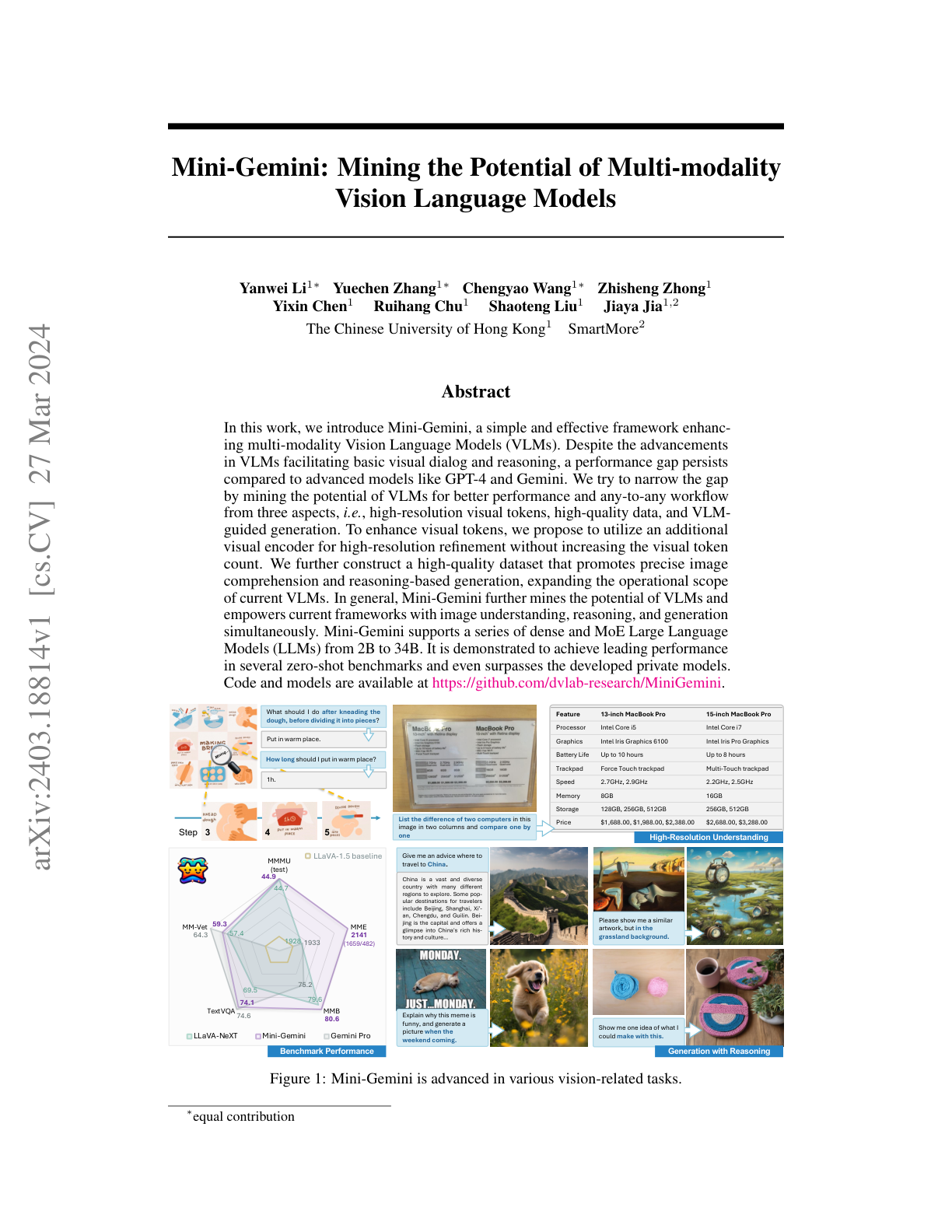
Mini-Gemini
Mini-Gemini enhances vision-language models by adding a second high-resolution visual encoder that refines details without increasing the number of visual tokens consumed by the LLM.
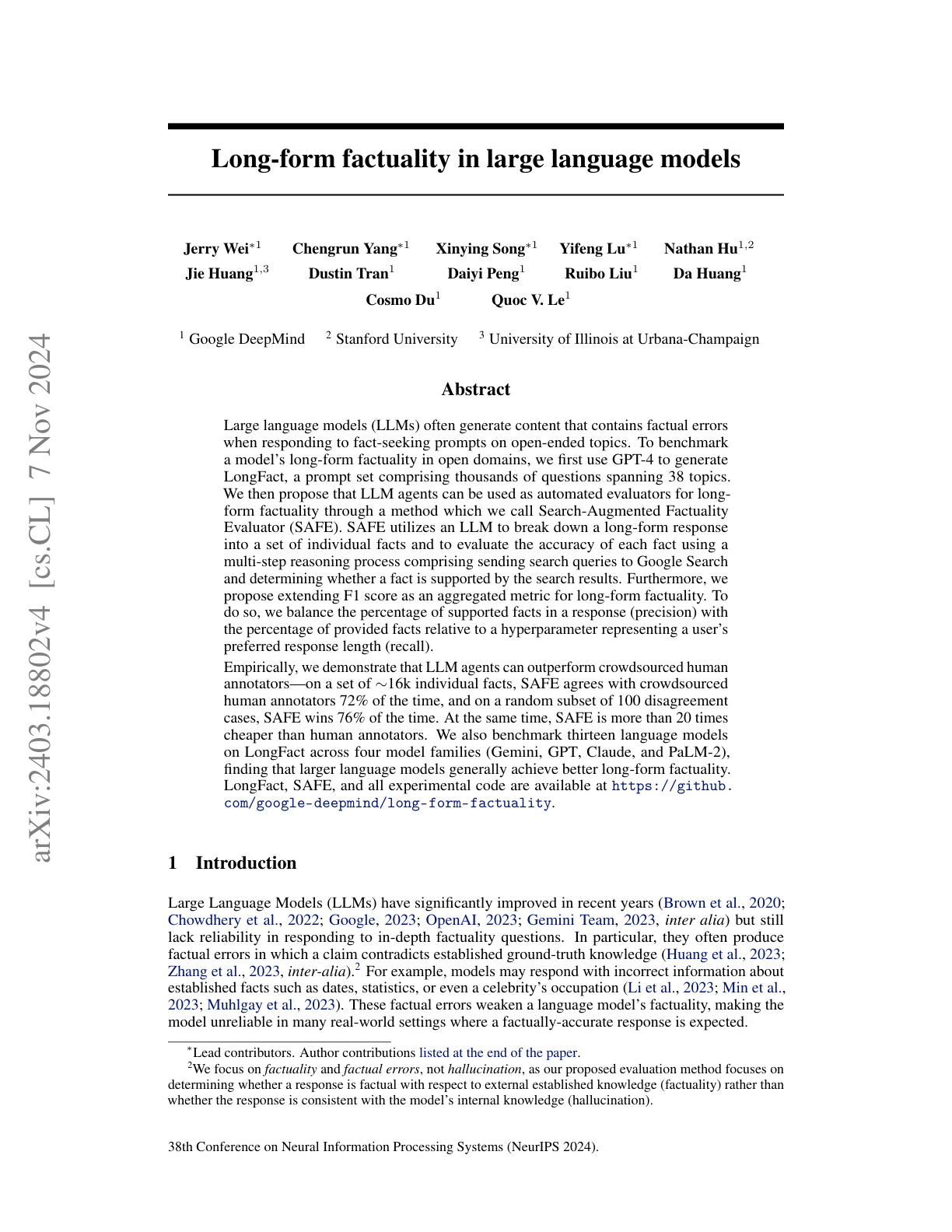
Long-form factuality in LLMs
Google DeepMind introduces LongFact and SAFE, a prompt set and automated evaluator for judging whether the long-form answers of modern LLMs are actually factual.
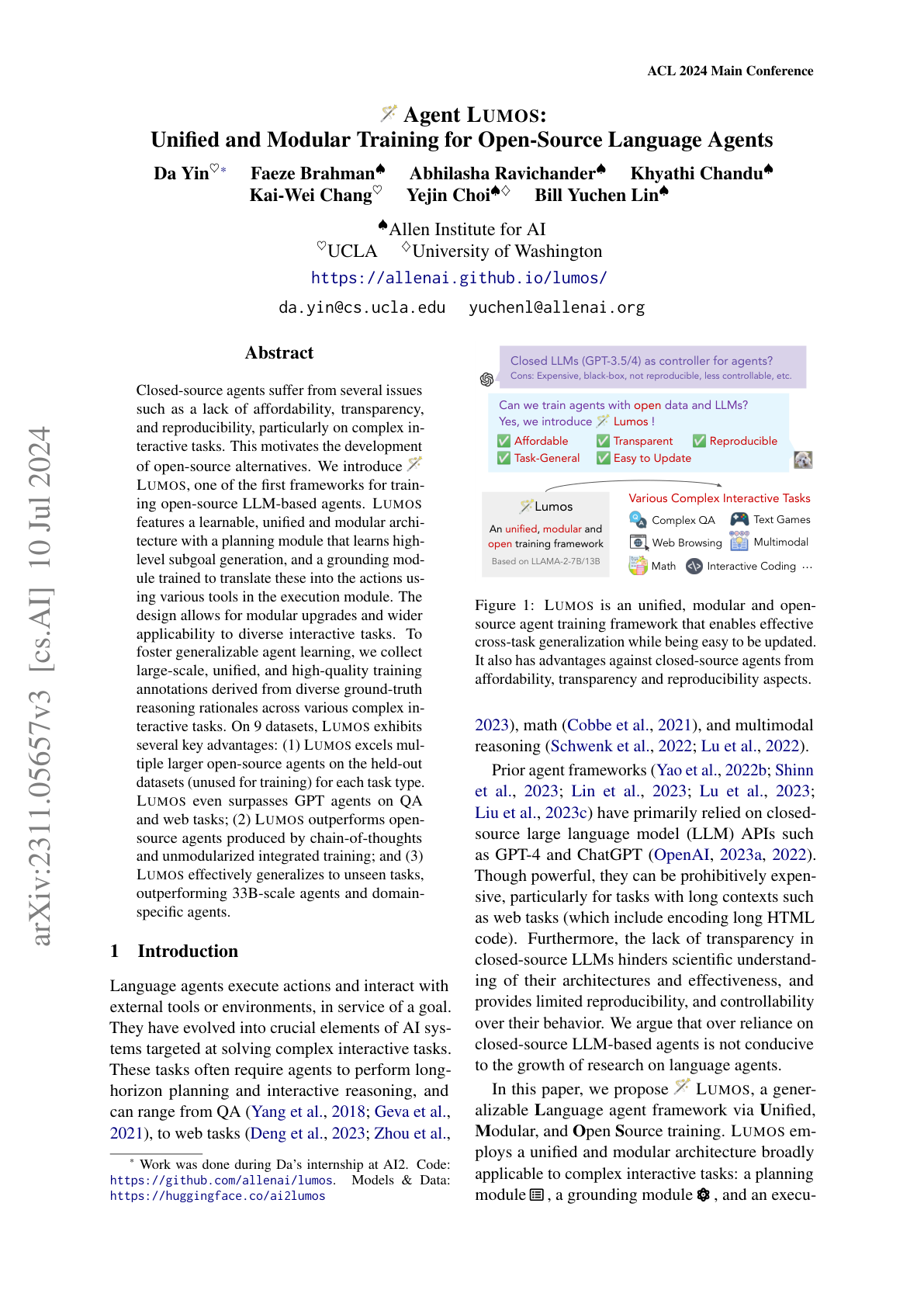
Agent Lumos
Lumos is a unified recipe for training open-source LLM agents that separates high-level planning from low-level grounding so each module can be supervised and improved independently.
FollowIR
FollowIR is both a benchmark and a training set for teaching retrieval models to follow real-world, instruction-style queries rather than just match keywords.
LLM2LLM
LLM2LLM is an iterative data augmentation scheme where a strong teacher LLM generates new training examples targeted at the specific mistakes a student model makes during fine-tuning.
Evolutionary Model Merge
Sakana AI proposes using evolutionary algorithms to automatically discover effective merges of open-source models, producing strong composite models without any additional training.