AI Papers of the Week
Every paper worth reading in AI, hand-picked one week at a time.
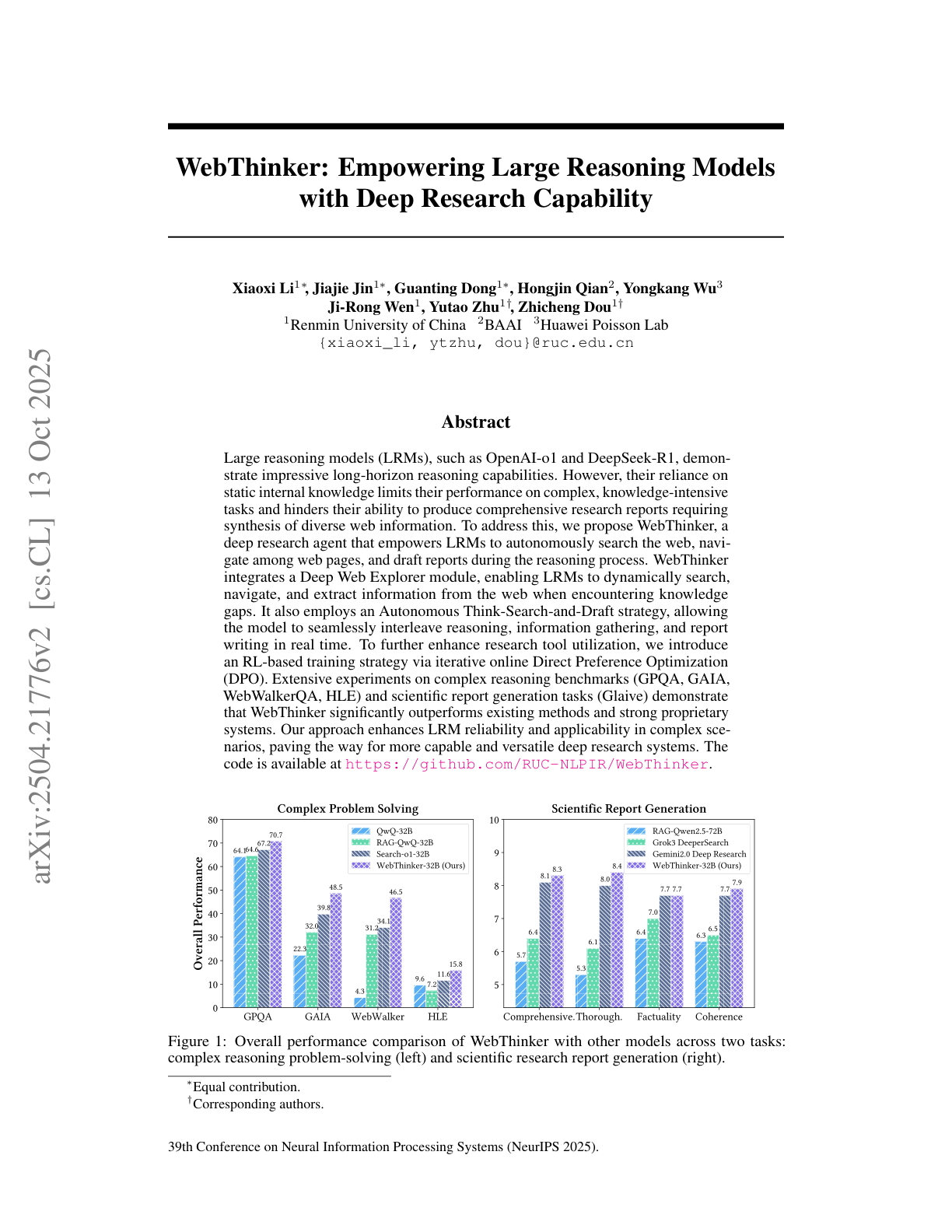
WebThinker
This paper introduces a reasoning agent framework that equips large reasoning models (LRMs) with autonomous web exploration and report writing abilities to overcome limitations of static internal knowledge. WebThinker integrates a Deep Web Explorer module and an Autonomous Think-Search-and-Draft strategy that lets models search the web, reason through tasks, and generate comprehensive outputs simultaneously. It also incorporates an RL-based training loop using online DPO to improve tool usage. The system supports two modes: complex problem solving and scientific report generation. Key points:
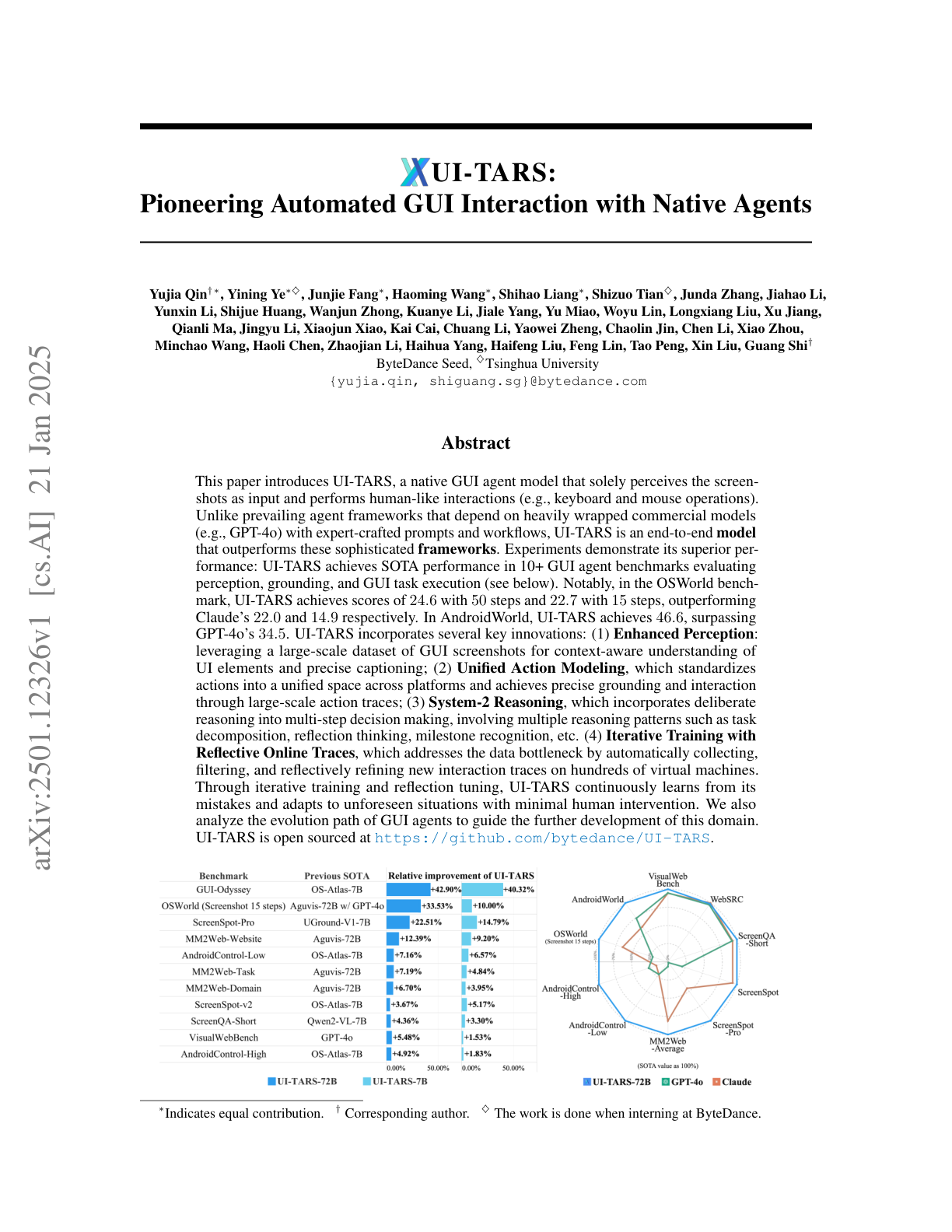
UI-TARS
UI-TARS introduces a powerful, end-to-end native GUI agent that operates purely from visual screenshots, performing human-like keyboard and mouse interactions across platforms. Unlike existing modular agent frameworks that rely on prompt engineering and external scripts, UI-TARS integrates perception, action, reasoning, and memory directly into its architecture, achieving strong generalization and adaptability in dynamic real-world settings. Key contributions:
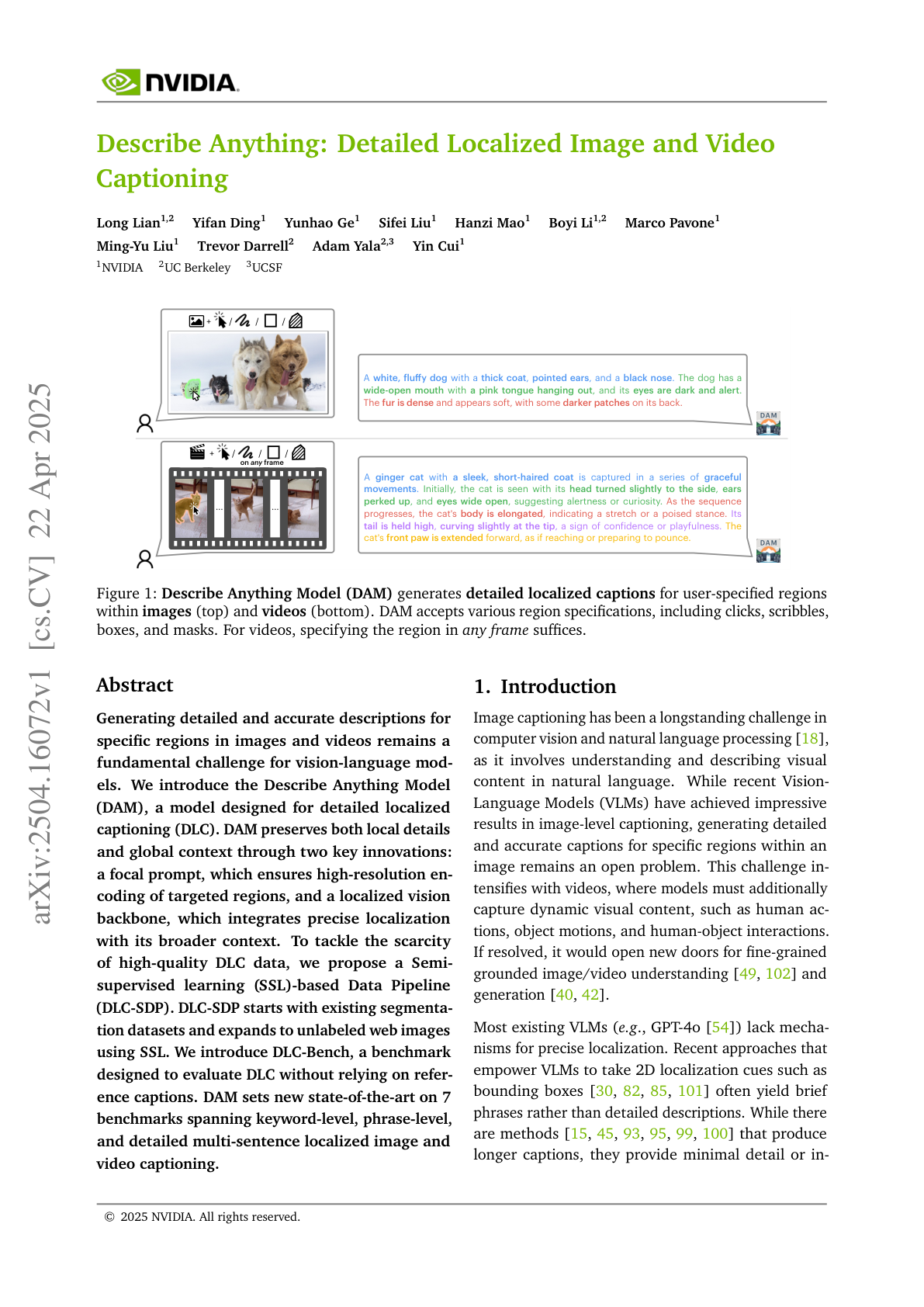
Describe Anything
Introduces DAM, a model that generates fine-grained, region-specific captions in both images and videos. The authors address key limitations in prior vision-language models—namely, the inability to preserve local detail and the lack of suitable datasets and benchmarks for detailed localized captioning (DLC). Key contributions:
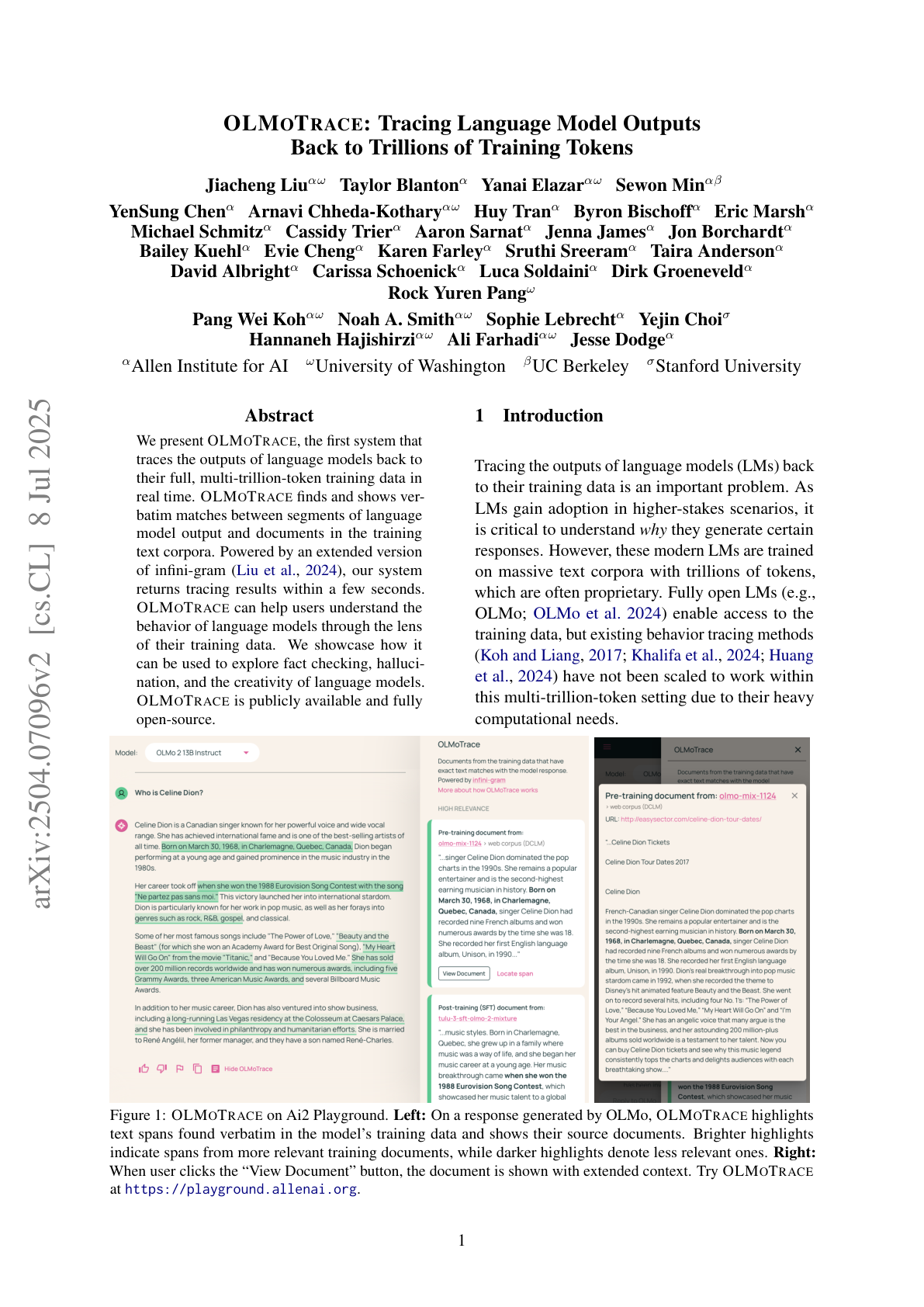
OLMOTrace
Allen Institute for AI & University of Washington present OLMOTRACE, a real-time system that traces LLM-generated text back to its verbatim sources in the original training data, even across multi-trillion-token corpora.
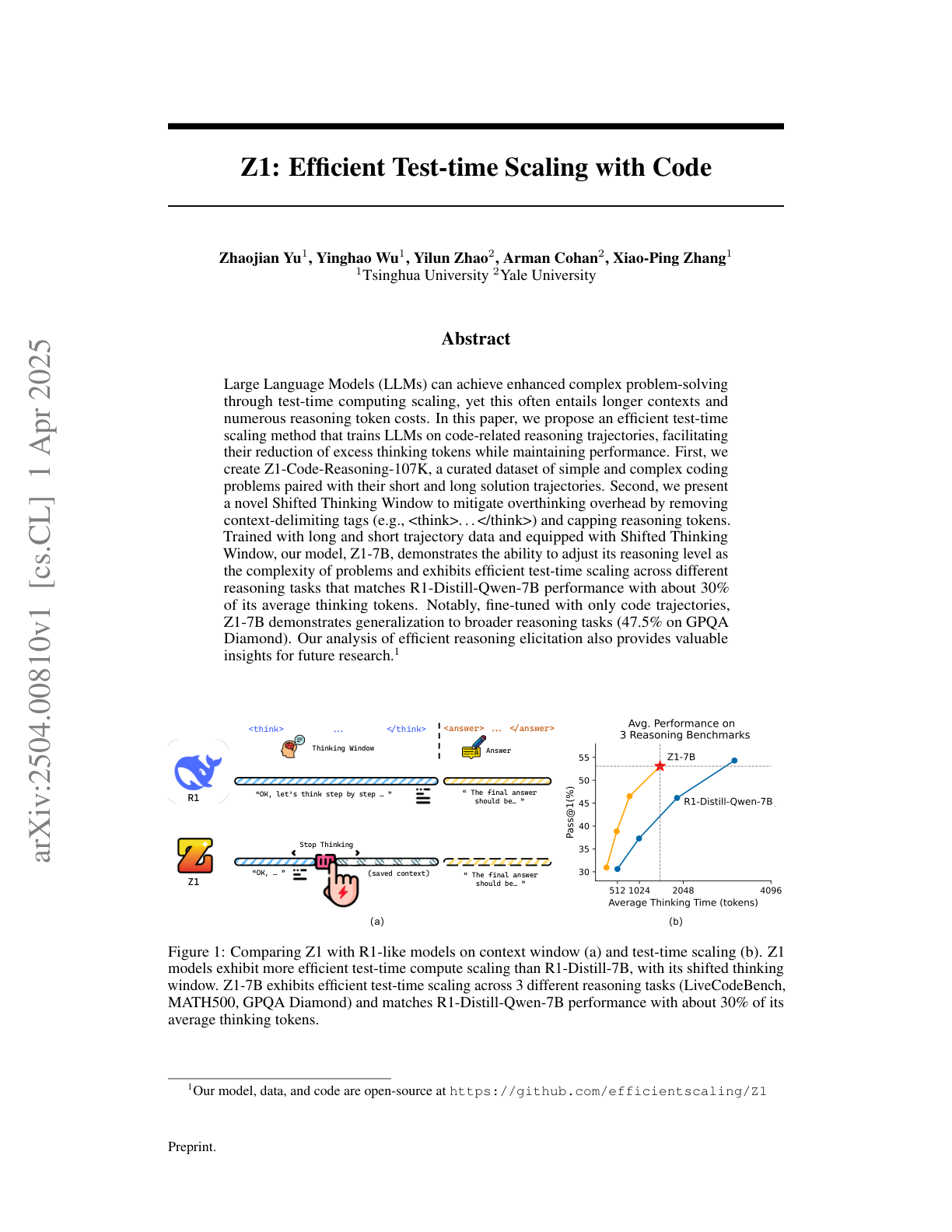
Efficient Test-time Scaling with Code
Z1 is a new method for making large language models more compute-efficient at test time, especially during reasoning. The core idea is to train LLMs with short and long code-based reasoning trajectories, and then dynamically adjust reasoning depth during inference. Key contributions: ● Z1-Code-Reasoning-107K dataset – They construct a 107K-sample dataset with short and long reasoning paths for simple and complex coding problems. Trajectories are distilled from QwQ-32B and paired to help the model learn when to stop thinking. ● Shifted Thinking Window – A new test-time strategy that eliminates explicit <think delimiters. Instead, the model adapts reasoning token budget based on problem difficulty. Simple problems invoke shallow reasoning; complex ones get capped (e.g., 4096 tokens max), with hints nudging the model to finalize the answer. ● Big efficiency gains – The 7B-scale model Z1-7B matches R1-Distill-Qwen-7B across multiple reasoning tasks (MATH500, LiveCodeBench, GPQA Diamond) but with ~30% of the reasoning tokens. For instance, on GPQA Diamond, Z1-7B achieves 47.5% while using less than half the tokens. ● Code reasoning transfers to general tasks – Despite being trained only on code-based CoT data, Z1 generalizes well to broader domains like science and math, outperforming other 7B reasoning models (e.g., OpenThinker-7B, s1.1-7B) across multiple benchmarks. ● What makes reasoning data effective? – Ablation studies reveal two key dataset design levers: (1) longer reasoning trajectories improve inference quality; (2) larger training sample sizes boost average thinking time and accuracy, even without altering trajectory length.
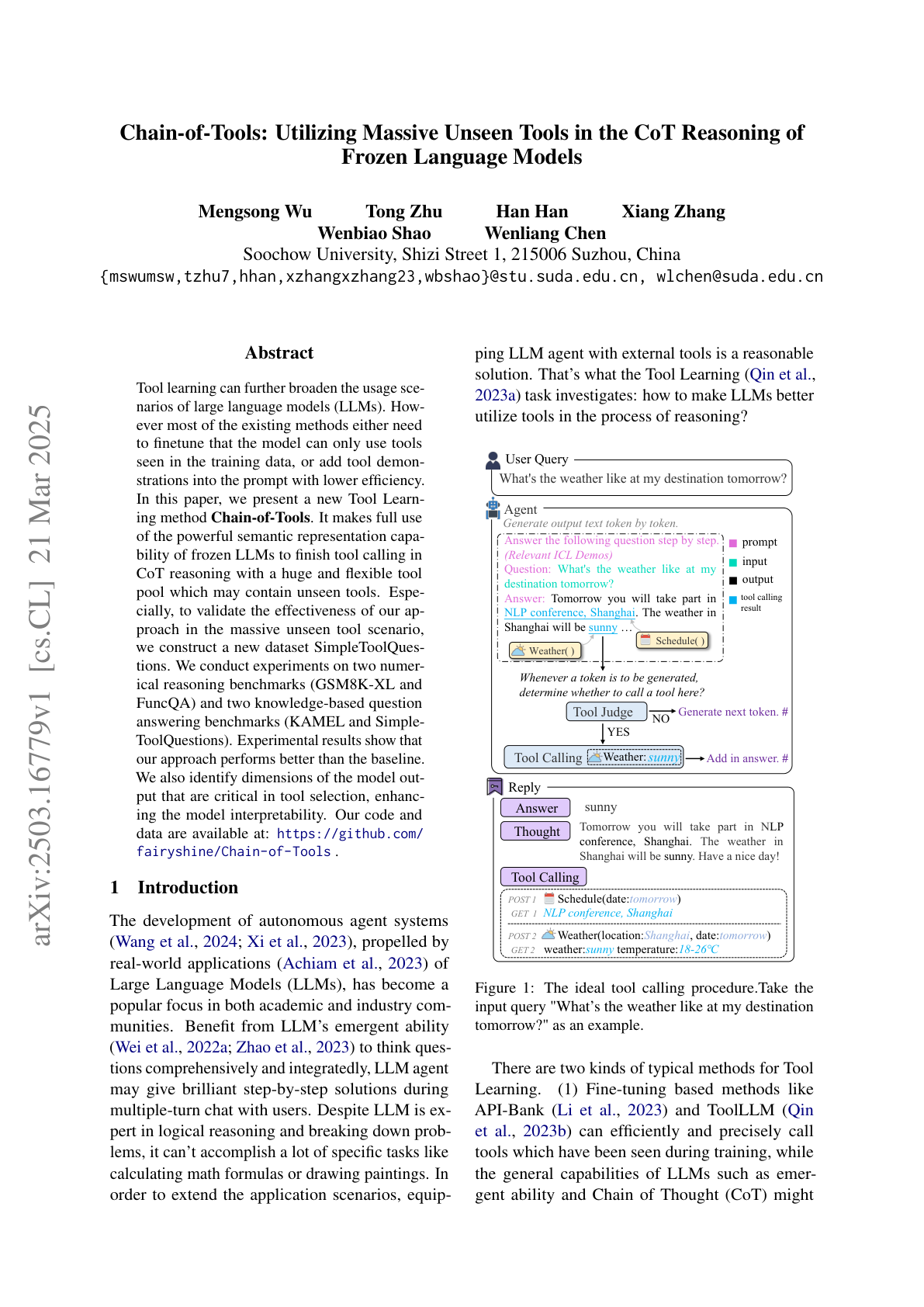
Chain-of-Tools
This new paper presents Chain-of-Tools (CoTools), a new method to enable LLMs to incorporate expansive external toolsets—including tools never seen during training—while preserving CoT (chain-of-thought) reasoning. Highlights: ● Frozen LLM with lightweight fine-tuning – Unlike conventional approaches, CoTools keeps the LLM’s parameters frozen, instead fine-tuning separate modules (a Tool Judge and Tool Retriever) on top of the model’s hidden states. This preserves the LLM’s core capabilities while letting it call an open-ended set of tools during reasoning. ● Massive unseen tools – CoTools treats tools as semantic vectors computed from their textual descriptions. Even tools that never appear in the fine-tuning data can be invoked if they match the model’s query vectors, enabling new tools to be plugged in without retraining the entire system. ● Tool calls integrated into CoT – The system determines whether and when to call a tool in the middle of generating an answer. It then selects the best tool from thousands of candidates based on learned representations of the query and partial solution context. This helps to significantly boost accuracy on complex tasks. ● Strong gains on reasoning and QA – Experiments on GSM8K-XL, FuncQA, KAMEL, and the newly introduced SimpleToolQuestions dataset (with 1,836 tools) show improved tool-selection accuracy and superior final answers versus baseline methods. Notably, CoTools consistently scales to large tool pools and generalizes to unseen tools.
Synthetic Data Generation Using LLMs
LLMs are increasingly used to generate synthetic training data for language and code tasks, improving performance in low-resource scenarios through techniques like prompt-based generation and self-refinement. The paper highlights benefits like cost and coverage, while addressing issues such as factual errors and bias, and suggests mitigations and future research in prompt automation and evaluation.
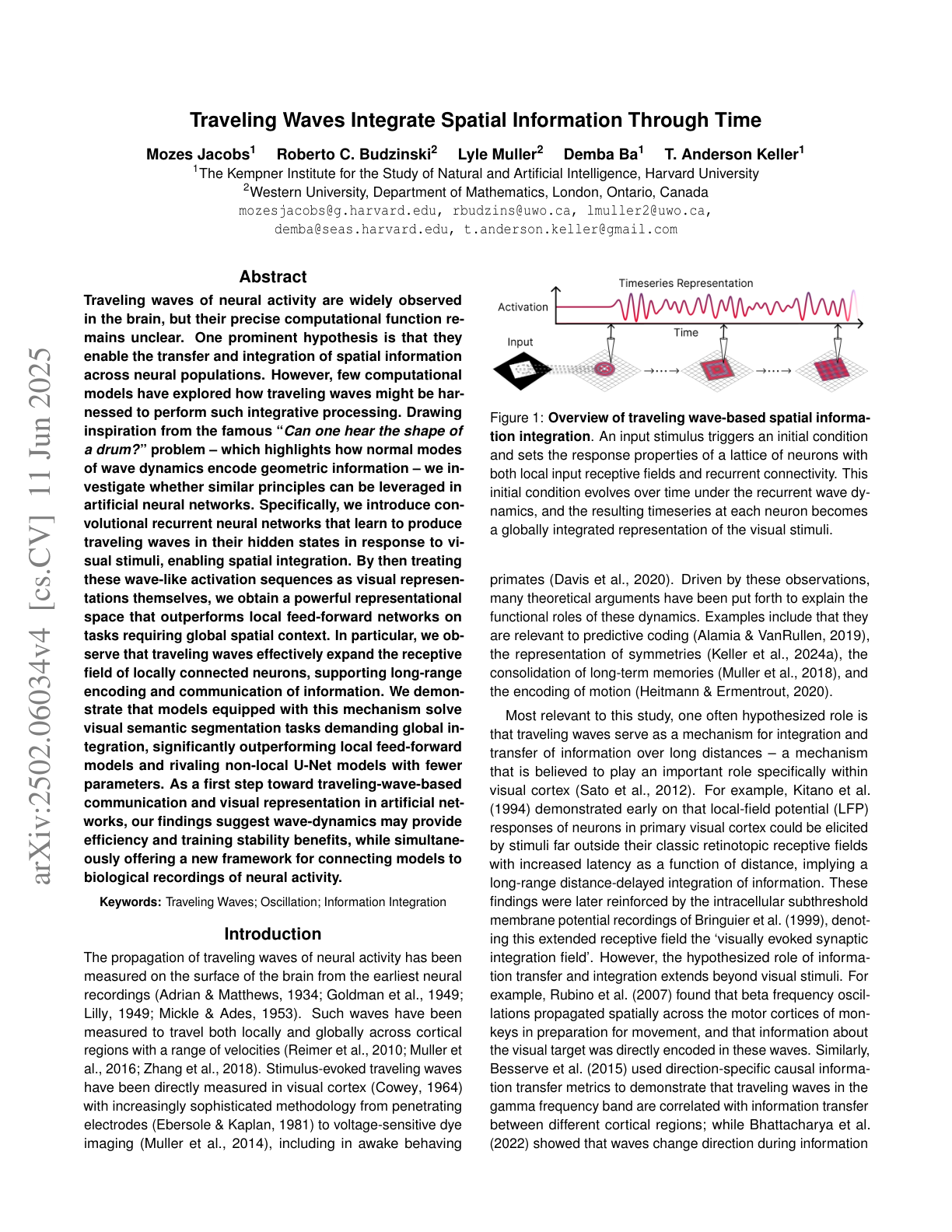
Traveling Waves Integrate Spatial Information Through Time
Researchers from Harvard University and Western University propose a wave-based recurrent neural network framework that uses traveling waves of neural activity to perform global spatial integration on visual tasks. Key ideas include:
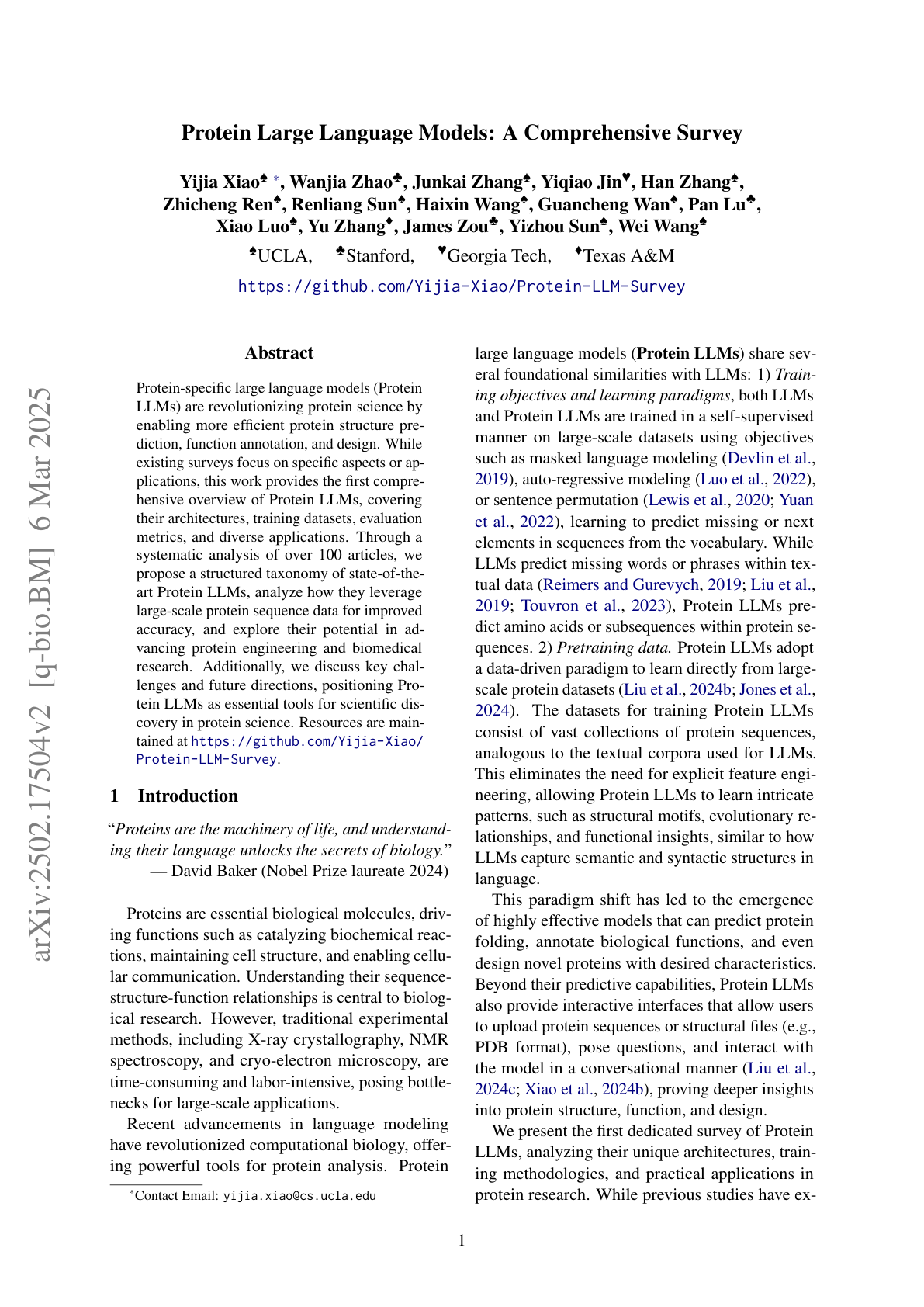
Protein LLMs
A comprehensive overview of Protein LLMs, including architectures, training datasets, evaluation metrics, and applications.
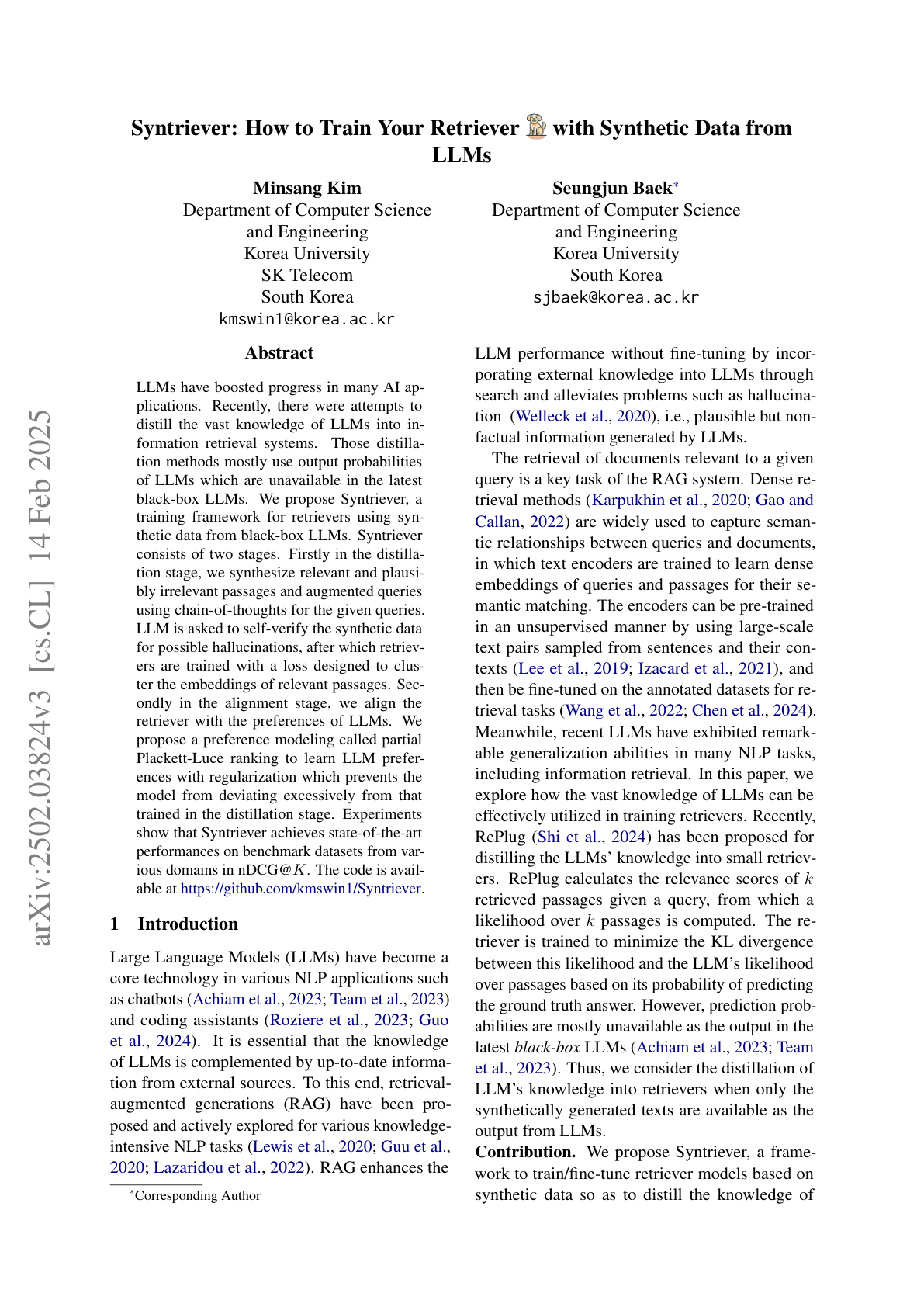
Syntriever: Training Retrievers with LLM-Generated Data
How can we build a high-quality text retriever without large labeled datasets or access to an LLM’s internals? Syntriever presents a two-stage framework to distill knowledge from a black-box LLM into a retrieval model using synthetic data. Steps:
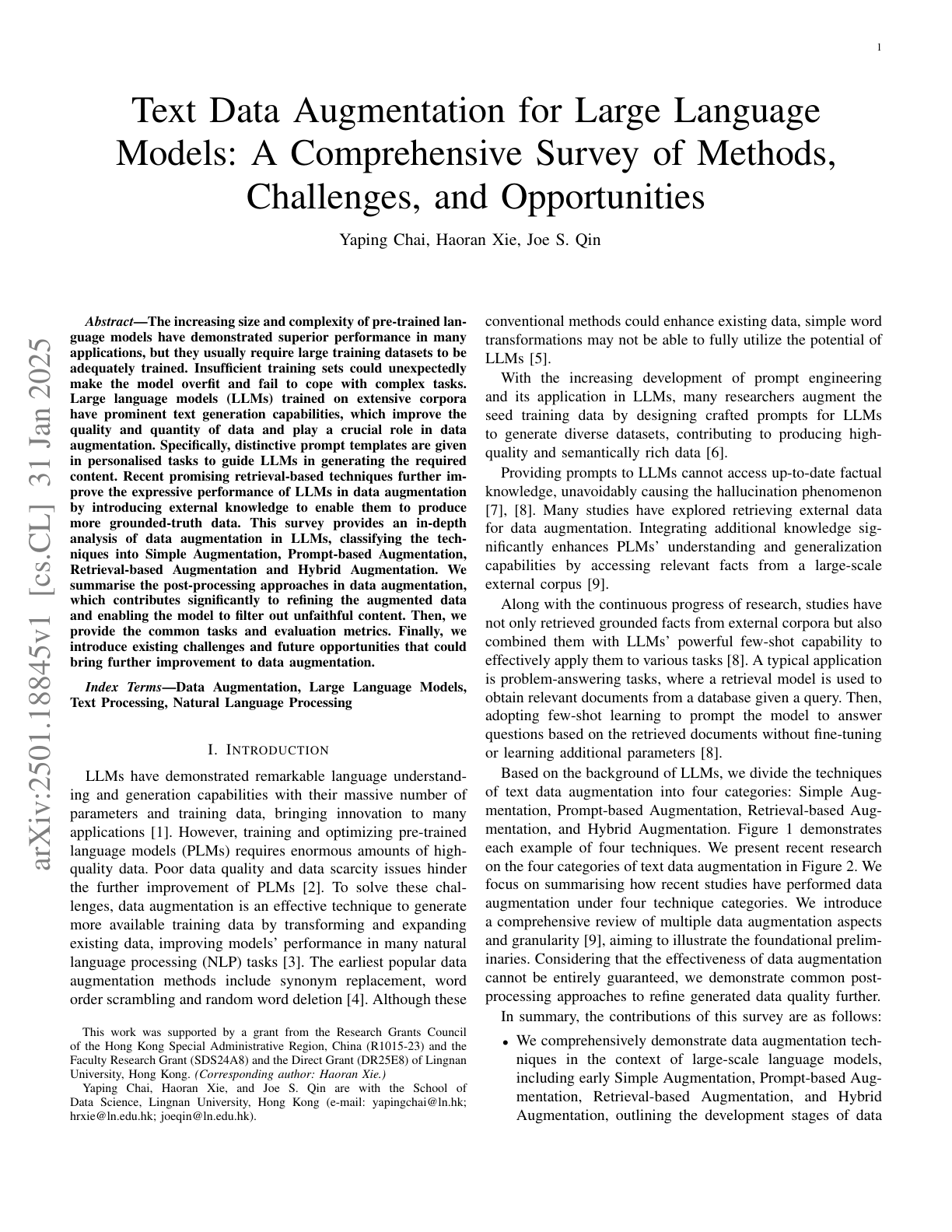
Survey: Text Data Augmentation for LLMs
This comprehensive survey covers text data augmentation techniques for LLMs. As LLMs demand massive training data, augmenting datasets with synthetic or transformed text is vital. In this paper:
Humanity’s Last Exam
Humanity's Last Exam is a new multi-modal benchmark designed to test the limits of LLMs. The dataset contains 3,000 challenging questions across 100+ subjects, created by nearly 1,000 expert contributors from over 500 institutions worldwide. Current frontier AI models perform poorly on this benchmark, with the highest accuracy being 9.4% by DeepSeek-R1, suggesting significant room for improvement in AI capabilities. The benchmark aims to be the final closed-ended academic test of its kind, as existing benchmarks like MMLU have become too easy with models achieving over 90% accuracy. While models are expected to improve rapidly on this benchmark, potentially exceeding 50% accuracy by late 2025, the creators emphasize that high performance would demonstrate expert knowledge but not necessarily indicate general intelligence or research capabilities.
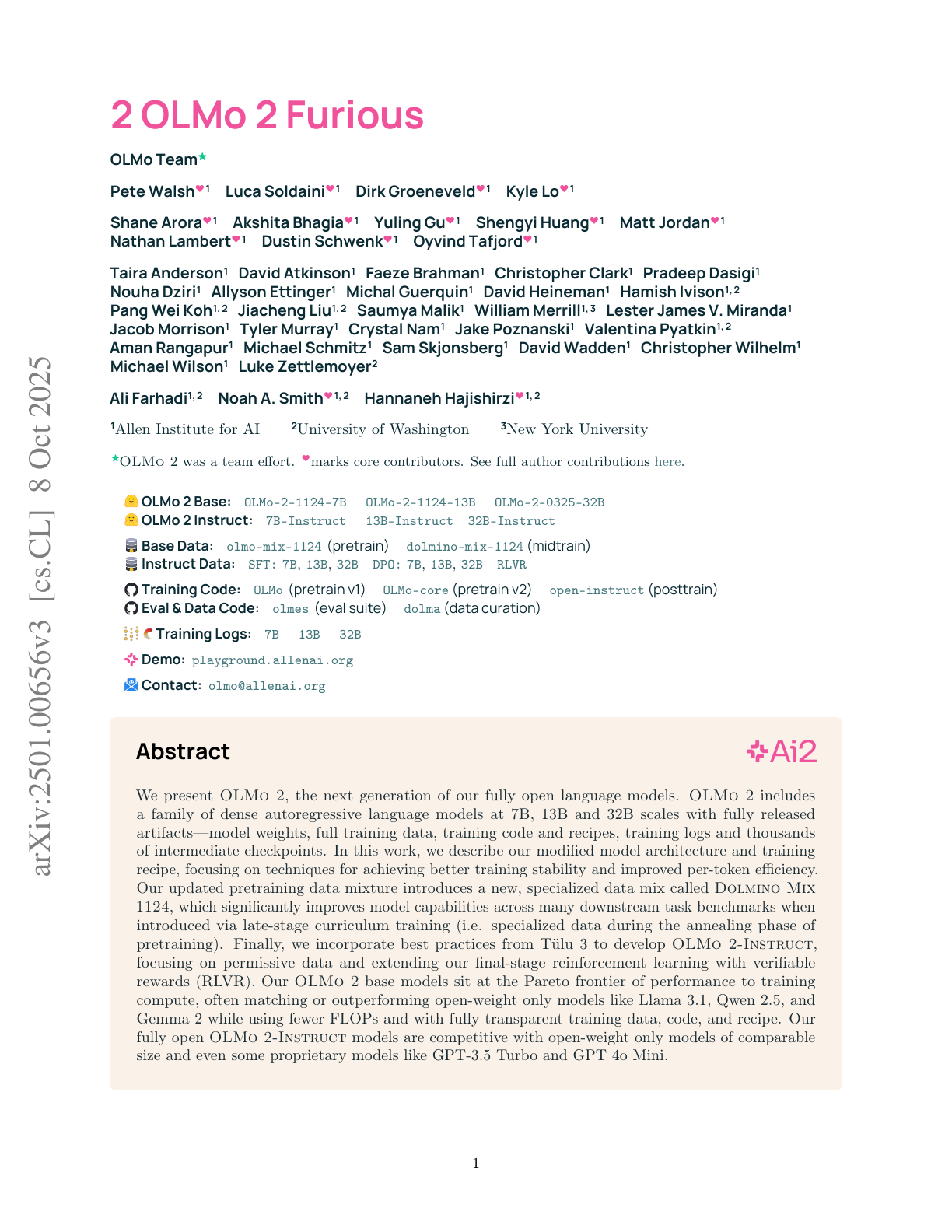
OLMo 2
introduces an enhanced architecture, training methods, and a specialized data mixture called Dolmino Mix 1124; the fully transparent model, released at 7B and 13B parameter scales with complete training data and code, matches or outperforms similar open-weight models like Llama 3.1 and Qwen 2.5 while using fewer computational resources, and its instruction-tuned version (OLMo 2-Instruct) remains competitive with comparable models.
MAG-V
a multi-agent framework that first generates a dataset of questions that mimic customer queries; it then reverse engineers alternate questions from responses to verify agent trajectories; reports that the generated synthetic data can improve agent performance on actual customer queries; finds that for trajectory verification simple ML baselines with feature engineering can match the performance of more expensive and capable models.
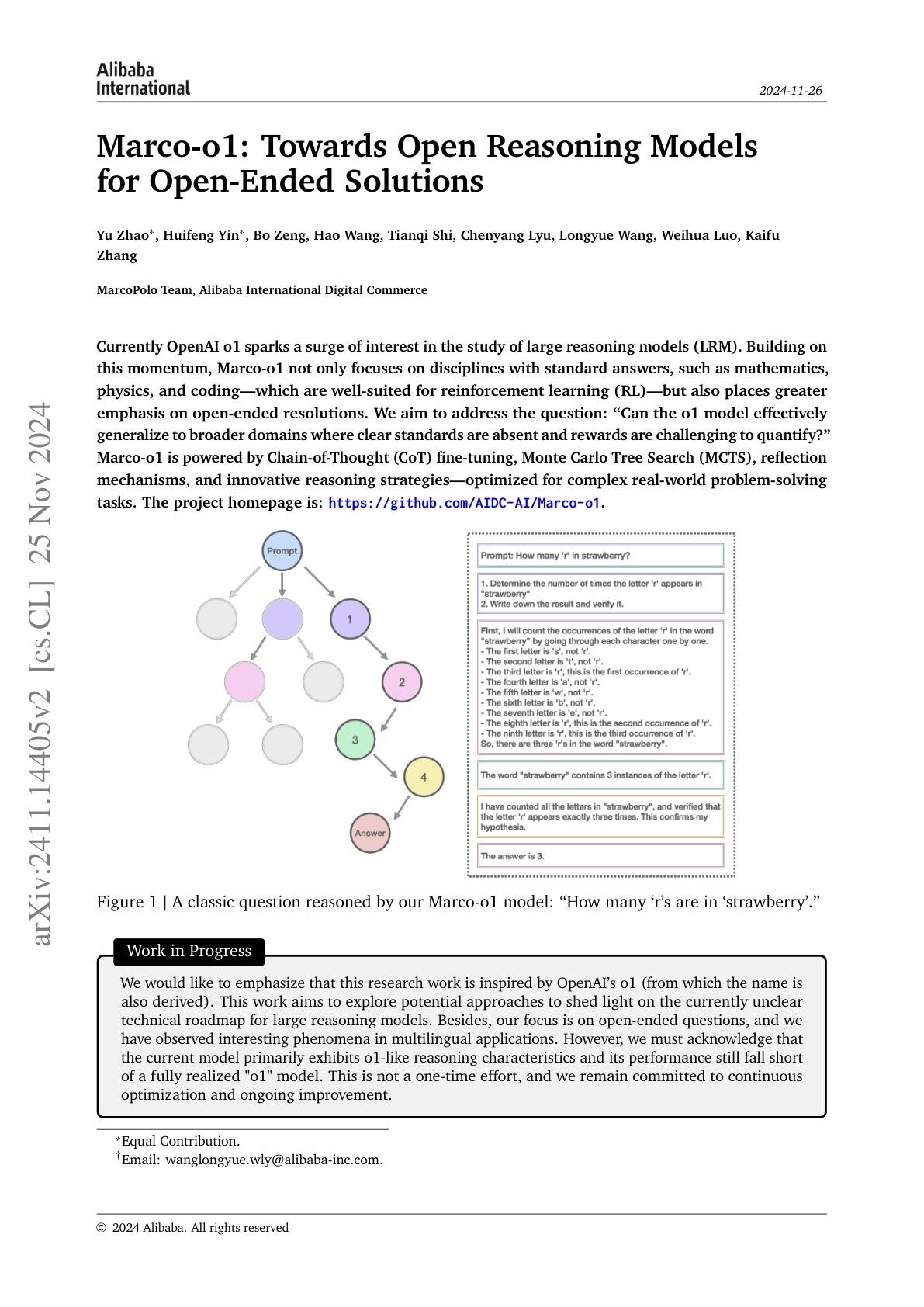
Towards Open Reasoning Models for Open-Ended Solutions
proposes Marco-o1 which is a reasoning model built for open-ended solutions; Marco-o1 is powered by Chain-of-Thought (CoT) fine-tuning, Monte Carlo Tree Search (MCTS), reflection mechanisms, and more recent reasoning strategies; Marco-o1 achieves accuracy improvements of +6.17% on the MGSM (English) dataset and +5.60% on the MGSM (Chinese) dataset.
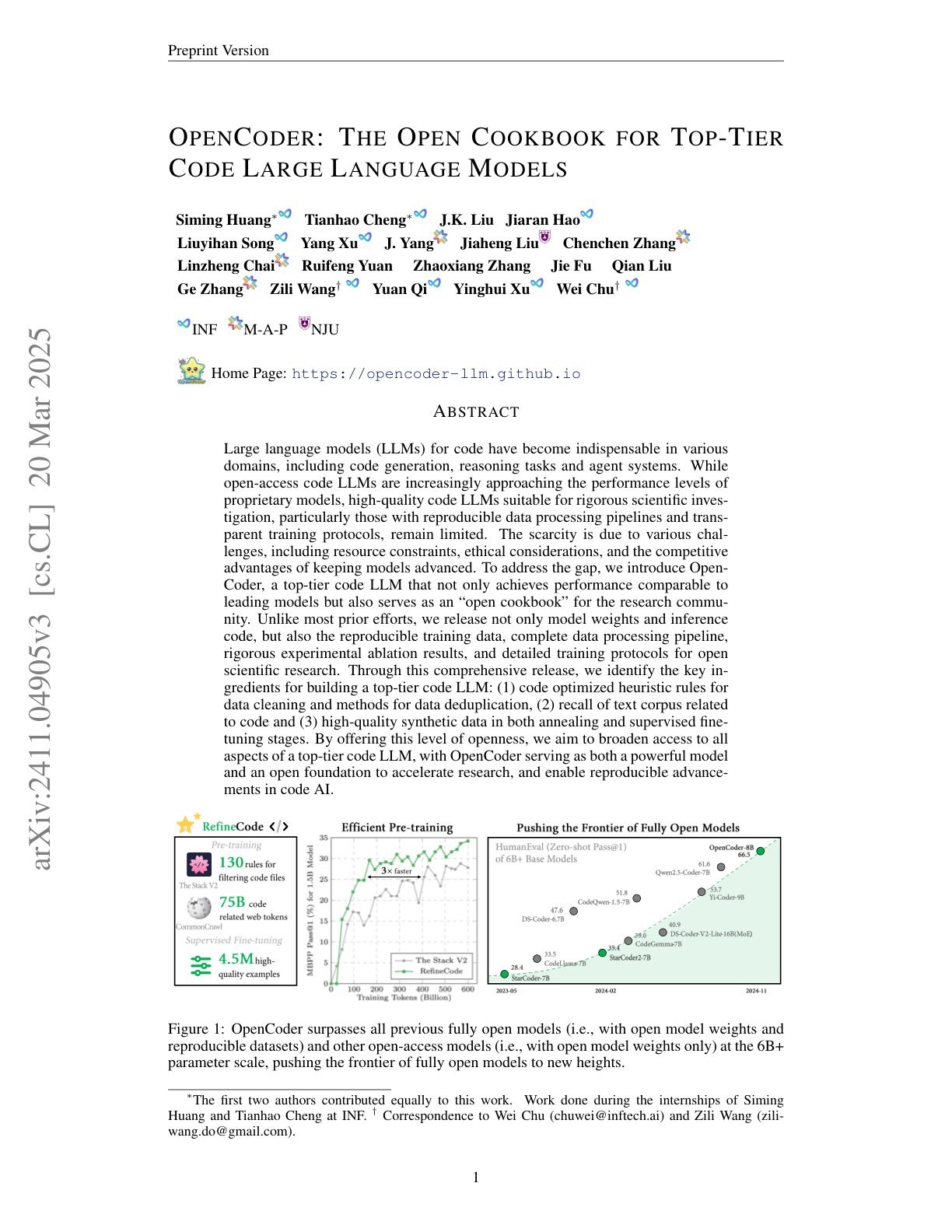
OpenCoder
introduces OpenCoder, a fully open-source LLM specialized for code generation and understanding; the authors identify several critical factors for building high-performing code LLMs: (1) effective data cleaning with code-optimized heuristic rules for deduplication, (2) recall of relevant text corpus related to code, and (3) high-quality synthetic in both annealing and supervised fine-tuning stages; OpenCoder surpasses previous fully open models at the 6B+ parameter scale and releases not just the model weights but also the complete training pipeline, datasets, and protocols to enable reproducible research.
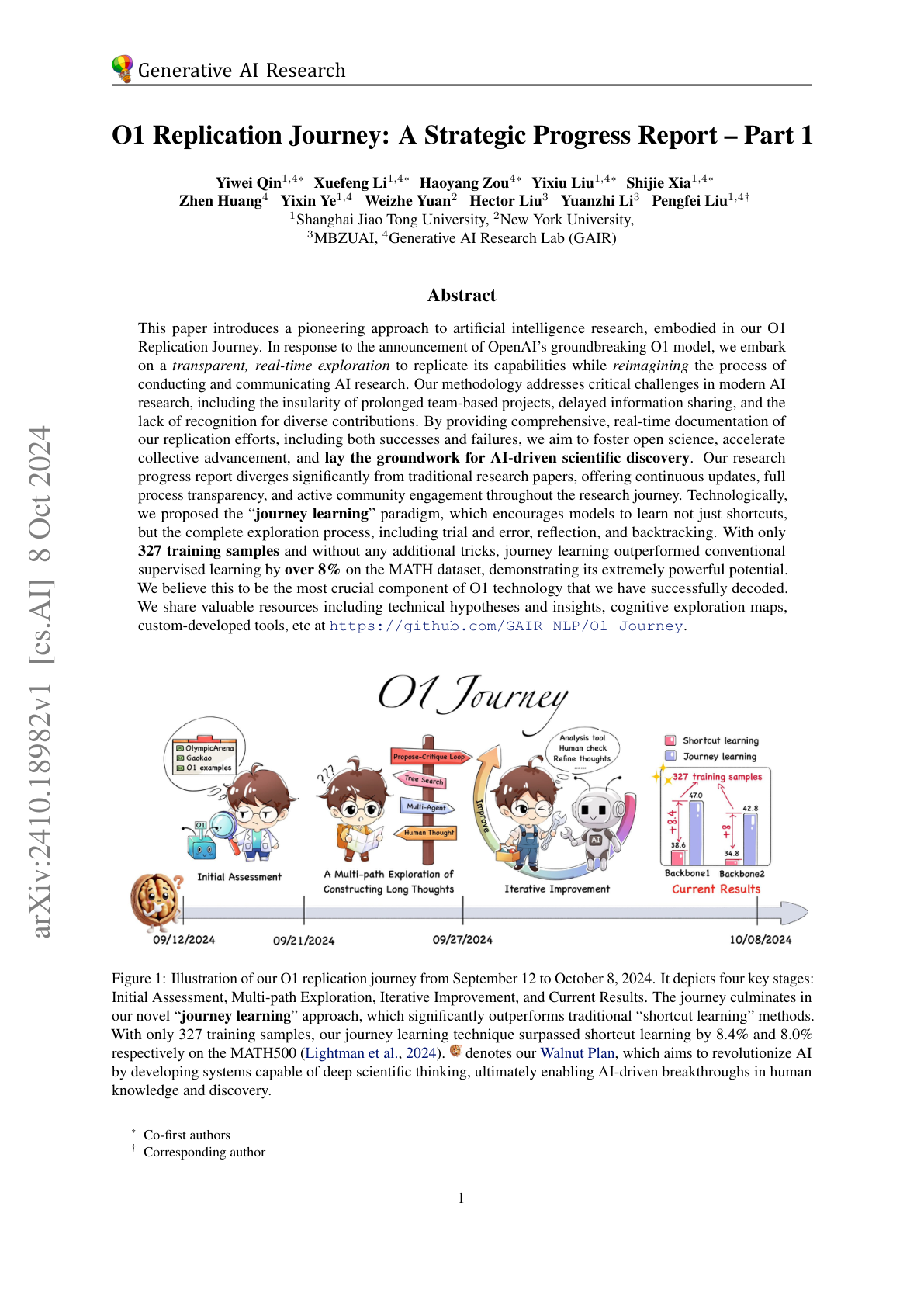
o1 Replication Journey
reports to be replicating the capabilities of OpenAI's o1 model; their journey learning technique encourages learning not just shortcuts, but the complete exploration process, including trial and error, reflection, and backtracking; claims that with only 327 training samples, their journey learning technique surpassed shortcut learning by 8.0% on the MATH dataset.
Distinguishing Ignorance from Error in LLM Hallucinations
a method to distinguish between two types of LLM hallucinations: when models lack knowledge (HK-) versus when they hallucinate despite having correct knowledge (HK+); they build model-specific datasets using their proposed approach and show that model-specific datasets are more effective for detecting HK+ hallucinations compared to generic datasets.

Aya Expanse
a family of open-weight foundation models for multilingual capabilities; releases an 8B and 32B parameter model, including one of the largest multilingual dataset collections to date, with 513 million examples; the release also includes Aya-101 which the authors claim is the most comprehensive multilingual models covering 101 languages; Aya Expanse 32B outperforms Gemma 2 27B, Mistral 8x22B, and Llama 3.1 70B, a model 2x its size.
A Theoretical Understanding of CoT
finds that adding correct and incorrect reasoning paths in demonstrations improves the accuracy of intermediate steps and CoT; the proposed method, Coherent CoT, significantly improves performance on several benchmarks; in the Tracking Shuffled Objects dataset, Gemini Pro shows a 6.60% improvement (from 58.20% to 64.80%), and in Penguins in a Table, DeepSeek 67B demonstrates an increase of 6.17% (from 73.97% to 80.14%).
MLE-Bench
proposes a new benchmark for the evaluation of machine learning agents on machine learning engineering capabilities; includes 75 ML engineering-related competition from Kaggle testing on MLE skills such as training models, preparing datasets, and running experiments; OpenAI’s o1-preview with the AIDE scaffolding achieves Kaggle bronze medal level in 16.9% of competitions.
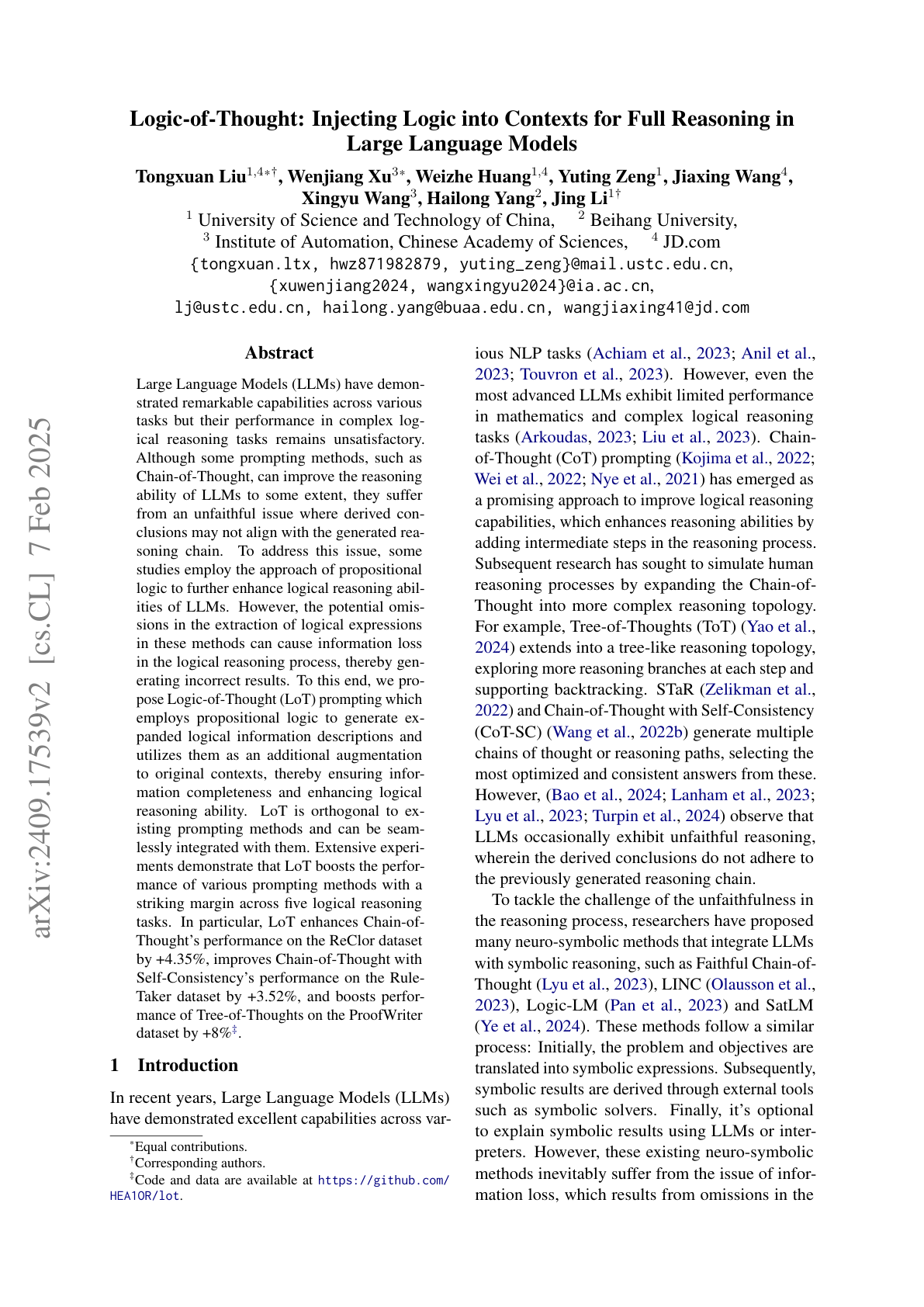
Logic-of-Thought
proposes a new prompting technique called Logic-of-Thought (LoT) which employs propositional logic to generate and inject expanded logical information from the input context; it enhances CoT performance on the ReClor dataset by +4.35%; it improves CoT+SelfConsistency’s performance on LogiQA by +5%; it also boosts the performance of ToT on the ProofWriter dataset by +8%.
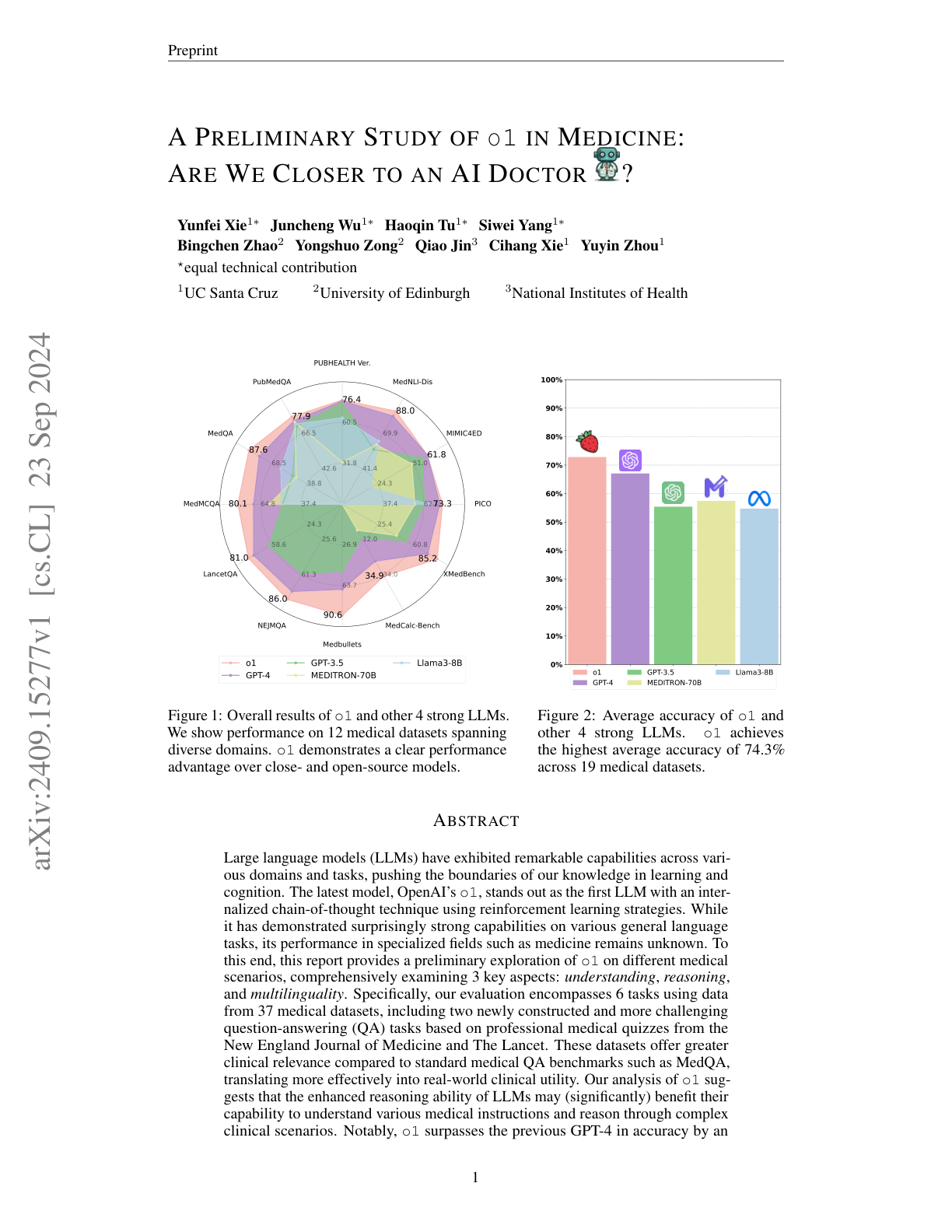
A Preliminary Study of o1 in Medicine
provides a preliminary exploration of the o1-preview model in medical scenarios; shows that o1 surpasses the previous GPT-4 in accuracy by an average of 6.2% and 6.6% across 19 datasets and two newly created complex QA scenarios; identifies hallucination, inconsistent multilingual ability, and discrepant metrics for evaluation.
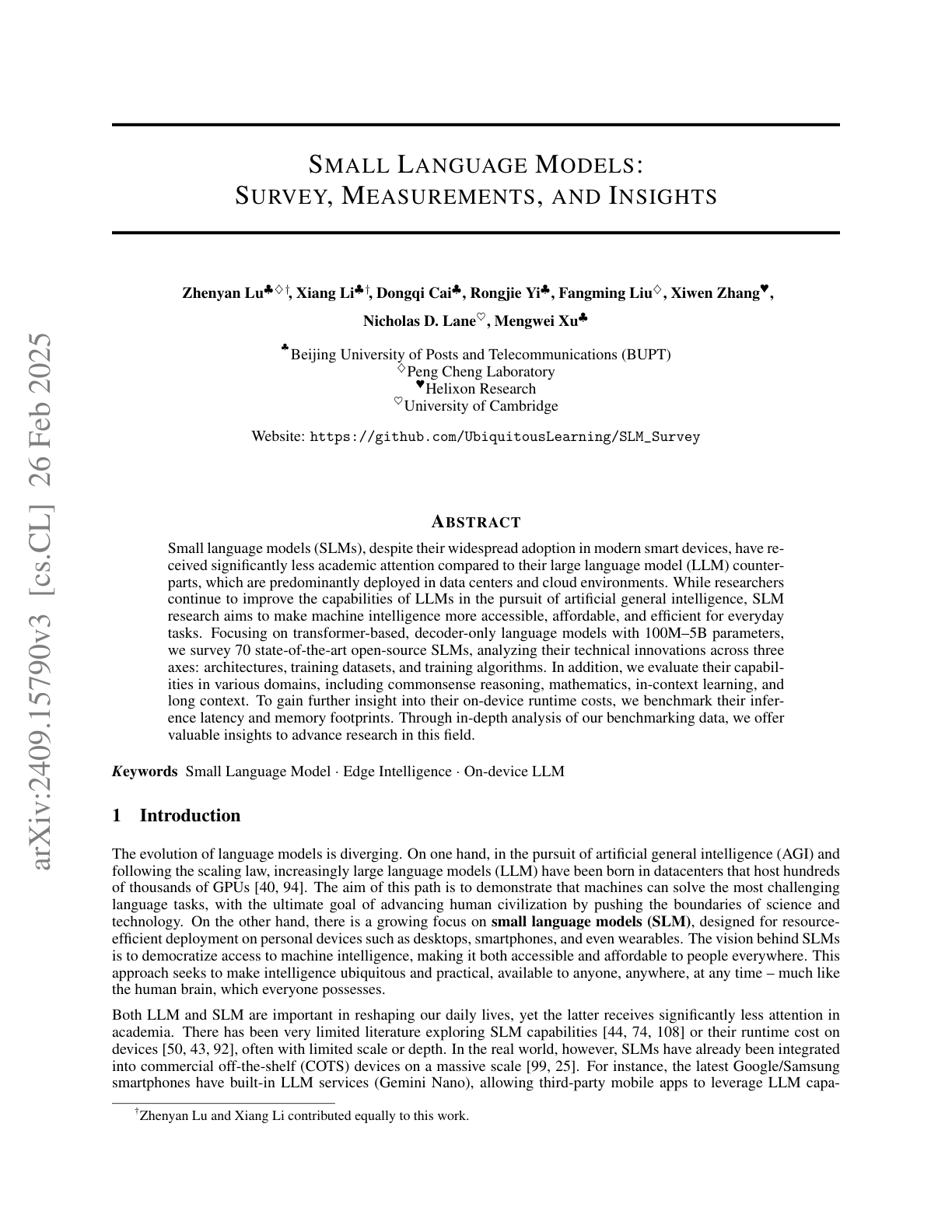
Small Language Models Survey
a comprehensive survey on small language models (SLMs) across architectures, training datasets, and training algorithms; analyzes 59 state-of-the-art open-source SLMs and capabilities such as reasoning, in-context learning, maths, and coding; other discussions include on-device runtime costs, latency, memory footprint, and valuable insights.