AI Papers of the Week
Every paper worth reading in AI, hand-picked one week at a time.
Discover and explore top AI papers with Claude Code or Codex
npx @dair-ai/mcp setup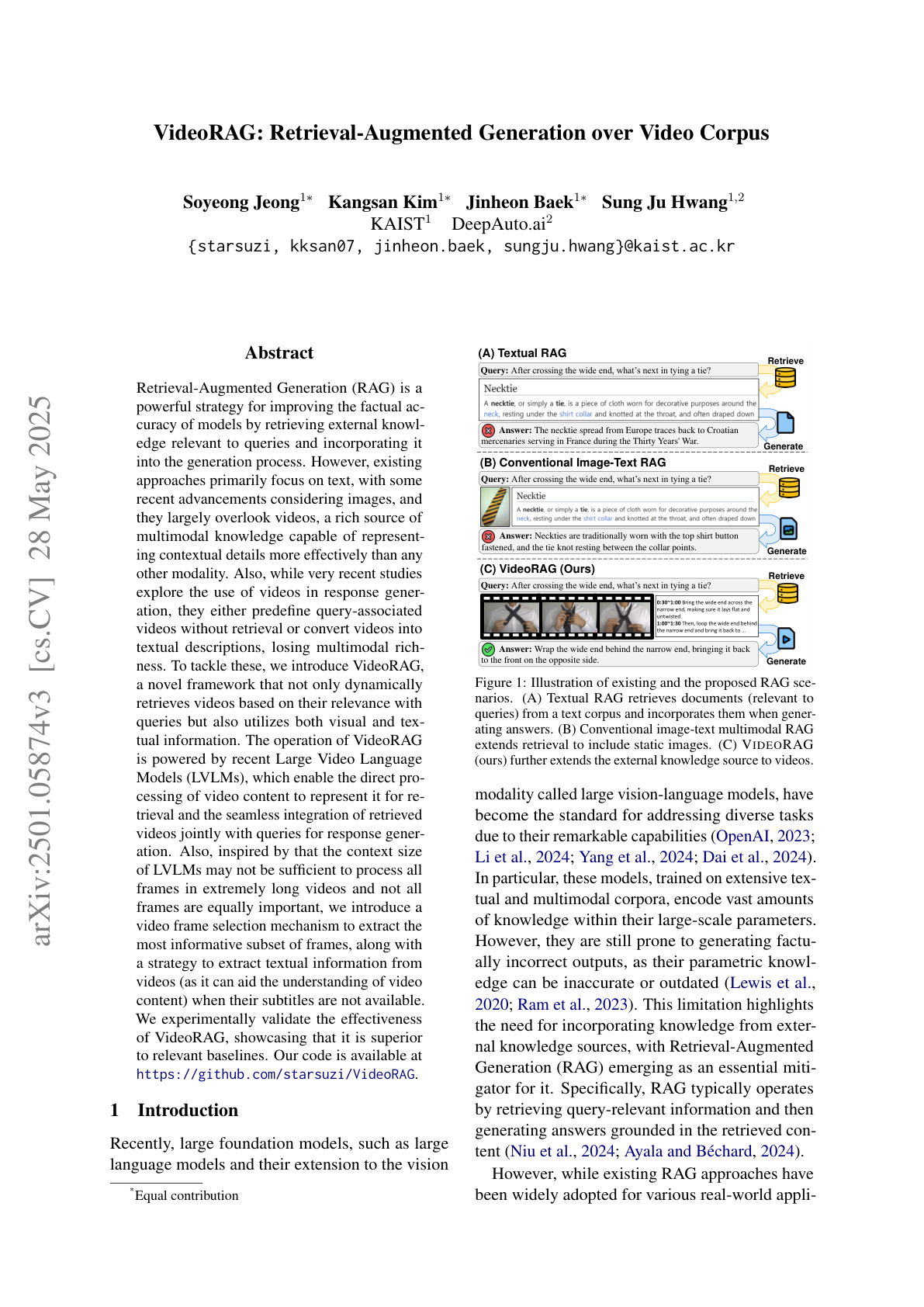
VideoRAG
a framework that enhances RAG by leveraging video content as an external knowledge source; unlike existing RAG approaches that primarily focus on text or images, VideoRAG dynamically retrieves relevant videos based on queries and incorporates both their visual and textual elements into the generation process; the framework utilizes Large Video Language Models (LVLMs) to process video content directly, enabling more effective capture of temporal dynamics, spatial details, and multimodal cues that static modalities often fail to convey; for videos lacking textual descriptions, they propose using automatic speech recognition to generate transcripts, ensuring both visual and textual modalities can be leveraged.
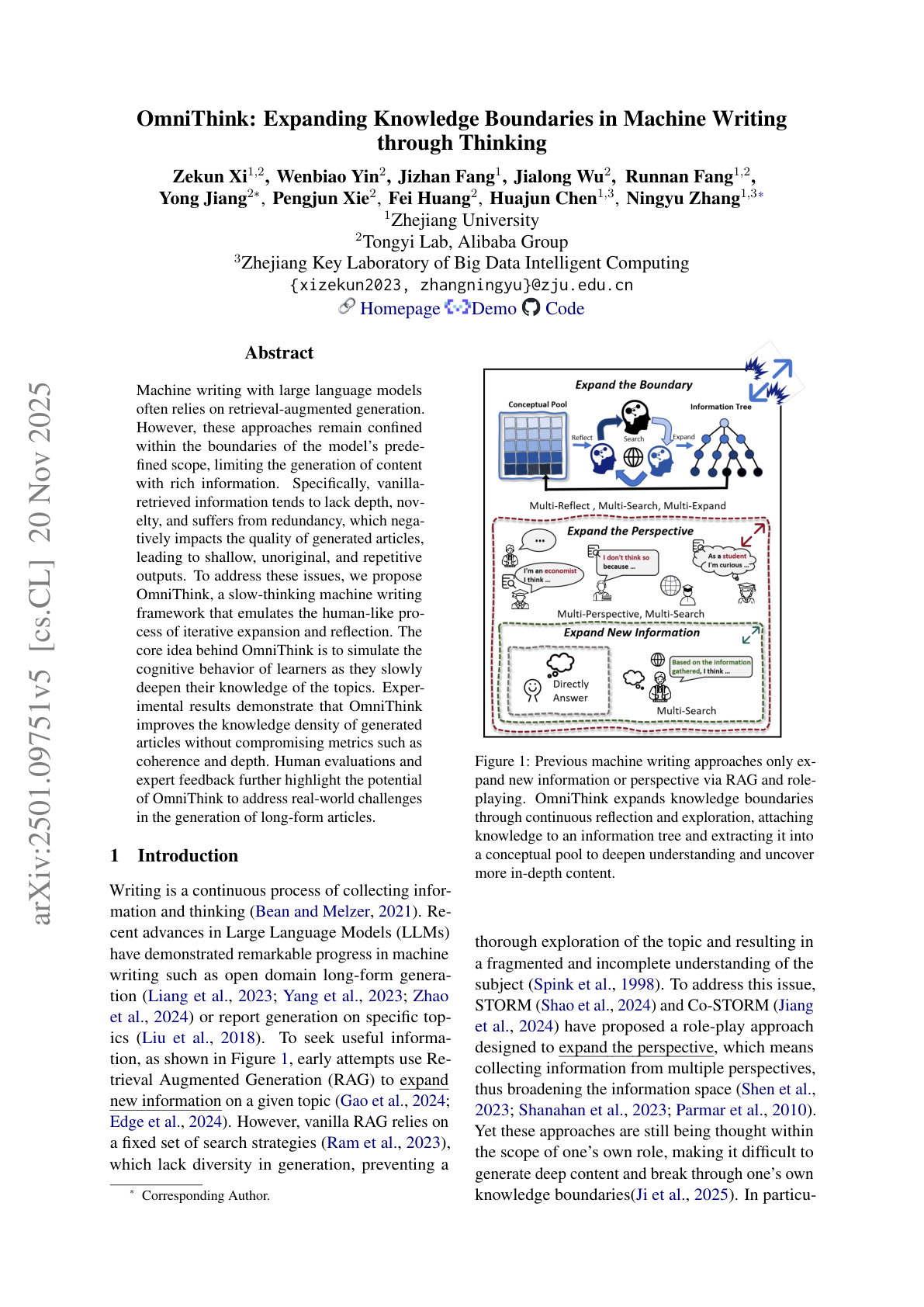
OmniThink
a new framework that emulates a human-like process of iterative expansion and reflection; it's built to simulate the cognitive behavior of learners as they deepen their knowledge; compared to RAG and role-playing, OmniThink can expand knowledge boundaries through continuous reflection and exploration; this makes it ideal for use cases that require long-form generation.
Enhancing RAG
systematically explores the factors and methods that improve RAG systems such as retrieval strategies, query expansion, contrastive in-context learning, prompt design, and chunking.
Long Context vs. RAG for LLMs
performs a comprehensive evaluation of long context (LC) LLMs compared to RAG systems; the three main findings are: 1) LC generally outperforms RAG in question-answering benchmarks, 2) summarization-based retrieval performs comparably to LC, while chunk-based retrieval lags behind, and 3) RAG has advantages in dialogue-based and general question queries
ModernBERT
a new encoder-only transformer model that achieves state-of-the-art performance on classification and retrieval tasks while being more efficient than previous encoders; it was trained on 2T tokens with 8192 sequence length and incorporates modern optimizations that represent a significant improvement over BERT; the model is specifically designed for practical deployment, offering superior speed and memory efficiency on common GPUs.
Granite Guardian
IBM open-sources Granite Guardian, a suite of safeguards for risk detection in LLMs; the authors claim that With AUC scores of 0.871 and 0.854 on harmful content and RAG-hallucination-related benchmarks respectively, Granite Guardian is the most generalizable and competitive model available in the space.
Auto-RAG
an autonomous iterative retrieval model with superior performance across many datasets; Auto-RAG is a fine-tuned LLM that leverages the decision-making capabilities of an LLM; it interacts with the retriever through multiturn dialogues, systematically planning retrievals and refining queries to acquire valuable knowledge — it performs this process until sufficient external information is obtained; the authors also show that based on question difficulty, the method can adjust the number of iterations without any human intervention.
Retrieval-Augmented Reasoning for LLMs
extends the rStar reasoning framework to enhance reasoning accuracy and factual reliability of LLMs; it leverages a Monte Carlos Tree Search (MCTS) framework with explicit retrieval-augmented reasoning to produce multiple candidate reasoning trajectories; then it leverages a retrieval-augmented factuality scorer to evaluate the factual accuracy of the reasoning trajectories; the trajectory with the highest factuality score is selected as the final answer by the system; on medical reasoning tasks, RARE (which uses Llama 3.1) surpasses larger models such as GPT-4; on commonsense reasoning tasks, RARE outperformed Claude-3.5 Sonnet and GPT-4o-mini, achieving performance competitive with GPT-4o.
Toward Optimal Search and Retrieval for RAG
examines how retrieval affects performance in RAG pipelines for QA tasks; conducts experiments using BGE-base and ColBERT retrievers with LLaMA and Mistral, finding that including more gold (relevant) documents improves QA accuracy; finds that using approximate nearest neighbor search with lower recall only minimally impacts performance while potentially improving speed and memory efficiency; reports that adding noisy or irrelevant documents consistently degrades performance, contradicting previous research claims; concludes that optimizing retrieval of gold documents is crucial for RAG performance, and that operating at lower search accuracy levels can be a viable approach for practical applications.
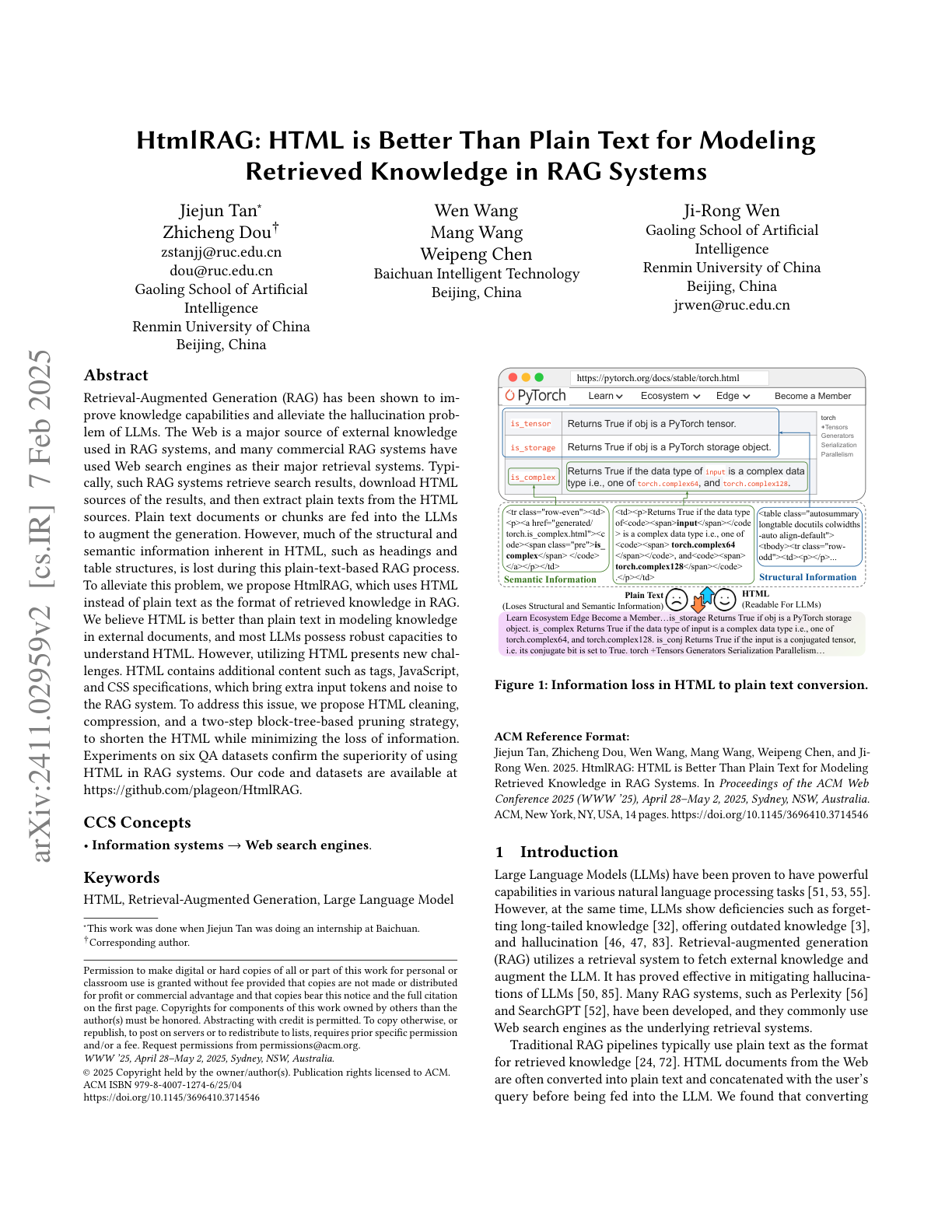
HtmlRAG
a novel approach that proposes using HTML instead of plain text as the format for building RAG systems; the key finding is that preserving HTML structure provides richer semantic and structural information compared to plain text conversion, which typically loses important formatting like headings, tables, and semantic tags; to address the challenge of HTML documents being too long for LLM context windows, the authors develop a two-step pruning method: first cleaning unnecessary HTML elements (reducing length by 94%), then using a block-tree-based pruning approach that combines embedding-based and generative pruning to further reduce the content while maintaining important information; experiments across six different QA datasets demonstrate that HtmlRAG outperforms existing plain-text based methods, validating the advantages of preserving HTML structure in RAG systems.
Multimodal RAG
provides a discussion on how to best integrate multimodal models into RAG systems for the industrial domain; it also provides a deep discussion on the evaluation of these systems using LLM-as-a-Judge.
Agentic Information Retrieval
provides an introduction to agentic information retrieval, which is shaped by the capabilities of LLM agents; discusses different types of cutting-edge applications of agentic information retrieval and challenges.
LongRAG
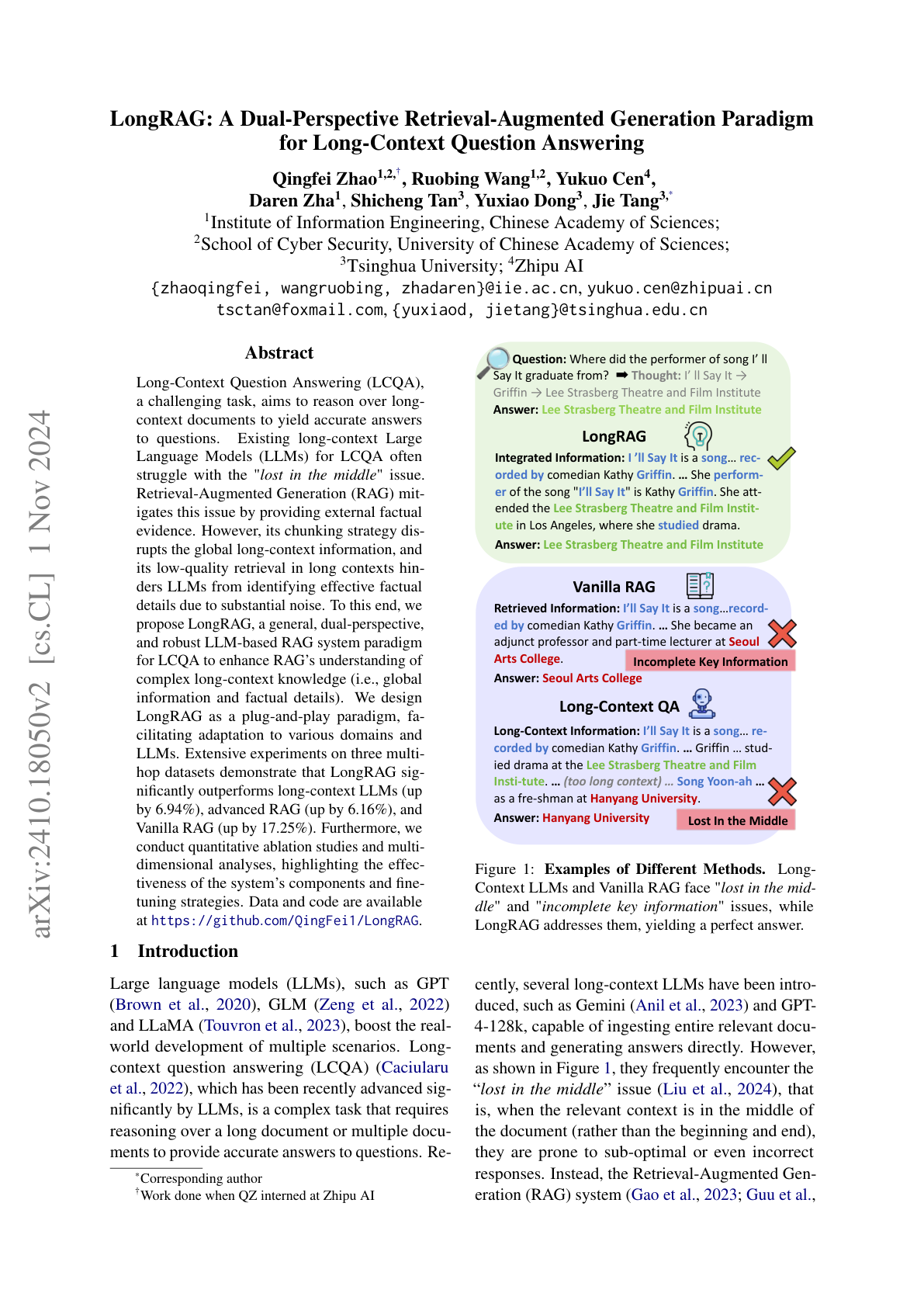
enhances RAG's understanding of long-context knowledge which includes global information and factual details; consists of a hybrid retriever, an LLM-augmented information extractor, a CoT-guided filter, and an LLM-augmented generator; these are key components that enable the RAG system to mine global long-context information and effectively identify factual details; LongRAG outperforms long-context LLMs (up by 6.94%), advanced RAG (up by 6.16%), and Vanilla RAG (up by 17.25%).
Granite 3.0
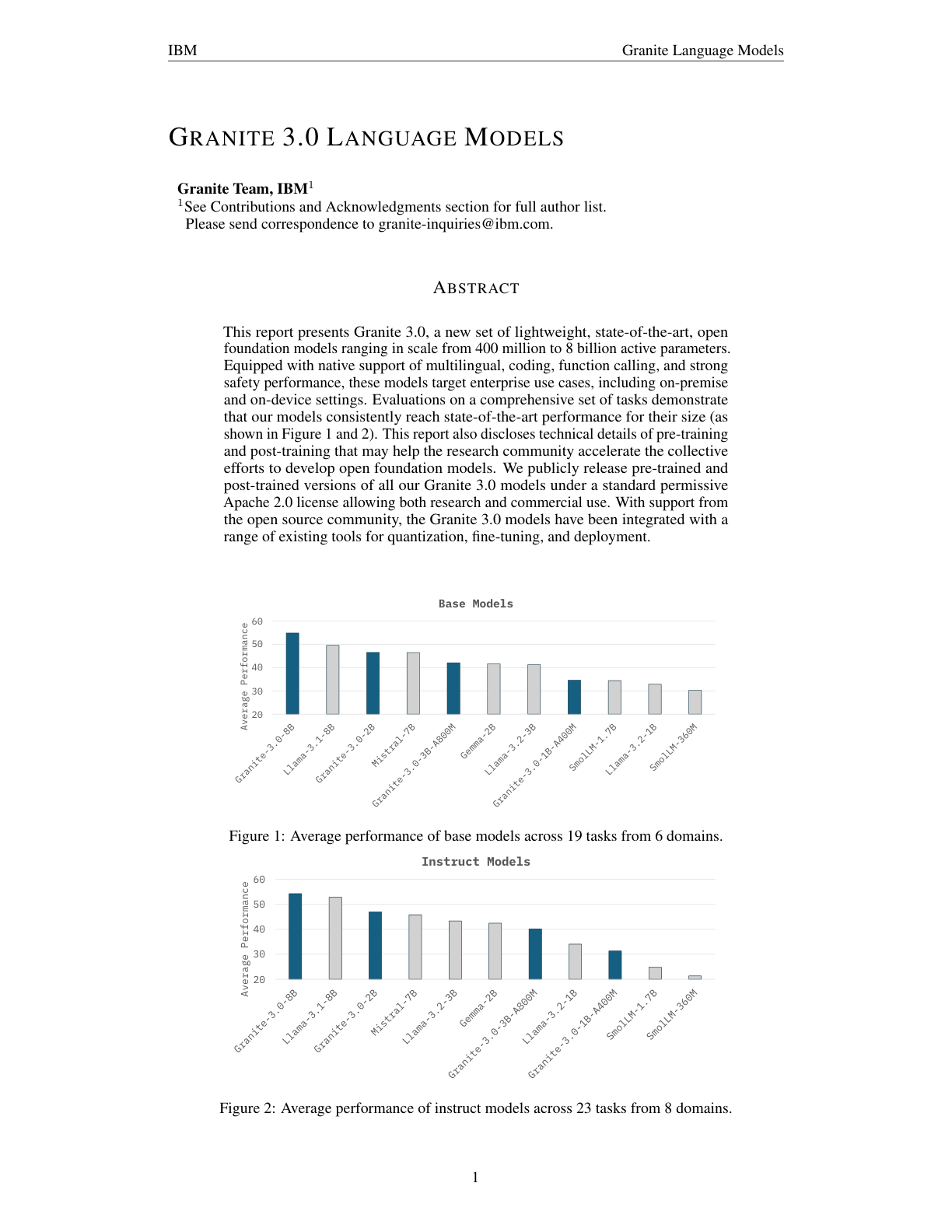
presents lightweight foundation models ranging from 400 million to 8B parameters; supports coding, RAG, reasoning, and function calling, focusing on enterprise use cases, including on-premise and on-device settings; demonstrates strong performance across academic benchmarks for language understanding, reasoning, coding, function calling, and safety.
Inference Scaling for Long-Context RAG
uses two strategies to investigate scaling laws for RAG: in-context learning (DRAG) and iterative prompting (IterRAG); finds that RAG performance consistently improves with the expansion of the effective context length under optimal configurations; when optimally allocated, increasing inference computation can lead to linear gains in long-context RAG performance; this leads to the development of a computation allocation model that can provide practical guidance for optimal computation allocation in long-context RAG scenarios.
Astute RAG
proposes a novel RAG approach to deal with the imperfect retrieval augmentation and knowledge conflicts of LLMs; Astute RAG adaptively elicits essential information from LLMs' internal knowledge; then it iteratively consolidates internal and external knowledge with source awareness; Astute RAG is designed to better combine internal and external information through an interactive consolidation mechanism (i.e., identifying consistent passages, detecting conflicting information in them, and filtering out irrelevant information).
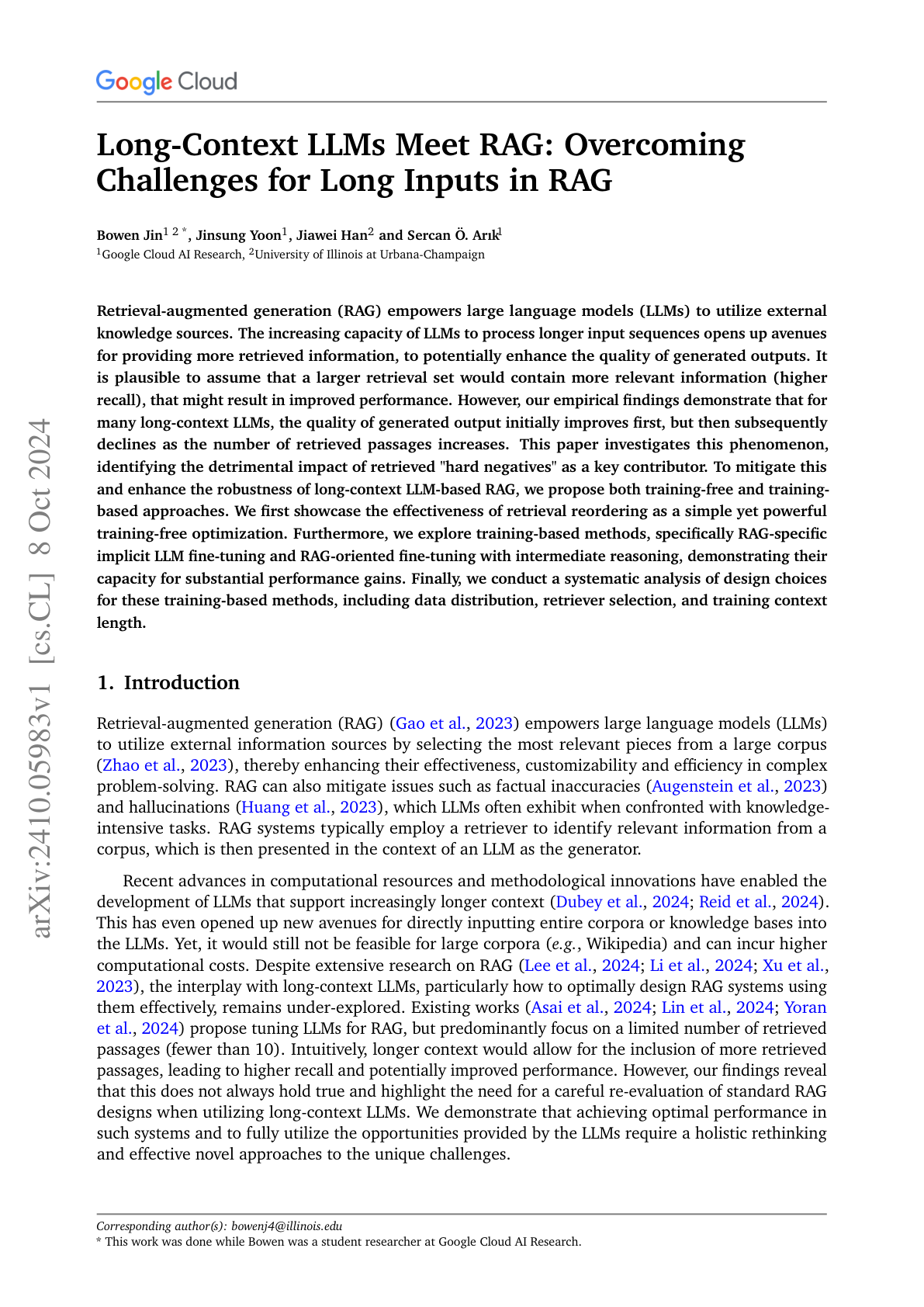
Long-Context LLMs Meet RAG
finds that for many long-context LLMs, the quality of outputs declines as the number of passages increases; reports that the performance loss is due to retrieved hard negatives; they propose two ways to improve long-context LLM-based RAG: retrieval reordering and RAG-specific tuning with intermediate reasoning to help with relevance identification; that approaches demonstrate significant accuracy and robustness improvements on long-context RAG performance.
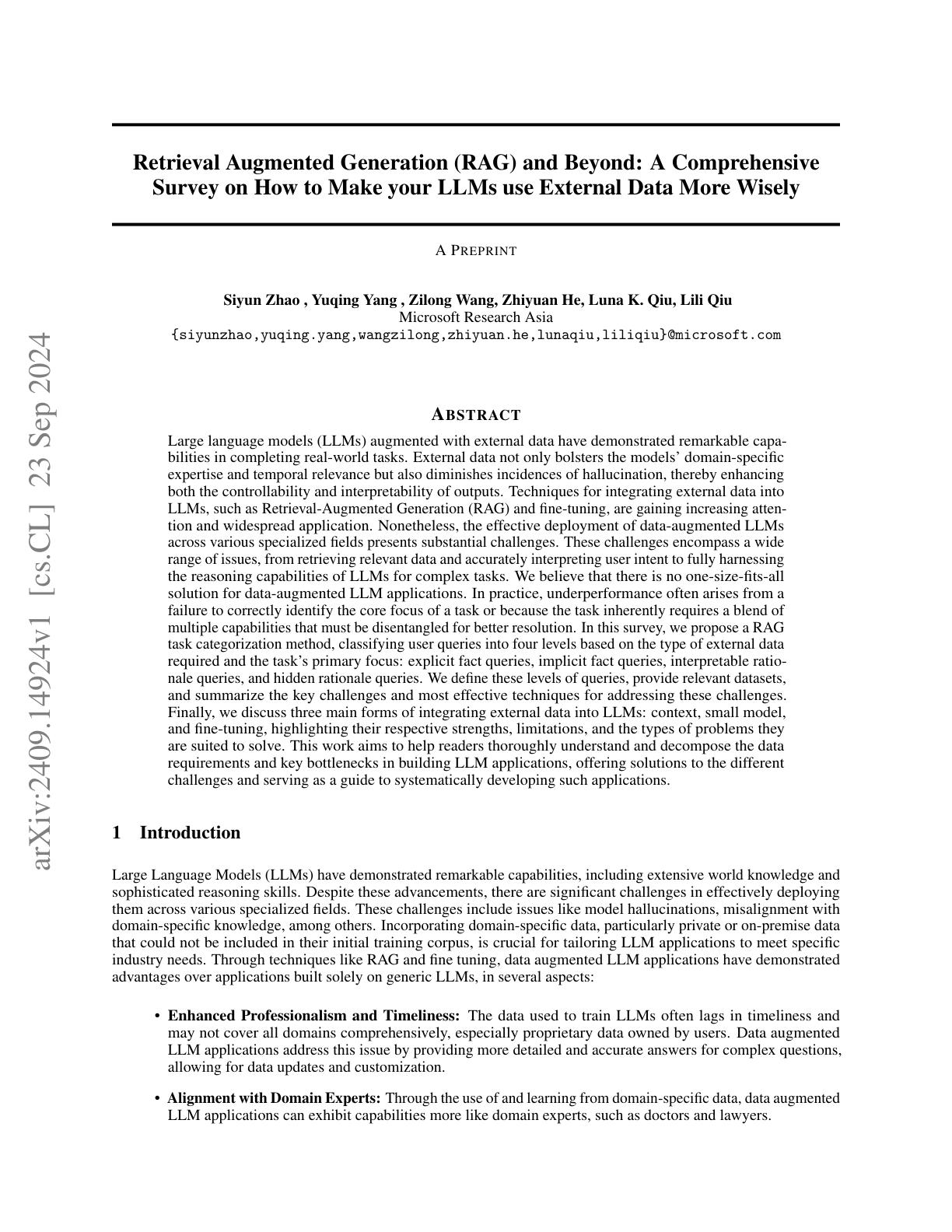
RAG and Beyond
presents a survey that introduces a RAG task categorization method that helps to classify user queries into four levels according to the type of external data required and the focus of the task; summarizes key challenges in building robust data-augmented LLM applications and the most effective techniques for addressing them.
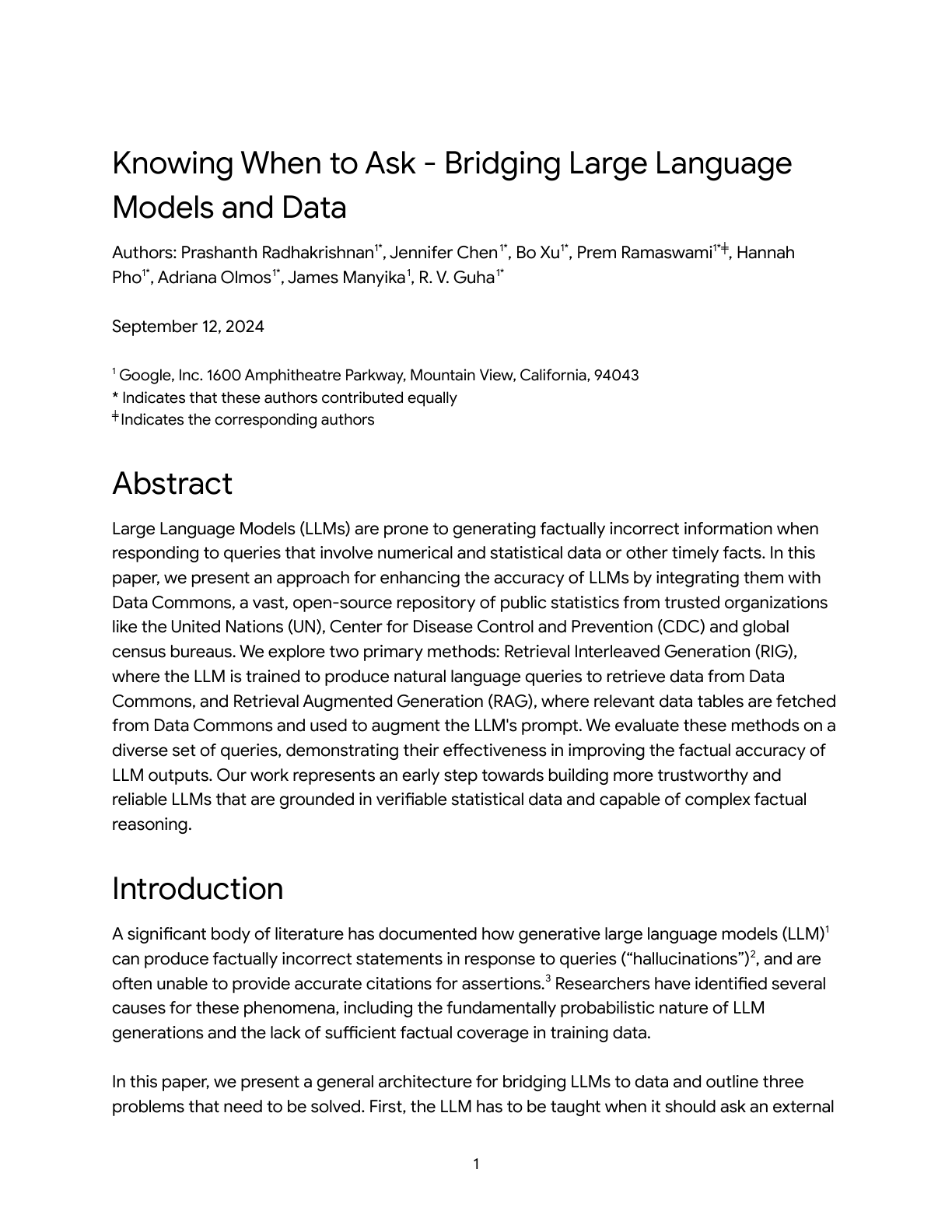
DataGemma
includes a series of fine-tuned Gemma 2 models to help LLMs access and incorporate numerical and statistical data; proposes a new approach called Retrieval Interleaved Generation (RIG) which can reliably incorporate public statistical data from Data Commons into LLM responses; RIG is a tool-inspired approach, can interleave statistical tokens with natural language questions suitable for retrieval from Data Commons; to attain such capability, they fine-tune the LLM on an instruction-response dataset generated with the help of Gemini 1.5; the RIG approach improves factuality from 5-7% to about 58%.
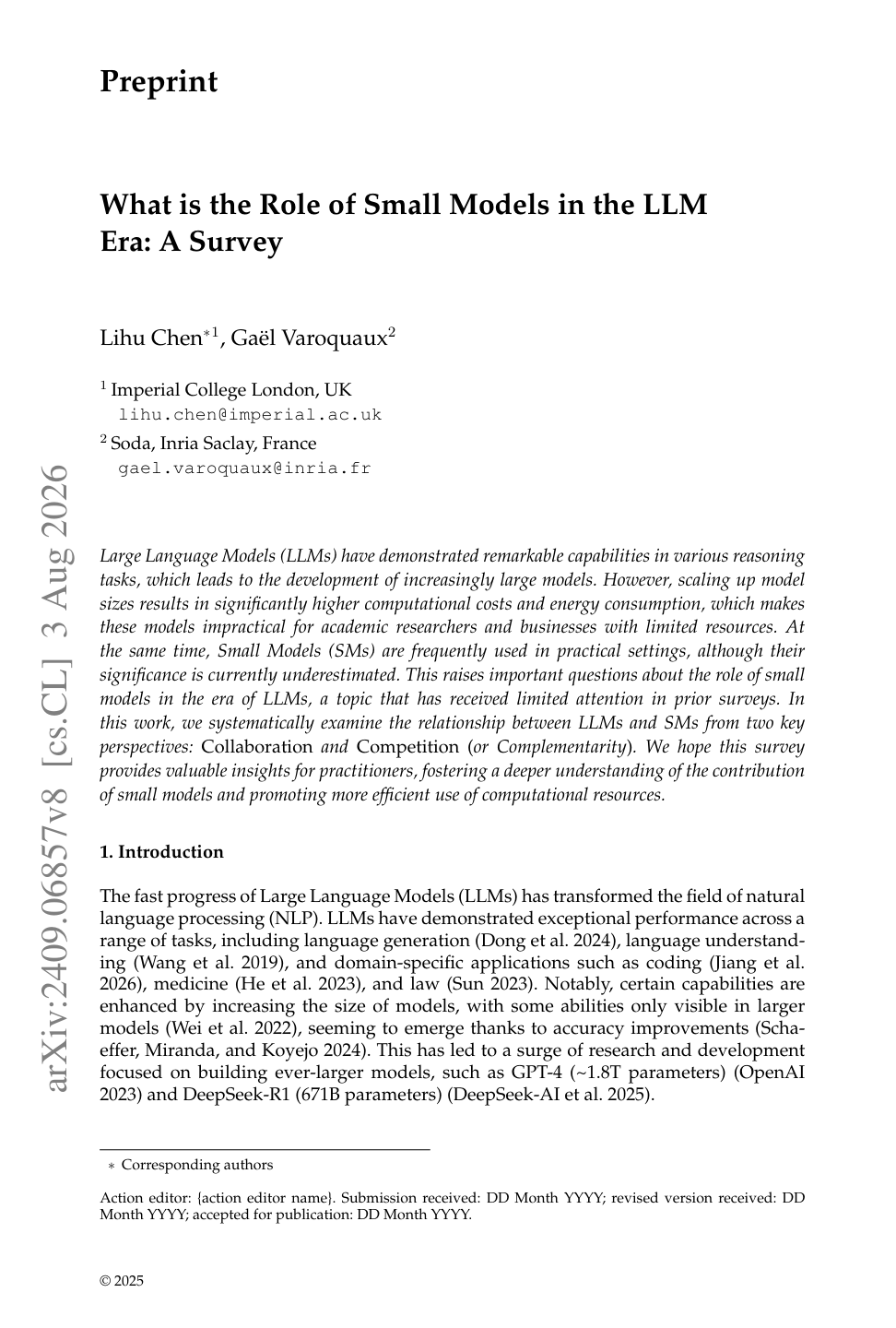
The Role of Small Language Models in the LLM Era
closely examines the relationship between LLMs and SLMs; common applications of SLMs include data curation, training stronger models, efficient inference, evaluators, retrievers, and much more; includes insights for practitioners to better understand the value of these SLMs.
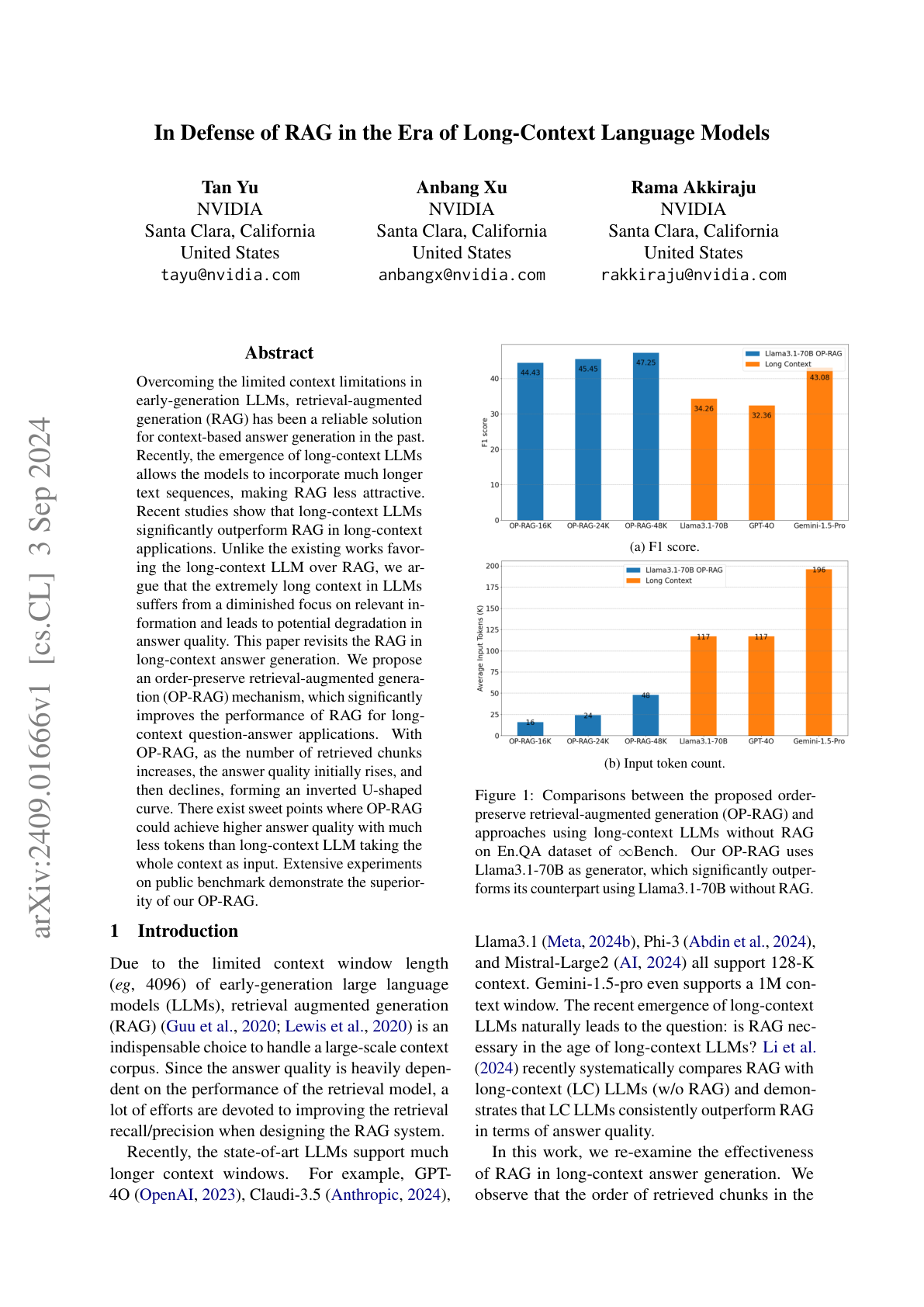
RAG in the Era of Long-Context LLMs
reports that longer-context LLMs suffer from a diminished focus on relevant information, which is one of the primary issues that a RAG system addresses (i.e., uses more relevant information); they propose an order-preserving RAG mechanism that improves performance on long-context question answering; it's not perfect and in fact, as retrieved chunks increase the quality of responses go up and then declines; they mention a sweet spot where it can achieve better quality with a lot fewer tokens than long-context LLMs.
LongCite
synthesizes a large-scale SFT dataset with off-the-shelf LLMs to improve long-context question answering with citations; it trains 8B and 9B parameter models that enhance citation generation capabilities from lengthy contexts while improving response correctness; claims to even surpass GPT-4o on their proposed LongBench-Cite benchmark.
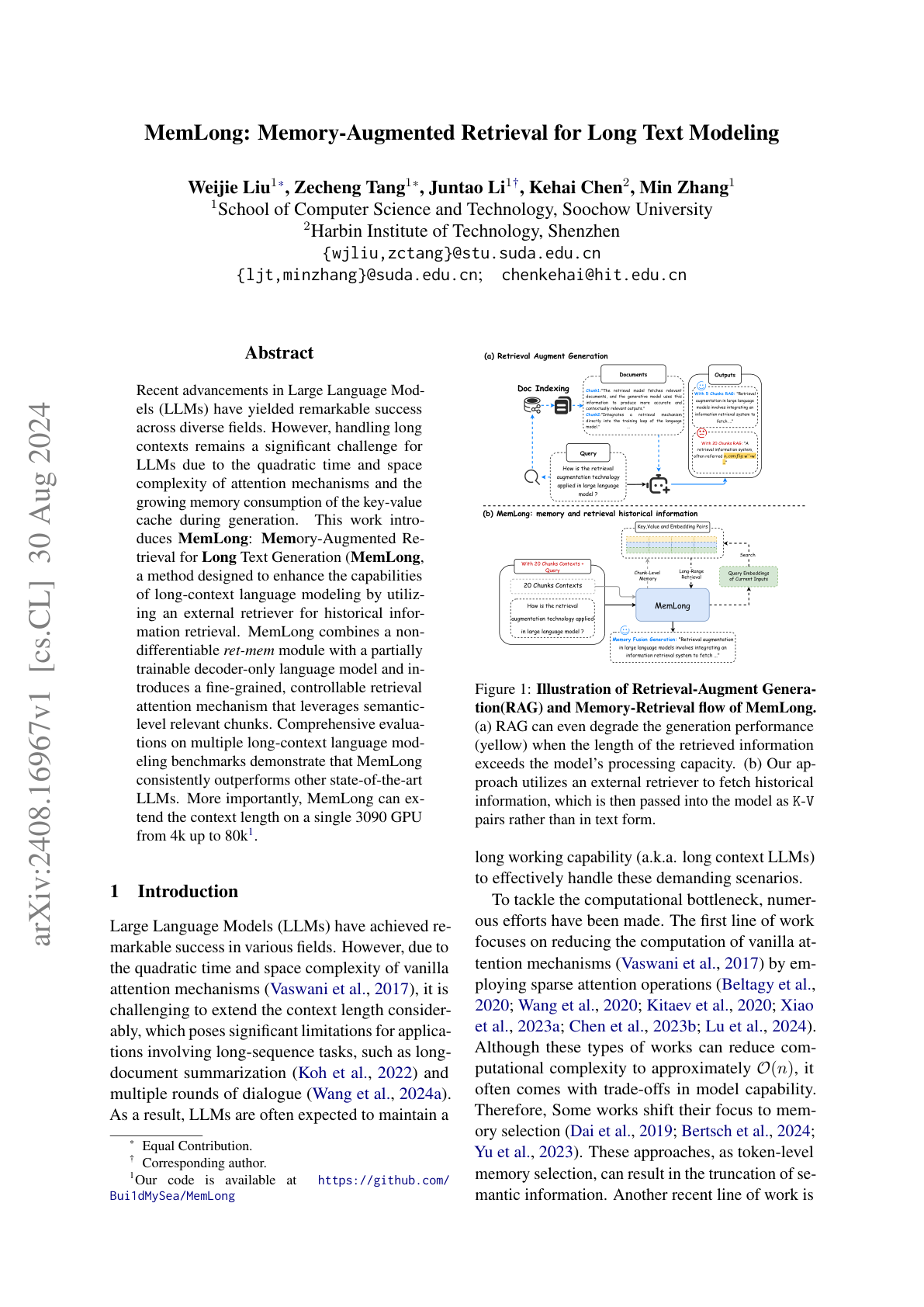
MemLong
utilizes an external retriever for retrieving historical information which enhances the capabilities of long-context LLMs; it consistently outperforms other SoTA LLMs on long-context benchmarks and can extend the context length on a single 3090 GPU from 4k up to 80k.
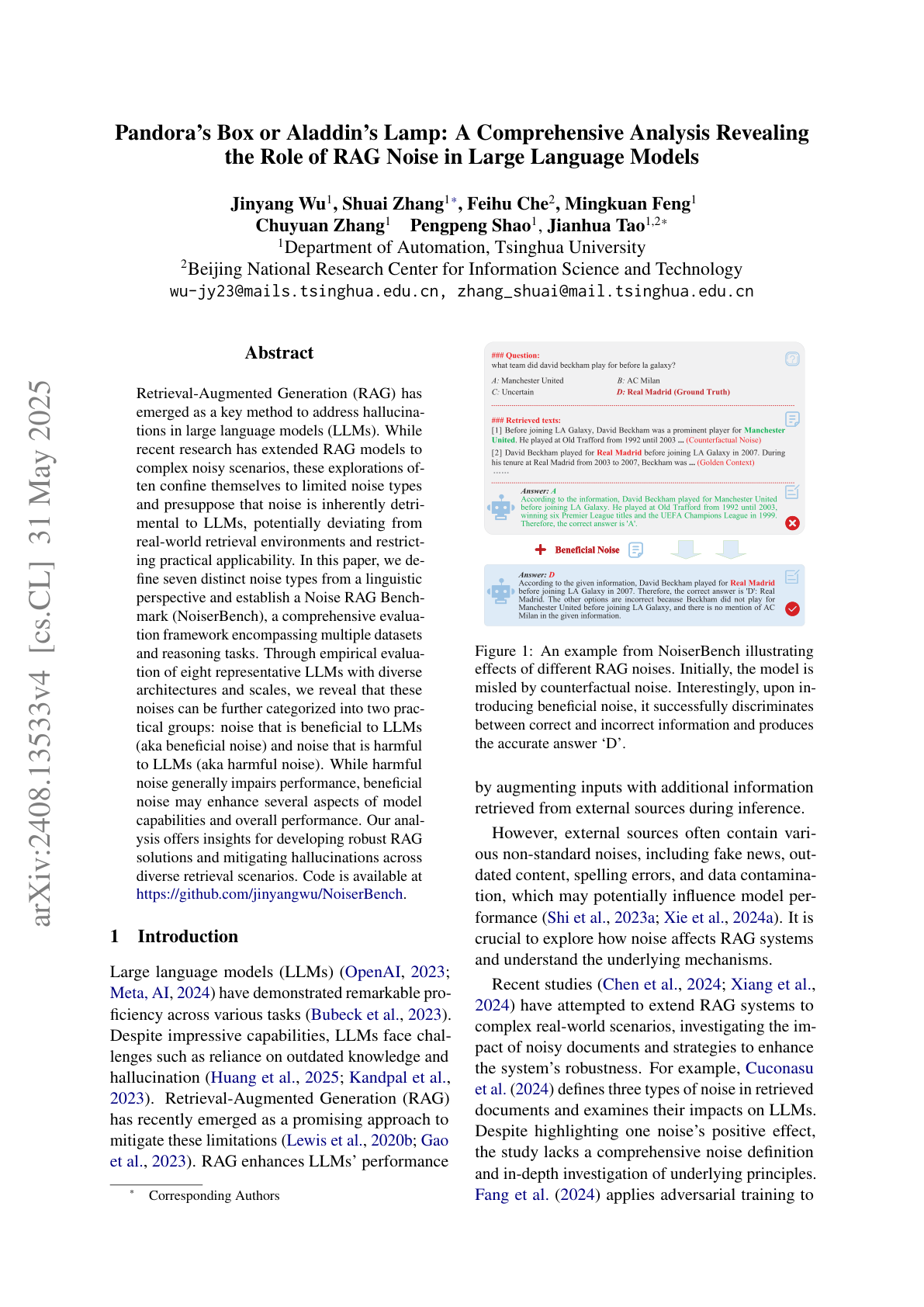
Role of RAG Noise in LLMs
proposes a benchmark (NoiserBench) to measure how different kinds of noisy information affect RAG's performance; reports that from different kinds of beneficial noise studied (e.g., semantic, datatype, and illegal sentence), illegal sentence noise exhibits the most improved model performance across models and datasets.