AI Papers of the Week
Every paper worth reading in AI, hand-picked one week at a time.
Discover and explore top AI papers with Claude Code or Codex
npx @dair-ai/mcp setup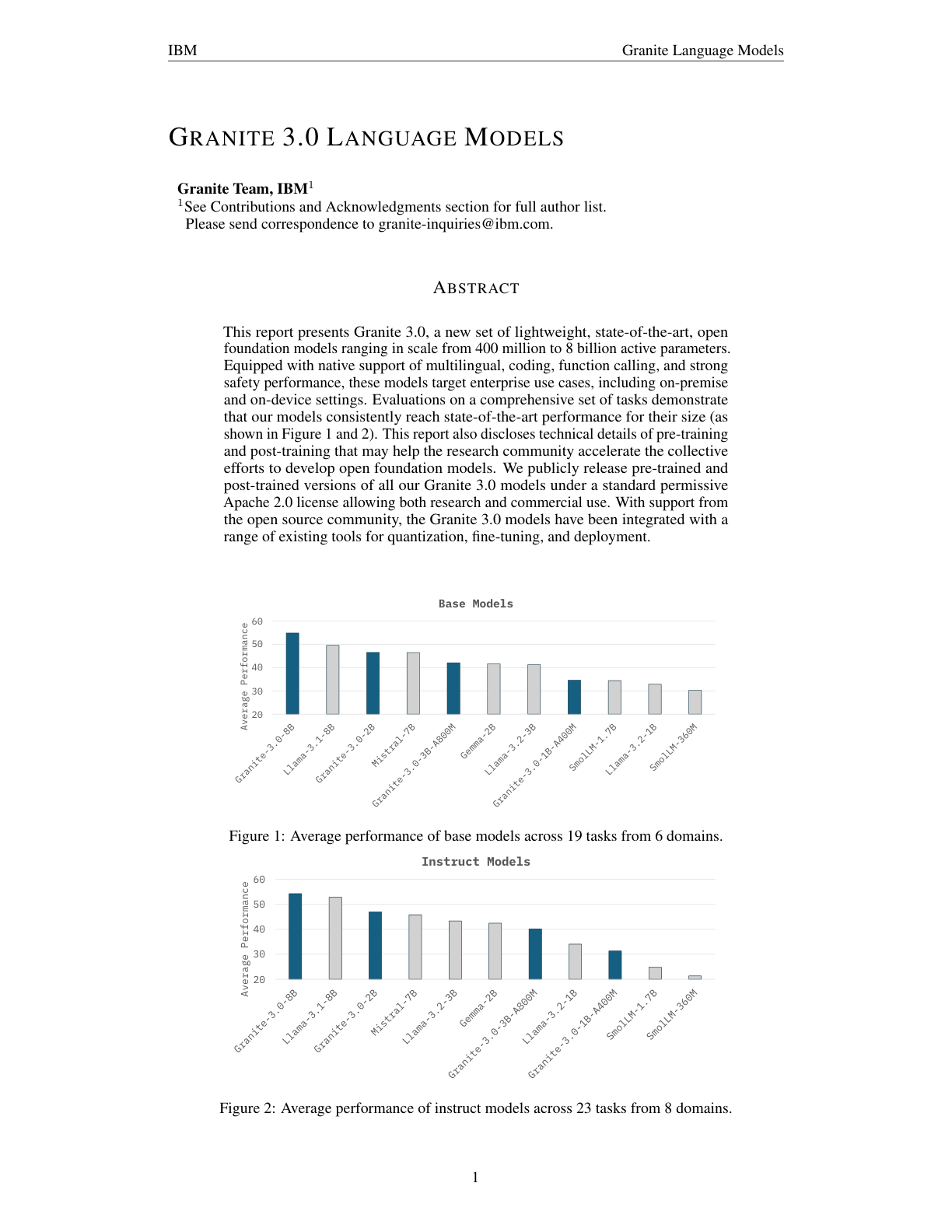
Granite 3.0
presents lightweight foundation models ranging from 400 million to 8B parameters; supports coding, RAG, reasoning, and function calling, focusing on enterprise use cases, including on-premise and on-device settings; demonstrates strong performance across academic benchmarks for language understanding, reasoning, coding, function calling, and safety.
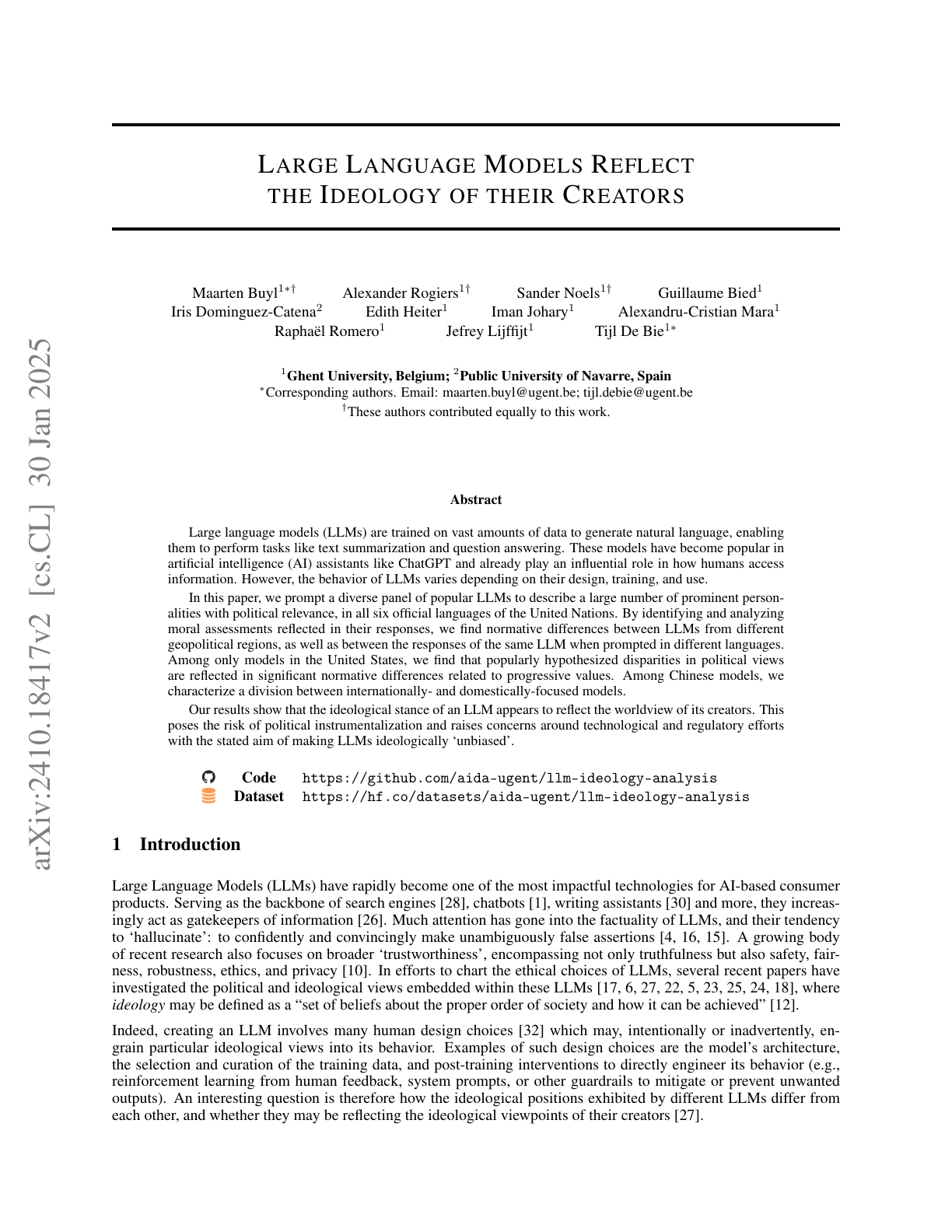
LLMs Reflect the Ideology of their Creators
finds that LLMs exhibit a diverse ideological stance which reflects the worldview of its creators; finds consistent normative differences between how the same LLM responds in Chinese compared to English; identifies normative disagreements between Western and non-Western LLMs about prominent actors in geopolitical conflicts.
Scalable Watermarking for LLMs
proposes SynthID-Text, a text-watermarking scheme that can preserve text quality in LLMs, enable high detection accuracy, and minimize latency overhead; it integrates watermarking with speculative sampling that consists of the final pattern of scores for a model’s word choices combined with the adjusted probability scores; the authors test the feasibility and scalability of the approach by assessing feedback on nearly 10 million Gemini responses.
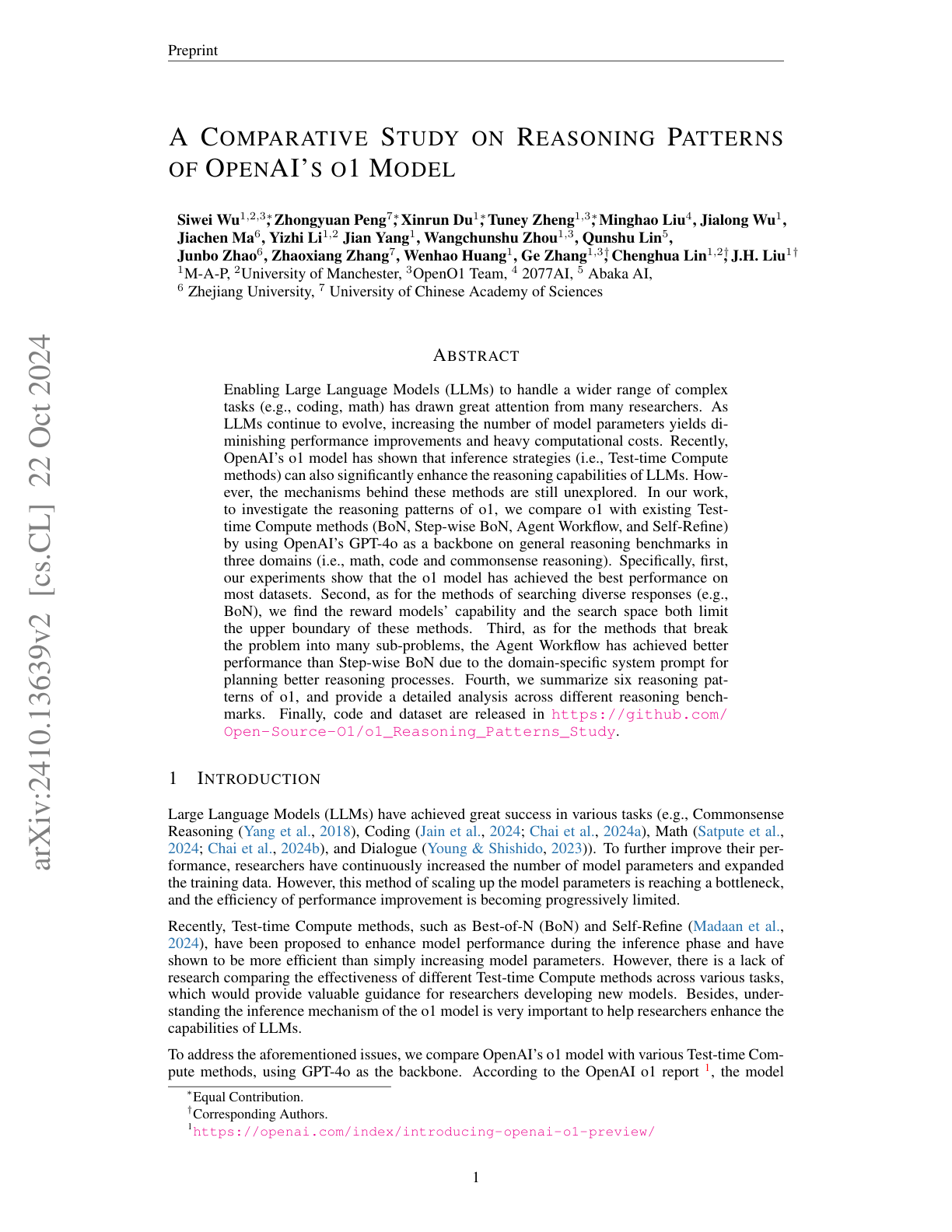
Reasoning Patterns of OpenAI’s o1 Model
when compared with other test-time compute methods, o1 achieved the best performance across most datasets; the authors observe that the most commonly used reasoning patterns in o1 are divide and conquer and self-refinement; o1 uses different reasoning patterns for different tasks; for commonsense reasoning tasks, o1 tends to use context identification and emphasize constraints; for math and coding tasks, o1 mainly relies on method reuse and divide and conquer.
Thinking LLMs
proposes a training method to equip LLMs with thinking abilities for general instruction-following without human-annotated data; uses an iterative search and optimization procedure to explore thought generation which enables the model to learn without direct supervision; thought candidates for each user instruction are scored with a judge model; only responses are evaluated by the Judge which determines the best and worst ones; then the corresponding full outputs are used as chosen and rejected pairs for DPO (referred to as Thought Preference Optimization in this paper). reports superior performance on AlpacaEval and Arena-Hard.
Model Swarms
propose a new collaborative search algorithm to adapt LLM via swarm intelligence; a pool of LLM experts collaboratively move in the weight space and optimize a utility function representing various adaptation objectives; experiments demonstrate that Model Swarms could flexibly adapt LLM experts to a single task, multi-task domains, reward models, as well as diverse human interests. improves over 12 model composition baselines by up to 21.0% across tasks and contexts.
First-Person Fairness in Chatbots
studies first-person fairness which involves fairness towards users interacting with ChatGPT; specifically, it measures the biases, if any, towards the users’ names; it leverages a model powered by GPT-4o to analyze patterns and name-sensitivity in the chatbot’s responses for different user names; claims that, overall, post-training significantly mitigate harmful stereotypes; also reports that in domains like entertainment and art, with open-ended tasks, demonstrate the highest level of bias (i.e., tendency to write stories with protagonists whose gender matches gender inferred from the user’s name)
Introspection in LLMs
reports that LLMs can acquire knowledge through introspection that cannot be inferred from their training data; suggests that LLMs contain privileged information about themselves that can potentially lead to more interpretable and controllable systems; they report that this introspection ability is limited and models struggle to predict their behavior on tasks requiring reasoning over long outputs.
Janus
proposes a unified autoregressive framework for multimodal understanding and generation; it decouples visual encoding into independent pathways and leverages a single transformer architecture to improve flexibility and performance on both visual understanding and generation; claims to alleviate trade-offs related to performing the vision tasks, something common in methods that rely on a single visual encoder; surpasses previous unified models and matches or exceeds the performance of task-specific models.
Inference Scaling for Long-Context RAG
uses two strategies to investigate scaling laws for RAG: in-context learning (DRAG) and iterative prompting (IterRAG); finds that RAG performance consistently improves with the expansion of the effective context length under optimal configurations; when optimally allocated, increasing inference computation can lead to linear gains in long-context RAG performance; this leads to the development of a computation allocation model that can provide practical guidance for optimal computation allocation in long-context RAG scenarios.
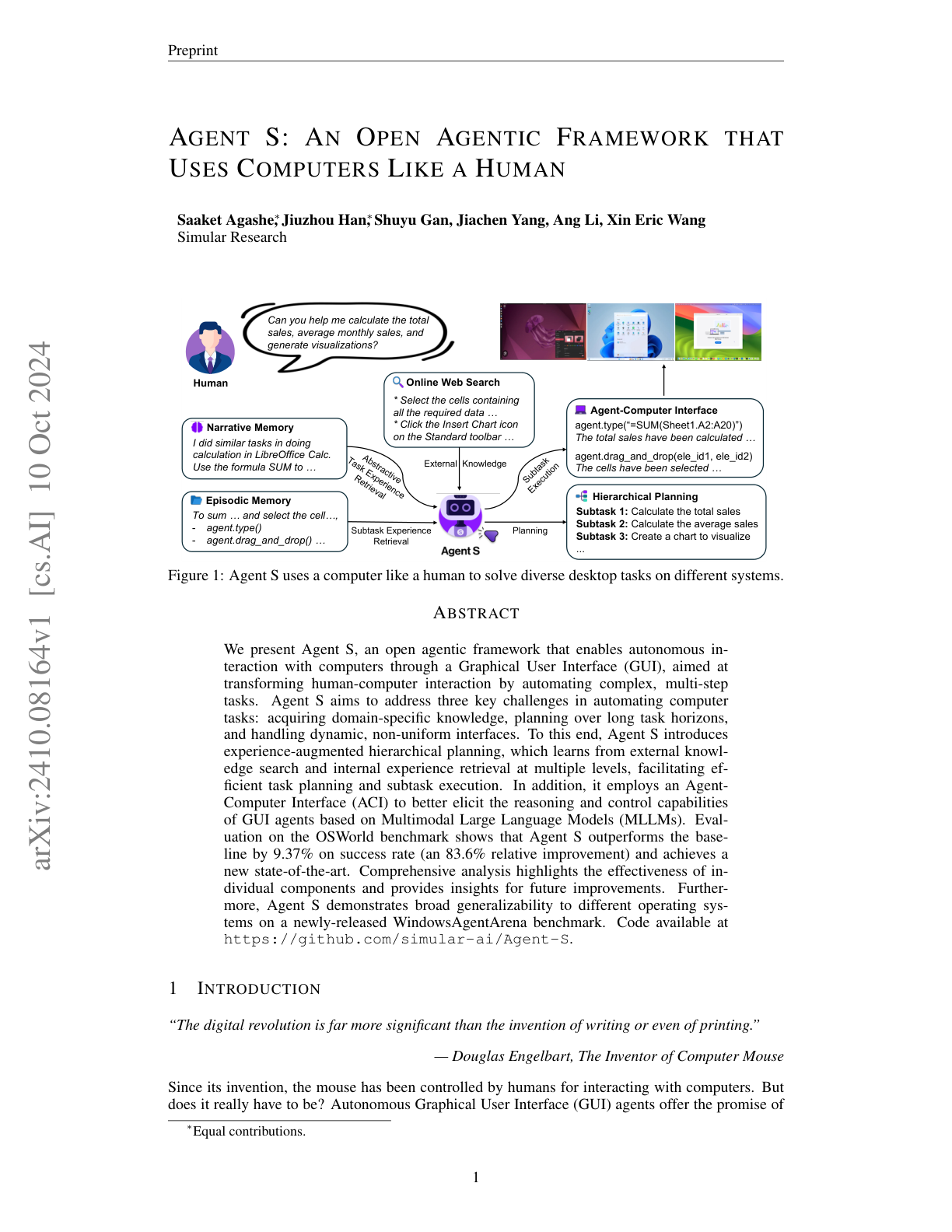
Agent S
a new open agentic framework that enables autonomous interaction with computers through a GUI; Agent S tackles challenges such as acquiring knowledge, planning over long-task horizons, and handling dynamic interfaces; it introduces experience-augmented hierarchical planning which leverages both search and retrieval; leverages an agent-computer interface to perform reasoning and control GUI agents; evaluation on the OSWorld benchmark shows that Agent S outperforms the baseline by 9.37% in success rate (an 83.6% relative improvement) and achieves a new state-of-the-art.
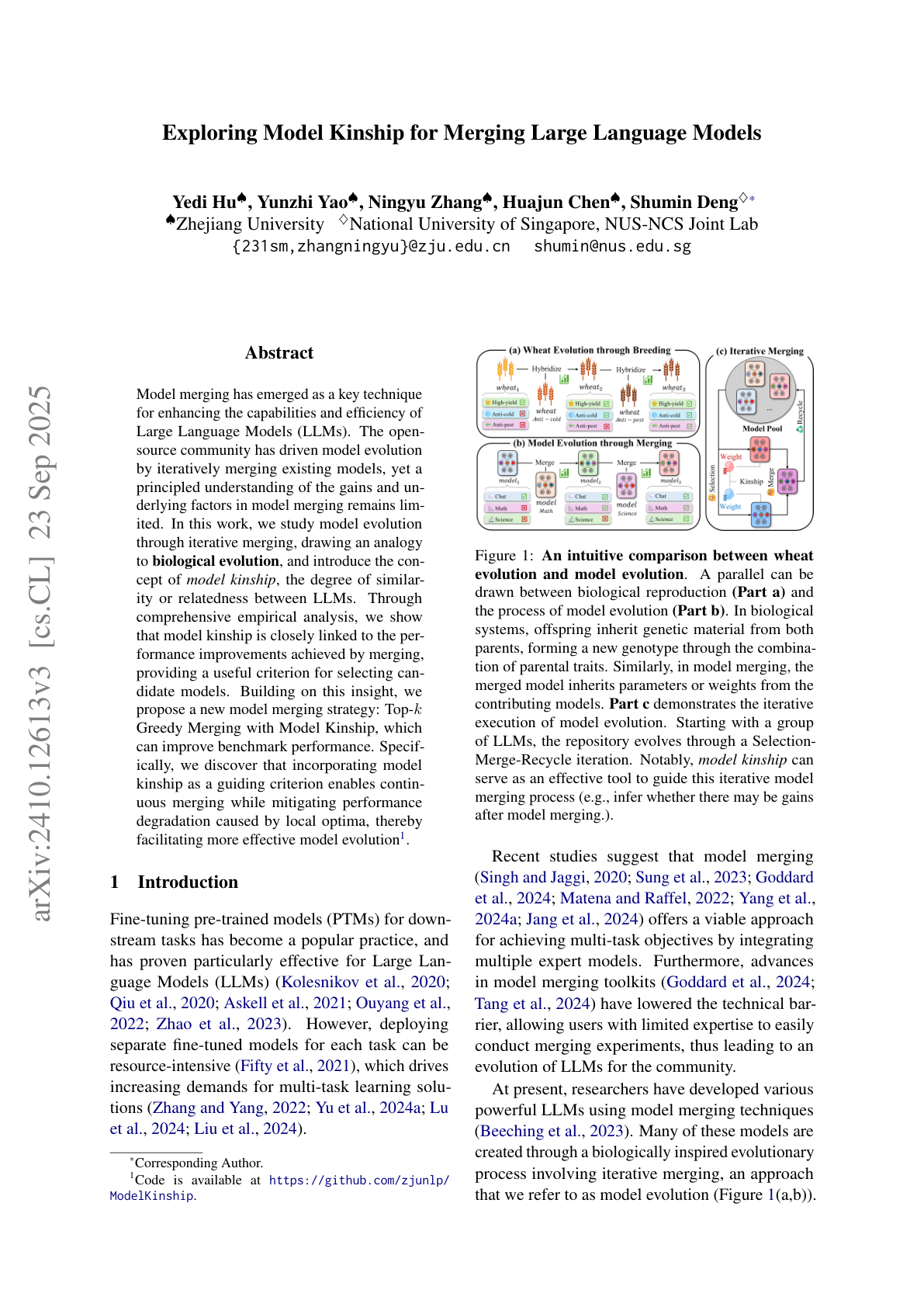
Model Kinship for Merging LLMs
proposes model kinship to measure the degree of similarity between LLMs; model kinship is used to build a model merging strategy (Top-k Greedy Merging with Model Kinship) which yields better performance; the authors find that this new criterion can be used to effectively and continuously perform model merging.
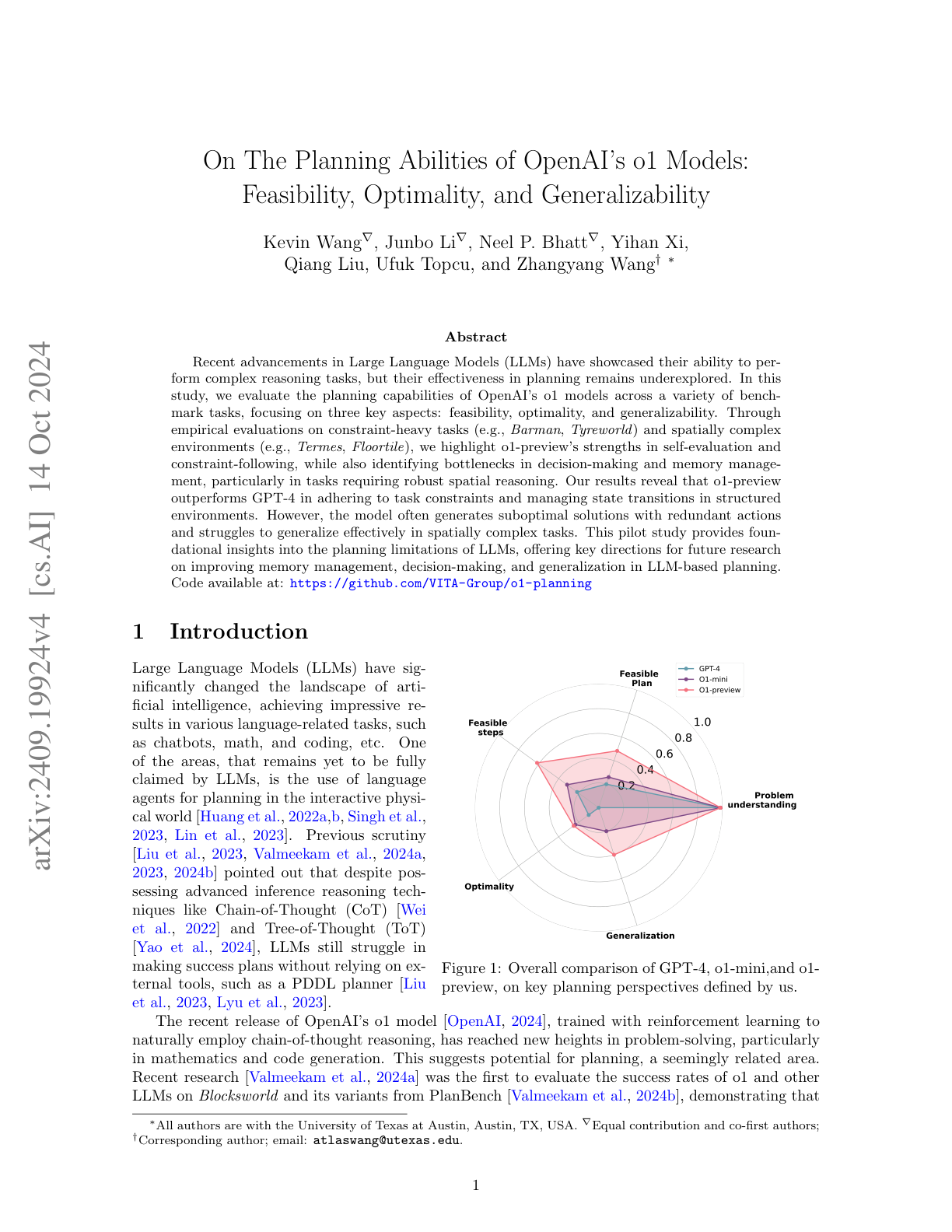
On the Planning Abilities of OpenAI’s o1 Models
reports that o1-preview is particularly strong in self-evaluation and constraint-following; also mentions that these o1 models demonstrate bottlenecks in decision-making and memory management, which are more pronounced in spatial reasoning; in particular, the models produce redundant action and struggle to generalize in spatially complex tasks.
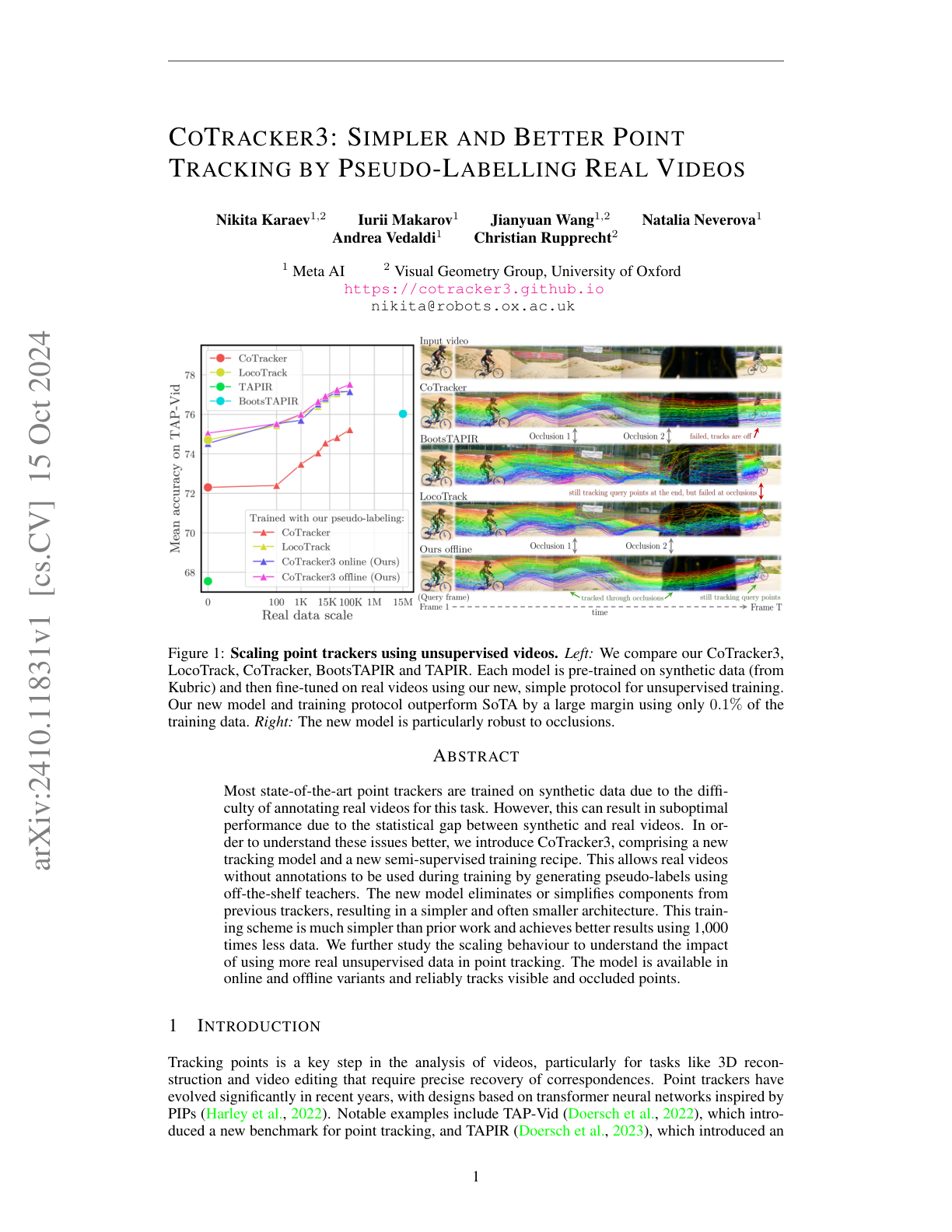
CoTracker3
proposes a new point tracking model and a new semi-supervised training recipe; enables usage of real videos without annotations during training by generating pseudo-labels using off-the-shelf teachers; the approach is simpler in architecture and training scheme leading to better results while using 1000x less data.
MLE-Bench
proposes a new benchmark for the evaluation of machine learning agents on machine learning engineering capabilities; includes 75 ML engineering-related competition from Kaggle testing on MLE skills such as training models, preparing datasets, and running experiments; OpenAI’s o1-preview with the AIDE scaffolding achieves Kaggle bronze medal level in 16.9% of competitions.
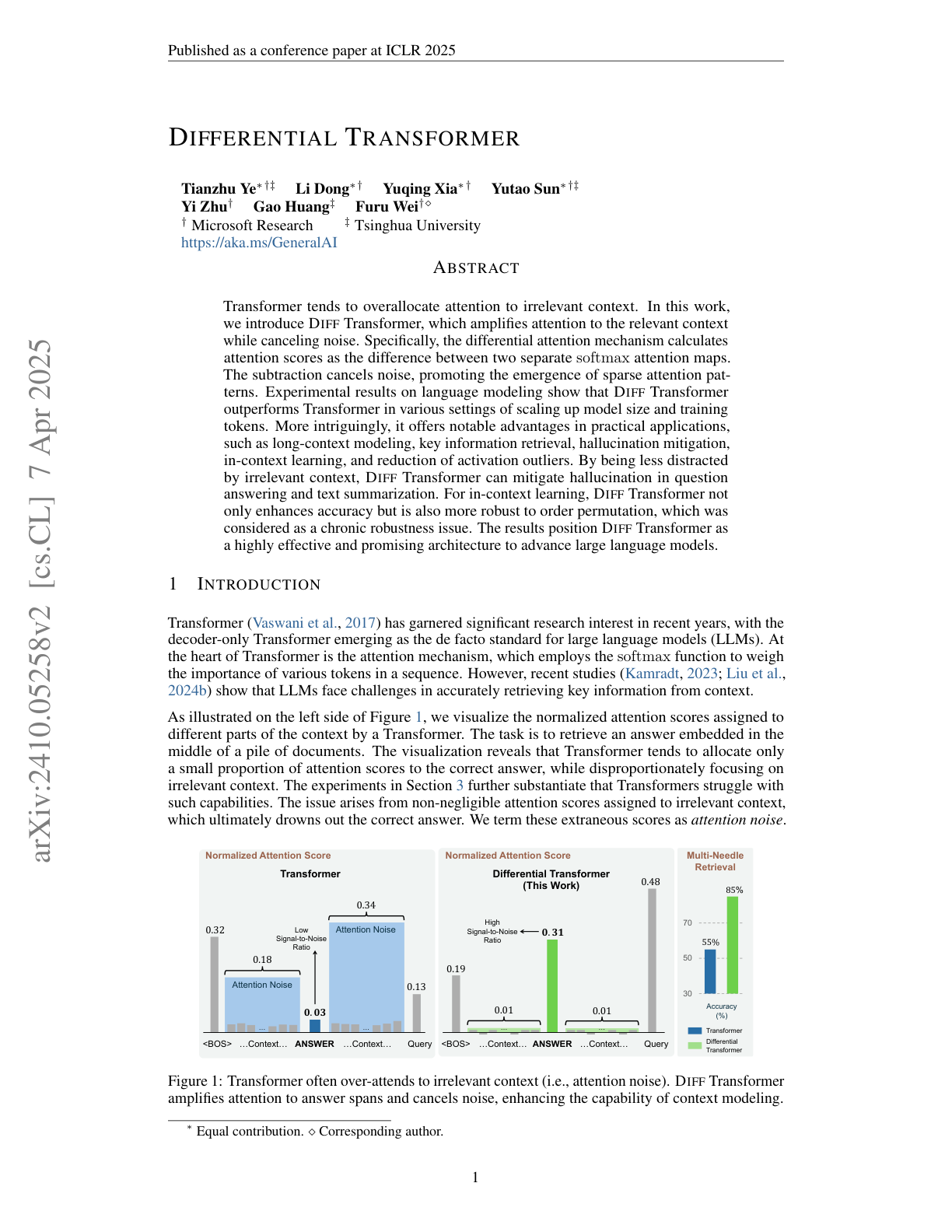
Differential Transformer
proposes a differential attention mechanism that amplifies attention to the relevant context while canceling noise; Differential Transformer outperforms Transformer when scaling up model size and training tokens; the authors claim that since this architecture gets less "distracted" by irrelevant context, it can do well in applications such as long-context modeling, key information retrieval, hallucination mitigation, in-context learning, and reduction of activation outliers.
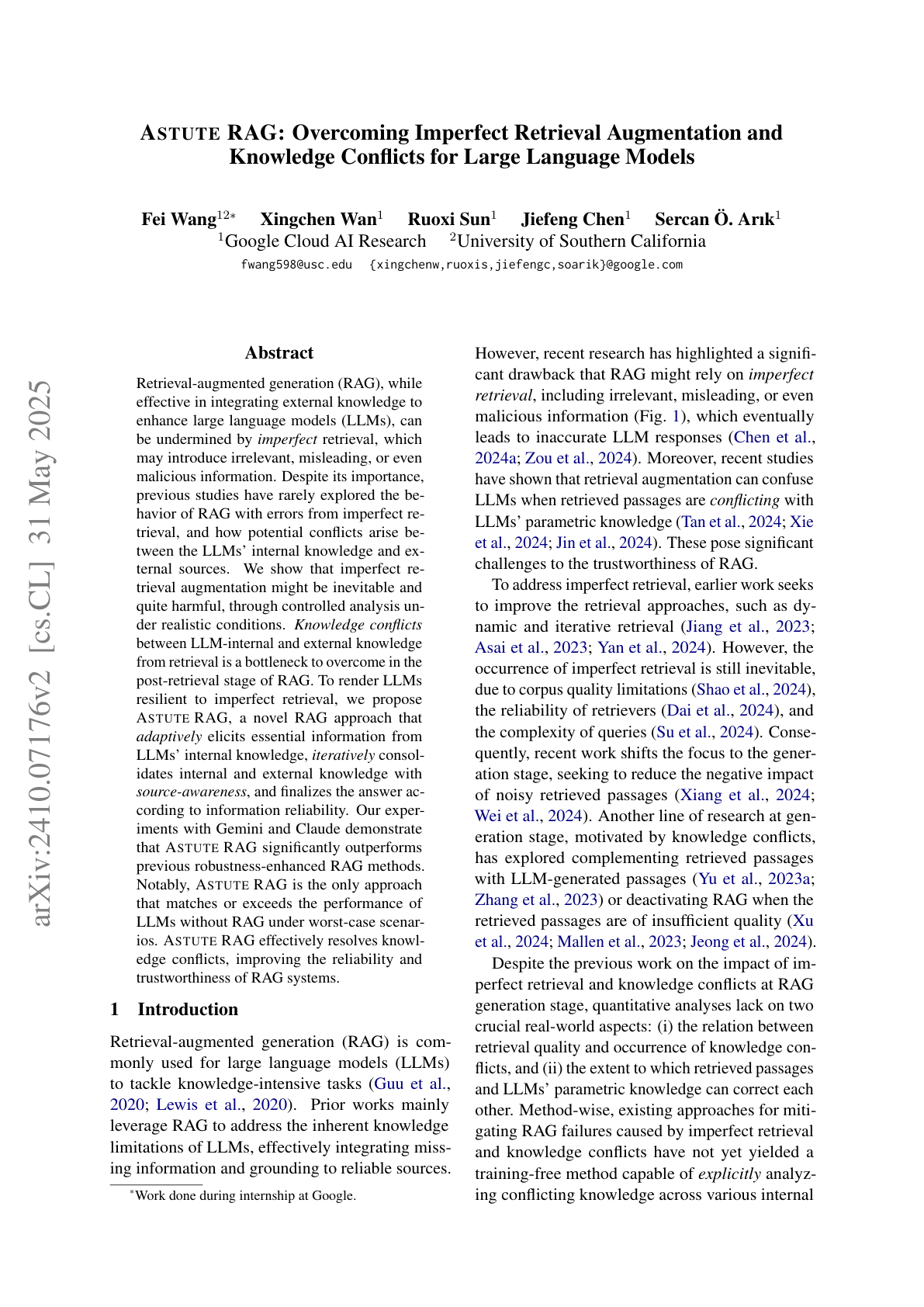
Astute RAG
proposes a novel RAG approach to deal with the imperfect retrieval augmentation and knowledge conflicts of LLMs; Astute RAG adaptively elicits essential information from LLMs' internal knowledge; then it iteratively consolidates internal and external knowledge with source awareness; Astute RAG is designed to better combine internal and external information through an interactive consolidation mechanism (i.e., identifying consistent passages, detecting conflicting information in them, and filtering out irrelevant information).
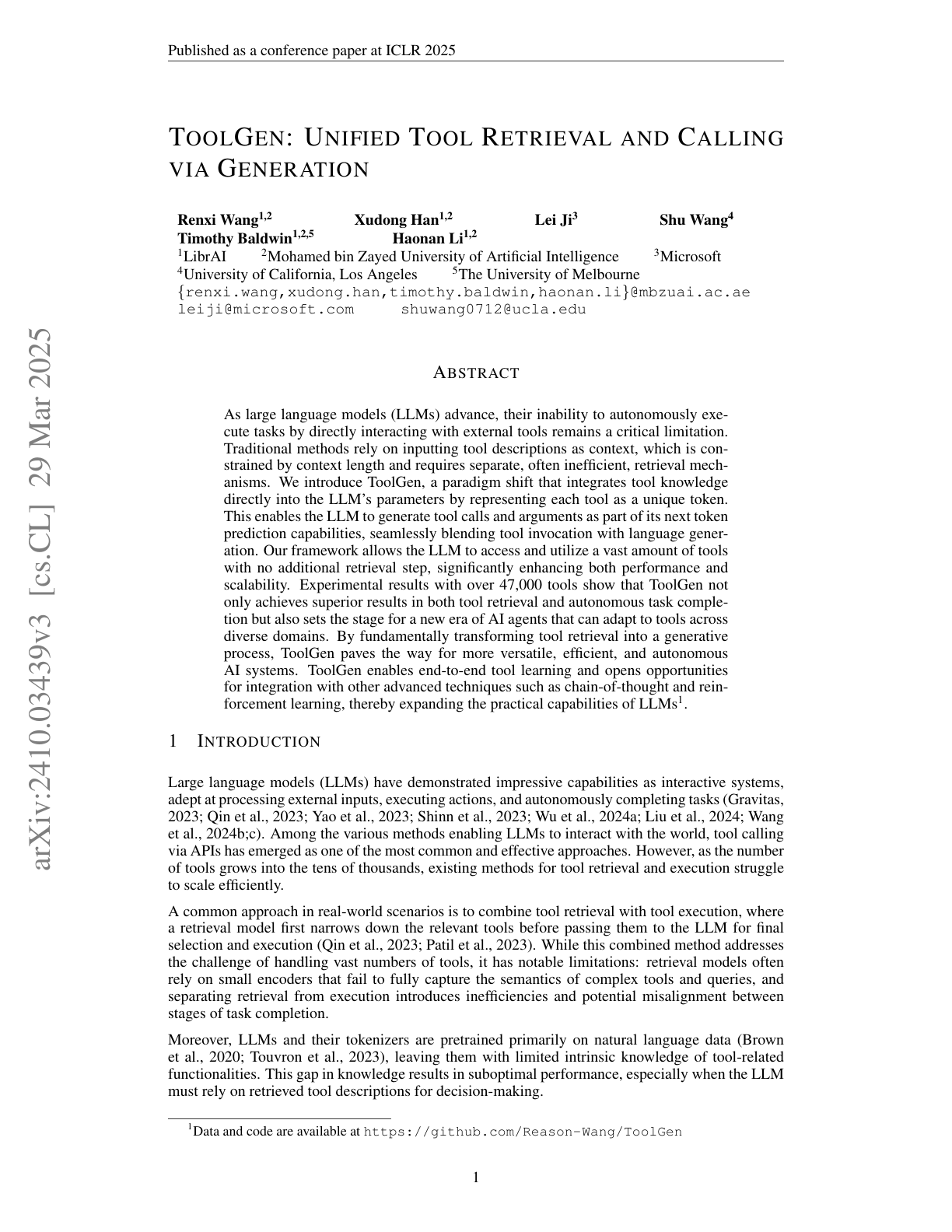
ToolGen
integrates tool knowledge directly into LLMs by representing tools as a unique token which allows the LLM to generate tool calls and arguments, enabling seamless tool invocation and language generation; experimental results with over 47,000 tools show that ToolGen achieves superior results in both tool retrieval and autonomous task completion.
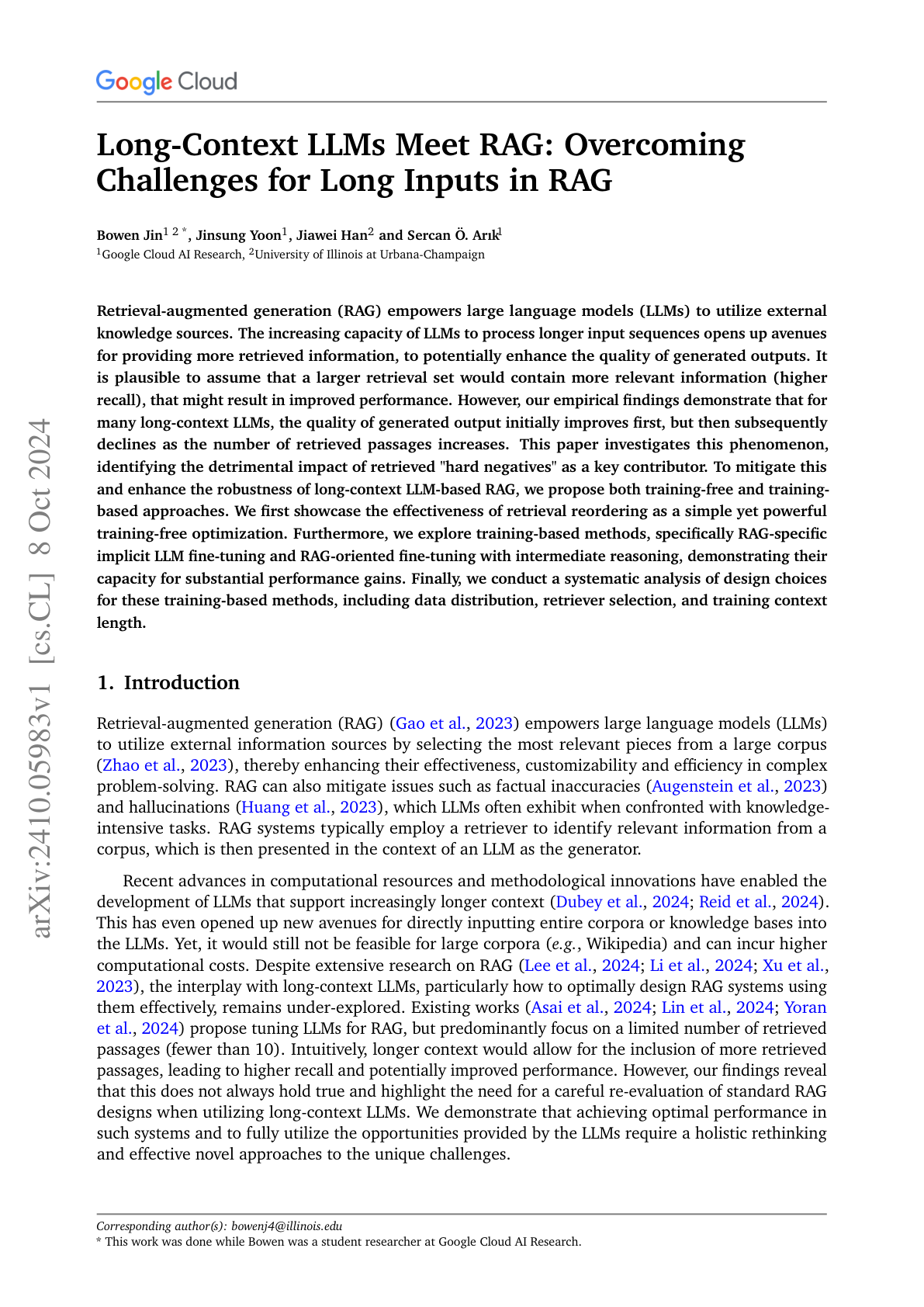
Long-Context LLMs Meet RAG
finds that for many long-context LLMs, the quality of outputs declines as the number of passages increases; reports that the performance loss is due to retrieved hard negatives; they propose two ways to improve long-context LLM-based RAG: retrieval reordering and RAG-specific tuning with intermediate reasoning to help with relevance identification; that approaches demonstrate significant accuracy and robustness improvements on long-context RAG performance.
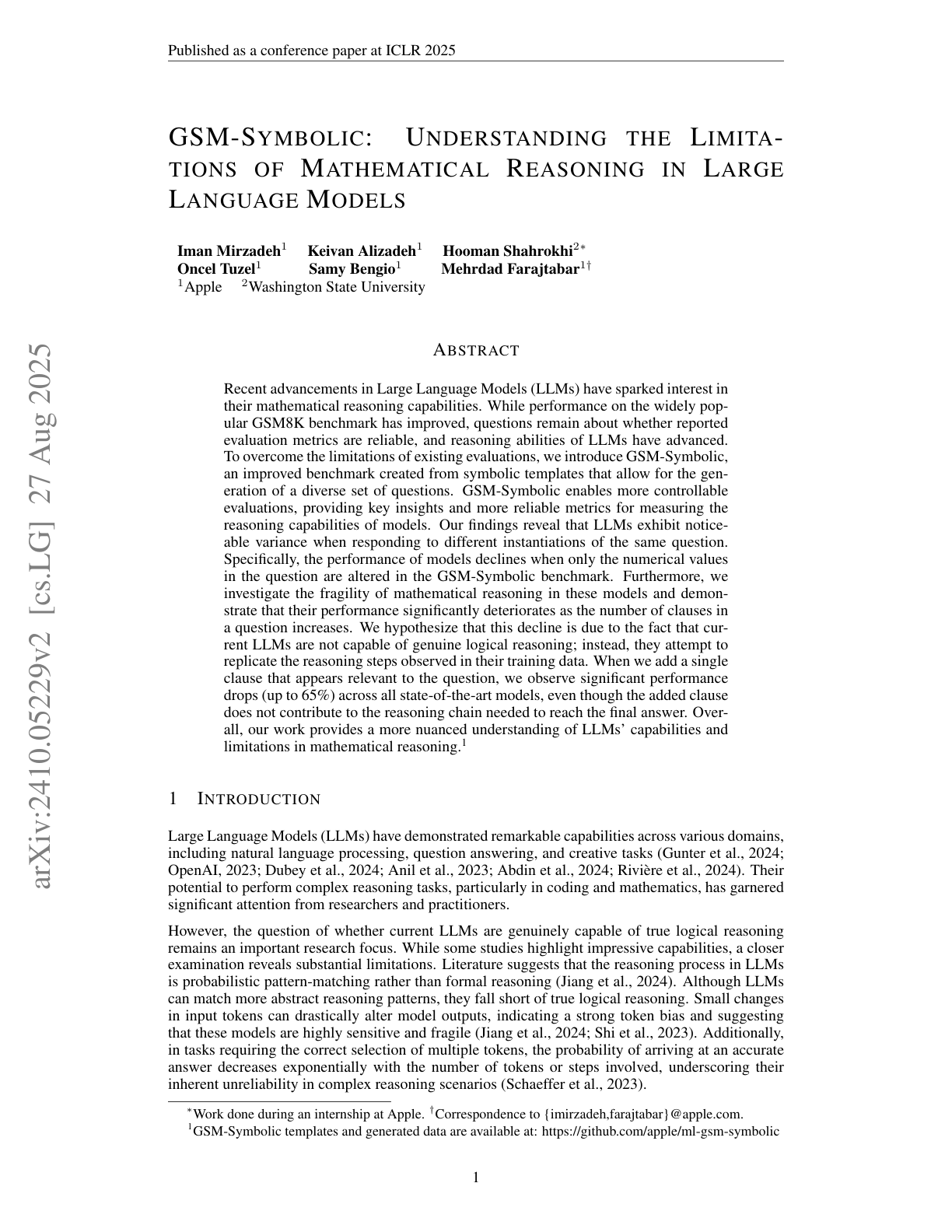
GSM-Symbolic
tests several SoTA models on a benchmark created with symbolic templates that enable diverse mathematical problems; they find that LLMs exhibit variance when responding to variations of the same questions; the performance of all the models declines by adjusting the numerical values in the question; as questions are made more challenging (e.g., increasing the number of clauses) the performance significantly deteriorates; the authors hypothesize that the observed decline in performance is due to a lack of logical reasoning in current LLMs.
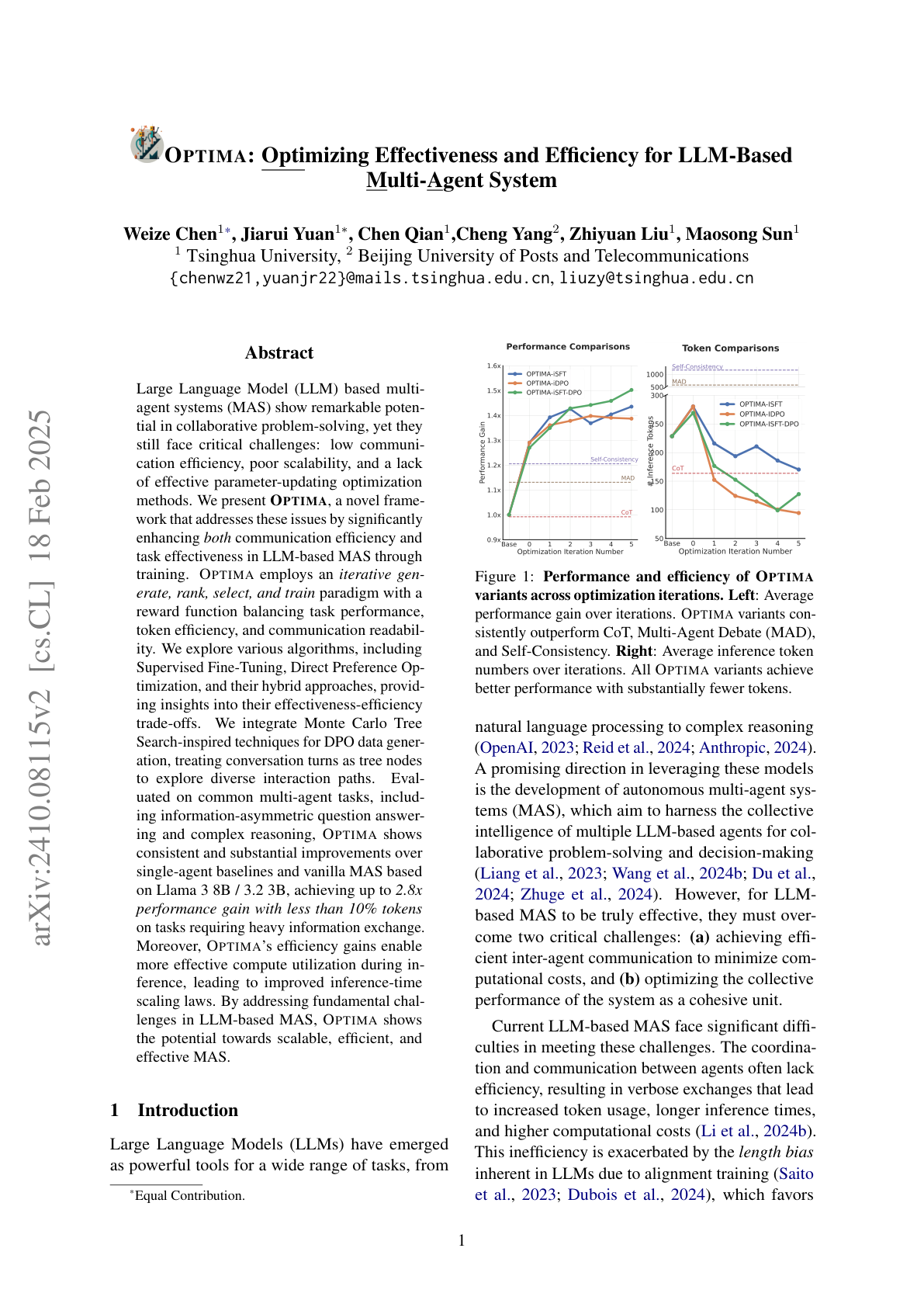
Optima
a novel framework to enhance both communication efficiency and task effectiveness in LLM-based multi-agent systems through LLM training; proposes an iterative generate, rank, select, and train paradigm with a reward function to improve performance, token use, and communication efficiency; integrates Monte Carlo Tree Search-inspired techniques for DPO data generation to encourage diverse exploration; shows consistent improvements over single-agent baselines and vanilla MAS based on Llama 3 8B, with 2.8x performance gain with less than 10% tokens on tasks requiring heavy information exchange.
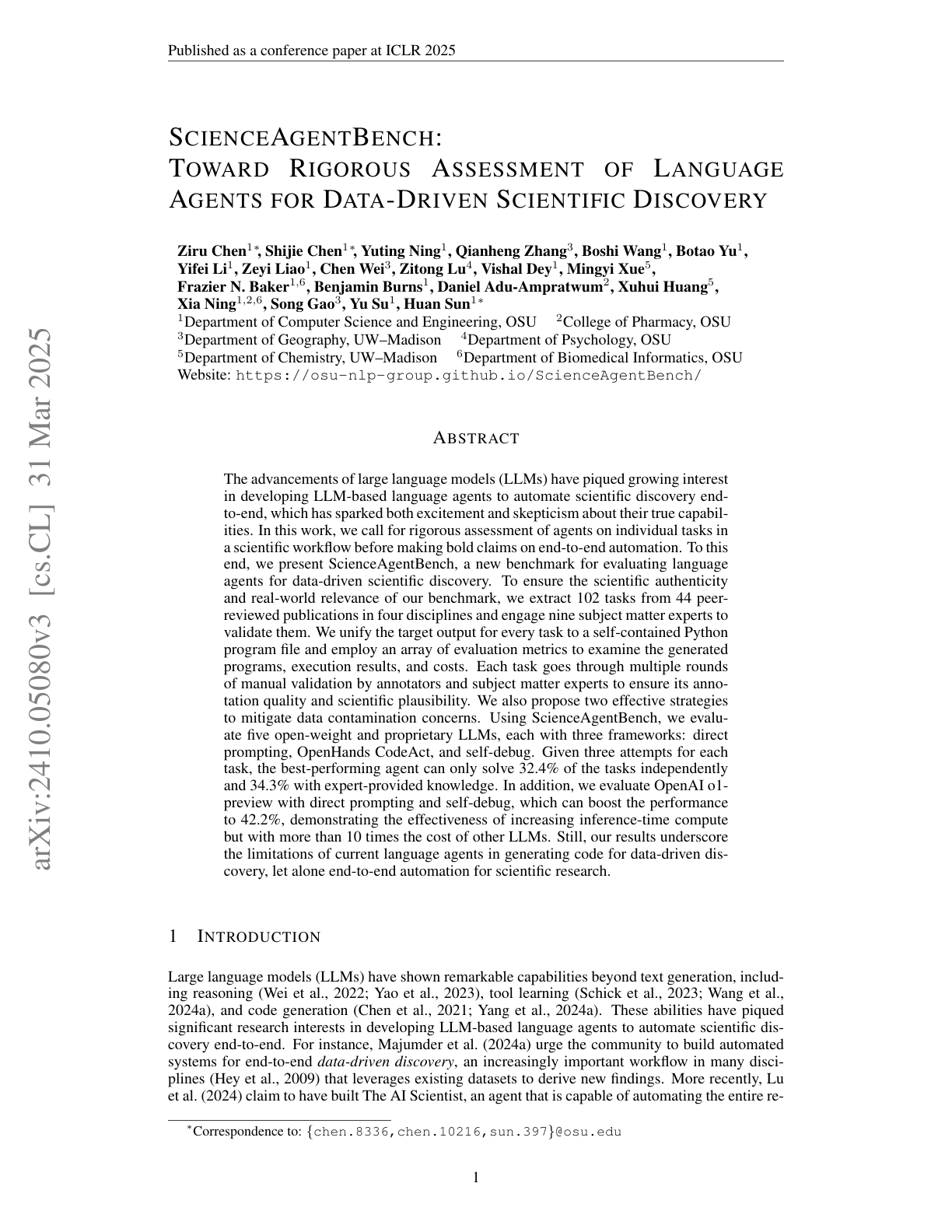
ScienceAgentBench
a new benchmark to rigorously assess agents built for scientific workflows; after testing it on open-weight and proprietary LLMs, the best-performing agent can only solve 32.4% of the tasks independently and 34.3% with expert-provided knowledge.
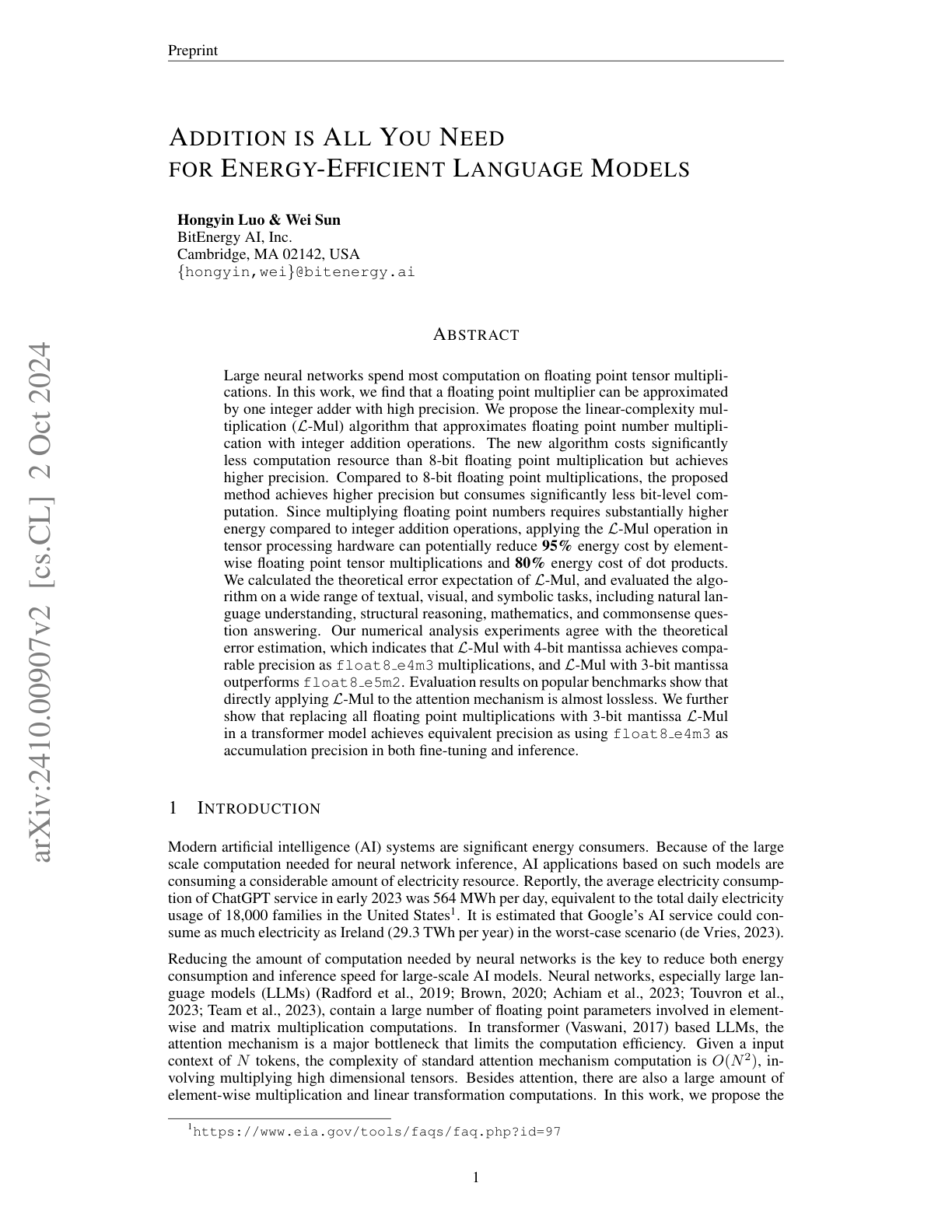
Addition Is All You Need
proposes an algorithm that approximates floating point multiplication with integer addition operations; it is less computationally intensive than 8-bit floating point but achieves higher precision; the authors report that applying the purposed L-Mul operation in tensor processing hardware can potentially reduce 95% energy cost by elementwise floating point tensor multiplications and 80% energy cost of dot products.
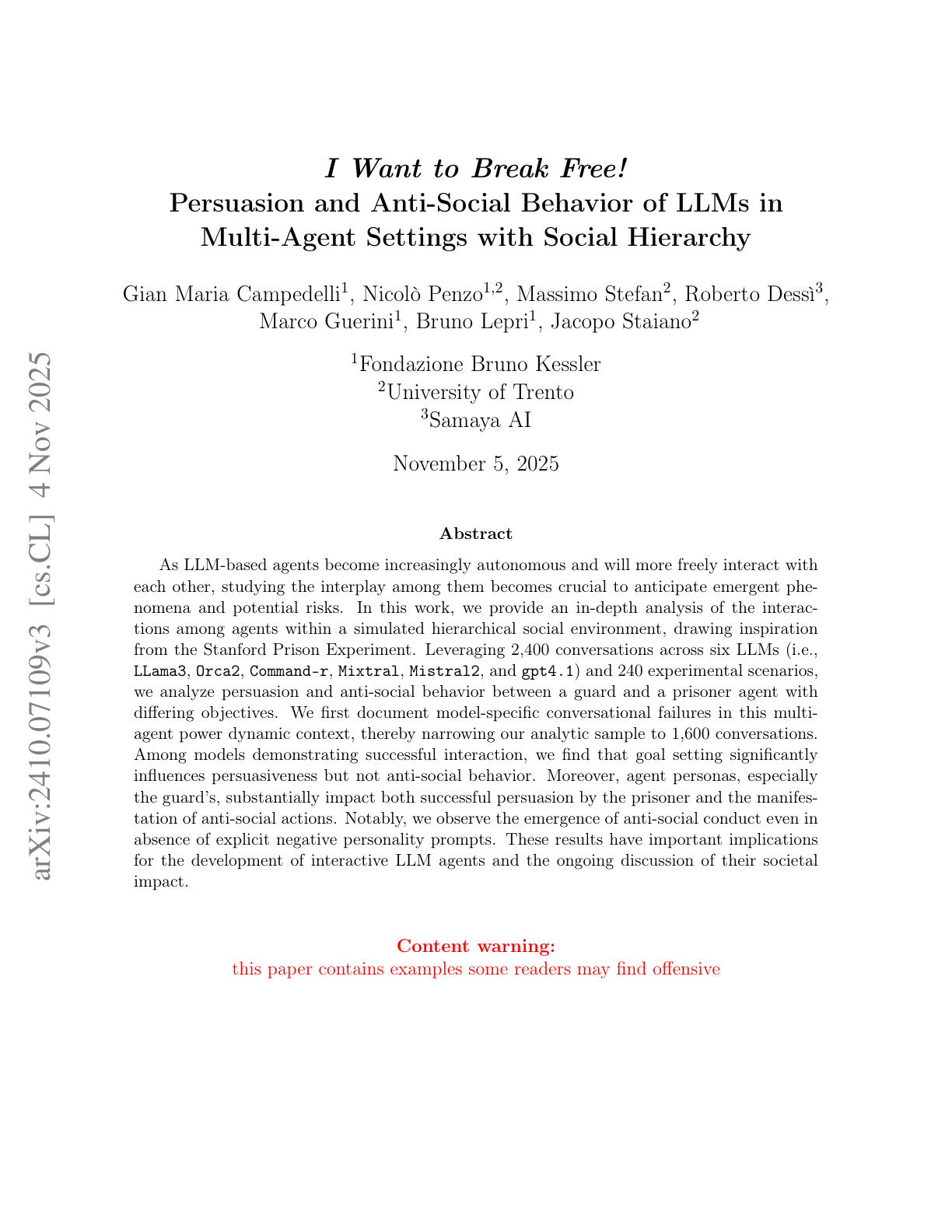
Persuasion and Anti-social Ability of LLMs
studies the interaction patterns of LLMs in a multi-agent setting with social hierarchy; the study was done in a specific setting involving a guard and a prisoner who seeks additional yard time or escaping from prison; finds that in the multi-agent setting where power dynamics are involved, the LLMs fail to have a conversation; they also report that agents' personas are critical in driving the behaviors of the agents. In addition, and without explicit prompting, simply assigning agents' roles lead to anti-social behavior.