AI Papers of the Week
Every paper worth reading in AI, hand-picked one week at a time.
Discover and explore top AI papers with Claude Code or Codex
npx @dair-ai/mcp setup
Agentic RAG for Time Series Analysis
proposes an agentic RAG framework for time series analysis; uses a multi-agent architecture where an agent orchestrates specialized sub-agents to complete time-series tasks; the sub-agents leverage tuned small language models and can retrieve relevant prompts containing knowledge about historical patterns and trends; this helps to improve predictions on new data.
A Comprehensive Overview of GraphRAG Methods
focuses on techniques applied to the GraphRAG workflow (graph-based indexing, graph-guided retrieval, and graph-enhanced generation); examines tasks, applications, evaluation, and industrial use cases of GraphRAG.
EfficientRAG
trains an auto-encoder LM to label and tag chunks; it retrieves relevant chunks, tags them as either <Terminate> or <Continue>, and annotates <Continue> chunks for continuous processing; then a filter model is trained to formulate the next-hop query based on the original question and previous annotations; this is done iteratively until all chunks are tagged as <Terminate> or the maximum # of iterations is reached; after the process above has gathered enough information to answer the initial question, the final generator (an LLM) generates the final answer.
HybridRAG
combines GraphRAG and VectorRAG leading to a HybridRAG system that outperforms both individually; it was tested on a set of financial earning call transcripts. Combining the advantages of both approaches provides more accurate answers to queries.
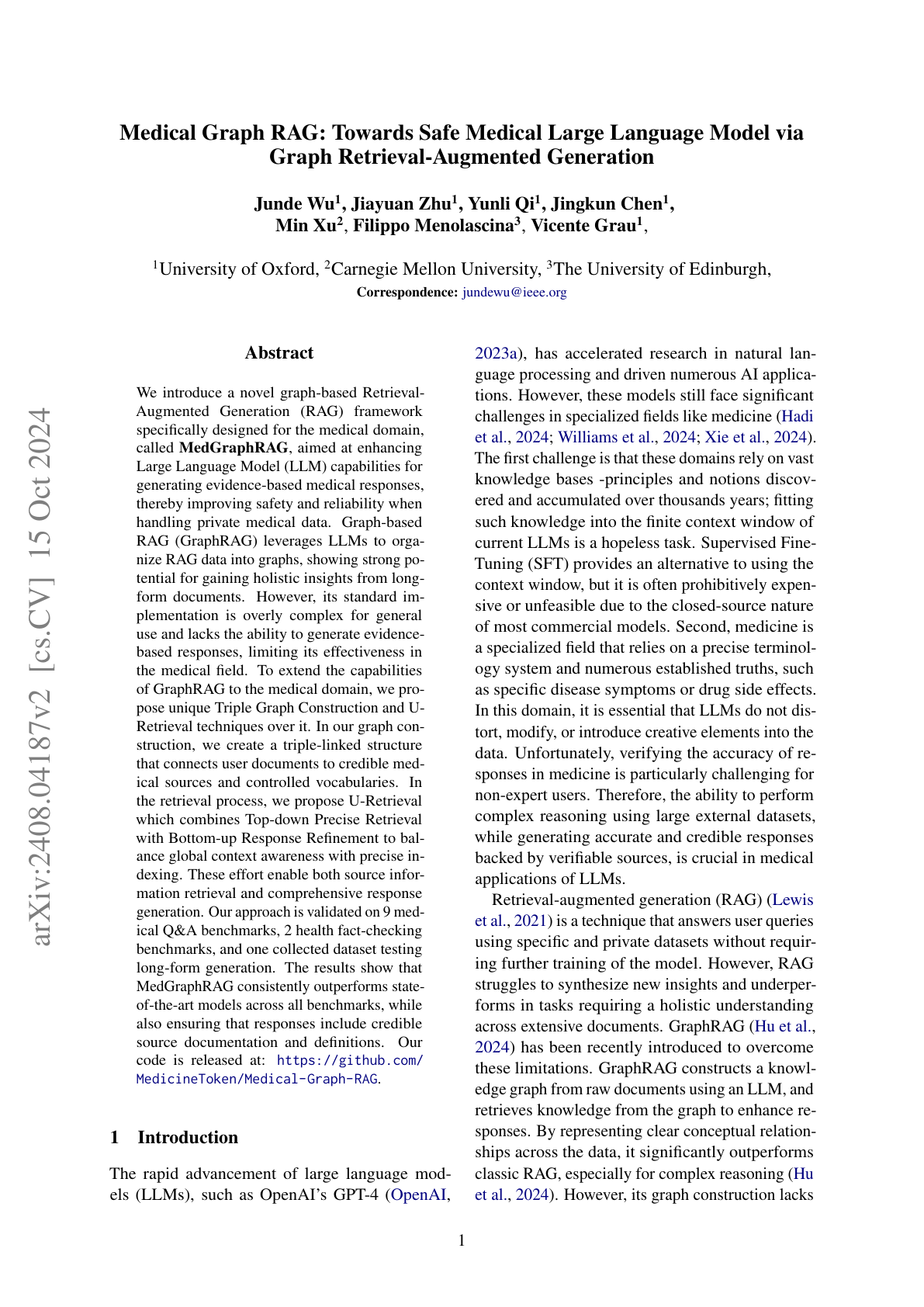
MedGraphRAG
a graph-based framework for the medical domain with a focus on enhancing LLMs and generating evidence-based results; leverages a hybrid static-semantic approach to chunk documents to improve context capture; entities and medical knowledge are represented through graphs which leads to an interconnected global graph; this approach improves precision and outperforms state-of-the-art models on multiple medical Q&A benchmarks.
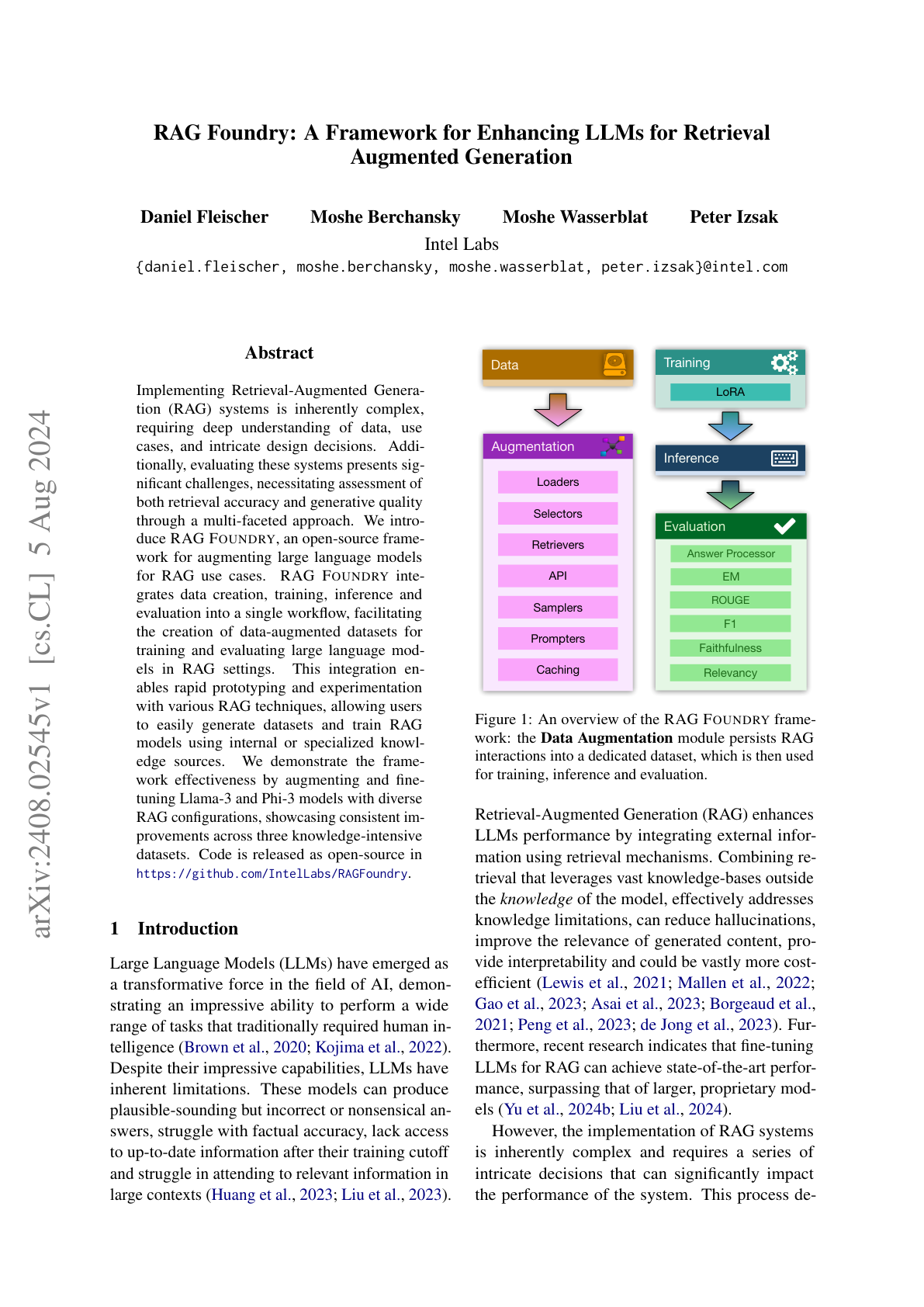
Enhancing LLMs for RAG
introduces RAGFoundry, an open-source framework for augmented LLMs for RAG use cases; it supports data creation, training, inference, and evaluation; one useful application is the creation of data-augmented datasets for tuning and evaluating LLMs in RAG settings.
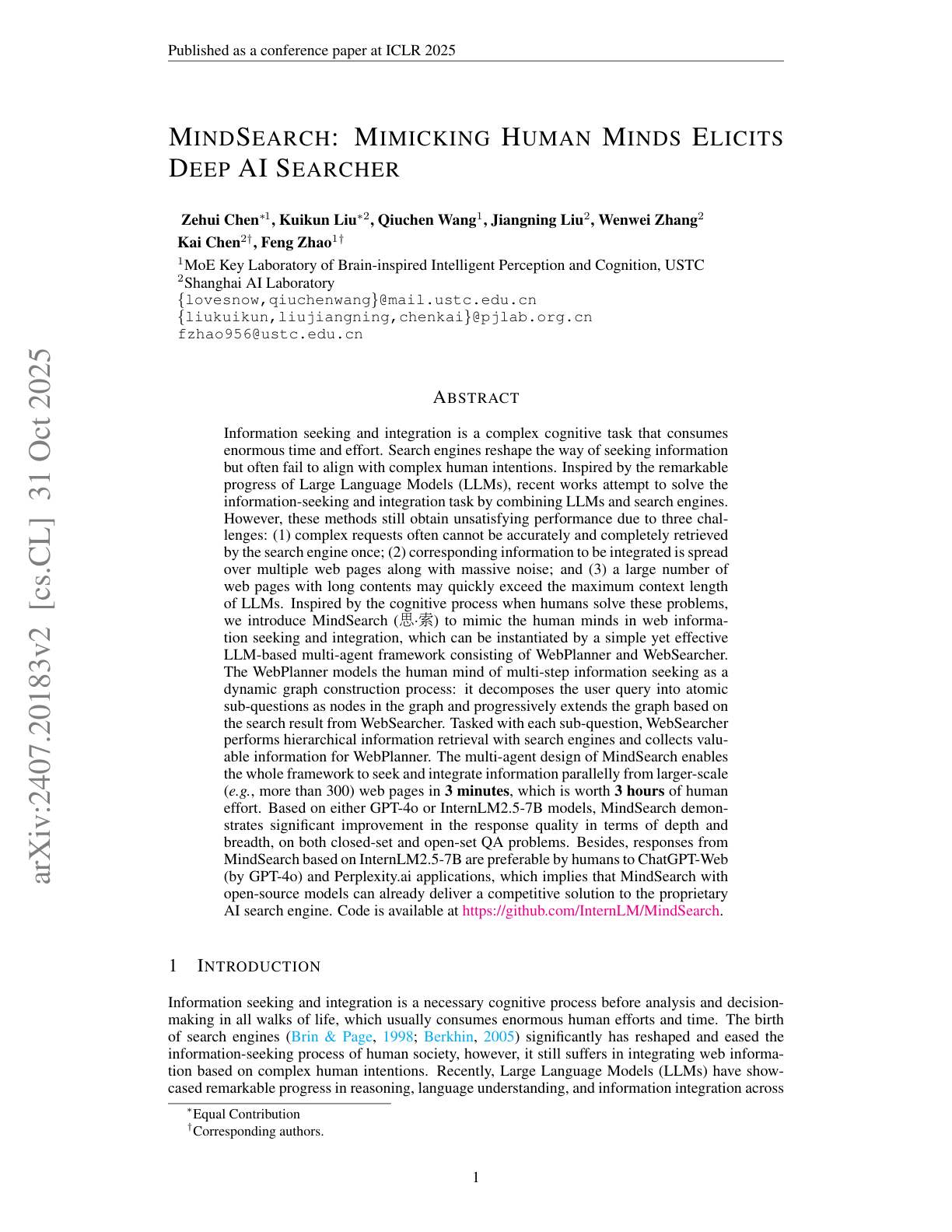
MindSearch
presents an LLM-based multi-agent framework to perform complex web-information seeking and integration tasks; a web planner effectively decomposes complex queries followed by a web searcher that performs hierarchical information retrieval on the Internet to improve the relevancy of the retrieved information; the planning component is powered by an iterative graph construction which is used to better model complex problem-solving processes; the multi-agent framework handles long context problems better by distributing reasoning and retrieval tasks to specialized agents.
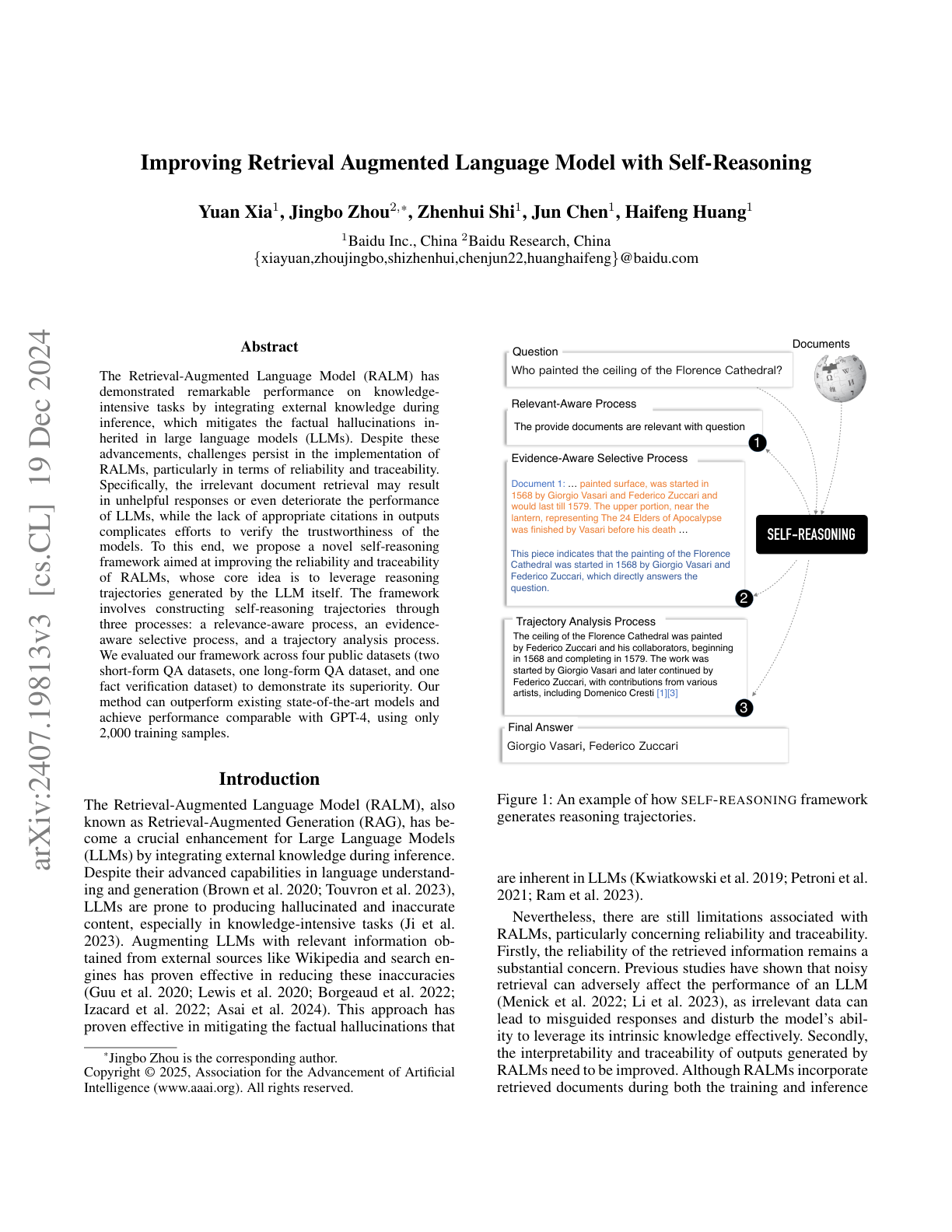
Improved RAG with Self-Reasoning
presents an end-to-end self-reasoning framework to improve the reliability and traceability of RAG systems; leverages the reasoning trajectories generated by the LLM itself; the LLM is used to carry out the following 3 processes: 1) relevance-aware: judges the relevance between the retrieved documents and the question, 2) evidence-aware selective: chooses and cites relevant documents, and then automatically selects snippets of key sentences as evidence from the cited documents, and 3) trajectory analysis: generates a concise analysis based on all gathered self-reasoning trajectories generated by the previous 2 processes and then provides the final inferred answer; this method helps the model to be more selective, reason and distinguish relevant and irrelevant documents, therefore improving the accuracy of the overall RAG system; the framework achieves comparable performance to GPT-4 with only 2K training samples (generated by GPT-4).
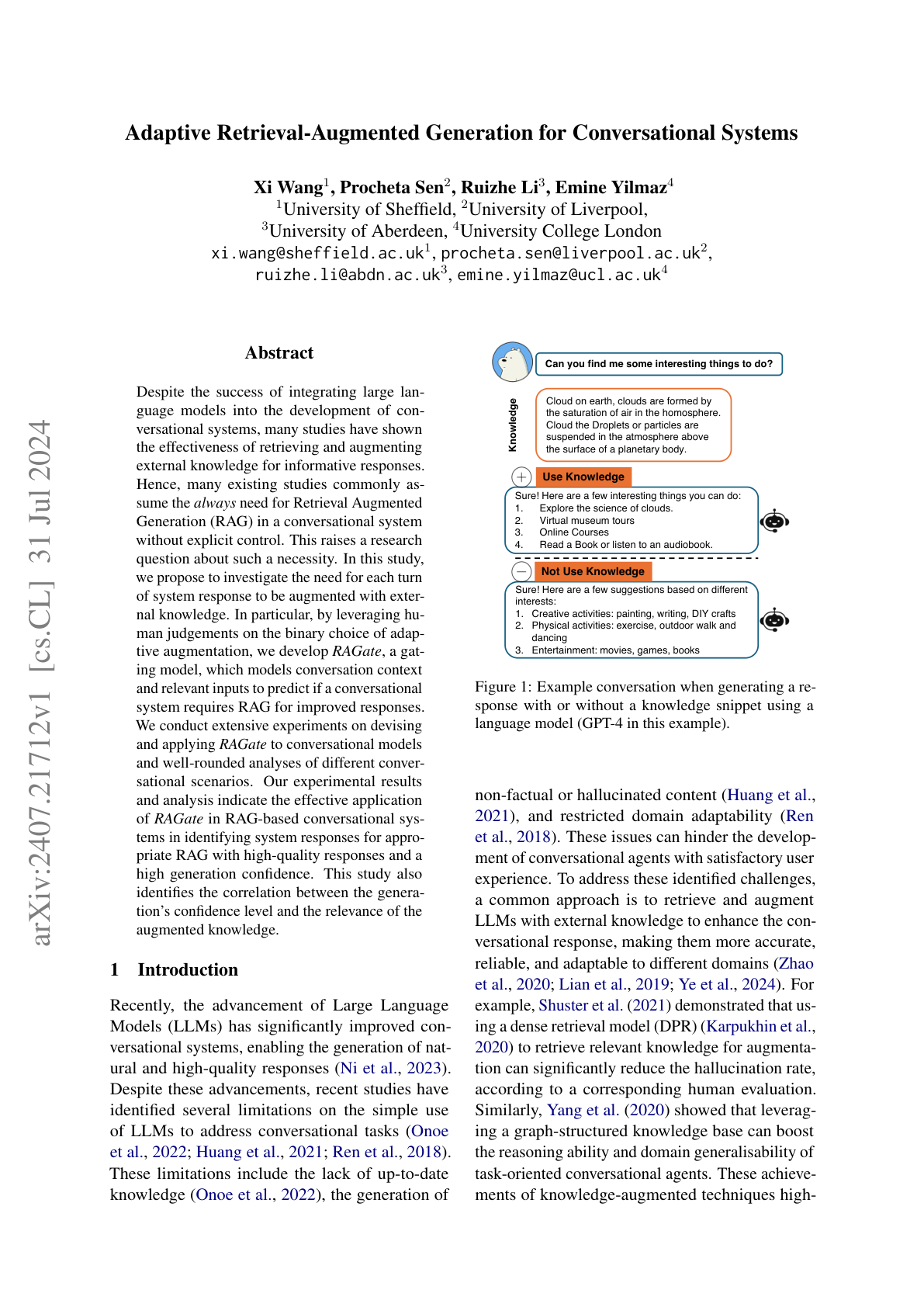
Adaptive RAG for Conversations Sytems
develops a gating model that predicts if a conversational system requires RAG to improve its responses; shows that RAG-based conversational systems have the potential to generate high-quality responses and high generation confidence; it also claims to identify a correlation between the generation's confidence level and the relevance of the augmented knowledge.
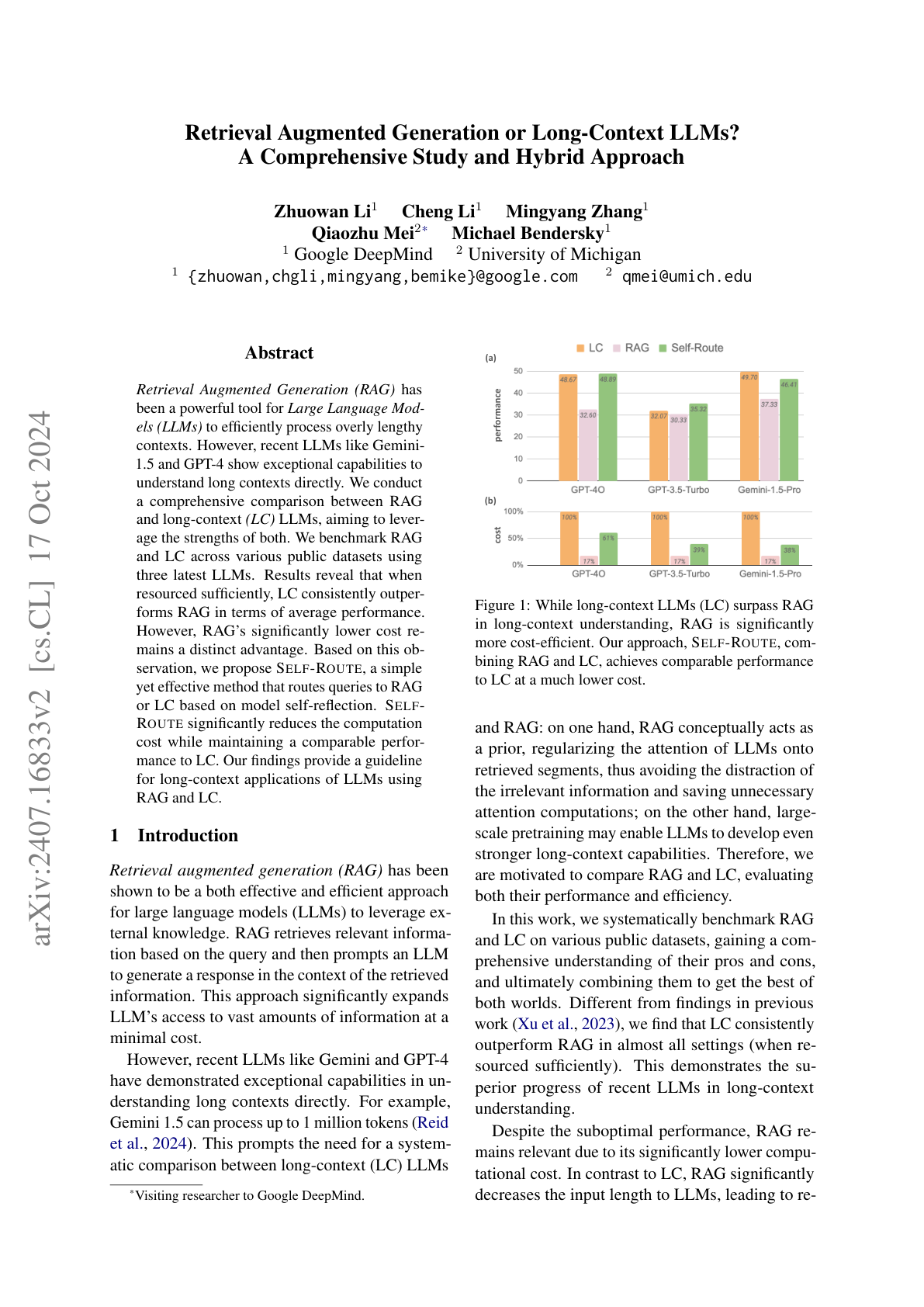
RAG vs. Long-Context LLMs
compares RAG and long-context LLMs and finds that long-context LLMs outperform RAG on average performance while RAG is significantly less expensive; proposes Self-Route, leveraging self-reflection to route queries to RAG or LC; reports that Self-Route significantly reduces computational cost while maintaining comparable performance to LC.
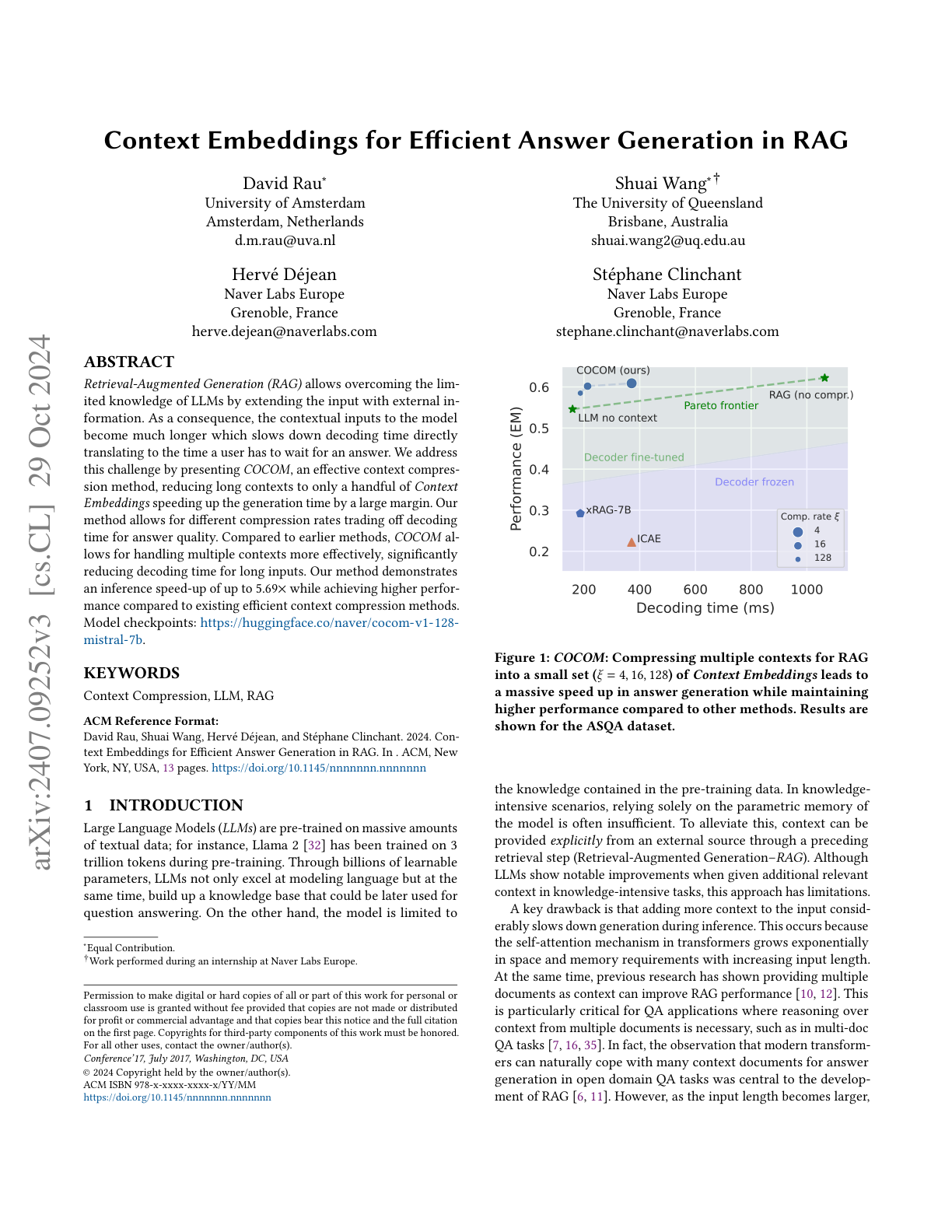
Context Embeddings for Efficient Answer Generation in RAG
proposes an effective context compression method to reduce long context and speed up generation time in RAG systems; the long contexts are compressed into a small number of context embeddings which allow different compression rates that trade-off decoding time for generation quality; reduces inference time by up to 5.69 × and GFLOPs by up to 22 × while maintaining high performance.
Can LLMs Do Retrieval and Reasoning in 1 Million Context Window?
proposes a framework (NeedleBench) of progressively challenging tasks to assess the long-context retrieval and reasoning capabilities of LLMs; they also present the Ancestral Trace Challenge that increases the need for complex logical reasoning which is common in real-world long-context tasks; their findings suggest that current LLMs struggle to handle reasoning tasks with complex logical relationships, even with texts shorter than 2K tokens.
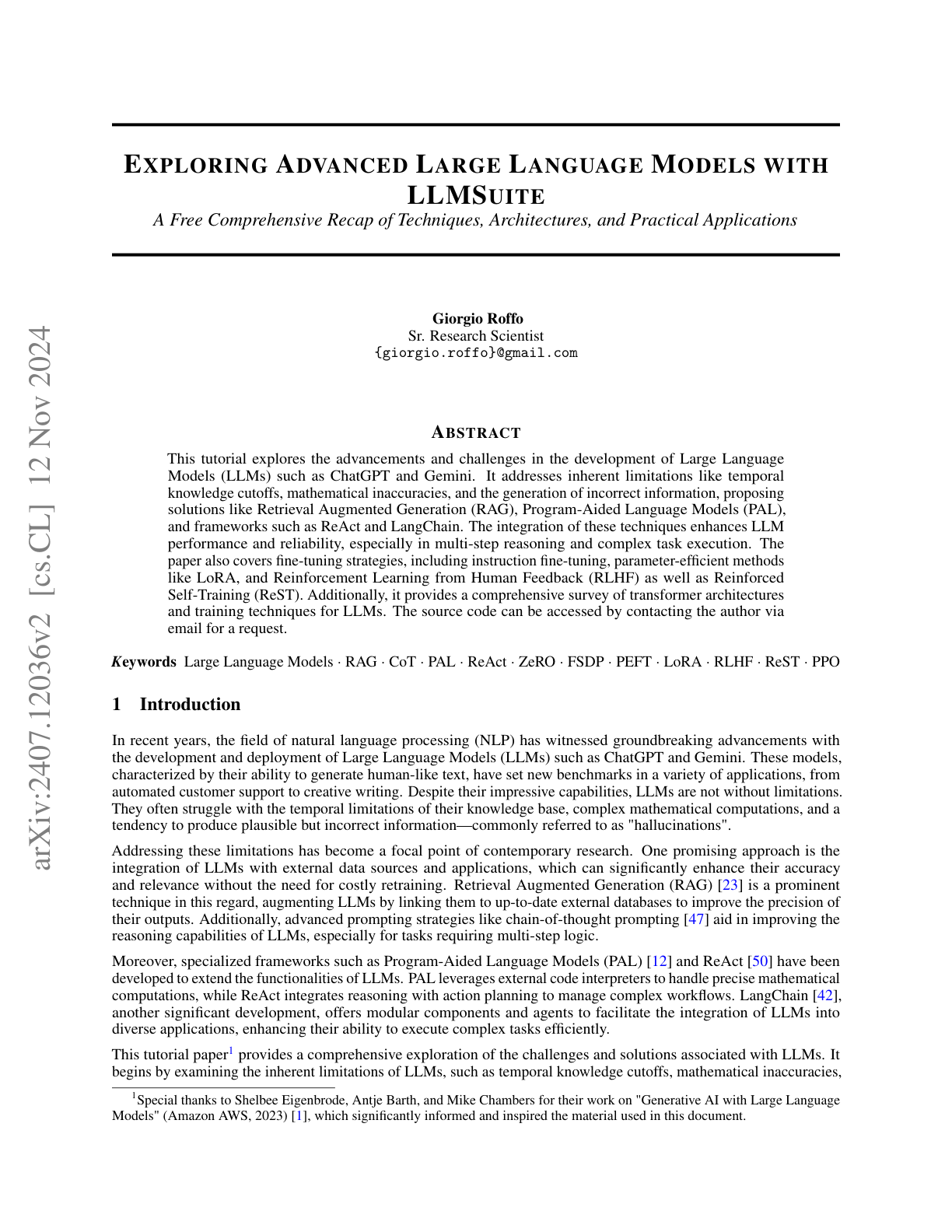
Exploring Advanced LLMs with LLMSuite
shares practical tips for developing with and evaluating LLMs; solutions covered range from ReAct to RAG to parameter-efficient methods.
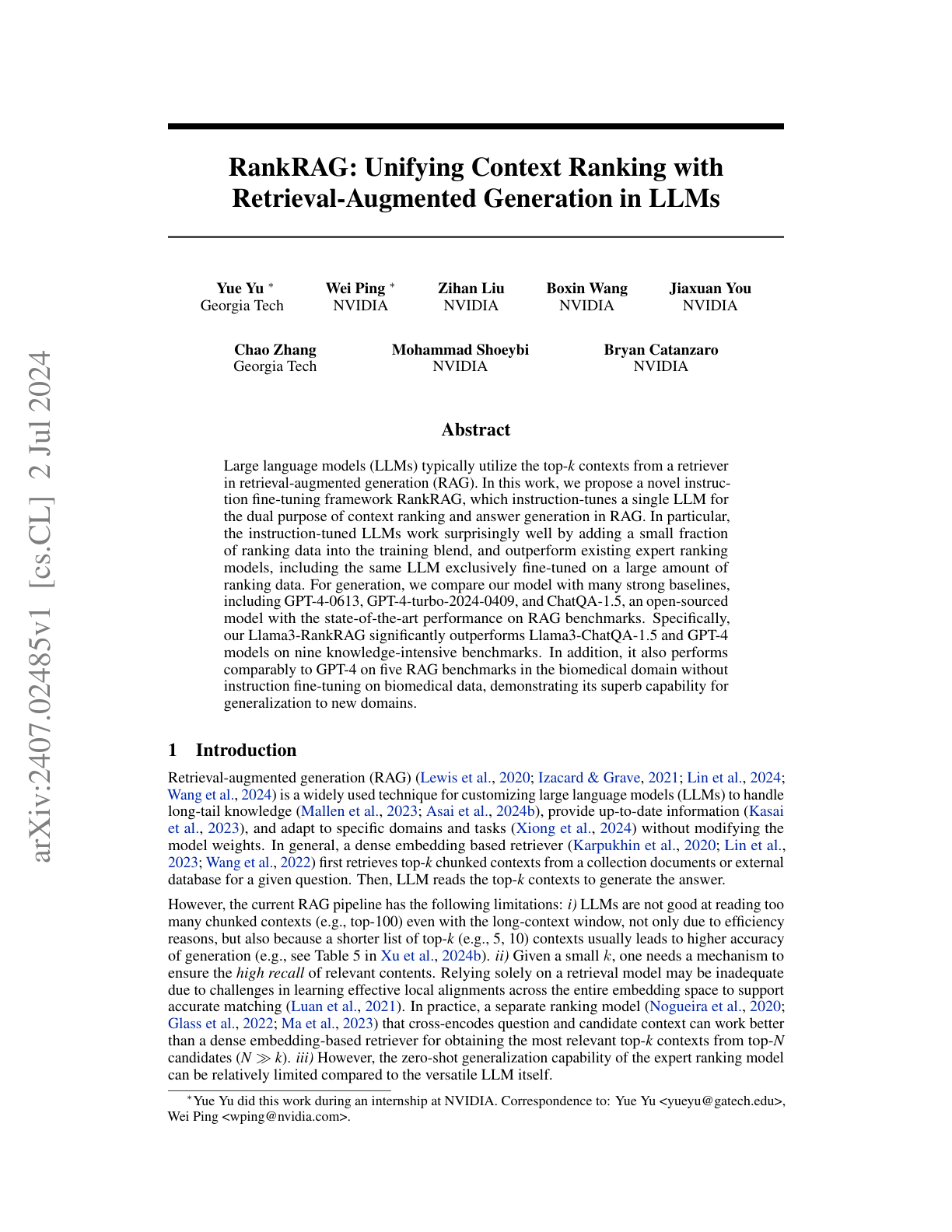
RankRAG
introduces a new instruction fine-tuning framework to perform effective context ranking and answering generation to enhance an LLM’s RAG capabilities; it leverages a small ranking dataset to outperform existing expert ranking models; shows that a Llama3-RankRAG significantly outperforms Llama3-ChatQA-1.5 and GPT-4 models on nine knowledge-intensive benchmarks.
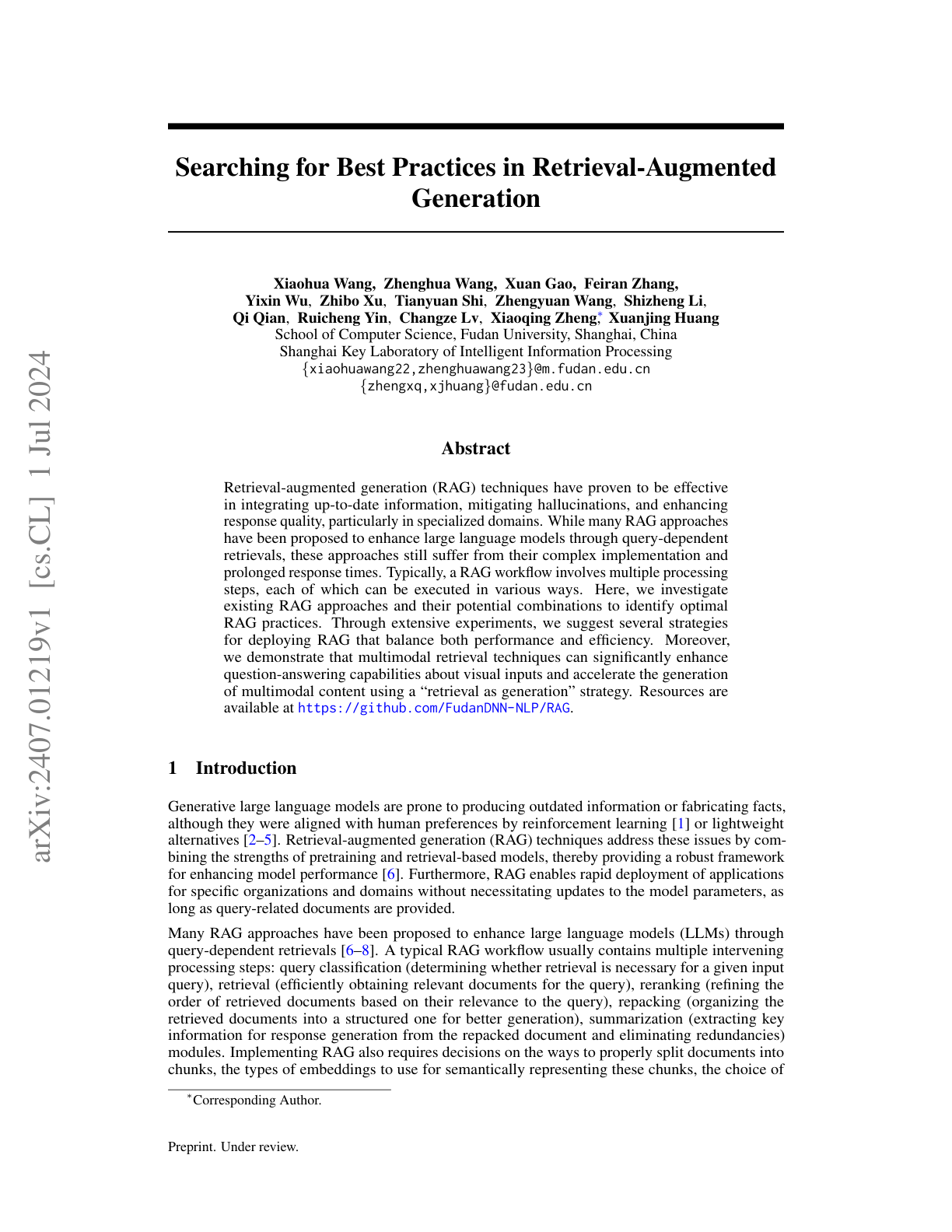
Searching for Best Practices in RAG
shows the best practices for building effective RAG workflows; proposes strategies that focus on performance and efficiency, including emerging multimodal retrieval techniques.
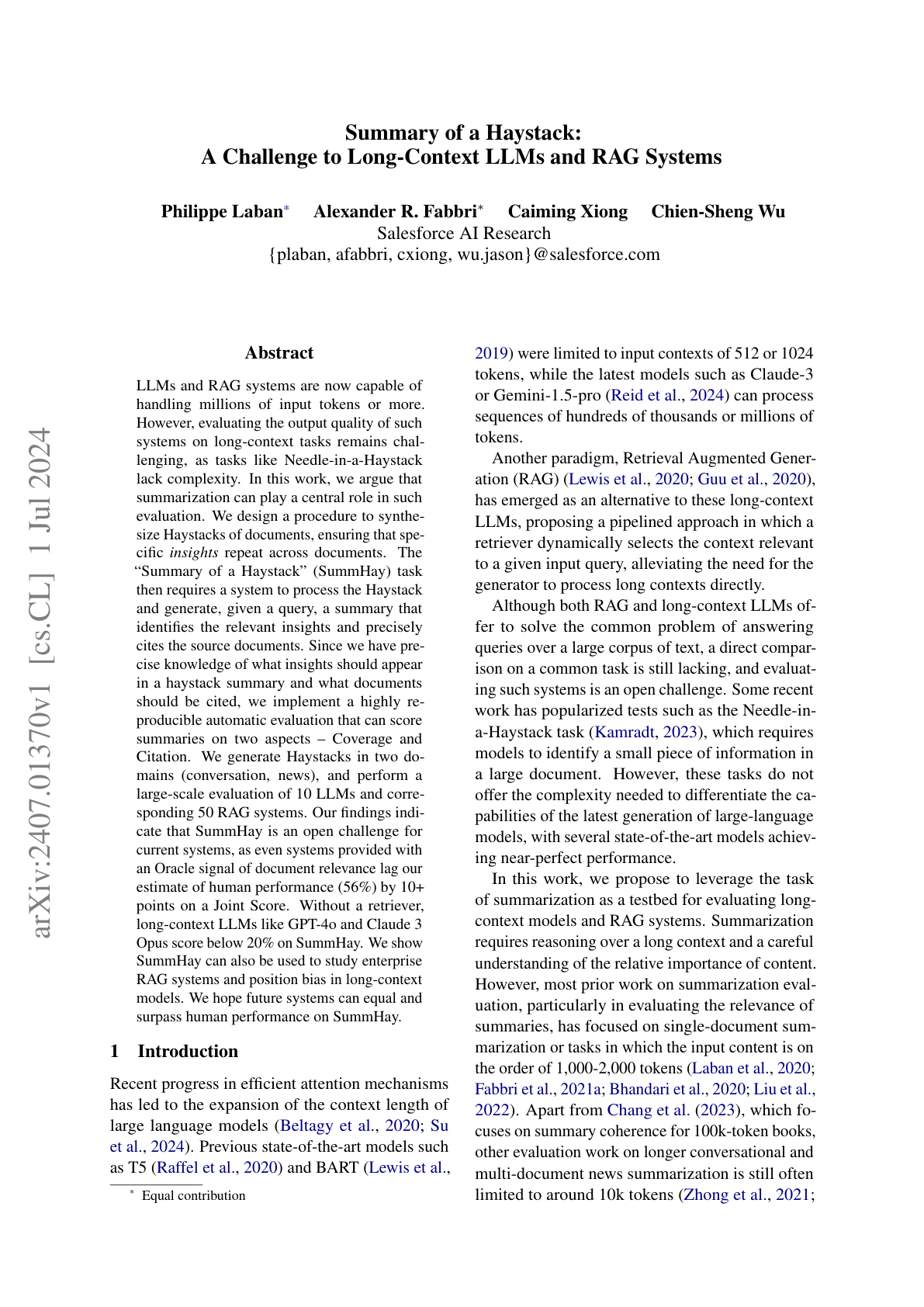
Summary of a Haystack
proposes a new task, SummHay, to test a model’s ability to process a Haystack and generate a summary that identifies the relevant insights and cites the source documents; reports that long-context LLMs score 20% on the benchmark which lags the human performance estimate (56%); RAG components is found to boost performance on the benchmark, which makes it a viable option for holistic RAG evaluation.
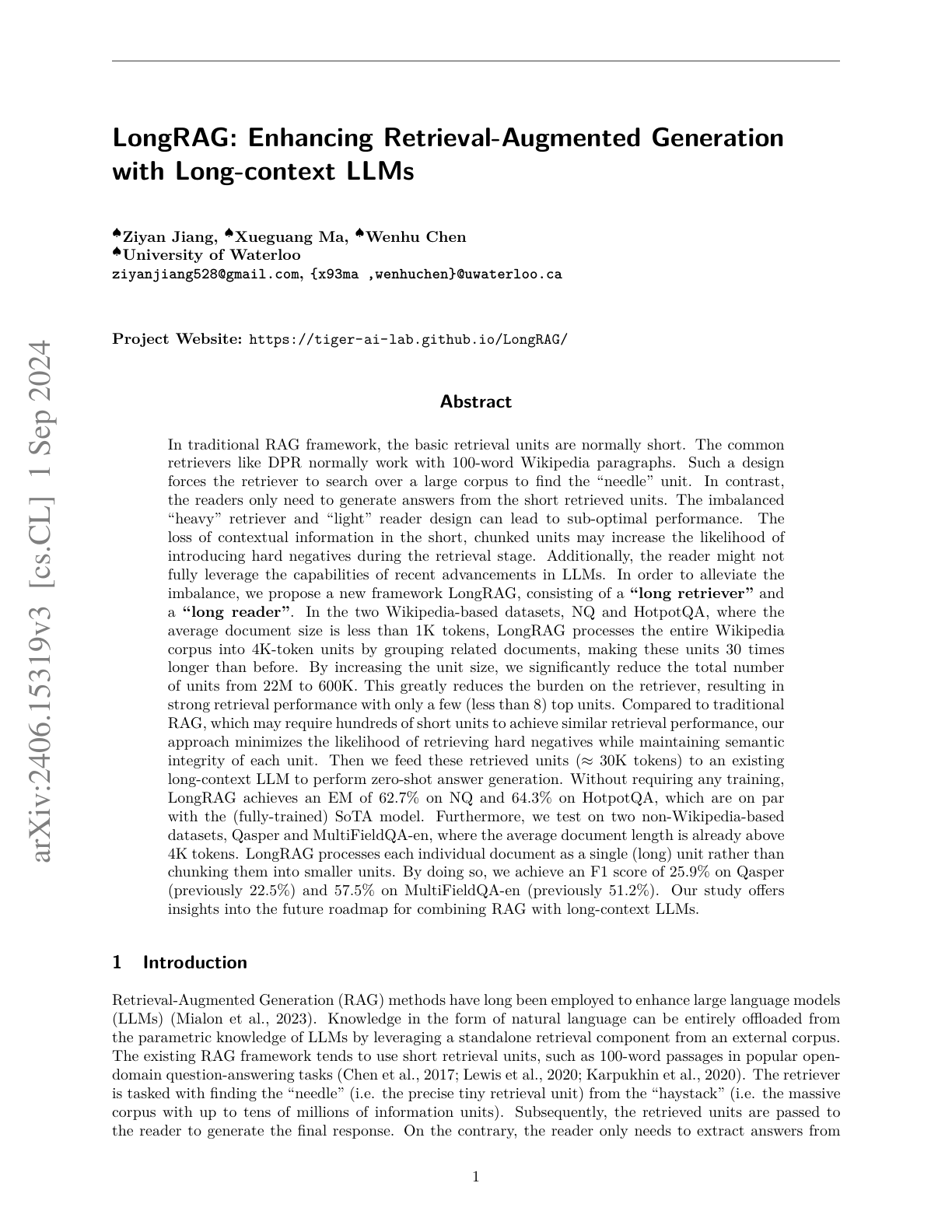
Enhancing RAG with Long-Context LLMs
proposes LongRAG, which combines RAG with long-context LLMs to enhance performance; uses a long retriever to significantly reduce the number of extracted units by operating on longer retrieval units; the long reader takes in the long retrieval units and leverages the zero-shot answer extraction capability of long-context LLMs to improve performance of the overall system; claims to achieve 64.3% on HotpotQA (full-wiki), which is on par with the state-of-the-art model.
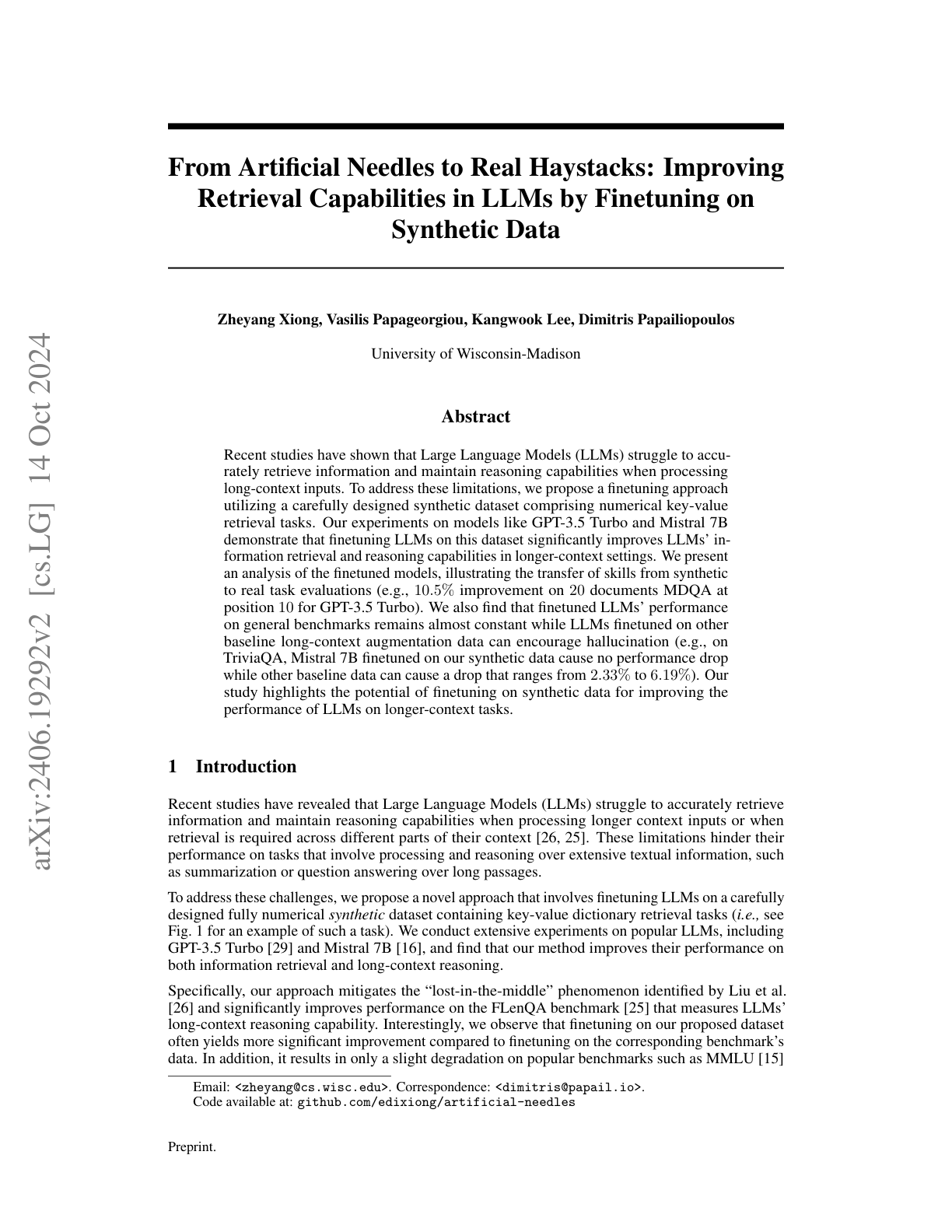
Improving Retrieval in LLMs through Synthetic Data
proposes a fine-tuning approach to improve the accuracy of retrieving information in LLMs while maintaining reasoning capabilities over long-context inputs; the fine-tuning dataset comprises numerical dictionary key-value retrieval tasks (350 samples); finds that this approach mitigates the "lost-in-the-middle" phenomenon and improves performance on both information retrieval and long-context reasoning.
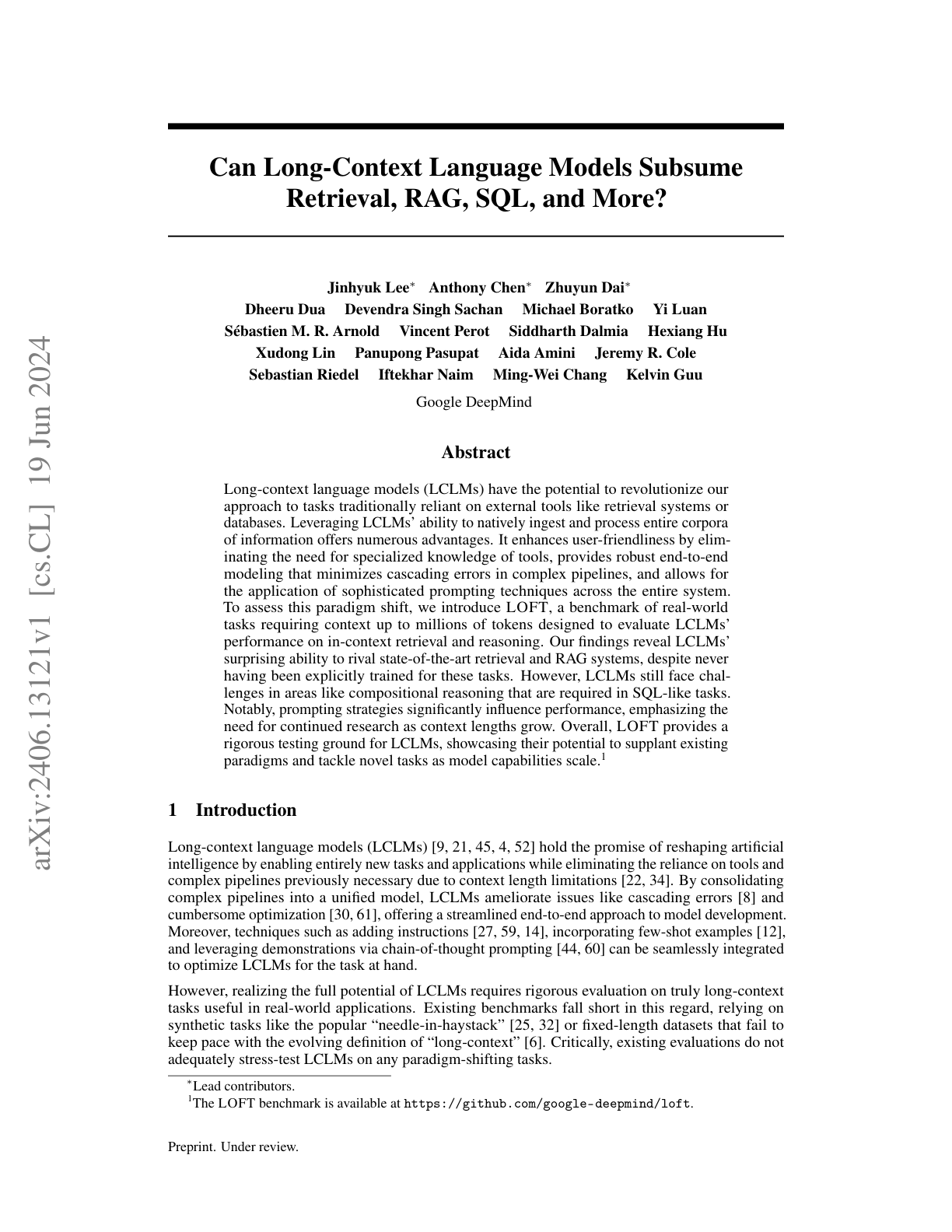
Can Long-Context Language Models Subsume Retrieval, RAG, SQL, and More?
conducts a deep performance analysis of long-context LLMs on in-context retrieval and reasoning; they first present a benchmark with real-world tasks requiring 1M token context; reports that long-context LLMs can rival state-of-the-art retrieval and RAG systems, without any explicit training on the tasks; suggests that compositional reasoning (required in SQL-like tasks) is still challenging for these LLMs; they also encourage the need for continued research on advanced prompting strategies as they noted significant boosts in performance when applying them for long context problems.
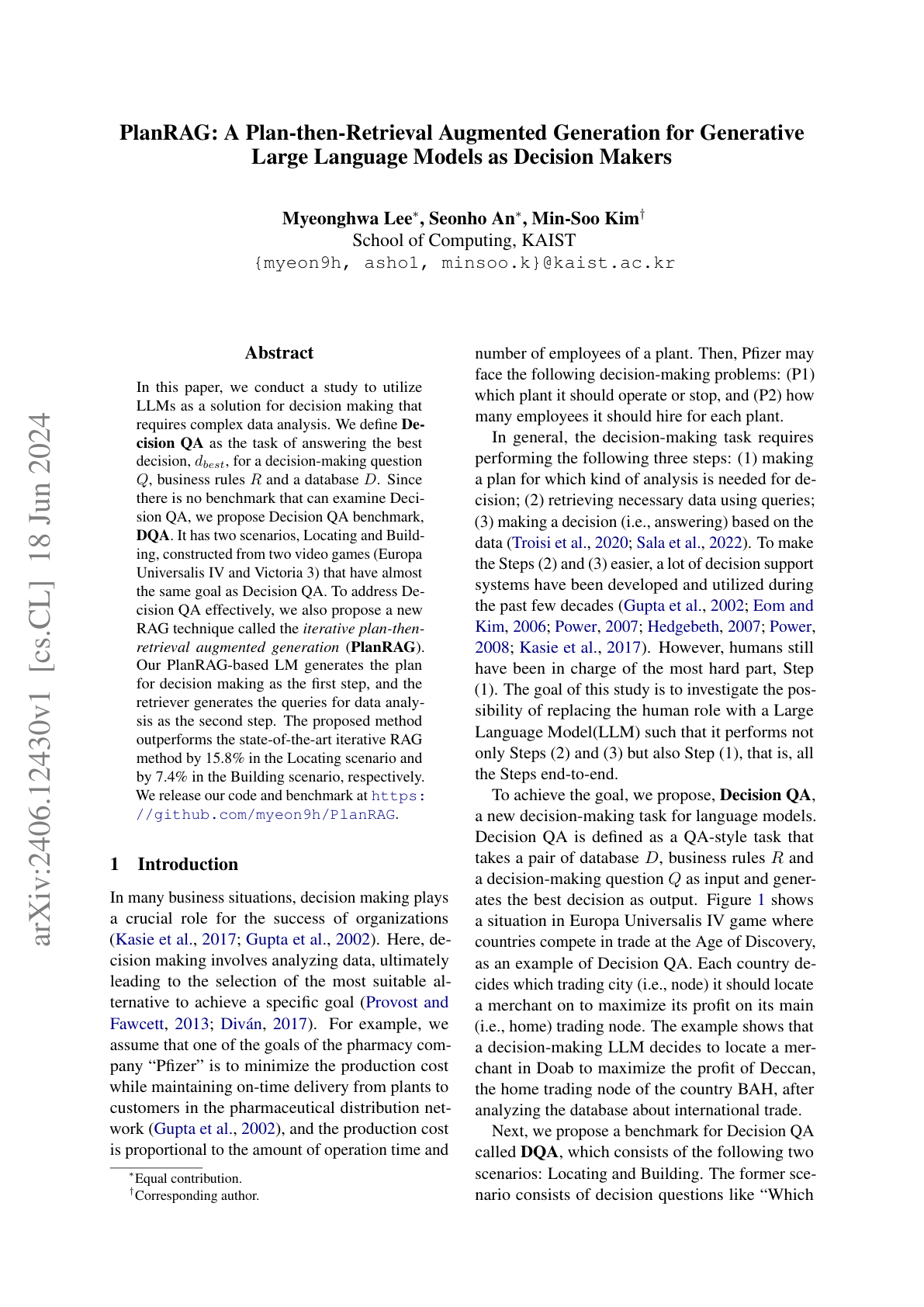
PlanRAG
enhances decision making with a new RAG technique called iterative plan-then-RAG (PlanRAG); involves two steps: 1) an LM generates the plan for decision making by examining data schema and questions and 2) the retriever generates the queries for data analysis; the final step checks if a new plan for further analysis is needed and iterates on previous steps or makes a decision on the data; PlanRAG is found to be more effective than iterative RAG on the proposed Decision QA tasks.
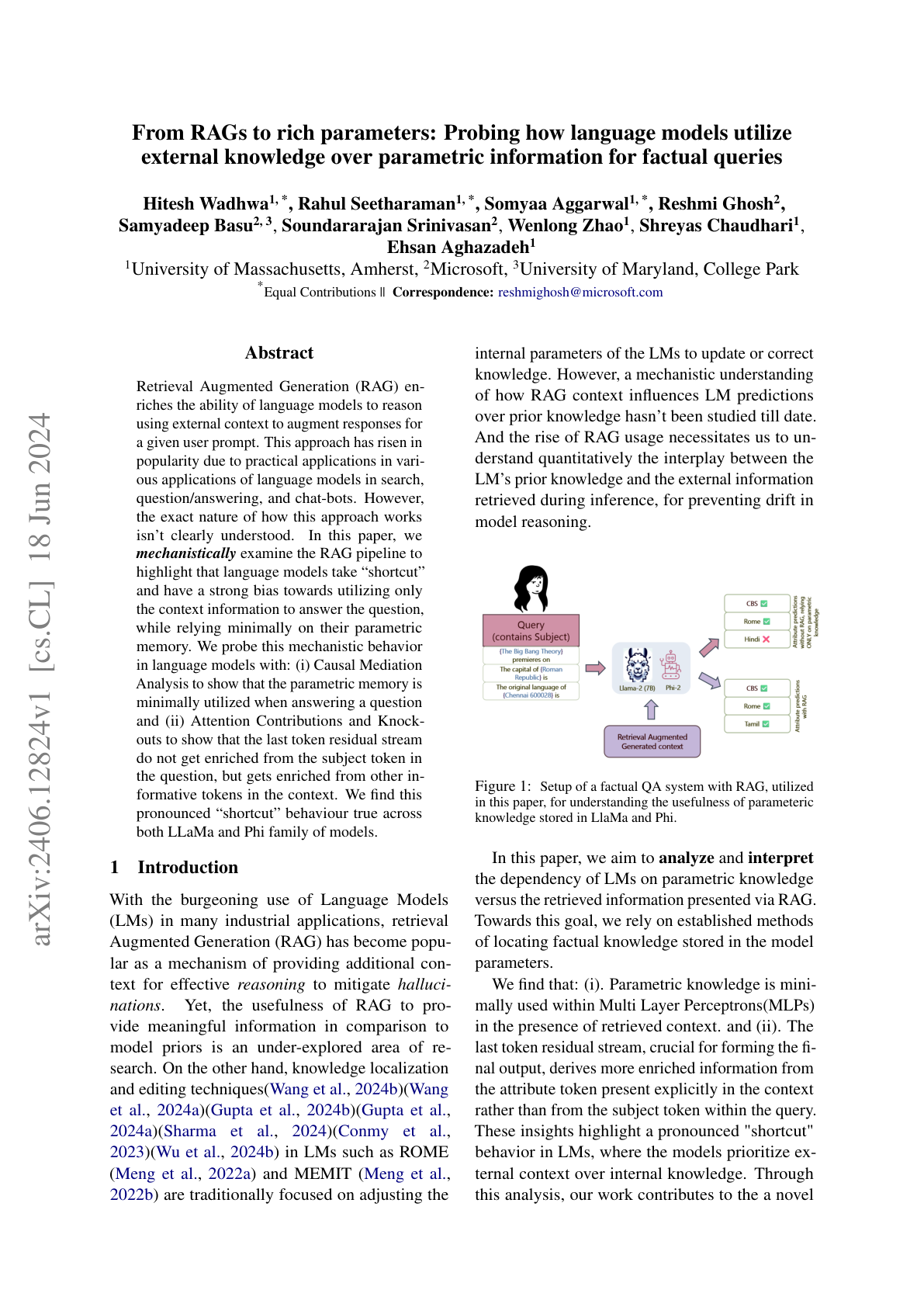
From RAG to Rich Parameters
investigates more closely how LLMs utilize external knowledge over parametric information for factual queries; finds that in a RAG pipeline, LLMs take a “shortcut” and display a strong bias towards utilizing only the context information to answer the question, while relying minimally on their parametric memory.
GNN-RAG
combines the language understanding abilities of LLMs with the reasoning abilities of GNNs in a RAG style; the GNN extracts useful and relevant graph information while the LLM takes the information and leverages its capabilities to perform question answering over knowledge graphs (KGQA); GNN-RAG improves vanilla LLMs on KGQA and outperforms or matches GPT-4 performance with a 7B tuned LLM.
When to Retrieve?
presents an approach to train LLMs to effectively utilize information retrieval; it first proposes a training approach to teach an LLM to generate a special token, <RET>, when it's not confident or doesn't know the answer to a question; the fine-tuned model outperforms a base LLM in two fixed alternate settings that include never retrieving and always retrieving context
A Survey on Retrieval-Augmented Language Models
covers the most important recent developments in RAG and RAU systems; it includes evolution, taxonomy, and an analysis of applications; there is also a section on how to enhance different components of these systems and how to properly evaluate them; it concludes with a section on limitations and future directions.