AI Papers of the Week
Every paper worth reading in AI, hand-picked one week at a time.
Discover and explore top AI papers with Claude Code or Codex
npx @dair-ai/mcp setup
Towards Compute-Optimal Many-Shot In-Context Learning
Proposes practical strategies for reducing the cost of many-shot in-context learning while preserving or improving performance. With long-context LLMs like Gemini Pro and Flash supporting thousands of demonstrations, caching becomes essential, yet naïvely using only random demonstrations misses potential accuracy gains from smarter selection.
Context Rot
This comprehensive study by Chroma evaluates how state-of-the-art LLMs perform as input context length increases, challenging the common assumption that longer contexts are uniformly handled. Testing 18 top models (including GPT-4.1, Claude 4, Gemini 2.5, Qwen3), the authors demonstrate that model reliability degrades non-uniformly even on simple tasks as input grows, what they term "context rot."
A Survey of Context Engineering for LLMs
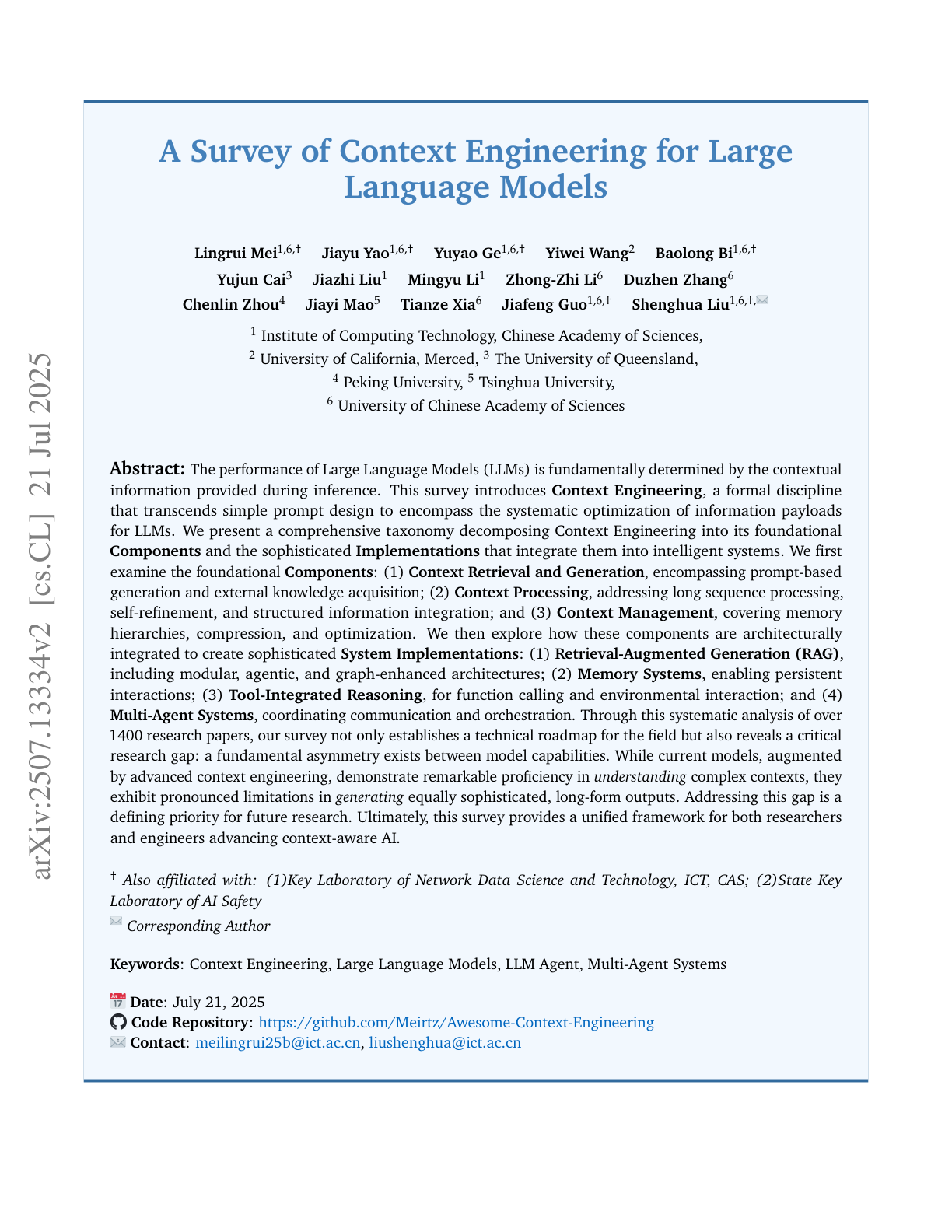
This survey defines Context Engineering as a formal discipline for optimizing information given to LLMs, outlining its core components, retrieval, processing, and management, and their integration in systems like RAG, memory, and multi-agent frameworks. It identifies a key gap: LLMs can understand complex input but struggle to generate equally complex long-form output, pointing to a major direction for future research.
MemAgent
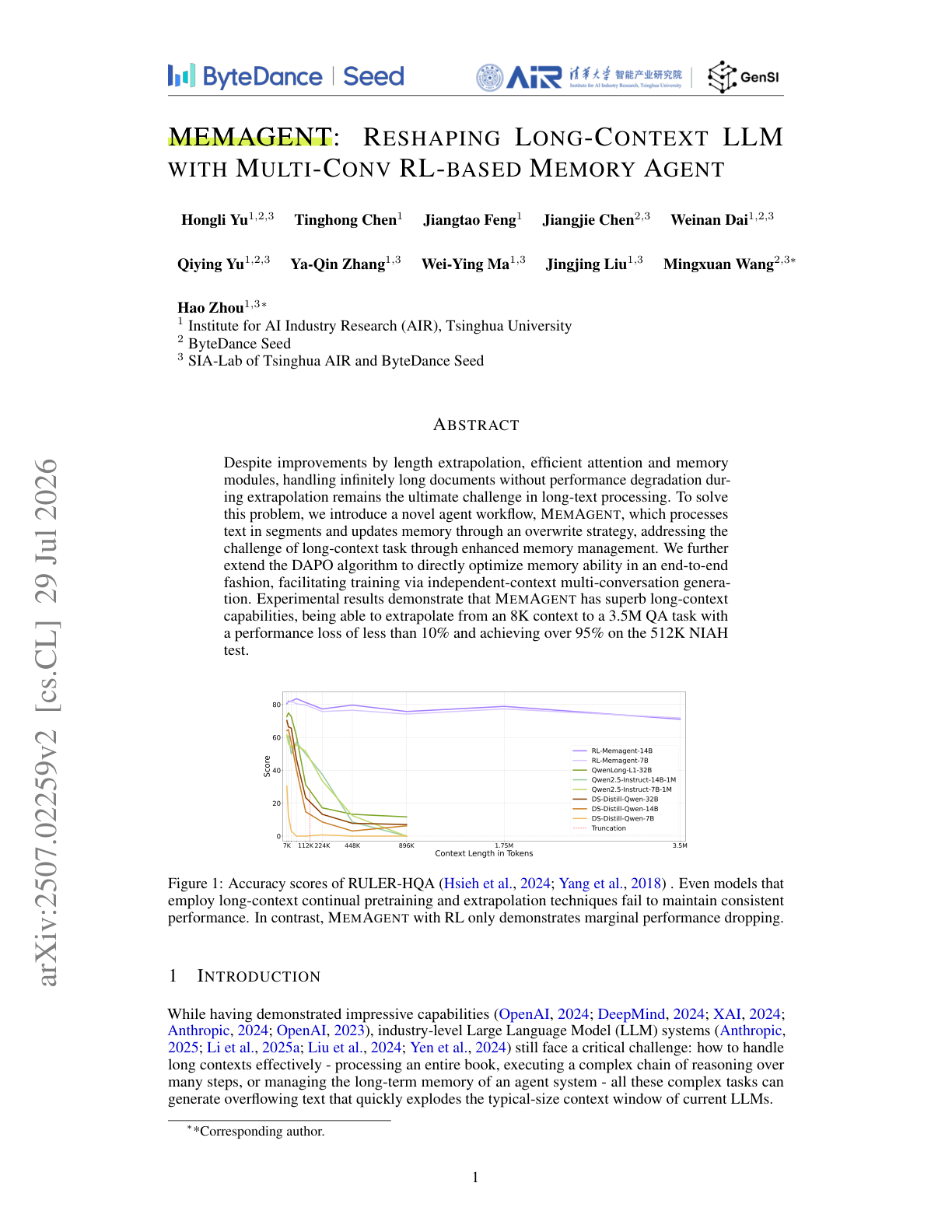
Introduces an RL–driven memory agent that enables transformer-based LLMs to handle documents up to 3.5 million tokens with near lossless performance, linear complexity, and no need for architectural modifications.
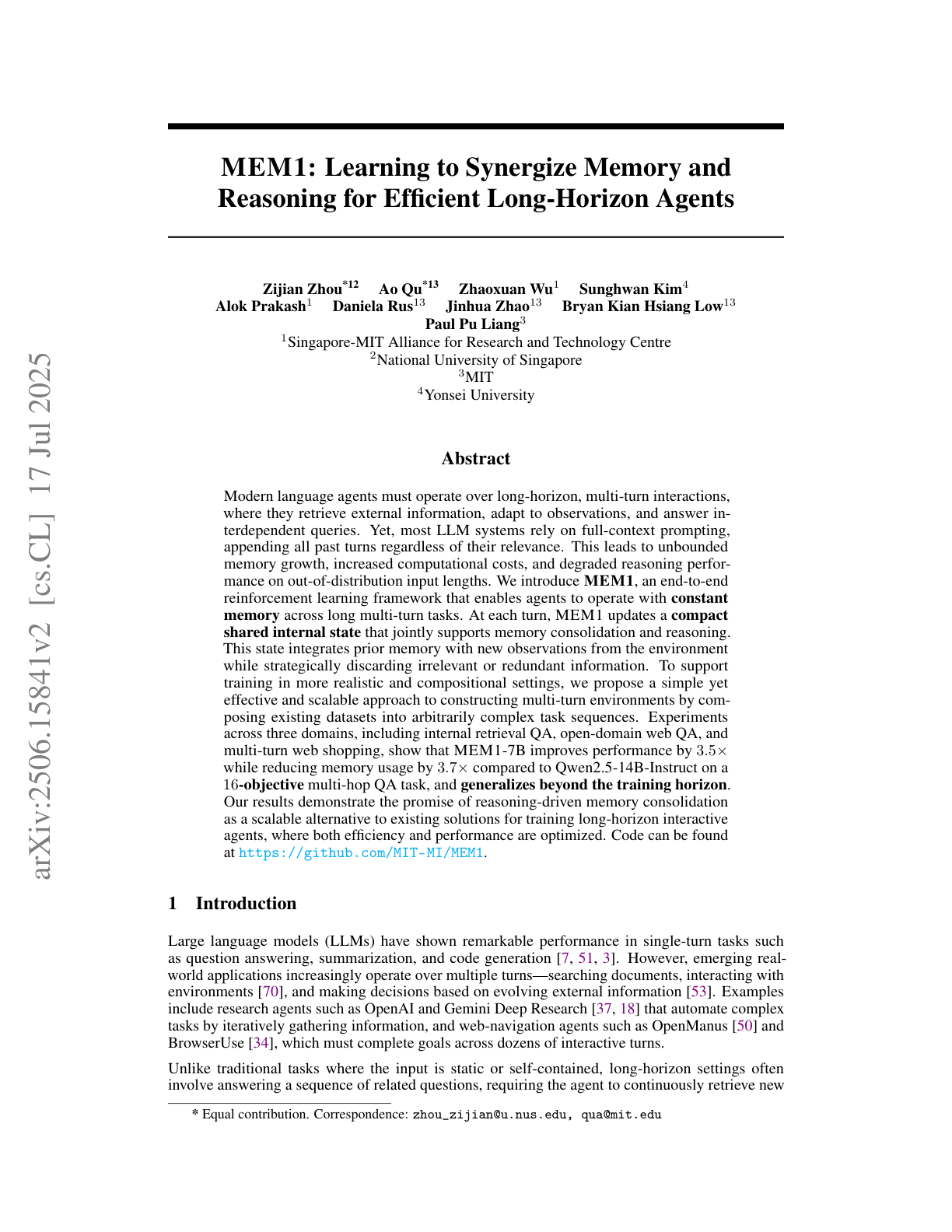
MEM1
This work introduces MEM1, an RL framework for training language agents that operate efficiently over long-horizon, multi-turn tasks by learning to consolidate memory and reasoning into a compact internal state. Unlike traditional agents that append all past interactions, leading to ballooning memory usage and degraded performance, MEM1 maintains a constant memory size by discarding obsolete context after each reasoning step. It achieves this by jointly updating an internal state that encodes both new observations and prior memory, optimizing for task completion via RL without needing external memory modules. Key contributions and findings:
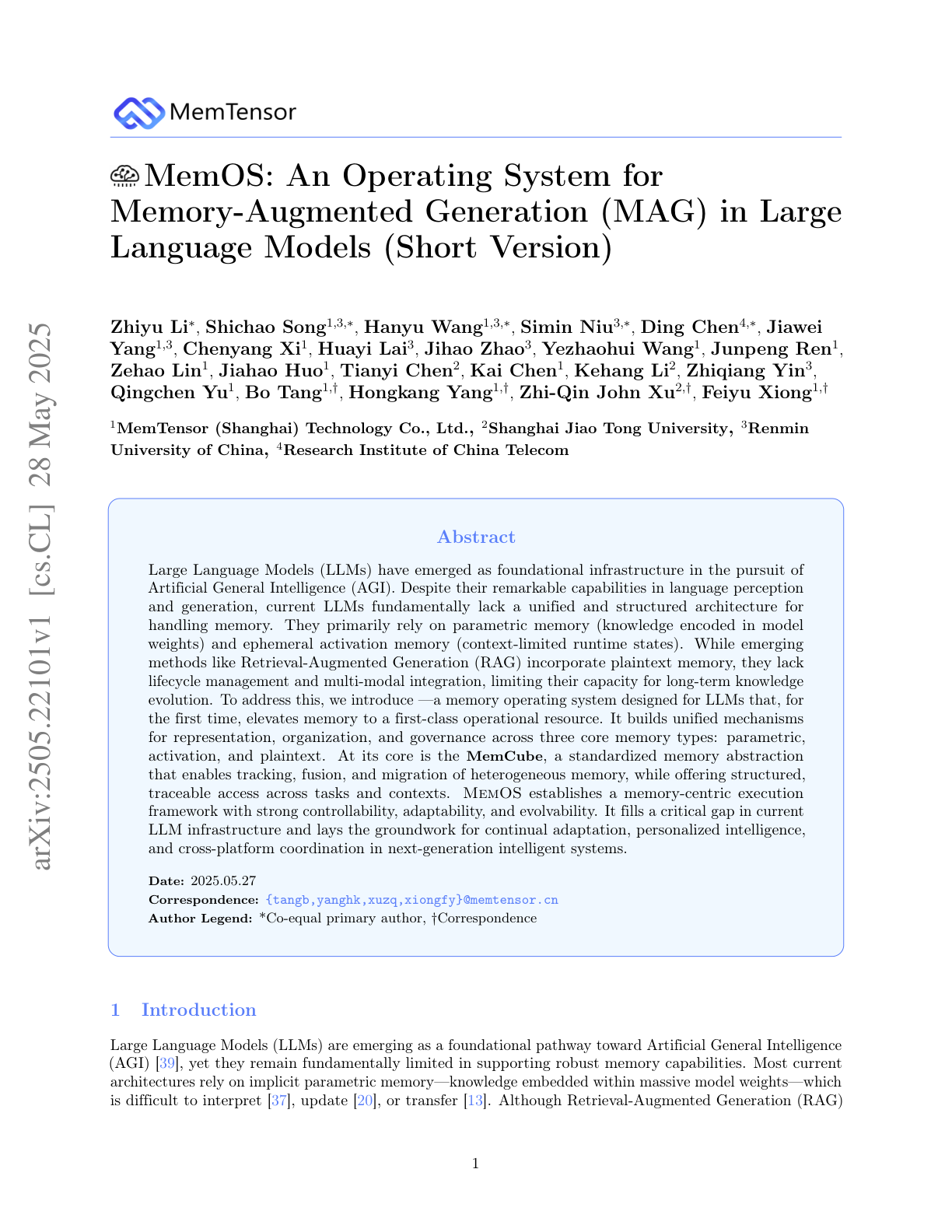
An Operating System for Memory-Augmented Generation in LLMs Introduces a unified operating system for managing memory LLMs, addressing a key limitation in
current architectures: their lack of structured, persistent, and governable memory. While today's LLMs rely primarily on parametric memory (model weights) and limited short-term context, MemOS proposes a comprehensive memory lifecycle and management infrastructure designed to support continual learning, behavioral consistency, and knowledge evolution. Key contributions and components include:
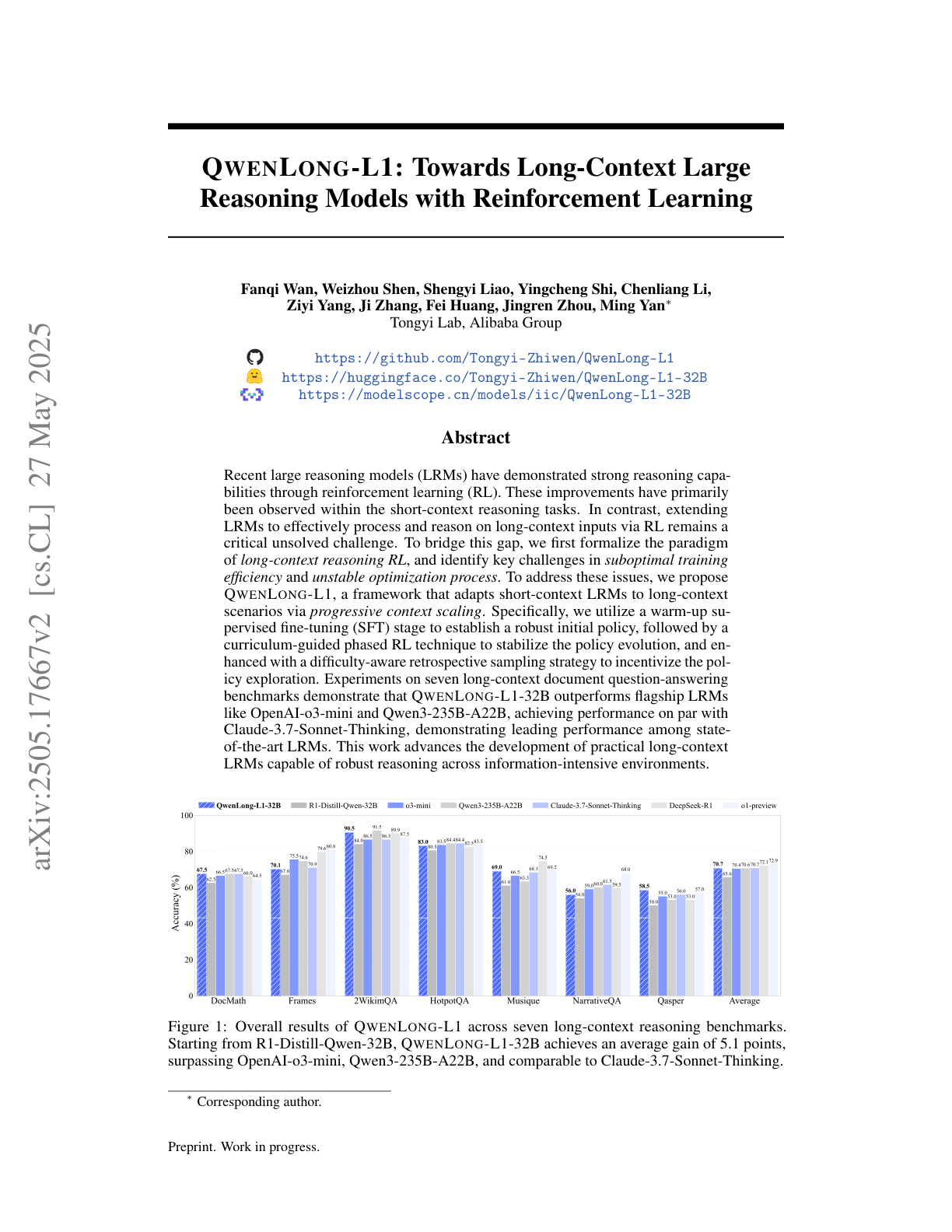
QwenLong-L1
A new reinforcement learning framework that scales large reasoning models (LRMs) from short to long contexts using progressive context scaling and hybrid rewards. It achieves top performance on seven long-context benchmarks, surpassing models like OpenAI-o3-mini and Qwen3-235B-A22B, and matching Claude-3.7-Sonnet-Thinking, demonstrating strong reasoning with up to 120K token inputs.
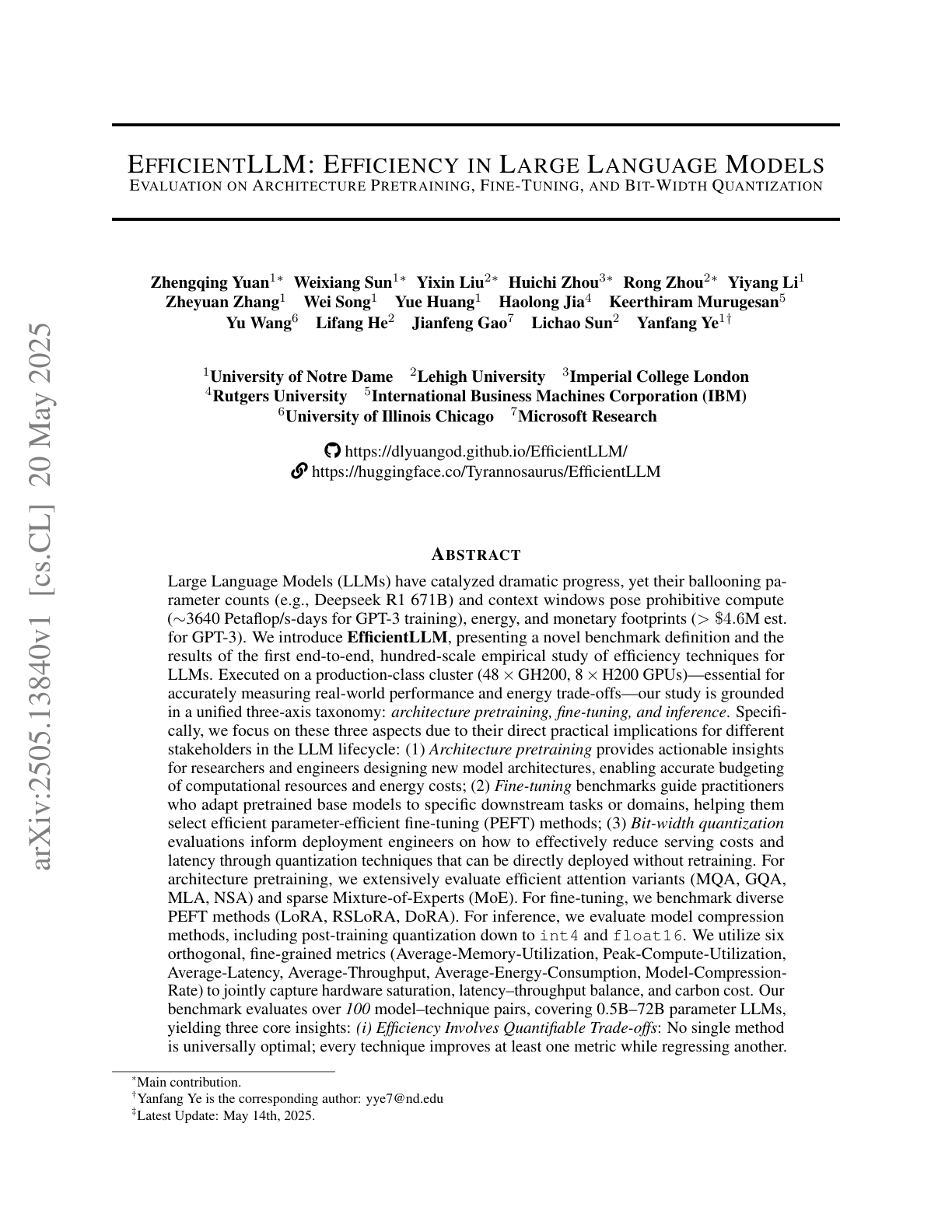
EfficientLLM
Introduces the first large-scale, empirical benchmark for evaluating efficiency trade-offs in LLMs across architecture, fine-tuning, and inference. Conducted on a high-performance cluster (48×GH200, 8×H200 GPUs), the study evaluates over 100 model–technique pairs spanning 0.5B–72B parameters, using six metrics: memory utilization, compute utilization, latency, throughput, energy consumption, and compression rate. Key insights include:
Building Production-Ready AI Agents with Scalable Long-Term Memory
This paper proposes a memory-centric architecture for LLM agents to maintain coherence across long conversations and sessions, solving the fixed-context window limitation. Main highlights:
Command A: An Enterprise-Ready LLM
Cohere announced Command A, a 111B parameter open-weights LLM built for enterprise-grade RAG, agents, code, and multilingual tasks. Key contributions: ● Modular expert merging for domain mastery – Instead of monolithic post-training, Command A uses a decentralized training pipeline. Separate expert models are fine-tuned for specific domains (e.g., math, RAG, multilingual, safety, code), then merged into one model using efficient weighted parameter soup techniques. This preserves most expert performance with just ~1.8% average drop. ● Hybrid architecture for long-context efficiency – Command A interleaves sliding window and full attention layers, achieving 256k context support with drastically lower KV cache memory usage—e.g., only ~33% of LLaMA 3 70B at 128k. It scores 95.0% on RULER, outperforming most long-context peers. ● Superb agentic capabilities – Built for RAG, tool use, and ReAct-style agents, Command A beats GPT-4o and Claude 3.5 on TauBench and BFCL. Tool use is trained via a blend of human-annotated and synthetic data, then aligned with CoPG and SRPO (self-improving preference optimization). ● Best-in-class enterprise evaluations – On real-world generative tasks (e.g., chat summarization, FAQ generation) and RAG use cases (long workplace policy documents), Command A tops the leaderboard with 94.2% pass rate, 4.73 correctness, and 91% unanswerable QA accuracy. ● Multilingual excellence – Command A is trained in 23 global languages with heavy data curation and preference tuning. It scores #1 in dialect alignment (ADI2), 90.3% average LPR (language consistency), and outperforms LLaMA 3.3, GPT-4o, and DeepSeek in manual Arena-style win rates across all languages. ● Polishing for human alignment – Final alignment used a ping-pong loop of offline SRPO and online CoPG with RLHF. This yielded +17pt human win rate gains on code, +10pt on reasoning, and lifted Command A’s win rate over GPT-4o to parity (~50.4%). ● Fast, efficient, and open – Despite its power, Command A runs on just 2×A100s or H100s and generates 156 tokens/sec—faster than GPT-4o and DeepSeek. Model weights are released (CC-BY-NC) on Hugging Face.
Structured Memory Augmentation for Smarter LLM Agents
MemInsight is a framework that autonomously augments and structures memory for LLM agents, improving context retention and retrieval. Key insights include: ● Structured, autonomous memory augmentation – Instead of relying on raw historical data or manually defined memory structures, MemInsight uses a backbone LLM to autonomously mine attributes from past conversations or knowledge. These are organized into entity-centric and conversation-centric (e.g., user emotion or intent) augmentations at either the turn or session level. This mimics how humans abstract and prioritize experiences. ● Attribute-guided retrieval beats vanilla RAG – MemInsight supports both attribute-based retrieval (exact match filtering) and embedding-based retrieval (via FAISS). On the LoCoMo QA dataset, MemInsight outperformed a Dense Passage Retrieval (RAG) baseline by up to +34% recall. The best setup (priority-based Claude-Sonnet augmentations) achieved 60.5% Recall@5, vs. 26.5% for RAG. ● More persuasive recommendations – In movie recommendations using the LLM-REDIAL dataset, MemInsight lifted genre-matched recommendation scores while cutting down memory size by 90%. Embedding-based filtering led to +12% more highly persuasive outputs, per LLM judgment. ● Event summarization via memory alone – MemInsight’s annotations alone can be used to summarize long conversational sessions. These memory-only summaries rival raw-dialogue baselines in coherence and relevance (per G-Eval scores), particularly when turn-level augmentations are combined with original dialogue context. ● Minimal hallucinations, stable performance – Comparative analysis of augmentation models (Claude-Sonnet, Llama, Mistral) shows Claude-Sonnet produces more stable, consistent, and grounded attributes, reinforcing the importance of careful model selection in memory pipelines.
Agentic Memory for LLM Agents
Researchers from Rutgers University and Ant Group propose a new agentic memory system for LLM agents, addressing the need for long-term memory in complex real-world tasks. Key highlights include:
Native Sparse Attention
DeepSeek-AI and collaborators present Native Sparse Attention (NSA), a novel sparse attention mechanism designed to improve computational efficiency while maintaining model performance in long-context language modeling. Key contributions:
MoBA
MoBA is a new attention mechanism that enhances efficiency in handling long-context sequences for LLMs while maintaining strong performance. Key insights:
Large Memory Models
Large Memory Models (LM2) is a transformer architecture augmented with an external memory module to tackle tasks requiring extensive reasoning and long context. Key highlights include:
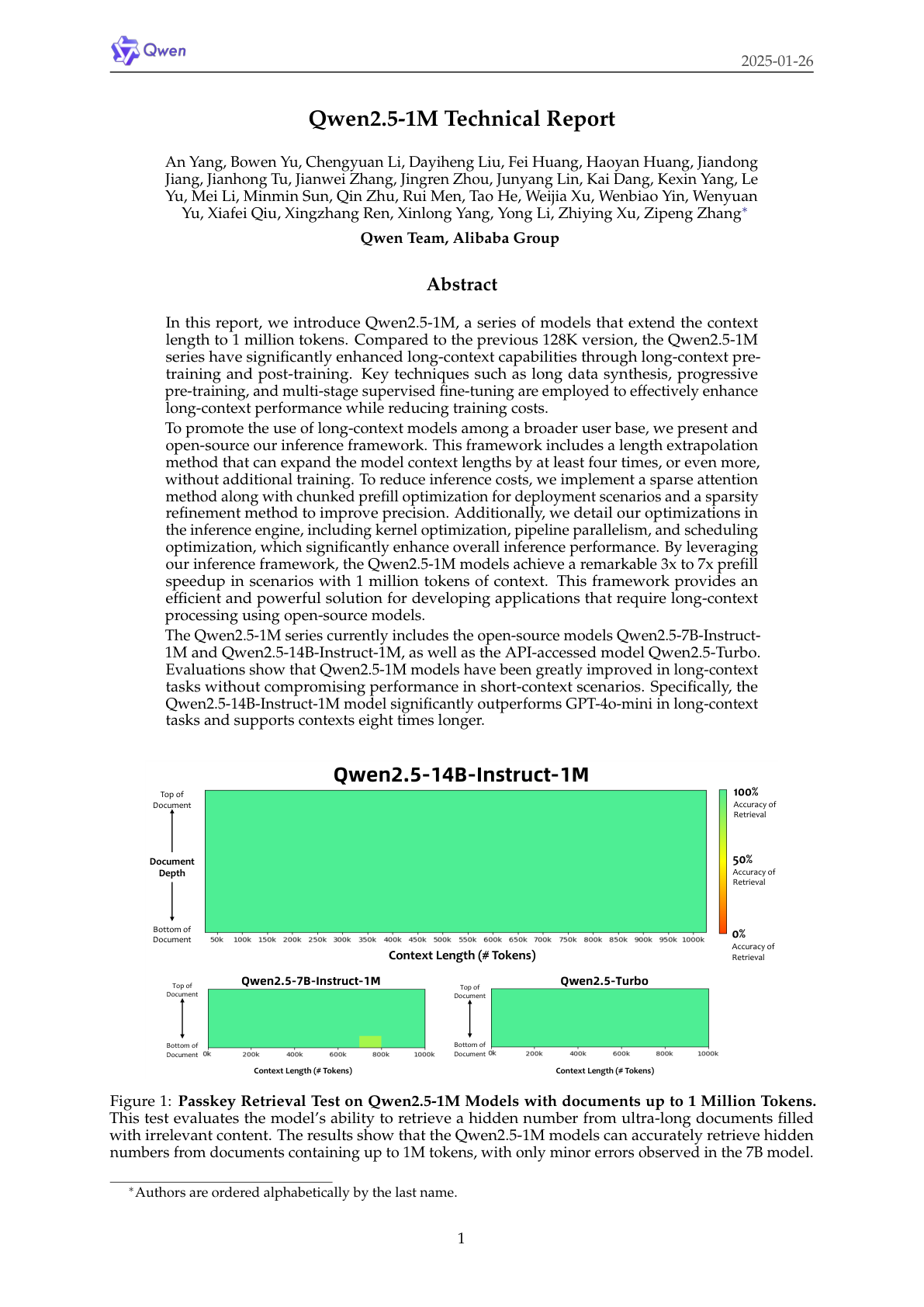
Qwen2.5-1M
Qwen releases two open-source LLMs, Qwen2.5-7B-Instruct-1M and Qwen2.5-14B-Instruct-1M, that can handle context lengths of up to 1 million tokens. The models are built on a progressive training approach, starting with 4K tokens and gradually increasing to 256K tokens, then using length extrapolation techniques to reach 1M tokens. They've also released an inference framework based on vLLM that processes long inputs 3-7x faster through sparse attention methods. The models show strong performance on both long-context and short-text tasks. The 14B model outperforms GPT-4o-mini across multiple long-context datasets while maintaining similar performance on shorter tasks.
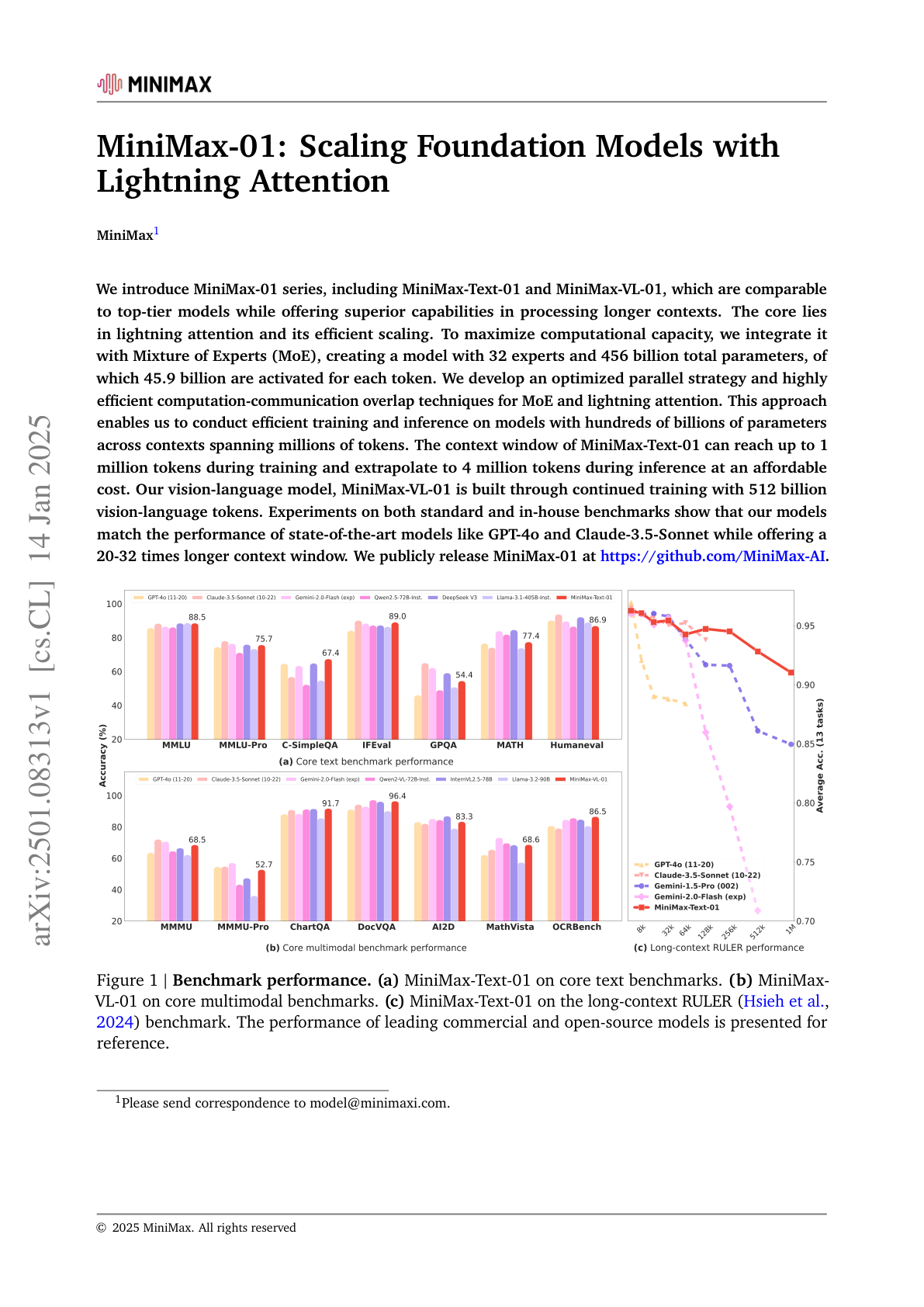
MiniMax-01
introduces a new series of models that integrate Mixture-of-Experts; introduces a model with 32 experts and 456B parameters, and 45.9B are activated for each token; claims match the performance of state-of-the-art models like GPT-4o and Claude-3.5-Sonnet while offering a 20-32x longer context window; it can handle context windows of up to 4 million tokens; it integrates linear attention with optimized hardware utilization which enhances the efficiency and scalability of the LLM; there is also a vision model called MiniMax-VL-01 built through continued training with 512 billion vision-language tokens.
Learning to Memorize at Test Time
introduces a neural long-term memory module to memorize historical context and help attention to attend to the current context while utilizing long past information; the neural memory module acts as a long-term, more persistent memory than just using attention alone (considered more short-term); Titan, which is based on neural memory, shows good results in language modeling, common-sense reasoning, genomics, and time series tasks.
Cache-Augmented Generation (CAG)
an approach that aims to leverage the capabilities of long-context LLMs by preloading the LLM with all relevant docs in advance and precomputing the key-value (KV) cache; the preloaded context helps the model to provide contextually accurate answers without the need for additional retrieval during runtime; the authors suggest that CAG is a useful alternative to RAG for cases where the documents/knowledge for retrieval are of limited, manageable size.
Long Context vs. RAG for LLMs
performs a comprehensive evaluation of long context (LC) LLMs compared to RAG systems; the three main findings are: 1) LC generally outperforms RAG in question-answering benchmarks, 2) summarization-based retrieval performs comparably to LC, while chunk-based retrieval lags behind, and 3) RAG has advantages in dialogue-based and general question queries
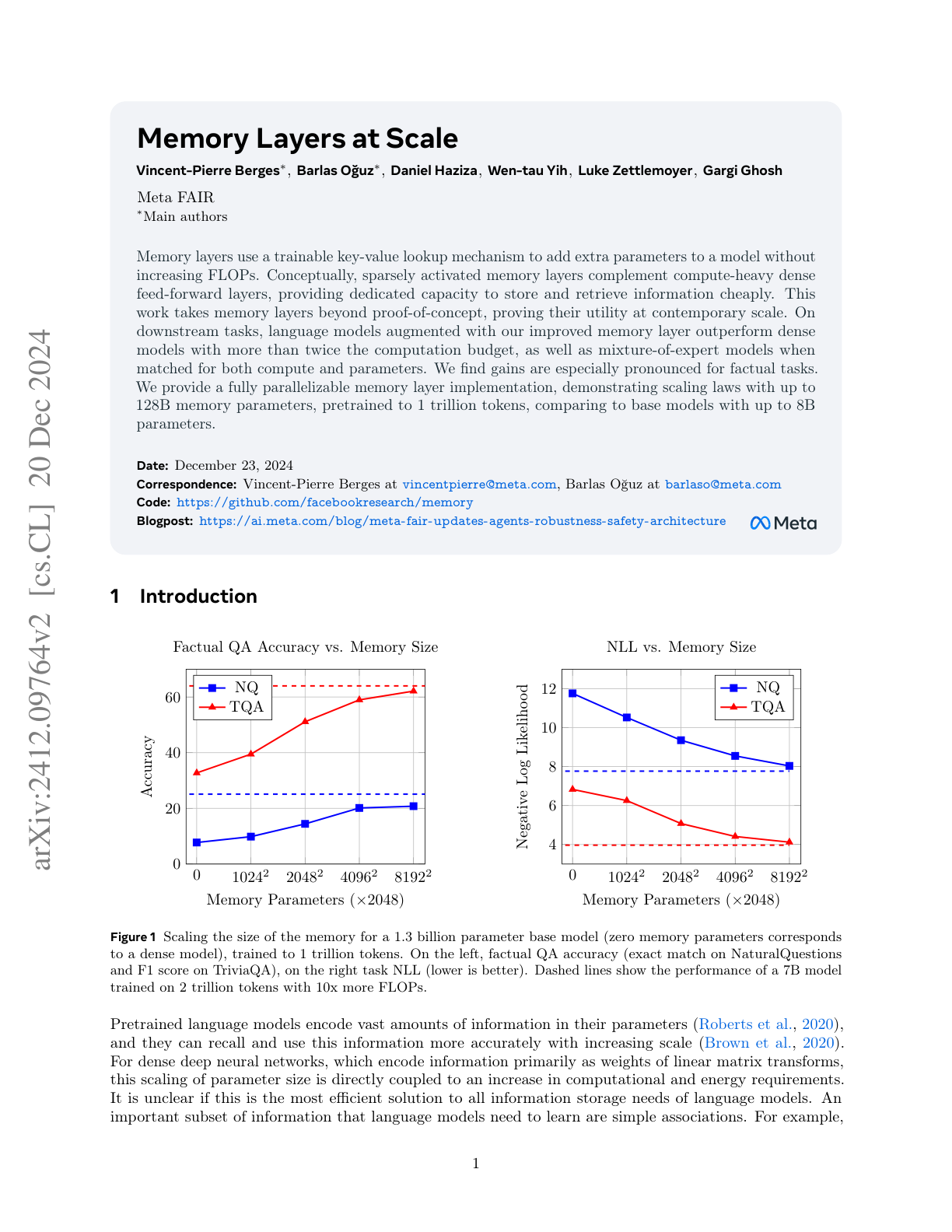
Memory Layers at Scale
demonstrates the effectiveness of memory layers at scale; shows that models with these memory layers outperform traditional dense models using half the computation, particularly in factual tasks; includes a parallelizable memory layer implementation that scales to 128B memory parameters and 1 trillion training tokens, tested against base models up to 8B parameters.
Cut Your Losses in Large-Vocabulary Language Models
introduces Cut Cross-Entropy (CCE), a novel method to significantly reduce memory usage during LLM training by optimizing how the cross-entropy loss is computed; currently, the cross-entropy layer in LLM training consumes a disproportionate amount of memory (up to 90% in some models) due to storing logits for all possible vocabulary tokens. CCE addresses this by only computing logits for the correct token and evaluating the log-sum-exp over all logits on the fly using flash memory; the authors show that the approach reduces the memory footprint of Gemma 2 from 24GB to just 1MB; the method leverages the inherent sparsity of softmax calculations to skip elements that contribute negligibly to gradients; finally, it demonstrates that CCE achieves this dramatic memory reduction without sacrificing training speed or convergence, enabling larger batch sizes during training and potentially more efficient scaling of LLM training.
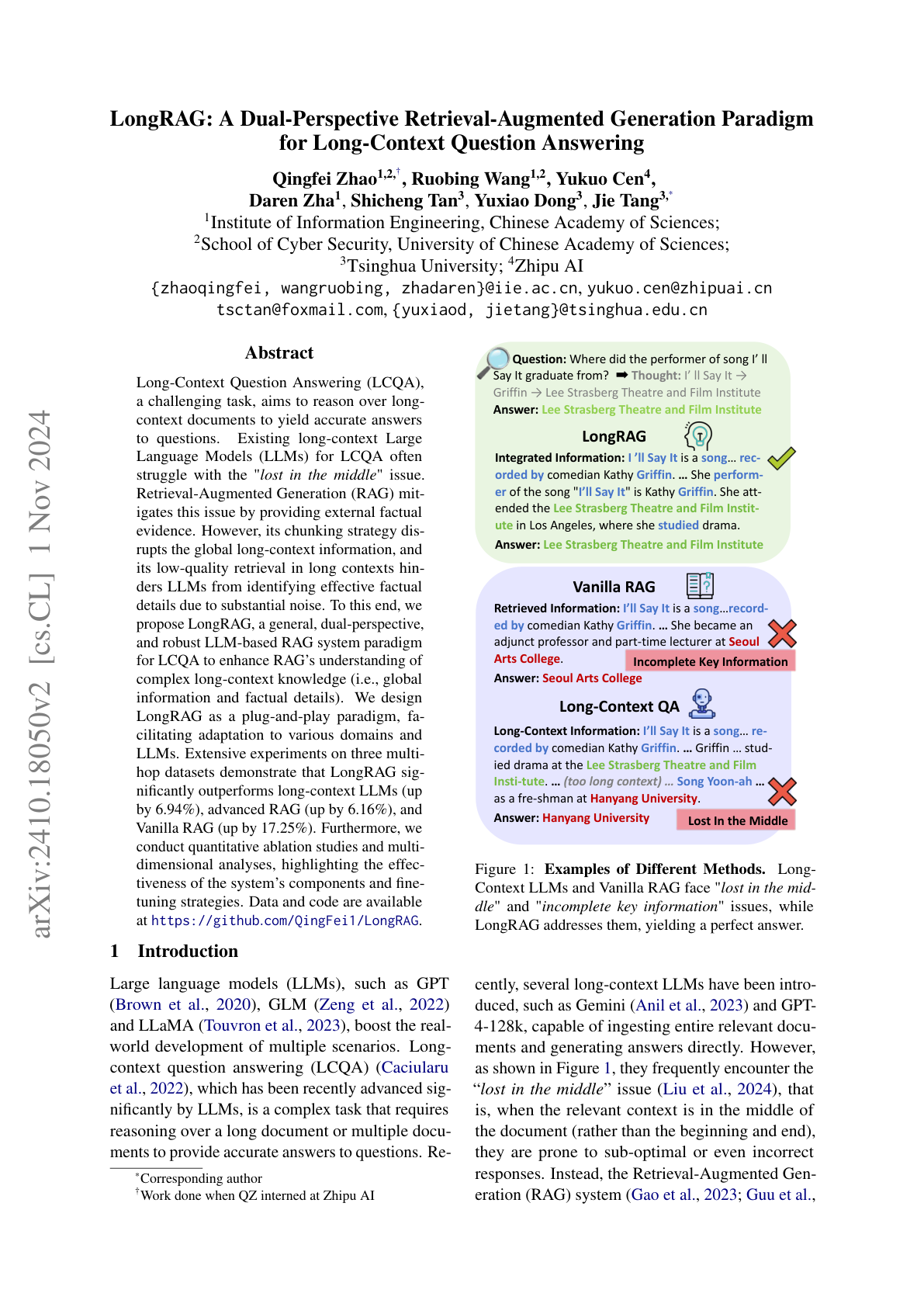
LongRAG
enhances RAG's understanding of long-context knowledge which includes global information and factual details; consists of a hybrid retriever, an LLM-augmented information extractor, a CoT-guided filter, and an LLM-augmented generator; these are key components that enable the RAG system to mine global long-context information and effectively identify factual details; LongRAG outperforms long-context LLMs (up by 6.94%), advanced RAG (up by 6.16%), and Vanilla RAG (up by 17.25%).
Inference Scaling for Long-Context RAG
uses two strategies to investigate scaling laws for RAG: in-context learning (DRAG) and iterative prompting (IterRAG); finds that RAG performance consistently improves with the expansion of the effective context length under optimal configurations; when optimally allocated, increasing inference computation can lead to linear gains in long-context RAG performance; this leads to the development of a computation allocation model that can provide practical guidance for optimal computation allocation in long-context RAG scenarios.