AI Papers of the Week
Every paper worth reading in AI, hand-picked one week at a time.
Discover and explore top AI papers with Claude Code or Codex
npx @dair-ai/mcp setup
Risks and Opportunities of Open-Source Generative AI
analyzes the risks and opportunities of open-source generative AI models; argues that the overall benefits of open-source generative AI outweigh its risks.
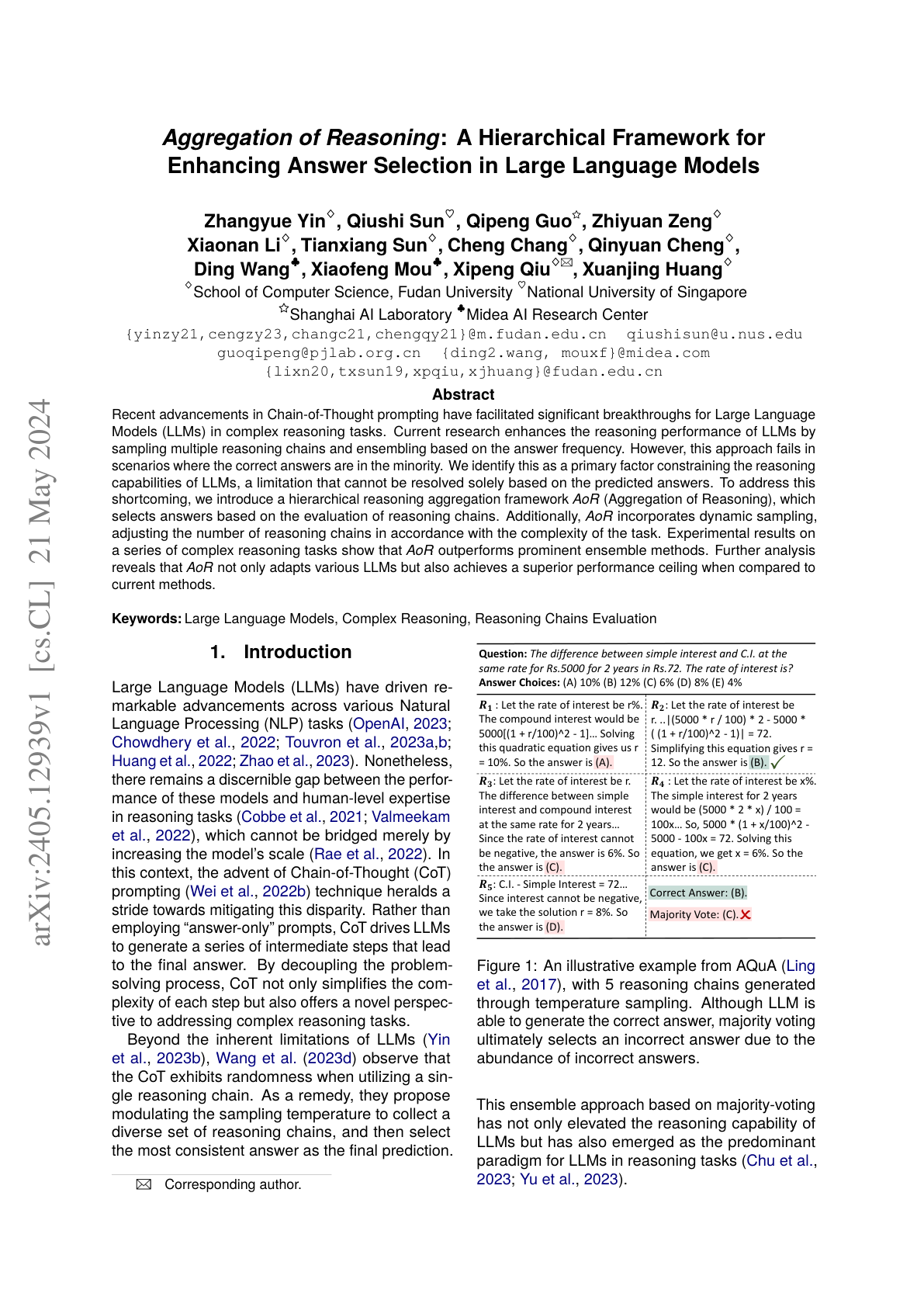
Enhancing Answer Selection in LLMs
proposes a hierarchical reasoning aggregation framework for improving the reasoning capabilities of LLMs; the approach, called Aggregation of Reasoning (AoR), selects answers based on the evaluation of reasoning chains; AoR uses dynamic sampling to adjust the number of reasoning chains with respect to the task complexity; it uses results from the evaluation phase to determine whether to sample additional reasoning chains; a known flaw of majority voting is that it fails in scenarios where the correct answer is in the minority; AoR focuses on evaluating the reasoning chains to improve the selection of the final answer; AoR outperforms various prominent ensemble methods and can be used with various LLMs to improve performance on complex reasoning tasks.
How Far Are We From AGI
presents an opinion paper addressing important questions to understand the proximity to artificial general intelligence (AGI); it provides a summary of strategies necessary to achieve AGI which includes a detailed survey, discussion, and original perspectives.
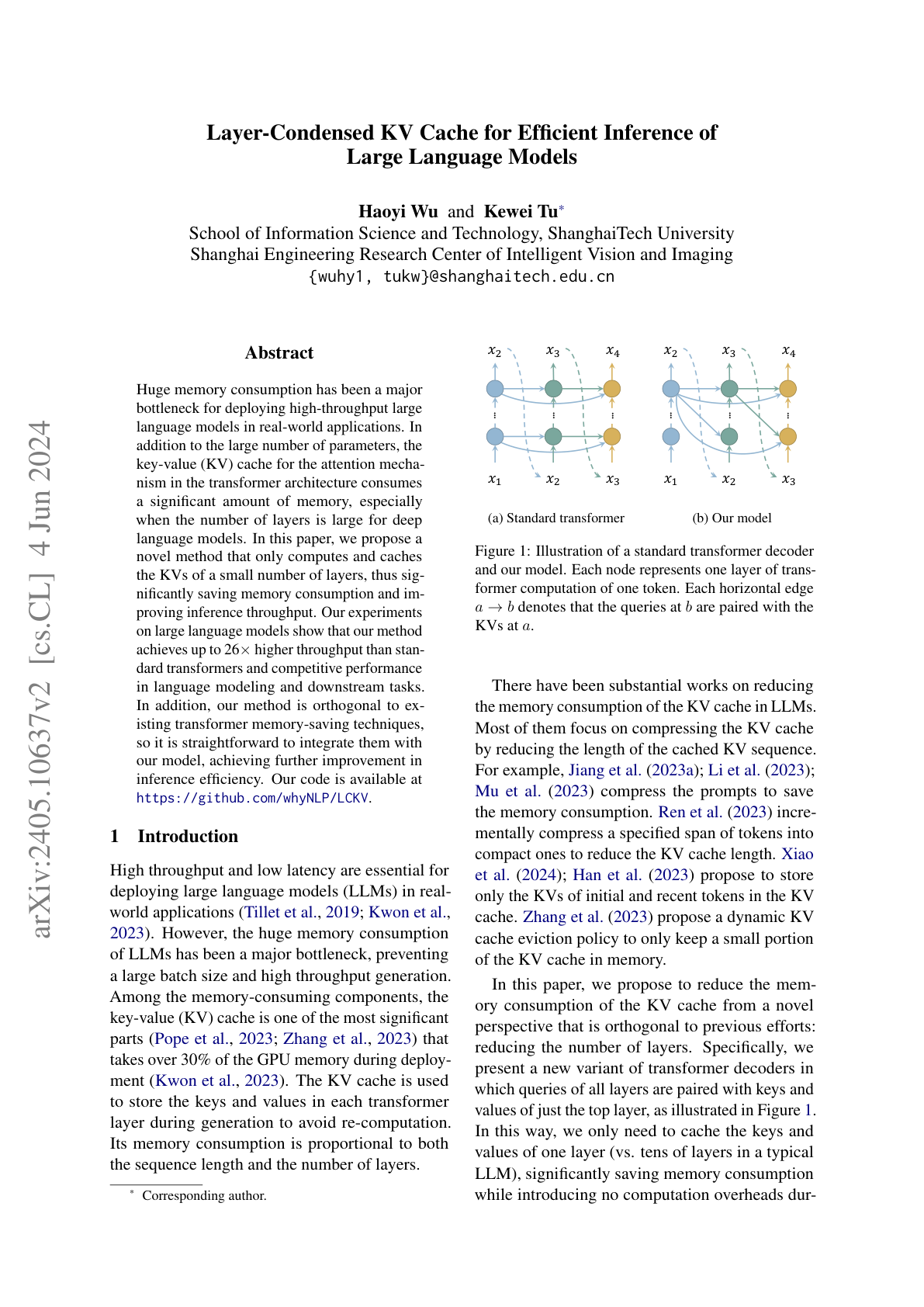
Efficient Inference of LLMs
proposes a layer-condensed KV cache to achieve efficient inference in LLMs; only computes and caches the key-values (KVs) of a small number of layers which leads to saving memory consumption and improved inference throughput; can achieve up to 26x higher throughput than baseline transformers while maintaining satisfactory performance.
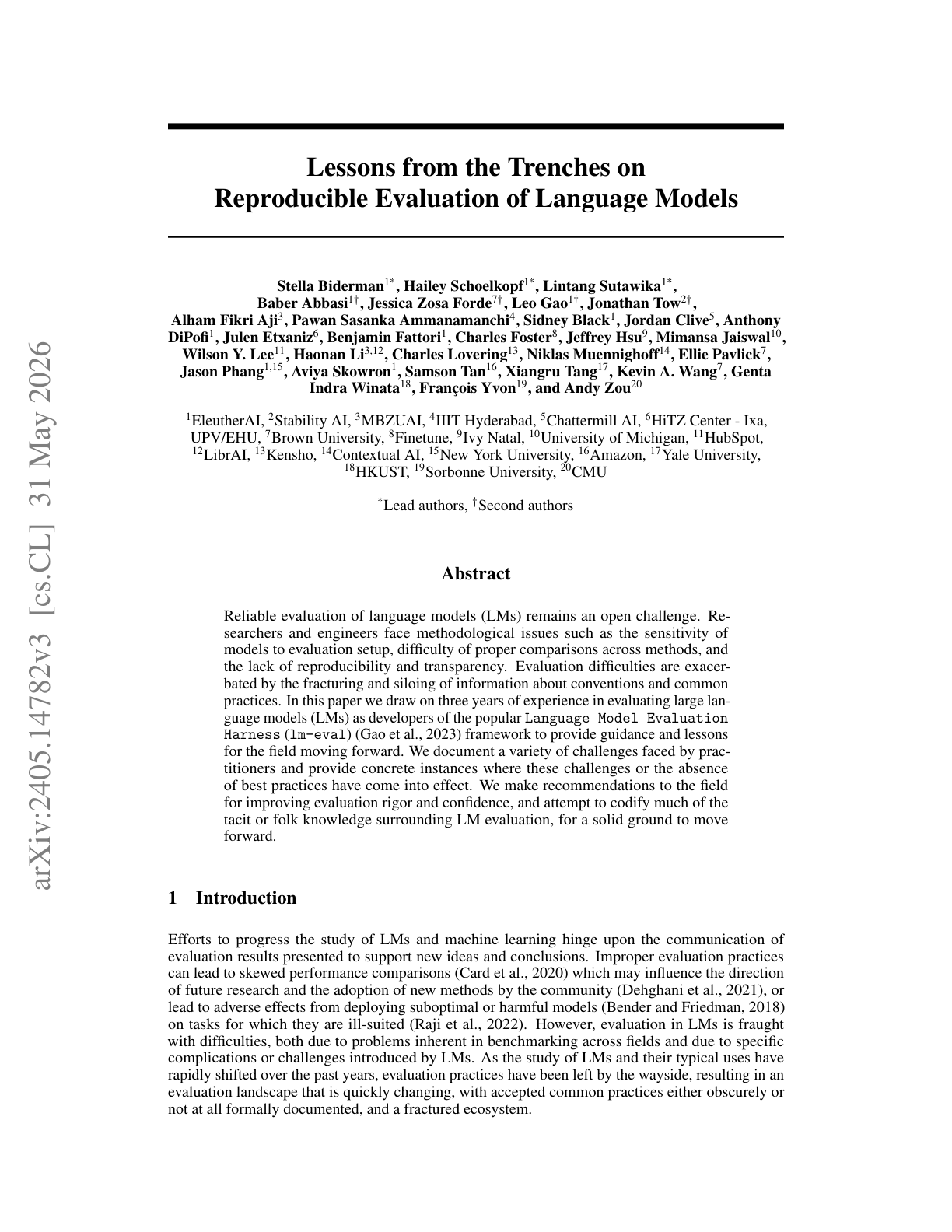
Guide for Evaluating LLMs
provides guidance and lessons for evaluating large language models; discusses challenges and best practices, along with the introduction of an open-source library for evaluating LLMs.
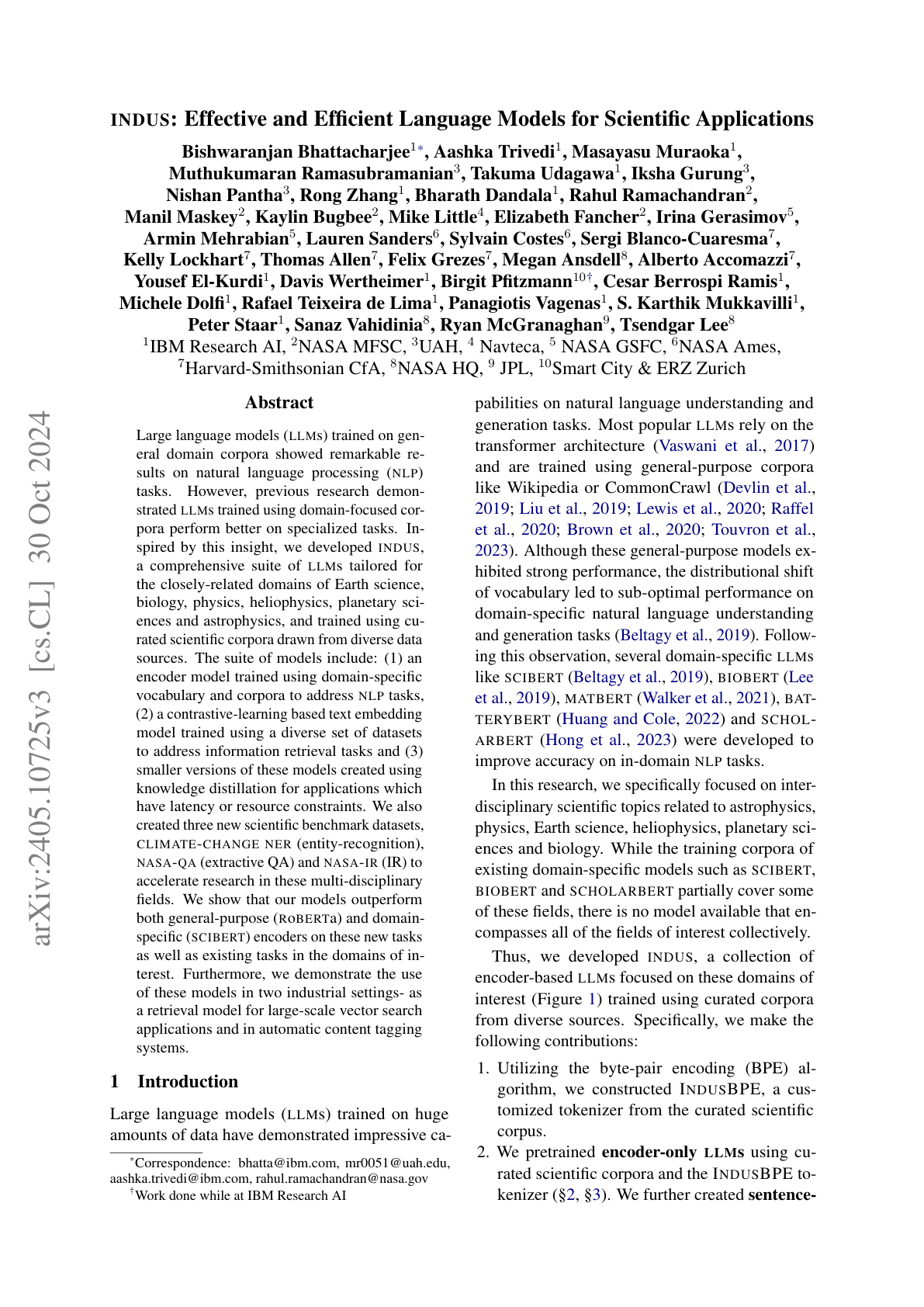
Scientific Applications of LLMs
presents INDUS, a comprehensive suite of LLMs for Earth science, biology, physics, planetary sciences, and more; includes an encoder model, embedding model, and small distilled models.
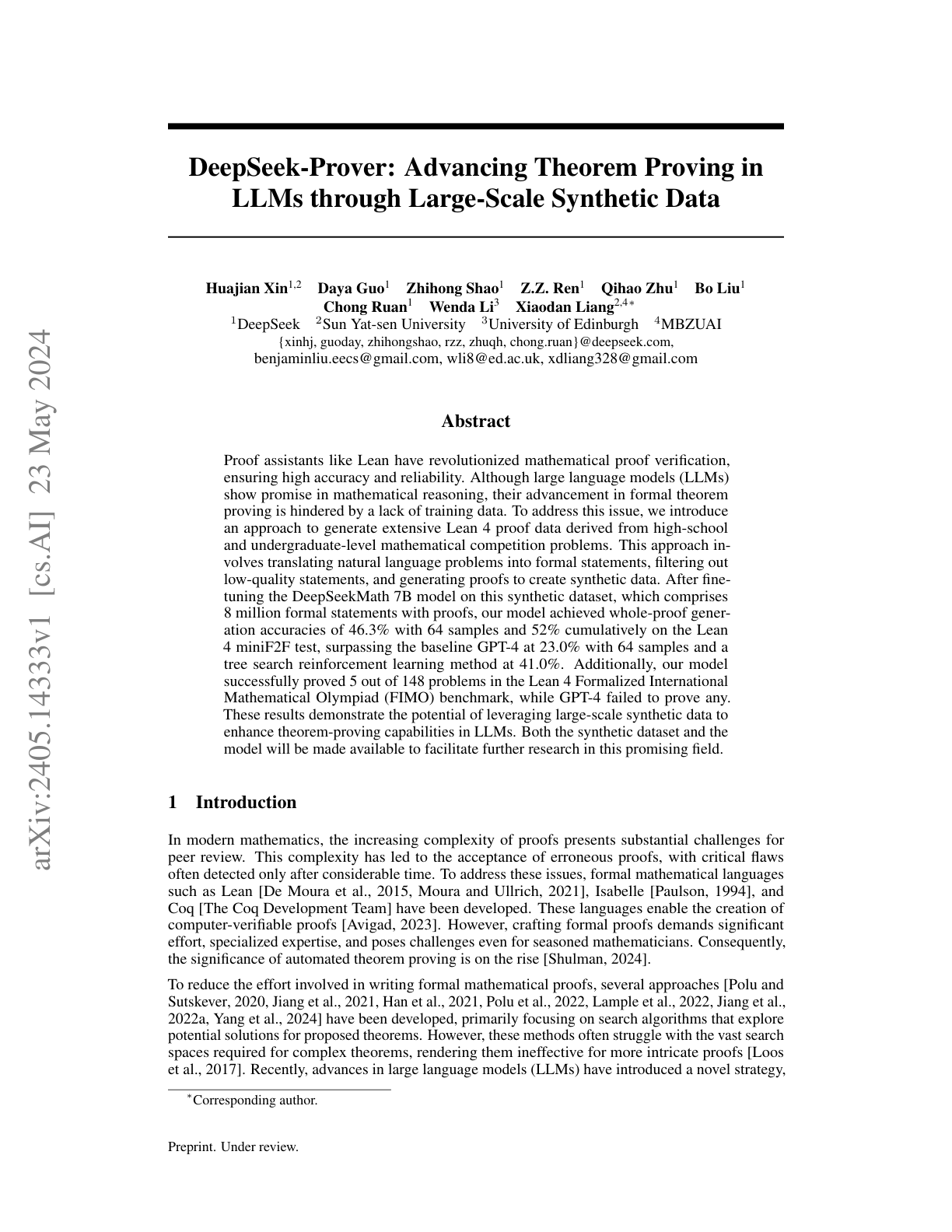
DeepSeek-Prover
introduces an approach to generate Lean 4 proof data from high-school and undergraduate-level mathematical competition problems; it uses the synthetic data, comprising of 8 million formal statements and proofs, to fine-tune a DeepSeekMath 7B model; achieves whole-proof generation accuracies of 46.3% with 64 samples and 52% cumulatively on the Lean 4 miniF2F test; this surpasses the baseline GPT-4 (23.0%) with 64 samples and a tree search RL method (41.0%).
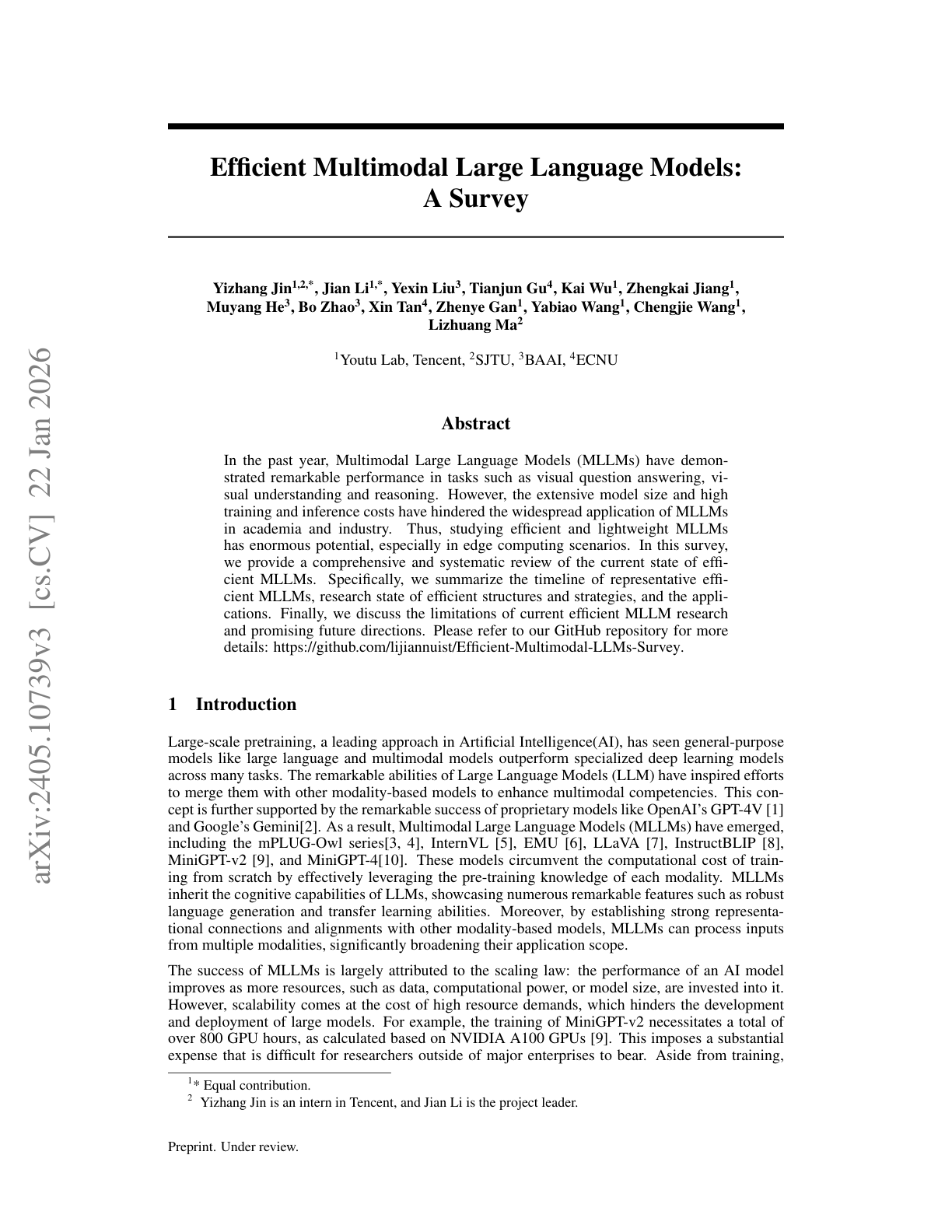
Efficient Multimodal LLMs
provides a comprehensive and systematic survey of the current state of efficient multimodal large language models; discusses efficient structures and strategies, applications, limitations, and promising future directions.

GPT-4o
a new model with multimodal reasoning capabilities with real-time support across audio, vision, and text; it can accept as input any combination of text, audio, image, and video to generate combinations of text, audio, and image outputs; it’s reported to match GPT-4 Turbo performance while being 50% much faster and cheaper via APIs.
Gemini 1.5 Flash
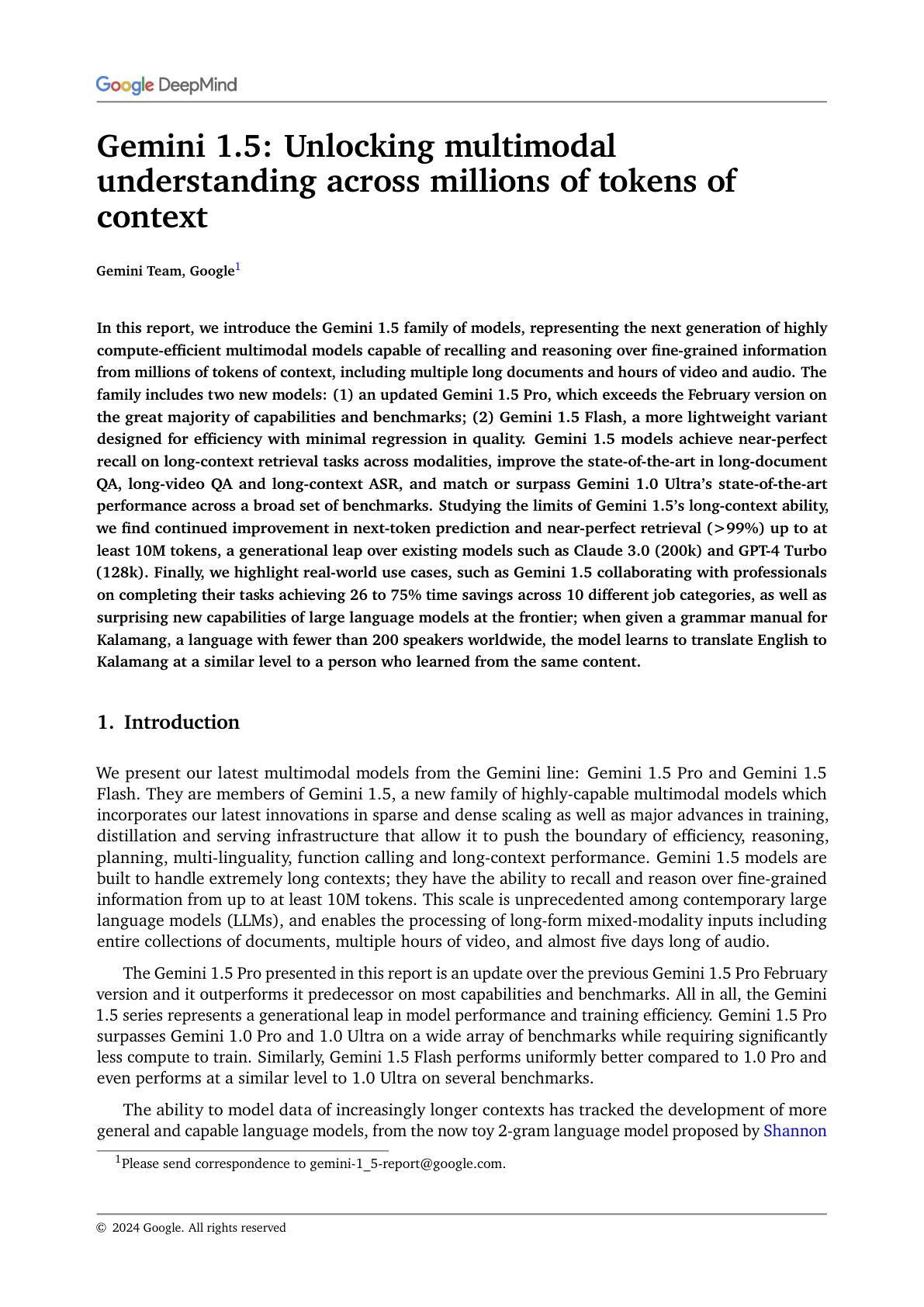
a lightweight transformer decoder model with a 2M context window with multimodal capabilities; it is designed for efficiency and yields the fastest output generation of all models on several evaluated languages; overall, Gemini 1.5 Flash performs uniformly better compared to Gemini 1.0 Pro and even performs at a similar level to 1.0 Ultra on several benchmarks.

Veo
Google Deepmind’s most capable video generation model generates high-quality, 1080p resolution videos beyond 1 minute; it supports masked editing on videos and can also generate videos with an input image along with text; the model can extend video clips to 60 seconds and more while keeping consistency with its latent diffusion transformer.
Chameleon
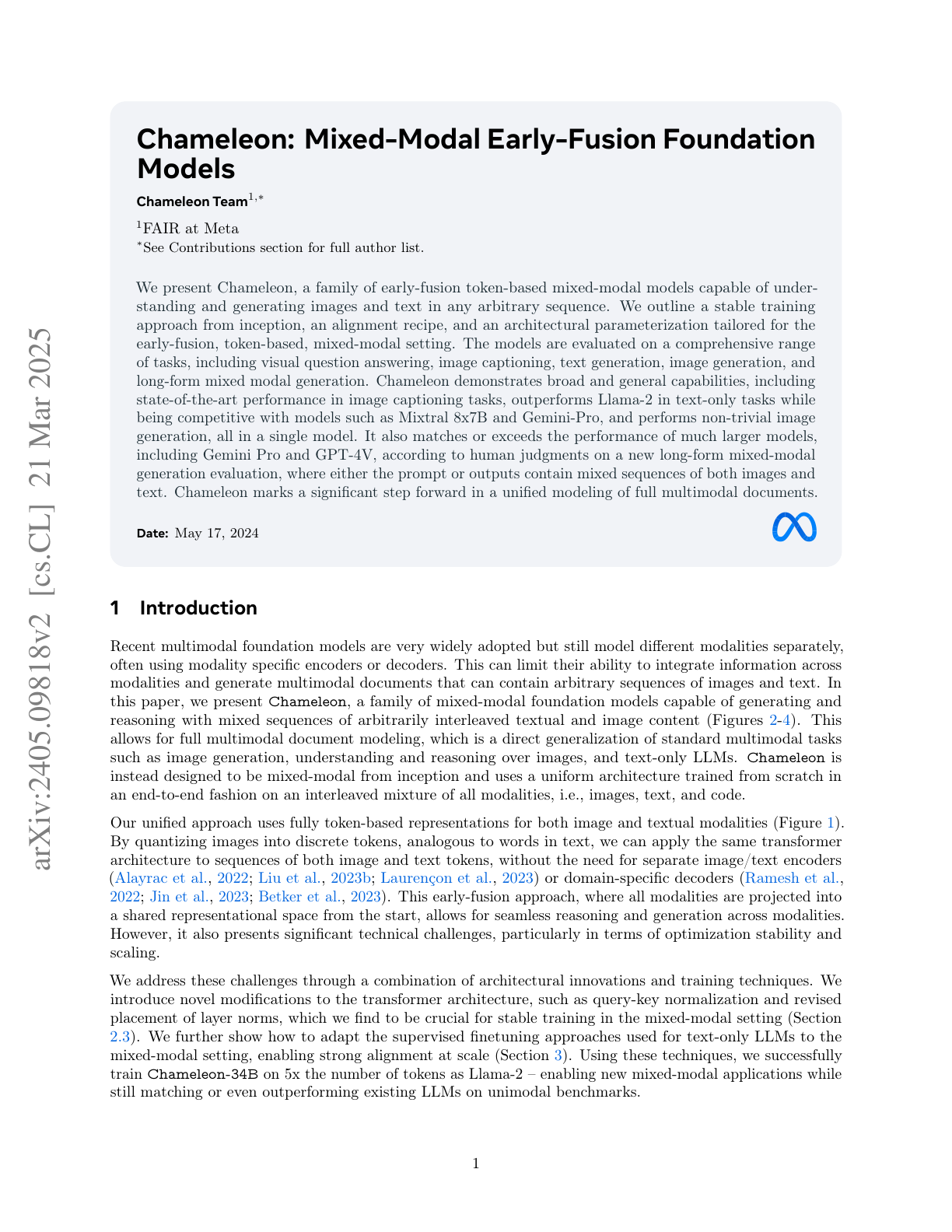
a family of token-based mixed-modal models for generating images and text in any arbitrary sequence; reports state-of-the-art performance in image captioning and outperforms Llama 2 in text-only tasks and is also competitive with Mixtral 8x7B and Gemini-Pro; exceeds the performance of Gemini Pro and GPT-4V on a new long-form mixed-modal generation evaluation.
Fine-tuning and Hallucinations
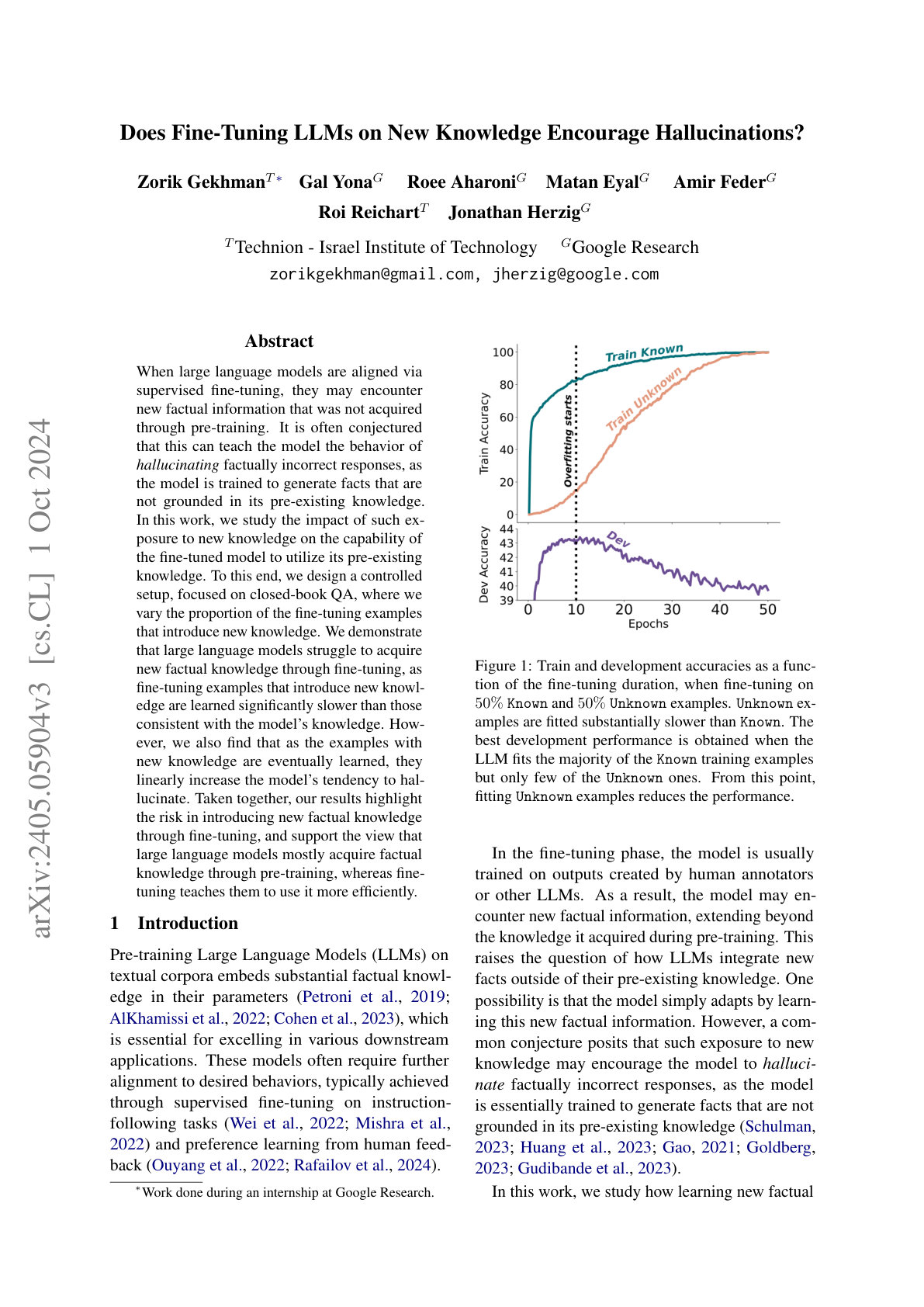
studies the impact of fine-tuning on new knowledge on the hallucination tendencies of LLMs; the setup includes fine-tuning examples that include new knowledge; shows that LLMs struggle to acquire new factual knowledge via fine-tuning; also finds that as new knowledge is learned it increases the model’s tendency to hallucinate.
Zero-shot Tokenizer Transfer
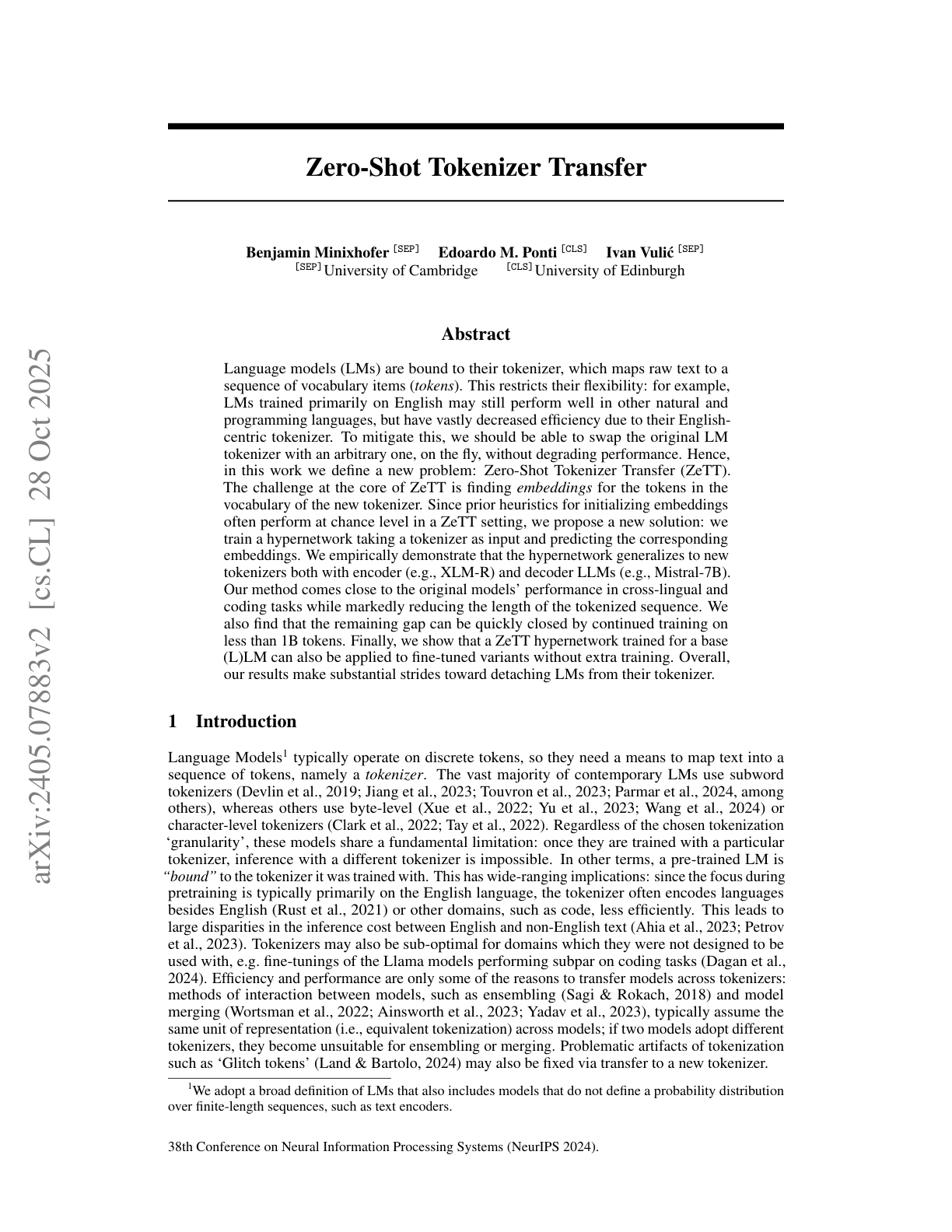
trains a hypernetwork taking a tokenizer as input and predicting the corresponding embeddings; it demonstrates generalization to new tokenizers both with encoder and decoder LLMs; reports that the method achieves performance close to the original models' performance in cross-lingual and coding tasks while reducing the length of the tokenized sequence.
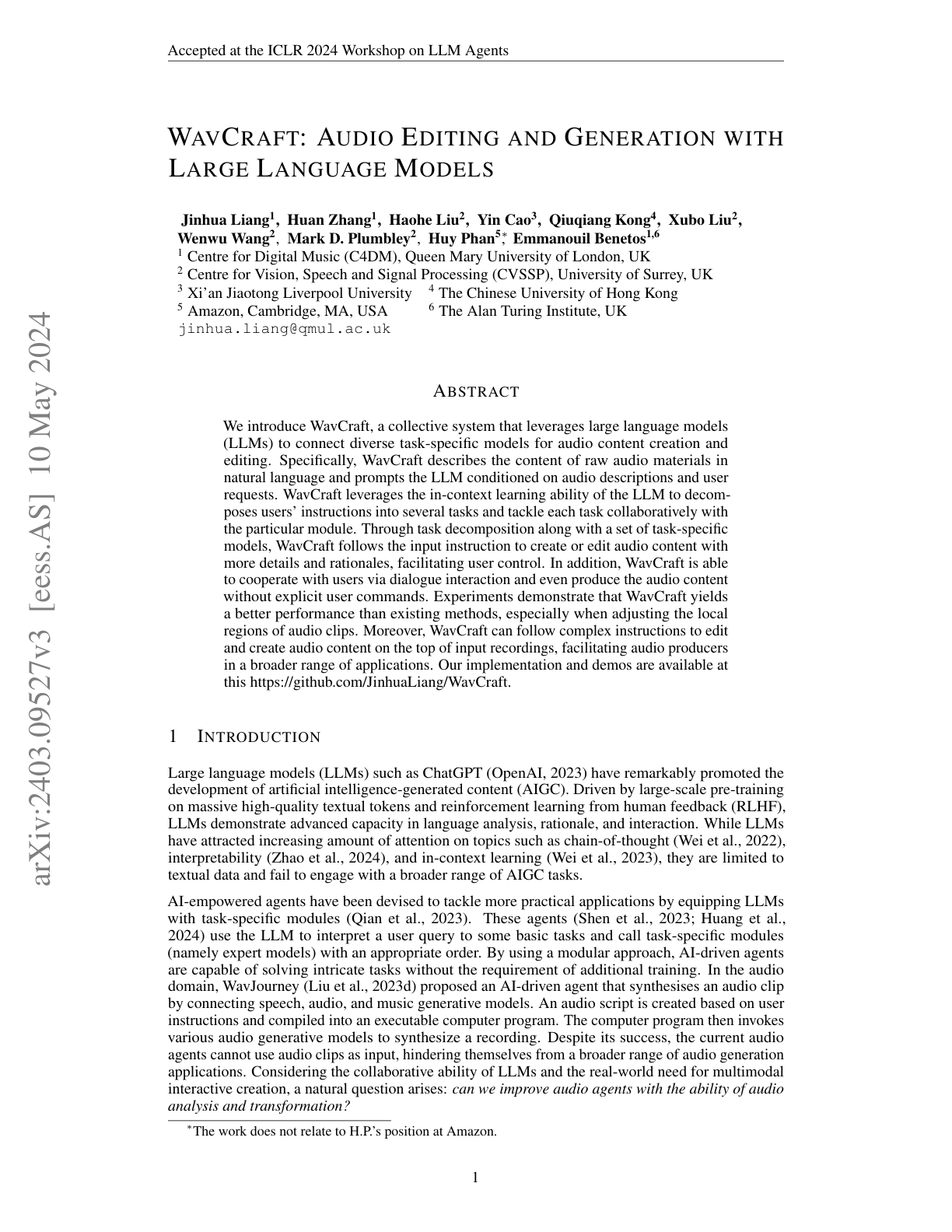
WavCraft
leverages LLMs to connect task-specific models for audio content creation and editing; decomposes users' instructions into several tasks and tackles each task collaboratively with the particular module; it can enable users to interact and produce audio content without explicit commands
RLHF Workflow
provides an easily reproducible recipe for online iterative RLHF; discusses theoretical insights and algorithmic principles of online iterative RLHF and practical implementation.
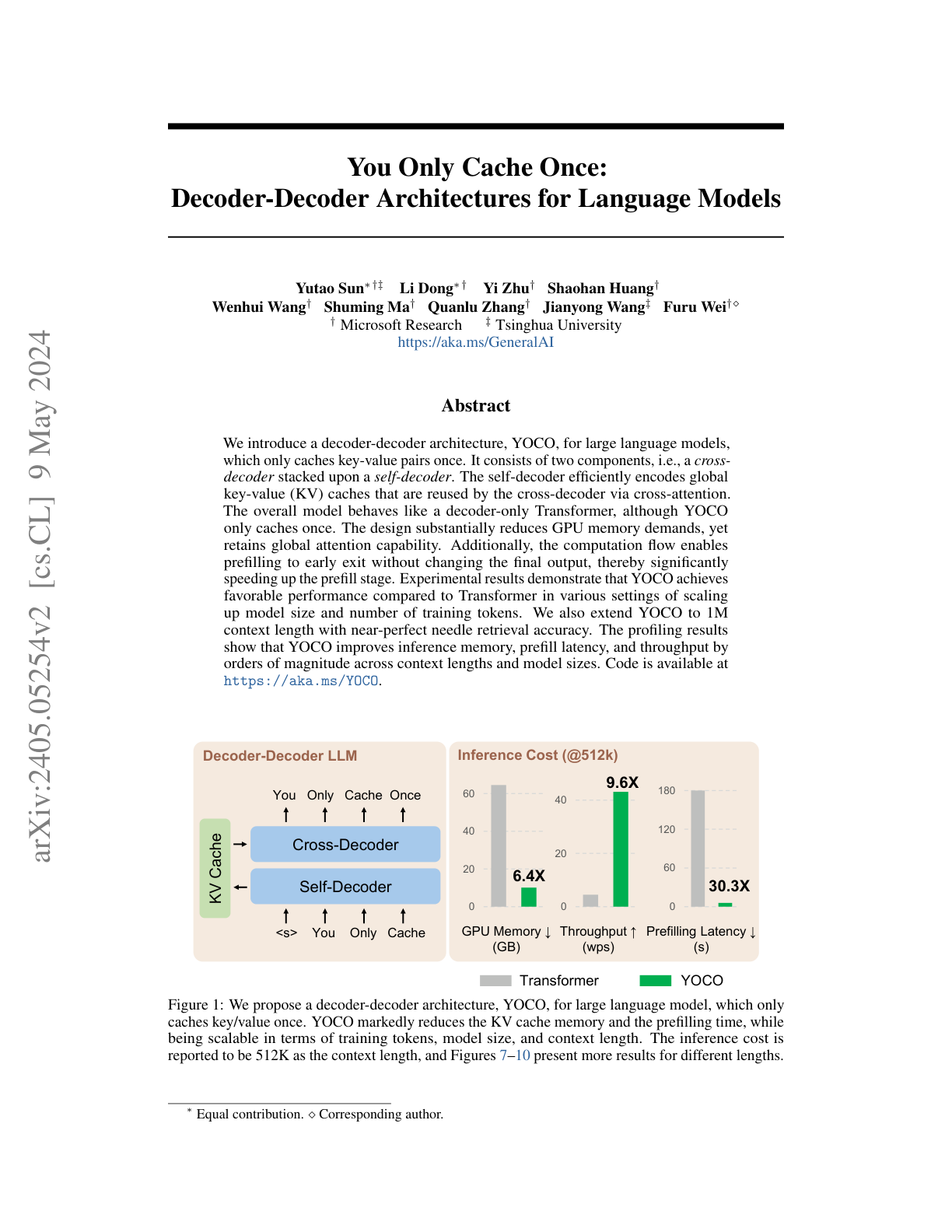
You Only Cache Once
a decoder-decoder LLM architecture that only caches key-value pairs once; it involves a cross-decoder stacked upon a self-decoder which efficiently encodes global key-value caches and the cross-encoder reuses the cache via cross-attention; this leads to a significant reduction in GPU memory use without sacrificing capabilities; achieves comparable performance to Transformer in various settings of scaling up model size and number of training token.
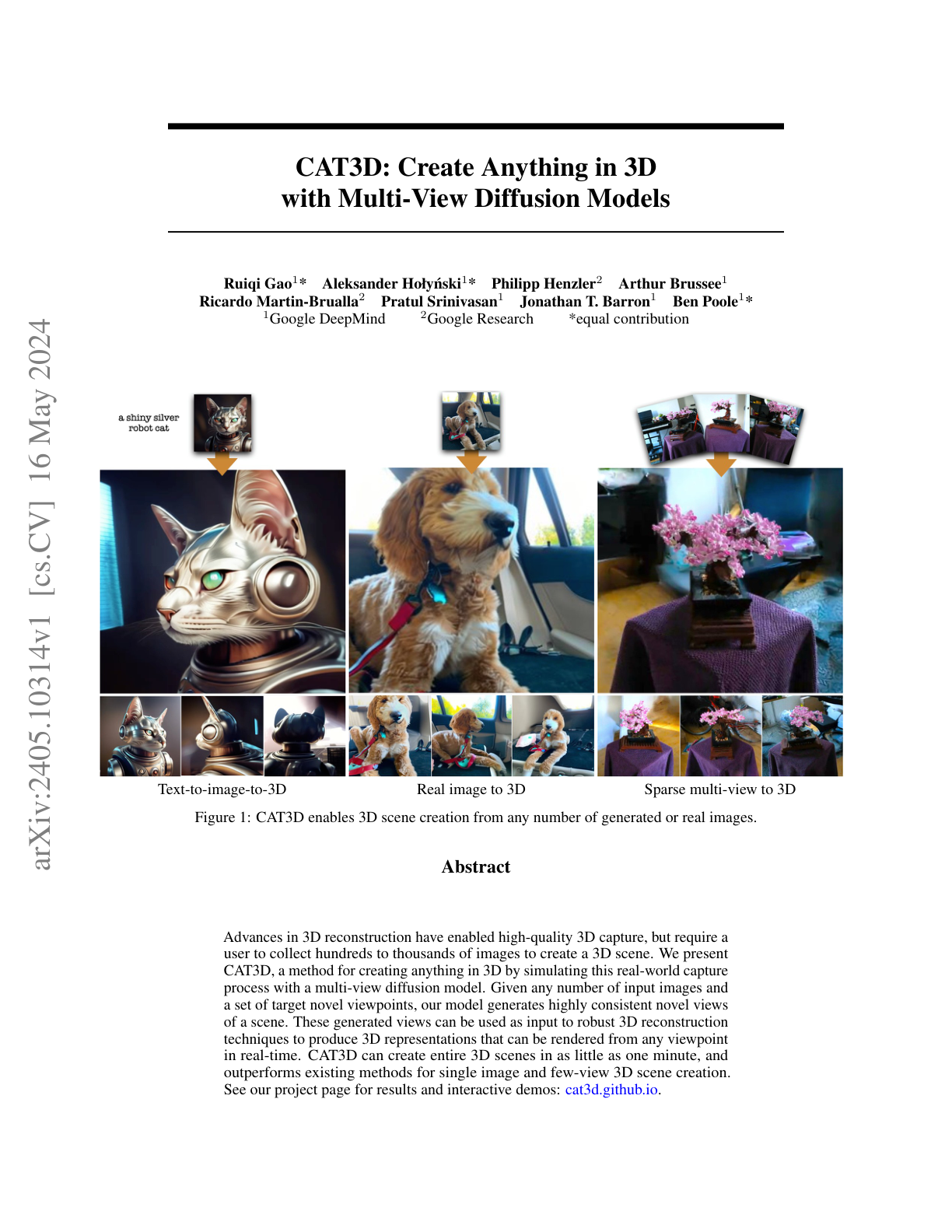
CAT3D
presents a method for creating anything in 3D by simulating the real-world capture process using a multi-view diffusion model; it can generate consistent novel views of a scene which can be used as input to 3D reconstruction techniques to produce 3D representation rendered in real-time; the scene from CAT3D can be generated in less than one minute and is reported to outperform existing methods on single image and few-view 3D scene creation tasks.

AlphaFold 3
releases a new state-of-the-art model for accurately predicting the structure and interactions of molecules; it can generate the 3D structures of proteins, DNA, RNA, and smaller molecules; the model is an improved version of the Evoformer module and then assembling its predictions using a diffusion network; the diffusion process starts with a cloud of atoms which converges to its final molecular structure.
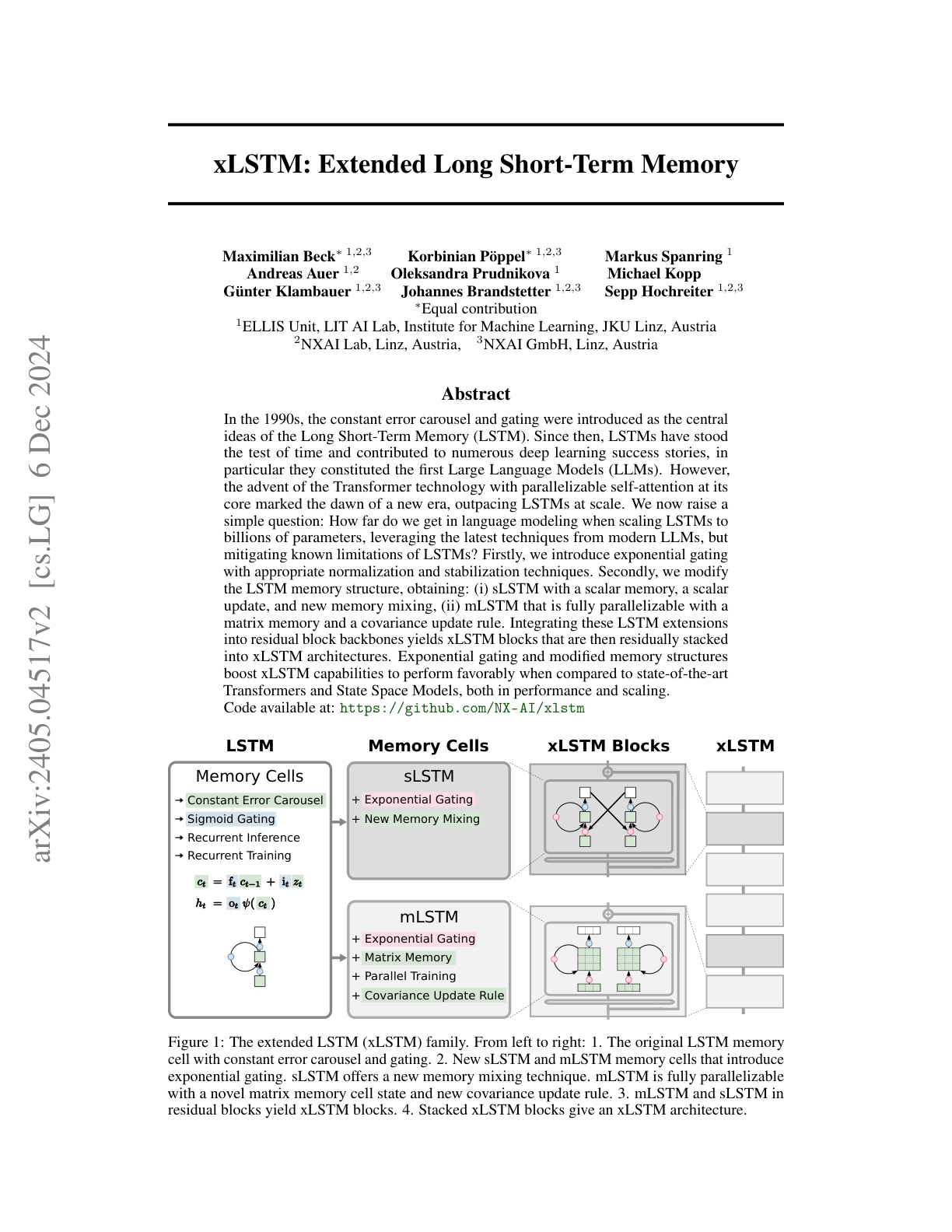
xLSTM: Extended Long Short-Term Memory
attempts to scale LSTMs to billions of parameters using the latest techniques from modern LLMs and mitigating common limitations of LSTMs; to enable LSTMs the ability to revise storage decisions, they introduce exponential gating and a new memory mixing mechanism (termed sLSTM); to enhance the storage capacities of LSTMs, they add a matrix memory and a covariance update rule (termed mLSTM); Both the sLSTM and xLSTM cells stabilize their exponential gates using the same technique; these extensions lead to xLSTM blocks that are residually stacked into the final xLSTM architecture; compared to Transformers, xLSTMs have a linear computation and constant memory complexity concerning the sequence length; the xLSTM architecture is shown to be efficient at handling different aspects of long context problems; achieves better validation perplexities when compared to different model classes like Transformers, SSMs, and RNNs.
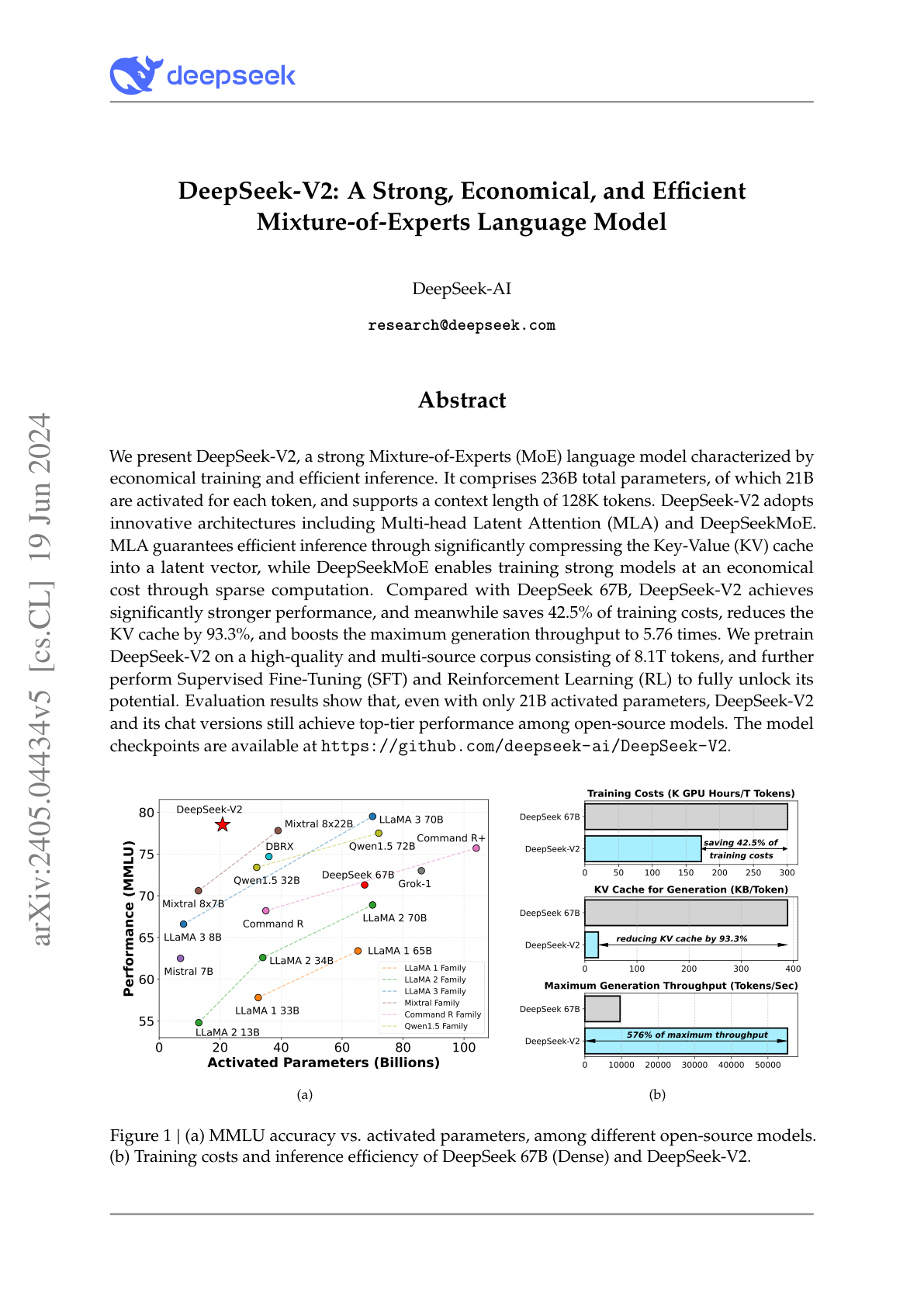
DeepSeek-V2
a strong MoE model comprising 236B parameters, of which 21B are activated for each token; supports a context length of 128K tokens and uses Multi-head Latent Attention (MLA) for efficient inference by compressing the Key-Value (KV) cache into a latent vector; DeepSeek-V2 and its chat versions achieve top-tier performance among open-source models.
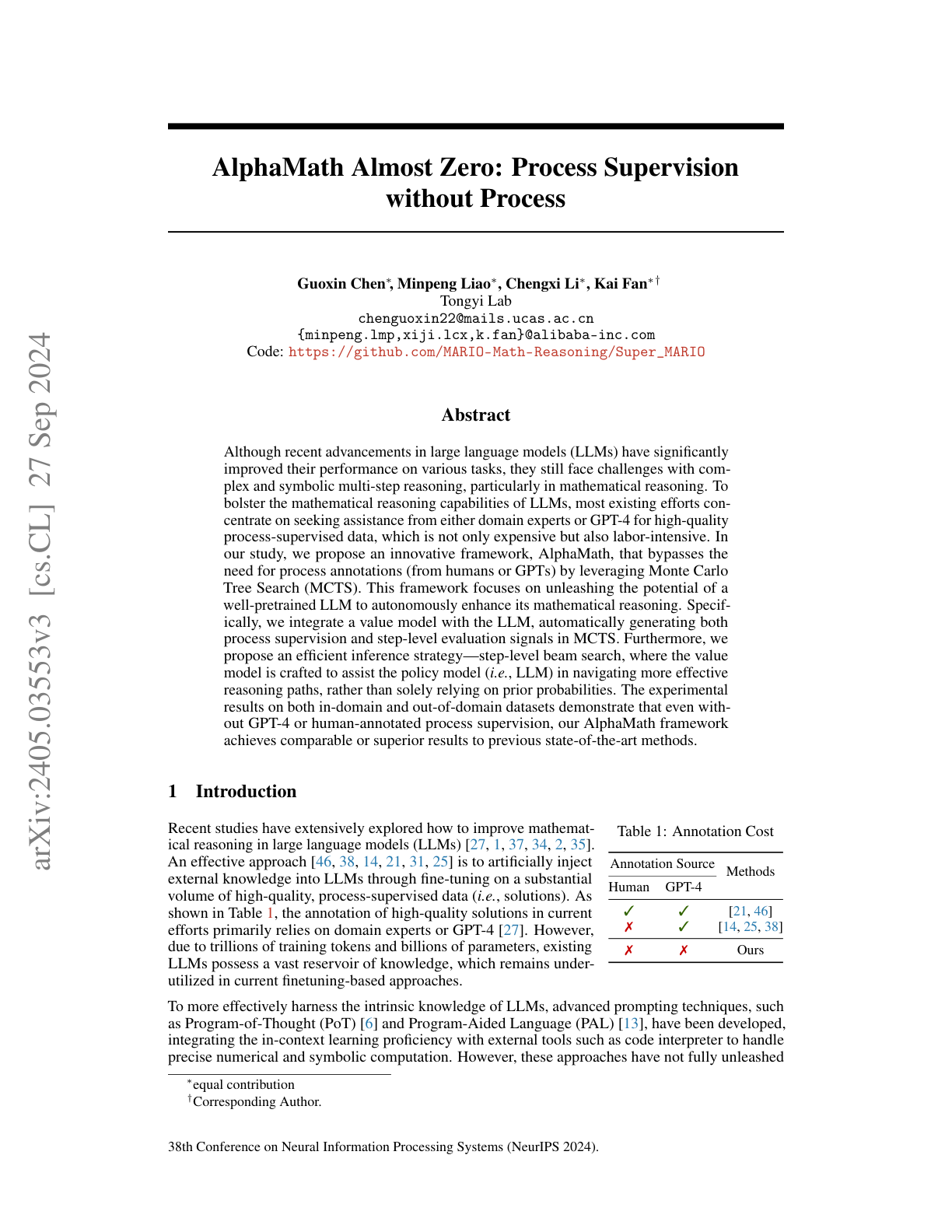
AlphaMath Almost Zero
enhances LLMs with Monte Carlo Tree Search (MCTS) to improve mathematical reasoning capabilities; the MCTS framework extends the LLM to achieve a more effective balance between exploration and exploitation; for this work, the idea is to generate high-quality math reasoning data without professional human annotations; the assumption is that a well pre-trained LLM already possesses mathematical knowledge to generate reasoning steps but needs better stimulation such as an advanced prompting or search strategy; unlike other methods such as Program-of-thought and Chain-of-thought, no solutions are required for the training data, just the math questions and the answers; the integration of LLMs, a value model, and the MCTS framework enables an effective and autonomous process of generating high-quality math reasoning data; the value model also aids the policy model in searching for effective solution paths.
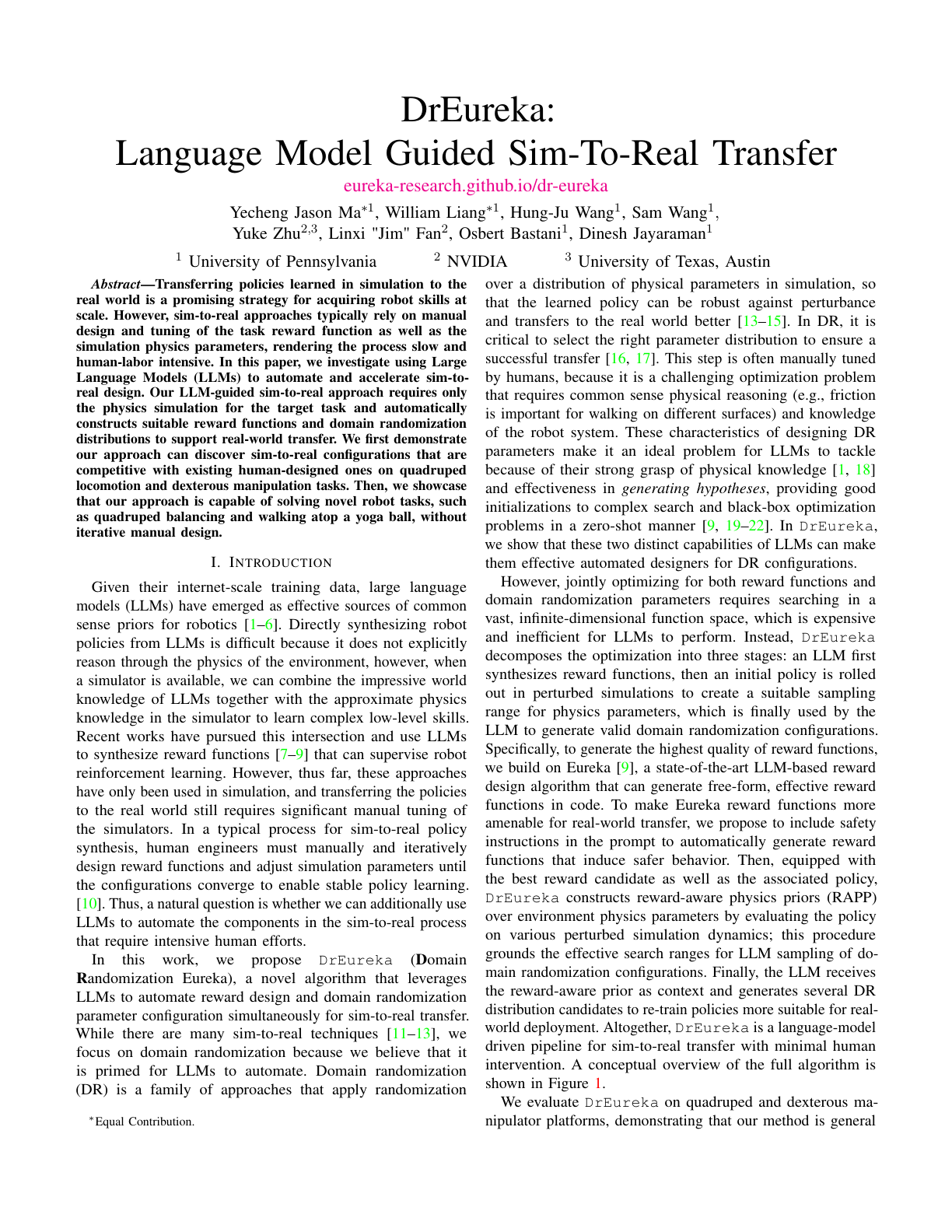
DrEureka: Language Model Guided Sim-To-Real Transfer
investigates using LLMs to automate and accelerate sim-to-real design; it requires the physics simulation for the target task and automatically constructs reward functions and domain randomization distributions to support real-world transfer; discovers sim-to-real configurations competitive with existing human-designed ones on quadruped locomotion and dexterous manipulation tasks.
Consistency LLMs
proposes efficient parallel decoders that reduce inference latency by decoding n-token sequence per inference step; the inspiration for this work comes from the human's ability to form complete sentences before articulating word by word; this process can be mimicked and learned through fine-tuning pre-trained LLMs to perform parallel decoding; it is trained to perform parallel decoding by mapping randomly initialized n-token sequences to the same result yielded by autoregressive (AR) decoding in as few steps as possible; a consistency loss helps with multiple-token prediction and a standard AR loss prevents deviation from the target LLM and ensures generation quality. Shows 2.4x to 3.4x improvements in generation speed while preserving the generation quality.