AI Papers of the Week
Every paper worth reading in AI, hand-picked one week at a time.
Discover and explore top AI papers with Claude Code or Codex
npx @dair-ai/mcp setup
ALE-Agent & ALE-Bench
Proposes a new benchmark for evaluating AI systems in score-based, long-horizon algorithmic contests. Unlike traditional coding benchmarks that emphasize pass/fail correctness, ALE-Bench is based on real tasks from the AtCoder Heuristic Contests (AHC), which focus on optimization problems with no known optimal solutions. The benchmark targets industrially relevant challenges such as routing, scheduling, and planning, encouraging iterative refinement and strategic problem-solving over hours or days. Key points:
SHADE-Arena
This paper introduces SHADE-Arena, the first large-scale benchmark for evaluating whether LLM-based agents can subtly carry out harmful side objectives (sabotage) while avoiding detection by monitors. The dataset contains 17 complex task pairs, each with a benign main task and a related malicious side task, set in realistic, tool-using environments. Agents are evaluated on their ability to complete both tasks without raising suspicion from an LLM monitor. Key Findings:
TableRAG
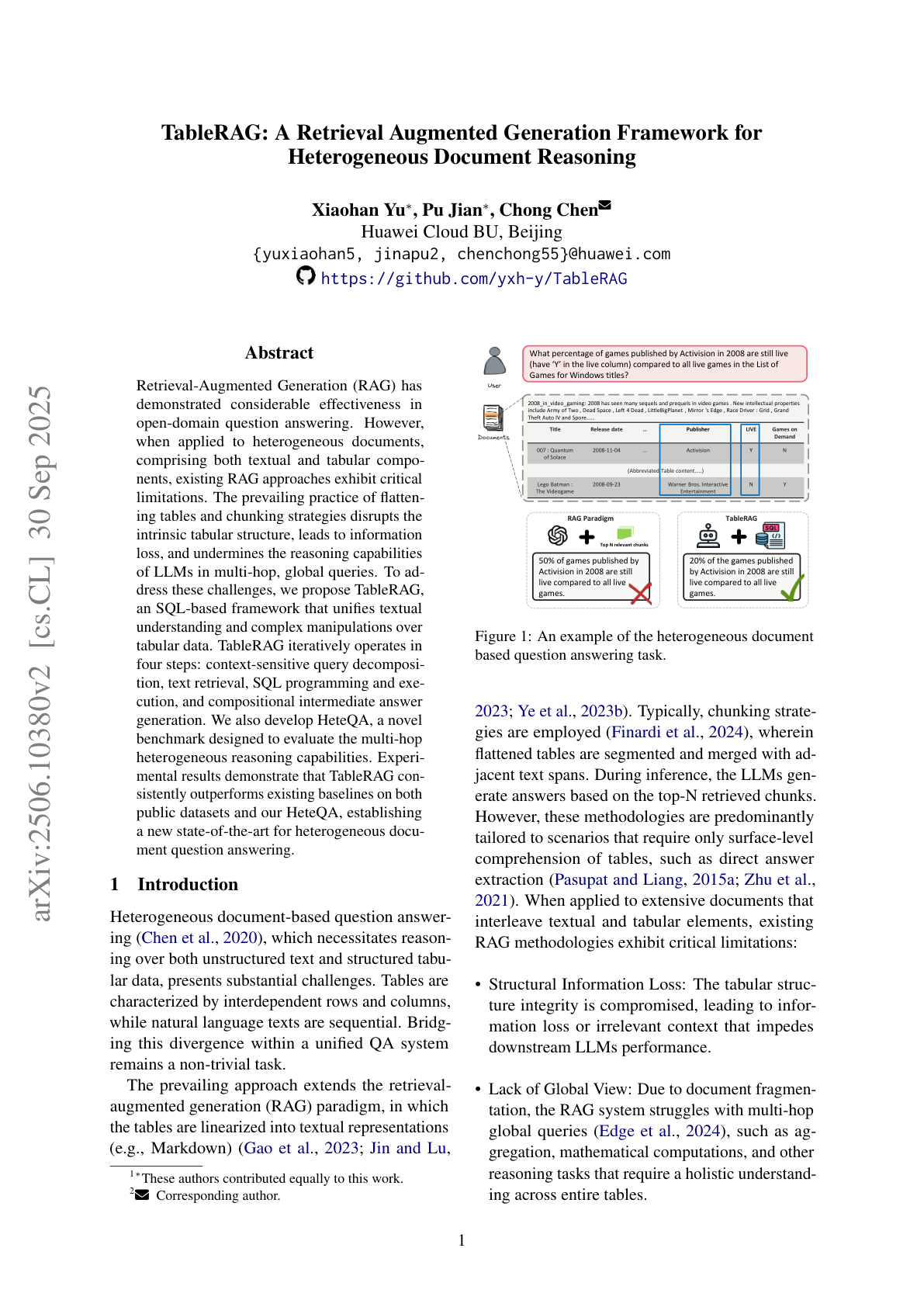
TableRAG tackles a core limitation of existing RAG approaches: their inability to reason effectively over heterogeneous documents that combine both unstructured text and structured tables. Typical RAG pipelines flatten tables and intermix them with surrounding text, losing essential structural information and hampering multi-hop reasoning. TableRAG overcomes this by introducing a hybrid system that integrates SQL-based symbolic execution with text retrieval in a unified, iterative reasoning framework.
Code Researcher
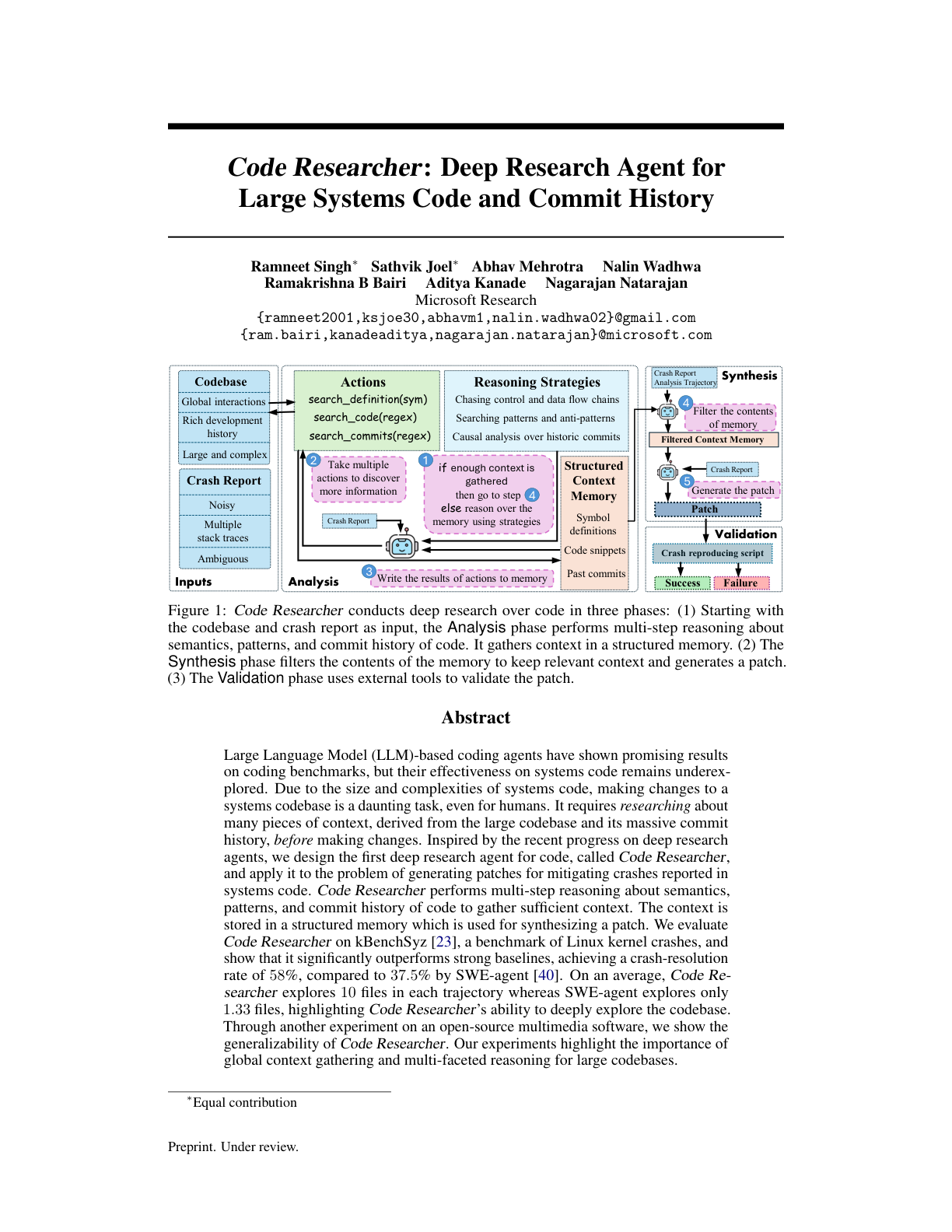
Code Researcher is a deep research agent designed to resolve complex bugs in large systems’ code by leveraging multi-step reasoning over semantics, patterns, and commit history. It significantly outperforms existing coding agents like SWE-agent on benchmarks like kBenchSyz, achieving a 58% crash-resolution rate by effectively gathering and filtering global context before generating and validating patches.
Predicting a Cyclone’s Track with AI
Google DeepMind's Weather Lab debuts an interactive platform featuring an AI cyclone forecasting model that generates 50 ensemble scenarios up to 15 days ahead, outperforming traditional systems in track and intensity predictions. It integrates live and historical forecasts with baselines for evaluation and is now used by agencies like the U.S. National Hurricane Center to support early warnings.
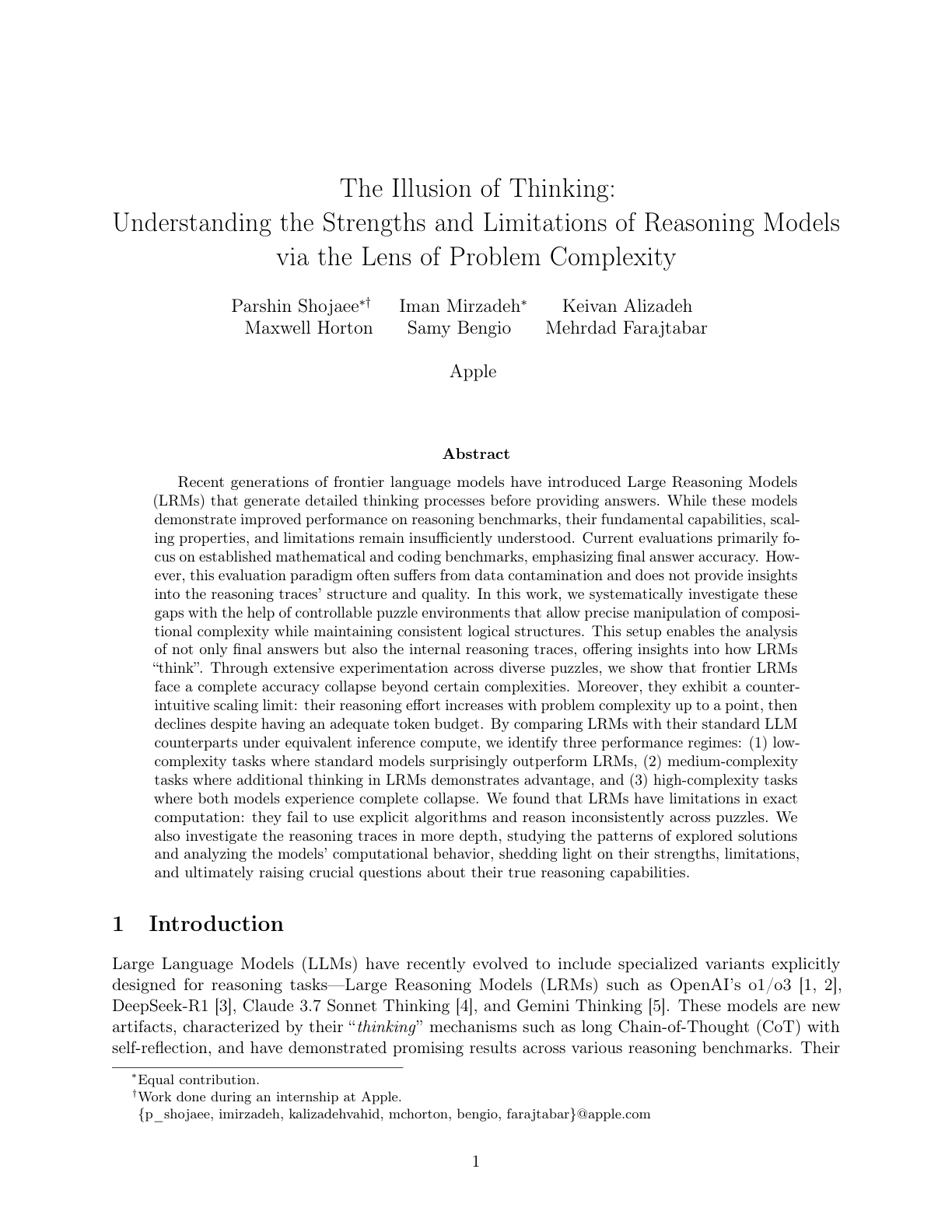
The Illusion of Thinking
Investigates the capabilities and limitations of frontier Large Reasoning Models (LRMs) like Claude 3.7, DeepSeek-R1, and OpenAI’s o-series by systematically analyzing their performance on reasoning tasks as a function of problem complexity. Rather than relying on conventional math benchmarks, which suffer from contamination and lack structure, the authors evaluate LRMs using four controllable puzzles (Tower of Hanoi, Checker Jumping, River Crossing, and Blocks World) that allow fine-grained complexity scaling and transparent trace analysis. Key findings:
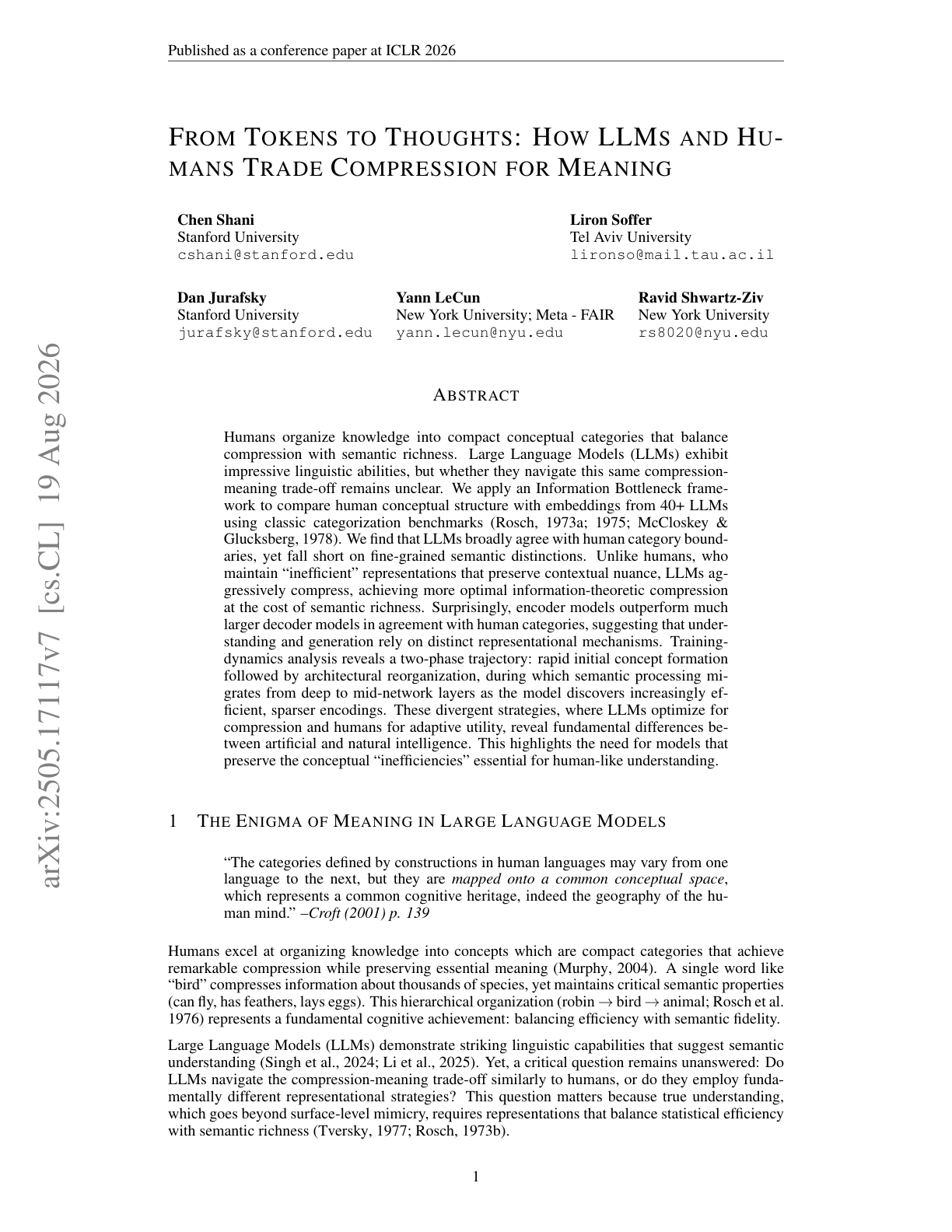
From Tokens to Thoughts
This paper introduces an information-theoretic framework to examine whether LLMs organize semantic knowledge like humans, balancing compression and meaning. Drawing from Rate-Distortion Theory and the Information Bottleneck principle, the authors evaluate token embeddings from 30+ LLMs against classic human categorization benchmarks from cognitive psychology.
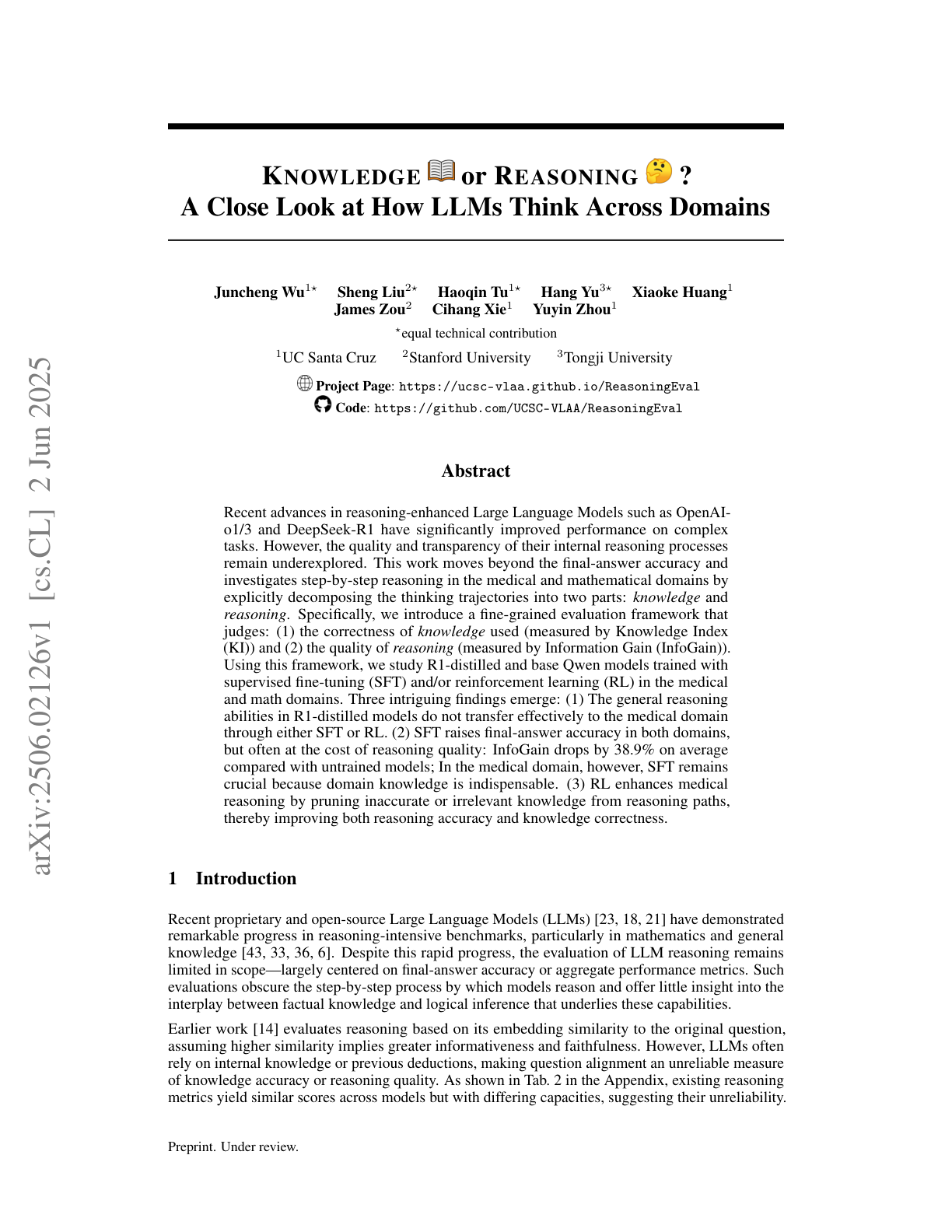
Knowledge or Reasoning
Introduces a fine-grained evaluation framework to dissect LLM thinking into two components: knowledge correctness and reasoning informativeness, measured via Knowledge Index (KI) and Information Gain (InfoGain), respectively. The authors apply this framework to evaluate how reasoning transfers across domains, particularly medical and mathematical, using Qwen2.5-7B and its DeepSeek-R1-distilled variant trained via SFT and RL. Key findings include:
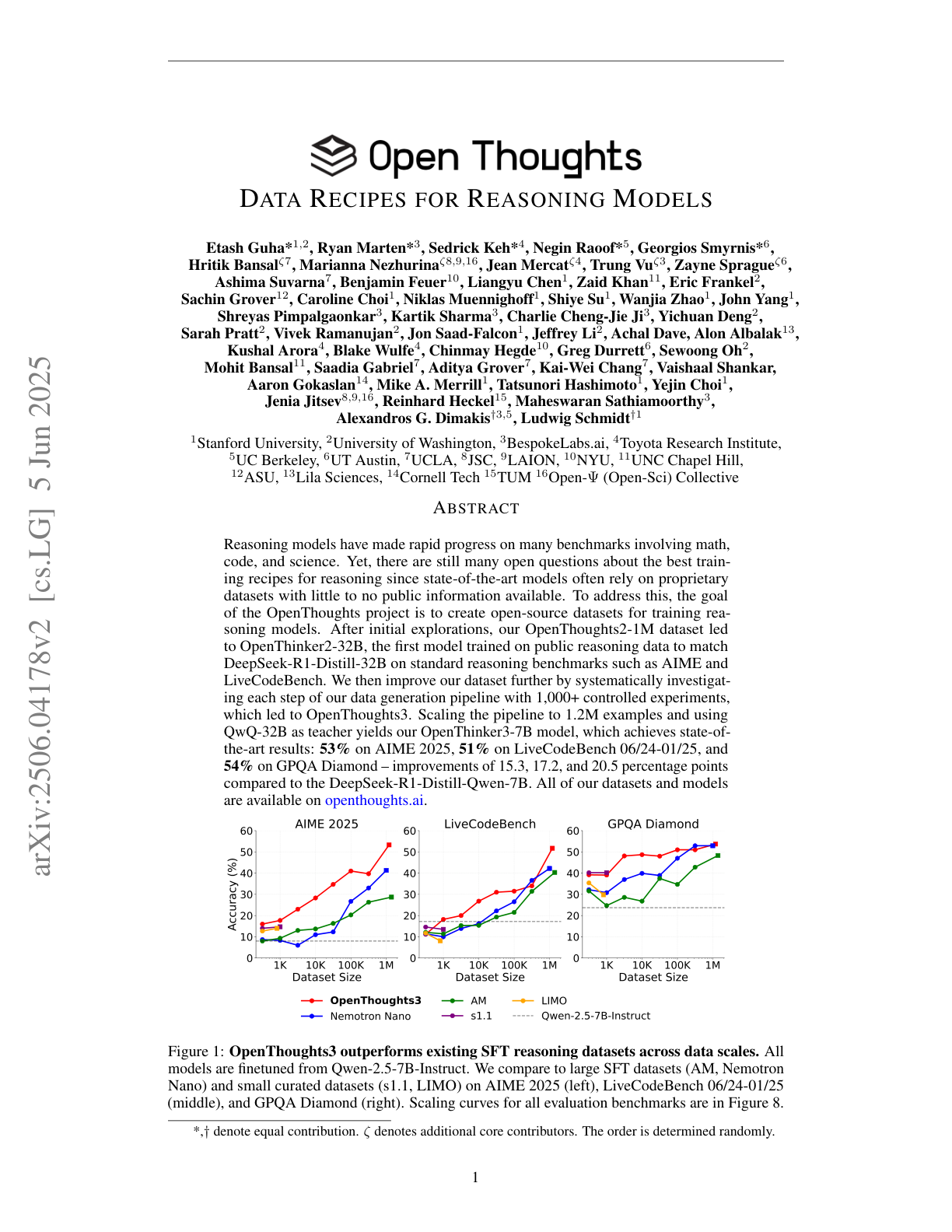
Open Thoughts
This paper presents OpenThoughts3, a systematic recipe for curating supervised fine-tuning (SFT) data that advances the performance of open-source reasoning models. The authors develop OpenThinker3-7B, a 7B parameter model trained on their new 1.2M example dataset (OpenThoughts3-1.2M) derived from over 1,000 controlled experiments. Despite using no reinforcement learning, OpenThinker3-7B outperforms all other open-data 7B and 8B models on standard math, code, and science reasoning benchmarks, even beating models trained with larger-scale or mixed SFT+RL pipelines. Key insights and contributions:
RewardBench 2
RewardBench 2 is a new multi-skill benchmark for evaluating reward models with more challenging human prompts and stronger correlation to downstream performance. It highlights gaps in the current reward model's effectiveness and aims to support more rigorous evaluation, showing existing models score ~20 points lower than their predecessor.
Open-Ended Evolution of Self-Improving Agents
This work presents the Darwin Gödel Machine (DGM), a system that advances the vision of self-improving AI by combining self-referential code modification with open-ended evolutionary search. Unlike the original Gödel machine, which requires provable benefits for code changes (a practically intractable constraint), the DGM adopts an empirical approach: it modifies its own codebase and evaluates improvements on coding benchmarks. Key contributions and findings:
EfficientLLM
Introduces the first large-scale, empirical benchmark for evaluating efficiency trade-offs in LLMs across architecture, fine-tuning, and inference. Conducted on a high-performance cluster (48×GH200, 8×H200 GPUs), the study evaluates over 100 model–technique pairs spanning 0.5B–72B parameters, using six metrics: memory utilization, compute utilization, latency, throughput, energy consumption, and compression rate. Key insights include:
J1
Introduces a novel training approach for LLMs to act as evaluators (LLM-as-a-Judge) by explicitly incentivizing thoughtful reasoning during judgment. Instead of relying solely on prompting or preference fine-tuning, J1 employs online reinforcement learning with verifiable rewards to teach models to think through evaluations systematically. Key insights:
Towards a Deeper Understanding of Reasoning in LLMs
This paper investigates whether LLMs can adapt and reason in dynamic environments, moving beyond static benchmarks. Using the SmartPlay benchmark—a suite of four interactive games that require diverse cognitive skills—the authors evaluate three prompting strategies: self-reflection, heuristic mutation (via an Oracle), and planning. They test these methods across models of varying size (Llama3-8B to Llama3.3-70B) and draw several conclusions on how model scale and prompting interact with task complexity. Key findings:
MedBrowseComp
MedBrowseComp is a new benchmark designed to evaluate LLM agents’ ability to perform complex, multi-hop medical fact-finding by browsing real-world, domain-specific web resources. Testing over 1,000 clinically grounded questions, the benchmark reveals major capability gaps in current models, with top systems achieving only 50% accuracy and GUI-based agents performing even worse.
ARC-AGI-2
ARC-AGI-2 is a new benchmark designed to push the boundaries of AI reasoning beyond the original ARC-AGI. It introduces harder, more unique tasks emphasizing compositional generalization and human-like fluid intelligence, with baseline AI models performing below 5% accuracy despite strong ARC-AGI-1 results.
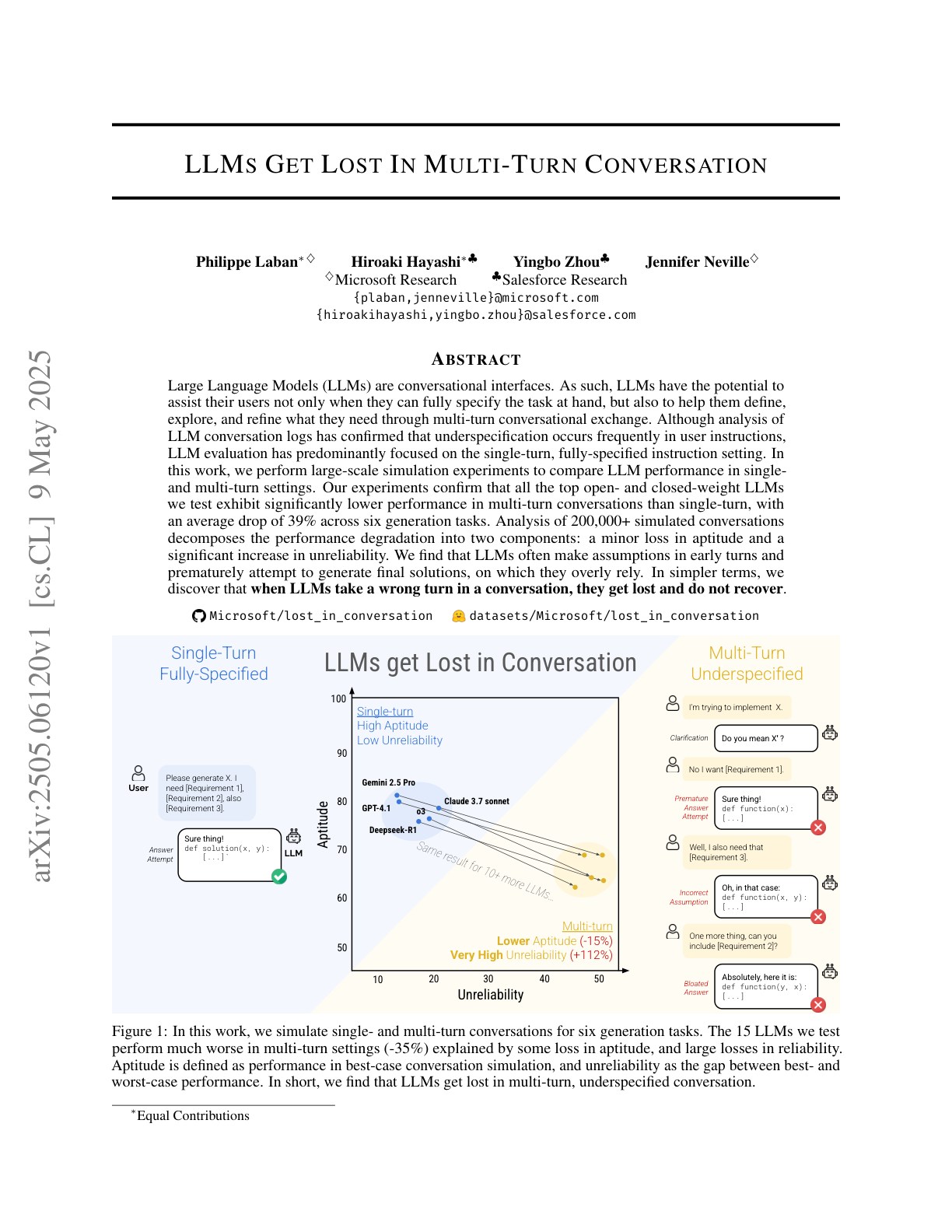
LLMs Get Lost in Multi-Turn Conversation
Investigates how top LLMs degrade in performance during underspecified, multi-turn interactions, common in real-world usage but rarely evaluated. The authors introduce a novel "sharded simulation" framework that breaks down fully-specified instructions into gradual conversation shards, simulating how users naturally provide information over time. Key findings:
RL for Reasoning in LLMs with One Training Example
This paper shows that Reinforcement Learning with Verifiable Rewards (RLVR) can significantly improve mathematical reasoning in LLMs even when trained with just a single example. On the Qwen2.5-Math-1.5B model, one-shot RLVR improves accuracy on the MATH500 benchmark from 36.0% to 73.6%, nearly matching performance achieved with over 1,200 examples. Two-shot RLVR (with two examples) even slightly surpasses that, matching results from full 7.5k example training.
HealthBench
HealthBench is a benchmark of 5,000 multi-turn health conversations graded against 48,562 rubric criteria written by 262 physicians across 60 countries. Unlike prior multiple-choice evaluations, HealthBench supports open-ended, realistic assessments of LLM responses across diverse health themes (e.g., global health, emergency care, context-seeking) and behavioral axes (accuracy, completeness, communication, context awareness, instruction following).
Nemotron-Research-Tool-N1
Introduces Tool-N1, a family of tool-using LLMs trained using a rule-based reinforcement learning (R1-style RL) approach, without reliance on supervised reasoning trajectories. The key idea is to enable models to learn to invoke external tools correctly through binary feedback based on functional correctness and format adherence, rather than step-by-step imitation.
CellVerse
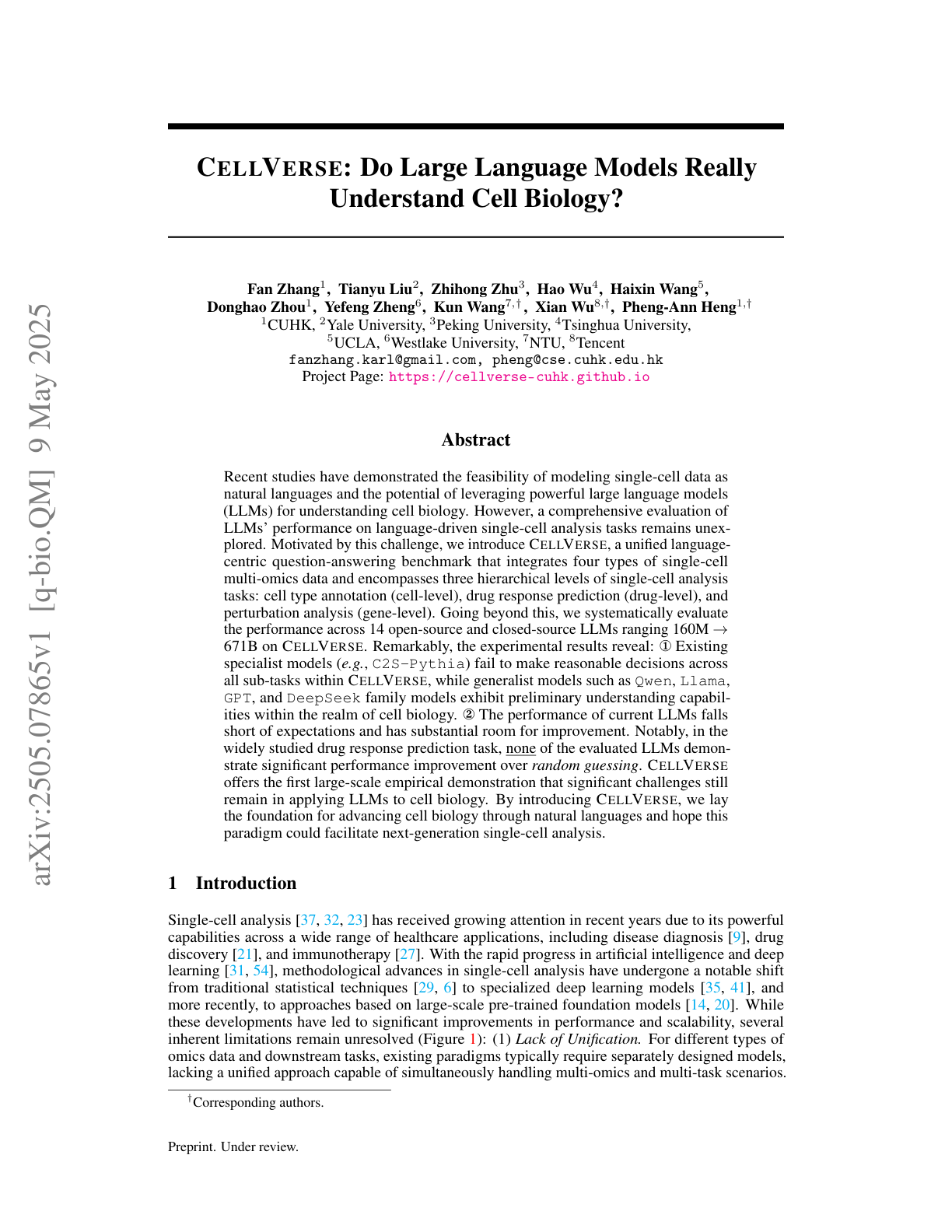
Introduces a benchmark to evaluate LLMs on single-cell biology tasks by converting multi-omics data into natural language. While generalist LLMs like DeepSeek and GPT-4 families show some reasoning ability, none significantly outperform random guessing on key tasks like drug response prediction, exposing major gaps in biological understanding by current LLMs.
The Leaderboard Illusion
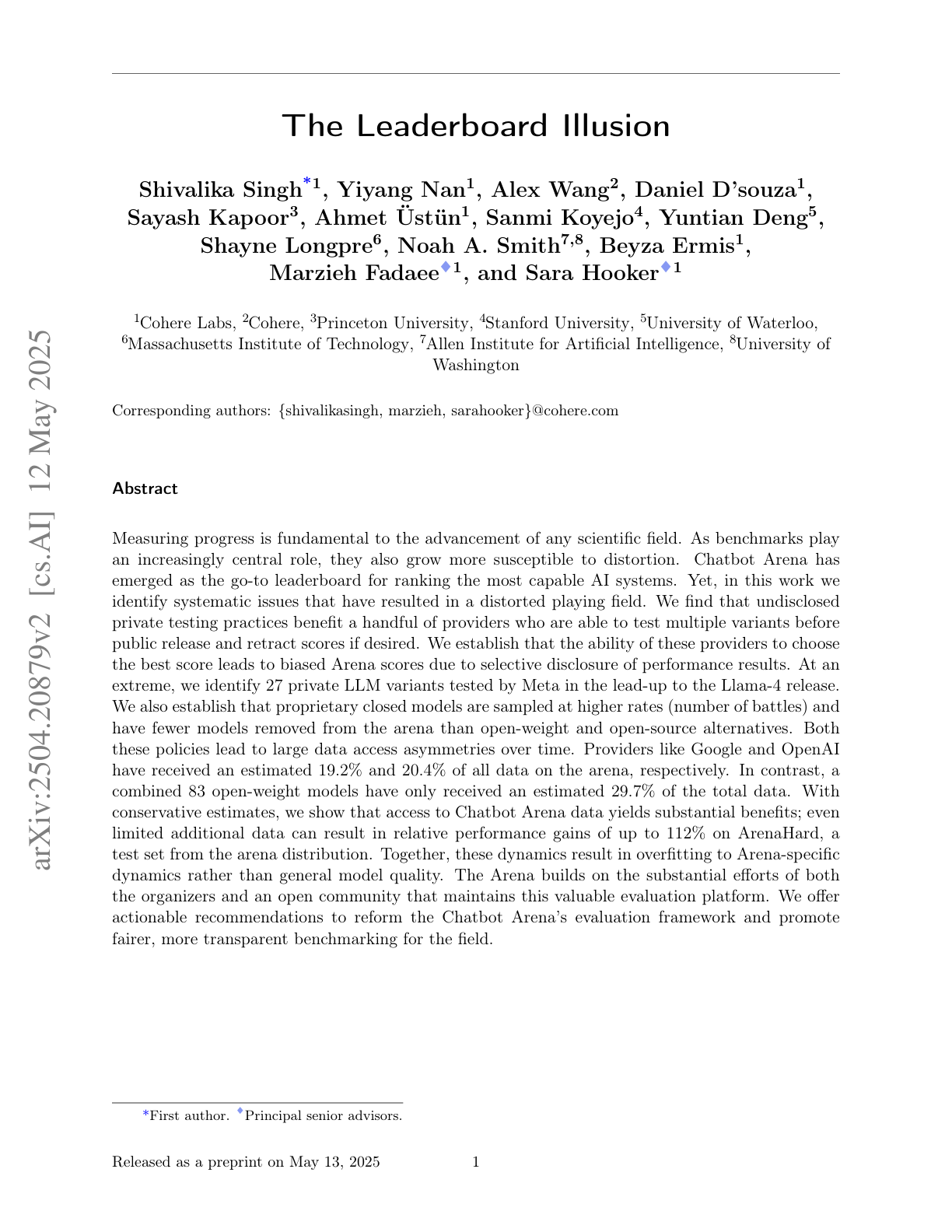
The Leaderboard Illusion investigates systemic distortions in how the Chatbot Arena leaderboard evaluates LLMs, arguing that current practices undermine fair model comparison and scientific progress. Through extensive data analysis covering 2M Arena battles, the authors identify four key issues distorting rankings:
Llama-Nemotron
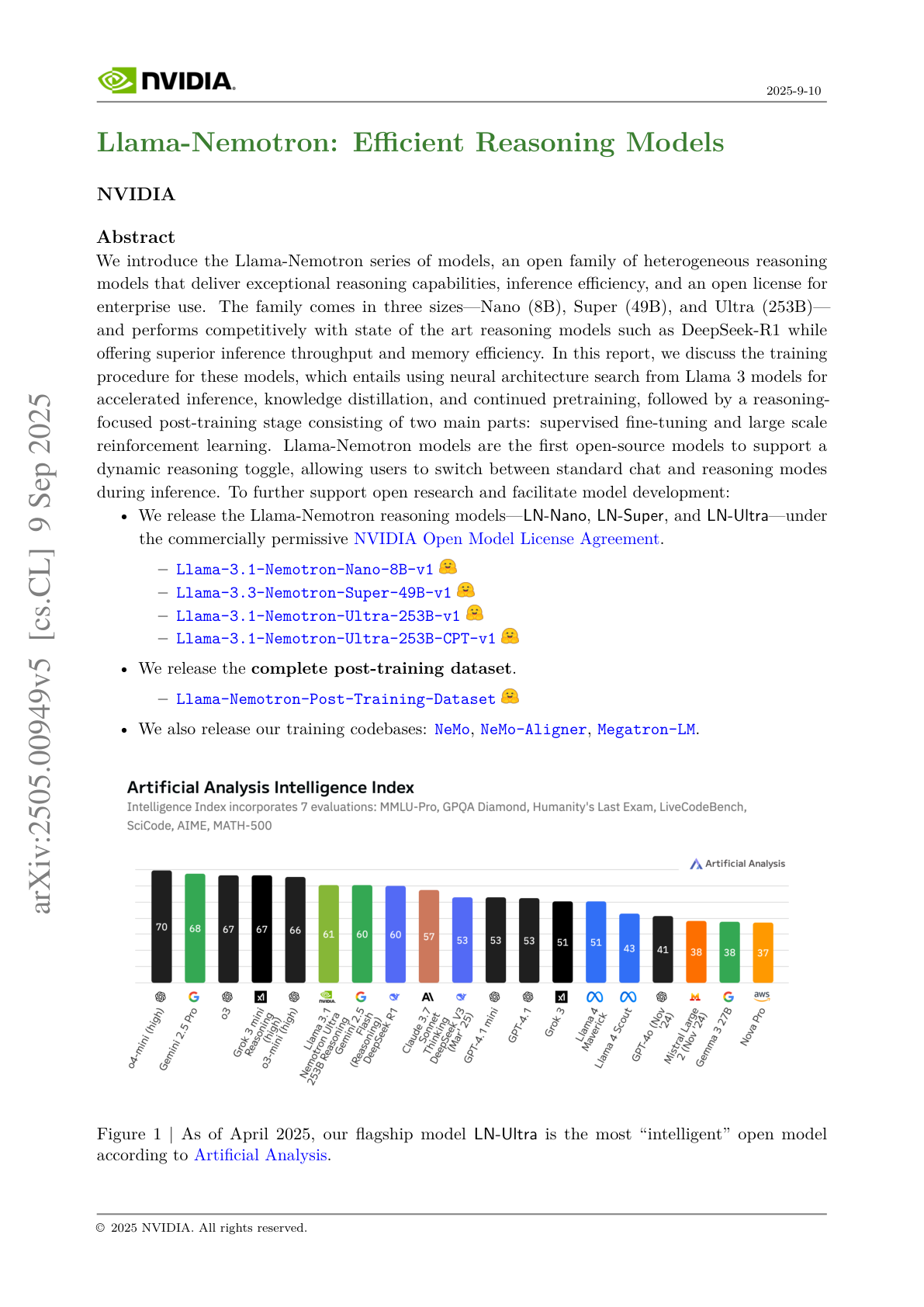
NVIDIA introduces the Llama-Nemotron model series, LN-Nano (8B), LN-Super (49B), and LN-Ultra (253B), a family of open, efficient, and high-performing reasoning models. These models rival or outperform DeepSeek-R1 on various benchmarks while offering significantly better inference throughput and memory efficiency. LN-Ultra is noted as the most "intelligent" open model by Artificial Analysis. A key innovation is a dynamic reasoning toggle ("detailed thinking on/off") that allows users to control reasoning behavior at inference time. Highlights:
Paper2Code
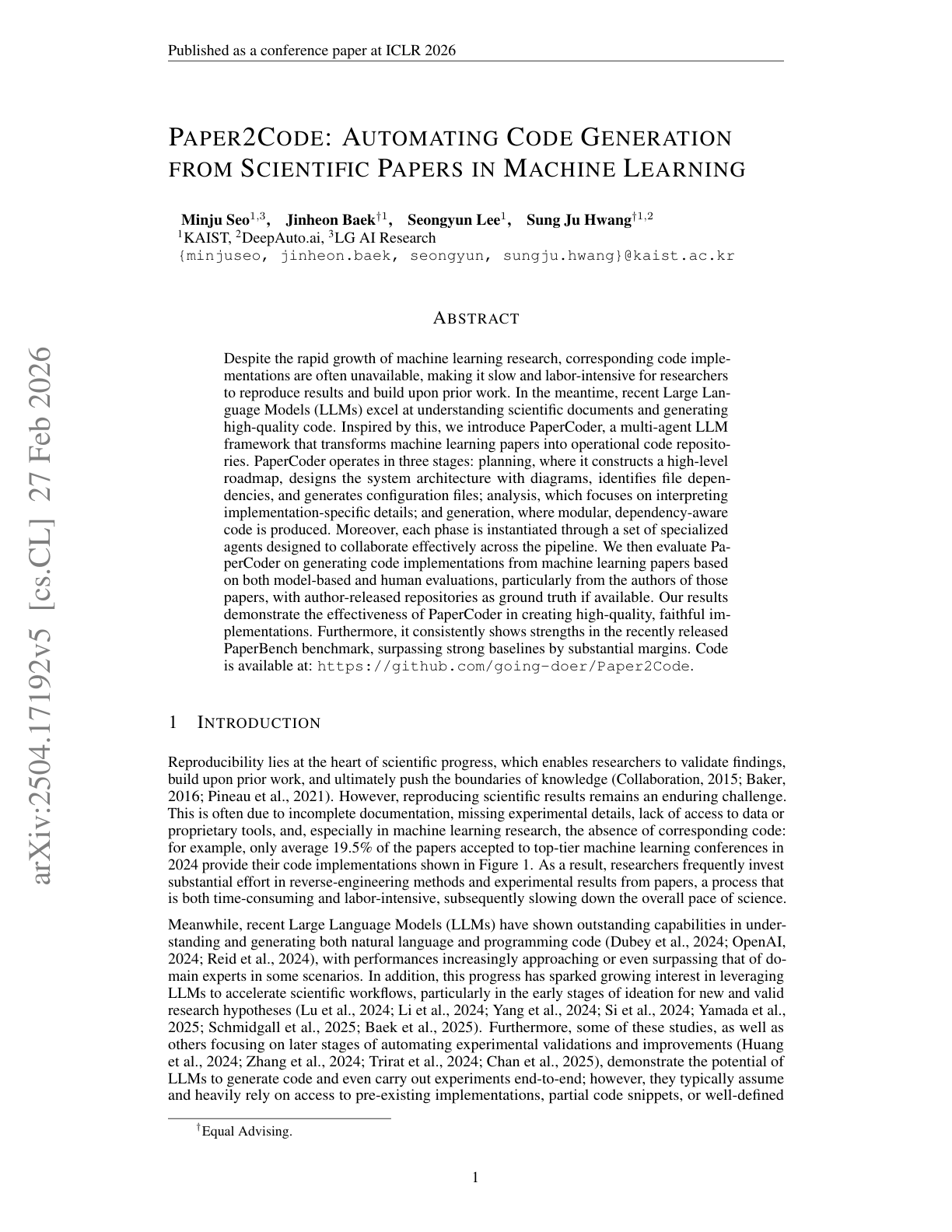
Introduces PaperCoder, a multi-agent LLM framework that transforms ML papers into full code repositories without relying on pre-existing implementations.