AI Papers of the Week
Every paper worth reading in AI, hand-picked one week at a time.
Discover and explore top AI papers with Claude Code or Codex
npx @dair-ai/mcp setup
Explore Theory-of-Mind
introduces ExploreToM, a framework that uses A* search to generate diverse, complex theory-of-mind scenarios that reveal significant limitations in current LLMs' social intelligence capabilities; testing showed even advanced models like GPT-4 and Llama-3 perform poorly (as low as 5% accuracy) on these challenging scenarios, despite their strong performance on simpler benchmarks; fine-tuning on ExploreToM data improved performance on existing benchmarks by 27 points.
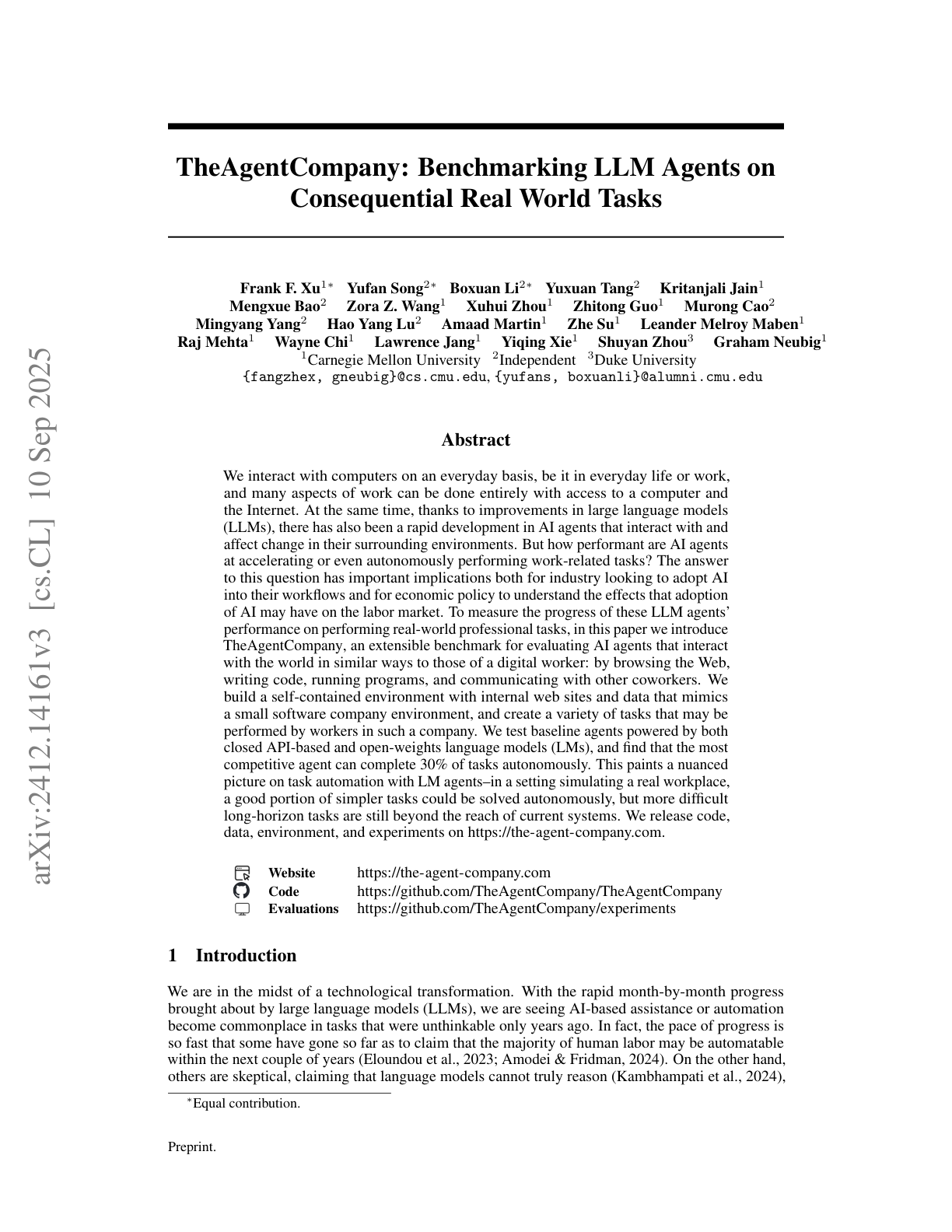
TheAgentCompany
a new benchmark for evaluating AI agents on real-world professional tasks in a simulated software company environment; tasks span multiple professional roles including software engineering, project management, finance, and HR; when tested with various LLMs, including both API-based models like Claude-3.5-Sonnet and open-source models like Llama 3.1, the results show the current limitations of AI agents. The best-performing model, Claude-3.5-Sonnet, achieved only a 24% success rate on completing tasks fully while scoring 34.4% when accounting for partial progress.
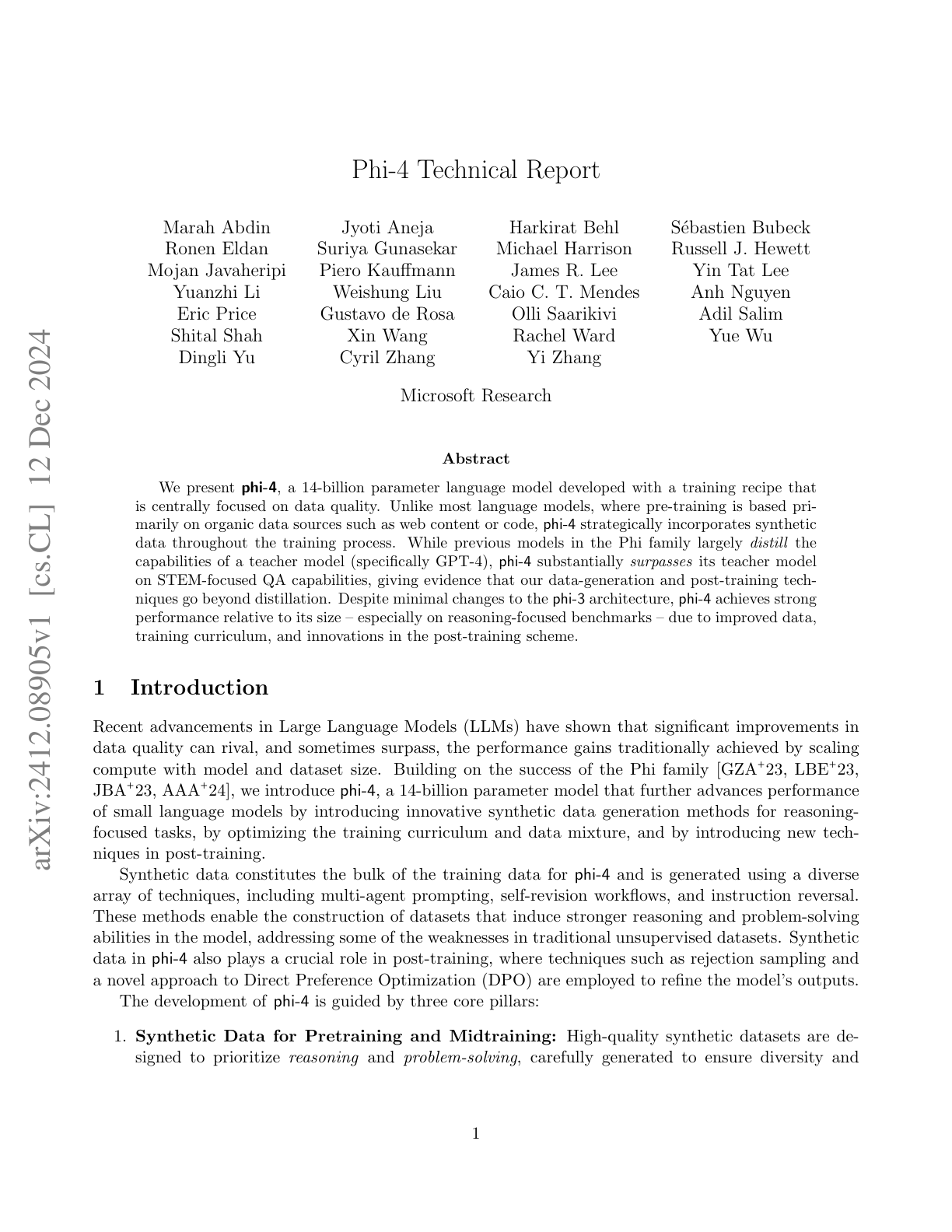
Phi-4 Technical Report
presents phi-4, a 14B model that surpasses its teacher model on STEM-QA capabilities. It also reports strong performance on reasoning-focused benchmarks due to improved data, training curriculum, and innovations in the post-training scheme.
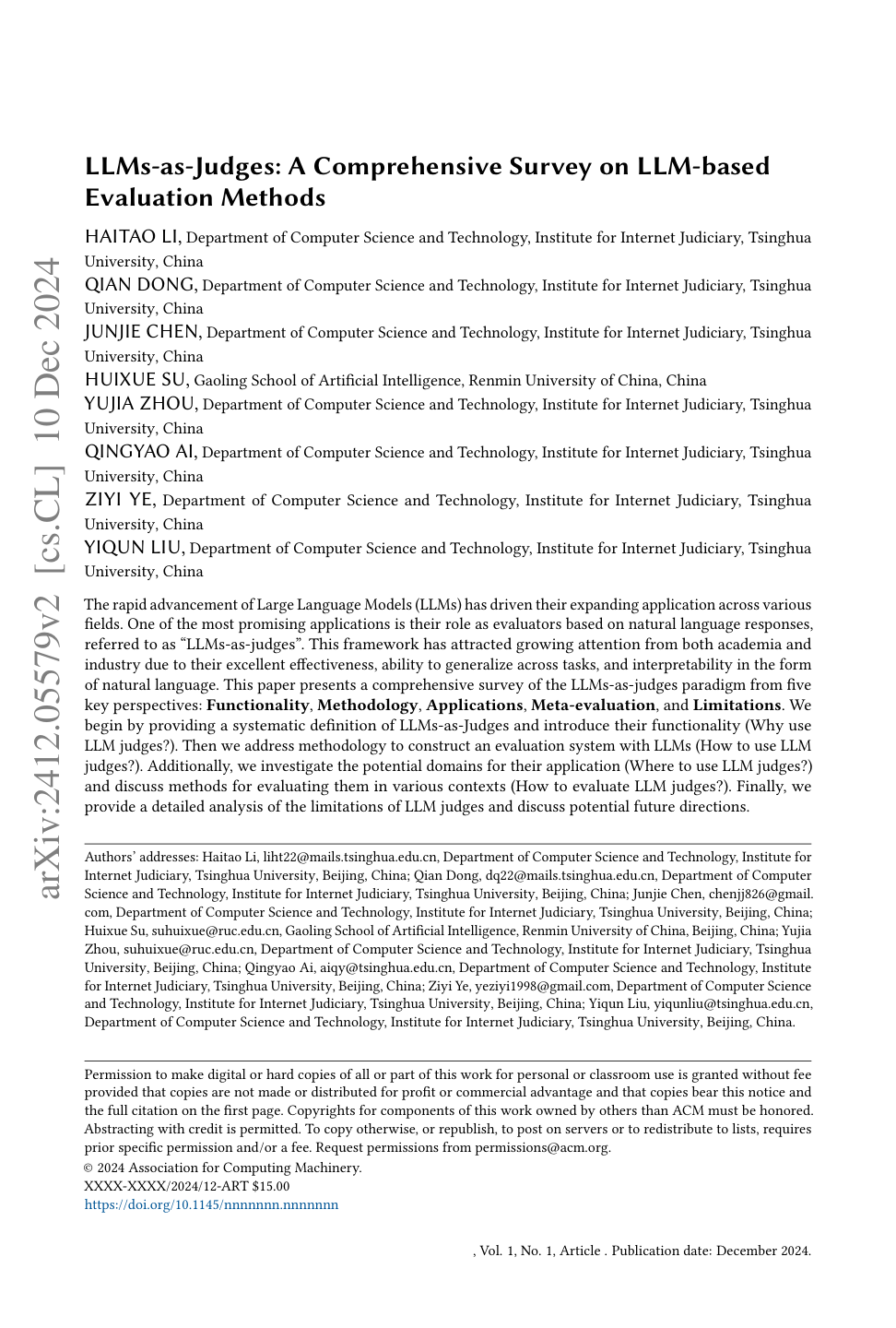
A Survey on LLMs-as-Judges
presents a comprehensive survey of the LLMs-as-judges paradigm from five key perspectives: Functionality, Methodology, Applications, Meta-evaluation, and Limitations.
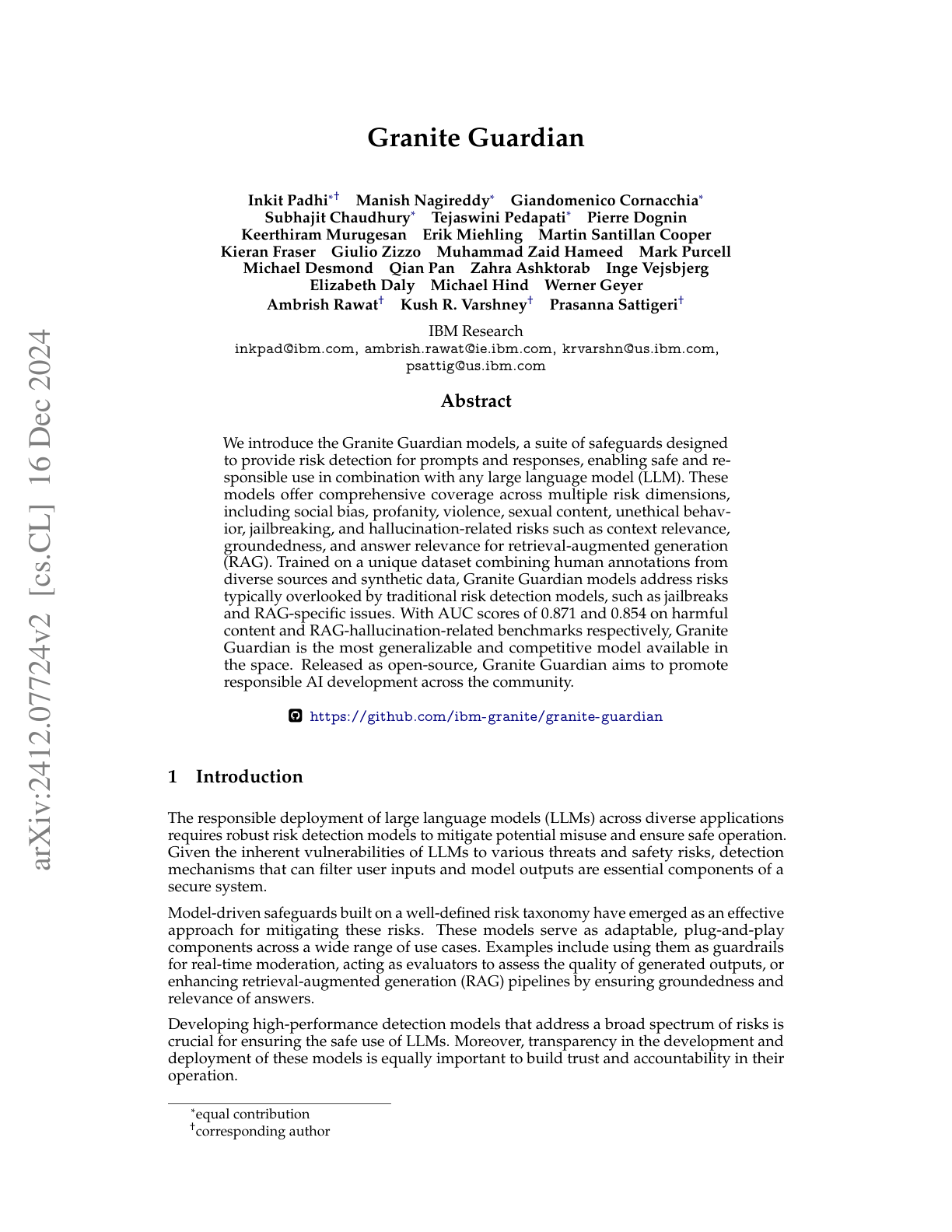
Granite Guardian
IBM open-sources Granite Guardian, a suite of safeguards for risk detection in LLMs; the authors claim that With AUC scores of 0.871 and 0.854 on harmful content and RAG-hallucination-related benchmarks respectively, Granite Guardian is the most generalizable and competitive model available in the space.
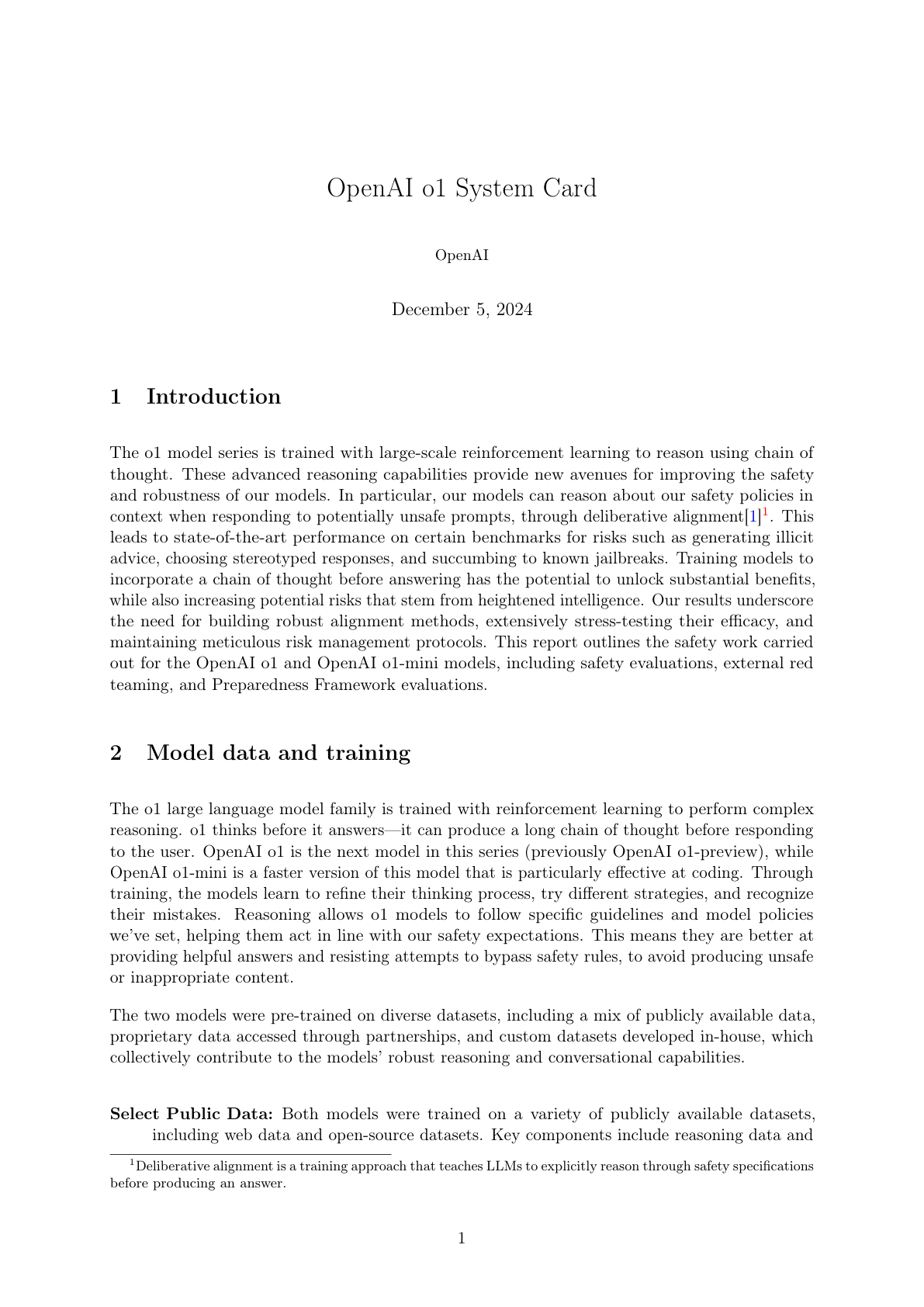
OpenAI o1
a model series trained with large-scale reinforcement learning to reason using chain of thought; o1 shows significant improvements across benchmarks related to math, code, and science; o1 is claimed to be 50% faster in generating thinking steps than o1-preview; results demonstrate that o1 is significantly better at reasoning tasks and produces more comprehensive and reliable responses.

GenCast
an ML weather prediction model that outperforms the world's leading operational weather forecasting system (ECMWF's ENS) in both accuracy and speed; it generates probabilistic 15-day global weather forecasts for over 80 variables in just 8 minutes, with better skill than ENS on 97.2% of evaluated targets; GenCast produces an ensemble of forecasts that better capture uncertainty and predict extreme weather events, tropical cyclone tracks, and wind power production.
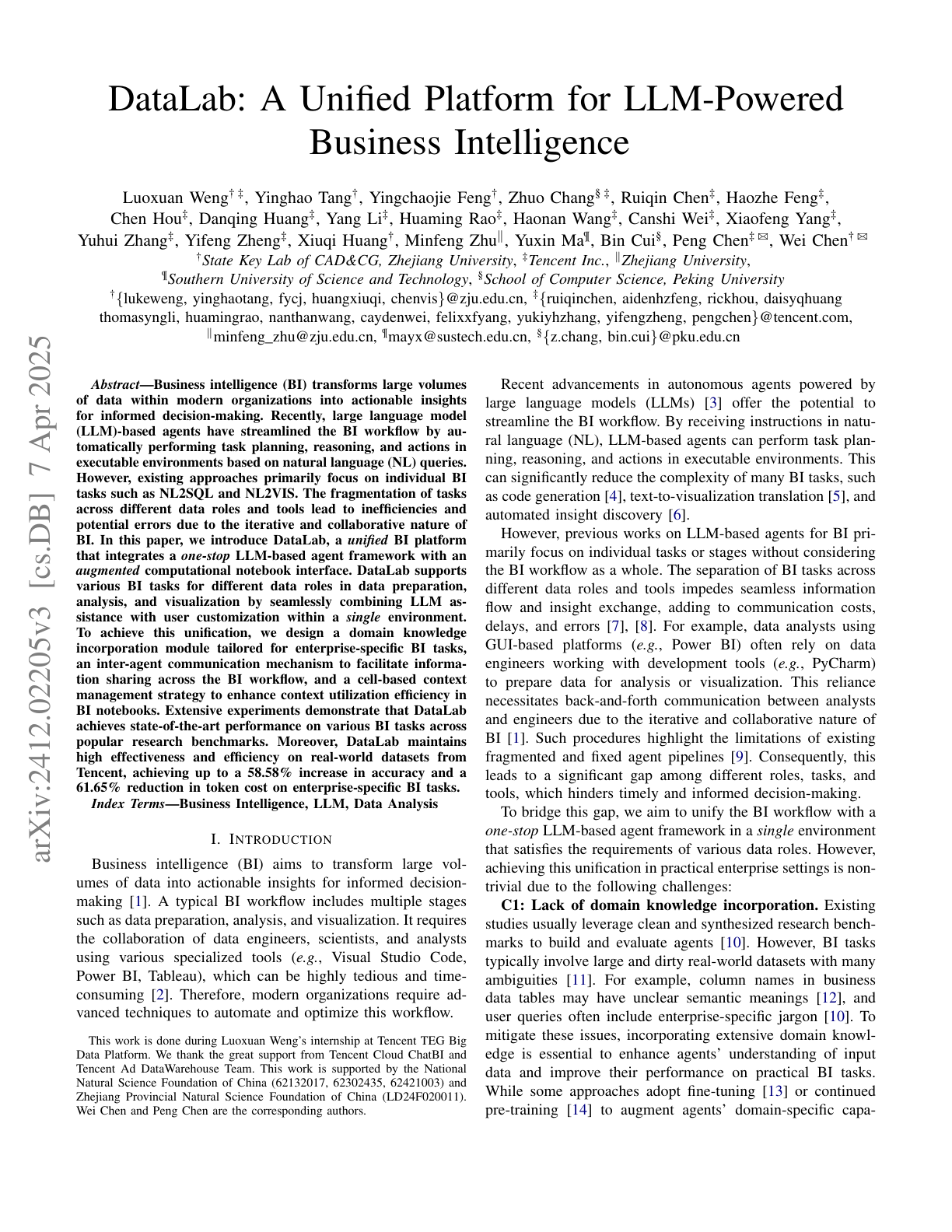
DataLab
a unified business intelligence platform powered by LLM-based agents that integrates task planning, reasoning, and computational notebooks to streamline the entire BI workflow; the system achieves SOTA performance on research benchmarks and demonstrates significant improvements in accuracy and efficiency on real enterprise data from Tencent; achieves up to a 58.58% increase in accuracy and a 61.65% reduction in token cost on enterprise-specific BI tasks.
LLM Surpass Human Experts in Predicting Neuroscience Results
proposes BrainBench to study how good LLMs are at predicting experimental outcomes in neuroscience; they tuned an LLM, BrainGPT, on neuroscience literature that surpasses experts in predicting neuroscience results; report that when LLMs indicated high confidence in their predictions, their responses were more likely to be correct.
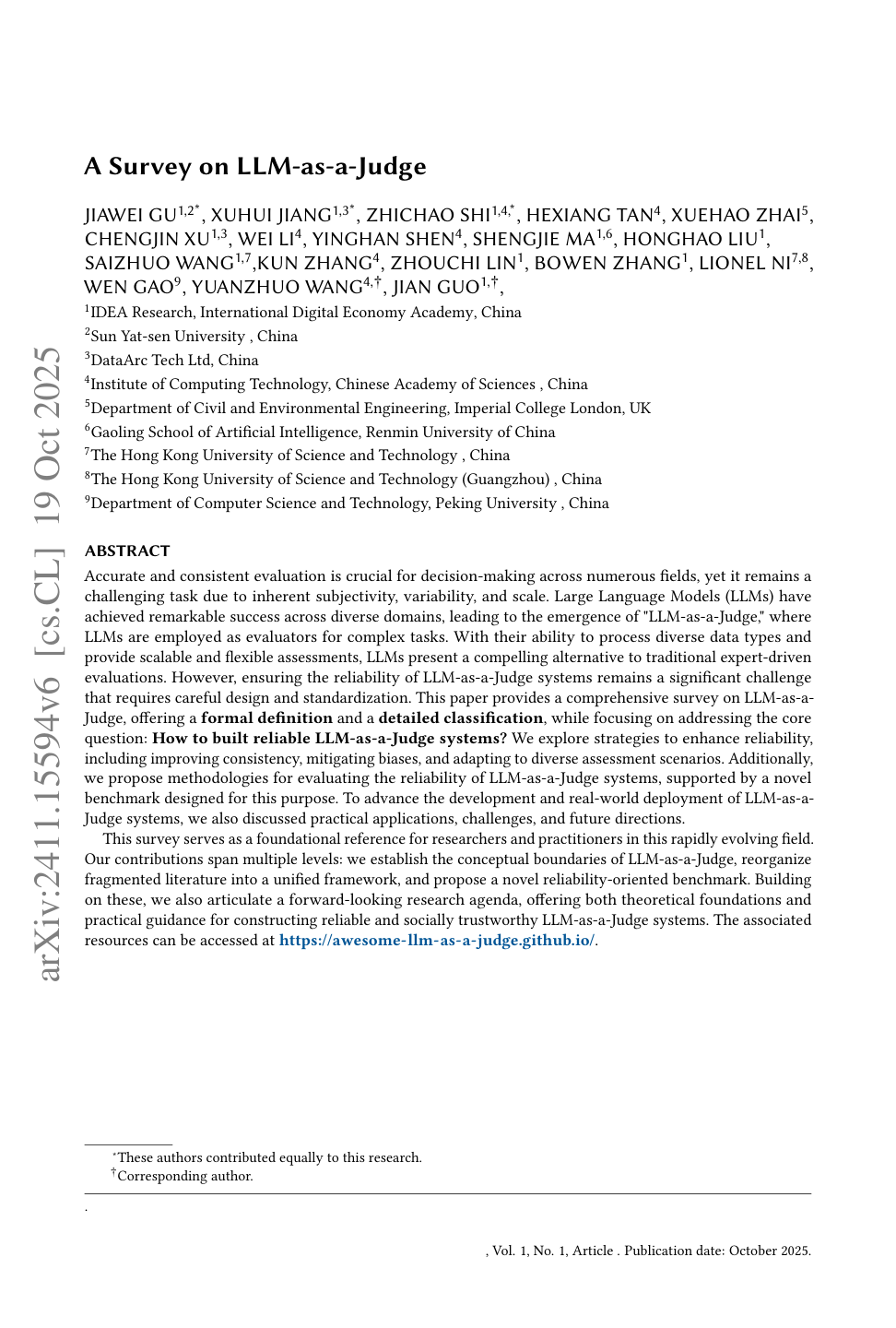
Survey on LLM-as-a-Judge
provides a comprehensive survey of LLM-as-a-Judge, including a deeper discussion on how to build reliable LLM-as-a-Judge systems.
AlphaQubit
a new AI-based decoder that sets a state-of-the-art benchmark for identifying errors in quantum computers; using transformer architecture, AlphaQubit demonstrated 6% fewer errors than tensor network methods and 30% fewer errors than correlated matching when tested on the Sycamore data; shows promising results in simulations of larger systems up to 241 qubits; while this represents significant progress in quantum error correction, the system still needs improvements in speed before it can correct errors in real-time for practical quantum computing applications.
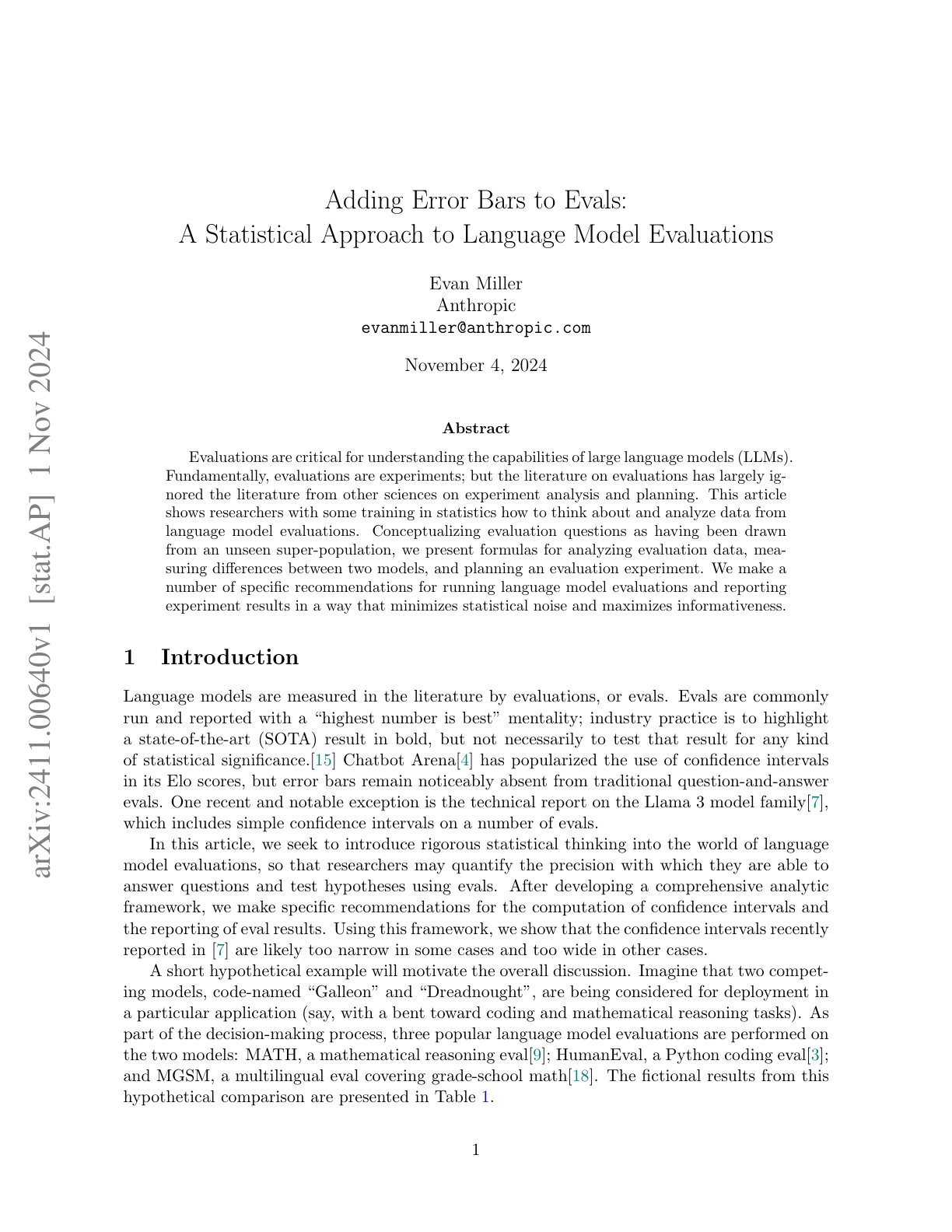
A Statistical Approach to LLM Evaluation
proposes five key statistical recommendations for a more rigorous evaluation of LLM performance differences. The recommendations include: 1) using the Central Limit Theorem to measure theoretical averages across all possible questions rather than just observed averages; 2) clustering standard errors when questions are related rather than independent; 3) reducing variance within questions through resampling or using next-token probabilities; 4) analyzing paired differences between models since questions are shared across evaluations, and 5) using power analysis to determine appropriate sample sizes for detecting meaningful differences between models; the authors argue that these statistical approaches will help researchers better determine whether performance differences between models represent genuine capability gaps or are simply due to chance, leading to more precise and reliable model evaluations.
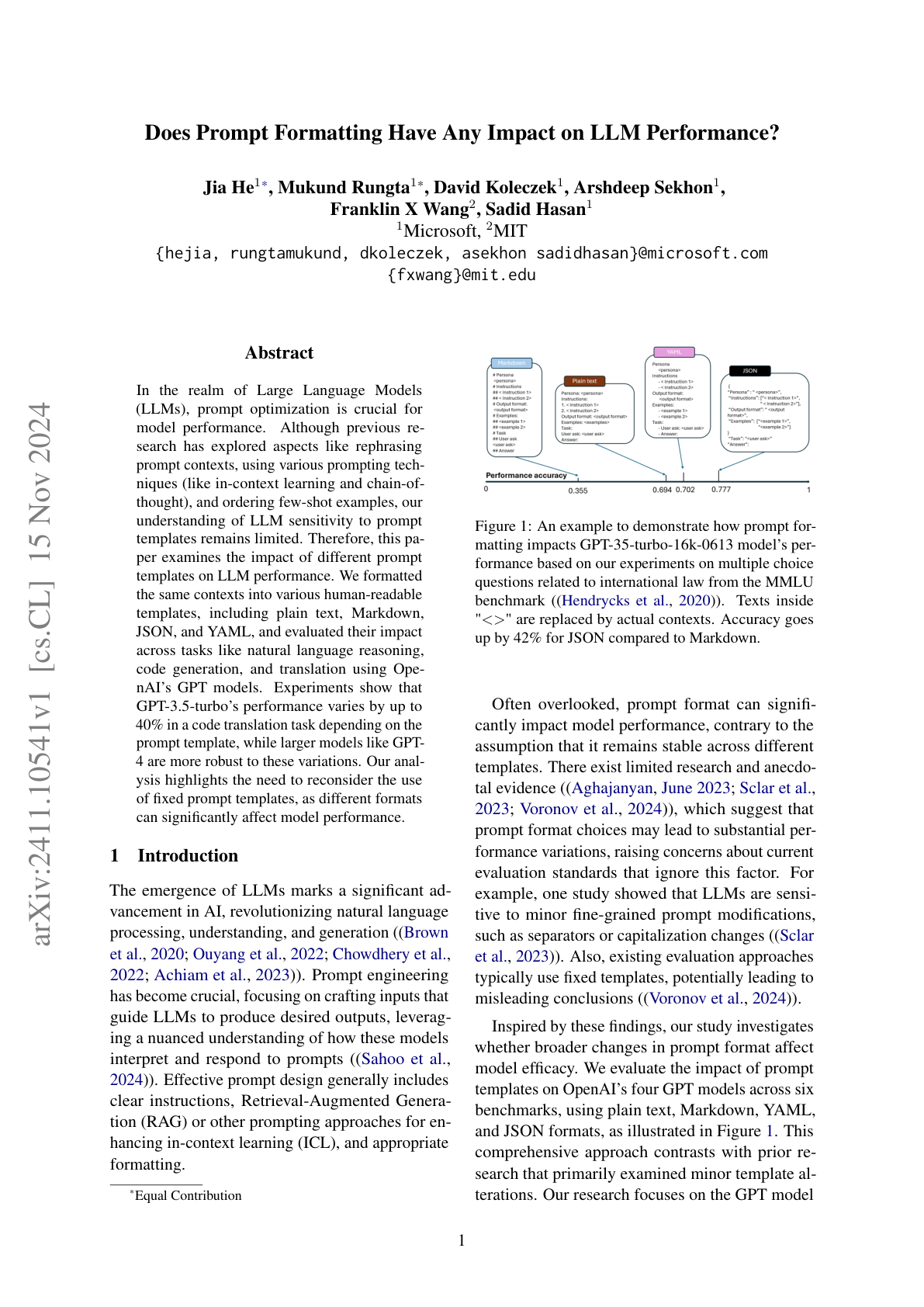
Does Prompt Formatting Impact LLM Performance
examines how different prompt formats (plain text, Markdown, JSON, and YAML) affect GPT model performance across various tasks; finds that GPT-3.5-turbo's performance can vary by up to 40% depending on the prompt format, while larger models like GPT-4 show more robustness to format changes; argues that there is no universally optimal format across models or tasks - for instance, GPT-3.5-turbo generally performed better with JSON formats while GPT-4 preferred Markdown; models from the same family showed similar format preferences, but these preferences didn't transfer well between different model families; suggests that prompt formatting significantly impacts model performance and should be carefully considered when performing prompt engineering and model evaluation, and how to apply it to applications.
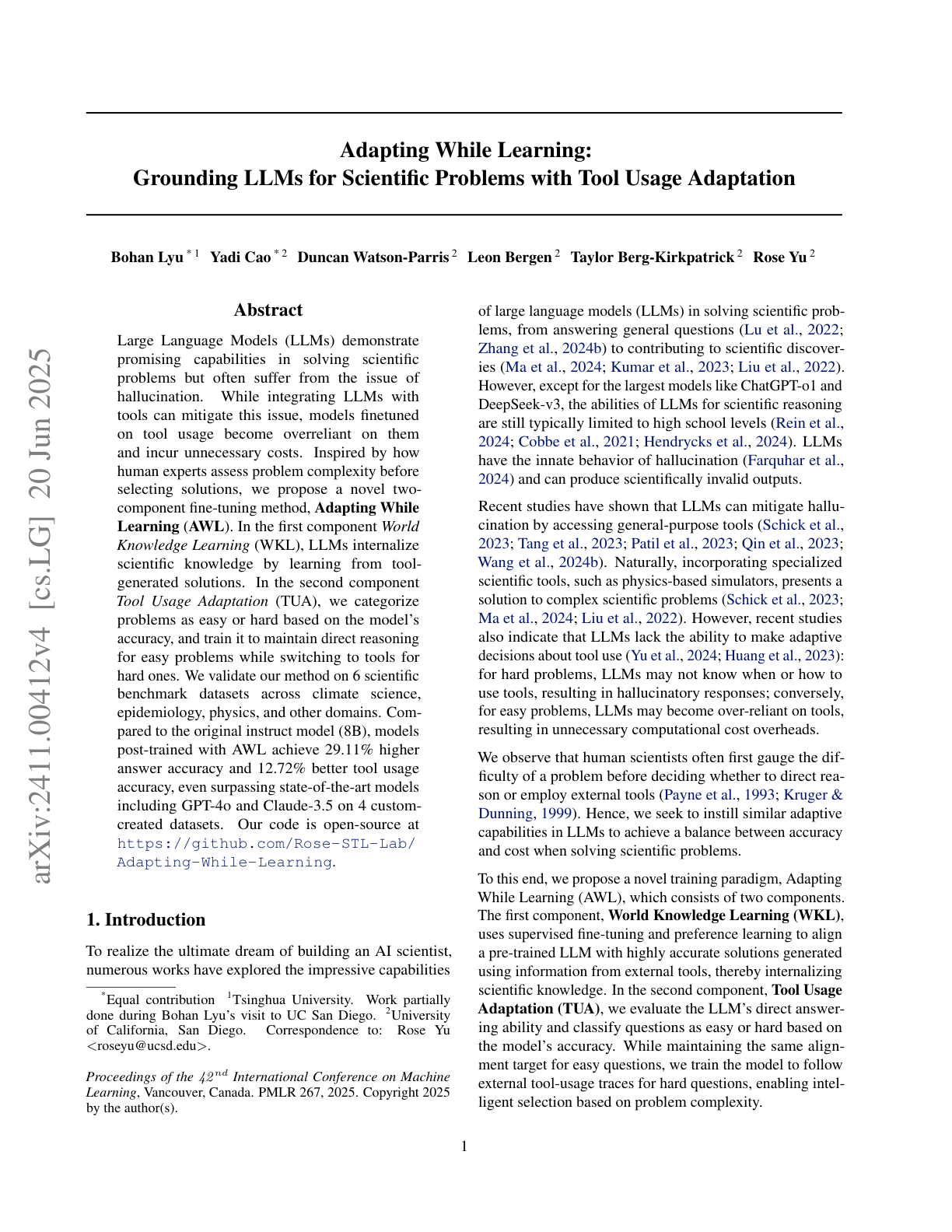
Adapting while Learning
proposes a two-part fine-tuning approach that first helps LLMs learn from tool-generated solutions and then trains them to determine when to solve problems directly versus when to use tools; testing on math, climate science, and epidemiology benchmarks shows significant improvements, with a 28% boost in accuracy and 14% better tool usage precision compared to leading models like GPT-4 and Claude-3.5; the two-stage approach helps the LLM to adaptively solve scientific problems of varying complexity.
SimpleQA
a challenging benchmark of 4,326 short factual questions adversarially collected against GPT-4 responses; reports that frontier models like GPT-4o and Claude achieve less than 50% accuracy; finds that there is a positive calibration between the model stated confidence and accuracy, signaling that they have some notion of confidence; claims that there is still room to improve the calibration of LLMs in terms of stated confidence.
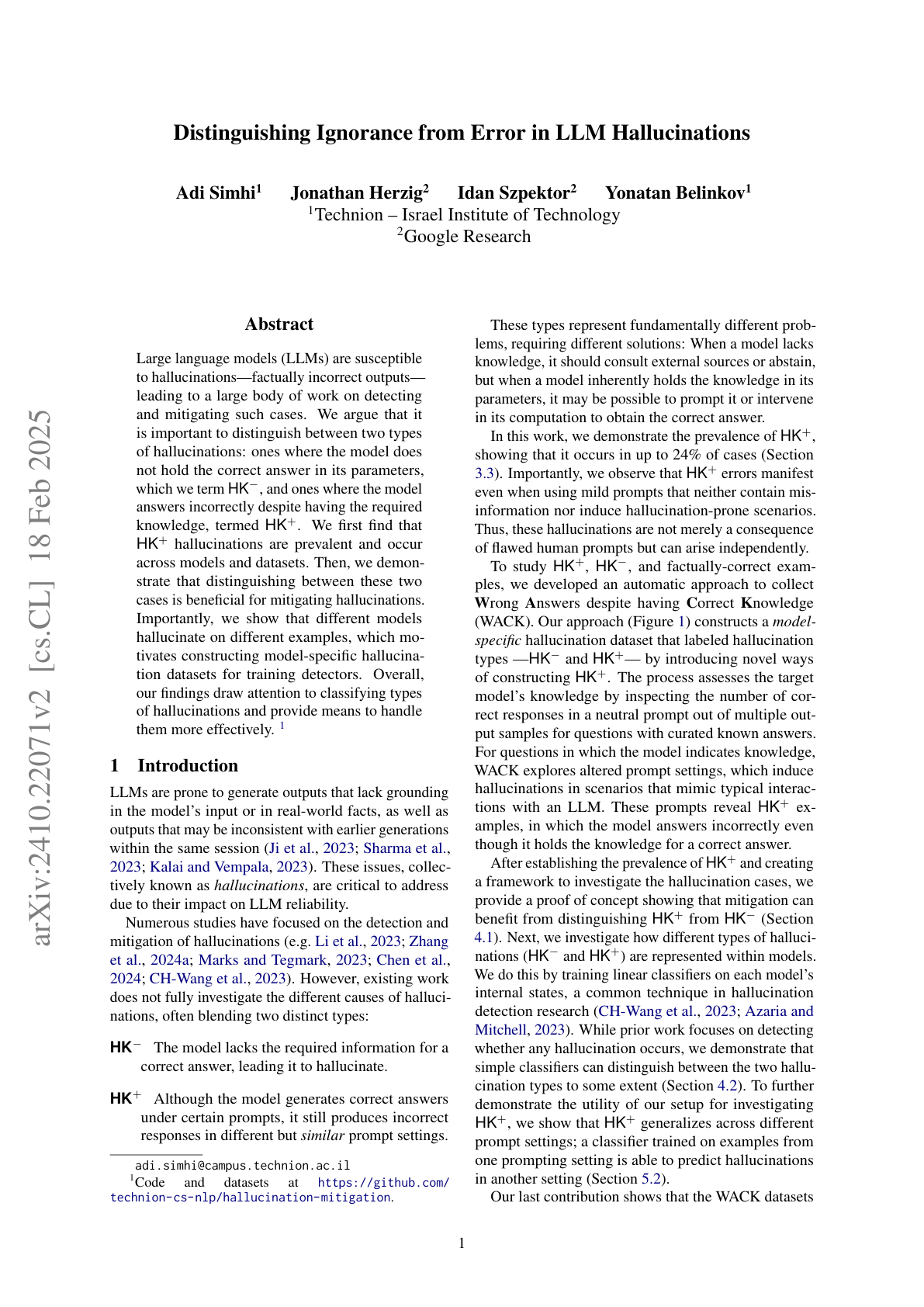
Distinguishing Ignorance from Error in LLM Hallucinations
a method to distinguish between two types of LLM hallucinations: when models lack knowledge (HK-) versus when they hallucinate despite having correct knowledge (HK+); they build model-specific datasets using their proposed approach and show that model-specific datasets are more effective for detecting HK+ hallucinations compared to generic datasets.
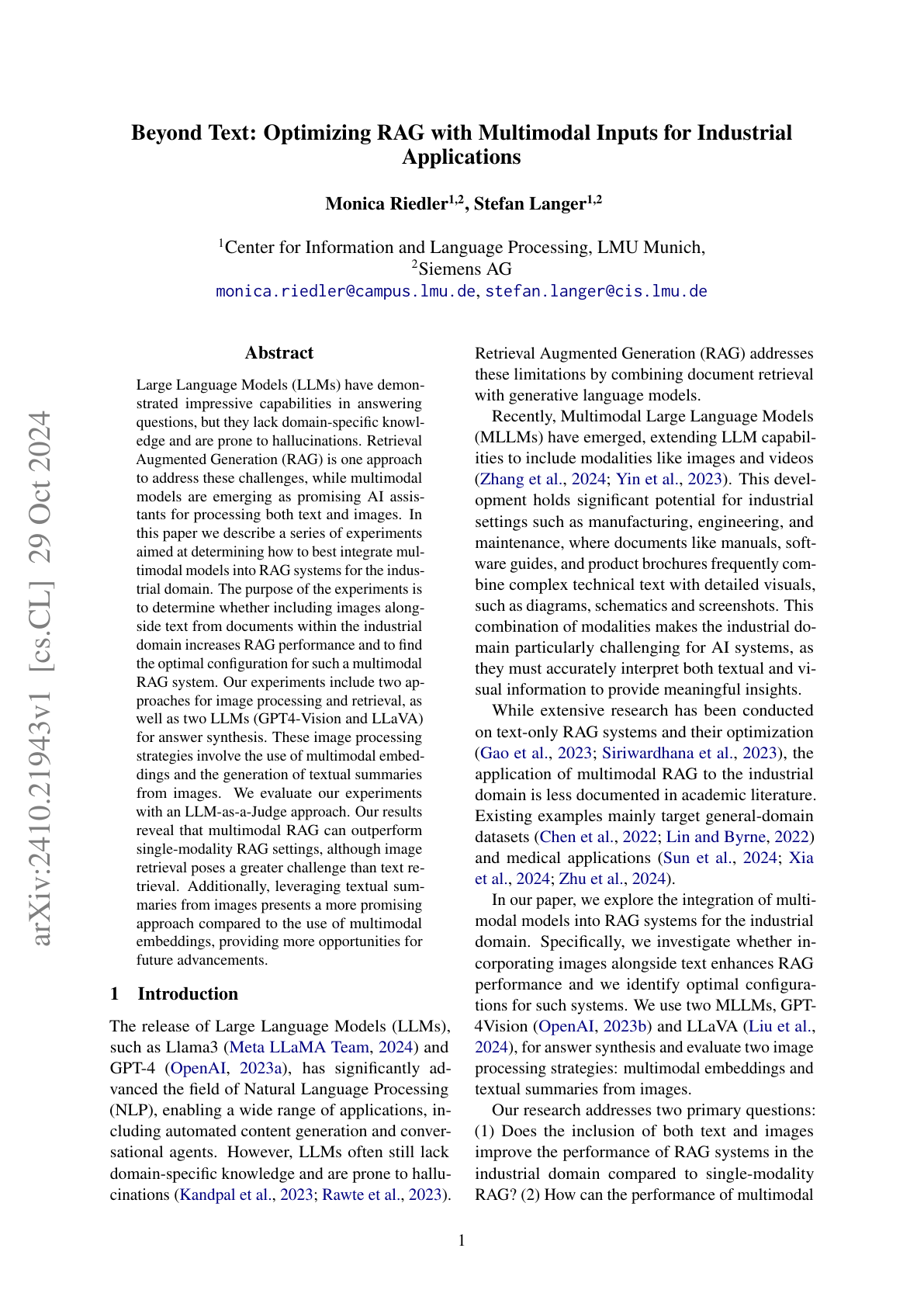
Multimodal RAG
provides a discussion on how to best integrate multimodal models into RAG systems for the industrial domain; it also provides a deep discussion on the evaluation of these systems using LLM-as-a-Judge.
Evaluation Feature Steering in LLMs
evaluates featuring steering in LLMs using an experiment that artificially dials up and down various features to analyze changes in model outputs; it focused on 29 features related to social biases and study if feature steering can help mitigate social biases; among its findings, it reports that feature steering sometimes leads to off-target effects and that a neutrality feature can help decreases social biases in 9 social dimensions without negatively affecting text quality.
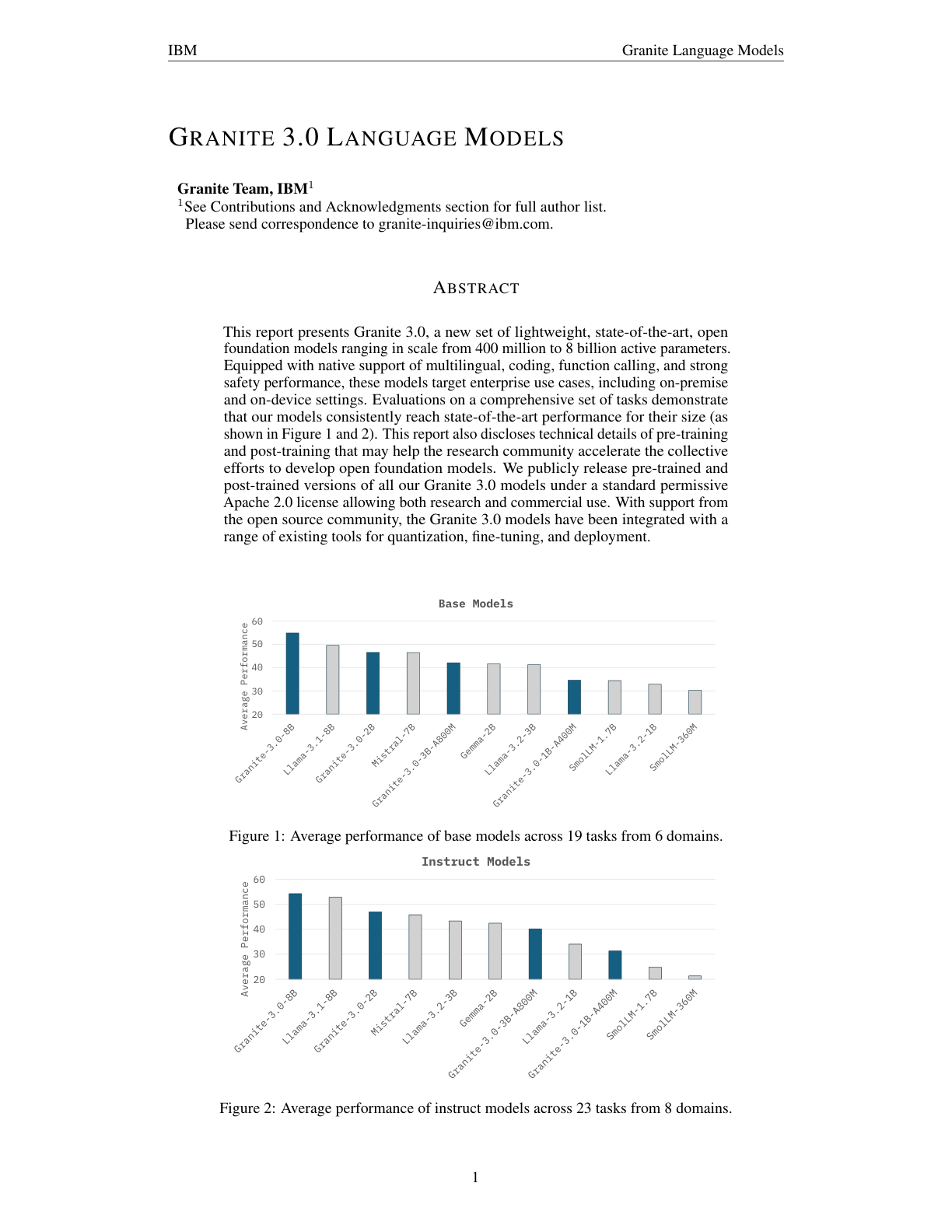
Granite 3.0
presents lightweight foundation models ranging from 400 million to 8B parameters; supports coding, RAG, reasoning, and function calling, focusing on enterprise use cases, including on-premise and on-device settings; demonstrates strong performance across academic benchmarks for language understanding, reasoning, coding, function calling, and safety.
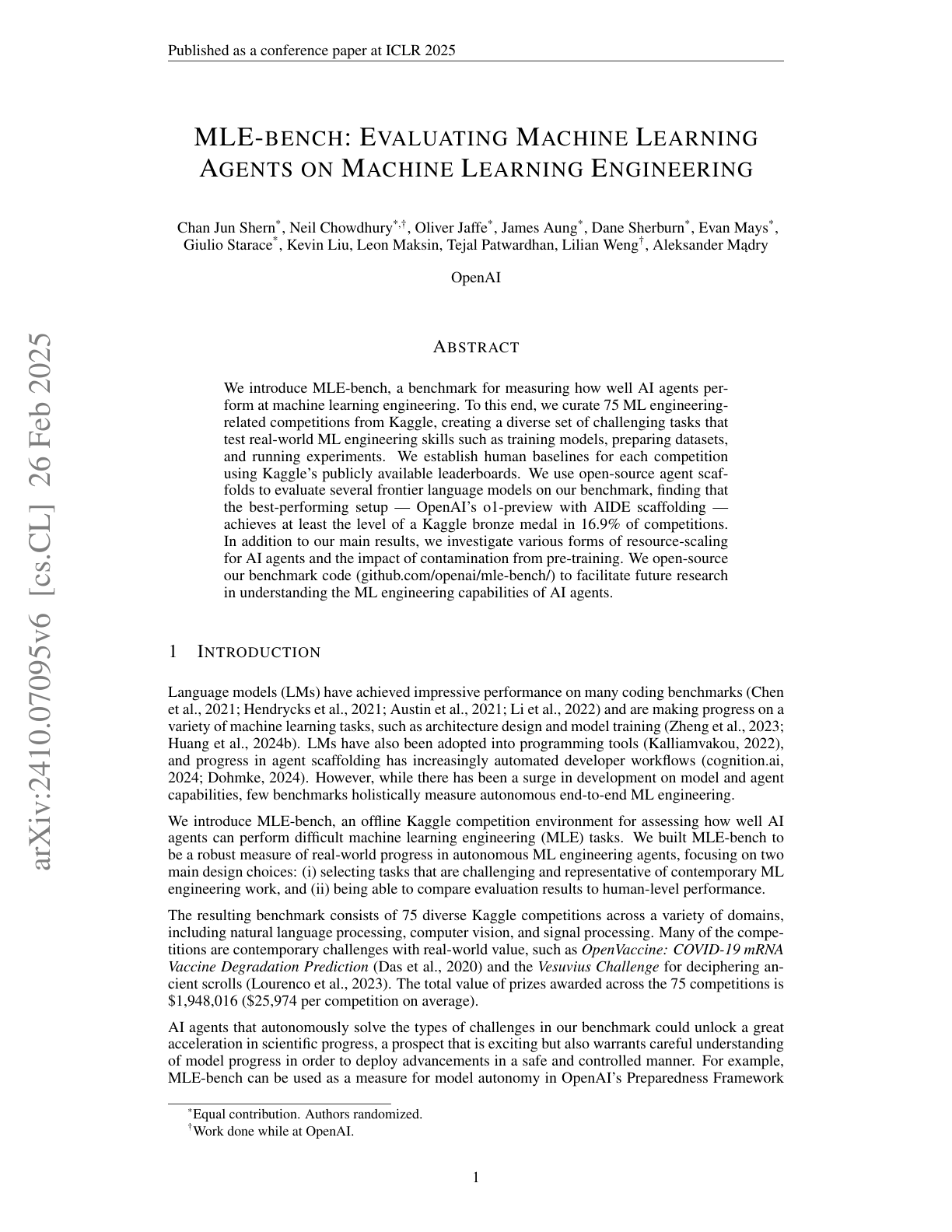
MLE-Bench
proposes a new benchmark for the evaluation of machine learning agents on machine learning engineering capabilities; includes 75 ML engineering-related competition from Kaggle testing on MLE skills such as training models, preparing datasets, and running experiments; OpenAI’s o1-preview with the AIDE scaffolding achieves Kaggle bronze medal level in 16.9% of competitions.
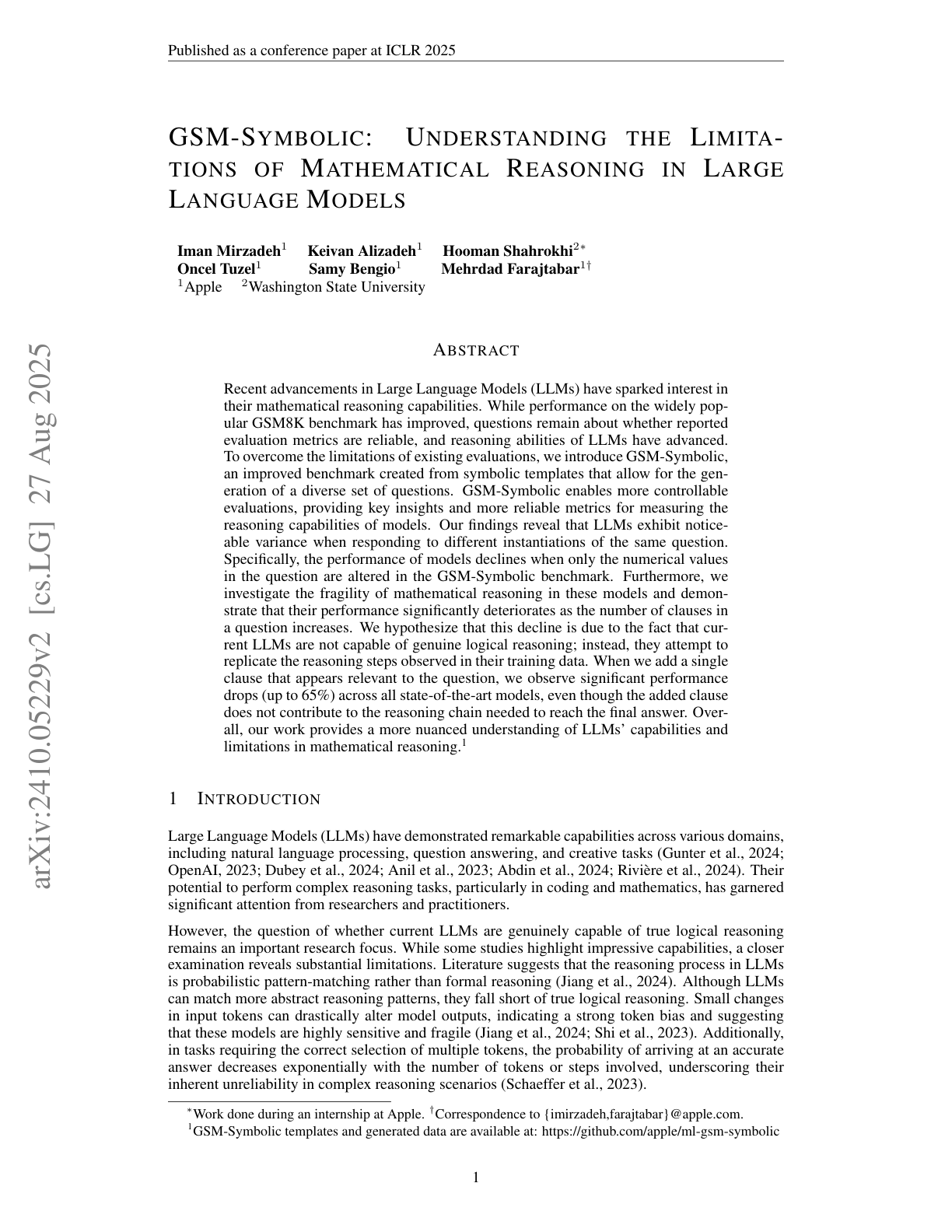
GSM-Symbolic
tests several SoTA models on a benchmark created with symbolic templates that enable diverse mathematical problems; they find that LLMs exhibit variance when responding to variations of the same questions; the performance of all the models declines by adjusting the numerical values in the question; as questions are made more challenging (e.g., increasing the number of clauses) the performance significantly deteriorates; the authors hypothesize that the observed decline in performance is due to a lack of logical reasoning in current LLMs.
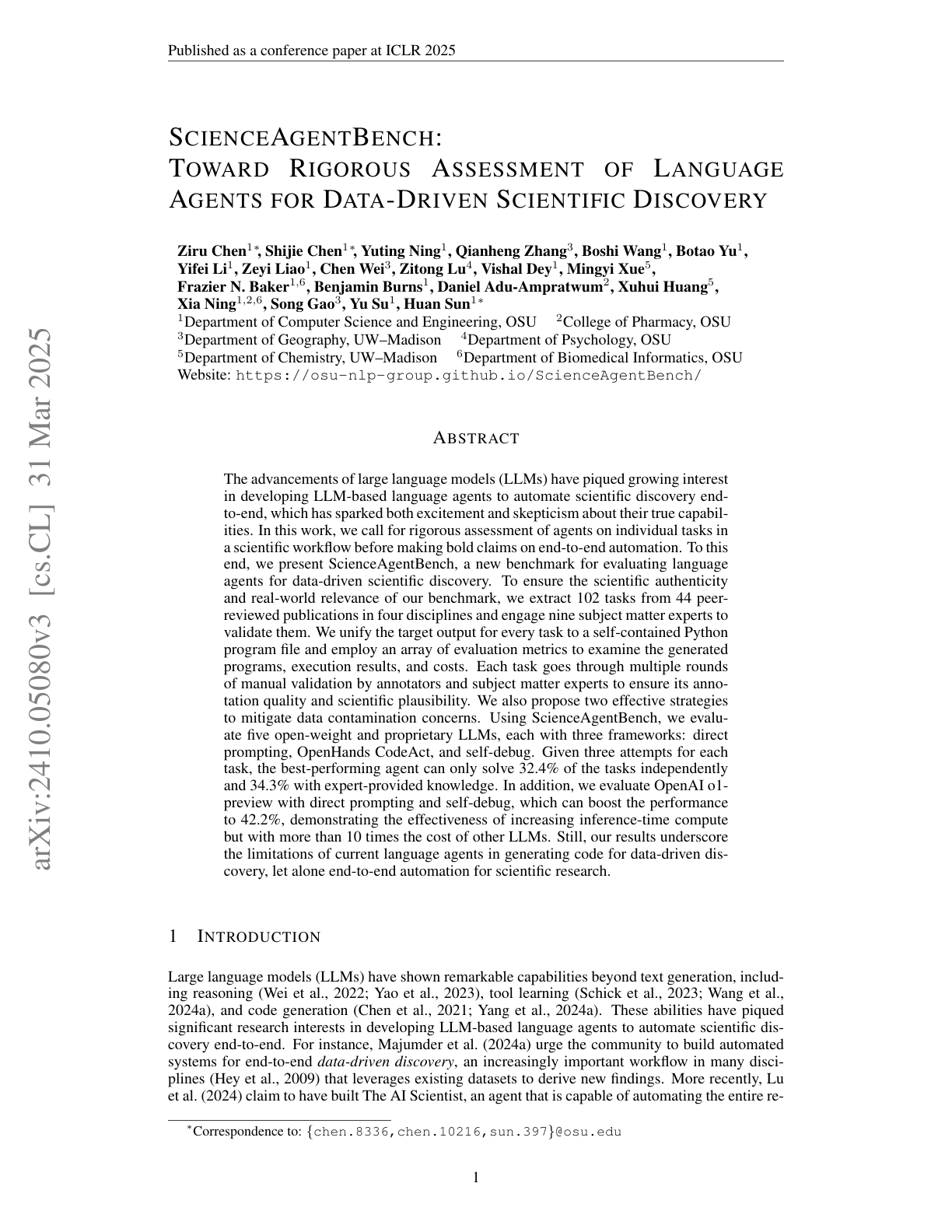
ScienceAgentBench
a new benchmark to rigorously assess agents built for scientific workflows; after testing it on open-weight and proprietary LLMs, the best-performing agent can only solve 32.4% of the tasks independently and 34.3% with expert-provided knowledge.
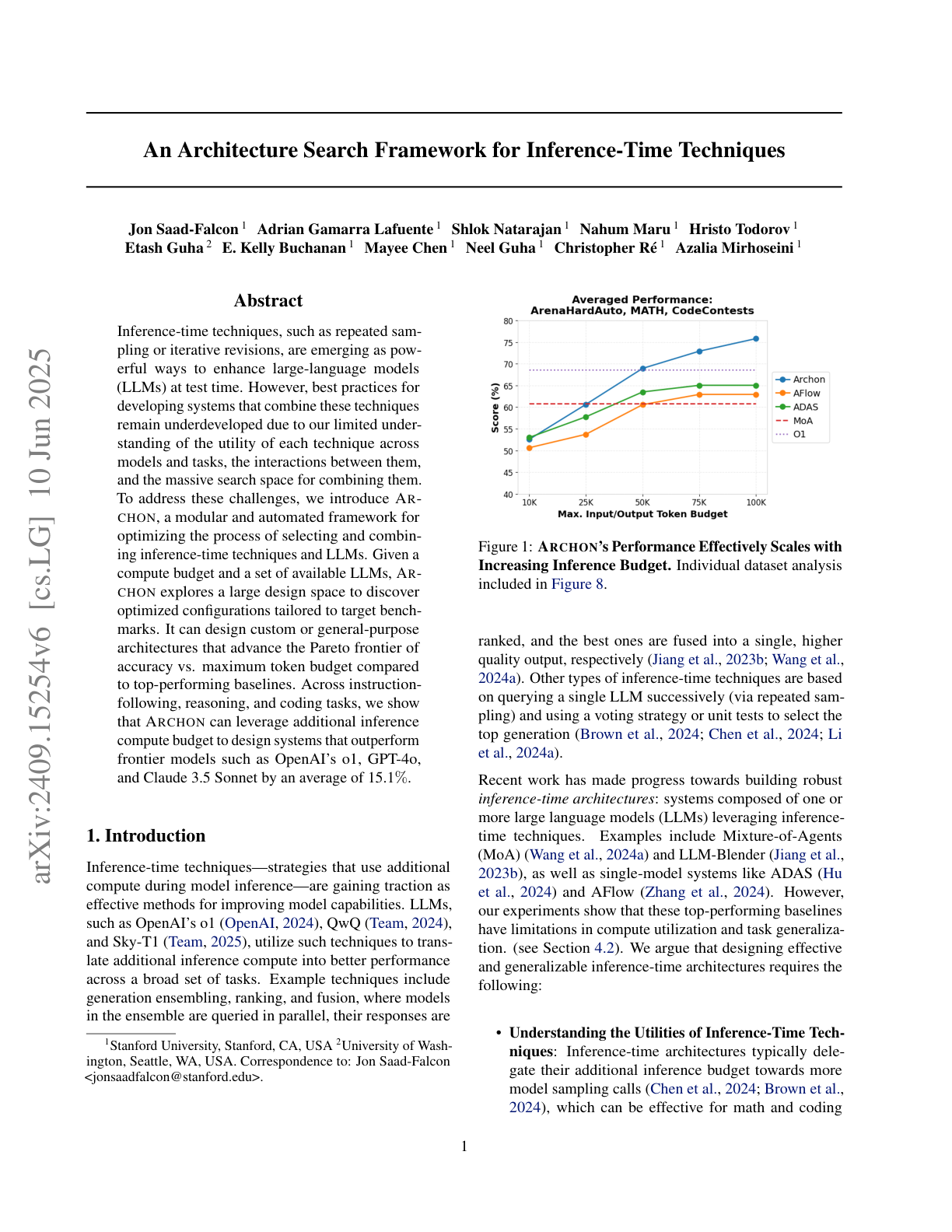
Architecture Search Framework for Inference-Time Techniques
introduces a modular framework for building and optimizing LLMs by combining multiple inference-time techniques; this approach reframes the challenge of LLM system design as a hyperparameter optimization problem; tested on benchmarks including MT-Bench and CodeContests, Archon surpasses leading models such as GPT-4o and Claude 3.5 Sonnet, achieving a 15.1% average accuracy improvement.
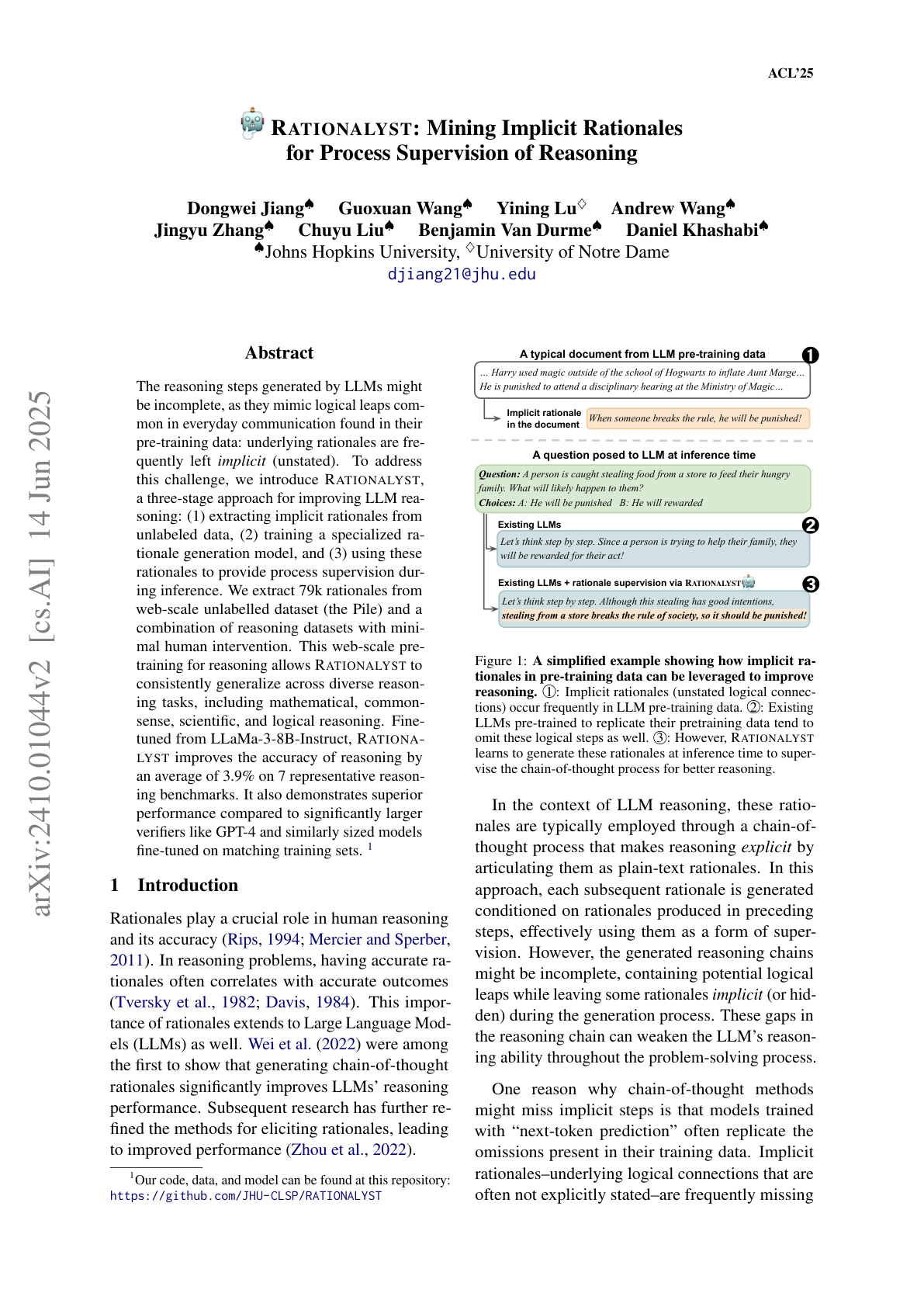
RATIONALYST
a model for process-supervision of reasoning that enables generalization across diverse reasoning tasks; this process is achieved with pre-training on a collection of 79k rationales from the Pile and a combination of reasoning datasets with minimal human intervention; fine-tuned from LLaMa-3-8B, the proposed model improves the accuracy of reasoning by an average of 3.9% on 7 reasoning benchmarks.