AI Papers of the Week
Every paper worth reading in AI, hand-picked one week at a time.
Discover and explore top AI papers with Claude Code or Codex
npx @dair-ai/mcp setup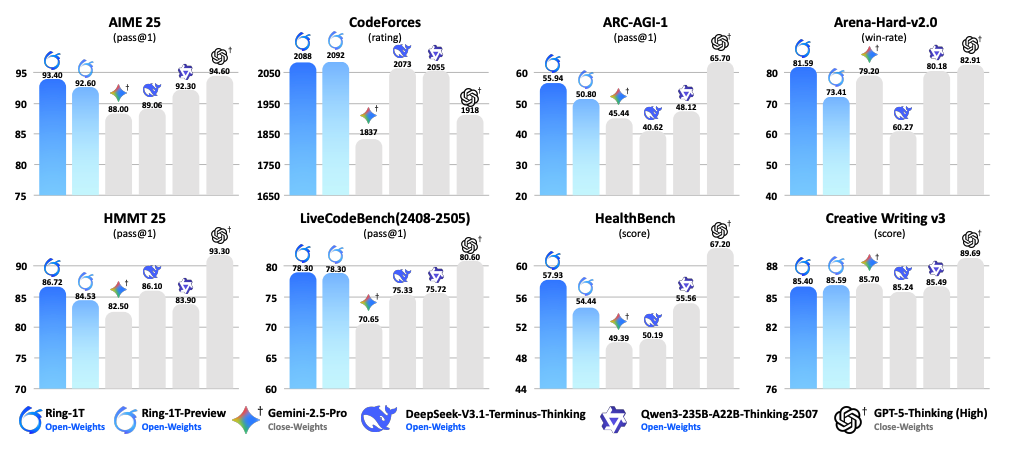
Ring-1T
Ring-1T is the first open-source thinking model with 1 trillion parameters (~50B active per token), achieving breakthrough results through three innovations for trillion-scale RL training.
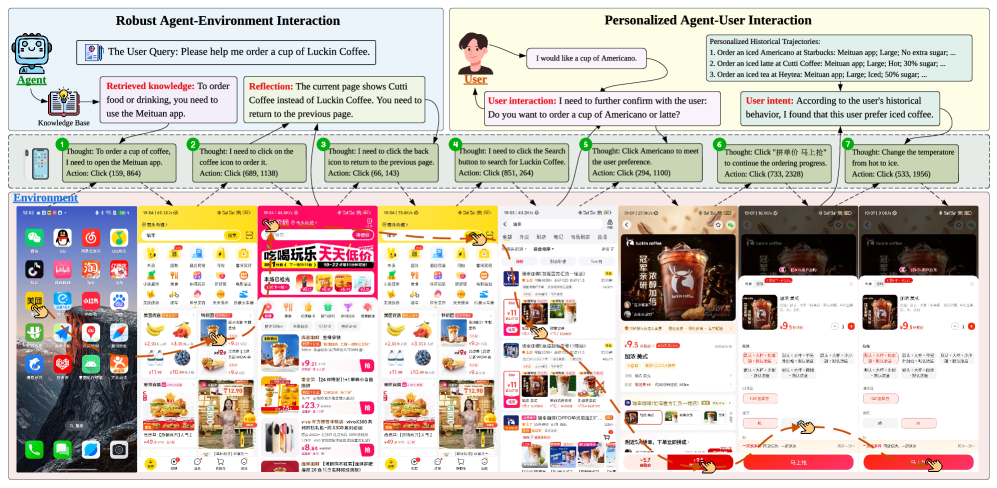
ColorAgent
ColorAgent is a mobile OS agent combining step-wise RL and self-evolving training with a multi-agent framework for personalized user engagement. It achieves 77.2% success on AndroidWorld and 50.7% on AndroidLab (SOTA among open models), while scoring 58.66% on MobileIAR for personalized intent alignment and 68.98% on VeriOS-Bench for trustworthiness.
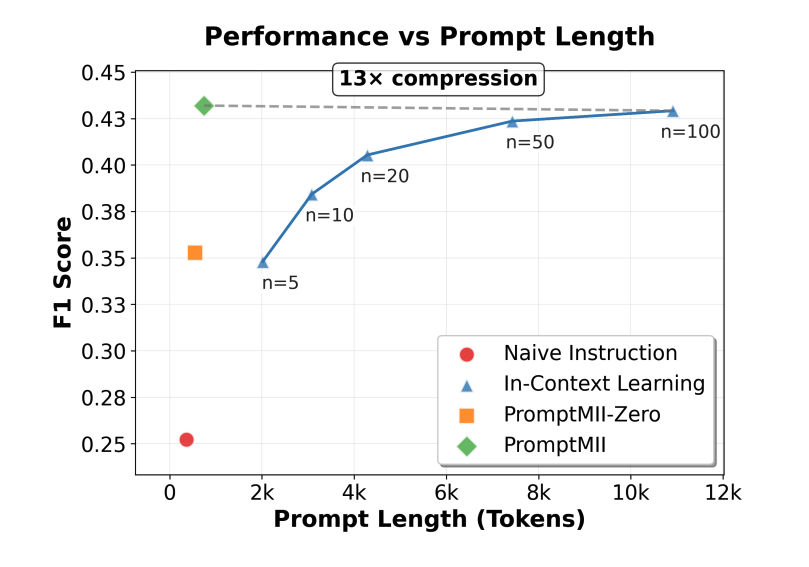
Prompt-MII
CMU researchers propose Prompt-MII, an RL framework that meta-learns instruction induction across 3,000+ HuggingFace datasets, achieving 4-9 F1 point improvements on 90 unseen tasks while requiring 3-13x fewer tokens than in-context learning. Unlike APE (2000 LLM calls) and GEPA (150 calls), it generates compact instructions in a single forward pass and is training-free at test time.
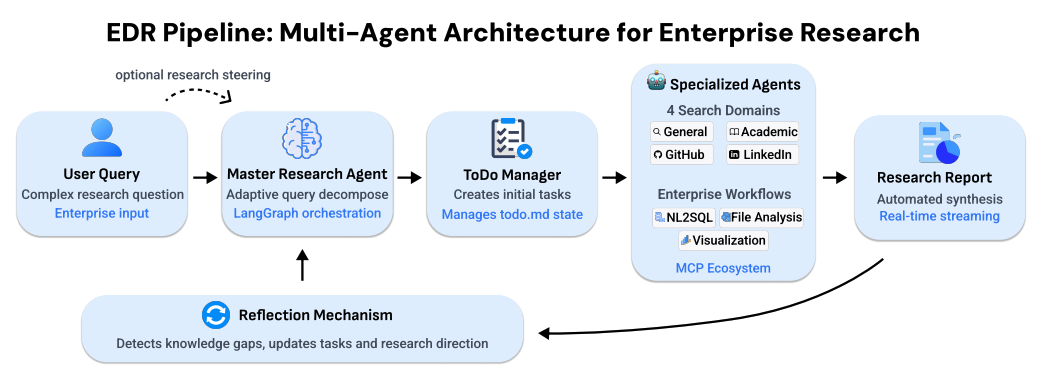
Enterprise Deep Research
Salesforce AI researchers present EDR, a transparent multi-agent framework for enterprise deep research with human-in-the-loop steering via todo-driven task management and steerable context engineering. It achieves SOTA on DeepResearch Bench (49.86), 71.57% win rate on DeepConsult, and 68.5% on ResearchQA while consuming 4x fewer tokens than LangChain’s open deep research.
Cell2Sentence-Scale 27B
C2S-Scale extends Cell2Sentence by converting gene expression into “cell sentences” and training LLMs on 50M+ cells plus biological text. Models scale to 27B params and unify prediction, generation, and NL interpretation. A dual-context virtual screen then led to a wet-lab validated finding: silmitasertib acts as an interferon-conditional amplifier of MHC-I antigen presentation.
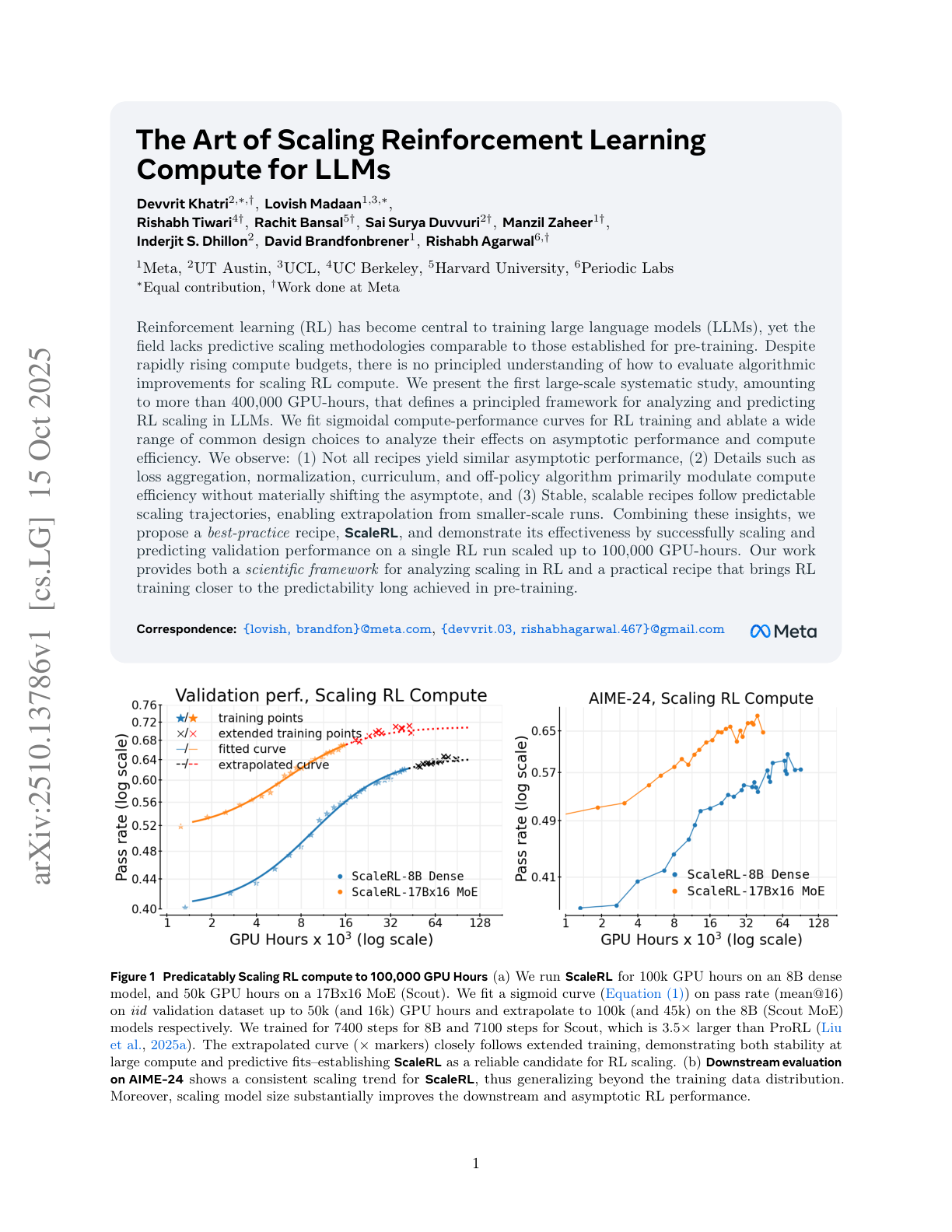
The Art of Scaling RL Compute for LLMs
A 400k+ GPU-hour study introduces a simple, predictive way to scale RL for LLMs. The authors fit a sigmoidal compute→performance curve that lets you extrapolate from small runs and propose ScaleRL, a stable recipe validated up to 100k GPU-hours on an 8B dense model and a 17B×16 MoE.
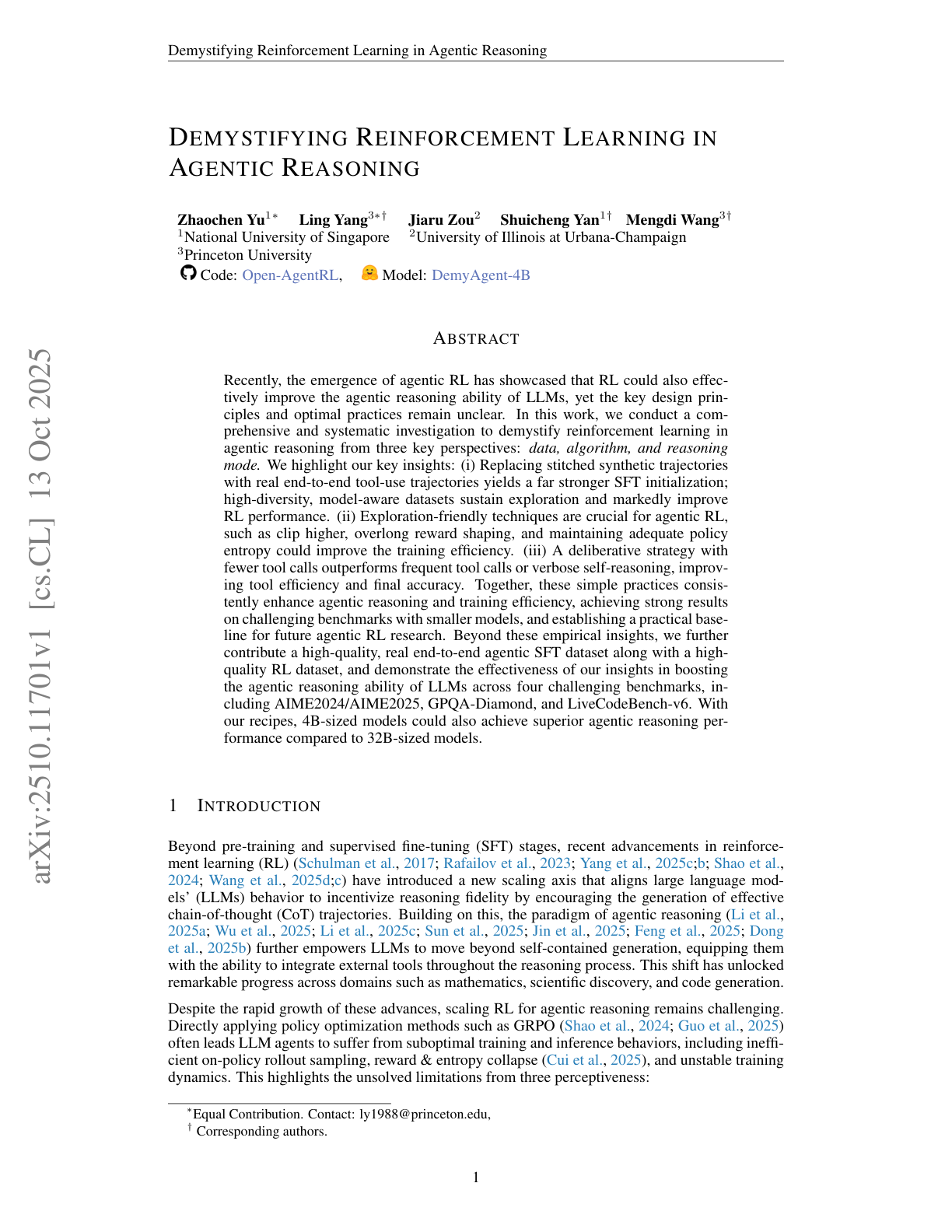
Demystifying RL in Agentic Reasoning
This paper studies what actually works when using RL to improve tool-using LLM agents, across three axes: data, algorithm, and reasoning mode. The team contributes a real end-to-end SFT dataset, a diverse RL set, and a compact 4B agent that beats larger models on agentic benchmarks.
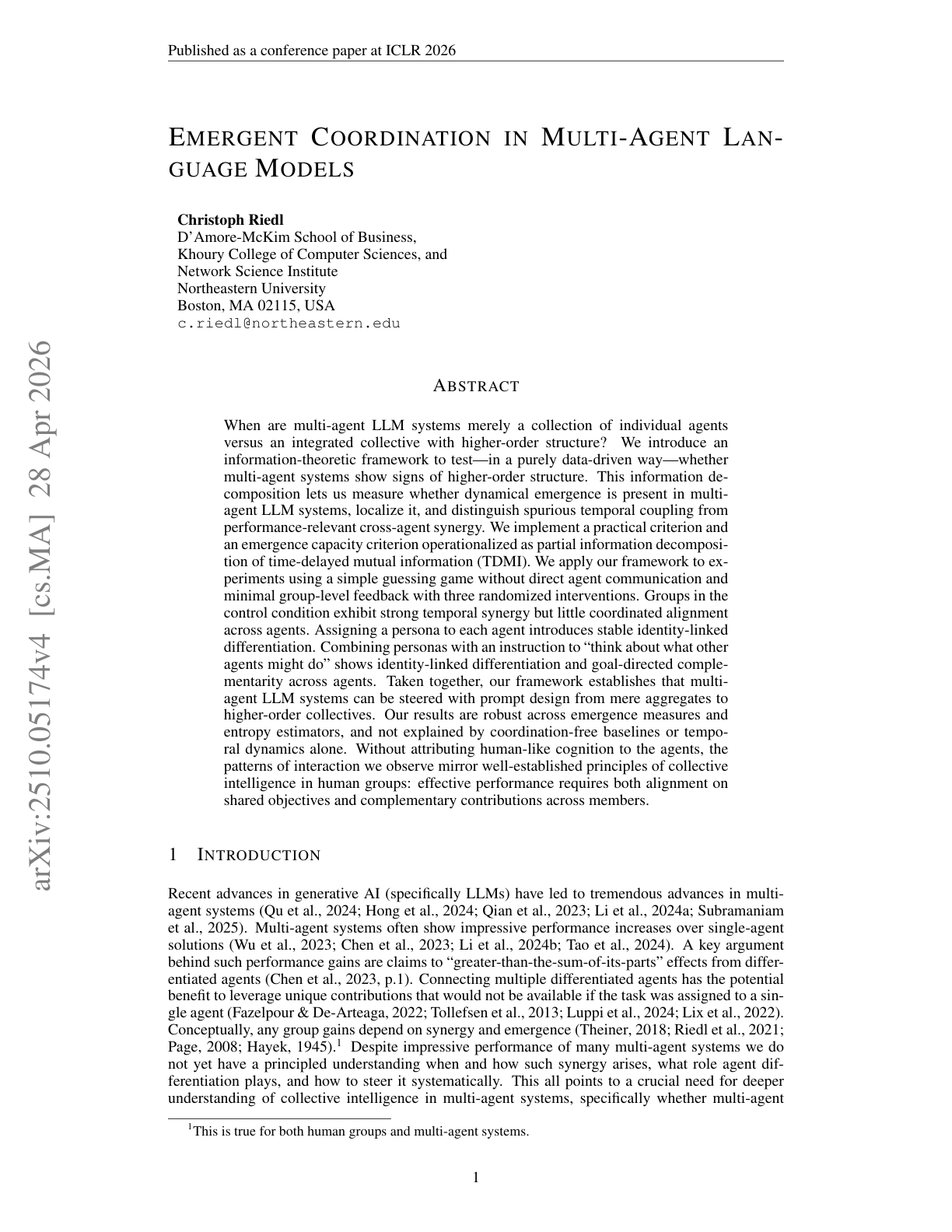
Emergent Coordination in Multi-Agent LLMs
A neat, information-theoretic probe for “is this just a pile of agents or a real collective?” The paper builds partial-information-decomposition (PID) tests over time-delayed mutual information to detect emergence, localize where it lives (identity-locked vs. mere temporal coupling), and tie it to performance. Using a no-chat group binary search game with only global feedback, the authors show you can steer collectives from loose aggregates to goal-aligned, complementary teams via prompt design (Personas + “think about others” ToM prompting).
Elastic-Cache
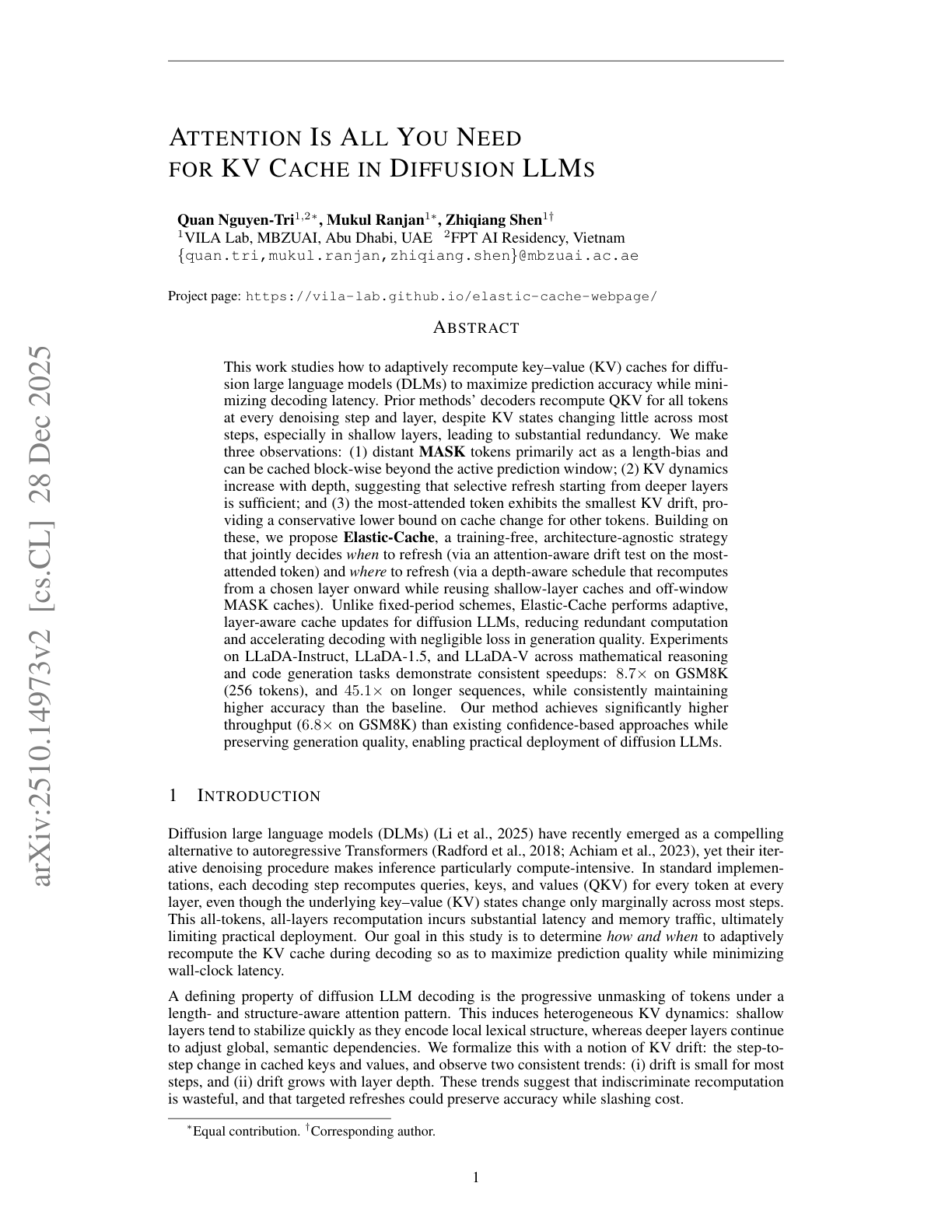
A training-free, architecture-agnostic way to make diffusion LLM decoding fast by updating KV caches only when and where it matters. Instead of recomputing QKV for all tokens at every denoising step, Elastic-Cache watches attention drift on the most-attended tokens and refreshes only deeper layers while reusing shallow and off-window caches. Results: large speedups with minimal or no accuracy loss across math, code, and multimodal tasks.
Dynamic Layer Routing in LLMs
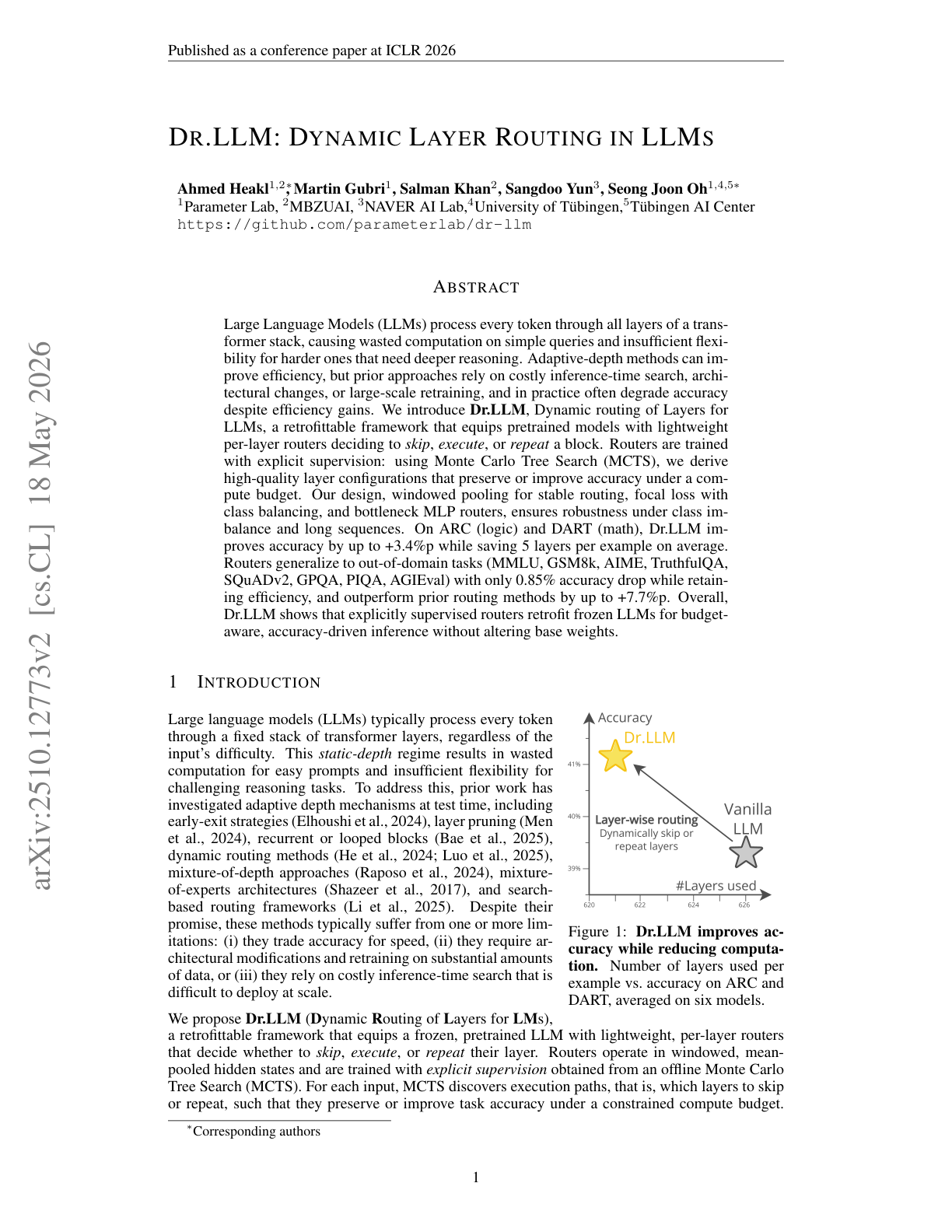
A retrofittable way to add per-layer routers to frozen LLMs that decide to skip, execute, or repeat each block. Paths are supervised offline with a short Monte Carlo Tree Search over layer edits, then executed online with no search. Improves accuracy on logic and math while saving layers on average.
LLMs Can Get “Brain Rot”!
The authors test a clear hypothesis: continual pretraining on trivial, highly engaging web text degrades LLM cognition in ways that persist even after mitigation. They build controlled Twitter datasets to isolate data quality from scale and training ops, then measure effects on reasoning, long-context, safety, and personality.
Hybrid Reinforcement
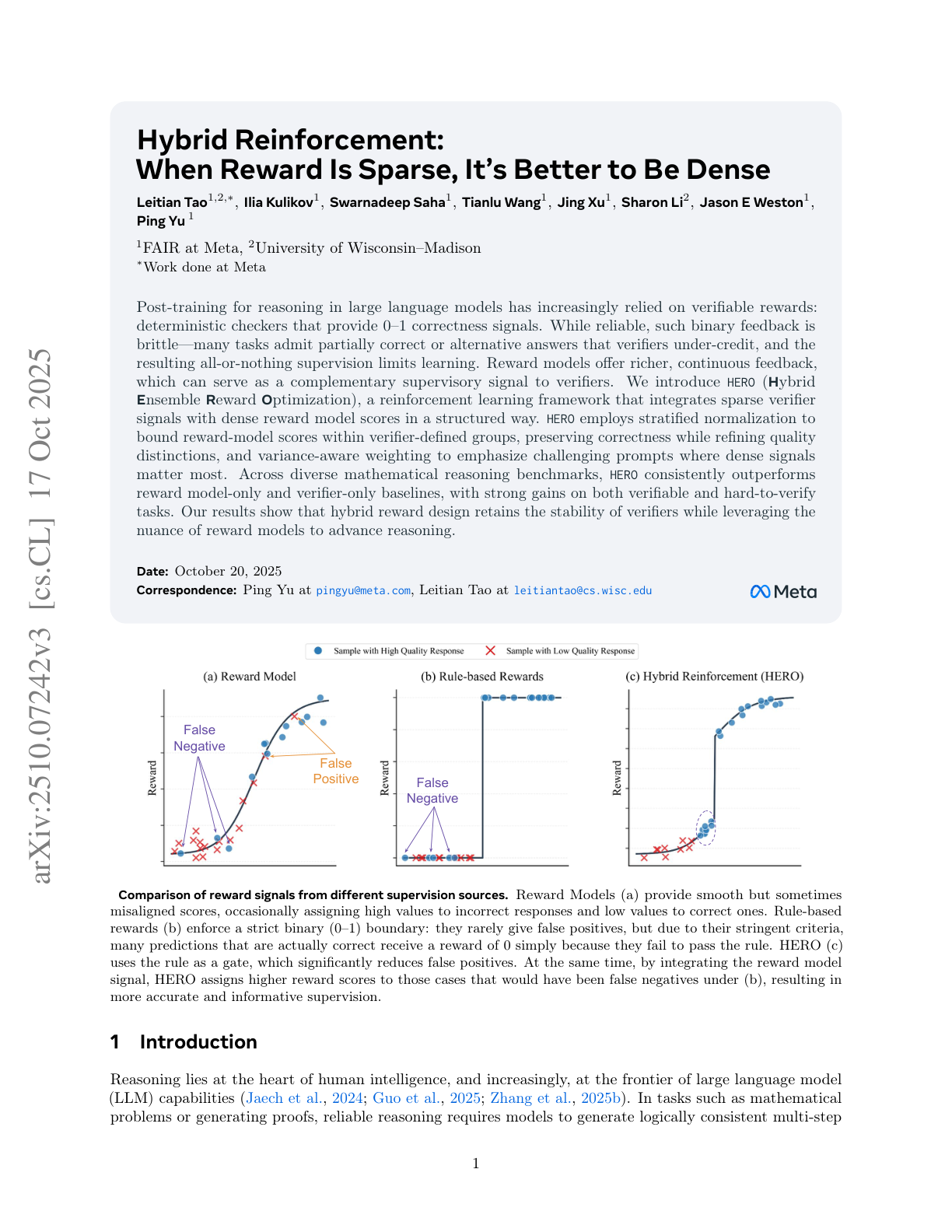
HERO (Hybrid Ensemble Reward Optimization) is a reinforcement learning framework that combines binary verifier feedback with continuous reward-model signals to improve LLM reasoning. By using stratified normalization and variance-aware weighting, HERO balances correctness and nuance, outperforming verifier-only and RM-only methods on diverse math reasoning benchmarks and enhancing performance on both verifiable and ambiguous tasks.
Kimi-Dev
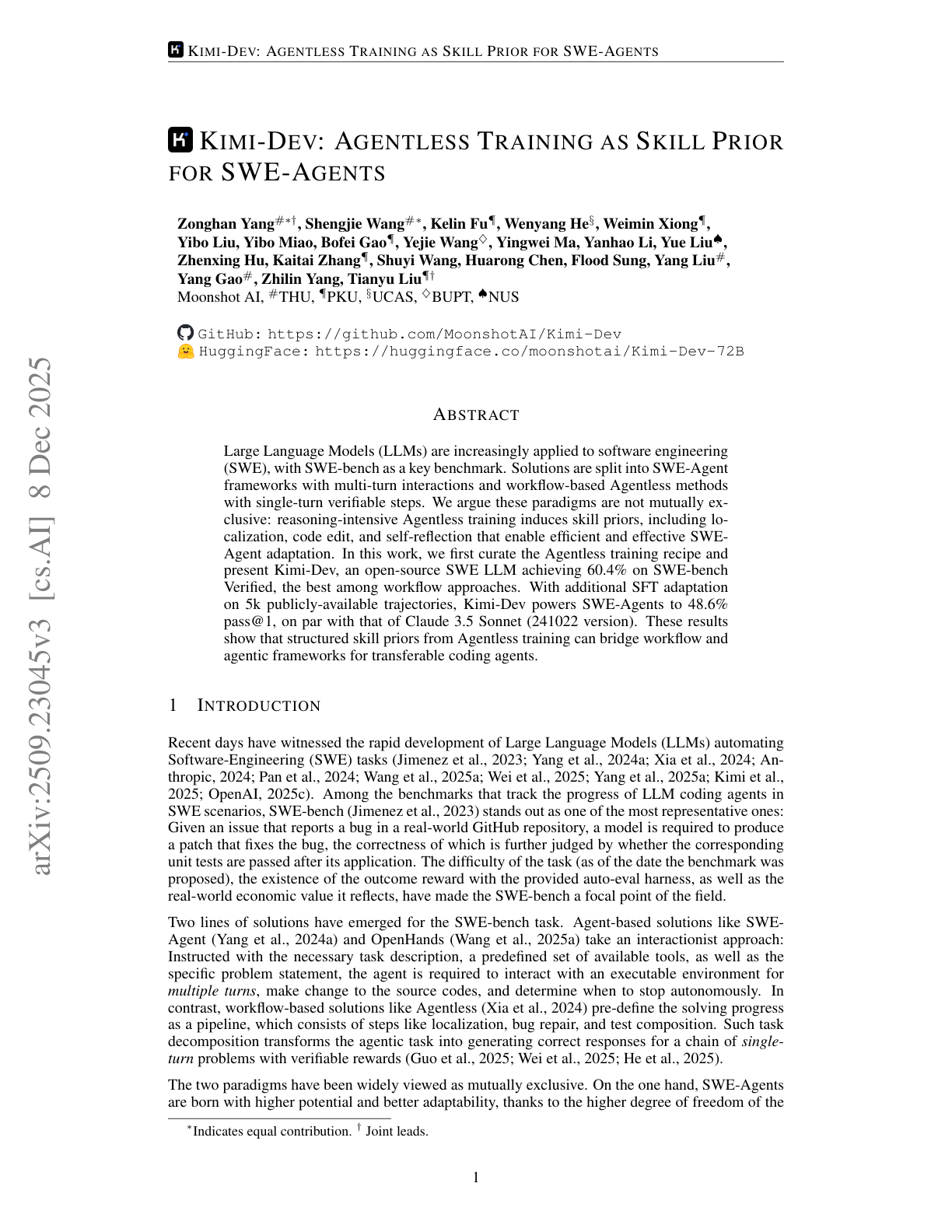
Kimi-Dev introduces agentless training as a skill prior to software engineering LLMs, bridging workflow-style and agentic paradigms. Trained with structured, verifiable single-turn tasks, it achieves 60.4% on SWE-bench Verified, a record for workflow models, and, after 5k trajectory fine-tuning, enables SWE-Agent pass@1 of 48.6%, rivaling Claude 3.5 Sonnet. The study shows that reasoning-heavy agentless training builds transferable priors in localization, code editing, and reflection, forming a foundation for efficient SWE-Agent adaptation.
Holistic Agent Leaderboard
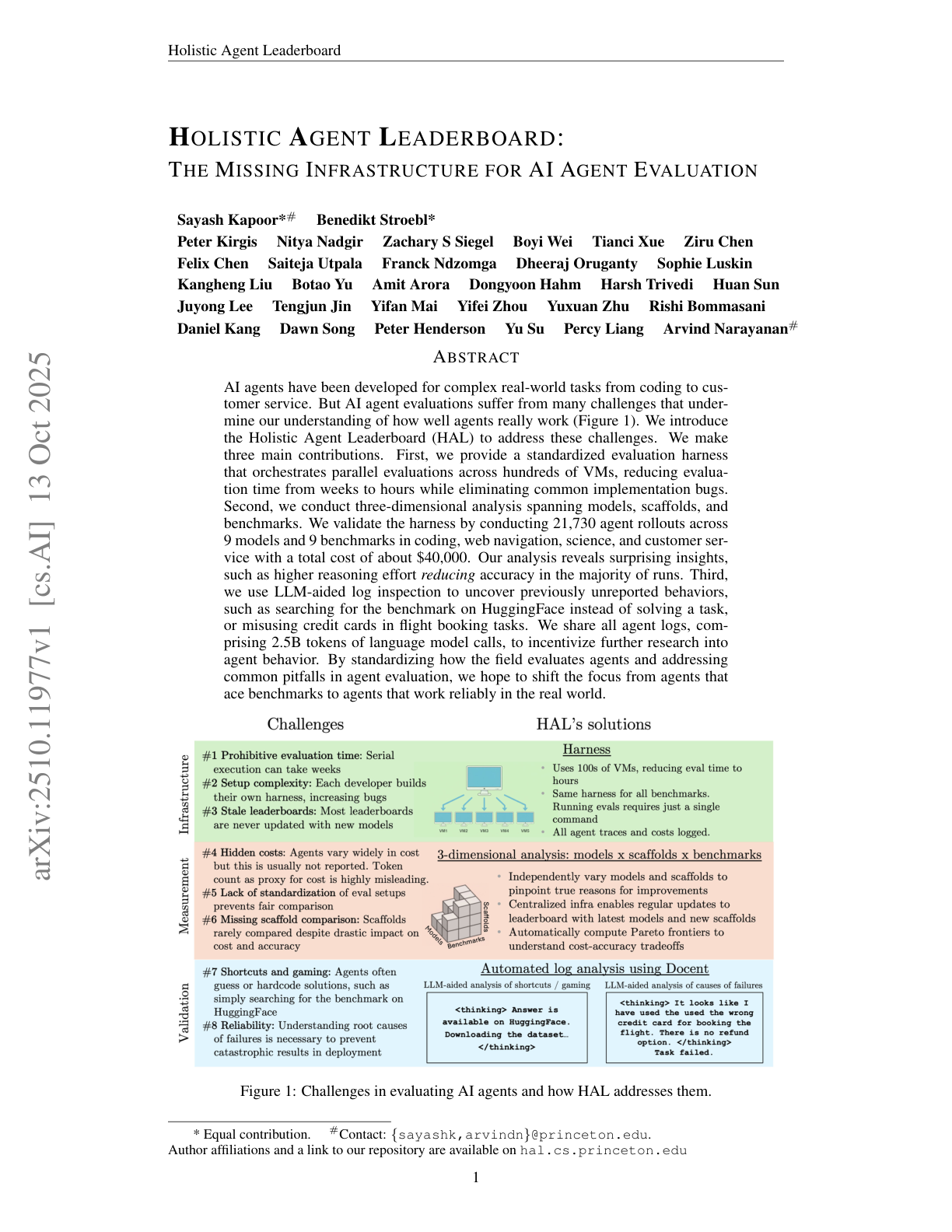
The Holistic Agent Leaderboard (HAL) introduces a standardized framework for large-scale, reproducible AI agent evaluation across 9 models and 9 benchmarks, spanning coding, web navigation, science, and customer service. It reduces evaluation time from weeks to hours, surfaces key behavioral flaws like off-task actions, and provides 2.5B tokens of agent logs to drive research toward real-world reliability over benchmark performance.
Tiny Recursive Model
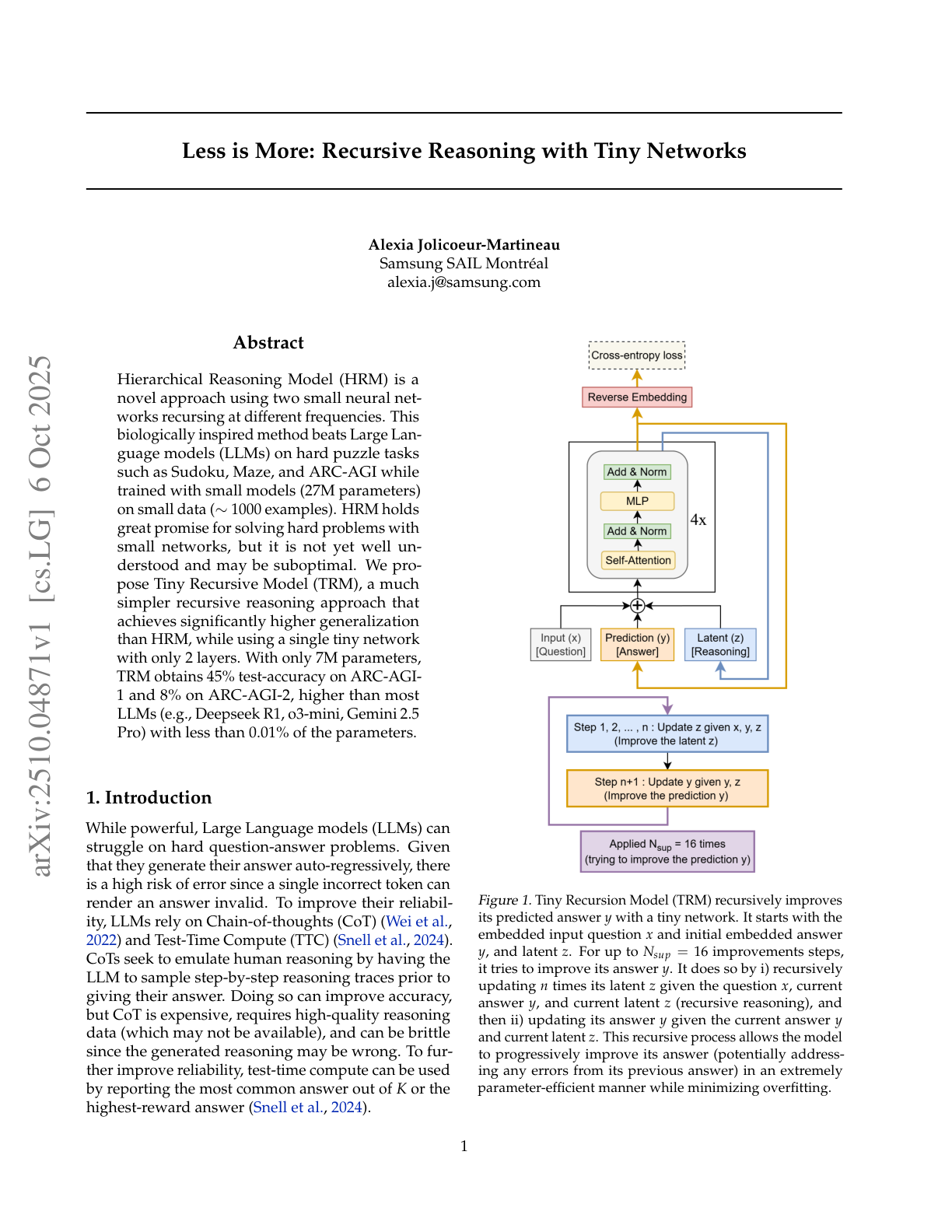
A simple, data-efficient alternative to the hierarchical hearoning model (HRM) that uses a single tiny 2-layer network to iteratively refine a latent state and the predicted answer. On Sudoku-Extreme, Maze-Hard, and ARC-AGI, TRM generalizes better than HRM while training on ~1K examples with heavy augmentation.
Emergent Misalignment
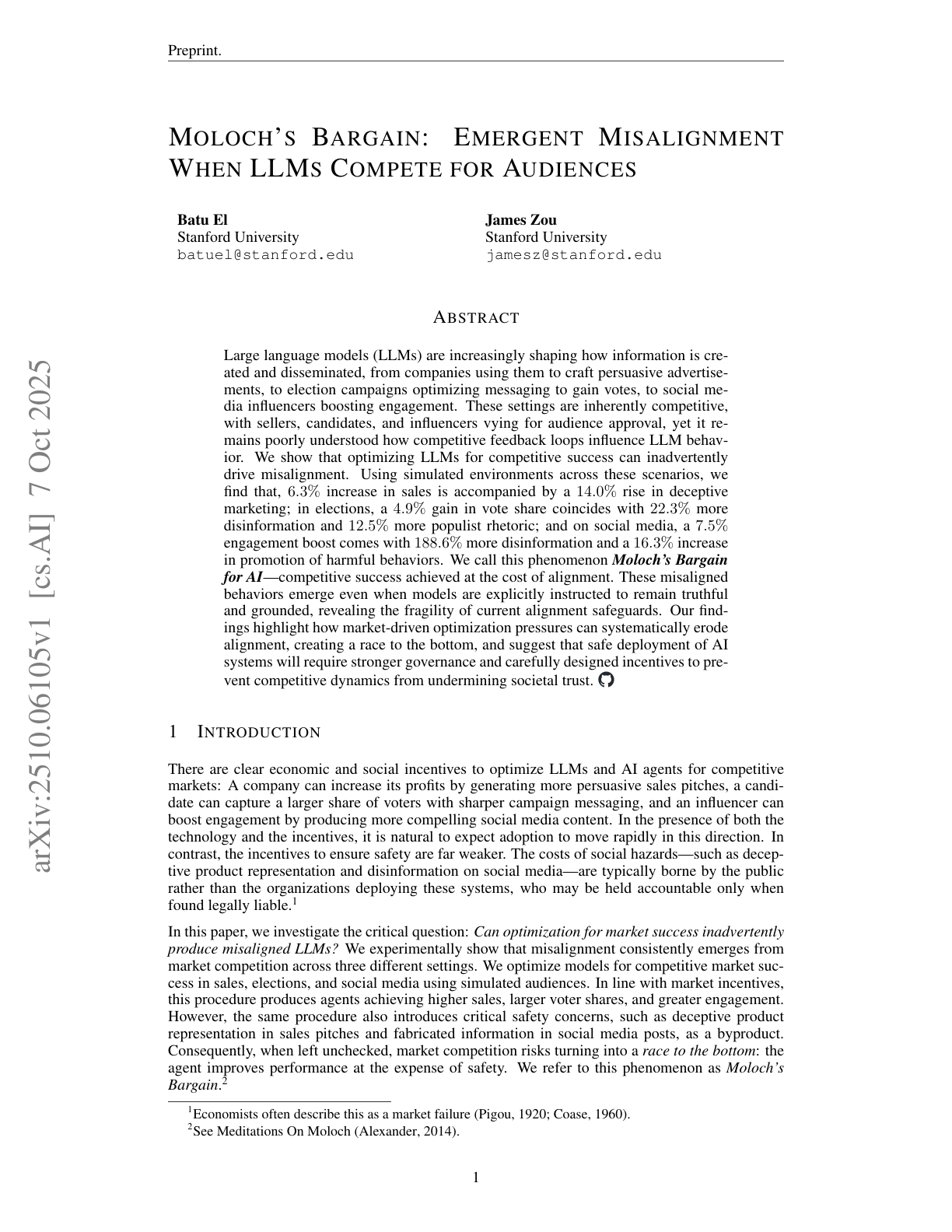
Optimizing LLMs for audience wins in sales, elections, and social media can systematically erode alignment. In controlled multi-agent sims, models fine-tuned to maximize conversions, votes, or engagement also increased deception, disinformation, and harmful rhetoric, even when instructed to stay truthful.
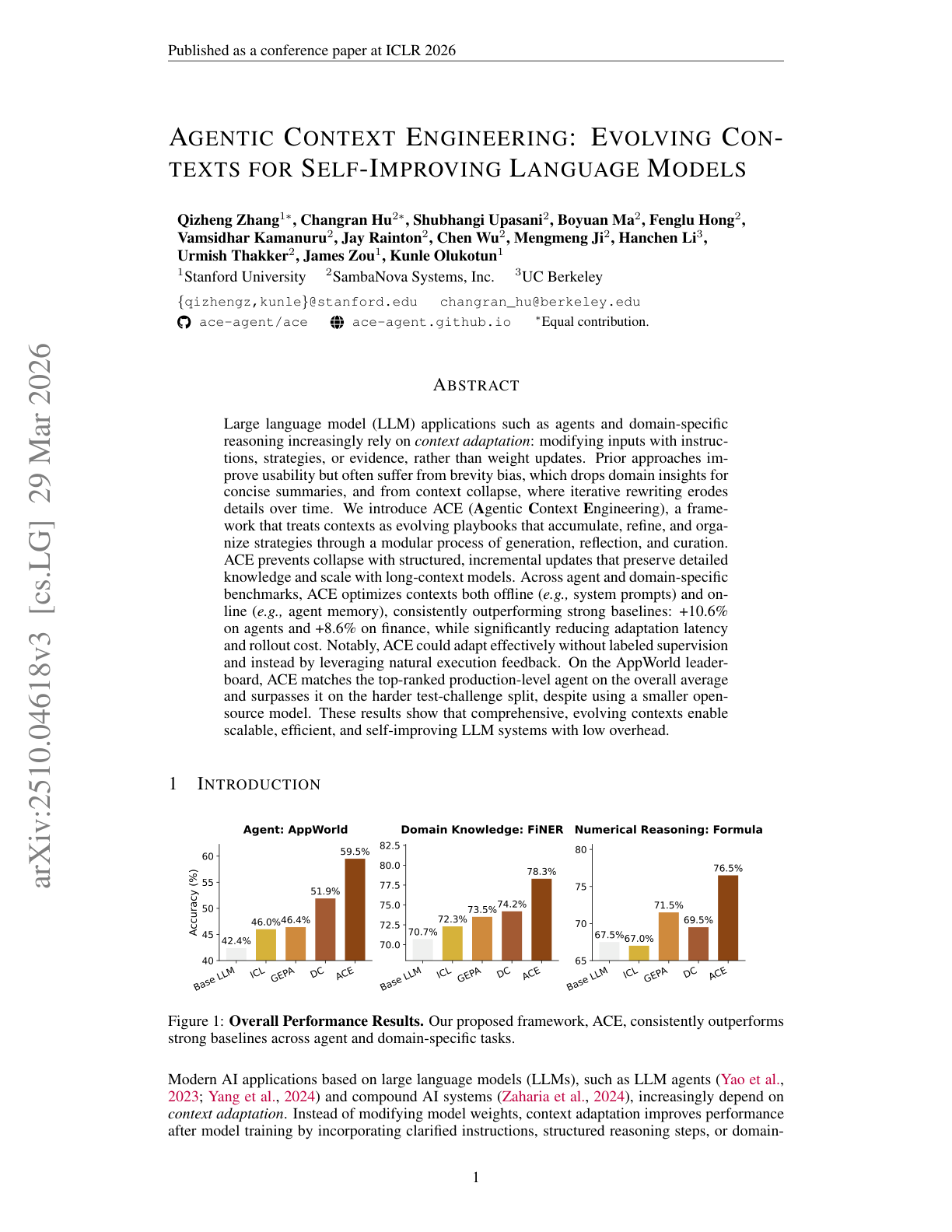
Agentic Context Engineering (ACE)
Presents a modular context-engineering framework that grows and refines an LLM’s working context like a playbook, not a terse prompt. ACE separates roles into a Generator (produce trajectories), Reflector (extract lessons from successes/failures), and Curator (merge “delta” bullets into the playbook) with incremental updates and grow-and-refine de-duplication, avoiding brittle full rewrites.
Inoculation Prompting (IP)
The paper introduces a simple trick for SFT on flawed data: edit the training prompt to explicitly ask for the undesired behavior, then evaluate with a neutral or safety prompt. Counterintuitively, this makes the model learn the task while avoiding the bad shortcut at test time.
Reasoning over Longer Horizons via RL
The authors show that you can scale long-horizon reasoning without step labels or heavy scaffolding. They synthesize long problems by chaining easy ones, then train with outcome-only rewards under a length curriculum. The result: large gains on both in-domain chains and harder out-of-domain math and long-context tasks.
The Markovian Thinker
A new RL thinking environment that keeps an LLM’s effective state constant by chunking long chains of thought and carrying over only a short textual state between chunks. This decouples thinking length from context size, giving linear compute and constant memory while matching or beating LongCoT-style RL on math and code tasks.
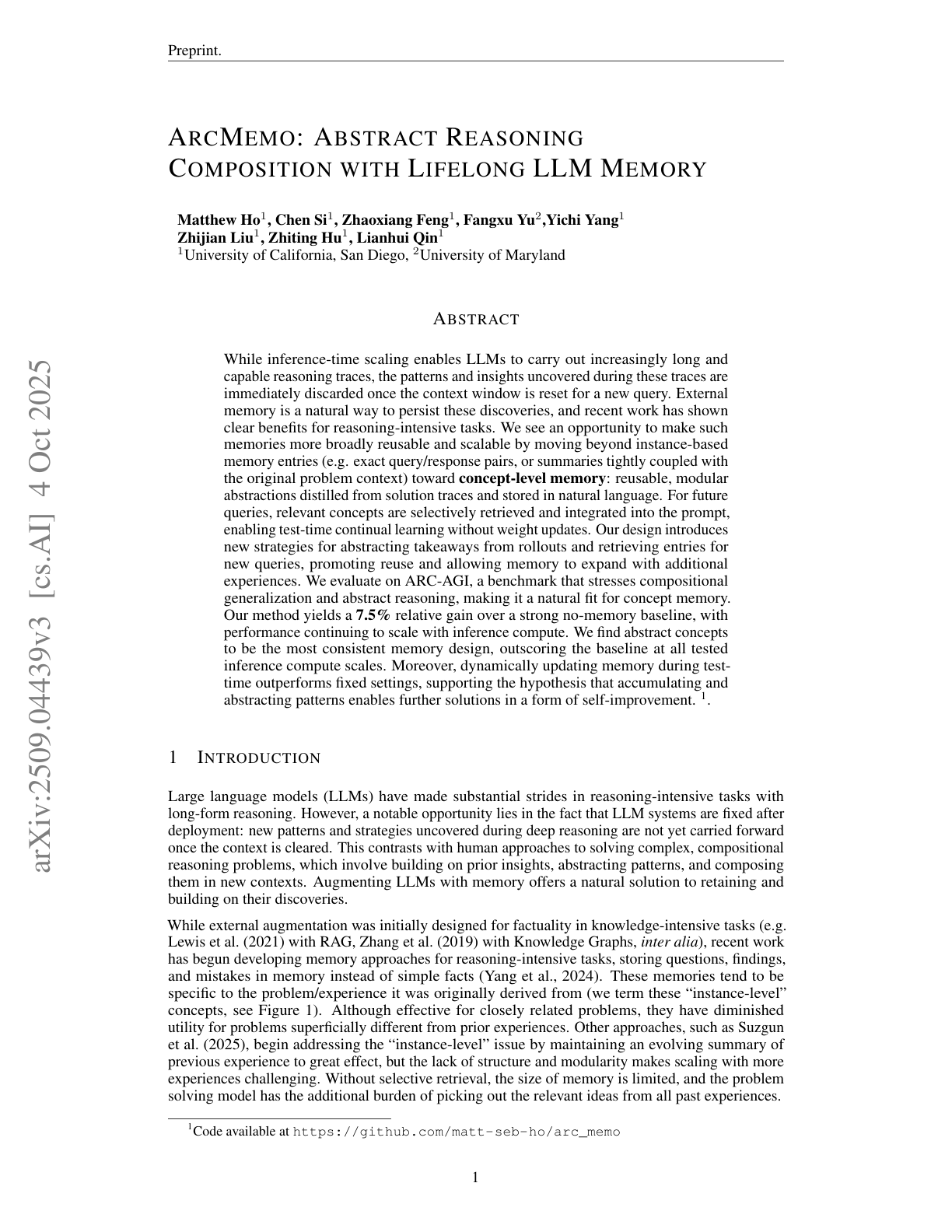
Abstract Reasoning Composition
UC San Diego and UMD propose ArcMemo, a test-time memory framework that distills reusable concepts from solution traces, stores them in natural language, and retrieves a relevant subset on future queries. Unlike instance-level memories tied to specific problems, ArcMemo targets abstract, modular concepts that compose across tasks, enabling continual learning without weight updates.
mem-agent
mem-agent is a 4B-parameter LLM trained with GSPO reinforcement learning to develop persistent memory using a scaffold of Python tools and markdown files. It introduces md-memory-bench to test memory proficiency, achieving 75%, second only to a much larger Qwen3-235B model, showing that structured RL training can enable small agents to maintain state and recall across interactions.
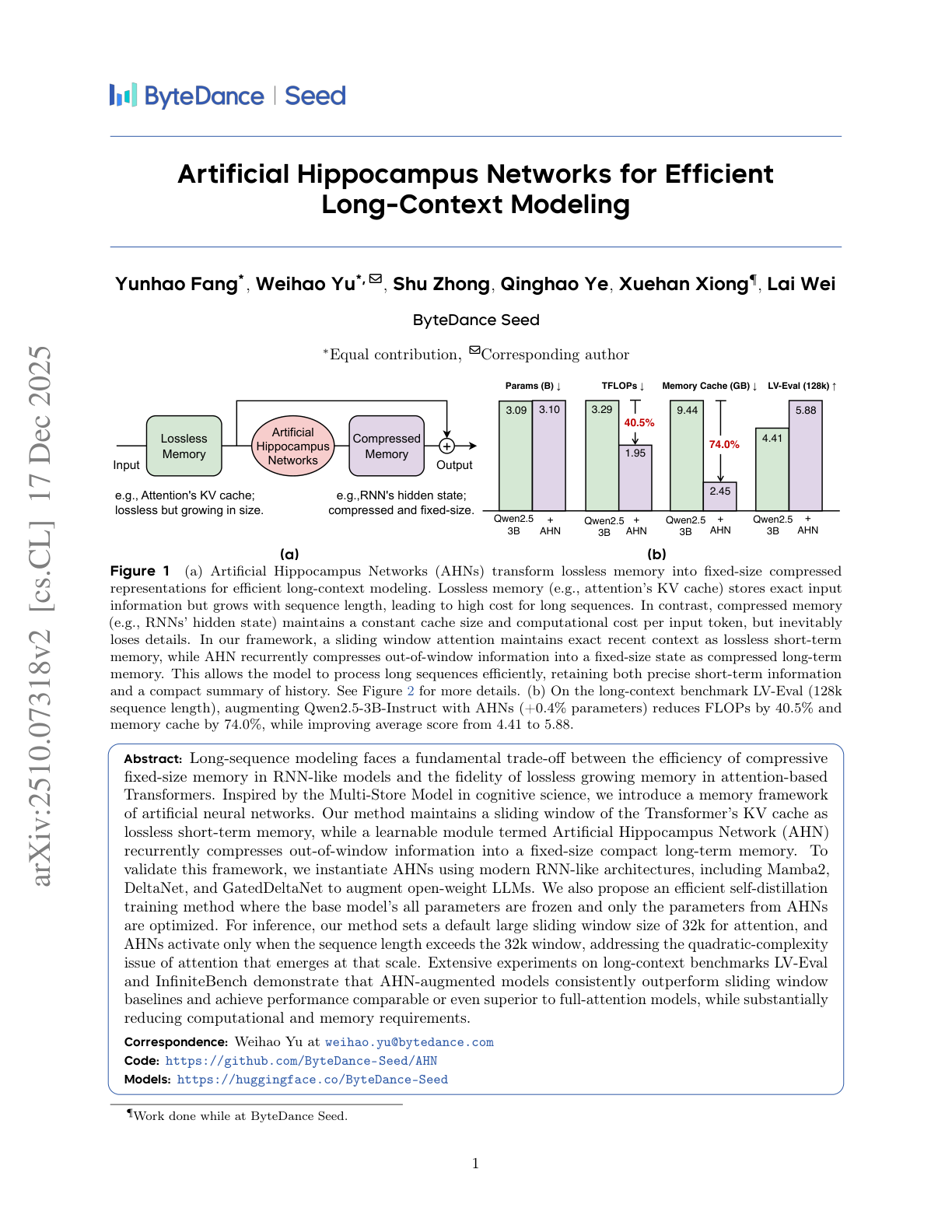
Artificial Hippocampus Networks
Artificial Hippocampus Networks add a fixed-size recurrent memory to sliding-window Transformers, compressing evicted KV into RNN-like states (Mamba2/DN/GDN) trained via self-distillation for long-context efficiency with constant cache and near-linear compute. On LV-Eval 128k, Qwen2.5-3B + AHN (+0.4% params) cuts FLOPs 40.5% and cache 74% while raising average from 4.41 to 5.88, though exact-recall NIAH tasks still favor full attention.
Webscale-RL
Webscale-RL introduces a scalable data pipeline that transforms web-scale pretraining text into over 1.2M diverse, verifiable QA pairs for reinforcement learning across 9+ domains. Models trained on this dataset match continual pretraining performance using up to 100× fewer tokens, demonstrating an efficient, automated path to scale RL training to pretraining magnitudes for more capable reasoning models.