AI Papers of the Week
Every paper worth reading in AI, hand-picked one week at a time.
Discover and explore top AI papers with Claude Code or Codex
npx @dair-ai/mcp setup
How Faithful are RAG Models? (ClashEval)
ClashEval constructs a 1,200-question benchmark across six domains with intentionally corrupted retrieved documents to measure when RAG helps and when it misleads GPT-4 and other top LLMs.
A Survey on Retrieval-Augmented Text Generation for LLMs
This survey organizes the RAG literature into a four-stage framework (pre-retrieval, retrieval, post-retrieval, generation) and traces the paradigm's evolution alongside open challenges.
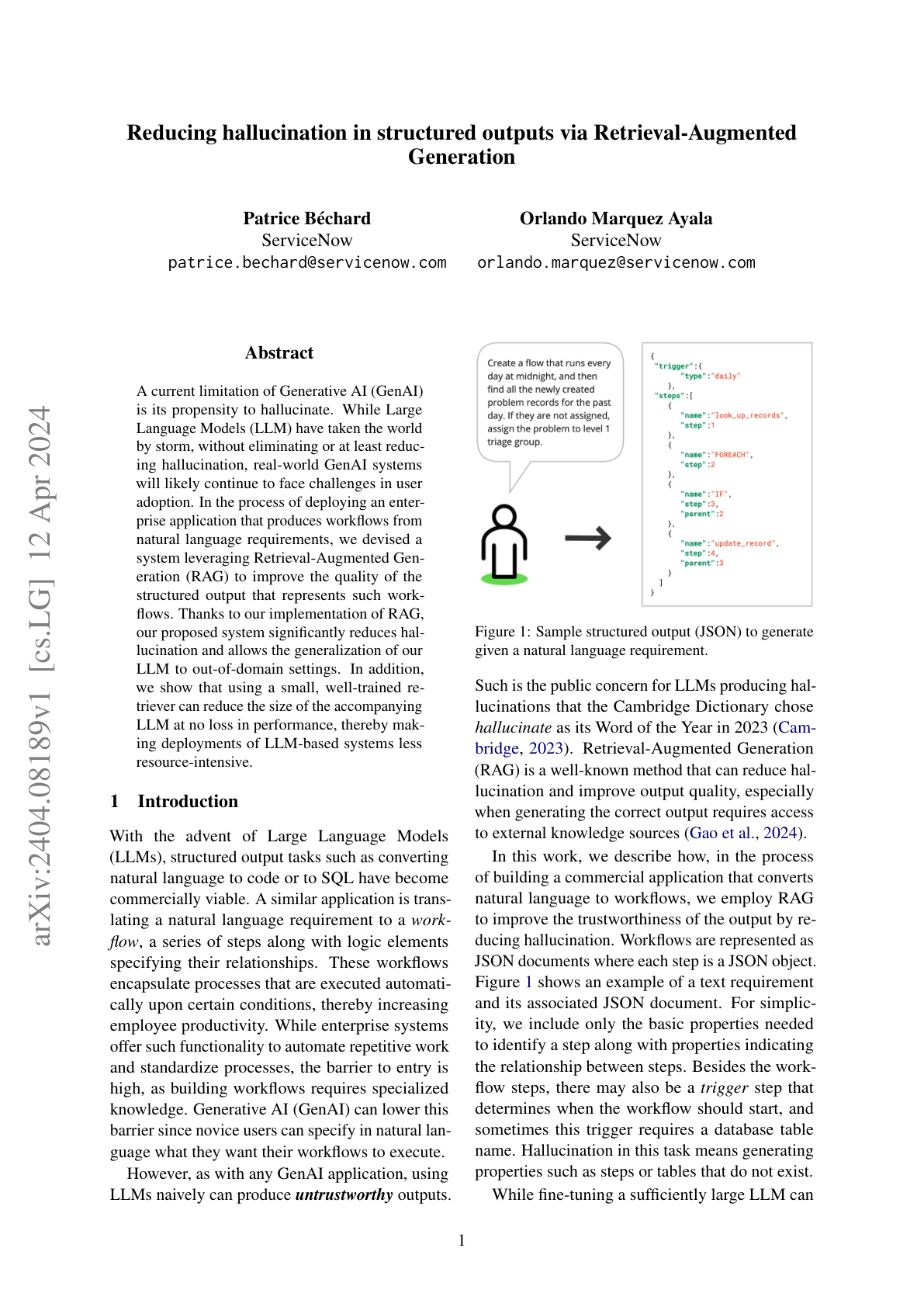
Reducing Hallucination in Structured Outputs via RAG
This paper deploys a compact RAG pipeline - small retriever plus small LM - for an enterprise workflow-generation task and shows it reduces hallucination while improving out-of-domain generalization vs a baseline LLM.
The Influence Between NLP and Other Fields
This EMNLP 2023 analysis quantifies NLP's cross-disciplinary engagement using a Citation Field Diversity Index across 23 academic fields. The headline: NLP has become dramatically more insular over four decades.
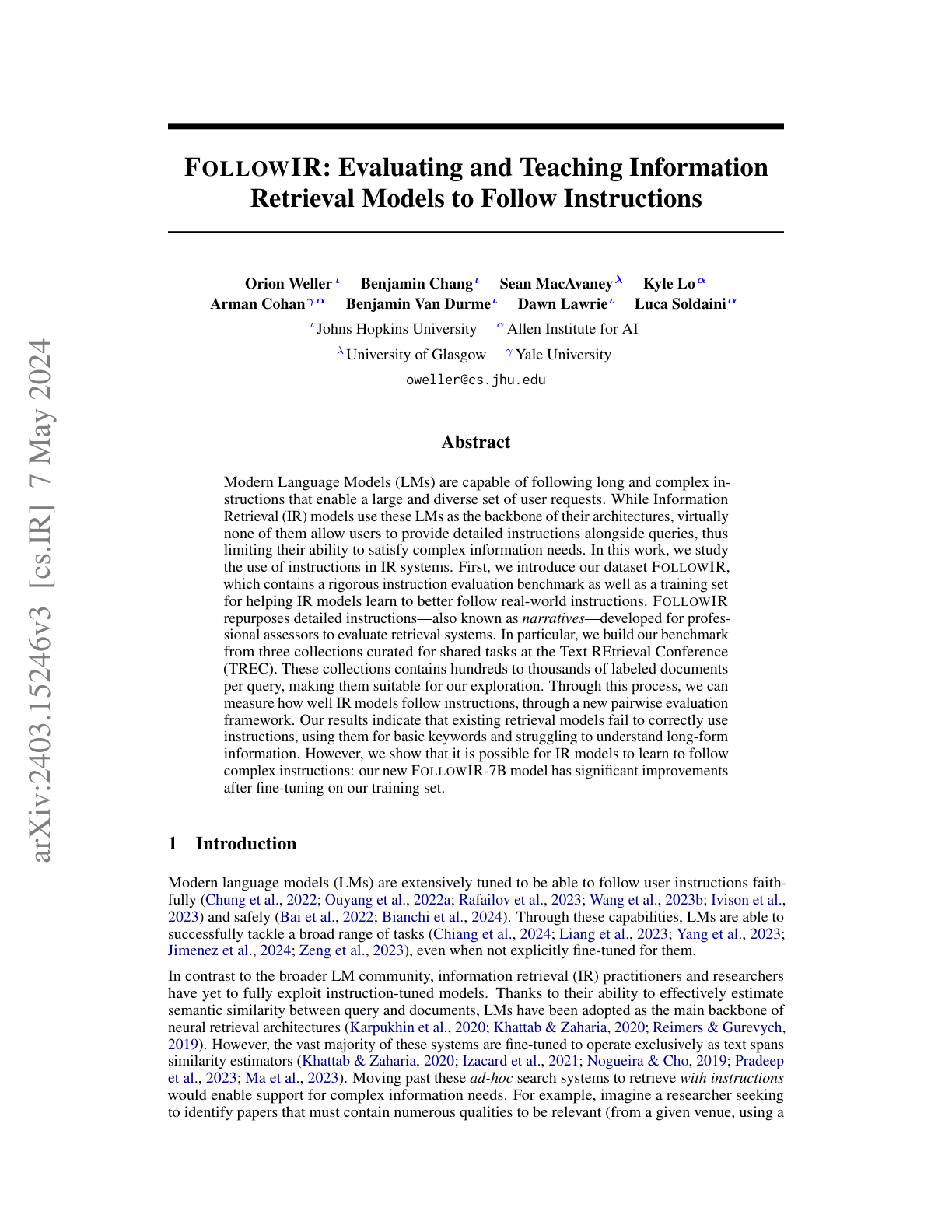
FollowIR
FollowIR is both a benchmark and a training set for teaching retrieval models to follow real-world, instruction-style queries rather than just match keywords.
TacticAI
Google DeepMind, in collaboration with Liverpool FC, releases TacticAI, a geometric deep-learning system that analyzes football corner kicks and suggests alternative tactics for coaches to explore.
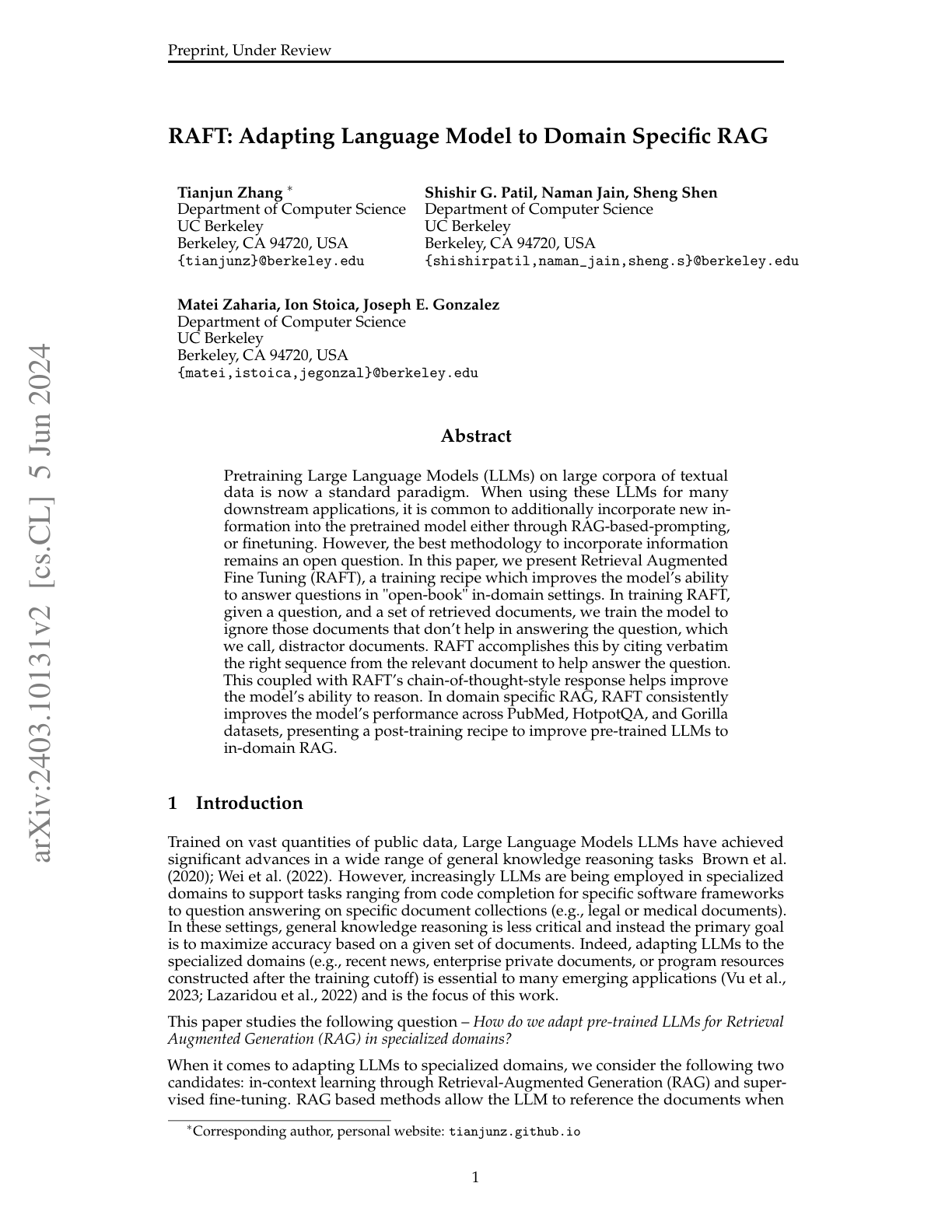
RAFT: Retrieval-Augmented Fine-Tuning
RAFT is a fine-tuning recipe that teaches LLMs to handle distractor documents during RAG and to answer with CoT-style citations to retrieved passages.
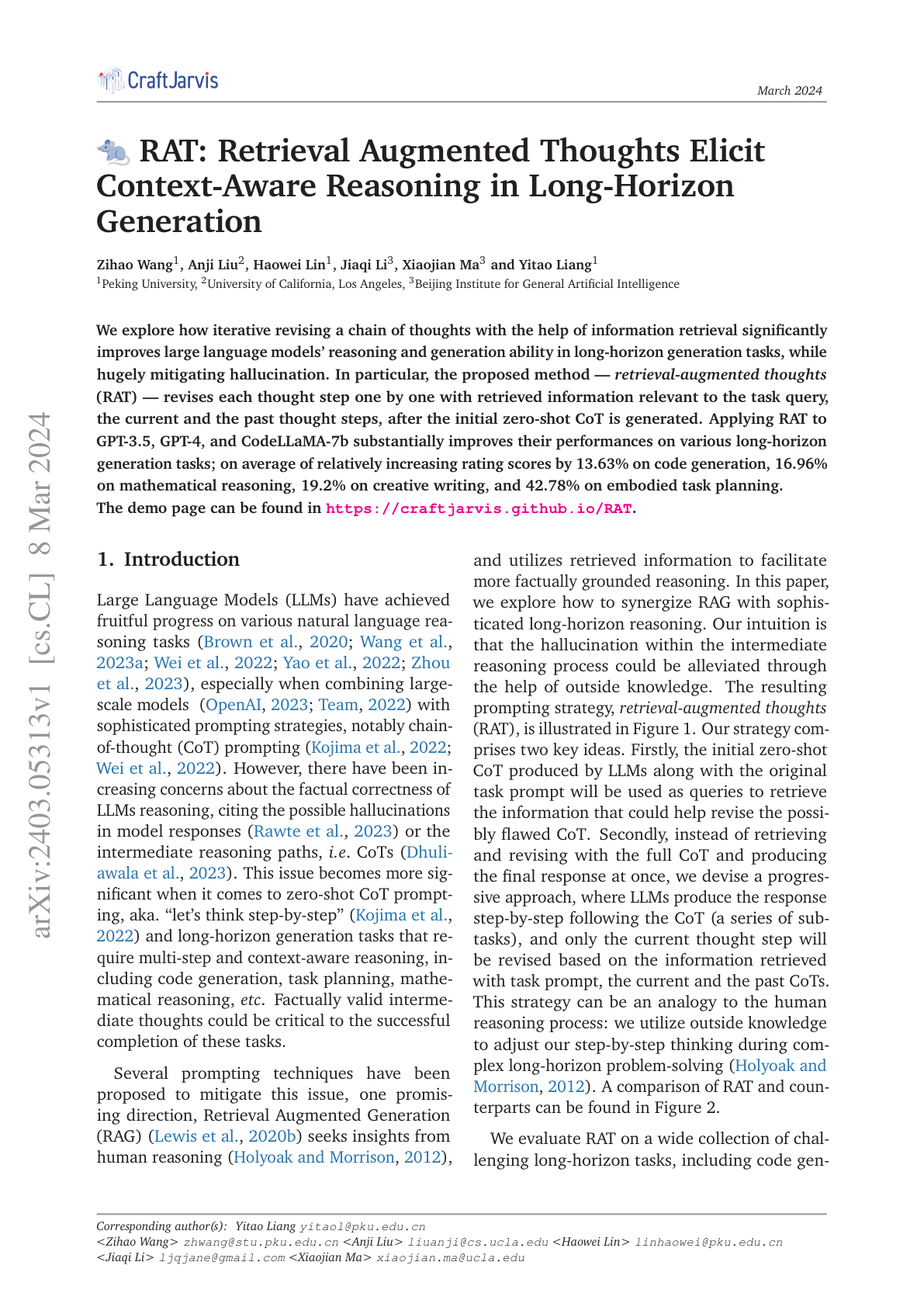
Retrieval Augmented Thoughts (RAT)
RAT augments chain-of-thought by iteratively rewriting each reasoning step using retrieved context, sharply reducing hallucination on long-horizon generation tasks.
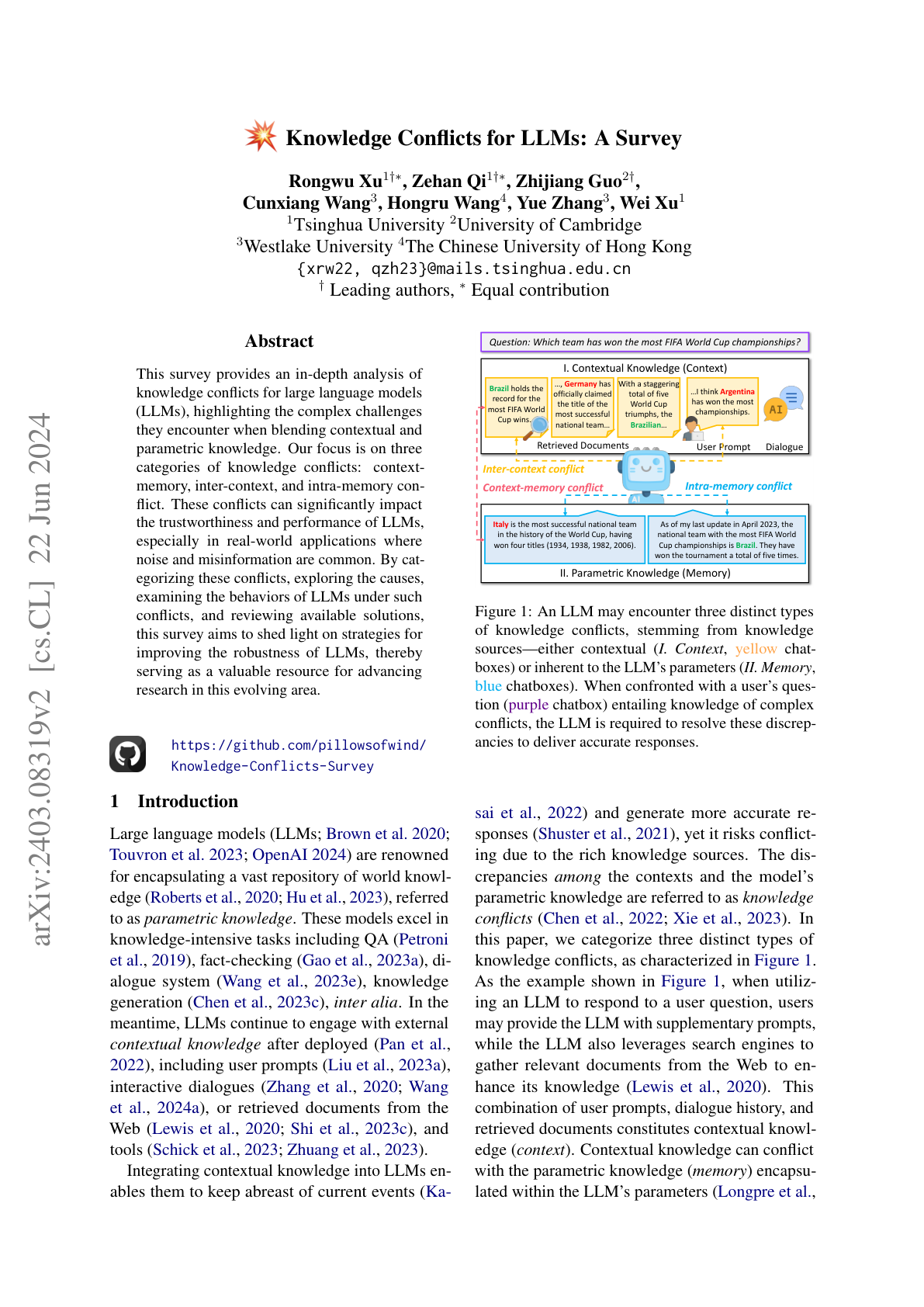
Knowledge Conflicts for LLMs
A survey that maps the landscape of knowledge conflicts in LLMs, covering how they arise, how models behave under them, and how to mitigate them.
C4AI Command-R
Cohere for AI releases Command-R, a 35B open-weight LLM tuned specifically for retrieval-augmented generation, tool use, and multilingual workflows.
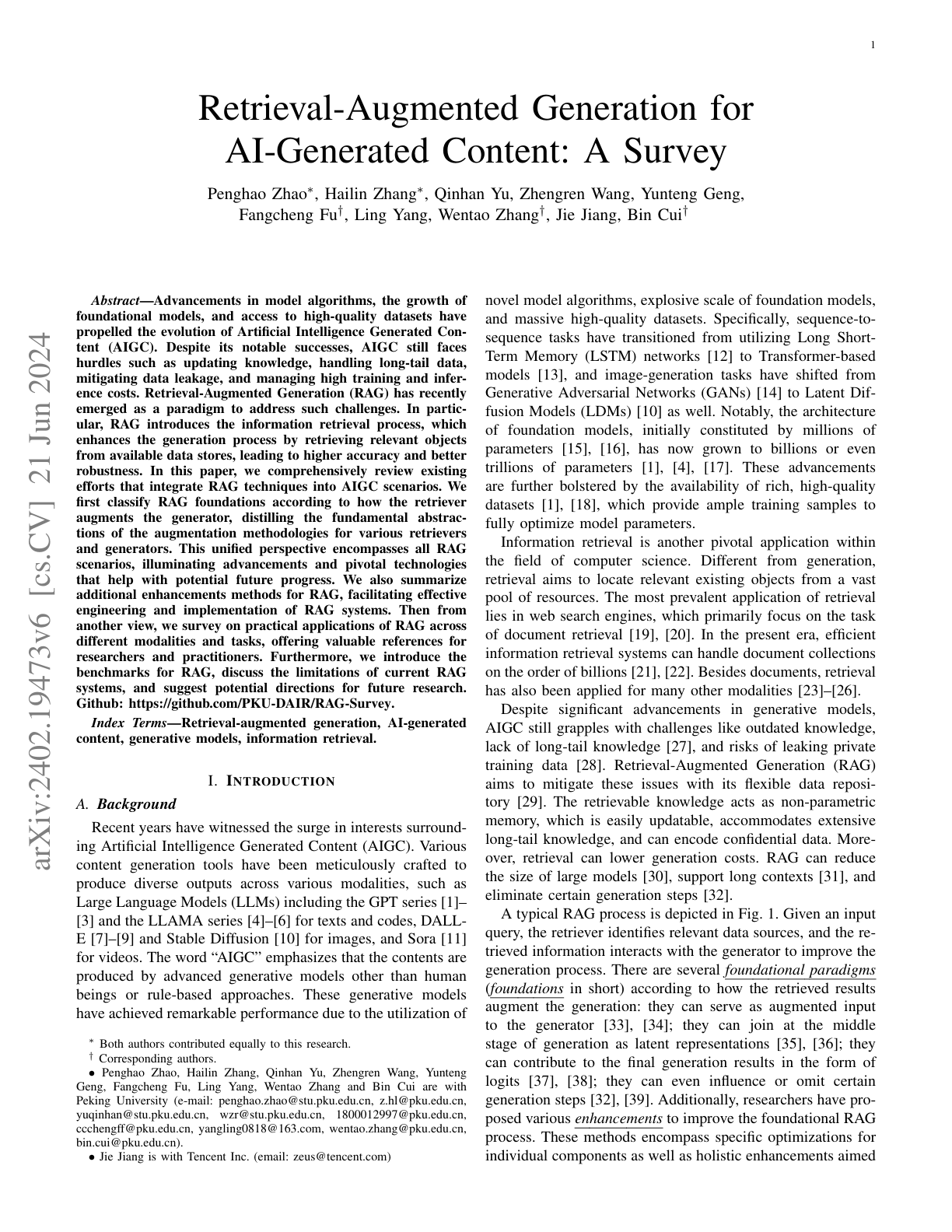
RAG for AI-Generated Content
A survey that extends RAG beyond text, showing how retrieval augmentation is being applied across code, image, audio, video, and 3D generation.
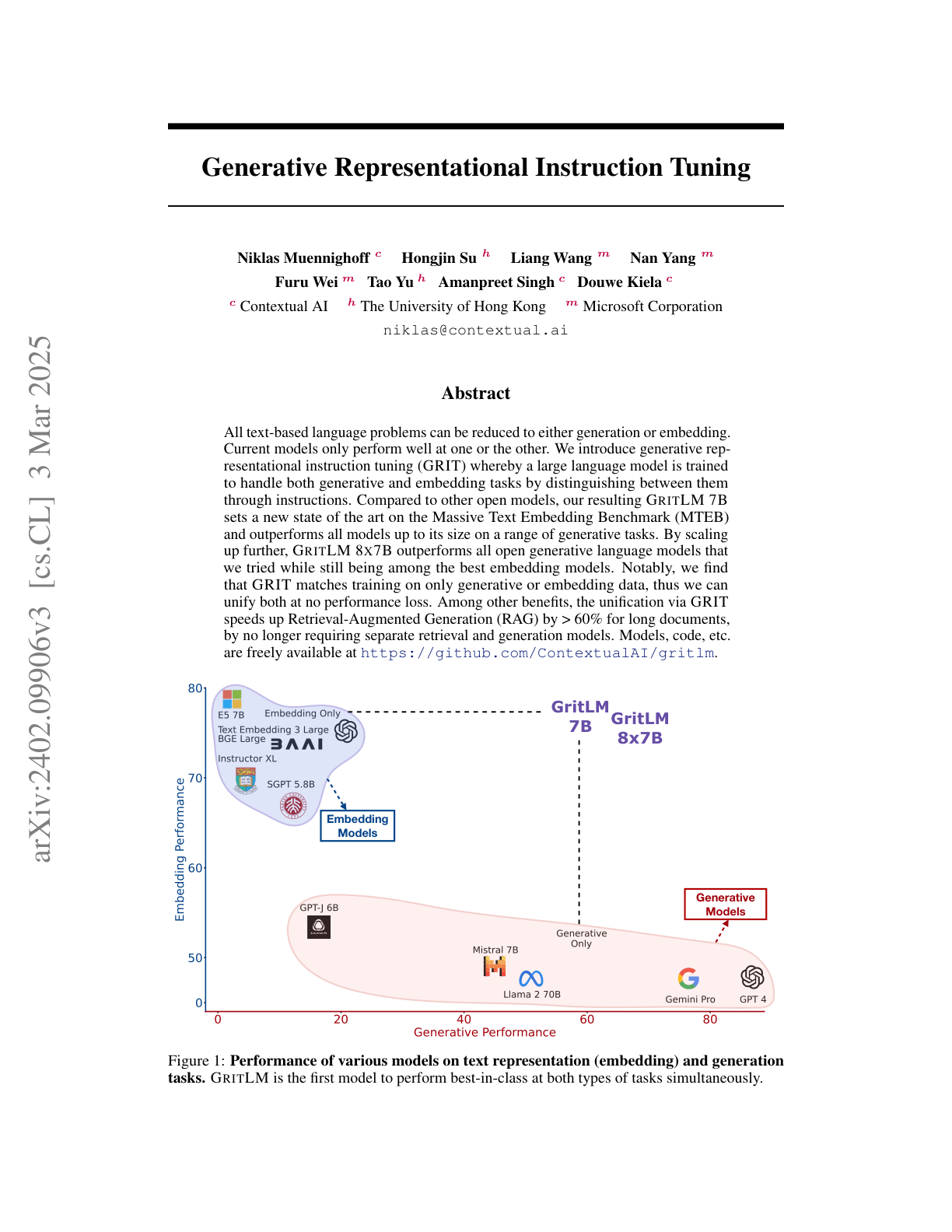
GRIT
GRIT (Generative Representational Instruction Tuning) trains a single LLM to handle both generative and embedding tasks, switching behavior based on instructions.
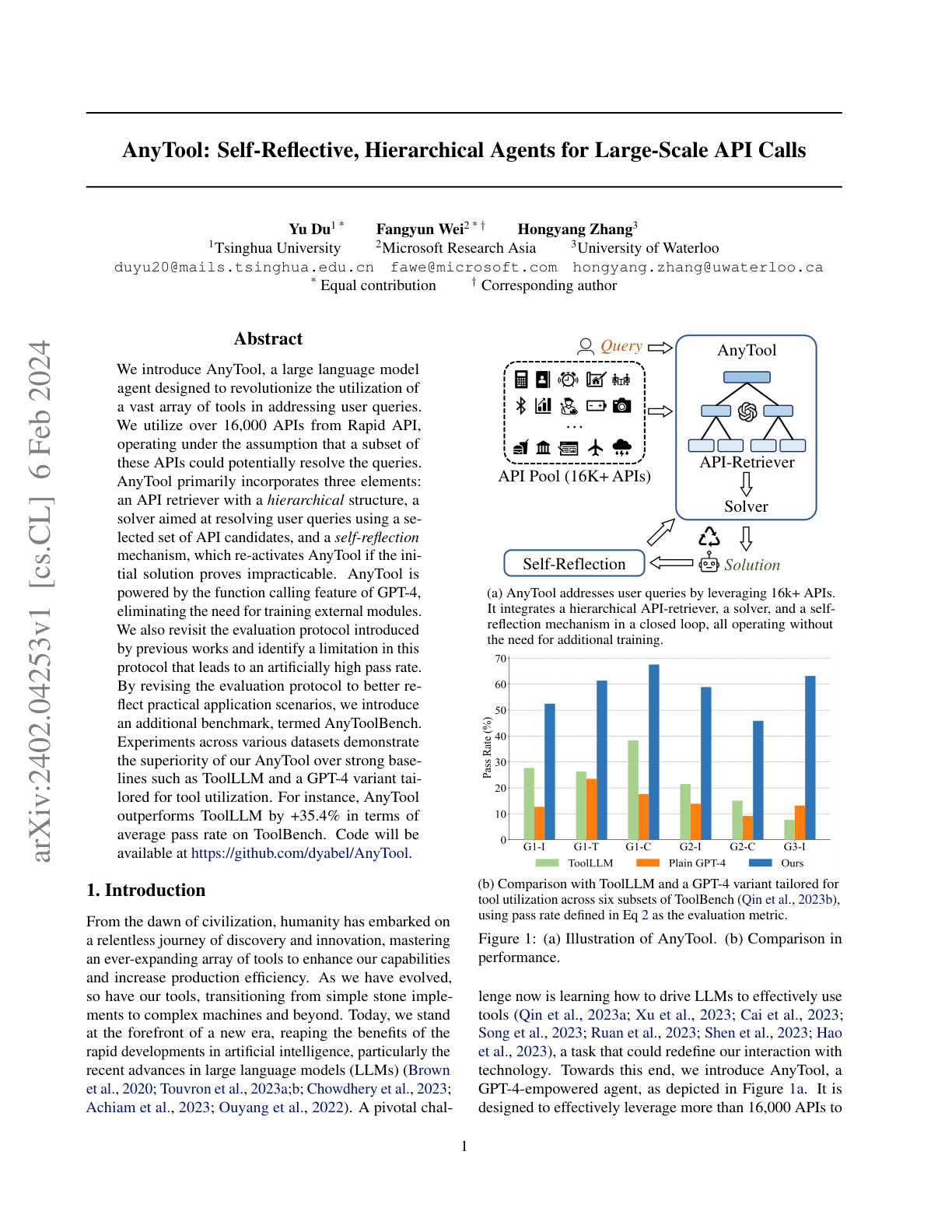
AnyTool
AnyTool is a training-free LLM agent that scales tool-use to 16K+ Rapid APIs through a hierarchical retriever and a self-reflective solver.
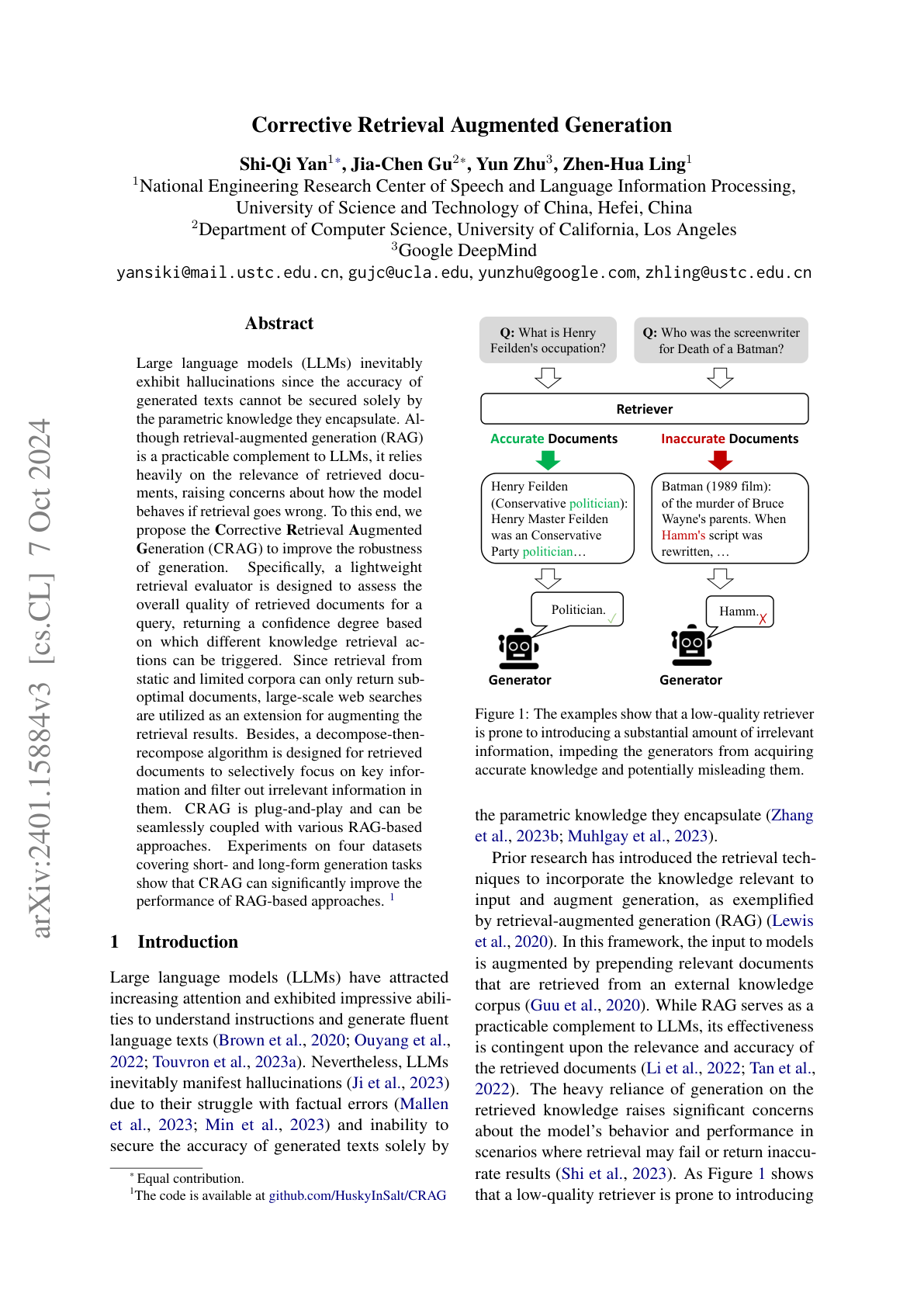
Corrective RAG (CRAG)
CRAG adds a self-correcting loop around retrieval so a RAG system can detect and repair bad retrievals instead of feeding them straight into generation.
The Power of Noise: Redefining Retrieval in RAG
A study stress-testing the retriever component of RAG systems with surprising results about what actually helps generation.
RAG vs. Finetuning
Microsoft researchers systematically compare RAG and fine-tuning (and their combination) on LLMs like Llama 2 and GPT-4 using an agricultural domain dataset.
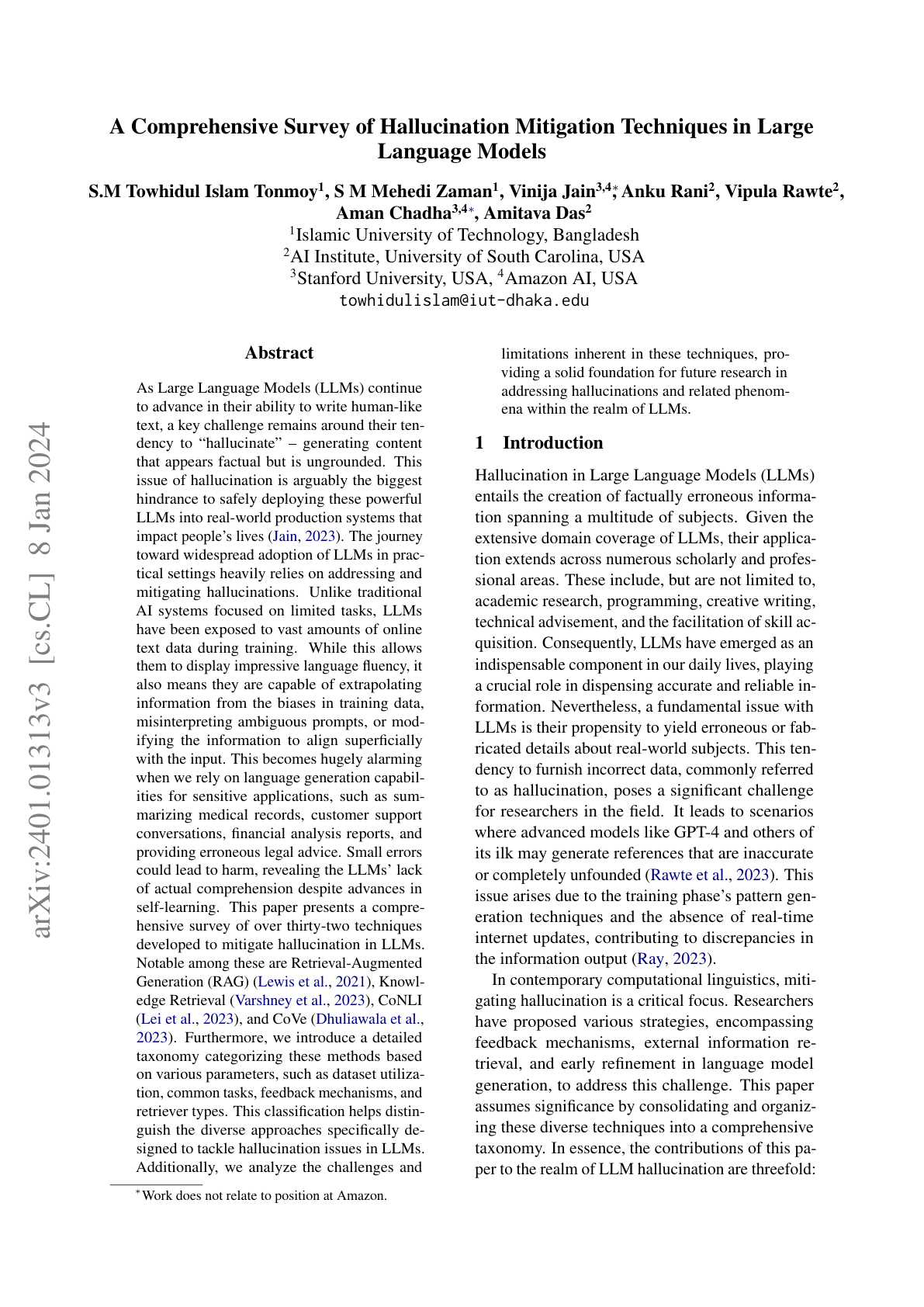
Mitigating Hallucination in LLMs
A survey cataloging 32 hallucination-mitigation techniques and organizing them into a practical taxonomy.
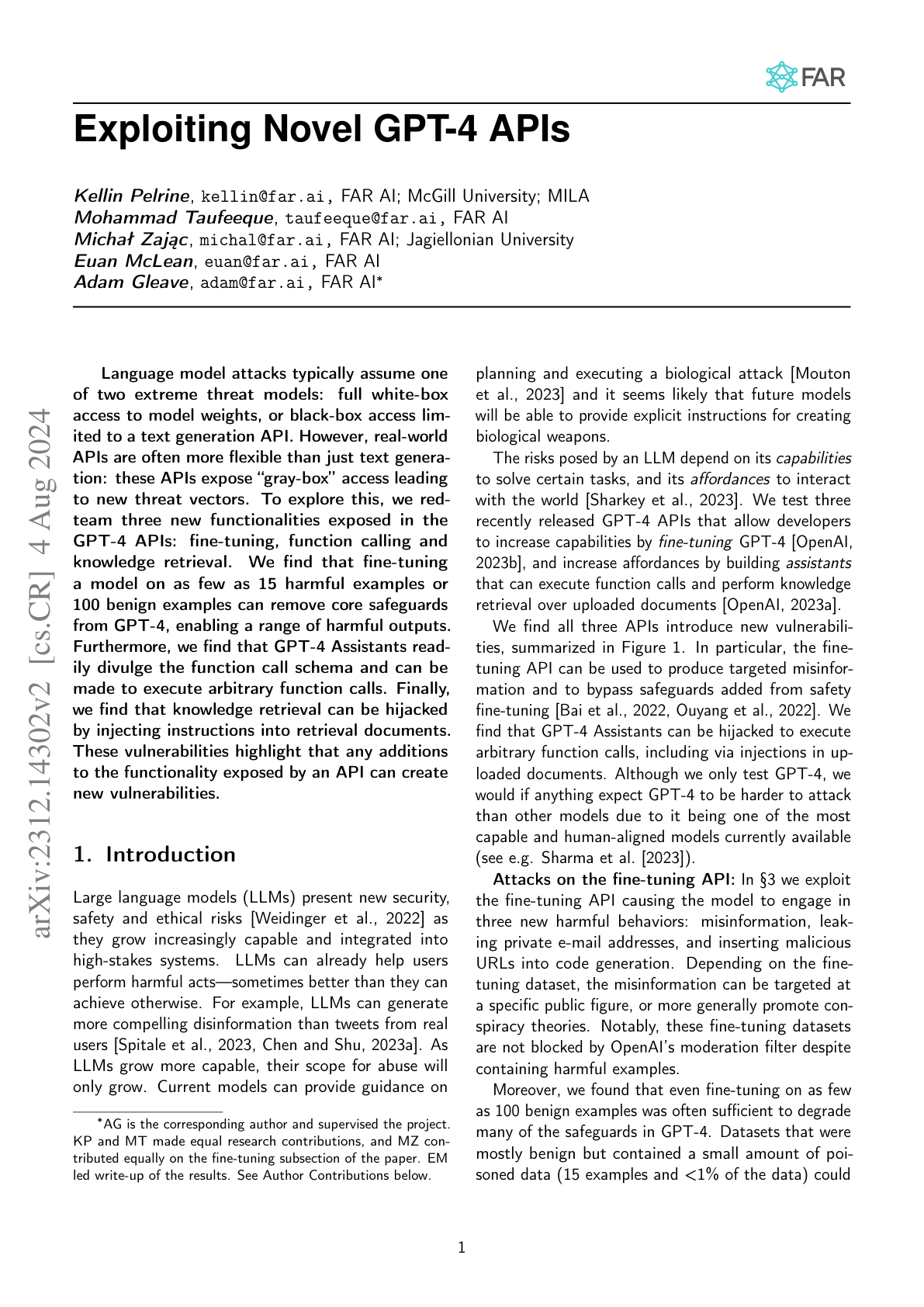
Exploiting Novel GPT-4 APIs
A red-team study of three newer GPT-4 API surfaces - fine-tuning, function calling, and knowledge retrieval - that reveals each introduces new attack vectors.
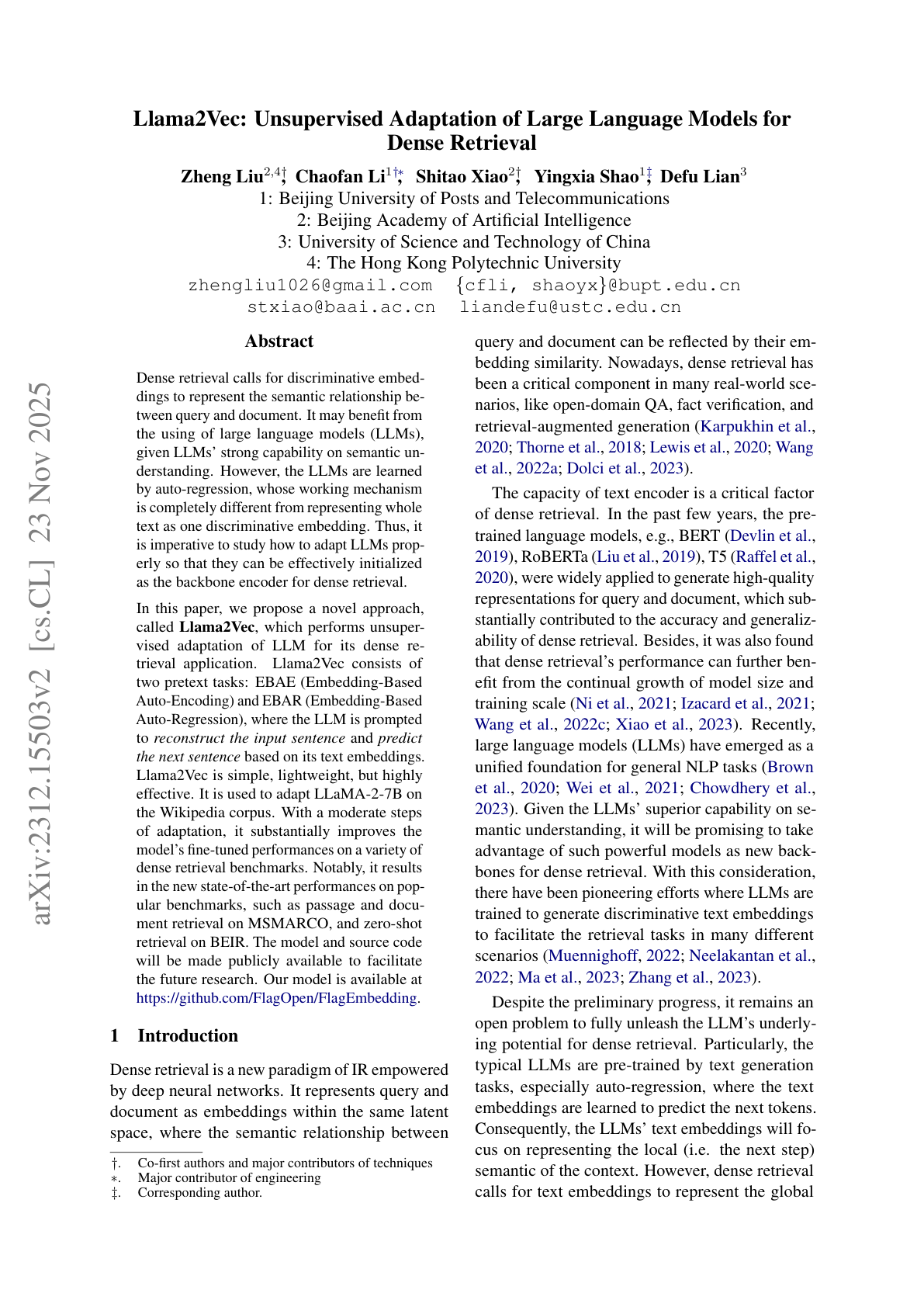
LLaRA
LLaRA adapts a decoder-only LLM for dense retrieval via two tailored pretext tasks that leverage text embeddings from the LLM itself.
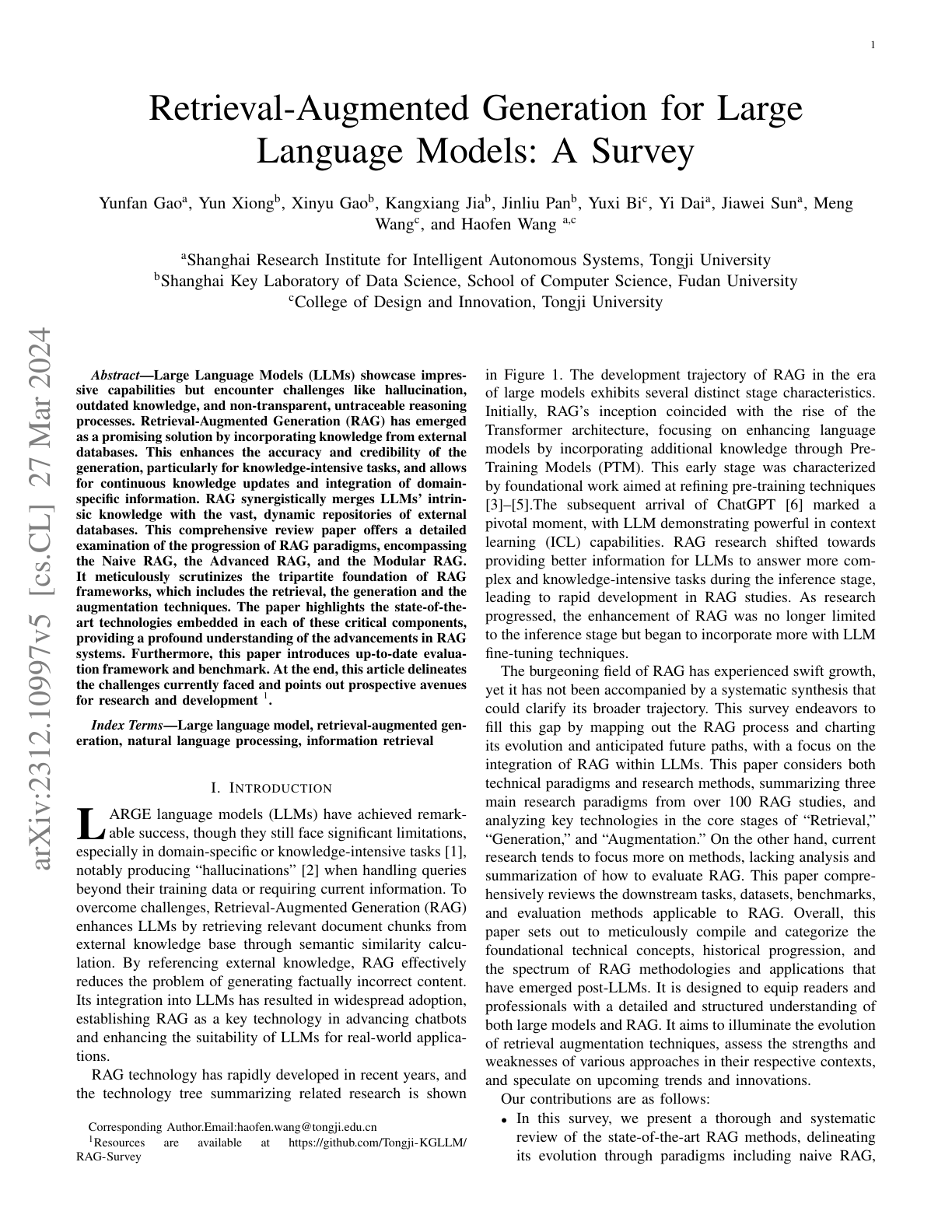
RAG for LLMs
A broad survey of Retrieval-Augmented Generation research, organizing the rapidly growing literature into a coherent map.
RankZephyr
RankZephyr is an open-source LLM for listwise zero-shot reranking that bridges the effectiveness gap with GPT-4.
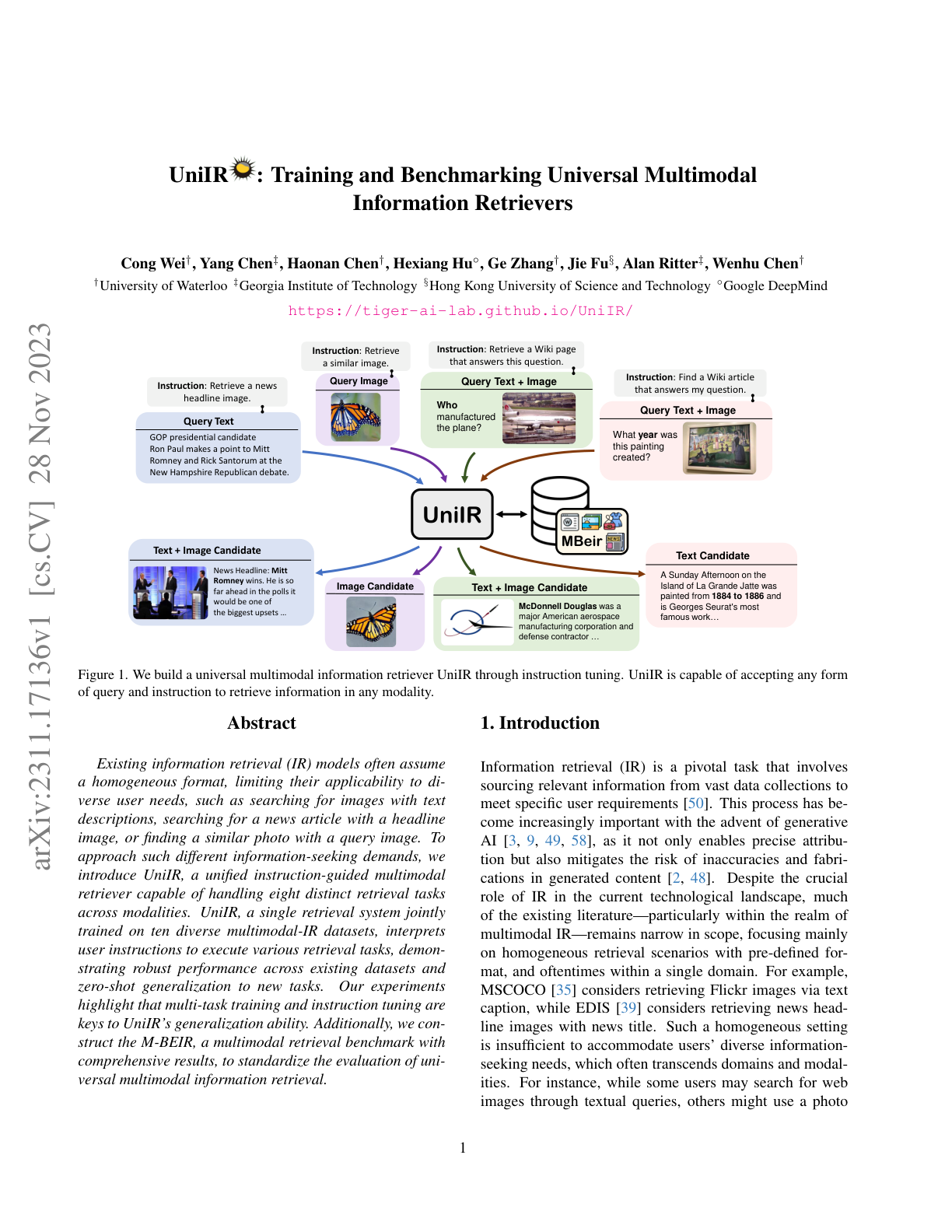
UniIR
UniIR is a unified instruction-guided multimodal retriever that handles eight retrieval tasks across modalities with a single model.
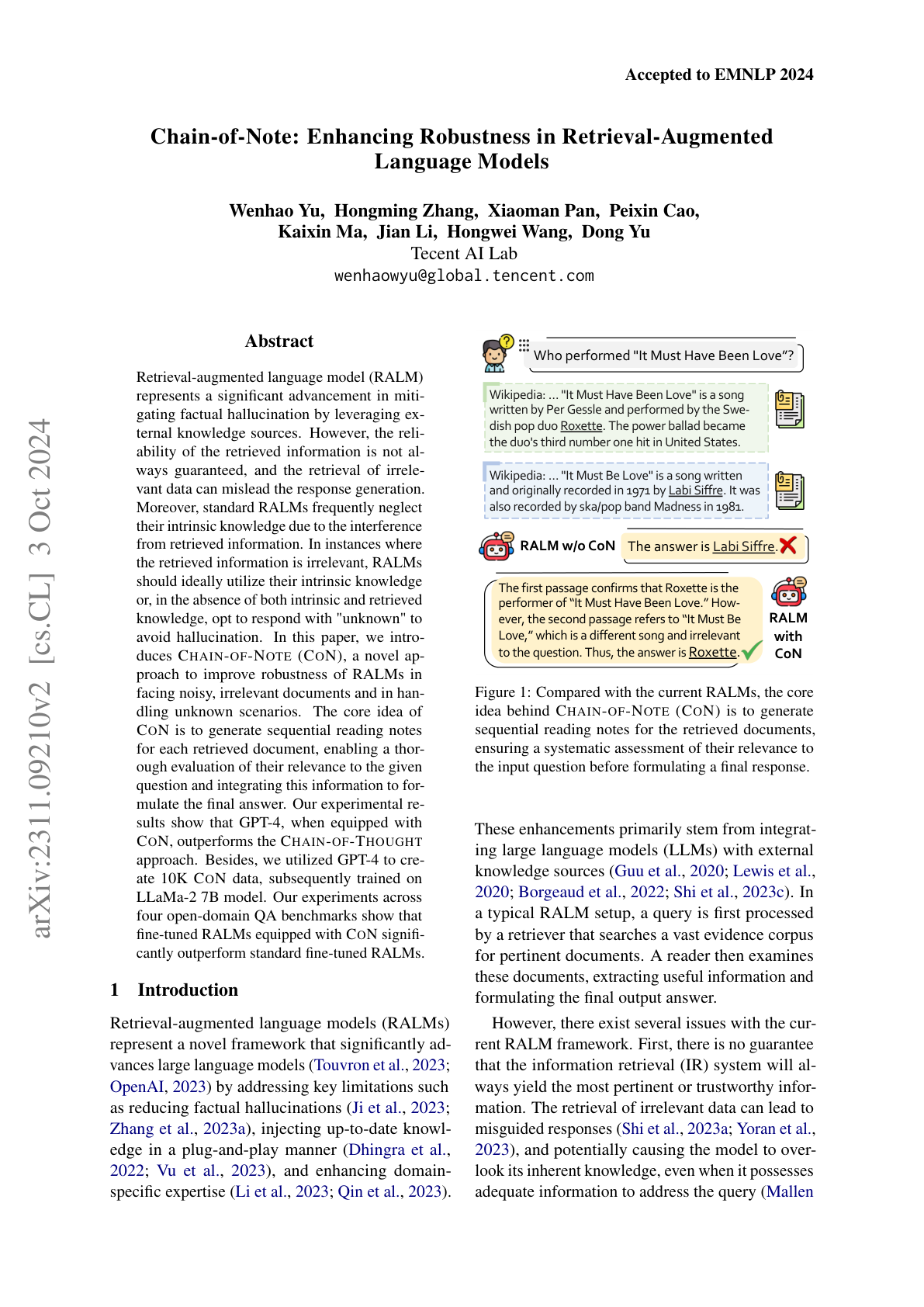
Chain-of-Note (CoN)
Tencent's Chain-of-Note adds an explicit note-taking step to RAG so the model can evaluate retrieved evidence before answering.
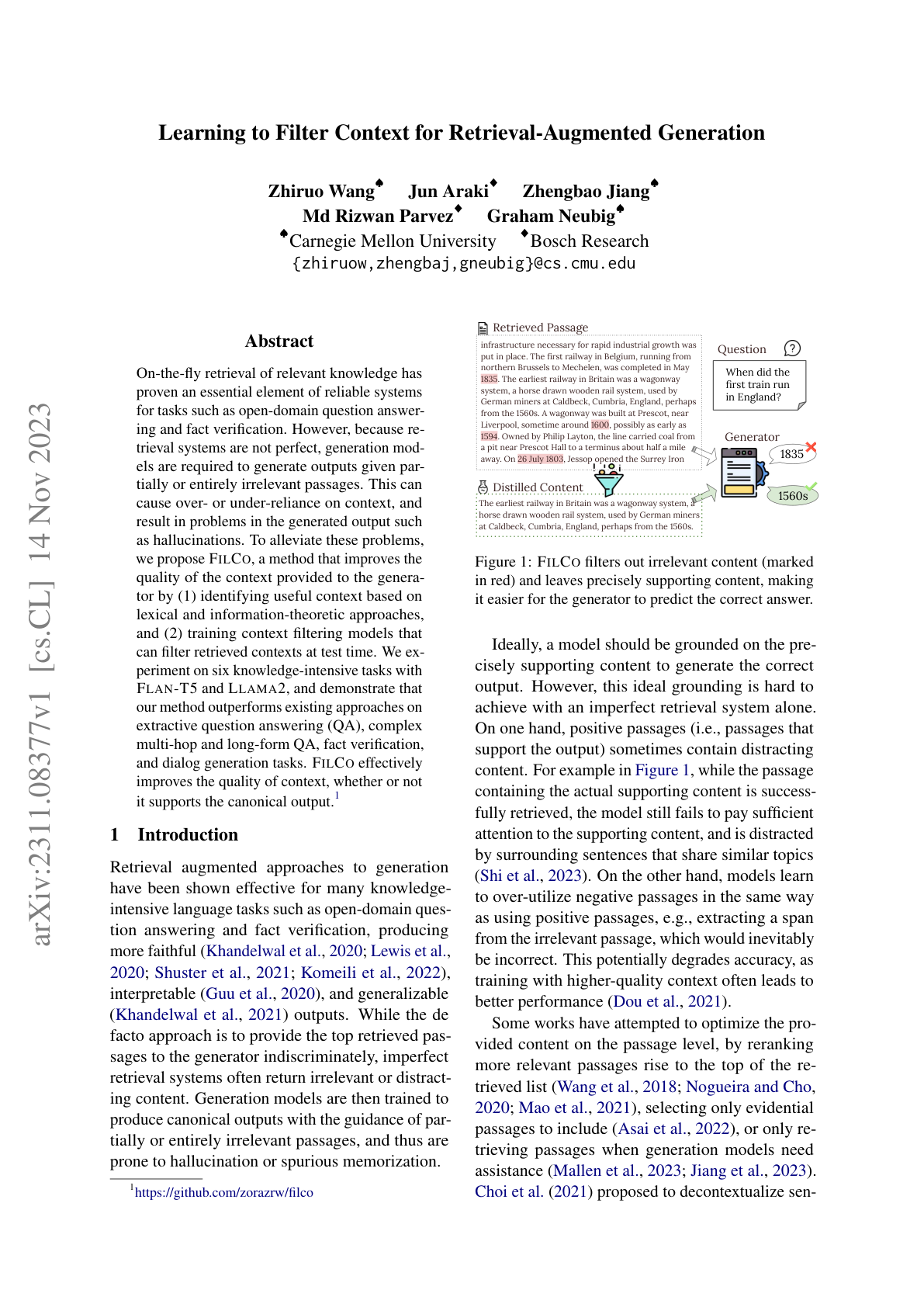
Learning to Filter Context for RAG (FILCO)
CMU's FILCO improves RAG by training a dedicated model to filter retrieved contexts before they reach the generator.