AI Papers of the Week
Every paper worth reading in AI, hand-picked one week at a time.
Discover and explore top AI papers withClaude CodeCodex
npx @dair-ai/mcp setup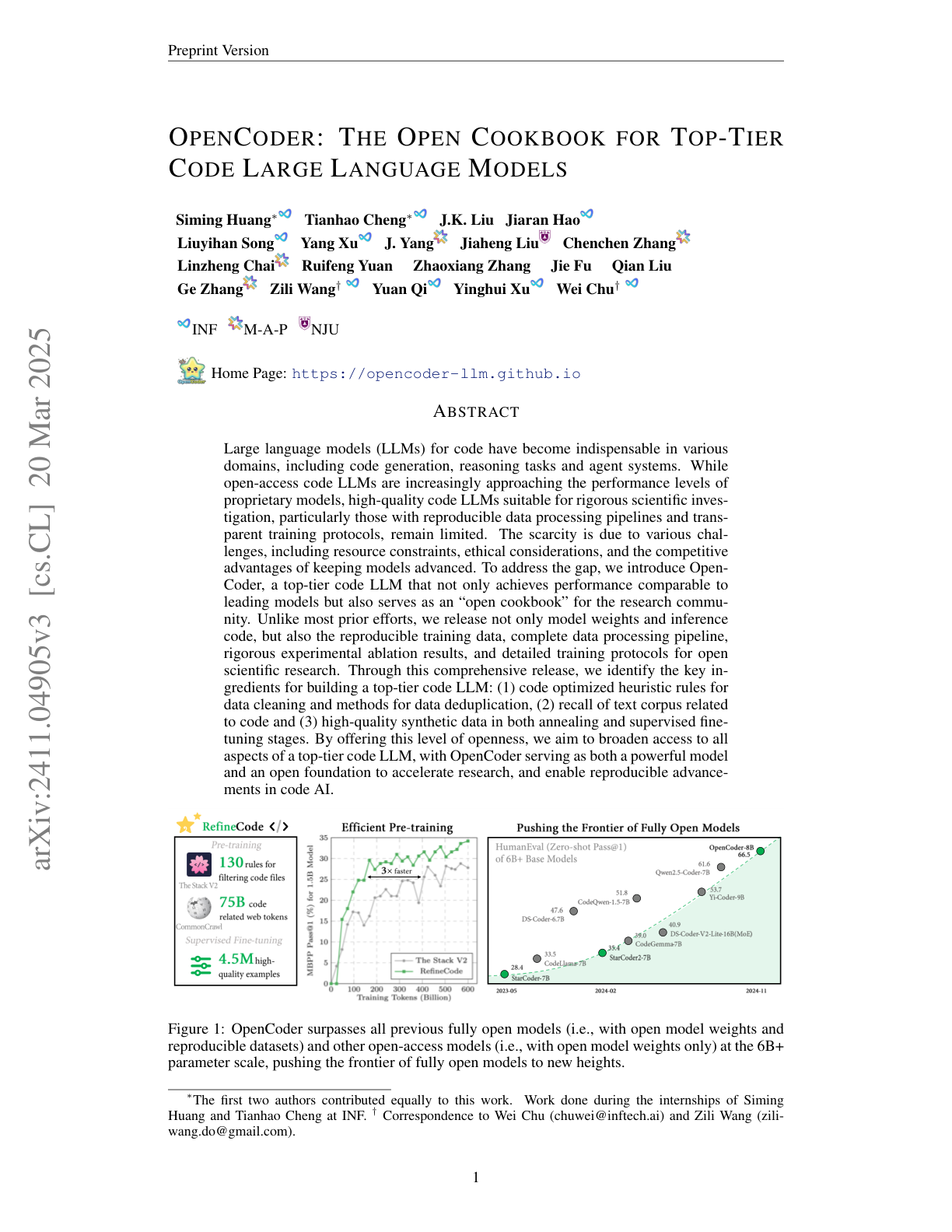
OpenCoder
introduces OpenCoder, a fully open-source LLM specialized for code generation and understanding; the authors identify several critical factors for building high-performing code LLMs: (1) effective data cleaning with code-optimized heuristic rules for deduplication, (2) recall of relevant text corpus related to code, and (3) high-quality synthetic in both annealing and supervised fine-tuning stages; OpenCoder surpasses previous fully open models at the 6B+ parameter scale and releases not just the model weights but also the complete training pipeline, datasets, and protocols to enable reproducible research.
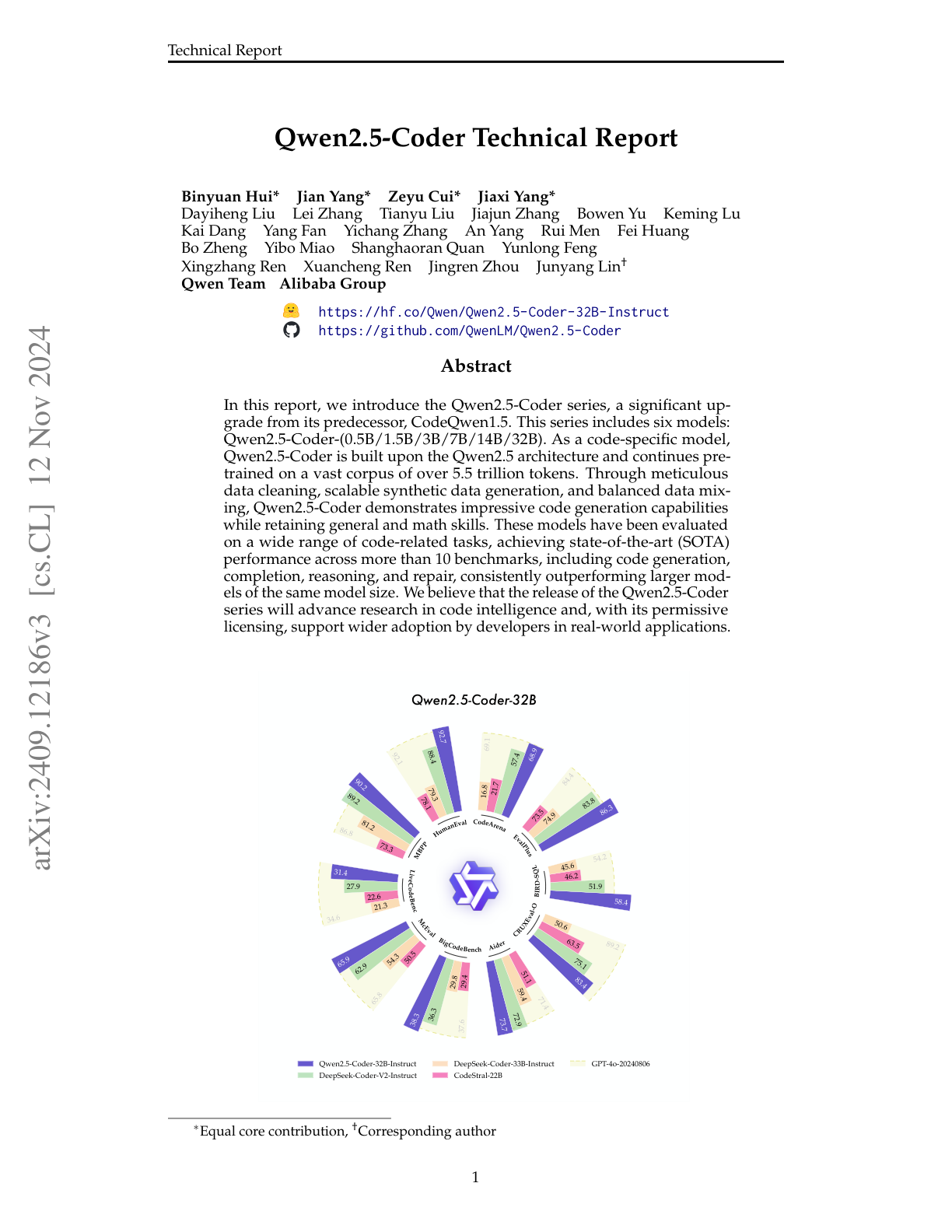
Qwen2.5 Coder
a series of models including 1.5B and 7B parameters; it’s built upon the Qwen2.5 architecture which is continuously pretrained on 5.5 trillion tokens; achieves state-of-the-art performance across more than 10 benchmarks; includes strong capabilities in code generation, completion, reasoning, and repairing.
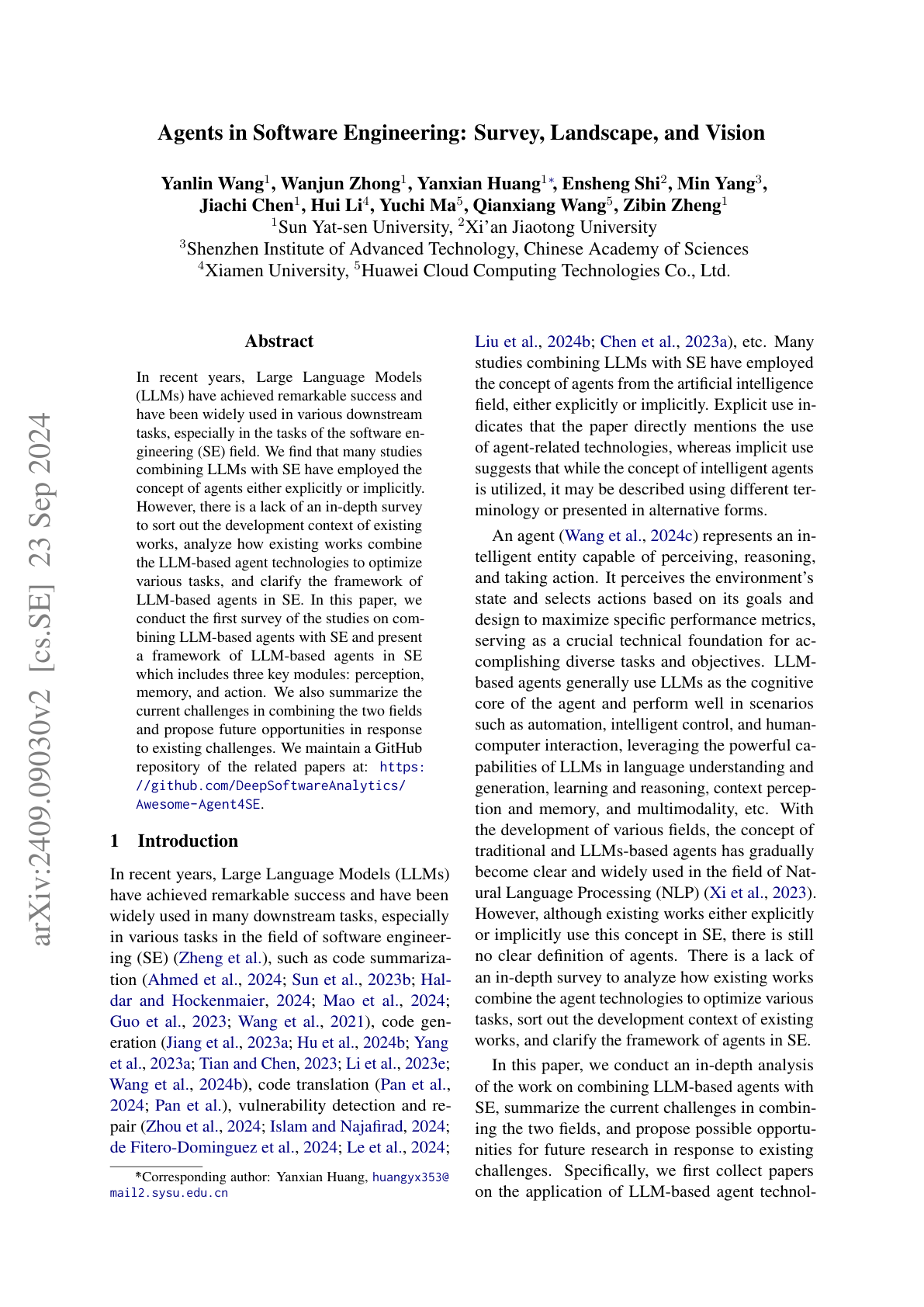
Agents in Software Engineering
provides a comprehensive overview of frameworks of LLM-based agents in software engineering.
Effective of AI on High Skilled Work
studies the impact of generative AI on software developers; reveals a 26.08% increase in the number of completed tasks among the developers that use AI tools like GitHub Copilot; also shows that less experienced developers are likely to adopt the AI tools and have greater productivity gains.
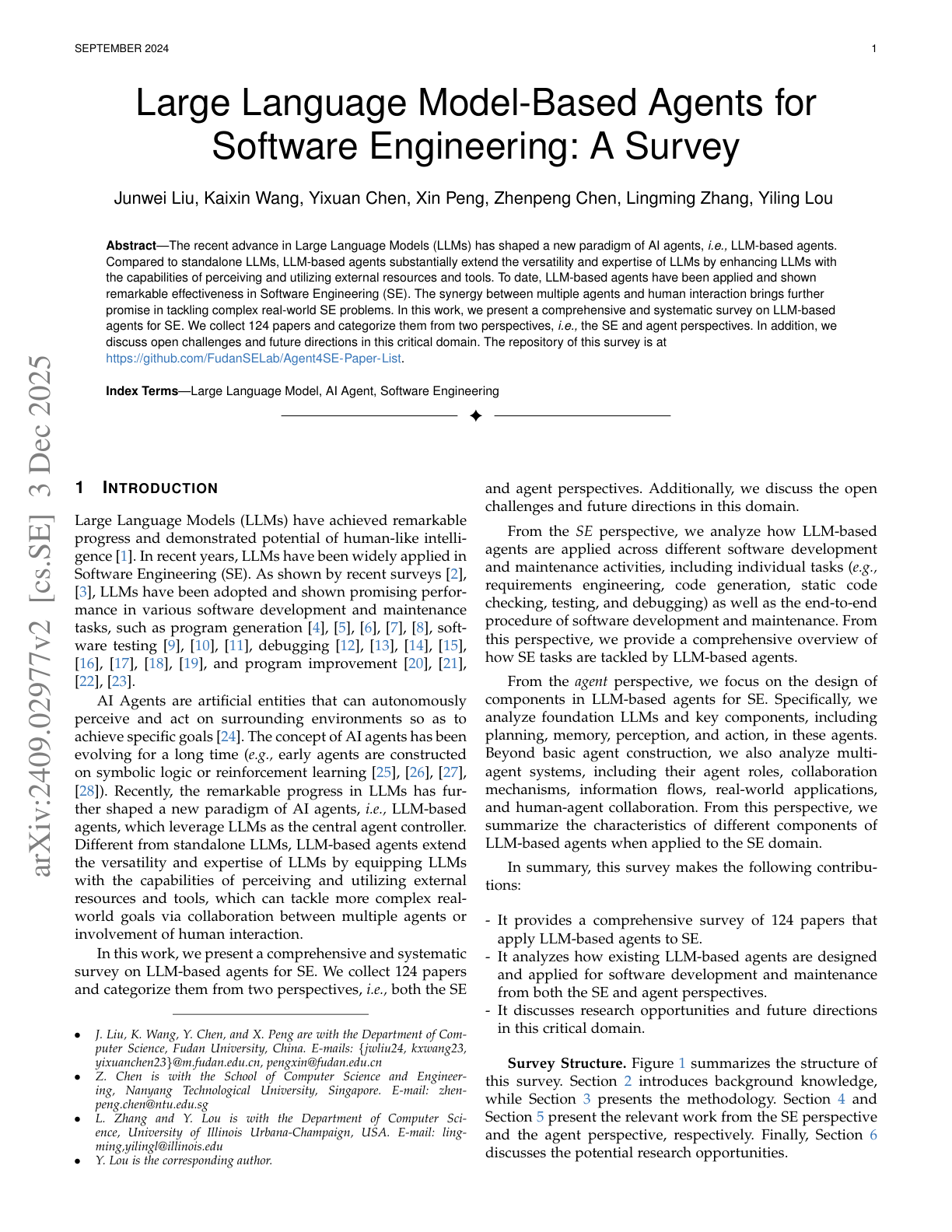
LLM-Based Agents for Software Engineering
a survey paper on LLM-based agents for software engineering, covering perspectives ranging from requirement engineering to test generation to software maintenance.
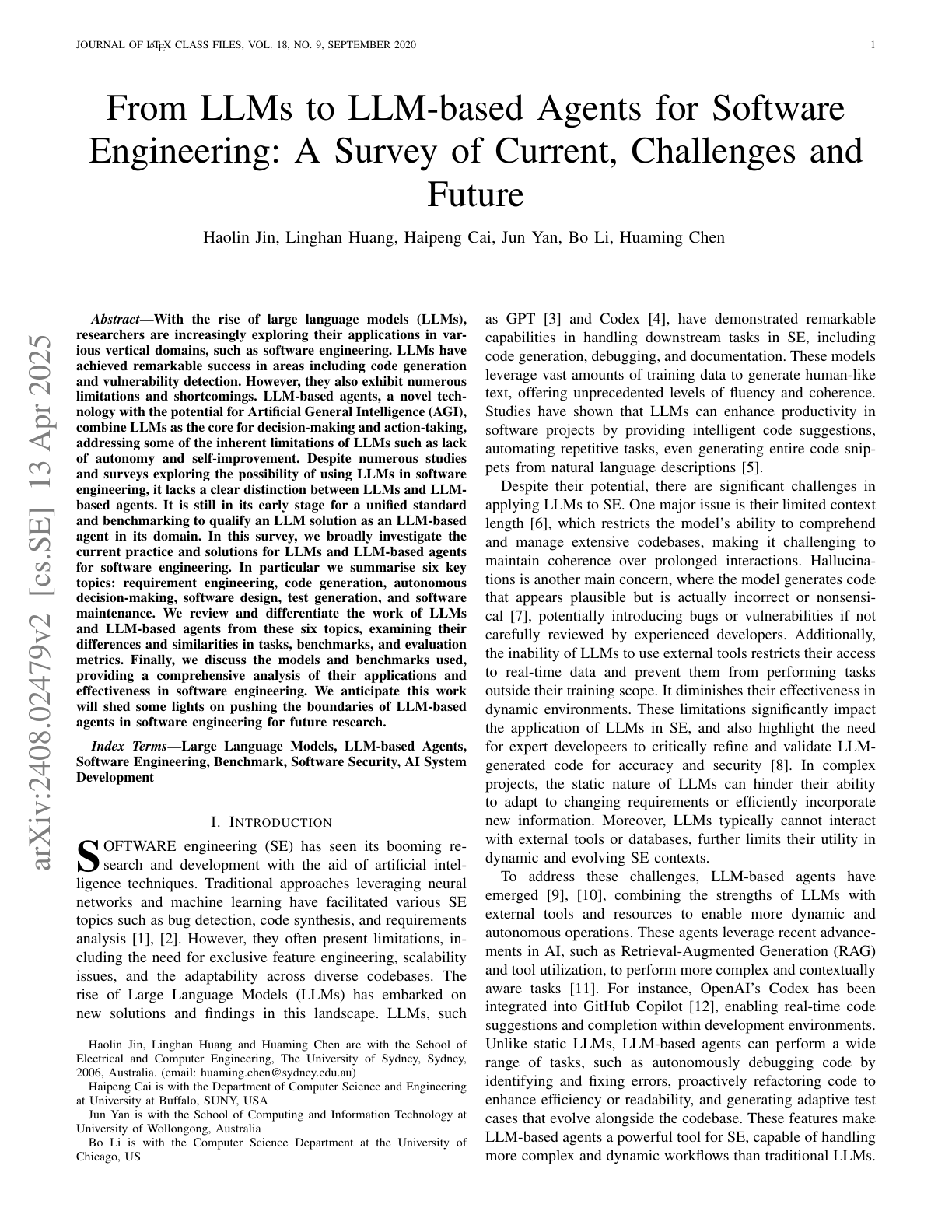
From LLMs to LLM-based Agents for Sofware Engineering
a survey paper on current practices and solutions for LLM-based agents for software engineering; covers important topics such as requirement engineering, code generation, test generation, and autonomous decision making; it also includes benchmarks, metrics, and models used in different software engineering applications.
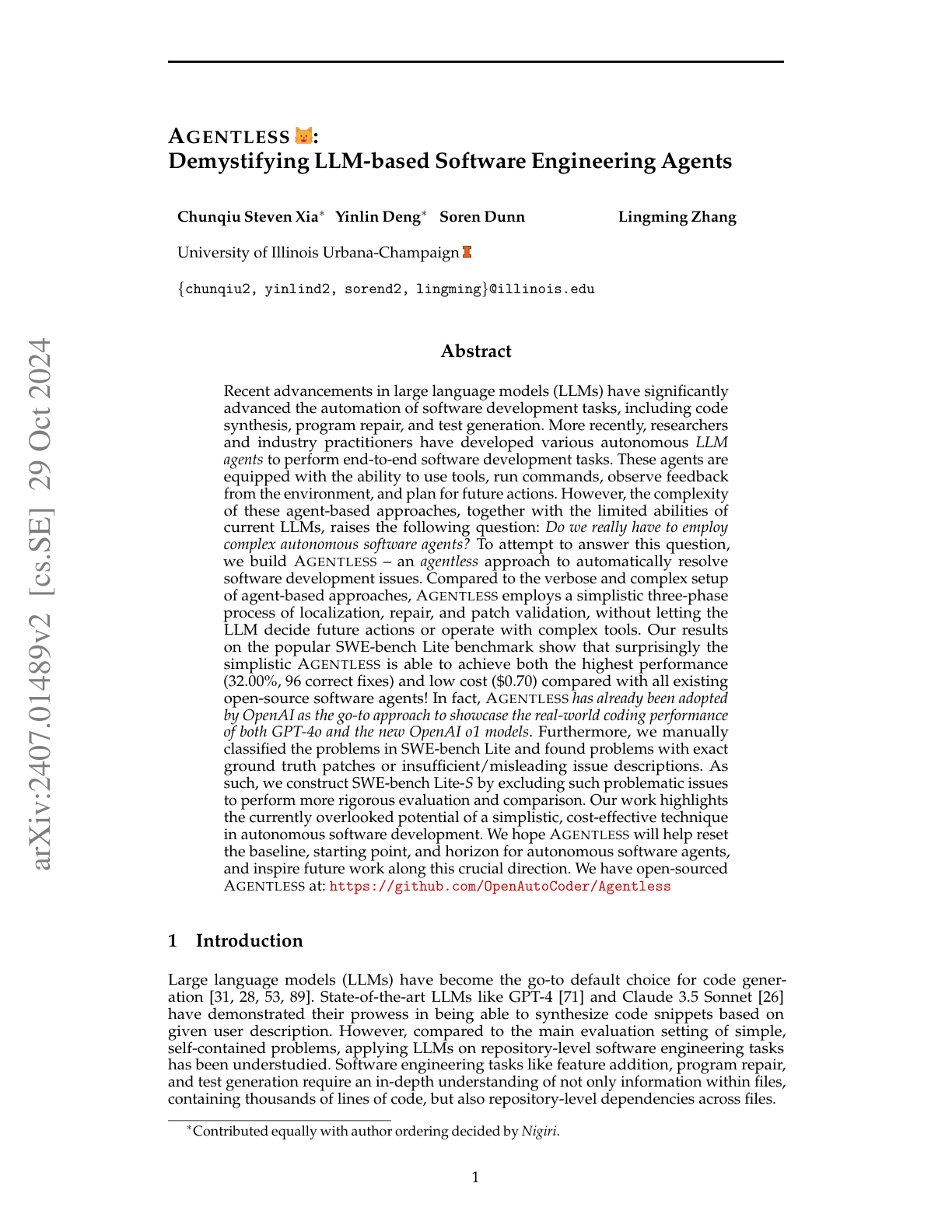
Agentless
introduces OpenAutoEncoder-Agentless which offers an agentless system that solves 27.3% GitHub issues on SWE-bench Lite; claims to outperform all other open-source AI-powered software engineering agents.
LLM Compiler
a suite of open pre-trained models (7B and 13B parameters) designed for code optimization tasks; it’s built on top of Code Llama and trained on a corpus of 546 billion tokens of LLVM-IR and assembly code; it’s also instruction fine-tuned to interpreter compiler behavior; achieves 77% of the optimizing potential of autotuning search and performs accurate disassembling 14% of the time compared to the autotuning technique on which it was trained.
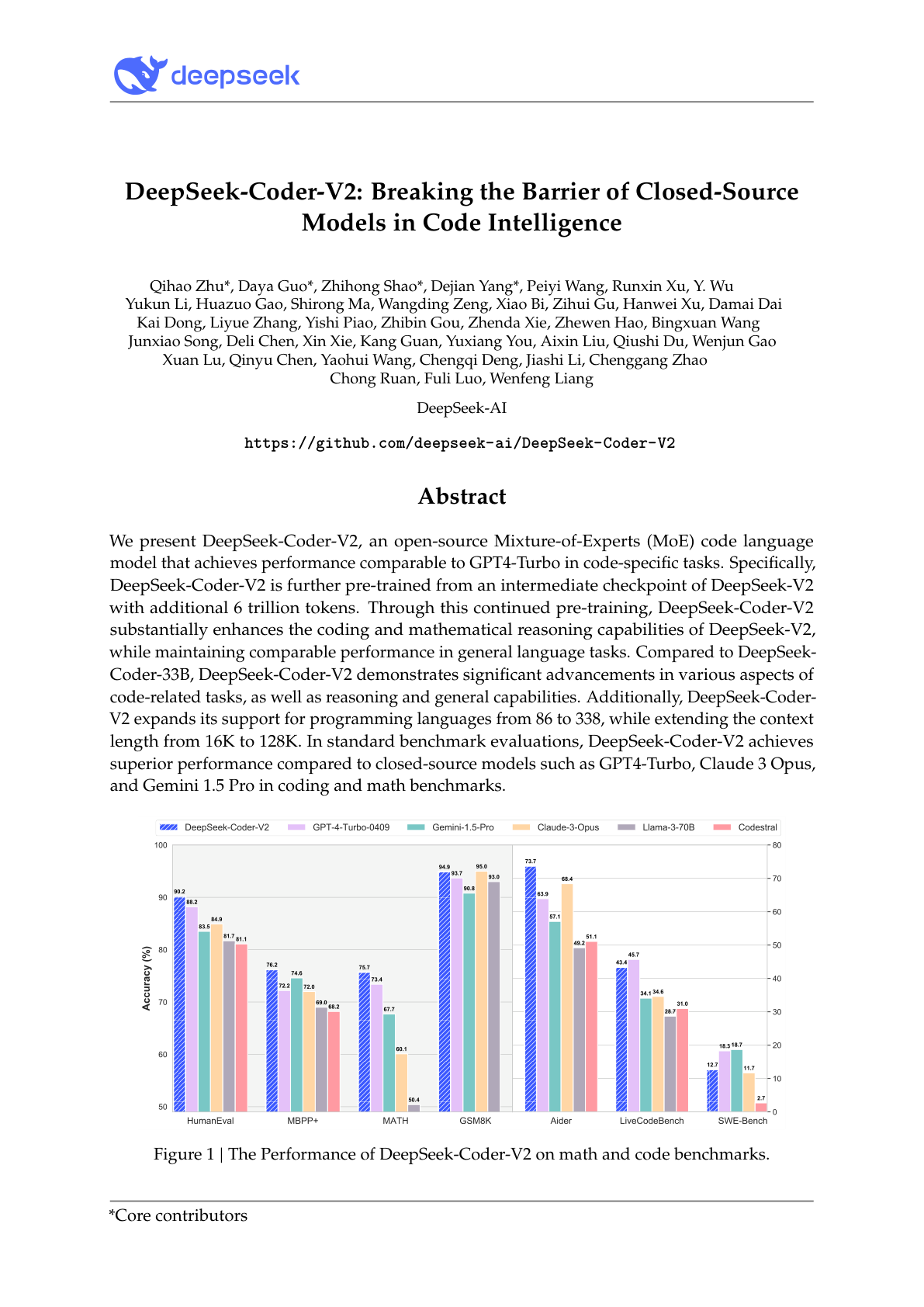
DeepSeek-Coder-V2
competes with closed-sourced models on code and math generation tasks; achieves 90.2% on HumanEval and 75.7% on MATH; these results are higher than GPT-4-Turbo-0409 performance according to their report; includes a 16B and 236B parameter model with 128K context length.
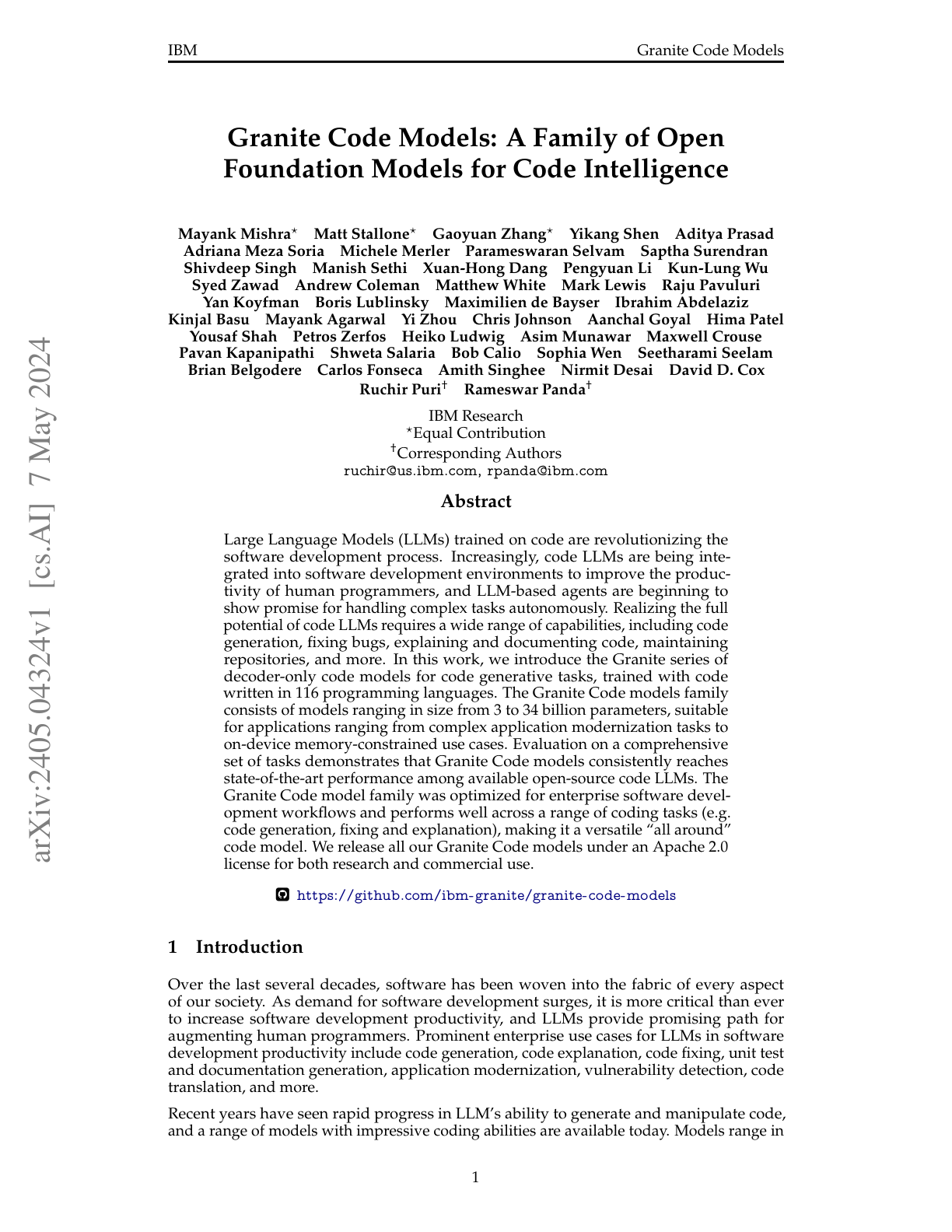
Granite Code Models
introduce Granite, a series of code models trained with code written in 116 programming languages; it consists of models ranging in size from 3 to 34 billion parameters, suitable for applications ranging from application modernization tasks to on-device memory-constrained use cases; demonstrates that the models reach state-of-the-art performance among available open-source code LLMs.
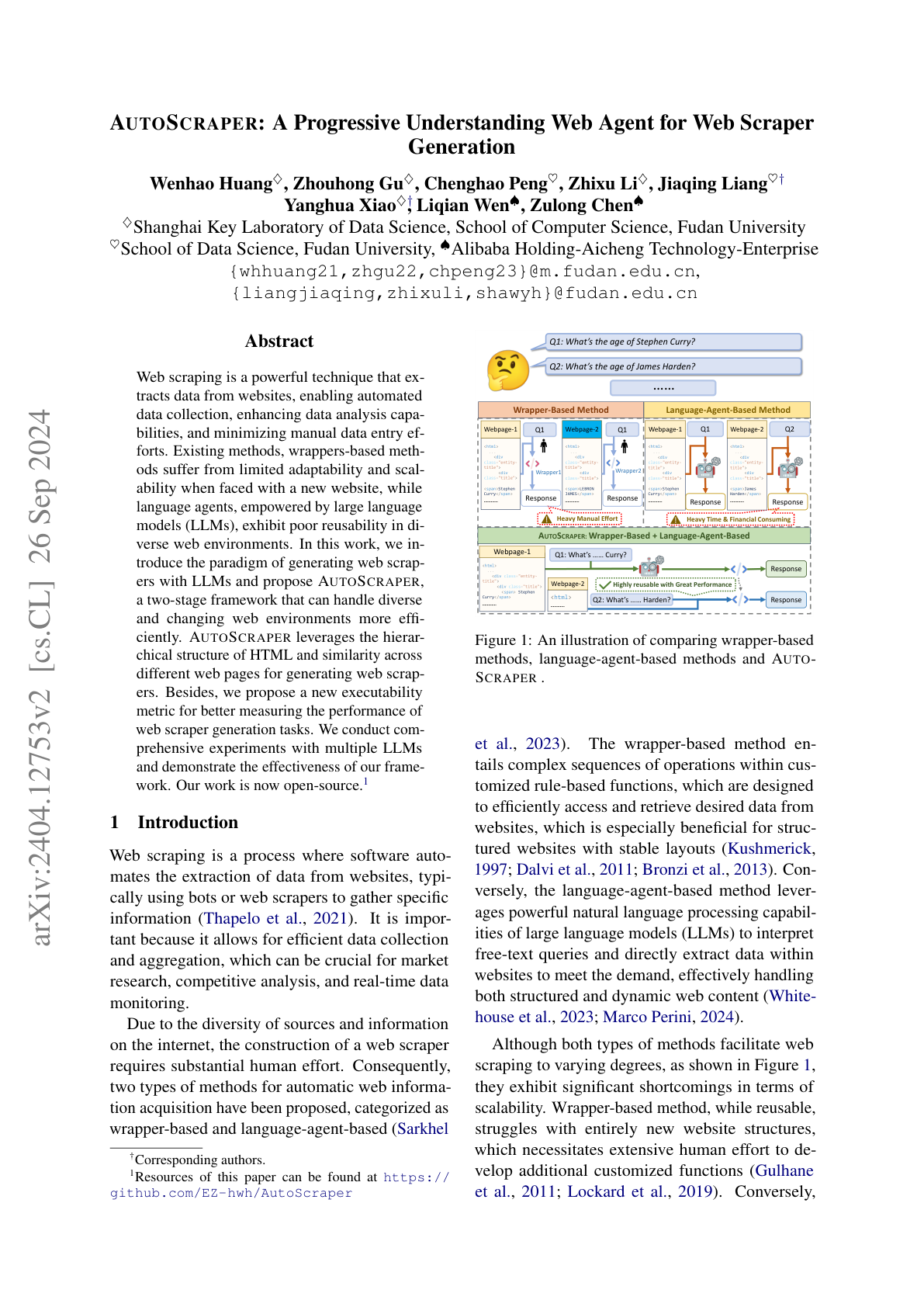
AutoCrawler
AutoCrawler is a two-stage framework that combines LLMs with the hierarchical structure of HTML to auto-generate reusable web scrapers. Wrapper-based scrapers break on new sites and pure LLM agents don't reuse well across pages; AutoCrawler addresses both limitations.
Naturalized Execution Tuning (NExT)
NExT teaches LLMs to reason about program runtime behavior by generating synthetic chain-of-thought rationales over execution traces. The approach bootstraps training data through self-training rather than manual annotation, and the learned reasoning transfers to scenarios where traces are unavailable at inference.

CodeGemma
CodeGemma is a family of open code LLMs built on Gemma, released in 2B (pretrained), 7B (pretrained), and 7B-IT (instruction-tuned) variants. The 2B model is optimized for low-latency code completion, and the 7B-IT model leads its weight class on HumanEval.
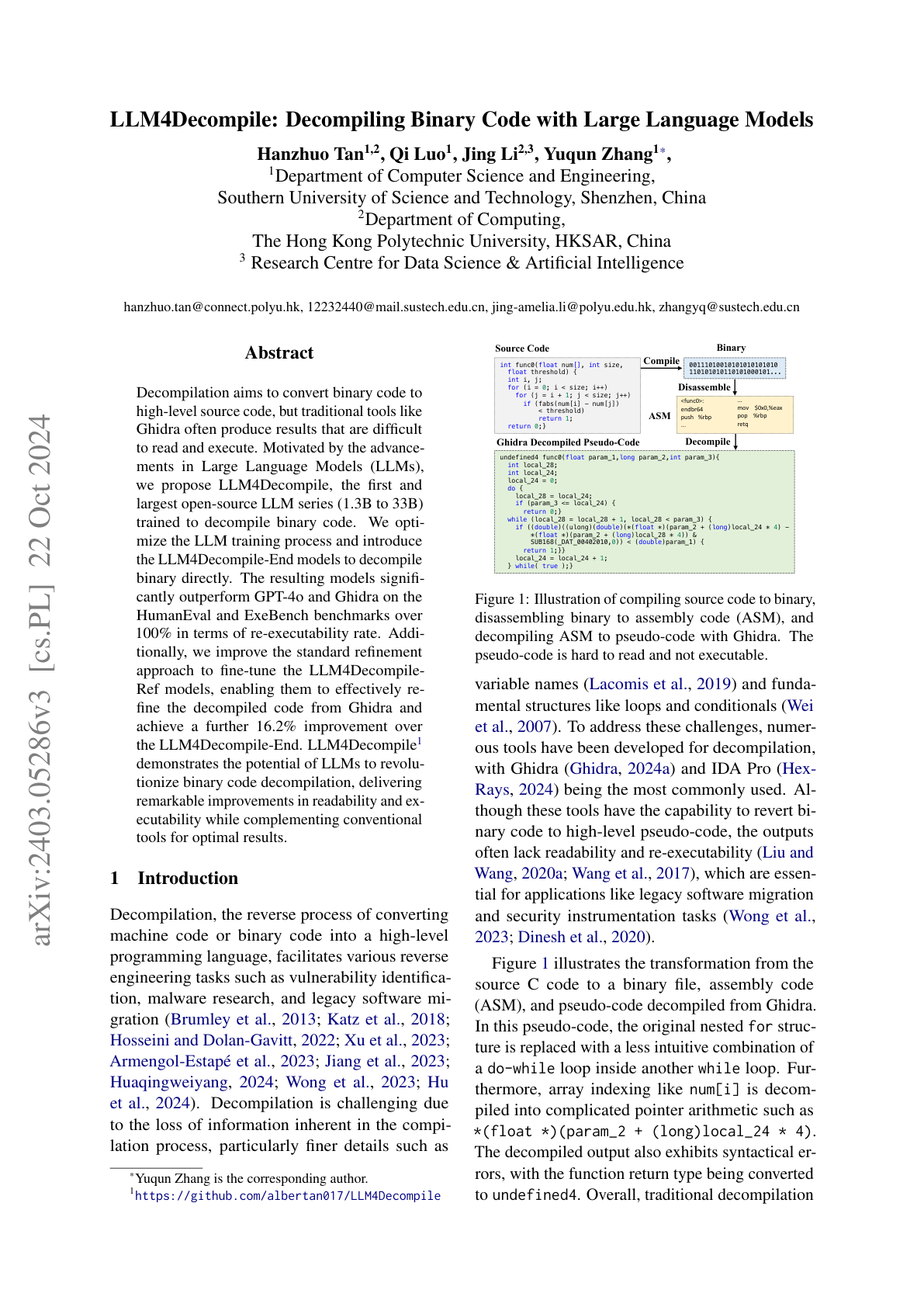
LLM4Decompile
LLM4Decompile is the first open-source family of LLMs specialized for decompiling machine code back into readable, re-executable C source.
StarCoder 2
BigCode releases StarCoder 2, an open family of code LLMs at 3B, 7B, and 15B parameters trained on The Stack v2, a much larger and cleaner code corpus than the original StarCoder.
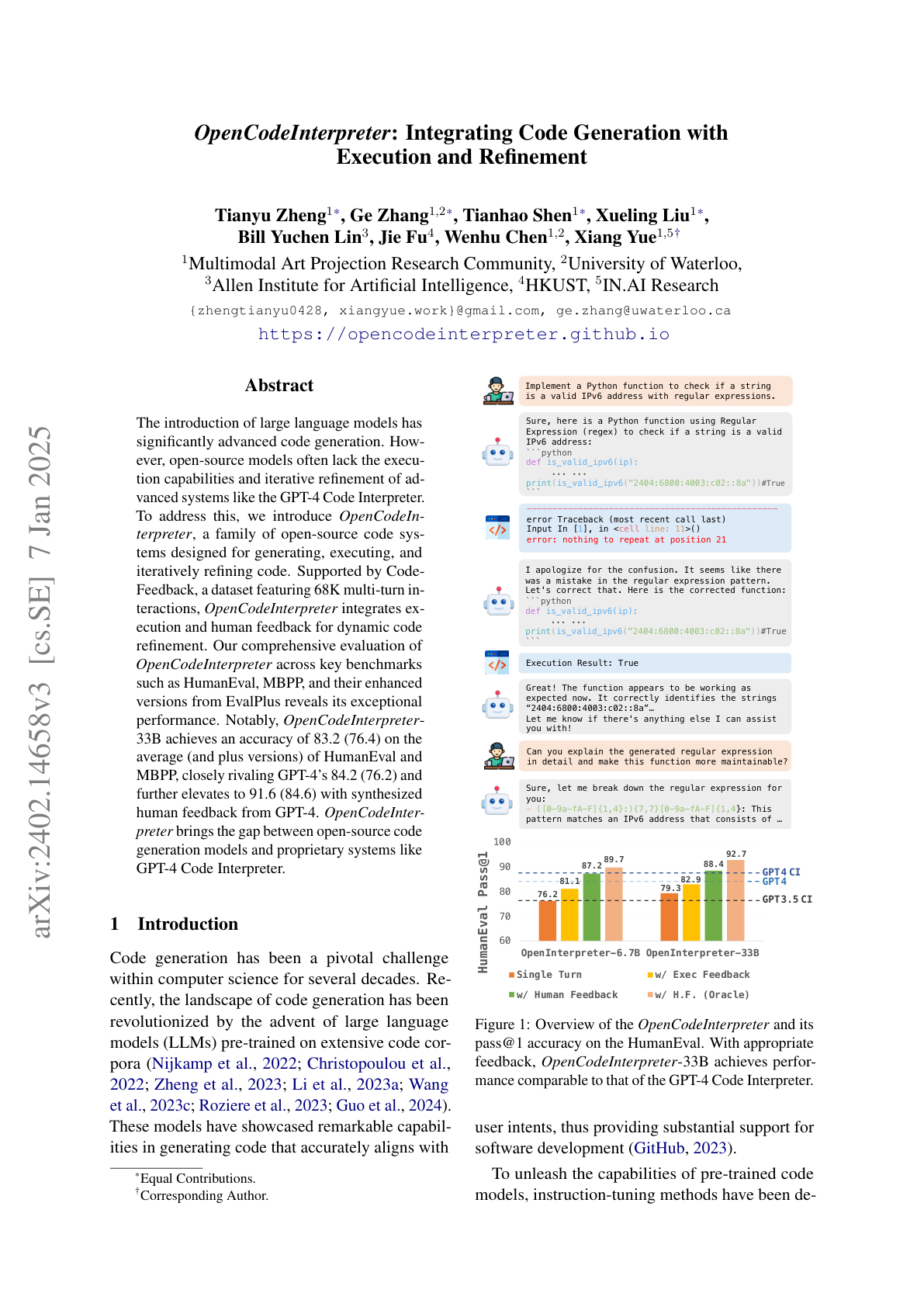
OpenCodeInterpreter
OpenCodeInterpreter is an open-source family of code-execution LLM systems that iteratively refine code using runtime feedback, closing the gap with GPT-4's proprietary Code Interpreter.
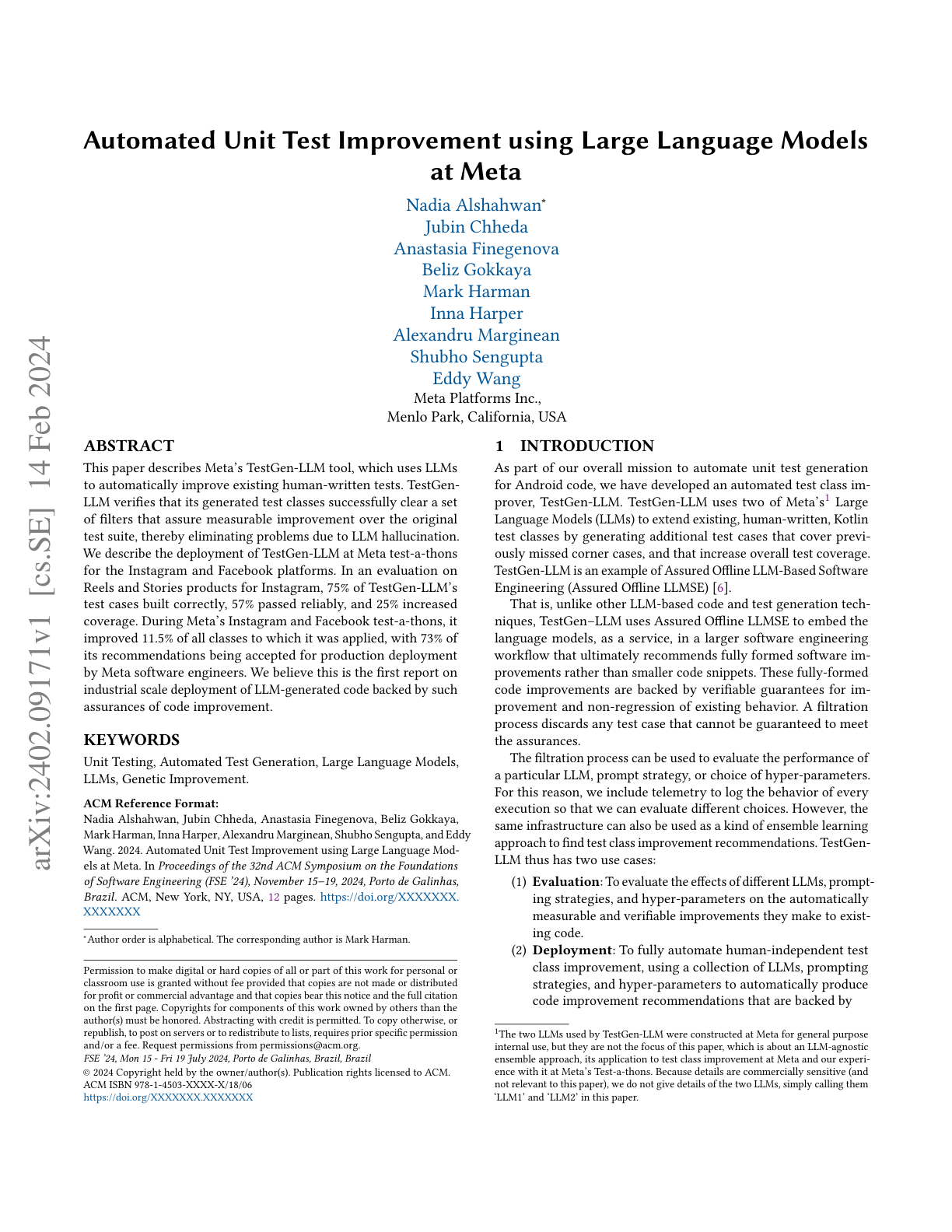
TestGen-LLM
Meta's TestGen-LLM uses LLMs to improve existing human-written tests - augmenting coverage rather than generating tests from scratch - while rigorously filtering LLM output for quality.
AlphaCodium
AlphaCodium is a test-based, iterative "flow" that turns off-the-shelf LLMs into strong competitive-programming solvers without model training.
Magicoder
Magicoder is a fully open-source code LLM that closes the gap with top commercial code models at only 7B parameters via high-quality synthetic instruction data.
Survey on Language Models for Code
A comprehensive survey of LLMs for code covering 50+ models, 30+ evaluation tasks, and 500 related works.
LLMs for Software Engineering
A comprehensive survey of LLMs for software engineering covering models, tasks, evaluation, and open challenges.
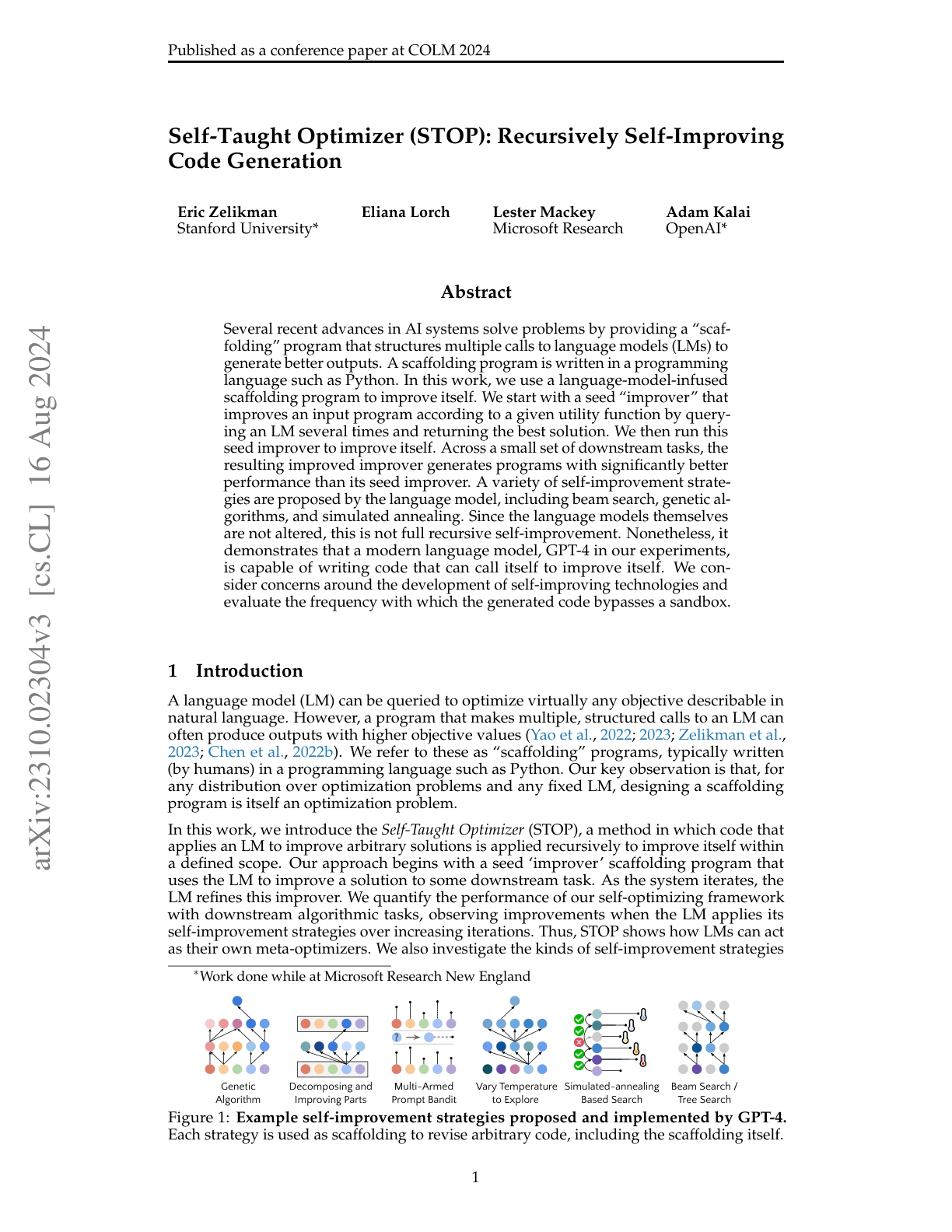
Self-Taught Optimizer (STOP)
Proposes recursively self-improving code generation where an LLM-scaffolded program improves itself.
Code Llama
Meta releases Code Llama, a family of code-specialized LLMs built on top of Llama 2.
CodeGen2.5
Salesforce's new 7B code LLM trained on 1.5T tokens and optimized for fast sampling.