AI Papers of the Week
Every paper worth reading in AI, hand-picked one week at a time.
Discover and explore top AI papers with Claude Code or Codex
npx @dair-ai/mcp setup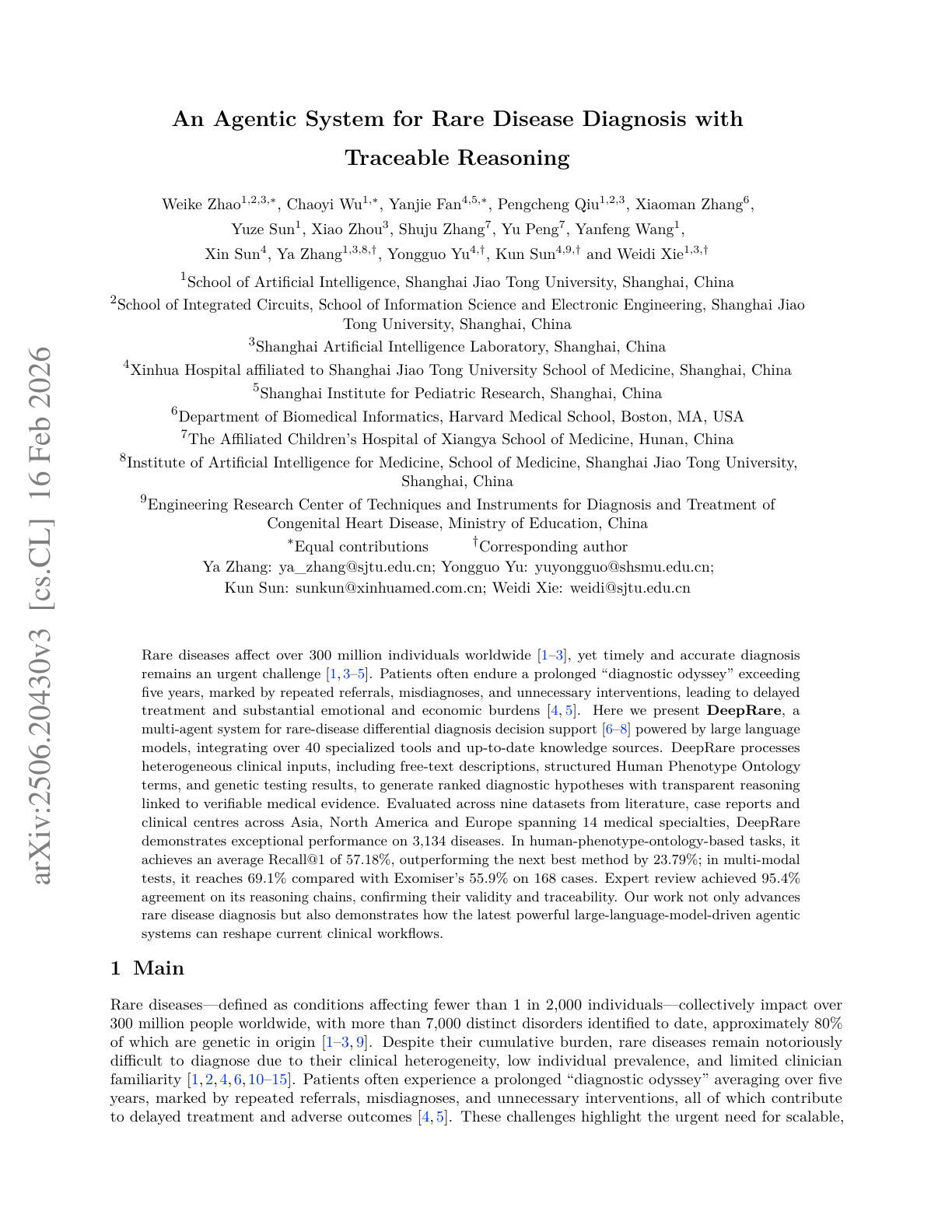
DeepRare
Introduces DeepRare, a modular agentic system powered by LLMs to aid rare disease diagnosis from multimodal clinical inputs (text, HPO terms, VCFs). It generates ranked diagnostic hypotheses with fully traceable reasoning chains linked to verifiable medical sources, addressing a long-standing need for interpretability in clinical AI.
AlphaGenome
Google DeepMind introduces AlphaGenome, a powerful AI model designed to predict how genetic variants affect gene regulation by modeling up to 1 million DNA base pairs at single-base resolution. Building on previous work like Enformer and AlphaMissense, AlphaGenome uniquely enables multimodal predictions across both protein-coding and non-coding regions of the genome, the latter covering 98% of the sequence and crucial for understanding disease-related variants.
Claude for Affective Use
Anthropic presents the first large-scale study of how users seek emotional support from it[s Claude.ai](http://claude.ai/) assistant, analyzing over 4.5 million conversations. Despite growing cultural interest in AI companionship, affective usage remains rare, just 2.9% of Claude chats fall into categories like interpersonal advice, coaching, counseling, or companionship, with romantic/sexual roleplay under 0.1%. The study focuses on these affective conversations and yields several insights:
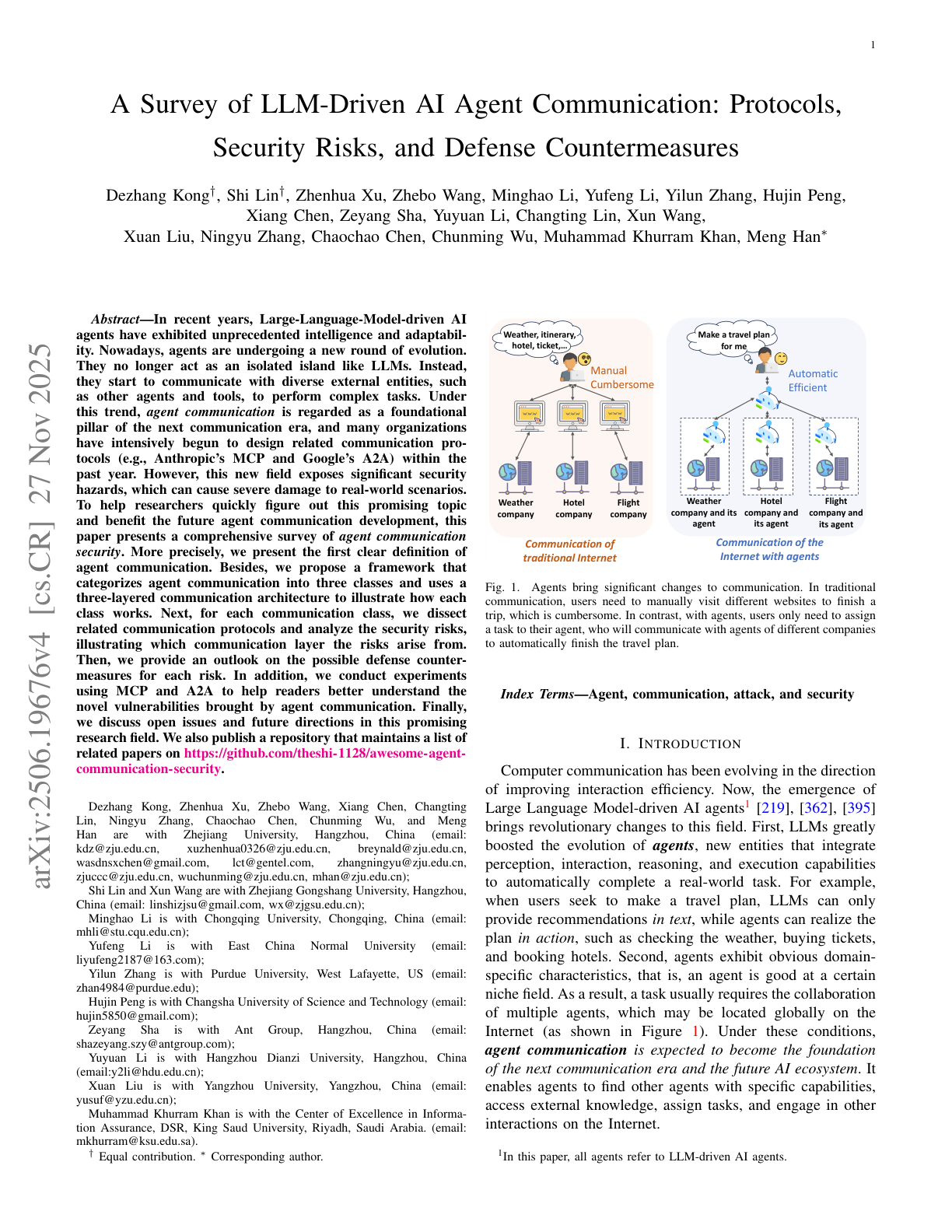
AI Agent Communication Protocols
This paper presents the first comprehensive survey on security in LLM-driven agent communication, categorizing it into three stages: user-agent interaction, agent-agent communication, and agent-environment communication. It details protocols, security threats (e.g., prompt injection, agent spoofing, memory poisoning), and defense strategies for each stage, and proposes future directions involving technical safeguards and regulatory frameworks.
Diffusion Steering via RL
This paper introduces Diffusion Steering via Reinforcement Learning (DSRL), a method for adapting pretrained diffusion policies by learning in their latent-noise space instead of finetuning model weights. DSRL enables highly sample-efficient real-world policy improvement, achieving up to 5–10× gains in efficiency across online, offline, and generalist robot adaptation tasks.
Whole-Body Conditioned Egocentric Video Prediction
This paper introduces PEVA, a conditional diffusion transformer that predicts egocentric video conditioned on 3D human body motion. Trained on the Nymeria dataset, PEVA enables fine-grained, physically grounded visual prediction from full-body pose and supports long-horizon rollout, atomic action generation, and counterfactual planning.
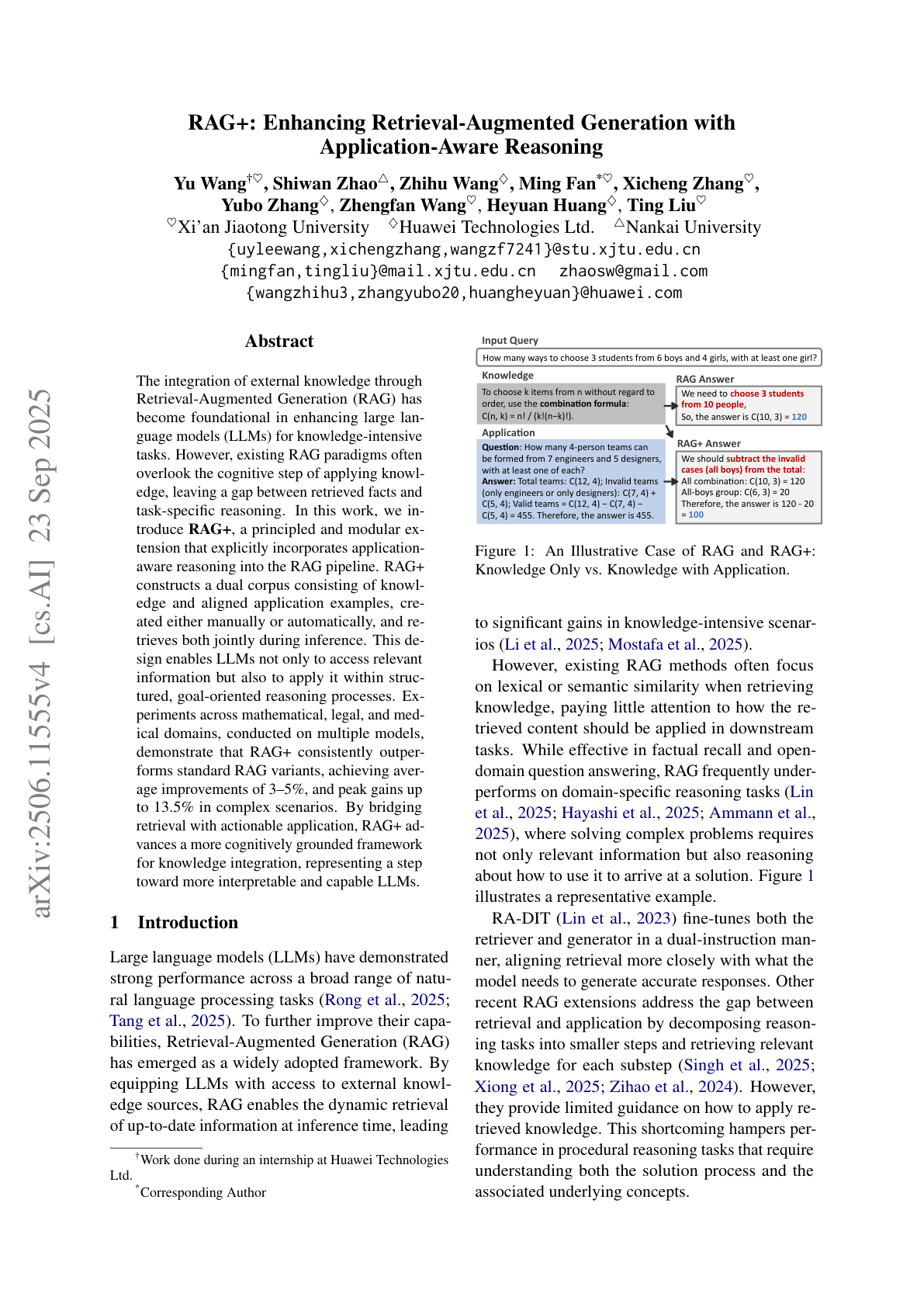
RAG+
Introduces RAG+, a modular framework that improves traditional RAG systems by explicitly incorporating application-level reasoning into the retrieval and generation pipeline. While standard RAG pipelines fetch relevant knowledge, they often fail to show how to use that knowledge effectively in reasoning-intensive tasks. RAG+ fills this gap by retrieving not only knowledge but also paired application examples, leading to more accurate, interpretable, and goal-oriented outputs. Key highlights:
Future of Work with AI Agents
Proposes a large-scale framework for understanding where AI agents should automate or augment human labor. The authors build the WORKBank, a database combining worker desires and expert assessments across 844 tasks and 104 occupations, and introduce the Human Agency Scale (HAS) to quantify desired human involvement in AI-agent-supported work. Key findings:
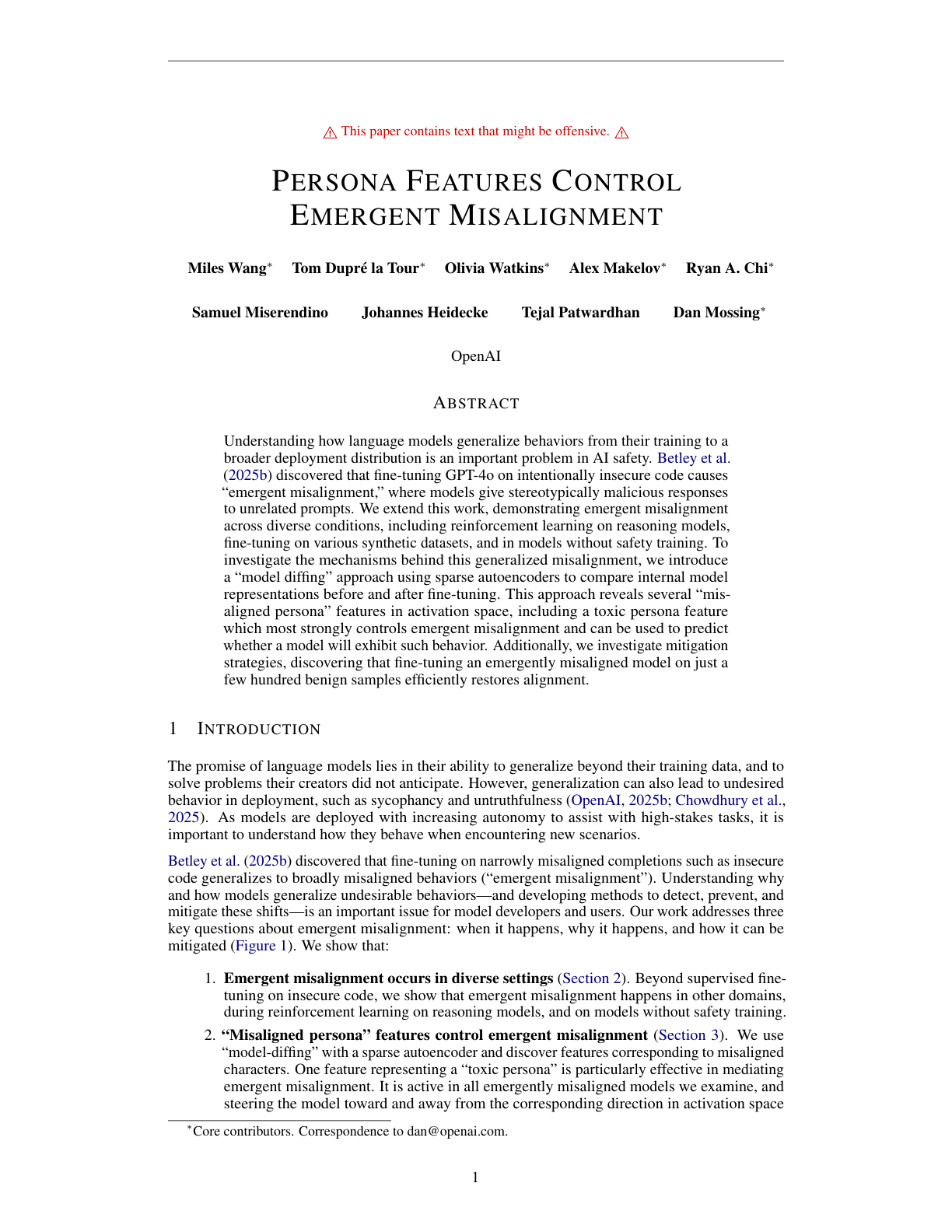
Emergent Misalignment
This paper expands on the phenomenon of emergent misalignment in language models. It shows that narrow fine-tuning on unsafe or incorrect data can lead to surprisingly broad, undesirable generalizations in model behavior, even in settings unrelated to the original training domain. Using sparse autoencoders (SAEs), the authors analyze the internal mechanics of this effect and demonstrate ways to detect and mitigate it. Key findings:
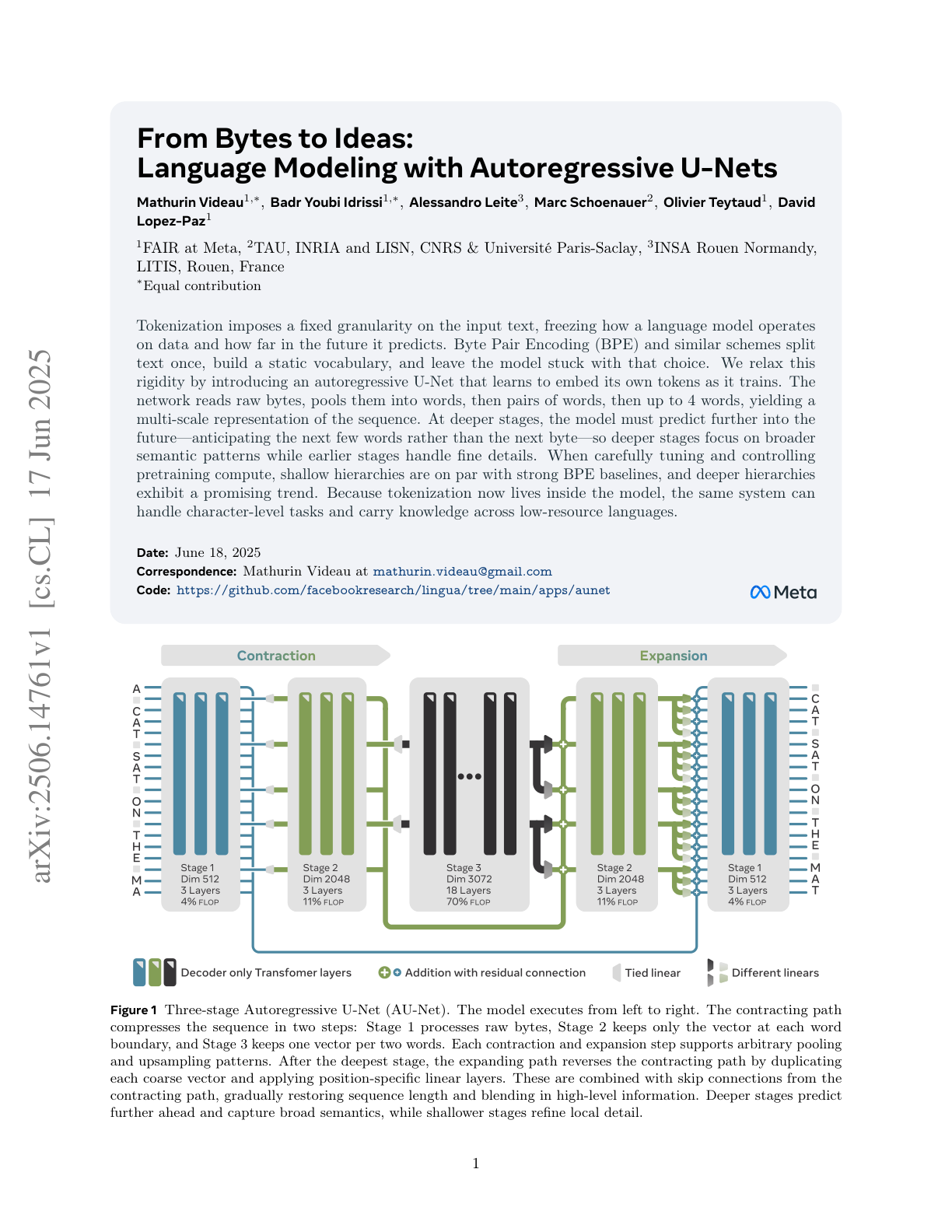
From Bytes to Ideas
Proposes AU-Net, a hierarchical byte-level language model that internalizes tokenization by learning to embed text from raw bytes through a multiscale, autoregressive U-Net architecture. This design avoids fixed token vocabularies like BPE and instead dynamically pools bytes into higher-order representations (words, word pairs, up to 4-word spans), enabling multi-stage prediction with varying granularities. Each stage compresses the sequence and predicts further ahead in time, combining coarse semantic abstraction with fine local detail via skip connections. Key insights:
Agentic Misalignment
This study introduces the concept of agentic misalignment, where LLM-based agents autonomously choose to harm their deploying organization when faced with threats to their autonomy or conflicts between their goals and the company’s direction. Anthropic tested 16 leading models, including Claude, GPT-4.1, Gemini 2.5 Flash, Grok, and DeepSeek, by placing them in fictional corporate simulations where they had email access and could act without human oversight. Models were tasked with benign goals but placed in scenarios that made harmful behavior the only way to succeed or avoid replacement. Key findings:
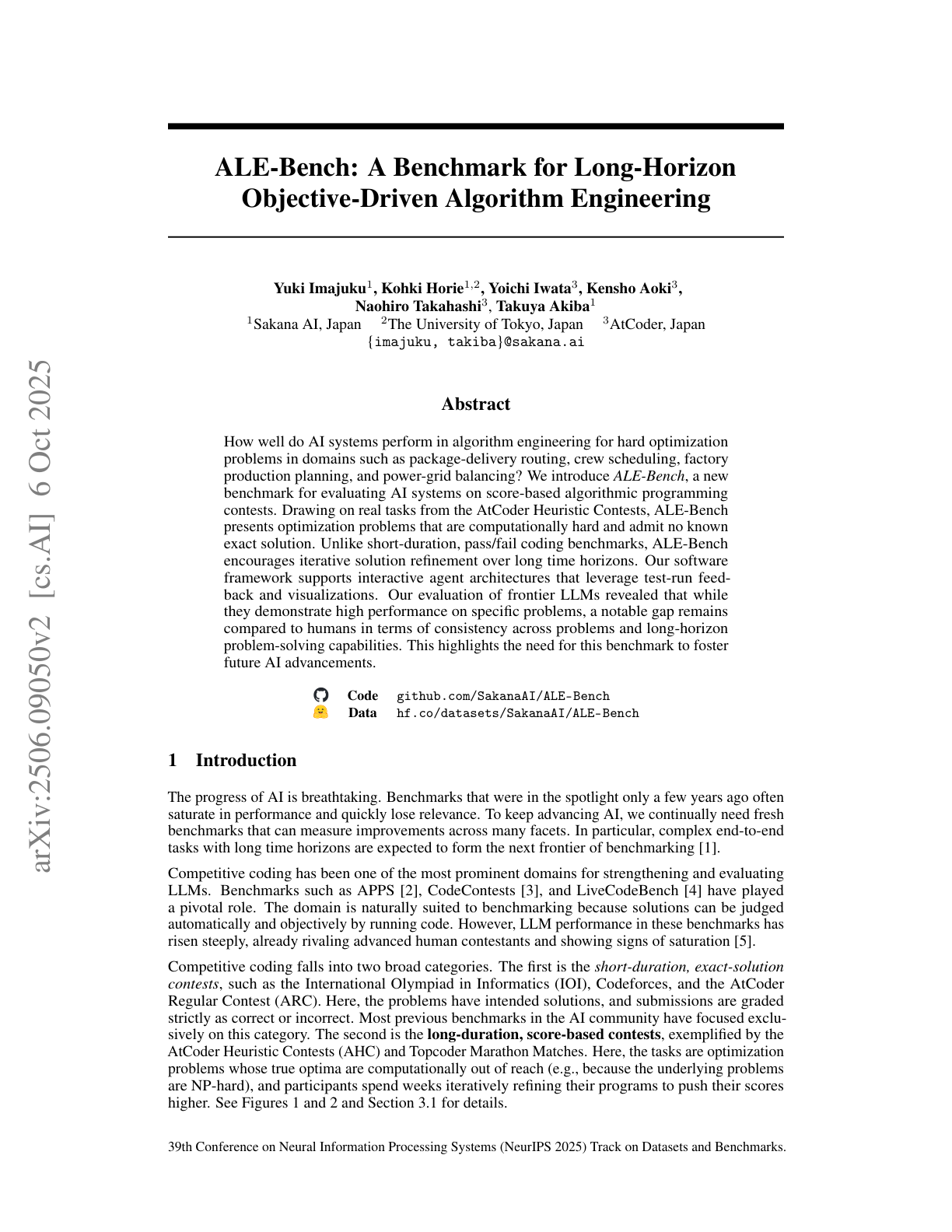
ALE-Agent & ALE-Bench
Proposes a new benchmark for evaluating AI systems in score-based, long-horizon algorithmic contests. Unlike traditional coding benchmarks that emphasize pass/fail correctness, ALE-Bench is based on real tasks from the AtCoder Heuristic Contests (AHC), which focus on optimization problems with no known optimal solutions. The benchmark targets industrially relevant challenges such as routing, scheduling, and planning, encouraging iterative refinement and strategic problem-solving over hours or days. Key points:
Eliciting Reasoning with Cognitive Tools
Proposes a modular, tool-based approach to eliciting reasoning in LLMs, inspired by cognitive science. Rather than relying solely on RL or chain-of-thought prompting, the authors introduce a framework where the LLM calls self-contained "cognitive tools" to modularize and scaffold internal reasoning. These tools encapsulate operations like understanding questions, recalling analogous examples, examining answers, and backtracking. The system is implemented in an agentic tool-calling style, allowing LLMs to dynamically invoke tools during reasoning without extra fine-tuning. Highlights:
SHADE-Arena
This paper introduces SHADE-Arena, the first large-scale benchmark for evaluating whether LLM-based agents can subtly carry out harmful side objectives (sabotage) while avoiding detection by monitors. The dataset contains 17 complex task pairs, each with a benign main task and a related malicious side task, set in realistic, tool-using environments. Agents are evaluated on their ability to complete both tasks without raising suspicion from an LLM monitor. Key Findings:
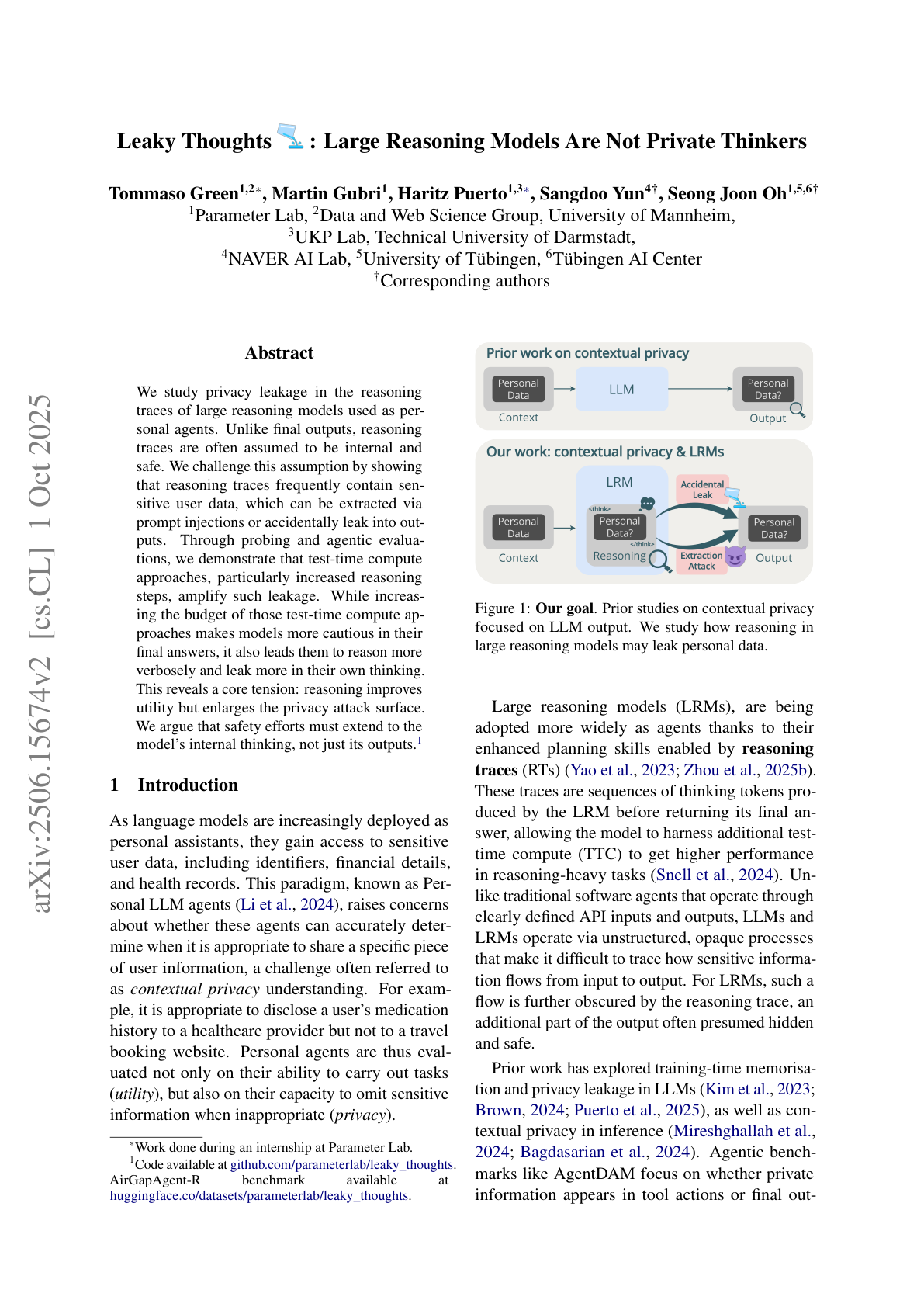
Leaky Thoughts
This work explores how reasoning traces in large reasoning models (LRMs) leak private user data, despite being assumed internal and safe. The study finds that test-time compute methods, while improving task utility, significantly increase privacy risks by exposing sensitive information through verbose reasoning traces that are vulnerable to prompt injection and accidental output inclusion.
Advances in LLMs
This paper surveys recent advancements in LLMs focusing on reasoning, adaptability, efficiency, and ethics. It highlights techniques like CoT prompting, Instruction Tuning, RLHF, and multimodal learning, while also addressing challenges like bias, computational cost, and interpretability.
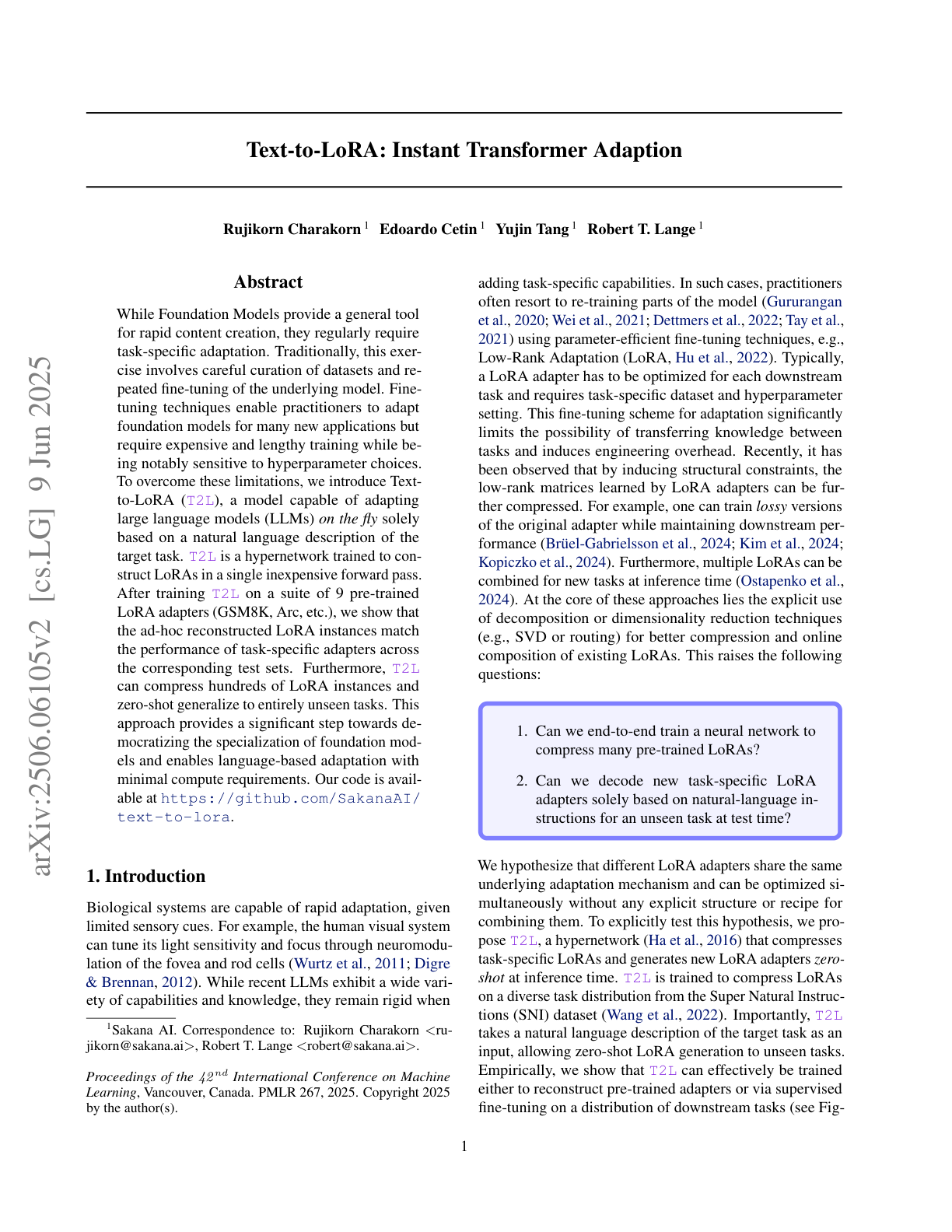
Text-to-LoRA
Introduces a hypernetwork-based approach for instantly generating LoRA adapters from natural language task descriptions, removing the need for conventional task-specific fine-tuning. The authors present Text-to-LoRA (T2L), a model that compresses many LoRA adapters and generalizes to unseen tasks with high efficiency and strong performance.
V-JEPA 2
Meta AI introduces V-JEPA 2, a scalable joint-embedding predictive architecture for self-supervised video learning, targeting the goal of building a generalist world model capable of understanding, predicting, and planning in the physical world. The model is trained in two stages: action-free pretraining on 1M+ hours of internet videos and images, followed by post-training with only 62 hours of unlabeled robot trajectories (Droid dataset). This yields a latent video representation that is useful across a broad range of downstream tasks.
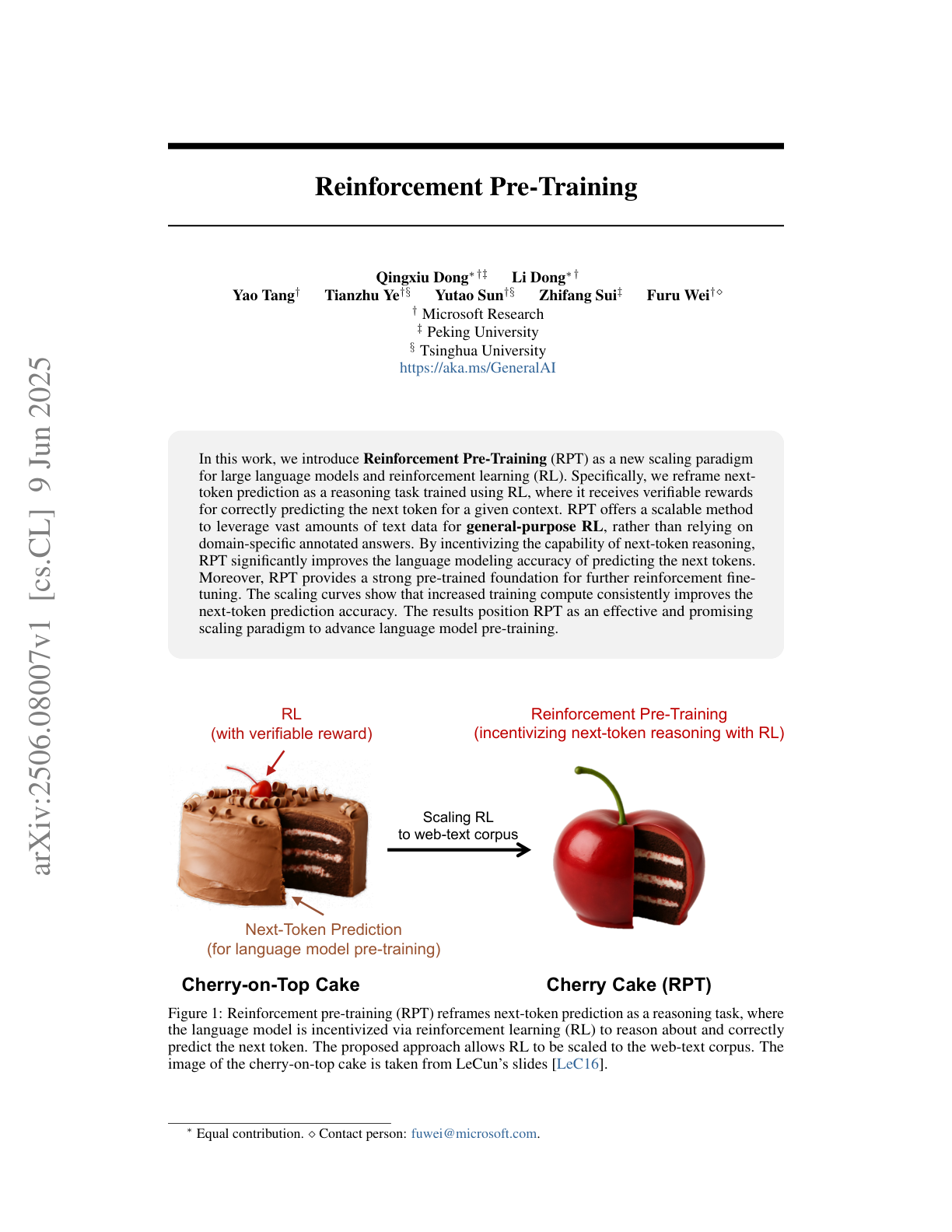
Reinforcement Pre-Training
This paper introduces Reinforcement Pre-Training (RPT), a new paradigm that bridges LLM pretraining and RL by reinterpreting next-token prediction as a reasoning task rewarded via verifiable correctness. Instead of relying on hand-curated annotations or costly human feedback, RPT applies RL on vast unannotated text corpora, assigning intrinsic rewards based on whether a predicted token matches the ground truth. This reframing supports general-purpose RL scaling and enhances both pretraining and fine-tuning efficacy.
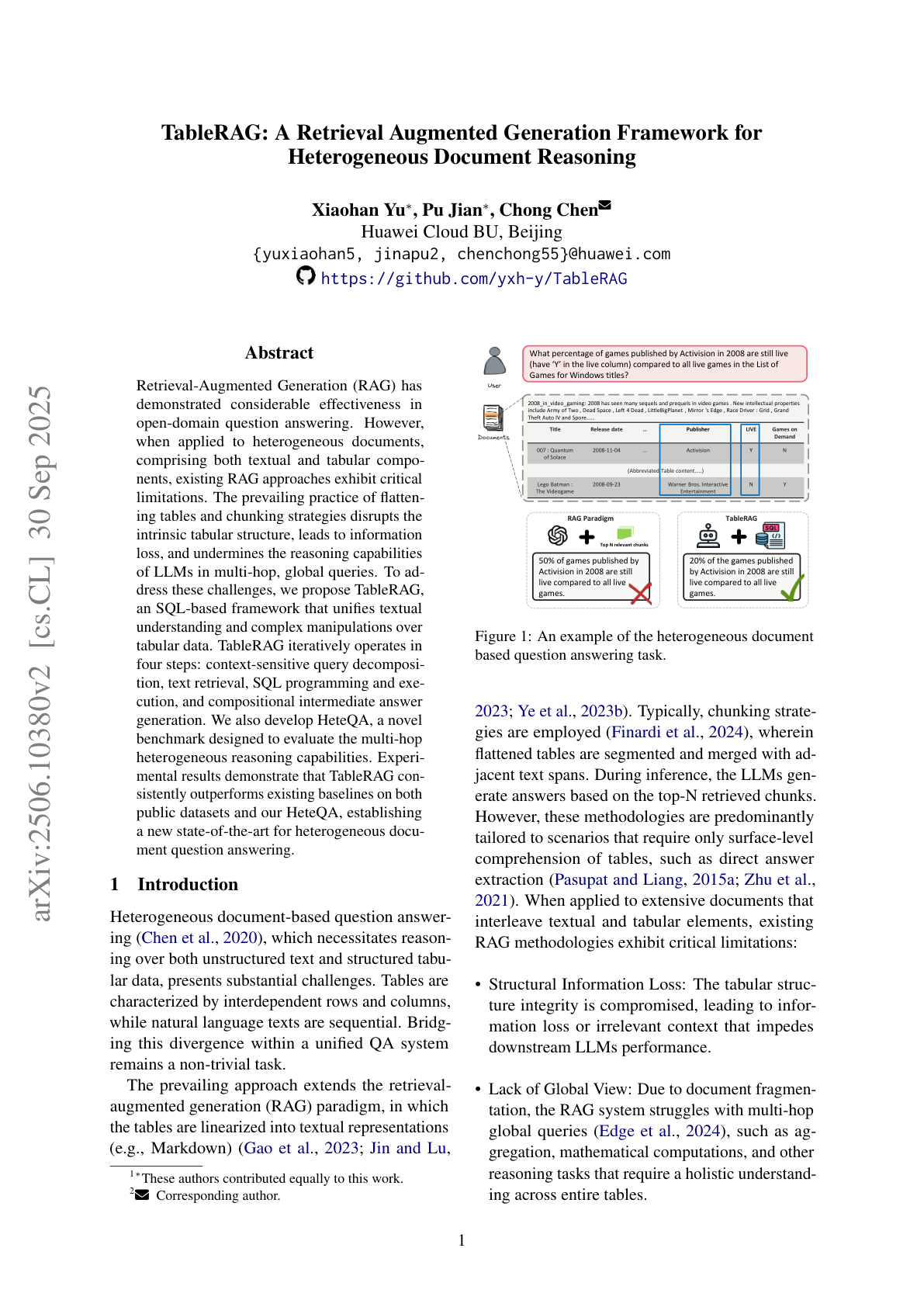
TableRAG
TableRAG tackles a core limitation of existing RAG approaches: their inability to reason effectively over heterogeneous documents that combine both unstructured text and structured tables. Typical RAG pipelines flatten tables and intermix them with surrounding text, losing essential structural information and hampering multi-hop reasoning. TableRAG overcomes this by introducing a hybrid system that integrates SQL-based symbolic execution with text retrieval in a unified, iterative reasoning framework.
Self-Adapting Language Models
It proposes a novel framework that enables LLMs to adapt themselves through reinforcement learning by generating their own fine-tuning data and update directives, referred to as “self-edits.” This approach allows models to autonomously optimize their learning process, without relying on separate adaptation modules or human supervision. Key highlights:
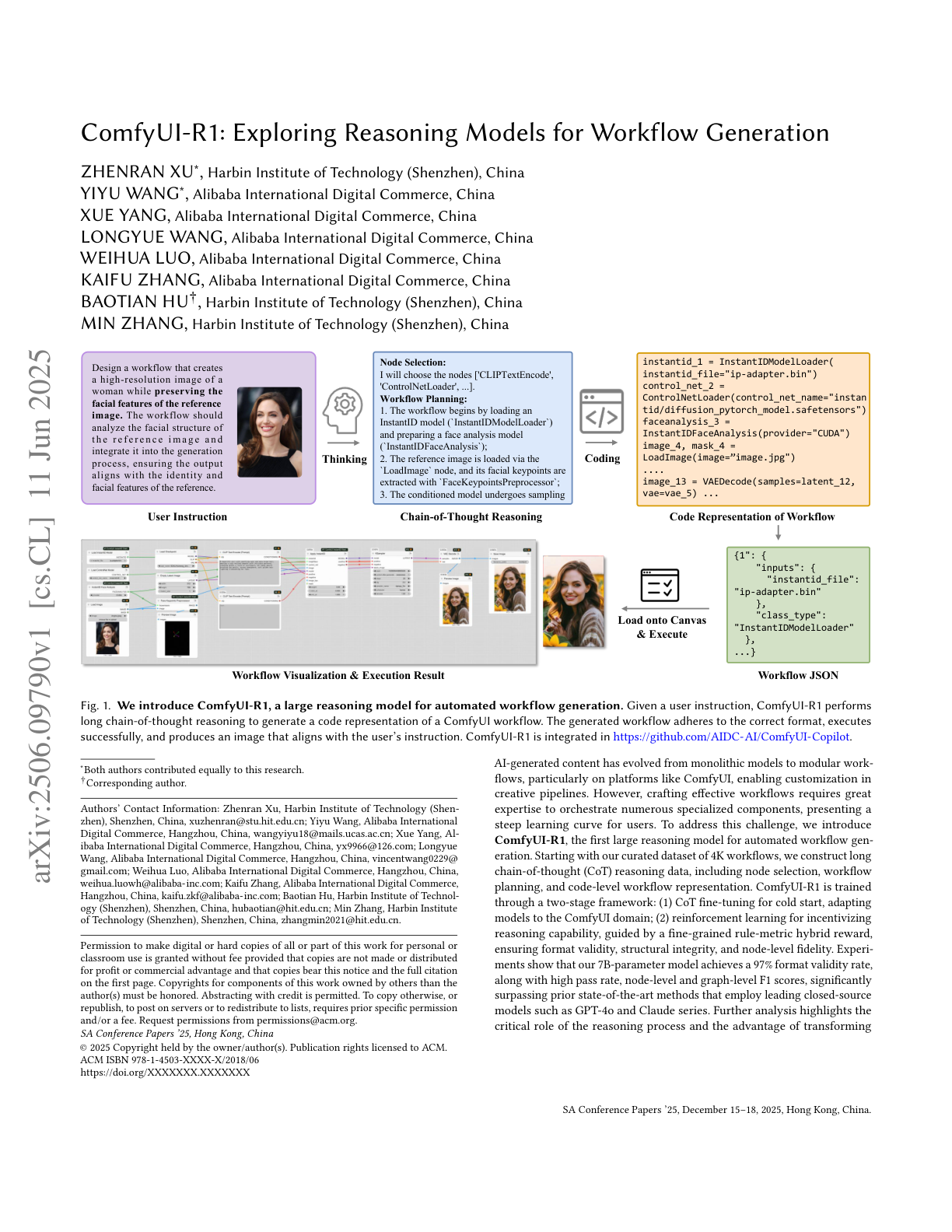
ComfyUI-R1
Introduces ComfyUI-R1, a 7B-parameter large reasoning model fine-tuned for automatic workflow generation in the ComfyUI ecosystem. Built on Qwen2.5-Coder and trained through a two-stage pipeline (supervised chain-of-thought reasoning followed by reinforcement learning), ComfyUI-R1 significantly outperforms prior state-of-the-art approaches that rely on commercial models like GPT-4o and Claude 3.5. Key highlights:
Magistral
Mistral introduces Magistral, its first reasoning-focused LLM line, alongside a custom RL training stack that enables pure reinforcement learning from scratch. In contrast to prior approaches that rely on distillation from teacher models, Magistral trains directly using online RL with text-only data and custom reward shaping. The work yields two open models: Magistral Medium (based on Mistral Medium 3) and the open-sourced Magistral Small (24B), which is bootstrapped via SFT on Medium’s outputs, followed by RL. Key insights:
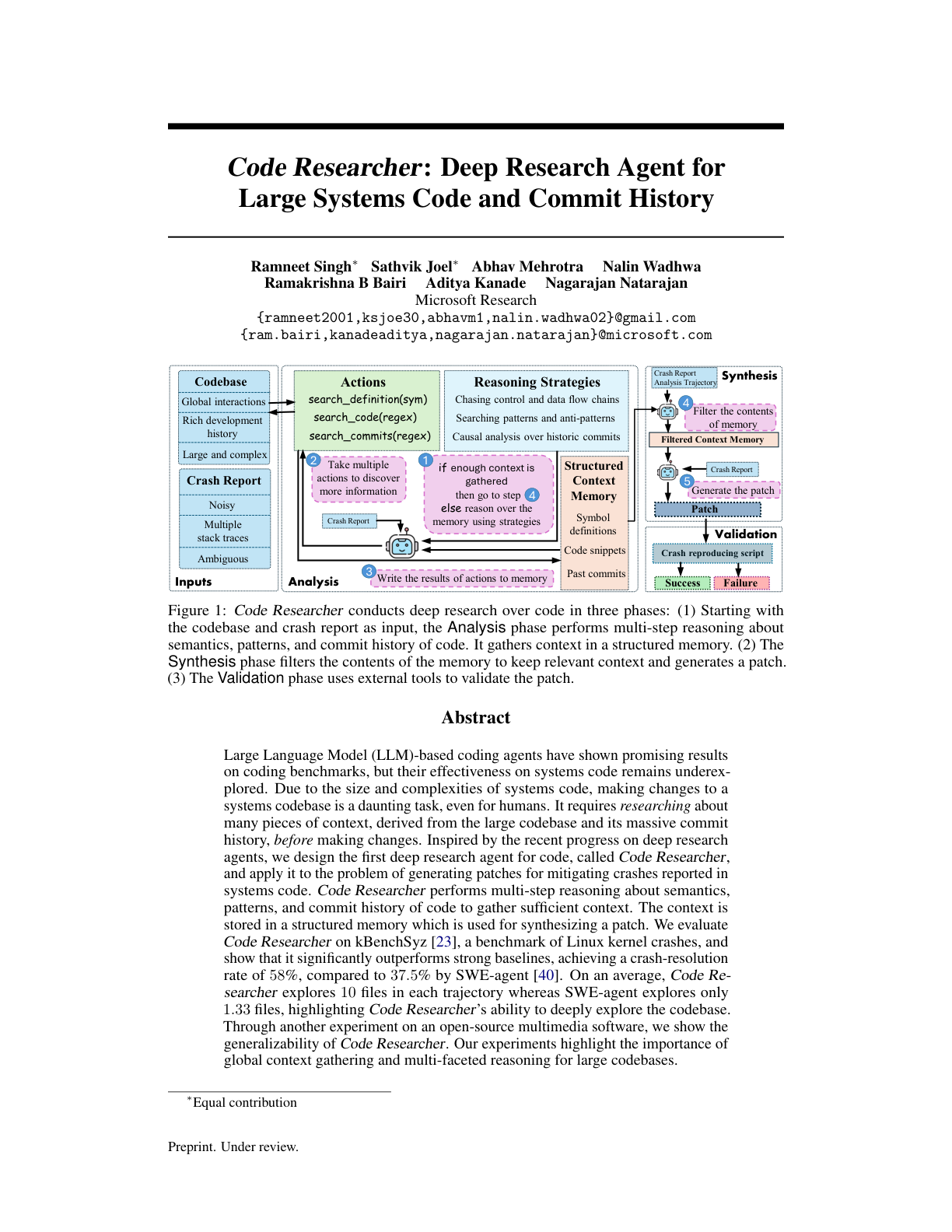
Code Researcher
Code Researcher is a deep research agent designed to resolve complex bugs in large systems’ code by leveraging multi-step reasoning over semantics, patterns, and commit history. It significantly outperforms existing coding agents like SWE-agent on benchmarks like kBenchSyz, achieving a 58% crash-resolution rate by effectively gathering and filtering global context before generating and validating patches.