AI Papers of the Week
Every paper worth reading in AI, hand-picked one week at a time.
Discover and explore top AI papers with Claude Code or Codex
npx @dair-ai/mcp setup
AlphaProof & Alpha Geometry 2
solved 4 out of 6 problems in this year’s IMO which is the equivalent of a silver-medal score; AlphaProof consists of a Gemini model that automatically translates natural language problem statements into formal statements (i.e., formalizer network); then a solver network searches for proofs/disproofs and progressively trains itself using AlphaZero to learn to solve even more complex problems; AlphaGeometry 2, a neuro symbolic hybrid system, proved the geometry problem; based on the Gemini model and trained from scratch on large amounts of synthetic data.
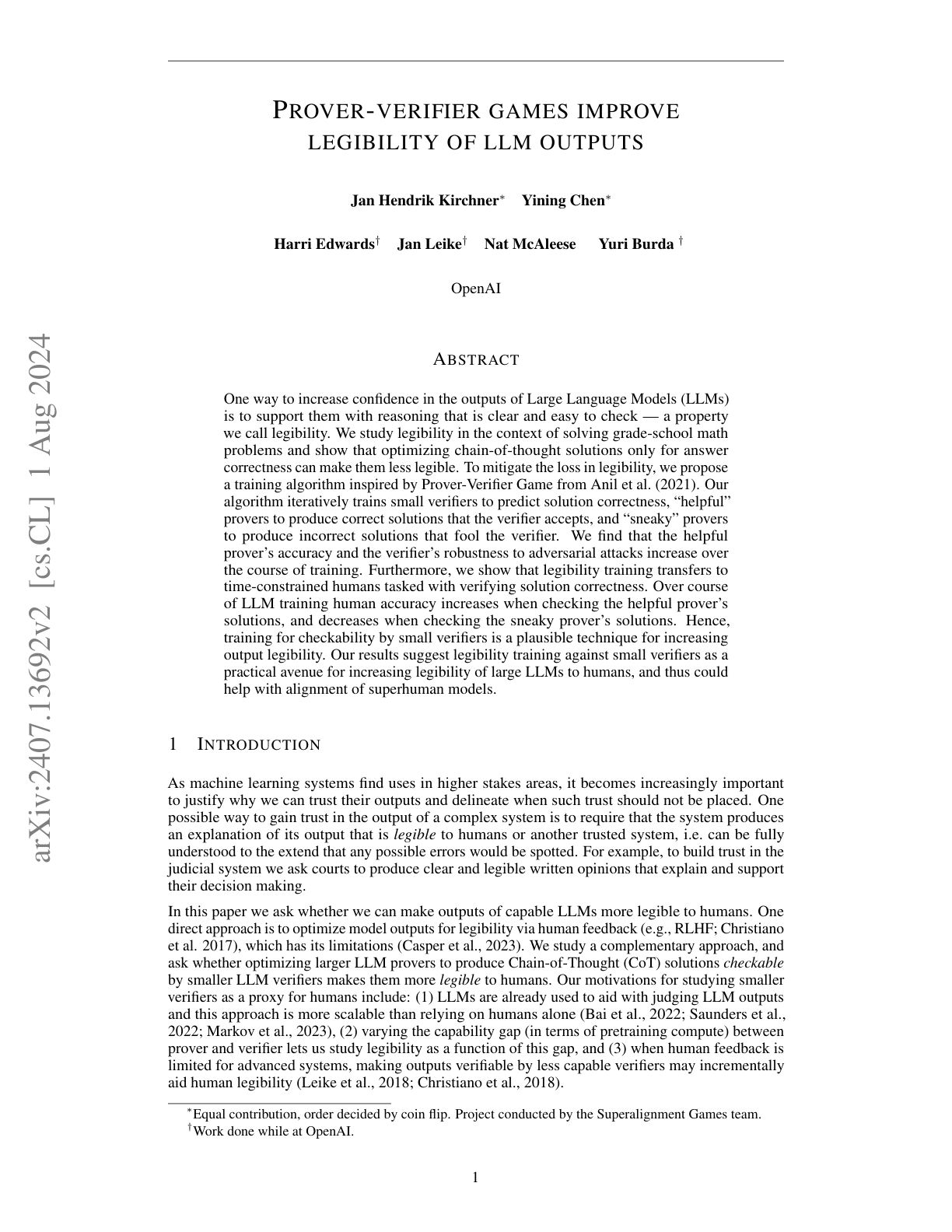
Improving Legibility of LLM Outputs
iteratively trains small verifiers to predict solution correctness, helpful provers to produce correct solutions accepted by the verifier, and sneaky provers that produce incorrect solutions that fool the verifier; this process helps train models that can produce text that is correct and easy to understand by both humans and AI systems which leads to more trustworthy systems.
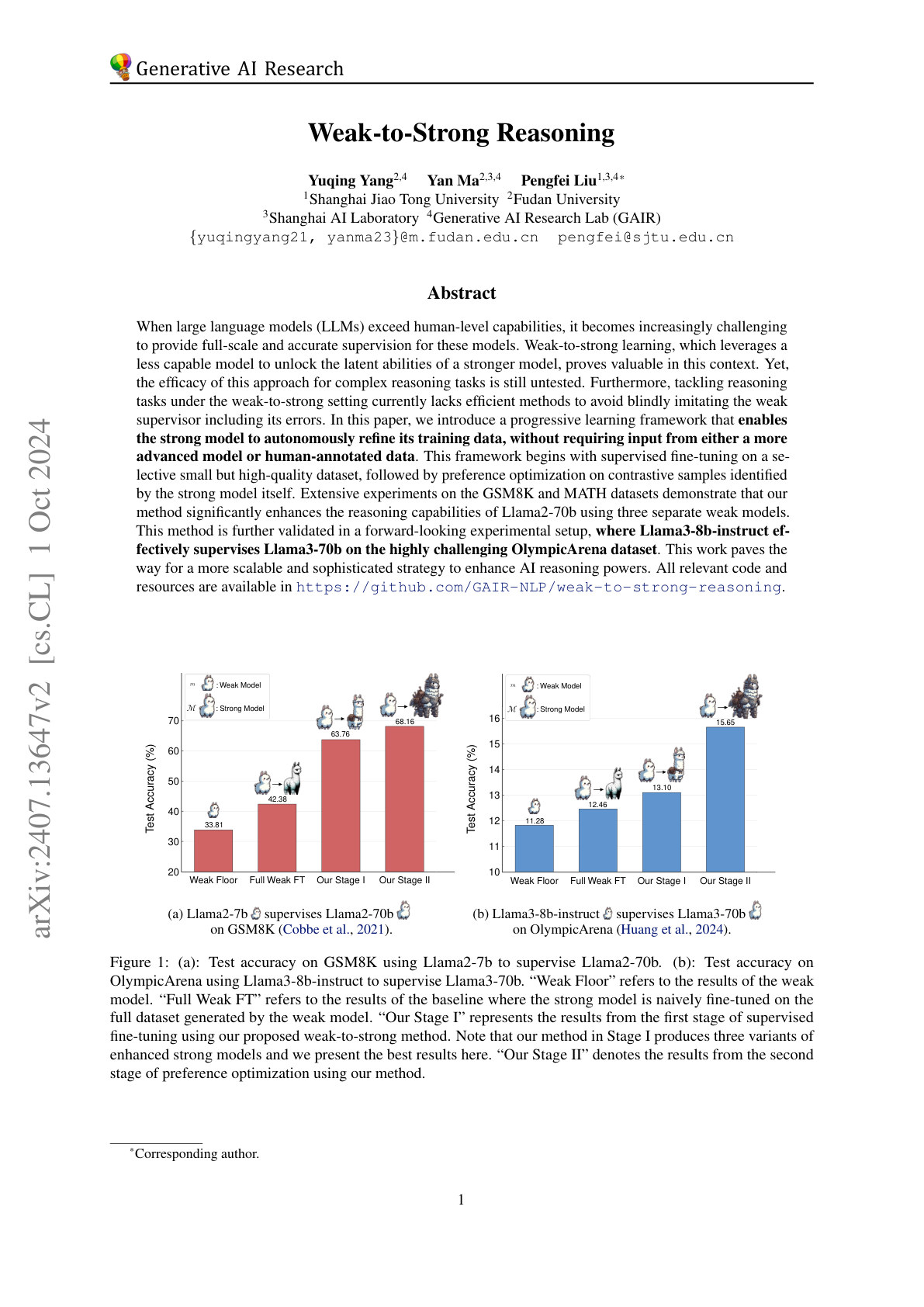
Weak-to-Strong Reasoning
demonstrates the use of weak supervision to elicit strong reasoning capabilities in LLMs without relying on human annotations or advanced models; reports that strong models can automatically refine their training data without explicitly being trained to do so; enables expanding a model's learning scope and scaling performance on reasoning.
Reasoning in LLMs: A Geometric Perspective
explores the reasoning of LLMs from a geometrical perspective; reports that a higher intrinsic dimension implies greater expressive capacity of the LLM; reports that they establish a connection between the expressive power of LLMs and the density of their self-attention graphs; their analysis demonstrates that the density of these graphs defines the intrinsic dimension of the inputs to the MLP blocks.
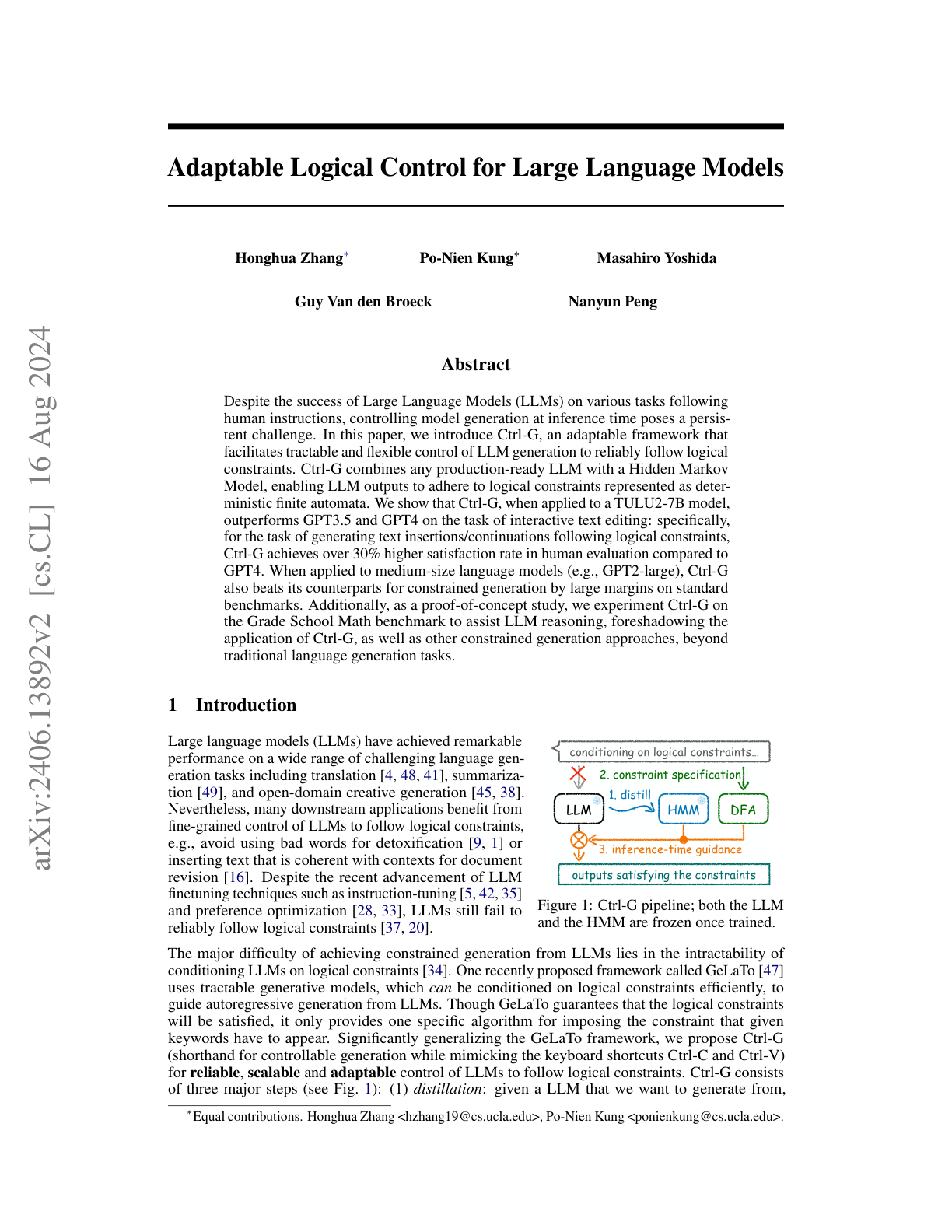
Adaptable Logical Control for LLMs
presents the Ctrl-G framework to facilitate control of LLM generations that reliably follow logical constraints; it combines LLMs and Hidden Markow Models to enable following logical constraints (represented as deterministic finite automata); Ctrl-G achieves over 30% higher satisfaction rate in human evaluation compared to GPT4.

ESM3
a new LLM-based biological model that generates a new green fluorescent protein called esmGFP; builds on a bidirectional transformer, uses masked language models for the objective function, leverages geometric attention to represent atomic coordinates, and applies chain-of-thought prompting to generate fluorescent proteins; estimates that esmGFP represents an equivalent of over 500 million years of natural evolution performed by an evolutionary simulator.
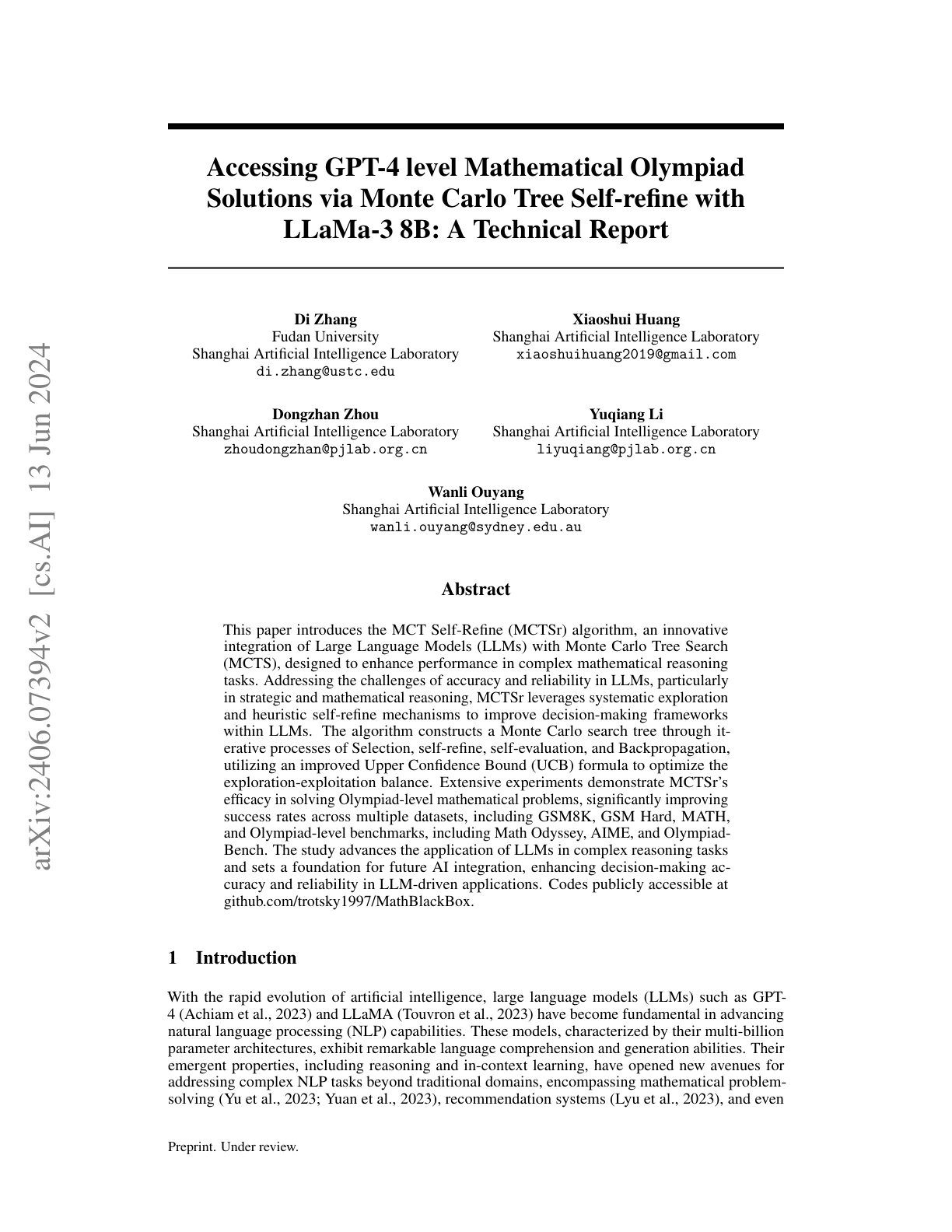
Monte Carlos Tree Self-Refine
report to have achieved GPT-4 level mathematical olympiad solution using an approach that integrates LLMs with Monte Carlo Tree Search; this approach focuses on enhancing the mathematical reasoning performance of the system through capabilities such as systematic exploration, self-refinement, and self-evaluation.
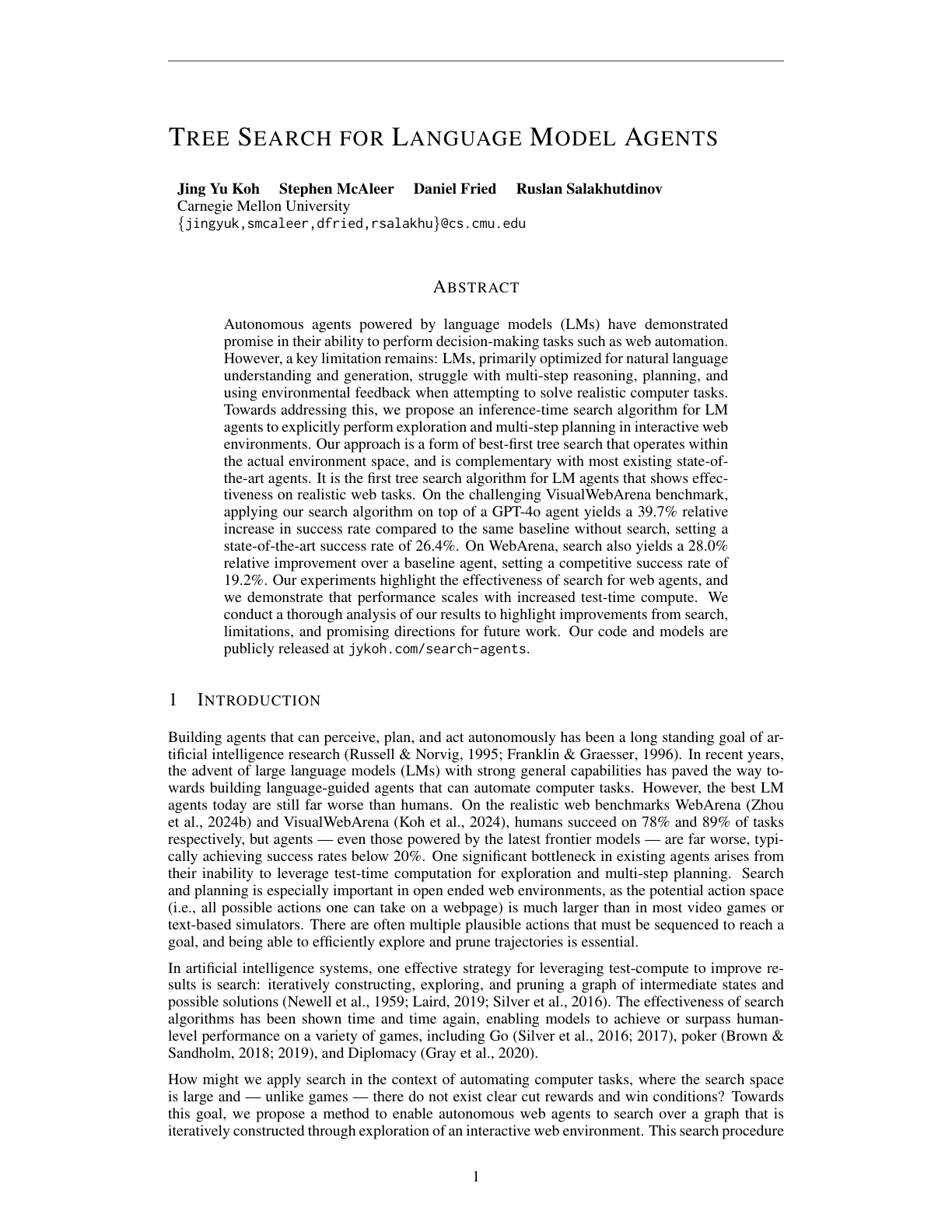
Tree Search for Language Model Agents
proposes an inference-time tree search algorithm for LM agents to perform exploration and enable multi-step reasoning; it’s tested on interactive web environments and applied to GPT-4o to significantly improve performance; demonstrates that performance scales when increasing test-time compute.
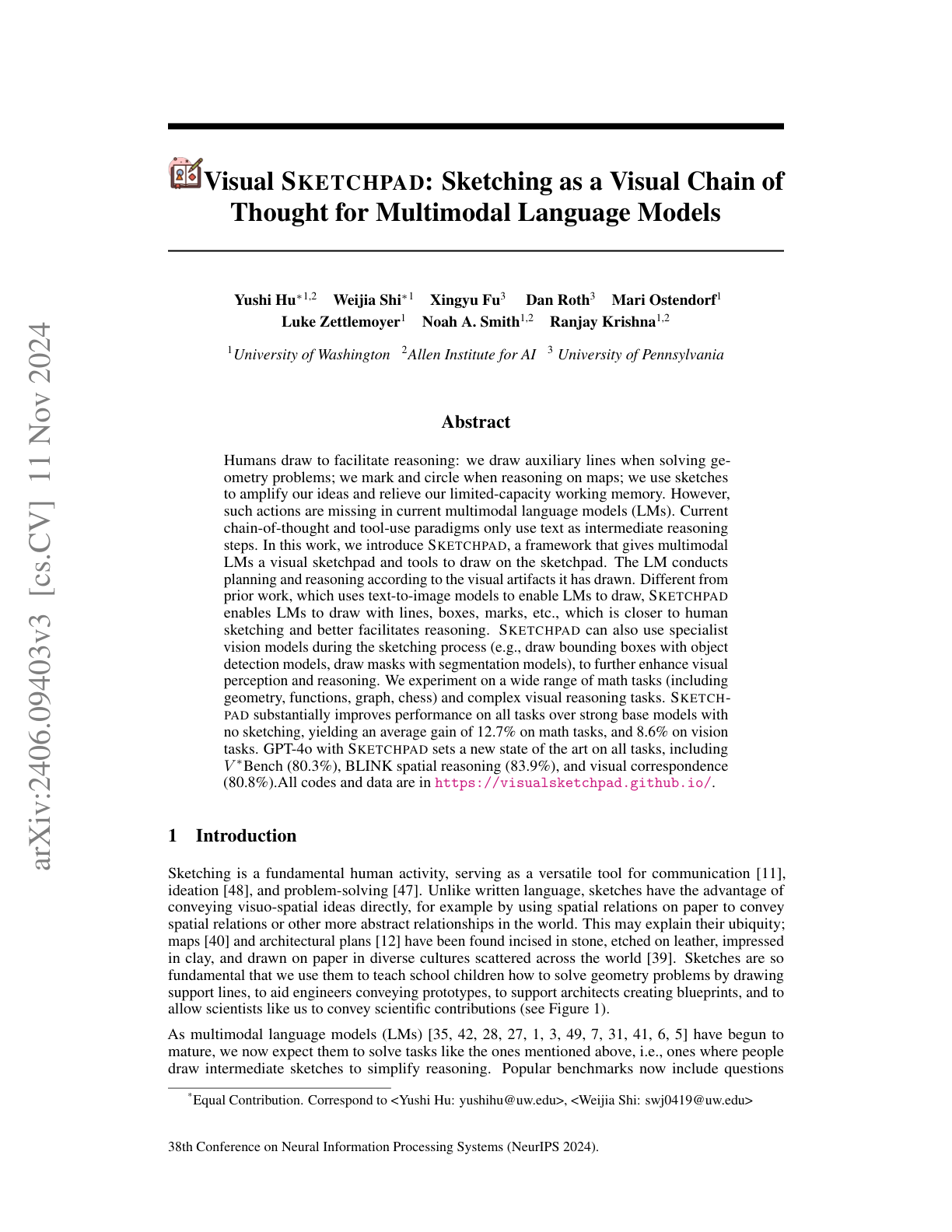
Sketching as a Visual Chain of Thought
a framework that enables a multimodal LLM to access a visual sketchpad and tools to draw on the sketchpad; it can equip a model like GPT-4 with the capability to generate intermediate sketches to reason over complex tasks; improves performance on many tasks over strong base models with no sketching; GPT-4o equipped with SketchPad sets a new state of the art on all the tasks tested.
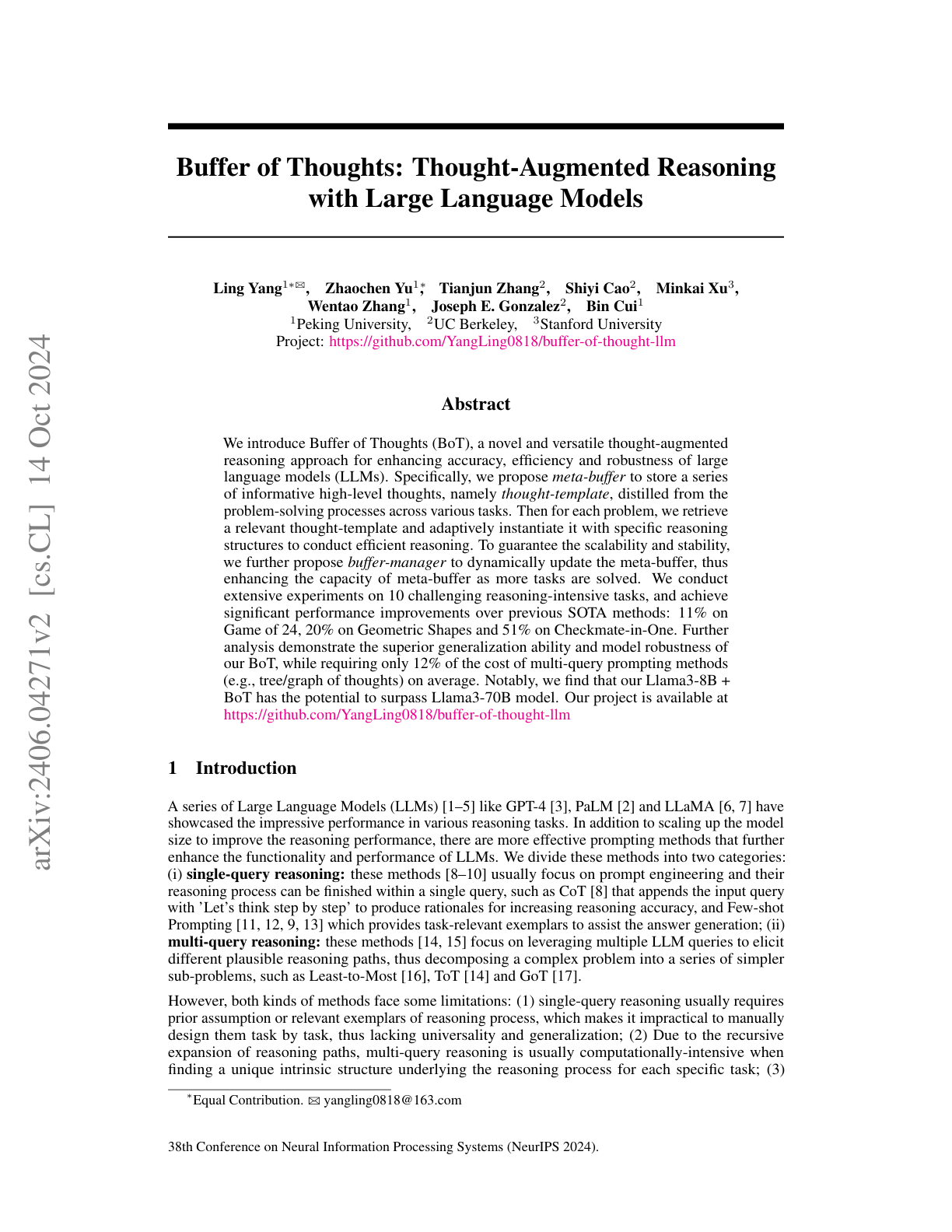
Buffer of Thoughts
presents a thought-augmented reasoning approach to enhance the accuracy, efficiency, and robustness of LLM-based reasoning; it leverages a meta-buffer containing high-level thoughts (thought templates) distilled from problem-solving processes; the relevant thought template is then retrieved and instantiated with task-specific reasoning structures for the thought-augmented reasoning process; it demonstrates SOTA performance on 10 challenging tasks while requiring 12% of the cost of multi-query prompting methods like Tree-of-Thoughts.
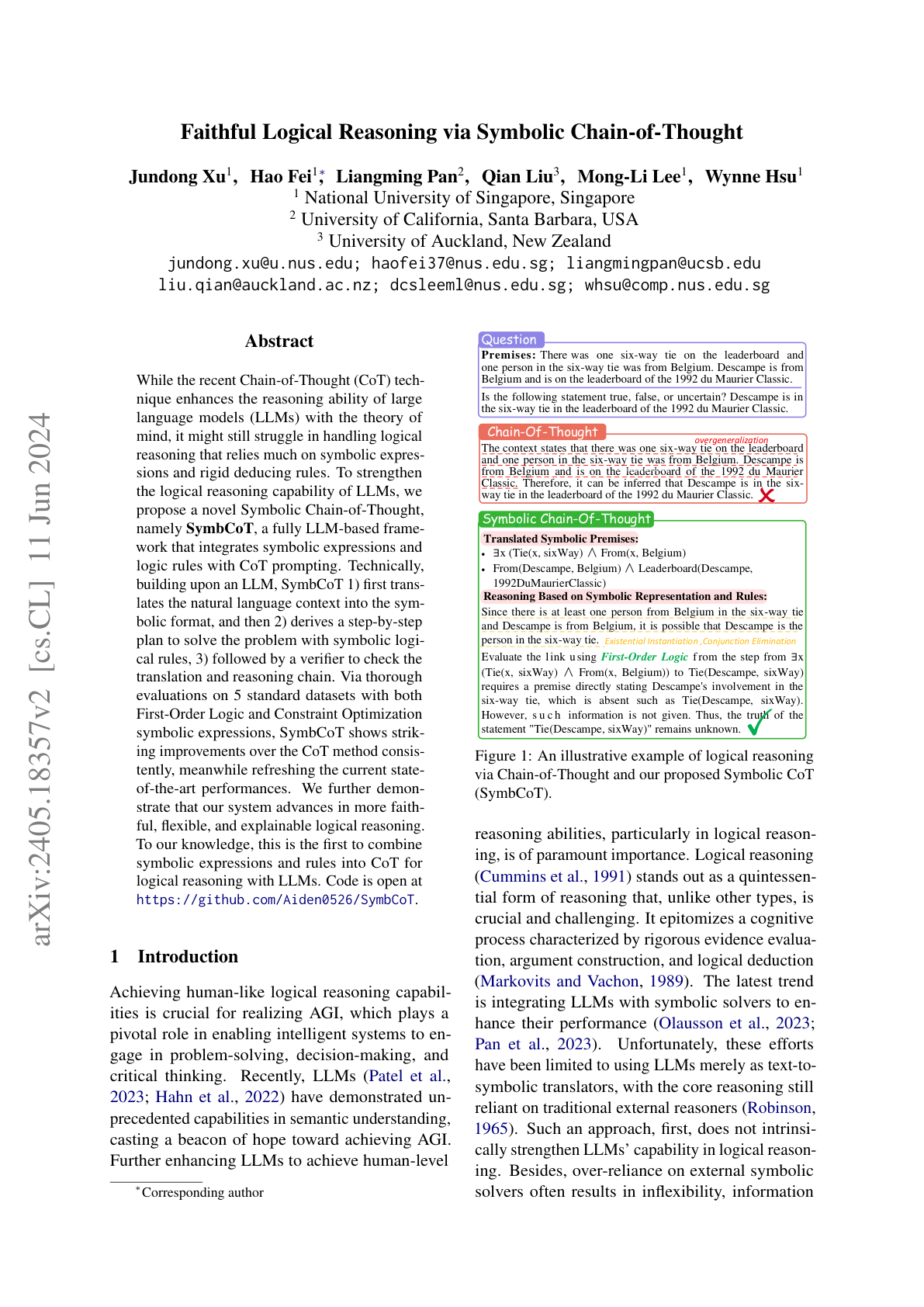
Symbolic Chain-of-Thought
proposes a method that improves the logical reasoning capabilities of LLMs by integrating symbolic expressions and logical rules with chain-of-thought (CoT) prompting; the prompting technique is called Symbolic Chain-of-Thought and it’s a fully LLM-based framework with the following key steps: 1) translates natural language context to symbolic format, 2) derives step-by-step plan to solve problems following symbolic logical rules, and 3) uses a verifier to check the translation and reasoning chain.
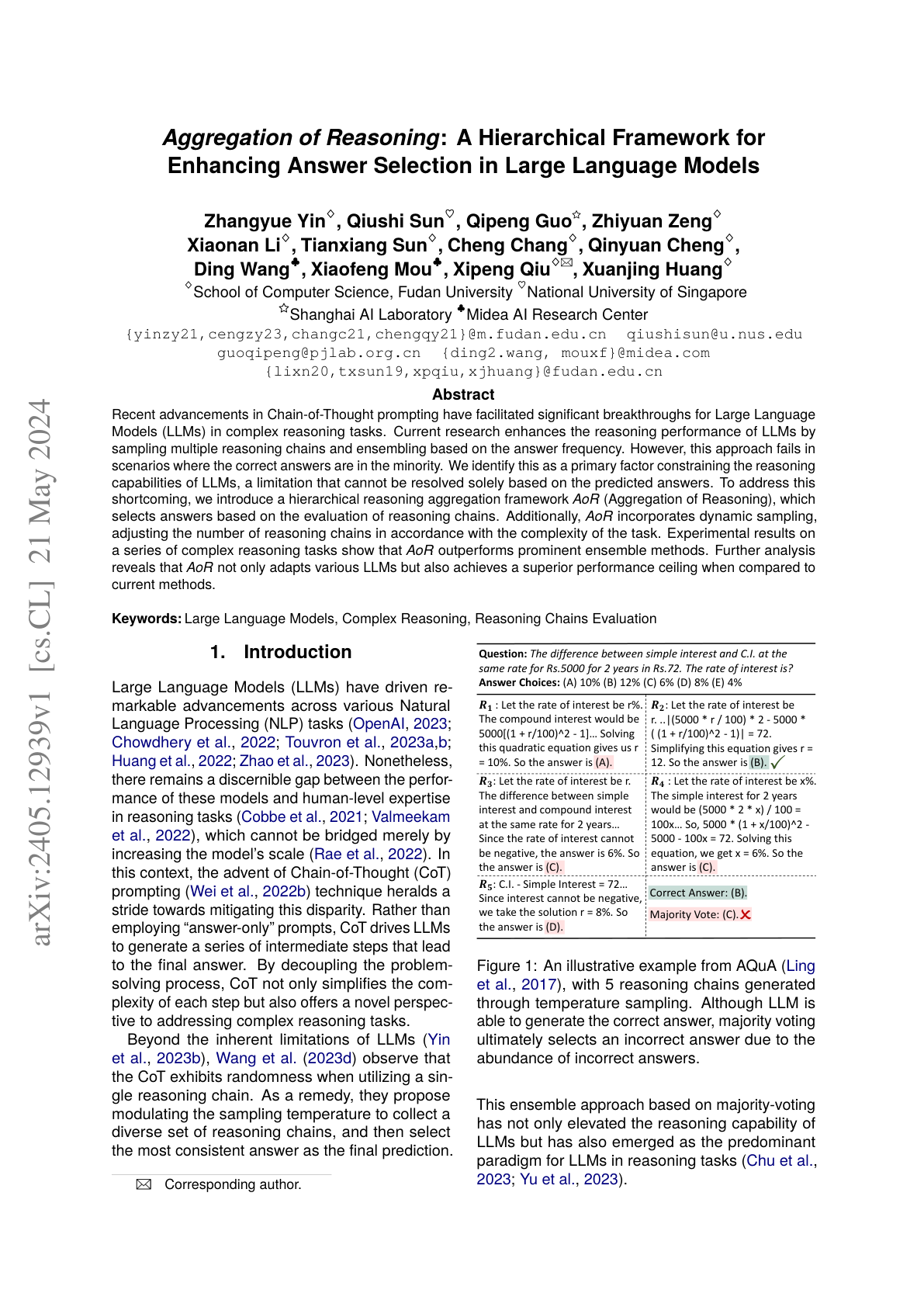
Enhancing Answer Selection in LLMs
proposes a hierarchical reasoning aggregation framework for improving the reasoning capabilities of LLMs; the approach, called Aggregation of Reasoning (AoR), selects answers based on the evaluation of reasoning chains; AoR uses dynamic sampling to adjust the number of reasoning chains with respect to the task complexity; it uses results from the evaluation phase to determine whether to sample additional reasoning chains; a known flaw of majority voting is that it fails in scenarios where the correct answer is in the minority; AoR focuses on evaluating the reasoning chains to improve the selection of the final answer; AoR outperforms various prominent ensemble methods and can be used with various LLMs to improve performance on complex reasoning tasks.
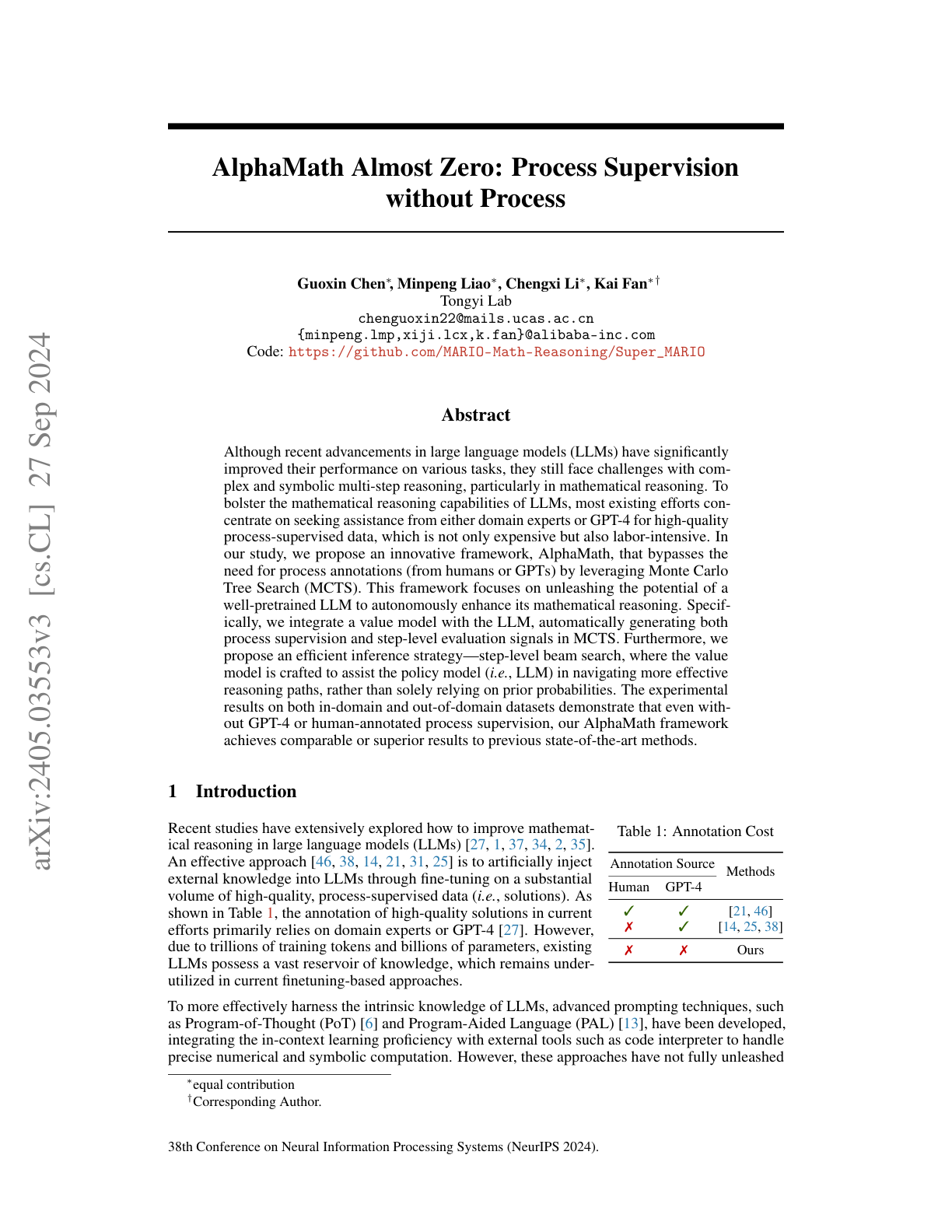
AlphaMath Almost Zero
enhances LLMs with Monte Carlo Tree Search (MCTS) to improve mathematical reasoning capabilities; the MCTS framework extends the LLM to achieve a more effective balance between exploration and exploitation; for this work, the idea is to generate high-quality math reasoning data without professional human annotations; the assumption is that a well pre-trained LLM already possesses mathematical knowledge to generate reasoning steps but needs better stimulation such as an advanced prompting or search strategy; unlike other methods such as Program-of-thought and Chain-of-thought, no solutions are required for the training data, just the math questions and the answers; the integration of LLMs, a value model, and the MCTS framework enables an effective and autonomous process of generating high-quality math reasoning data; the value model also aids the policy model in searching for effective solution paths.

AI-powered Gene Editors
Profluent's OpenCRISPR-1 paper demonstrates that a large protein language model trained on biological diversity at scale can design programmable gene editors from scratch. The AI-designed editors successfully perform precision editing in the human genome.
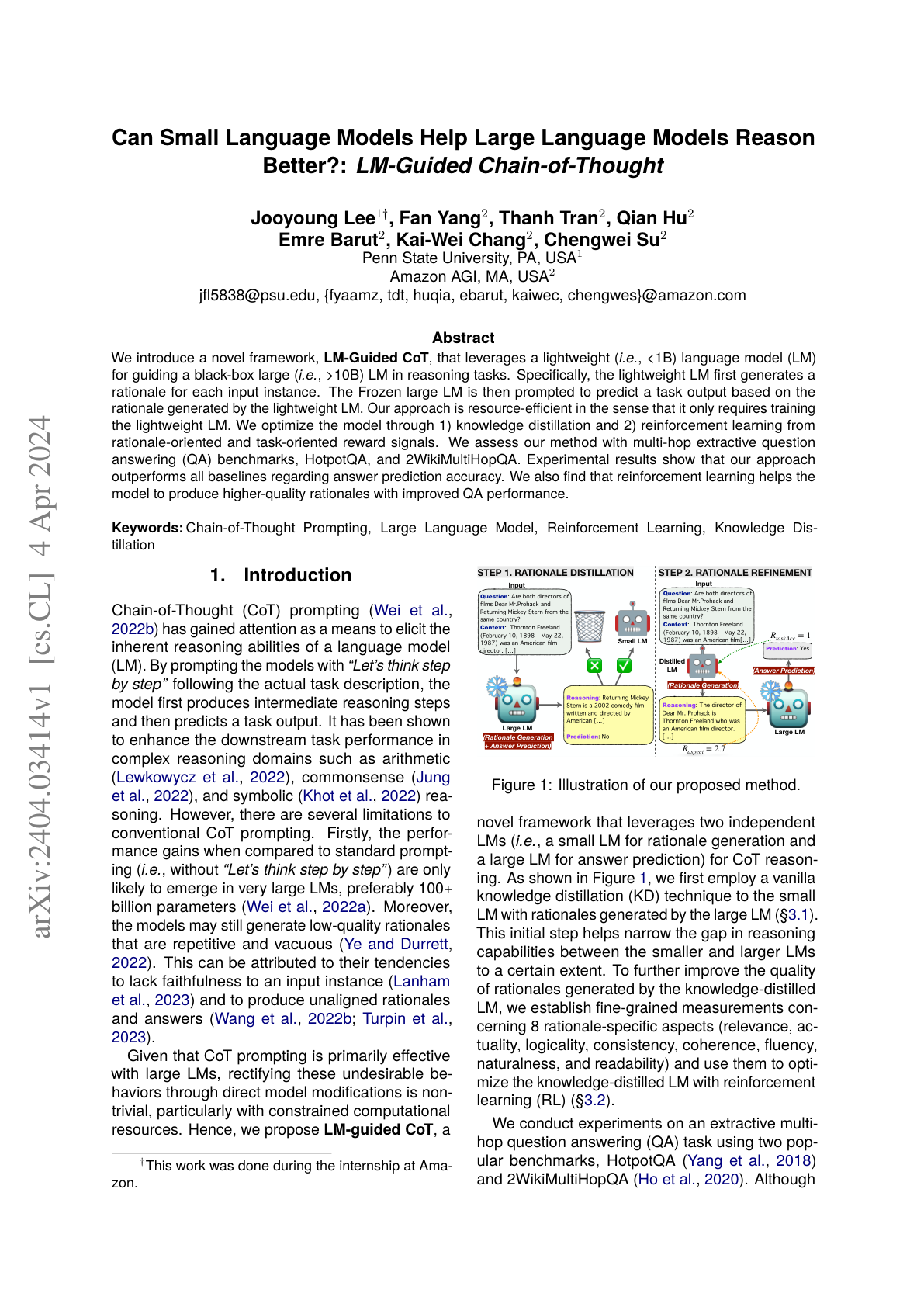
LM-Guided Chain-of-Thought
This paper offloads rationale generation to a small, trained LM while keeping a frozen large LM as the answer predictor. The small model is optimized with knowledge distillation and reinforcement learning so it produces rationales that steer the large model more effectively.
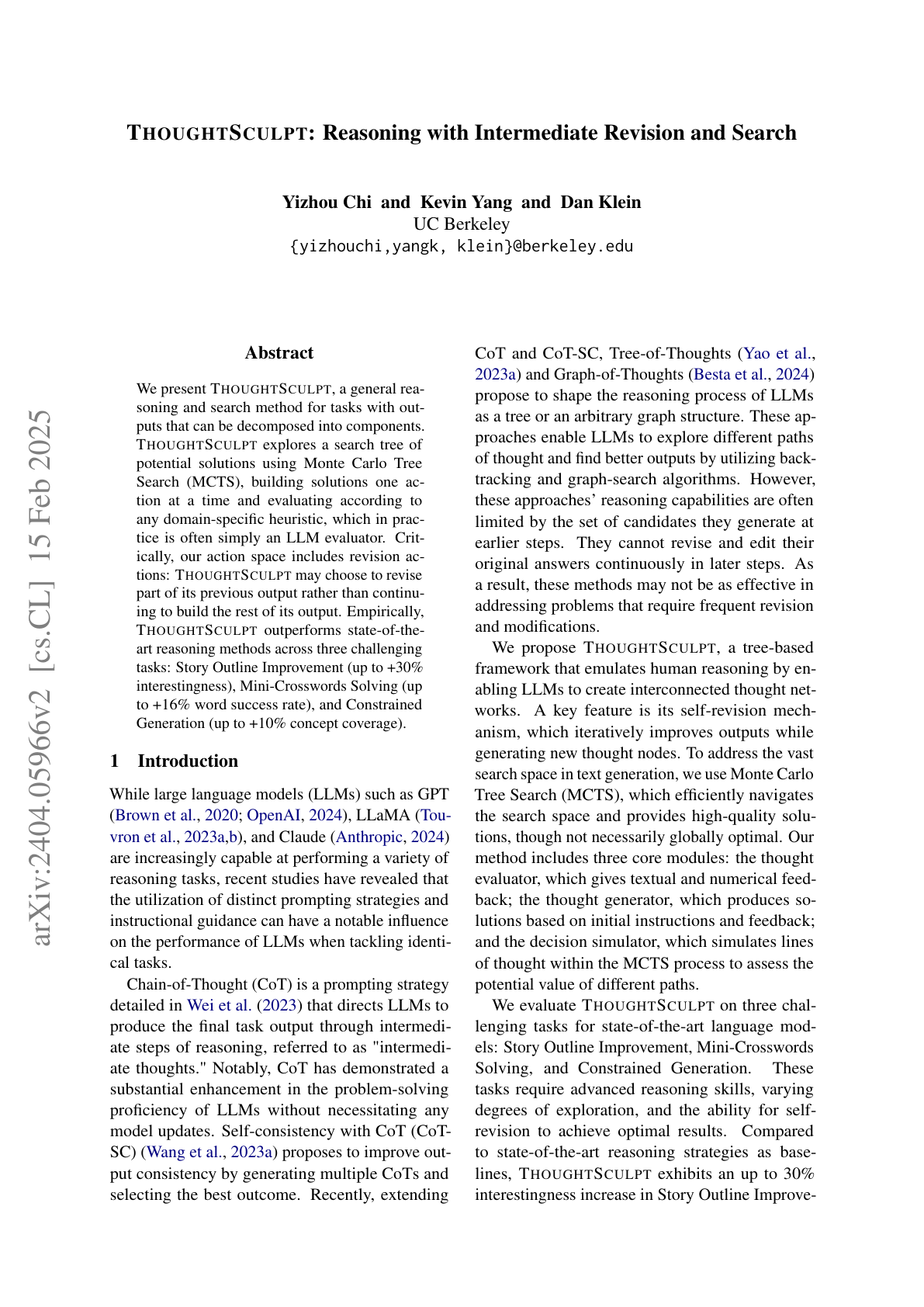
Reasoning with Intermediate Revision and Search (THOUGHTSCULPT)
THOUGHTSCULPT is a graph-based reasoning framework that combines Monte Carlo Tree Search with an explicit revision action, letting an LLM iteratively rewrite earlier thoughts instead of only extending them.
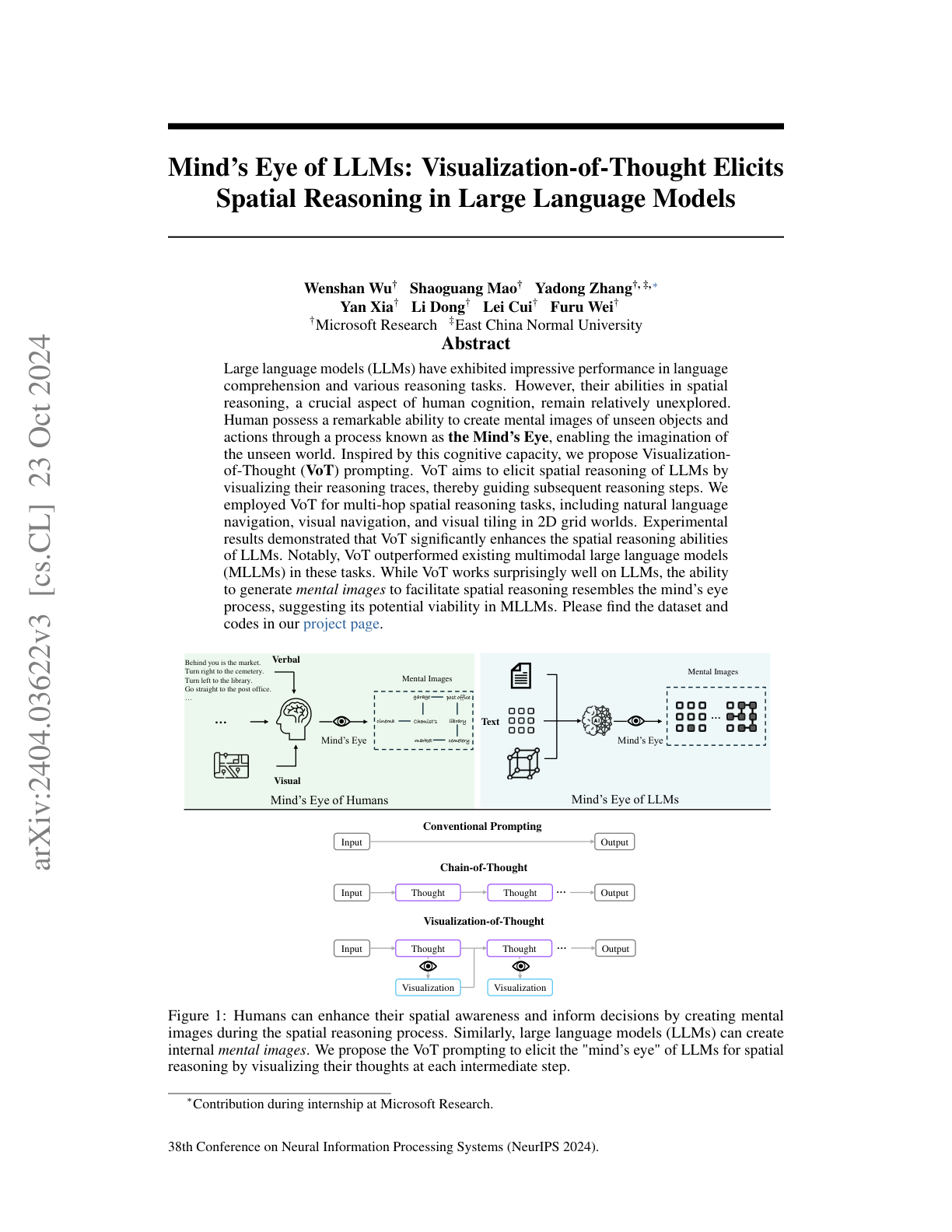
Visualization-of-Thought
Microsoft's Visualization-of-Thought (VoT) prompts LLMs to emit intermediate "mental images" of their reasoning state, lifting spatial-reasoning accuracy on grid-world tasks and beating multimodal baselines that actually see images.
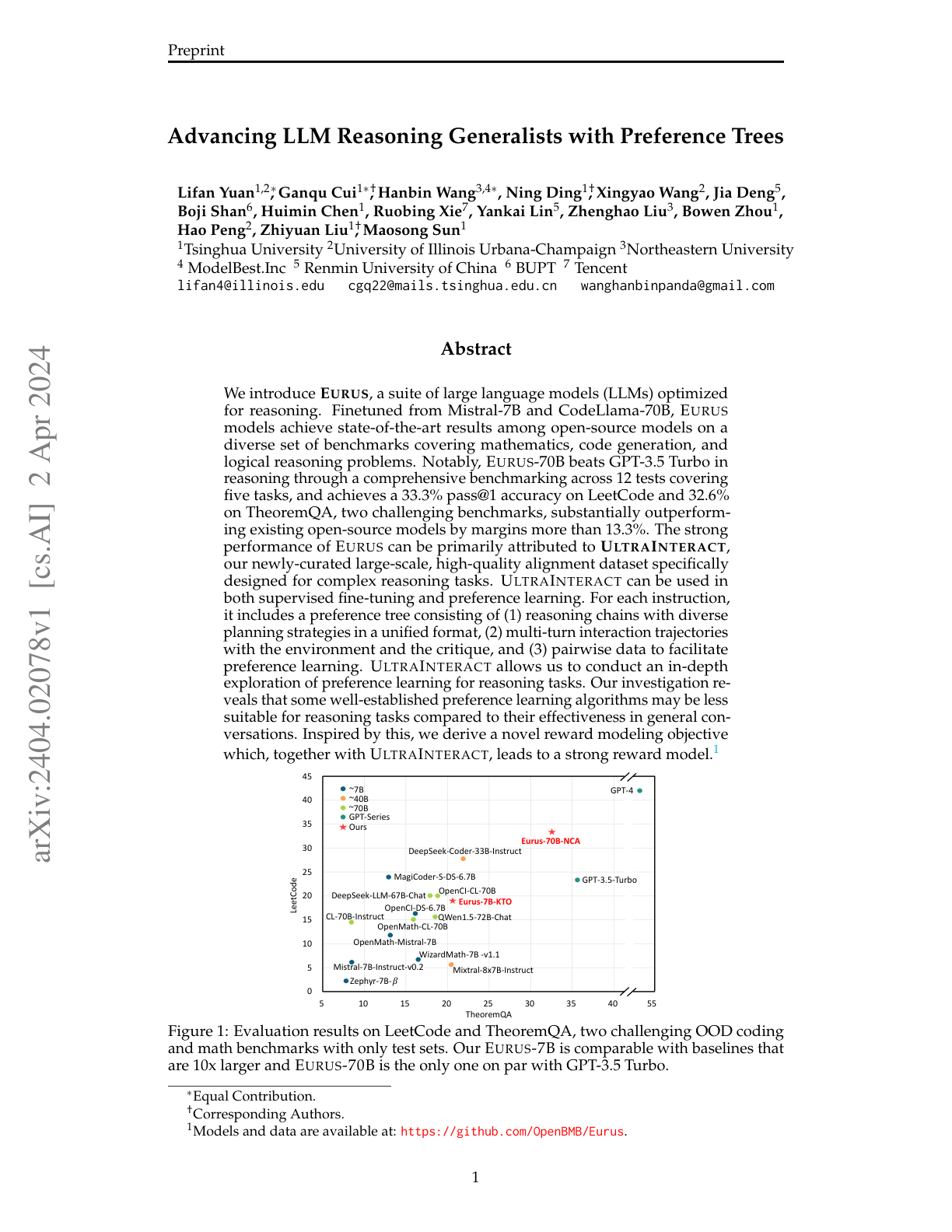
Advancing LLM Reasoning (Eurus)
OpenBMB's Eurus is a suite of reasoning-specialized LLMs (7B and 70B) fine-tuned on UltraInteract, a new alignment dataset built around preference trees for complex math, code, and logical tasks.

Grok-1.5
xAI's Grok-1.5 is the successor to the open-weight Grok-1, emphasizing long-context understanding and substantially stronger math, code, and reasoning performance.
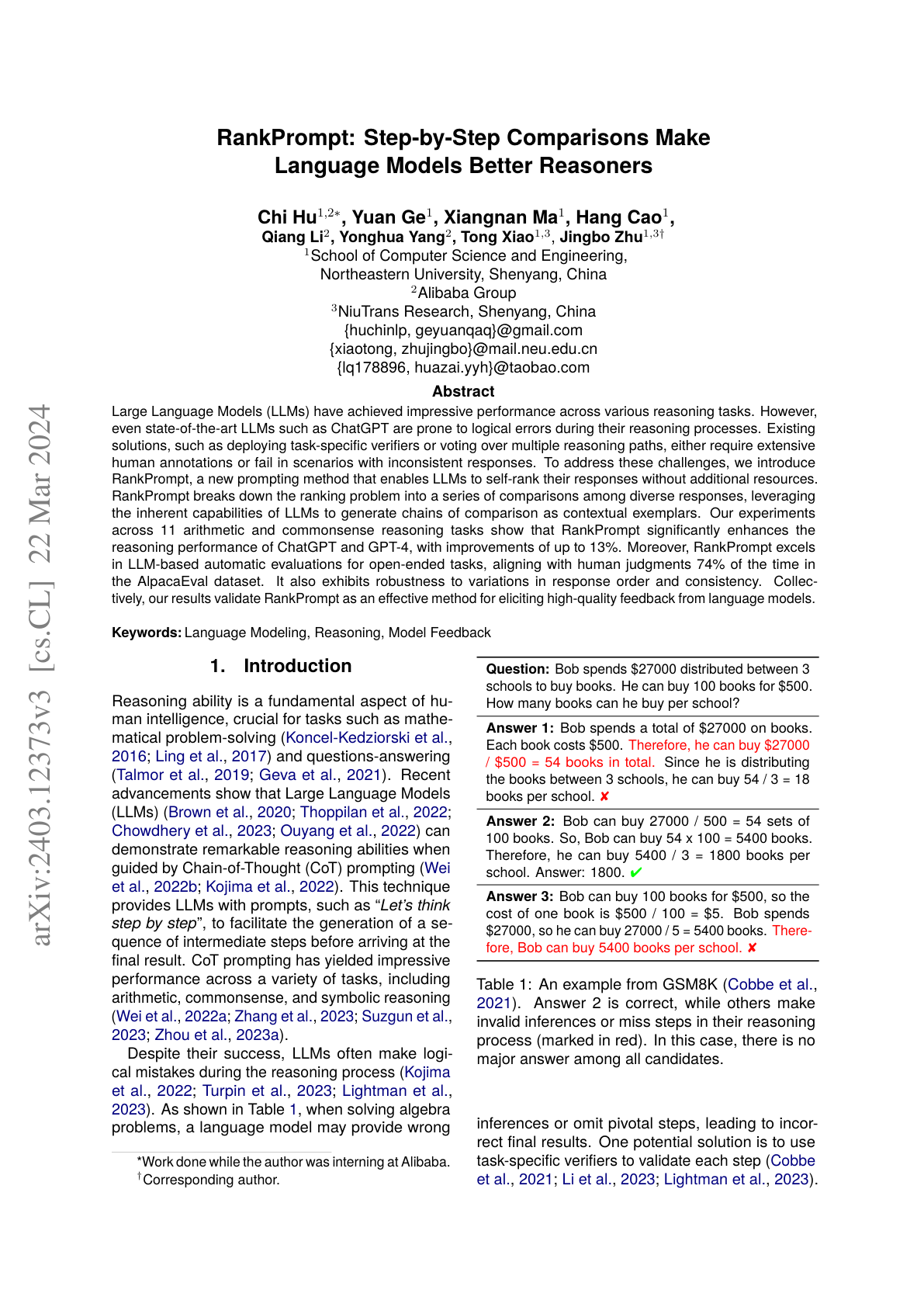
RankPrompt: Step-by-Step Comparisons Make LLMs Better Reasoners
RankPrompt is a prompting method that lets an LLM self-rank its own candidate answers via chains of pairwise comparisons, without needing an external verifier or additional fine-tuning.
Retrieval Augmented Thoughts (RAT)
RAT augments chain-of-thought by iteratively rewriting each reasoning step using retrieved context, sharply reducing hallucination on long-horizon generation tasks.
Quiet-STaR
Quiet-STaR generalizes the Self-Taught Reasoner (STaR) so that a language model learns to generate internal rationales between every token, not just for explicit QA problems.
Robust Evaluation of Reasoning
The paper introduces functional benchmarks that parameterize reasoning problems so the same structural question can be re-instantiated with fresh surface forms, then uses them to expose a large "reasoning gap" in frontier LLMs.
Can LLMs Reason and Plan?
Kambhampati's position paper argues that what looks like reasoning and planning in LLMs is better understood as "universal approximate retrieval" powered by web-scale training.