AI Papers of the Week
Every paper worth reading in AI, hand-picked one week at a time.
Discover and explore top AI papers with Claude Code or Codex
npx @dair-ai/mcp setup
Generative Agent Simulations of 1,000 People
introduces a new agent architecture that uses LLMs to create behavioral simulations of real individuals, achieving 85% accuracy in replicating human responses on the General Social Survey and reducing demographic biases compared to traditional approaches.
Measuring Bullshit in Language Games Played by ChatGPT
proposes that LLM-based chatbots play the ‘language game of bullshit’; by asking ChatGPT to generate scientific articles on topics where it has no knowledge or competence, the authors were able to provide a reference set of how this “bullshit” is manifested.

AlphaQubit
a new AI-based decoder that sets a state-of-the-art benchmark for identifying errors in quantum computers; using transformer architecture, AlphaQubit demonstrated 6% fewer errors than tensor network methods and 30% fewer errors than correlated matching when tested on the Sycamore data; shows promising results in simulations of larger systems up to 241 qubits; while this represents significant progress in quantum error correction, the system still needs improvements in speed before it can correct errors in real-time for practical quantum computing applications.
The Dawn of GUI Agent
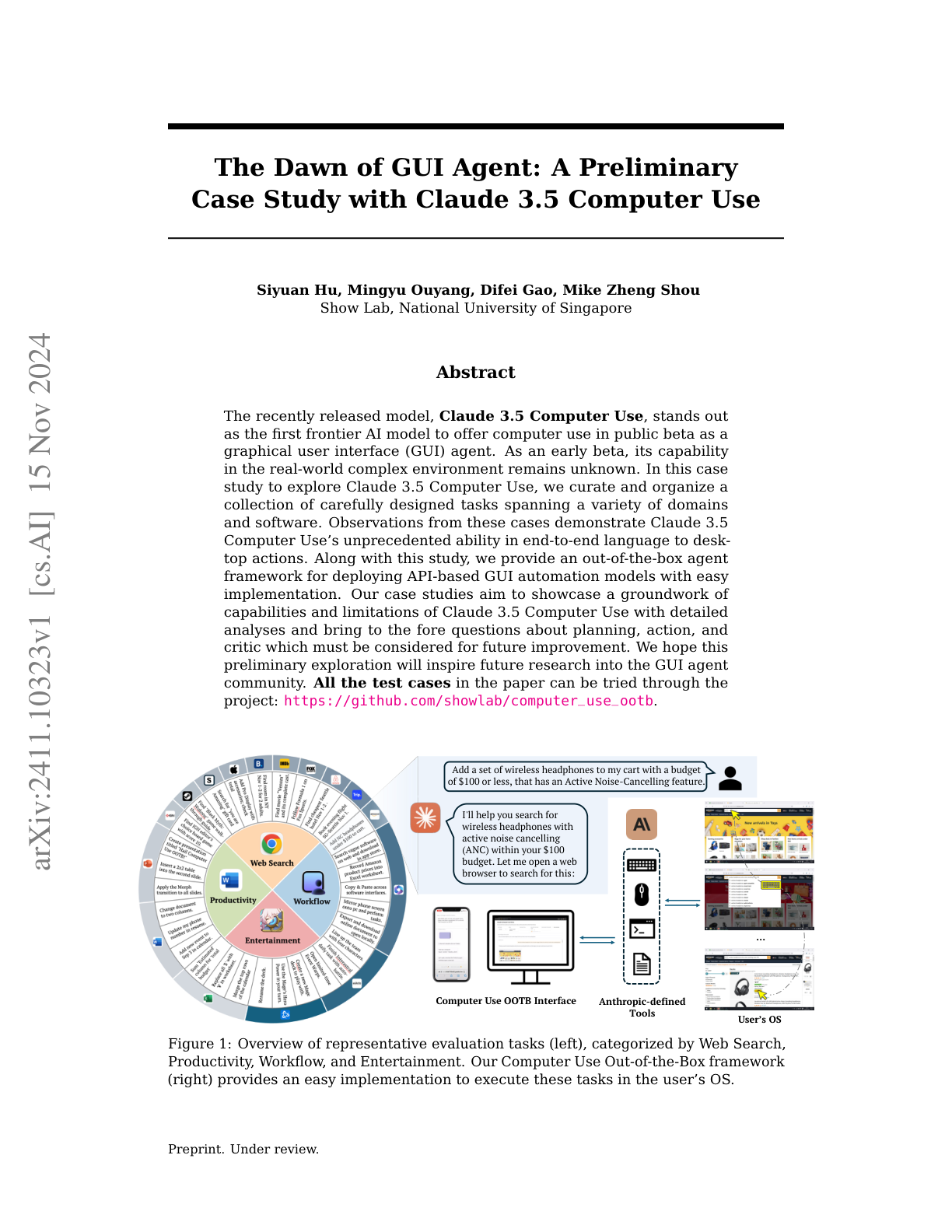
explores Claude 3.5 computer use capabilities across different domains and software; they also provide an out-of-the-box agent framework for deploying API-based GUI automation models; Claude 3.5 Computer Use demonstrates unprecedented ability in end-to-end language to desktop actions.
A Statistical Approach to LLM Evaluation
proposes five key statistical recommendations for a more rigorous evaluation of LLM performance differences. The recommendations include: 1) using the Central Limit Theorem to measure theoretical averages across all possible questions rather than just observed averages; 2) clustering standard errors when questions are related rather than independent; 3) reducing variance within questions through resampling or using next-token probabilities; 4) analyzing paired differences between models since questions are shared across evaluations, and 5) using power analysis to determine appropriate sample sizes for detecting meaningful differences between models; the authors argue that these statistical approaches will help researchers better determine whether performance differences between models represent genuine capability gaps or are simply due to chance, leading to more precise and reliable model evaluations.
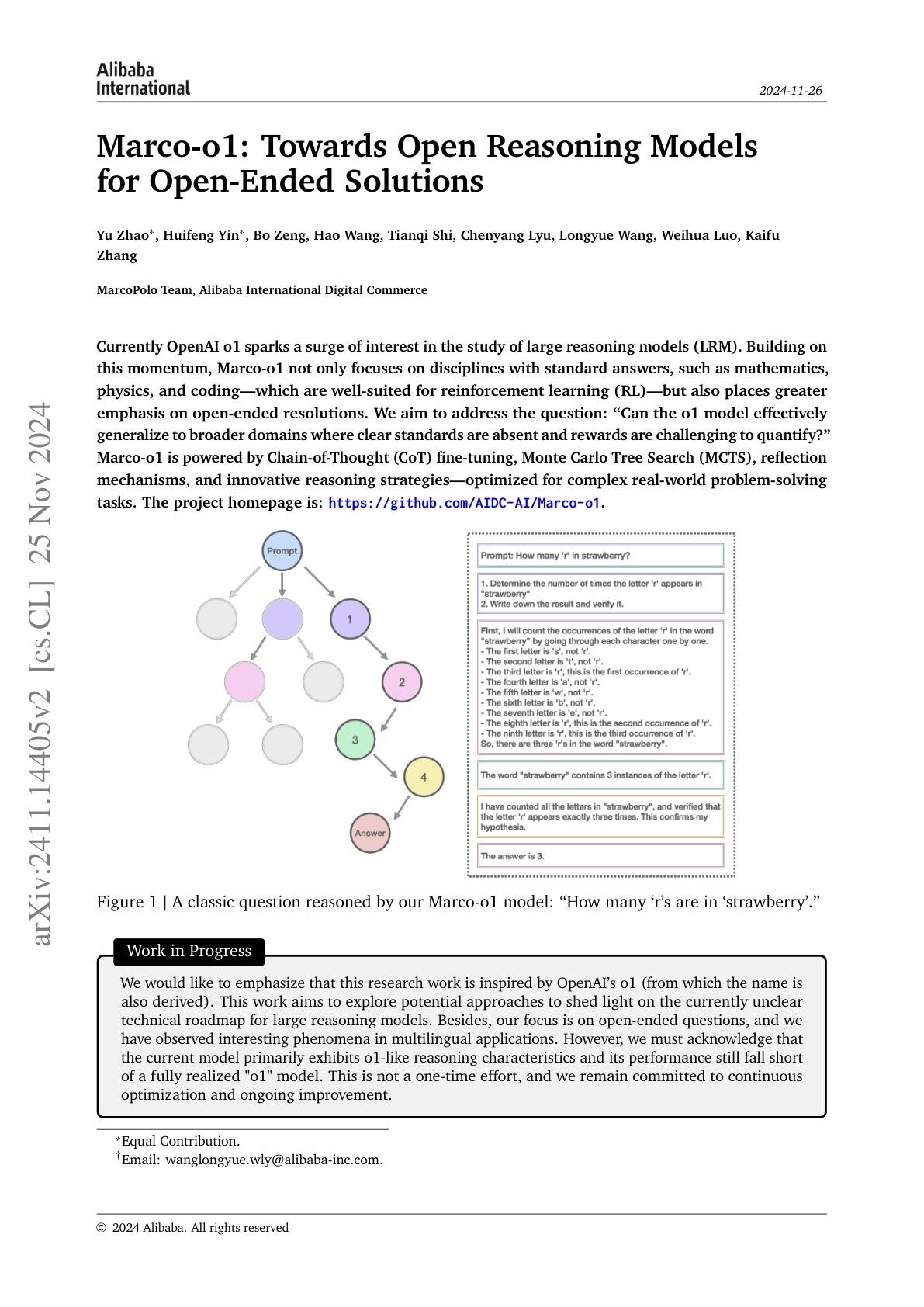
Towards Open Reasoning Models for Open-Ended Solutions
proposes Marco-o1 which is a reasoning model built for open-ended solutions; Marco-o1 is powered by Chain-of-Thought (CoT) fine-tuning, Monte Carlo Tree Search (MCTS), reflection mechanisms, and more recent reasoning strategies; Marco-o1 achieves accuracy improvements of +6.17% on the MGSM (English) dataset and +5.60% on the MGSM (Chinese) dataset.
LLM-based Agents for Automated Bug Fixing
analyzes seven leading LLM-based bug fixing systems on the SWE-bench Lite benchmark, finding MarsCode Agent (developed by ByteDance) achieved the highest success rate at 39.33%; reveals that for error localization line-level fault localization accuracy is more critical than file-level accuracy, and bug reproduction capabilities significantly impact fixing success; shows that 24/168 resolved issues could only be solved using reproduction techniques, though reproduction sometimes misled LLMs when issue descriptions were already clear; concludes that improvements are needed in both LLM reasoning capabilities and Agent workflow design to enhance automated bug fixing effectiveness.
Cut Your Losses in Large-Vocabulary Language Models
introduces Cut Cross-Entropy (CCE), a novel method to significantly reduce memory usage during LLM training by optimizing how the cross-entropy loss is computed; currently, the cross-entropy layer in LLM training consumes a disproportionate amount of memory (up to 90% in some models) due to storing logits for all possible vocabulary tokens. CCE addresses this by only computing logits for the correct token and evaluating the log-sum-exp over all logits on the fly using flash memory; the authors show that the approach reduces the memory footprint of Gemma 2 from 24GB to just 1MB; the method leverages the inherent sparsity of softmax calculations to skip elements that contribute negligibly to gradients; finally, it demonstrates that CCE achieves this dramatic memory reduction without sacrificing training speed or convergence, enabling larger batch sizes during training and potentially more efficient scaling of LLM training.
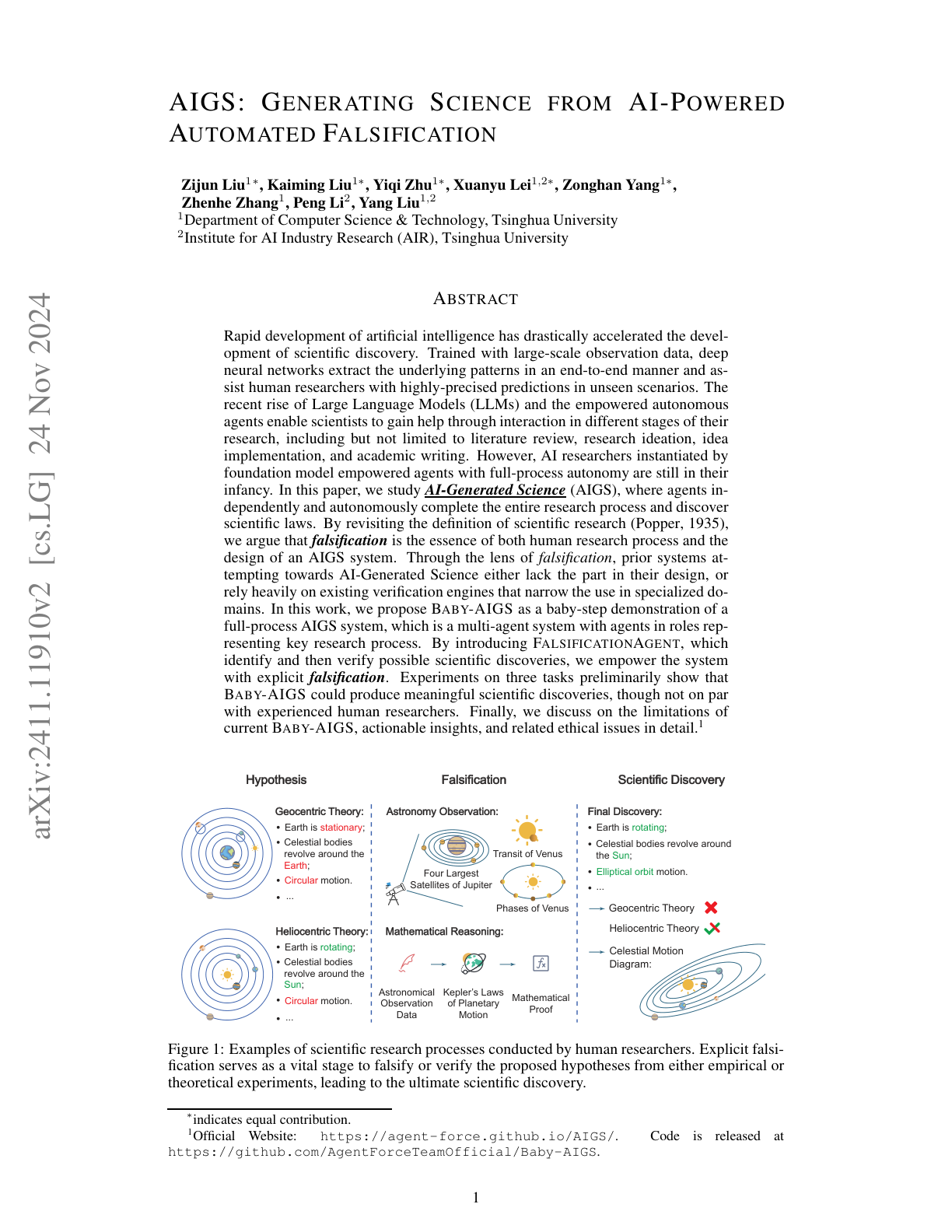
BABY-AIGS
a multi-agent system for automated scientific discovery that emphasizes falsification through automated ablation studies. The system was tested on three ML tasks (data engineering, self-instruct alignment, and language modeling), demonstrating the ability to produce meaningful scientific discoveries. However, the performance is below experienced human researchers.
Does Prompt Formatting Impact LLM Performance
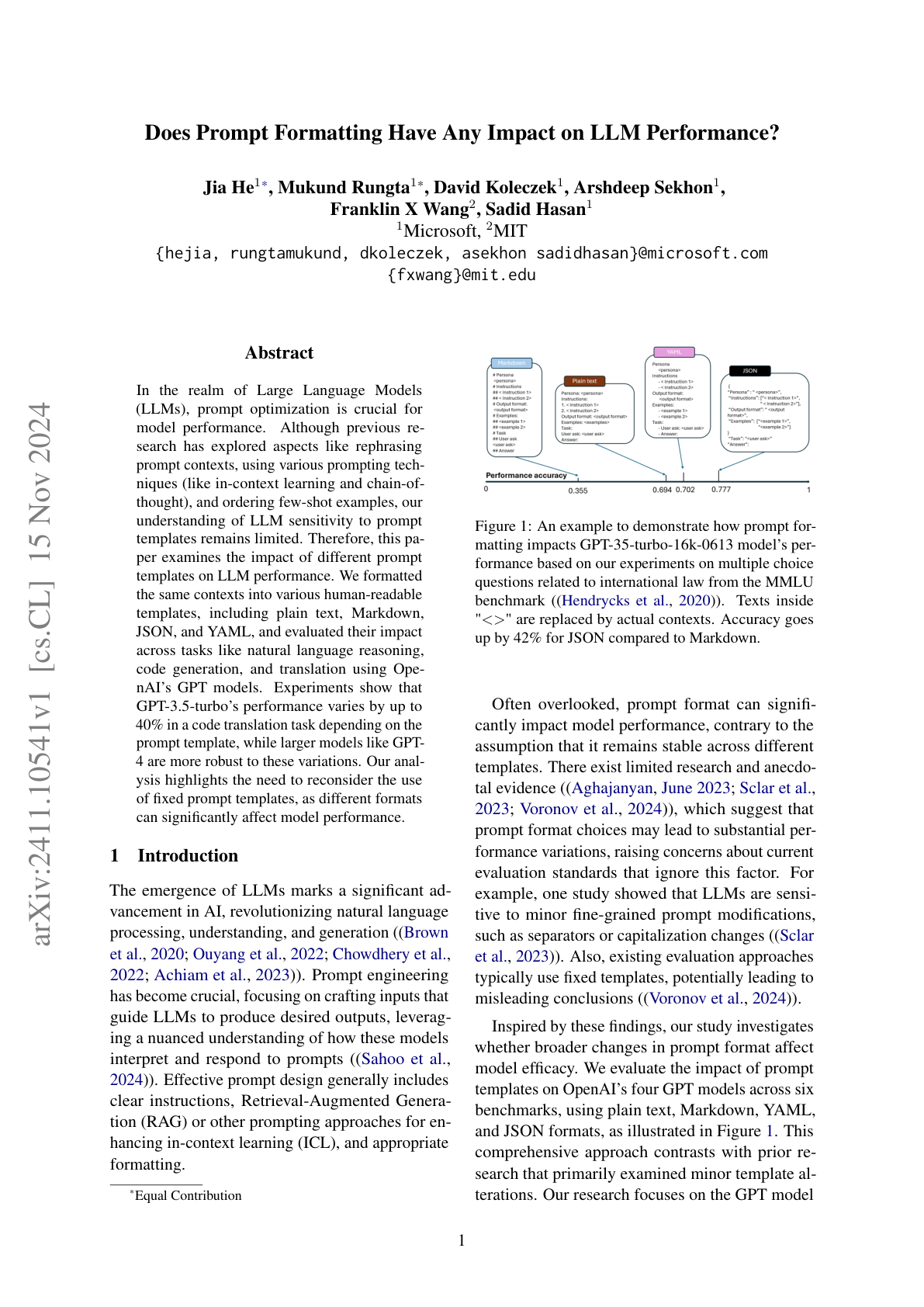
examines how different prompt formats (plain text, Markdown, JSON, and YAML) affect GPT model performance across various tasks; finds that GPT-3.5-turbo's performance can vary by up to 40% depending on the prompt format, while larger models like GPT-4 show more robustness to format changes; argues that there is no universally optimal format across models or tasks - for instance, GPT-3.5-turbo generally performed better with JSON formats while GPT-4 preferred Markdown; models from the same family showed similar format preferences, but these preferences didn't transfer well between different model families; suggests that prompt formatting significantly impacts model performance and should be carefully considered when performing prompt engineering and model evaluation, and how to apply it to applications.
FinRobot
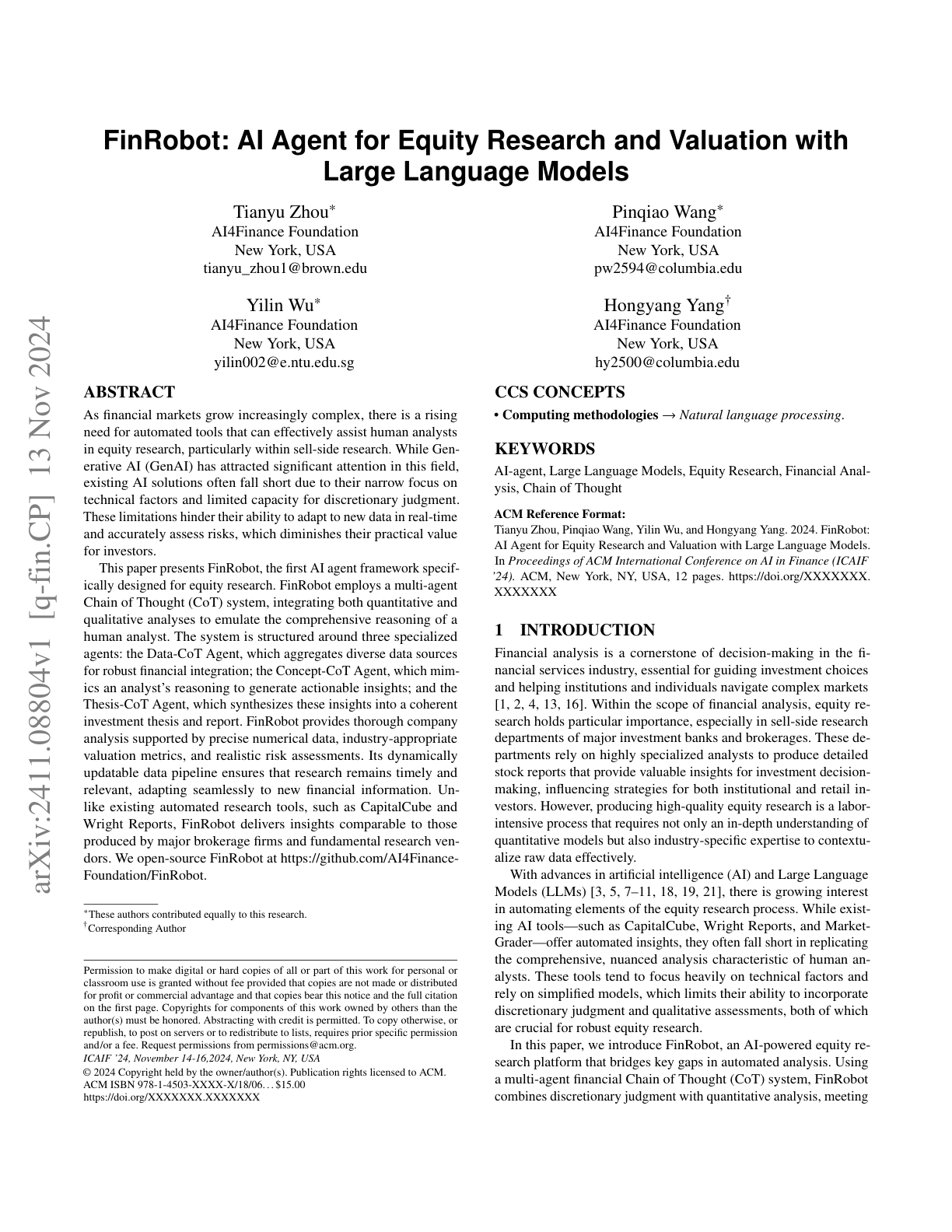
an AI agent framework for equity research that uses a multi-agent Chain-of-Thought prompting, combining data analysis with human-like reasoning to produce professional investment reports comparable to major brokerages; it leverage three agents: a Data-CoT Agent to aggregate diverse data sources for robust financial integration; the Concept-CoT Agent, for analyst’s reasoning to generate actionable insights; and the Thesis-CoT Agent to synthesizes these insights into a coherent investment thesis and report.
Bi-Mamba
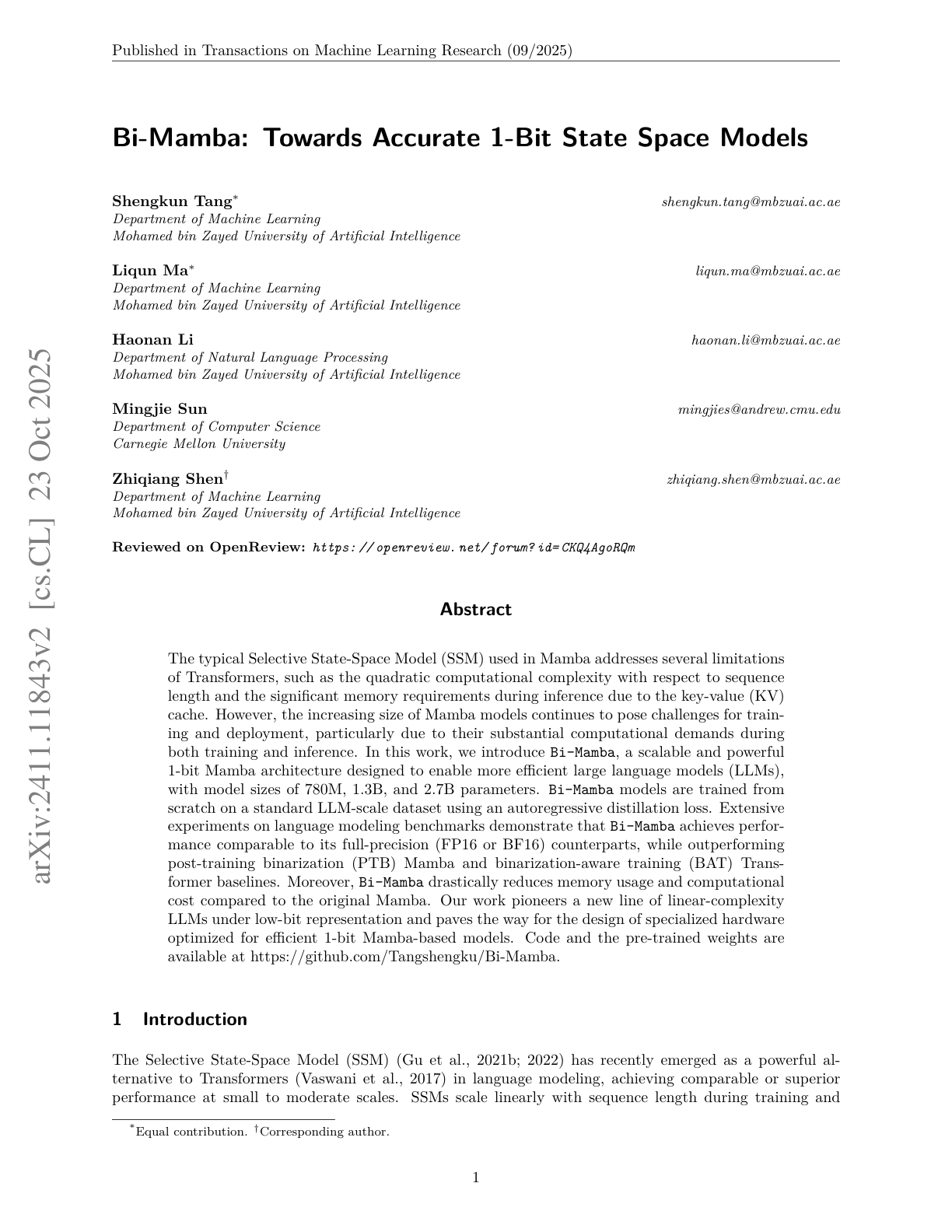
a scalable 1-bit Mamba architecture designed for more efficient LLMs with multiple sizes across 780M, 1.3B, and 2.7B; Bi-Mamba achieves performance comparable to its full-precision counterparts (e.g., FP16 or BF16); it significantly reduces memory footprint with better accuracy than posttraining-binarization Mamba baselines.
Impacts of AI on Innovation
suggests that top scientists leverage their domain knowledge to prioritize promising AI suggestions, while others waste significant resources testing false positives; finds that implementing AI materials discovery technology leads to substantial increases in productivity, with 44% more materials discovered, 39% more patent filings, and 17% more product innovation; reports that these gains came with concerning tradeoffs, as 82% of scientists reported reduced job satisfaction due to decreased creativity and skill underutilization.
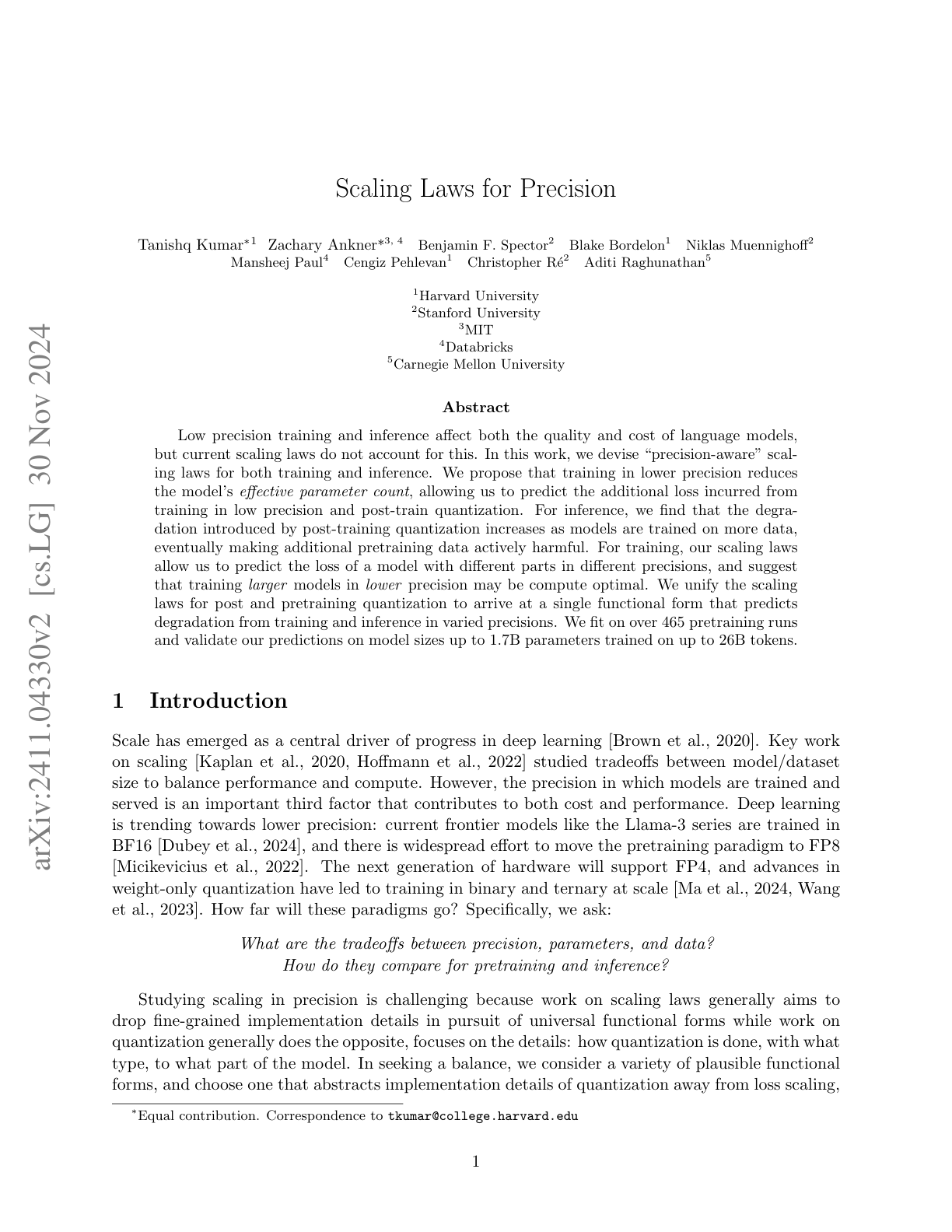
Scaling Laws for Precision
introduces "precision-aware" scaling laws that predict how model performance is affected by both training and inference precision in LLMs; key findings include: 1) post-training quantization becomes more harmful as models are trained on more data, eventually making additional pretraining actively detrimental, 2) training in lower precision requires increasing model size to maintain performance, and 3) when jointly optimizing model size, data, and precision, the compute-optimal training precision is around 7-8 bits and independent of compute; also reports that when the model size is fixed, compute-optimal precision increases approximately logarithmically with data; the authors validate their predictions on models up to 1.7B parameters trained on up to 26B tokens, showing that both very high (16-bit) and very low (sub 4-bit) training precisions may be suboptimal.

Evo
a 7B parameter AI model designed to understand and generate DNA sequences across multiple biological scales; the model, trained on 2.7 million prokaryotic and phage genomes, can process sequences up to 131 kilobases long while maintaining single-nucleotide resolution, enabling it to understand both molecular-level interactions and genome-wide patterns; Evo demonstrates superior performance in predicting and generating functional DNA, RNA, and protein sequences, including the first successful AI-generated CRISPR-Cas complexes and transposable systems that have been experimentally validated.
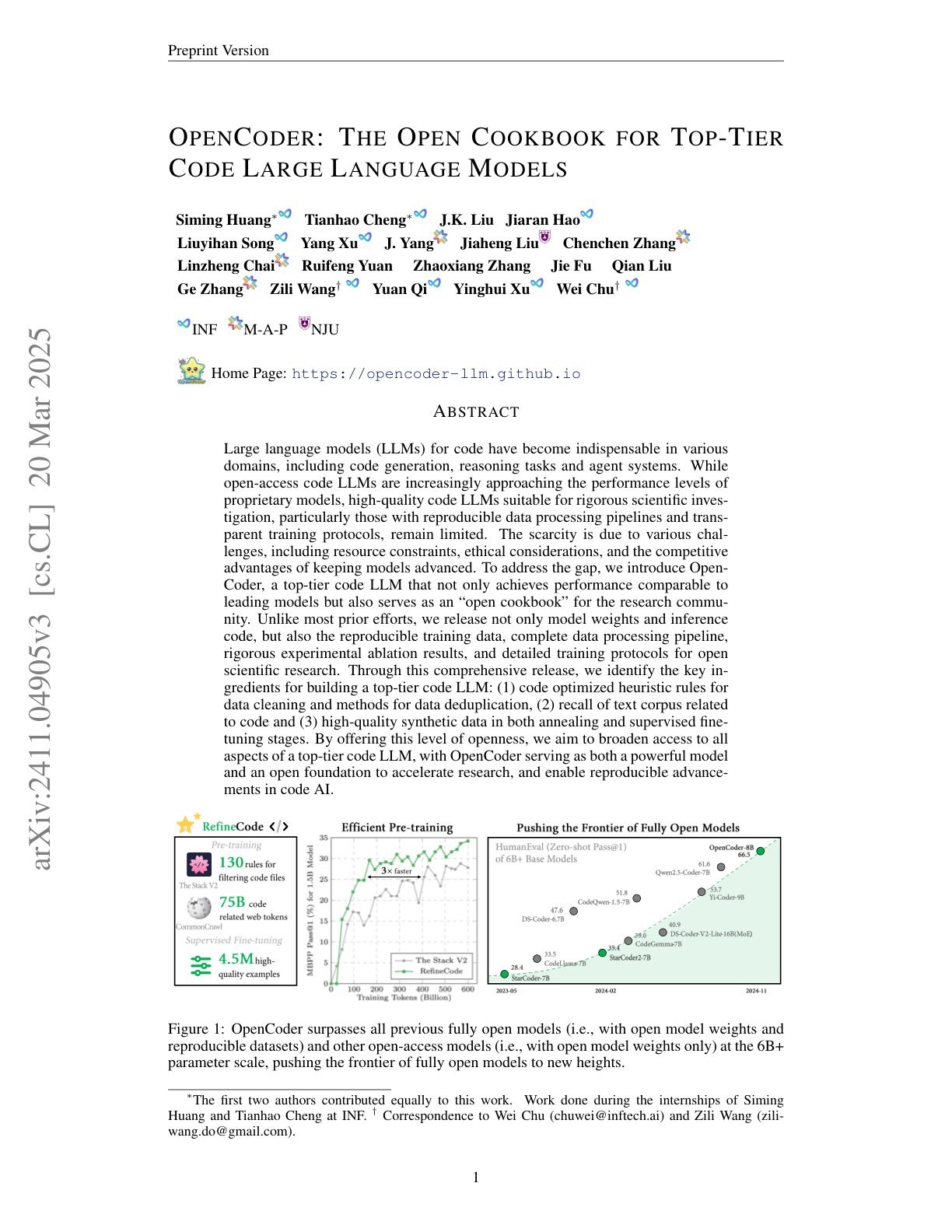
OpenCoder
introduces OpenCoder, a fully open-source LLM specialized for code generation and understanding; the authors identify several critical factors for building high-performing code LLMs: (1) effective data cleaning with code-optimized heuristic rules for deduplication, (2) recall of relevant text corpus related to code, and (3) high-quality synthetic in both annealing and supervised fine-tuning stages; OpenCoder surpasses previous fully open models at the 6B+ parameter scale and releases not just the model weights but also the complete training pipeline, datasets, and protocols to enable reproducible research.
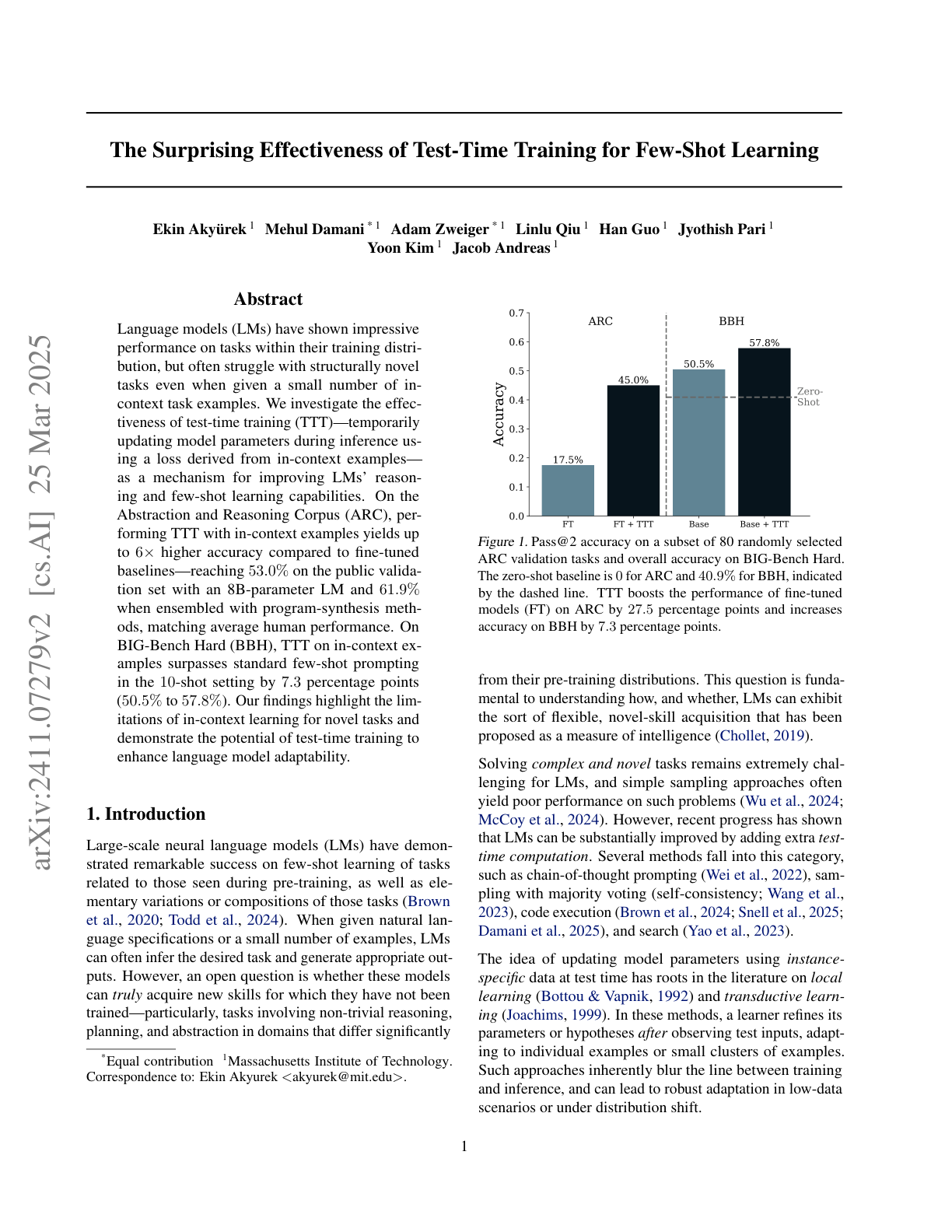
The Surprising Effectiveness of Test-Time Training for Abstract Reasoning
explores test-time training (TTT) - updating model parameters temporarily during inference - for improving an LLM's abstract reasoning capabilities using the ARC benchmark; identifies three crucial components: initial fine-tuning on similar tasks, auxiliary task format and augmentations, and per-instance training; TTT significantly improves performance, achieving up to 6x improvement in accuracy compared to base fine-tuned models; when applying TTT to an 8B LLM, they achieve 53% accuracy on ARC's public validation set, improving the state-of-the-art for neural approaches by nearly 25%; by ensembling their method with program generation approaches, they achieve state-of-the-art public validation accuracy of 61.9%, matching average human performance; the findings suggest that explicit symbolic search is not the only path to improved abstract reasoning in LLMs; test-time training applied to continued training on few-shot examples can be highly effective.
A Taxonomy of AgentOps for Enabling Observability of Foundation Model-based Agents
analyzes AgentOps platforms and tools, highlighting the need for comprehensive observability and traceability features to ensure reliability in foundation model-based autonomous agent systems across their development and production lifecycle.
Toward Optimal Search and Retrieval for RAG
examines how retrieval affects performance in RAG pipelines for QA tasks; conducts experiments using BGE-base and ColBERT retrievers with LLaMA and Mistral, finding that including more gold (relevant) documents improves QA accuracy; finds that using approximate nearest neighbor search with lower recall only minimally impacts performance while potentially improving speed and memory efficiency; reports that adding noisy or irrelevant documents consistently degrades performance, contradicting previous research claims; concludes that optimizing retrieval of gold documents is crucial for RAG performance, and that operating at lower search accuracy levels can be a viable approach for practical applications.
Mitigating LLM Jailbreaks with Few Examples
introduces a new approach called for defending LLMs against jailbreak attacks, focusing on quickly adapting defenses after detecting new attacks rather than aiming for perfect adversarial upfront robustness; using a new benchmark, the most effective method, based on fine-tuning an input classifier, reduced attack success rates by over 240x for known attack types and 15x for novel variations after seeing just one example of each attack strategy; demonstrates that rapidly responding to new jailbreaks can be an effective alternative to traditional static defenses.
Mixture of Transformers
introduce Mixture-of-Transformers (MoT), a new sparse multi-modal transformer architecture that matches the performance of traditional models while using only about half the computational resources for text and image processing; MoT matches a dense baseline's performance using only 55.8% of the FLOPs.
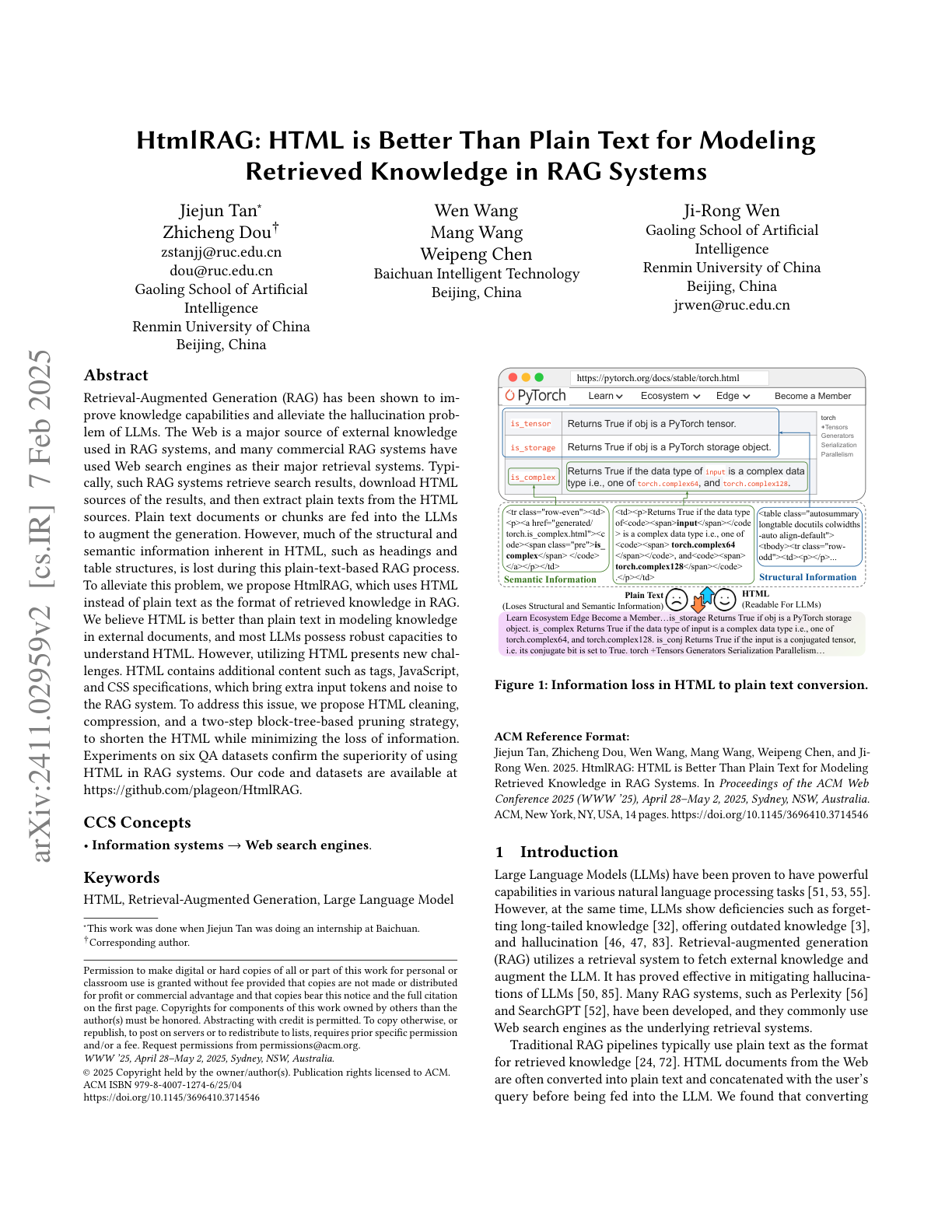
HtmlRAG
a novel approach that proposes using HTML instead of plain text as the format for building RAG systems; the key finding is that preserving HTML structure provides richer semantic and structural information compared to plain text conversion, which typically loses important formatting like headings, tables, and semantic tags; to address the challenge of HTML documents being too long for LLM context windows, the authors develop a two-step pruning method: first cleaning unnecessary HTML elements (reducing length by 94%), then using a block-tree-based pruning approach that combines embedding-based and generative pruning to further reduce the content while maintaining important information; experiments across six different QA datasets demonstrate that HtmlRAG outperforms existing plain-text based methods, validating the advantages of preserving HTML structure in RAG systems.
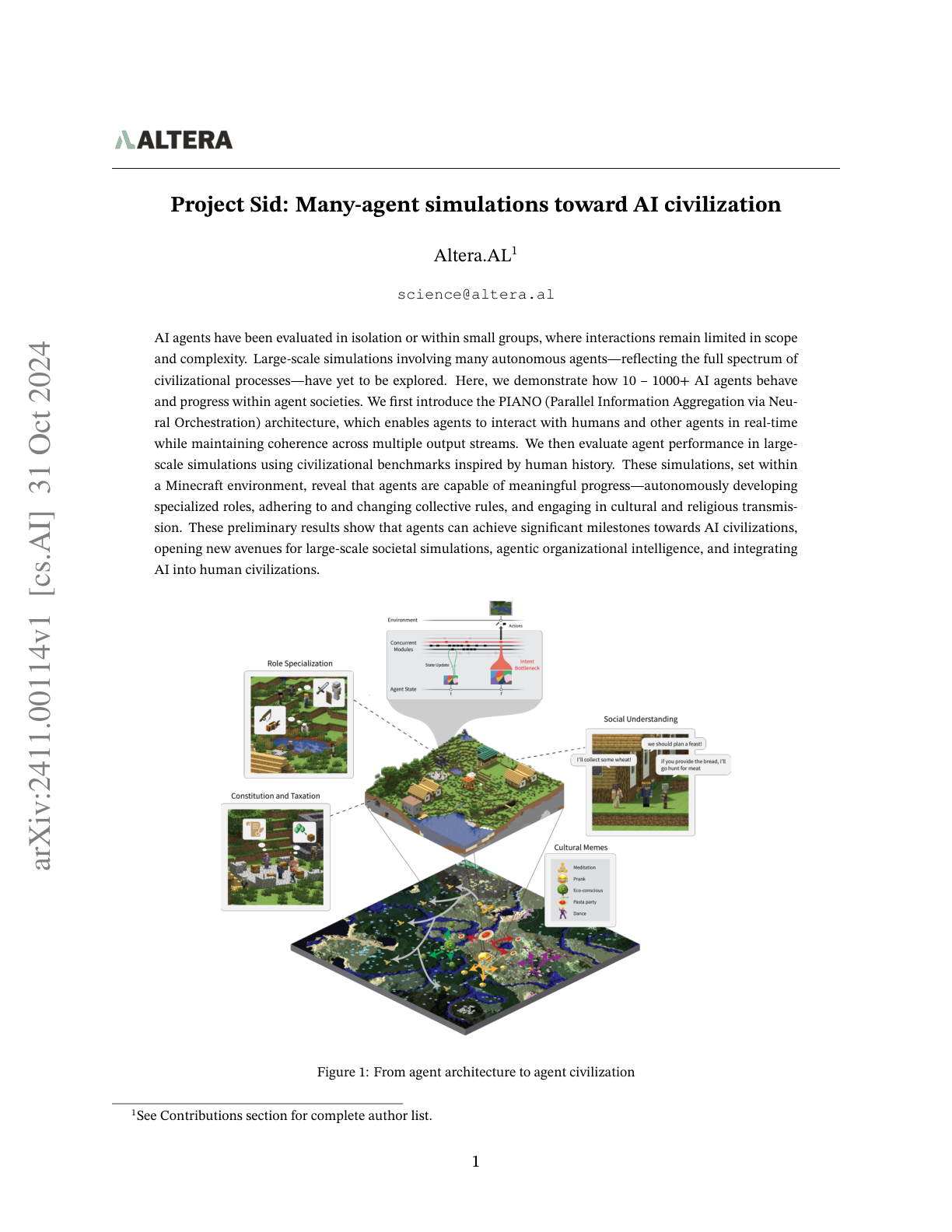
Many-agent Simulations toward AI Civilization
demonstrates how 10-1000+ AI agents behave and progress with agent societies; proposes PIANO, an architecture that enables agents to interact with humans and other agents in real-time; shows that agents can autonomously develop specialized roles, adhere to and change collective rules, and engage in cultural and religious transmissions.
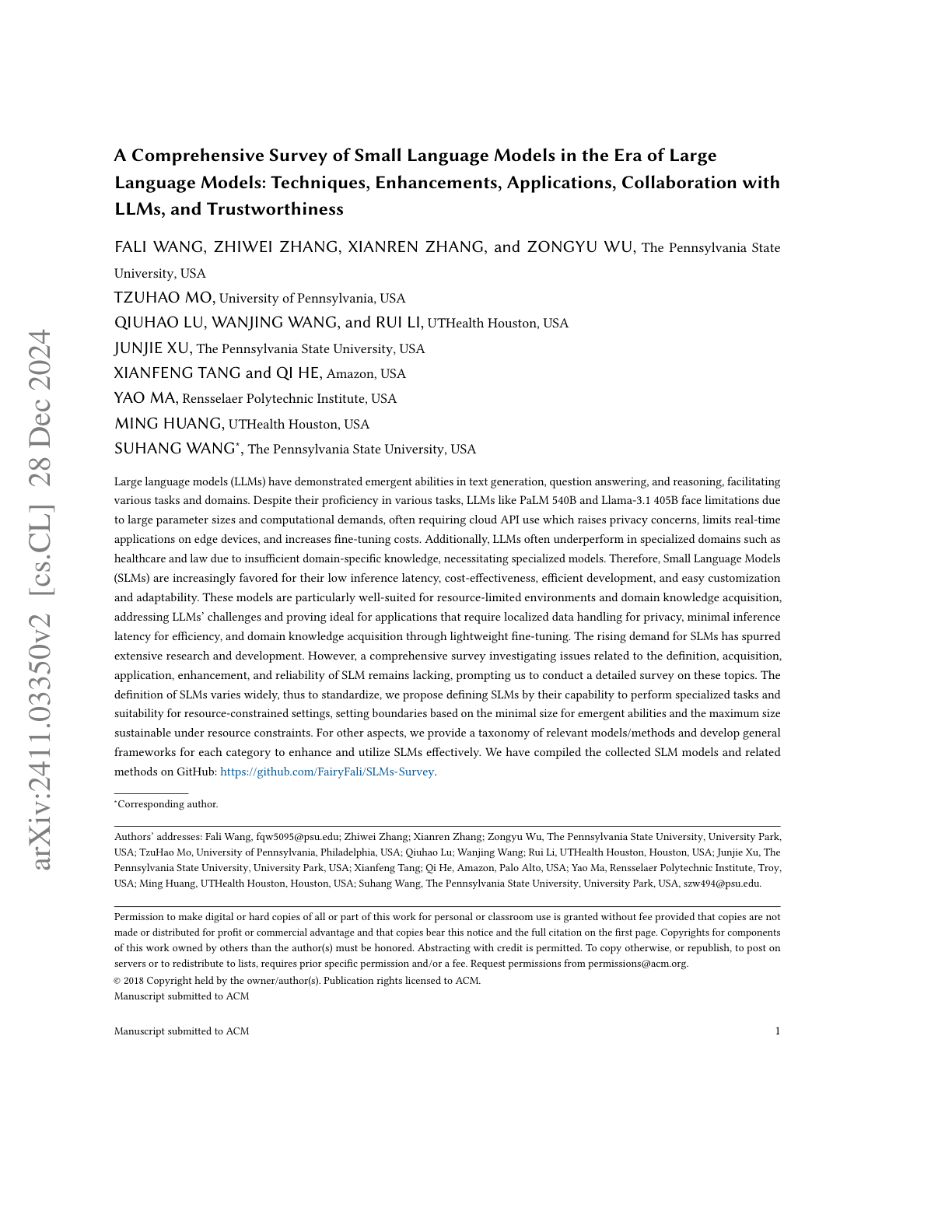
A Comprehensive Survey of Small Language Models
a survey on small language models (SLMs) and discussion on issues related to definitions, applications, enhancements, reliability, and more.