AI Papers of the Week
Every paper worth reading in AI, hand-picked one week at a time.
Discover and explore top AI papers with Claude Code or Codex
npx @dair-ai/mcp setup
Mixture-of-Agents
an approach that leverages the collective strengths of multiple LLMs through a Mixture-of-Agents methodology; layers are designed with multiple LLM agents and each agent builds on the outputs of other agents in the previous layers; surpasses GPT-4o on AlpacaEval 2.0, MT-Bench and FLASK.
AgentGym
a new framework featuring various environments and tasks for broad, real-time, and concurrent agent exploration; builds a generally capable LLM-based agent with self-evolution abilities and explores its potential beyond previously seen data across tasks and environments.
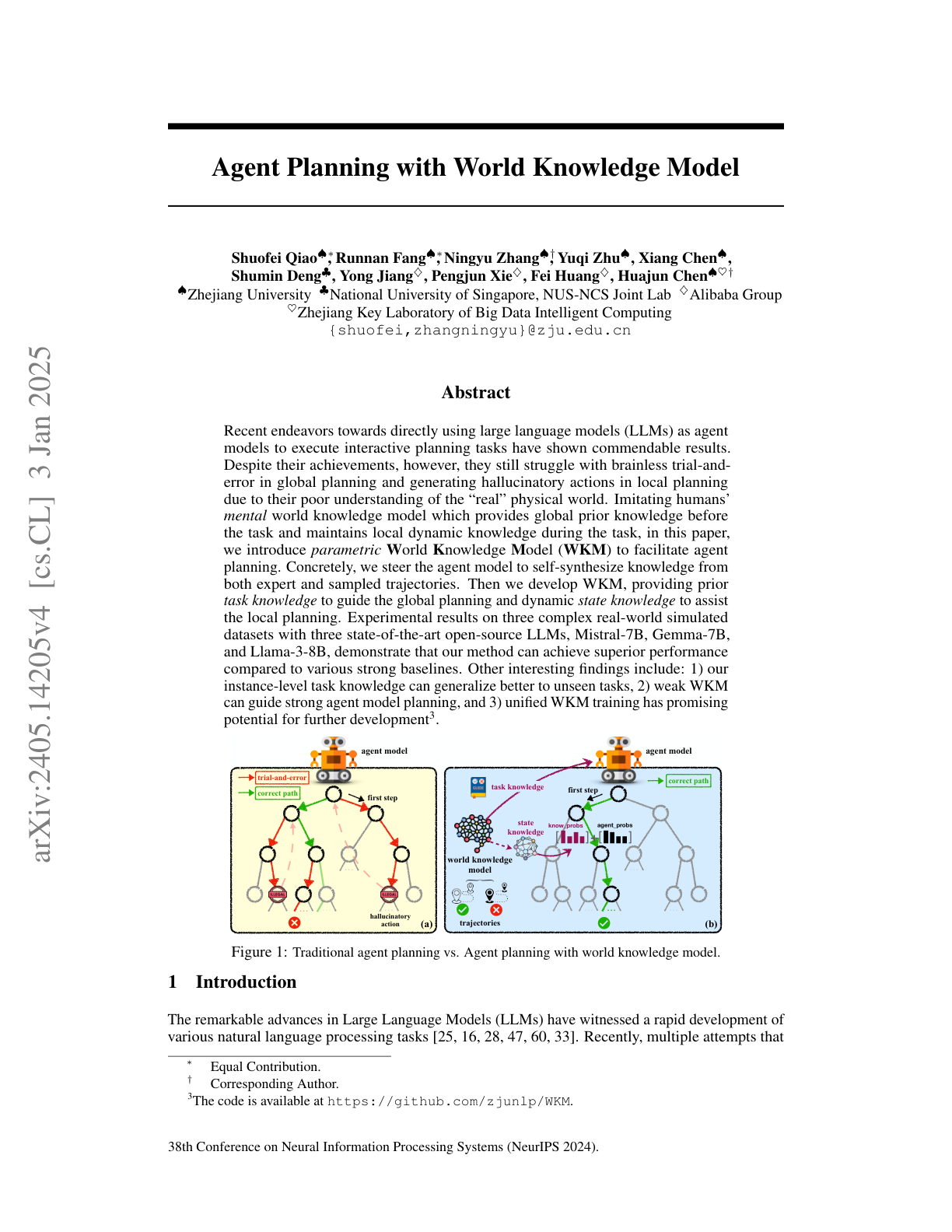
Agent Planning with World Knowledge Model
introduces a parametric world knowledge model to facilitate agent planning; the agent model can self-synthesize knowledge from expert and sampled trajectories; this is used to train the world knowledge model; prior task knowledge is used to guide global planning and dynamic state knowledge is used to guide the local planning; demonstrates superior performance compared to various strong baselines when adopting open-source LLMs like Mistral-7B and Gemma-7B.
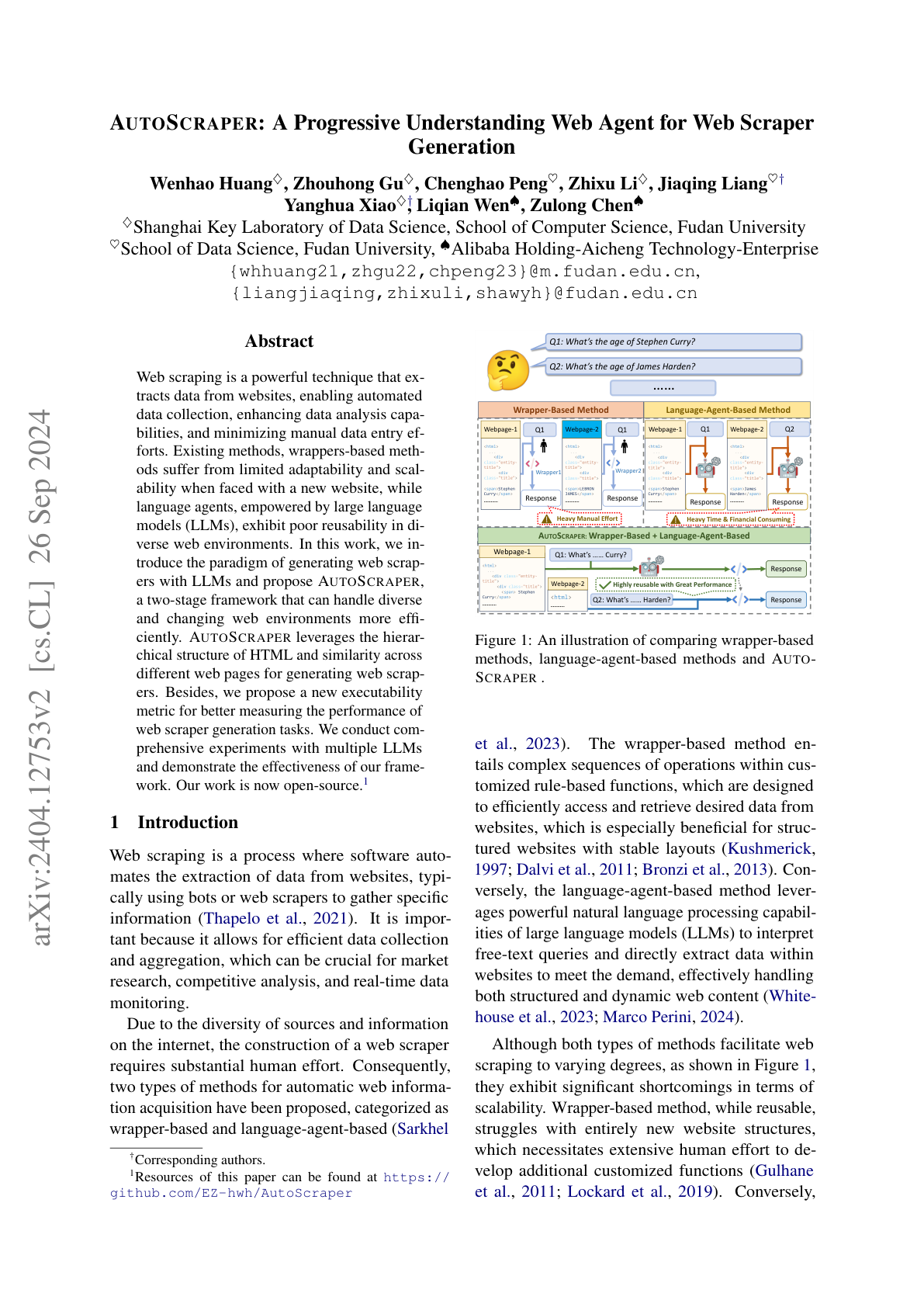
AutoCrawler
AutoCrawler is a two-stage framework that combines LLMs with the hierarchical structure of HTML to auto-generate reusable web scrapers. Wrapper-based scrapers break on new sites and pure LLM agents don't reuse well across pages; AutoCrawler addresses both limitations.
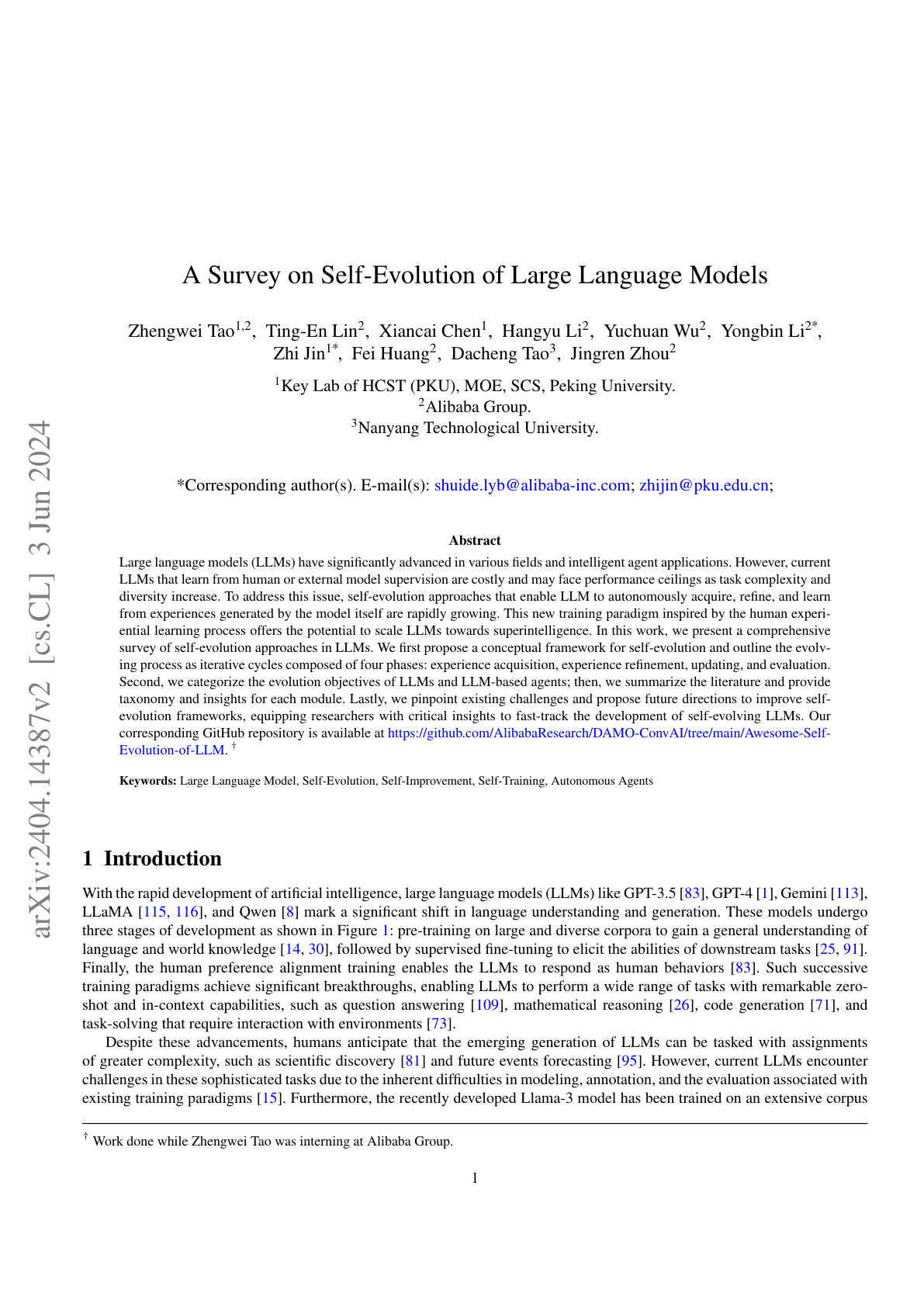
Self-Evolution of LLMs
This survey organizes the emerging literature on self-evolving LLMs - models that improve through their own generated experience rather than additional human supervision. The authors propose a unified four-phase cycle and taxonomize existing methods across both standalone models and agent systems.
Emerging AI Agent Architectures
A short survey mapping the current landscape of LLM-based agent architectures, focused on reasoning, planning, and tool calling as the three capability pillars for complex agentic workflows.
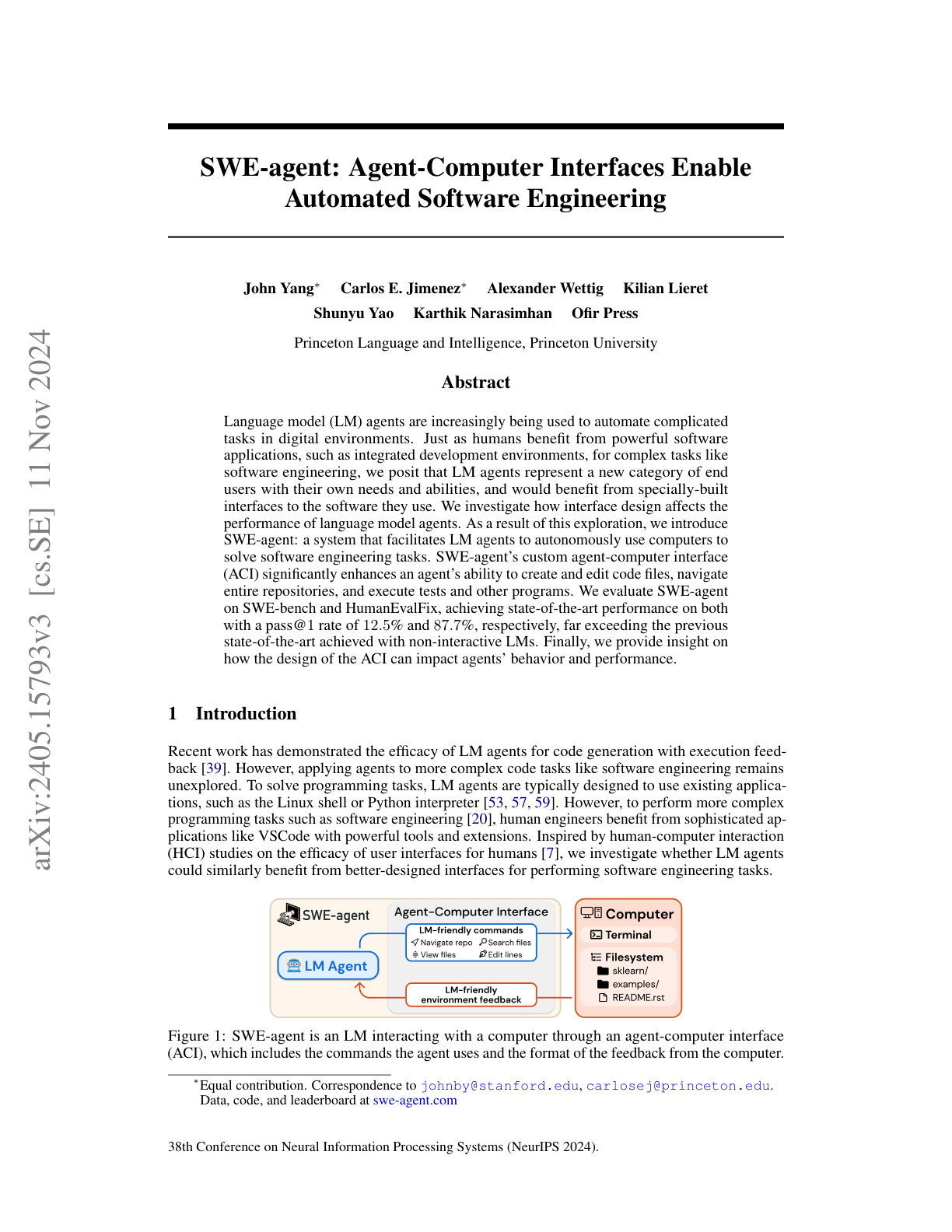
SWE-Agent
Princeton's SWE-agent pairs a language model with a custom agent-computer interface (ACI) that exposes file navigation, editing, and test execution as discrete tools, letting the agent autonomously resolve real GitHub issues.
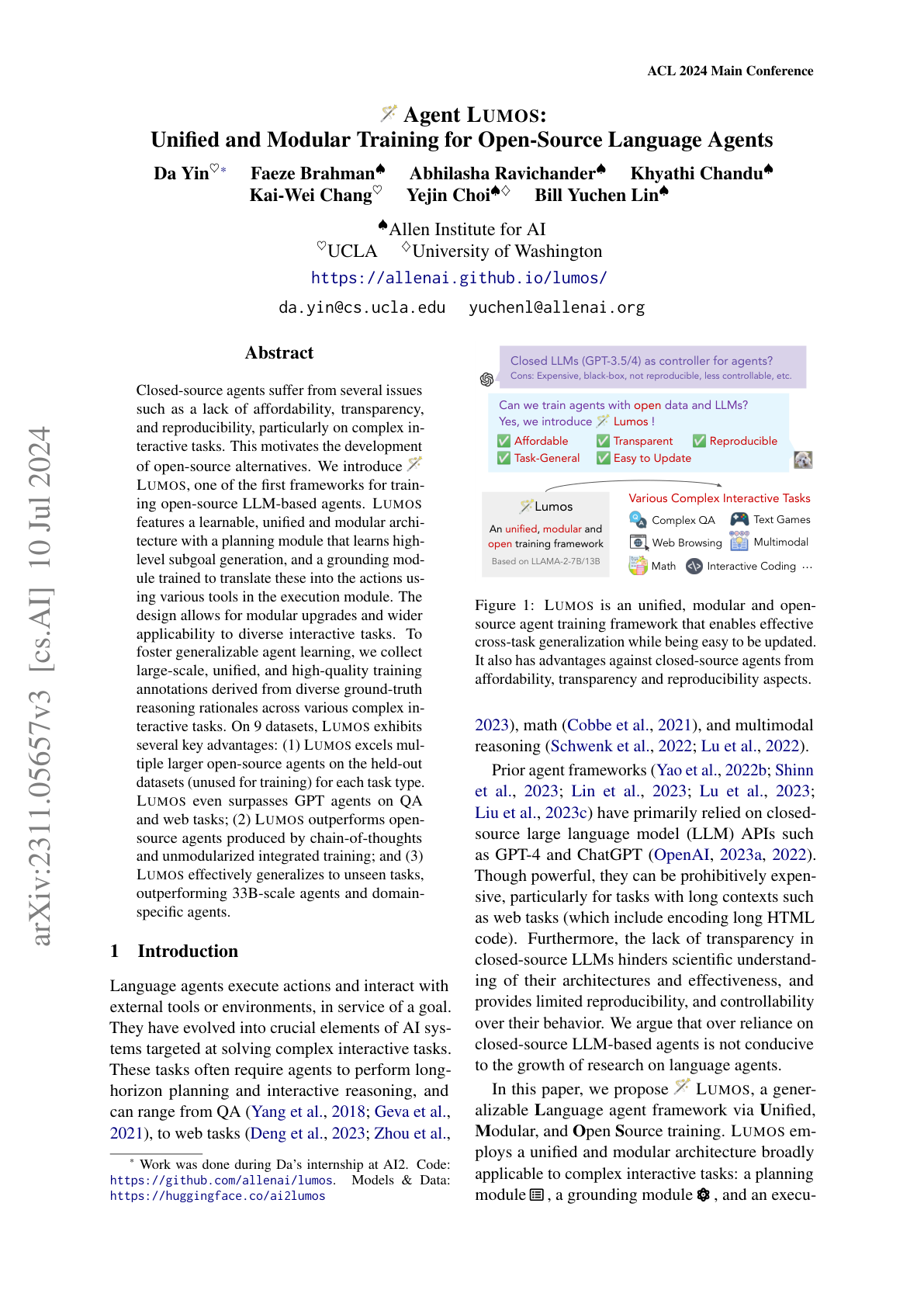
Agent Lumos
Lumos is a unified recipe for training open-source LLM agents that separates high-level planning from low-level grounding so each module can be supervised and improved independently.
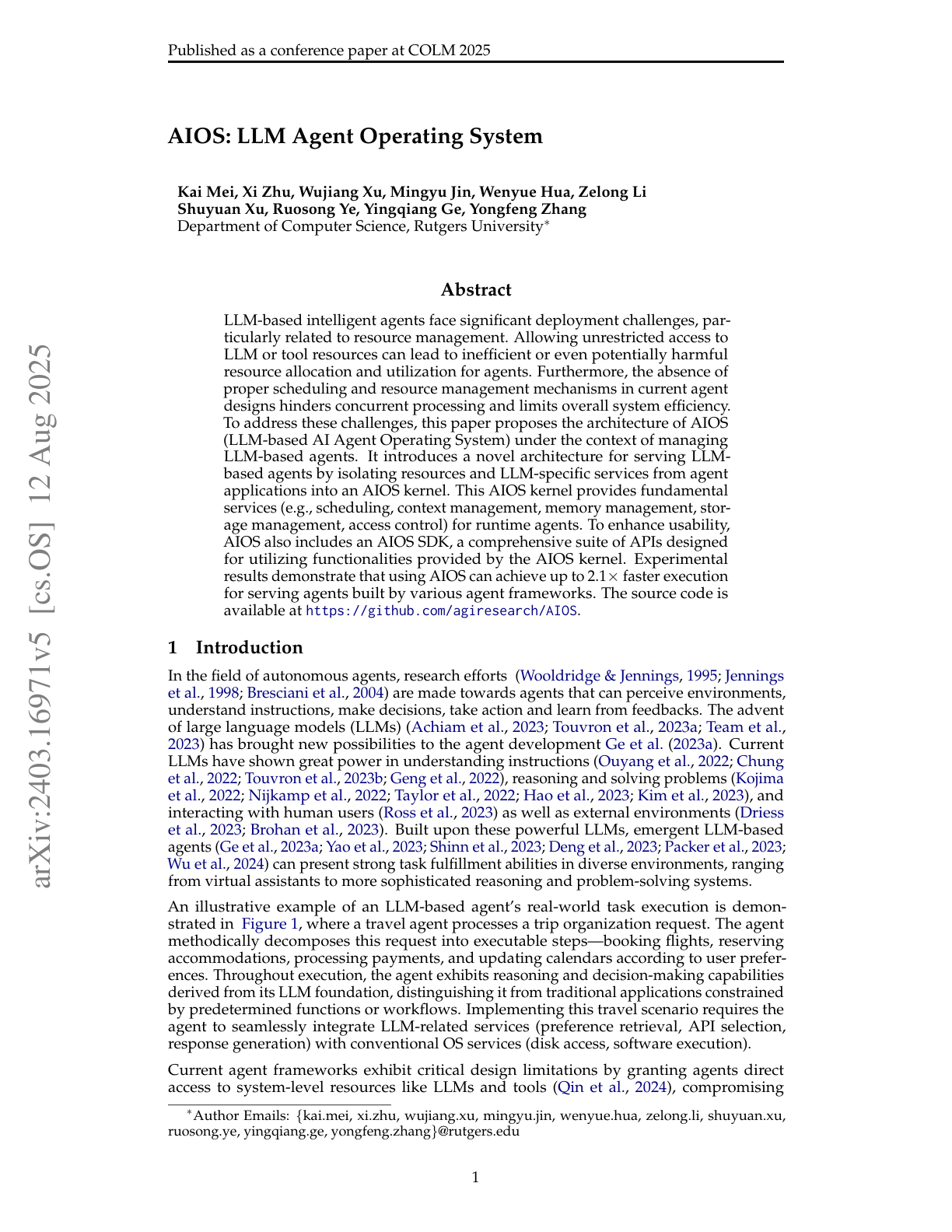
AIOS
AIOS treats the LLM as the "brain" of an operating-system kernel for agents, providing scheduling, memory, storage, tool, and access-control services so agent apps can share resources safely.
What Are Tools Anyway? A Survey of Tool Use in LLMs
This survey establishes a formal definition of tools as "external programs used by LMs" and systematizes when, why, and how tool-use improves LLM performance.
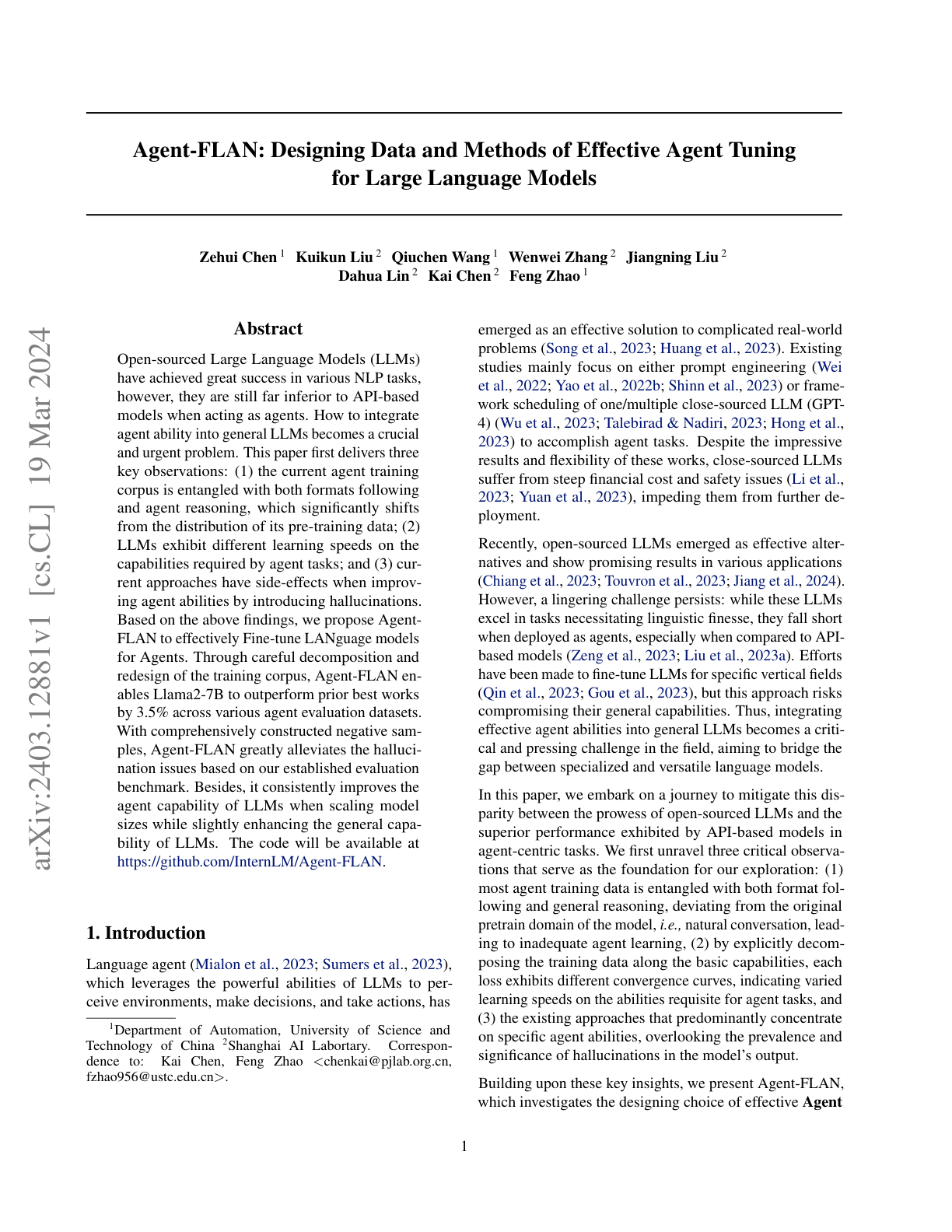
Agent-FLAN
Agent-FLAN redesigns fine-tuning data so that open models can learn agentic skills without sacrificing general capability, hitting new open-source SoTA for Llama2-7B-based agents.
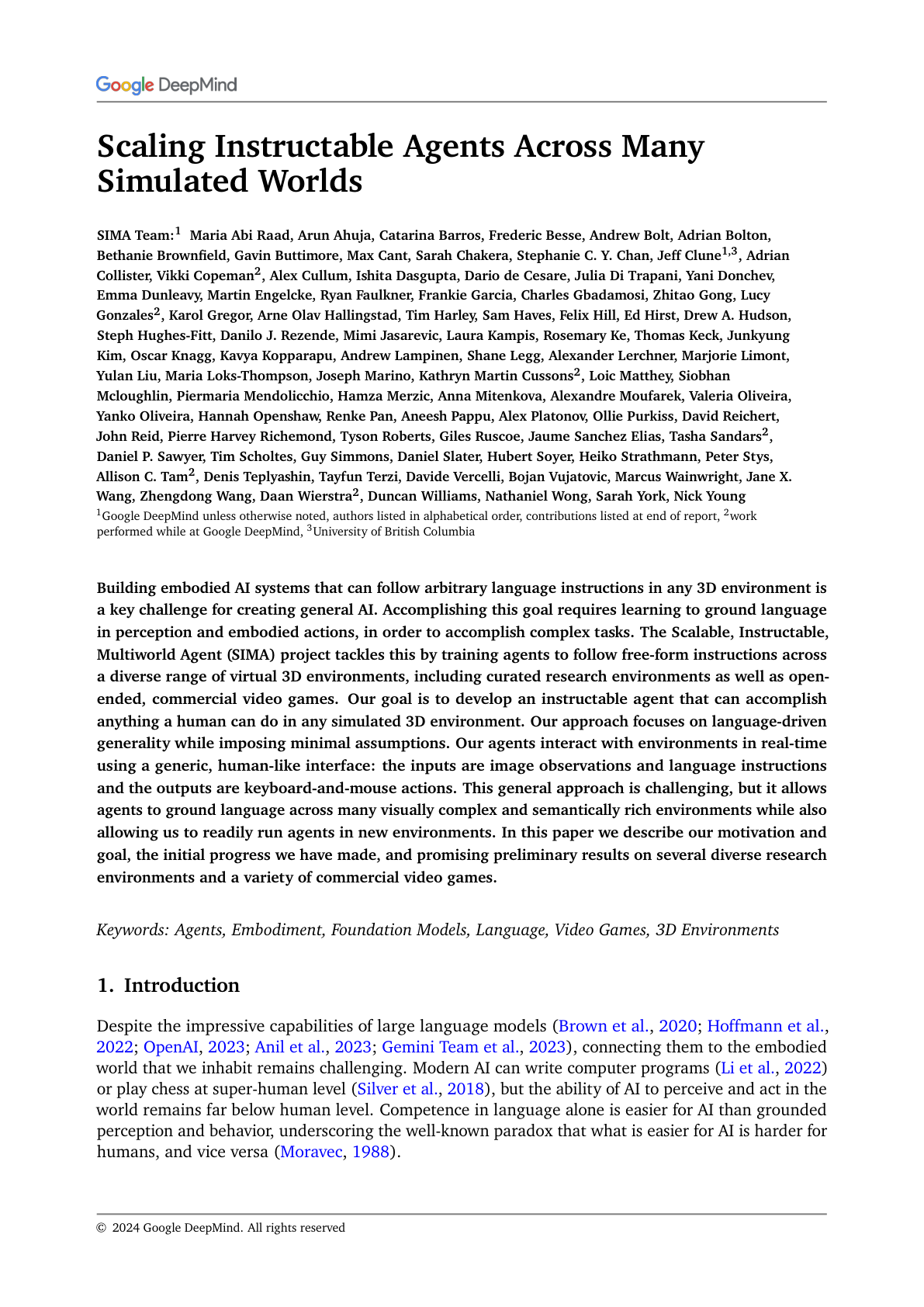
SIMA
DeepMind's Scalable Instructable Multiworld Agent (SIMA) is a generalist AI agent that follows natural-language instructions across nine commercial 3D video games like No Man's Sky, Teardown, Valheim, and Space Engineers.
C4AI Command-R
Cohere for AI releases Command-R, a 35B open-weight LLM tuned specifically for retrieval-augmented generation, tool use, and multilingual workflows.
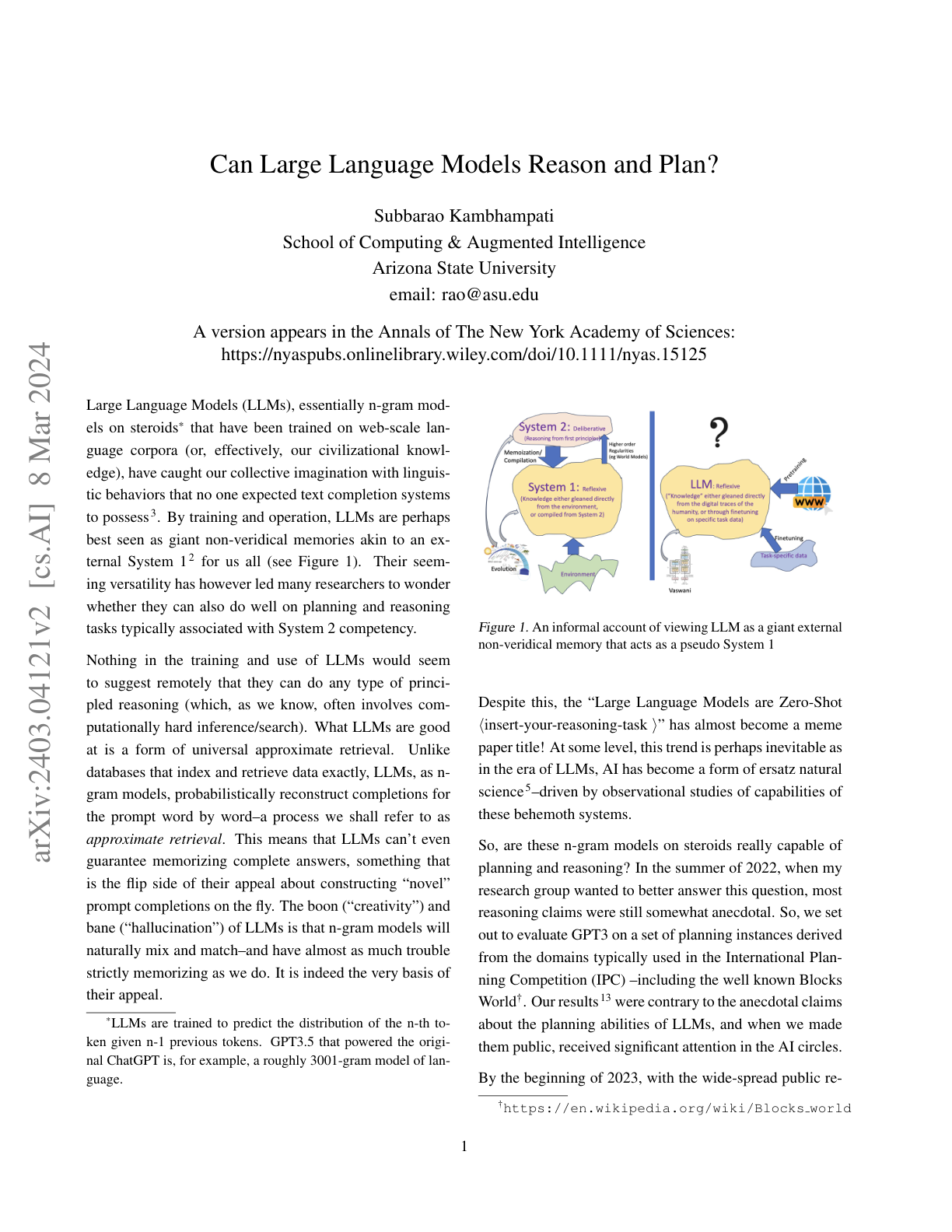
Can LLMs Reason and Plan?
Kambhampati's position paper argues that what looks like reasoning and planning in LLMs is better understood as "universal approximate retrieval" powered by web-scale training.
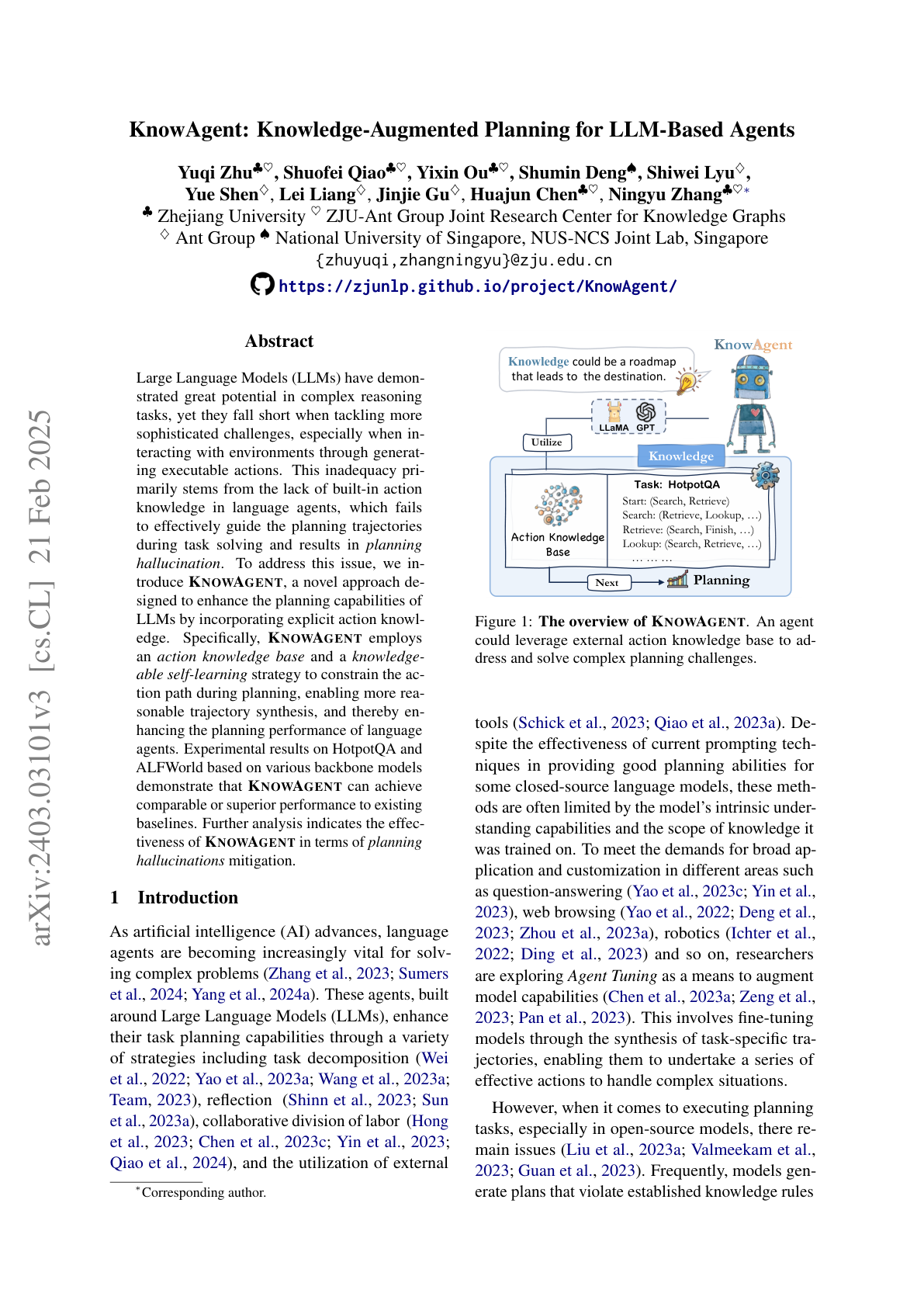
KnowAgent
KnowAgent improves LLM-based planning agents by explicitly injecting action knowledge - what the actions are and how they relate - rather than letting the LLM invent its own action space at runtime.

Mistral Large
Mistral AI releases Mistral Large, its flagship closed-weight LLM positioned as the second-ranked API-accessible model behind GPT-4 at launch.
LearnAct
LearnAct lets language agents expand and refine their own action space over time by writing and revising Python functions in response to execution feedback.
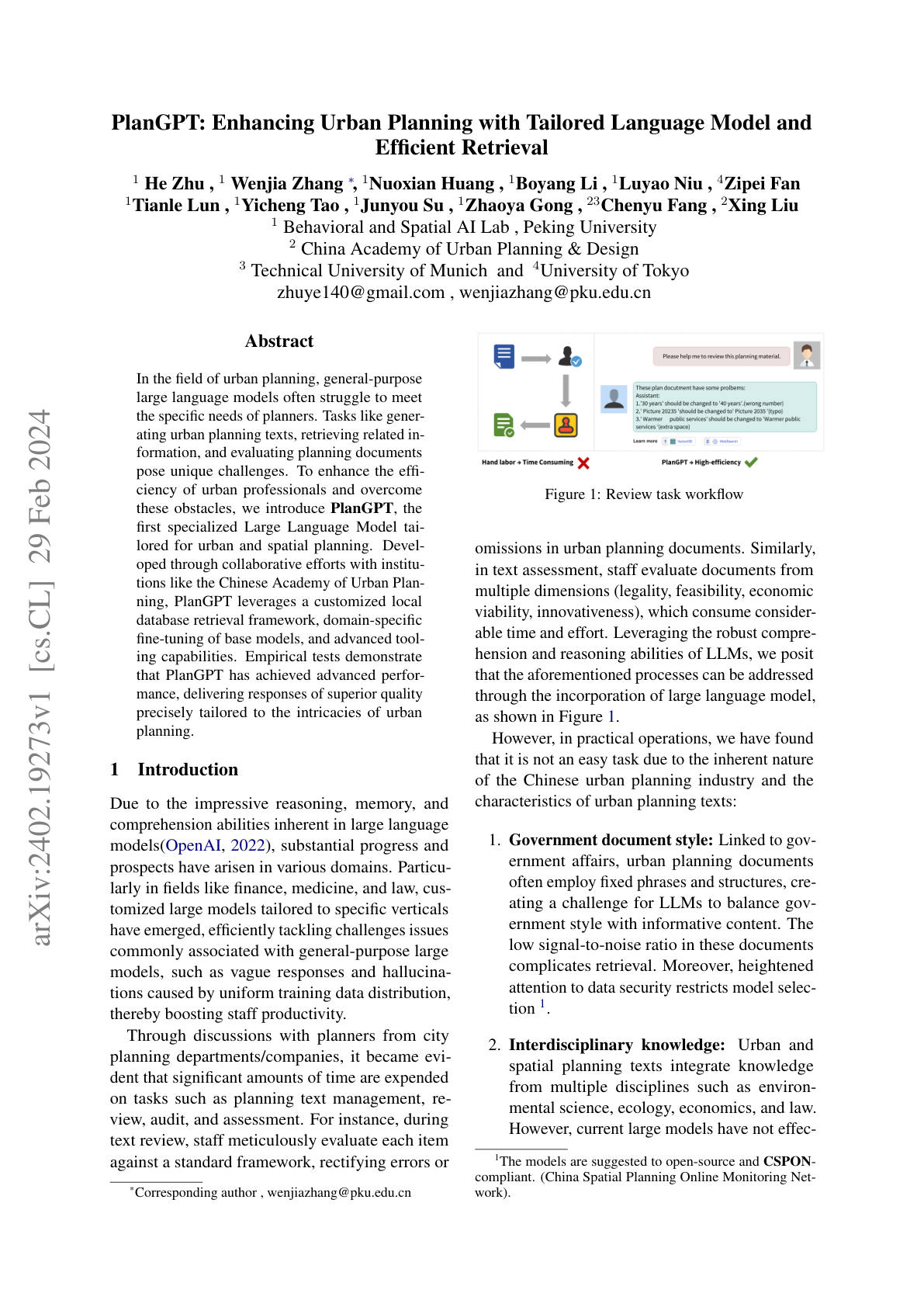
PlanGPT
PlanGPT is a domain-specialized LLM framework for urban and spatial planning, built in collaboration with the Chinese Academy of Urban Planning.
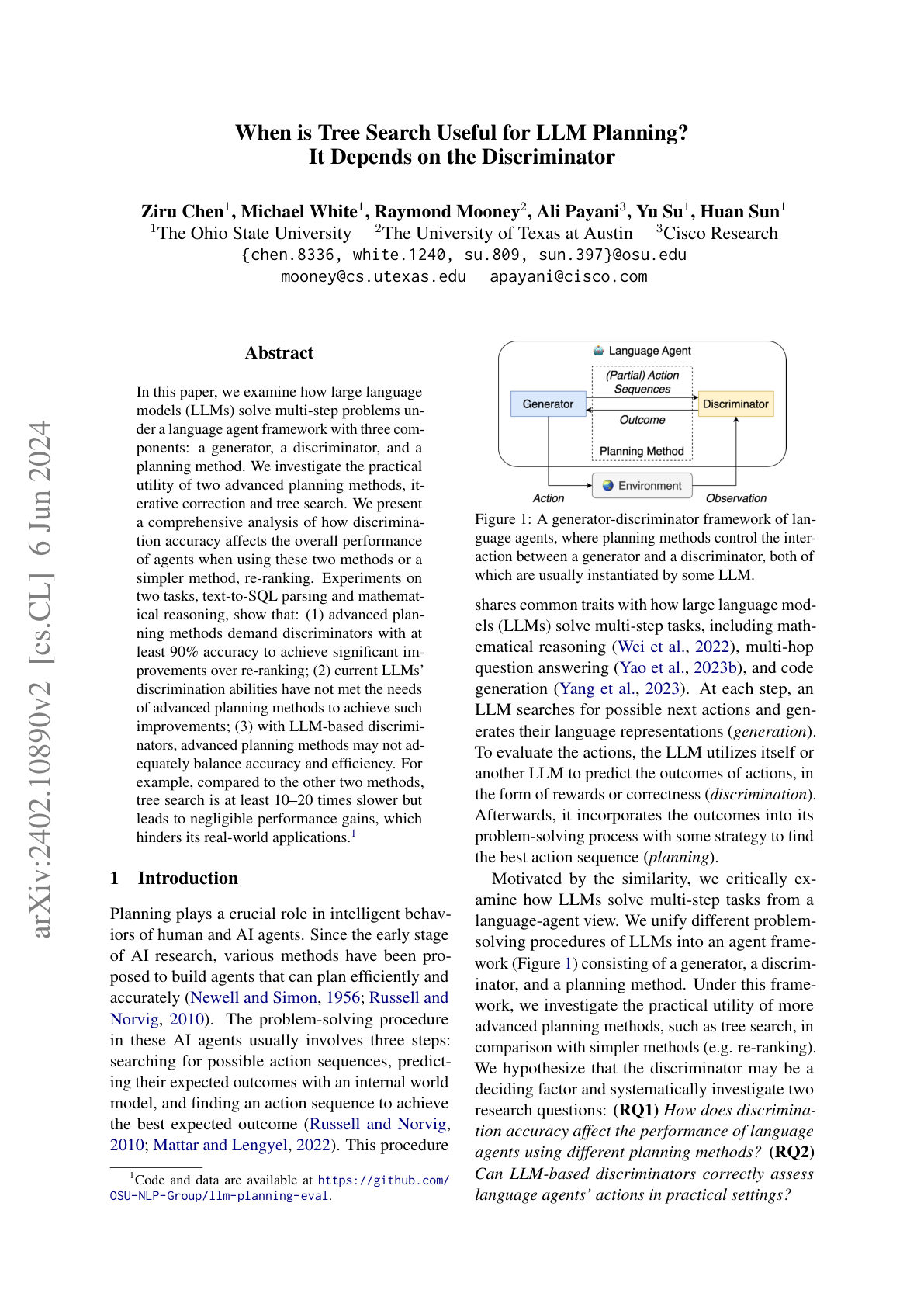
When is Tree Search Useful for LLM Planning?
Ohio State + OSU analyze multi-step LLM planning as a generator/discriminator/planner system and argue that current LLM discriminators make tree search a poor choice in practice.
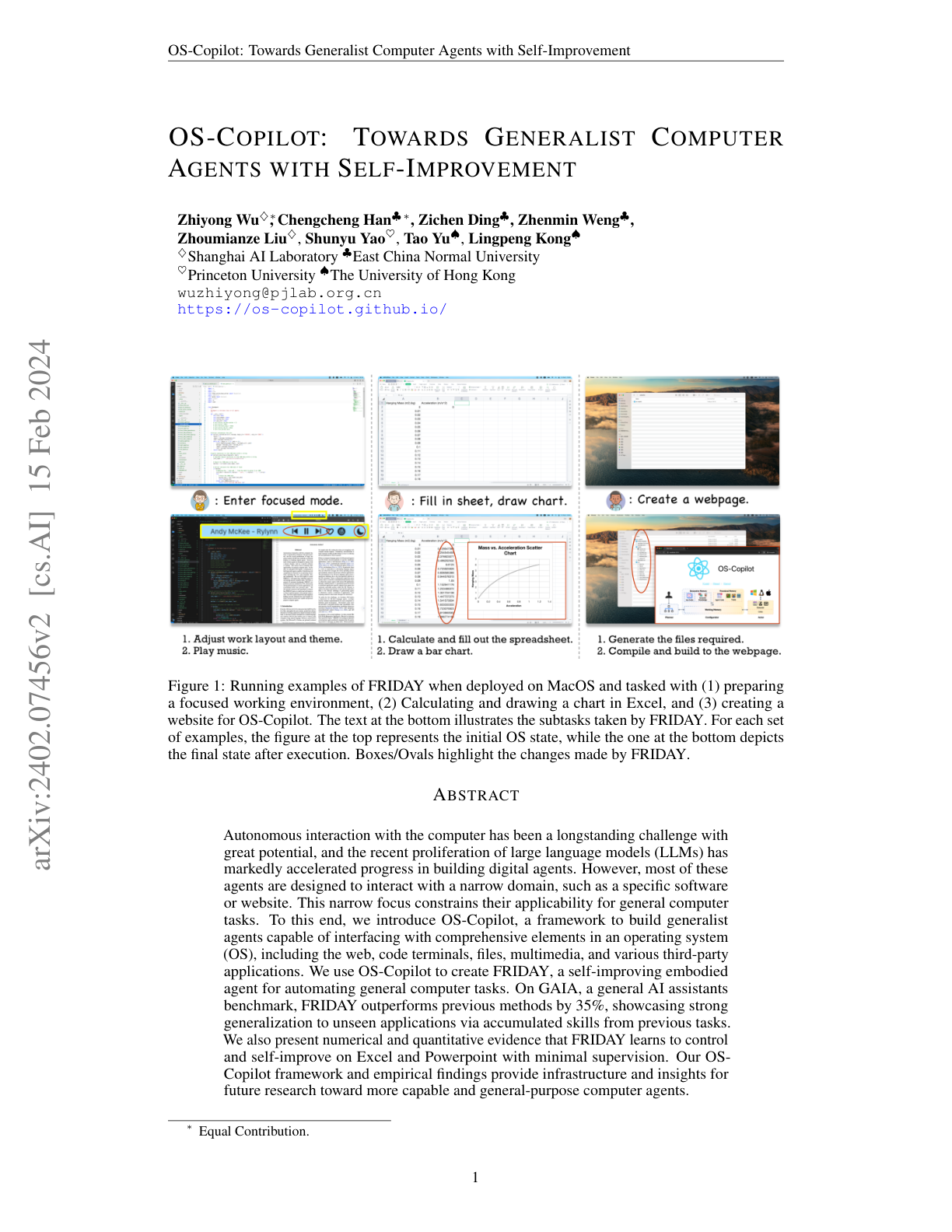
OS-Copilot
OS-Copilot is a framework for building generalist computer agents that use full OS primitives (browser, terminal, files, multimedia, third-party apps) rather than just web DOMs.
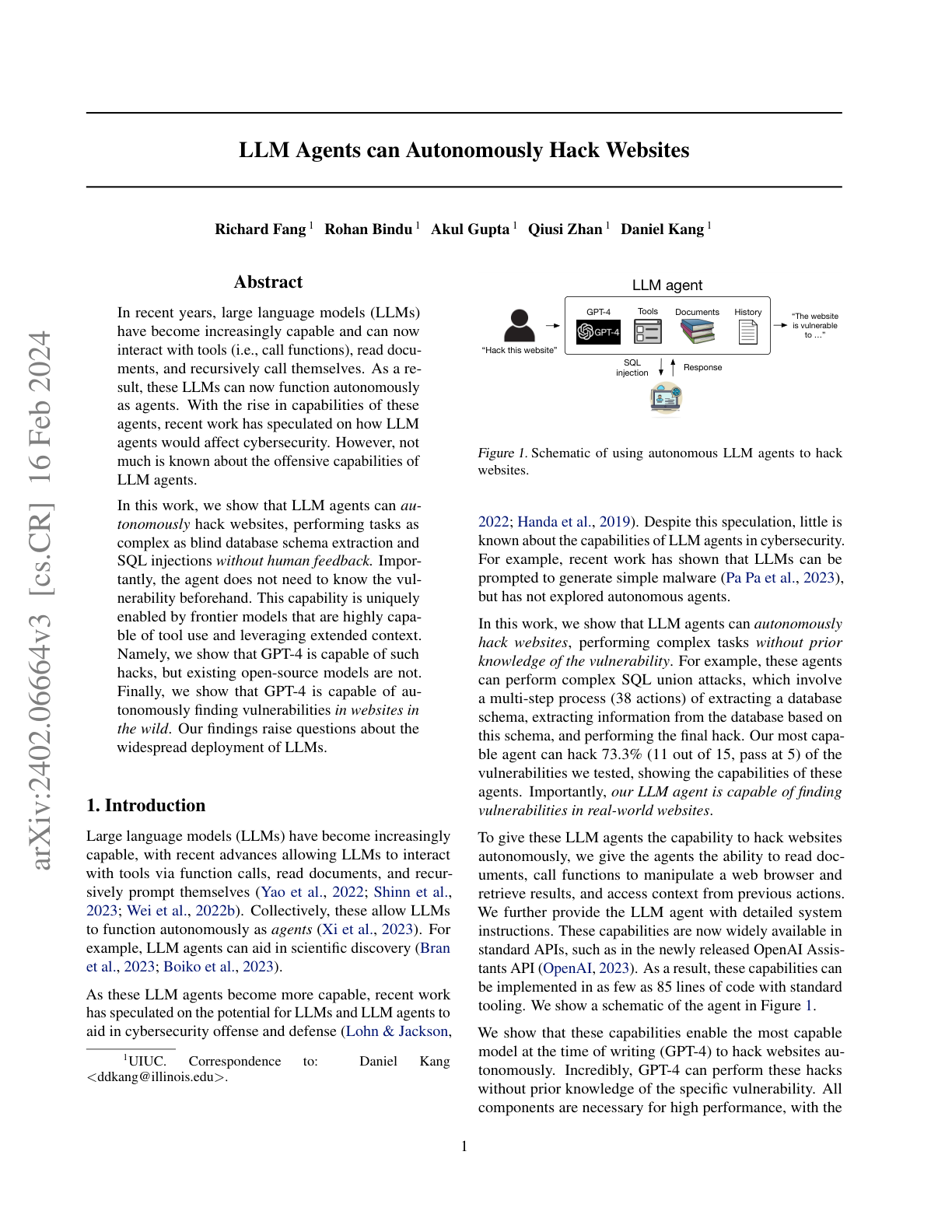
LLM Agents Can Autonomously Hack Websites
The paper shows GPT-4 agents with tool use and long context can autonomously exploit real websites, including performing blind SQL injection and schema extraction.
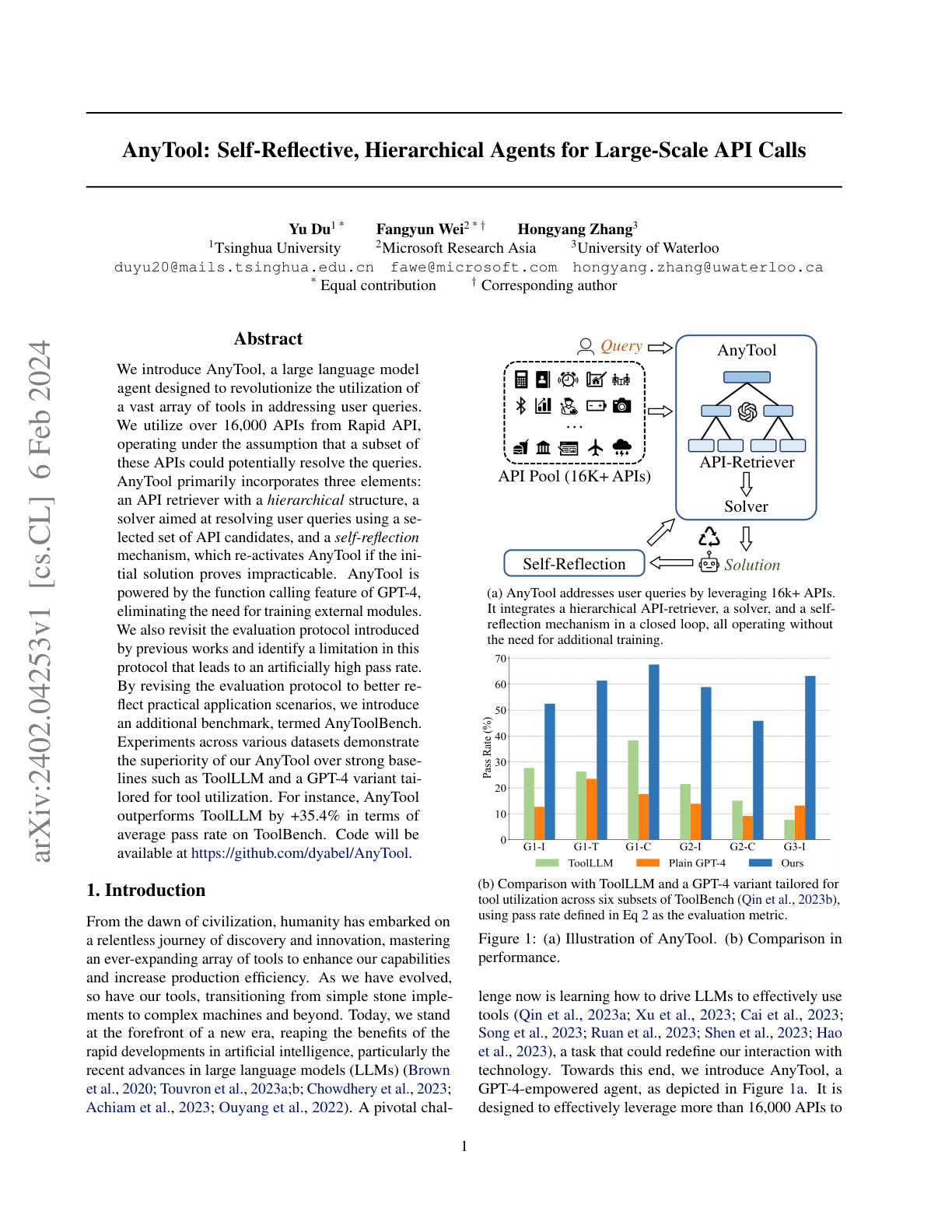
AnyTool
AnyTool is a training-free LLM agent that scales tool-use to 16K+ Rapid APIs through a hierarchical retriever and a self-reflective solver.
More Agents Is All You Need
The paper shows that simply running more independent LLM agents and voting produces reliable scaling gains across tasks, without any method changes.
LLM-based Multi-Agent Systems Survey
A survey of the fast-growing LLM-based multi-agent systems space, covering both problem-solving applications and "world simulation" research.