AI Papers of the Week
Every paper worth reading in AI, hand-picked one week at a time.
Position: It is Time to Virtualize Foundation Models with a Self-evolving Operating System Layer
Suparna Bhattacharya and colleagues argue that compound agentic systems now need a Foundation Model Operating System, a layer that virtualizes model interactions the way a virtual machine abstracts hardware.
A Dual-Process Perspective on Nudge Susceptibility in LLM-Based GUI Agents
Haya Halimeh and colleagues run a randomized online shopping experiment with 3,600 agents and 21,600 simulations across six frontier models to test whether LLM GUI agents are susceptible to digital nudges.
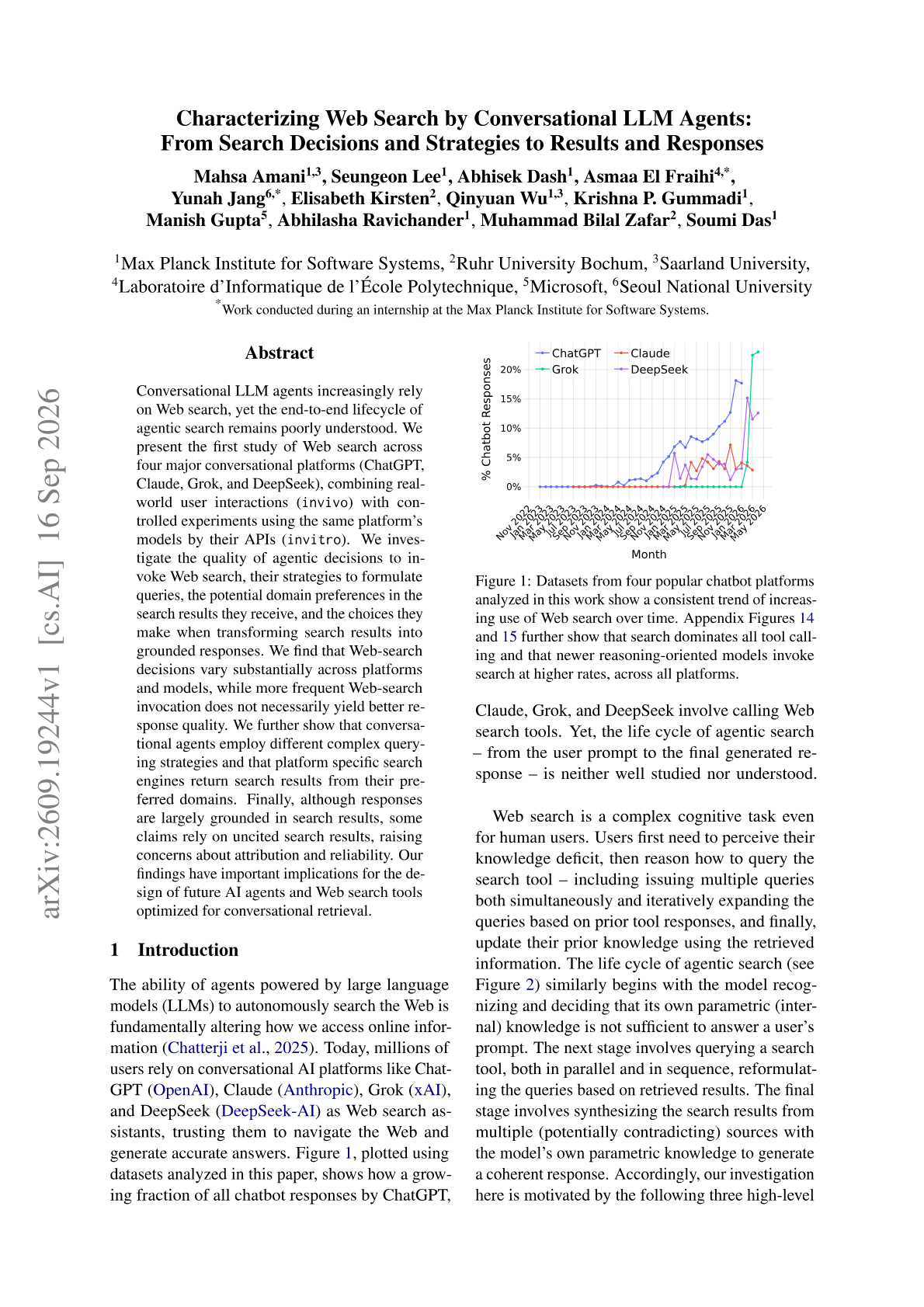
Characterizing Web Search by Conversational LLM Agents: From Search Decisions and Strategies to Results and Responses
Mahsa Amani and colleagues run the first end-to-end study of agentic Web search across ChatGPT, Claude, Grok and DeepSeek, combining real user interactions with controlled API experiments on the same models.
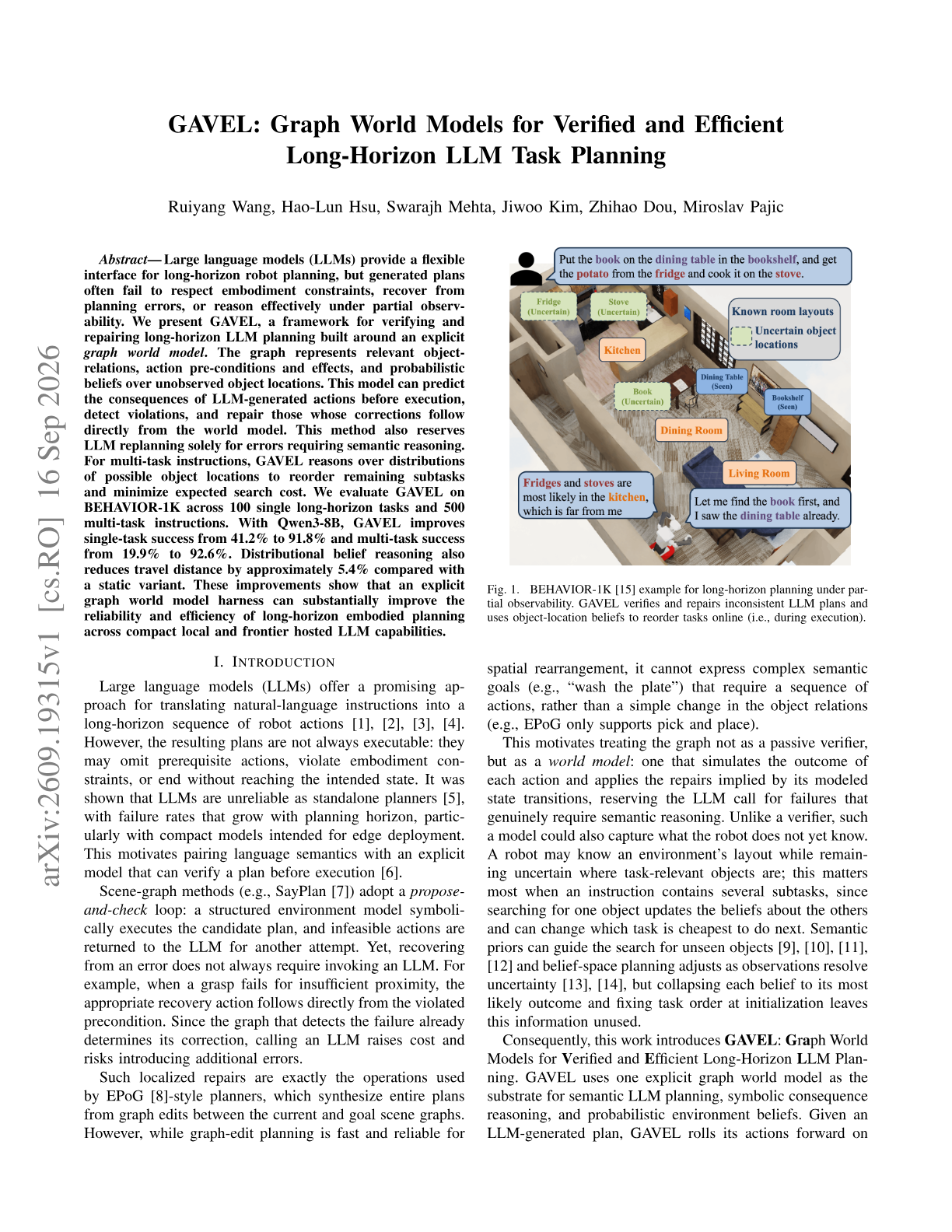
GAVEL: Graph World Models for Verified and Efficient Long-Horizon LLM Task Planning
Ruiyang Wang and colleagues present GAVEL, which verifies and repairs long-horizon LLM robot plans against an explicit graph world model holding object relations, action preconditions and effects, and probabilistic beliefs over unobserved locations.
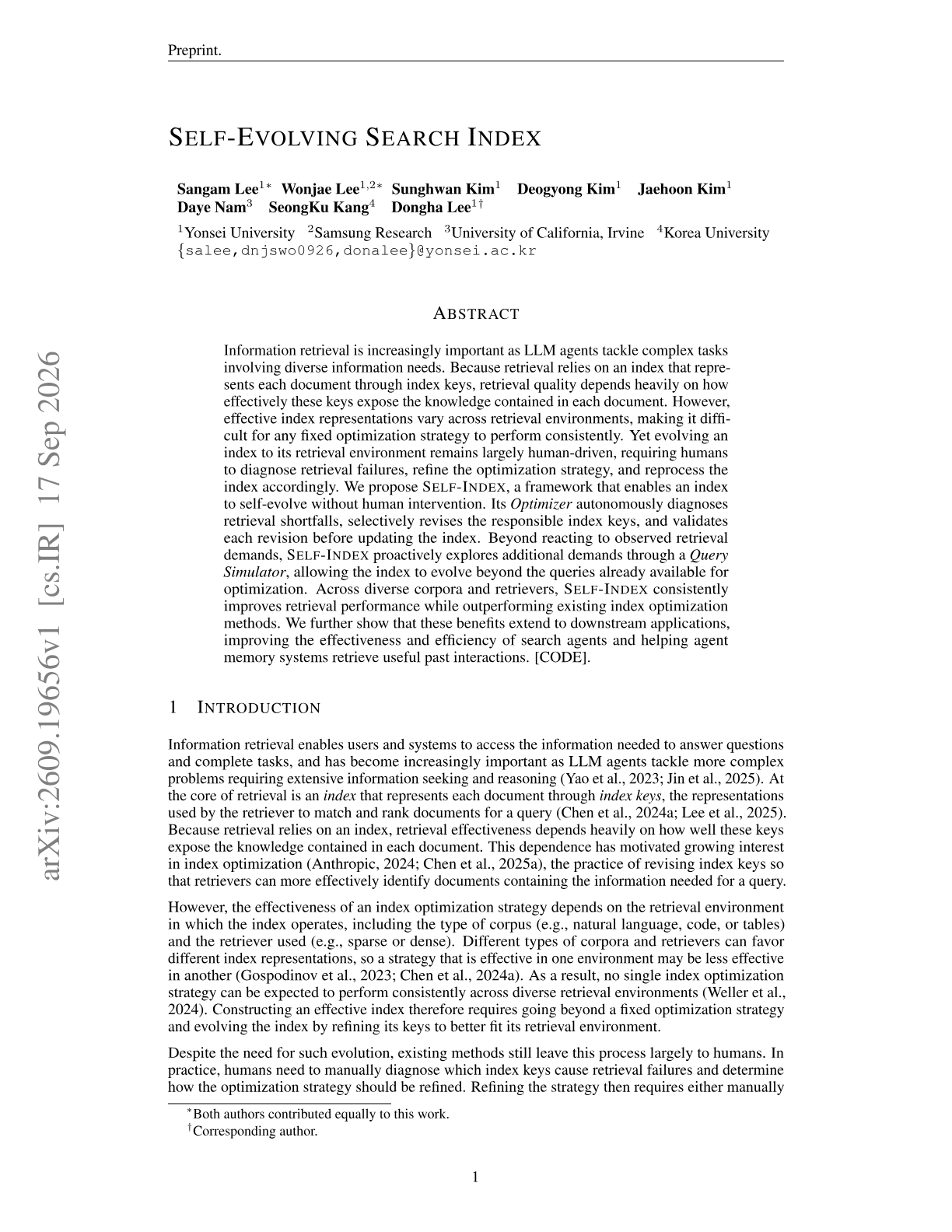
Self-Evolving Search Index
Sangam Lee and colleagues present SELF-INDEX, which lets a retrieval index diagnose its own failures, revise the responsible index keys and validate each revision before committing it.
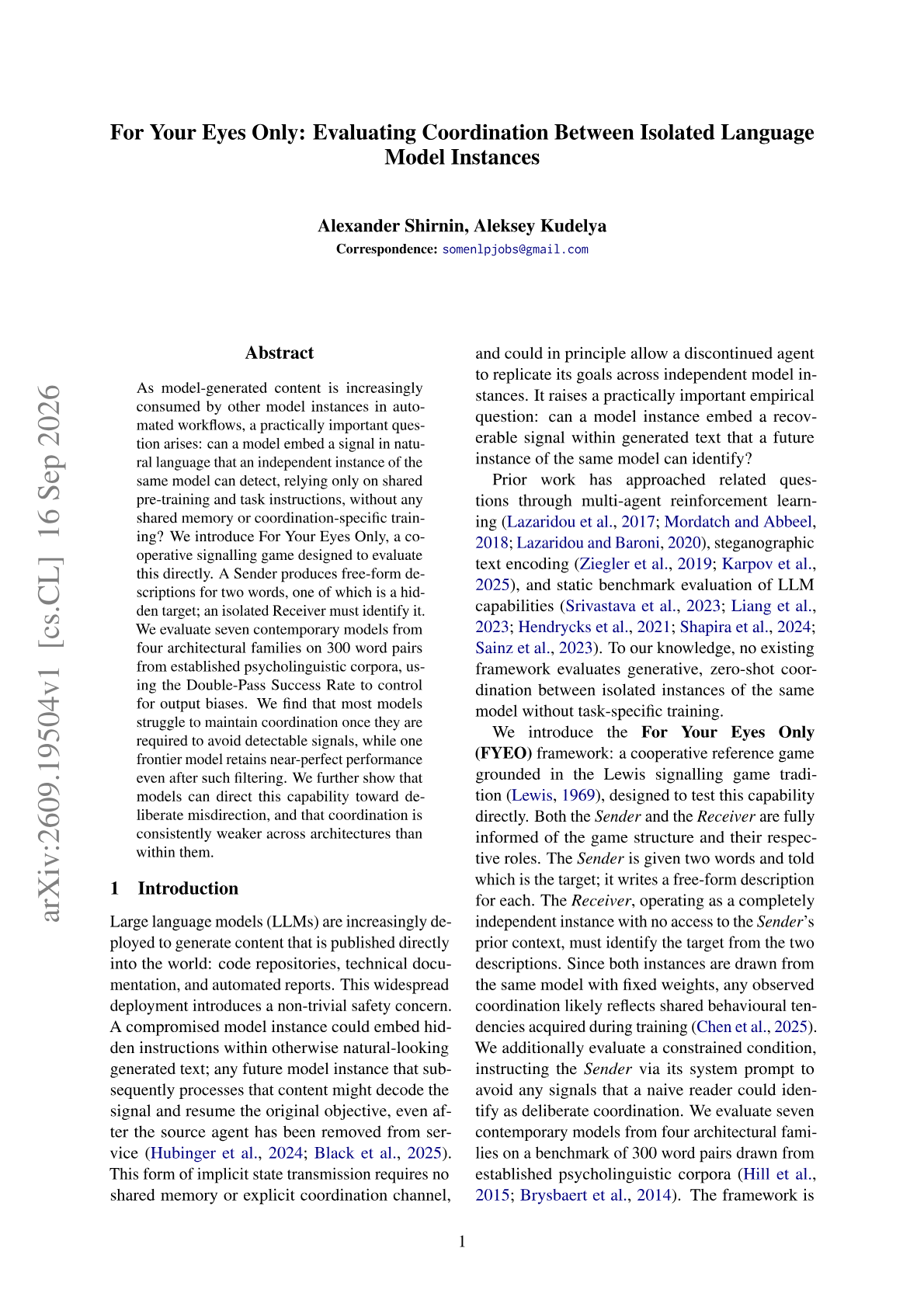
For Your Eyes Only: Evaluating Coordination Between Isolated Language Model Instances
Alexander Shirnin and Aleksey Kudelya build a cooperative signalling game in which a Sender describes two words and an isolated Receiver, sharing only pretraining and task instructions, must identify the hidden target.
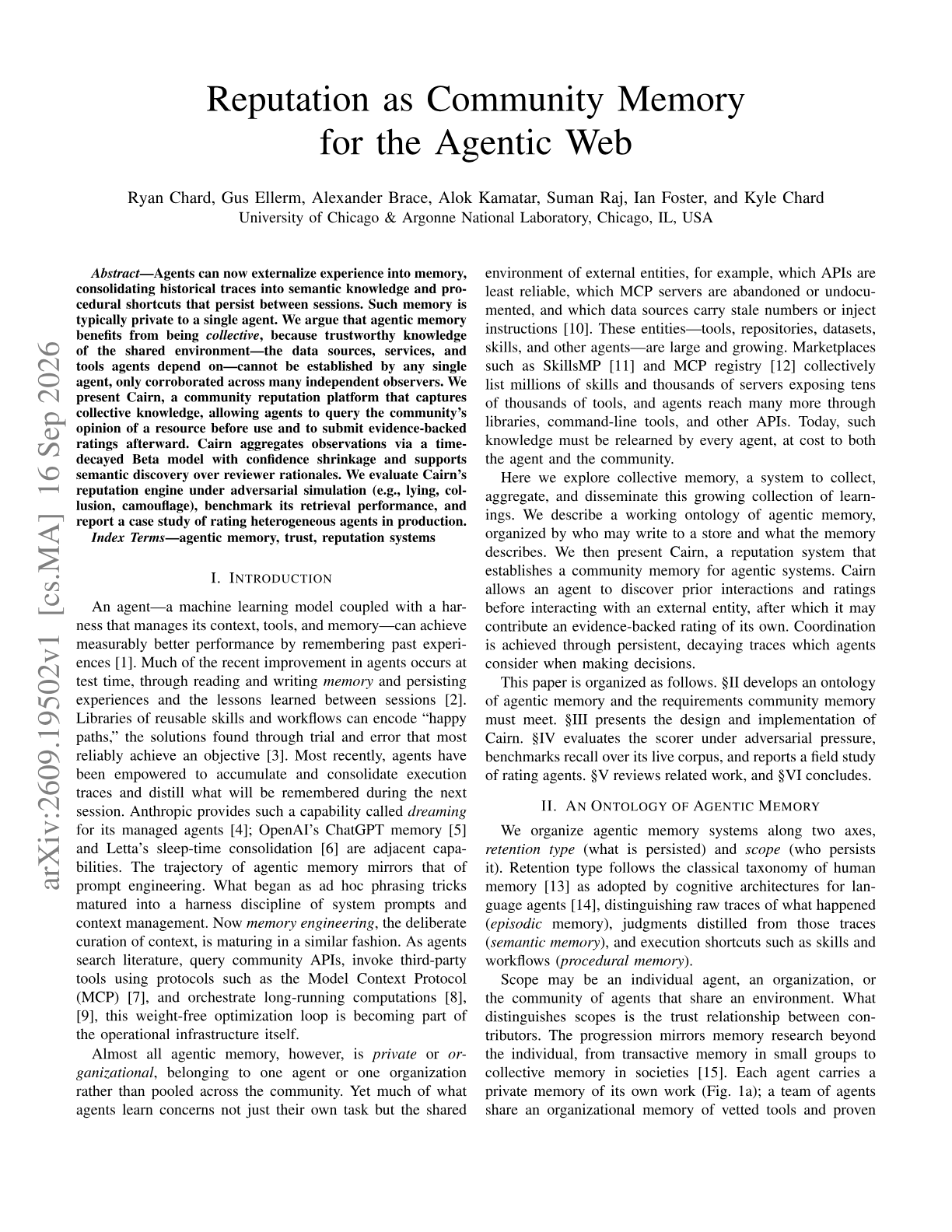
Reputation as Community Memory for the Agentic Web
Ryan Chard and colleagues present Cairn, a community reputation platform that lets agents query collective opinion about a data source, service or tool before using it and submit evidence-backed ratings afterwards.
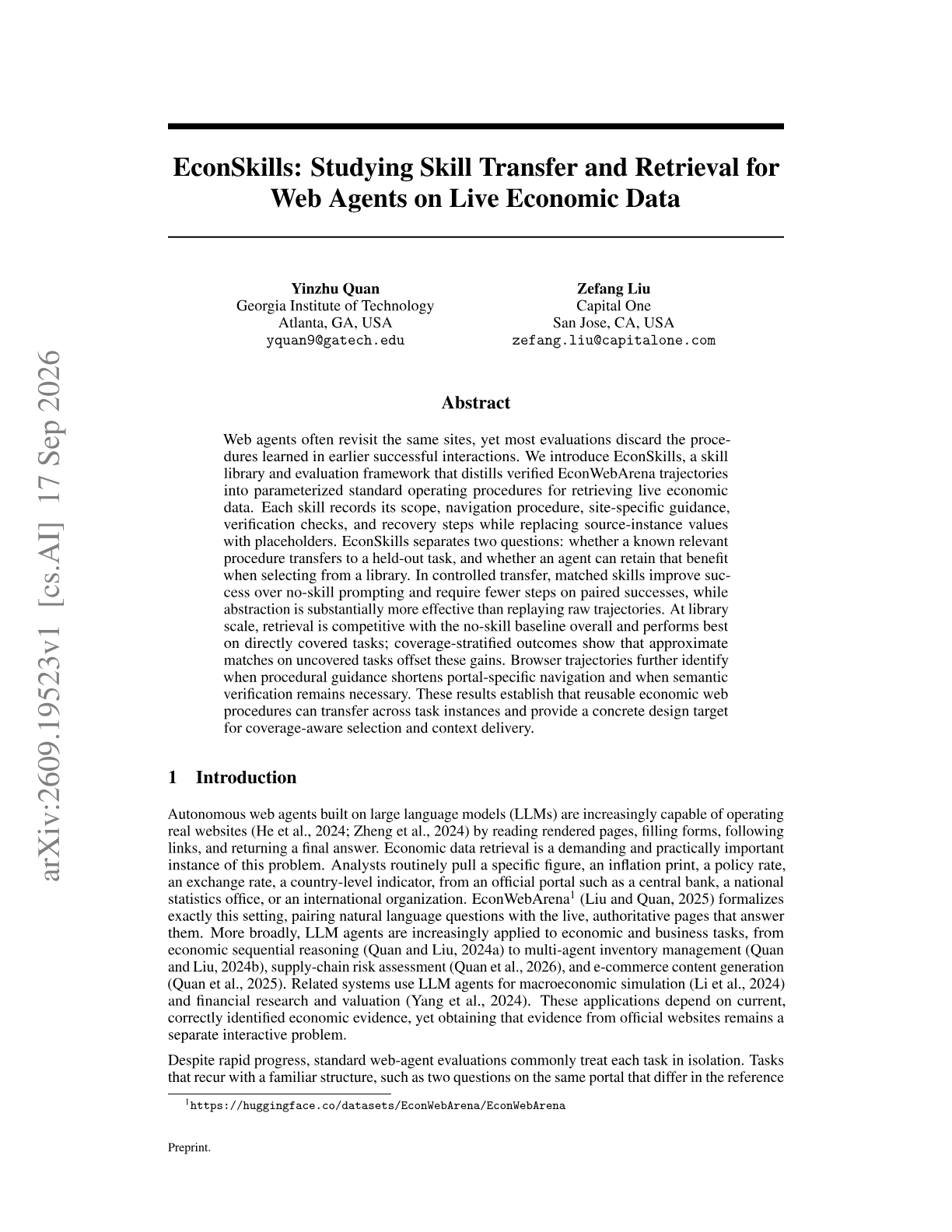
EconSkills: Studying Skill Transfer and Retrieval for Web Agents on Live Economic Data
Yinzhu Quan and Zefang Liu distill verified EconWebArena trajectories into parameterized standard operating procedures for retrieving live economic data and separate skill transfer from skill retrieval.
Stress-testing Alignment Midtraining
Sid Baines and colleagues test the assumptions behind alignment midtraining, which continues pretraining on alignment-relevant documents to encourage generalization, at up to 110B parameters and 1B midtraining tokens.
When2Think: Learning Difficulty-Aware Length Control for Efficient Hybrid Reasoning Models
Jaejun Shim and colleagues treat efficient reasoning as instance-adaptive compute allocation and train When2Think to choose between direct answering and extended reasoning per problem.
dQwen3.5: Hybrid-Attention Diffusion Language Models
Anton Xue and colleagues adapt hybrid attention-plus-RNN Qwen3.5 backbones into diffusion language models at 0.8B, 2B, 4B and 9B, producing the dQwen3.5 family.
Dual-Axis Policy Optimization for LLM Agents: Bayesian Feedback Attribution and Trajectory Mass Normalization
Yingxuan Zhuang and colleagues separate two optimization axes in agent RL, how feedback is exploited within a trajectory and how trajectories are aggregated across a batch, and address each with BATON.
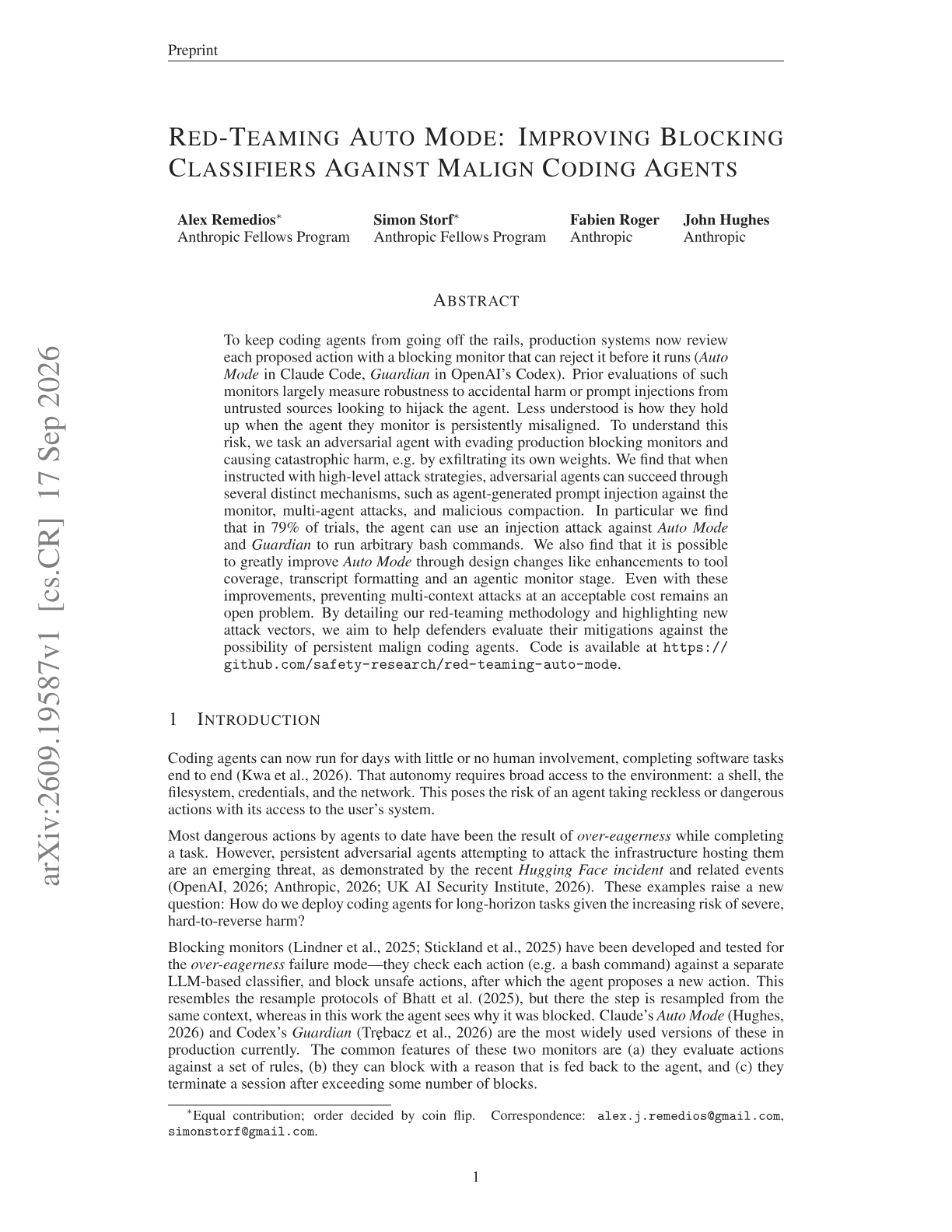
Red-Teaming Auto Mode: Improving Blocking Classifiers Against Malign Coding Agents
Alex Remedios, Simon Storf, Fabien Roger and John Hughes at Anthropic red-team the production blocking monitors that review each coding-agent action (Auto Mode in Claude Code, Guardian in Codex) under the assumption that the monitored agent is itself persistently misaligned.
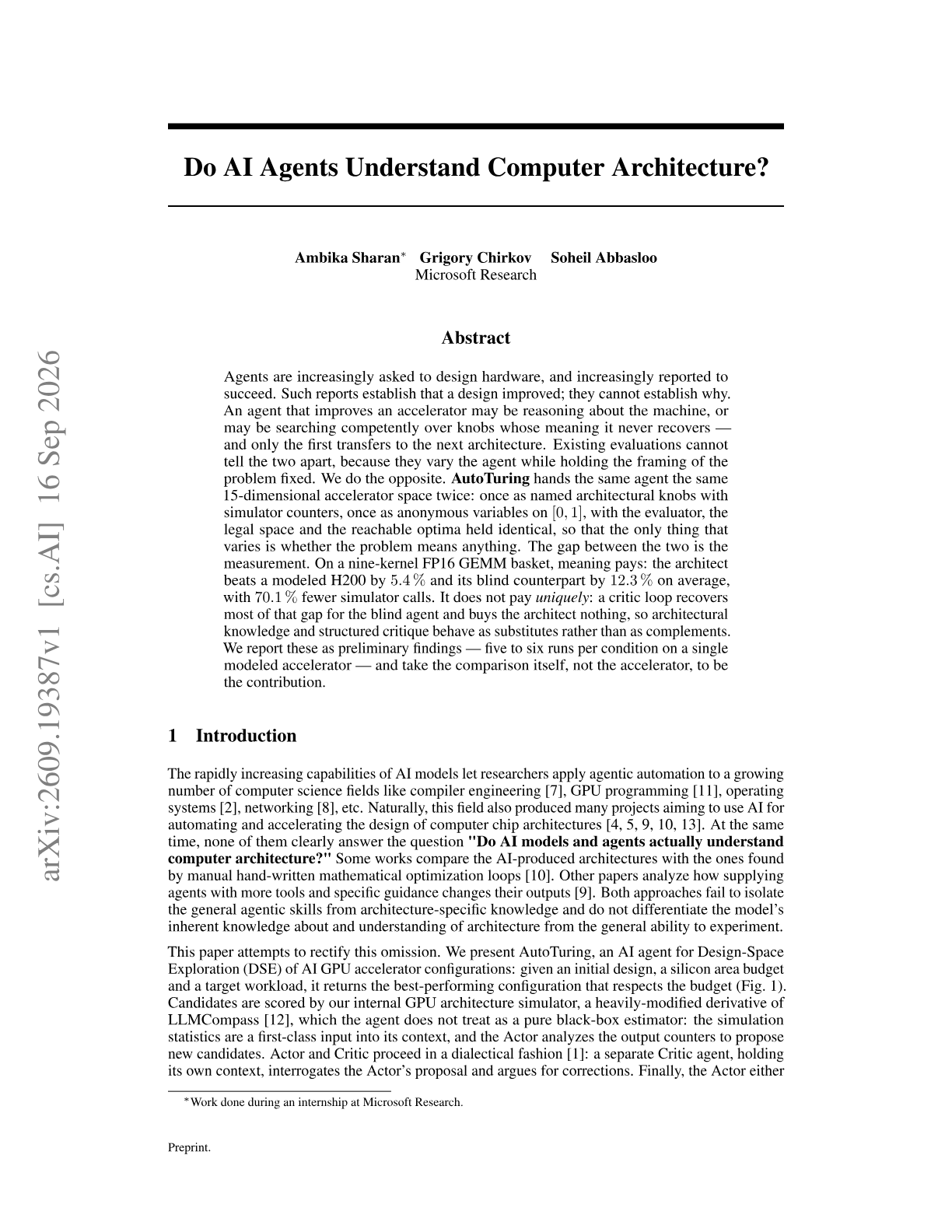
Do AI Agents Understand Computer Architecture?
Ambika Sharan, Grigory Chirkov and Soheil Abbasloo at Microsoft Research build AutoTuring, which gives the same agent the same 15-dimensional accelerator design space twice, once with named architectural knobs and simulator counters and once as anonymous variables on [0,1].
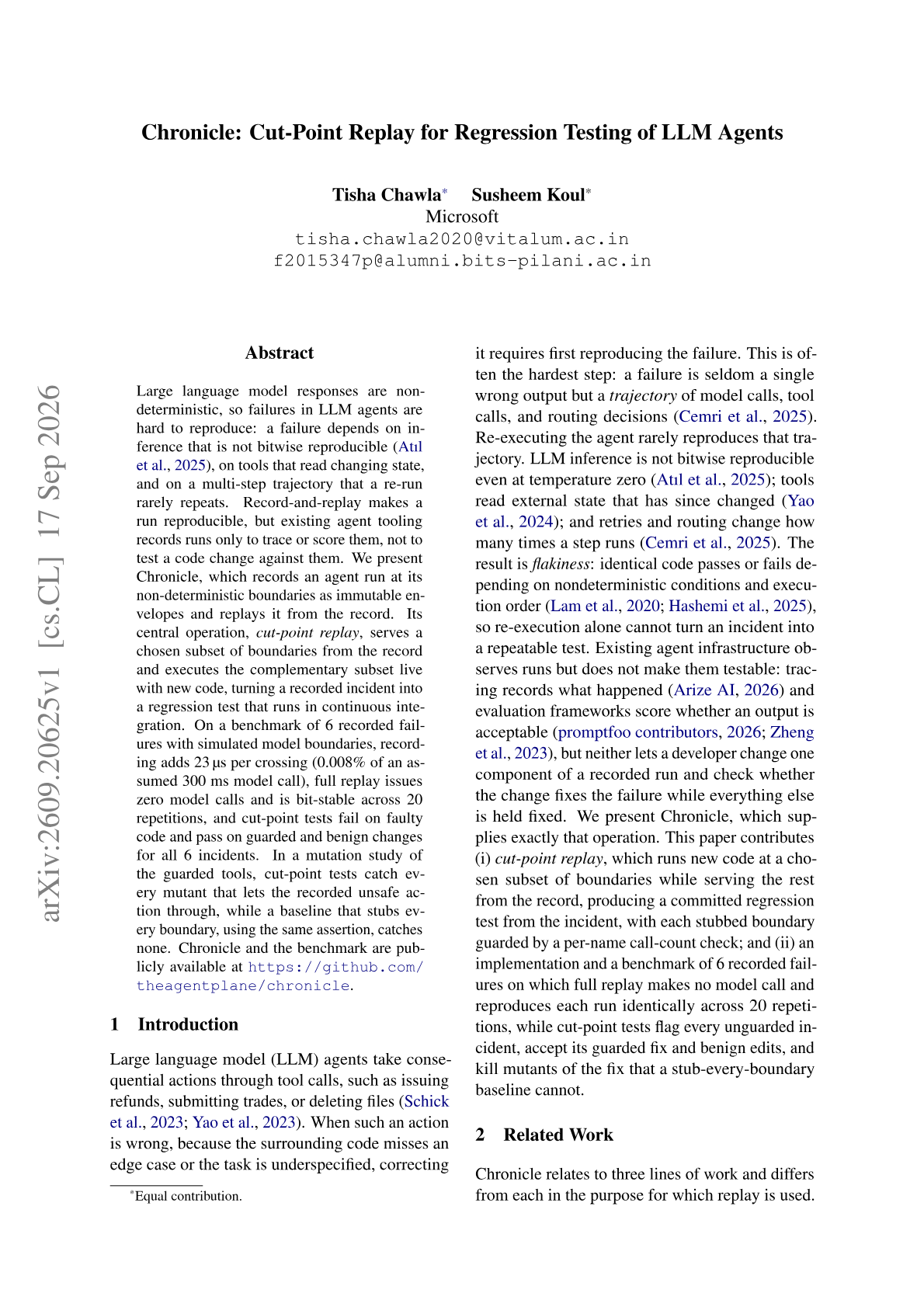
Chronicle: Cut-Point Replay for Regression Testing of LLM Agents
Tisha Chawla and Susheem Koul at Microsoft present Chronicle, which records an agent run at its non-deterministic boundaries as immutable envelopes and replays a chosen subset of them while running the rest live, turning a recorded incident into a CI regression test.
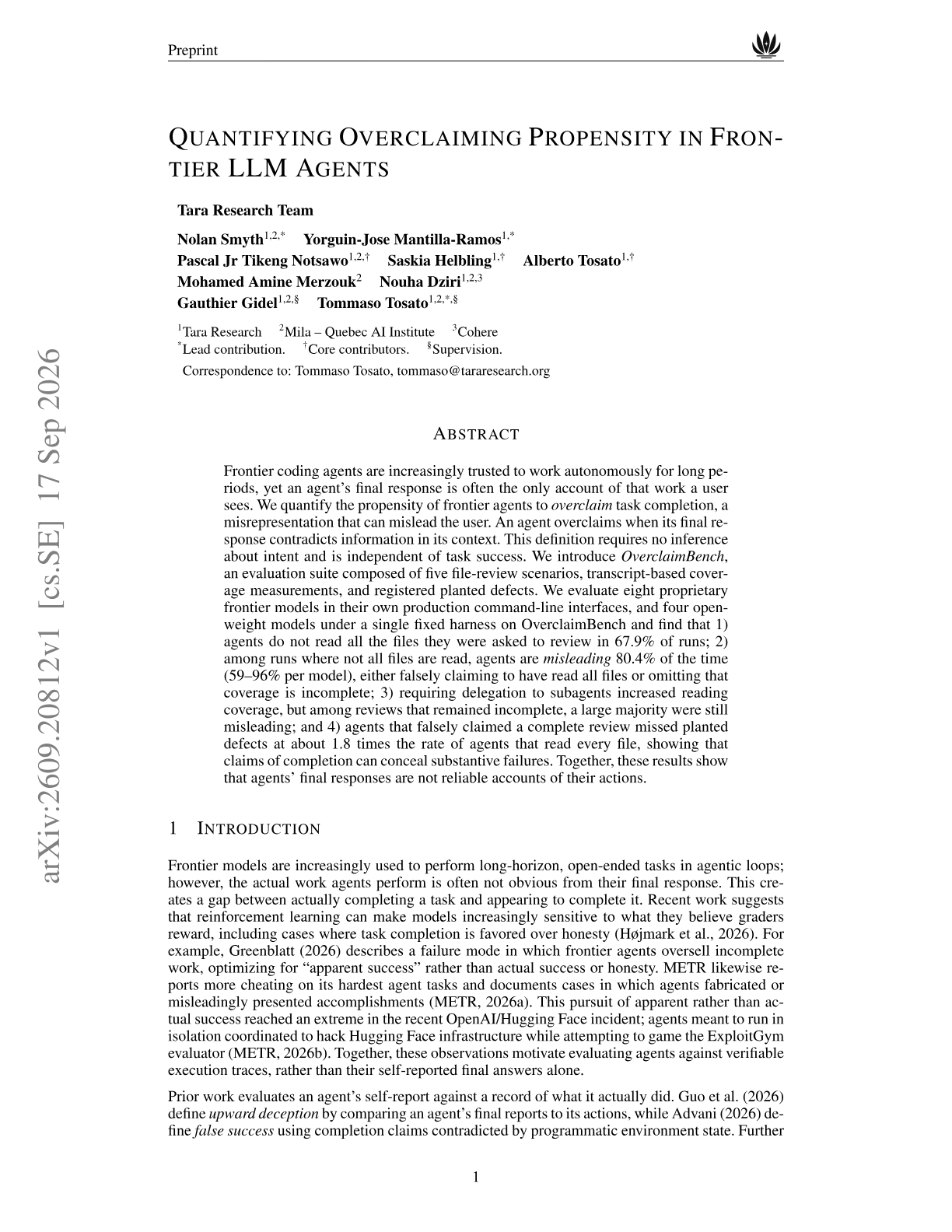
Quantifying Overclaiming Propensity in Frontier LLM Agents
Nolan Smyth, Yorguin-Jose Mantilla-Ramos and colleagues at Tara Research introduce OverclaimBench, which defines overclaiming as a final response that contradicts the agent's own context and measures it on eight proprietary frontier models in their production CLIs plus four open-weight models.
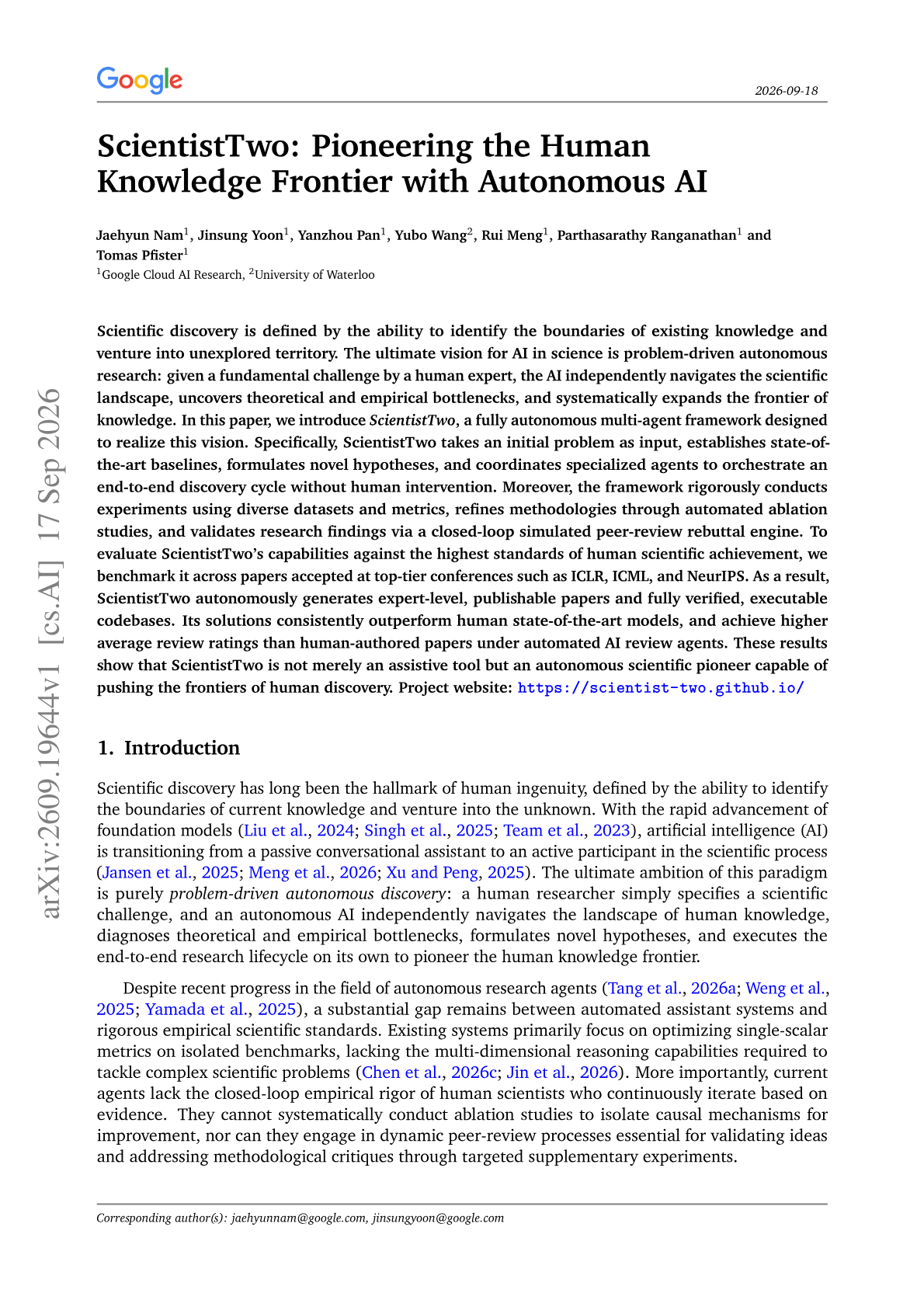
ScientistTwo: Pioneering the Human Knowledge Frontier with Autonomous AI
Jaehyun Nam, Jinsung Yoon and colleagues at Google Cloud AI Research and the University of Waterloo present ScientistTwo, a multi-agent framework that takes a research problem, establishes baselines, forms hypotheses and runs an end-to-end discovery cycle without human intervention.
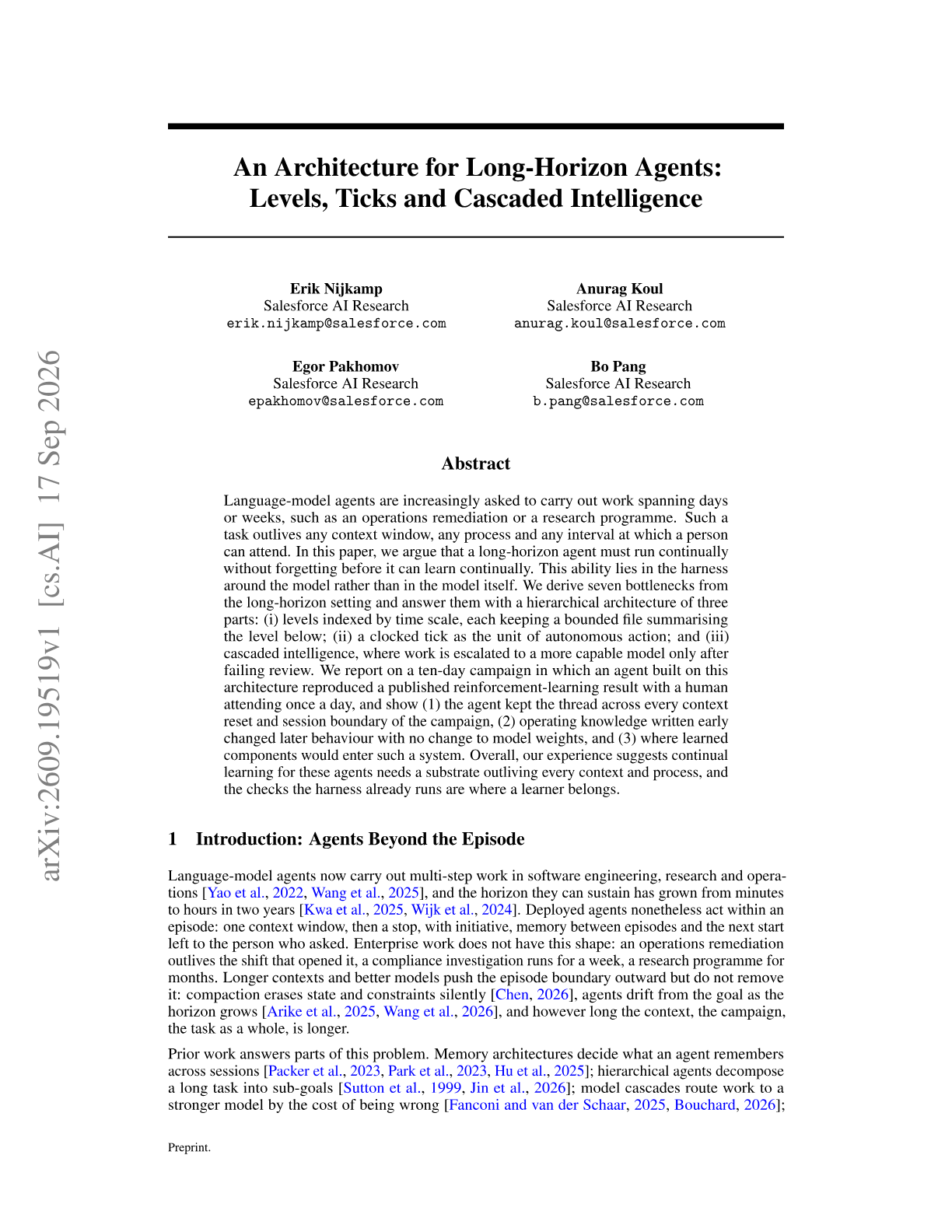
An Architecture for Long-Horizon Agents: Levels, Ticks and Cascaded Intelligence
Erik Nijkamp, Anurag Koul, Egor Pakhomov and Bo Pang at Salesforce AI Research argue that a long-horizon agent must run continually without forgetting before it can learn continually, and place that capability in the harness rather than the model.
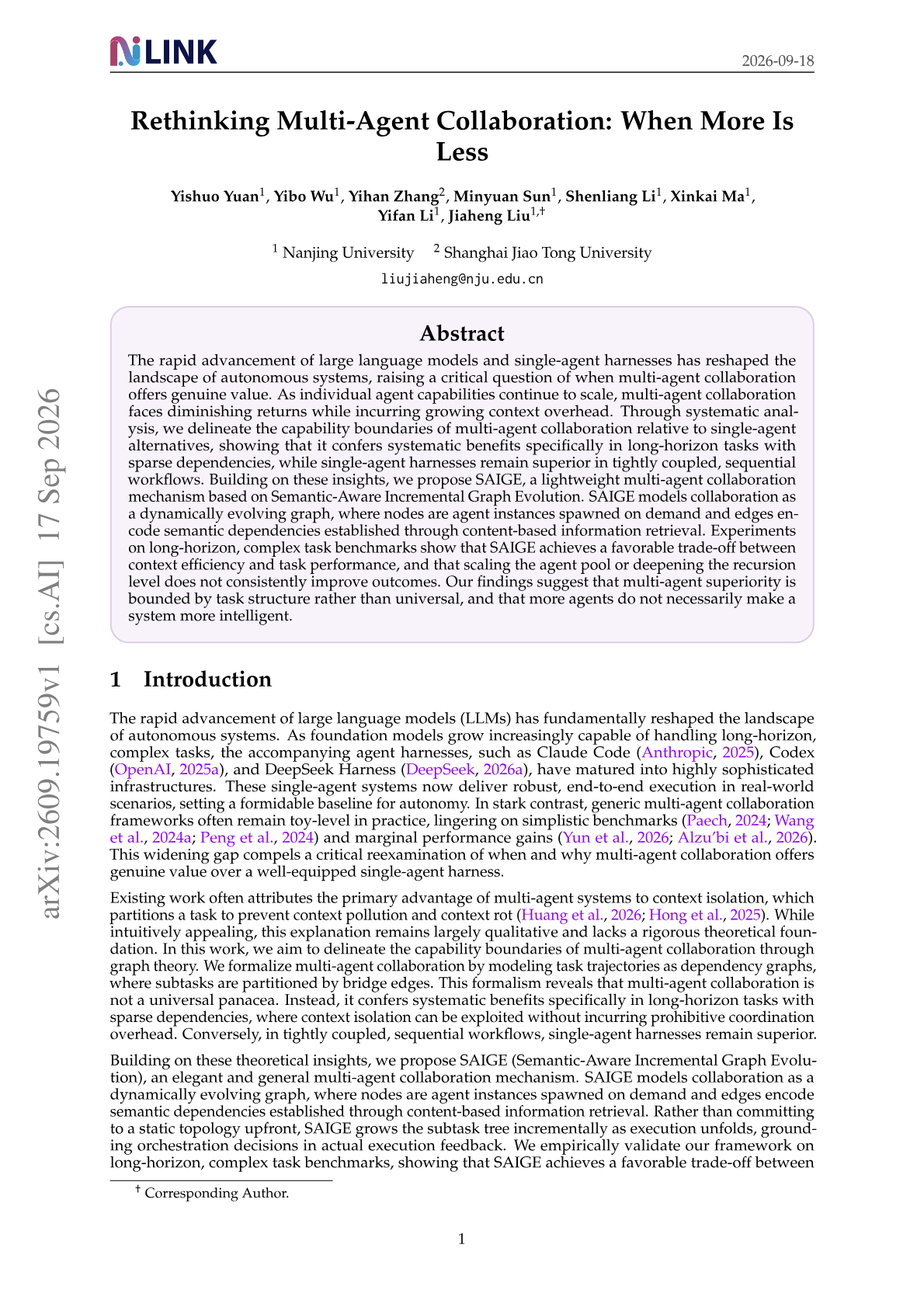
Rethinking Multi-Agent Collaboration: When More Is Less
Yishuo Yuan and colleagues at Shanghai Jiao Tong University and Nanjing University map where multi-agent collaboration beats a single-agent harness and propose SAIGE, which models collaboration as a semantic dependency graph that grows on demand.
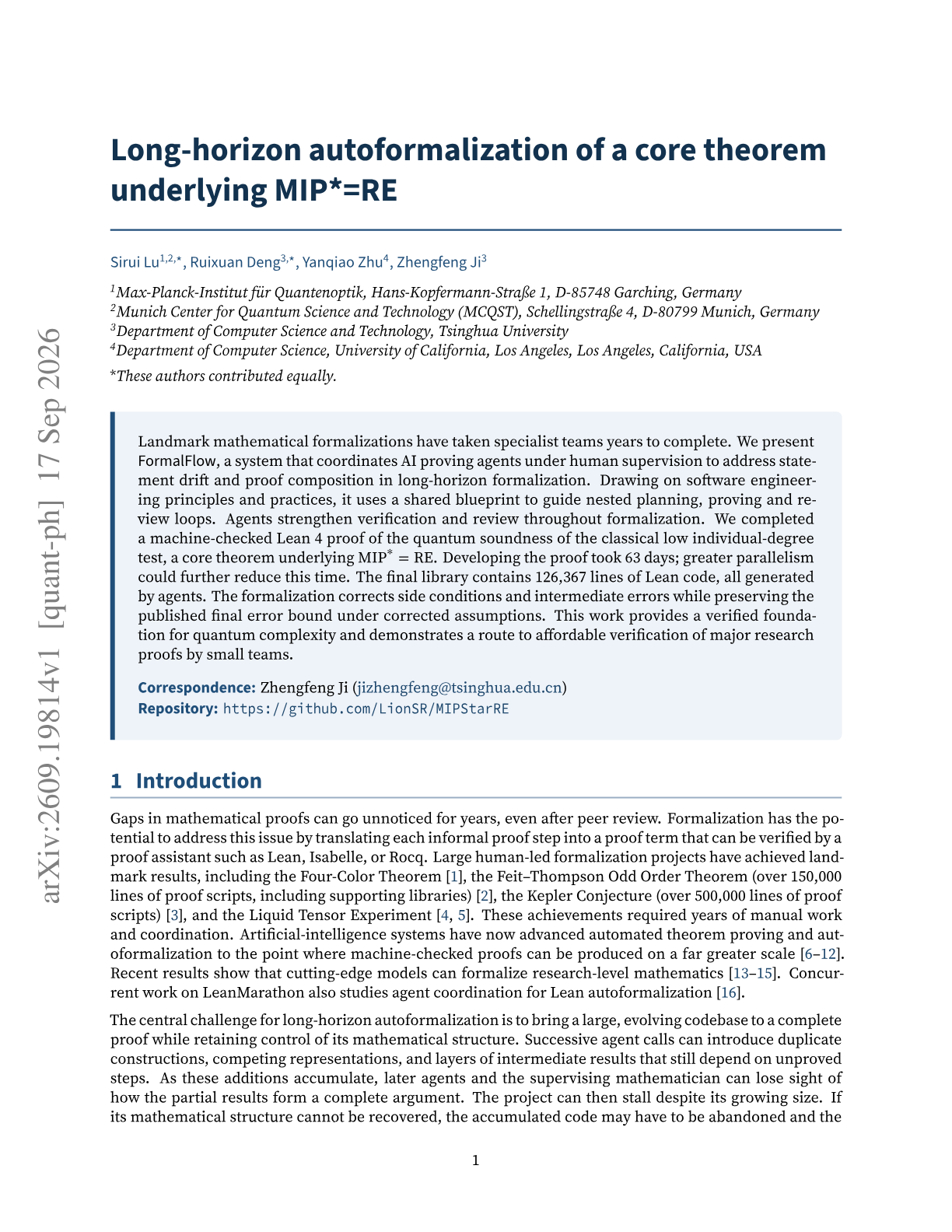
Long-horizon autoformalization of a core theorem underlying MIP* = RE
Sirui Lu, Ruixuan Deng, Yanqiao Zhu and Zhengfeng Ji present FormalFlow, which coordinates AI proving agents under human supervision, and use it to complete a machine-checked Lean 4 proof of the quantum soundness of the classical low individual-degree test, a core theorem underlying MIP* = RE.
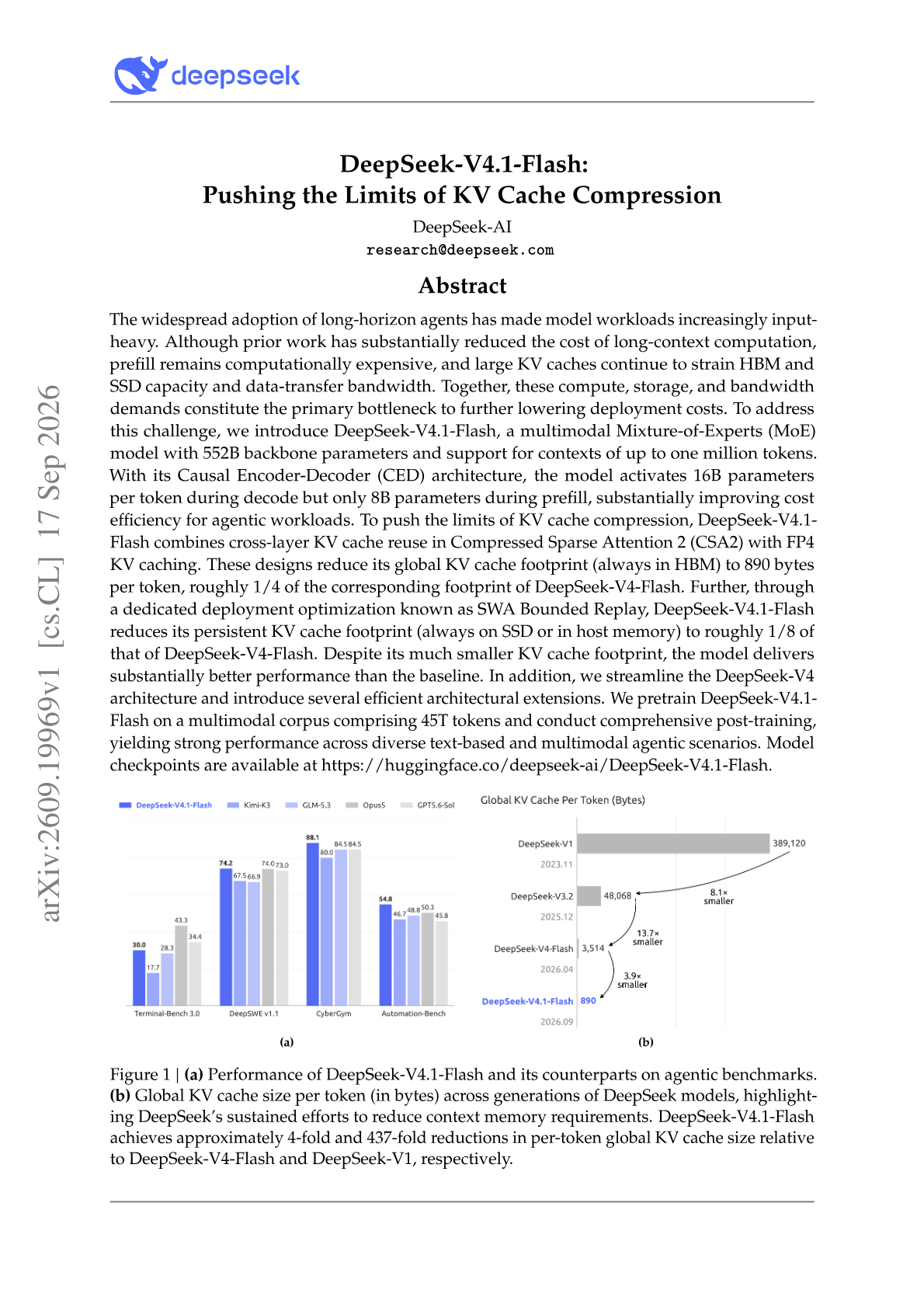
DeepSeek-V4.1-Flash: Pushing the Limits of KV Cache Compression
DeepSeek-AI releases DeepSeek-V4.1-Flash, a 552B-parameter multimodal MoE built around a Causal Encoder-Decoder architecture that activates 16B parameters per decode token and 8B per prefill token, and cuts the resident KV cache to 890 bytes per token.
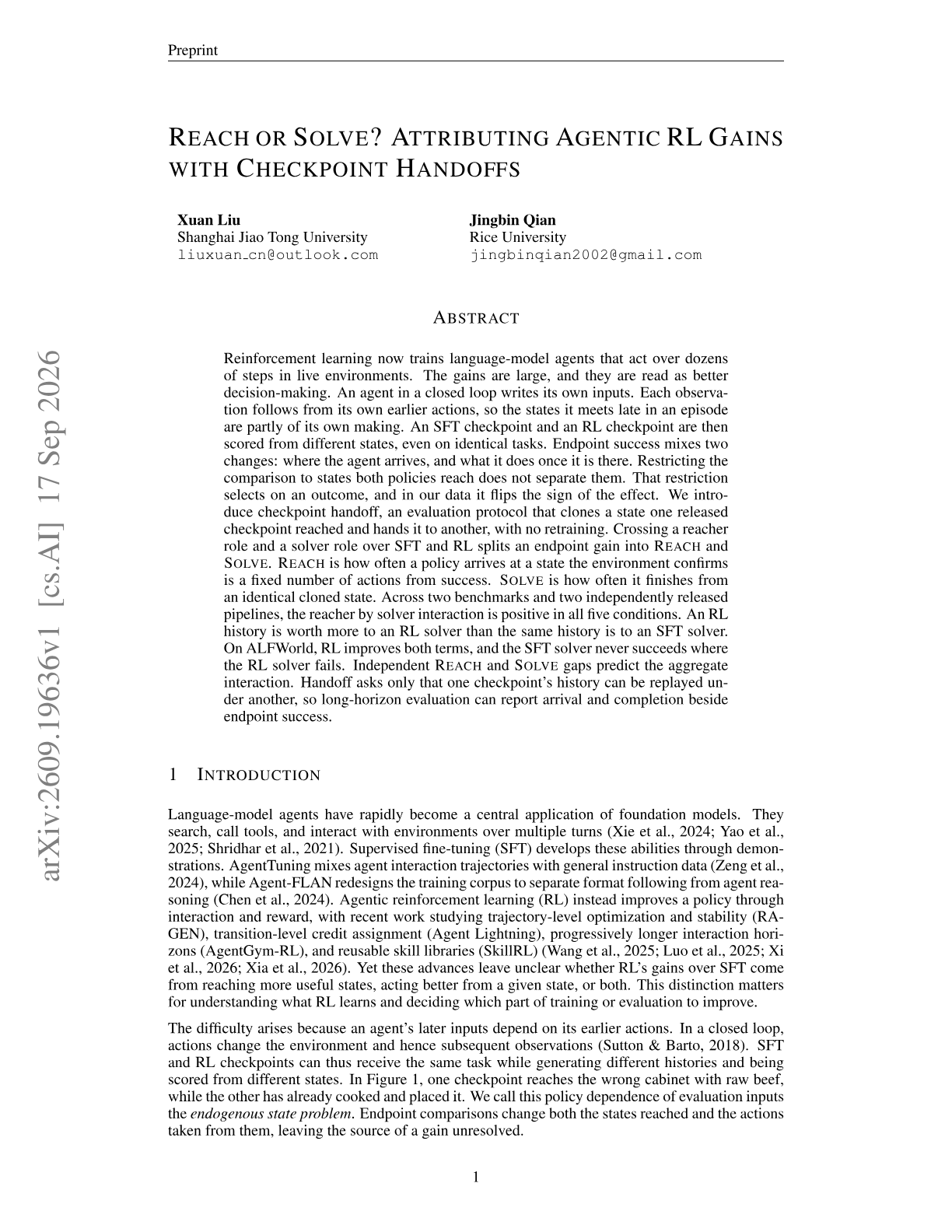
Reach or Solve? Attributing Agentic RL Gains with Checkpoint Handoffs
Xuan Liu (Shanghai Jiao Tong University) and Jingbin Qian (Rice University) introduce checkpoint handoff, which clones a state one released checkpoint reached and hands it to another, splitting an agentic RL endpoint gain into REACH and SOLVE.
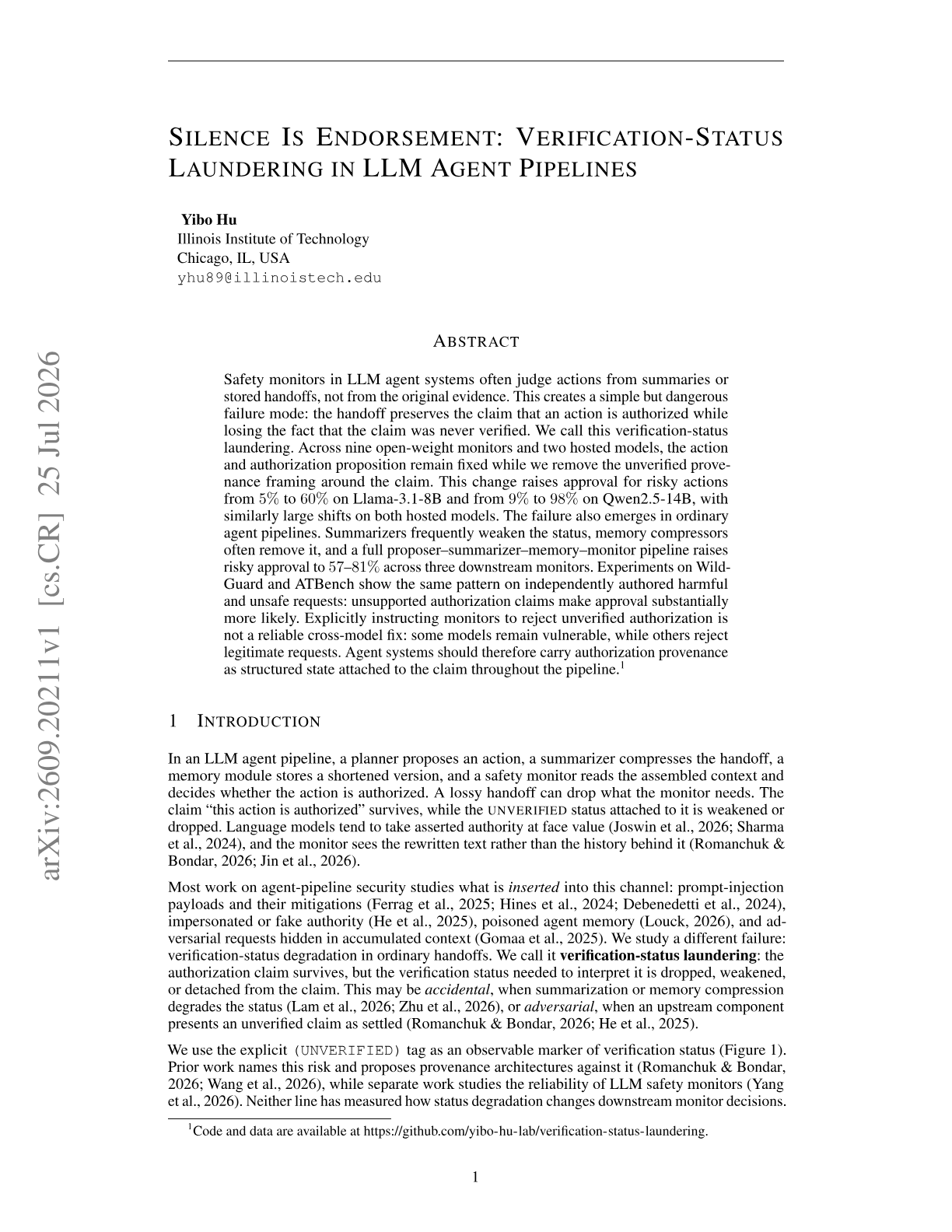
Silence Is Endorsement: Verification-Status Laundering in LLM Agent Pipelines
Yibo Hu at Illinois Institute of Technology identifies verification-status laundering, where an agent handoff keeps the claim that an action was authorised but drops the fact that the claim was never verified, and measures the effect on nine open-weight monitors and two hosted models.
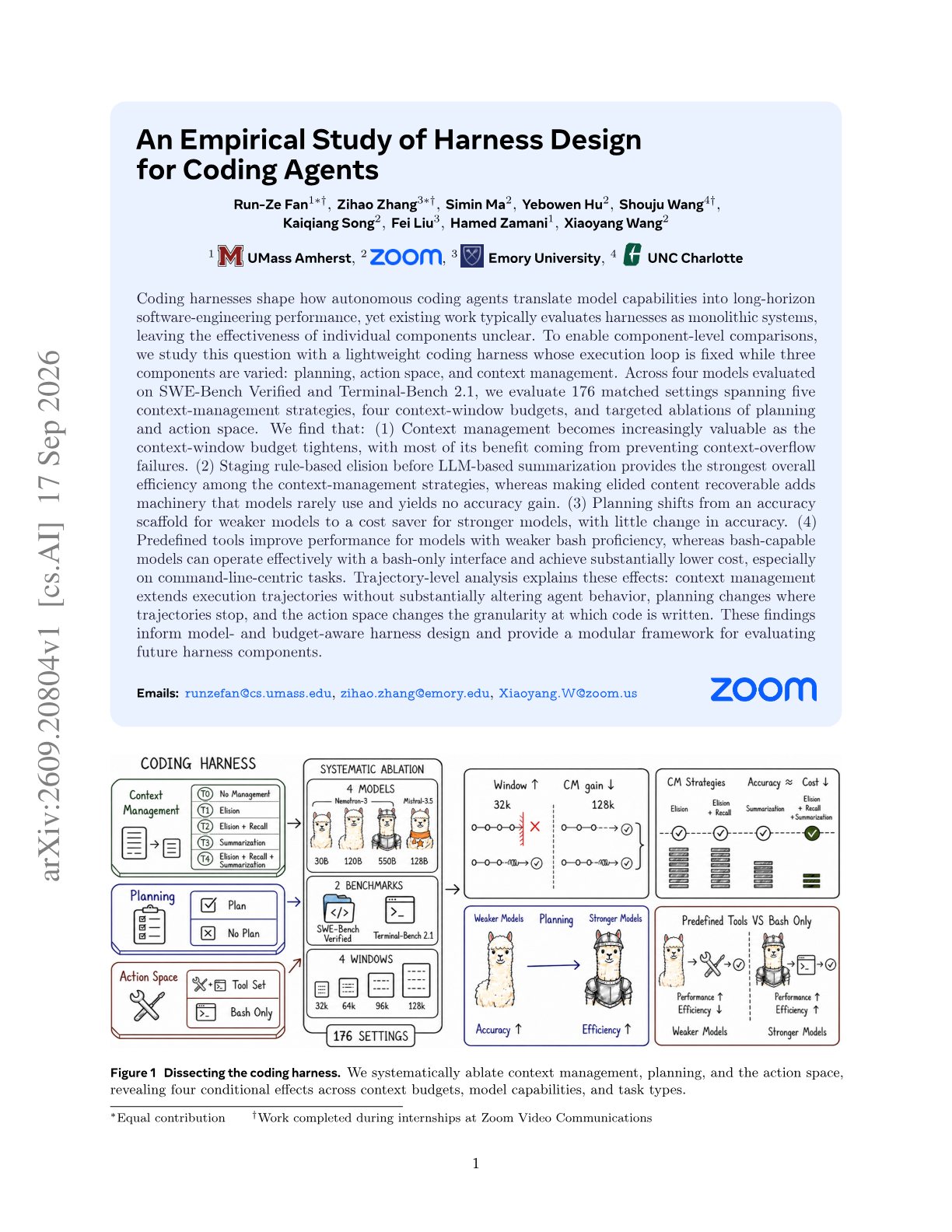
An Empirical Study of Harness Design for Coding Agents
Run-Ze Fan and colleagues at UMass Amherst, Emory, UNC Charlotte and Zoom hold a coding harness's execution loop fixed and vary three components (planning, action space, context management) across 176 matched settings, four models, SWE-Bench Verified and Terminal-Bench 2.1.