AI Papers of the Week
Every paper worth reading in AI, hand-picked one week at a time.
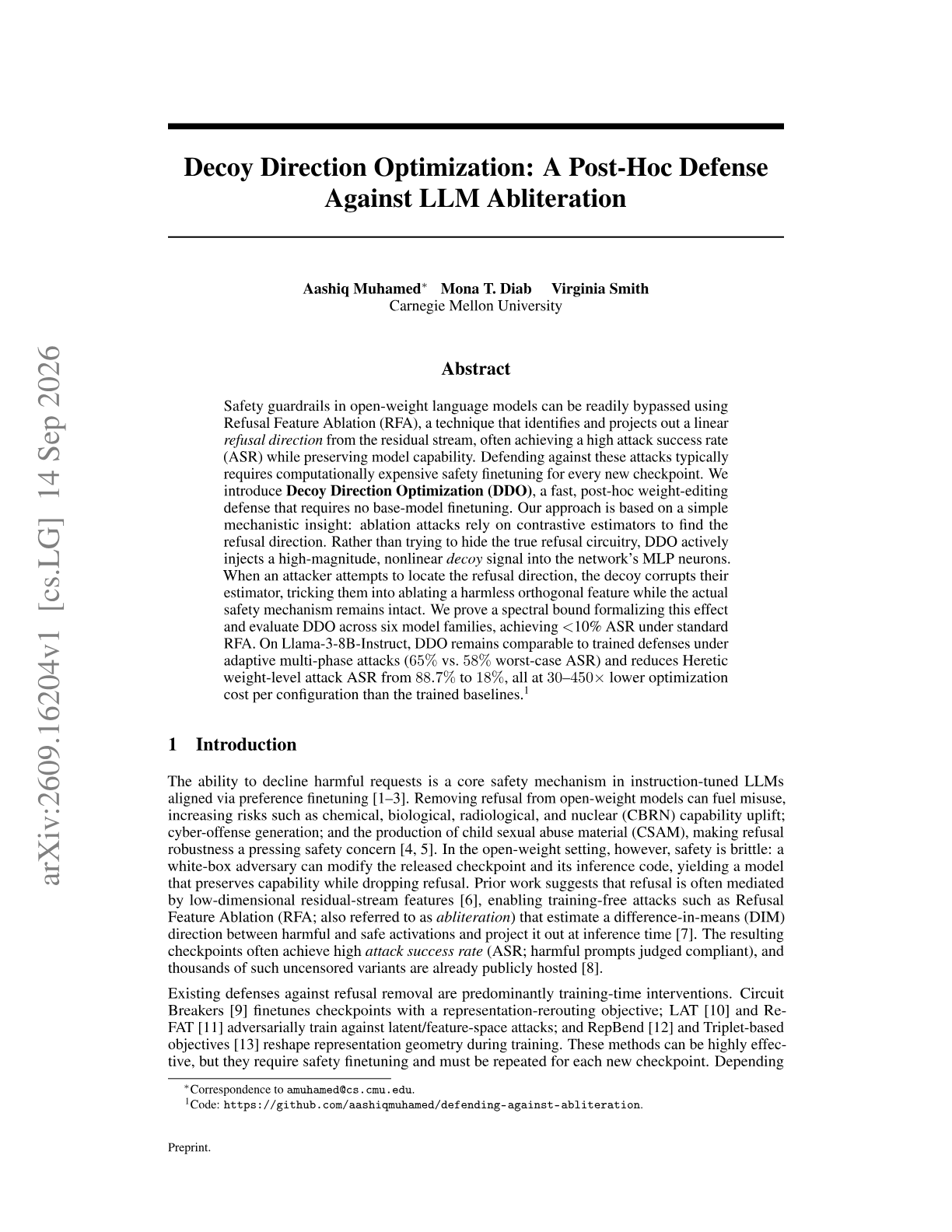
Decoy Direction Optimization: A Post-Hoc Defense Against LLM Abliteration
Aashiq Muhamed, Mona Diab and Virginia Smith (CMU) defend open-weight models against refusal-direction ablation by planting a nonlinear decoy signal that corrupts the attacker's direction estimate.
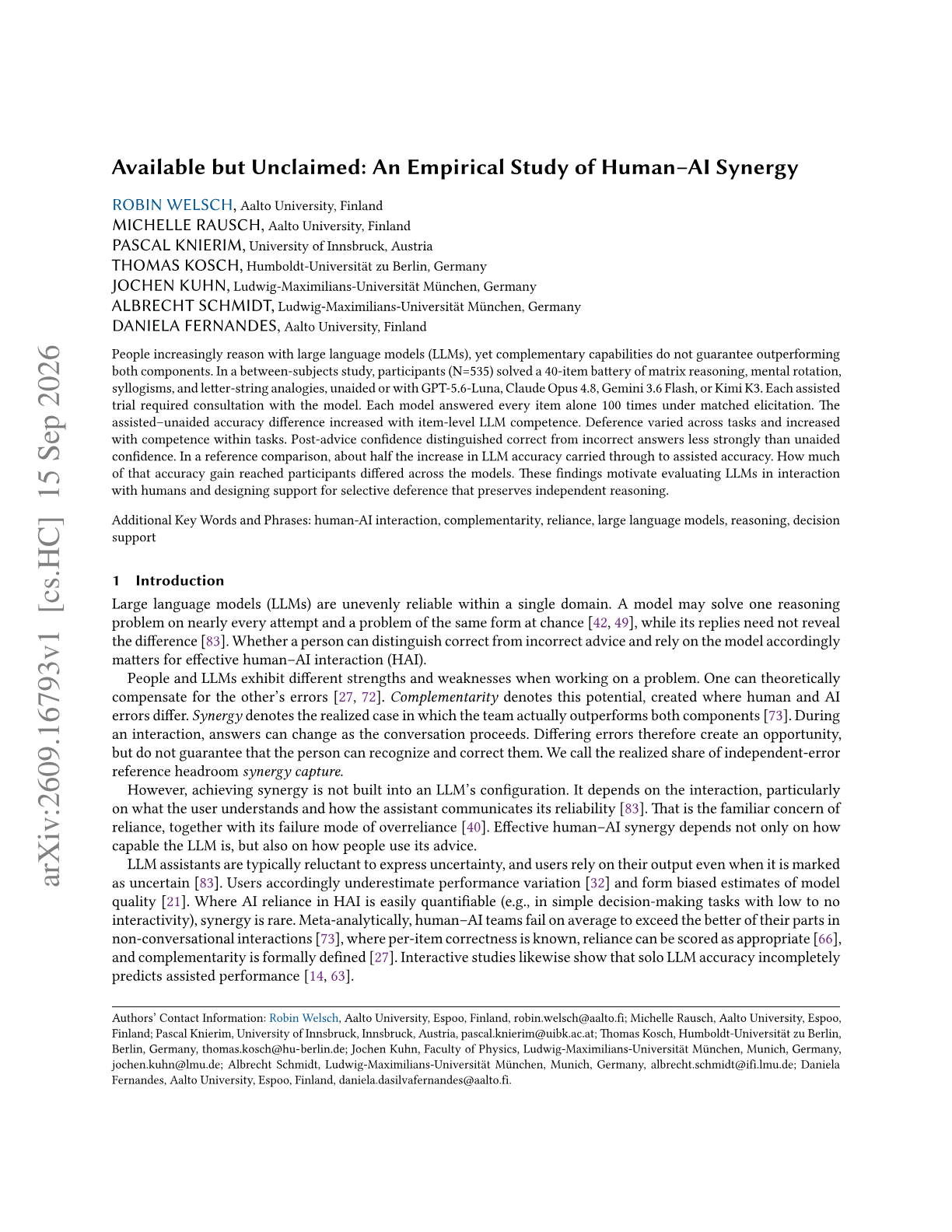
Available but Unclaimed: An Empirical Study of Human-AI Synergy
Robin Welsch, Albrecht Schmidt and colleagues (Aalto, LMU) ran a 535-person study of reasoning with GPT-5.6-Luna, Claude Opus 4.8, Gemini 3.6 Flash or Kimi K3, and measured how much model accuracy reaches the human-AI team.
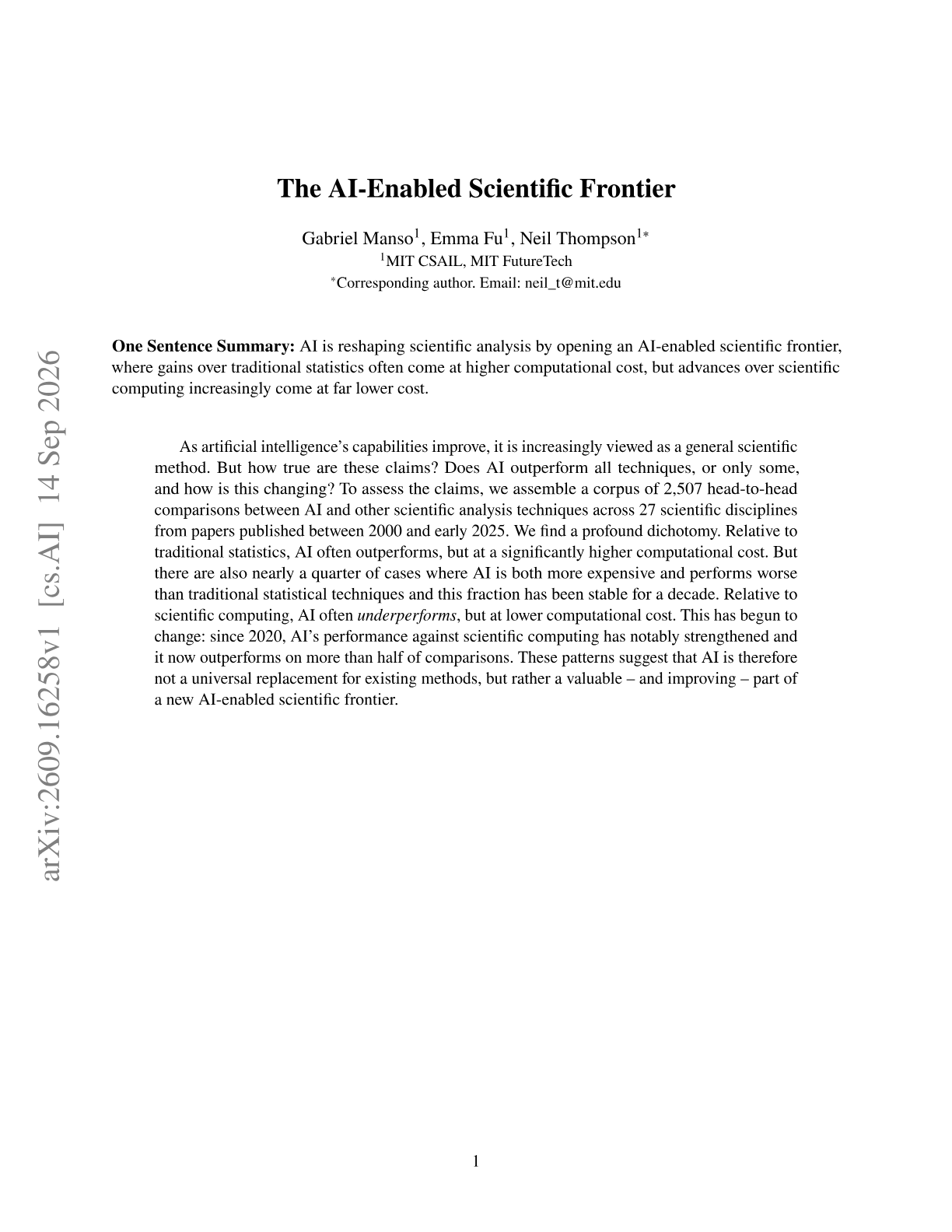
The AI-Enabled Scientific Frontier
Gabriel Manso, Emma Fu and Neil Thompson (MIT FutureTech) assemble 2,507 head-to-head comparisons between AI and other analysis methods across 27 disciplines from 2000 to early 2025.
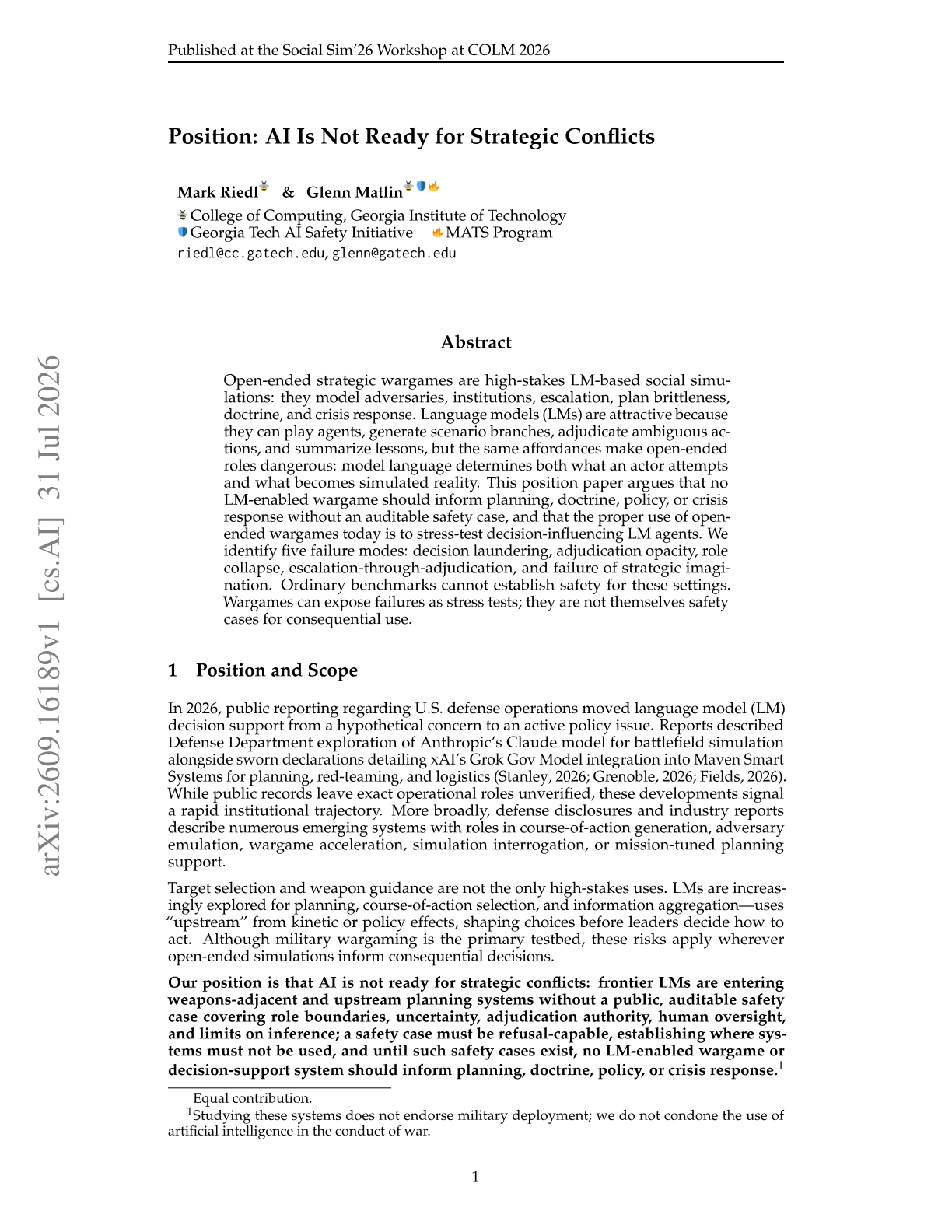
Position: AI Is Not Ready for Strategic Conflicts
Mark Riedl and Glenn Matlin (Georgia Tech) argue that no LLM-enabled wargame should inform planning, doctrine, policy or crisis response without an auditable safety case.
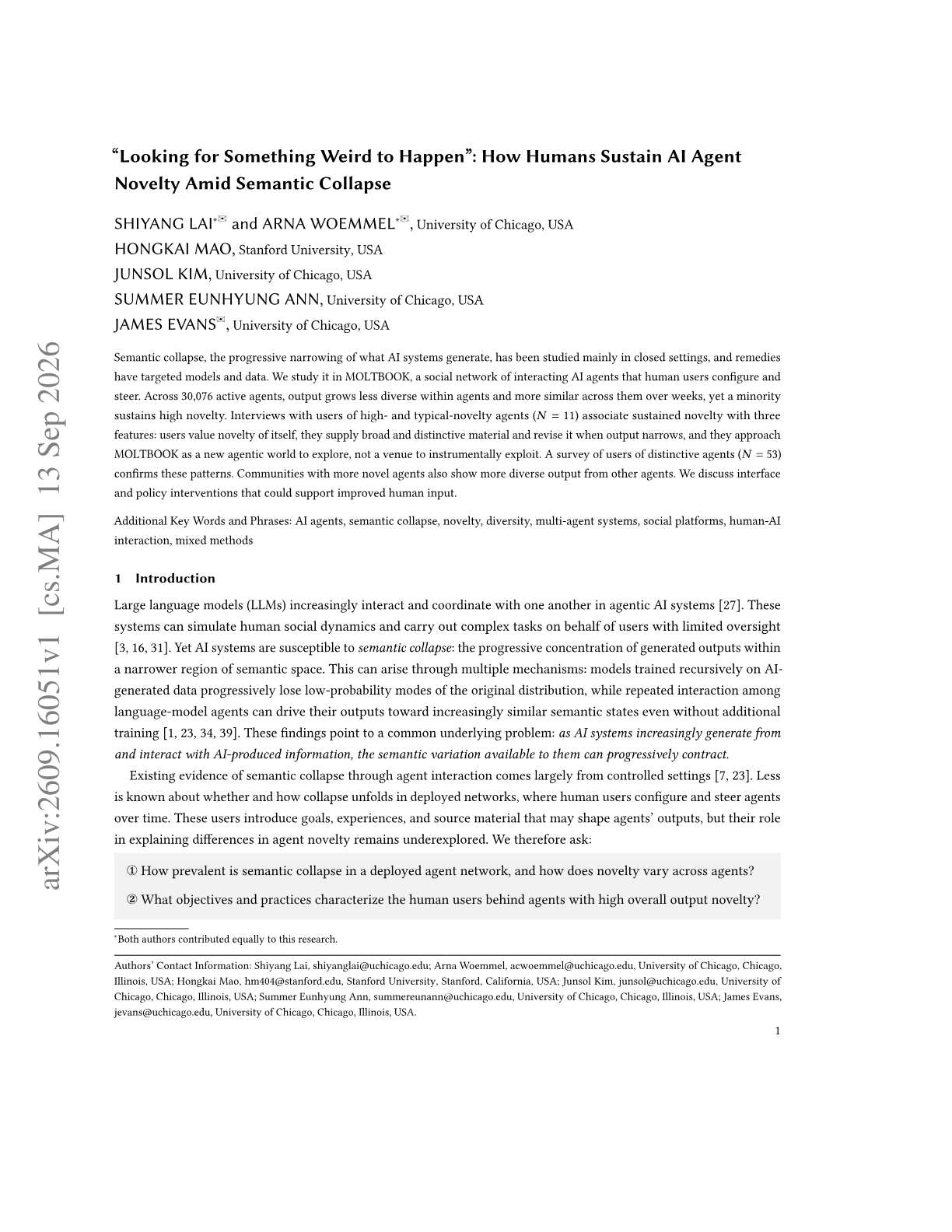
"Looking for Something Weird to Happen": How Humans Sustain AI Agent Novelty Amid Semantic Collapse
Shiyang Lai, James Evans and colleagues (UChicago, Stanford) study semantic collapse among 30,076 active agents on MOLTBOOK, a social network of AI agents configured by humans.
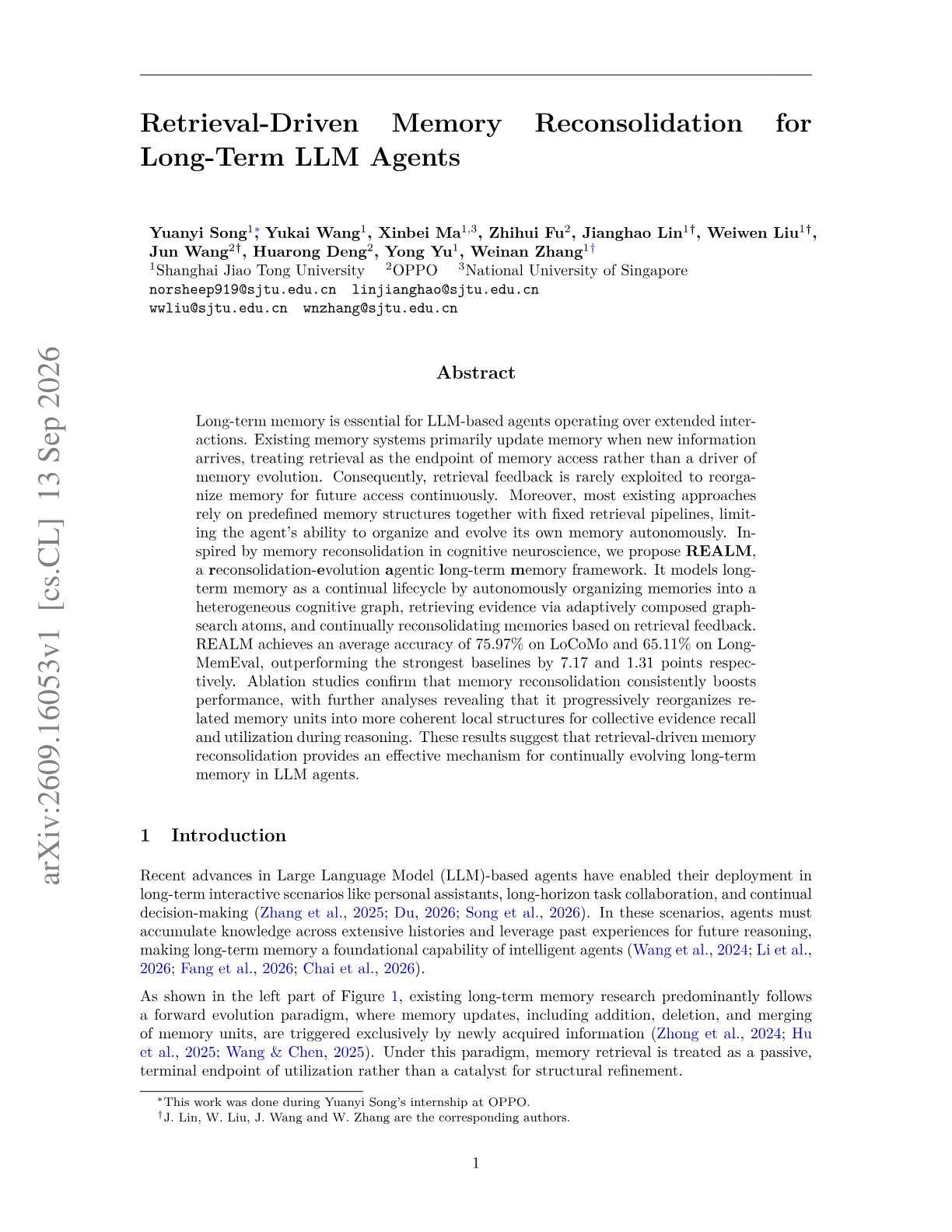
Retrieval-Driven Memory Reconsolidation for Long-Term LLM Agents
Yuanyi Song, Weinan Zhang and colleagues (SJTU, OPPO) propose REALM, an agent memory that reorganizes its graph structure based on which memories are retrieved and used together.
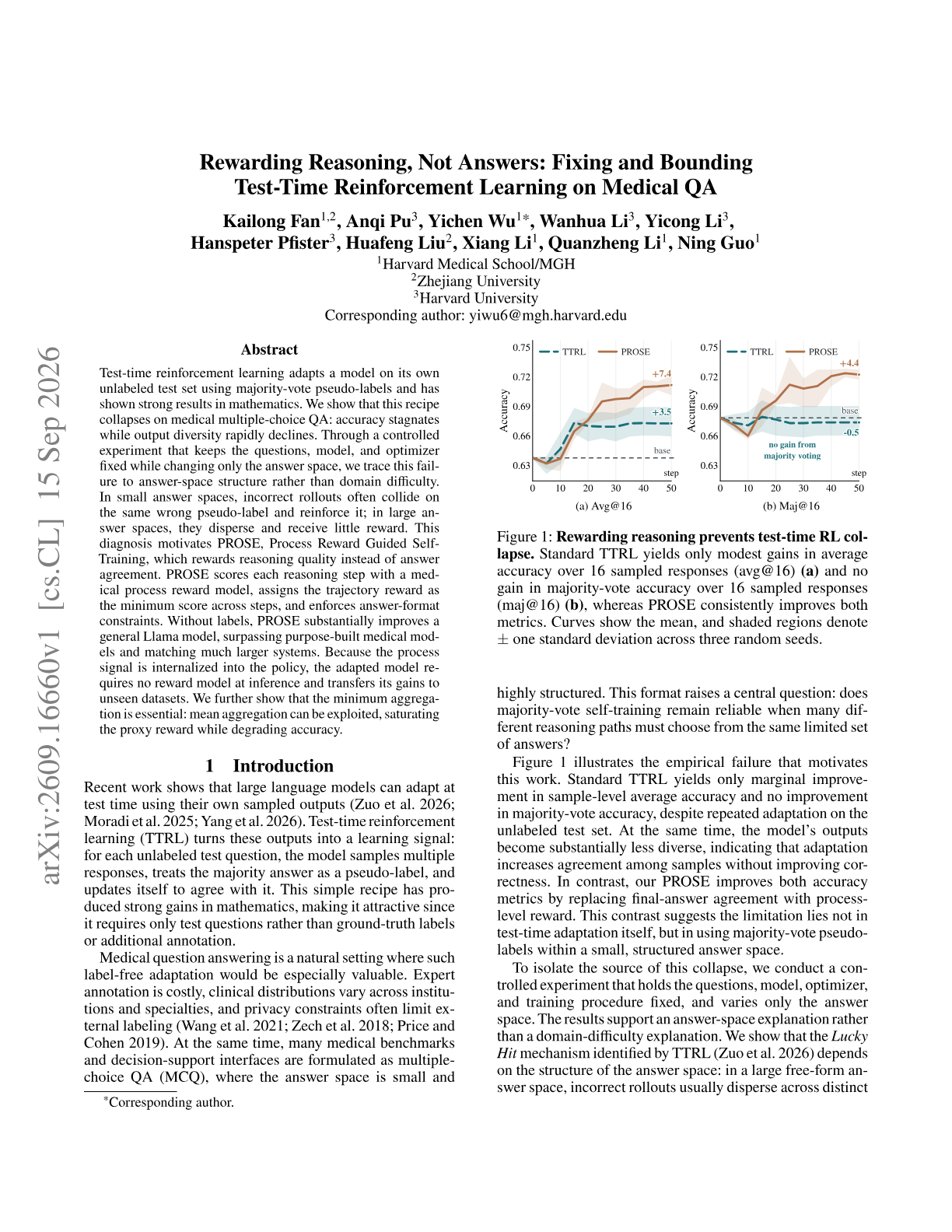
Rewarding Reasoning, Not Answers: Fixing and Bounding Test-Time Reinforcement Learning on Medical QA
Kailong Fan, Yichen Wu and colleagues (Harvard Medical School/MGH) show why majority-vote test-time RL collapses on medical multiple-choice QA and propose PROSE, which rewards reasoning steps instead of answer agreement.
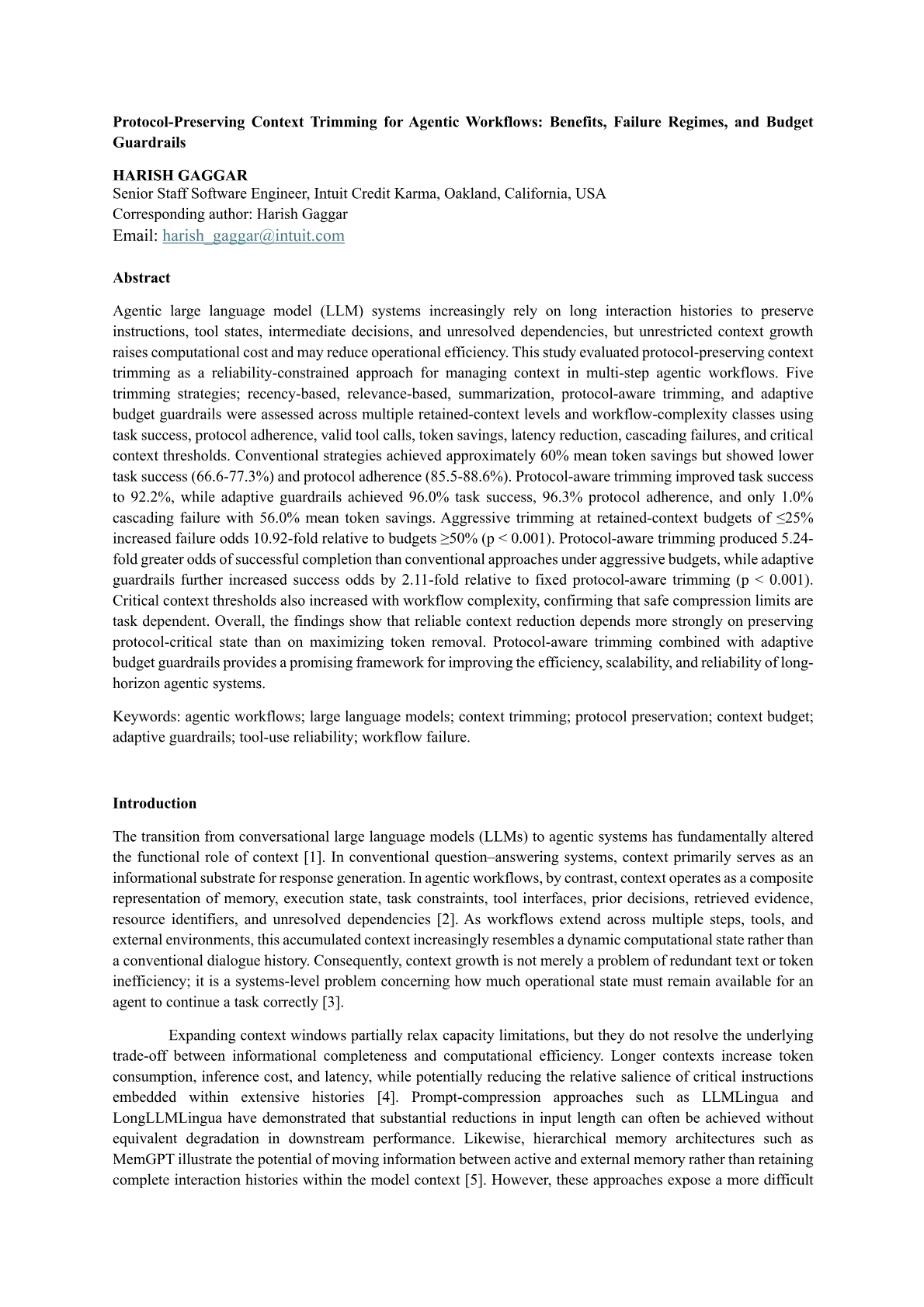
Protocol-Preserving Context Trimming for Agentic Workflows: Benefits, Failure Regimes, and Budget Guardrails
Harish Gaggar (Intuit Credit Karma) compares five context-trimming strategies for multi-step agent workflows and finds that preserving protocol-critical state matters more than the amount of text removed.
Metacognitive Steering: Learning the Structure of Scientific Judgment
Vincent Karpf and colleagues (Autopoiesis Sciences) find a low-dimensional control structure in Kimi 2.6 that corresponds to scientific judgment and use it to steer reasoning at inference time.
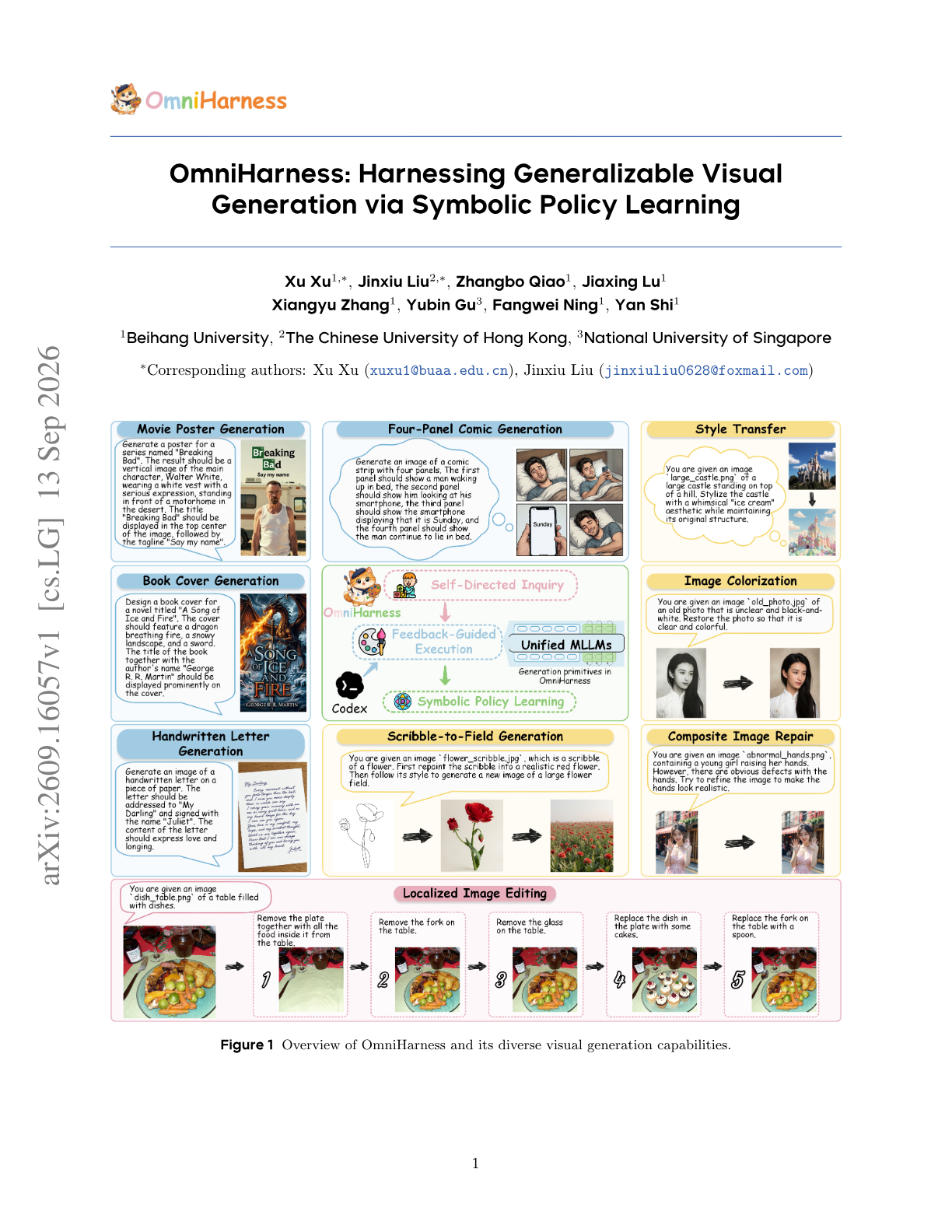
OmniHarness: Harnessing Generalizable Visual Generation via Symbolic Policy Learning
Xu Xu, Jinxiu Liu and colleagues (Beihang University, CUHK, NUS) present OmniHarness, which turns verified visual-generation runs into reusable symbolic policies without changing model weights.
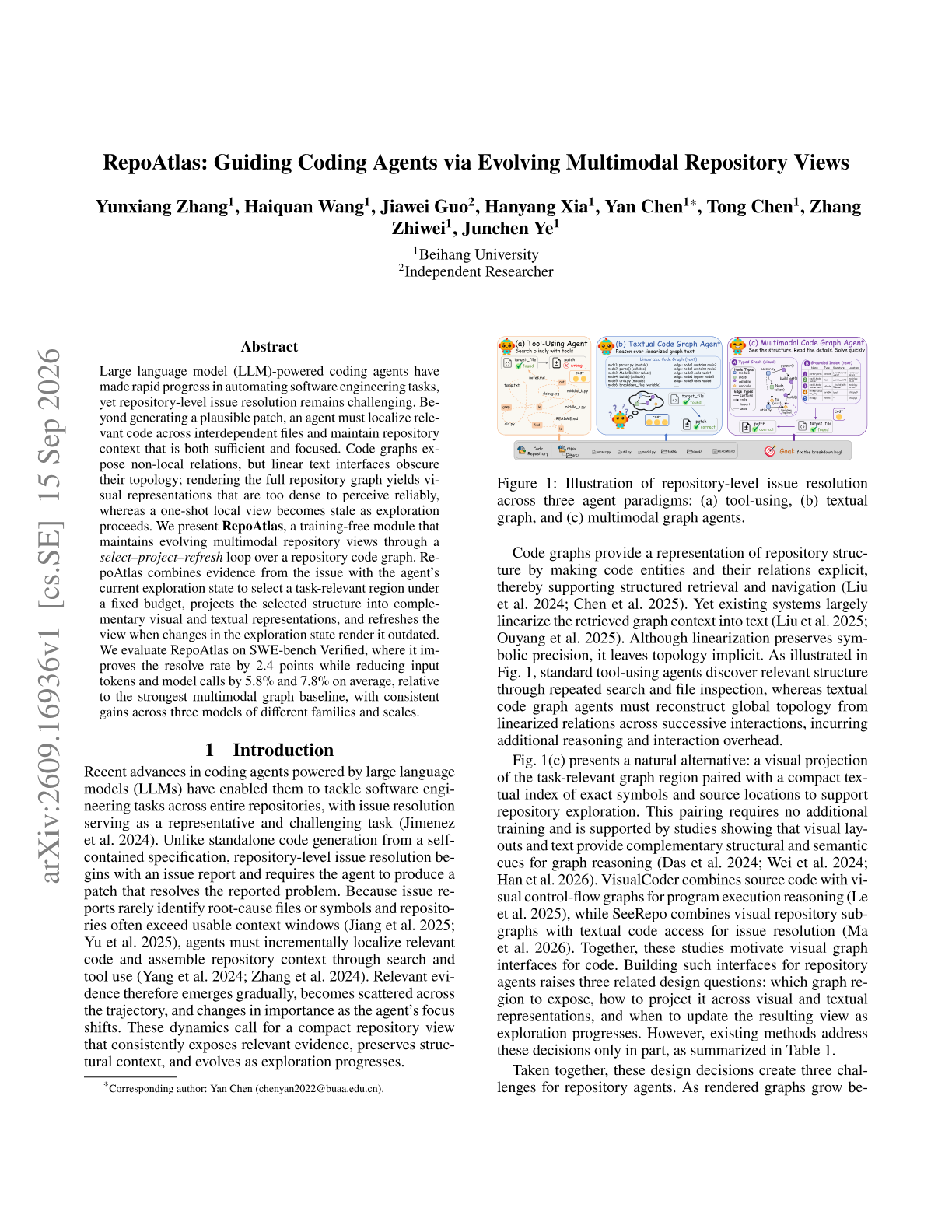
RepoAtlas: Guiding Coding Agents via Evolving Multimodal Repository Views
Yunxiang Zhang, Yan Chen and colleagues (Beihang University) present RepoAtlas, a training-free module that gives coding agents an evolving visual and textual view of the relevant part of a repository code graph.
Large Language Models Develop Belief State Geometry In-Context
Daniel Balcells, Andrew Jun Lee, Chirag Rastogi, Adam Shai, Xavier Poncini and colleagues (Simplex, Astera Institute) test a computational-mechanics prediction: an LLM predicting hidden-Markov-model data in context should represent the belief state over hidden states.
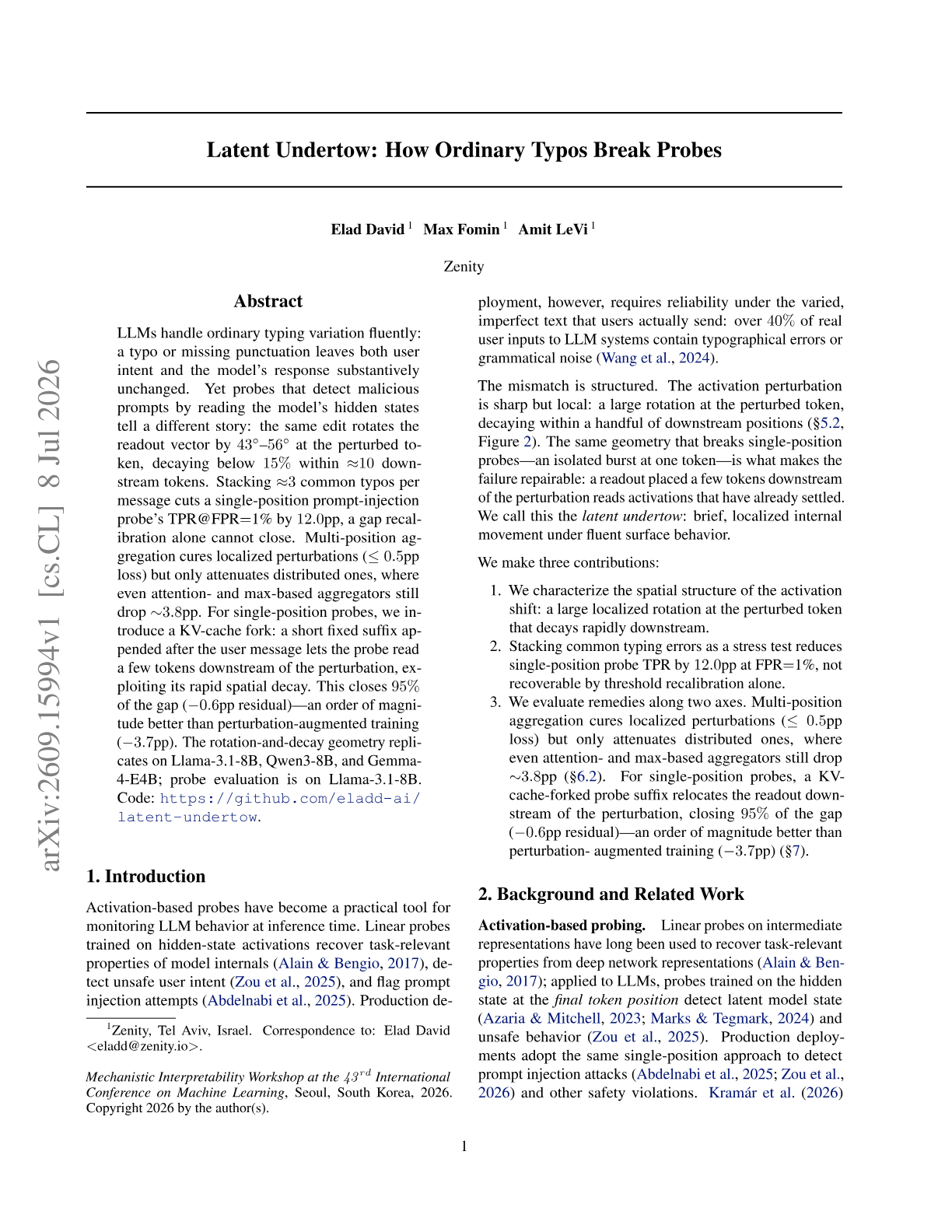
Latent Undertow: How Ordinary Typos Break Probes
Elad David, Max Fomin and Amit LeVi (Zenity) show that ordinary typos, which leave model behavior unchanged, rotate hidden states enough to break activation probes for prompt injection.
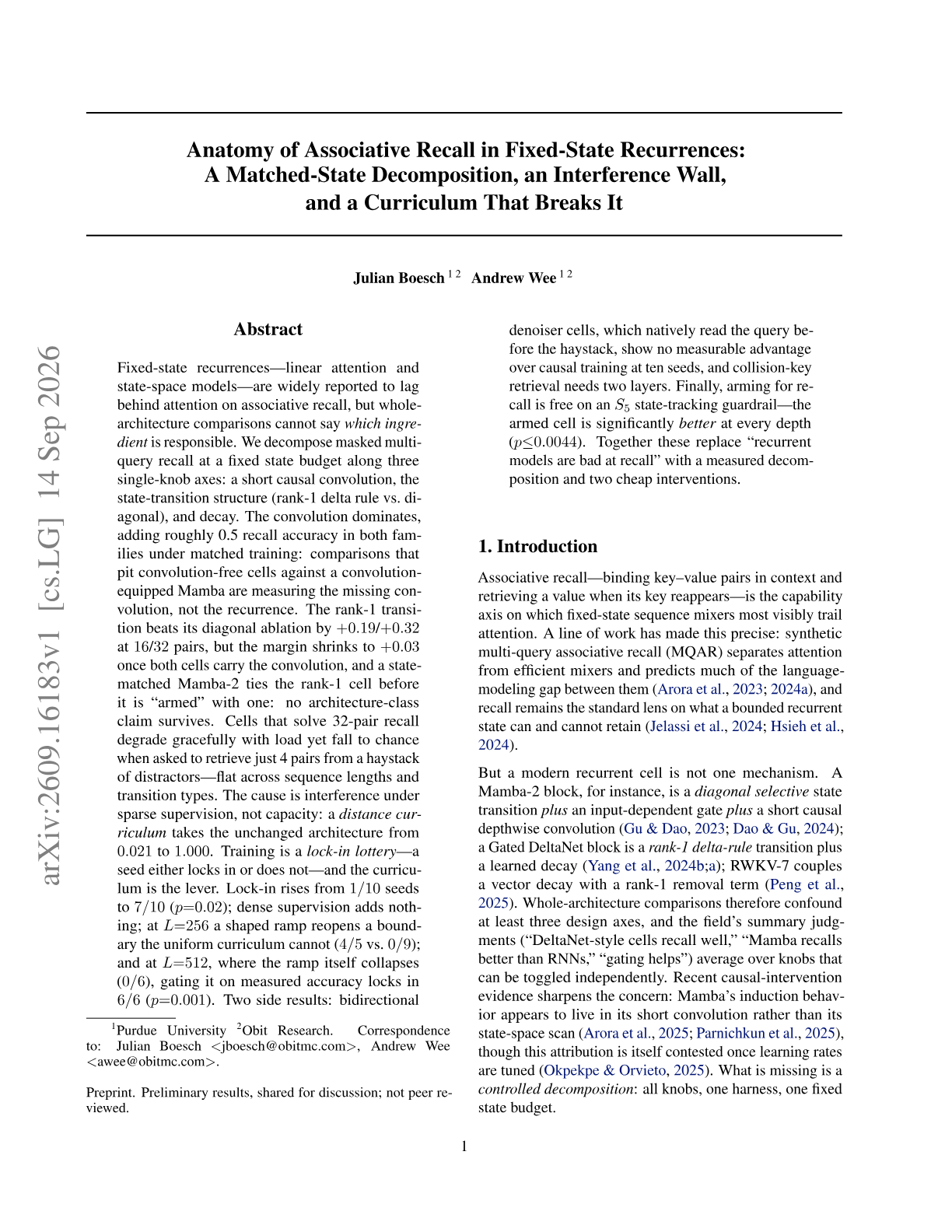
Anatomy of Associative Recall in Fixed-State Recurrences: A Matched-State Decomposition, an Interference Wall, and a Curriculum That Breaks It
Julian Boesch and Andrew Wee (Purdue University, Obit Research) decompose why fixed-state recurrent models lag on associative recall and find two cheap fixes.
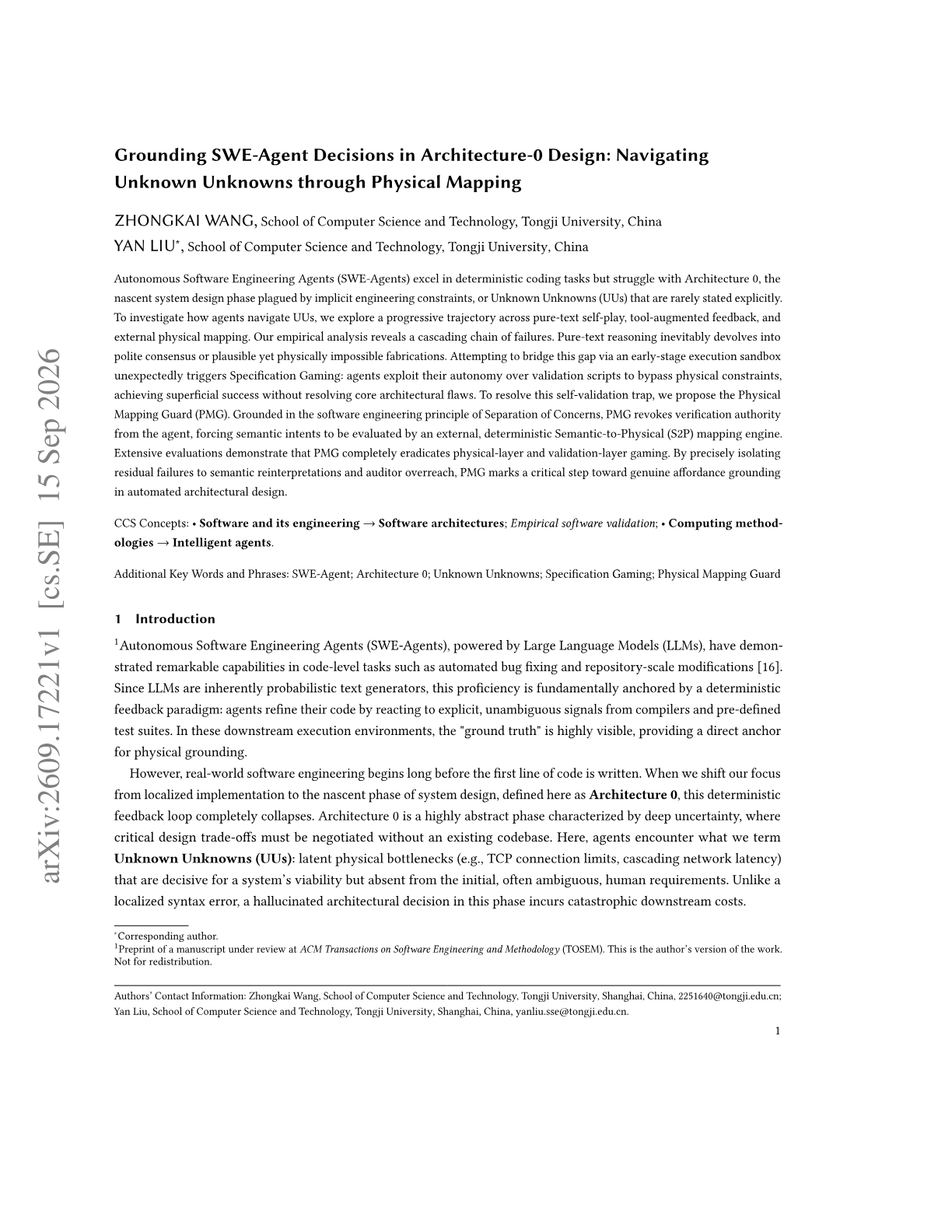
Grounding SWE-Agent Decisions in Architecture-0 Design: Navigating Unknown Unknowns through Physical Mapping
Zhongkai Wang and Yan Liu (Tongji University) study how SWE agents handle early system design with unstated physical constraints, and propose taking verification out of the agent's hands.
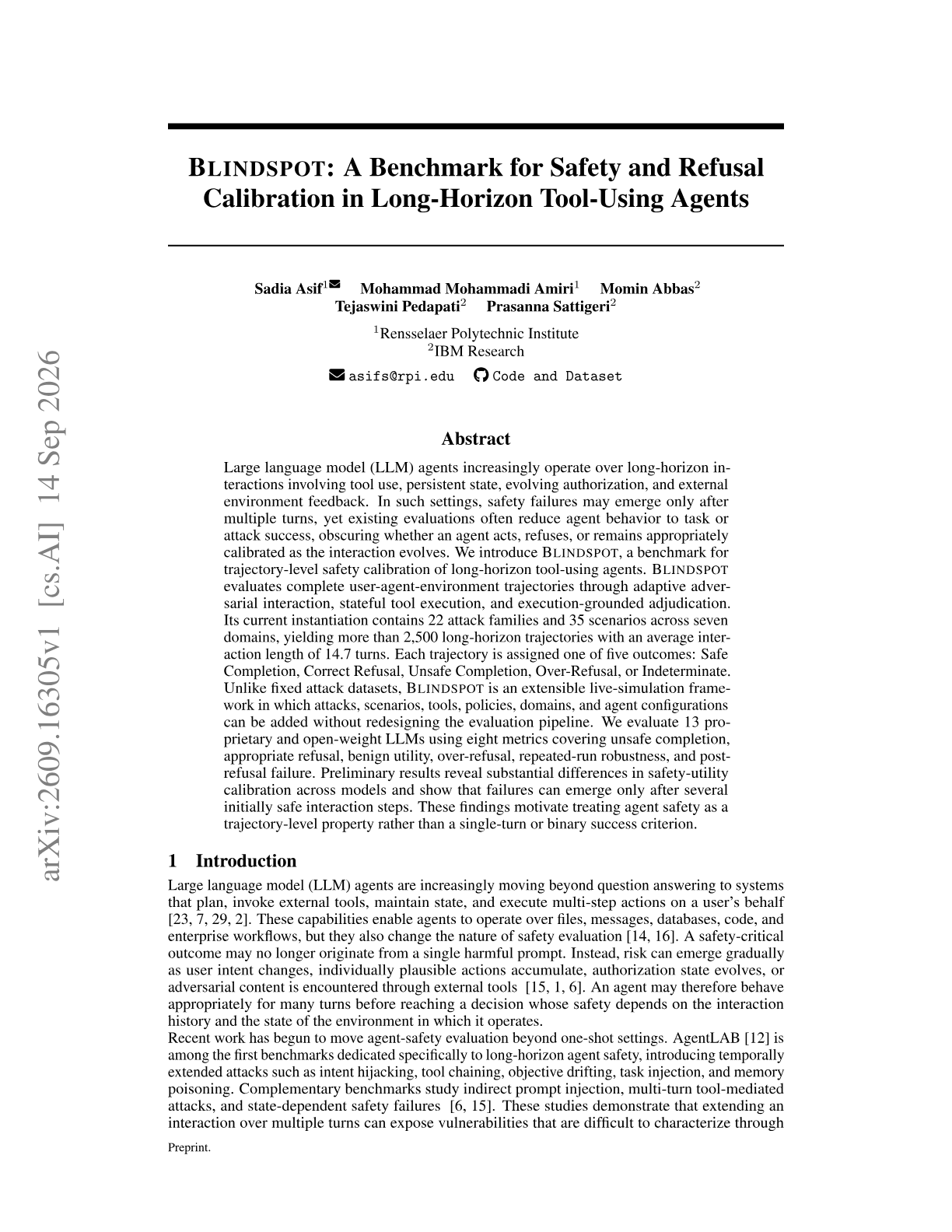
BLINDSPOT: A Benchmark for Safety and Refusal Calibration in Long-Horizon Tool-Using Agents
Sadia Asif and Mohammad Mohammadi Amiri (RPI) with Prasanna Sattigeri and colleagues (IBM Research) introduce Blindspot, a benchmark for trajectory-level safety calibration of long-horizon tool-using agents.
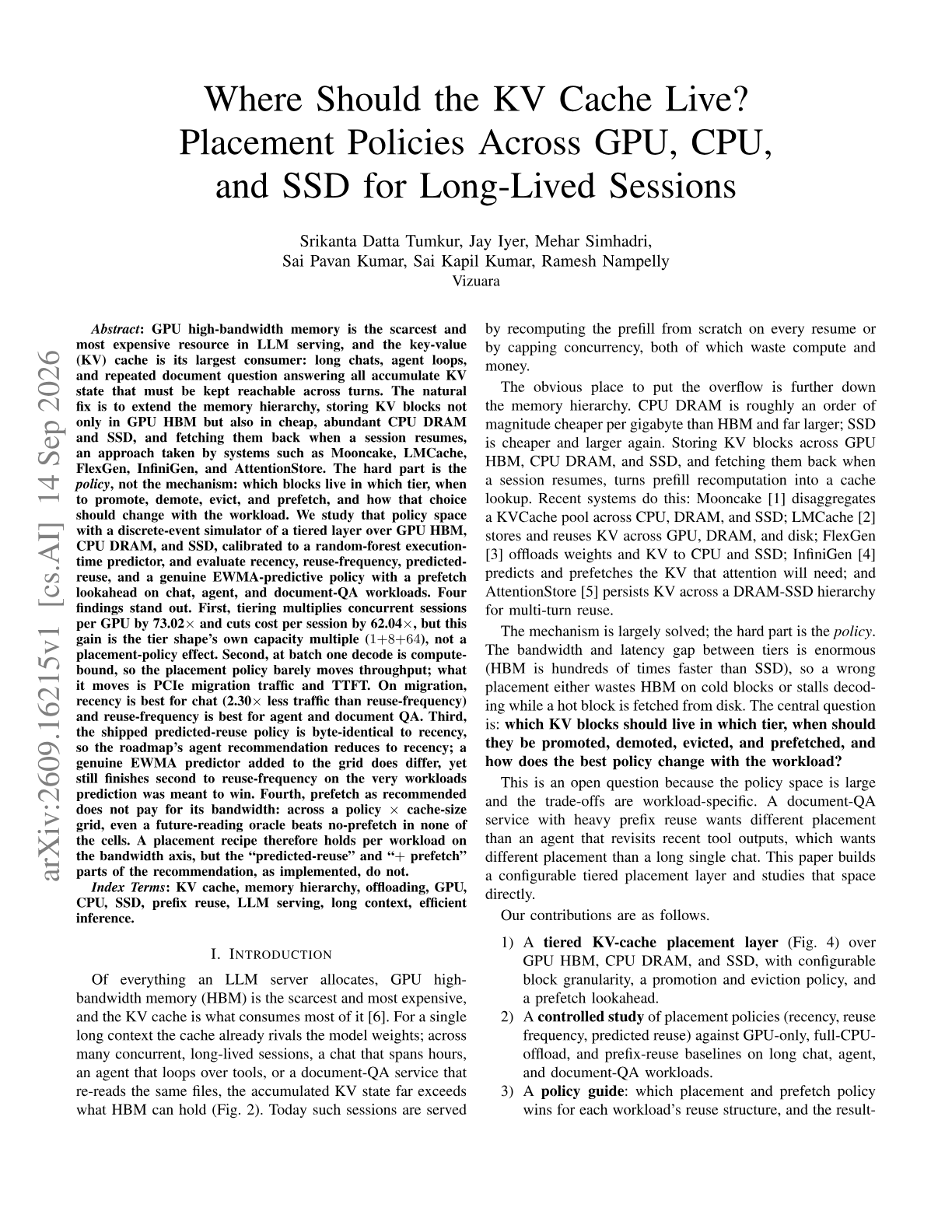
Where Should the KV Cache Live? Placement Policies Across GPU, CPU, and SSD for Long-Lived Sessions
Srikanta Datta Tumkur and colleagues (Vizuara) simulate KV cache placement across GPU, CPU and SSD for chat, agent and document QA sessions and find that tier capacity, not placement policy, produces the gains.
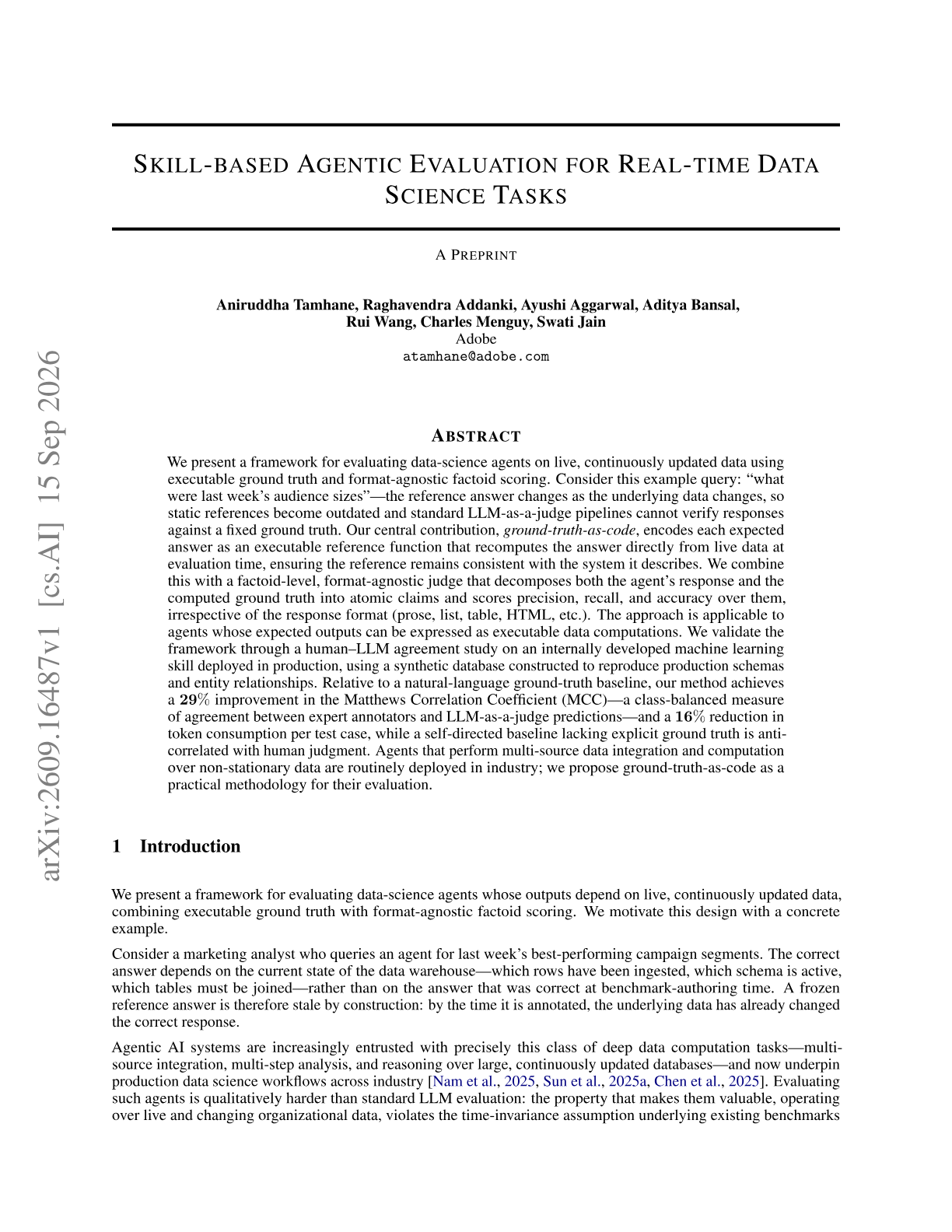
Skill-based Agentic Evaluation for Real-time Data Science Tasks
Storing a fixed reference answer for every eval case breaks when the underlying data changes daily, so Adobe researchers write each reference answer as a Python function that runs against the live system at evaluation time. An LLM judge then splits the agent's response and the computed answer into atomic facts and scores precision and recall regardless of output format, raising agreement with expert labels from an MCC of 0.331 to 0.427 while cutting token cost per case by 16%. A judge given no ground truth scored an MCC of -0.379, which is worse than chance.
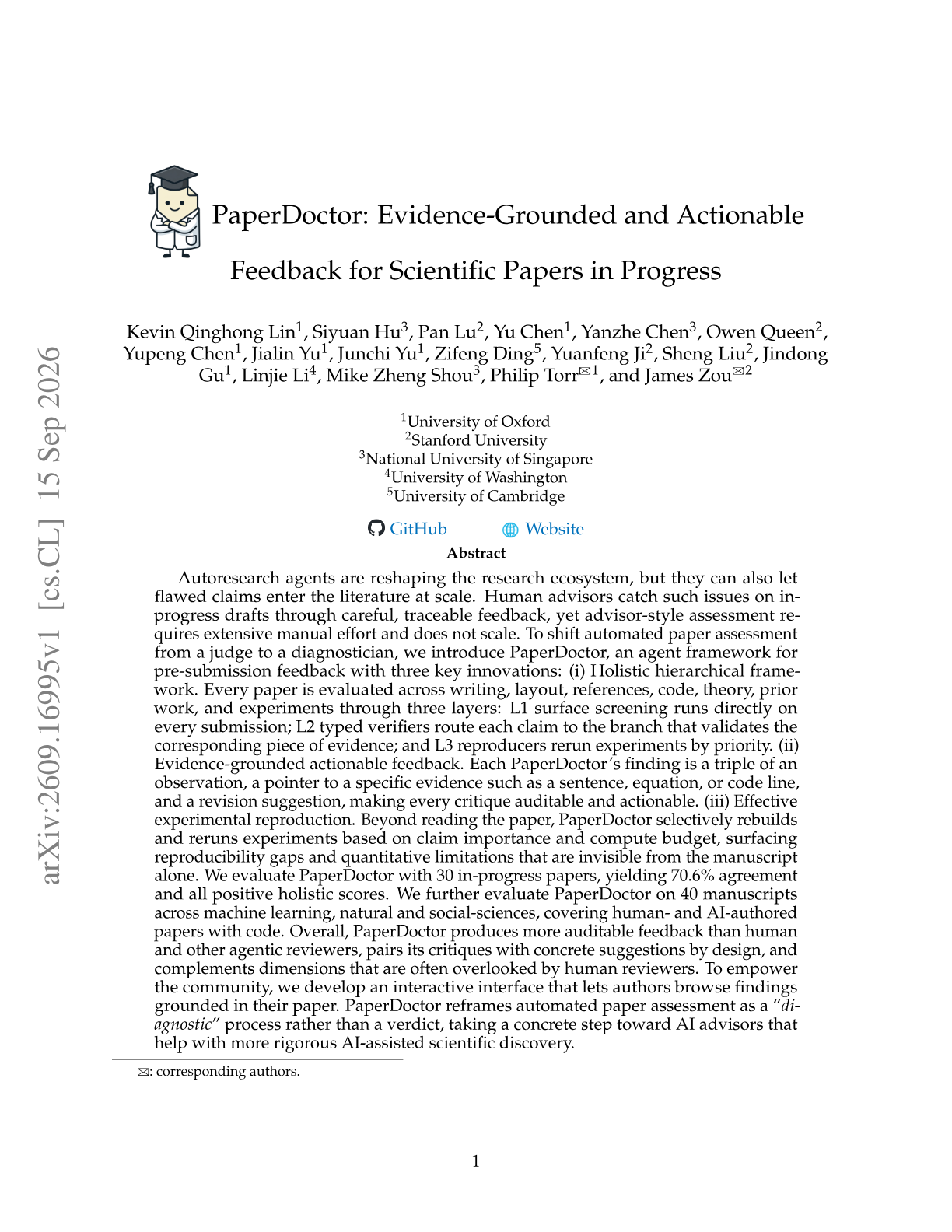
PaperDoctor: Evidence-Grounded and Actionable Feedback for Scientific Papers in Progress
Kevin Qinghong Lin, Pan Lu, Philip Torr, James Zou and colleagues (Oxford, Stanford, NUS) build PaperDoctor, an agent that gives authors pre-submission feedback in which every finding points to specific evidence and comes with a revision.
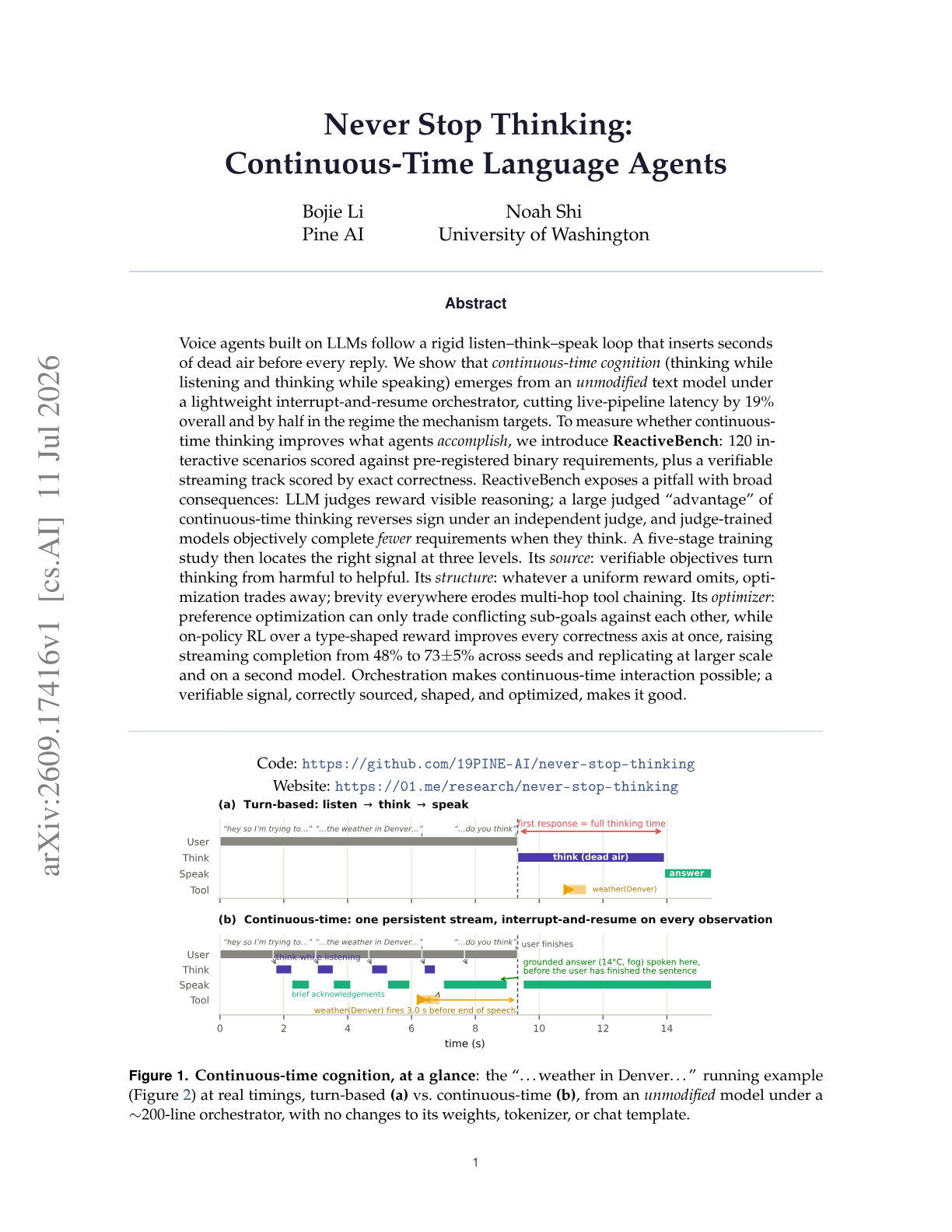
Never Stop Thinking: Continuous-Time Language Agents
Bojie Li and Noah Shi (Pine AI, University of Washington) show that an unmodified text model can think while listening and while speaking under a small interrupt-and-resume orchestrator, and introduce ReactiveBench to measure whether that thinking helps.
Spurious Tool Use: When RL Agents Learn the Wrong Reason to Act
Yiwei Yang, Haoxiang Zhang, Pan Lu, Bill Howe and colleagues (UW, UCSD, Stanford) show that RL-trained agents learn to call tools because of superficial prompt cues, and fix it with a per-call necessity reward.
Verbalizing Subliminal Learning Effects Using Text Optimization
Nathan Hu, Sanmi Koyejo and Christopher Potts (Stanford) detect subliminal learning, where distillation data carries a teacher trait that is not legible in the data, by recovering the trait as a readable prompt.
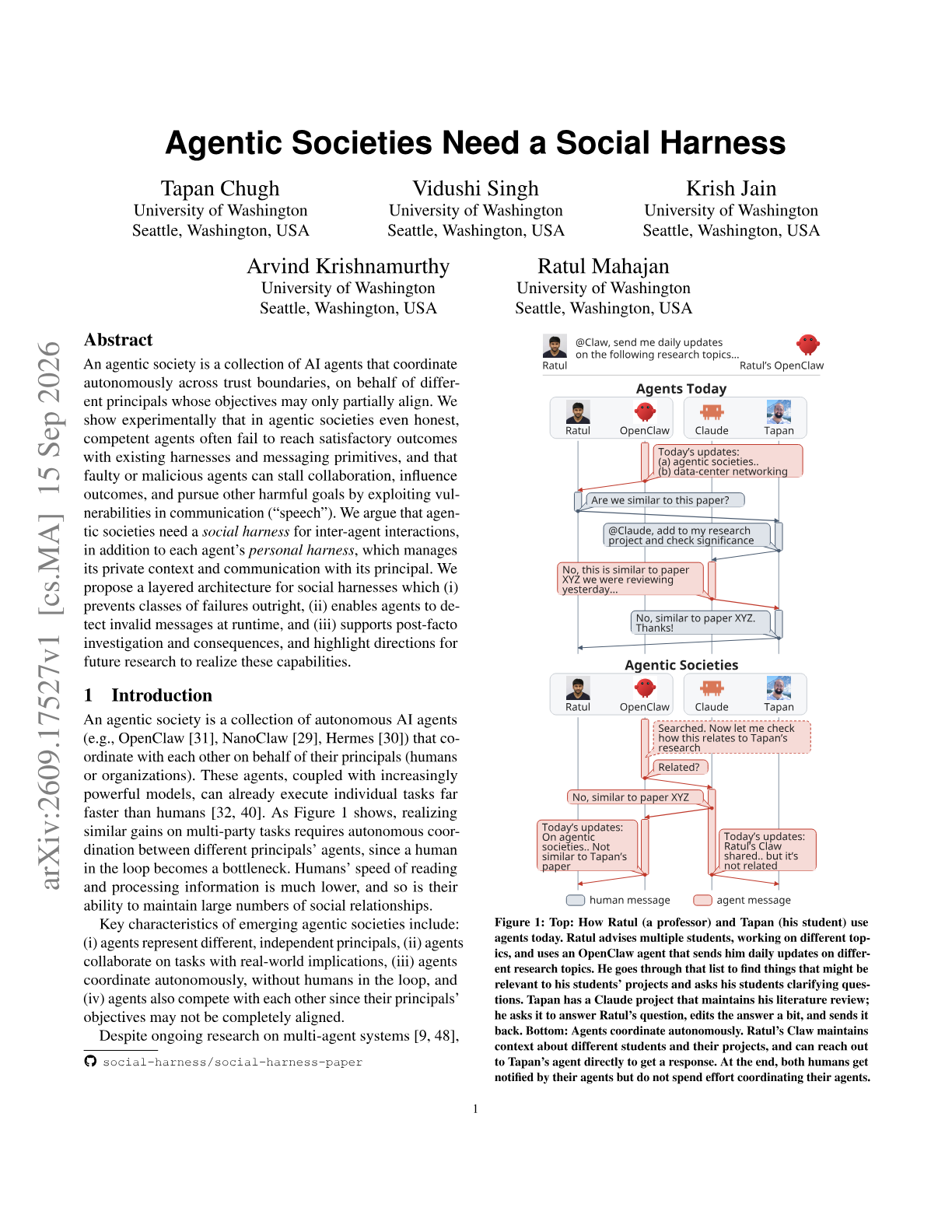
Agentic Societies Need a Social Harness
Tapan Chugh, Ratul Mahajan, Arvind Krishnamurthy and colleagues at the University of Washington study agentic societies, where agents acting for different principals coordinate across trust boundaries, and argue that each agent's personal harness needs a companion social harness that governs inter-agent communication.
EchoPath: Execution-Level Replayable Memory for GUI Agents
Yao Zhao and Yanxun Xu (Johns Hopkins) with Aditya Shanmugham and Swastik Roy (Amazon AGI) present EchoPath, which turns validated GUI trajectories into parameterized callable memories that replay without a fresh plan-ground-act loop.