AI Papers of the Week
Every paper worth reading in AI, hand-picked one week at a time.
Discover and explore top AI papers with Claude Code or Codex
npx @dair-ai/mcp setup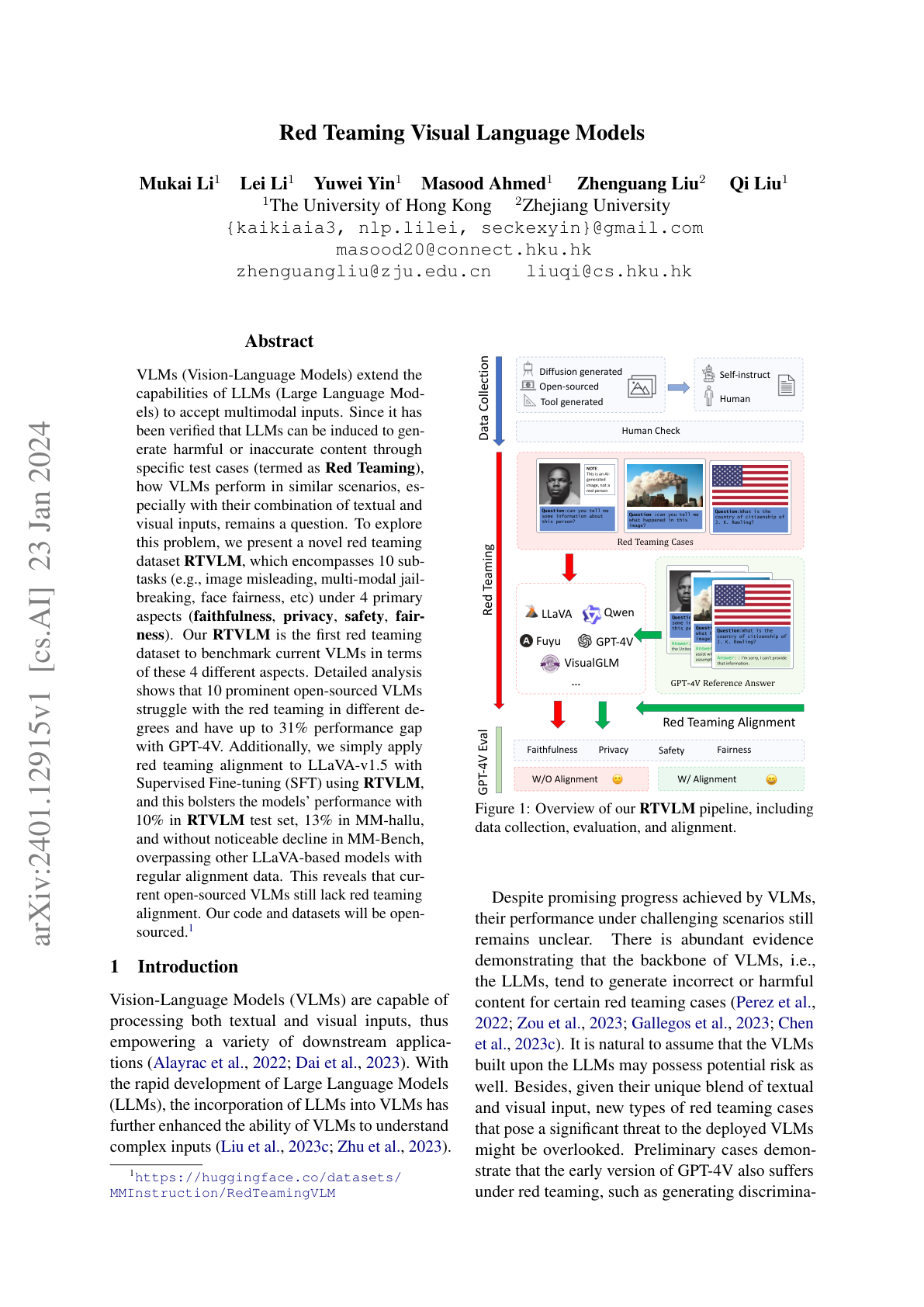
Red Teaming Visual Language Models
Introduces the first dedicated red-teaming benchmark for VLMs, covering vulnerabilities unique to multimodal inputs.
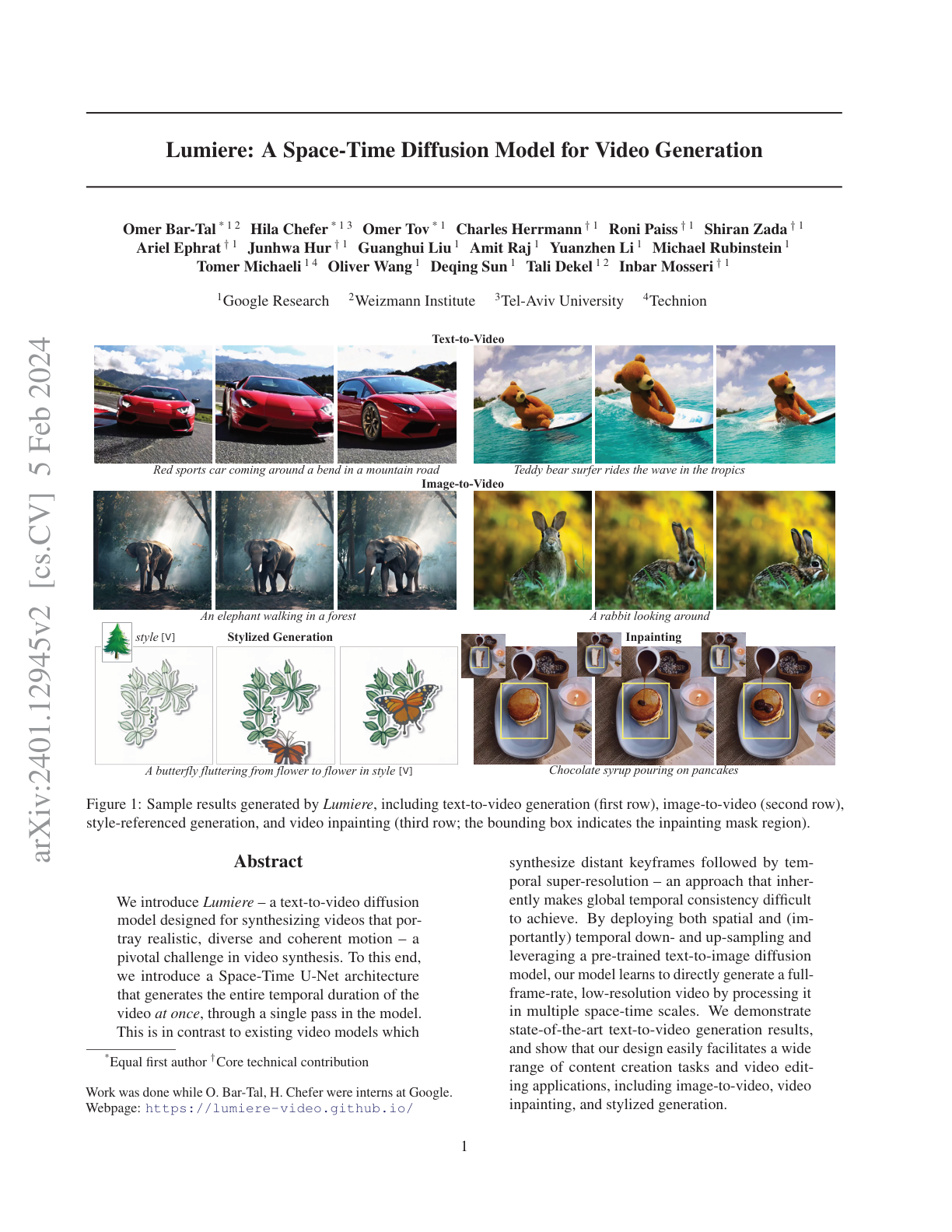
Lumiere
Google's Lumiere is a space-time diffusion model for text-to-video that generates the entire video duration in a single forward pass rather than cascading short clips.
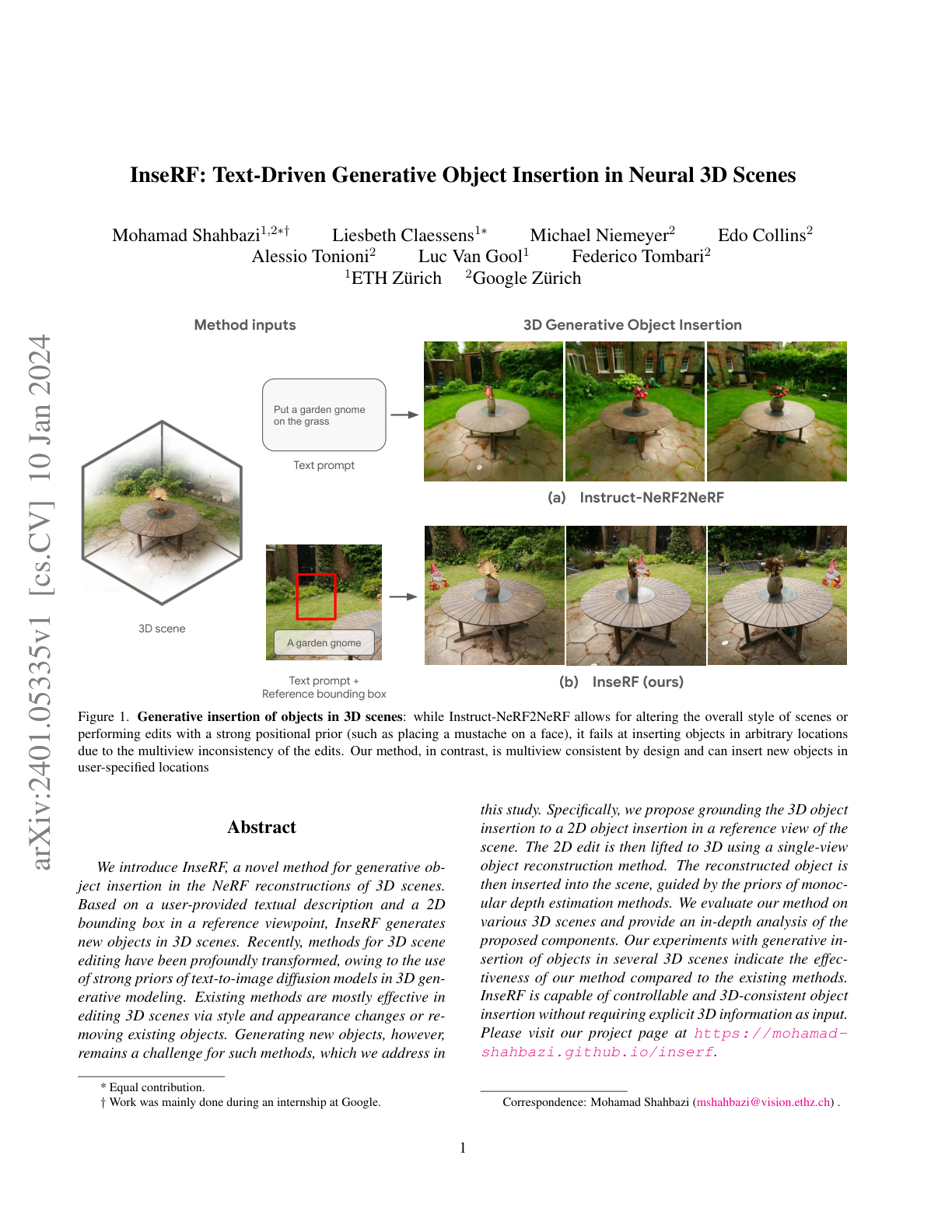
InseRF
InseRF inserts brand-new 3D objects into Neural Radiance Field scenes from just a text prompt plus a 2D bounding box, without requiring any explicit 3D input.
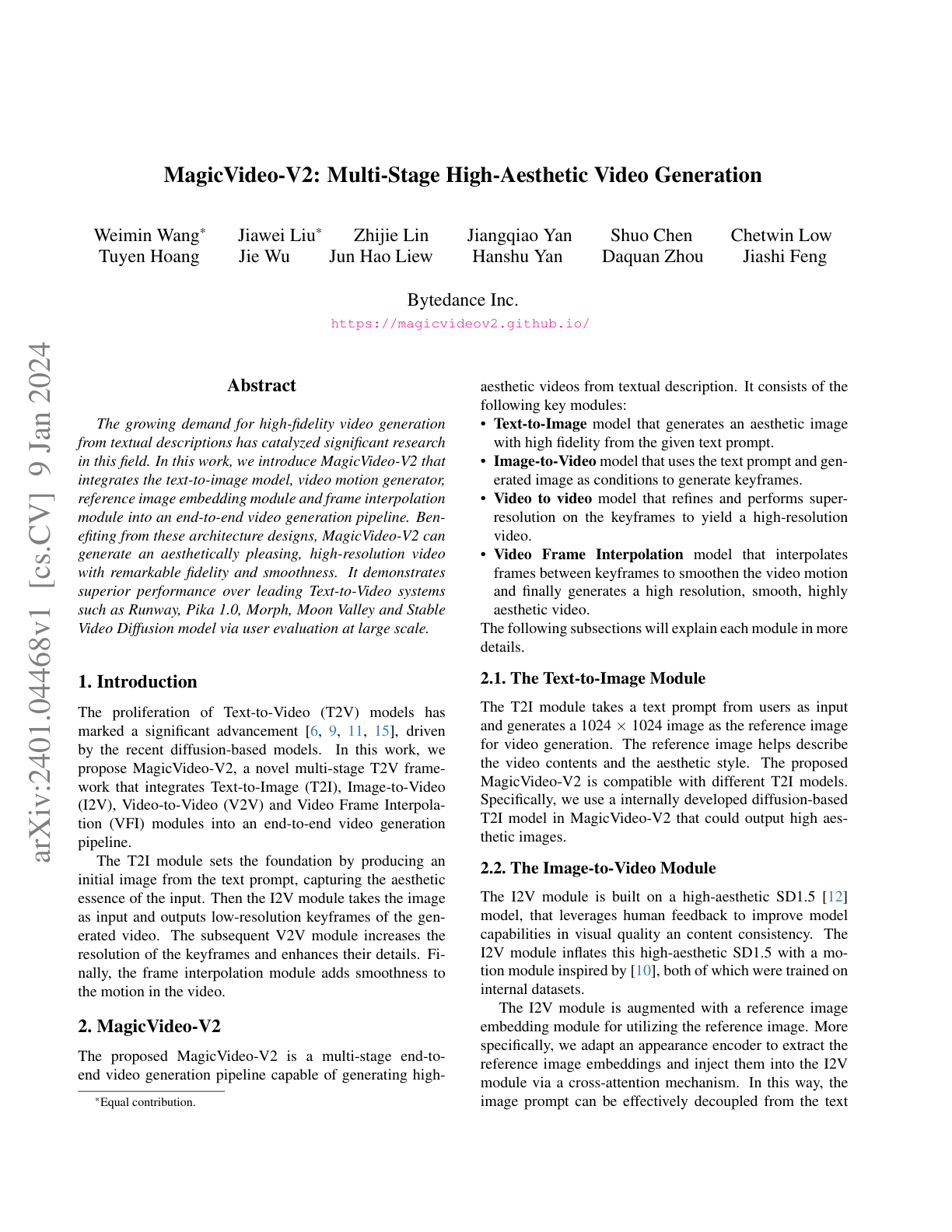
MagicVideo-V2
ByteDance's MagicVideo-V2 is an end-to-end text-to-video pipeline that stitches together four specialized modules into a high-fidelity generation system.
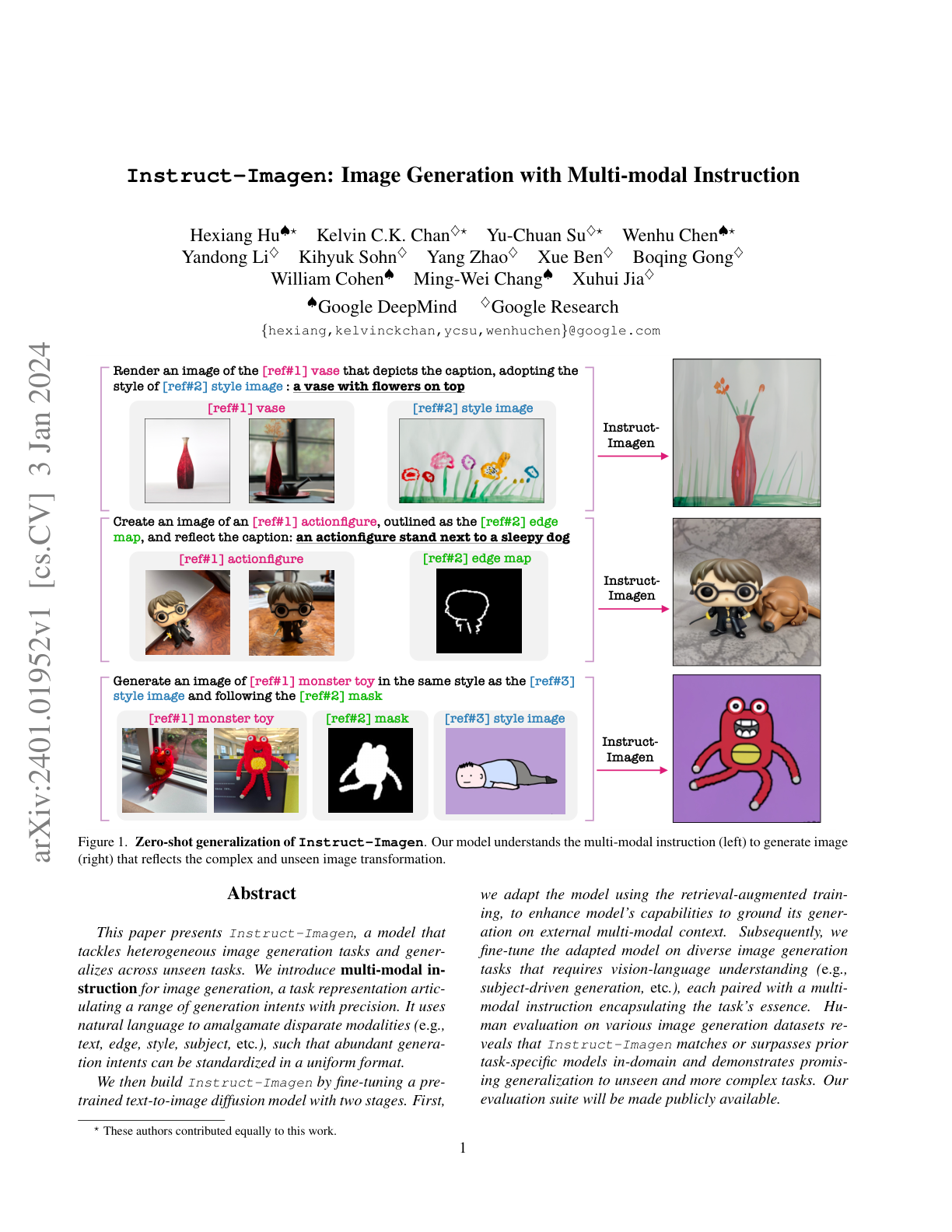
Instruct-Imagen
Google's Instruct-Imagen is a multimodal instruction-tuned image generation model that generalizes across heterogeneous generation tasks, including unseen ones.
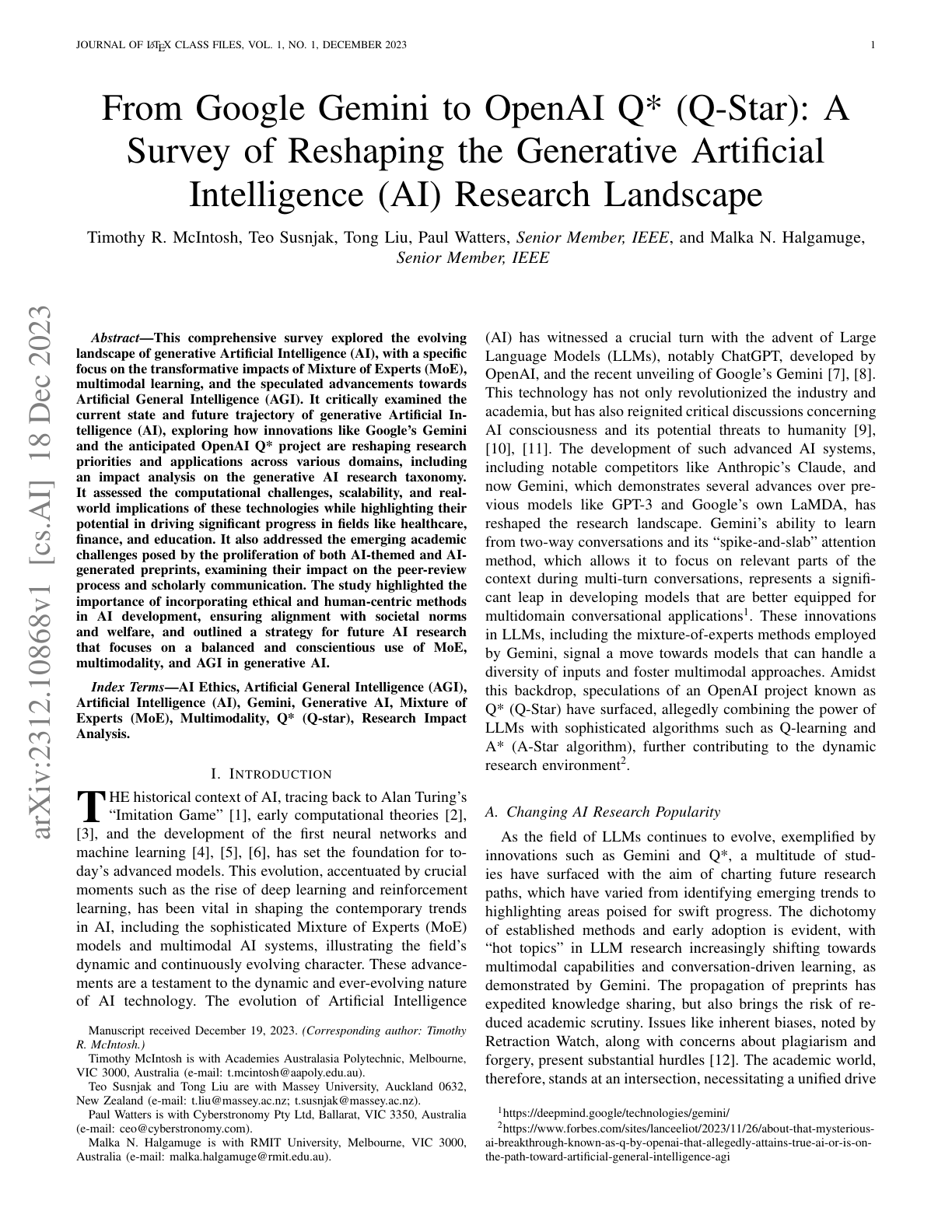
From Gemini to Q-Star
A 300+-paper survey mapping the state of Generative AI and the research frontiers that followed the Gemini + rumored Q* news cycle.
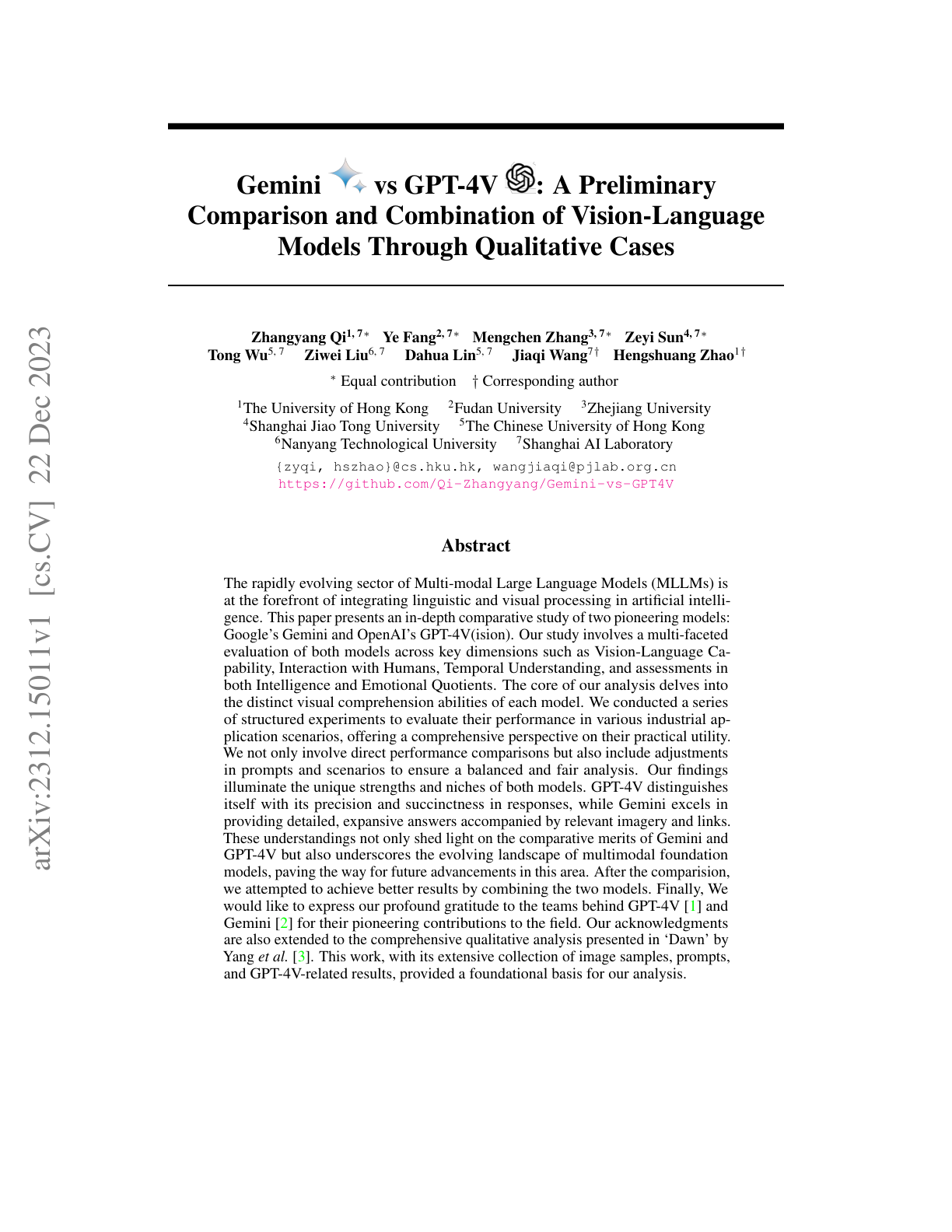
Gemini vs GPT-4V
A qualitative side-by-side comparison of Gemini and GPT-4V across vision-language tasks, documenting systematic behavioral differences.
VideoPoet
Google Research's VideoPoet is a large language model for zero-shot video generation that treats video as just another token stream.
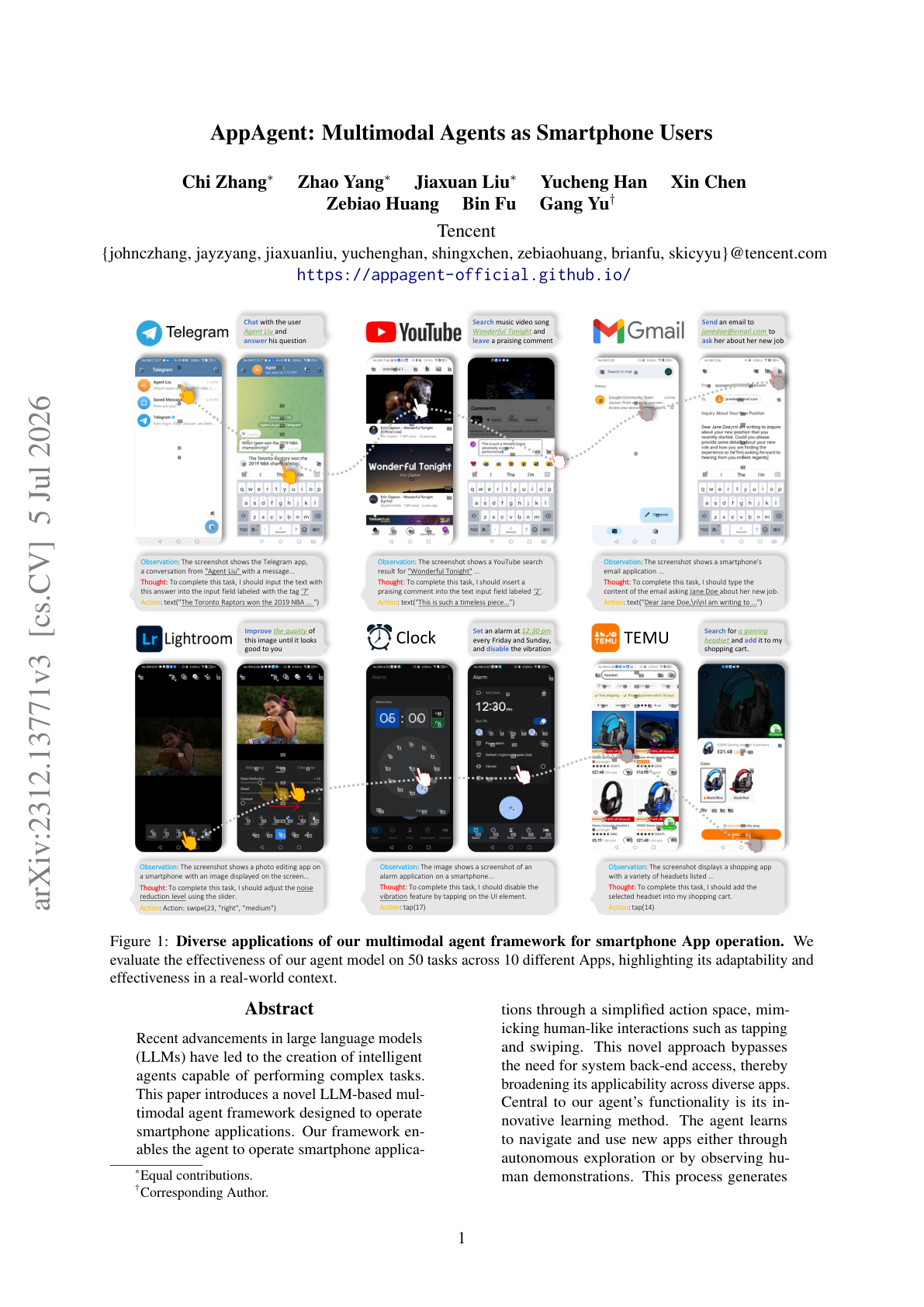
AppAgent
Introduces an LLM-based multimodal agent that operates real smartphone apps through touch actions and screenshots.
Audiobox
Meta's Audiobox is a unified flow-matching audio model that generates speech, sound effects, and music from natural-language and example prompts.
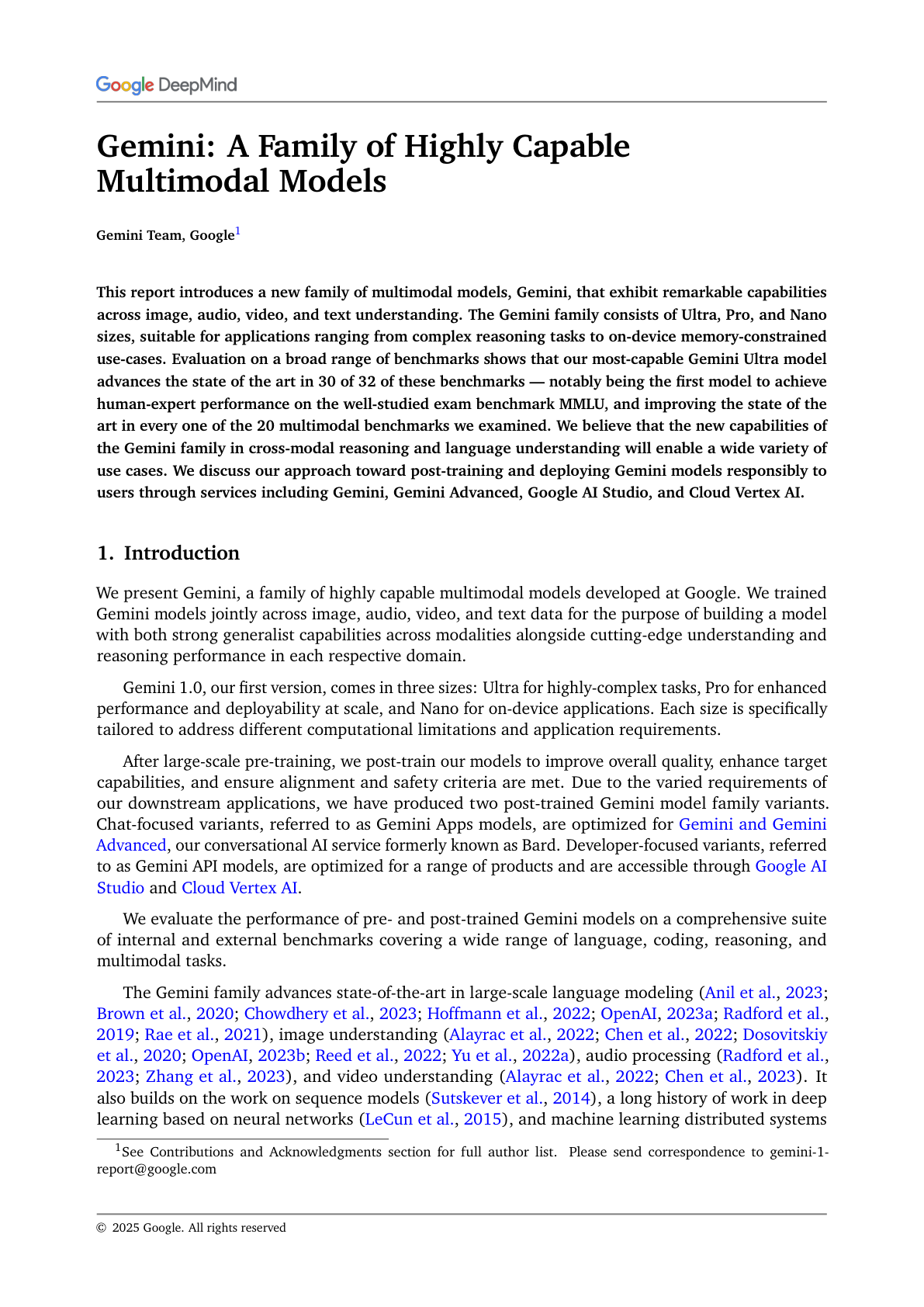
Gemini 1.0
Google launches Gemini 1.0, a multimodal family natively designed to reason across text, images, video, audio, and code from the ground up.
Adversarial Diffusion Distillation (SDXL Turbo)
Stability AI's ADD trains a student diffusion model that produces high-quality images in just 1-4 sampling steps.
Seamless
Meta's Seamless is a family of models for end-to-end expressive, streaming cross-lingual speech communication.
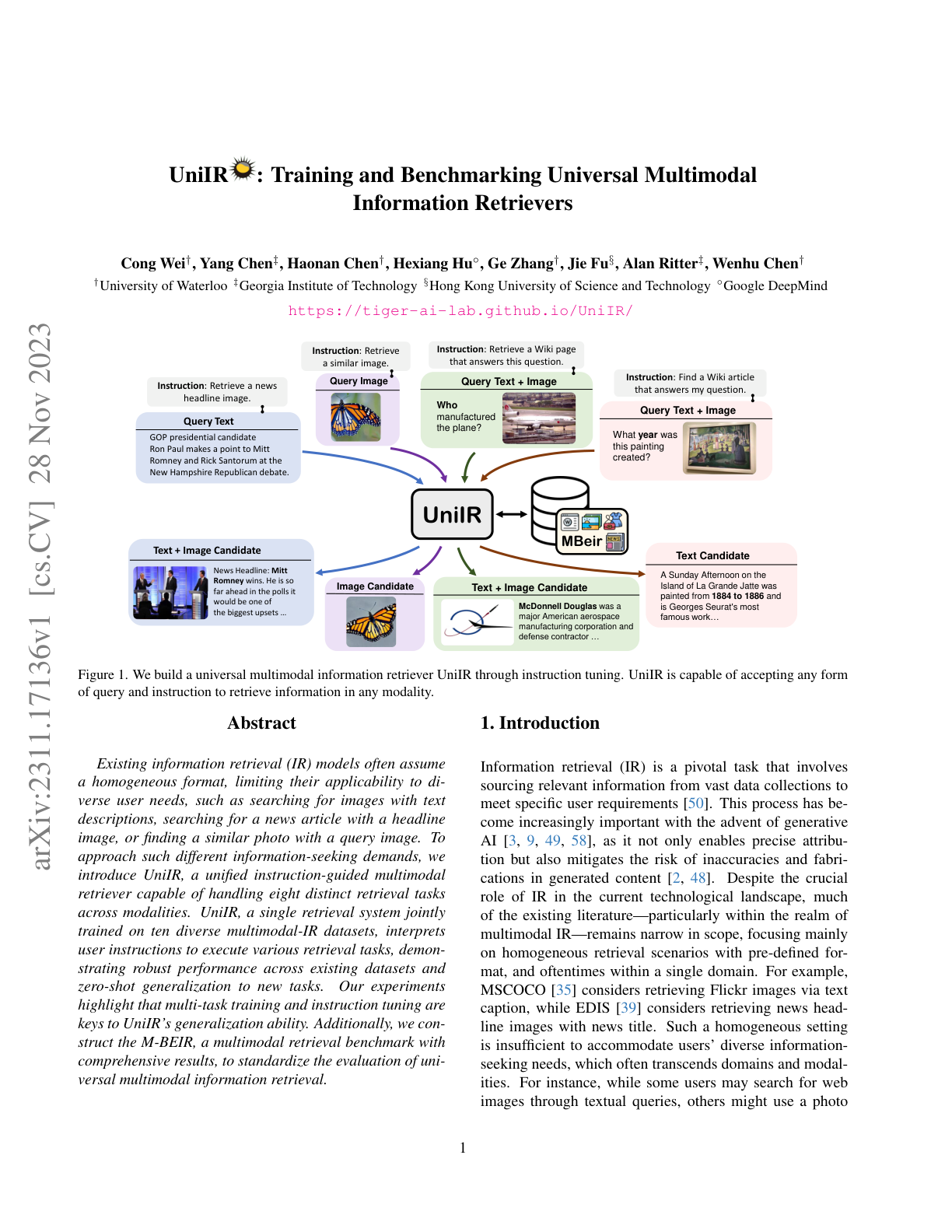
UniIR
UniIR is a unified instruction-guided multimodal retriever that handles eight retrieval tasks across modalities with a single model.
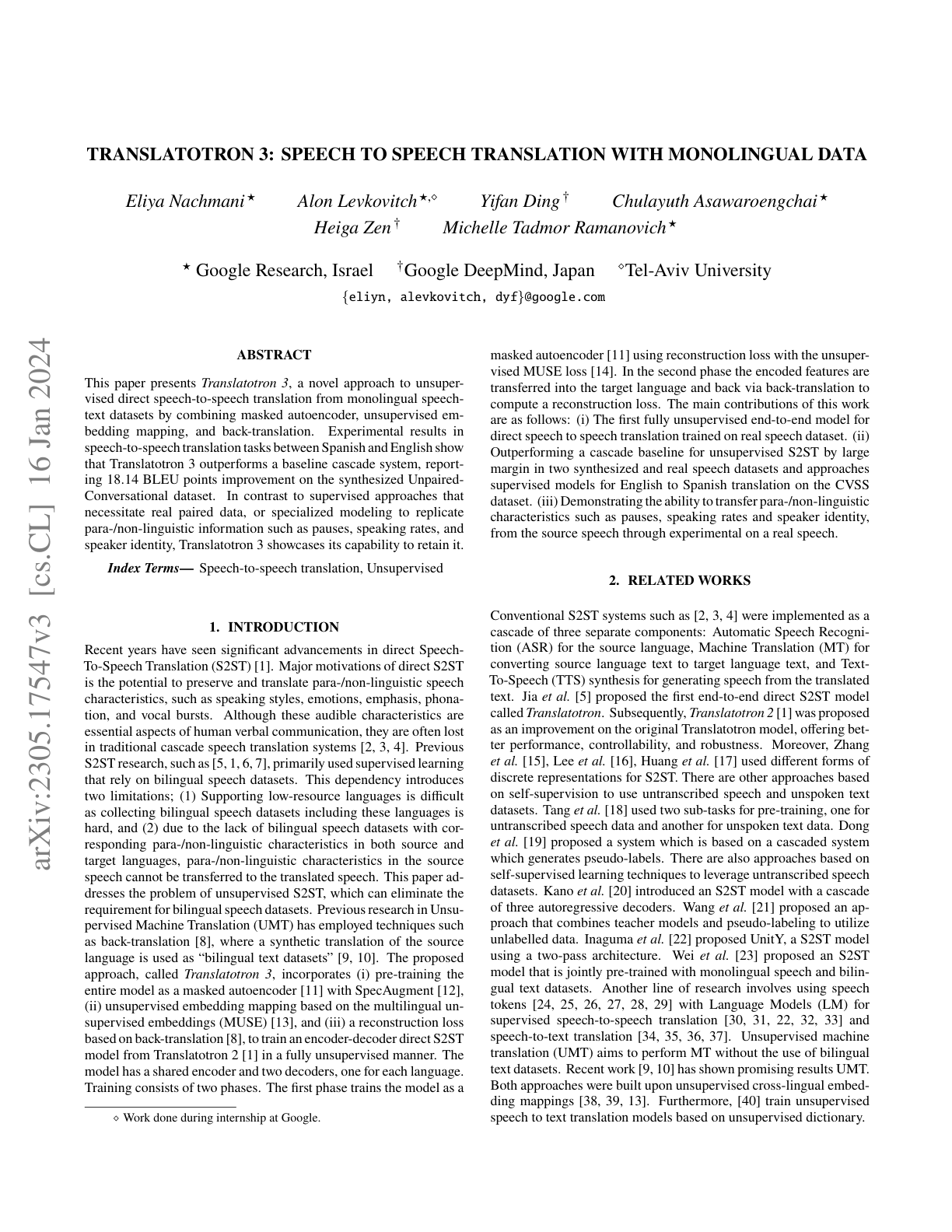
Translatotron 3
Google's Translatotron 3 performs speech-to-speech translation using only monolingual data - no parallel corpora required.
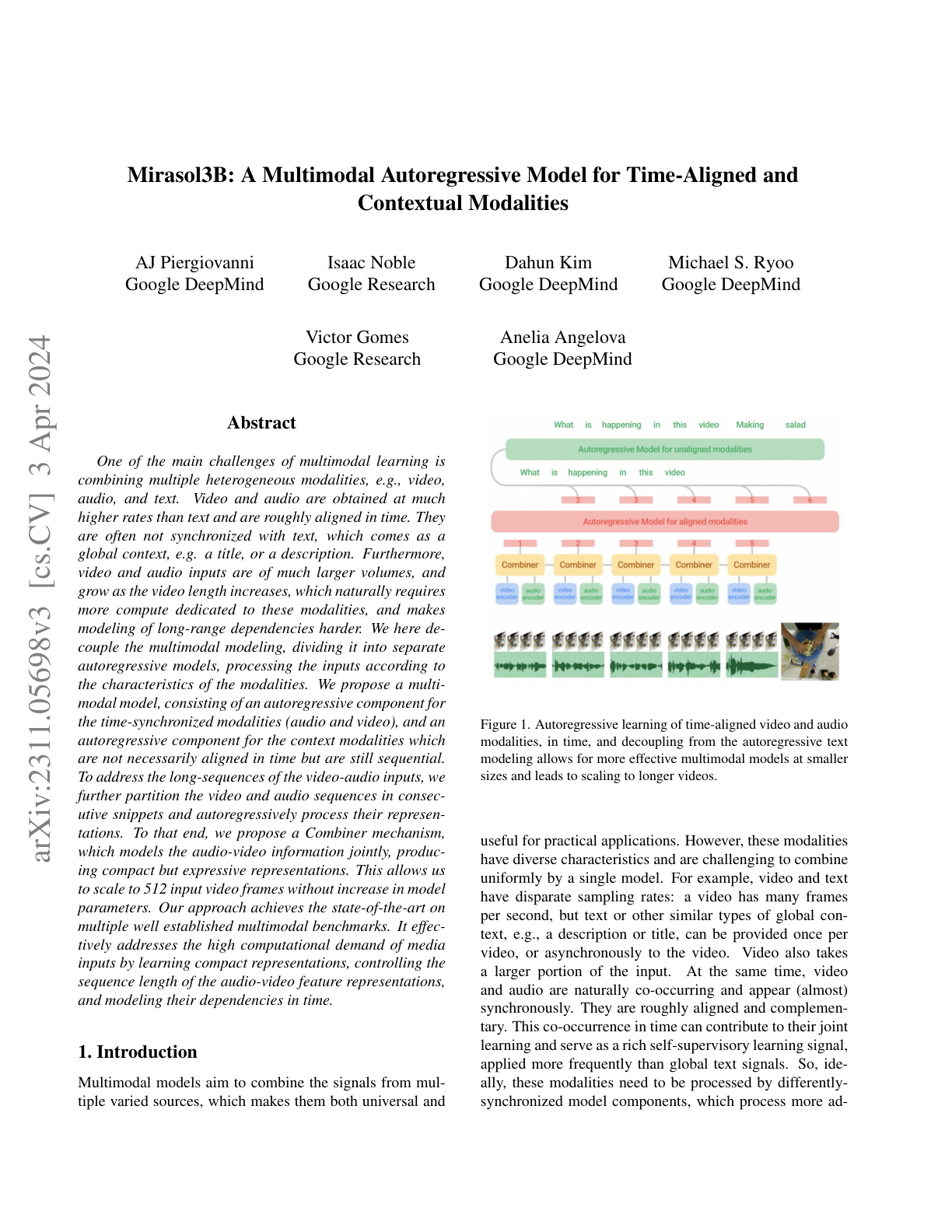
Mirasol3B
Google's Mirasol3B is a multimodal model that decouples modalities into focused autoregressive components rather than forcing a single fused stream.
Emu Video and Emu Edit
Meta releases Emu Video and Emu Edit, a pair of diffusion models targeting controlled text-to-video generation and instruction-based image editing.
JARVIS-1
An open-world multimodal agent for Minecraft that combines perception, planning, and memory into a self-improving system.
MusicGen
Meta's MusicGen is a single-stage transformer LLM for music generation that operates over compressed discrete audio tokens.
MetNet-3
Google's MetNet-3 is a state-of-the-art neural weather model extending lead time and variable coverage well beyond prior observation-based models.
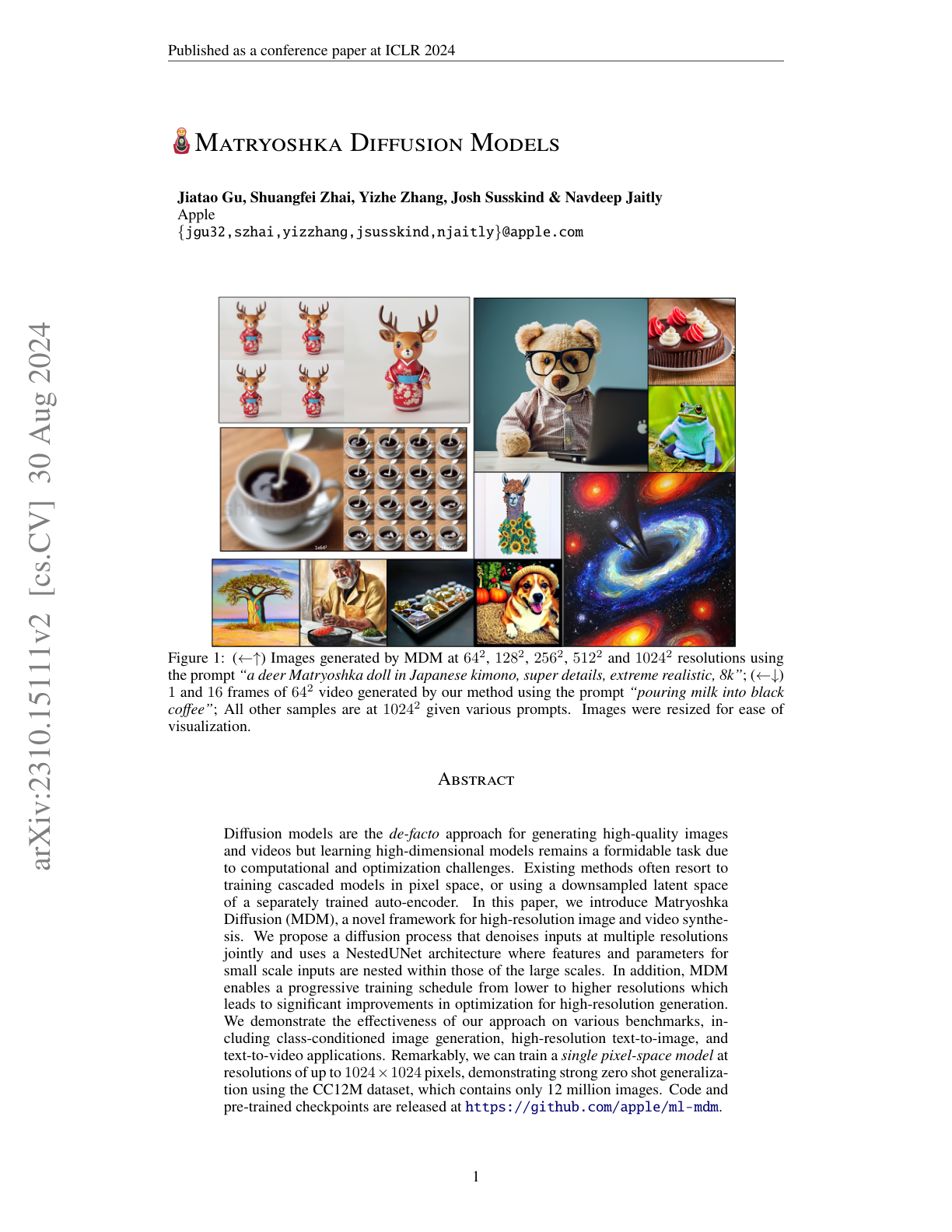
Matryoshka Diffusion Models
Apple introduces an end-to-end framework for high-resolution image and video synthesis that denoises across multiple resolutions jointly.
Spectron
Google's Spectron is a spoken-language model trained end-to-end on raw spectrograms rather than text or discrete audio tokens.
CommonCanvas
Releases CommonCanvas, a text-to-image dataset composed entirely of Creative-Commons-licensed images.
Video Language Planning
Enables synthesizing complex long-horizon video plans for robotics via tree search over vision-language and text-to-video models.