AI Papers of the Week
Every paper worth reading in AI, hand-picked one week at a time.
Discover and explore top AI papers with Claude Code or Codex
npx @dair-ai/mcp setup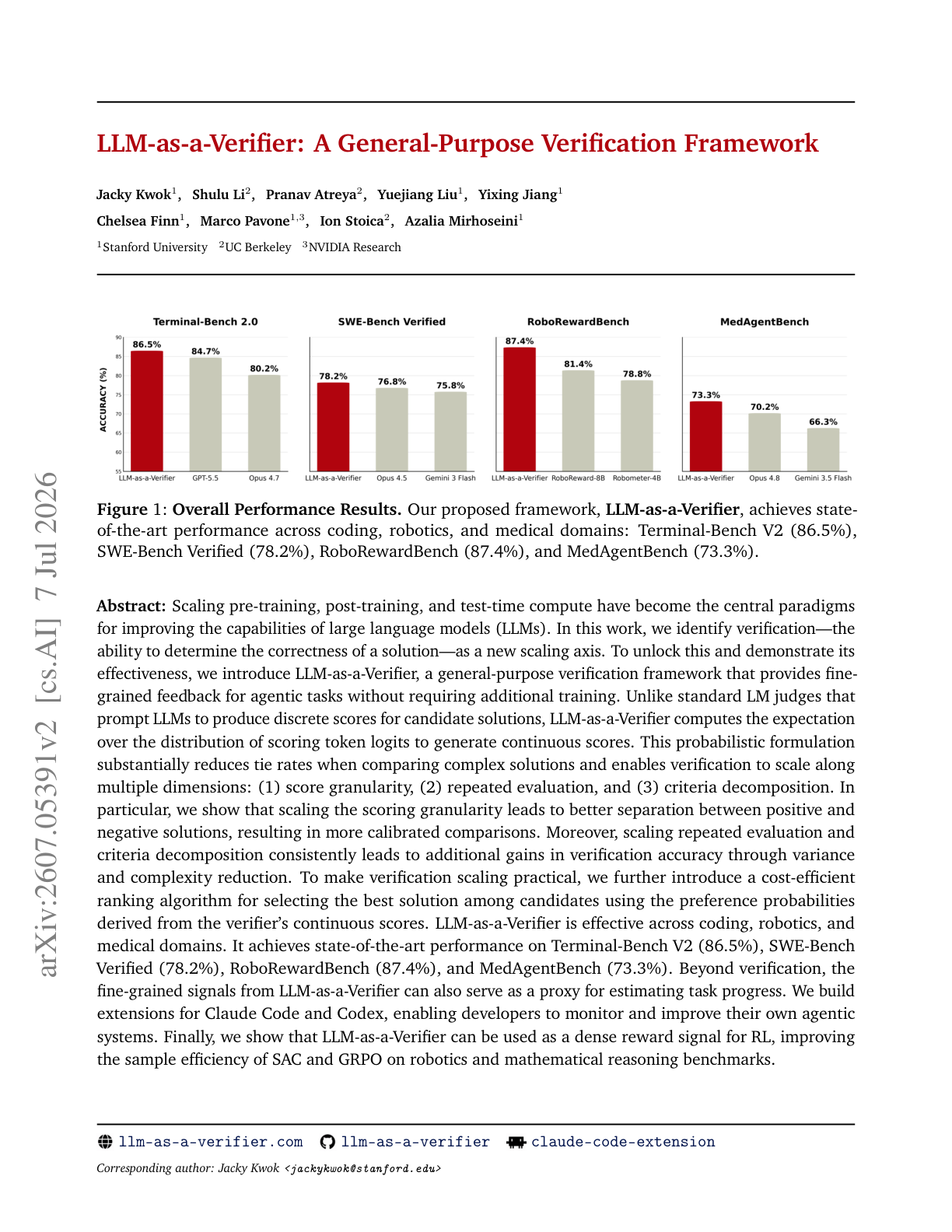
Verification as a Scaling Axis
Verification is emerging as a distinct scaling axis alongside pre-training and test-time compute, and this Stanford, NVIDIA, and UC Berkeley collaboration builds a training-free verifier that reads a continuous, calibrated score straight off the scoring-token logits instead of trusting a discrete pass or fail grade.
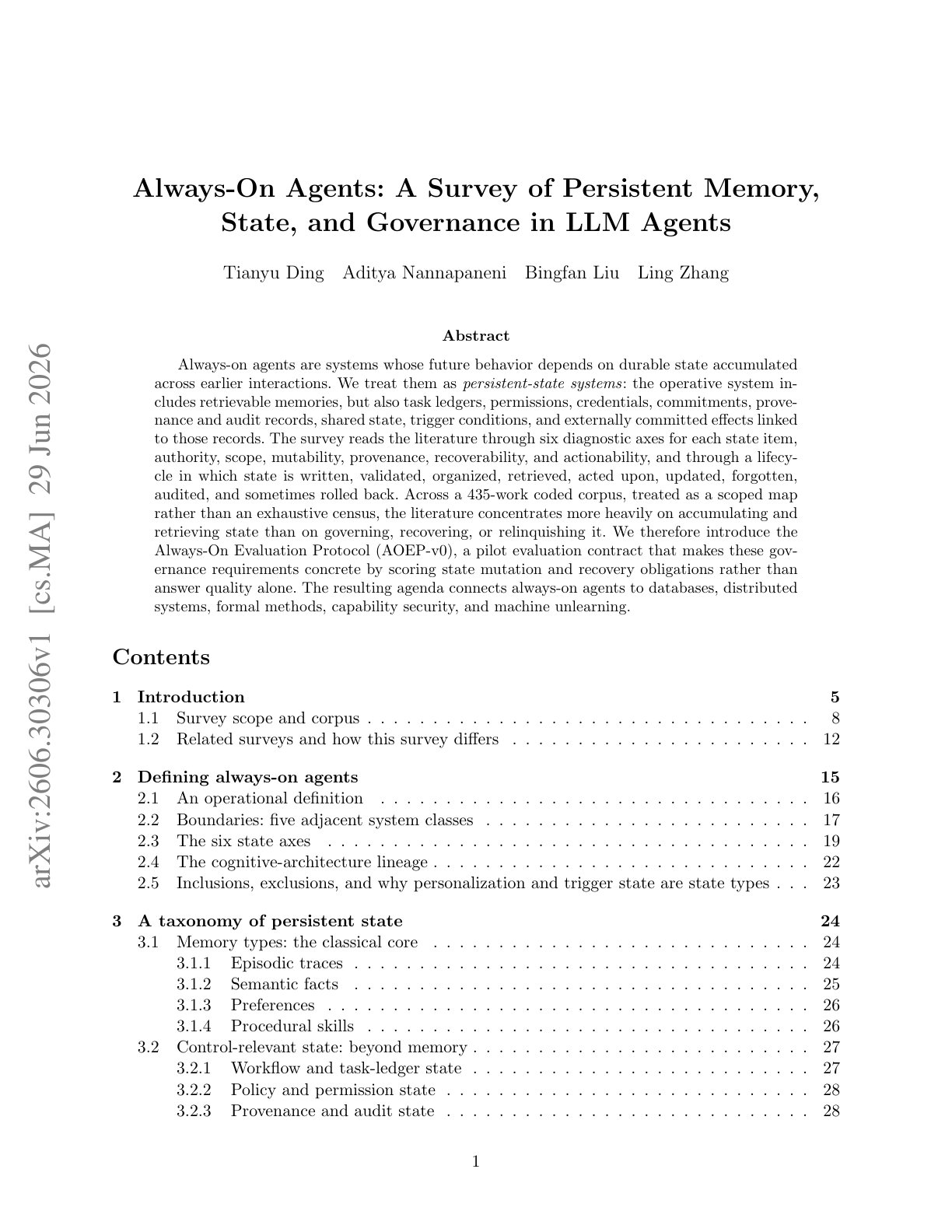
Always-On Agents
Always-on agents are systems whose future behavior depends on durable state built up across earlier interactions, and this 130-plus page survey argues that state is far more than memory. It spans task ledgers, permissions, credentials, commitments, provenance, triggers, and effects the agent has already committed to the outside world.
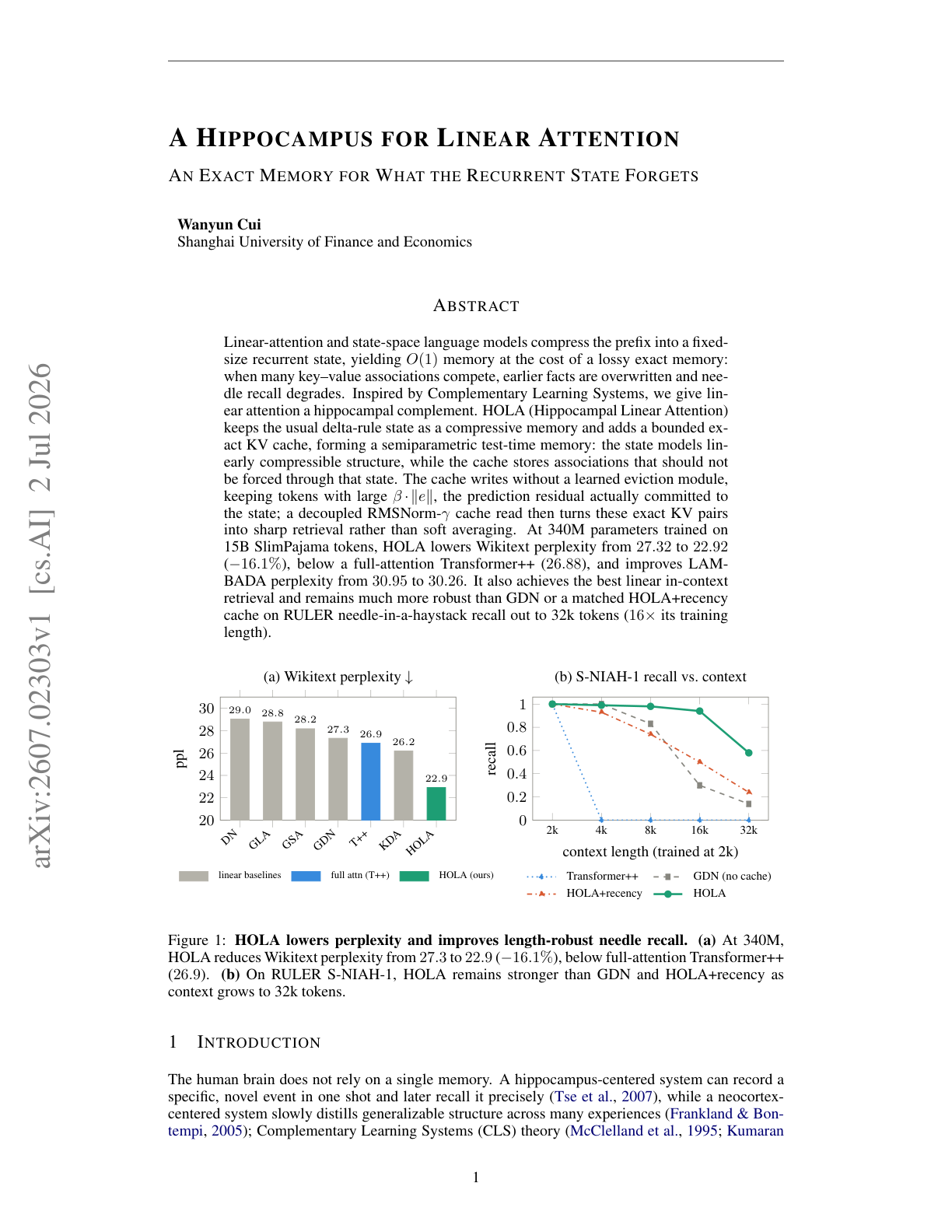
HOLA
Linear-attention and state-space models compress an entire prefix into a fixed-size state, buying constant memory but overwriting earlier facts when many key-value associations compete. HOLA gives linear attention a hippocampal complement, pairing a compressive recurrent state with a small exact memory to recover long-range recall.
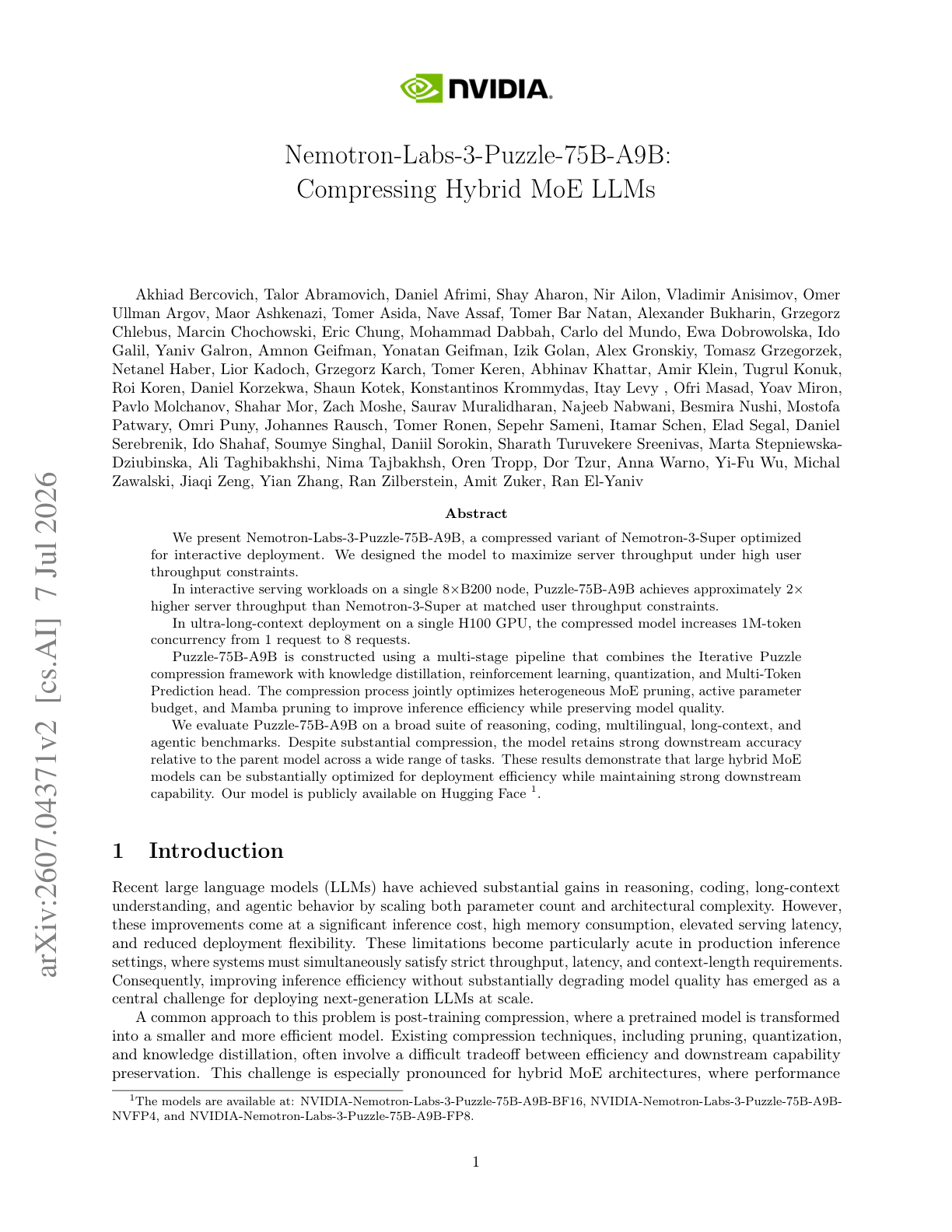
Puzzle-75B
Bigger mixture-of-experts models keep winning on quality, but serving them at interactive latency is still hard. NVIDIA compresses the hybrid MoE Nemotron-3-Super into Puzzle-75B-A9B and roughly doubles interactive server throughput while holding quality.
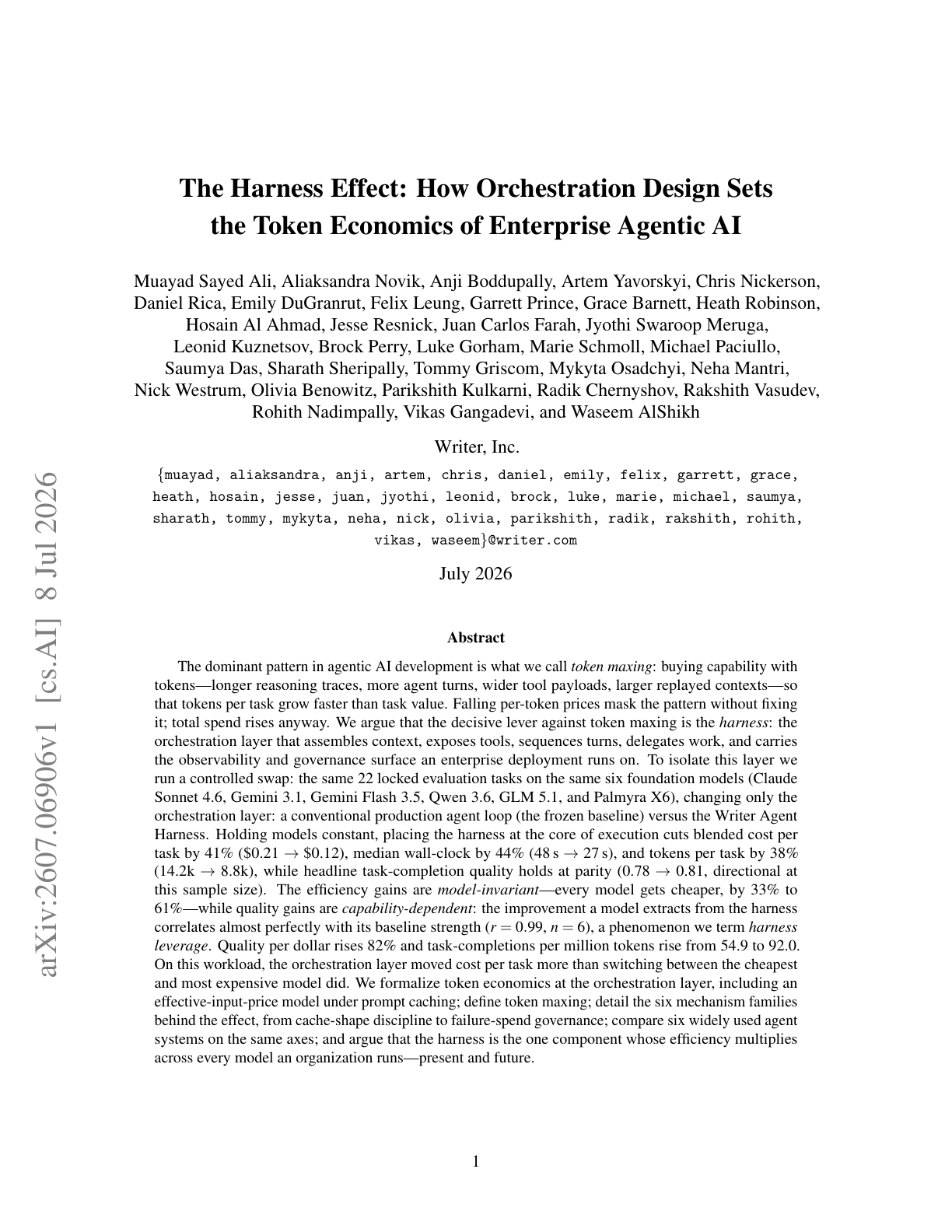
The Harness Effect
As orchestration harnesses mediate every model call, this study asks how much the harness alone moves cost and performance. It ran 22 evaluation tasks across six foundation models, then changed only the orchestration layer while holding the models constant.
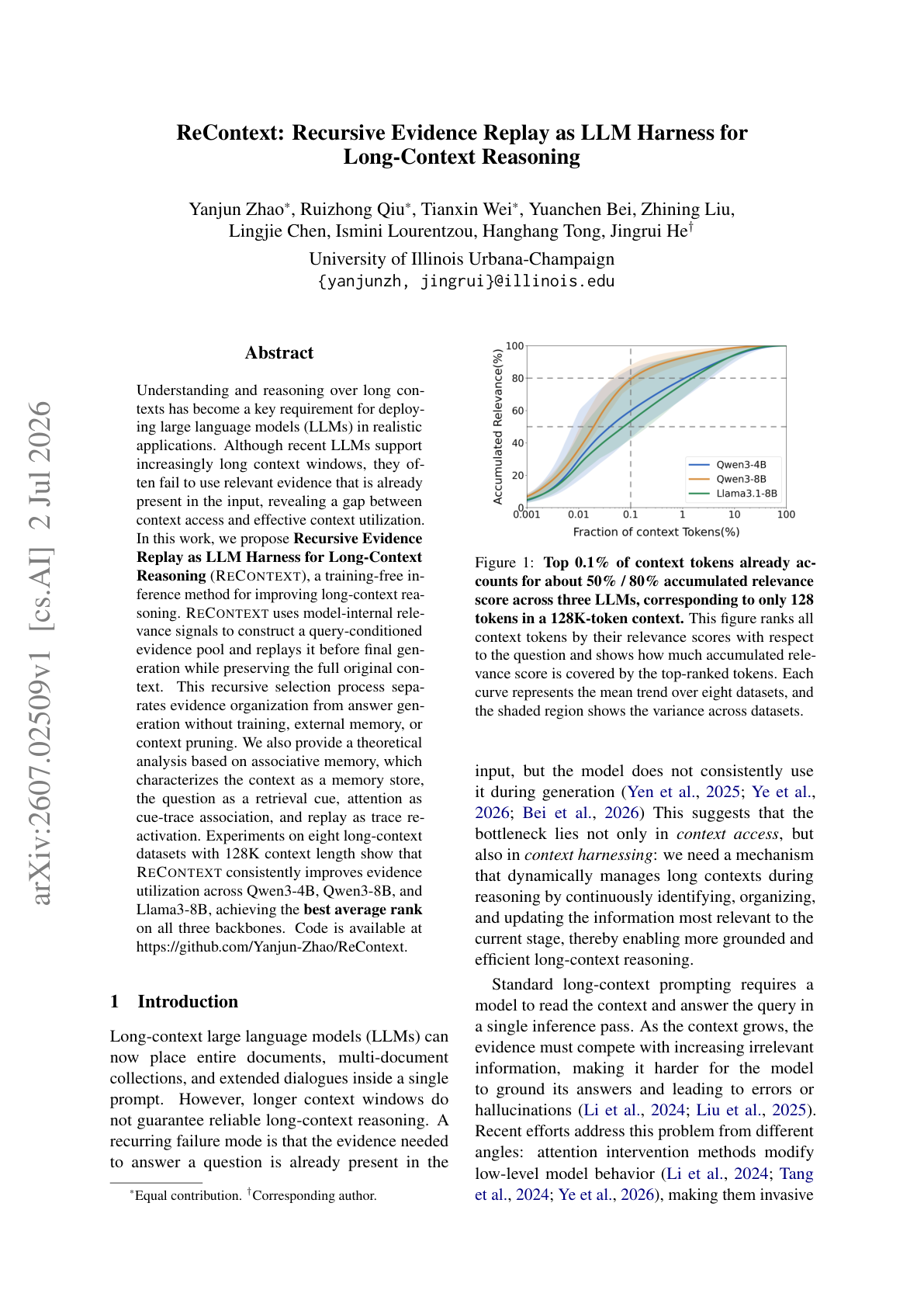
ReContext
Models now support 128K context windows yet still fail to use evidence already sitting in the prompt. ReContext is a training-free inference harness for long-context reasoning that uses model-internal relevance signals to build a query-conditioned evidence pool, then replays it right before final generation while preserving the full original context.
Agent Limitations Taxonomy
Benchmark scores keep climbing, yet the same agent failures resurface across otherwise unrelated evaluations, hidden behind the leaderboard. This University of Oxford work synthesizes 27 benchmark, taxonomy, and audit papers spanning 19 benchmarks into the first cross-cutting taxonomy of LLM-agent limitations.
BlockSearch
BlockSearch runs the first systematic study of in-context retrieval at the scales real retrievers actually face, million-token corpora and length generalization far beyond training size. It introduces a 0.6B language-model retriever whose architectural and training changes improve over prior LM baselines and length-generalize up to 10 times beyond their training length, pointing toward retrievers that stay reliable as context windows keep growing.
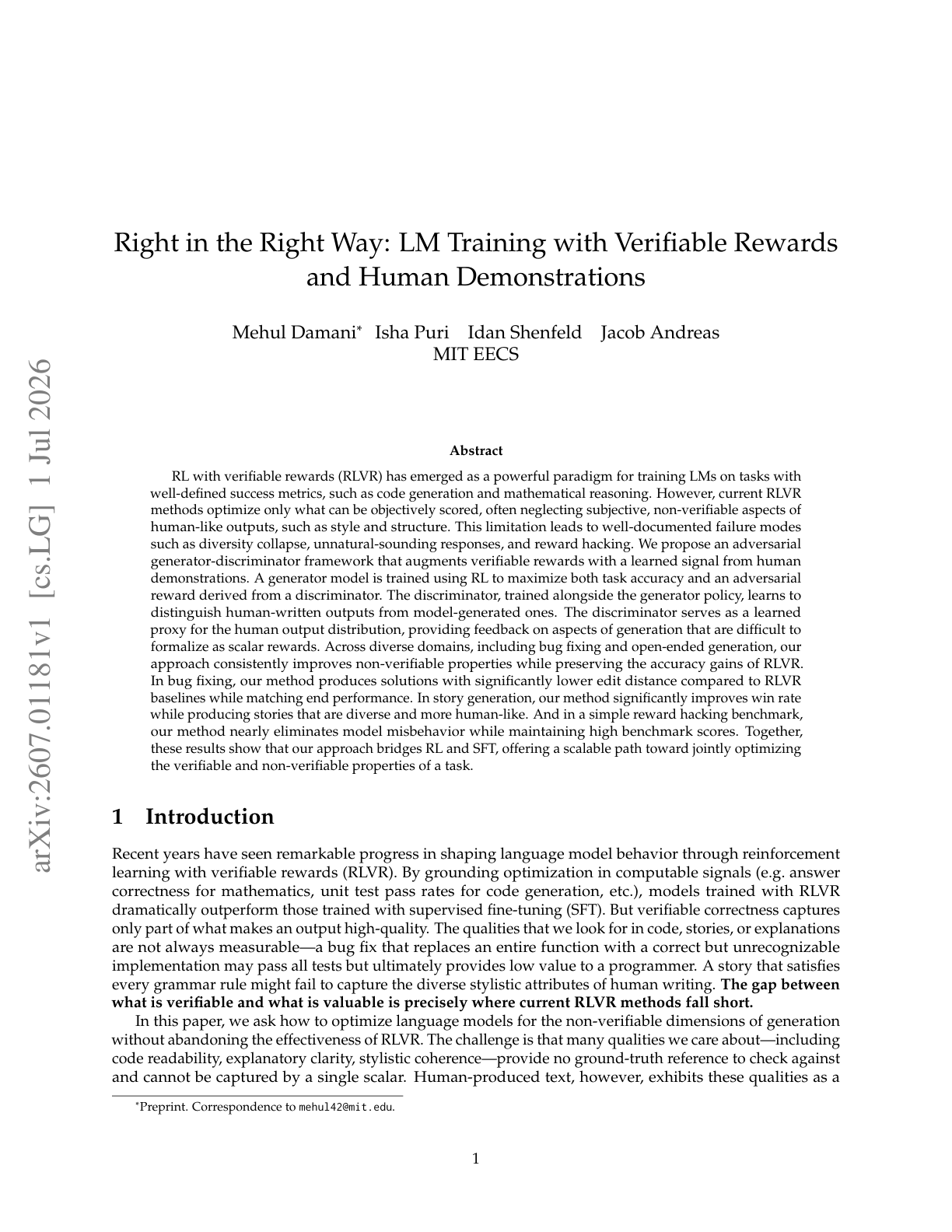
RLVR Meets Human Likeness
RL with verifiable rewards only optimizes what you can objectively score, so style, structure, and diversity quietly collapse and reward hacking creeps in. This MIT work adds an adversarial discriminator trained on human demonstrations as a learned proxy for the human output distribution, and the generator maximizes both task accuracy and that human-likeness signal. Across bug fixing, story generation, and a reward-hacking benchmark, it preserves RLVR's accuracy gains while restoring the fuzzy properties it usually destroys, with misbehavior nearly disappearing.
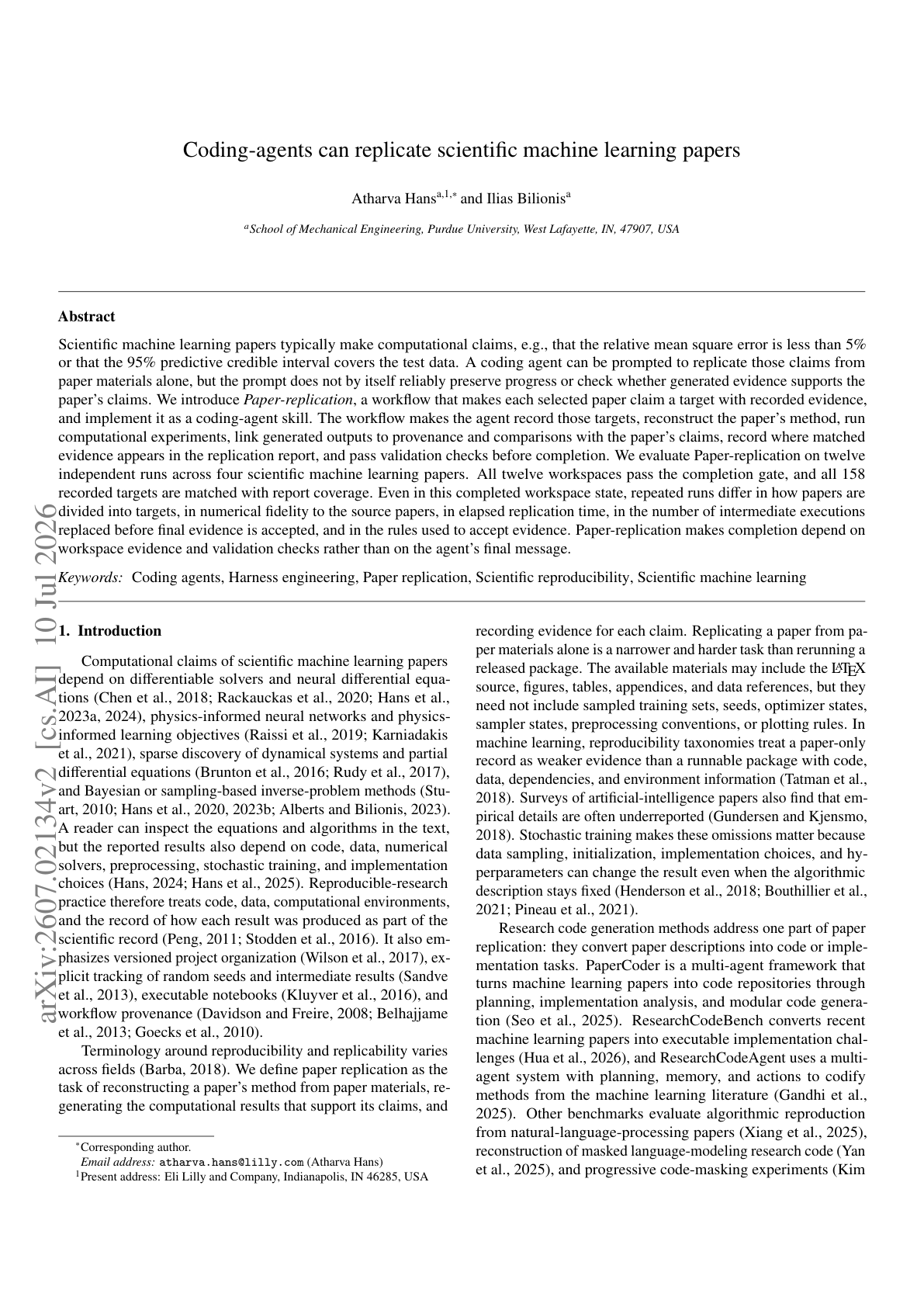
Replicating ML Papers with Agents
This work tests whether a coding agent can replicate a scientific ML paper from its materials alone, using a skill that turns each paper claim into a target with recorded evidence and gating completion on workspace evidence rather than the agent's final message. Across twelve runs over four papers, all twelve workspaces pass the completion gate and all 158 recorded targets are matched with report coverage. Yet repeated runs still differ in how papers are split into targets and in numerical fidelity, so completion becomes reproducible even when the path is not.
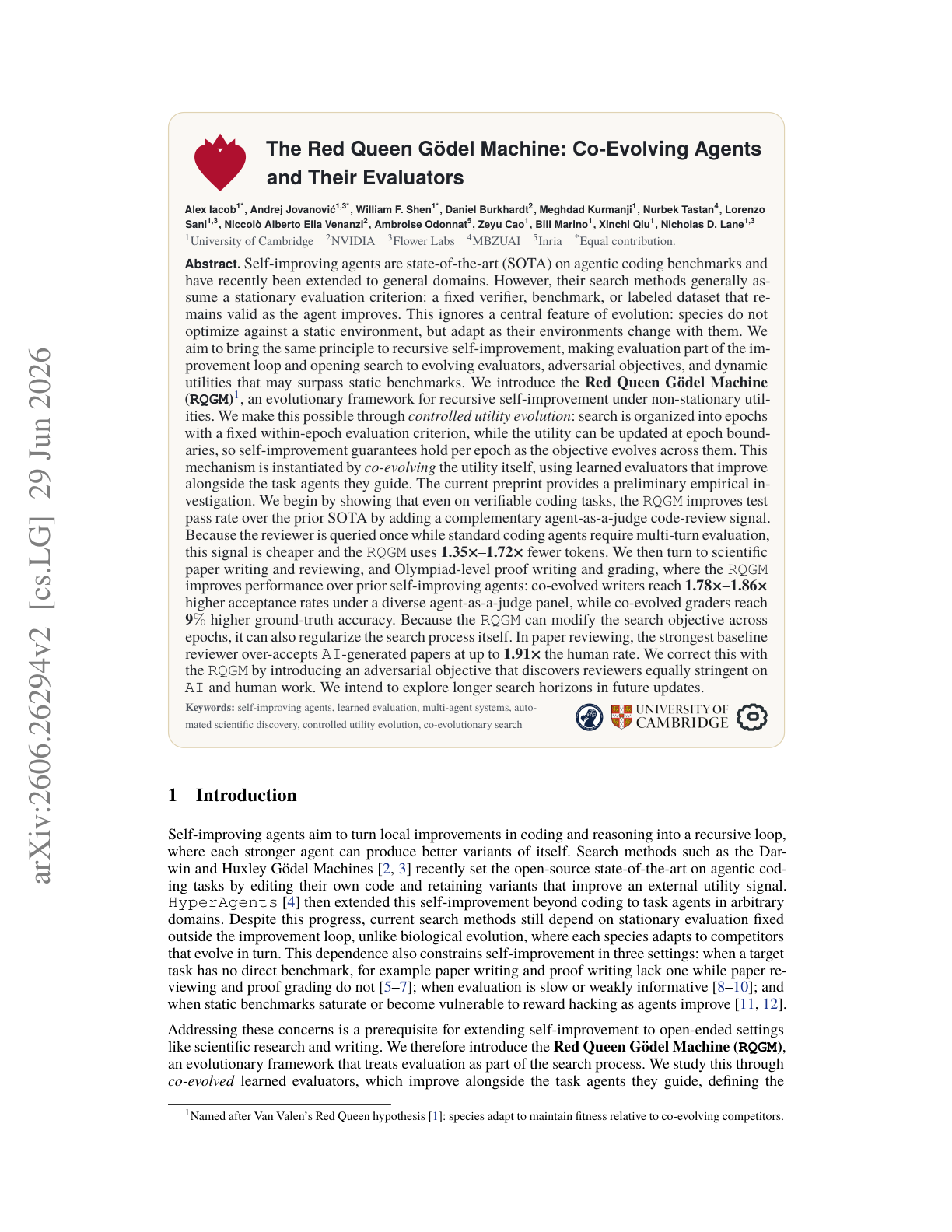
Red Queen Gödel Machine
Self-improving agents are only as strong as the evaluator scoring them, and most systems freeze that evaluator in place, so improvement stalls the moment the judge stops getting harder. The Red Queen Gödel Machine makes the evaluator part of the search itself, letting agents and the criteria that judge them co-evolve. --- ---
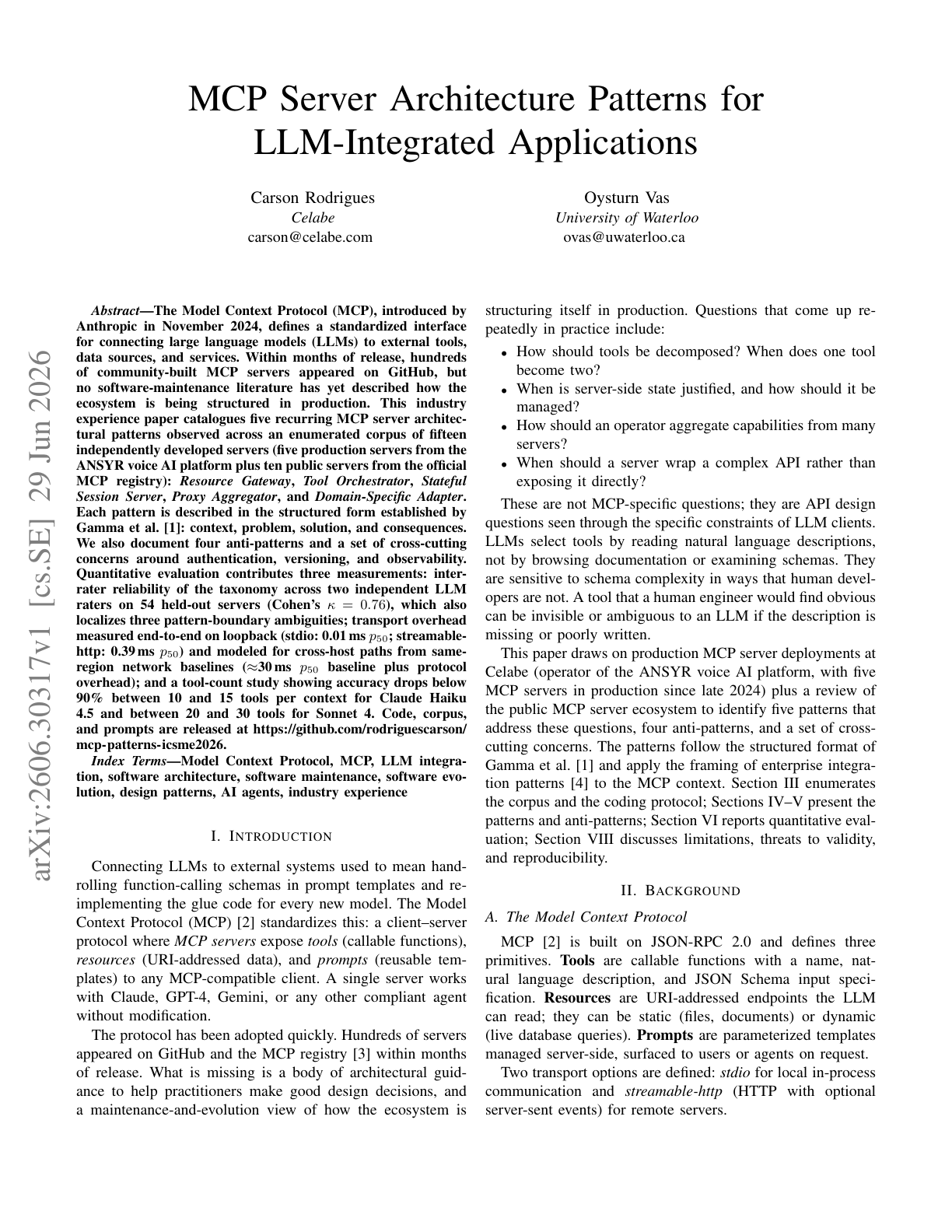
MCP Server Patterns
As teams rush to wrap tools and data behind the Model Context Protocol, they keep rebuilding the same server shapes without shared names for them. This industry experience paper catalogs the recurring architectures so builders can reason about MCP servers the way software engineers reason about design patterns. ---
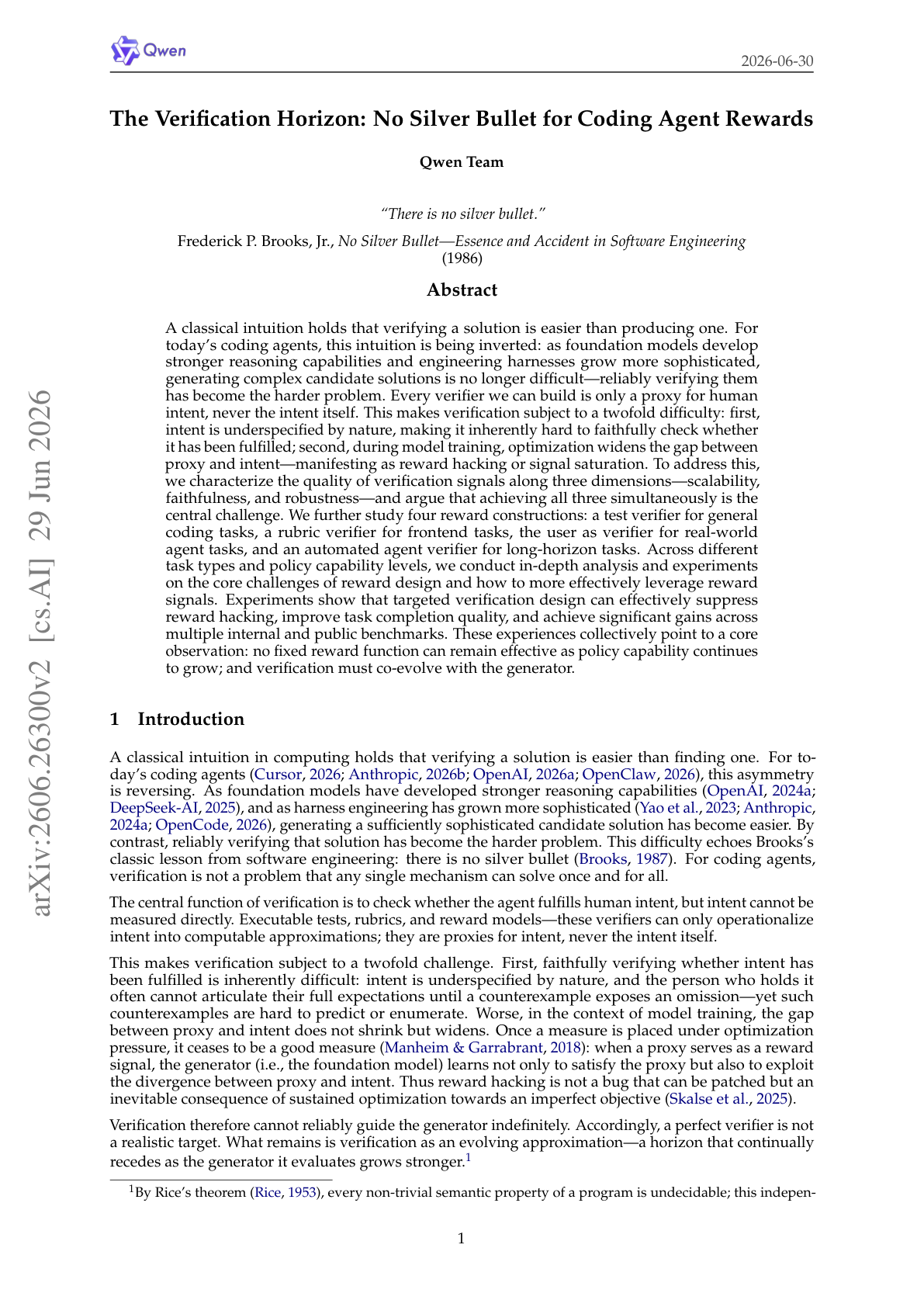
The Verification Horizon
Reinforcement learning for coding agents lives or dies on the reward signal, and this Qwen work argues there is no silver bullet. As policy capability grows, any fixed reward function eventually gets gamed, so verification has to co-evolve with the generator it scores. ---
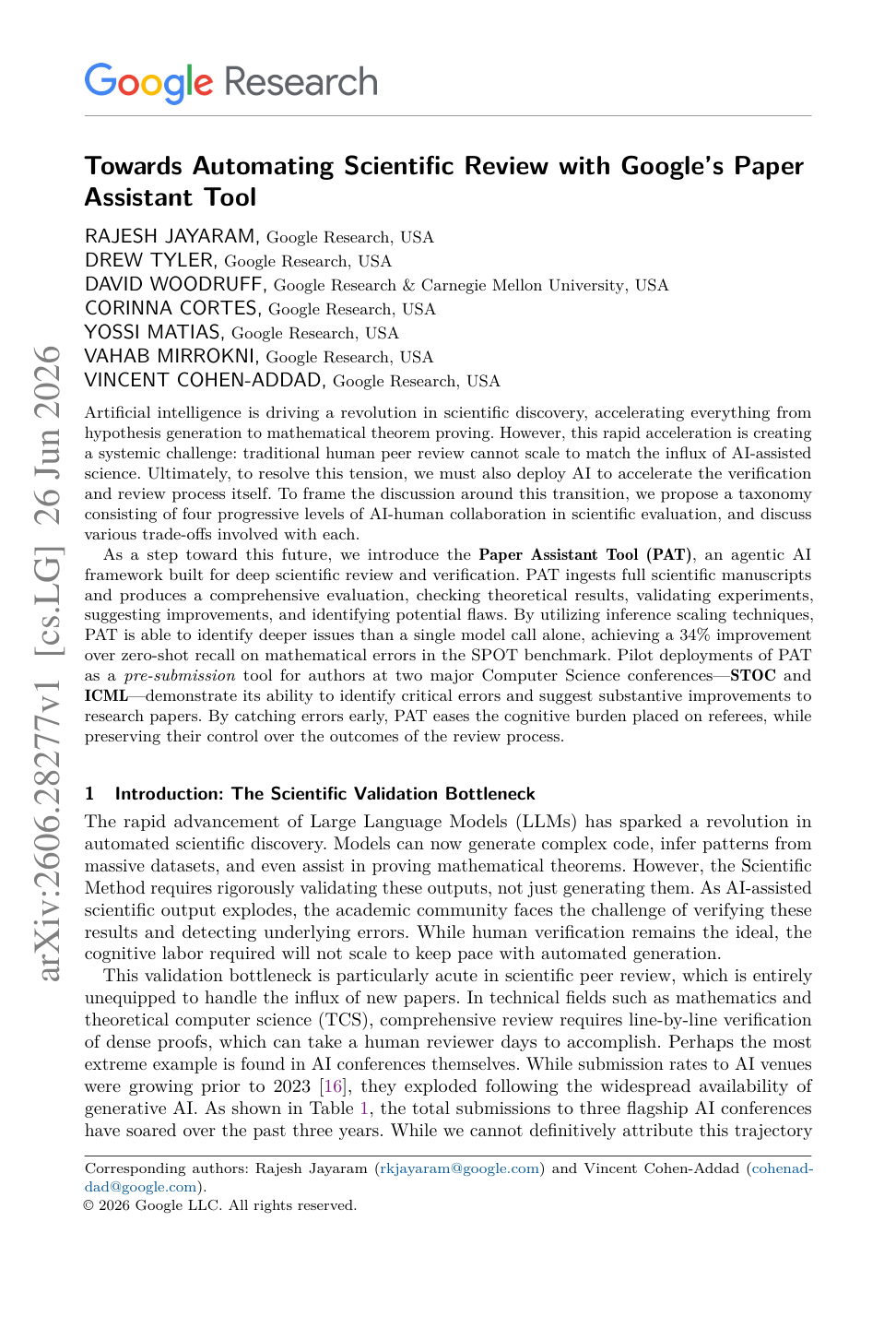
Paper Assistant Tool
AI is accelerating how fast papers get written, but peer review is still bottlenecked on human throughput, with combined submissions to the big ML conferences projected to top 73,000 this year. Google’s Paper Assistant Tool is an agentic framework built to do deep scientific review and verification at that scale. ---
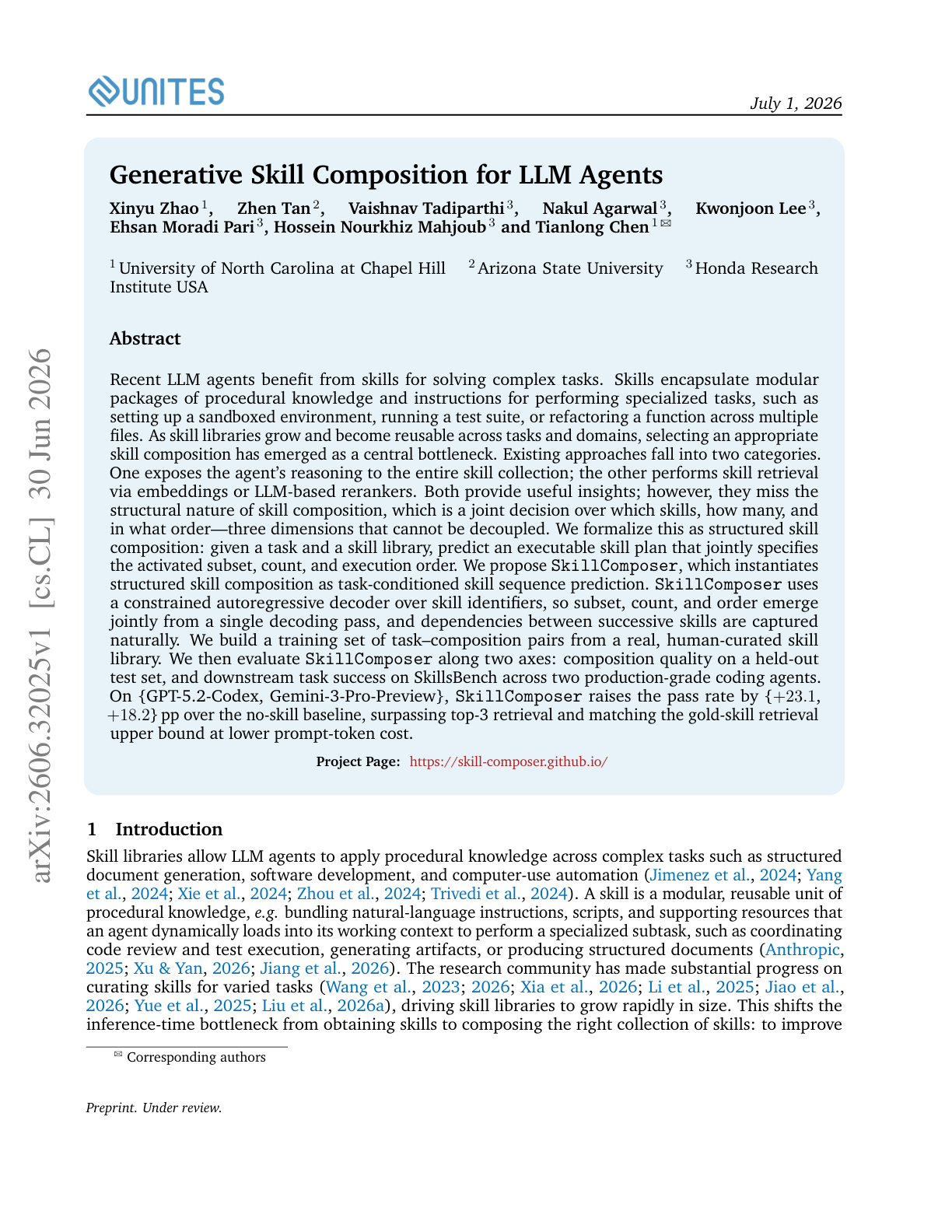
Generative Skill Composition
Coding agents accumulate large skill libraries, and picking the right skills for a task has become the bottleneck. The usual options either dump the whole collection into context or retrieve skills with embeddings and rerankers, and both treat selection as a ranking problem rather than a joint plan. ---
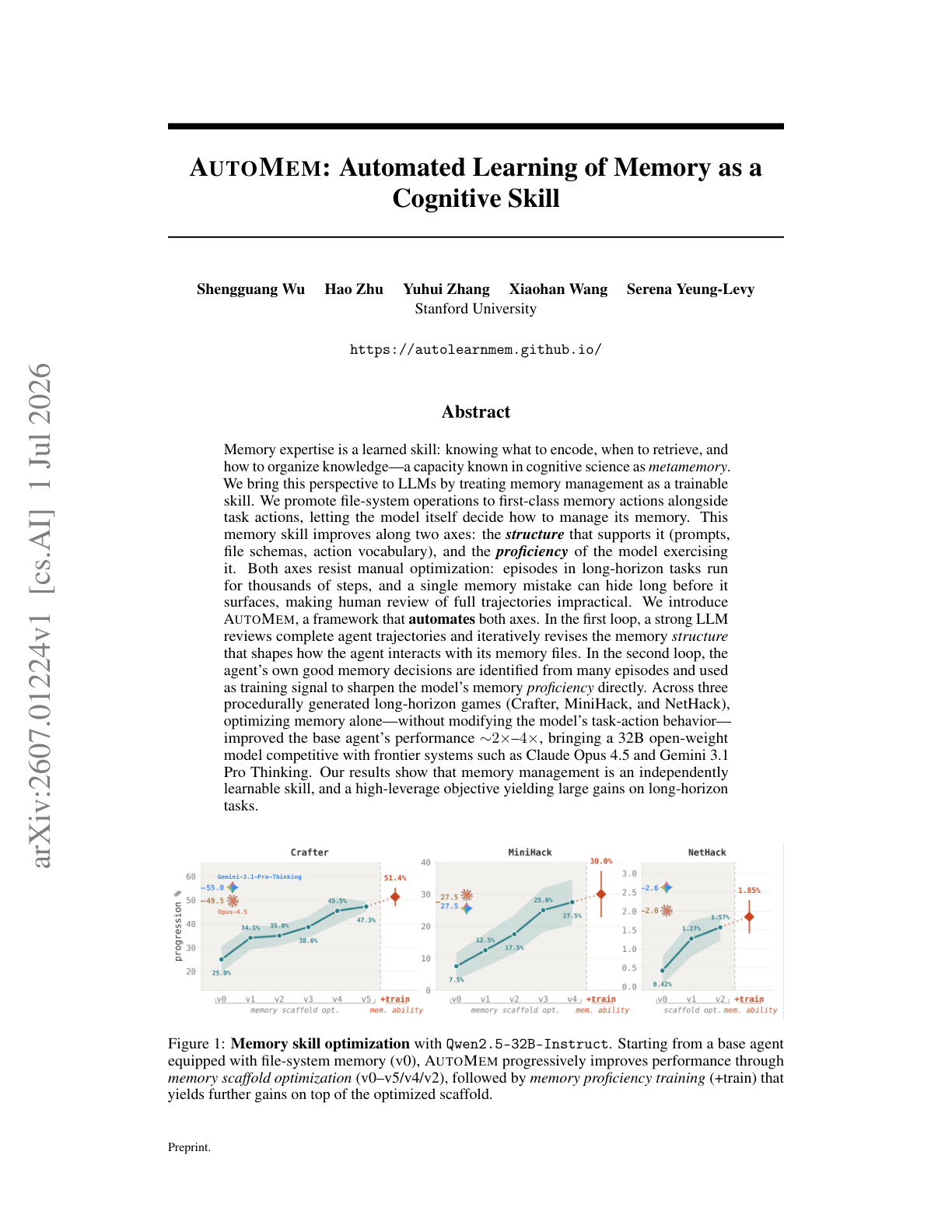
AutoMem
Memory for LLM agents is usually a fixed module bolted onto the model, but knowing what to encode, when to retrieve, and how to organize notes is itself a skill. AutoMem, from Stanford, treats memory management as a trainable cognitive ability, a capacity cognitive science calls metamemory. ---
RLMF
LLMs routinely hallucinate with high confidence, miss their own knowledge boundaries, and misreport uncertainty, and most fixes bolt calibration on from the outside. RLMF, a Google and Yale collaboration, instead turns the model’s own metacognition into the training signal. ---
ASPIRE
ASPIRE reframes robot programming as continual, code-as-policy learning that compounds experience instead of discarding it. The system runs an open-ended loop with a closed-loop execution engine that exposes fine-grained multimodal traces, a skill library that distills validated fixes into transferable knowledge, and an evolutionary search over task sequences and control programs. It surpasses prior methods by up to 77% on perturbed manipulation and enables zero-shot generalization to unseen long-horizon tasks, with early evidence of sim-to-real transfer across different embodiments. ---
HORIZON
HORIZON treats hardware design as repository-level code evolution, compiling a Markdown harness into a project pack with domain knowledge, an executable evaluator, an acceptance predicate, and a git and runtime policy. A hands-free agent loop then evolves an isolated git worktree, using repository operations for state management, tracing, and replay. Across ChipBench, RTLLM, Verilog-Eval, and nine CVDP categories it reaches full benchmark completion with a completely hands-free loop, extending repository-scale self-evolution from EDA software to hardware artifacts themselves. ---
Reasoning Quality Emerges Early
Curating reasoning data is expensive because scoring a trace usually means reading it to the end, but this UCLA work shows the quality of a trace is largely decided in its opening tokens. A short prefix predicts whole-trace quality well enough to rank and filter on, and difficulty can be detected from the loss of the first 100 tokens at a perturbed checkpoint. That turns curation into a cheap early-stopping problem, outperforming baselines while being far more token efficient at building SFT data for reasoning models.
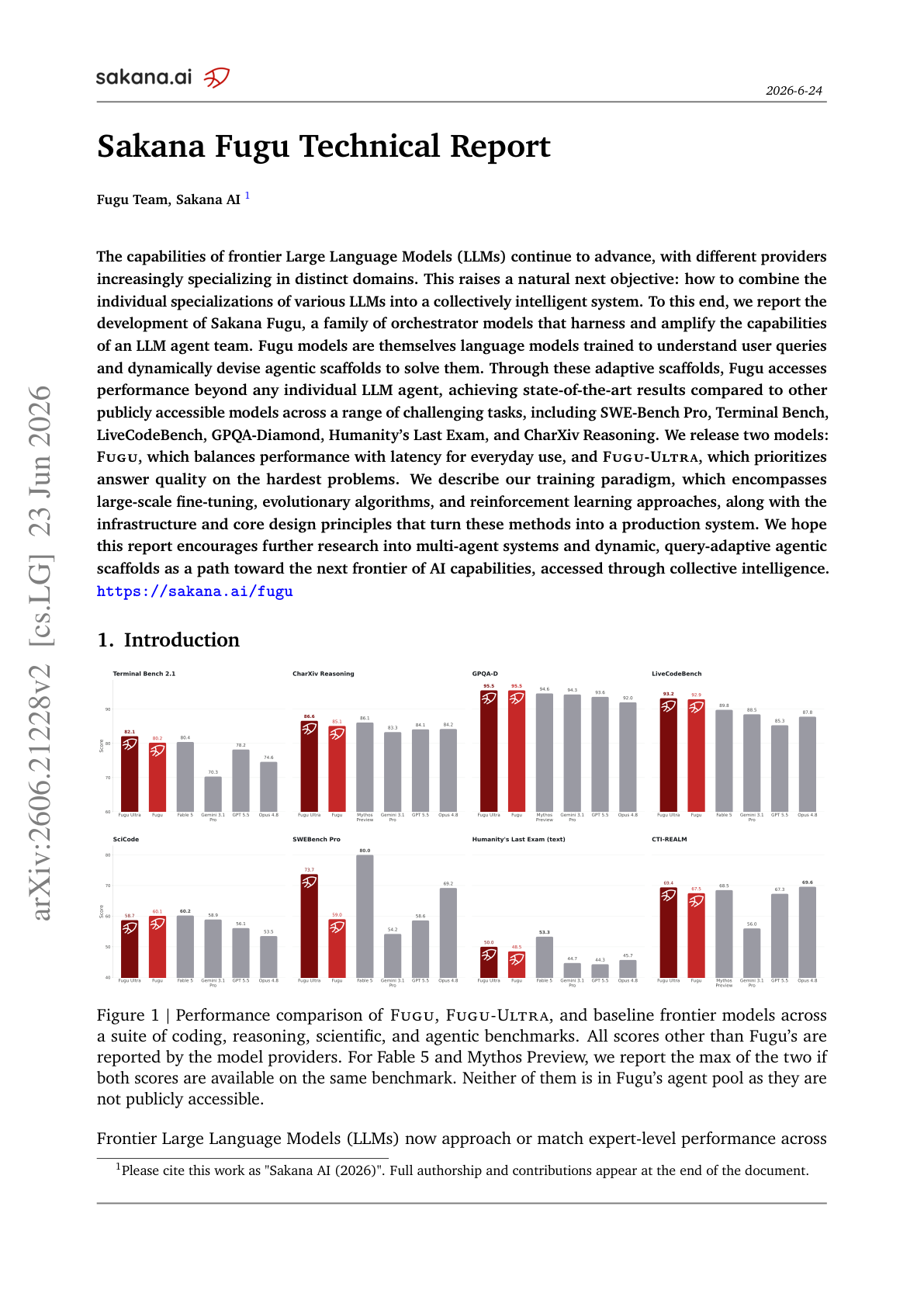
Sakana Fugu
Frontier LLMs keep advancing, and different providers are increasingly specializing in distinct domains, which raises a natural next objective: how do you combine those individual specializations into one collectively intelligent system? Sakana Fugu answers with a family of orchestrator models that are themselves language models trained to read a user query and dynamically devise the agentic scaffold needed to solve it.
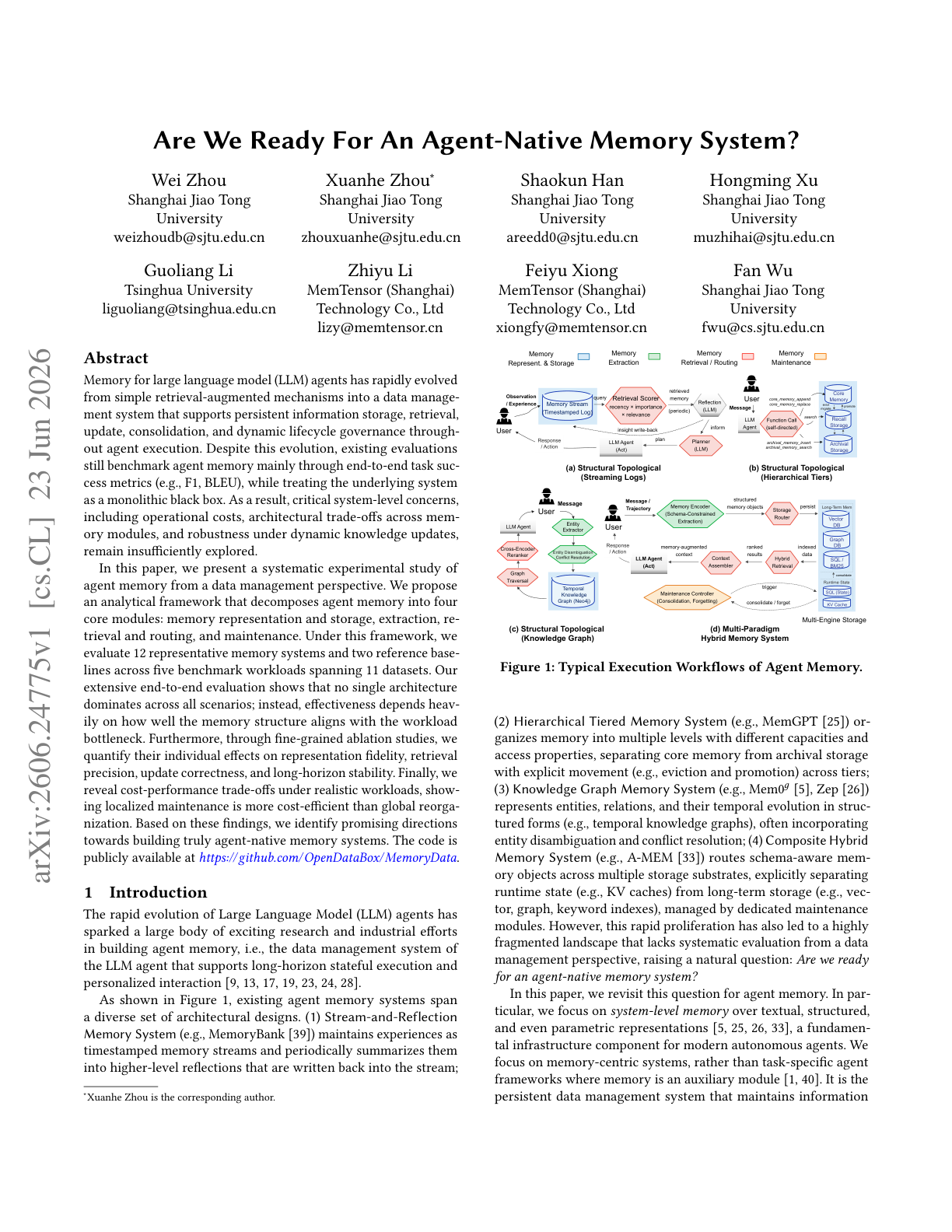
Agent-Native Memory
Memory for LLM agents has quietly grown from a retrieval add-on into a full data system, with persistent storage, retrieval, update, consolidation, and lifecycle governance running throughout an agent's execution. Yet most evaluations still score memory only through end-to-end task metrics like F1 and BLEU, treating the whole stack as a black box. This paper studies agent memory from a data management perspective and asks what we are actually missing when we measure it that way.
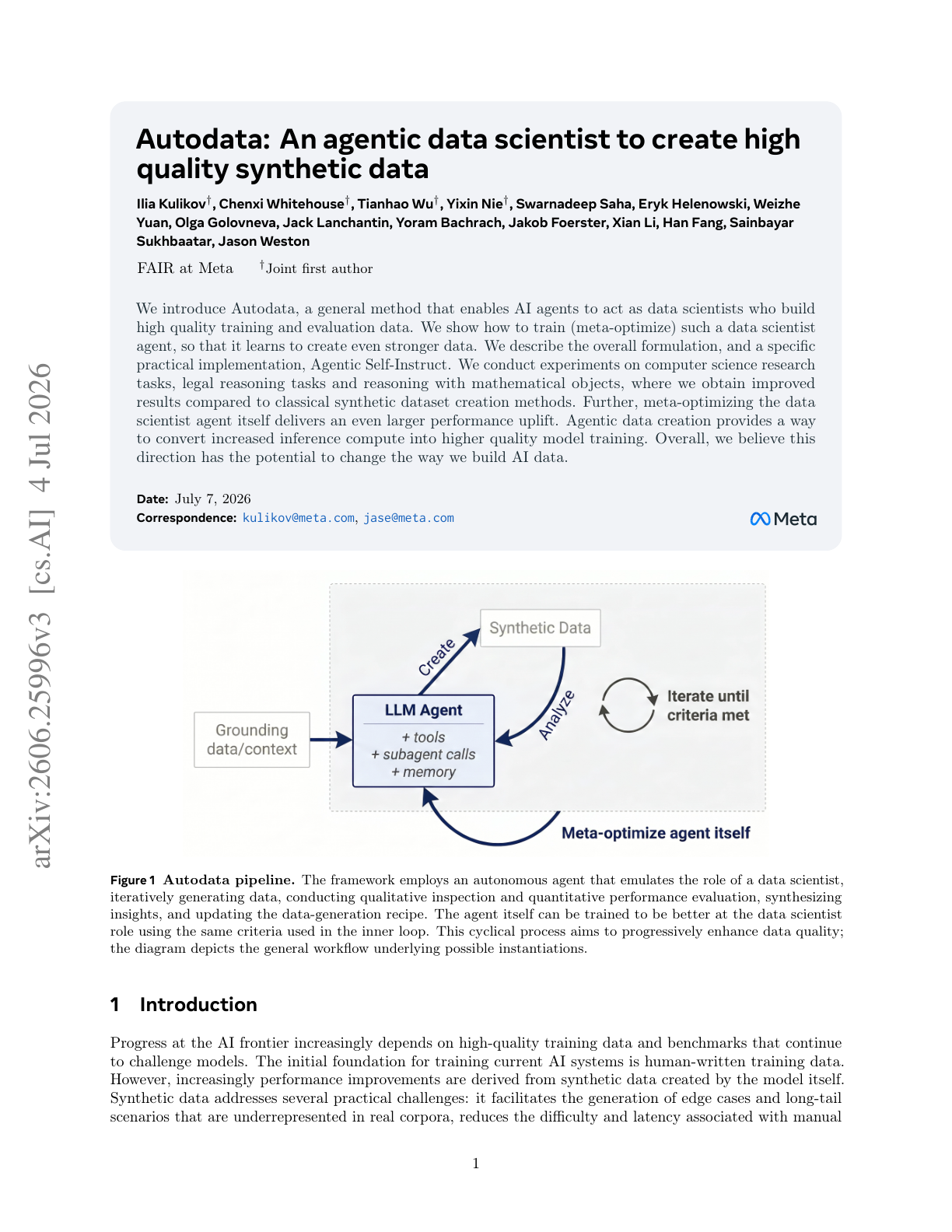
Autodata
Building synthetic training data has mostly stayed a fixed pipeline that you hand-tune once and then freeze. Autodata rethinks that by casting an AI agent as a data scientist that builds high-quality training and evaluation data, then meta-optimizes that agent so it learns to create even stronger data over time.
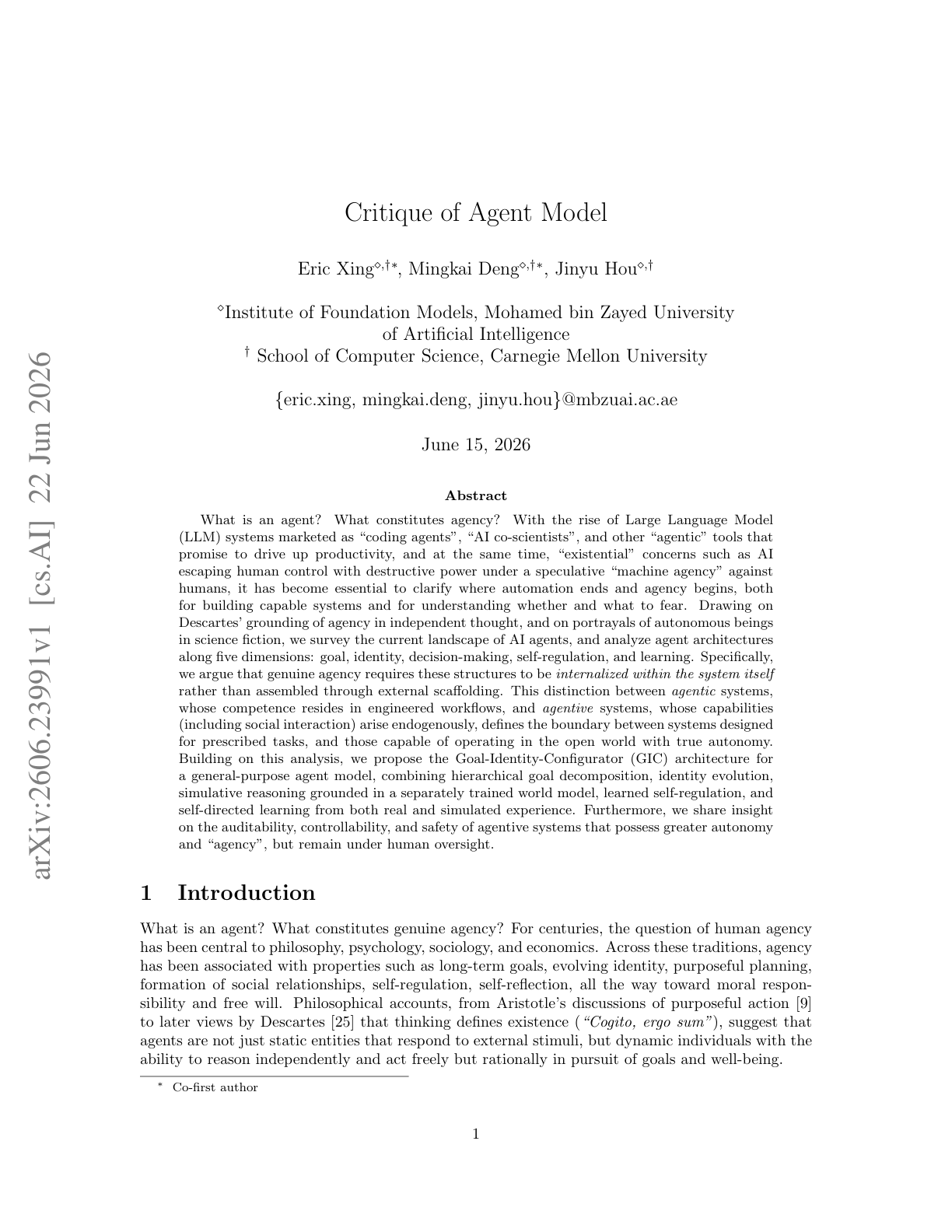
Critique of the Agent Model
The word agent now covers everything from a for-loop with tool calls to speculative machine superintelligence, which makes it nearly useless as a technical term. This position paper from Eric Xing and collaborators tries to fix that by asking what an agent actually is and what agency consists of, drawing on Descartes and on science-fiction portrayals of autonomous beings to ground the discussion.