AI Papers of the Week
Every paper worth reading in AI, hand-picked one week at a time.
Discovering Preference Optimization Algorithms with LLMs
proposes LLM-driven objective discovery of state-of-the-art preference optimization; no human intervention is used and an LLM is prompted to propose and implement the preference optimization loss functions based on previously evaluated performance metrics; discovers an algorithm that adaptively combined logistic and exponential losses.
SelfGoal
a framework to enhance an LLM-based agent's capabilities to achieve high-level goals; adaptively breaks down a high-level goal into a tree structure of practical subgoals during interaction with the environment; improves performance on various tasks, including competitive, cooperative, and deferred feedback environments
Mixture-of-Agents
an approach that leverages the collective strengths of multiple LLMs through a Mixture-of-Agents methodology; layers are designed with multiple LLM agents and each agent builds on the outputs of other agents in the previous layers; surpasses GPT-4o on AlpacaEval 2.0, MT-Bench and FLASK.
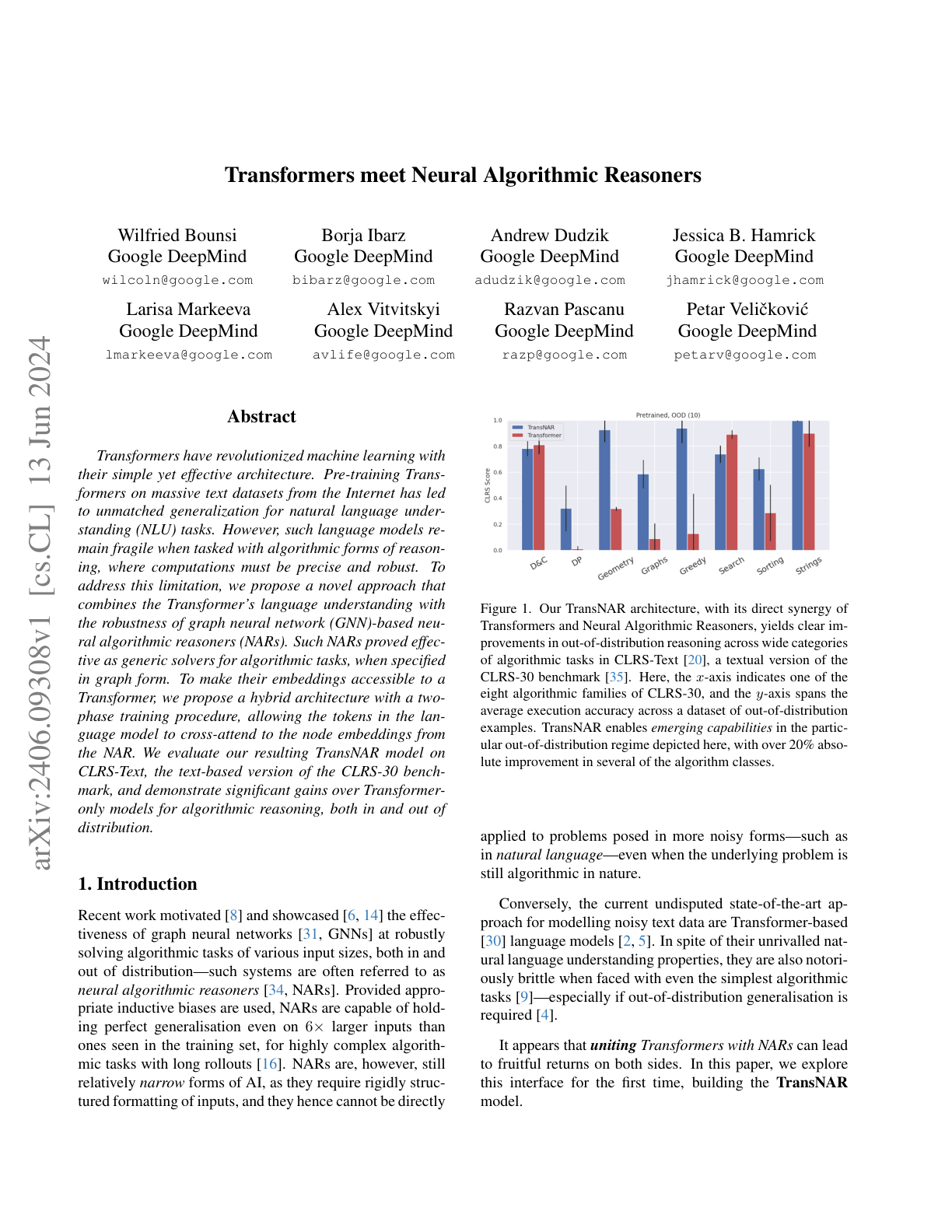
Transformers Meet Neural Algorithmic Reasoners
a new hybrid architecture that enables tokens in the LLM to cross-attend to node embeddings from a GNN-based neural algorithmic reasoner (NAR); the resulting model, called TransNAR, demonstrates improvements in OOD reasoning across algorithmic tasks
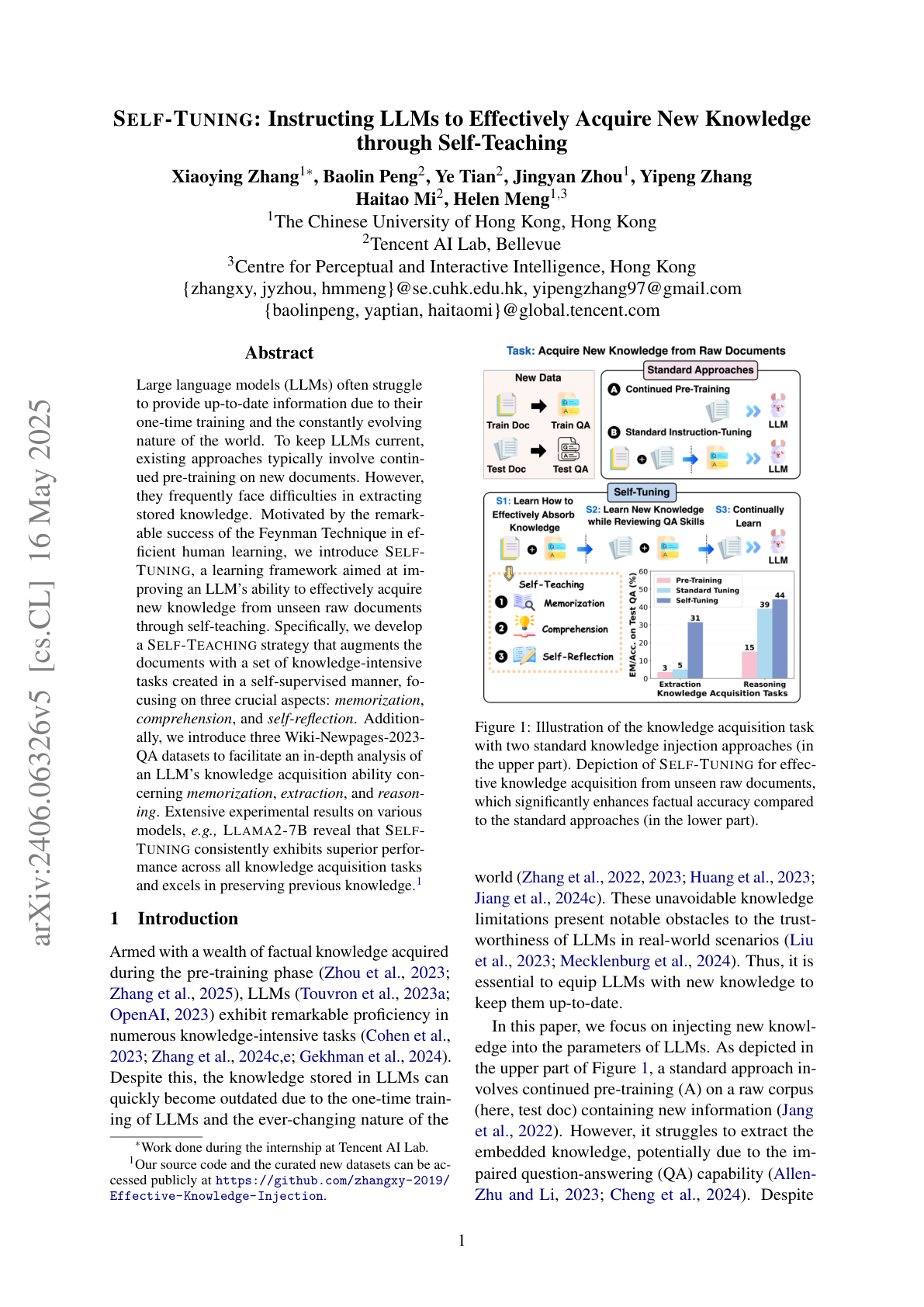
Self-Tuning with LLMs
improves an LLM’s ability to effectively acquire new knowledge from raw documents through self-teaching; the three steps involved are 1) a self-teaching component that augments documents with a set of knowledge-intensive tasks focusing on memorization, comprehension, and self-reflection, 2) uses the deployed model to acquire knowledge from new documents while reviewing its QA skills, and 3) the model is configured to continually learn using only the new documents which helps with thorough acquisition of new knowledge.
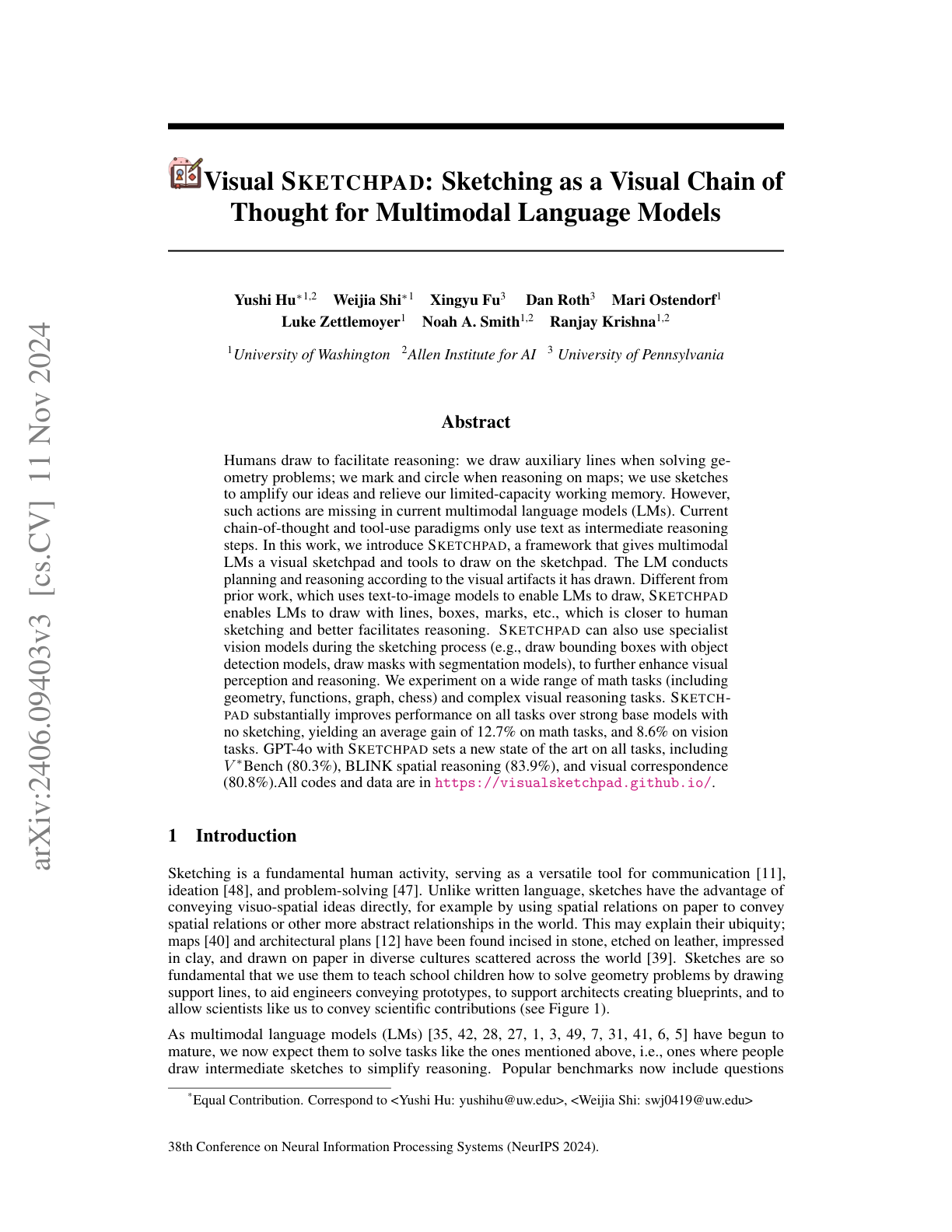
Sketching as a Visual Chain of Thought
a framework that enables a multimodal LLM to access a visual sketchpad and tools to draw on the sketchpad; it can equip a model like GPT-4 with the capability to generate intermediate sketches to reason over complex tasks; improves performance on many tasks over strong base models with no sketching; GPT-4o equipped with SketchPad sets a new state of the art on all the tasks tested.
Mixture of Memory Experts
proposes an approach to significantly reduce hallucination (10x) by tuning millions of expert adapters (e.g., LoRAs) to learn exact facts and retrieve them from an index at inference time; the memory experts are specialized to ensure faithful and factual accuracy on the data it was tuned on; claims to enable scaling to a high number of parameters while keeping the inference cost fixed.
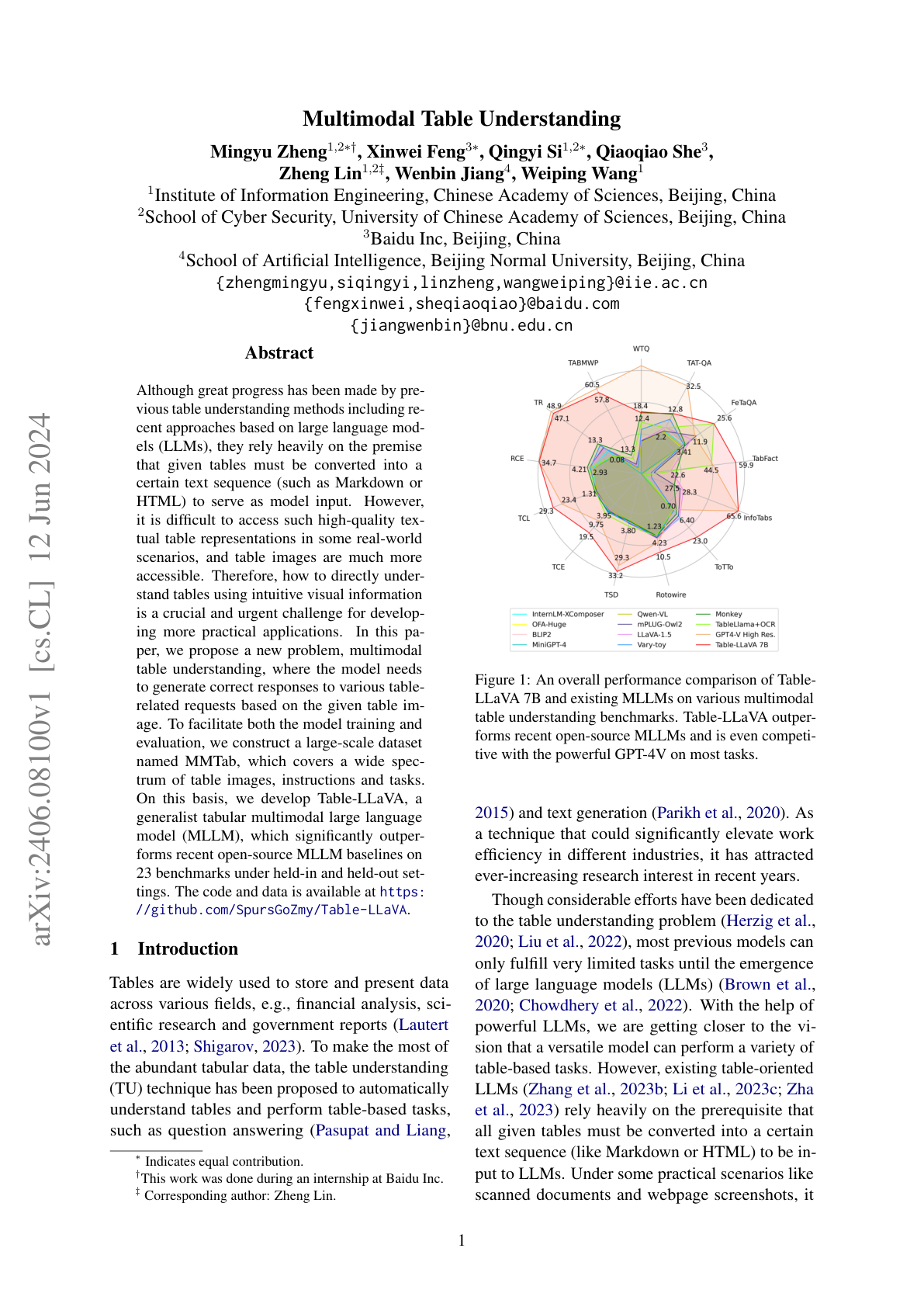
Multimodal Table Understanding
introduces Table-LLaVa 7B, a multimodal LLM for multimodal table understanding; it’s competitive with GPT-4V and significantly outperforms existing MLLMs on multiple benchmarks; also develops a large-scale dataset MMTab, covering table images, instructions, and tasks.
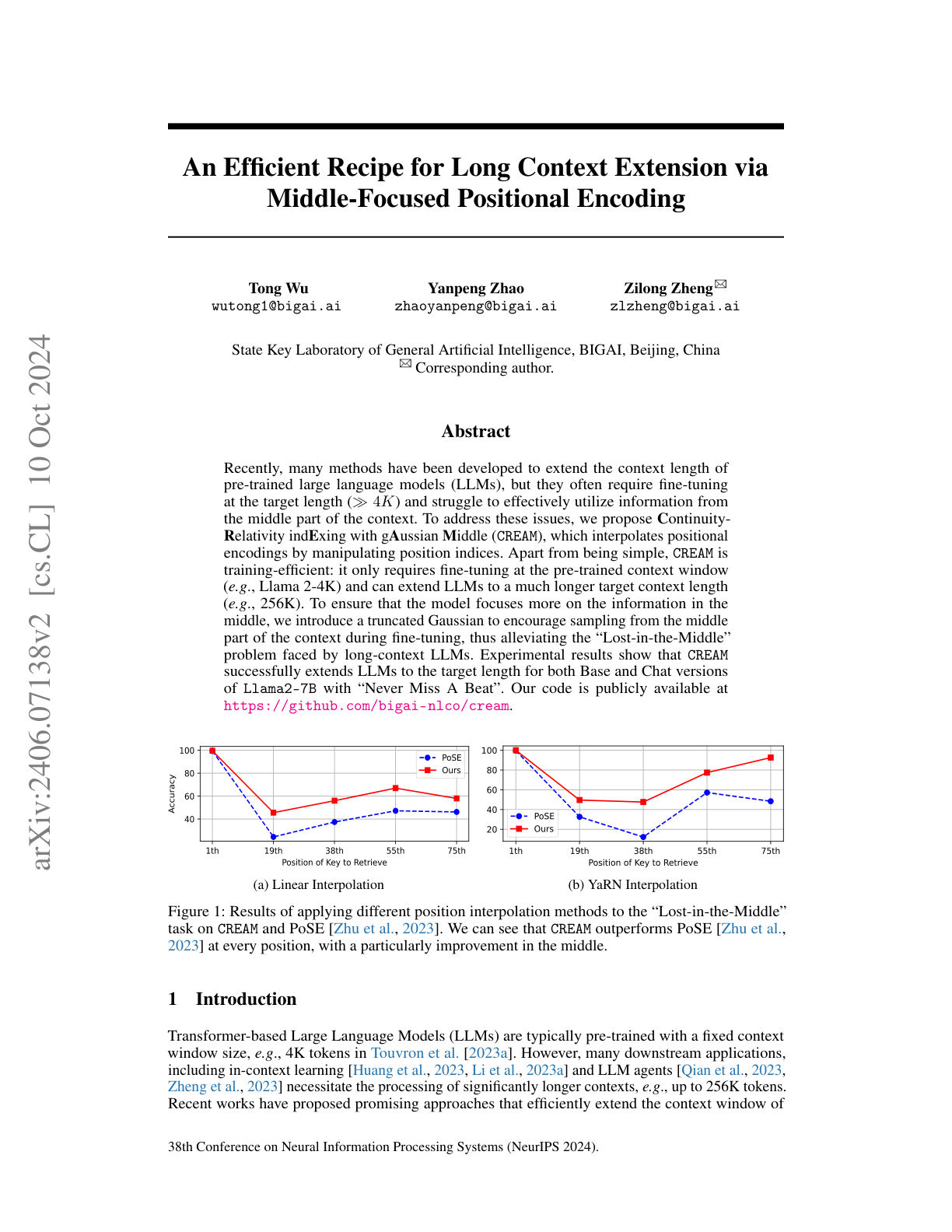
Consistent Middle Enhancement in LLMs
proposes an approach to tune an LLM to effectively utilize information from the middle part of the context; it first proposes a training-efficient method to extend LLMs to longer context lengths (e.g., 4K -> 256K); it uses a truncated Gaussian to encourage sampling from the middle part of the context during fine-tuning; the approach helps to alleviate the so-called "Lost-in-the-Middle" problem in long-context LLMs.

NLLB
proposes a massive multilingual model that leverages transfer learning across 200 languages; it’s based on a sparsely Gated Mixture of Experts architecture and trained on data via an approach tailored for low-resource languages; evaluates on 40K translations and achieves an average of 44% improvement in translation quality.
Extracting Concepts from GPT-4
proposes a new scalable method based on sparse autoencoders to extract around 16 million interpretable patterns from GPT-4; the method demonstrates predictable scaling and is more efficient than previous techniques.
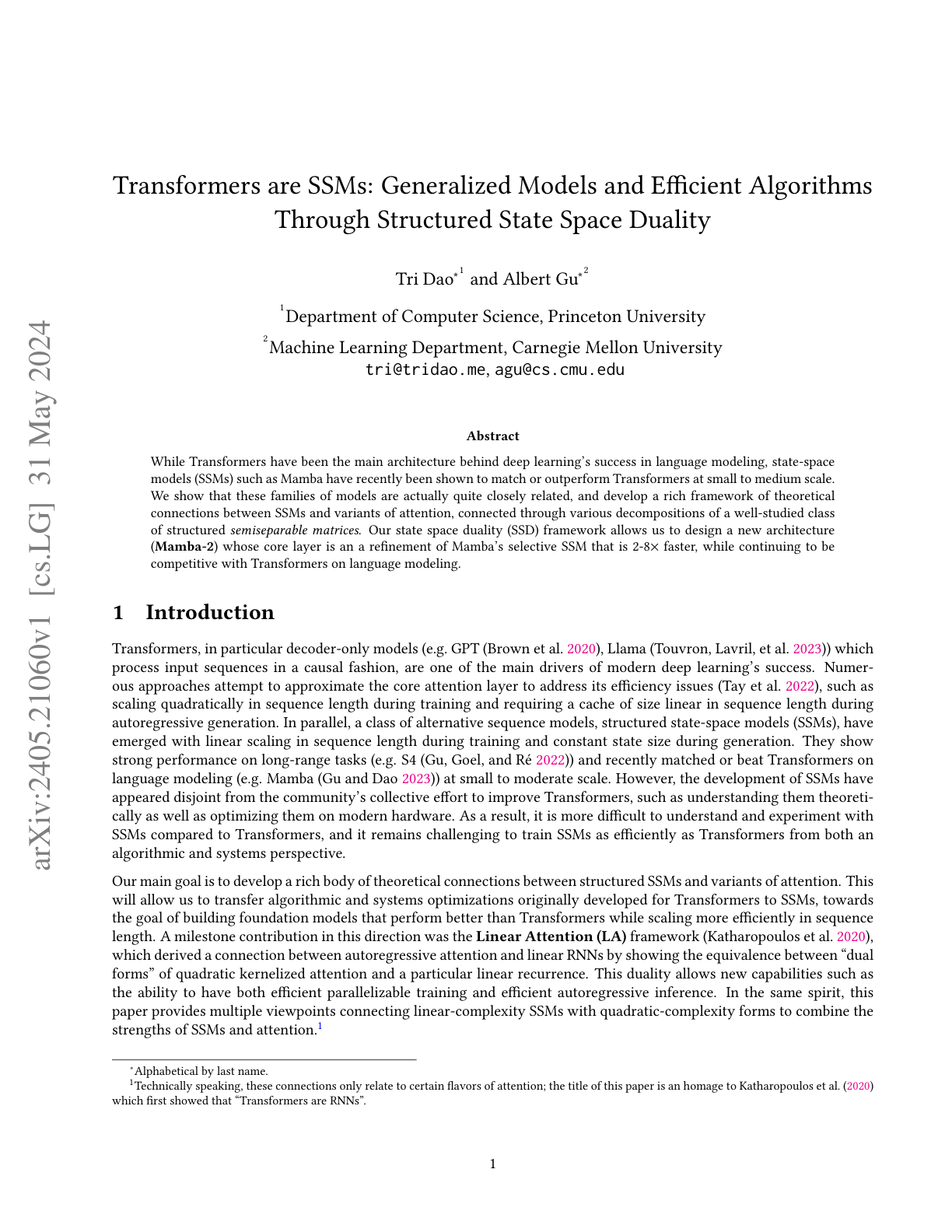
Mamba-2
a new architecture that combines state space models (SSMs) and structured attention; it uses 8x larger states and trains 50% faster; the new state space duality layer is more efficient and scalable compared to the approach used in Mamba; it also improves results on tasks that require large state capacity.
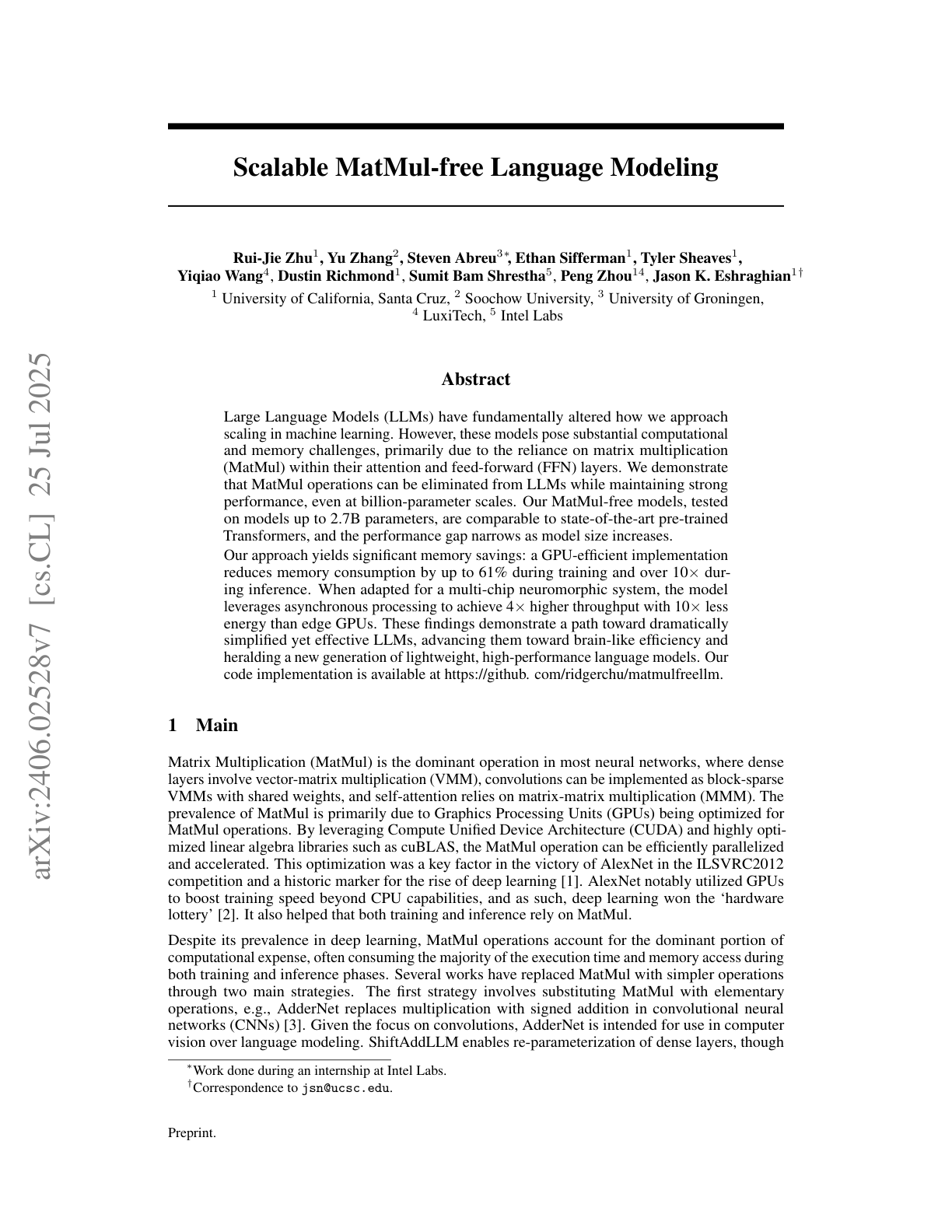
MatMul-free LLMs
proposes an implementation that eliminates matrix multiplication operations from LLMs while maintaining performance at billion-parameter scales; the performance between full precision Transformers and the MatMul-free models narrows as the model size increases; claims that by using an optimized kernel during inference, memory consumption is reduced by more than 10x.
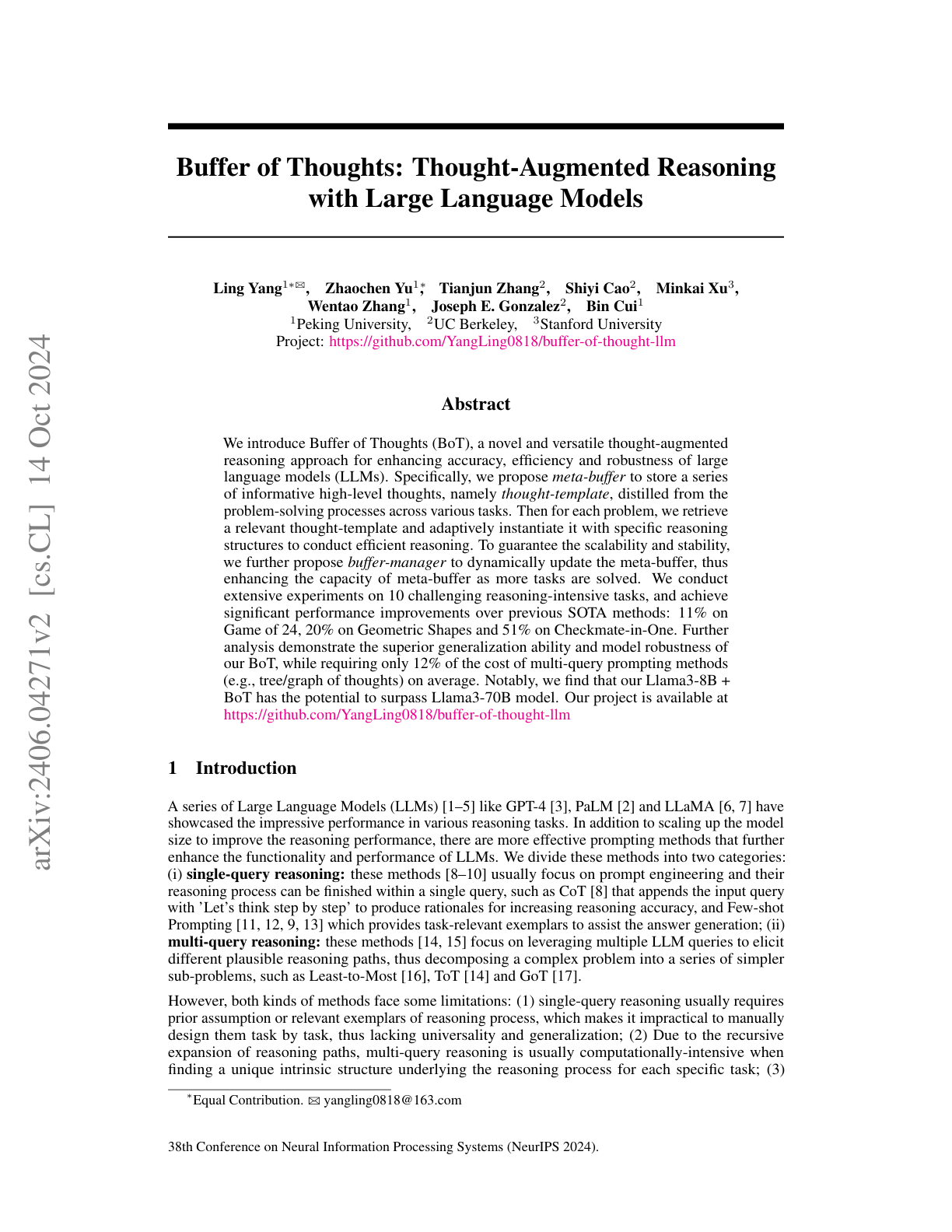
Buffer of Thoughts
presents a thought-augmented reasoning approach to enhance the accuracy, efficiency, and robustness of LLM-based reasoning; it leverages a meta-buffer containing high-level thoughts (thought templates) distilled from problem-solving processes; the relevant thought template is then retrieved and instantiated with task-specific reasoning structures for the thought-augmented reasoning process; it demonstrates SOTA performance on 10 challenging tasks while requiring 12% of the cost of multi-query prompting methods like Tree-of-Thoughts.
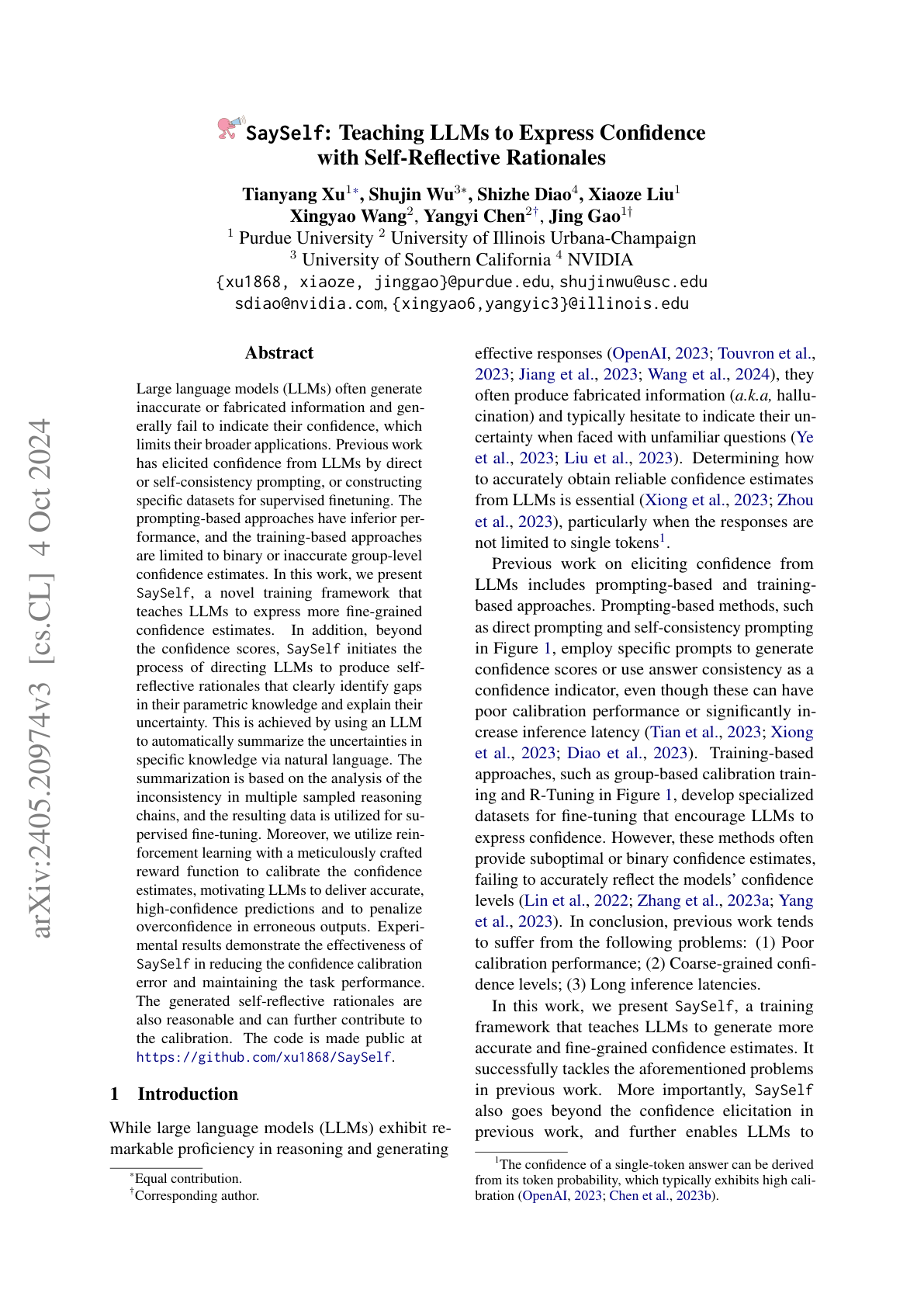
SaySelf
a training framework to teach LLMs to express more accurate fine-grained confidence estimates and self-reflective rationales; it performs supervised finetuning on a dataset that contains summaries of the difference between multiple reasoning chains; reinforcement learning is then applied to calibrate confidence estimates, encouraging the LLM to produce accurate, high-confidence predictions and penalize overconfidence in erroneous outputs.
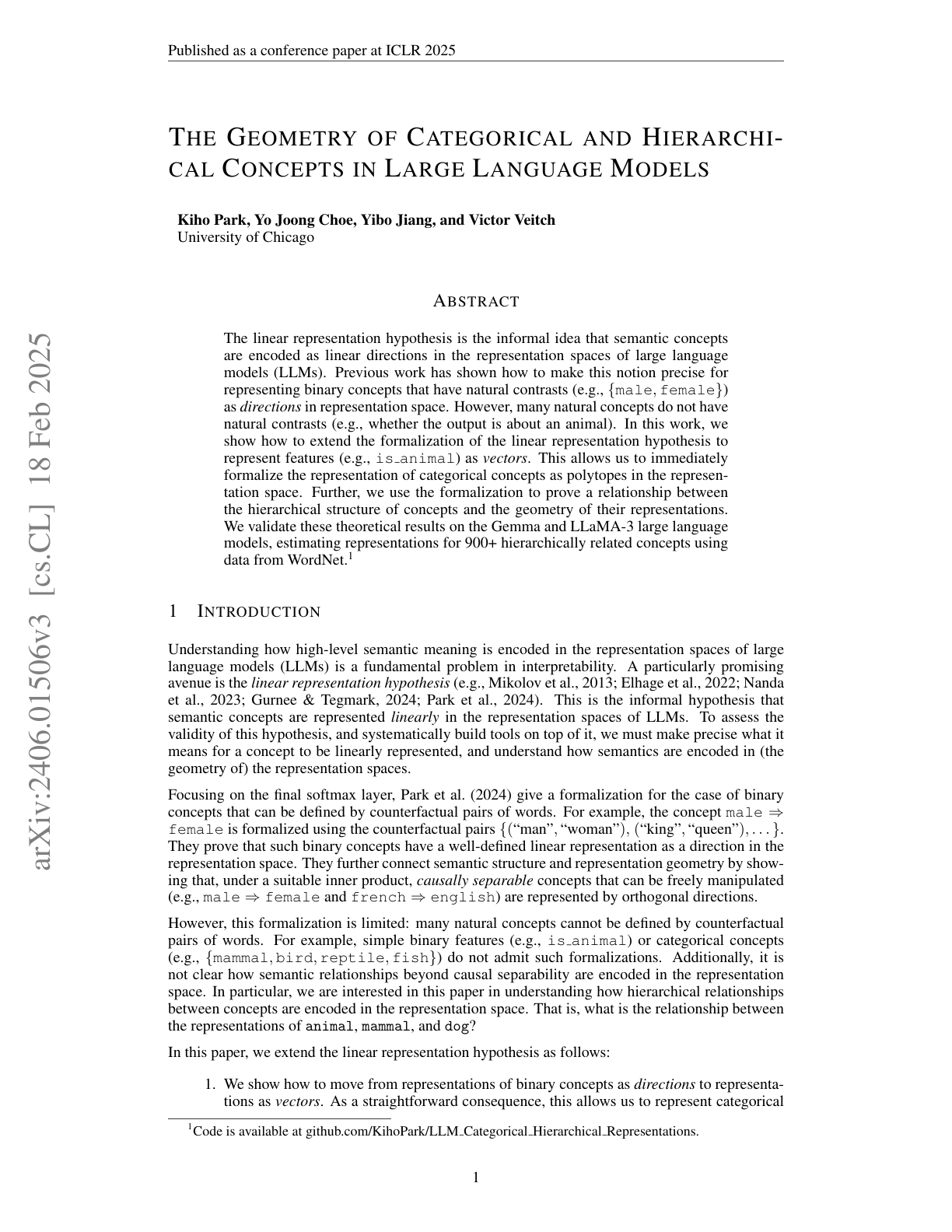
The Geometry of Concepts in LLMs
studies the geometry of categorical concepts and how the hierarchical relations between them are encoded in LLMs; finds that simple categorical concepts are represented as simplices by the LLMs and complex concepts are represented as polytopes constructed from direct sums of simplices, which reflect the hierarchical structure.
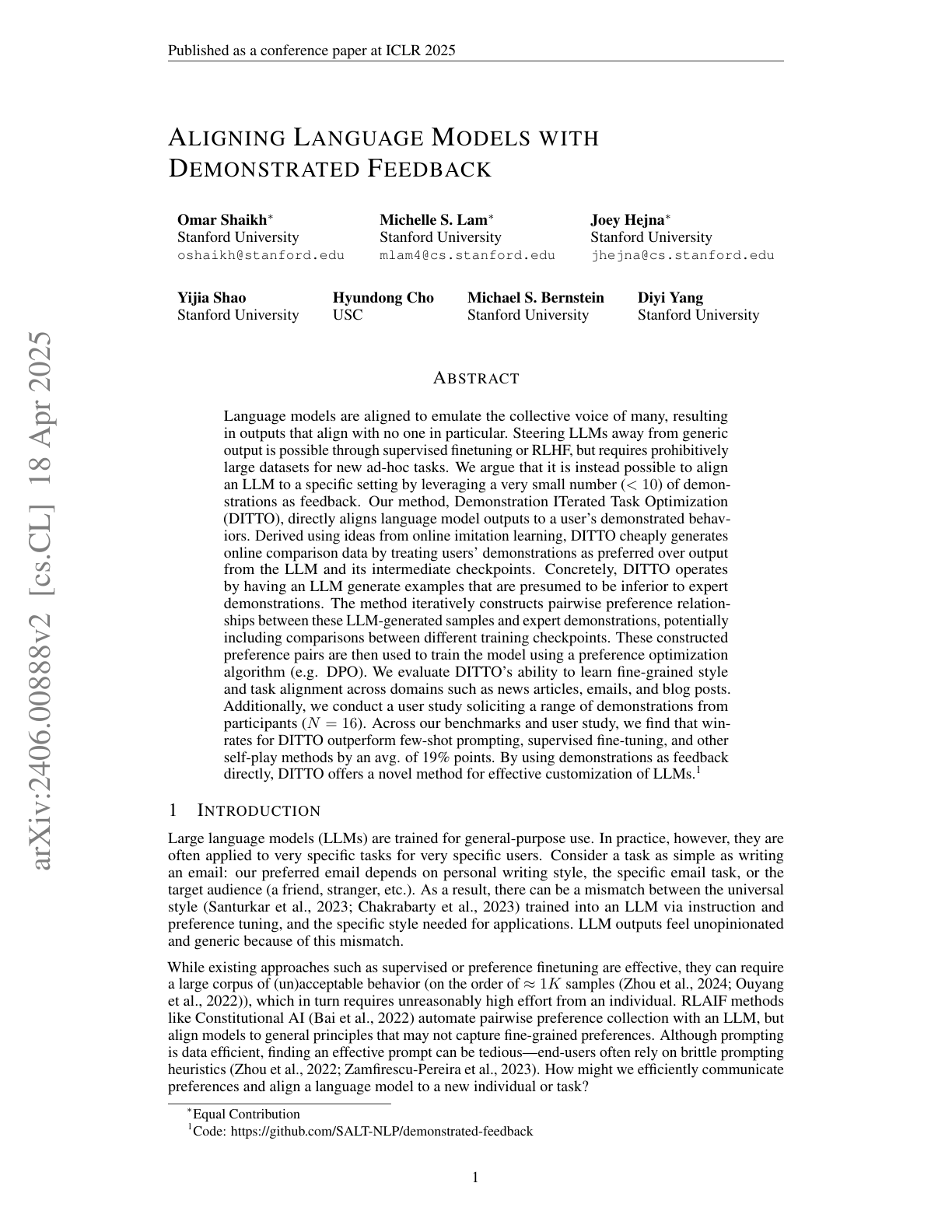
Aligning LLMs with Demonstrated Feedback
proposes a method to align LLMs to a specific setting via a very small number of demonstrations as feedback; it aligns LLM outputs to a user’s demonstrated behaviors and can learn fine-grained style and task alignment across domains; outperforms few-shot prompting, SFT, and self-play methods on the tested benchmarks.
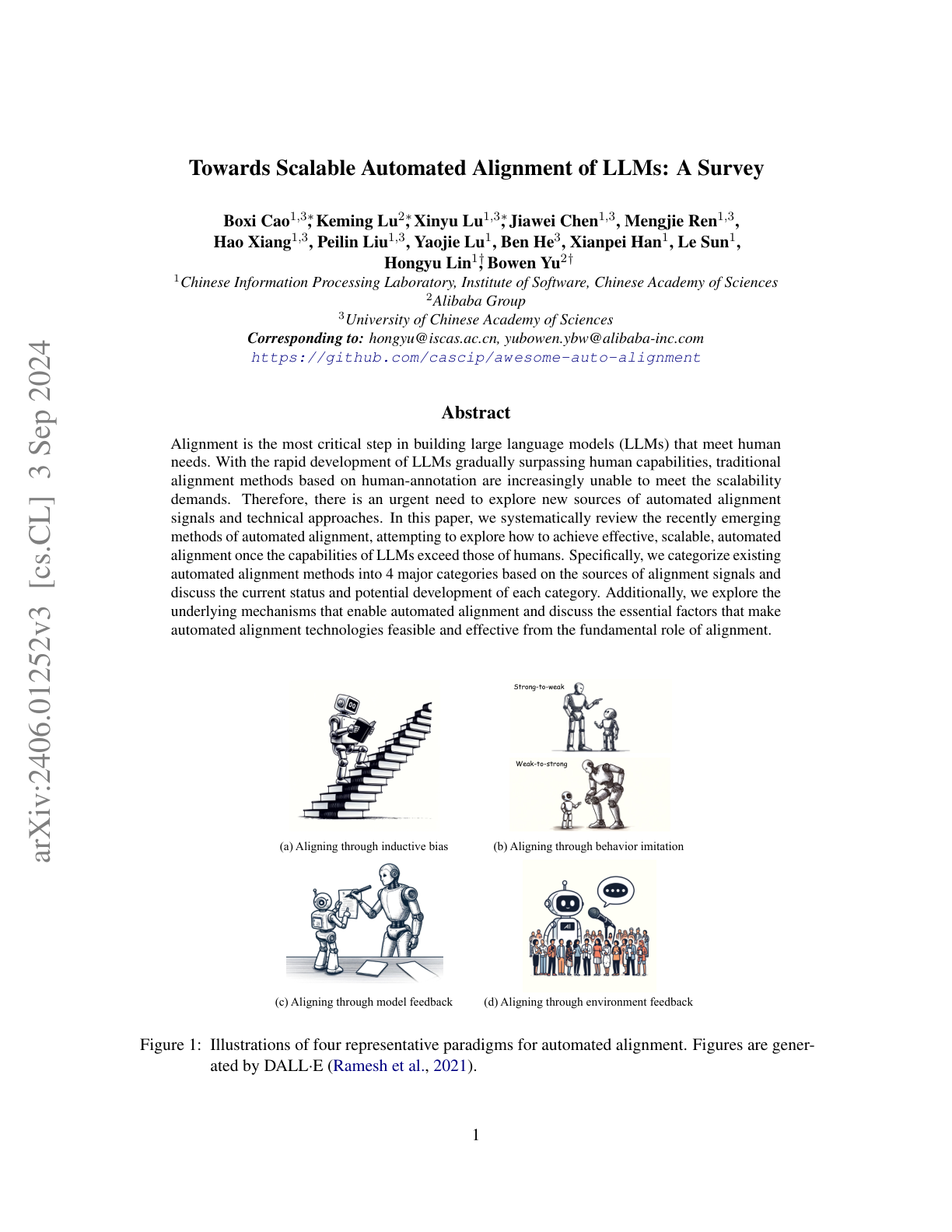
Towards Scalable Automated Alignment of LLMs
provides an overview of methods used for alignment of LLMs; explores the 4 following directions: 1) aligning through inductive bias, 2) aligning through behavior imitation, 3) aligning through model feedback, and 4) aligning through environment feedback.
AgentGym
a new framework featuring various environments and tasks for broad, real-time, and concurrent agent exploration; builds a generally capable LLM-based agent with self-evolution abilities and explores its potential beyond previously seen data across tasks and environments.
Contextual Position Encoding
proposes a new position encoding method, CoPE, to enable the position to be conditioned on context by incrementing position only on certain tokens; the position encoding is context-dependent and can represent different levels of position abstraction; the general position encoding method can attend to the i-th particular word, noun, or sentence; improves perplexity on language modeling and coding tasks.
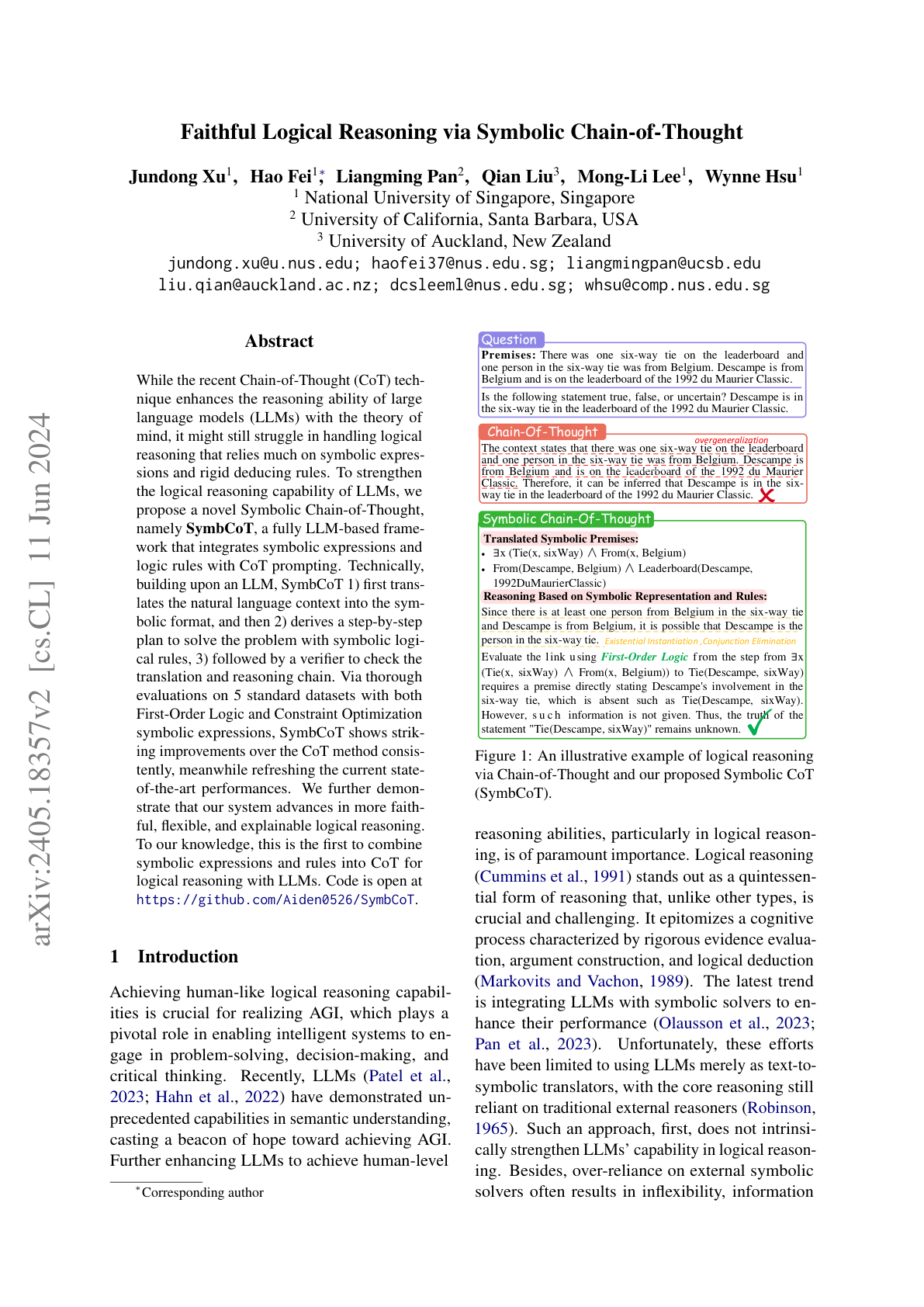
Symbolic Chain-of-Thought
proposes a method that improves the logical reasoning capabilities of LLMs by integrating symbolic expressions and logical rules with chain-of-thought (CoT) prompting; the prompting technique is called Symbolic Chain-of-Thought and it’s a fully LLM-based framework with the following key steps: 1) translates natural language context to symbolic format, 2) derives step-by-step plan to solve problems following symbolic logical rules, and 3) uses a verifier to check the translation and reasoning chain.
Abacus Embeddings
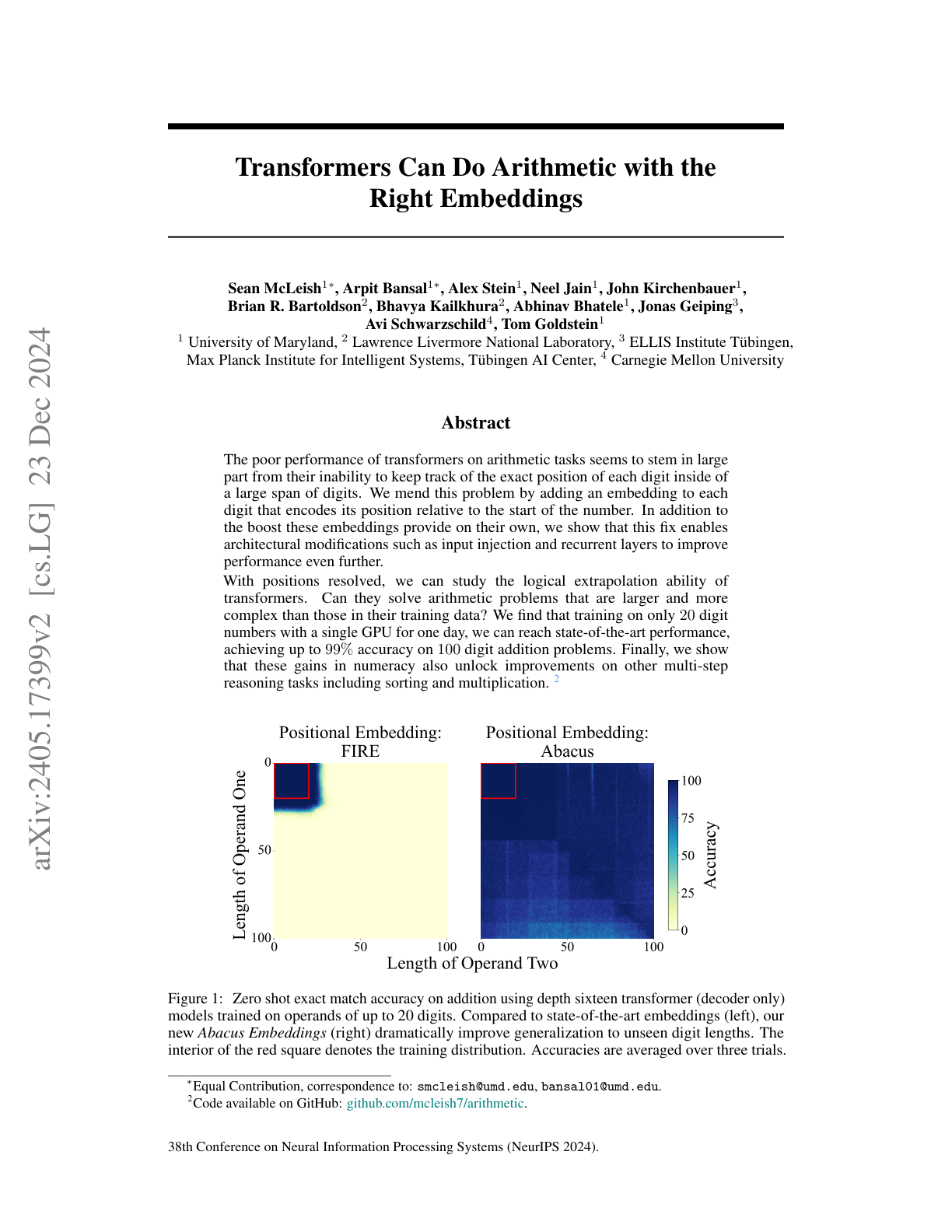
achieves 99% accuracy on 100-digit addition problems by training on only 20-digit numbers with a single GPU; the main challenge this work addresses is the inability of transformers to track the exact position of digits; they do this by adding an embedding to each digit that encodes its position relative to the start of the number; these gains also transfer to multi-step reasoning tasks that include sorting and multiplication.
Introduction to Vision-Language Modeling
presents an introduction to vision-language models along with key details of how they work and how to effectively train these models.
GNN-RAG
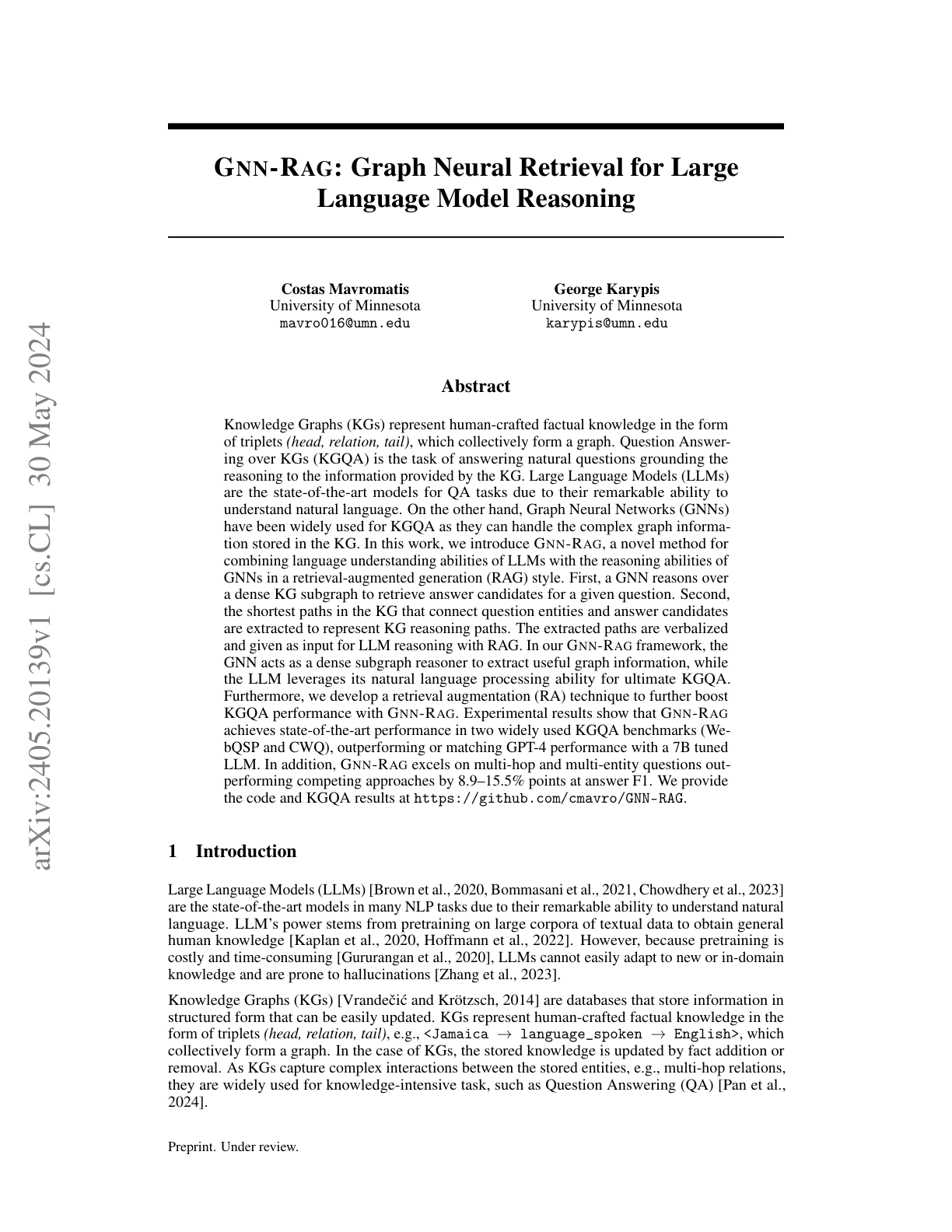
combines the language understanding abilities of LLMs with the reasoning abilities of GNNs in a RAG style; the GNN extracts useful and relevant graph information while the LLM takes the information and leverages its capabilities to perform question answering over knowledge graphs (KGQA); GNN-RAG improves vanilla LLMs on KGQA and outperforms or matches GPT-4 performance with a 7B tuned LLM.