AI Papers of the Week
Every paper worth reading in AI, hand-picked one week at a time.
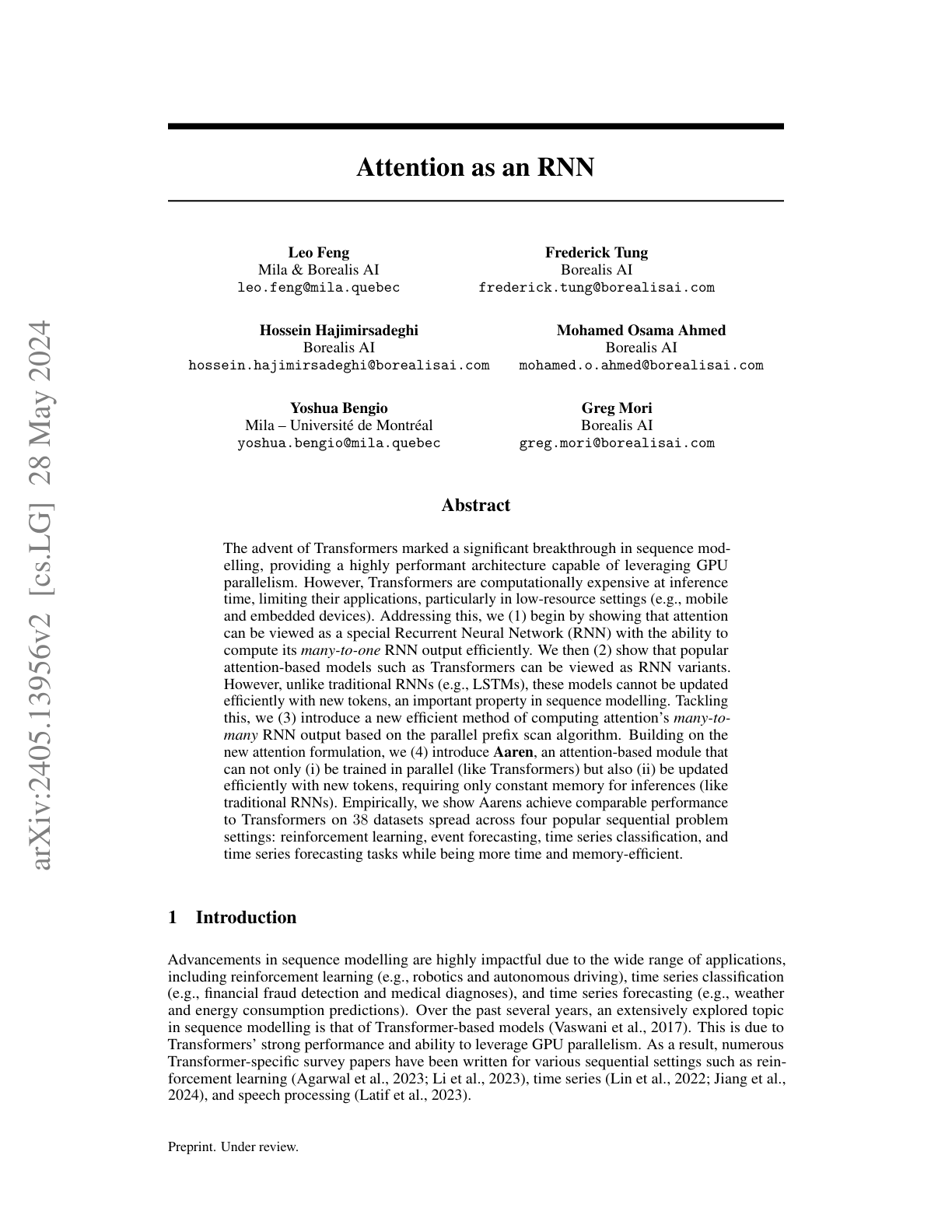
Attention as an RNN
presents a new attention mechanism that can be trained in parallel (like Transformers) and be updated efficiently with new tokens requiring constant memory usage for inferences (like RNNs); the attention formulation is based on the parallel prefix scan algorithm which enables efficient computation of attention’s many-to-many RNN output; achieves comparable performance to Transformers on 38 datasets while being more time and memory-efficient.
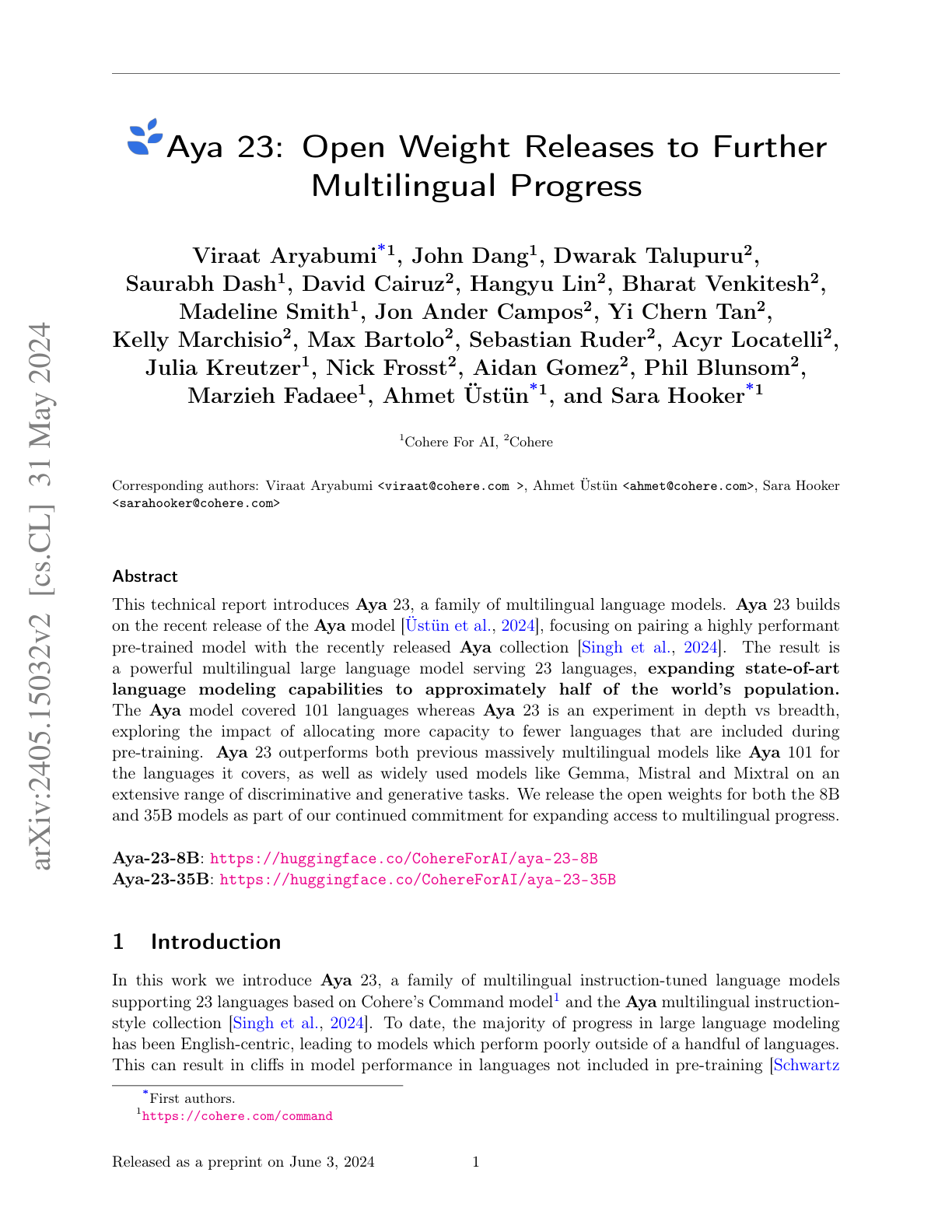
Aya23
a family of multilingual language models that can serve up to 23 languages; it intentionally focuses on fewer languages and allocates more capacity to these languages; shows that it can outperform other massive multimodal models on those specific languages.
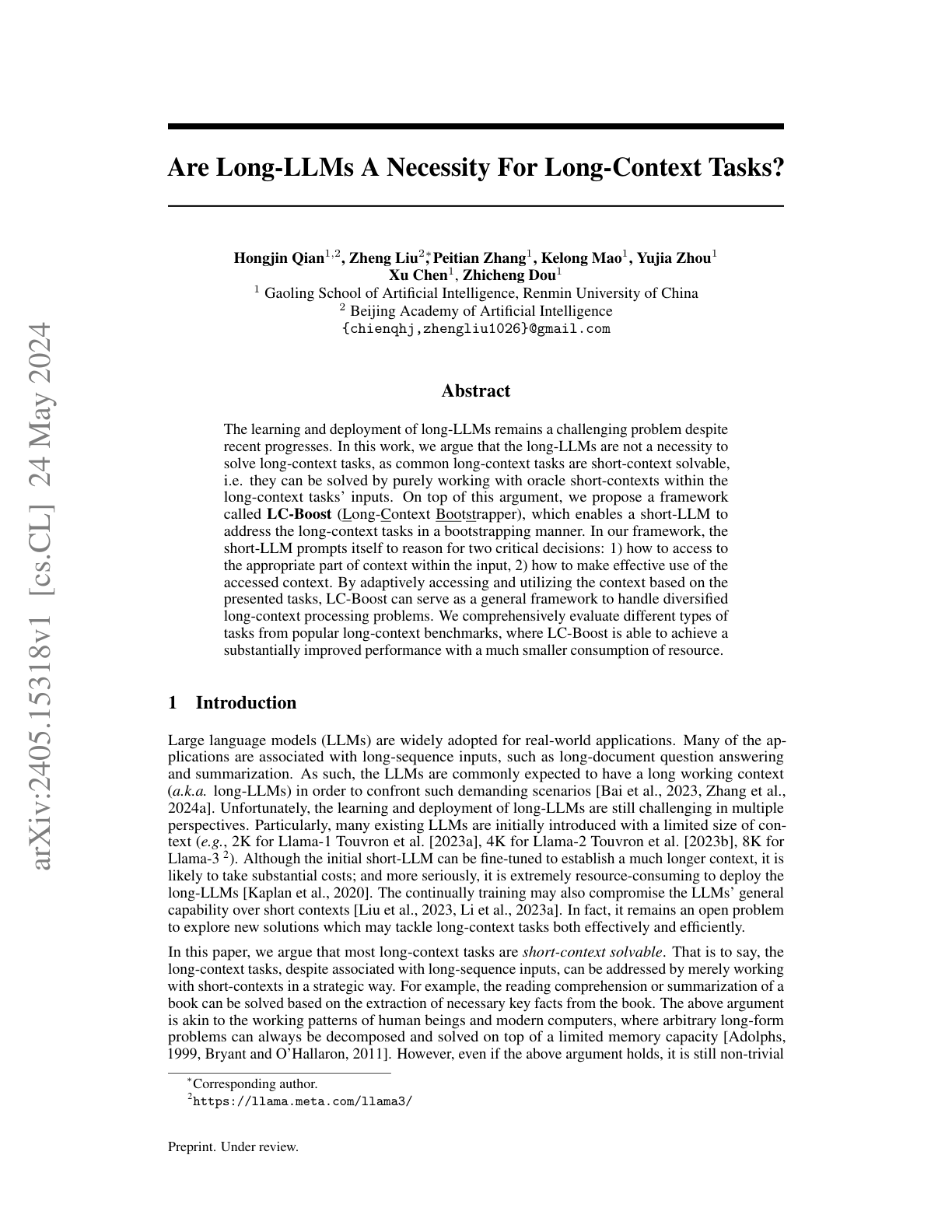
Are Long-LLMs A Necessity For Long-Context Tasks?
claims that long-LLMs are not a necessity to solve long-context tasks; proposes a reasoning framework to enable short-LLMs to address long-context tasks by adaptively accessing and utilizing the context based on the presented tasks; it decomposes the long context into short contexts and processes them using a decision-making process.
Financial Statement Analysis with LLMs
claims that LLMs can generate useful insights from its analysis of trends and financial ratios; shows that GPT-4 performs on par with narrowly specialized models; and achieves a profitable trading strategy based on GPT’s predictions.
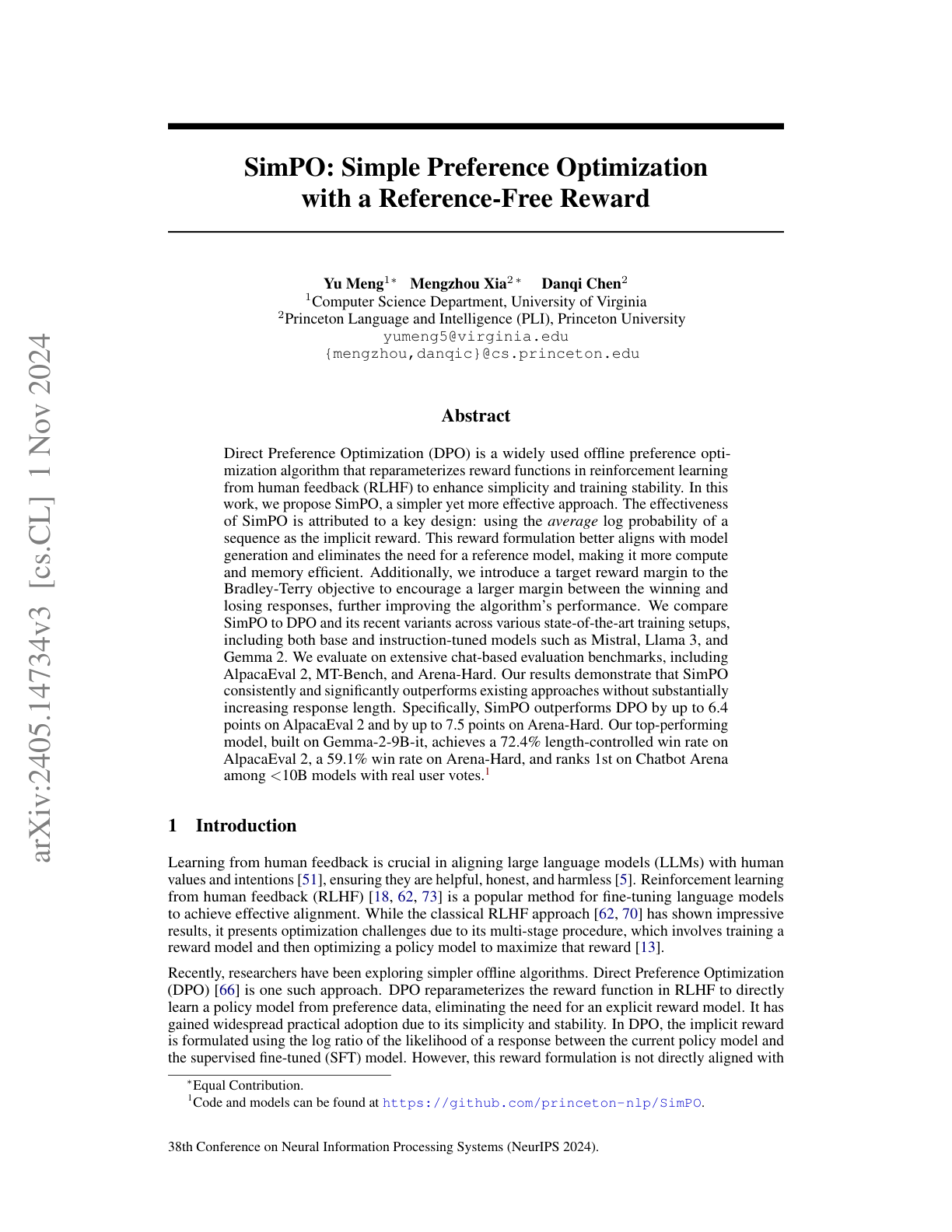
SimPO
a simpler and more effective approach for preference optimization with a reference-free reward; uses the average log probability of a sequence as an implicit reward (i.e., no reference model required) which makes it more compute and memory efficient; demonstrates that it outperforms existing approaches like DPO and claims to produce the strongest 8B open-source model.
Extracting Interpretable Features from Claude 3 Sonnet
presents an effective method to extract millions of abstract features from an LLM that represent specific concepts; these concepts could represent people, places, programming abstractions, emotion, and more; reports that some of the discovered features are directly related to the safety aspects of the model; finds features directly related to security vulnerabilities and backdoors in code, bias, deception, sycophancy; and dangerous/criminal content, and more; these features are also used to intuititively steer the model’s output.
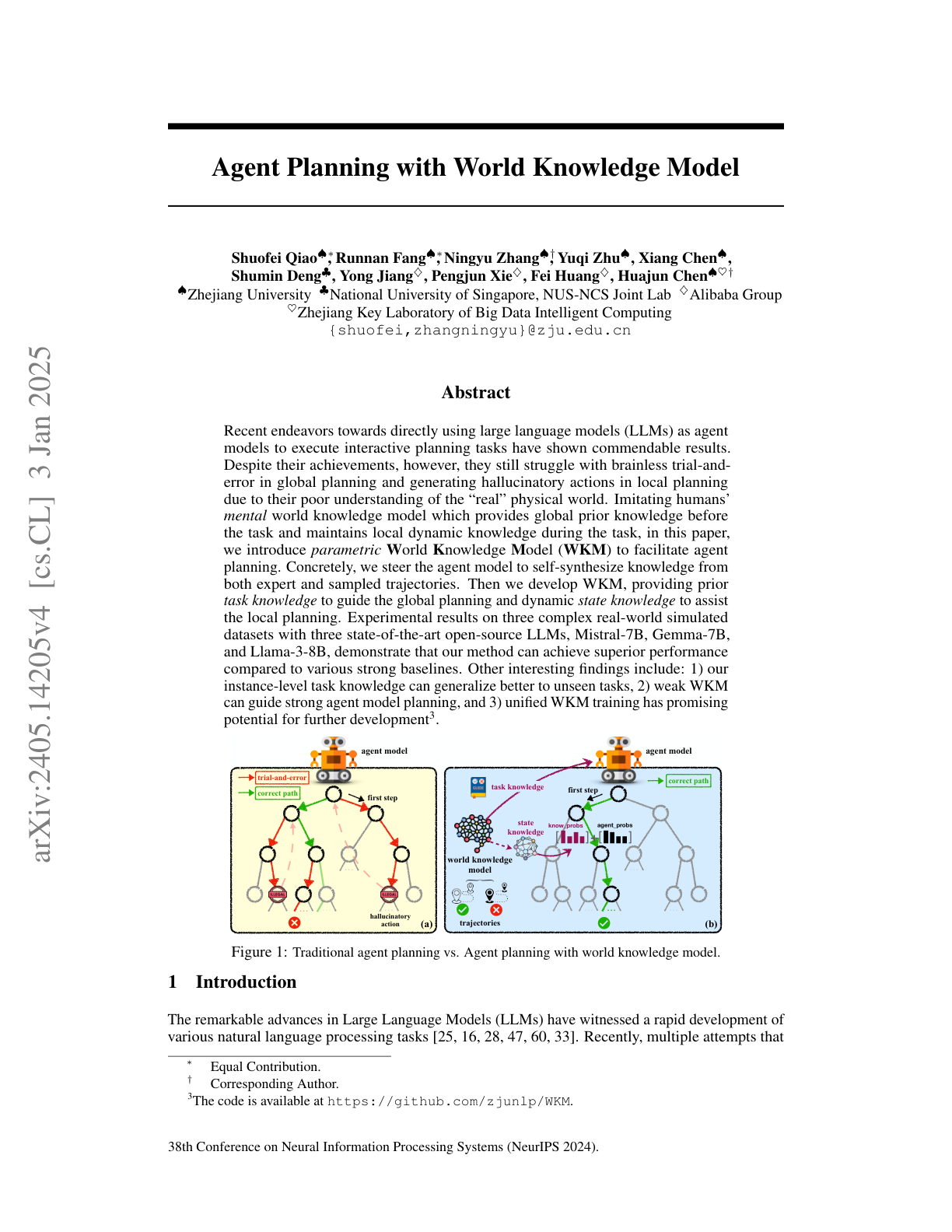
Agent Planning with World Knowledge Model
introduces a parametric world knowledge model to facilitate agent planning; the agent model can self-synthesize knowledge from expert and sampled trajectories; this is used to train the world knowledge model; prior task knowledge is used to guide global planning and dynamic state knowledge is used to guide the local planning; demonstrates superior performance compared to various strong baselines when adopting open-source LLMs like Mistral-7B and Gemma-7B.
Risks and Opportunities of Open-Source Generative AI
analyzes the risks and opportunities of open-source generative AI models; argues that the overall benefits of open-source generative AI outweigh its risks.
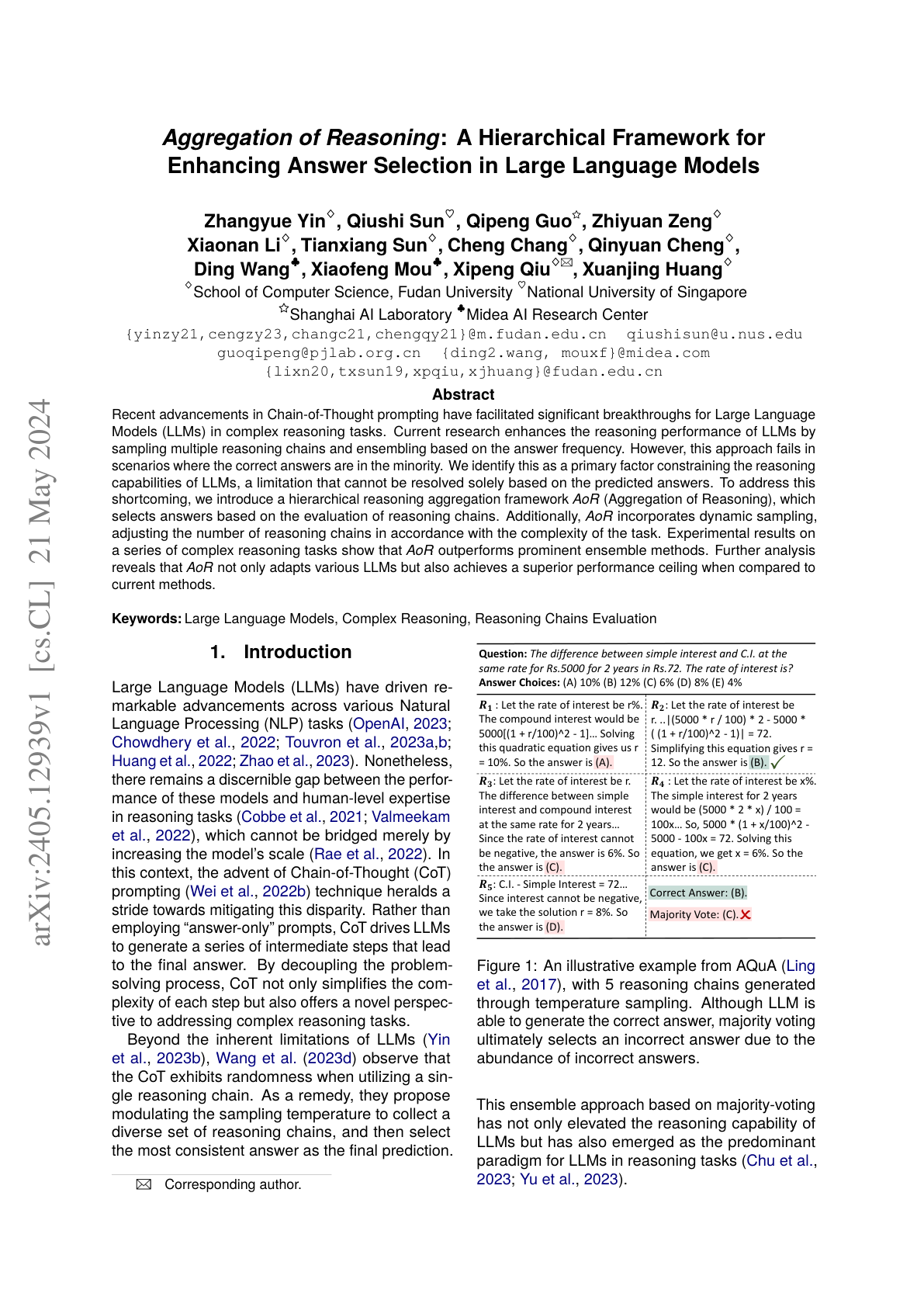
Enhancing Answer Selection in LLMs
proposes a hierarchical reasoning aggregation framework for improving the reasoning capabilities of LLMs; the approach, called Aggregation of Reasoning (AoR), selects answers based on the evaluation of reasoning chains; AoR uses dynamic sampling to adjust the number of reasoning chains with respect to the task complexity; it uses results from the evaluation phase to determine whether to sample additional reasoning chains; a known flaw of majority voting is that it fails in scenarios where the correct answer is in the minority; AoR focuses on evaluating the reasoning chains to improve the selection of the final answer; AoR outperforms various prominent ensemble methods and can be used with various LLMs to improve performance on complex reasoning tasks.
How Far Are We From AGI
presents an opinion paper addressing important questions to understand the proximity to artificial general intelligence (AGI); it provides a summary of strategies necessary to achieve AGI which includes a detailed survey, discussion, and original perspectives.
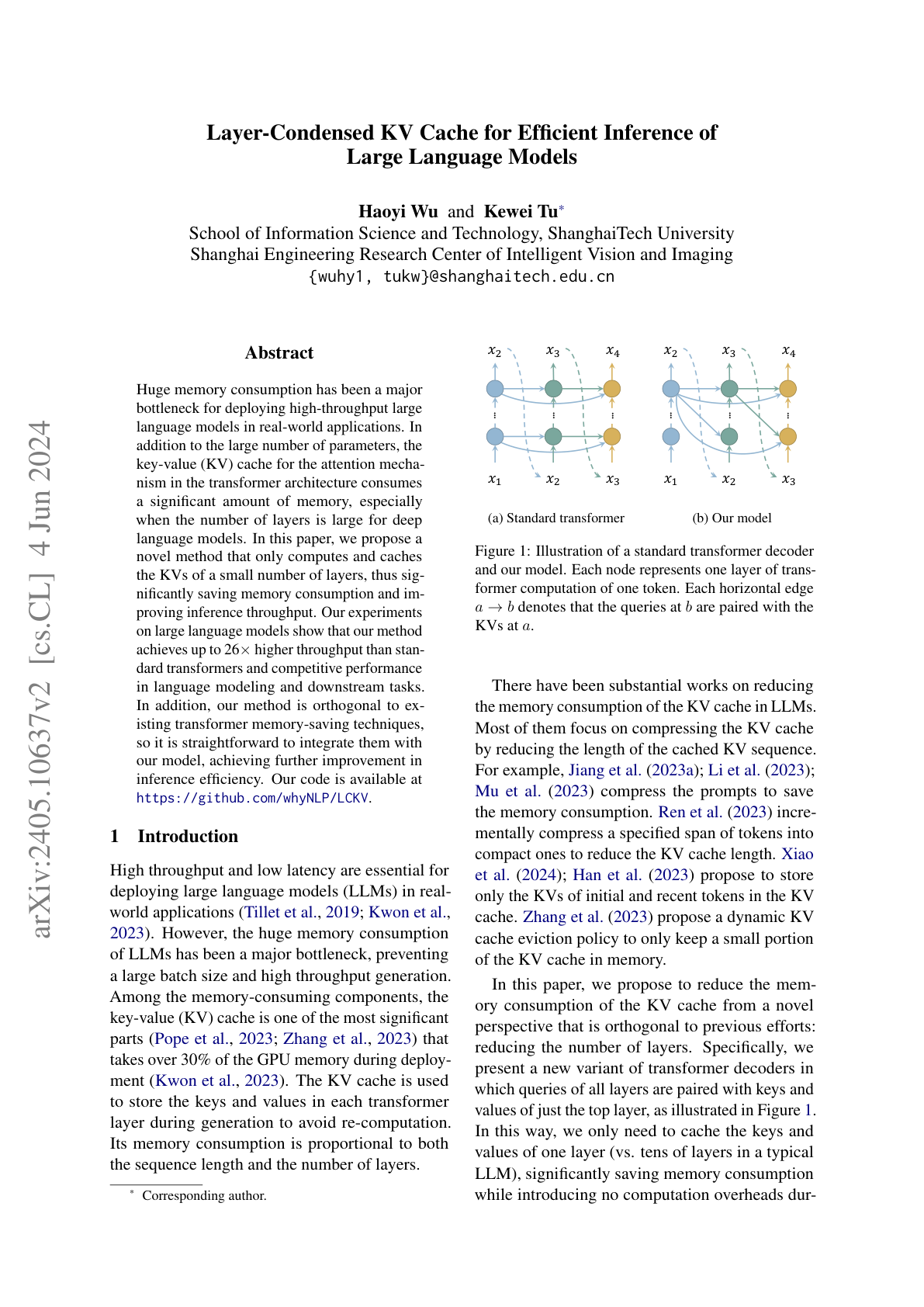
Efficient Inference of LLMs
proposes a layer-condensed KV cache to achieve efficient inference in LLMs; only computes and caches the key-values (KVs) of a small number of layers which leads to saving memory consumption and improved inference throughput; can achieve up to 26x higher throughput than baseline transformers while maintaining satisfactory performance.
Guide for Evaluating LLMs
provides guidance and lessons for evaluating large language models; discusses challenges and best practices, along with the introduction of an open-source library for evaluating LLMs.
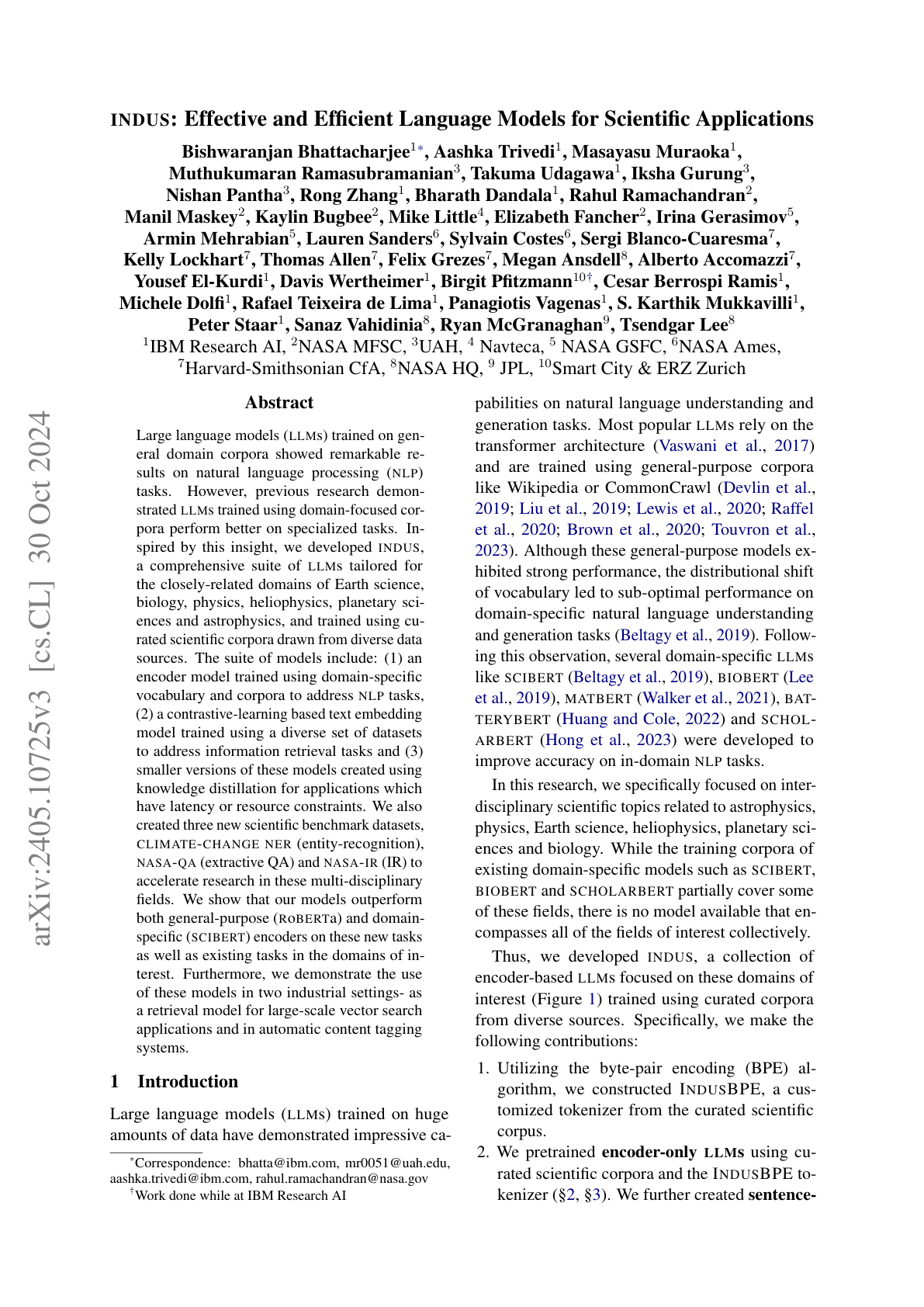
Scientific Applications of LLMs
presents INDUS, a comprehensive suite of LLMs for Earth science, biology, physics, planetary sciences, and more; includes an encoder model, embedding model, and small distilled models.
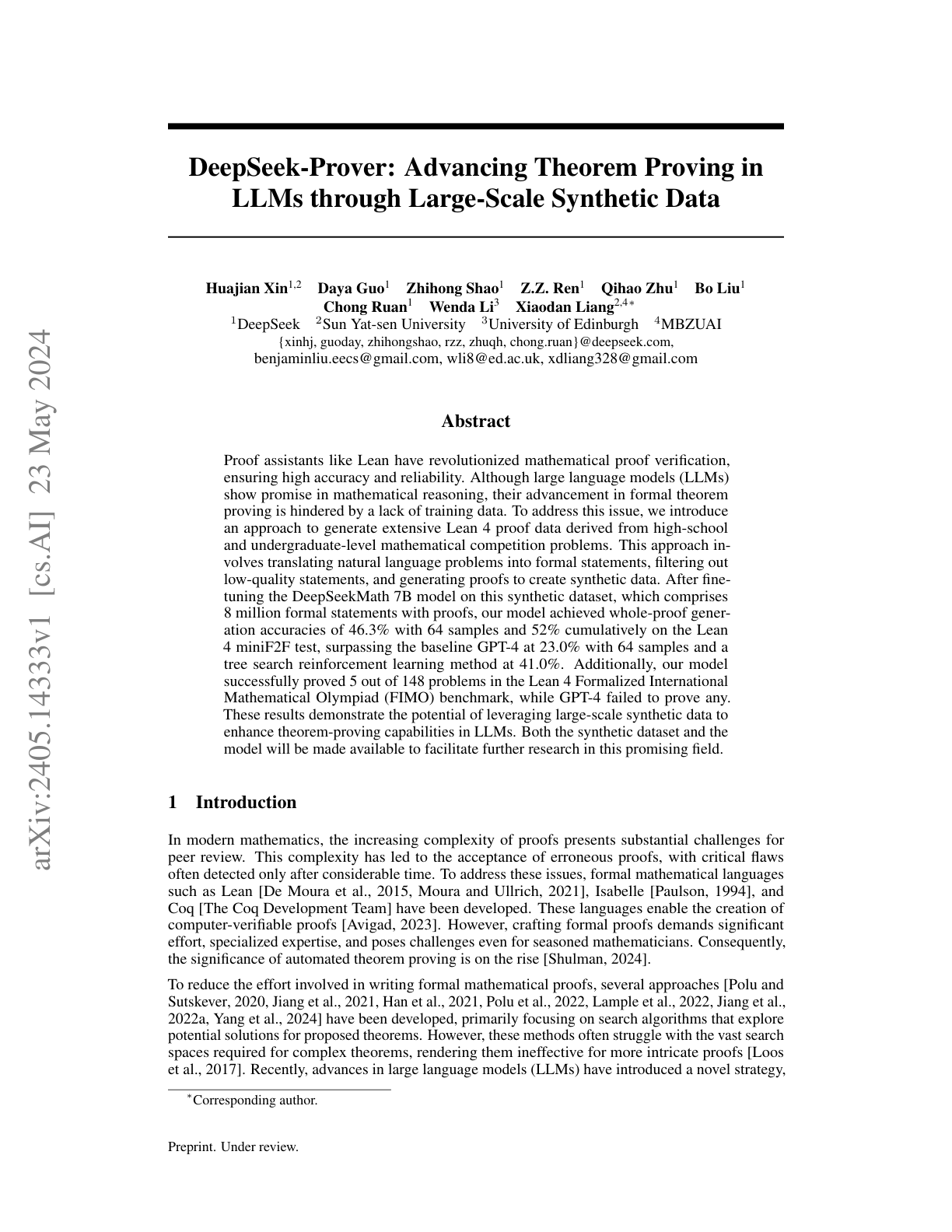
DeepSeek-Prover
introduces an approach to generate Lean 4 proof data from high-school and undergraduate-level mathematical competition problems; it uses the synthetic data, comprising of 8 million formal statements and proofs, to fine-tune a DeepSeekMath 7B model; achieves whole-proof generation accuracies of 46.3% with 64 samples and 52% cumulatively on the Lean 4 miniF2F test; this surpasses the baseline GPT-4 (23.0%) with 64 samples and a tree search RL method (41.0%).
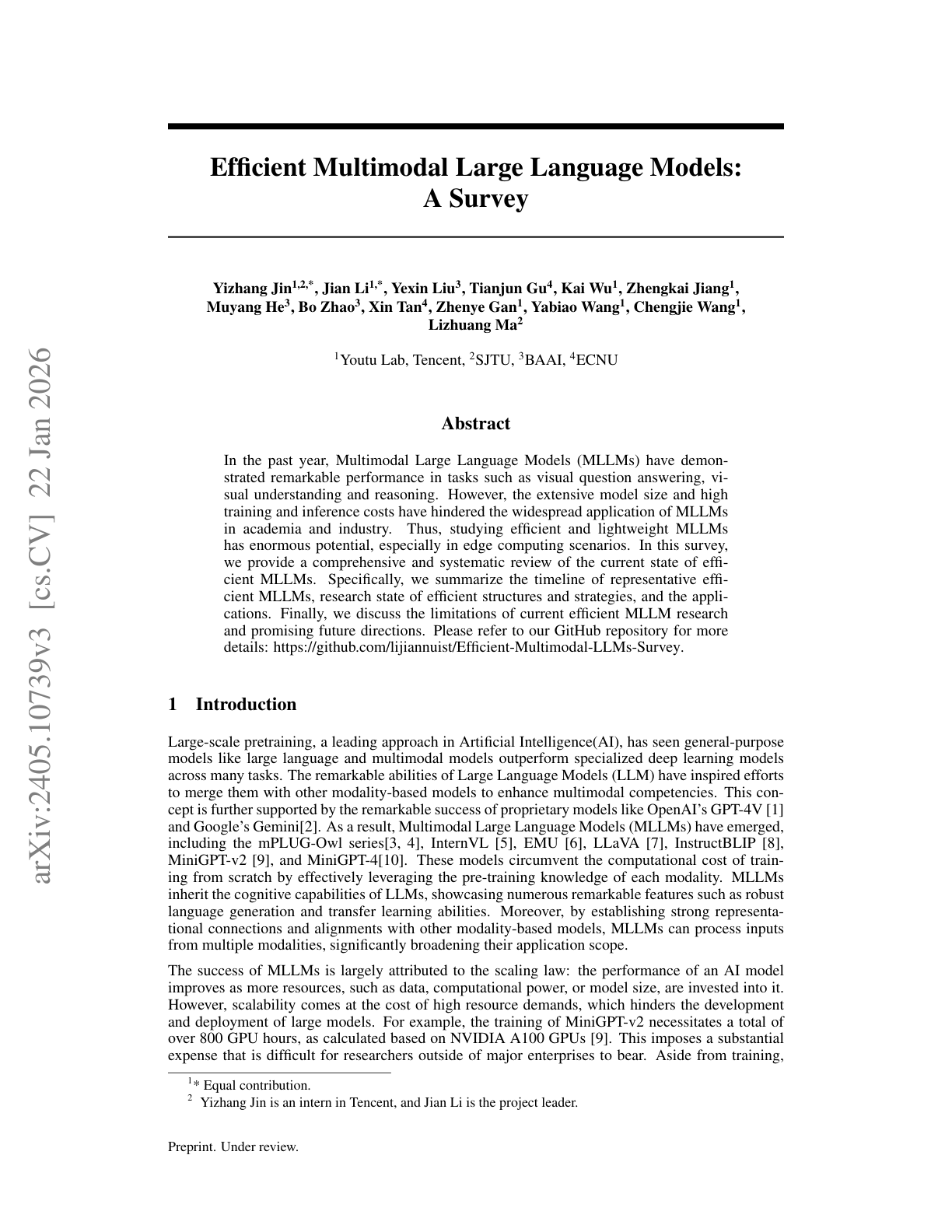
Efficient Multimodal LLMs
provides a comprehensive and systematic survey of the current state of efficient multimodal large language models; discusses efficient structures and strategies, applications, limitations, and promising future directions.
GPT-4o
a new model with multimodal reasoning capabilities with real-time support across audio, vision, and text; it can accept as input any combination of text, audio, image, and video to generate combinations of text, audio, and image outputs; it’s reported to match GPT-4 Turbo performance while being 50% much faster and cheaper via APIs.
Gemini 1.5 Flash
a lightweight transformer decoder model with a 2M context window with multimodal capabilities; it is designed for efficiency and yields the fastest output generation of all models on several evaluated languages; overall, Gemini 1.5 Flash performs uniformly better compared to Gemini 1.0 Pro and even performs at a similar level to 1.0 Ultra on several benchmarks.

Veo
Google Deepmind’s most capable video generation model generates high-quality, 1080p resolution videos beyond 1 minute; it supports masked editing on videos and can also generate videos with an input image along with text; the model can extend video clips to 60 seconds and more while keeping consistency with its latent diffusion transformer.
Chameleon
a family of token-based mixed-modal models for generating images and text in any arbitrary sequence; reports state-of-the-art performance in image captioning and outperforms Llama 2 in text-only tasks and is also competitive with Mixtral 8x7B and Gemini-Pro; exceeds the performance of Gemini Pro and GPT-4V on a new long-form mixed-modal generation evaluation.
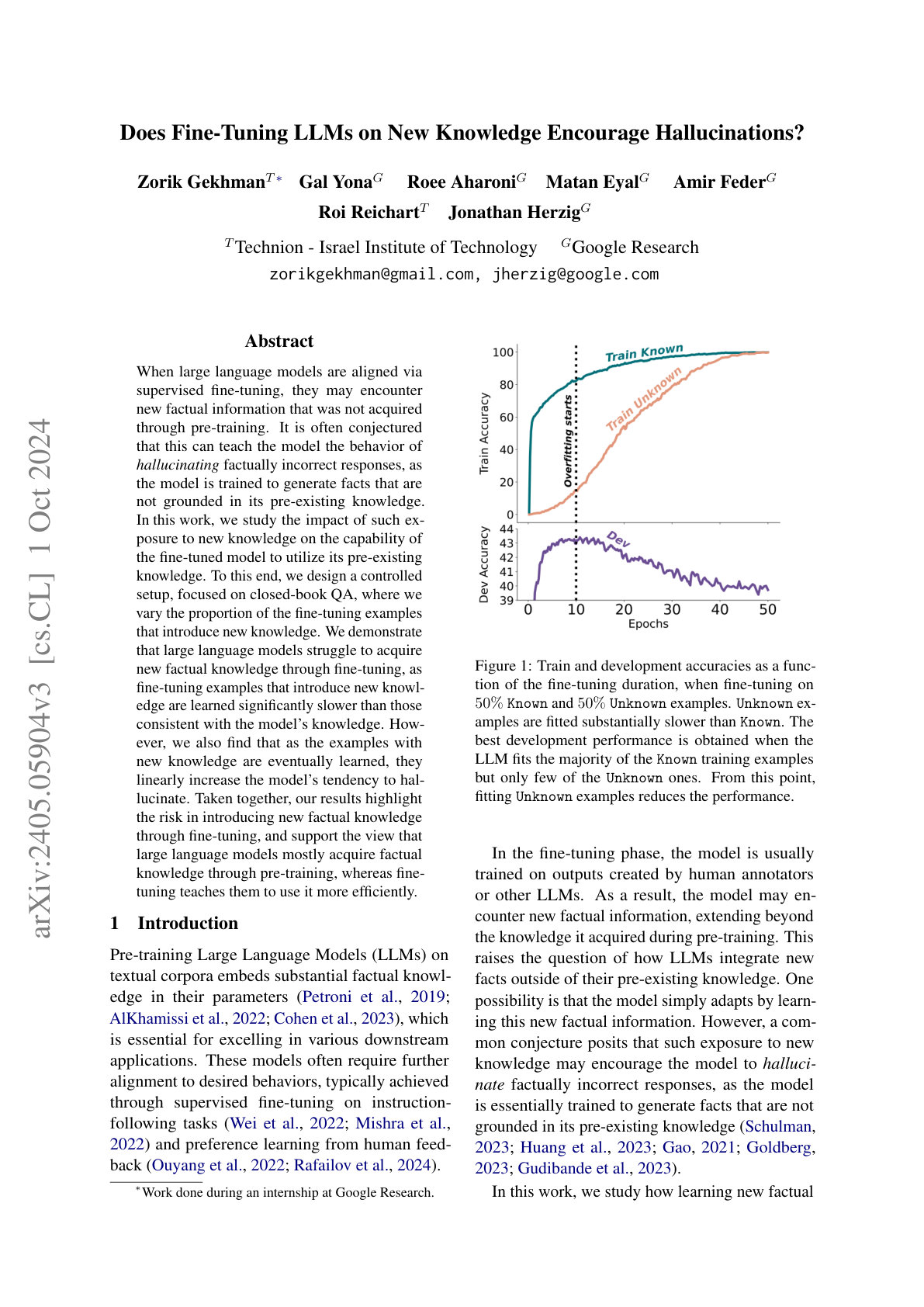
Fine-tuning and Hallucinations
studies the impact of fine-tuning on new knowledge on the hallucination tendencies of LLMs; the setup includes fine-tuning examples that include new knowledge; shows that LLMs struggle to acquire new factual knowledge via fine-tuning; also finds that as new knowledge is learned it increases the model’s tendency to hallucinate.
Zero-shot Tokenizer Transfer
trains a hypernetwork taking a tokenizer as input and predicting the corresponding embeddings; it demonstrates generalization to new tokenizers both with encoder and decoder LLMs; reports that the method achieves performance close to the original models' performance in cross-lingual and coding tasks while reducing the length of the tokenized sequence.
WavCraft
leverages LLMs to connect task-specific models for audio content creation and editing; decomposes users' instructions into several tasks and tackles each task collaboratively with the particular module; it can enable users to interact and produce audio content without explicit commands
RLHF Workflow
provides an easily reproducible recipe for online iterative RLHF; discusses theoretical insights and algorithmic principles of online iterative RLHF and practical implementation.
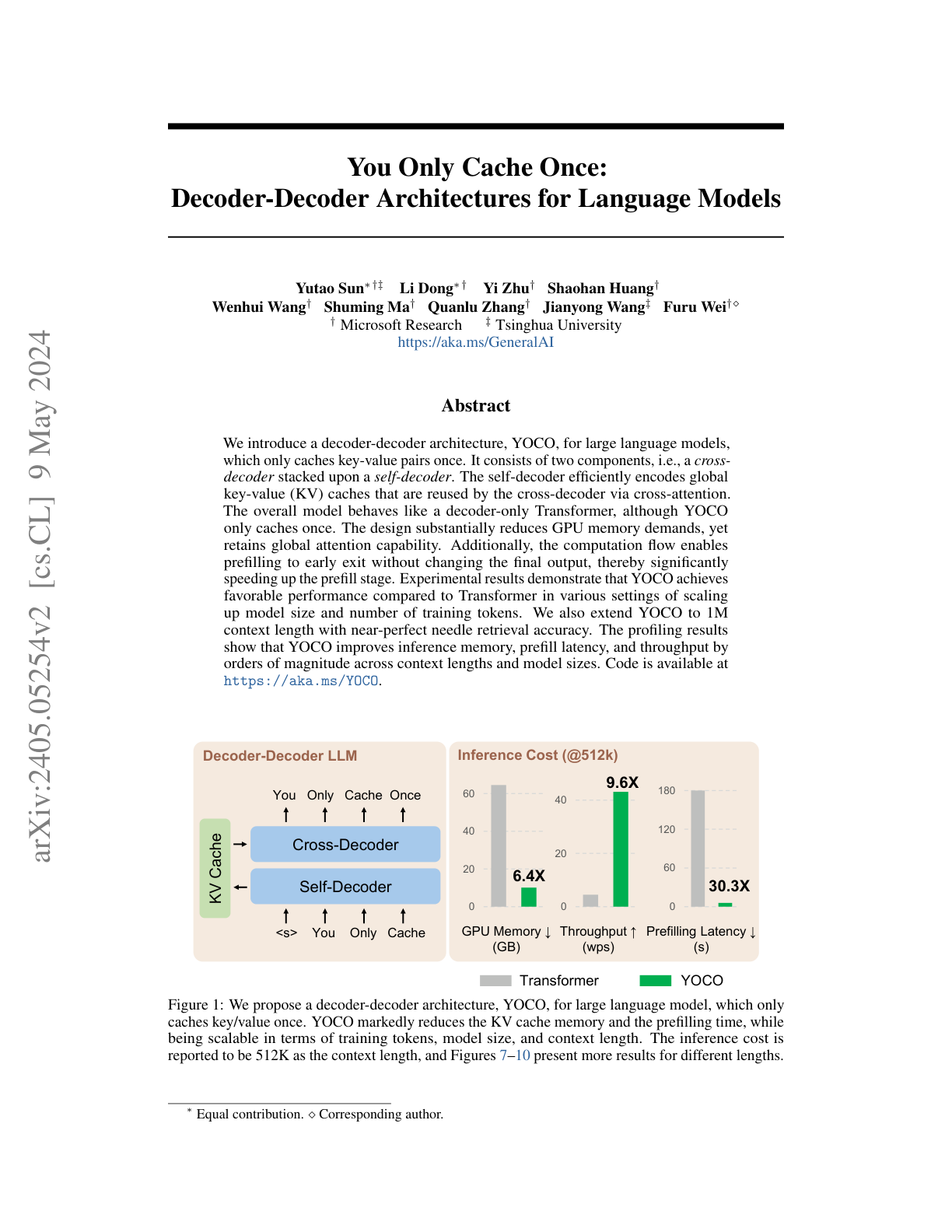
You Only Cache Once
a decoder-decoder LLM architecture that only caches key-value pairs once; it involves a cross-decoder stacked upon a self-decoder which efficiently encodes global key-value caches and the cross-encoder reuses the cache via cross-attention; this leads to a significant reduction in GPU memory use without sacrificing capabilities; achieves comparable performance to Transformer in various settings of scaling up model size and number of training token.