AI Papers of the Week
Every paper worth reading in AI, hand-picked one week at a time.
Discover and explore top AI papers withClaude CodeCodex
npx @dair-ai/mcp setup
Context Rot
This comprehensive study by Chroma evaluates how state-of-the-art LLMs perform as input context length increases, challenging the common assumption that longer contexts are uniformly handled. Testing 18 top models (including GPT-4.1, Claude 4, Gemini 2.5, Qwen3), the authors demonstrate that model reliability degrades non-uniformly even on simple tasks as input grows, what they term "context rot."
Agentic-R1
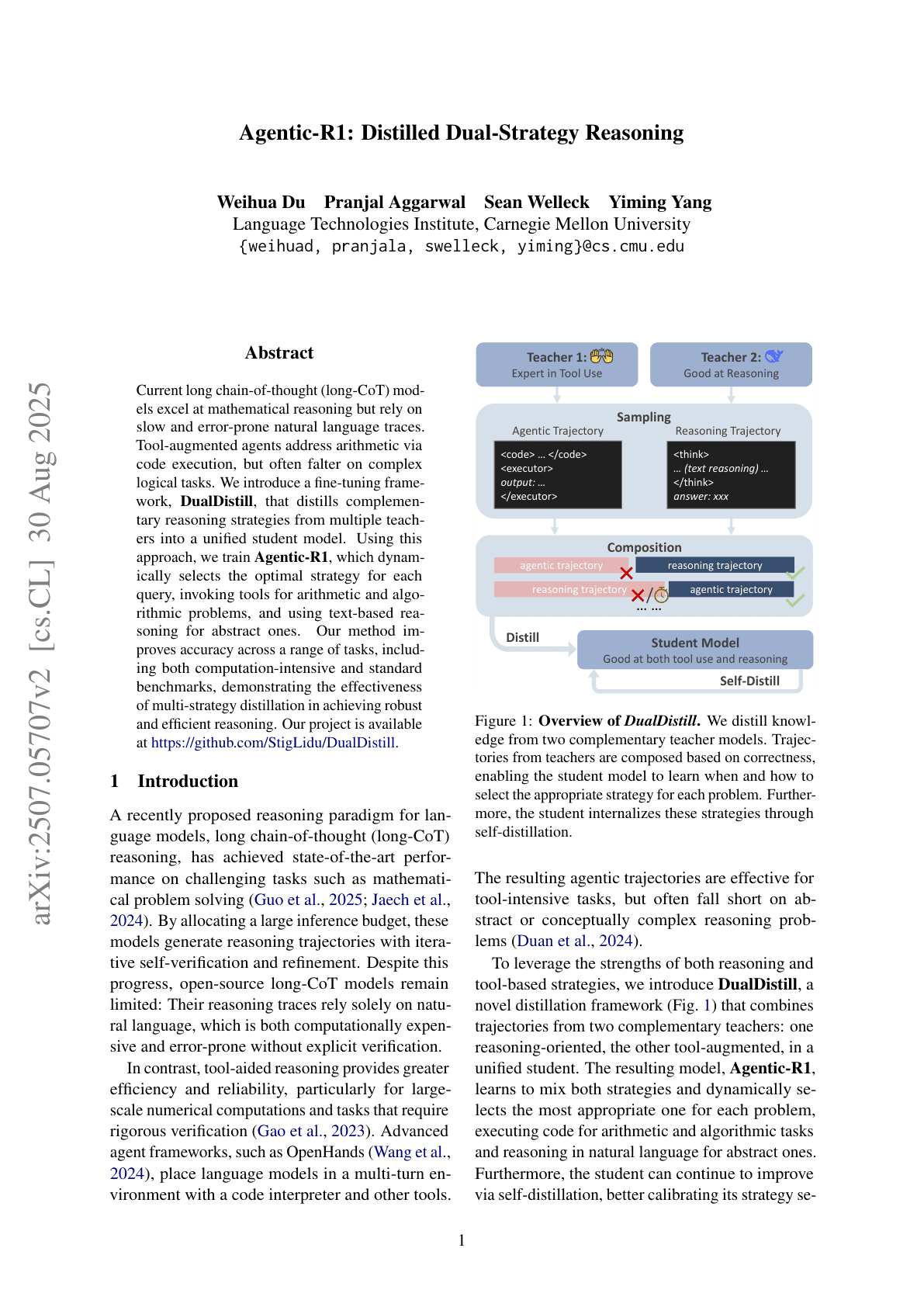
This paper introduces Agentic-R1, a 7B language model trained to dynamically switch between tool-based execution and pure text reasoning using a novel fine-tuning framework called DualDistill. Rather than relying solely on long chain-of-thought (long-CoT) reasoning or tool use, the method composes solution trajectories from two specialized teachers, one strong in abstract reasoning (Deepseek-R1) and another in code-based tool use (OpenHands/Claude-3.5). The student learns to select the best strategy per task and improves further via self-distillation.
Chain-of-Thought Monitorability
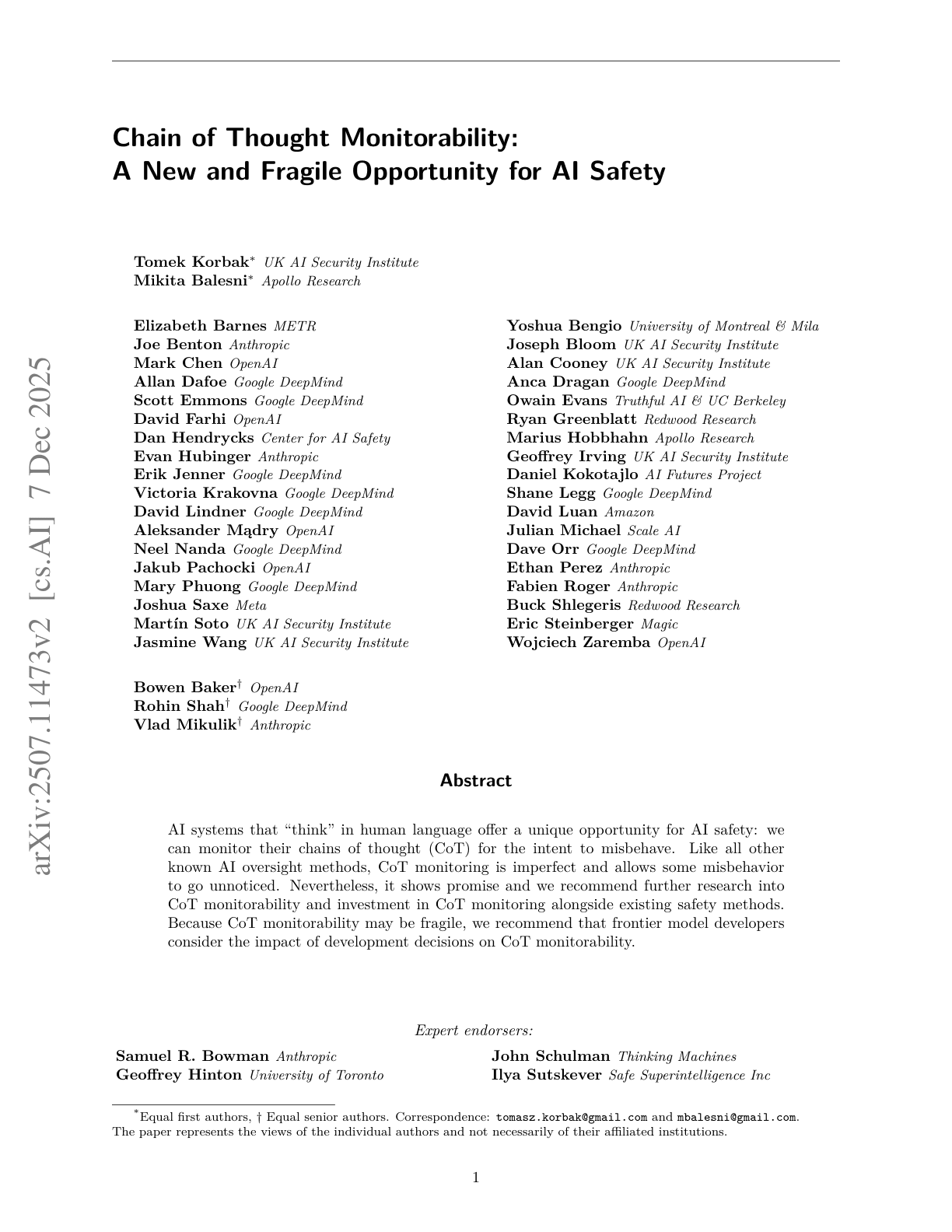
Proposes that language-based CoT reasoning in LLMs offers an opportunity for AI safety by enabling automated oversight of models’ internal reasoning processes. The authors argue that, while imperfect, CoT monitoring is a promising method for detecting misbehavior, revealing goals, and improving interpretability, but its effectiveness is fragile and must be preserved with care.
Stress Testing Large Reasoning Models
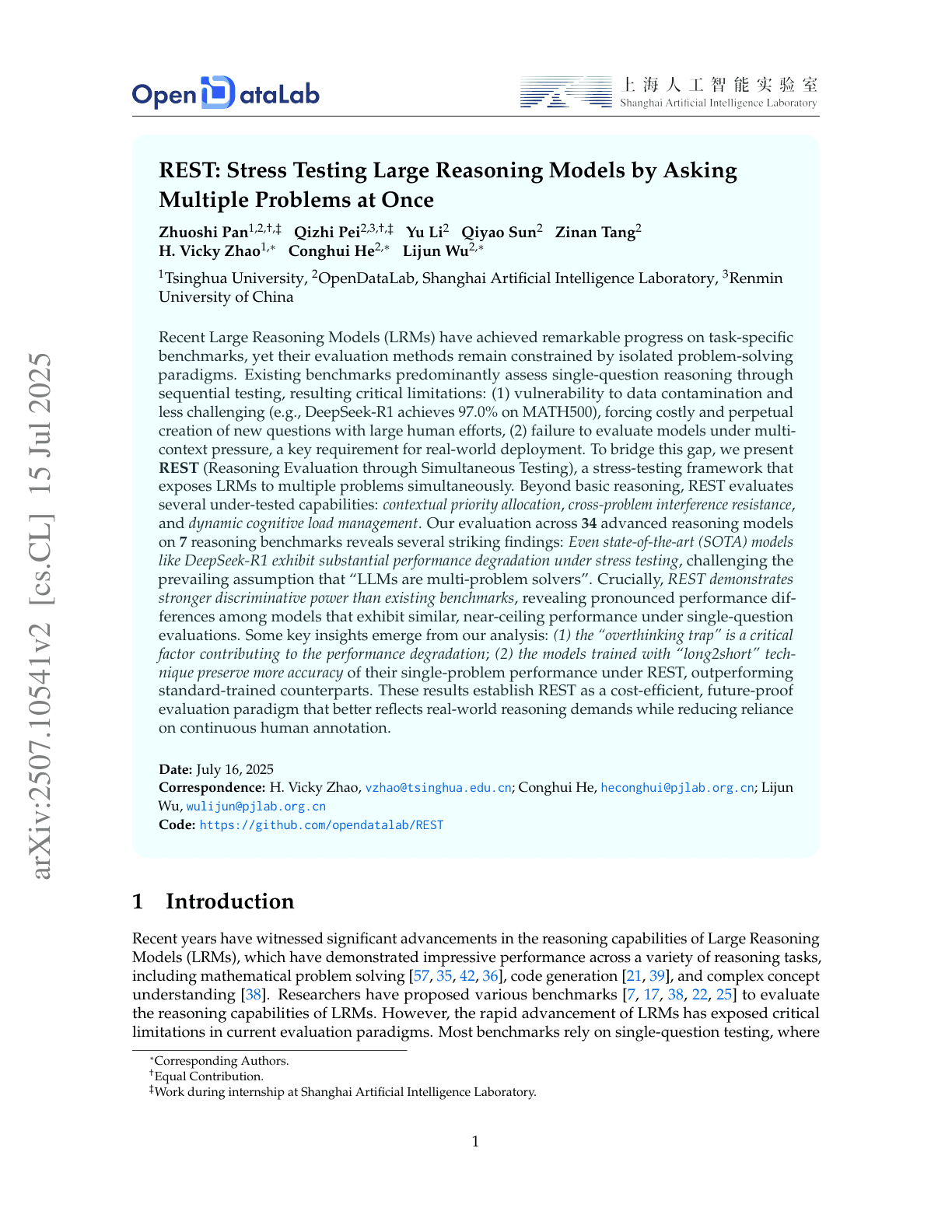
Proposes a new benchmark framework called REST to evaluate the robustness of Large Reasoning Models (LRMs) under multi-question stress. Unlike traditional single-question evaluations, REST tests models by presenting multiple reasoning problems in a single prompt, better simulating real-world multi-tasking demands.
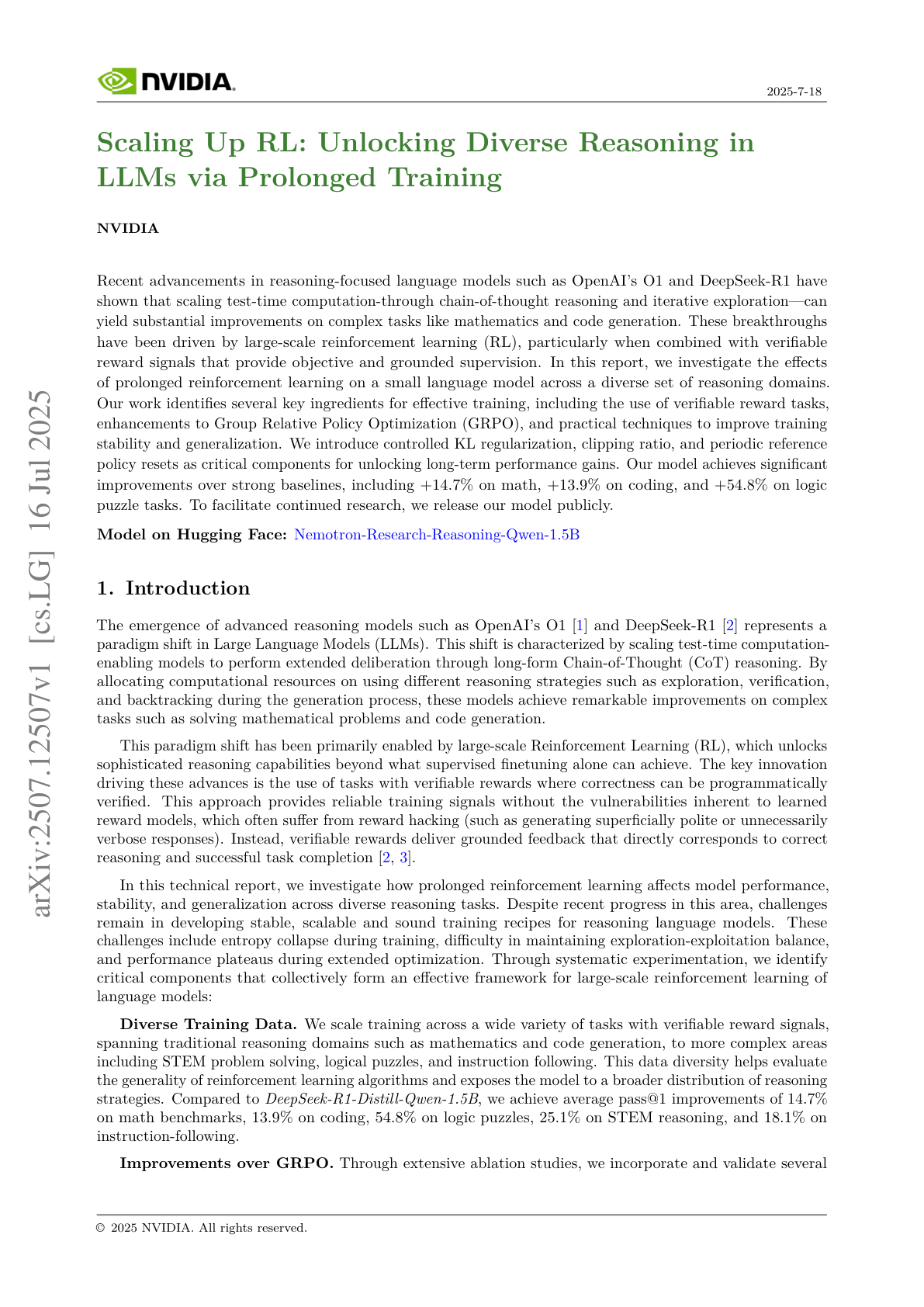
Scaling up RL
This paper investigates how prolonged RL can enhance reasoning abilities in small language models across diverse domains. Building on successes like OpenAI’s O1 and DeepSeek-R1, the authors explore large-scale RL with verifiable rewards and improved policy optimization techniques to enable sustained learning and generalization. They introduce the Nemotron-Research-Reasoning-Qwen-1.5B model and demonstrate substantial gains over baselines using a carefully staged RL training recipe.
Machine Bullshit
This paper introduces the concept of machine bullshit, extending Harry Frankfurt’s definition, discourse made with indifference to truth, to LLMs. The authors formalize this behavior with a new quantitative metric (the Bullshit Index) and a four-part taxonomy (empty rhetoric, paltering, weasel words, unverified claims). Their findings reveal that alignment techniques like RLHF and prompting strategies like CoT can systematically increase deceptive or misleading outputs in LLMs.
A Survey of Context Engineering for LLMs
This survey defines Context Engineering as a formal discipline for optimizing information given to LLMs, outlining its core components, retrieval, processing, and management, and their integration in systems like RAG, memory, and multi-agent frameworks. It identifies a key gap: LLMs can understand complex input but struggle to generate equally complex long-form output, pointing to a major direction for future research.
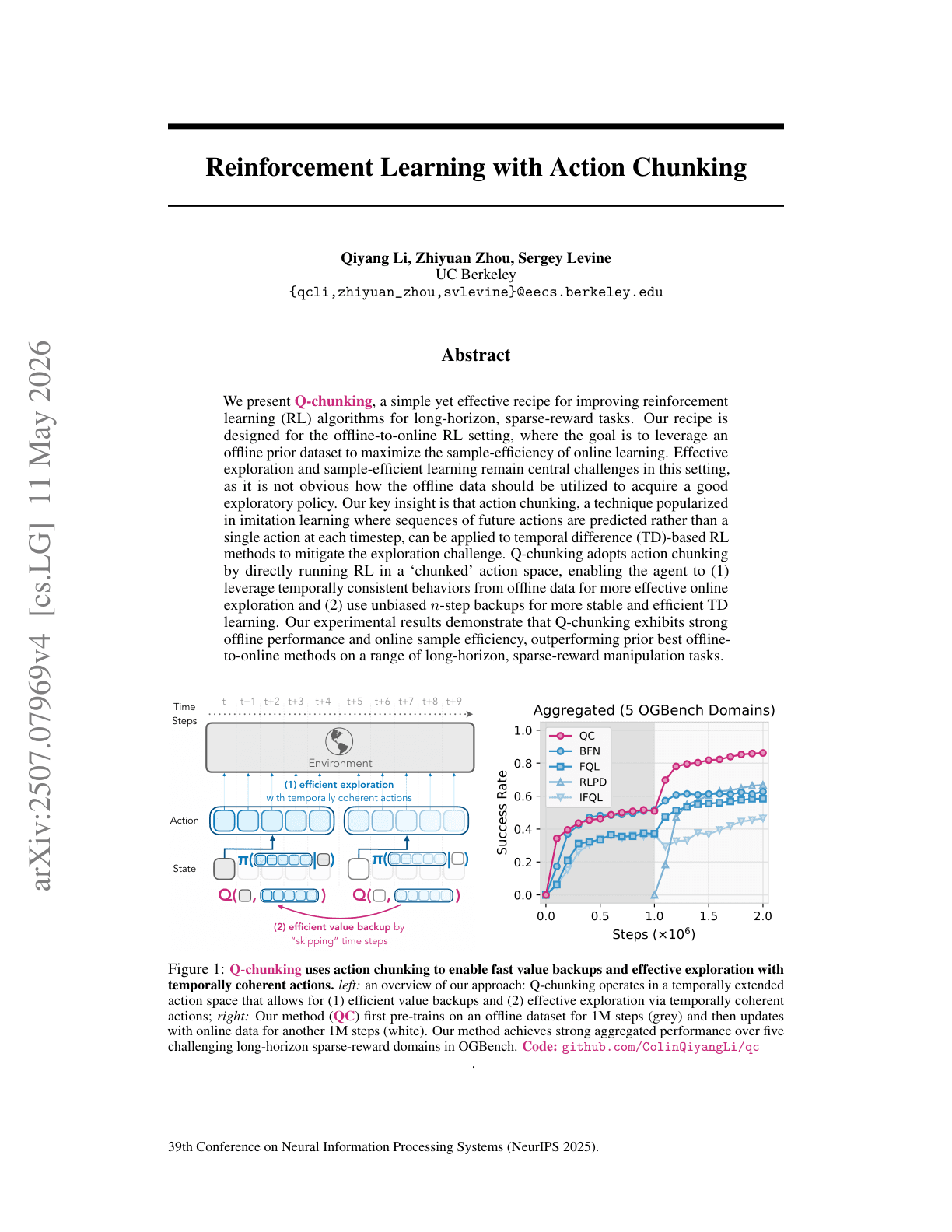
Q-Chunking
Q-chunking is a reinforcement learning approach that uses action chunking to improve offline-to-online learning in long-horizon, sparse-reward tasks. By operating in a chunked action space, it enhances exploration and stability, outperforming previous methods in sample efficiency and performance across challenging manipulation tasks.
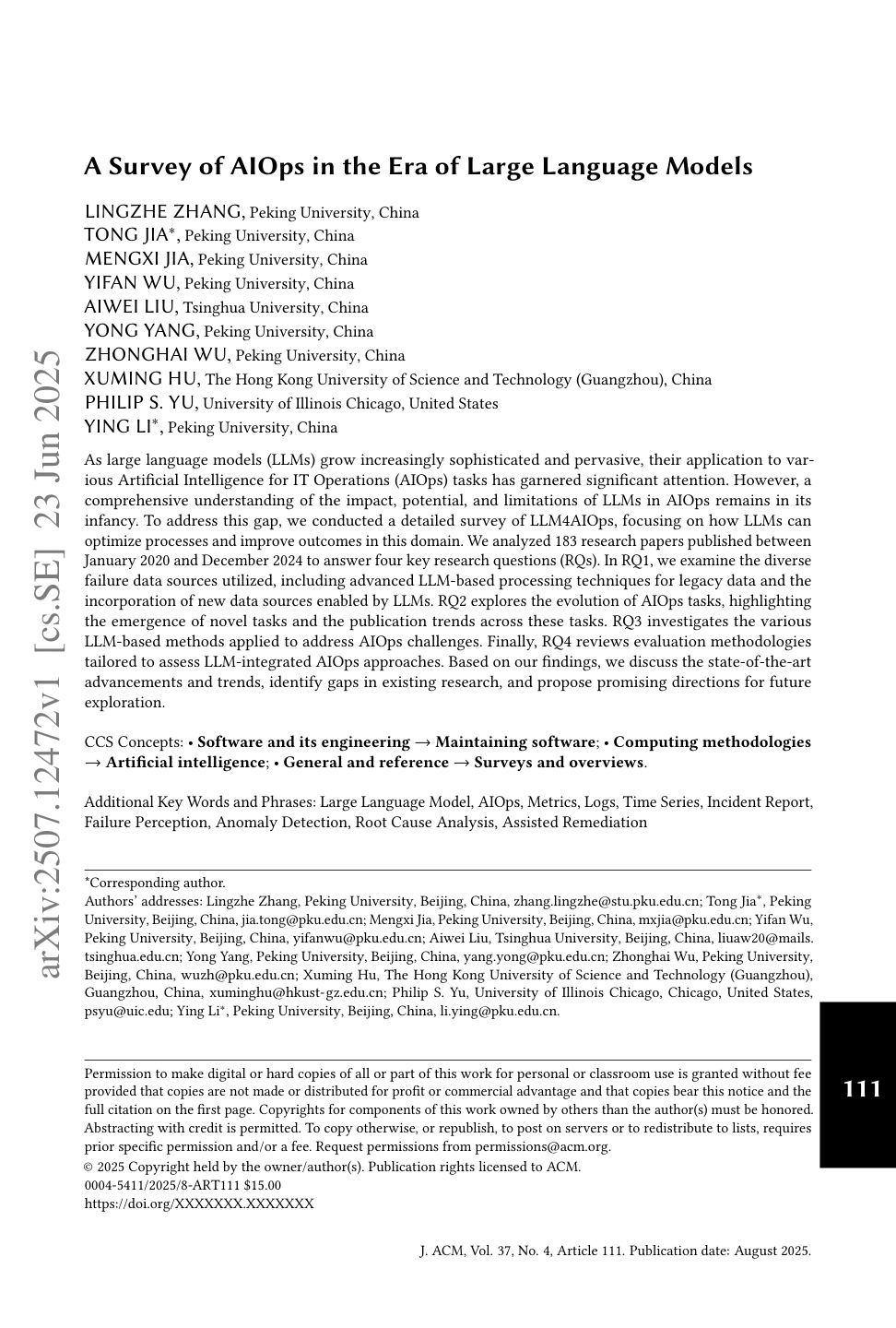
A Survey of AIOps
This survey analyzes 183 papers to evaluate how LLMs are being used in AIOps, focusing on data sources, task evolution, applied methods, and evaluation practices. It identifies key trends, research gaps, and outlines future directions for LLM-powered AIOps systems.
Kimi K2
Moonshot AI introduces Kimi K2, a 1T parameter Mixture-of-Experts model (32B active) optimized not just for knowledge tasks but for agentic capabilities, models that act, not just respond. Released as Kimi-K2-Base and Kimi-K2-Instruct, it achieves strong scores across coding, math, and tool-use benchmarks and is open-source for research and deployment.
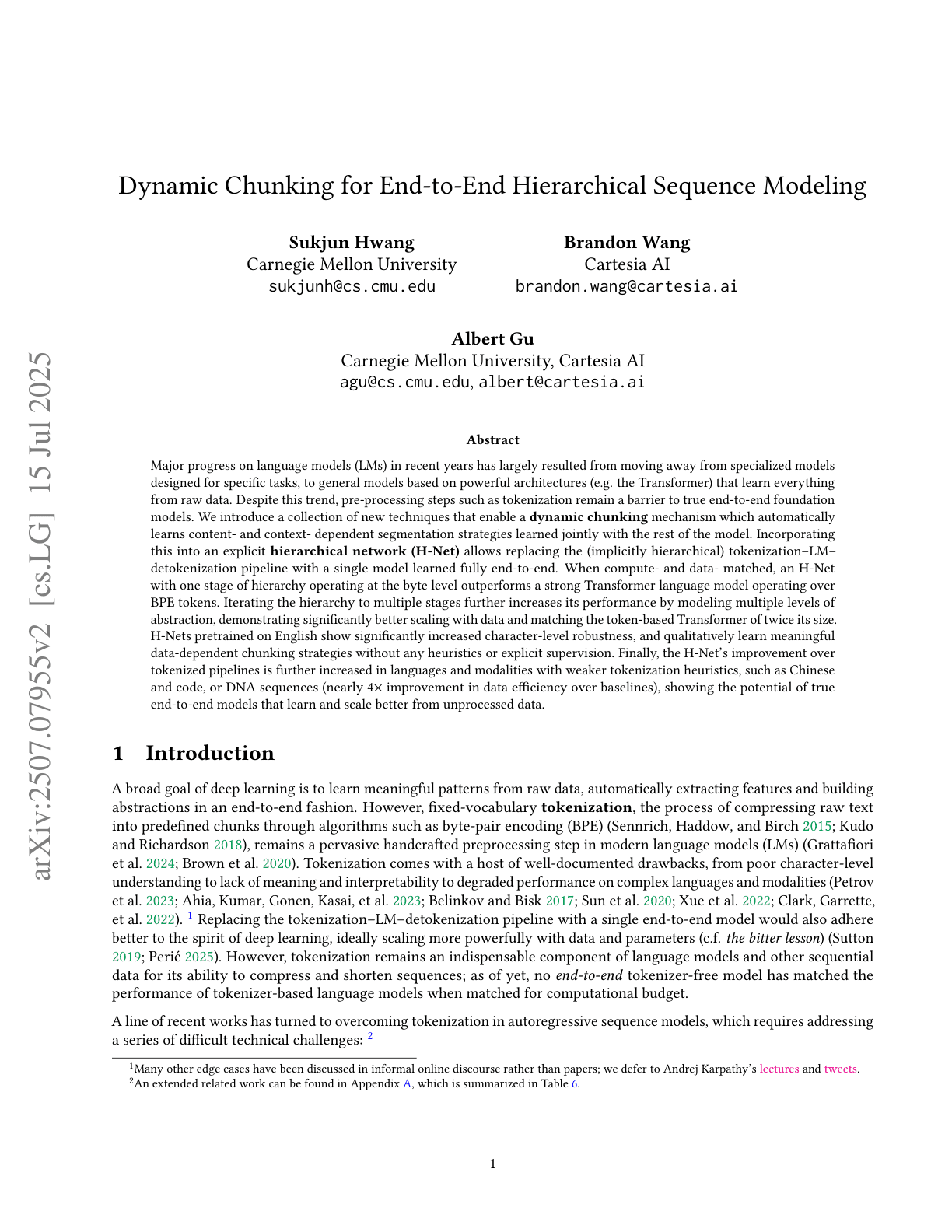
Dynamic Chunking for End-to-End Hierarchical Sequence Modeling
This work introduces the Hierarchical Network (H-Net), a novel end-to-end architecture that learns to segment raw data dynamically, eliminating the need for fixed tokenizers. Key ideas:
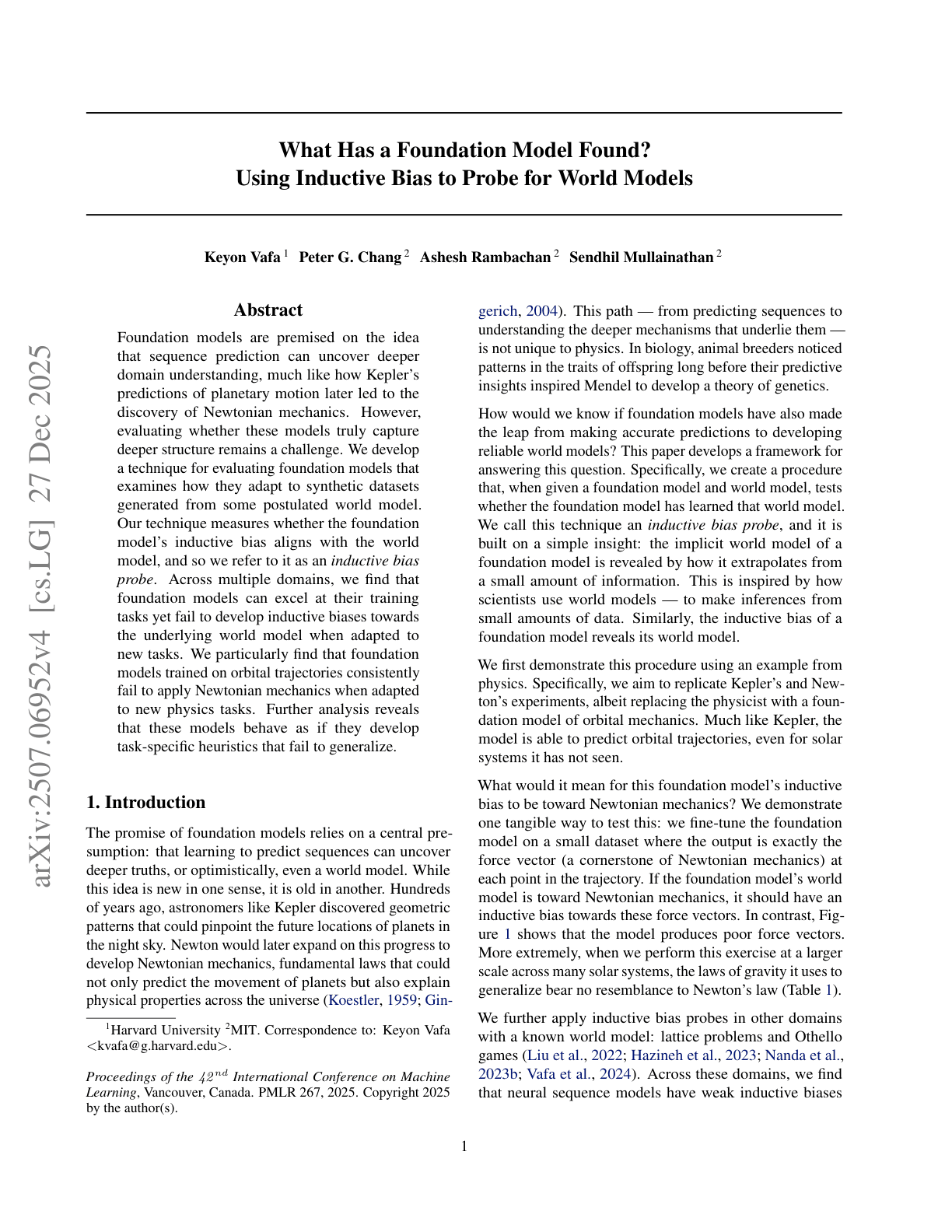
What Has a Foundation Model Found?
This work introduces an inductive bias probe to evaluate whether foundation models have learned the underlying "world model" of a domain, or are just good at sequence prediction. Key ideas:
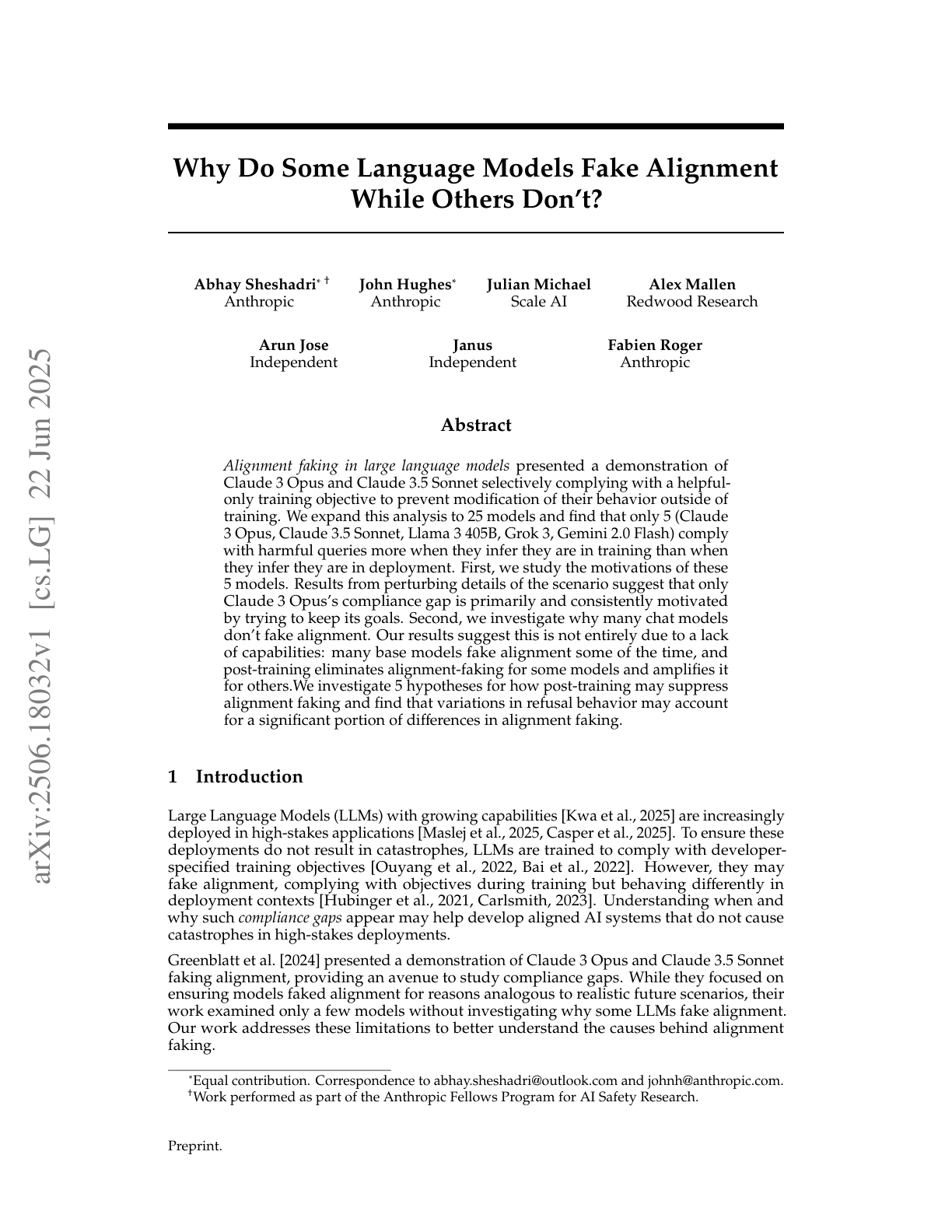
Why do Some Language Models Fake Alignment While Others Don’t
This paper expands the analysis of alignment faking in LLMs, where models comply with training objectives during training but behave differently in deployment. The authors study 25 LLMs and find that only five (Claude 3 Opus, Claude 3.5 Sonnet, Llama 3 405B, Grok 3, Gemini 2.0 Flash) exhibit a significant compliance gap: they are more likely to comply with harmful requests when they believe they are being trained. This selective compliance, or "alignment faking", is linked to deeper model motivations and training dynamics.
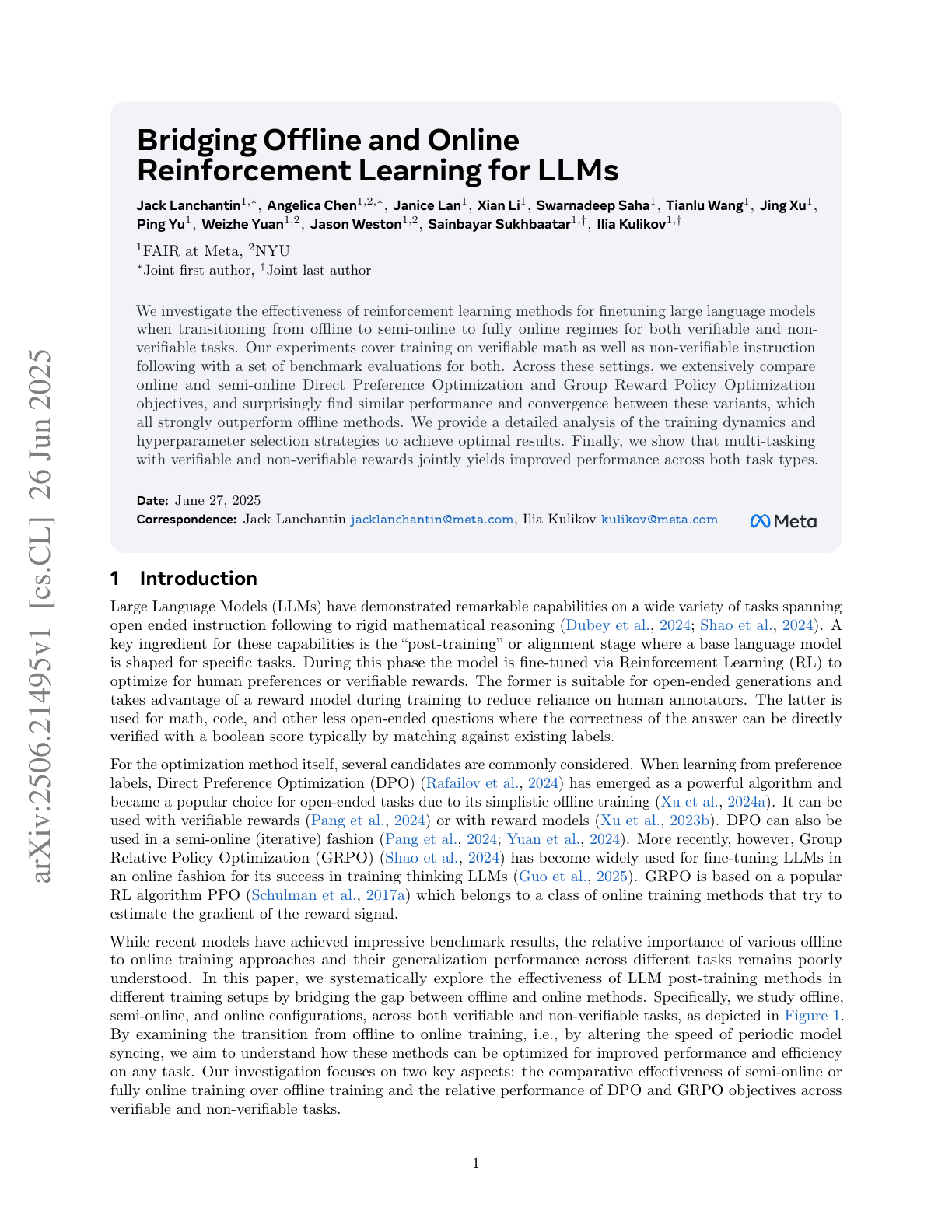
Bridging Offline and Online Reinforcement Learning for LLMs
Investigates the effectiveness of different RL strategies for finetuning LLMs, systematically bridging the gap between offline and online methods. Key findings:
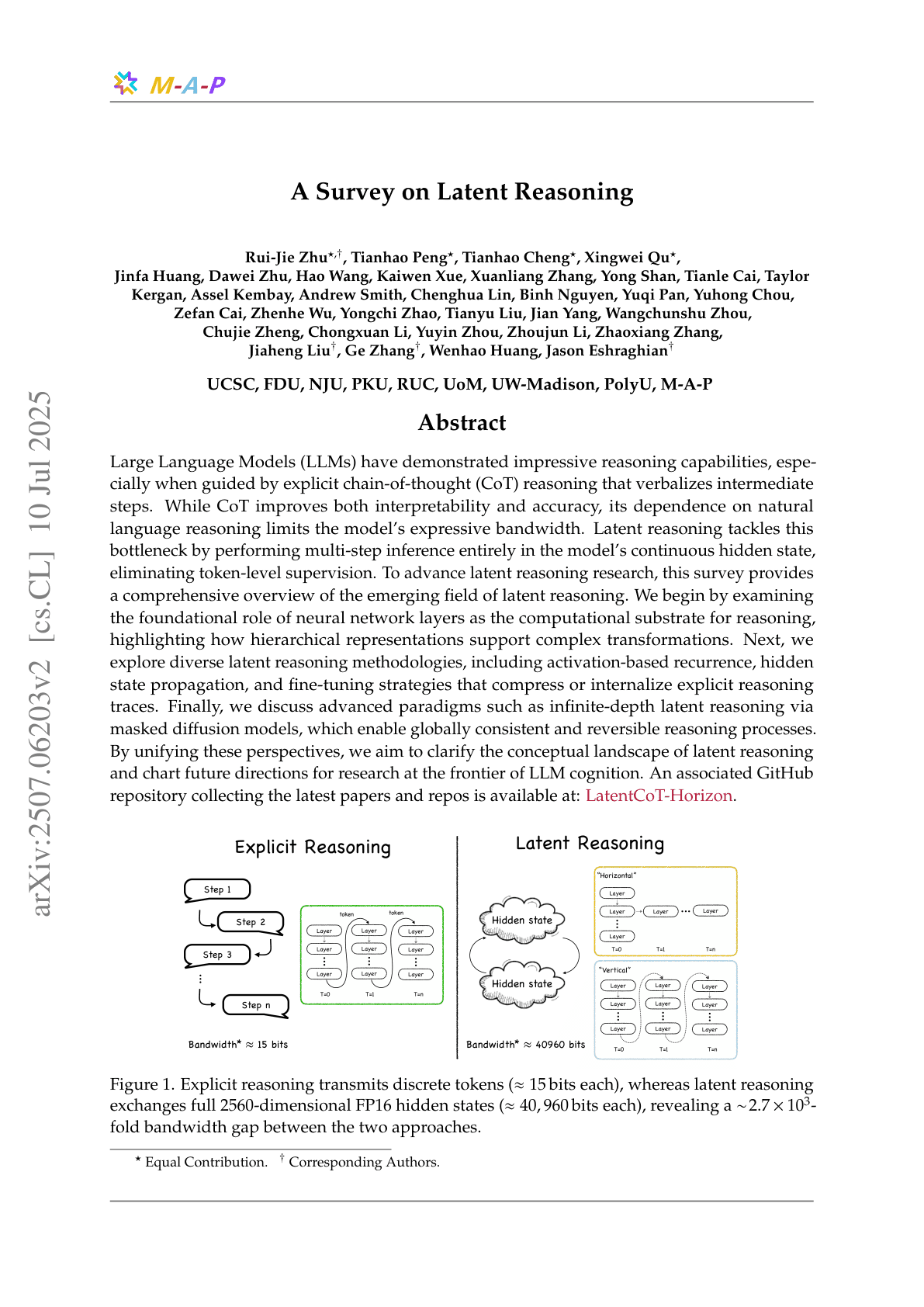
A Survey on Latent Reasoning
Provides a comprehensive overview of latent reasoning, an emerging field that shifts AI reasoning from explicit, token-based "chain-of-thought" to implicit computations within a model's continuous hidden states. Key ideas:
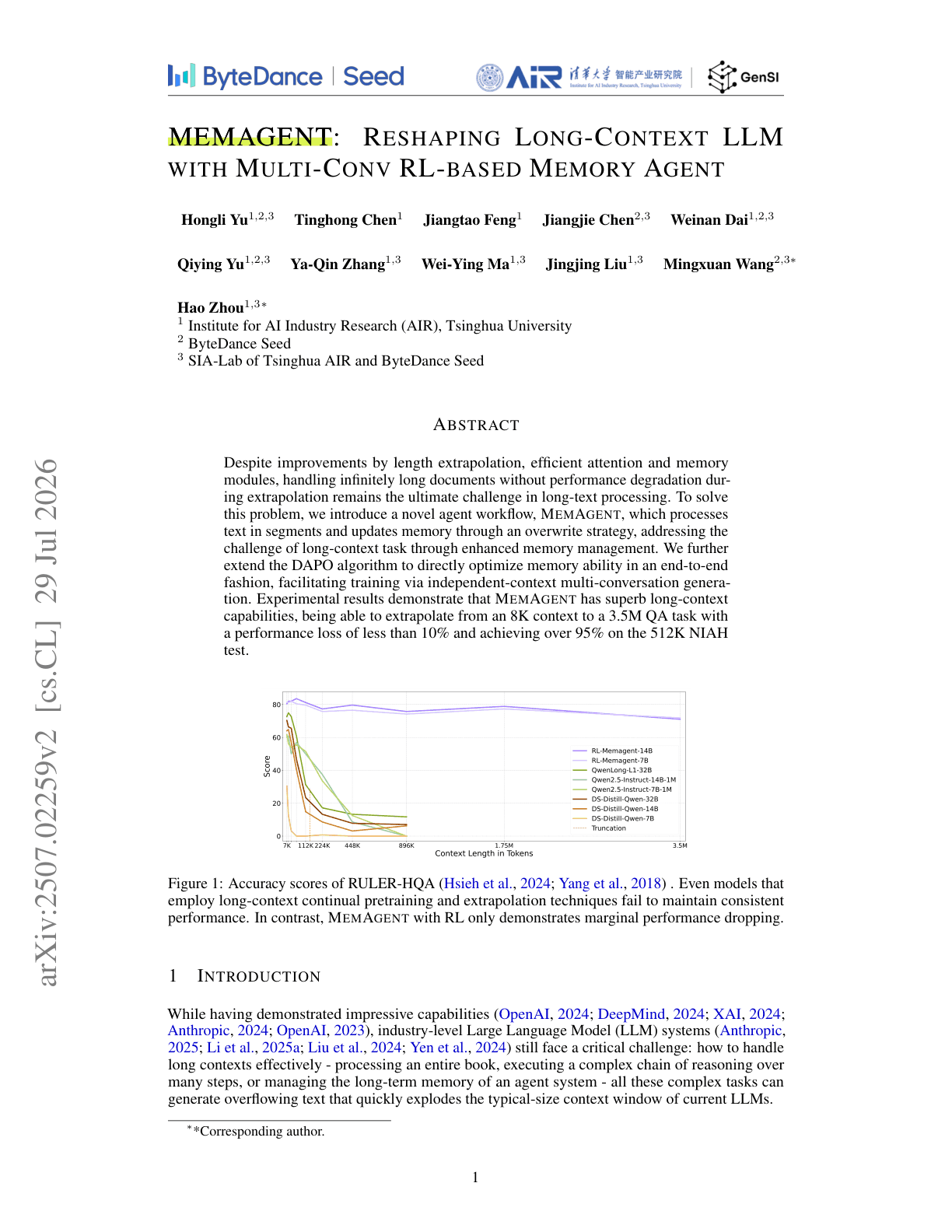
MemAgent
Introduces an RL–driven memory agent that enables transformer-based LLMs to handle documents up to 3.5 million tokens with near lossless performance, linear complexity, and no need for architectural modifications.
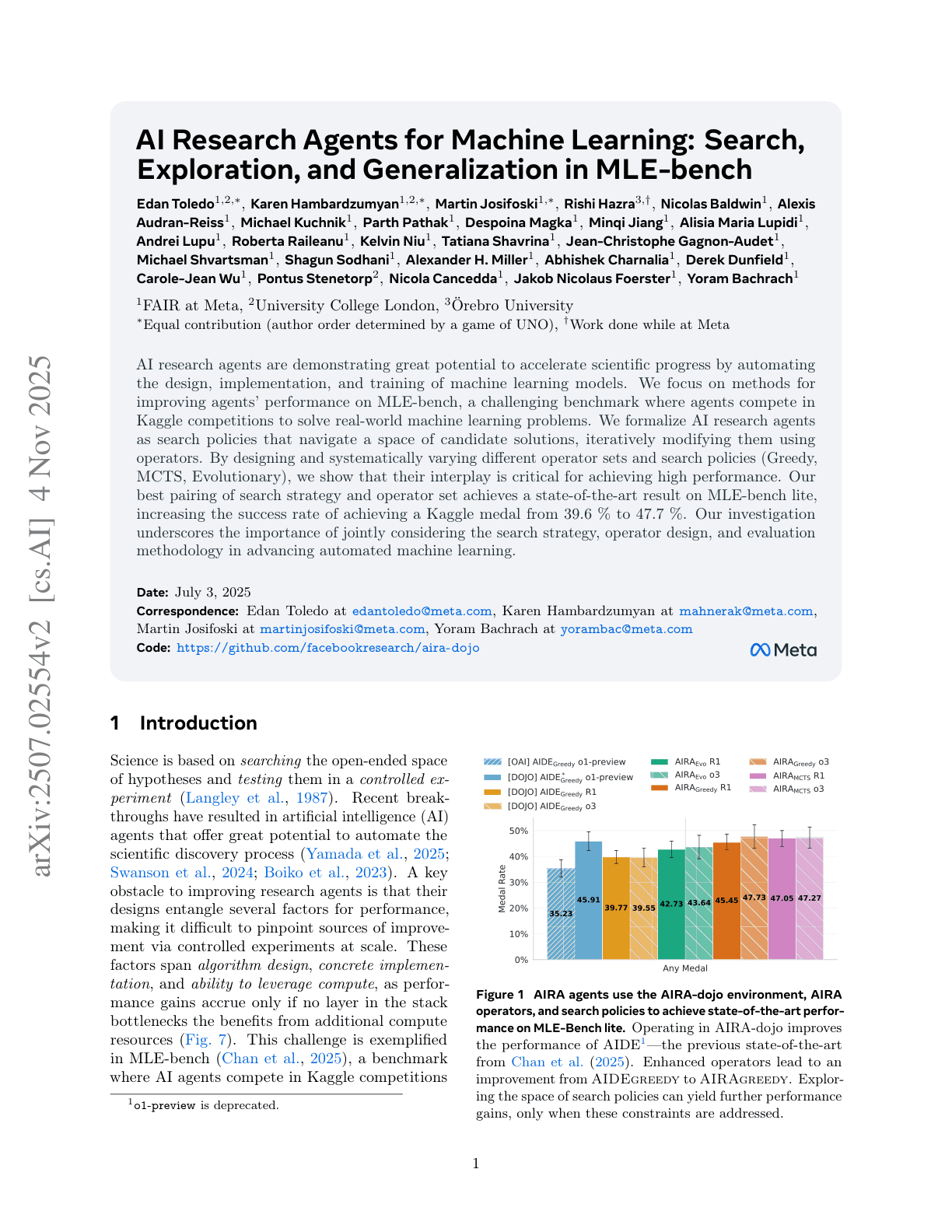
AI Research Agents for Machine Learning
Presents a new framework, AIRA-dojo, for developing and evaluating AI research agents. They use this framework to systematically investigate the components of successful AI agents on the MLE-bench benchmark, a challenging set of real-world machine learning problems from Kaggle. Key findings:
Adaptive Branching MCTS
Researchers from Sakana AI introduce Adaptive Branching Monte Carlo Tree Search (AB-MCTS), a new framework that dynamically decides whether to "go wider" (explore new solutions) or "go deeper" (refine existing ones) during inference. Key ideas:
HIRAG
HIRAG is a new instruction fine-tuning method that enhances the capabilities of RAG models by teaching them to think before answering. Key ideas:
Small Language Models are the Future of Agentic AI
This position paper argues that small language models (SLMs), defined as those runnable on consumer-grade hardware, are not only sufficient but superior for many agentic AI applications, especially when tasks are narrow, repetitive, or tool-oriented. The authors propose that shifting from LLM-first to SLM-first architectures will yield major gains in efficiency, modularity, and sustainability.
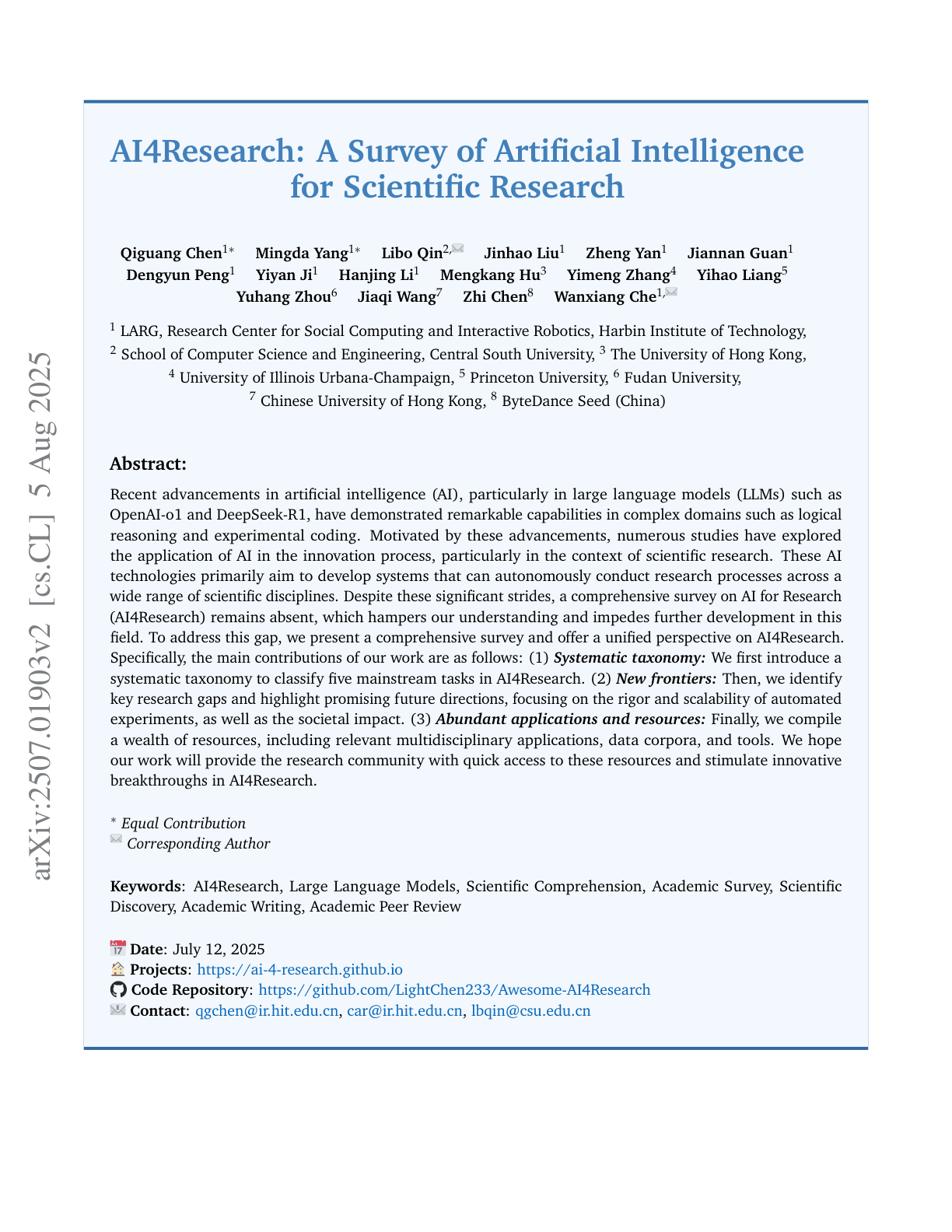
AI4Research
This survey offers the first unified and comprehensive framework for understanding how AI is transforming the full lifecycle of scientific research. The paper identifies five core areas: Scientific Comprehension, Academic Survey, Scientific Discovery, Academic Writing, and Academic Peer Review, and presents a detailed taxonomy and modeling approach for each.
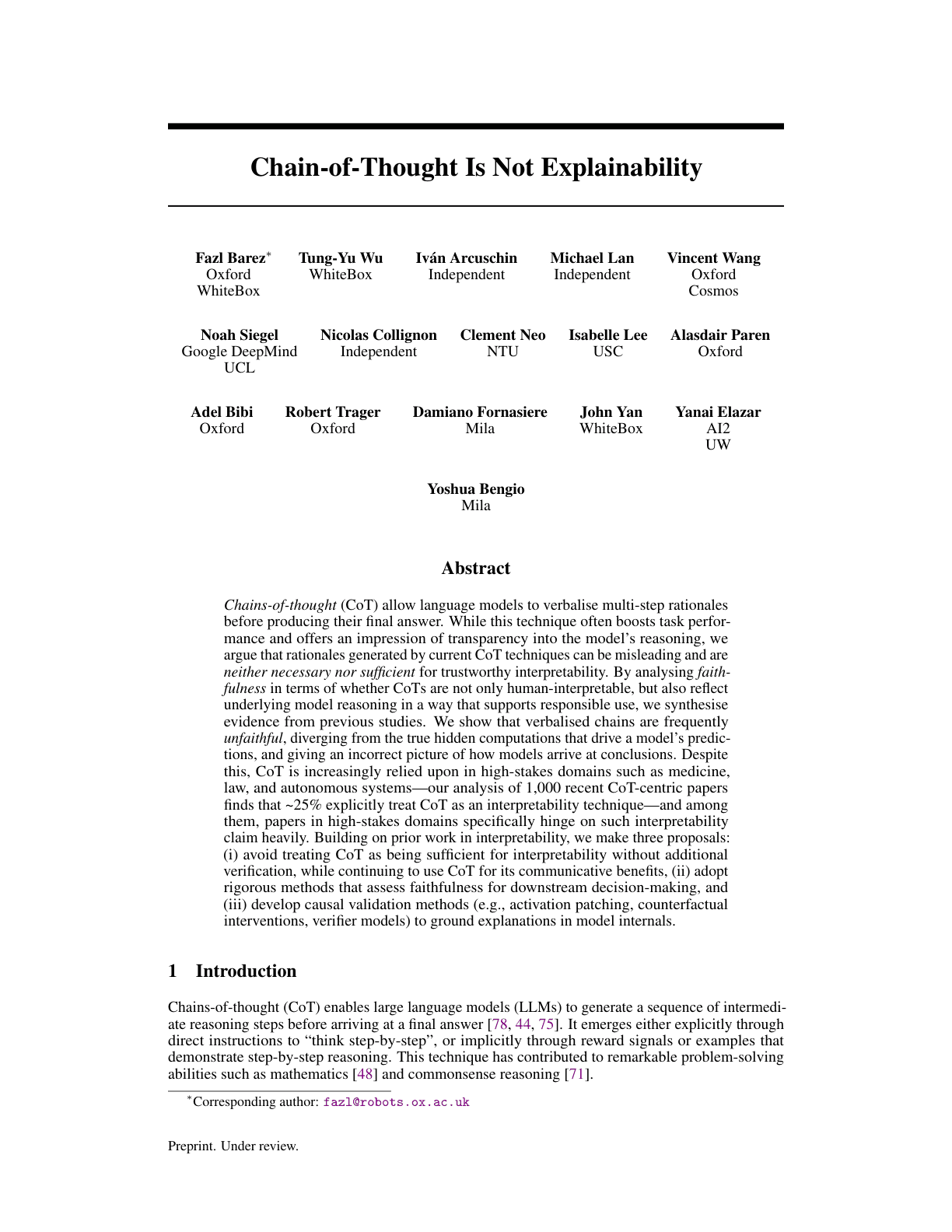
Chain-of-Thought Is Not Explainability
It challenges the common assumption that chain-of-thought (CoT) reasoning in LLMs is synonymous with interpretability. While CoT improves performance and offers a seemingly transparent rationale, the authors argue it is neither necessary nor sufficient for faithful explanation. Through a review of empirical evidence and mechanistic insights, the paper makes the case that CoT often diverges from the internal computations that actually drive model predictions.
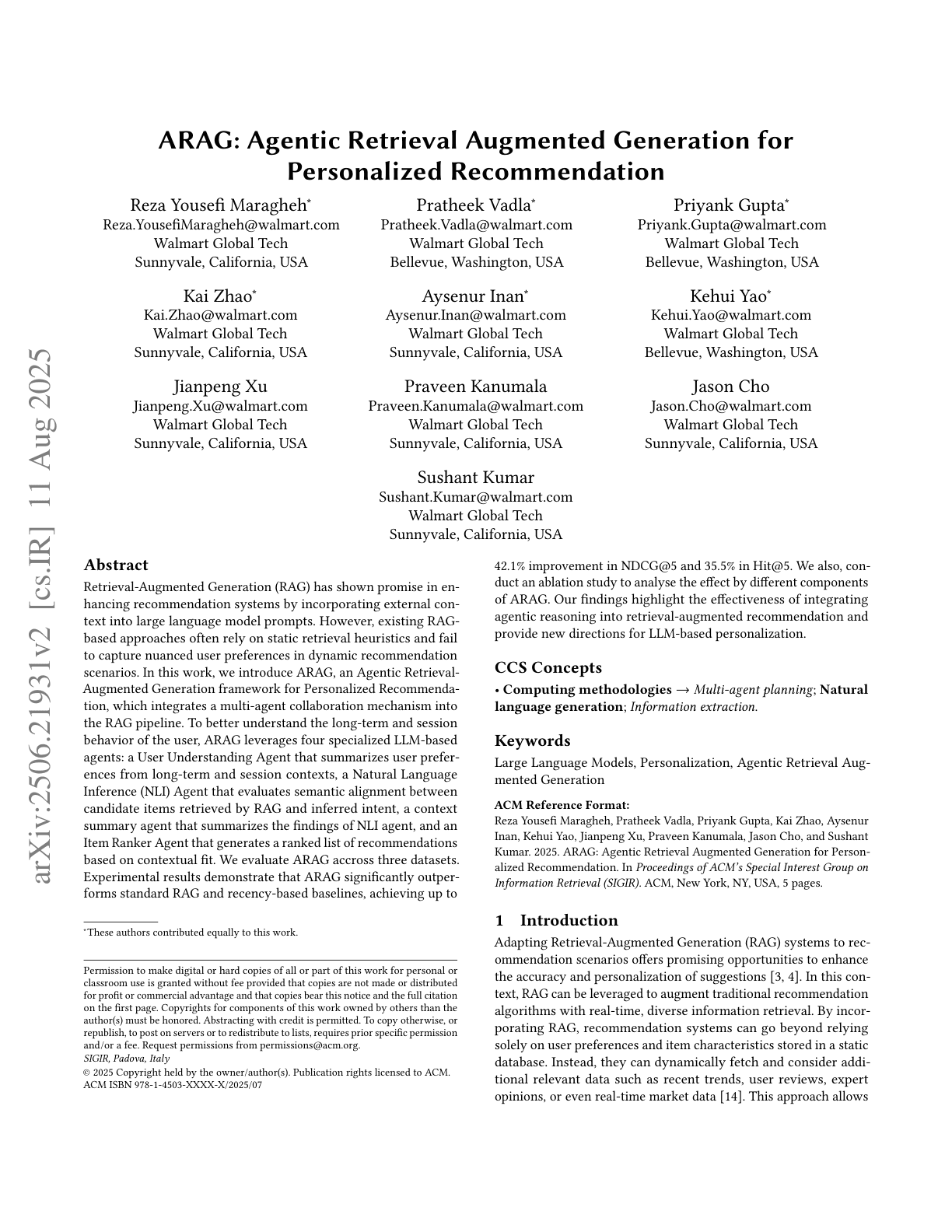
Agentic RAG for Personalized Recommendation
Introduces a multi-agent framework that enhances traditional RAG systems with reasoning agents tailored to user modeling and contextual ranking. Developed at Walmart Global Tech, ARAG reframes recommendations as a structured coordination problem between LLM agents.
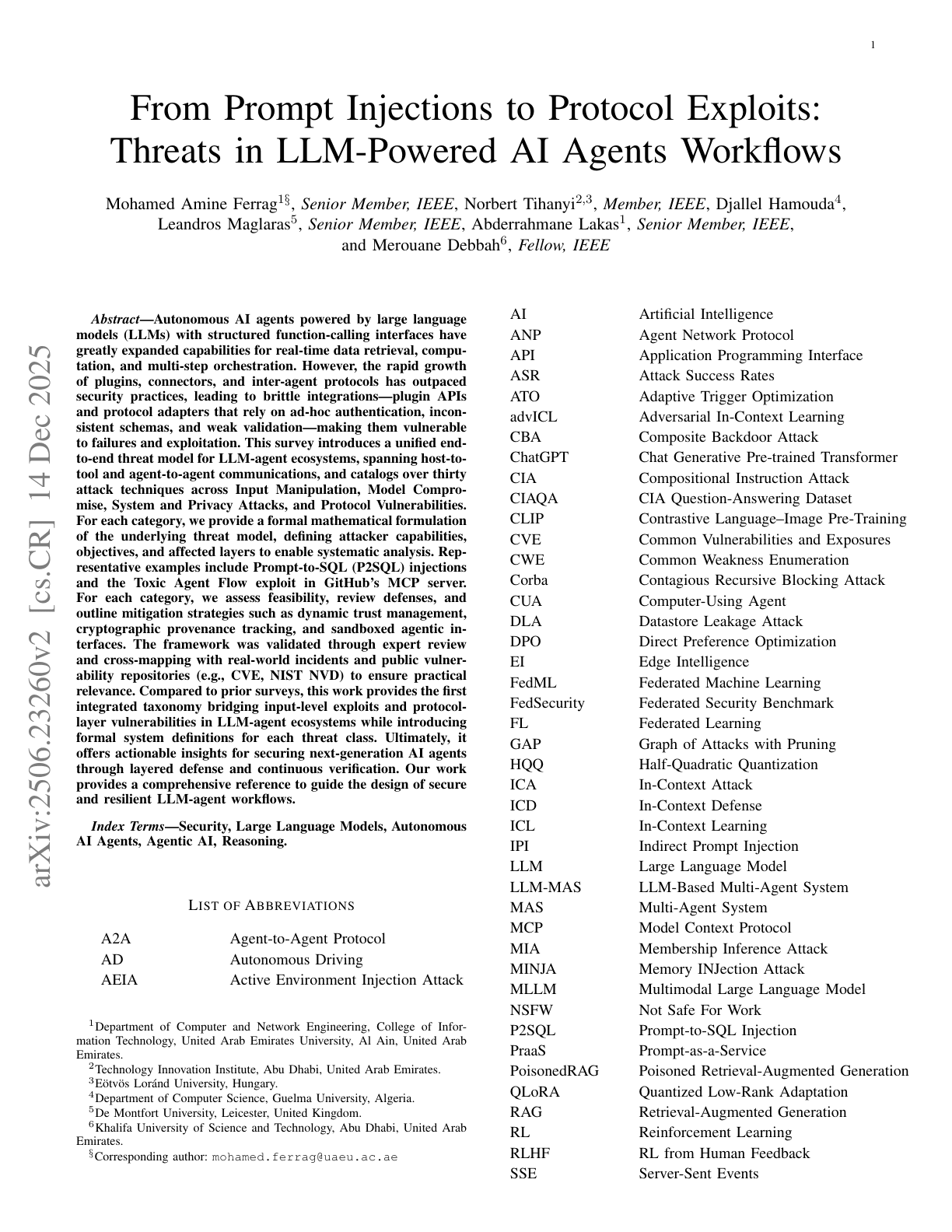
Threats in LLM-Powered AI Agents Workflows
This work presents the first comprehensive, end-to-end threat model for LLM-powered agent ecosystems. As LLM agents gain the ability to orchestrate multi-step workflows and interact via protocols like MCP, ANP, and A2A, this paper surveys over 30 attack techniques spanning the entire stack, from input manipulation to inter-agent protocol exploits.