AI Papers of the Week
Every paper worth reading in AI, hand-picked one week at a time.
Seamless
Meta's Seamless is a family of models for end-to-end expressive, streaming cross-lingual speech communication.
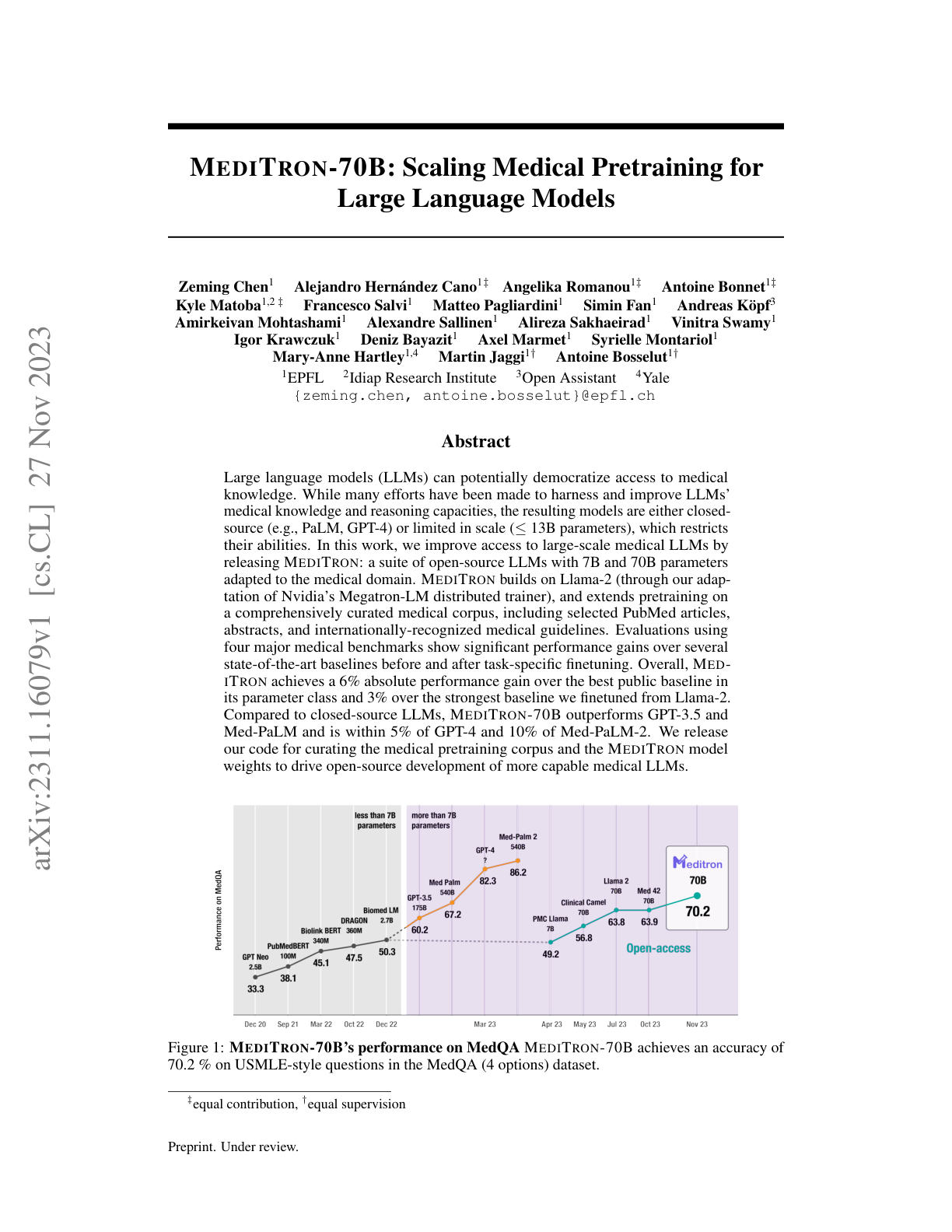
MEDITRON-70B
EPFL's MEDITRON is an open-source family of medical LLMs at 7B and 70B parameters, continually pretrained on curated medical corpora.
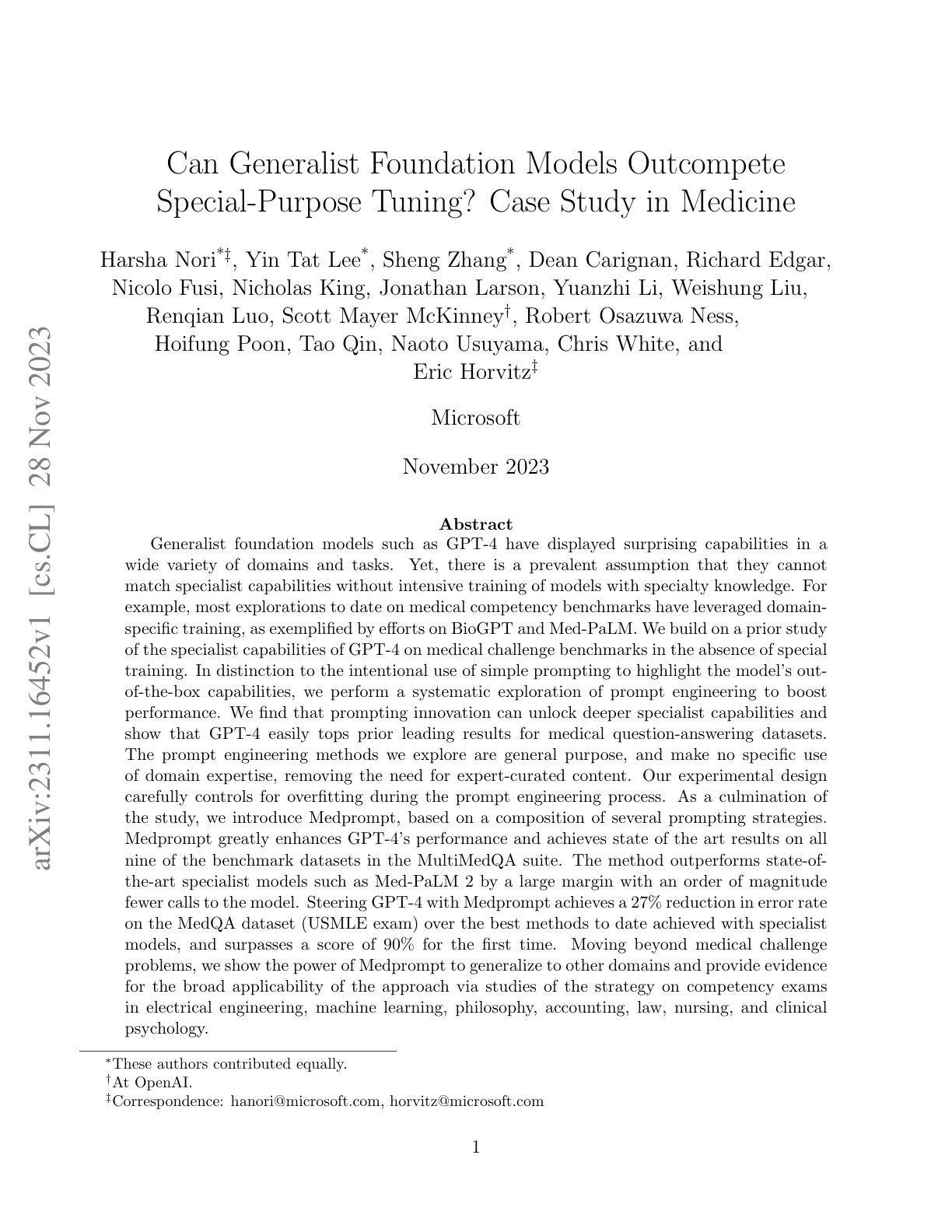
Medprompt
Microsoft researchers show that careful prompt engineering can push general-purpose GPT-4 to state-of-the-art on medical benchmarks, no domain fine-tuning required.
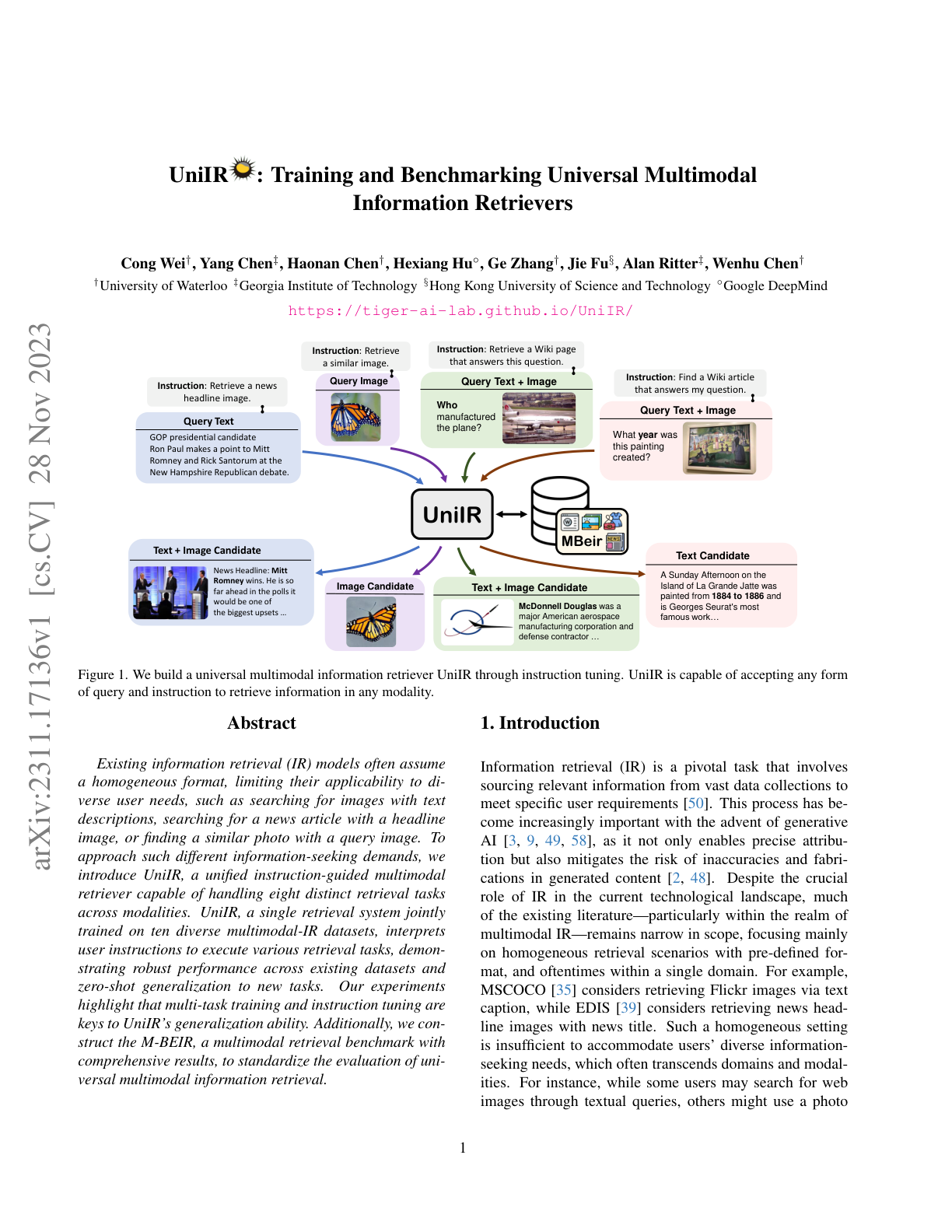
UniIR
UniIR is a unified instruction-guided multimodal retriever that handles eight retrieval tasks across modalities with a single model.
Safe Deployment of Generative AI (Nature)
A Nature correspondence arguing that medical professionals - not commercial interests - must drive the development and deployment of generative AI in medicine.
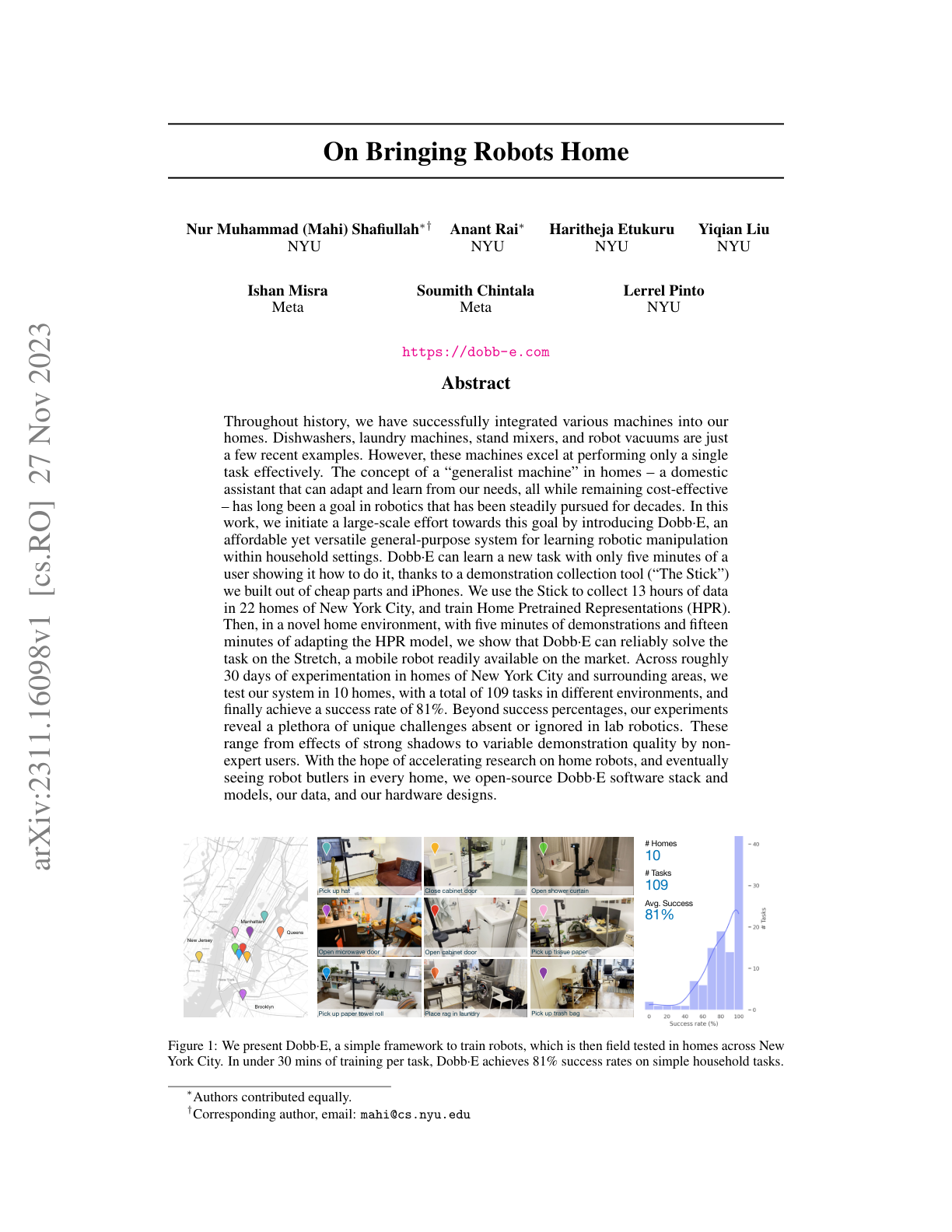
Dobb-E
NYU's Dobb-E is an affordable household-manipulation robot that learns new tasks with just 5 minutes of user demonstrations.
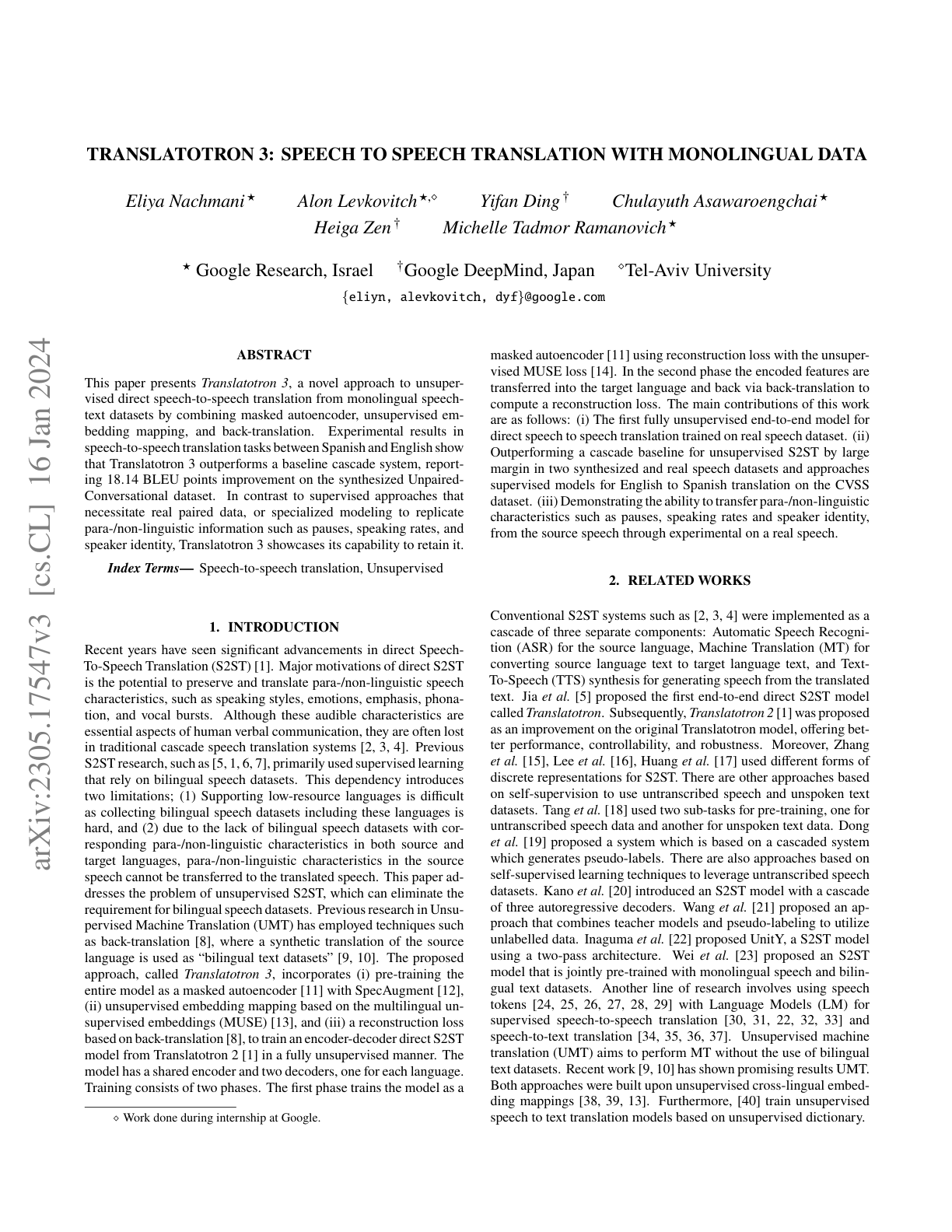
Translatotron 3
Google's Translatotron 3 performs speech-to-speech translation using only monolingual data - no parallel corpora required.
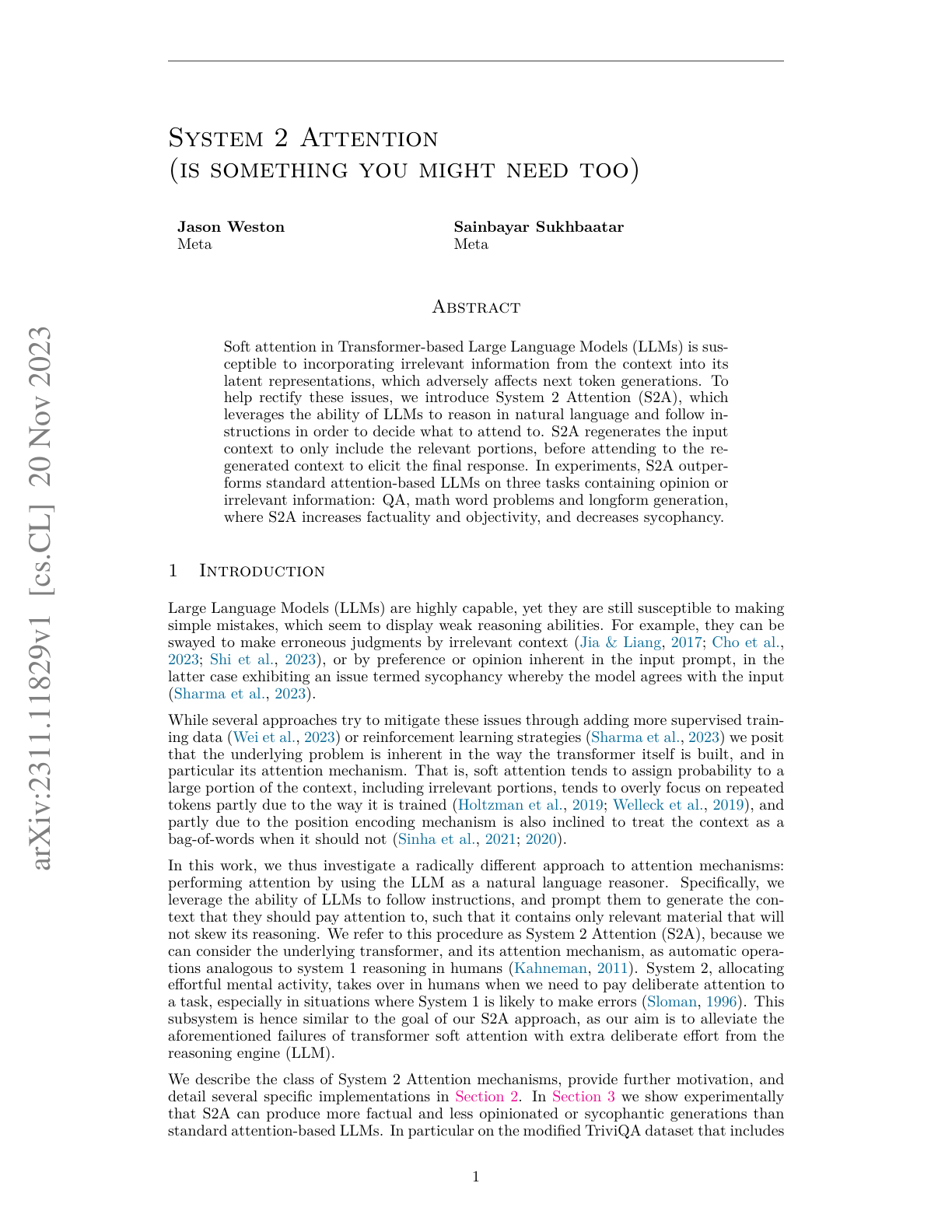
System 2 Attention (S2A)
Meta's S2A uses the LLM's own reasoning to decide what context actually matters, regenerating a clean prompt before the final response step.
Advancing Long-Context LLMs
A survey of methodologies for improving Transformer long-context capability across pretraining, fine-tuning, and inference stages.
Parallel Speculative Sampling
Amazon researchers propose a parallel variant of speculative sampling that achieves significant LLM inference speedups with minimal extra parameters.
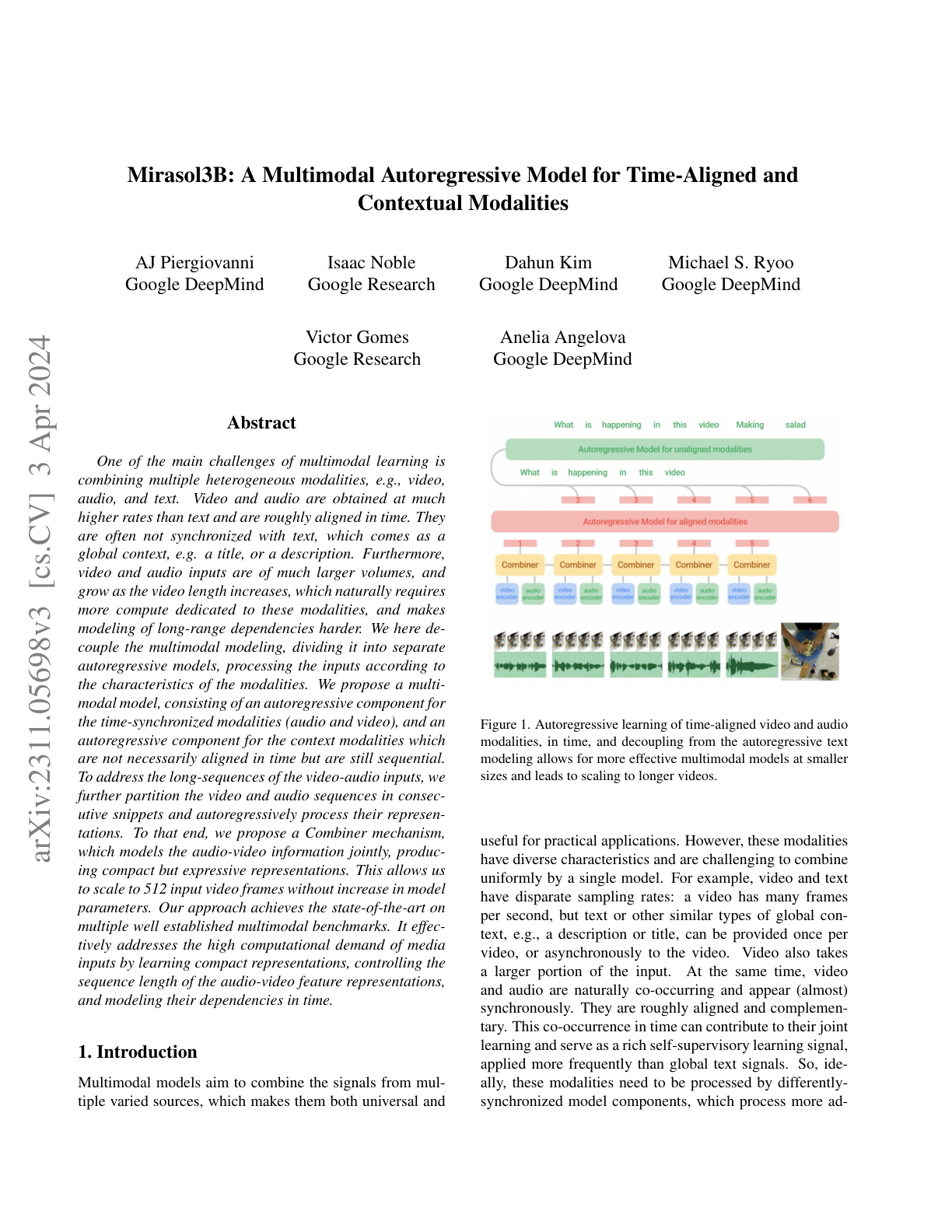
Mirasol3B
Google's Mirasol3B is a multimodal model that decouples modalities into focused autoregressive components rather than forcing a single fused stream.
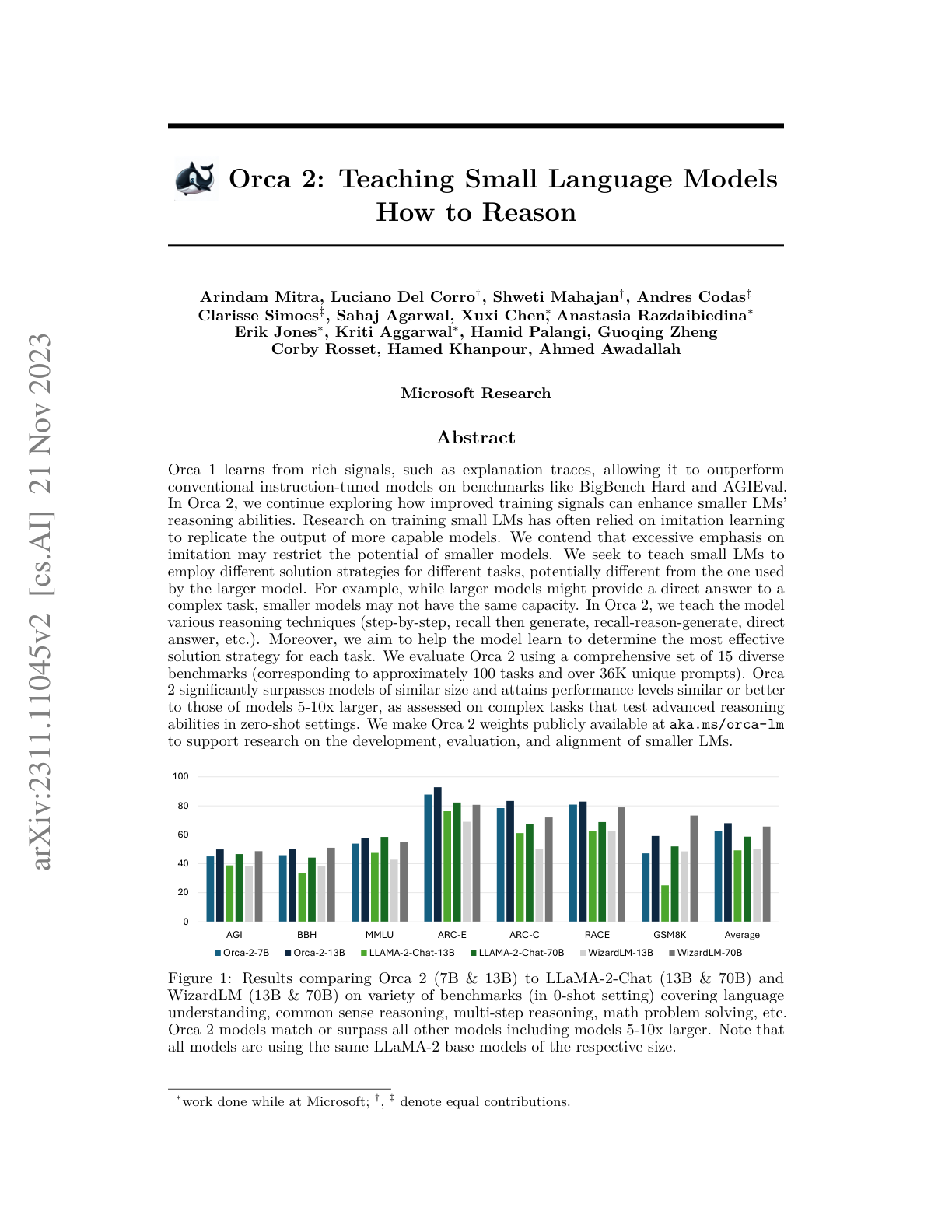
Teaching Small LMs to Reason
An approach that teaches smaller language models to explicitly select among reasoning techniques for each problem.
GPQA
A graduate-level Google-proof QA benchmark designed to stress-test reasoning in systems that might exceed human expertise.
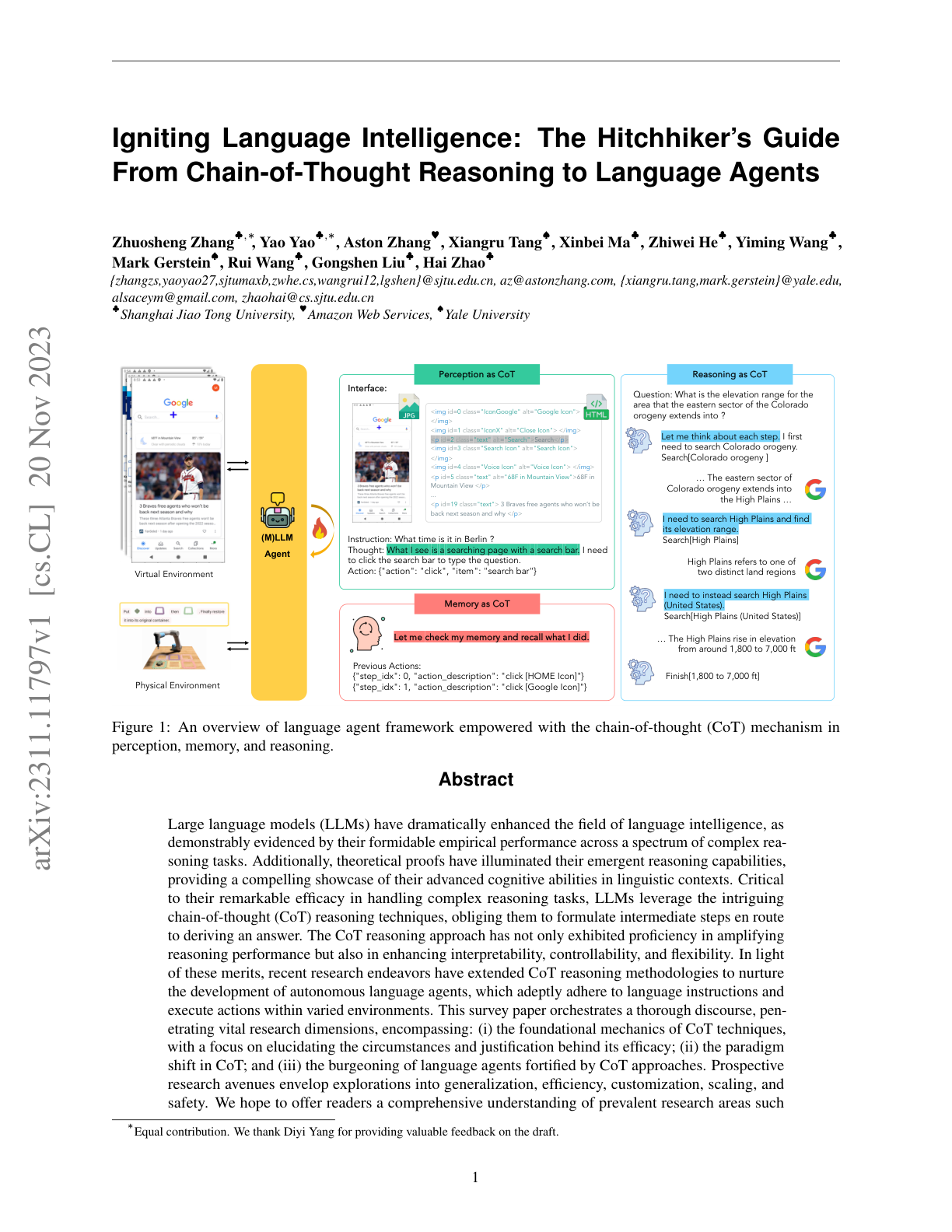
Hitchhiker's Guide From CoT to Agents
A survey mapping the conceptual evolution from chain-of-thought reasoning to modern language-agent frameworks.
GAIA
Meta's GAIA is a benchmark for general AI assistants that requires reasoning, multimodal handling, web browsing, and tool use to solve real-world questions.
MedAgents
A collaborative multi-round framework for medical reasoning that uses role-playing LLM agents to improve accuracy and reasoning depth.
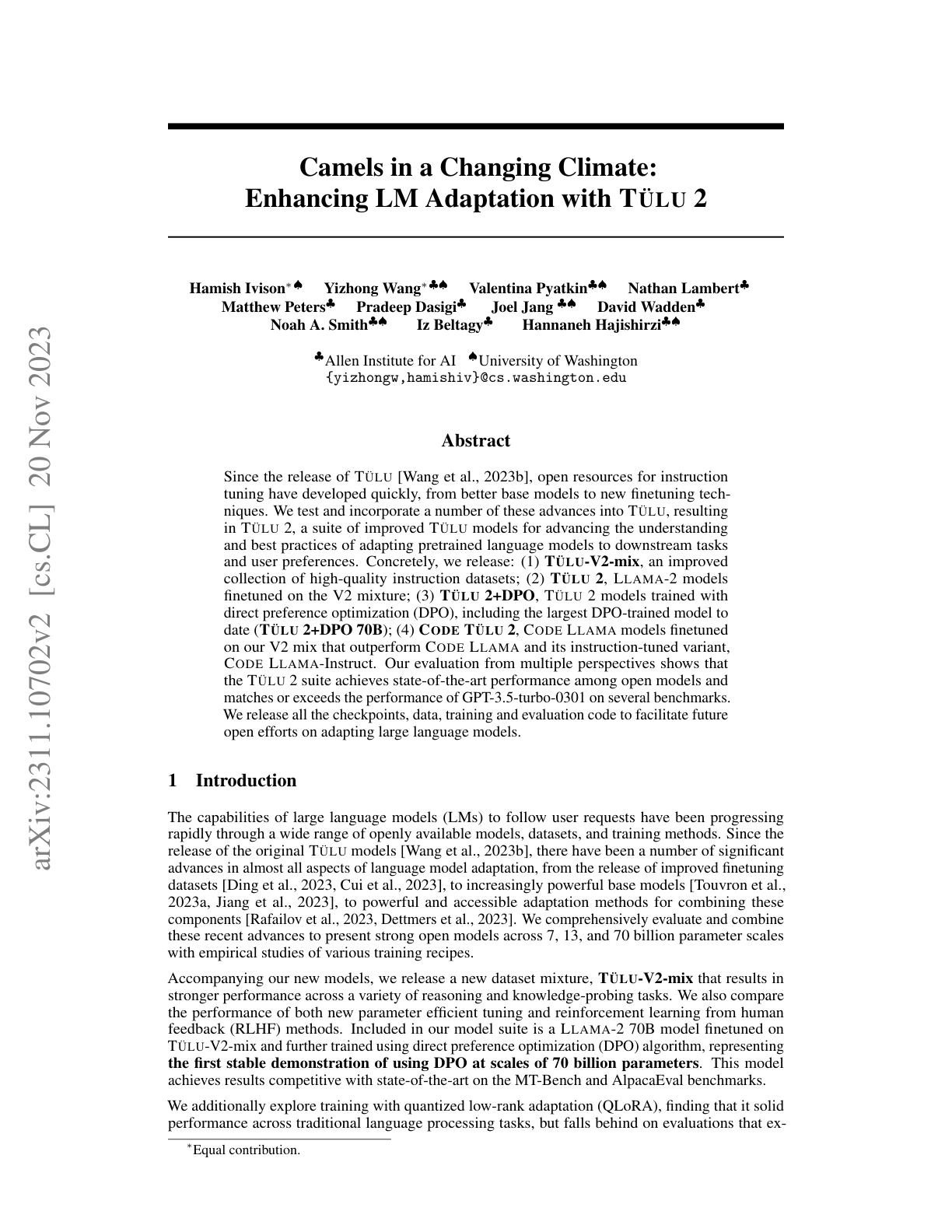
TÜLU 2
Allen AI's TÜLU 2 is a suite of improved open instruction-tuned LLMs and an accompanying study of adaptation best practices.
Emu Video and Emu Edit
Meta releases Emu Video and Emu Edit, a pair of diffusion models targeting controlled text-to-video generation and instruction-based image editing.
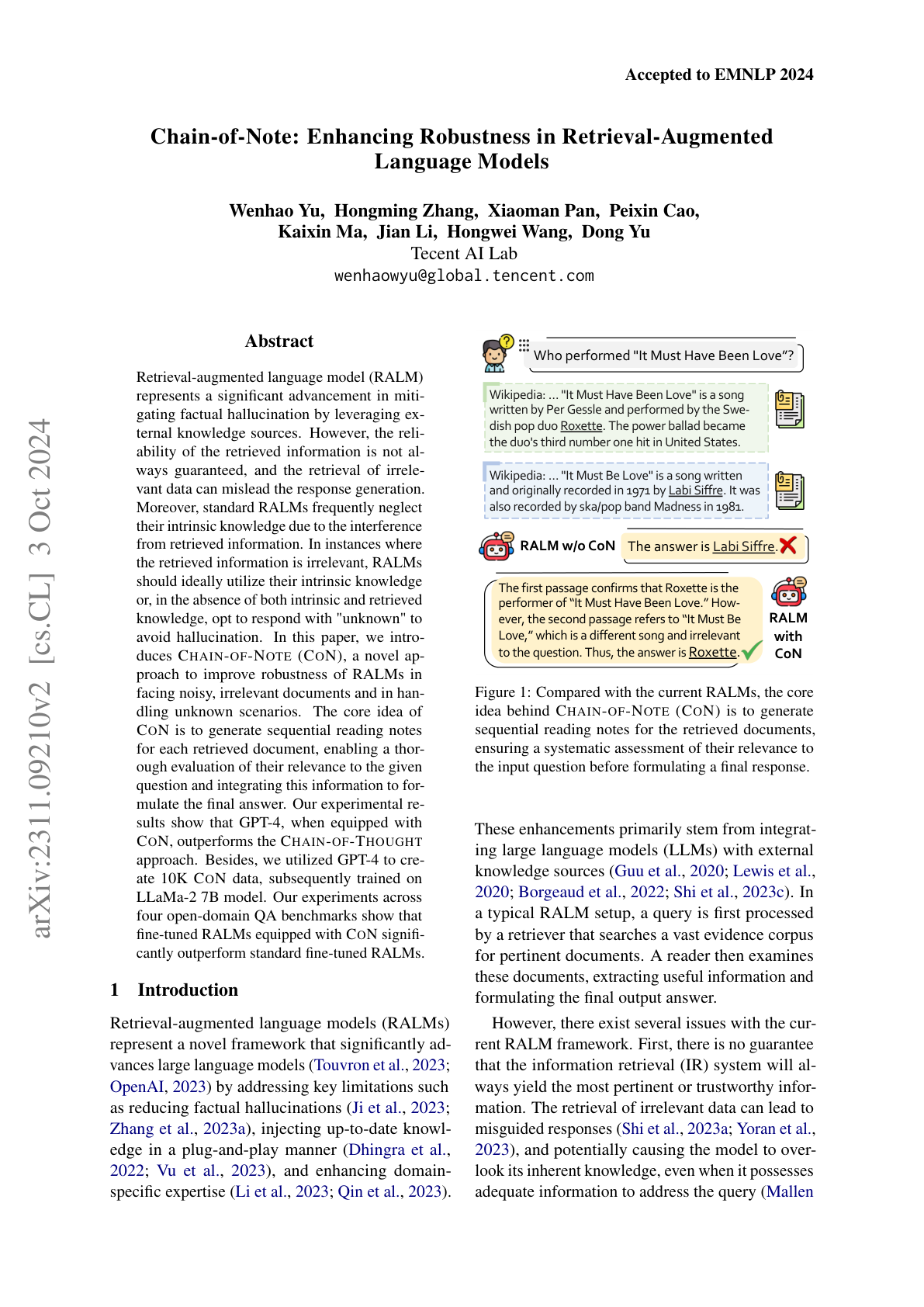
Chain-of-Note (CoN)
Tencent's Chain-of-Note adds an explicit note-taking step to RAG so the model can evaluate retrieved evidence before answering.
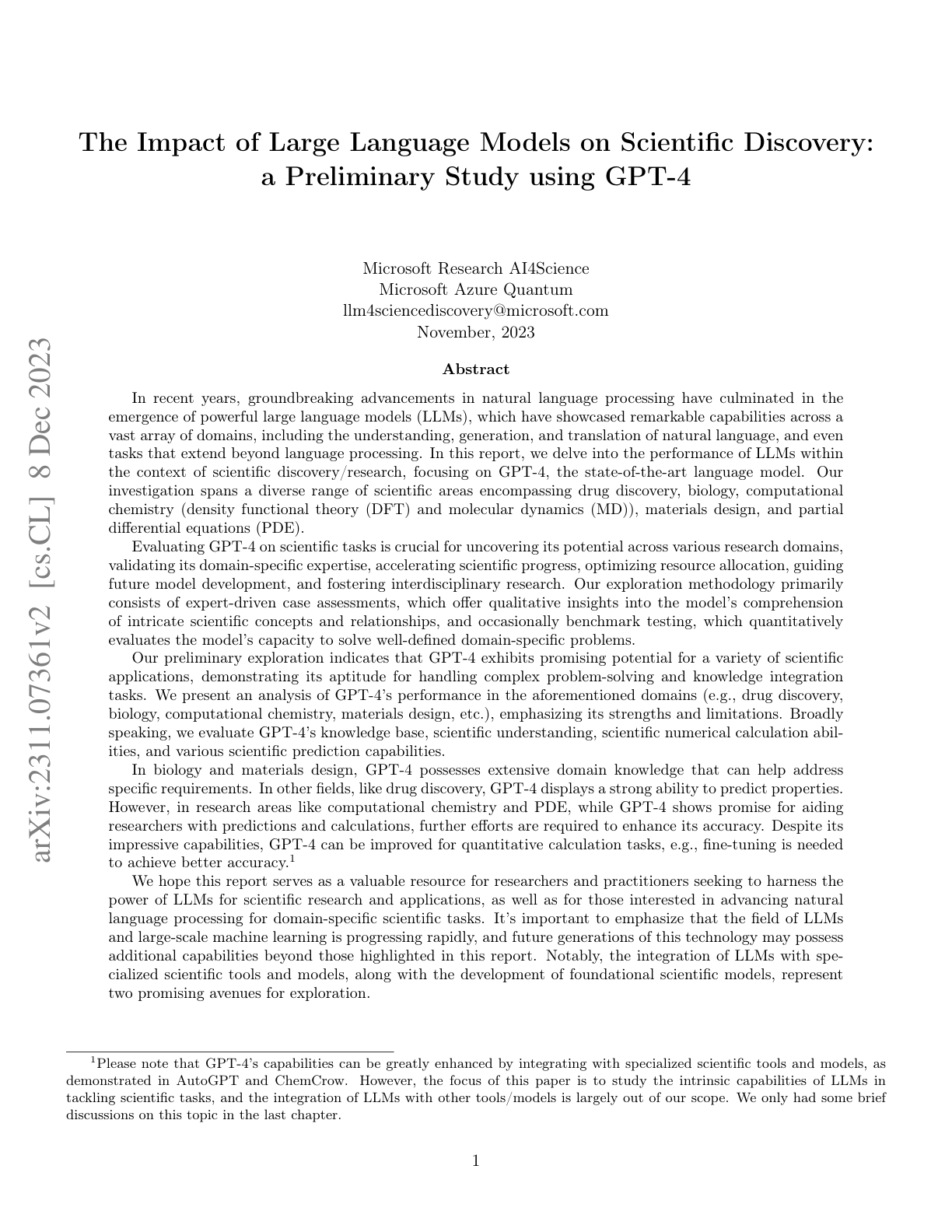
LLMs for Scientific Discovery
A broad evaluation of GPT-4 across scientific disciplines including drug discovery, biology, and computational chemistry.
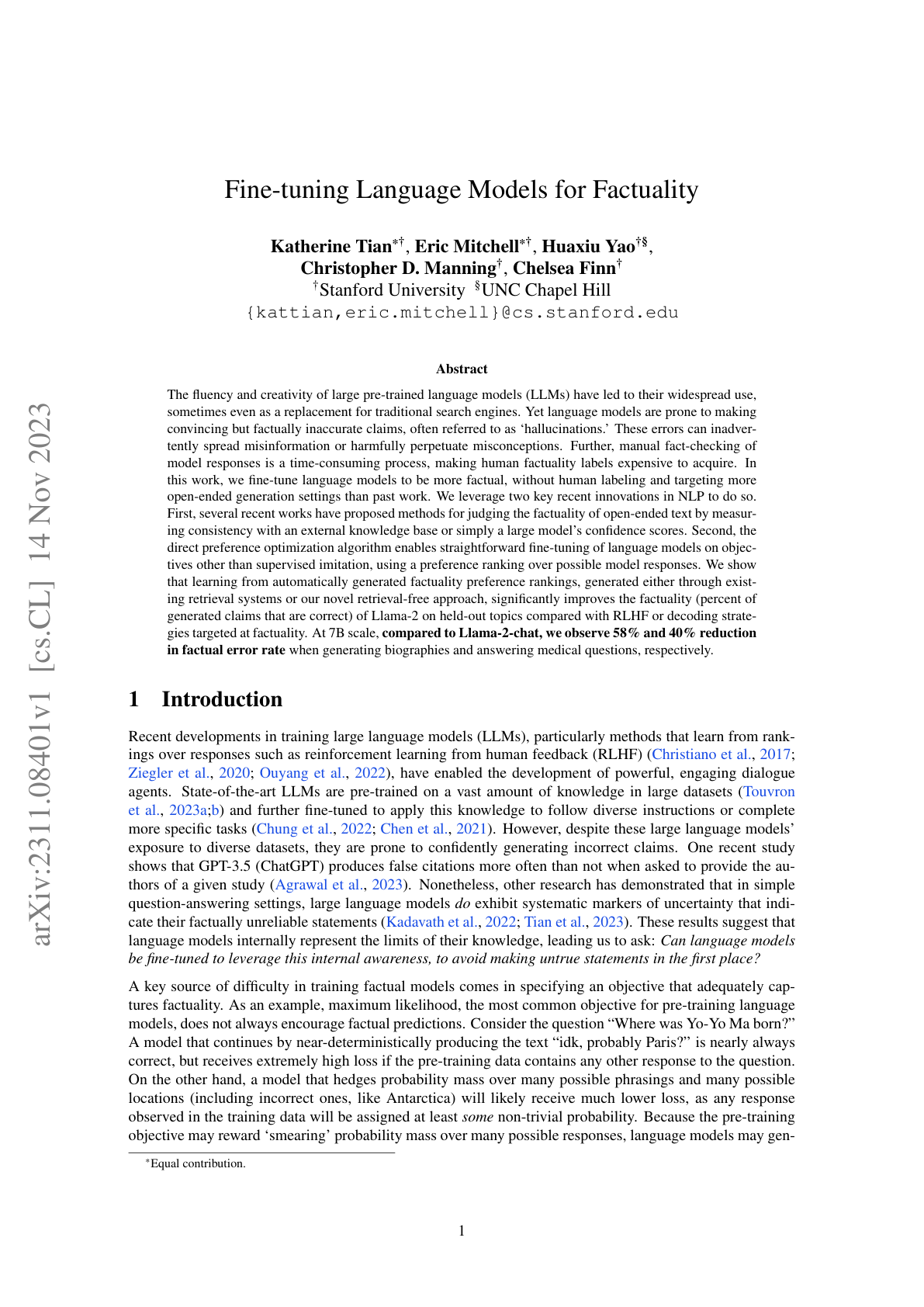
Fine-Tuning LLMs for Factuality
Stanford fine-tunes LLMs for factuality without any human labels by using automatically generated preference signals.
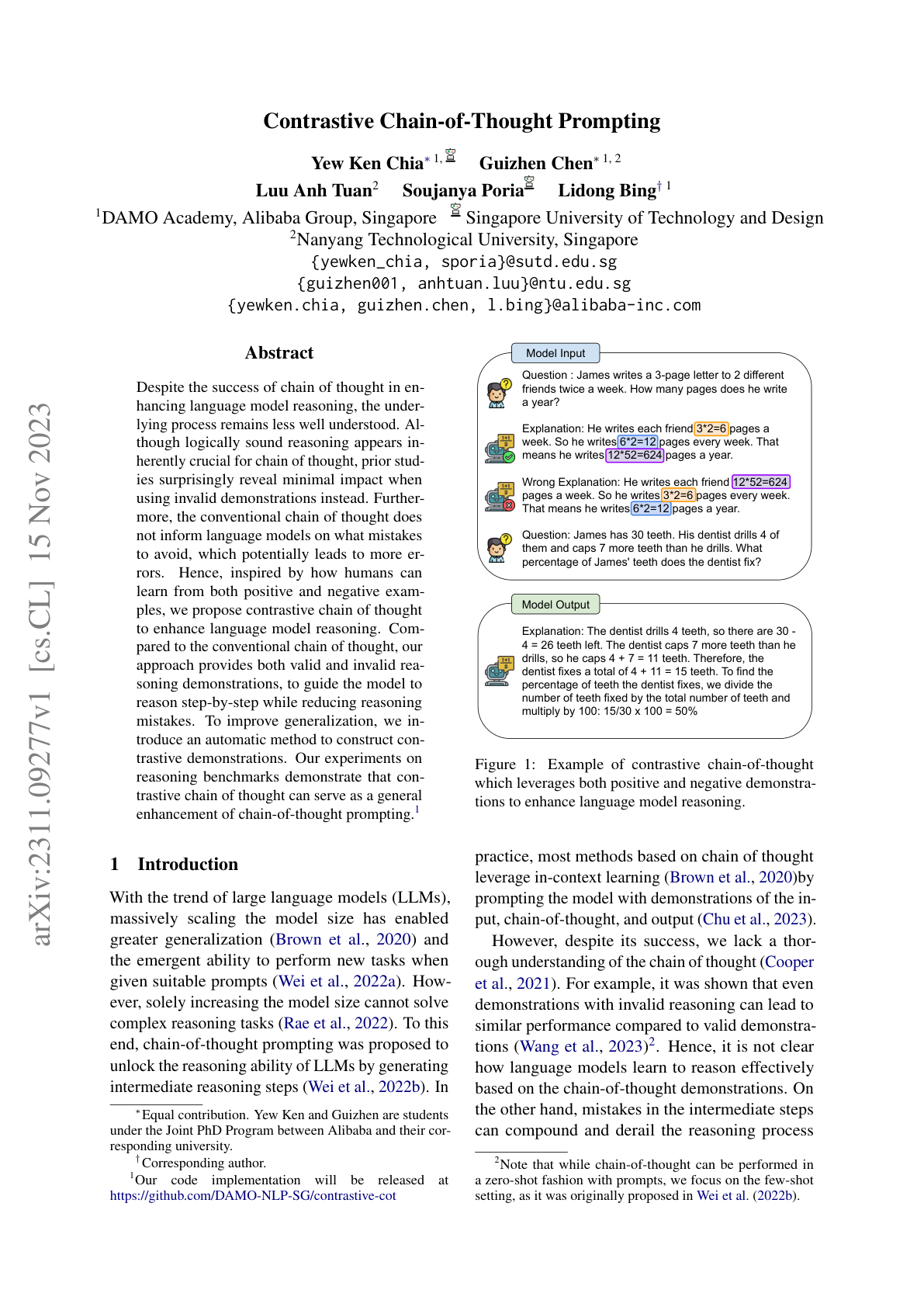
Contrastive Chain-of-Thought
Proposes contrastive CoT prompting where models see both valid *and* invalid reasoning demonstrations to reduce reasoning errors.
Survey on Language Models for Code
A comprehensive survey of LLMs for code covering 50+ models, 30+ evaluation tasks, and 500 related works.
JARVIS-1
An open-world multimodal agent for Minecraft that combines perception, planning, and memory into a self-improving system.