AI Papers of the Week
Every paper worth reading in AI, hand-picked one week at a time.
Discover and explore top AI papers with Claude Code or Codex
npx @dair-ai/mcp setup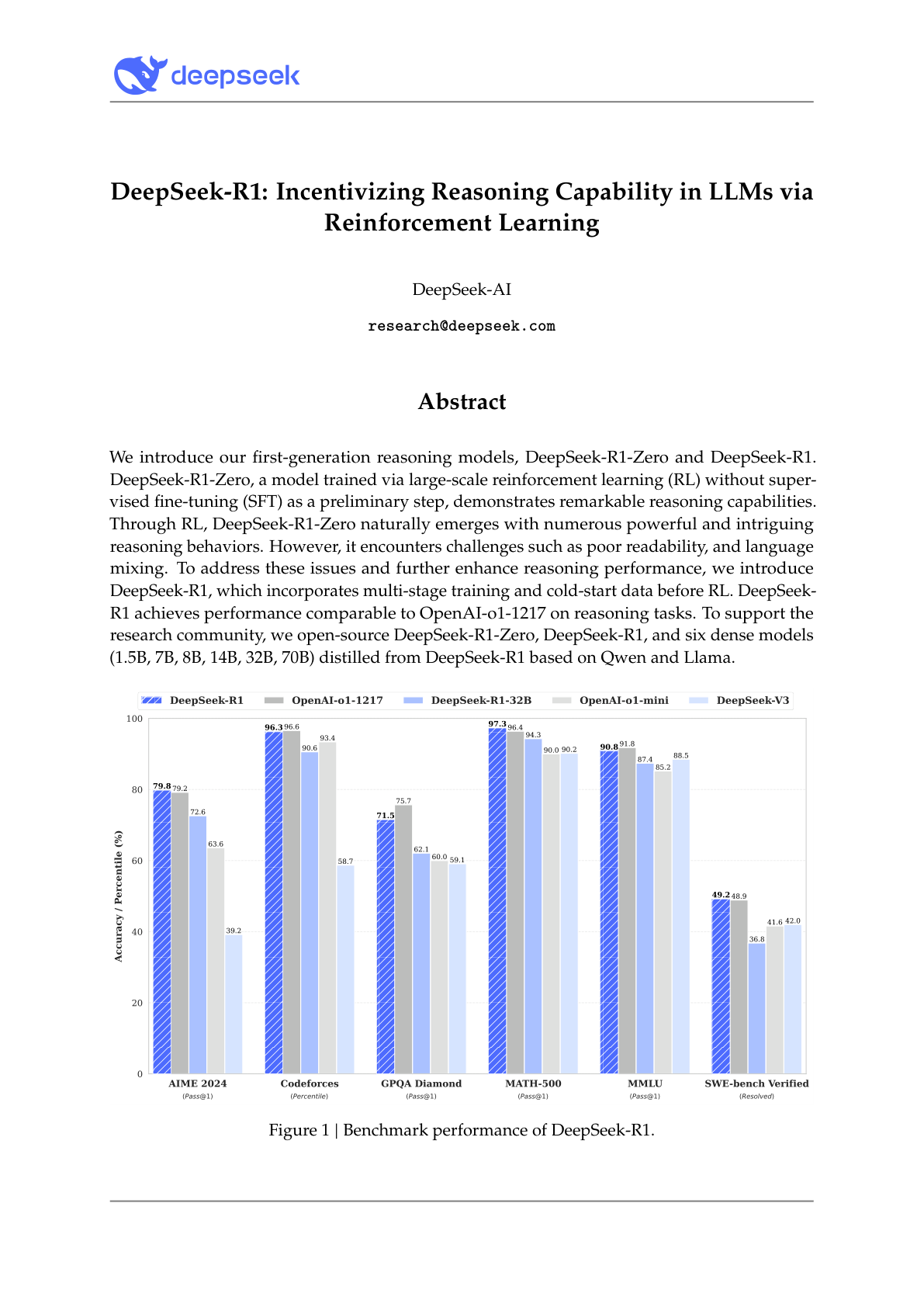
DeepSeek-R1
DeepSeek introduces DeepSeek-R1, an advancement in reasoning capabilities achieved through reinforcement learning (RL). It involves two key models: DeepSeek-R1-Zero, which uses pure RL without supervised fine-tuning, and DeepSeek-R1, which combines RL with cold-start data. DeepSeek-R1-Zero demonstrates that models can develop sophisticated reasoning abilities through RL alone, achieving a 71.0% pass rate on AIME 2024 and matching OpenAI-o1-0912's performance. During training, it naturally evolved complex behaviors like self-verification and reflection. However, it faced challenges with readability and language mixing. To address these limitations, DeepSeek-R1 uses a multi-stage approach: initial fine-tuning with high-quality chain-of-thought examples, reasoning-focused RL training, collecting new training data through rejection sampling, and final RL optimization across all scenarios. This resulted in performance comparable to OpenAI-o1-1217, with 79.8% accuracy on AIME 2024 and 97.3% on MATH-500, while maintaining output readability and consistency. DeepSeek also successfully distilled DeepSeek-R1's capabilities into smaller models, with their 7B model outperforming larger competitors and their 32B model achieving results close to OpenAI-o1-mini. This demonstrates the effectiveness of distilling reasoning patterns from larger models rather than training smaller models directly through RL.
Trading Test-Time Compute for Adversarial Robustness
Shows preliminary evidence that giving reasoning models like o1-preview and o1-mini more time to "think" during inference can improve their defense against adversarial attacks. Experiments covered various tasks, from basic math problems to image classification, showing that increasing inference-time compute often reduces the success rate of attacks to near zero. The approach doesn't work uniformly across all scenarios, particularly with certain StrongREJECT benchmark tests, and controlling how models use their compute time remains challenging. Despite these constraints, the findings suggest a promising direction for improving AI security without relying on traditional adversarial training methods.
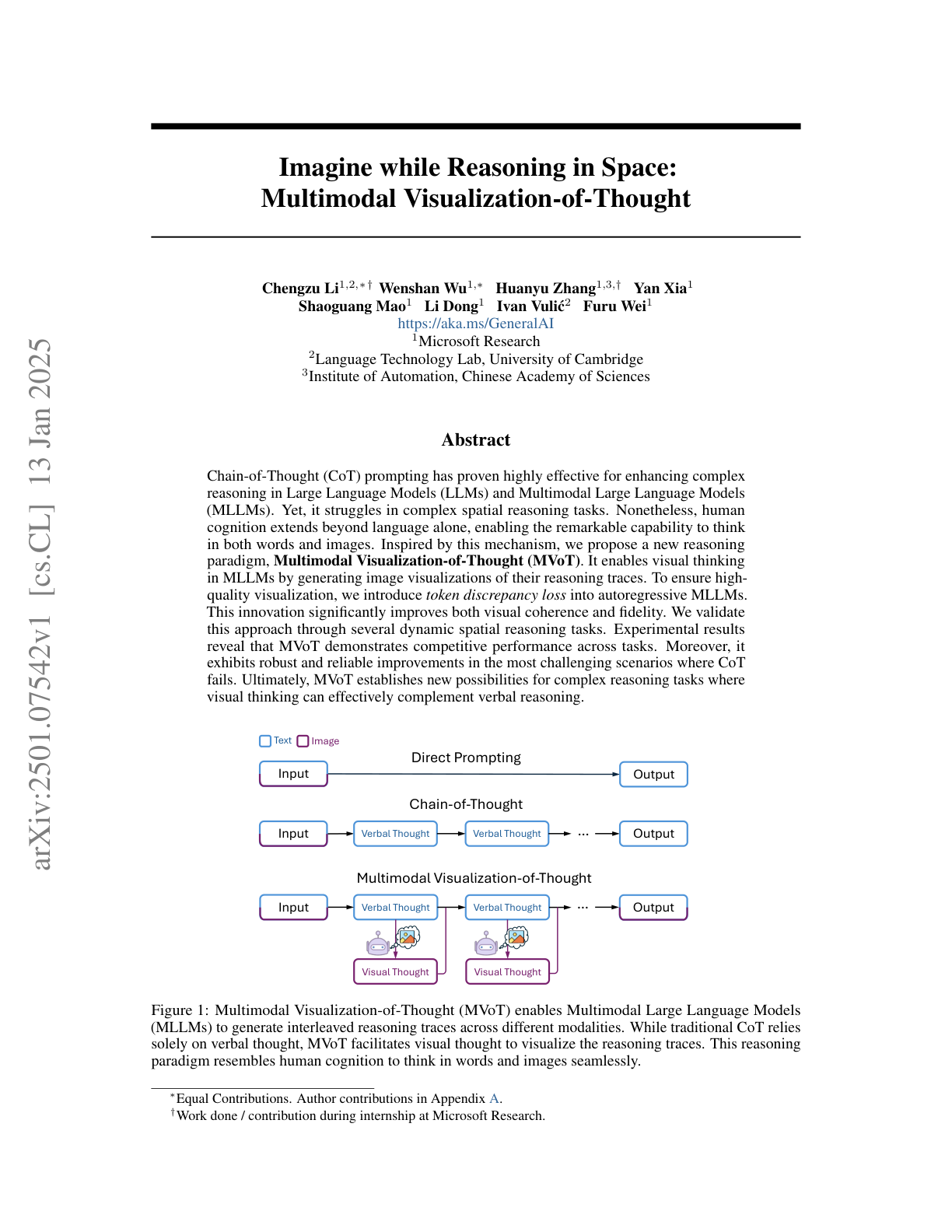
Imagine while Reasoning in Space
introduces MVoT (Multimodal Visualization-of-Thought), a new reasoning framework that enables AI models to "think" in both text and images; MVoT enhances the traditional Chain-of-Thought prompting by allowing models to generate visual representations of their reasoning steps alongside text explanations; the framework is implemented in Chameleon-7B, a multimodal language model, and introduces a "token discrepancy loss" to improve the quality of generated visualizations; MVoT significantly outperforms traditional approaches, especially in complex scenarios; MVoT achieves over 90% accuracy on maze and printer installation tasks.
ChemAgent
presents a new framework designed to improve the performance of LLMs on chemical reasoning through a dynamic, self-updating library; the library is developed by decomposing chemical tasks into sub-tasks and compiling them into a structured collection that can be referenced for future queries; when the system is given a new problem, it retries and refines relevant information from the library to enable more effective task decomposition; the library is dynamically updated with new sub-tasks and solutions as they are encountered and validated; experiments on SciBench demonstrate that ChemAgent achieves performance gains of up to 46% (GPT-4), significantly outperforming existing methods.
Search-o1
a framework that combines large reasoning models (LRMs) with agentic search and document refinement capabilities to tackle knowledge insufficiency; the framework enables autonomous knowledge retrieval during reasoning and demonstrates strong performance across complex tasks, outperforming both baseline models and human experts.
Towards System 2 Reasoning
proposes Meta Chain-of-Thought (Meta-CoT), which extends traditional Chain-of-Thought (CoT) by modeling the underlying reasoning required to arrive at a particular CoT; the main argument is that CoT is naive and Meta-CoT gets closer to the cognitive process required for advanced problem-solving.
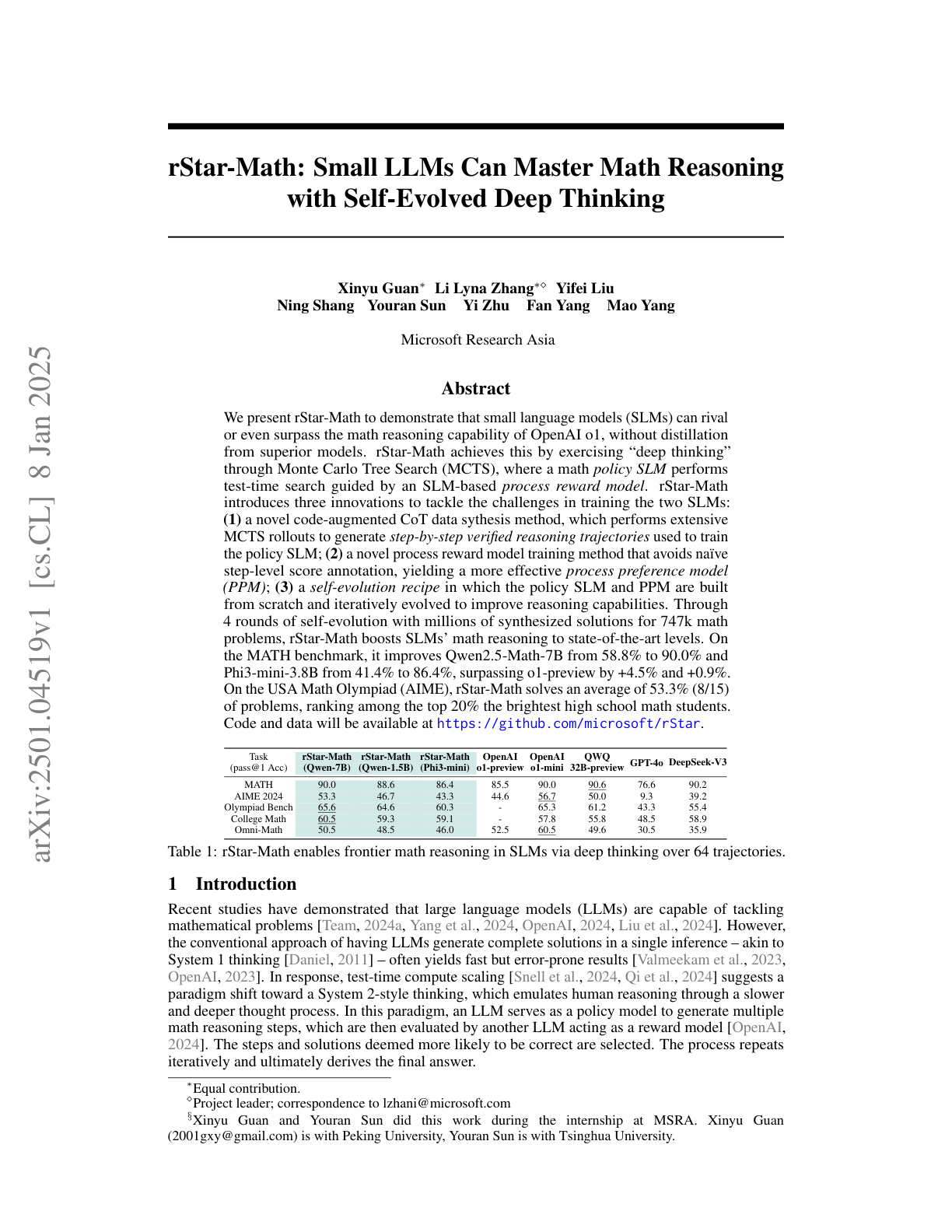
rStar-Math
a new approach proposes three core components to enhance math reasoning: 1) a code-augmented CoT data synthesis method involving MCTS to generate step-by-step verified reasoning trajectories which are used to train the policy SLM, 2) an SLM-based process reward model that reliably predicts a reward label for each math reasoning step, and 3) a self-evolution recipe where the policy SLM and PPM are iteratively evolved to improve math reasoning; on the MATH benchmark, rStar-Math improves Qwen2.5-Math-7B from 58.8% to 90.0% and Phi3-mini-3.8B from 41.4% to 86.4%, surpassing o1-preview by +4.5% and +0.9%.
Machine-Assisted Proof
examines how mathematicians have long used machines to assist with mathematics research and discusses recent AI tools that are transforming mathematical proof assistance.
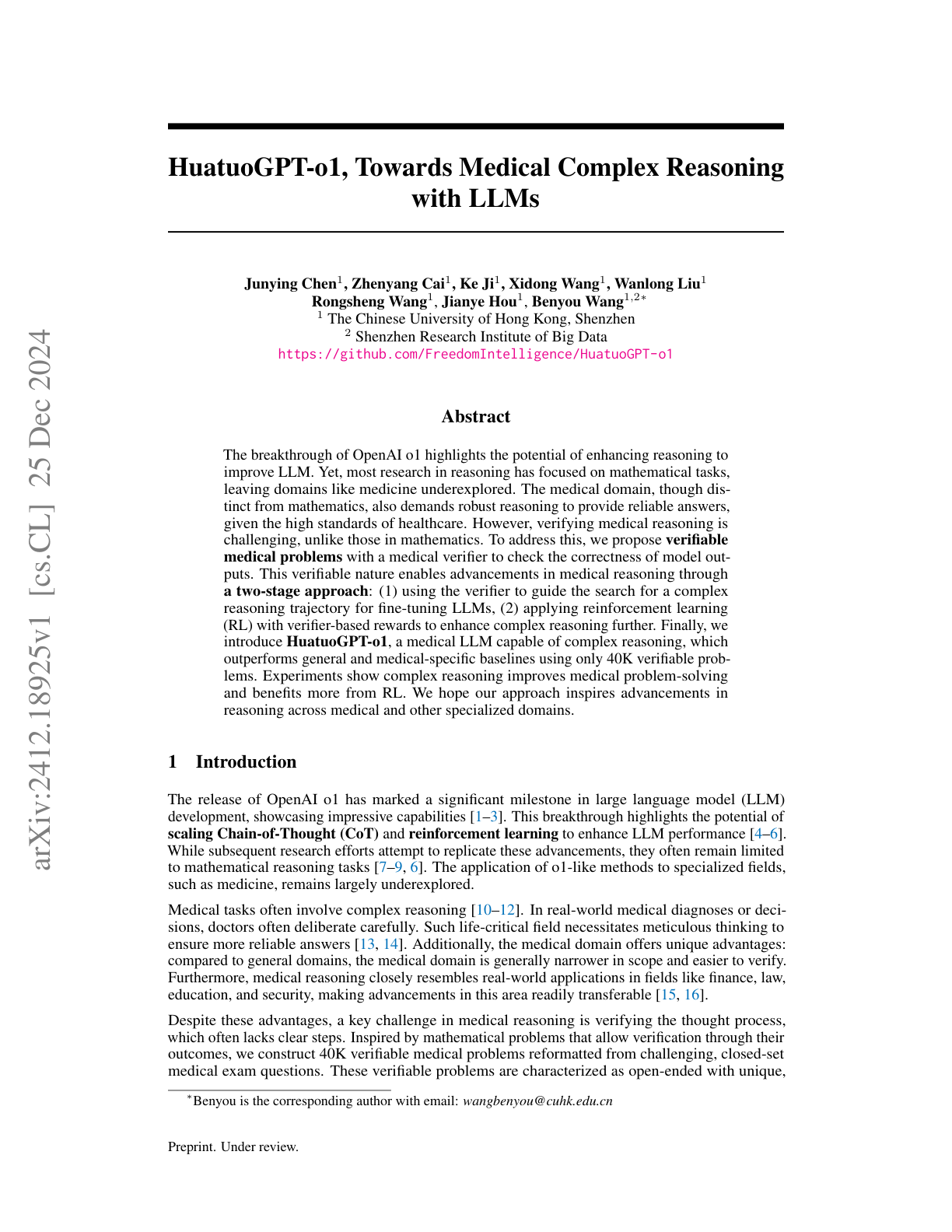
HuatuoGPT-o1
presents a novel approach to improving medical reasoning in language models by using a medical verifier to validate model outputs and guide the development of complex reasoning abilities; the system employs a two-stage approach combining fine-tuning and reinforcement learning with verifier-based rewards, achieving superior performance over existing models while using only 40,000 verifiable medical problems.
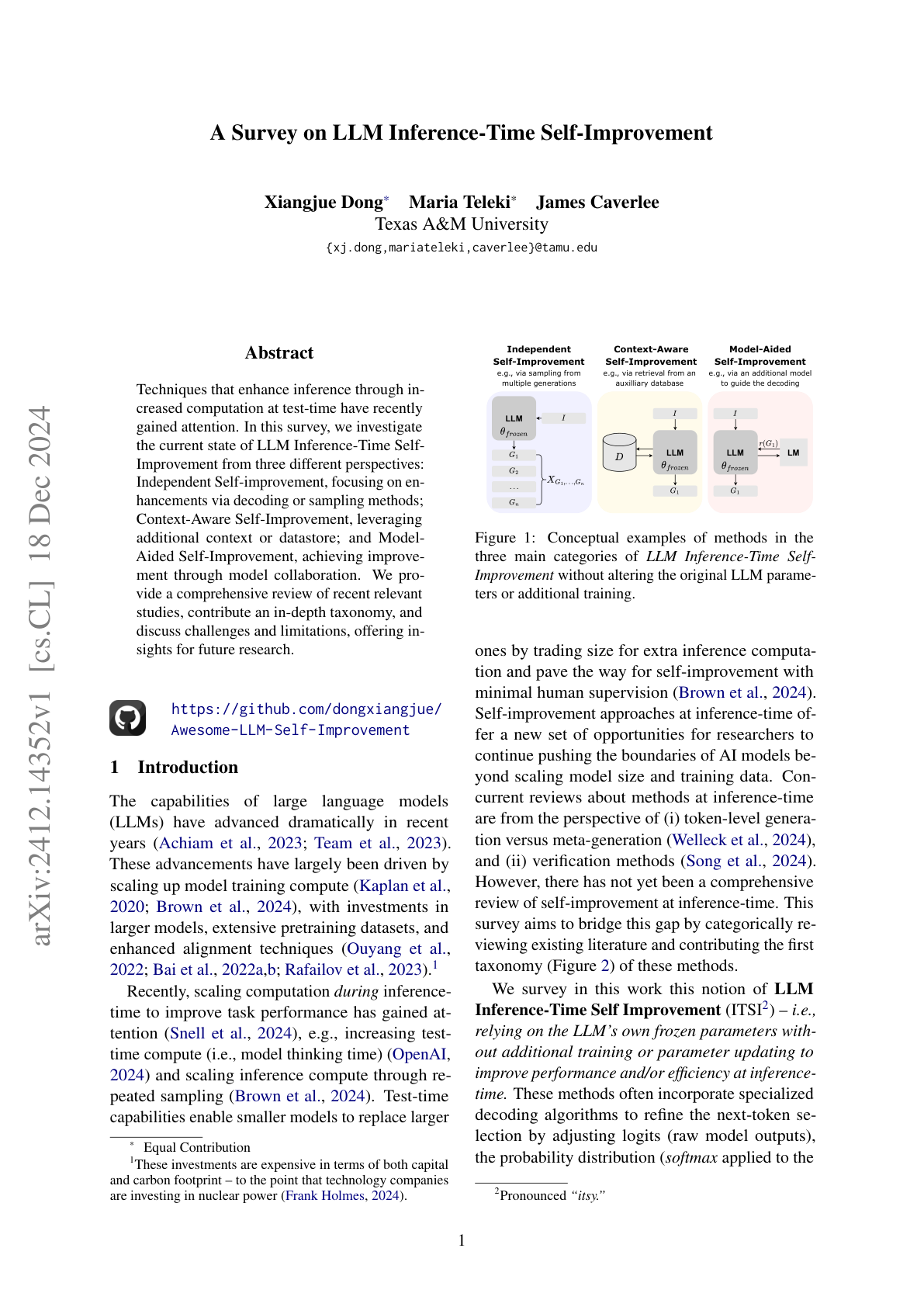
A Survey on LLM Inference-Time Self-Improvement
presents a survey that analyzes three categories of LLM inference-time self-improvement techniques - independent methods like enhanced decoding, context-aware approaches using external data, and model collaboration strategies.
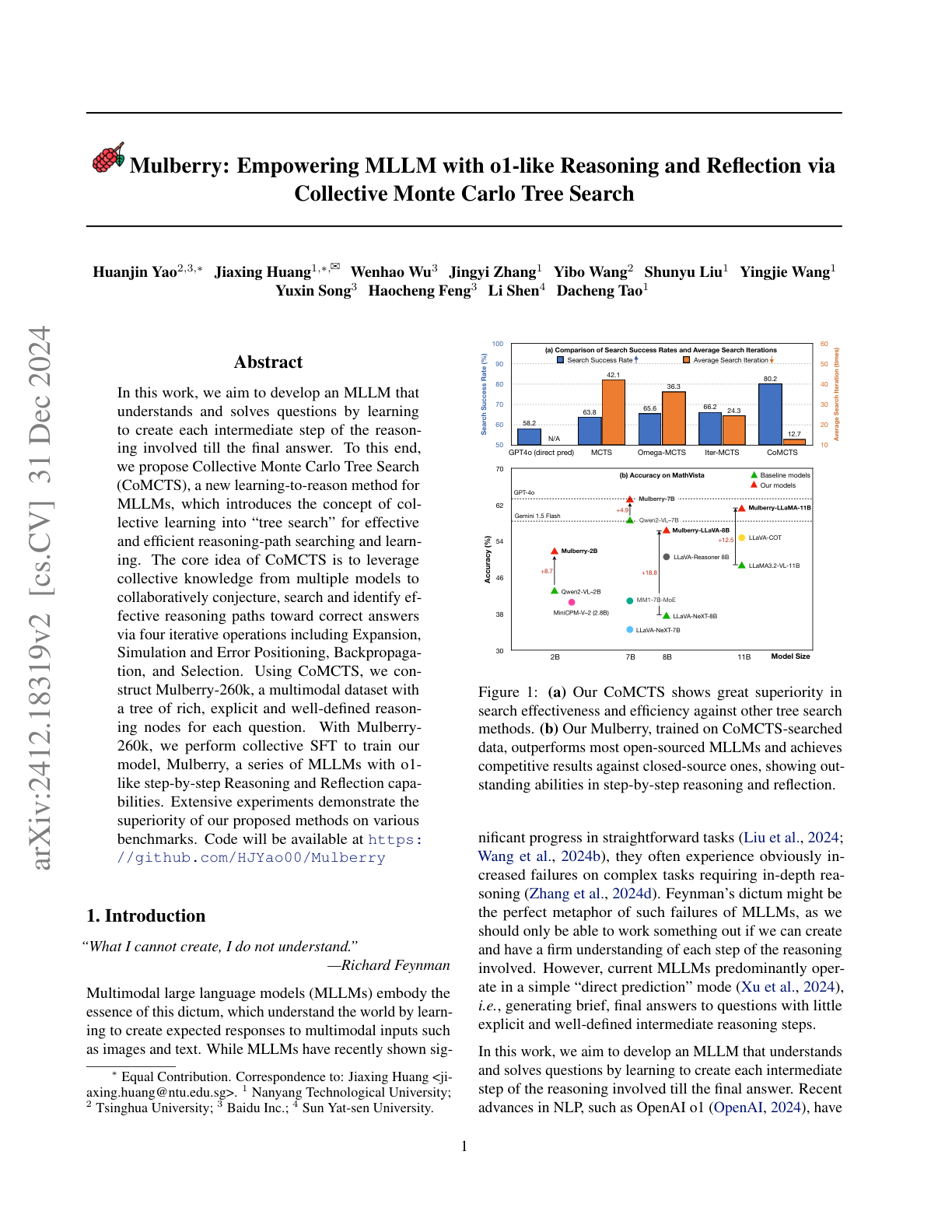
Empowering MLLM with o1-like Reasoning and Reflection
proposes a new learning-to-reason method called CoMCTS that enables multimodal language models to develop step-by-step reasoning capabilities by leveraging collective knowledge from multiple models; the approach was used to create Mulberry-260k, a dataset with explicit reasoning trees, which was then used to train the Mulberry model series; the method demonstrates strong performance on benchmarks, with the models showing improved reasoning and reflection capabilities.
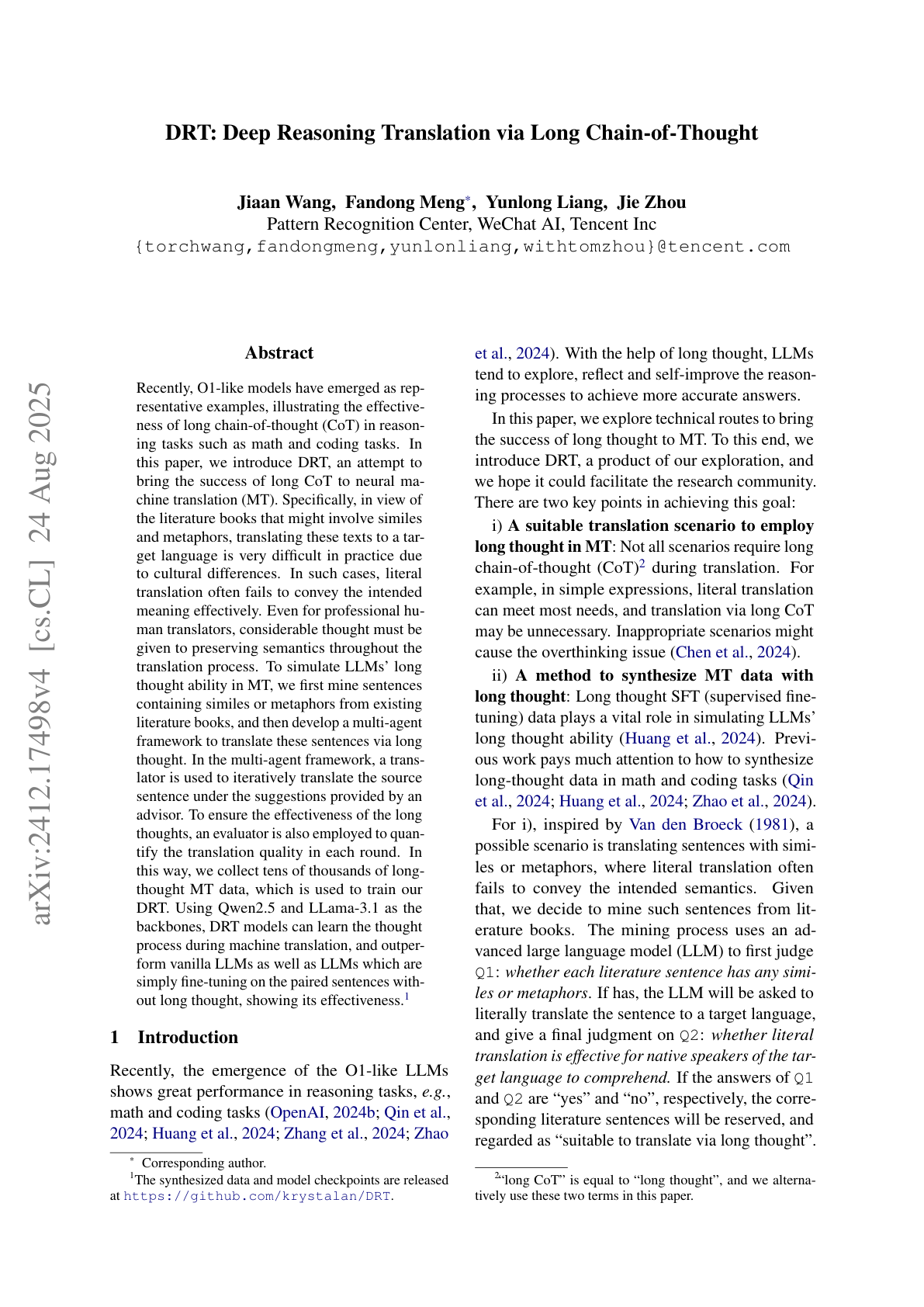
DRT-o1
applies long chain-of-thought reasoning to machine translation, particularly for handling metaphors and similes across different cultures; the system uses a multi-agent framework with a translator working iteratively with an advisor and evaluator to produce better translations; testing with Qwen2.5 models showed significant improvements in BLEU and CometScore metrics, with DRT-o1-7B outperforming larger models like QwQ-32B-Preview.
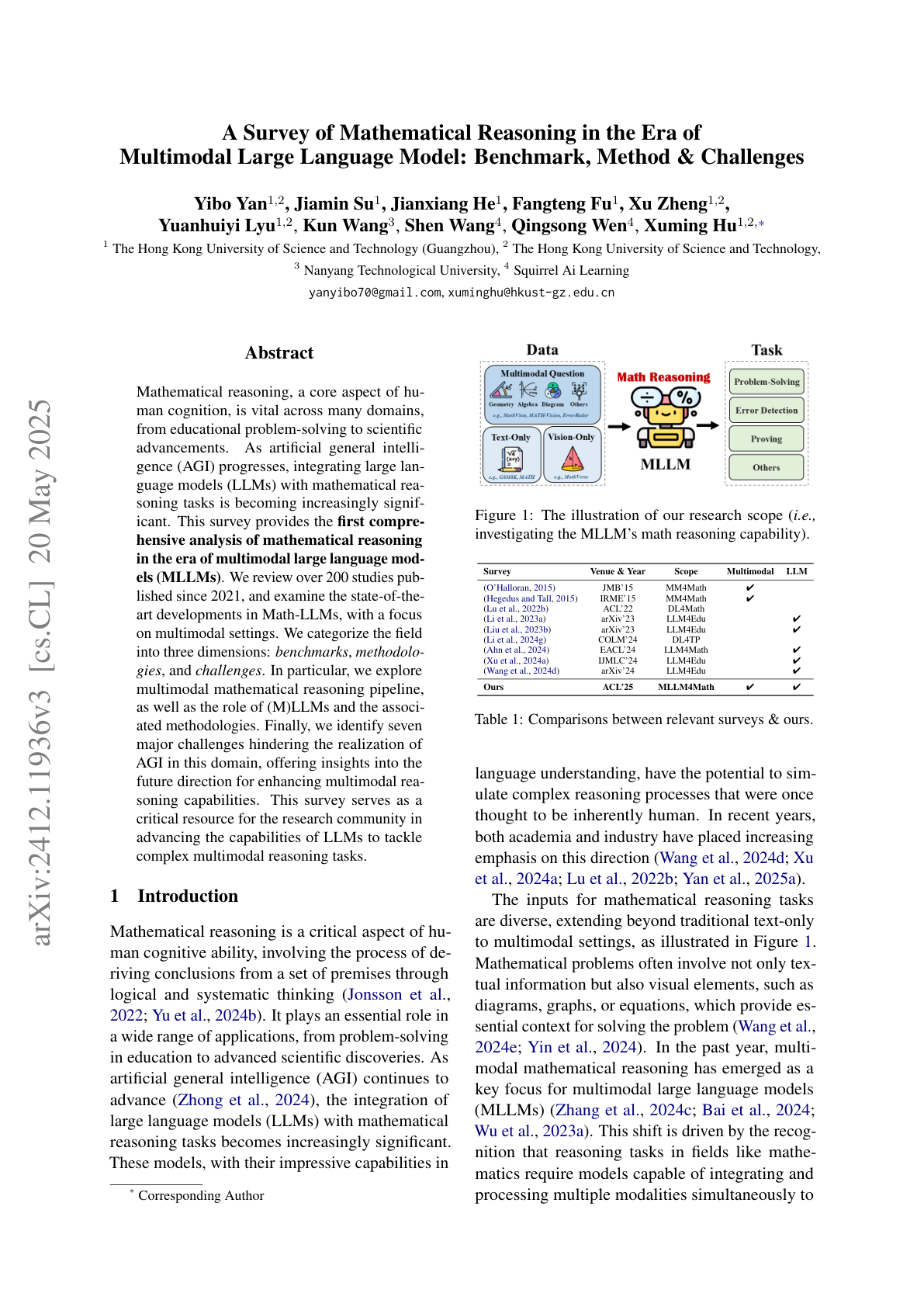
A Survey of Mathematical Reasoning in the Era of Multimodal LLMs
presents a comprehensive survey analyzing mathematical reasoning capabilities in multimodal large language models (MLLMs), covering benchmarks, methodologies, and challenges across 200+ studies since 2021.
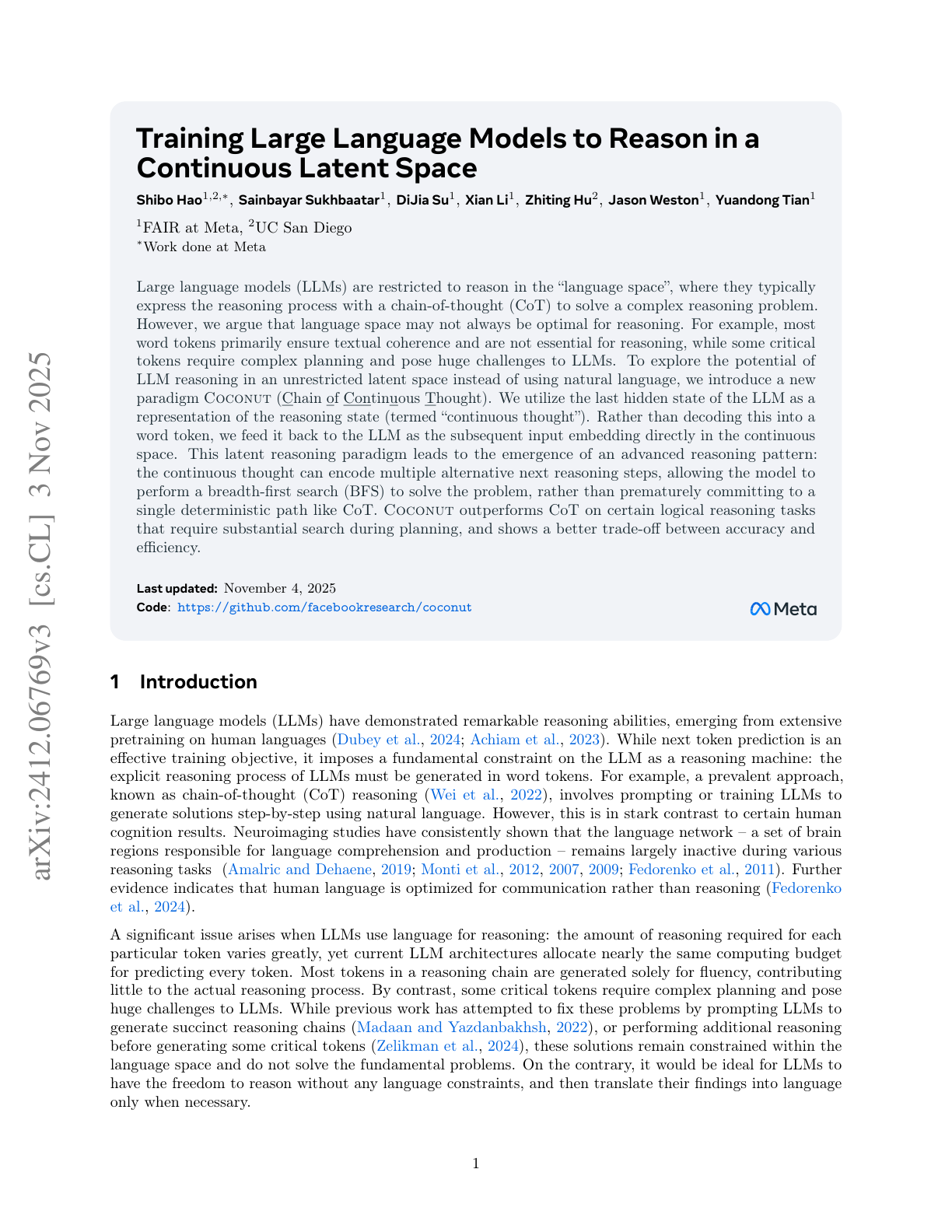
Training LLMs to Reason in a Continuous Latent Space
presents Coconut (Chain of Continuous Thought), a novel paradigm that enables LLMs to reason in continuous latent space rather than natural language; Coconut takes the last hidden state of the LLM as the reasoning state and feeds it back to the LLM as the subsequent input embedding directly in the continuous space; this leads to what the authors refer to as "continuous thought" which augments an LLM's capability on reasoning tasks; it demonstrates improved performance on complex reasoning tasks through emergent breadth-first search capabilities.
AutoReason Improves Multi-step Reasoning
proposes a method to automatically generate rationales for queries using CoT prompting; this transforms zero-shot queries into few-shot reasoning traces which are used as CoT exemplars by the LLM; claims to improve reasoning in weaker LLMs.
OpenAI o1
a model series trained with large-scale reinforcement learning to reason using chain of thought; o1 shows significant improvements across benchmarks related to math, code, and science; o1 is claimed to be 50% faster in generating thinking steps than o1-preview; results demonstrate that o1 is significantly better at reasoning tasks and produces more comprehensive and reliable responses.
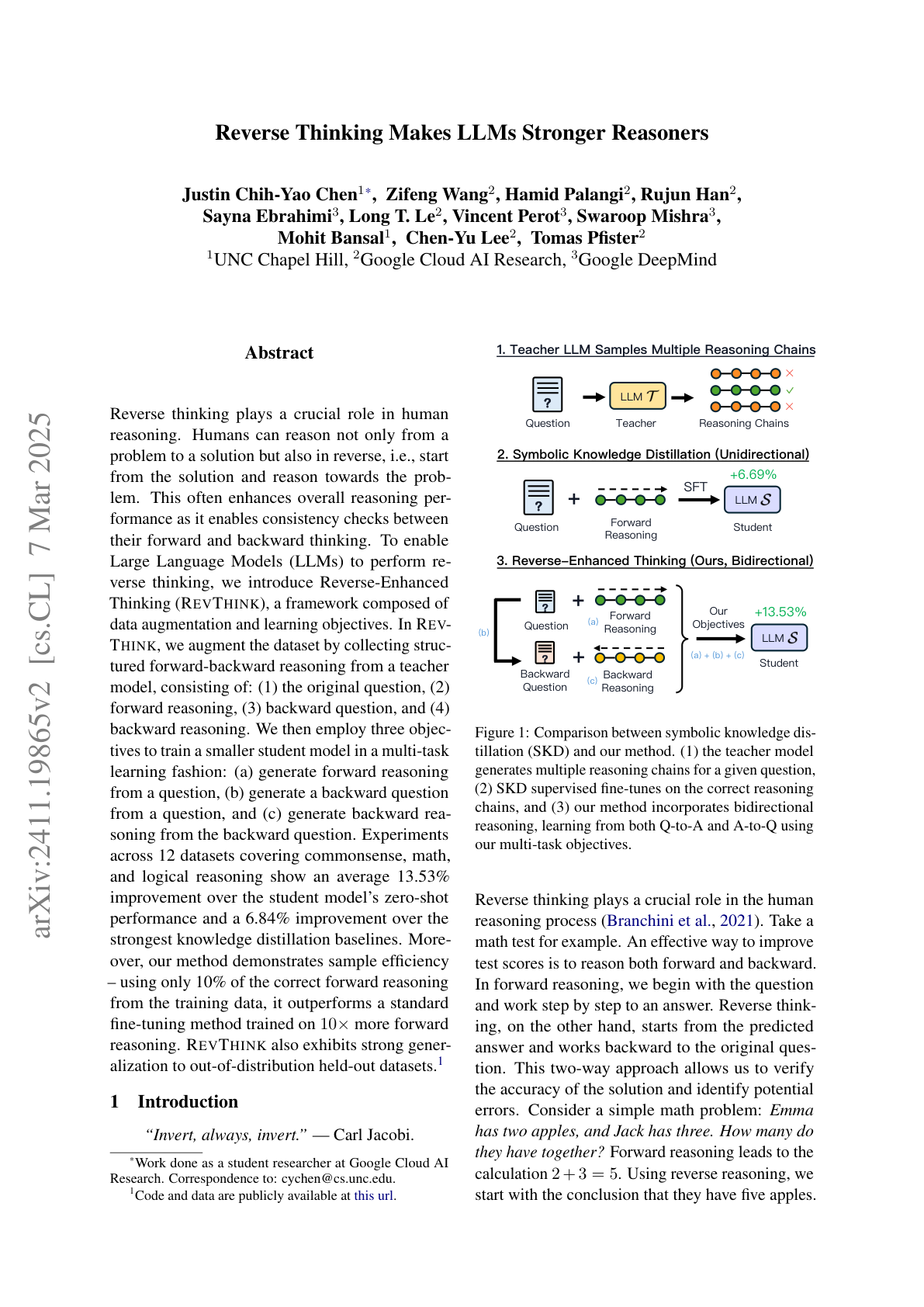
Reverse Thinking
shows that training LLMs to learn "reverse thinking" helps to improve performance in commonsense, math, and logical reasoning tasks. It claims to outperform a standard fine-tuning method trained on 10x more forward reasoning.
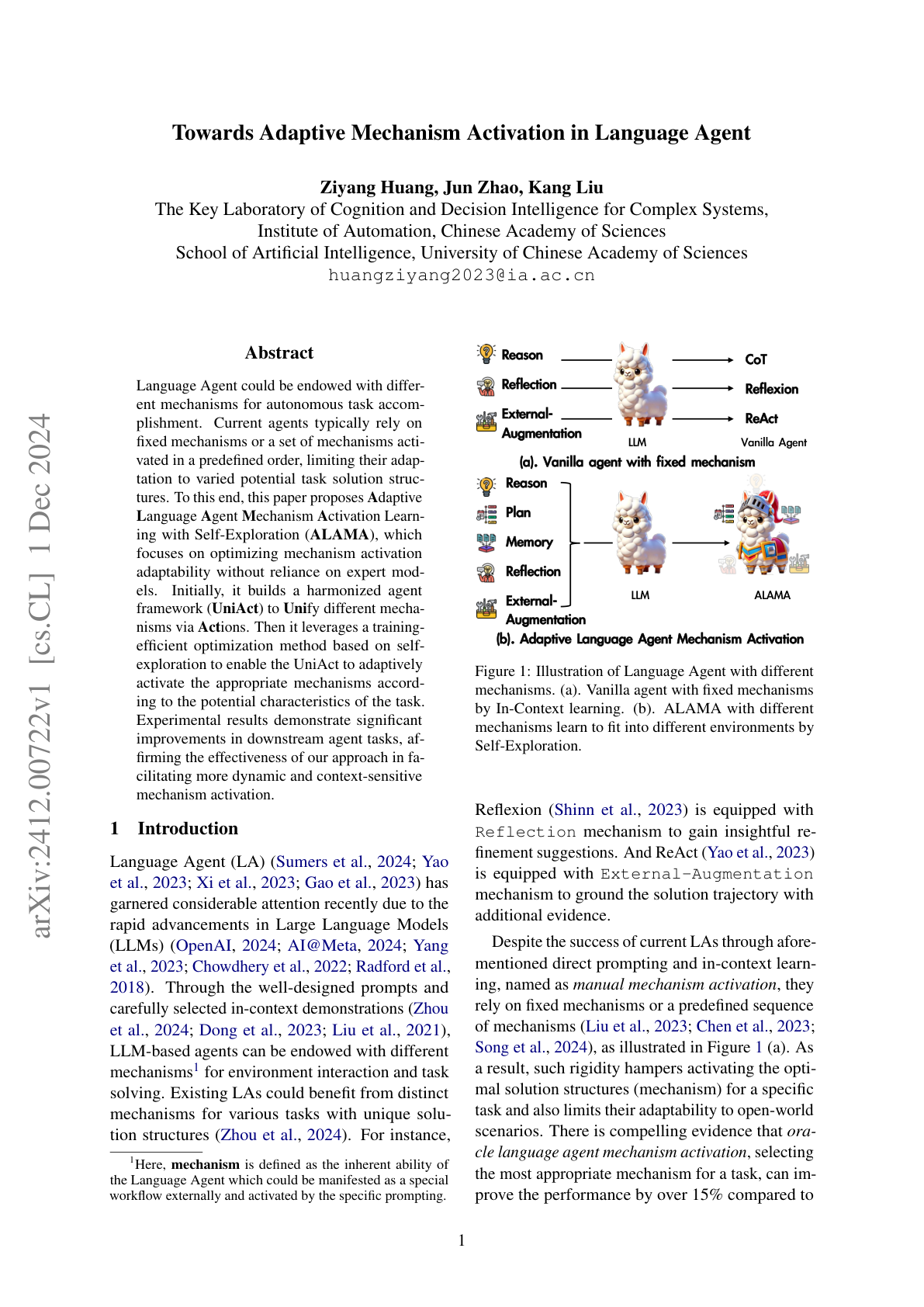
ALAMA
a new framework that helps language agents automatically learn when to use different mechanisms (ReAct, CoT, Reflection, etc.) for automatically completing tasks, improving on current approaches that use fixed or predefined mechanisms; the framework adaptively activates the appropriate mechanisms according to the potential characteristics of the task; experimental results demonstrate significant improvements in downstream agent tasks, including mathematical reasoning and knowledge-intensive reasoning.
Retrieval-Augmented Reasoning for LLMs
extends the rStar reasoning framework to enhance reasoning accuracy and factual reliability of LLMs; it leverages a Monte Carlos Tree Search (MCTS) framework with explicit retrieval-augmented reasoning to produce multiple candidate reasoning trajectories; then it leverages a retrieval-augmented factuality scorer to evaluate the factual accuracy of the reasoning trajectories; the trajectory with the highest factuality score is selected as the final answer by the system; on medical reasoning tasks, RARE (which uses Llama 3.1) surpasses larger models such as GPT-4; on commonsense reasoning tasks, RARE outperformed Claude-3.5 Sonnet and GPT-4o-mini, achieving performance competitive with GPT-4o.
Procedural Knowledge in Pretraining Drives Reasoning in LLMs
studies what documents in the pertaining influence model outputs; by looking at the pertaining data, it tries to understand better what kind of generalization strategies LLMs use to perform reasoning tasks; when performing reasoning tasks, it finds that influential documents contain procedural knowledge (e.g., demonstrating how to obtain a solution using formulae or code).
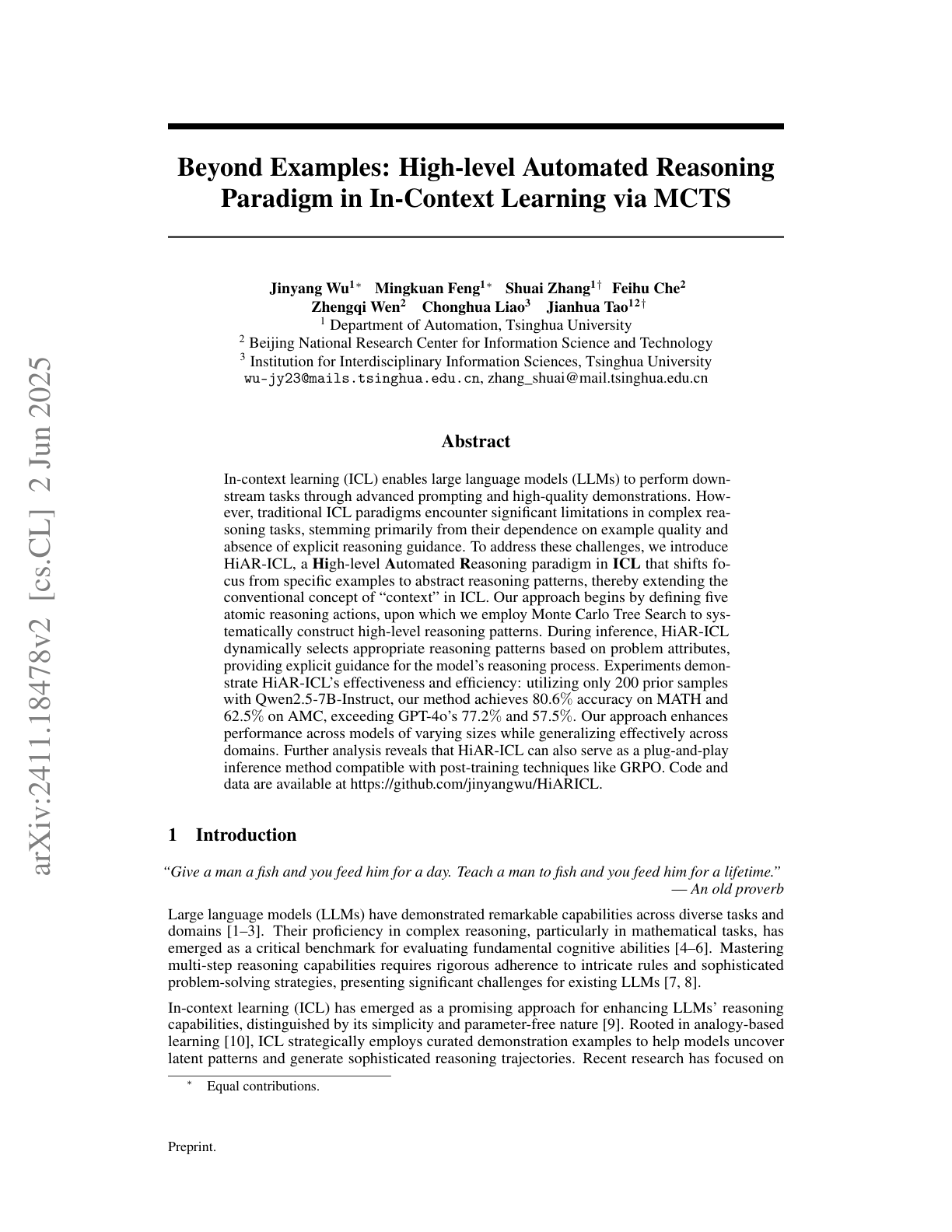
High-Level Automated Reasoning
extends in-context learning through high-level automated reasoning; achieves state-of-the-art accuracy (79.6%) on the MATH benchmark with Qwen2.5-7B-Instruct, surpassing GPT-4o (76.6%) and Claude 3.5 (71.1%); rather than focusing on manually creating high-quality demonstrations, it shifts the focus to abstract thinking patterns; it introduces five atomic reasoning actions to construct chain-structured patterns; then it uses Monte Carlo Tree Search to explore reasoning paths and construct thought cards to guide inference.
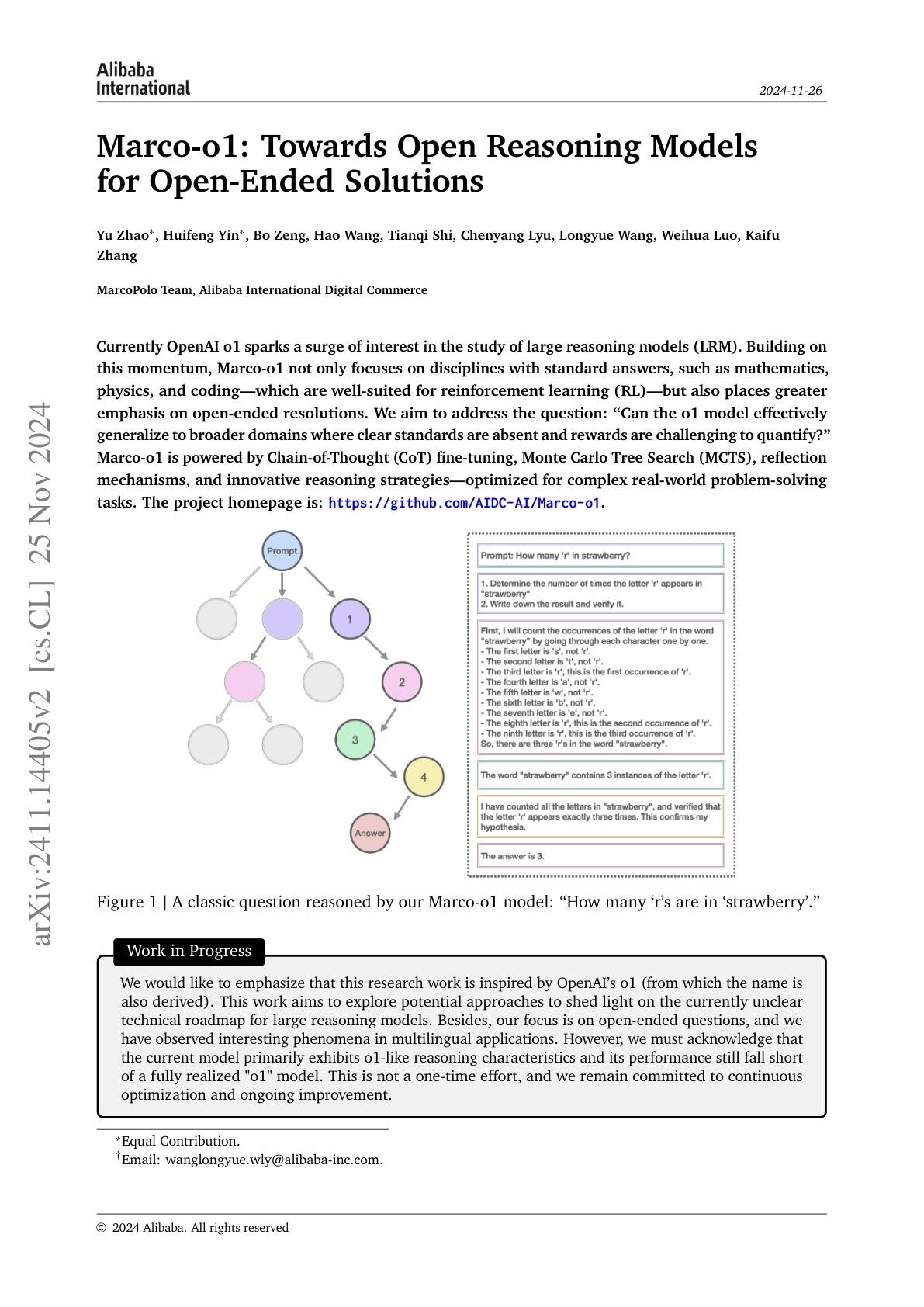
Towards Open Reasoning Models for Open-Ended Solutions
proposes Marco-o1 which is a reasoning model built for open-ended solutions; Marco-o1 is powered by Chain-of-Thought (CoT) fine-tuning, Monte Carlo Tree Search (MCTS), reflection mechanisms, and more recent reasoning strategies; Marco-o1 achieves accuracy improvements of +6.17% on the MGSM (English) dataset and +5.60% on the MGSM (Chinese) dataset.
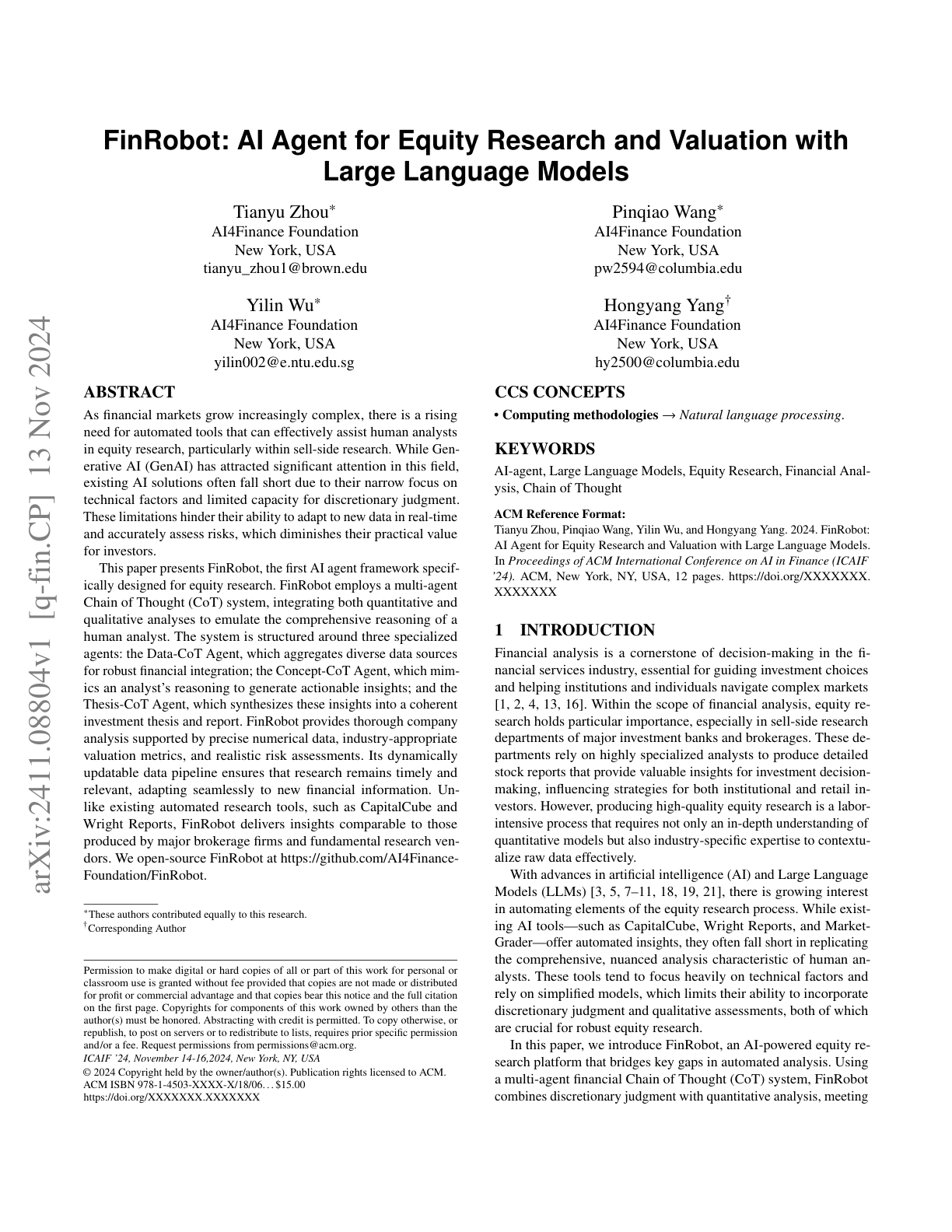
FinRobot
an AI agent framework for equity research that uses a multi-agent Chain-of-Thought prompting, combining data analysis with human-like reasoning to produce professional investment reports comparable to major brokerages; it leverage three agents: a Data-CoT Agent to aggregate diverse data sources for robust financial integration; the Concept-CoT Agent, for analyst’s reasoning to generate actionable insights; and the Thesis-CoT Agent to synthesizes these insights into a coherent investment thesis and report.

Evo
a 7B parameter AI model designed to understand and generate DNA sequences across multiple biological scales; the model, trained on 2.7 million prokaryotic and phage genomes, can process sequences up to 131 kilobases long while maintaining single-nucleotide resolution, enabling it to understand both molecular-level interactions and genome-wide patterns; Evo demonstrates superior performance in predicting and generating functional DNA, RNA, and protein sequences, including the first successful AI-generated CRISPR-Cas complexes and transposable systems that have been experimentally validated.