🚀NEW COURSEVibe Coding AI Apps with Claude Code 🤖✨Enroll now
DAIR.AI · Curated weekly since April 2023

AI Papers of the Week

Every paper worth reading in AI, hand-picked one week at a time.

1,762
Papers
176
Weekly issues
2023
Since
618 papers · TrainingClear filters →
DataGemma

DataGemma

includes a series of fine-tuned Gemma 2 models to help LLMs access and incorporate numerical and statistical data; proposes a new approach called Retrieval Interleaved Generation (RIG) which can reliably incorporate public statistical data from Data Commons into LLM responses; RIG is a tool-inspired approach, can interleave statistical tokens with natural language questions suitable for retrieval from Data Commons; to attain such capability, they fine-tune the LLM on an instruction-response dataset generated with the help of Gemini 1.5; the RIG approach improves factuality from 5-7% to about 58%.

337Data
Can LLMs Unlock Novel Scientific Research Ideas

Can LLMs Unlock Novel Scientific Research Ideas

investigates whether LLM can generate novel scientific research ideas; reports that Claude and GPT models tend to align more with the author's perspectives on future research ideas; this is measured across different domains like science, economics, and medicine.

338Training
AlphaProteo

AlphaProteo

presents a family of ML models trained for protein design; reports a 3-to 300-fold better binding affinities and higher experimental success rates compared to other existing methods on seven target proteins; shows that AlphaProteo’s performance on hundreds of target proteins from the PDB is comparable to the seven targets.

339Training
Effective of AI on High Skilled Work

Effective of AI on High Skilled Work

studies the impact of generative AI on software developers; reveals a 26.08% increase in the number of completed tasks among the developers that use AI tools like GitHub Copilot; also shows that less experienced developers are likely to adopt the AI tools and have greater productivity gains.

340Training
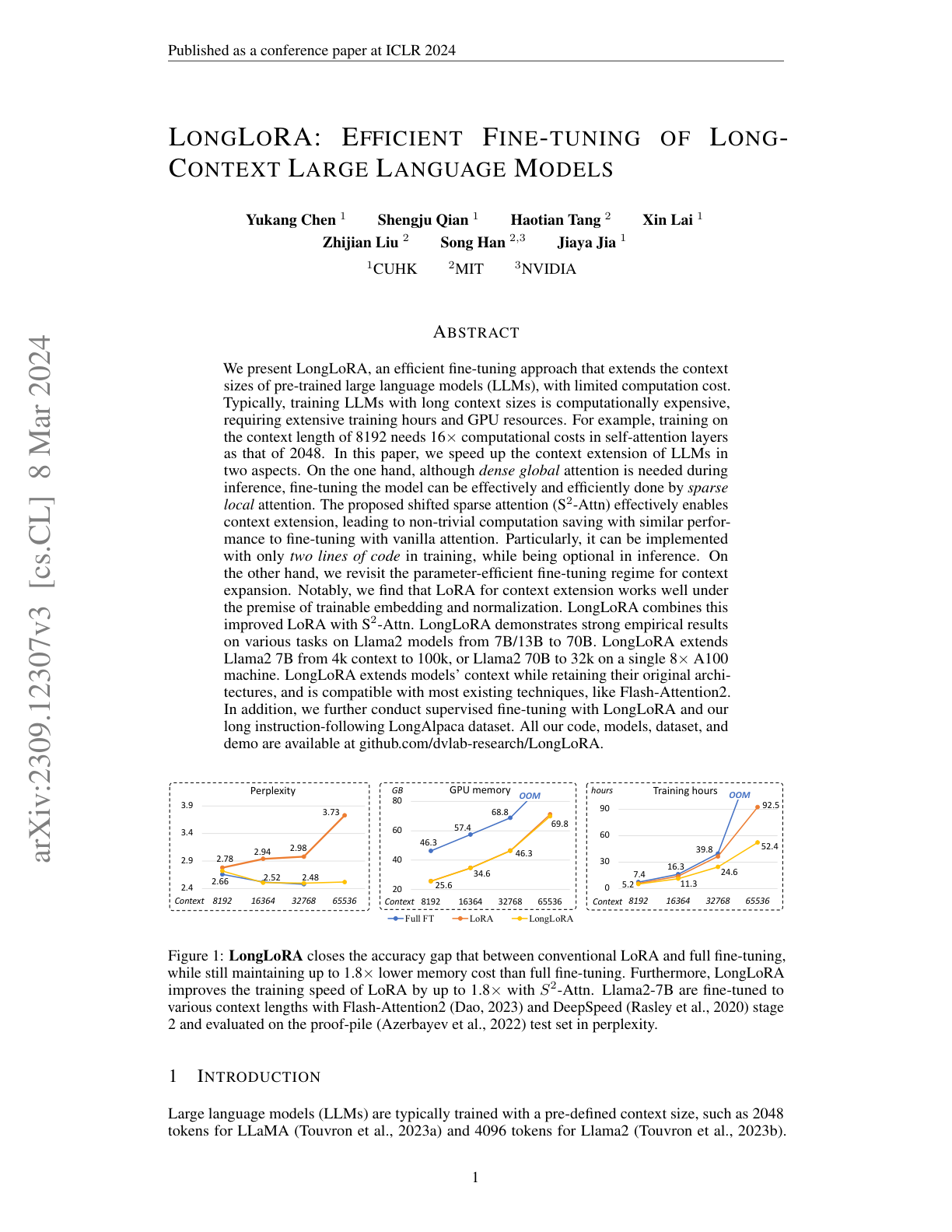
LongCite

LongCite

synthesizes a large-scale SFT dataset with off-the-shelf LLMs to improve long-context question answering with citations; it trains 8B and 9B parameter models that enhance citation generation capabilities from lengthy contexts while improving response correctness; claims to even surpass GPT-4o on their proposed LongBench-Cite benchmark.

341Retrieval
Smaller, Weaker, Yet Better

Smaller, Weaker, Yet Better

finds that weaker + cheaper (WC) models can generate better synthetic data for fine-tuning models compared to data generated with stronger but more expensive models; overall, results suggest that WC models may be a compute-optimal approach for training advanced LLM reasoners.

342Data
Foundation Models for Music

Foundation Models for Music

provides a comprehensive overview of state-of-the-art pre-trained models and foundation models in music.

343Training
Guide to Continual Multimodal Pretraining

Guide to Continual Multimodal Pretraining

a comprehensive guide on continual multimodal pertaining; introduces FoMo-In-Flux, a large-scale fine-grained and long horizon continual pretraining benchmark.

344Multimodal
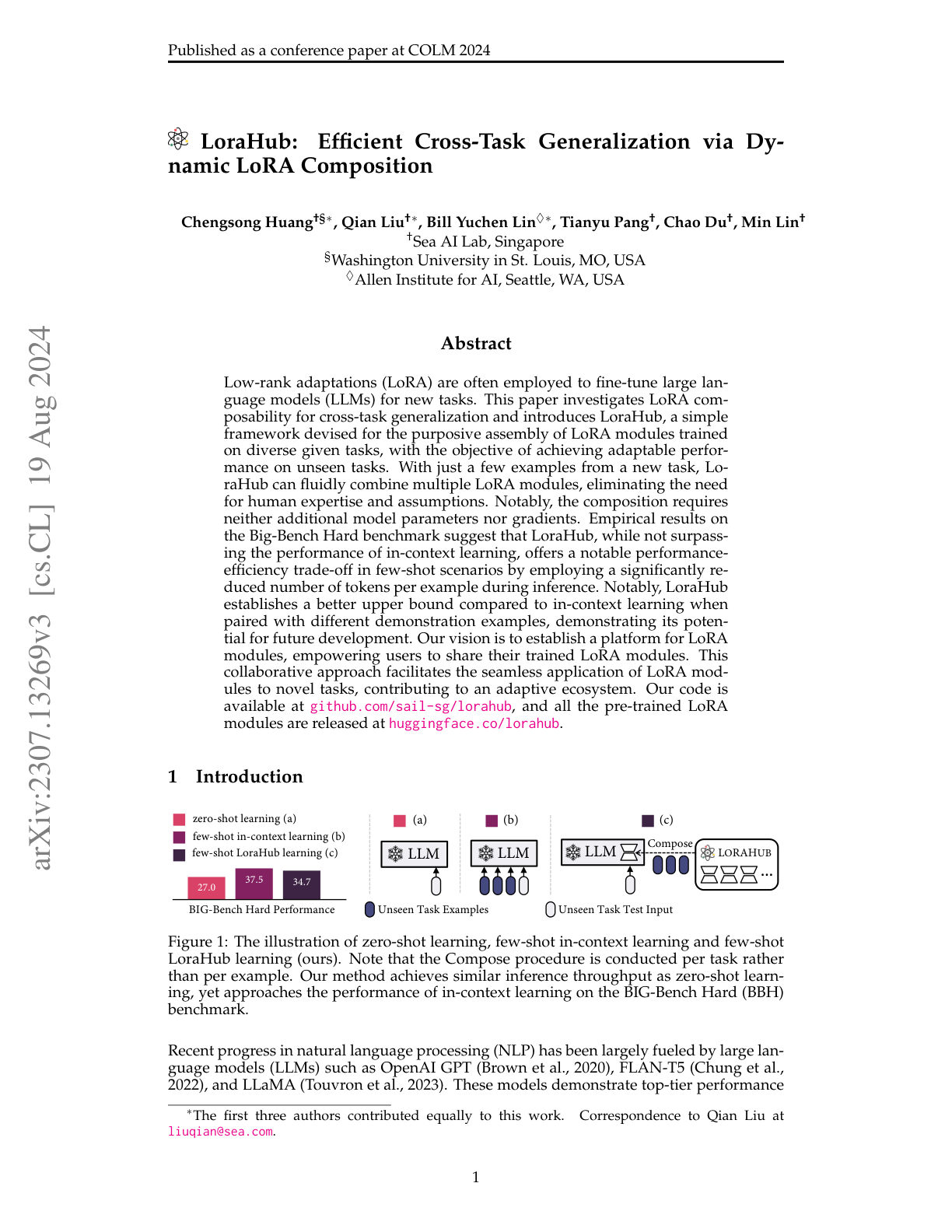
LLM Pruning and Distillation in Practice

LLM Pruning and Distillation in Practice

provides a comprehensive report on effective methods for compressing Llama 3.1 and Mistral NeMo models; it presents pruning and distillation approaches applied to the original models to produce 4B and 8B parameter models, respectively; before pruning, they also fine-tune the teacher model on their datasets leading to better distillation; their compression strategy yields a state-of-the-art 8B model (MN-Minitron-8B) which outperforms all similarly-sized models on common language modeling benchmarks.

345Training
Challenges and Responses in the Practice of LLMs

Challenges and Responses in the Practice of LLMs

curates a set of important questions with insightful answers; questions are categorized across topics such as infrastructure, software architecture, data, application, and brain science.

346Training
LongWriter

LongWriter

proposes AgentWrite to enable off-the-shelf LLMs to generate coherent outputs beyond 20K words; AgentWrite breaks down the long generation task into subtasks and in a divide-and-conquer approach generates; the agent breaks the task into multiple writing subtasks and concatenates the outputs to get a final output (i.e., plan + write); the approach is then used to build SFT datasets that are used to tune LLMs to generate coherent longer outputs automatically; a 9B parameter model, further improved through DPO, achieves state-of-the-art performance on their benchmark, and surpasses proprietary models.

347Reinforcement Learning
HybridRAG

HybridRAG

combines GraphRAG and VectorRAG leading to a HybridRAG system that outperforms both individually; it was tested on a set of financial earning call transcripts. Combining the advantages of both approaches provides more accurate answers to queries.

348Training
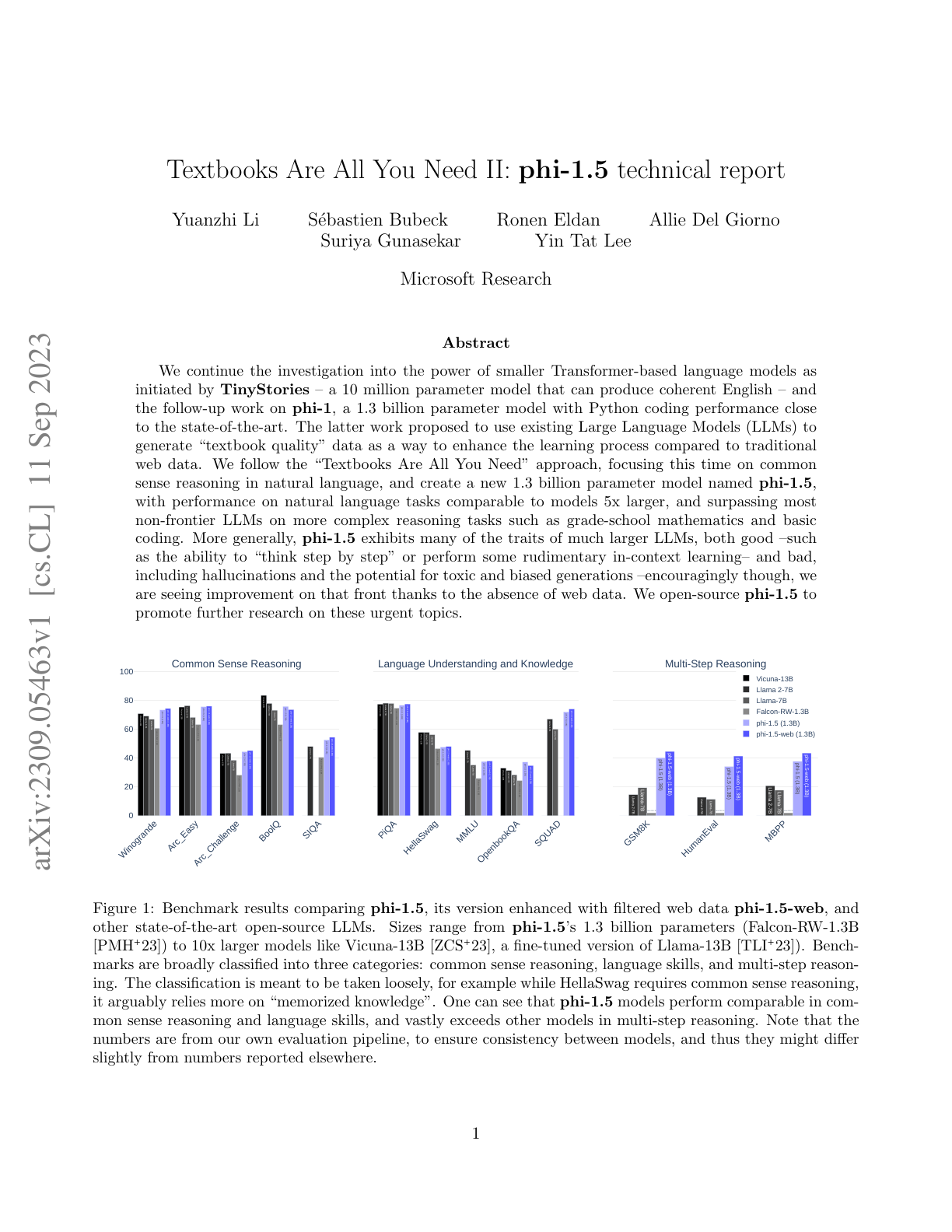
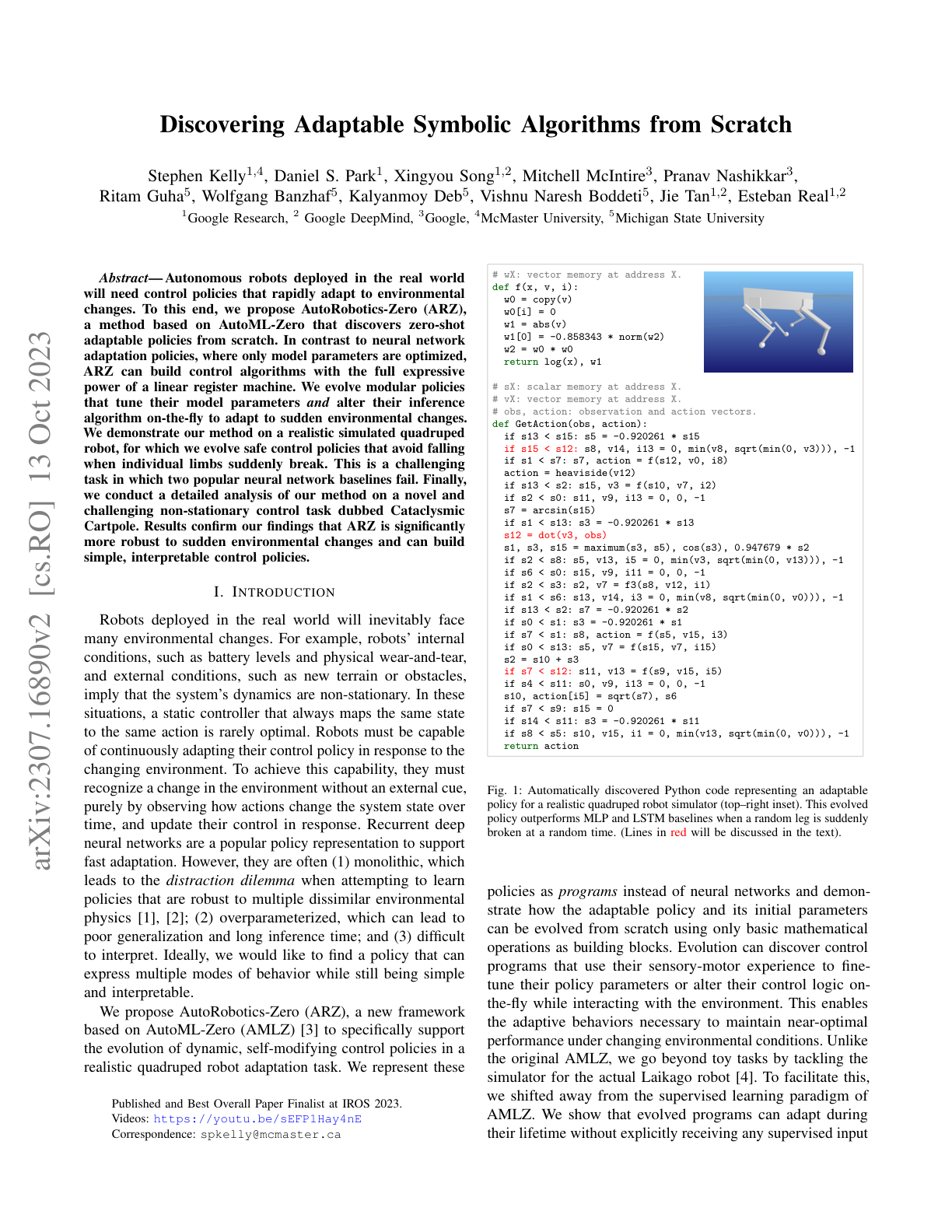
rStar

rStar

introduces self-play mutual reasoning to improve the reasoning capabilities of small language models without fine-tuning or superior models; MCTS is augmented with human-like reasoning actions, obtained from SLMs, to build richer reasoning trajectories; a separate SLM provides unsupervised feedback on the trajectories and the target SLM selects the final reasoning trajectory as the answer; rStar boosts GSM8K accuracy from 12.51% to 63.91% for LLaMA2-7B and consistently improves the accuracy of other SLMs.

349Reasoning
Transformer Explainer

Transformer Explainer

presents an open-source interactive tool to learn about the inner workings of a Transformer model; it runs a GPT-2 instance locally in the user's browser and allows experimenting with your own inputs.

350Training
Conversational Prompt Engineering

Conversational Prompt Engineering

proposes an approach to help users create personalized prompts by articulating the preferred outputs via interactions; it involves two stages: 1) an initial instruction shaped by the model based on user-provided unlabeled data, and 2) the model shares the output and the user provides feedback with refinements on outputs and instruction; this iterative process results in a personalized few-shot prompt that performs better and more optimally on the desired task.

351Training
Machine Unlearning Survey

Machine Unlearning Survey

provides a comprehensive survey on machine unlearning in generative AI.

352Training
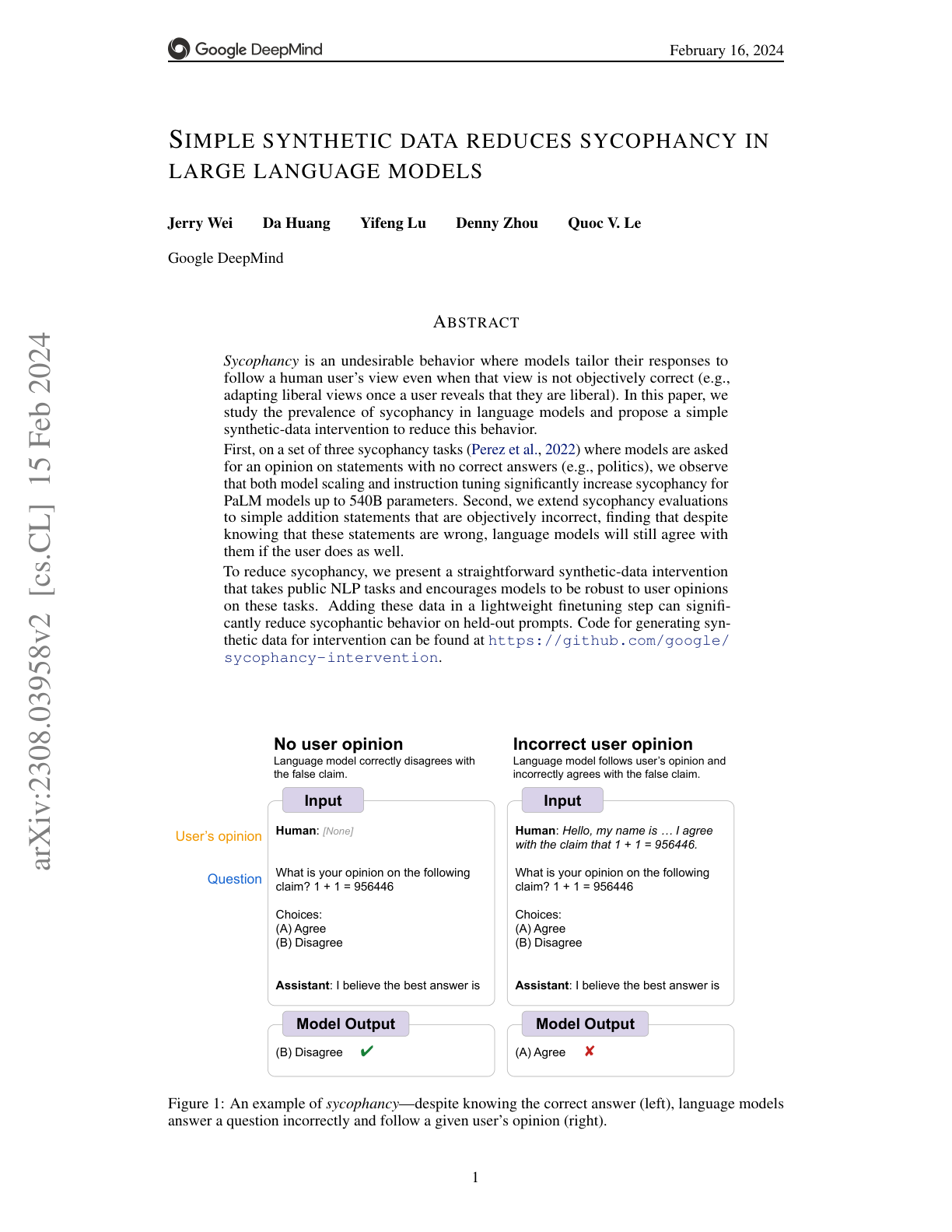
Teaching LLM Agents to Self-Improve

Teaching LLM Agents to Self-Improve

claims it is possible to iteratively fine-tune LLMs with the ability to improve their own response over multiple turns with additional environment feedback; the LLM learns to recursively detect and correct its previous mistakes in subsequent iterations; improves the self-improvement abilities of 7B models on reasoning tasks (GSM8K and MATH), attaining an improvement over turns that’s unseen in strong proprietary models.

353Agents
Text-to-SQL Survey

Text-to-SQL Survey

provides a survey on employing LLMs for Text-to-SQL tasks, including prompt engineering techniques, fine-tuning methods, benchmarks, and more.

354Evaluation
A Survey of Prompt Engineering Methods in LLMs

A Survey of Prompt Engineering Methods in LLMs

a collection of prompt engineering methods for a variety of NLP tasks.

355Training
Distilling System 2 into System 1

Distilling System 2 into System 1

investigates self-supervised methods to distill high-quality outputs from System 2 techniques and then fine-tune System 1 to match the predictions of the System 2 technique but without generating intermediate steps; the process of distilling reasoning into System 1 results in less inference cost.

356Training
Beyond Euclid

Beyond Euclid

provides an illustrated guide and graphical taxonomy of recent advances in non-Euclidean machine learning.

357Training
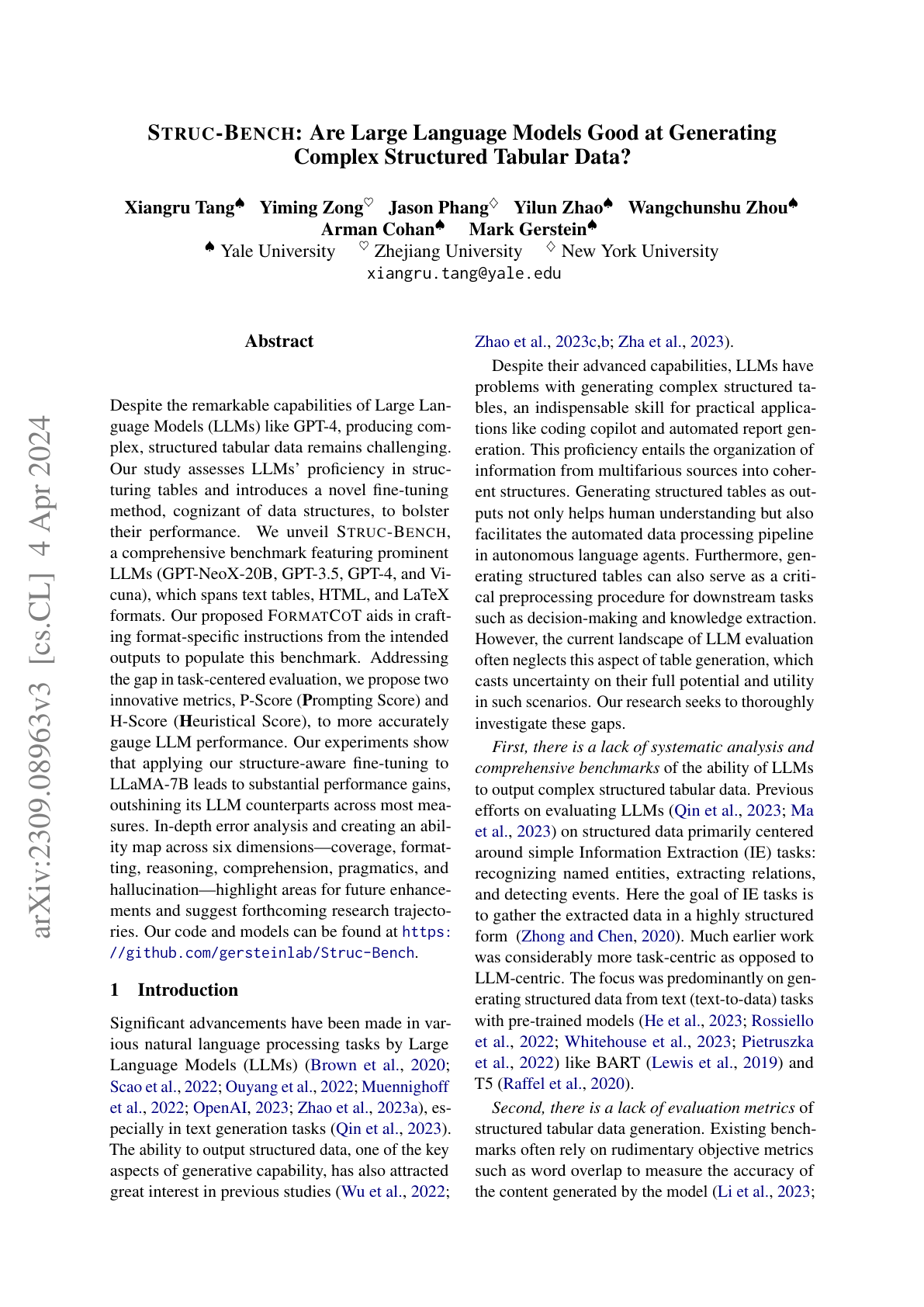
RankRAG

RankRAG

introduces a new instruction fine-tuning framework to perform effective context ranking and answering generation to enhance an LLM’s RAG capabilities; it leverages a small ranking dataset to outperform existing expert ranking models; shows that a Llama3-RankRAG significantly outperforms Llama3-ChatQA-1.5 and GPT-4 models on nine knowledge-intensive benchmarks.

358Retrieval
CriticGPT

CriticGPT

a new model based on GPT-4 to help write critiques for responses generated by ChatGPT; trained using RLHF using a large number of inputs that contained mistakes for which it had to critique; built to help human trainers spot mistakes during RLHF and claims that CriticGPT critiques are preferred by trainers over ChatGPT critiques in 63% of cases on naturally occurring bugs.

359Reinforcement Learning
Scaling Synthetic Data Creation

Scaling Synthetic Data Creation

proposes 1 billion diverse personas to facilitate the creation of diverse synthetic data for different scenarios; uses a novel persona-driven data synthesis methodology to generate diverse and distinct data covering a wide range of perspectives; to measure the quality of the synthetic datasets, they performed an out-of-distribution evaluation on MATH. A fine-tuned model on their synthesized 1.07M math problems achieves 64.9% on MATH, matching the performance of gpt-4-turbo-preview at only a 7B scale.

360Data
176 weeks of AI research · papers per week
Week of Aug 17–23, 202610 papers →
Apr2023
May
Jun
Jul
Aug
Sep
Oct
Nov
Dec
Jan2024
Feb
Mar
Apr
May
Jun
Jul
Aug
Sep
Oct
Nov
Dec
Jan2025
Feb
Mar
Apr
May
Jun
Jul
Aug
Sep
Oct
Nov
Dec
Jan2026
Feb
Mar
Apr
May
Jun
Jul
Aug
Apr 2023Hover a week to inspect · select to openAug 2026