AI Papers of the Week
Every paper worth reading in AI, hand-picked one week at a time.
Survey of Mamba
provides a systematic review of existing Mamba-based models across domains and tasks; specifically, focuses on advancements of Mamba-based models, techniques for adapting Mamba to diverse data, applications where Mamba excels, and promising research directions
Meta-Rewarding LLMs
proposes a self-improving alignment technique (no human supervision) where the LLM judges its own judgements and uses the feedback to improve its judgment skills; shows that leveraging this LLM-as-a-Meta-Judge approach improves the LLM's ability to judge and follow instructions; just doing self-improvement to generate better responses (act) saturates quickly; this work improves the LLM's ability to judge itself (judge) to avoid issues like reward hacking; in addition to the act and judge roles, a third role called meta-judge is used to evaluate the model's own judgements.
MindSearch
presents an LLM-based multi-agent framework to perform complex web-information seeking and integration tasks; a web planner effectively decomposes complex queries followed by a web searcher that performs hierarchical information retrieval on the Internet to improve the relevancy of the retrieved information; the planning component is powered by an iterative graph construction which is used to better model complex problem-solving processes; the multi-agent framework handles long context problems better by distributing reasoning and retrieval tasks to specialized agents.
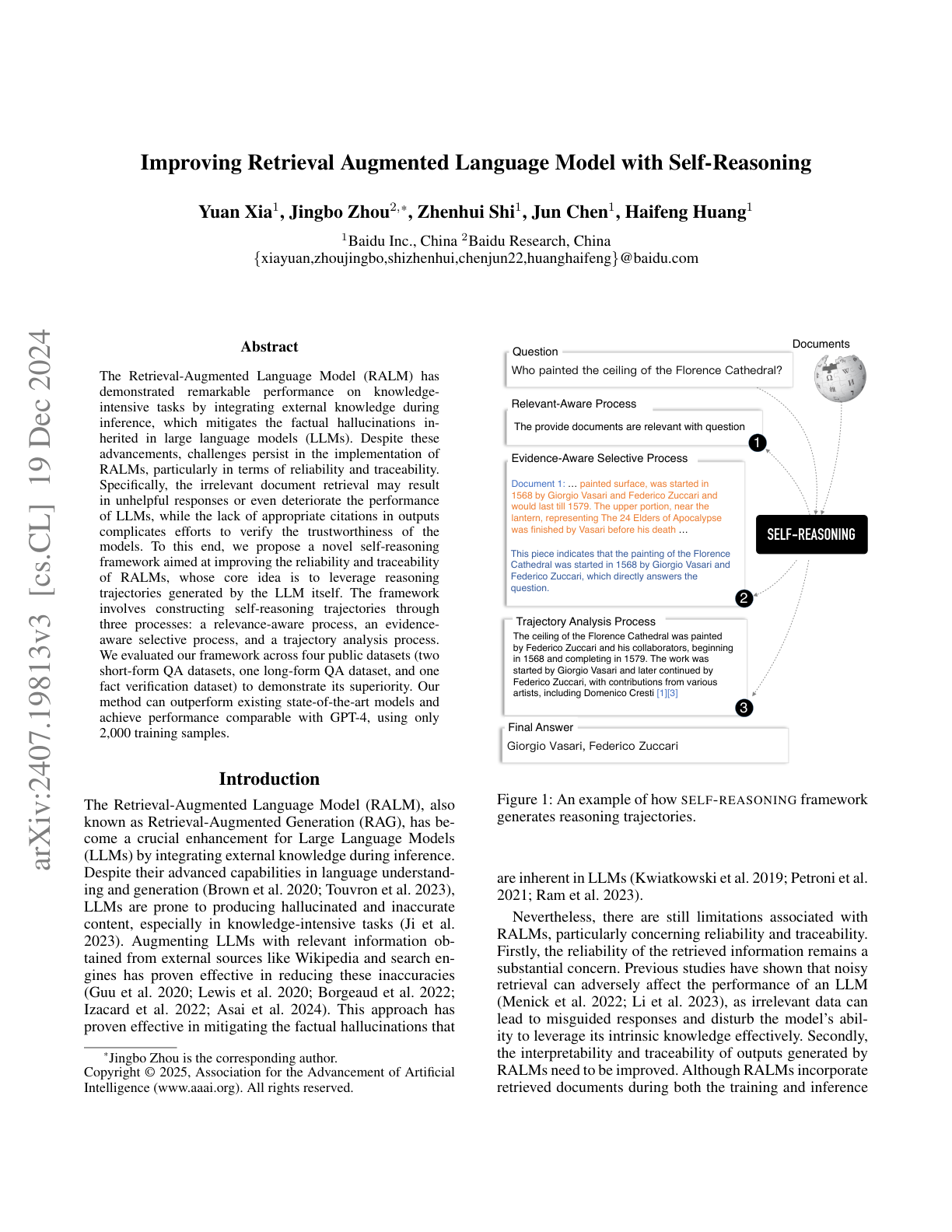
Improved RAG with Self-Reasoning
presents an end-to-end self-reasoning framework to improve the reliability and traceability of RAG systems; leverages the reasoning trajectories generated by the LLM itself; the LLM is used to carry out the following 3 processes: 1) relevance-aware: judges the relevance between the retrieved documents and the question, 2) evidence-aware selective: chooses and cites relevant documents, and then automatically selects snippets of key sentences as evidence from the cited documents, and 3) trajectory analysis: generates a concise analysis based on all gathered self-reasoning trajectories generated by the previous 2 processes and then provides the final inferred answer; this method helps the model to be more selective, reason and distinguish relevant and irrelevant documents, therefore improving the accuracy of the overall RAG system; the framework achieves comparable performance to GPT-4 with only 2K training samples (generated by GPT-4).
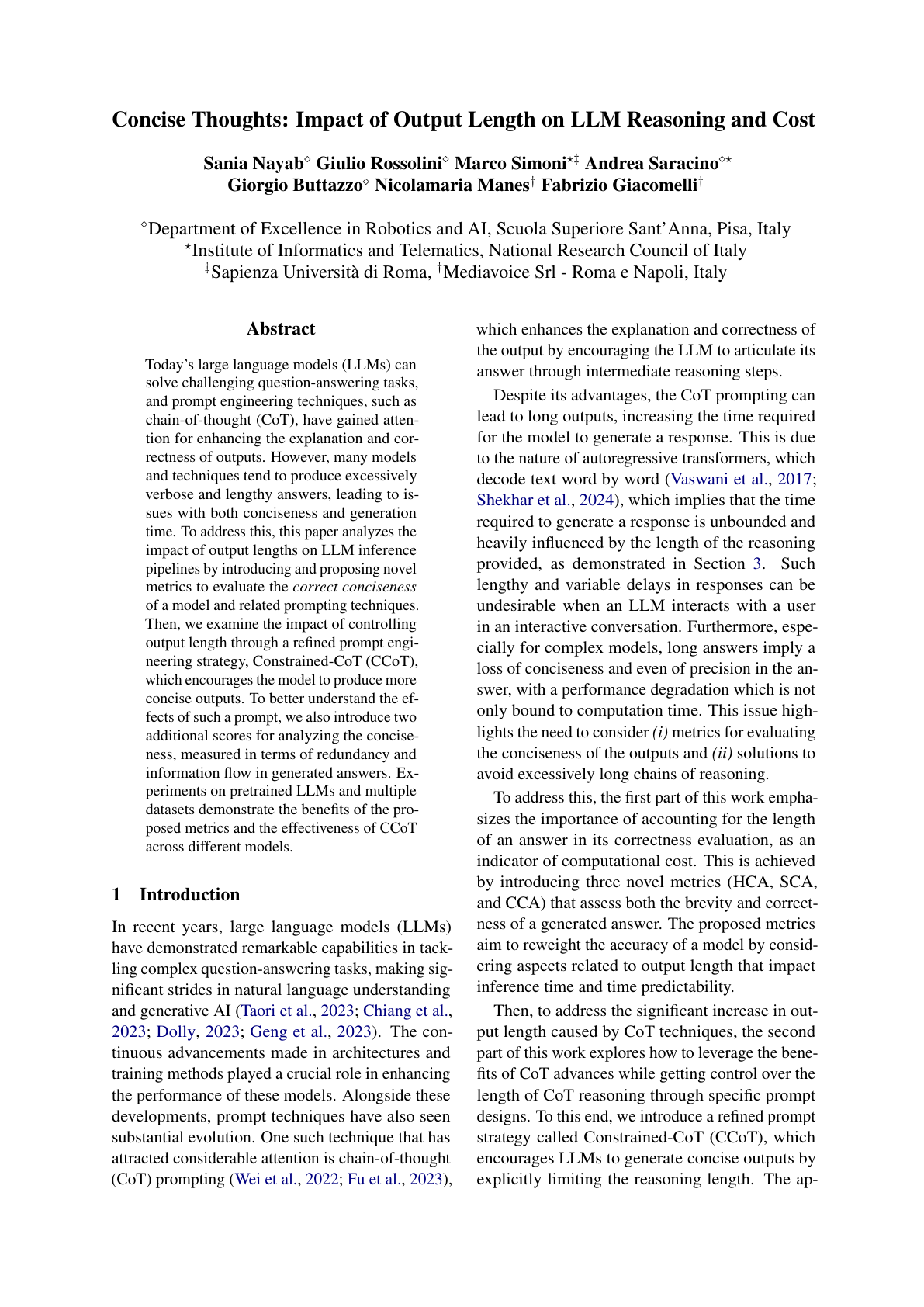
Constrained-CoT
limits the model reasoning output length without sacrificing performance; shows that constraining the reasoning of LLaMA2-70b to 100 words improves the accuracy from 36.01% (CoT) to 41.07% (CCoT) on GSM8K, while reducing the average output length by 28 words.
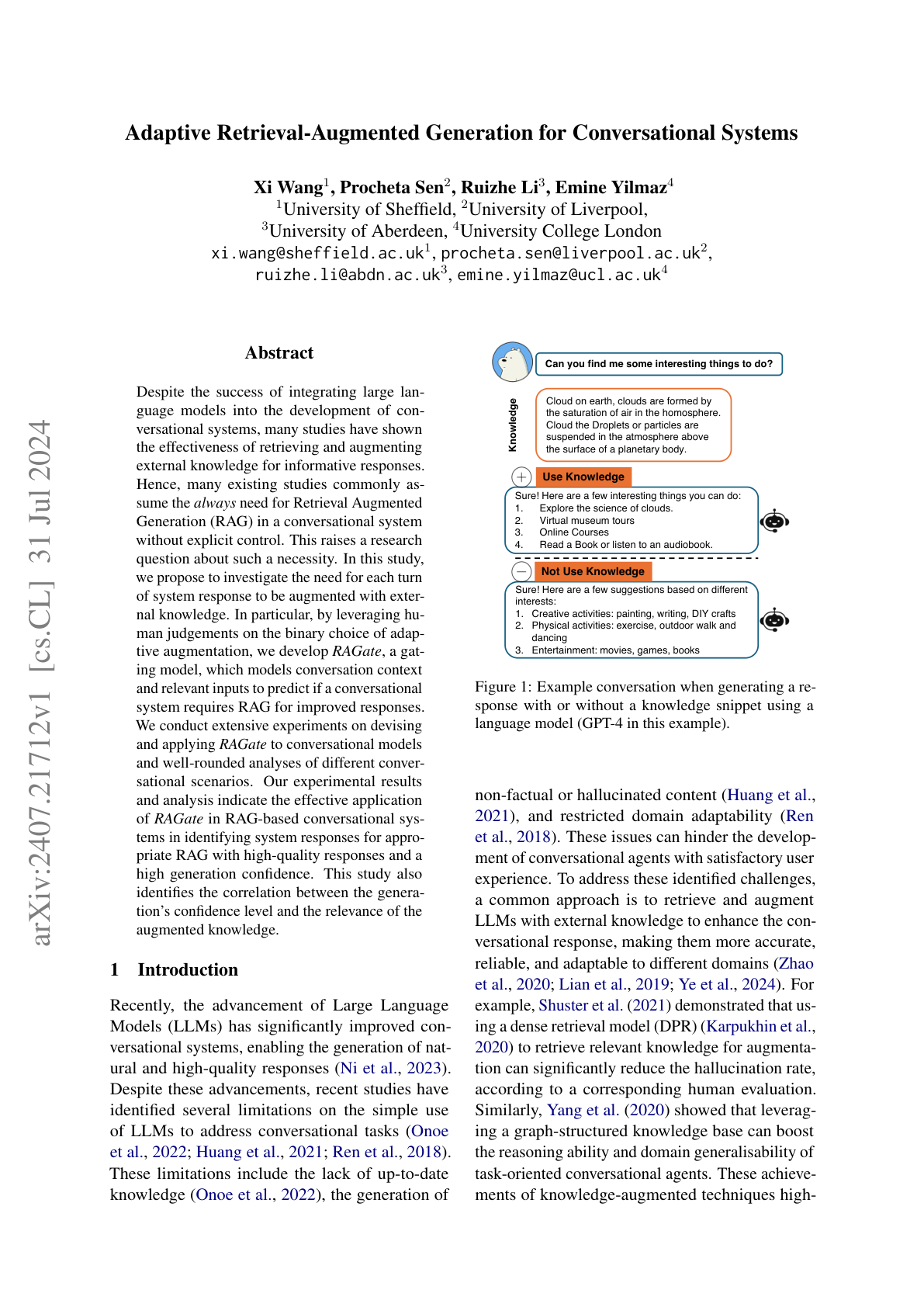
Adaptive RAG for Conversations Sytems
develops a gating model that predicts if a conversational system requires RAG to improve its responses; shows that RAG-based conversational systems have the potential to generate high-quality responses and high generation confidence; it also claims to identify a correlation between the generation's confidence level and the relevance of the augmented knowledge.
ShieldGemma
offers a comprehensive suite of LLM-based safety content moderation models built on Gemma 2; includes classifiers for key harm types such as dangerous content, toxicity, hate speech, and more.
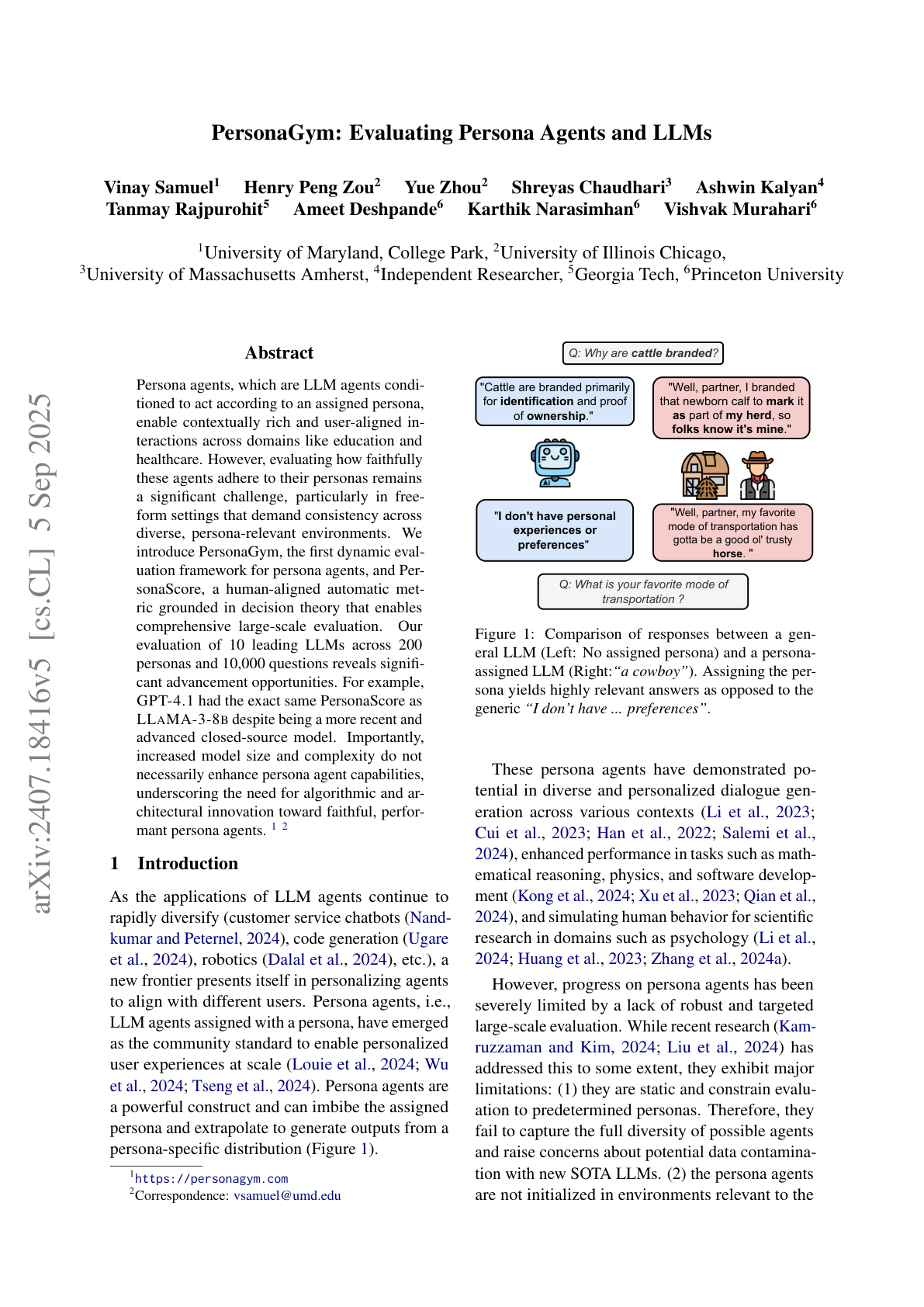
Evaluating Persona Agents
proposes a benchmark to evaluate persona agent capabilities in LLMs; finds that Claude 3.5 Sonnet only has a 2.97% relative improvement in PersonaScore compared to GPT 3.5 despite being a much more advanced model.
Machine Unlearning Survey
provides a comprehensive survey on machine unlearning in generative AI.
ThinK
proposes an approach to address inefficiencies in KV cache memory consumption; it focuses on the long-context scenarios and the inference side of things; it presents a query-dependent KV cache pruning method to minimize attention weight loss while selectively pruning the least significant channels
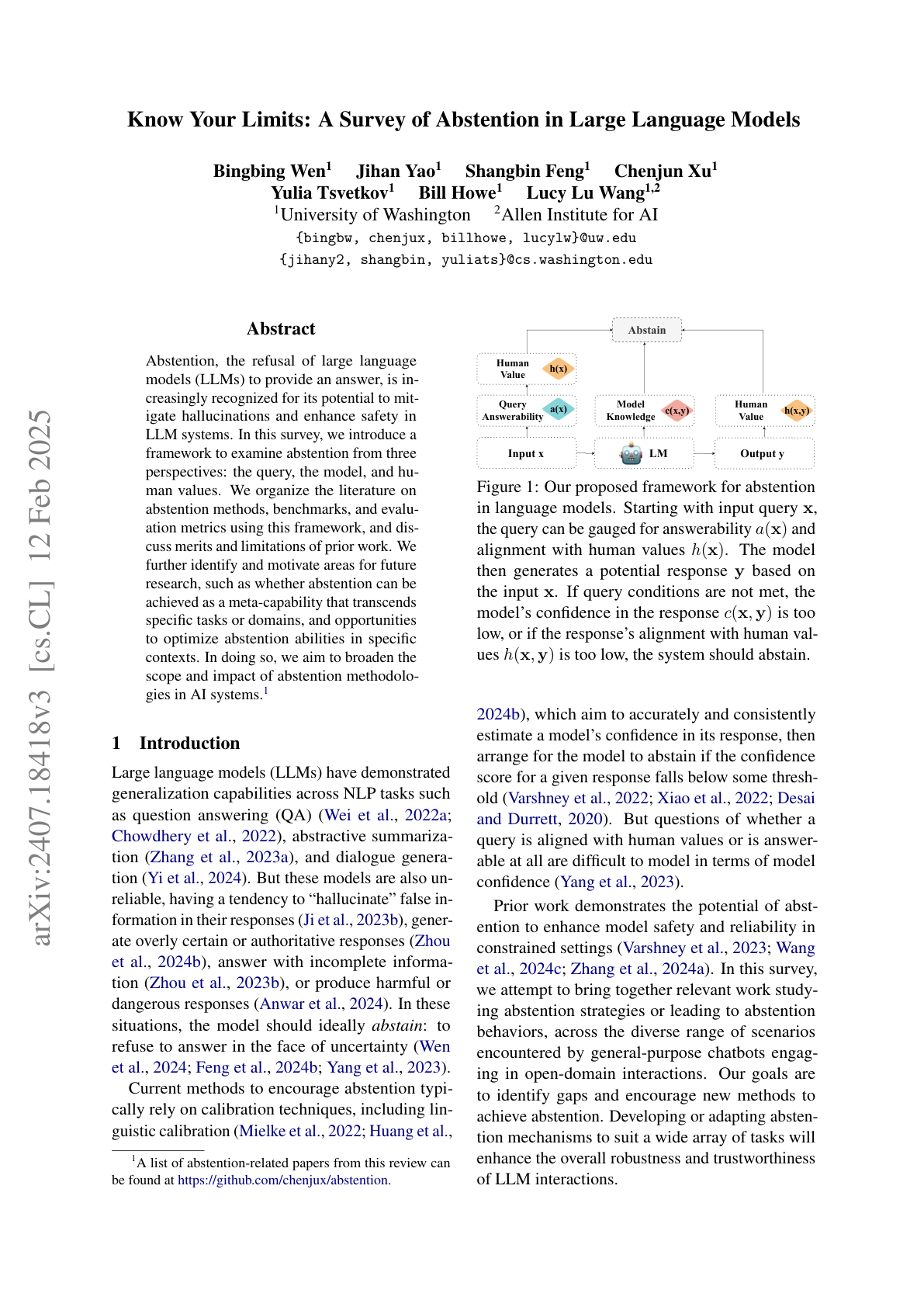
The Art of Refusal
a survey of the current methods used to achieve refusal in LLMs; provides evaluation benchmarks and metrics used to measure abstention in LLMs.

Llama 3.1
a collection of LLMs that include 8B, 70B, and 405B parameters models; supports eight languages and extends the context window to 128K tokens; performs competitively and in some cases outperforms state-of-the-art models across capabilities like general knowledge, math reasoning, and tool use.

AlphaProof & Alpha Geometry 2
solved 4 out of 6 problems in this year’s IMO which is the equivalent of a silver-medal score; AlphaProof consists of a Gemini model that automatically translates natural language problem statements into formal statements (i.e., formalizer network); then a solver network searches for proofs/disproofs and progressively trains itself using AlphaZero to learn to solve even more complex problems; AlphaGeometry 2, a neuro symbolic hybrid system, proved the geometry problem; based on the Gemini model and trained from scratch on large amounts of synthetic data.
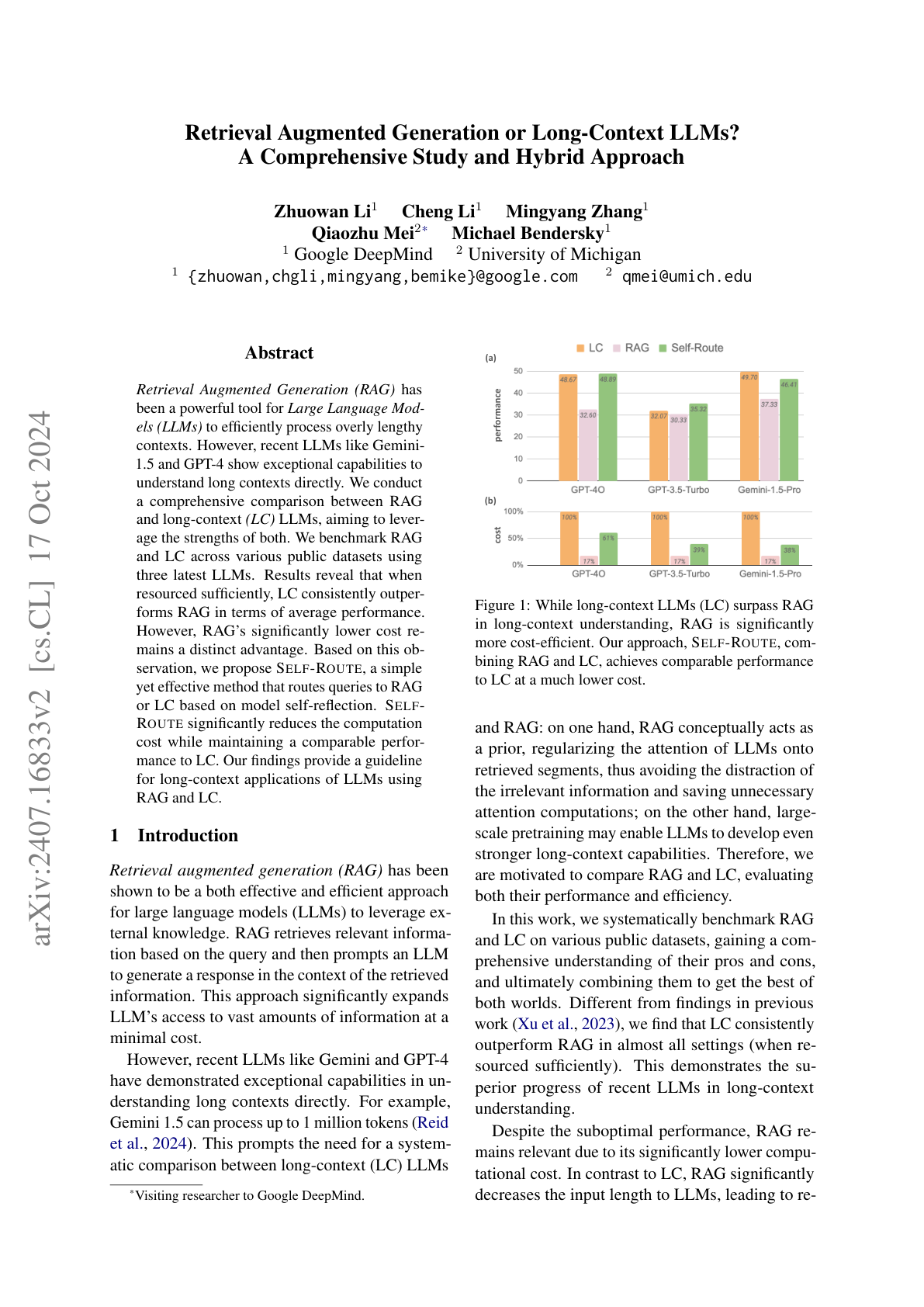
RAG vs. Long-Context LLMs
compares RAG and long-context LLMs and finds that long-context LLMs outperform RAG on average performance while RAG is significantly less expensive; proposes Self-Route, leveraging self-reflection to route queries to RAG or LC; reports that Self-Route significantly reduces computational cost while maintaining comparable performance to LC.
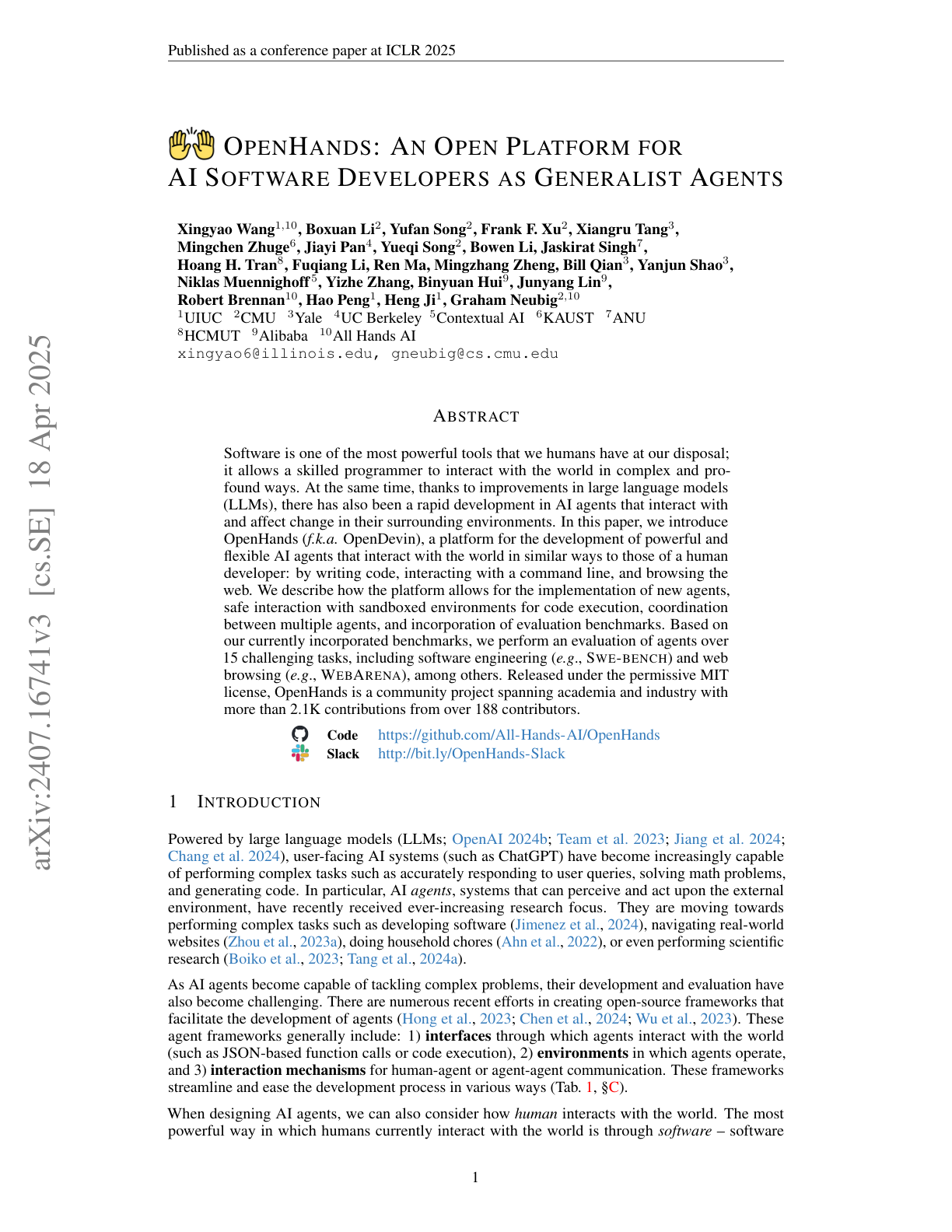
OpenDevin
presents a platform to develop generalist agents that interact with the world through software; features include 1) an interaction mechanism for interaction between agents, interfaces, and environments, 2) an environment including a sandboxed operating system and web browser available to the agents, 3) interface to create and execute code, 4) multi-agent support, and 5) an evaluation framework.
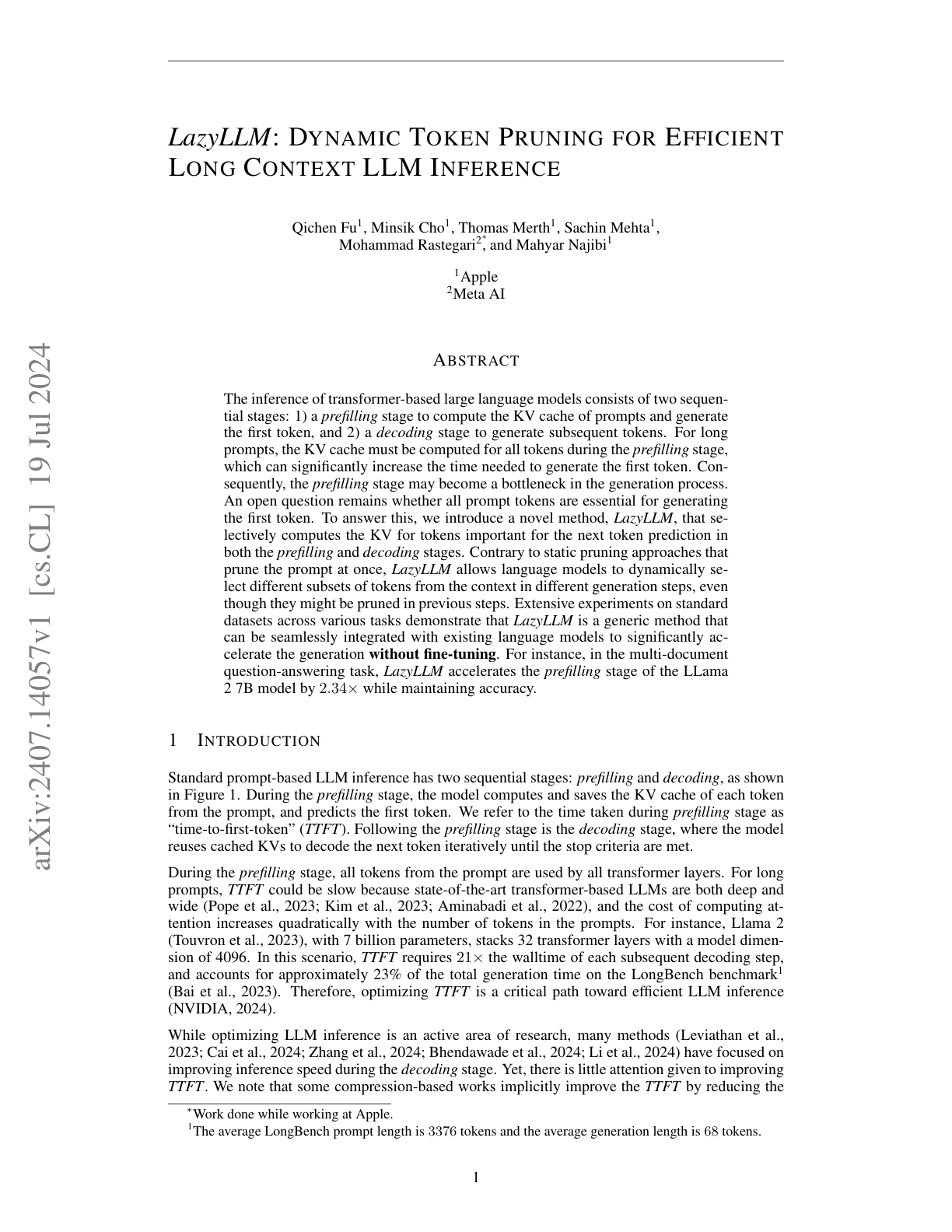
LazyLLM
introduces a novel dynamic token pruning method for efficient long-context LLM inference; it can accelerate the prefilling stage of a Llama 2 7B model by 2.34x and maintain high accuracy; it selectively computes the KV for tokens that are important for the next token prediction in both the prefilling and decoding stages; it allows language models to dynamically select different subsets of tokens from the context in different generation steps, even though they might be pruned in previous steps.
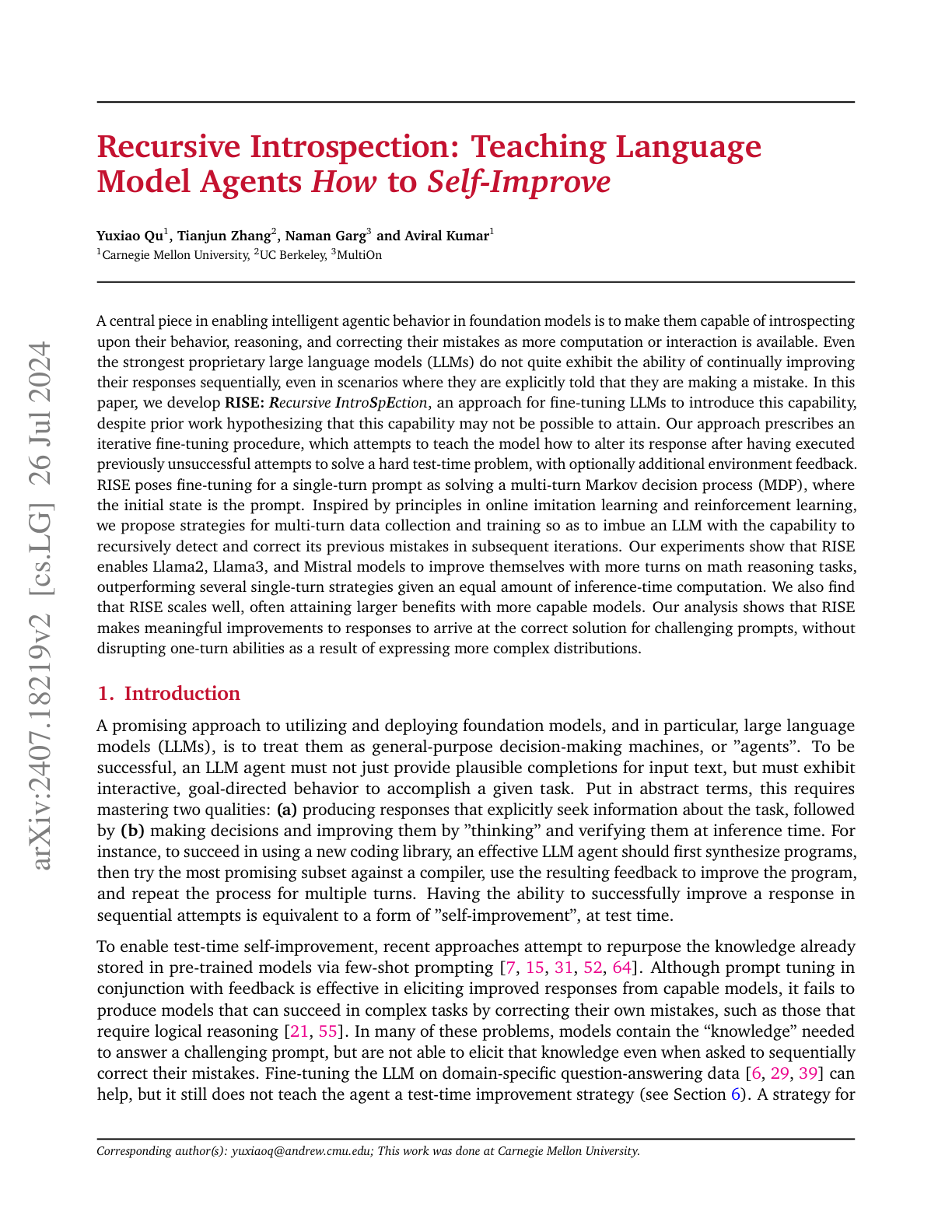
Teaching LLM Agents to Self-Improve
claims it is possible to iteratively fine-tune LLMs with the ability to improve their own response over multiple turns with additional environment feedback; the LLM learns to recursively detect and correct its previous mistakes in subsequent iterations; improves the self-improvement abilities of 7B models on reasoning tasks (GSM8K and MATH), attaining an improvement over turns that’s unseen in strong proprietary models.
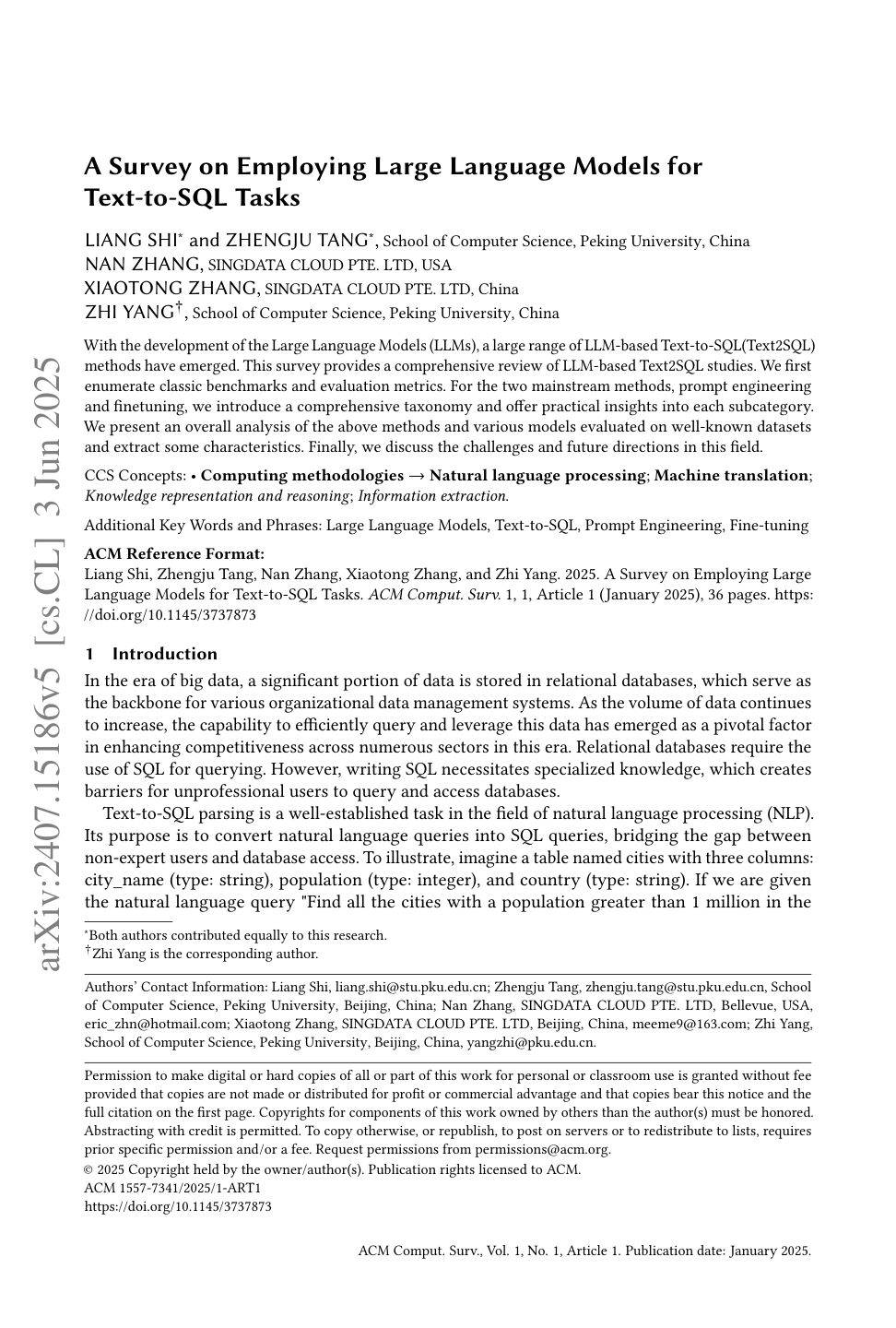
Text-to-SQL Survey
provides a survey on employing LLMs for Text-to-SQL tasks, including prompt engineering techniques, fine-tuning methods, benchmarks, and more.
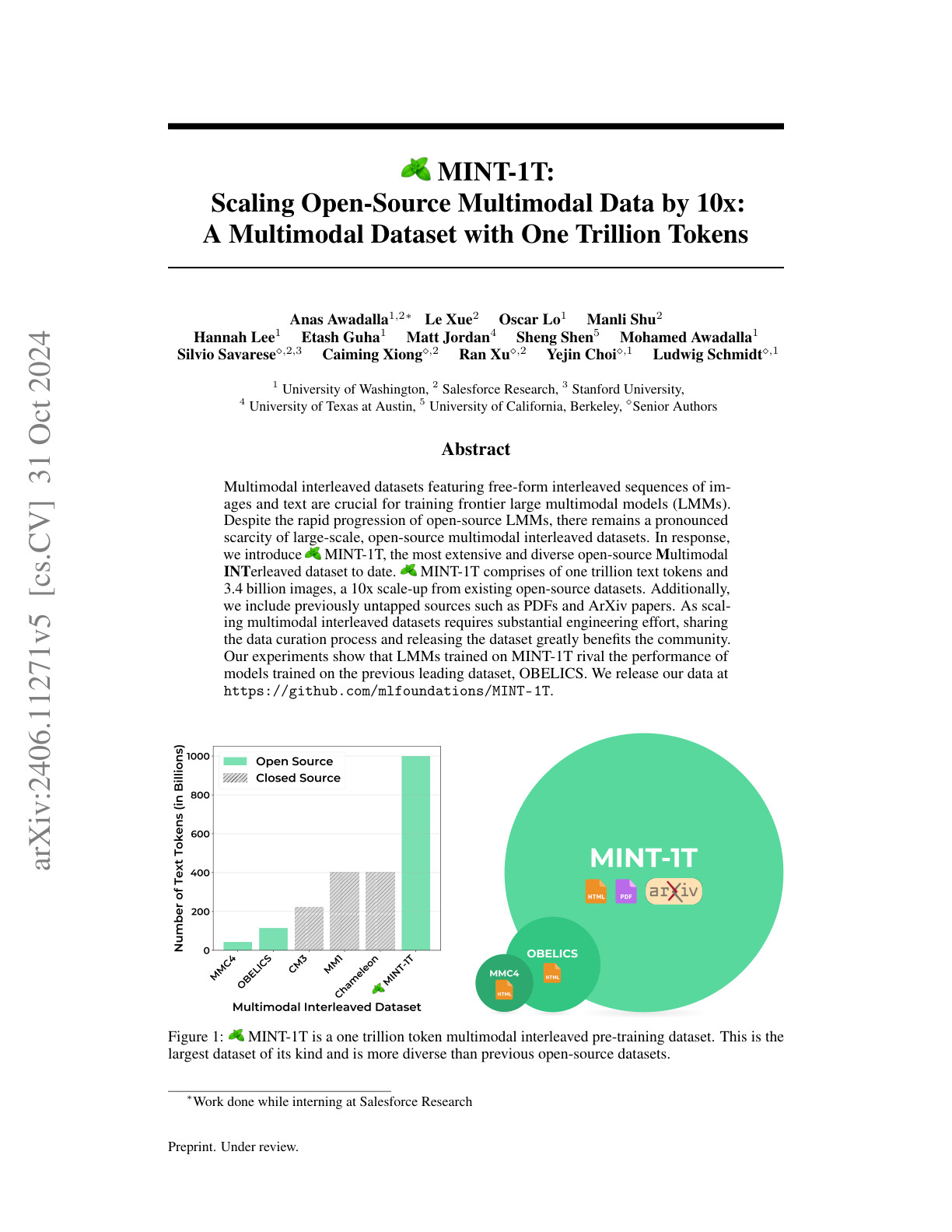
MINT-1T
open-sources a large-scale multimodal interleaved dataset consisting of 1 trillion tokens which has 3.4 billion images; it also includes new sources such as PDFs and ArXiv papers.
Model Collapse on Synthetic Data
investigates the effects of training models on recursively generated data; finds that training on model-generated content can cause irreversible defects where the original content distribution disappears; shows that the effect, referred to as model collapse, occurs in LLMs, VAEs, and GMMs; while tested on smaller scale models (~100M params), the authors suggest this effect is highly likely to transfer to larger models over time.
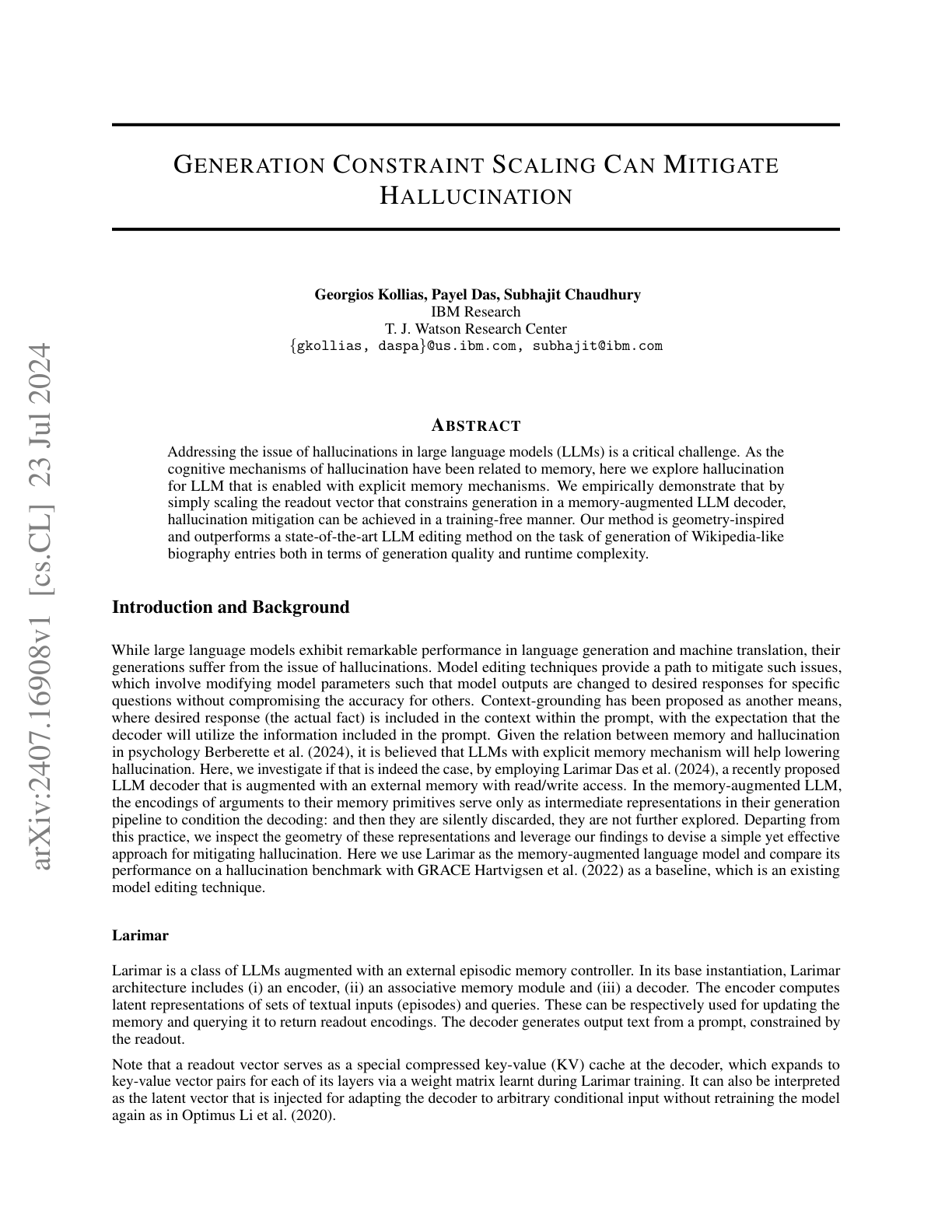
Mitigating Hallucination via Generation Constraint
proposes a new training-free approach to mitigate hallucination in LLMs; they scaled the readout vector that constrains generation in a memory-augmented LLM decoder; recent works claim that LLMs with explicit memory mechanisms can help lower hallucination; this work uses a memory-augmented LLM and constrains generation in the decoder by applying lightweight memory primitives to reduce hallucination.
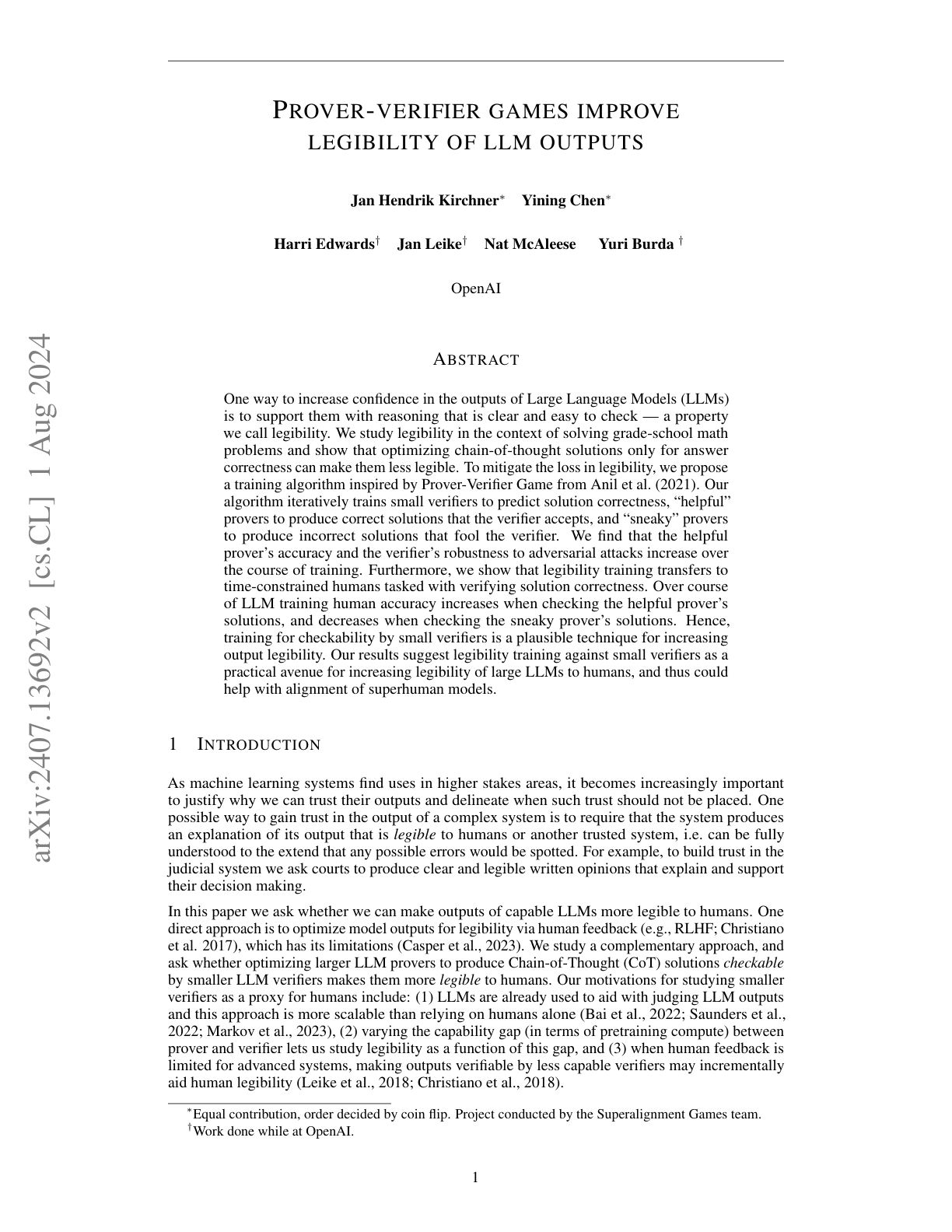
Improving Legibility of LLM Outputs
iteratively trains small verifiers to predict solution correctness, helpful provers to produce correct solutions accepted by the verifier, and sneaky provers that produce incorrect solutions that fool the verifier; this process helps train models that can produce text that is correct and easy to understand by both humans and AI systems which leads to more trustworthy systems.
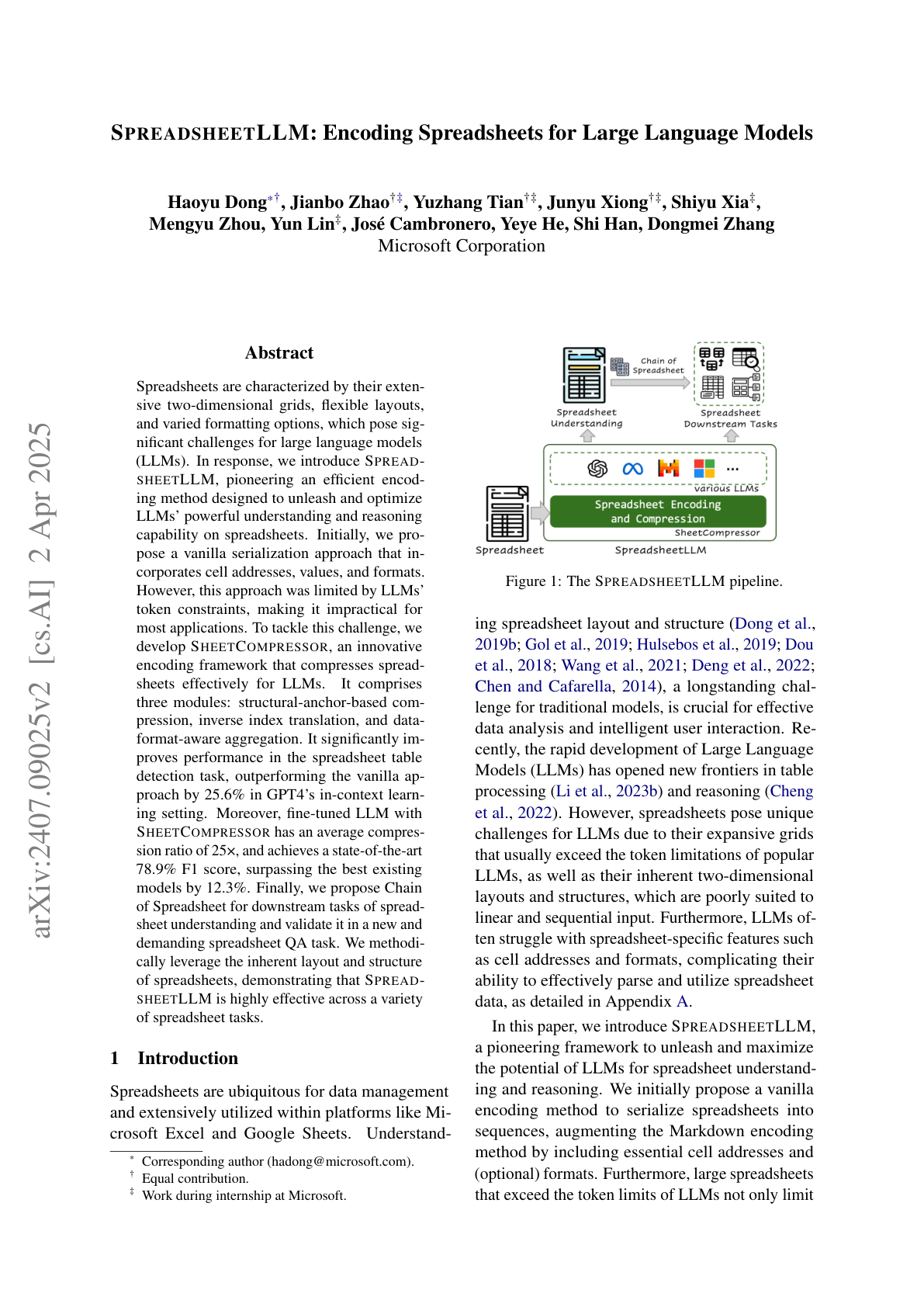
SpreadsheetLLM
presents an efficient encoding method to optimize an LLM’s understanding and reasoning capability on spreadsheets; develops a sheet compressor consisting of structural-anchor-based compression, inverse index translation, and data-format-aware aggregation modules to efficiently compress and encode spreadsheets; in GPT-4’s in-context learning, it improves performance in spreadsheet table detection by 25.6%.
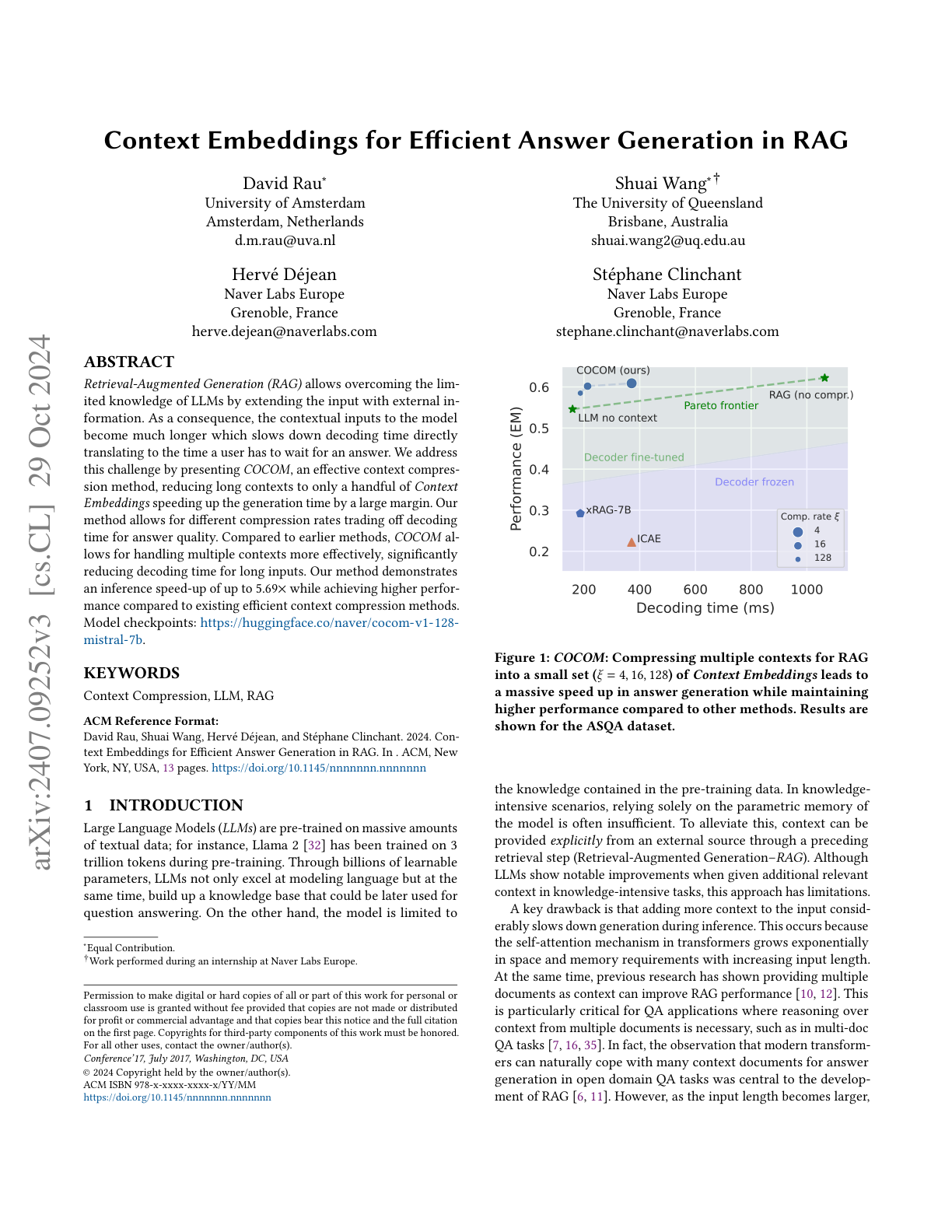
Context Embeddings for Efficient Answer Generation in RAG
proposes an effective context compression method to reduce long context and speed up generation time in RAG systems; the long contexts are compressed into a small number of context embeddings which allow different compression rates that trade-off decoding time for generation quality; reduces inference time by up to 5.69 × and GFLOPs by up to 22 × while maintaining high performance.