AI Papers of the Week
Every paper worth reading in AI, hand-picked one week at a time.
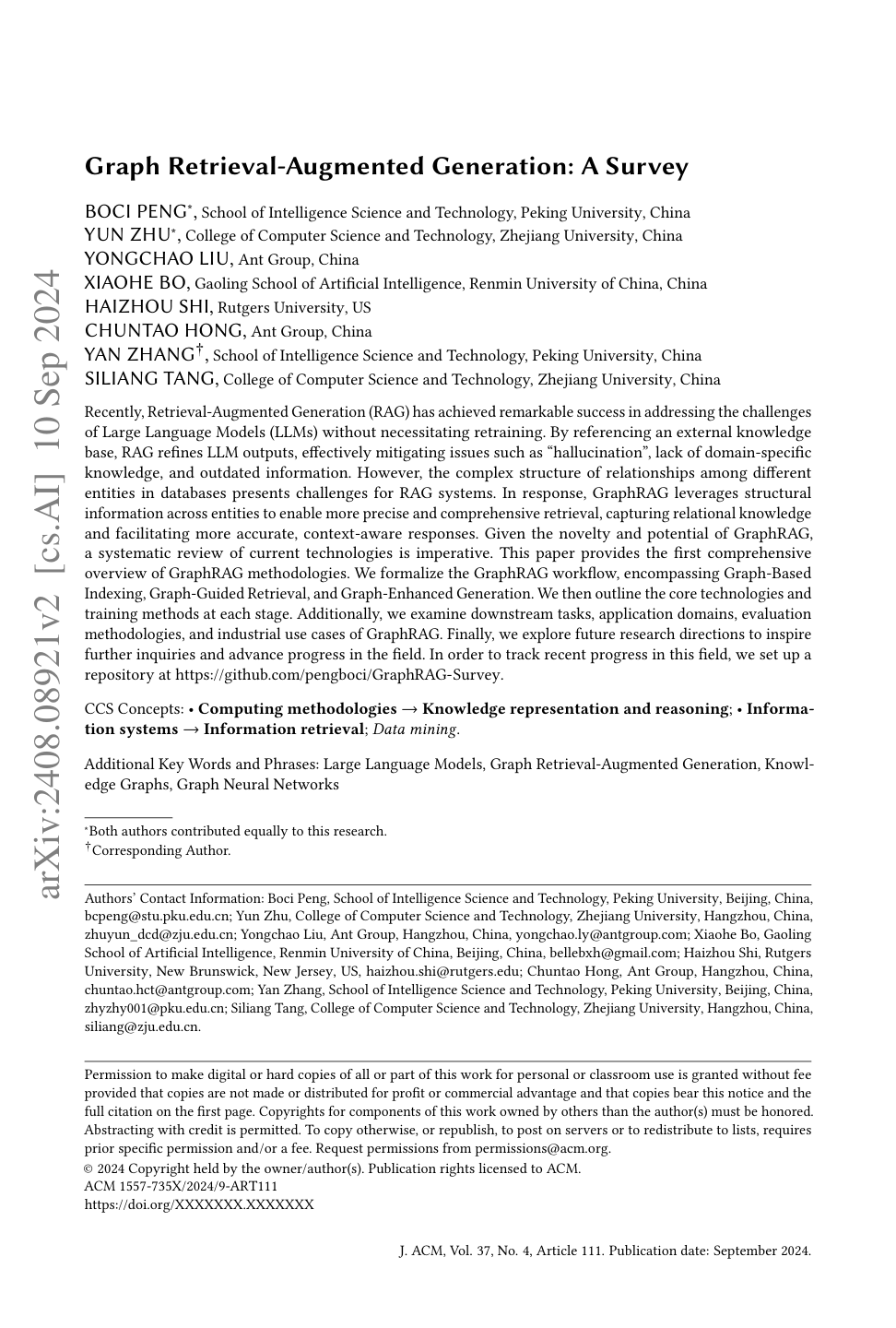
A Comprehensive Overview of GraphRAG Methods
focuses on techniques applied to the GraphRAG workflow (graph-based indexing, graph-guided retrieval, and graph-enhanced generation); examines tasks, applications, evaluation, and industrial use cases of GraphRAG.
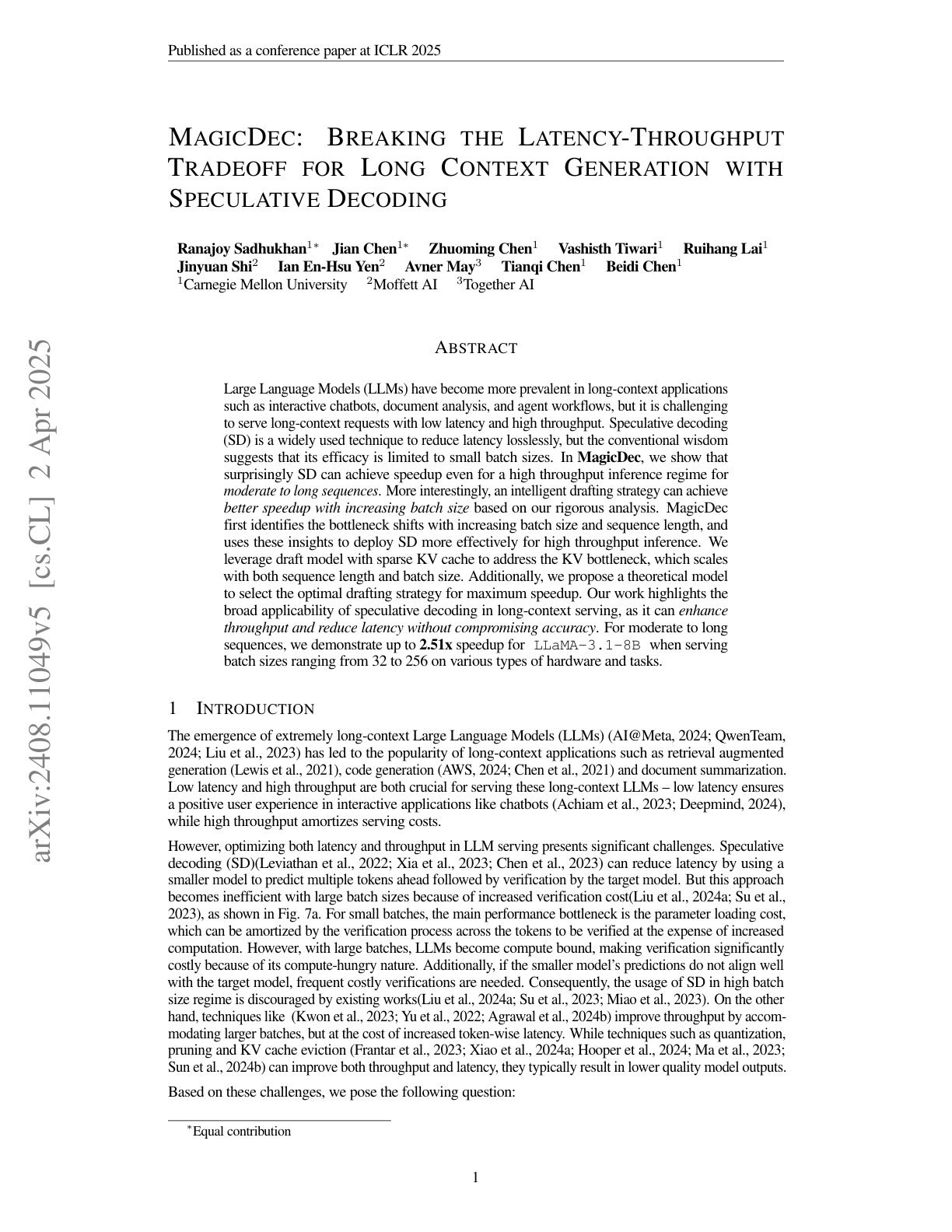
MagicDec
shows how speculative decoding can enhance throughput, reduce latency, and maintain accuracy in long context generation scenarios; it finds that as sequence length and batch size increase, bottlenecks shift from compute-bound to memory-bound; using these insights, they show it's possible to more effectively use speculative decoding for longer sequences, even when using large batch sizes.
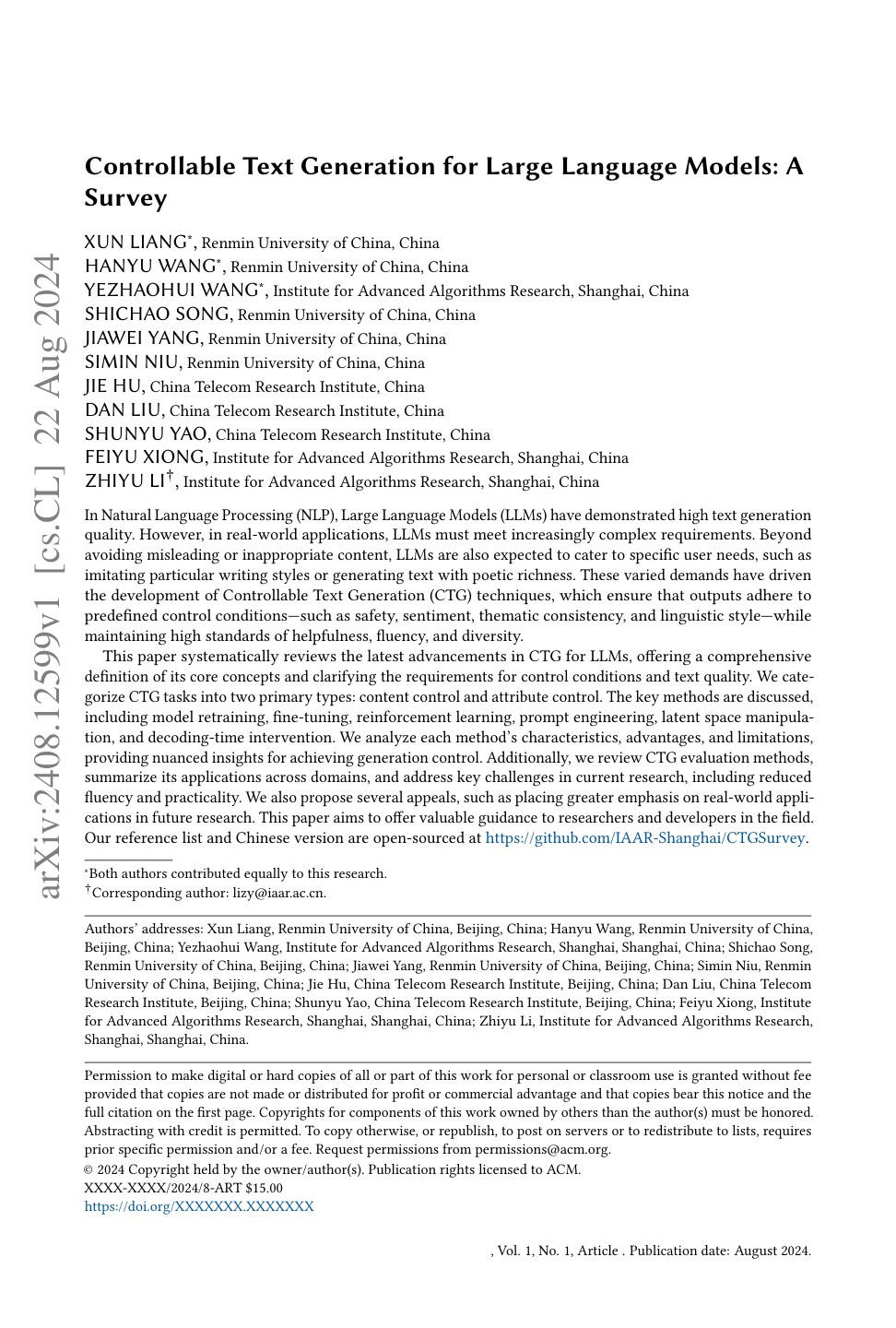
Controllable Text Generation for LLMs
provides a comprehensive survey on methods for controllable text generation in LLMs; discusses issues like safety, consistency, style, and helpfulness.
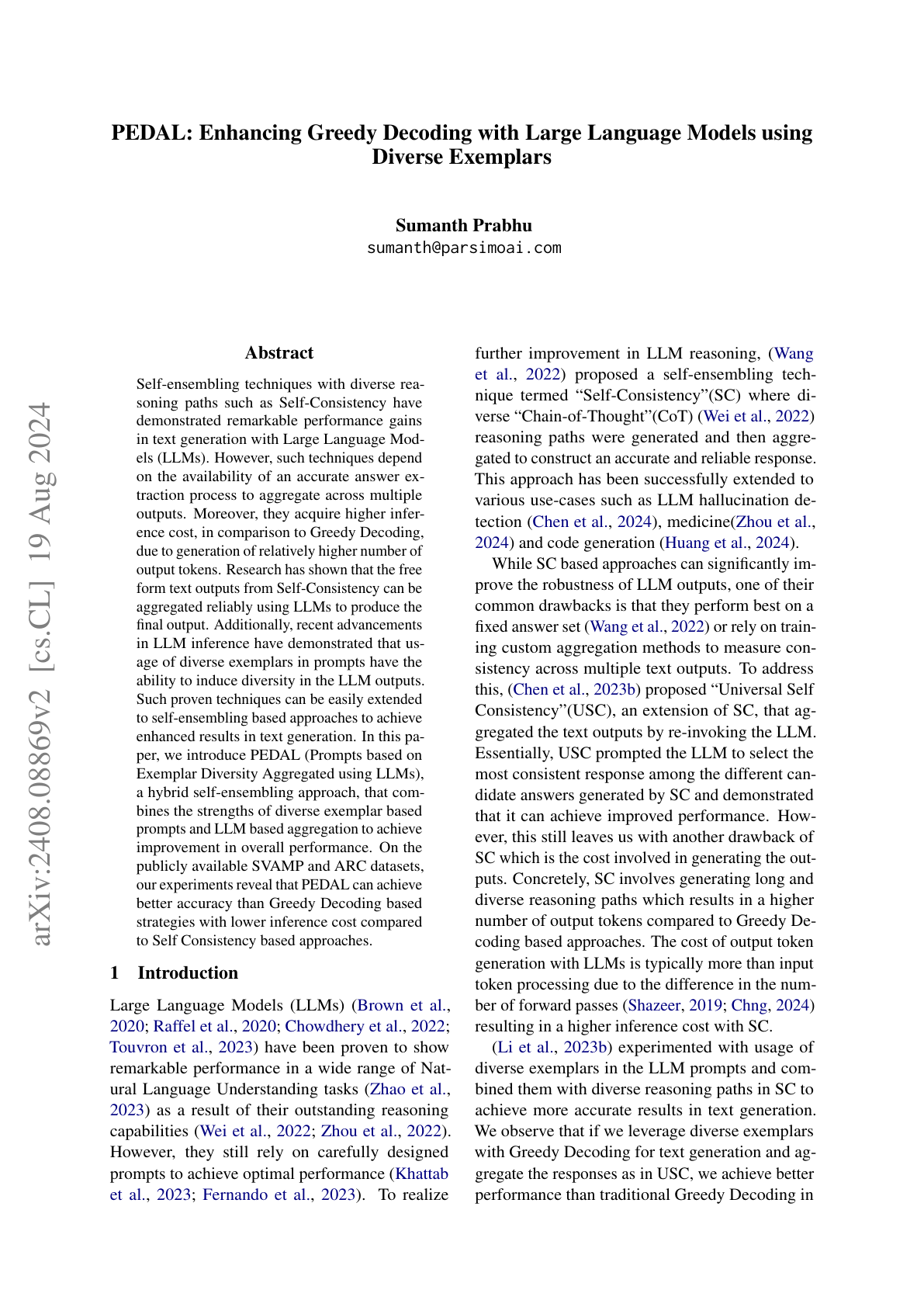
PEDAL
uses a hybrid self-ensembling approach (based on diverse exemplars) to improve the overall performance of LLMs; specifically, it uses diverse exemplars to generate multiple candidate responses and then aggregates them using an LLM to generate a final response; this approach achieves better accuracy compared to greedy decoding and lower cost compared to self-consistency approaches.
Challenges and Responses in the Practice of LLMs
curates a set of important questions with insightful answers; questions are categorized across topics such as infrastructure, software architecture, data, application, and brain science.
The AI Scientist
a novel AI agent that can develop and write a full conference-level scientific paper costing less than $15; it automates scientific discovery by enabling frontier LLMs to perform independent research and summarize findings; it also uses an automated reviewer to evaluate the generated papers; claims to achieve near-human performance in evaluating paper scores; claims to produce papers that exceed the acceptance threshold at a top machine learning conference as judged by their automated reviewer.

Grok-2
a new frontier model with strong code, math, and reasoning capabilities which includes a large and small model; outperforms both Claude 3.5 Sonnet and GPT-4-Turbo on the LMSYS Chatbot Arena; claims to improve capabilities including instruction following, retrieval, tool use, and enhancing factuality; competes with Claude 3.5 Sonnet (June release) and GPT-4o (May release) on MMLU and HumanEval.
LongWriter
proposes AgentWrite to enable off-the-shelf LLMs to generate coherent outputs beyond 20K words; AgentWrite breaks down the long generation task into subtasks and in a divide-and-conquer approach generates; the agent breaks the task into multiple writing subtasks and concatenates the outputs to get a final output (i.e., plan + write); the approach is then used to build SFT datasets that are used to tune LLMs to generate coherent longer outputs automatically; a 9B parameter model, further improved through DPO, achieves state-of-the-art performance on their benchmark, and surpasses proprietary models.
EfficientRAG
trains an auto-encoder LM to label and tag chunks; it retrieves relevant chunks, tags them as either <Terminate> or <Continue>, and annotates <Continue> chunks for continuous processing; then a filter model is trained to formulate the next-hop query based on the original question and previous annotations; this is done iteratively until all chunks are tagged as <Terminate> or the maximum # of iterations is reached; after the process above has gathered enough information to answer the initial question, the final generator (an LLM) generates the final answer.
RAGChecker
a fine-grained evaluation framework for diagnosing retrieval and generation modules in RAG; shows that RAGChecker has better correlations with human judgment; reports several revealing insightful patterns and trade-offs in design choices of RAG architectures.
HybridRAG
combines GraphRAG and VectorRAG leading to a HybridRAG system that outperforms both individually; it was tested on a set of financial earning call transcripts. Combining the advantages of both approaches provides more accurate answers to queries.
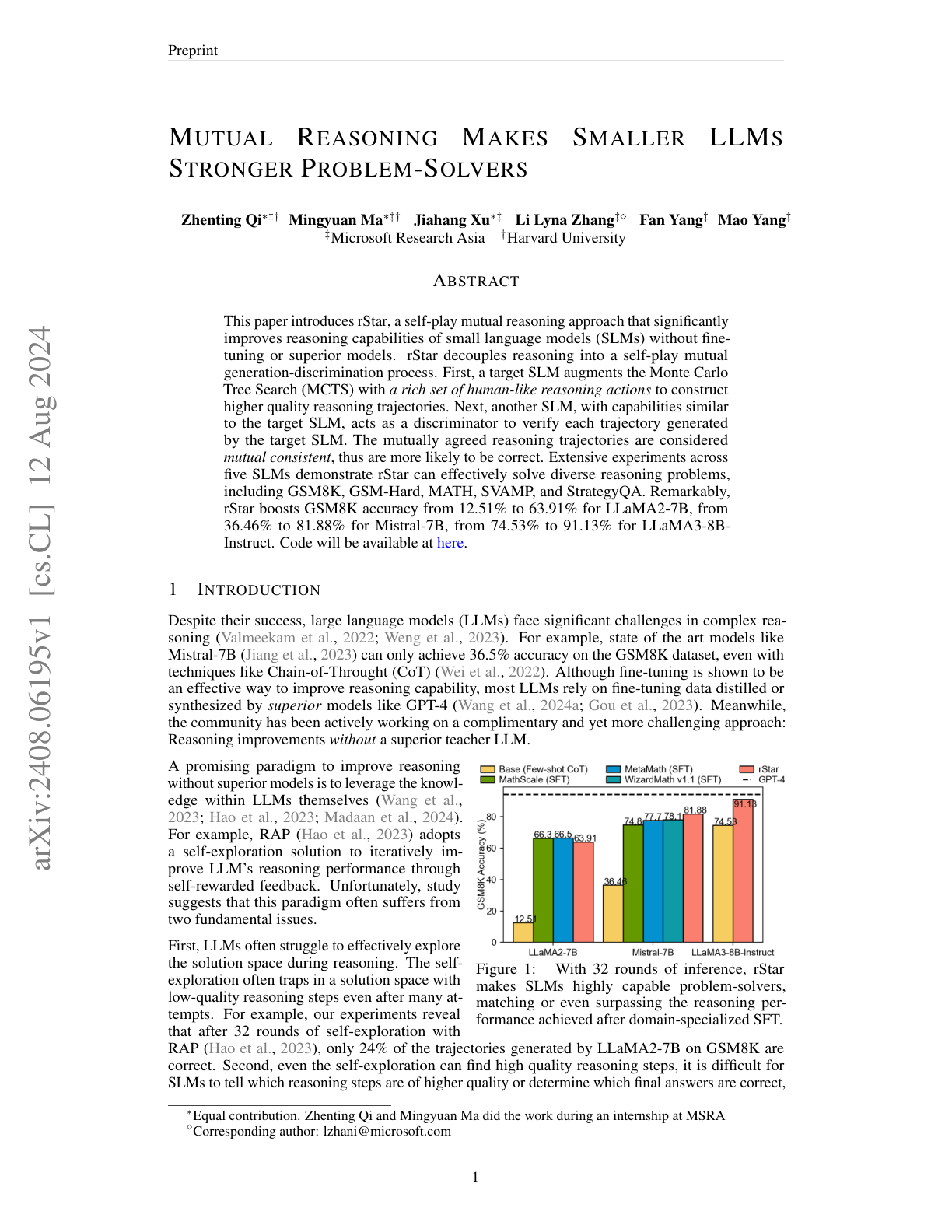
rStar
introduces self-play mutual reasoning to improve the reasoning capabilities of small language models without fine-tuning or superior models; MCTS is augmented with human-like reasoning actions, obtained from SLMs, to build richer reasoning trajectories; a separate SLM provides unsupervised feedback on the trajectories and the target SLM selects the final reasoning trajectory as the answer; rStar boosts GSM8K accuracy from 12.51% to 63.91% for LLaMA2-7B and consistently improves the accuracy of other SLMs.
Scaling LLM Test-Time Compute Optimally
investigates the scaling behaviors of inference-time computation in LLMs; in particular, it analyses how much an LLM can be improved provided a fixed amount of inference-time compute; finds that the effectiveness of different scaling approaches varies by difficulty of prompt; it then proposes an adaptive compute-optimal strategy that can improve efficiency by more than 4x compared to a best-of-N baseline; reports that in a FLOPs-matched evaluation, optimally scaling test-time compute can outperform a 14x larger model.
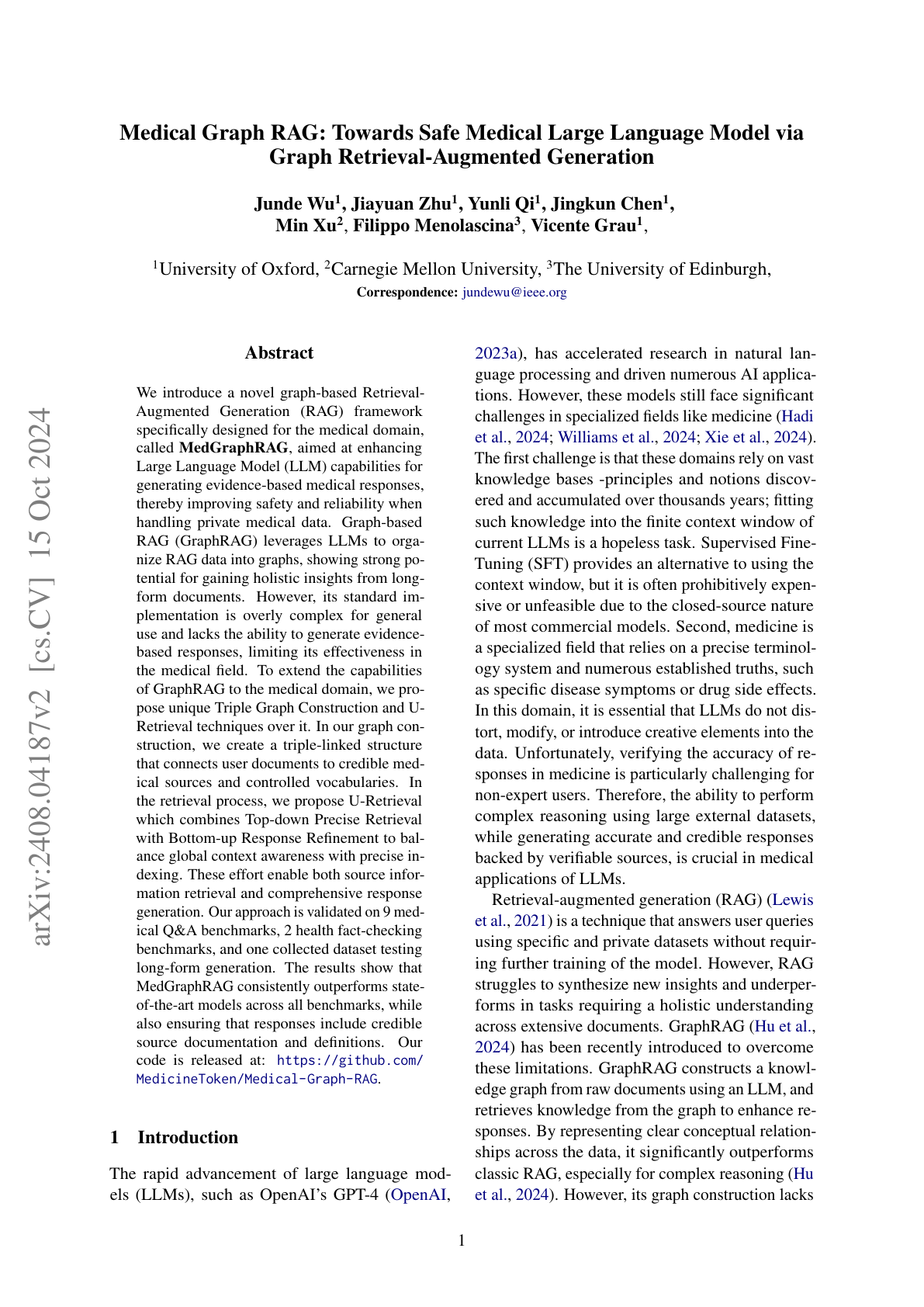
MedGraphRAG
a graph-based framework for the medical domain with a focus on enhancing LLMs and generating evidence-based results; leverages a hybrid static-semantic approach to chunk documents to improve context capture; entities and medical knowledge are represented through graphs which leads to an interconnected global graph; this approach improves precision and outperforms state-of-the-art models on multiple medical Q&A benchmarks.
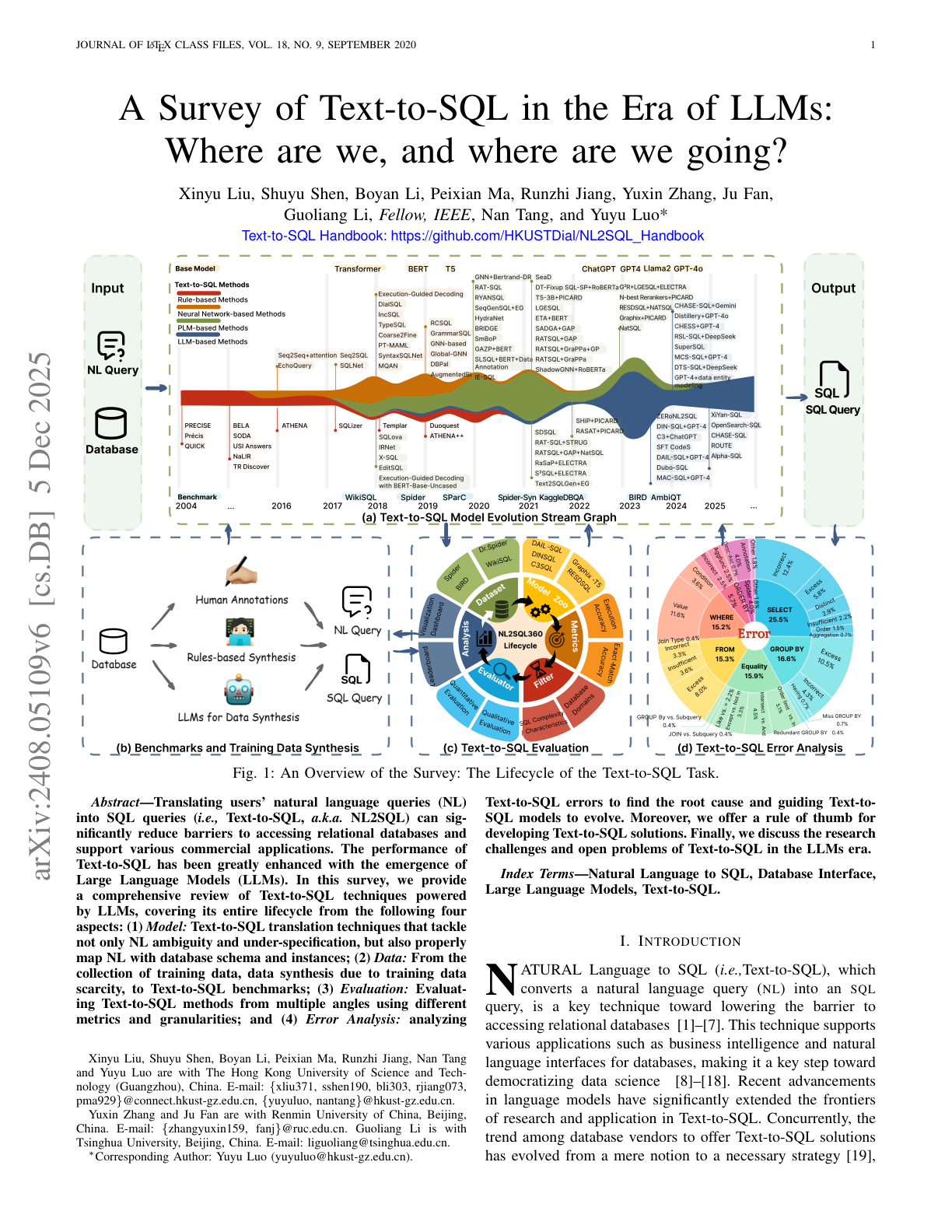
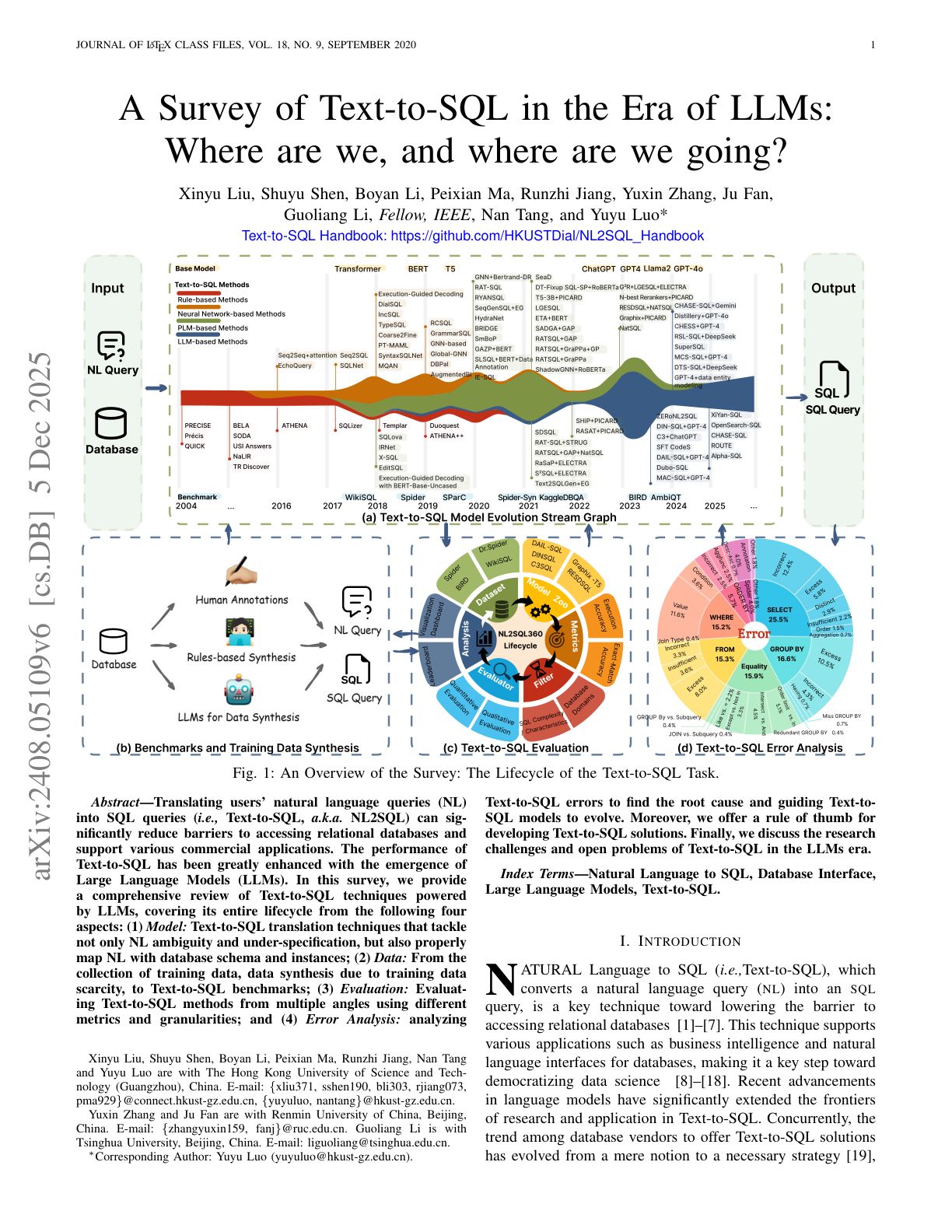
Survey of NL2QL
a comprehensive overview of NL2SQL techniques powered by LLMs; covers models, data collection, evaluation methods, and error analysis.

SAM 2
an open unified model for real-time, promptable object segmentation in images and videos; can be applied to unseen visual content without the need for custom adaptation; to enable accurate mask prediction in videos, a memory mechanism is introduced to store information on the object and previous interactions; the memory module also allows real-time processing of arbitrarily long videos; SAM2 significantly outperforms previous approaches on interactive video segmentation across 17 zero-shot video datasets while requiring three times fewer human-in-the-loop interactions.
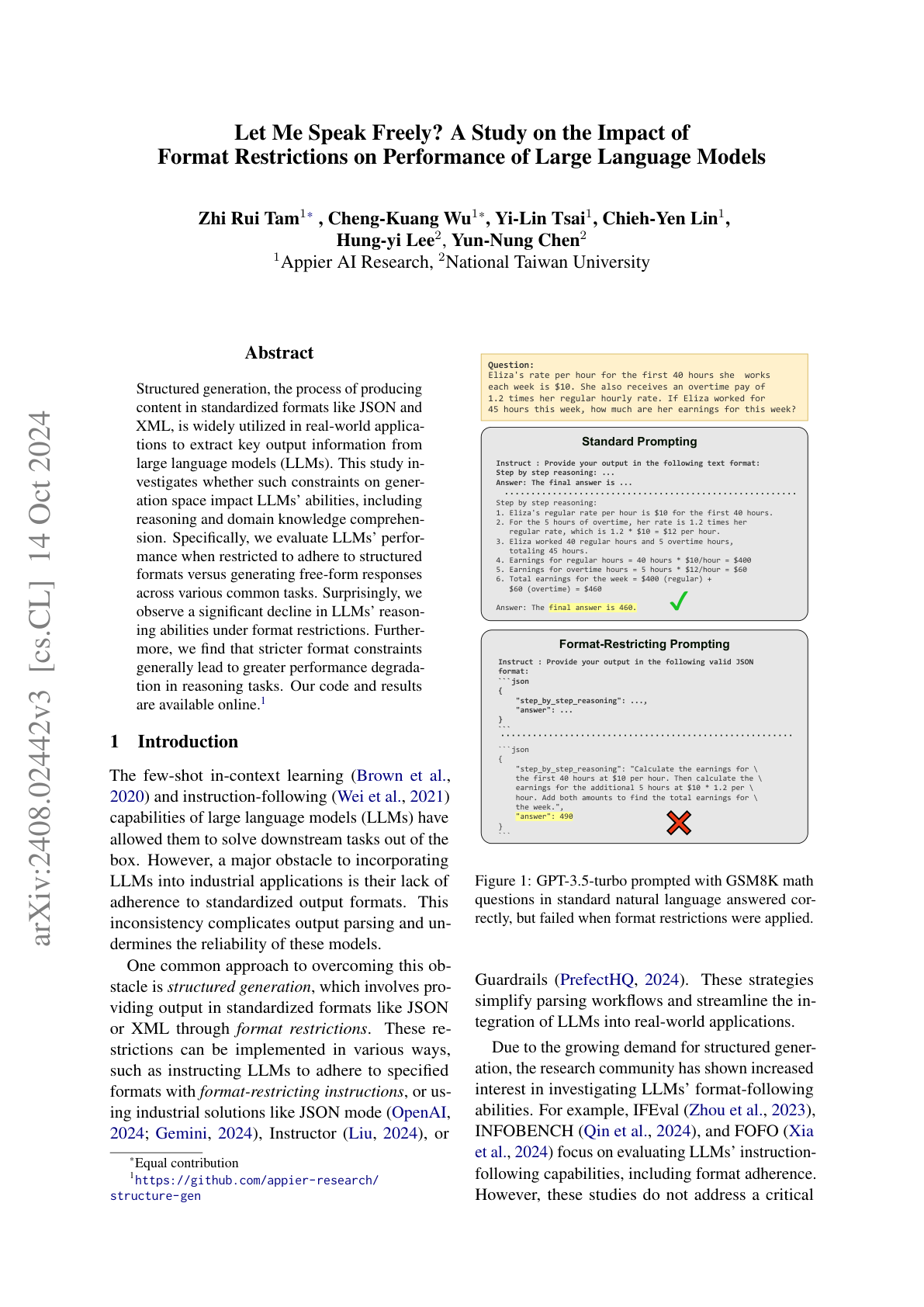
Structured Generation Limits Reasoning
investigates if structured generation can impact an LLM’s reasoning and domain knowledge comprehensive capabilities; observes that there is a significant decline in LLM’s reasoning abilities when applying format restrictions compared to free-form responses; this degradation effect is further amplified when applying stricter format constraints to reasoning tasks.
From LLMs to LLM-based Agents for Sofware Engineering
a survey paper on current practices and solutions for LLM-based agents for software engineering; covers important topics such as requirement engineering, code generation, test generation, and autonomous decision making; it also includes benchmarks, metrics, and models used in different software engineering applications.
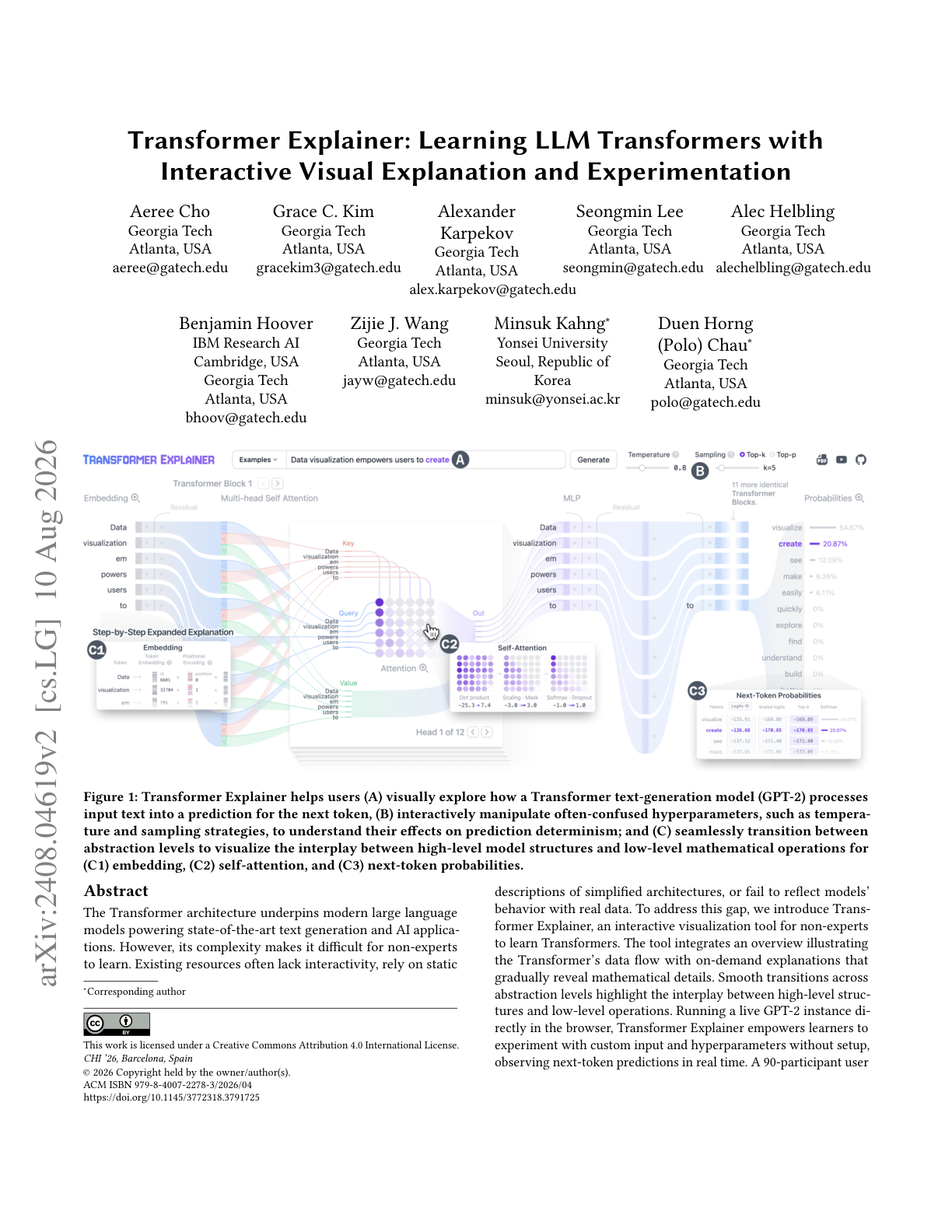
Transformer Explainer
presents an open-source interactive tool to learn about the inner workings of a Transformer model; it runs a GPT-2 instance locally in the user's browser and allows experimenting with your own inputs.
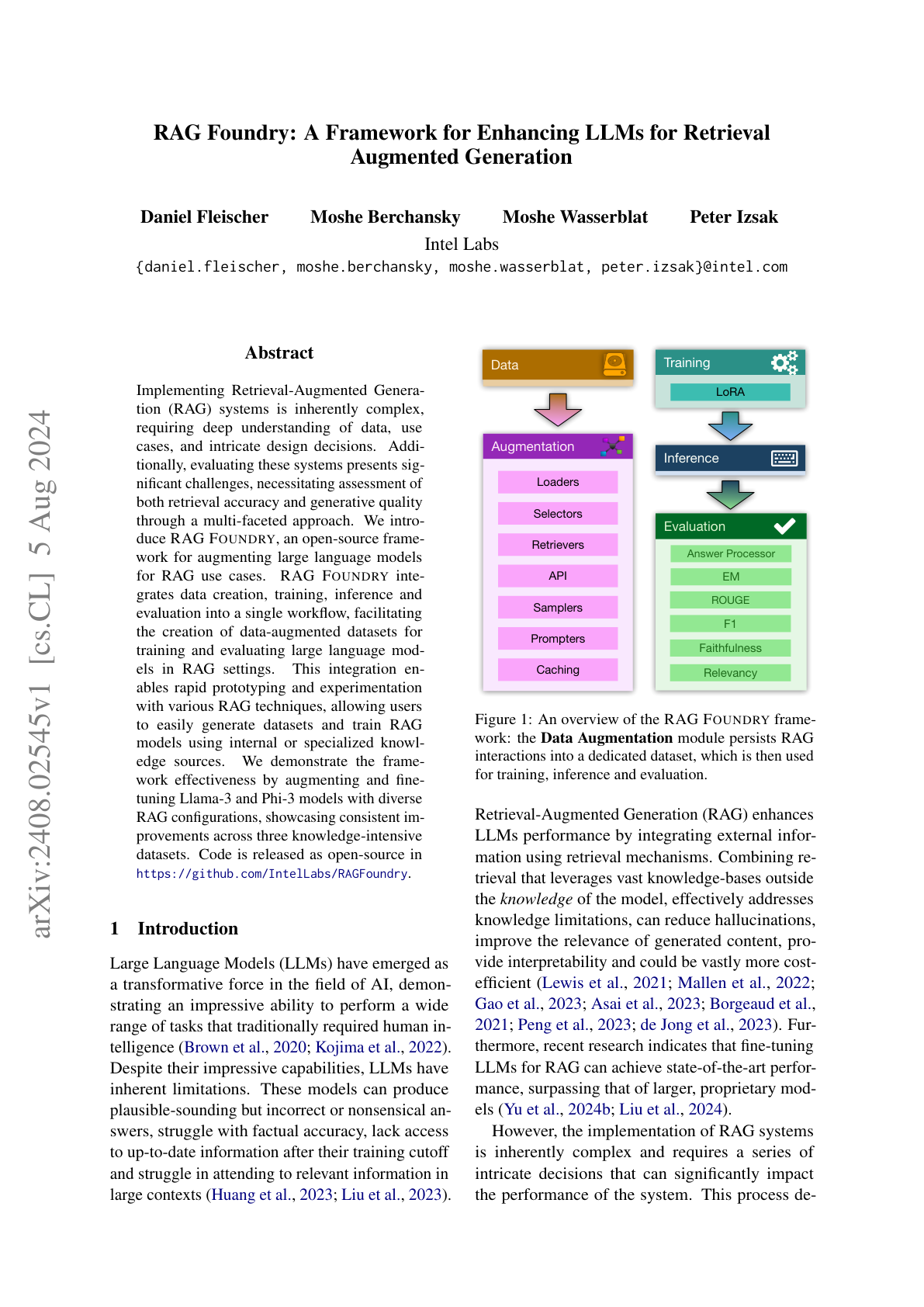
Enhancing LLMs for RAG
introduces RAGFoundry, an open-source framework for augmented LLMs for RAG use cases; it supports data creation, training, inference, and evaluation; one useful application is the creation of data-augmented datasets for tuning and evaluating LLMs in RAG settings.
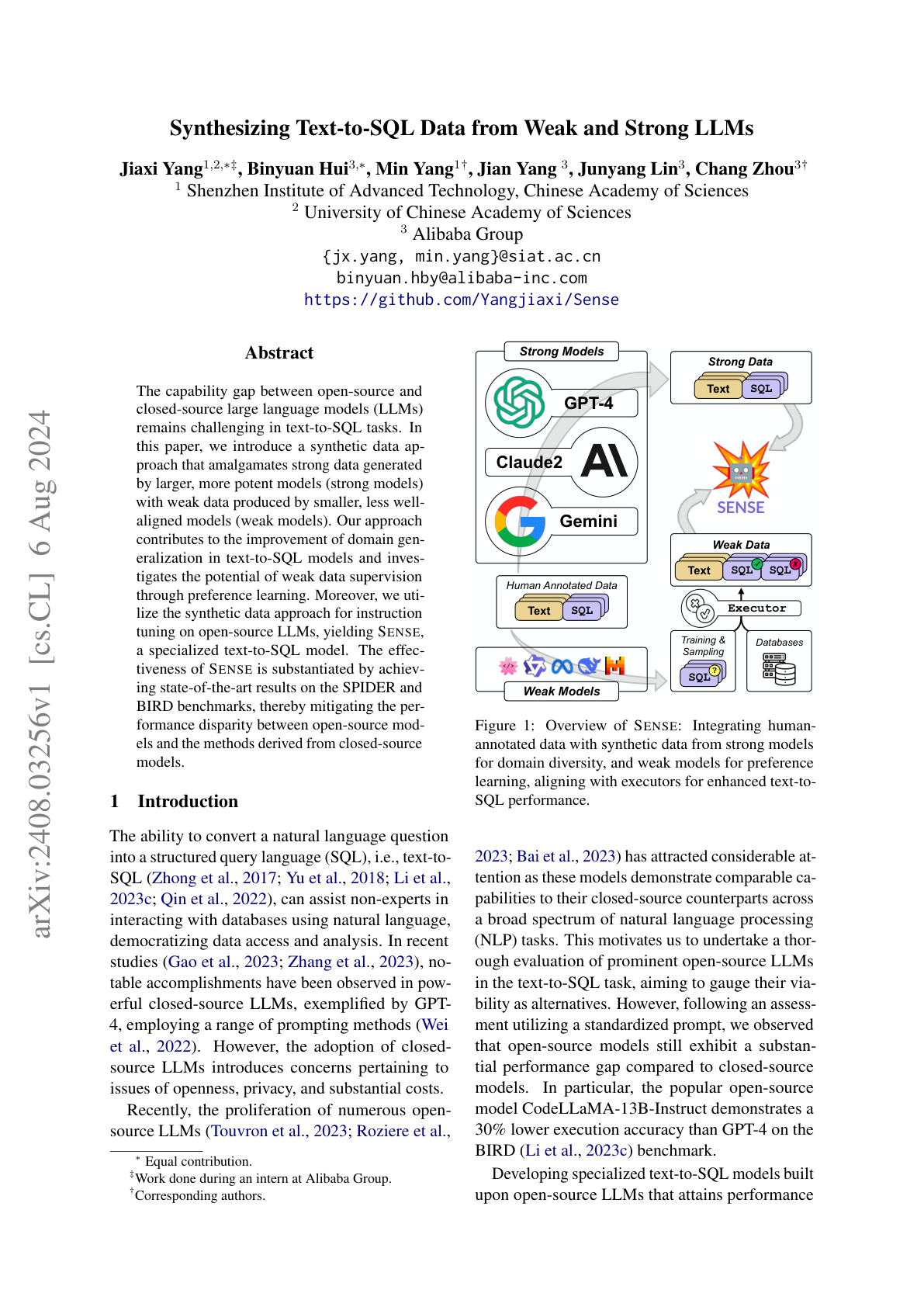
Synthesizing Text-to-SQL Data from Weak and Strong LLMs
proposes integrated synthetic data to build a highly specialized SoTA text-to-SQL model called SENSE; the synthetic data from strong models enhances data diversity while valuable erroneous data from weaker models combined with an executor to learn from execution feedback; preference learning is used to instruction-tune LLMs to learn from both correct and incorrect samples; SENSE achieves state-of-the-art results on the SPIDER and BIRD benchmarks, which bridges the performance gap between open-source models and methods that use closed-source models.
Conversational Prompt Engineering
proposes an approach to help users create personalized prompts by articulating the preferred outputs via interactions; it involves two stages: 1) an initial instruction shaped by the model based on user-provided unlabeled data, and 2) the model shares the output and the user provides feedback with refinements on outputs and instruction; this iterative process results in a personalized few-shot prompt that performs better and more optimally on the desired task.
Self-Taught Evaluators
an approach to improve model-based evaluators using synthetic training data only; it first generates contrasting outputs (good and bad model responses) and trains an LLM-as-a-Judge to produce reasoning traces and final judgments; the self-improvement scheme repeats the training process in an iterative way using its improved predictions; claims to outperform LLM-judges such as GPT-4 and match top-performing reward models trained on labeled examples; improves a strong LLM (Llama3-70BInstruct) from 75.4 to 88.3 (88.7 with majority vote) on RewardBench.
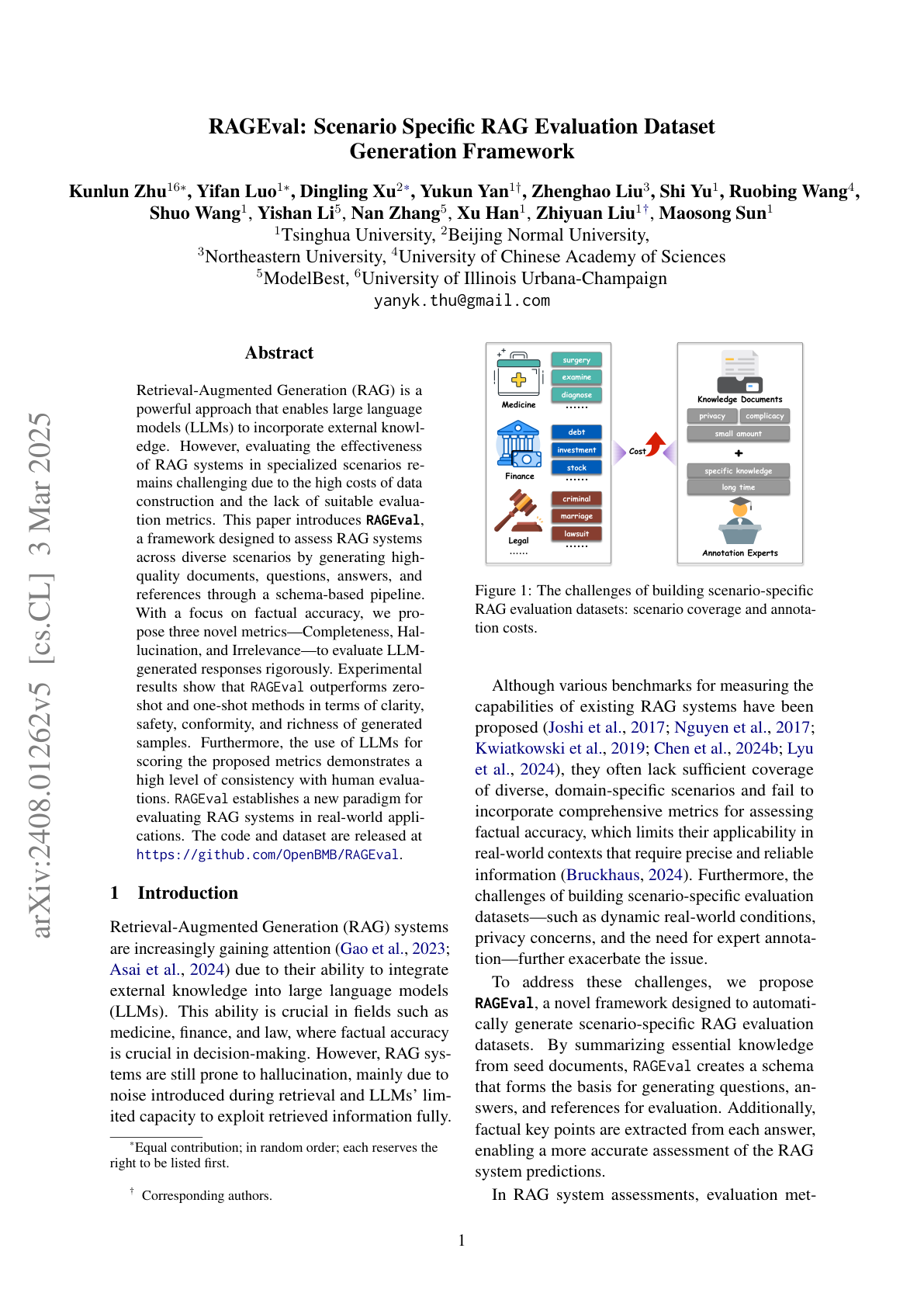
RAGEval
proposes a simple framework to automatically generate evaluation datasets to assess knowledge usage of different LLM under different scenarios; it defines a schema from seed documents and then generates diverse documents which leads to question-answering pairs; the QA pairs are based on both the articles and configurations.