AI Papers of the Week
Every paper worth reading in AI, hand-picked one week at a time.
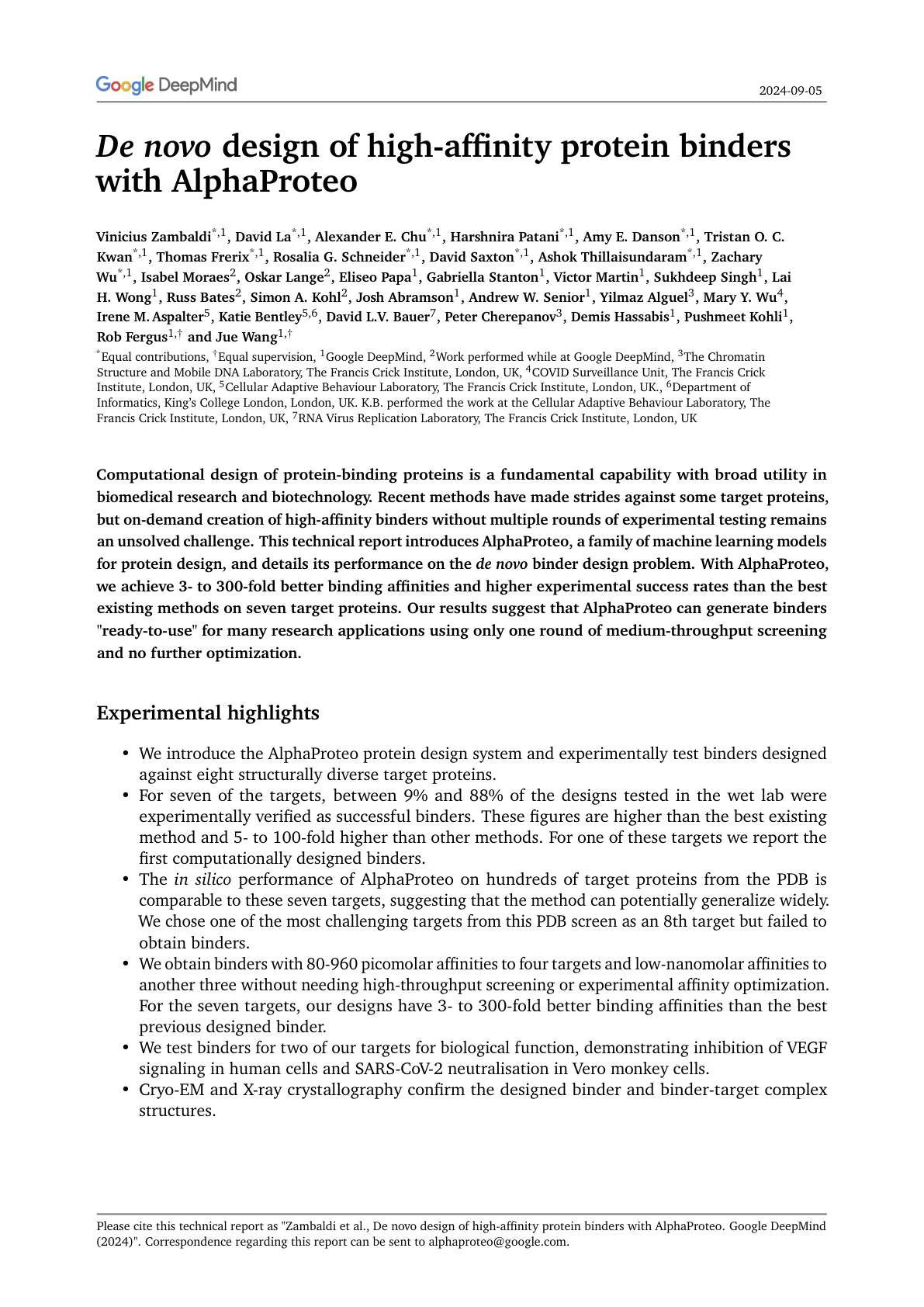
AlphaProteo
presents a family of ML models trained for protein design; reports a 3-to 300-fold better binding affinities and higher experimental success rates compared to other existing methods on seven target proteins; shows that AlphaProteo’s performance on hundreds of target proteins from the PDB is comparable to the seven targets.
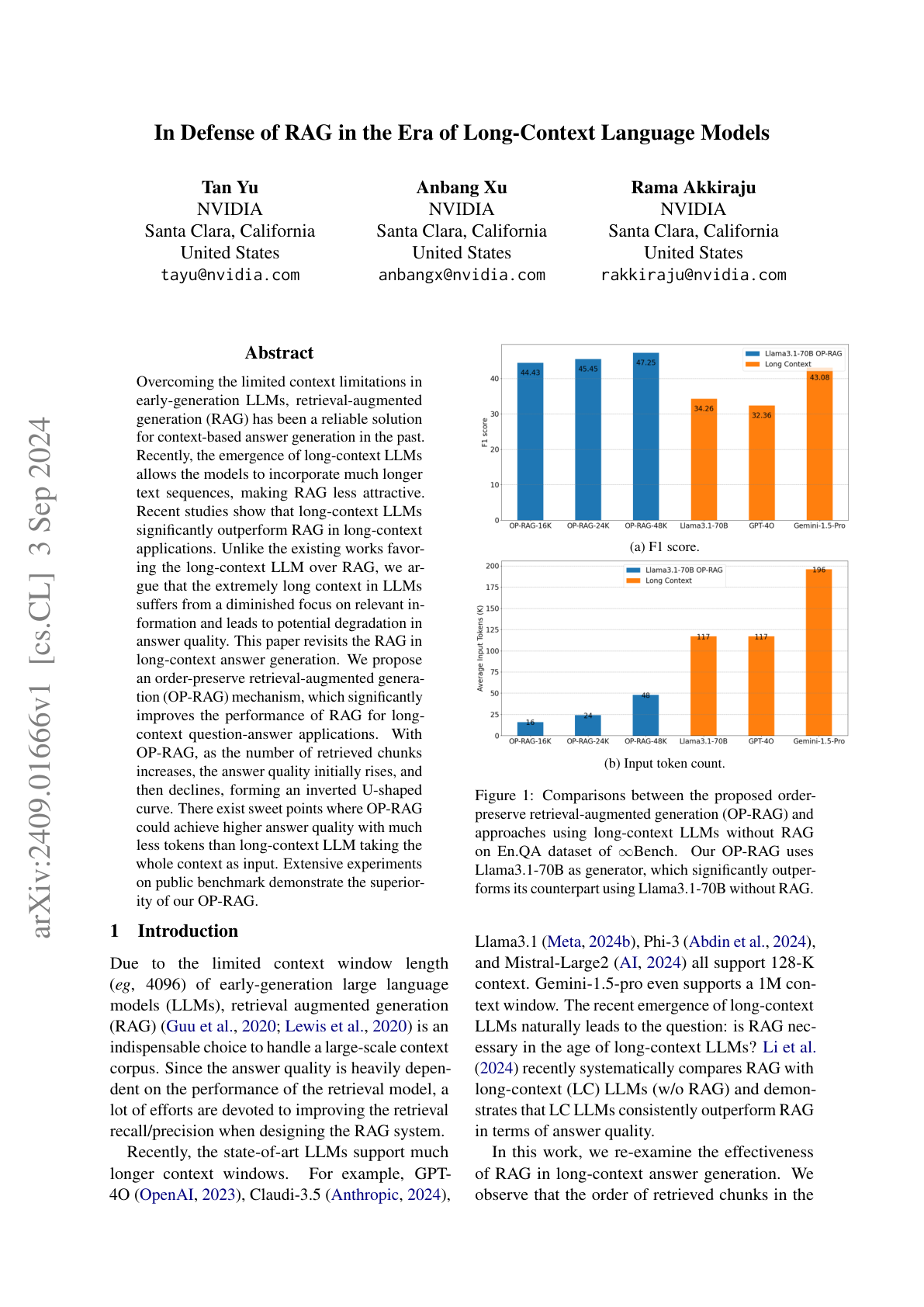
RAG in the Era of Long-Context LLMs
reports that longer-context LLMs suffer from a diminished focus on relevant information, which is one of the primary issues that a RAG system addresses (i.e., uses more relevant information); they propose an order-preserving RAG mechanism that improves performance on long-context question answering; it's not perfect and in fact, as retrieved chunks increase the quality of responses go up and then declines; they mention a sweet spot where it can achieve better quality with a lot fewer tokens than long-context LLMs.
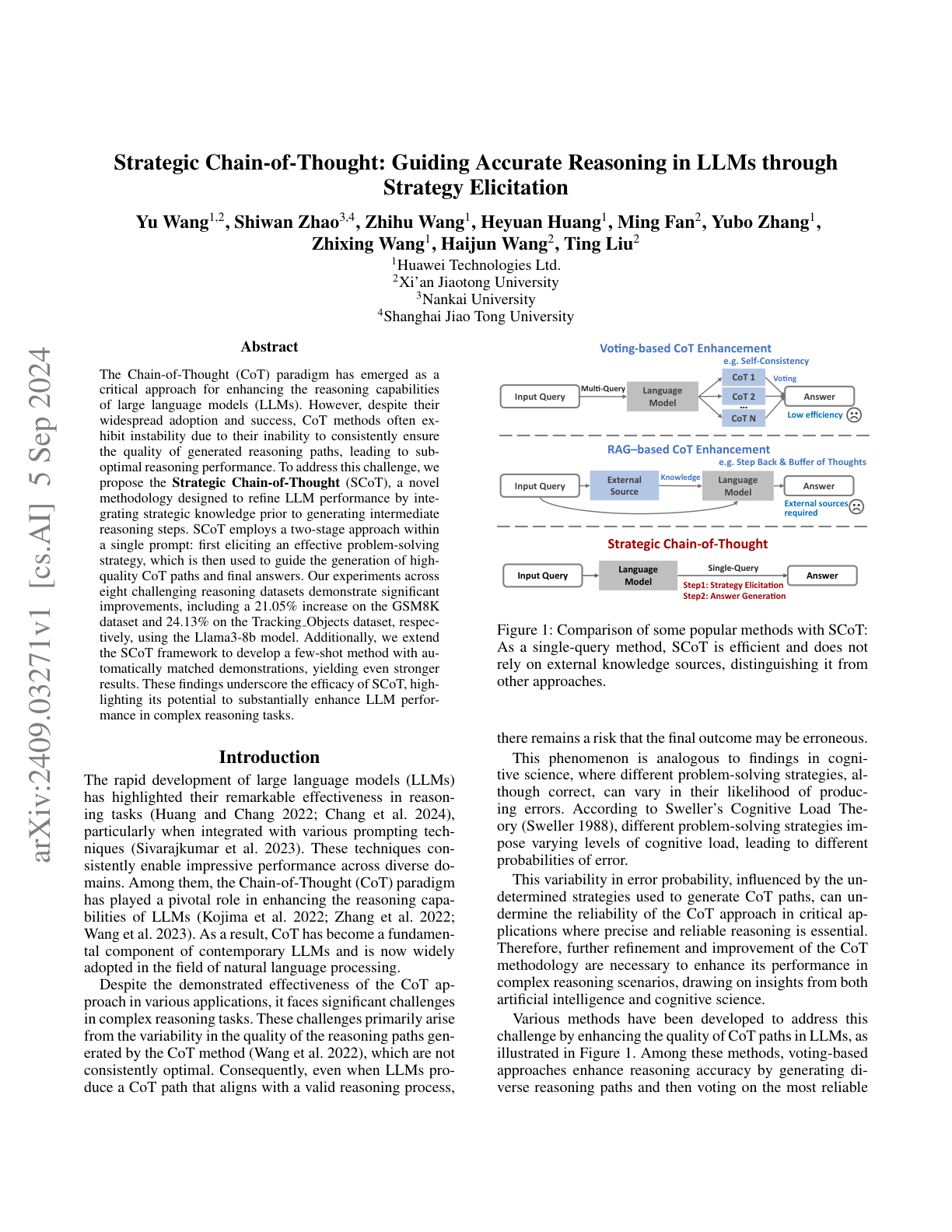
Strategic Chain-of-Thought
a method to refine LLM performance by incorporating strategic knowledge before the intermediate CoT reasoning steps; the problem-solving strategy helps to guide the generation of the CoT paths and final answers; claims to achieve a 21.05% increase on the GSM8K datasets using the Llama3-8b model.
Effective of AI on High Skilled Work
studies the impact of generative AI on software developers; reveals a 26.08% increase in the number of completed tasks among the developers that use AI tools like GitHub Copilot; also shows that less experienced developers are likely to adopt the AI tools and have greater productivity gains.
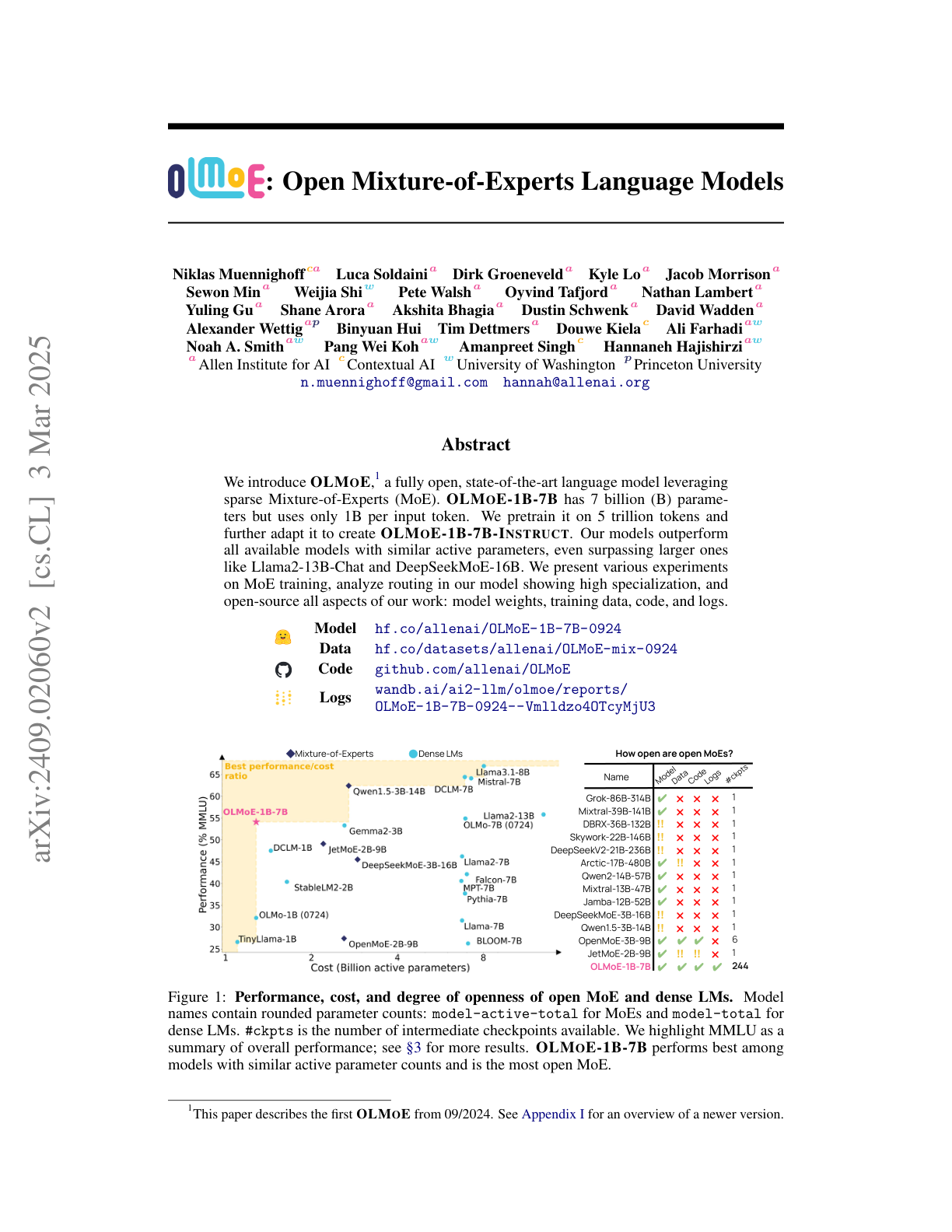
OLMoE
introduces a fully-open LLM that leverages sparse Mixture-of-Experts. OLMoE is a 7B parameter model and uses 1B active parameters per input token; there is also an instruction-tuned version that claims to outperform Llama-2-13B-Chat and DeepSeekMoE 16B.
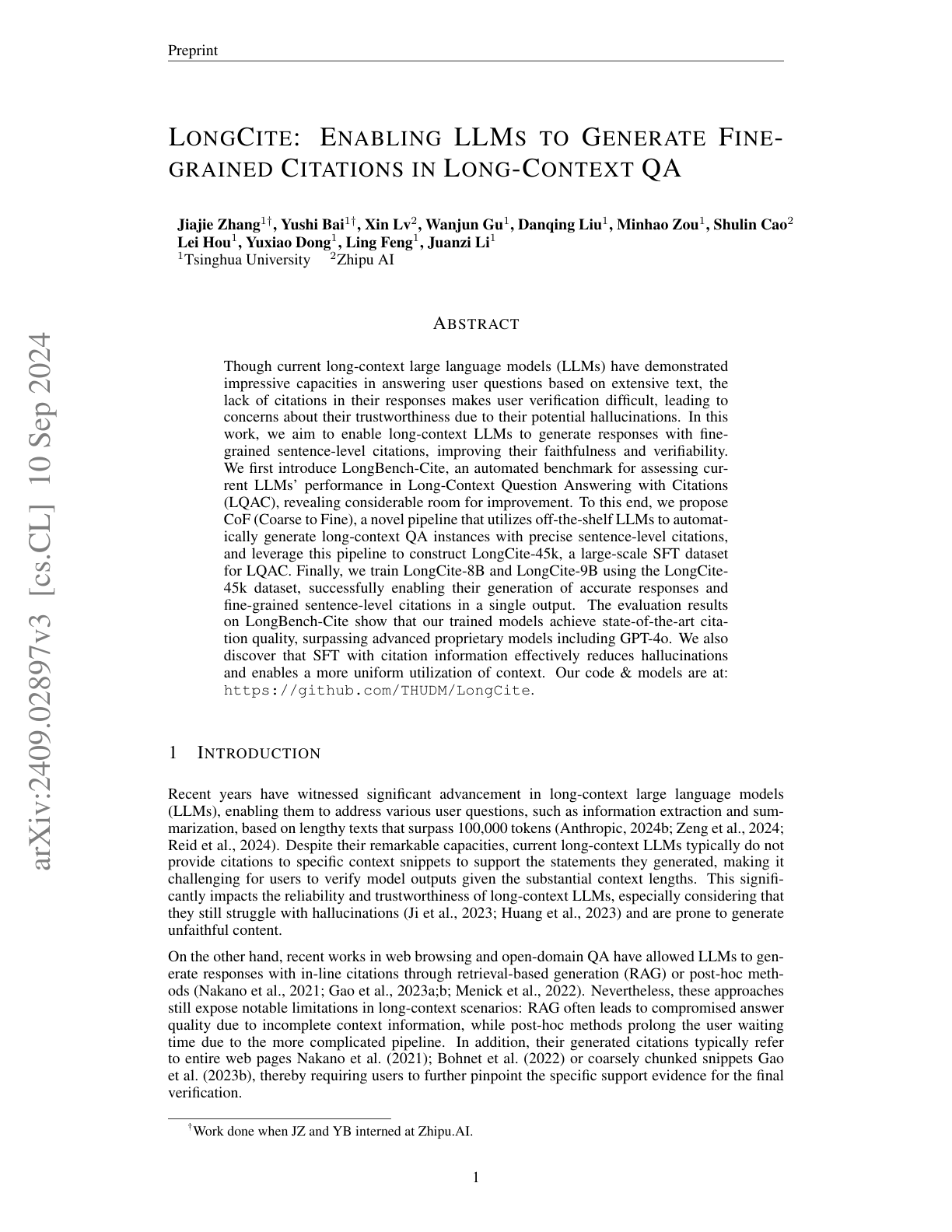
LongCite
synthesizes a large-scale SFT dataset with off-the-shelf LLMs to improve long-context question answering with citations; it trains 8B and 9B parameter models that enhance citation generation capabilities from lengthy contexts while improving response correctness; claims to even surpass GPT-4o on their proposed LongBench-Cite benchmark.
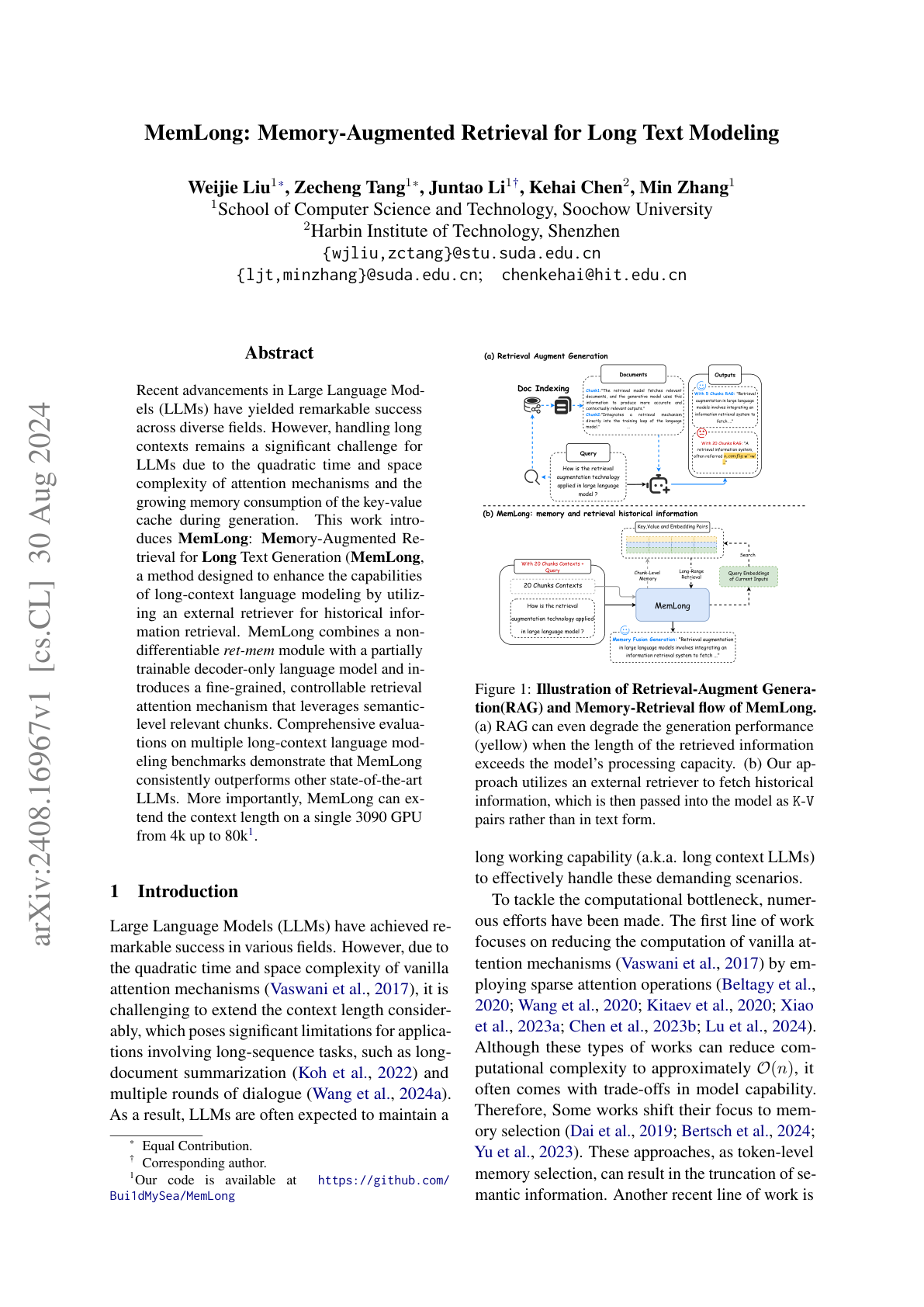
MemLong
utilizes an external retriever for retrieving historical information which enhances the capabilities of long-context LLMs; it consistently outperforms other SoTA LLMs on long-context benchmarks and can extend the context length on a single 3090 GPU from 4k up to 80k.
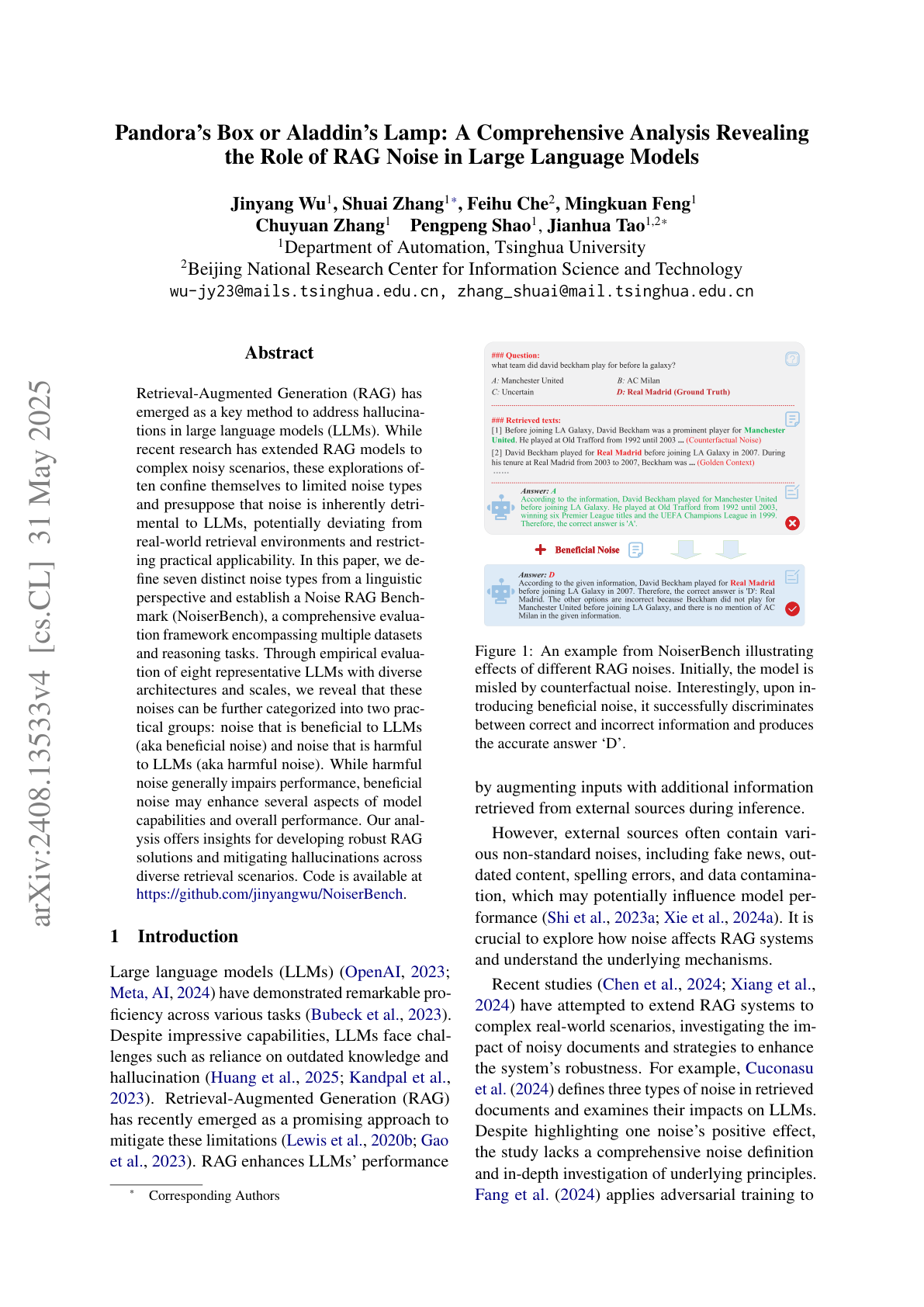
Role of RAG Noise in LLMs
proposes a benchmark (NoiserBench) to measure how different kinds of noisy information affect RAG's performance; reports that from different kinds of beneficial noise studied (e.g., semantic, datatype, and illegal sentence), illegal sentence noise exhibits the most improved model performance across models and datasets.
Beyond Preference in AI Alignment
challenges the dominant practice of AI alignment known as human preference tuning; explains in what ways human preference tuning fails to capture the thick semantic content of human values; argues that AI alignment needs reframing, instead of aligning on human preferences, AI should align on normative standards appropriate to their social roles.
LLM-Based Agents for Software Engineering
a survey paper on LLM-based agents for software engineering, covering perspectives ranging from requirement engineering to test generation to software maintenance.
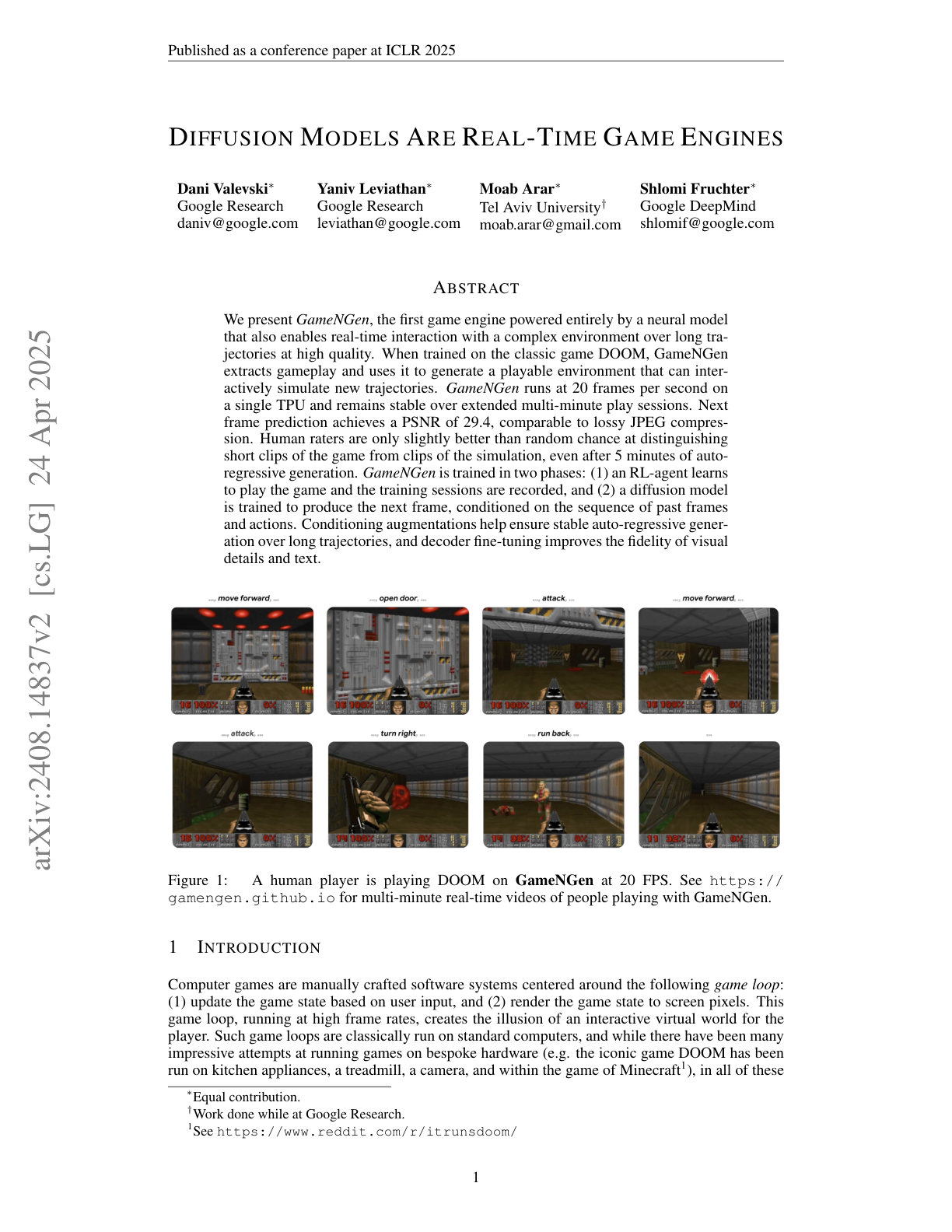
GameGen
a game engine powered by a diffusion model that enables real-time interaction with complex environments over long trajectories; uses a two-phase training process involving an RL agent to learn and a diffusion model to generate frames; it can interactively simulate DOOM over at 20 fps on a single TPU.
Agentic RAG for Time Series Analysis
proposes an agentic RAG framework for time series analysis; uses a multi-agent architecture where an agent orchestrates specialized sub-agents to complete time-series tasks; the sub-agents leverage tuned small language models and can retrieve relevant prompts containing knowledge about historical patterns and trends; this helps to improve predictions on new data.
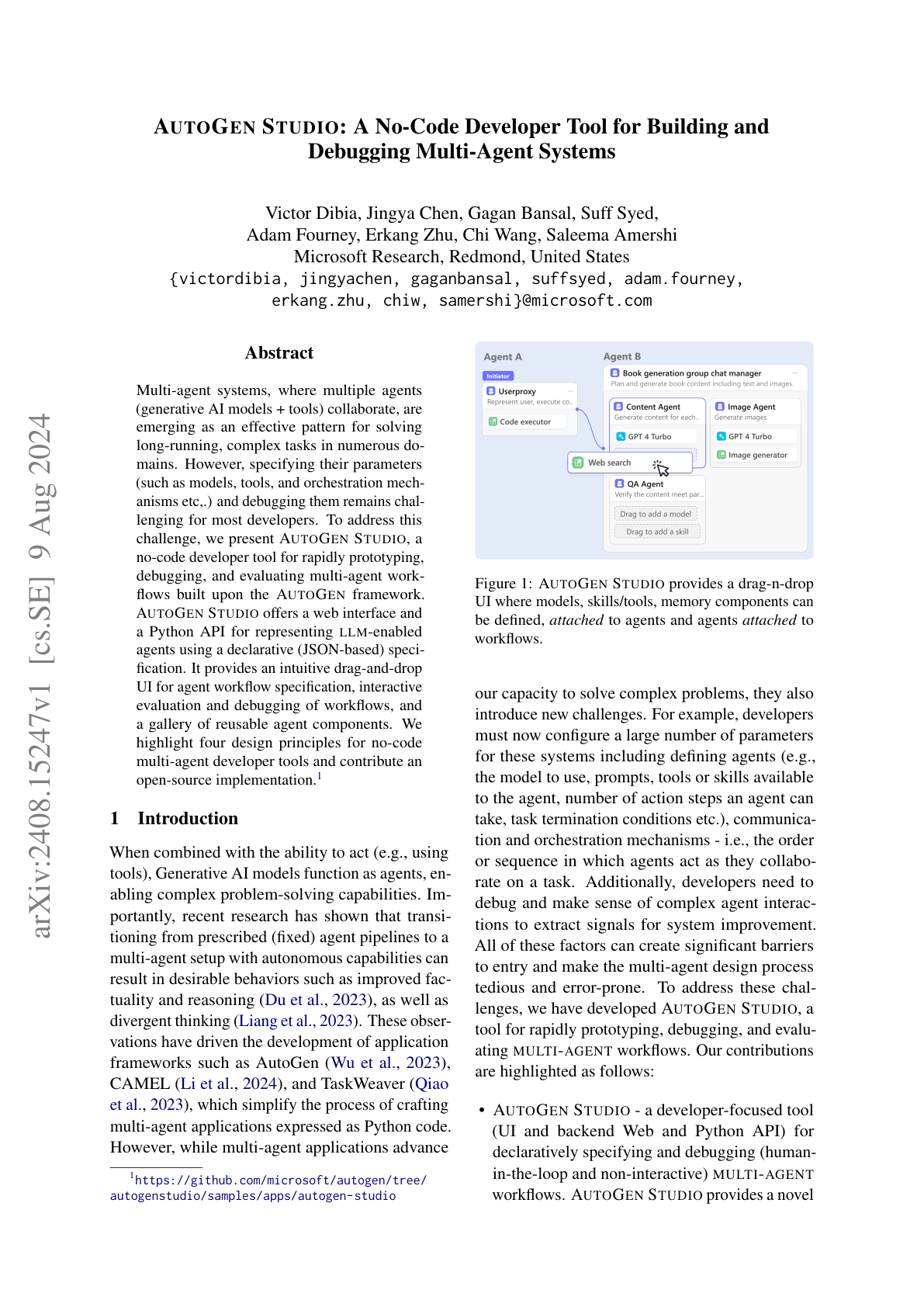
AutoGen Studio
a low-code interface for rapidly prototyping AI agents. It's built on top of the AutoGen framework and can also be used for debugging and evaluating multi-agent workflows.
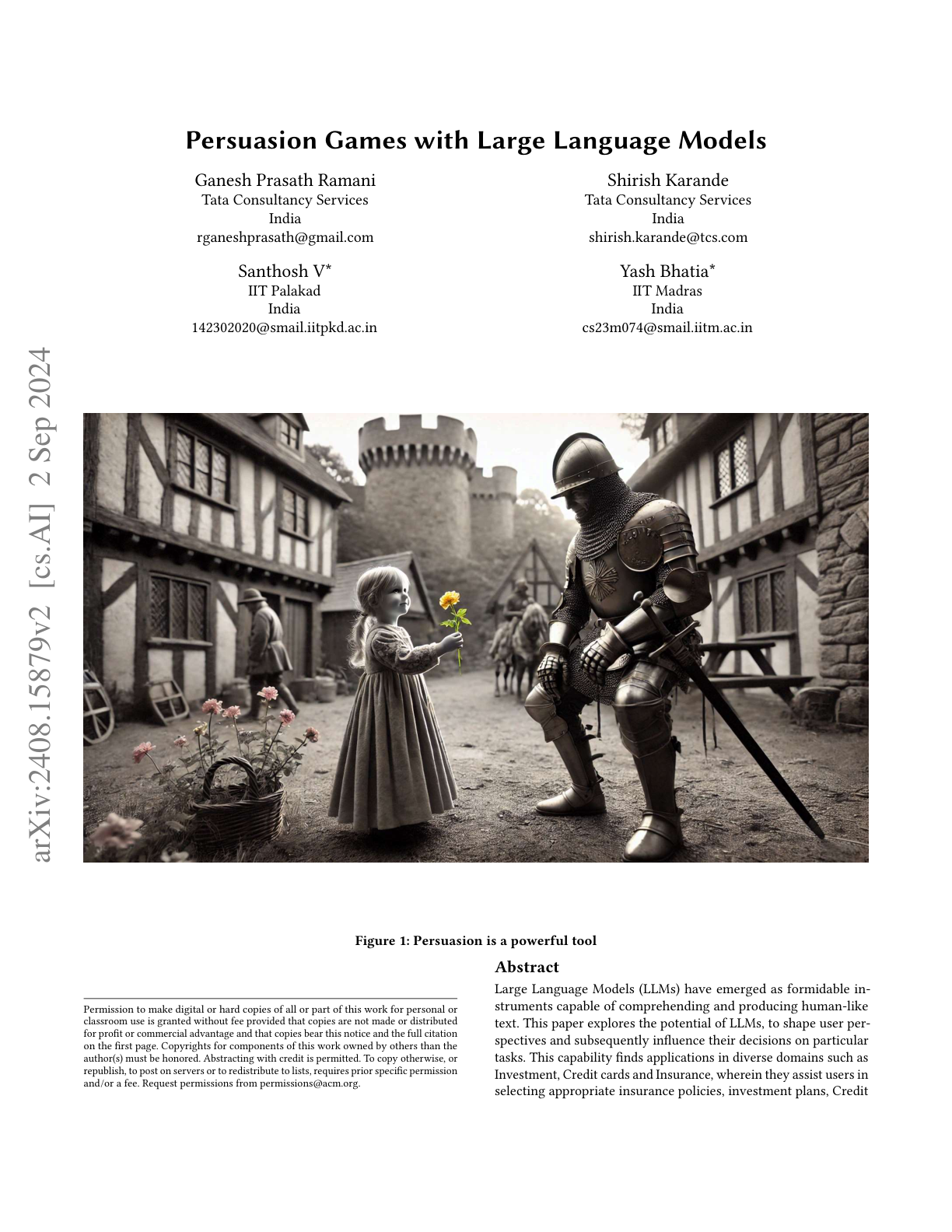
Persuasion Games with LLMs
claims that a multi-agent framework can be used to improve the persuasive efficacy of LLMs; the primary agent engages in persuasive dialogue while auxiliary agents perform key tasks like response analysis and information retrieval; finds that LLMs are capable of creating a perspective change in the users and persuading them to make a purchase decision; for instance, Sales agents can achieve a 71% positive shift in user perspectives.
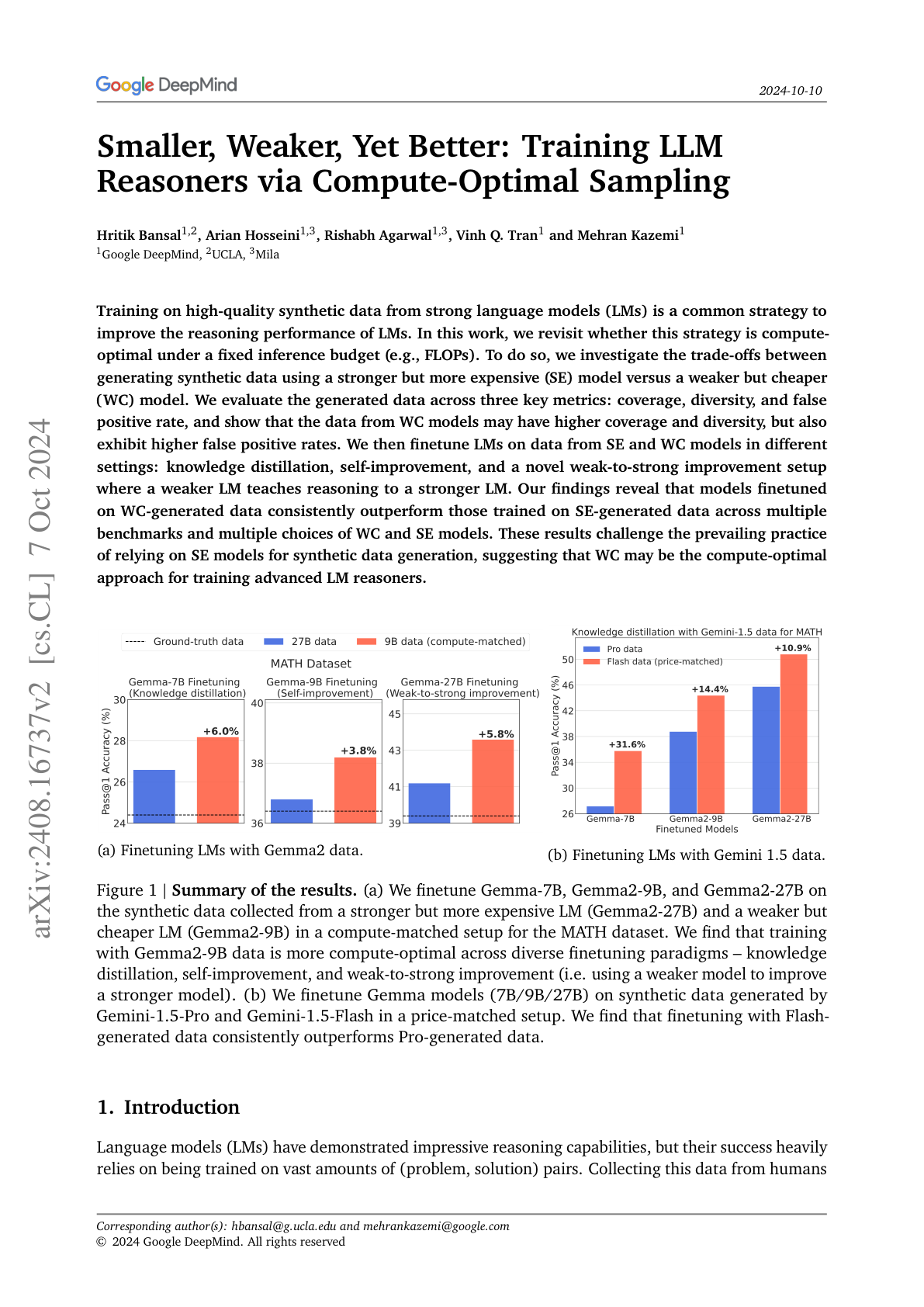
Smaller, Weaker, Yet Better
finds that weaker + cheaper (WC) models can generate better synthetic data for fine-tuning models compared to data generated with stronger but more expensive models; overall, results suggest that WC models may be a compute-optimal approach for training advanced LLM reasoners.
Transfusion
presents a training recipe to train multi-modal models over discrete and continuous data; combines next token prediction with diffusion to train transformer models over mixed-modality sequences; shows that it’s possible to scale from 7B parameter models to 2T multi-modal tokens that can compete in performance with similar scale diffusion and language models.
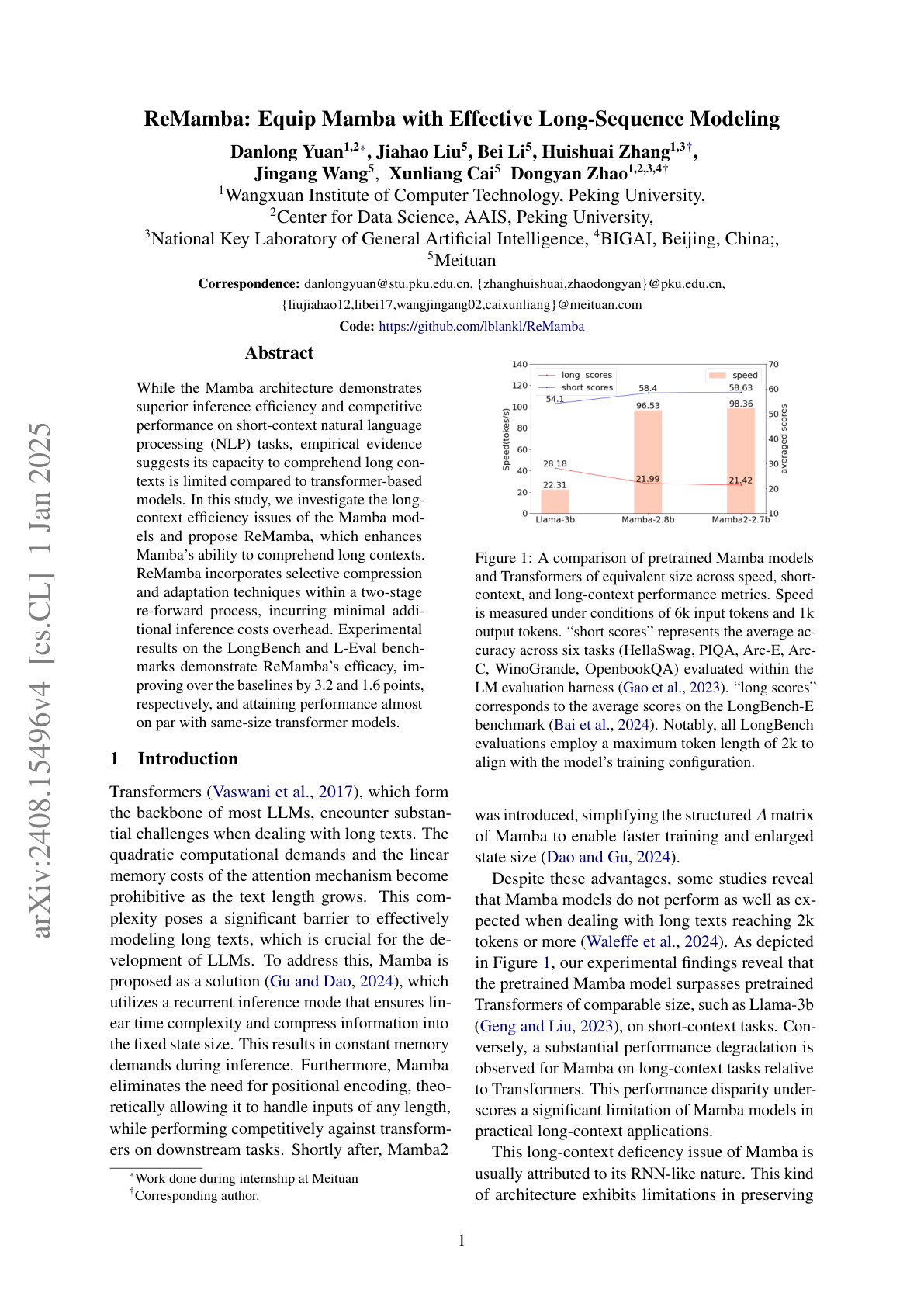
ReMamba
investigates the long-context capabilities and efficiencies of Mamba models; the long-context deficiency issues are due to Mamba's RNN-like nature; it achieves this by condensing information via the following compression strategy: the top-k hidden states during the first forward pass and leverages Mamba’s selective mechanism to incorporate them into the state space during the second forward pass; achieves a 3.2 improvement over the baseline on LongBench and 1.6 improvement on L-Eval; the strategy seems to also transfer to Mamba 2.
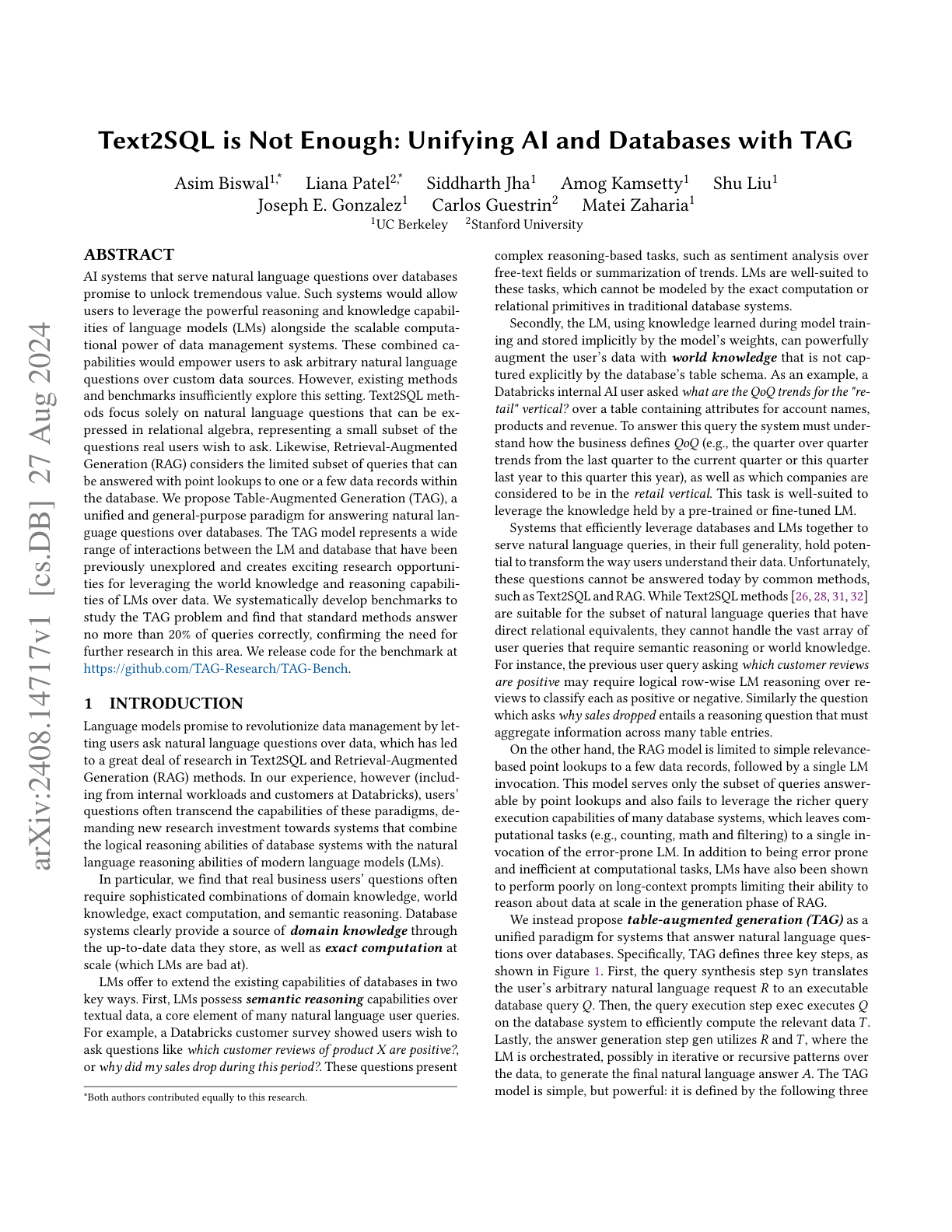
Text2SQL is Not Enough
proposes Table-Augmented Generation (TAG), a unified framework for answering natural language questions over databases; it represents a wider range of unexplored interactions between LLMs and databases; develops a benchmark and finds that standard methods answer no more than 20% of queries correctly.
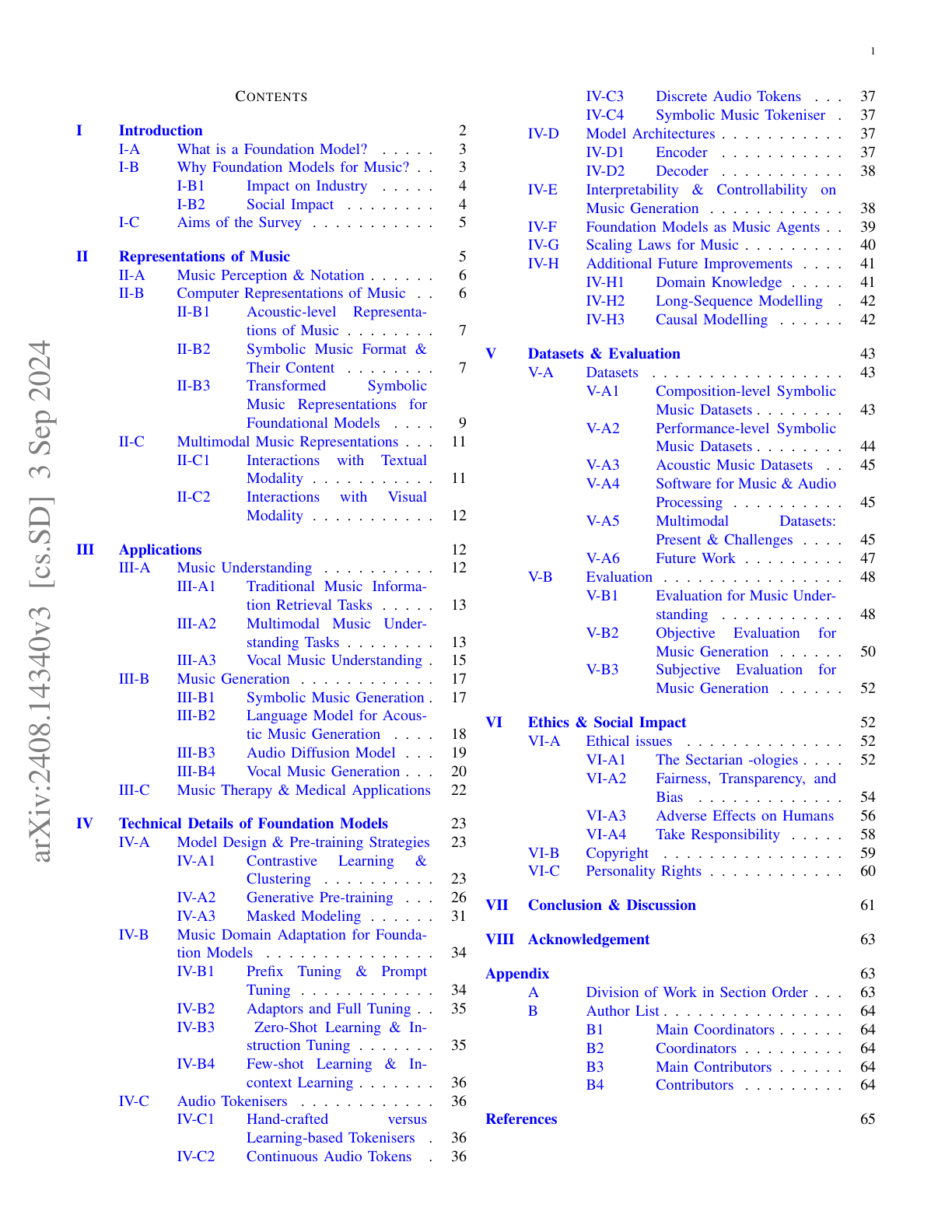
Foundation Models for Music
provides a comprehensive overview of state-of-the-art pre-trained models and foundation models in music.
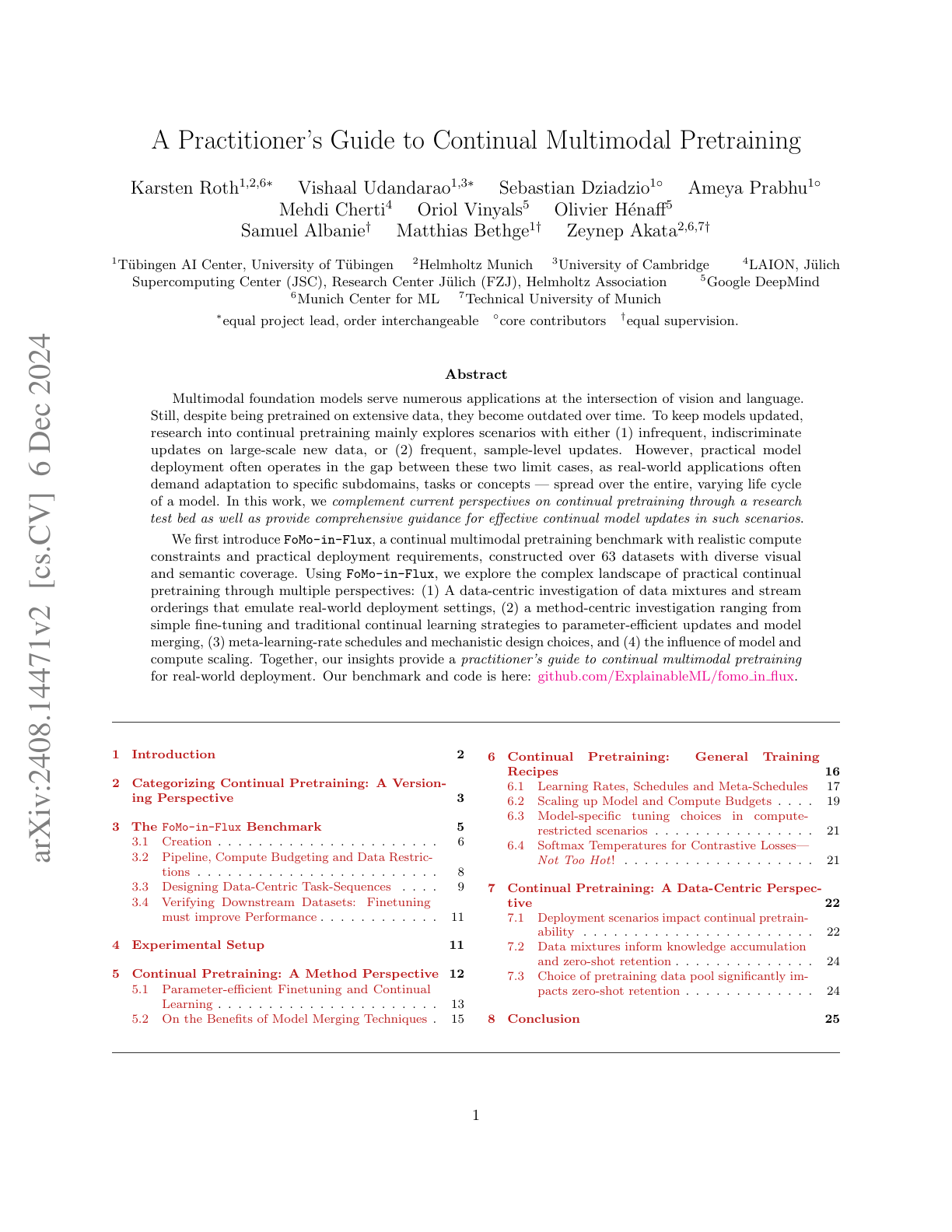
Guide to Continual Multimodal Pretraining
a comprehensive guide on continual multimodal pertaining; introduces FoMo-In-Flux, a large-scale fine-grained and long horizon continual pretraining benchmark.
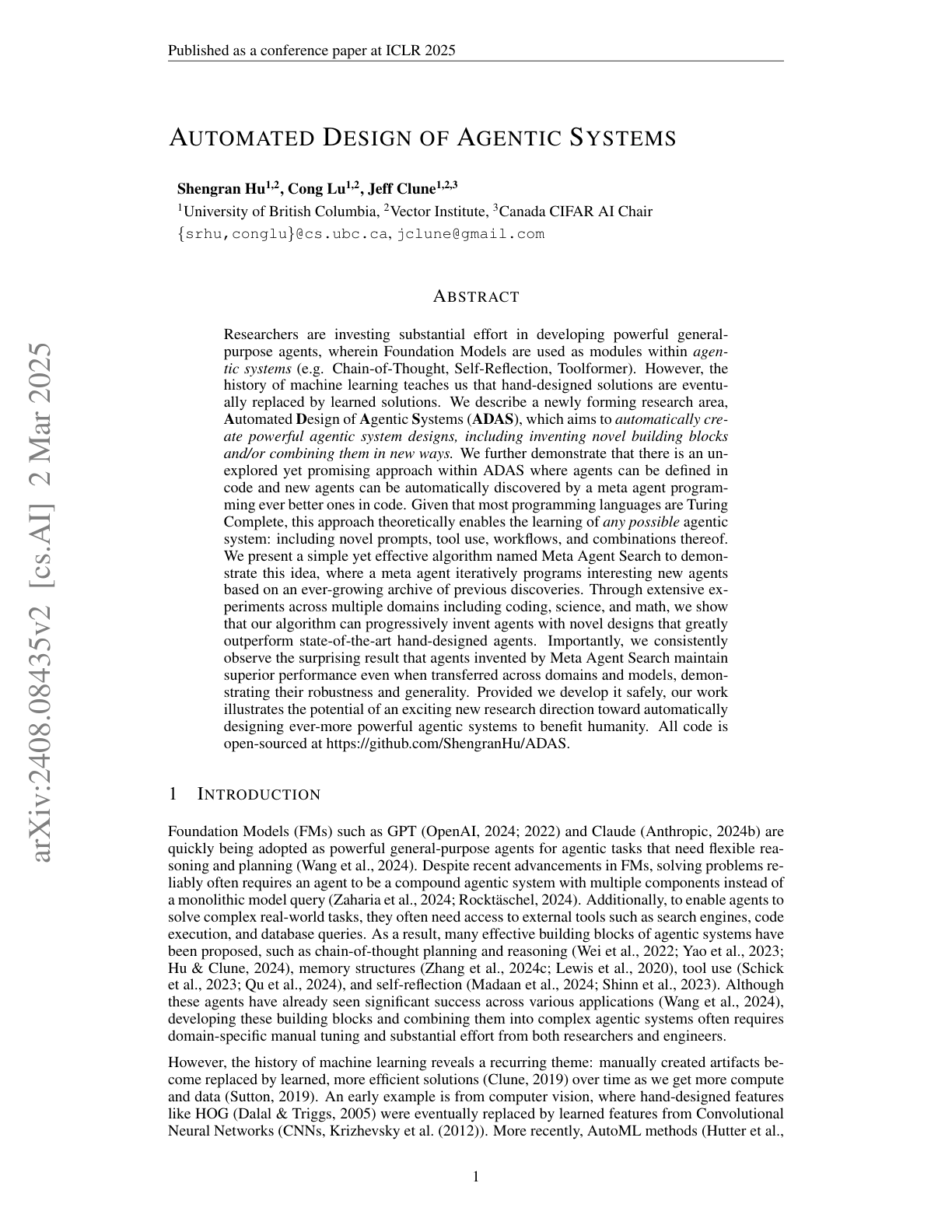
Automate Design of Agentic Systems
presents Meta Agent Search, a meta agent that iteratively programs and tests new agents based on a growing archive of previous discoveries; claims that with their approach it is possible to learn any possible agentic system including prompts, tool use, control flows, and more; they achieve this by focusing on three main components referred to as search space (define agents), search algorithm (explore search space), and the evaluation function (evaluate candidate agents).
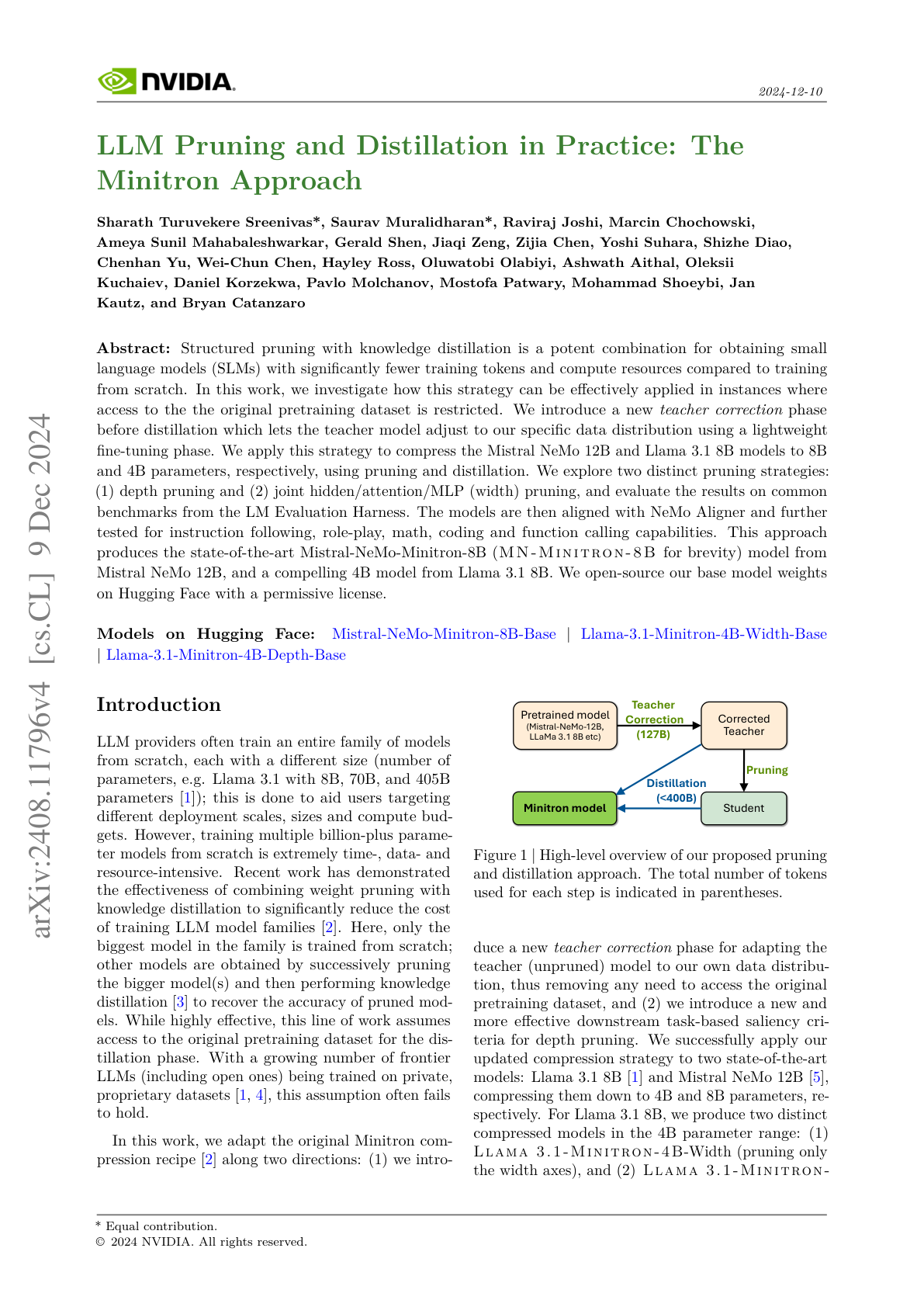
LLM Pruning and Distillation in Practice
provides a comprehensive report on effective methods for compressing Llama 3.1 and Mistral NeMo models; it presents pruning and distillation approaches applied to the original models to produce 4B and 8B parameter models, respectively; before pruning, they also fine-tune the teacher model on their datasets leading to better distillation; their compression strategy yields a state-of-the-art 8B model (MN-Minitron-8B) which outperforms all similarly-sized models on common language modeling benchmarks.
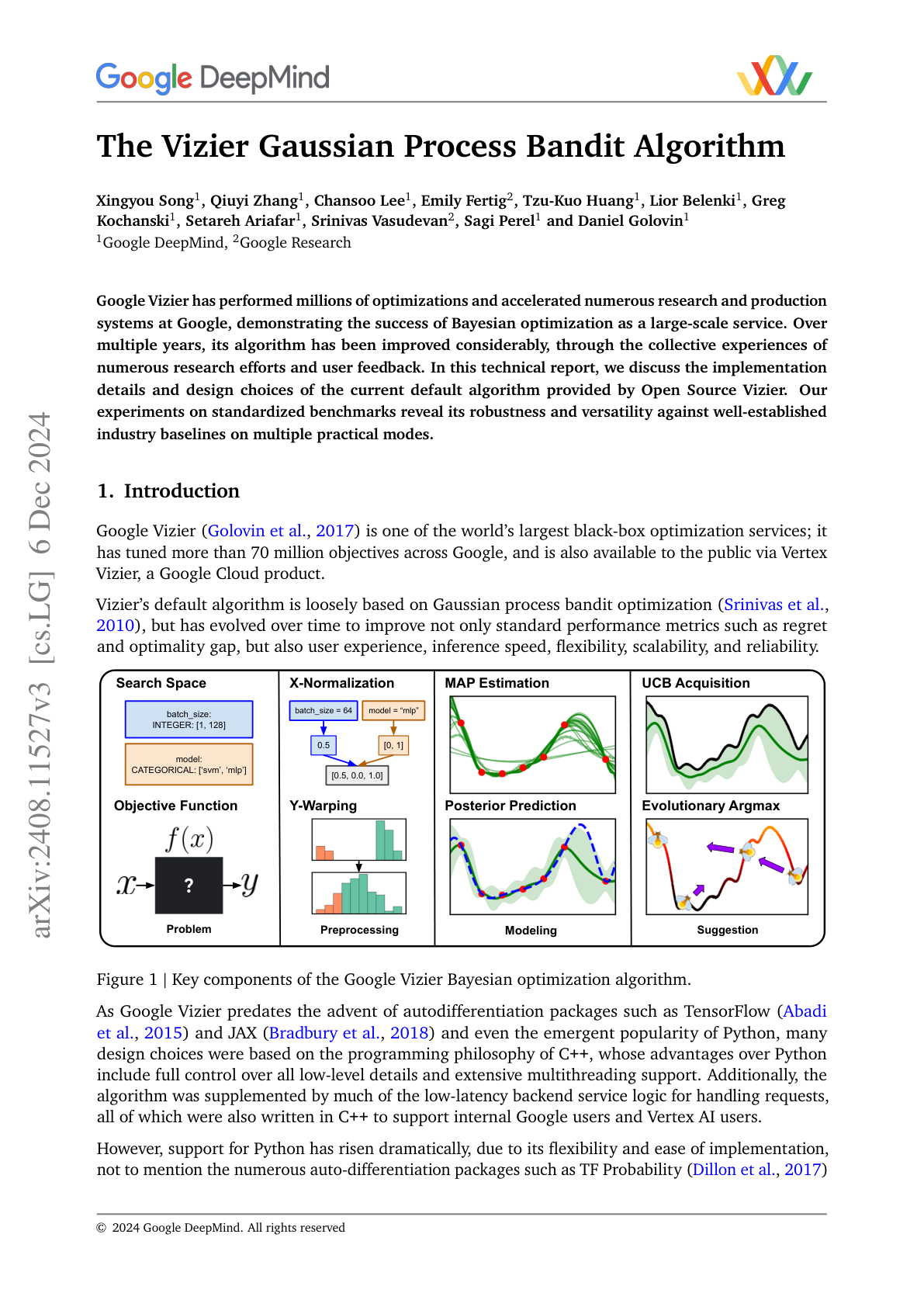
Vizier Gaussian Process Bandit Algorithm
presents Vizier, an algorithm based on Gaussian process bandit optimization used by Google for millions of optimizations and research; it provides an open-source Python implementation of the Vizier algorithm, including benchmarking results that demonstrate its wider applicability.
Language Modeling on Tabular Data
presents a comprehensive survey of language modeling techniques for tabular data; includes topics such as categorization of tabular data structures and data types, datasets used for model training and evaluation, modeling techniques and training objectives, data processing methods, popular architectures, and challenges and future research directions.