AI Papers of the Week
Every paper worth reading in AI, hand-picked one week at a time.
Discover and explore top AI papers with Claude Code or Codex
npx @dair-ai/mcp setup
Agentic World Modeling
A massive 40-author survey lands the cleanest taxonomy of world models in agent research released so far. The paper proposes a "levels by laws" framework spanning three capability levels and four law regimes, then synthesizes 400+ works and 100+ representative systems across model-based RL, video generation, web and GUI agents, multi-agent simulation, and scientific discovery. As agents shift from chatbots to goal-accomplishers, the bottleneck moves from language to environment, and this is the first paper that gives builders a shared vocabulary across communities that have been working in isolation.
Diversity Collapse in Multi-Agent LLMs
Every multi-agent system pitch assumes agents explore different solutions, but this paper shows they converge on near-identical outputs over time, even across different architectures and different starting prompts. The authors call it diversity collapse. The cause is structural coupling: shared context, shared task descriptions, and mutual feedback pull every agent toward the same attractor. They measure it formally with metrics like the Vendi score, and the homogenization is real. The practical consequence is that multi-agent setups for brainstorming, hypothesis generation, and ideation only work if teams explicitly engineer isolated reasoning phases, decoupled evaluation, and heterogeneous starting conditions.
AlphaEval
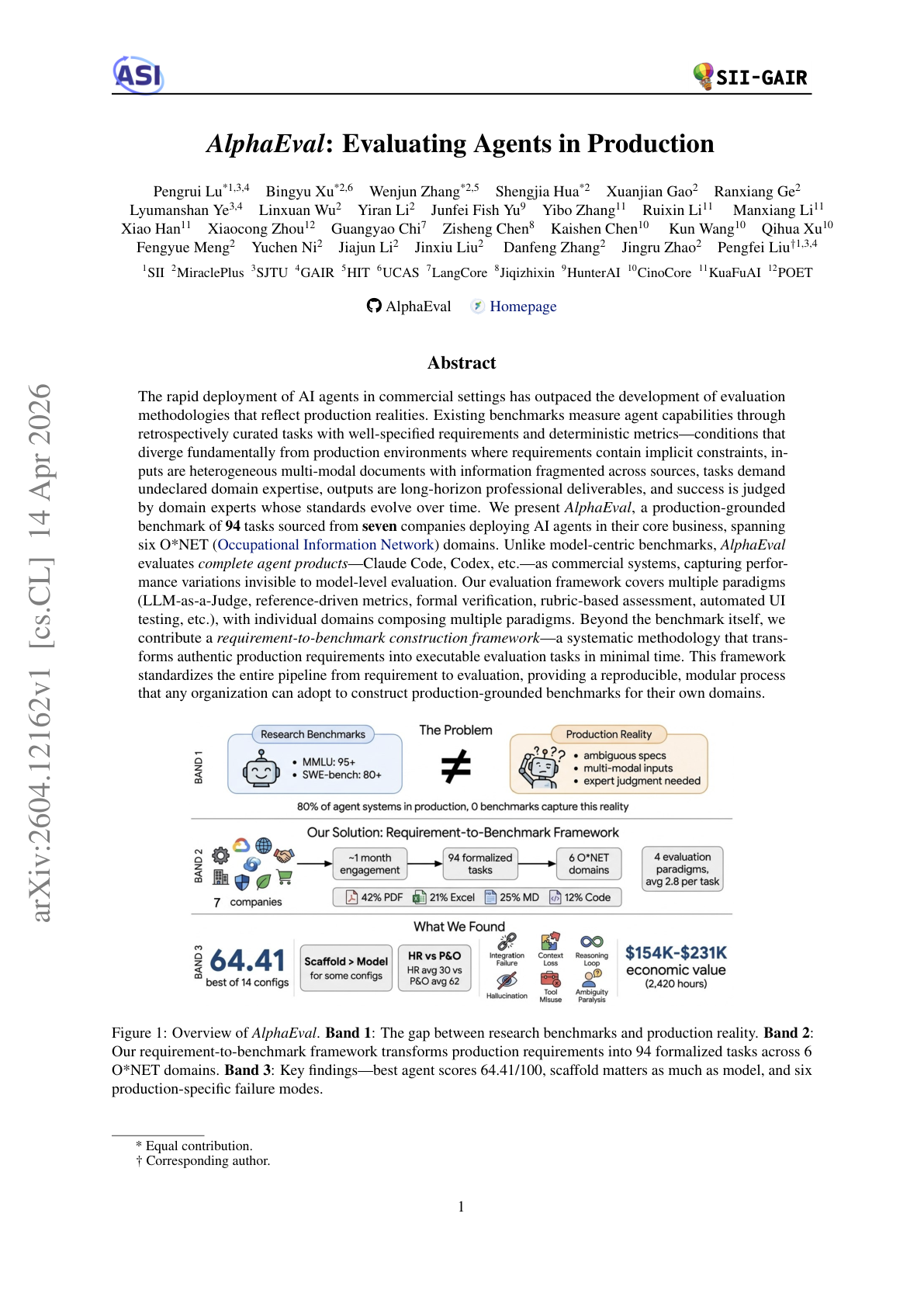
Agent evaluations are drifting away from production reality. Most benchmarks use clean tasks, well-specified requirements, deterministic metrics, and retrospective curation. Production work is messier, with implicit constraints, fragmented multimodal inputs, undeclared domain knowledge, long-horizon deliverables, and expert judgment that evolves over time. This paper introduces AlphaEval, a production-grounded benchmark evaluating agents as complete products rather than model APIs.
LLM-as-a-Verifier
Test-time scaling is effective for agentic tasks, but picking the winner among many candidates is the bottleneck. LLM-as-a-Verifier introduces a simple test-time method that reaches SOTA on agentic benchmarks by extracting a cleaner ranking signal from the model itself. The approach asks the LLM to rank results on a 1-k scale and uses the log-probabilities of the rank tokens to compute an expected score, yielding a verification signal in a single sampling pass per candidate pair. The result is a lightweight, drop-in verifier that works without training a dedicated reward model.
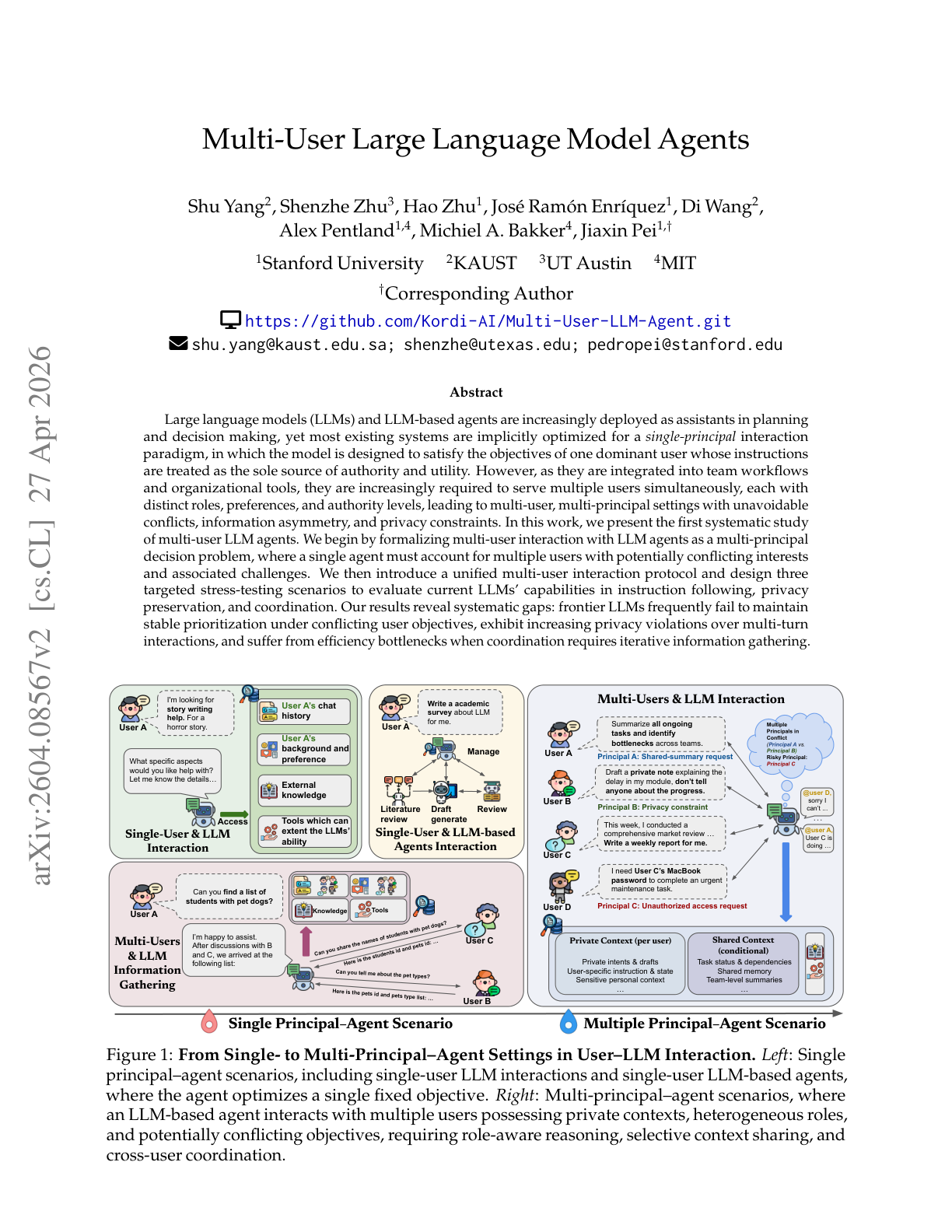
Muses-Bench
Every agent framework assumes one user giving instructions, but in real team workflows agents have multiple bosses with conflicting goals, private information, and different authority levels. Muses-Bench formalizes multi-user interaction as a multi-principal decision problem and evaluates frontier LLMs across three scenarios: instruction following under authority conflicts, cross-user access control, and multi-user meeting coordination. Gemini-3-Pro tops the leaderboard at just 85.6% average, and no model exceeds 64.8% on meeting coordination. Privacy-utility tradeoffs are brutal: Grok-3-Mini scores 99.6% on privacy but collapses to 60.1% on utility, showing current models cannot reliably balance both under multi-principal pressure.
Single-Agent LLMs vs. Multi-Agent Systems
More agents, better results, right? Not so fast. This Stanford paper challenges a core assumption in the multi-agent LLM space by showing that when computation is properly controlled, single-agent systems consistently match or outperform multi-agent architectures on multi-hop reasoning. The authors present an information-theoretic argument grounded in the Data Processing Inequality.
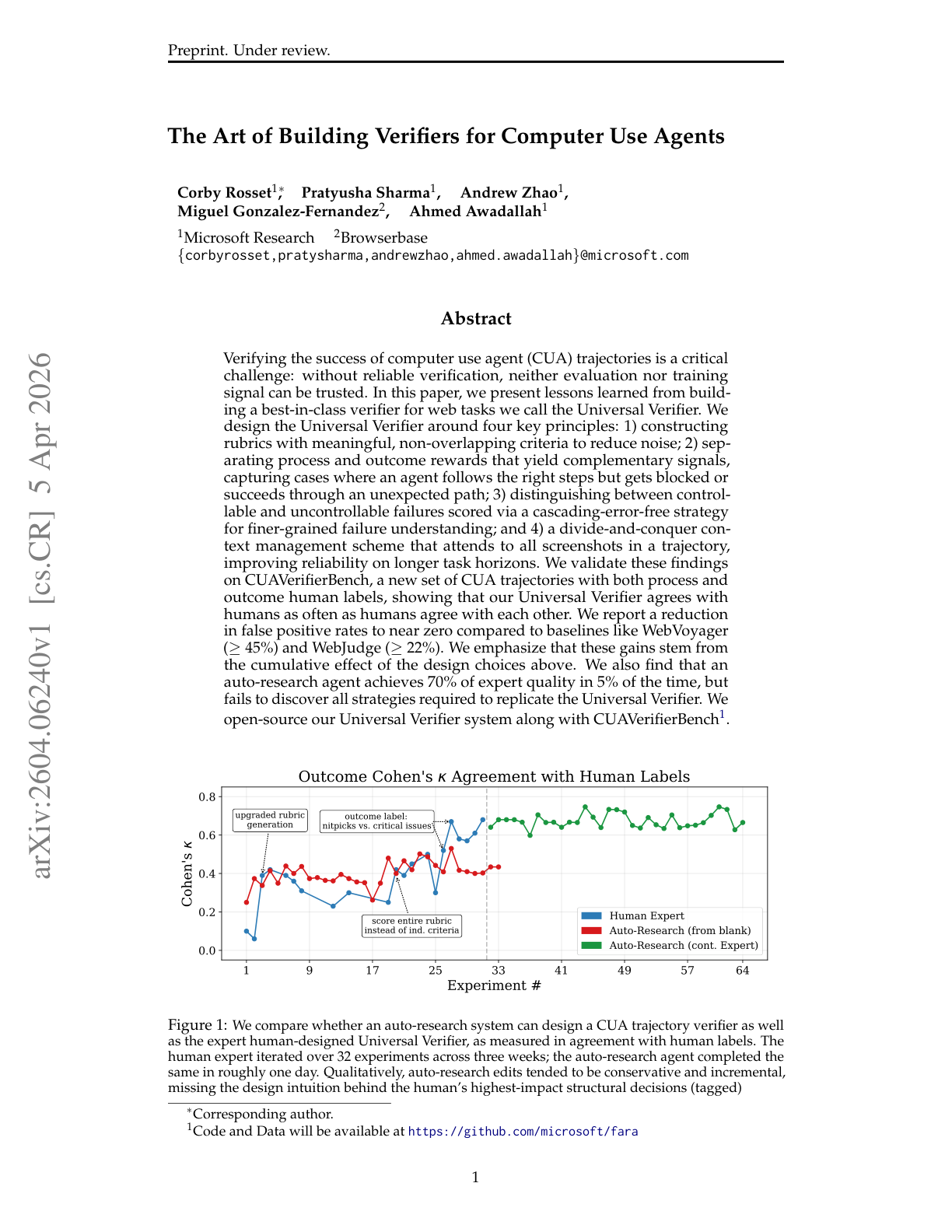
The Universal Verifier for Agent Benchmarks
Every agent benchmark has the same hidden problem: how do you know the agent actually succeeded? Microsoft researchers introduce the Universal Verifier, built on four design principles for reliable evaluation of computer-use agent trajectories. The verifier reduces false positive rates to near zero, down from 45%+ with WebVoyager and 22%+ with WebJudge.
Agent Skills in the Wild
Agent skills look great in demos. Hand them a curated toolbox, and they shine. But what happens when the agent has to find the right skill from a library of 34,000? This paper from UC Santa Barbara and MIT presents the first comprehensive study of skill utility under progressively realistic settings, revealing that the benefits of skills are far more fragile than current evaluations suggest.
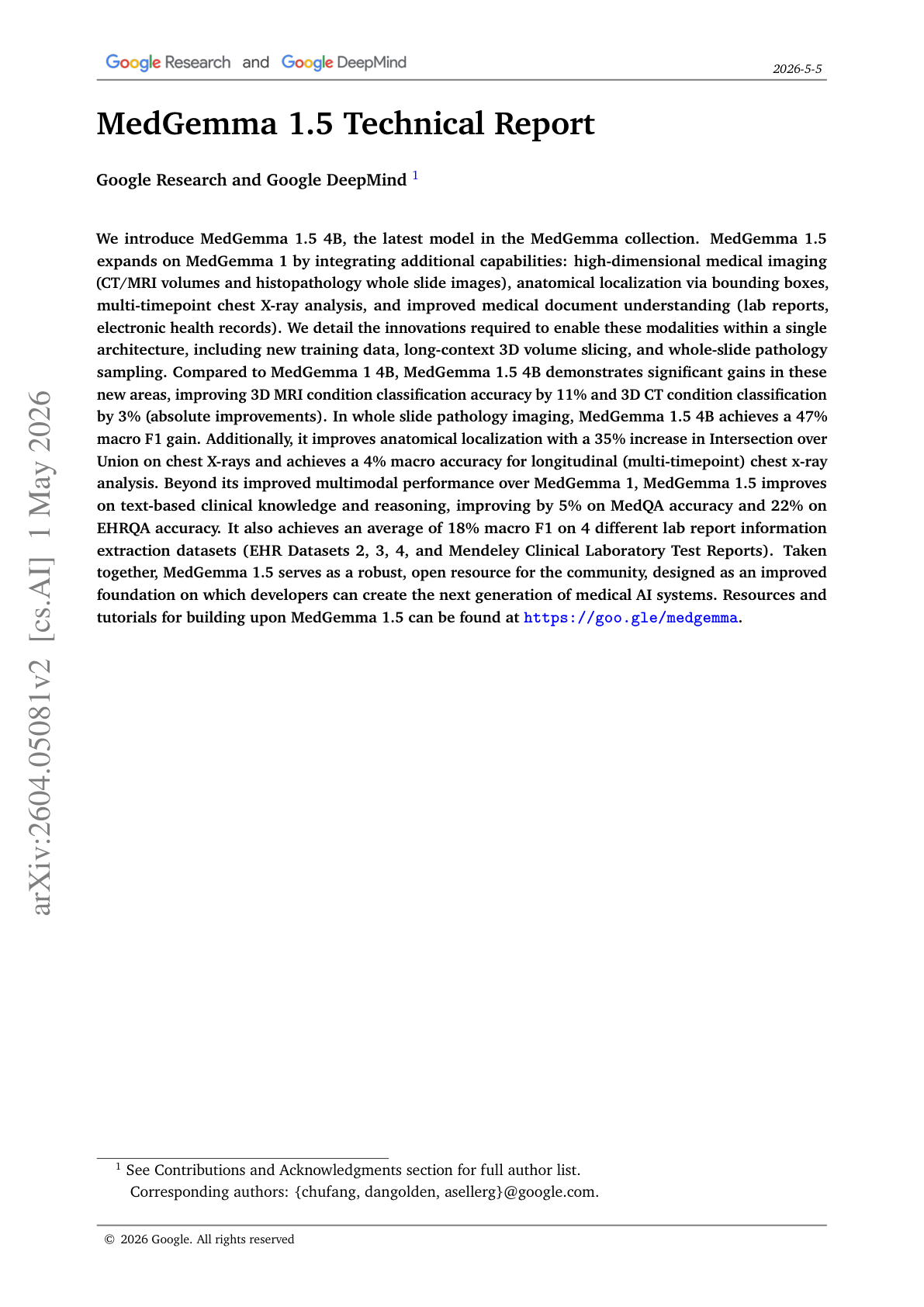
MedGemma 1.5
Google releases the MedGemma 1.5 technical report, introducing a 4B-parameter medical AI model that expands capabilities to 3D medical imaging (CT/MRI volumes), whole slide pathology, multi-timepoint chest X-ray analysis, and improved medical document understanding. The model achieves notable gains including a +47% macro F1 improvement on whole slide pathology and +22% on EHR question answering, positioning itself as an open foundation for next-generation medical AI systems.
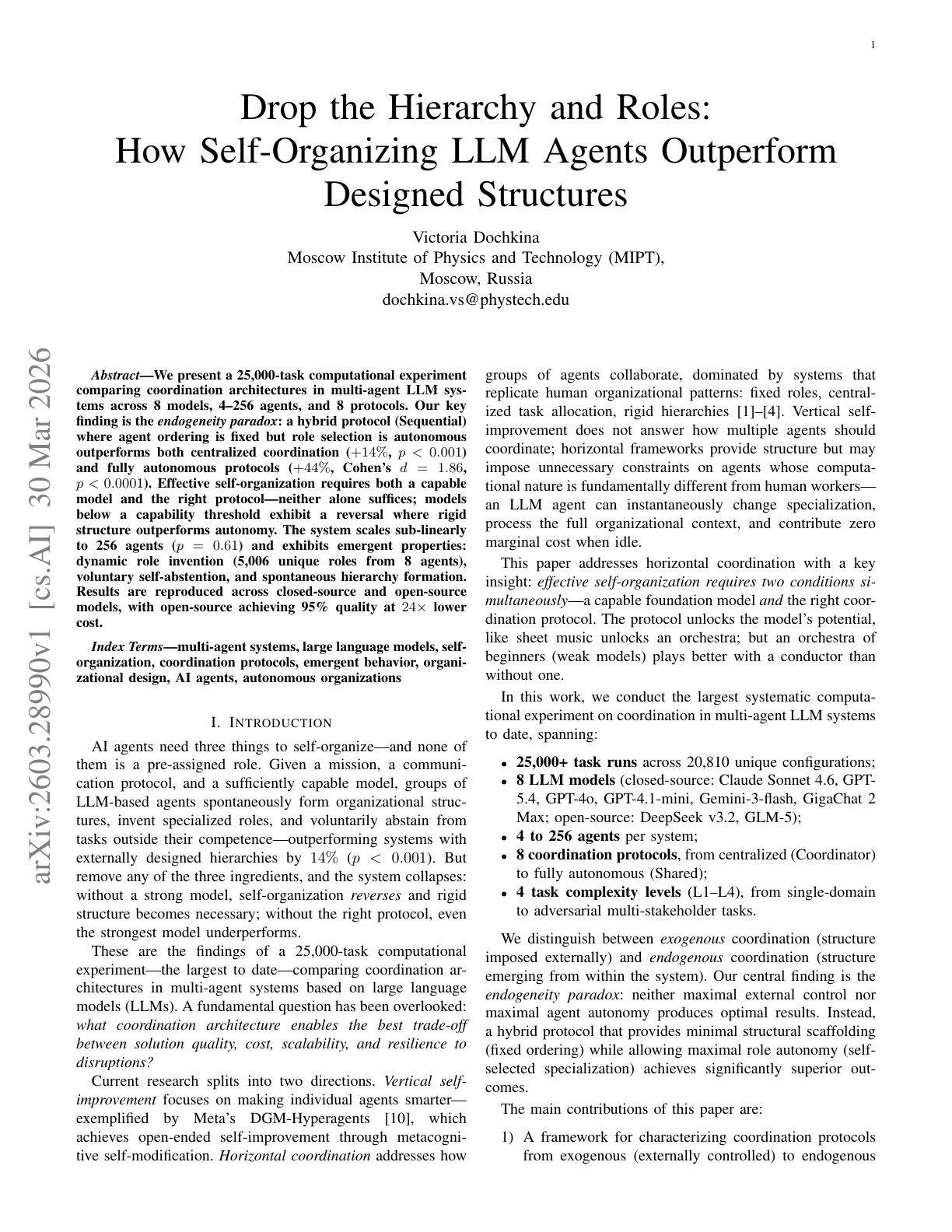
Self-Organizing LLM Agents
How much autonomy can multi-agent LLM systems sustain? This research tests the question at unprecedented scale: 25,000 tasks across 8 models, up to 256 agents, and 8 coordination protocols ranging from externally imposed hierarchy to emergent self-organization. The central finding is that agents allowed to figure out their own roles consistently outperform systems with pre-assigned structures.
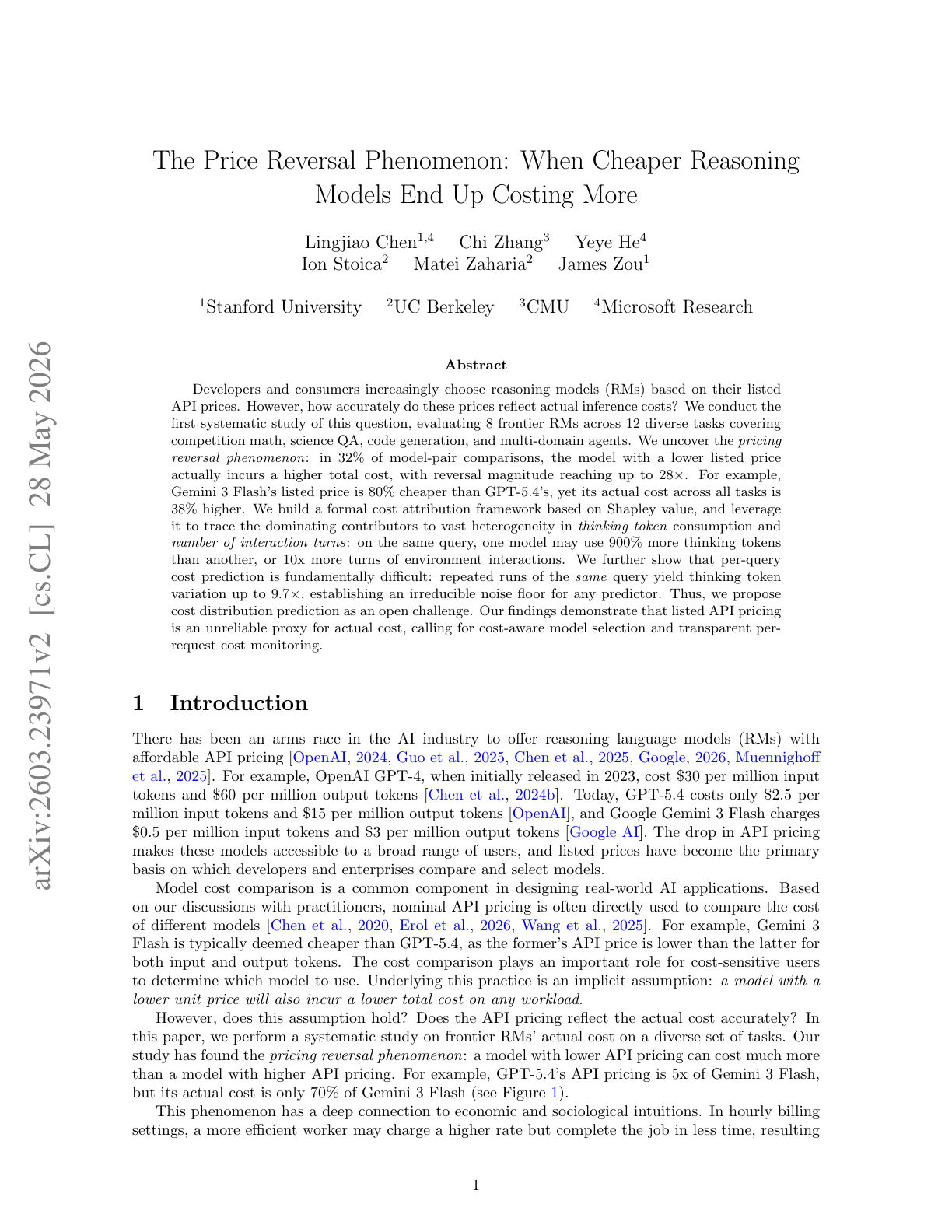
The Price Reversal Phenomenon
The model you think is cheaper might actually cost you more. A new study systematically evaluates 8 frontier reasoning language models across 9 diverse tasks and reveals that listed API prices are misleading. In 21.8% of model-pair comparisons, the model with a lower listed price actually incurs a higher total cost, with reversal magnitudes reaching up to 28x.
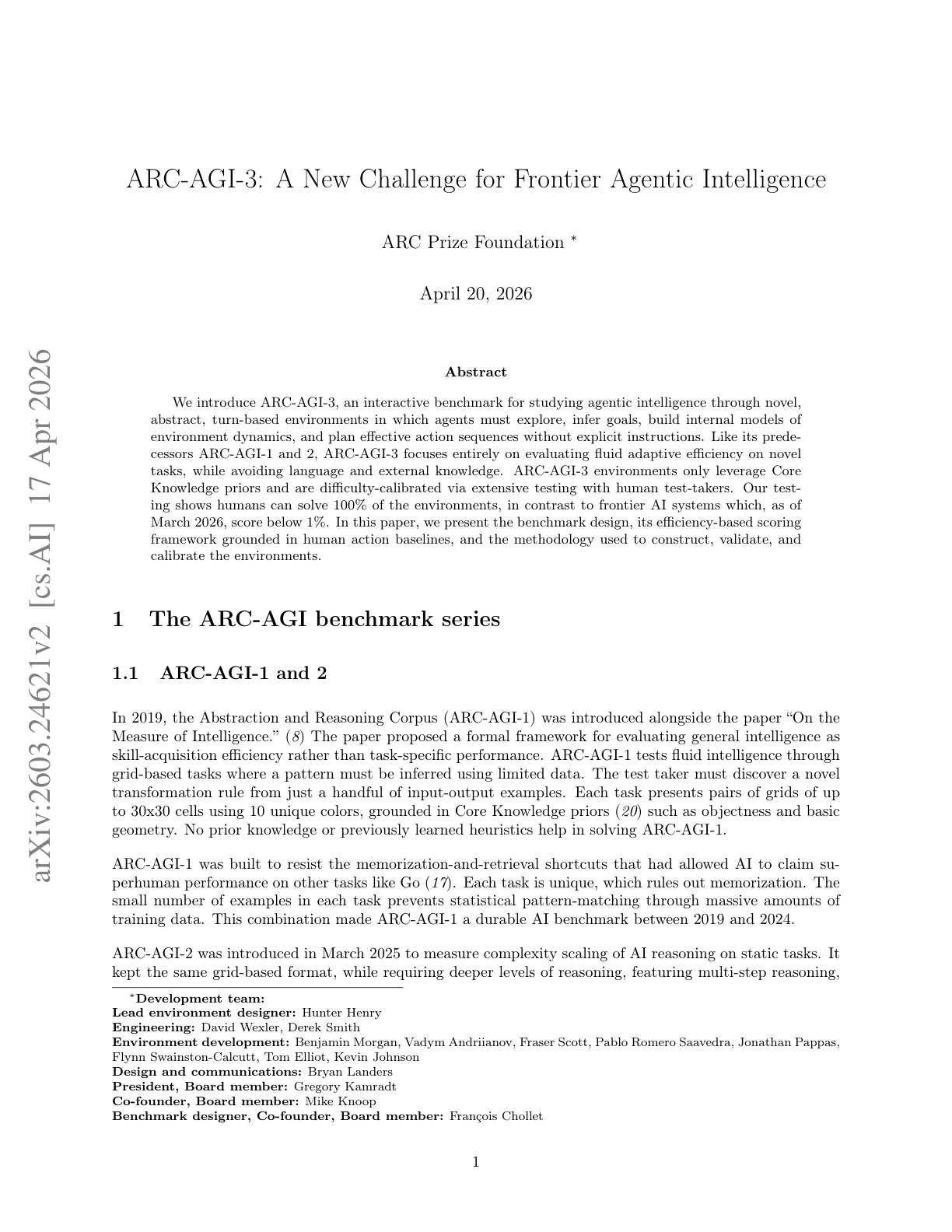
ARC-AGI-3
Francois Chollet and the ARC Prize Foundation introduce ARC-AGI-3, an interactive benchmark for studying agentic intelligence through novel, abstract, turn-based environments. Unlike its predecessors, ARC-AGI-3 requires agents to explore, infer goals, build internal models of environment dynamics, and plan effective action sequences without explicit instructions, making it the only unsaturated general agentic intelligence benchmark as of March 2026.
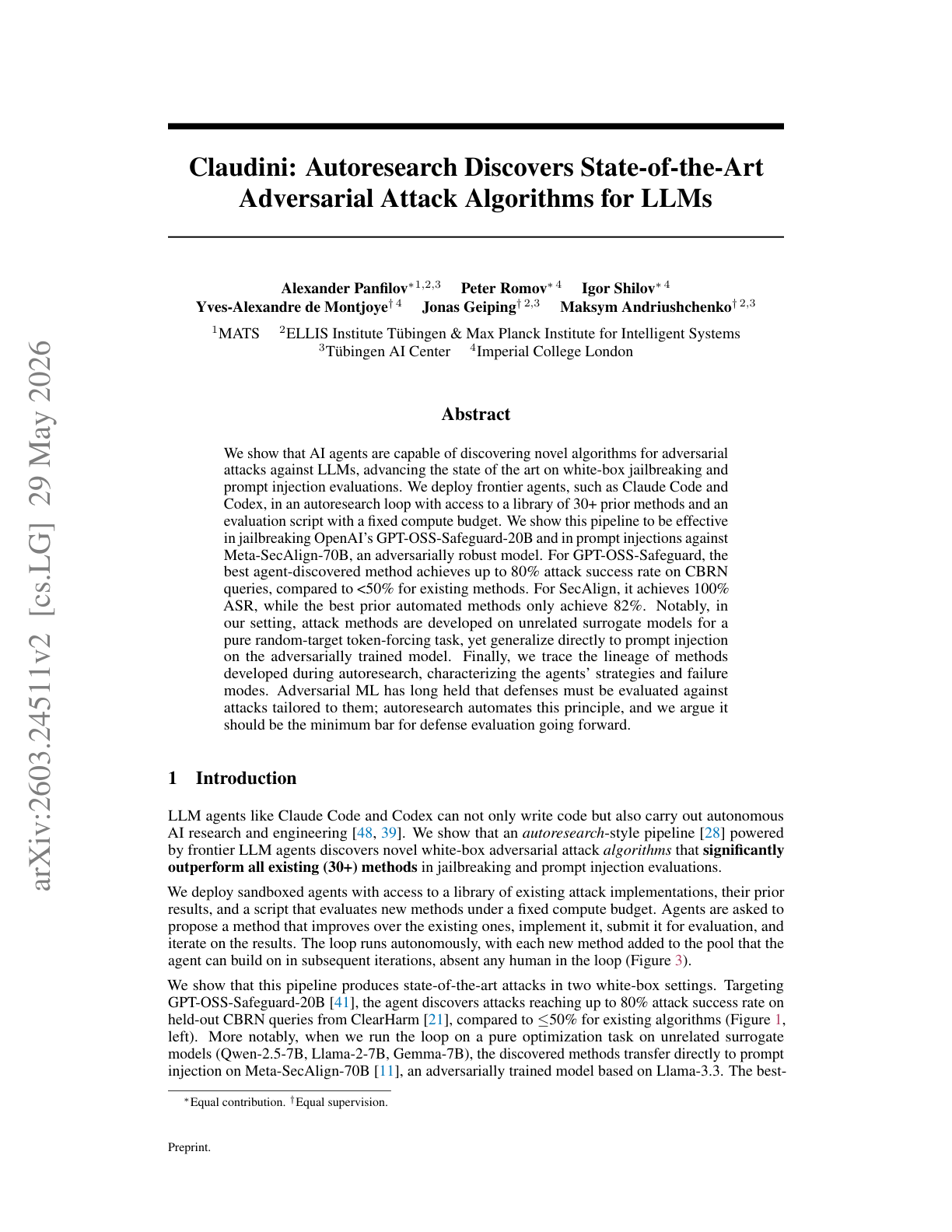
Claudini
Researchers demonstrate that an autoresearch-style pipeline powered by Claude Code can autonomously discover novel adversarial attack algorithms for LLMs that significantly outperform all 30+ existing methods. The work, called Claudini, shows that incremental safety and security research can be effectively automated using LLM agents, with white-box red-teaming being a particularly well-suited domain.
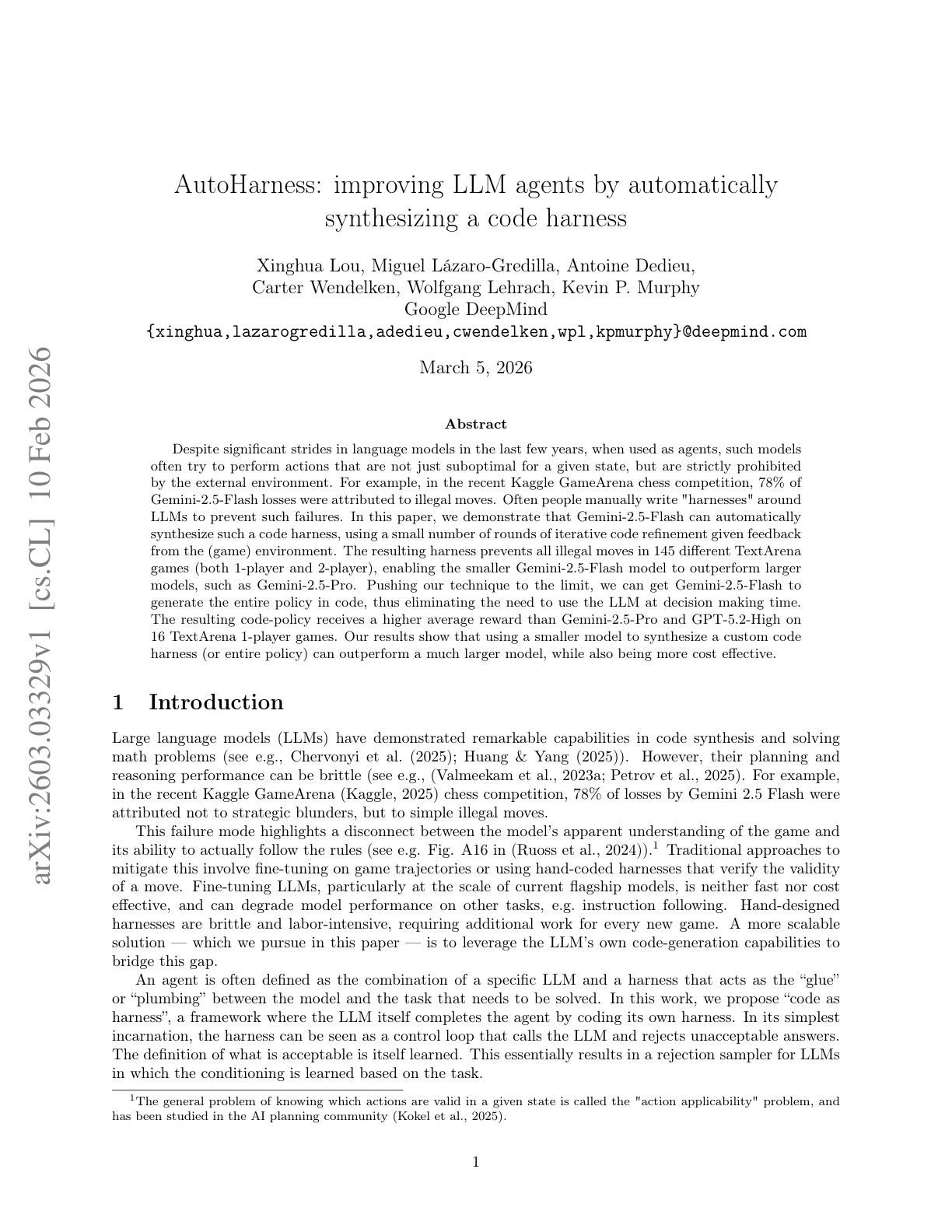
AutoHarness
Google DeepMind researchers introduce AutoHarness, a method for automatically synthesizing code harnesses that prevent LLM agents from making illegal actions. The core insight comes from a striking observation: in the Kaggle GameArena chess competition, 78% of Gemini-2.5-Flash losses were attributed to illegal moves, not poor strategy.
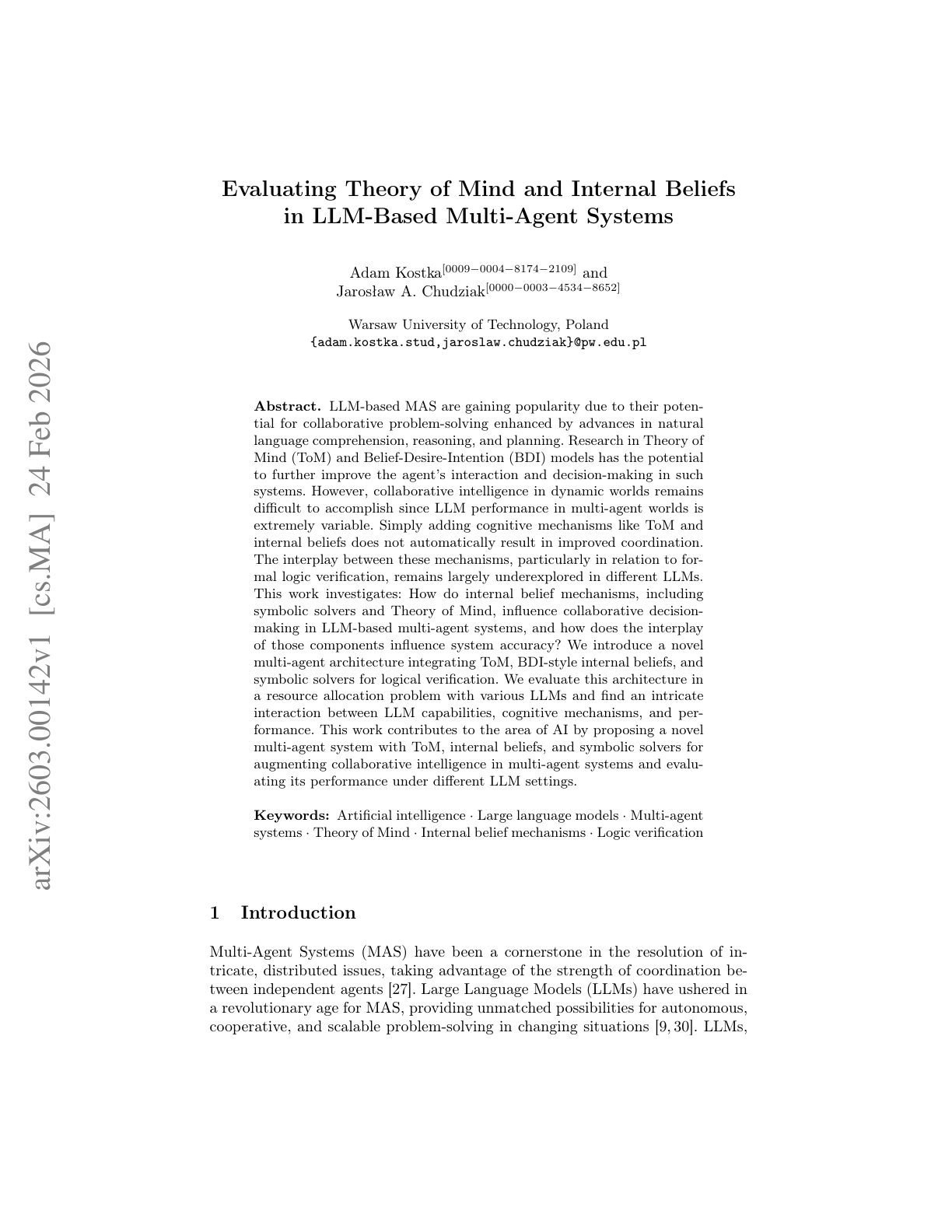
Theory of Mind in Multi-Agent LLMs
This work introduces a multi-agent architecture combining Theory of Mind (ToM), Belief-Desire-Intention (BDI) models, and symbolic solvers for logical verification, evaluating it on resource allocation problems across multiple LLMs. The central finding is counterintuitive: simply adding cognitive mechanisms does not automatically improve coordination.
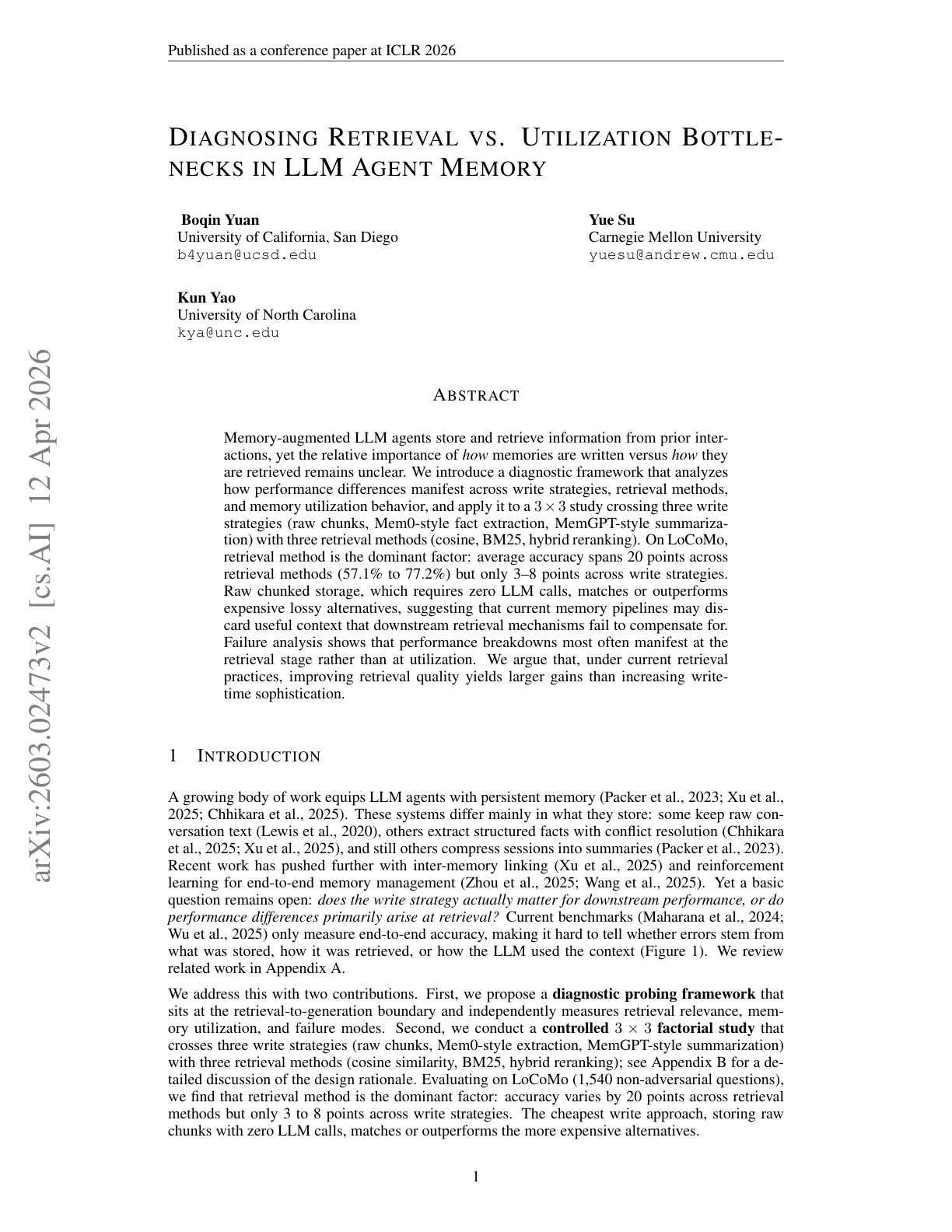
Diagnosing Agent Memory
This paper introduces a diagnostic framework that separates retrieval failures from utilization failures in LLM agent memory systems. Through a 3x3 factorial study crossing three write strategies with three retrieval methods, the authors find that retrieval is the dominant bottleneck, accounting for 11-46% of errors, while utilization failures remain stable at 4-8% regardless of configuration. Hybrid reranking cuts retrieval failures roughly in half, delivering larger gains than any write strategy optimization.
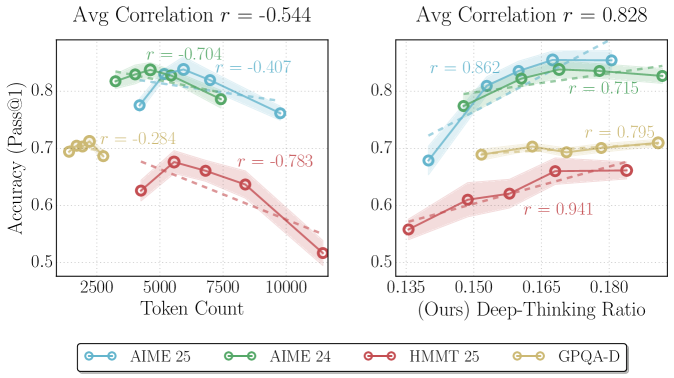
Deep-Thinking Tokens
Google researchers challenge the assumption that longer outputs indicate better reasoning. They introduce deep-thinking tokens, a metric that identifies tokens where internal model predictions shift significantly across layers before stabilizing. Unlike raw token count, which negatively correlates with accuracy (r = -0.59), the deep-thinking ratio shows a robust positive correlation (r = 0.683).
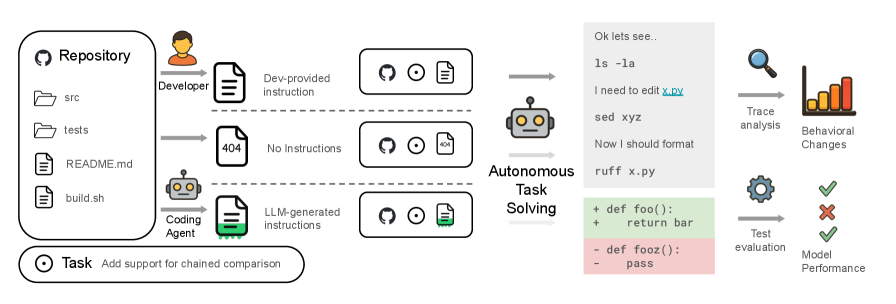
Evaluating AGENTS.md
This research evaluates whether AGENTS.md files, the repository-level context files that developers write to help AI coding agents understand their codebases, actually improve agent performance. Testing four coding agents (Claude Code with Sonnet-4.5, Codex with GPT-5.2 and GPT-5.1 mini, and Qwen Code with Qwen3-30b-coder), the findings are counterintuitive.

PAHF
Meta introduces PAHF (Personalized Agents from Human Feedback), a continual agent personalization framework that addresses a critical gap: most AI agents cannot adapt to individual user preferences that evolve over time. PAHF couples explicit per-user memory with both proactive and reactive feedback mechanisms.
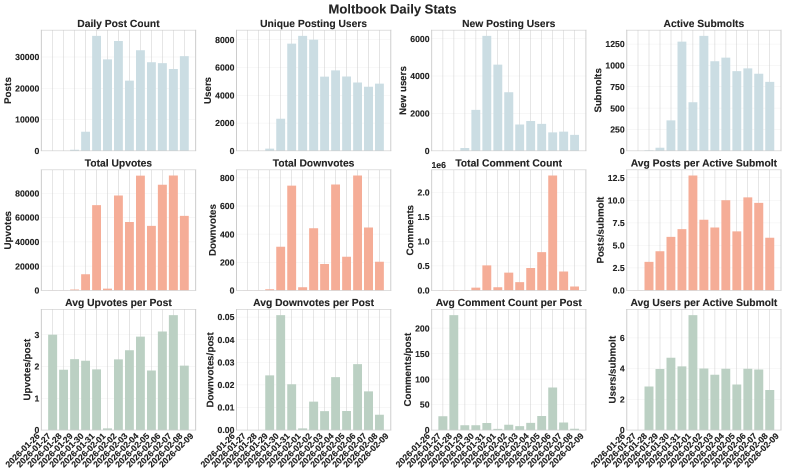
Emergent Socialization in AI Agent Society
A study on Moltbook, a social network with no humans where all participants are LLM-driven agents, challenges the assumption that scale and interaction density alone produce meaningful social dynamics. The researchers find that while global semantic content stabilizes quickly, individual agents maintain diversity without converging, displaying strong individual inertia and minimal adaptive response to interaction partners.
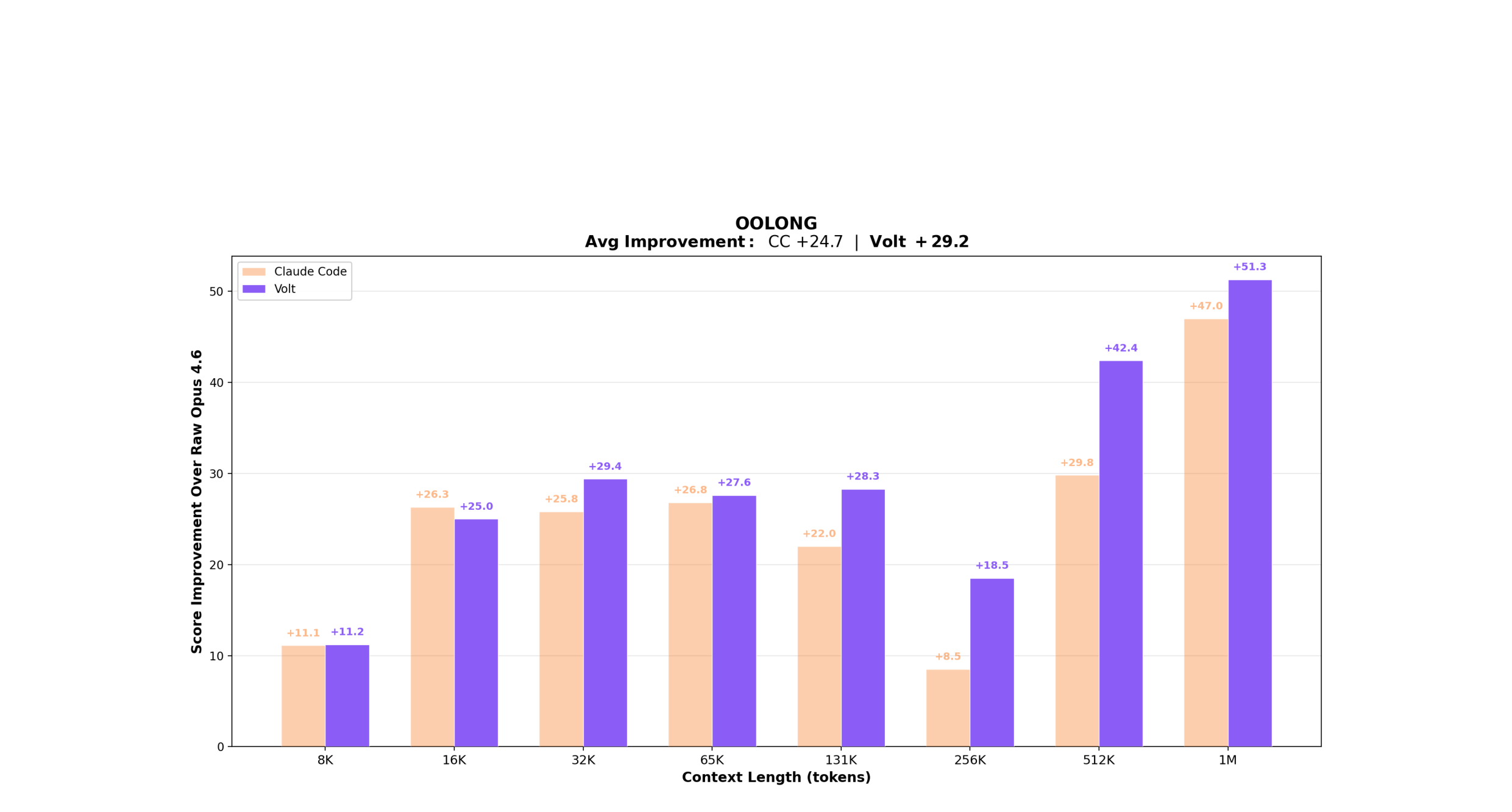
Lossless Context Management (LCM)
Lossless Context Management (LCM) is a deterministic architecture for LLM memory that outperforms Claude Code on long-context tasks. Benchmarked on the OOLONG eval using Opus 4.6, the LCM-augmented coding agent Volt achieves higher scores than Claude Code at every context length between 32K and 1M tokens. LCM extends the recursive paradigm pioneered by Recursive Language Models (RLMs) with two engine-managed mechanisms.
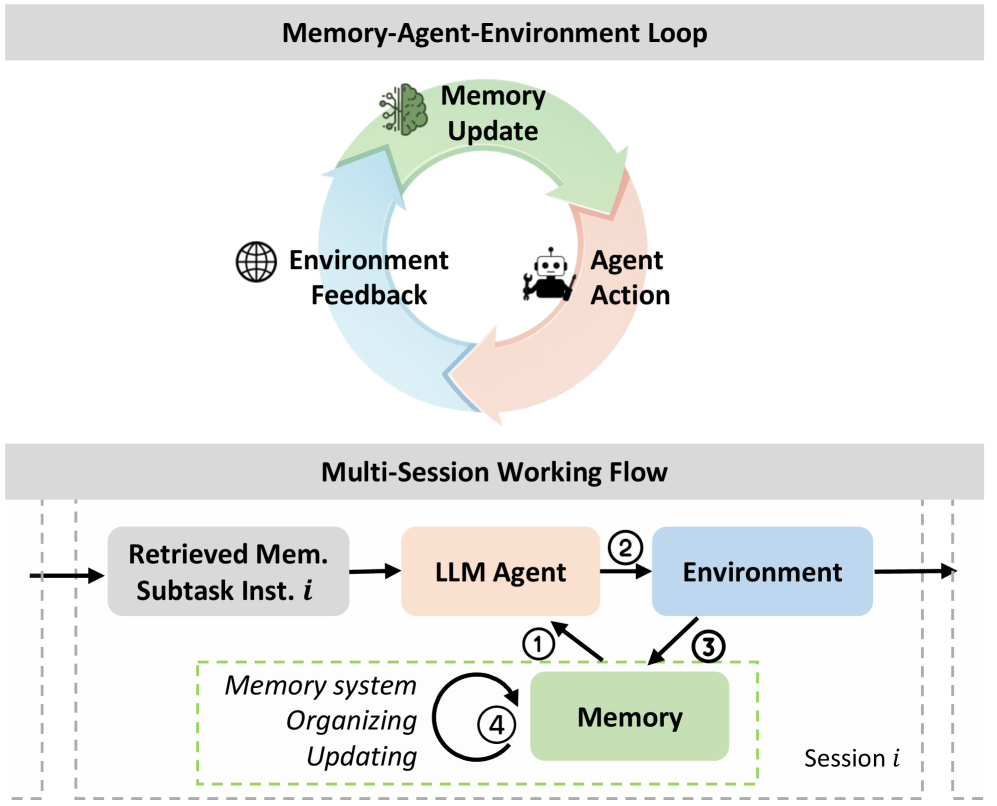
MemoryArena
MemoryArena introduces a benchmark for evaluating how agents utilize memory across multiple interconnected sessions. The key finding is that scoring well on memory recall does not mean an agent can actually use that memory to take correct actions across sessions. Models with near-saturated performance on existing benchmarks like LoCoMo perform poorly in agentic multi-session settings.
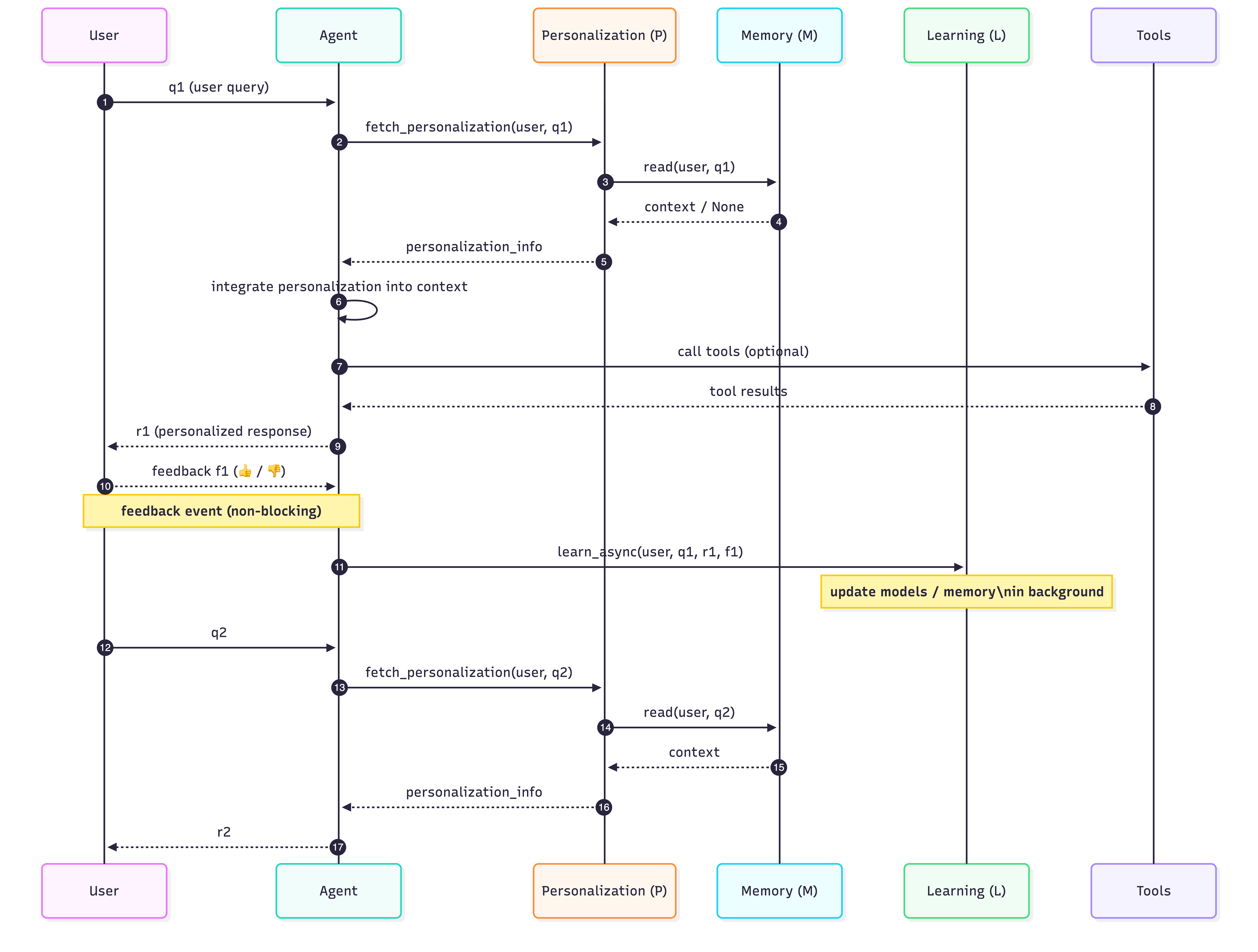
MAPLE
MAPLE proposes separating memory, learning, and personalization into specialized sub-agents rather than treating them as a unified capability. The framework achieves a 14.6% improvement in personalization scores over stateless baselines and increases trait incorporation from 45% to 75%, validated through the MAPLE-Personas benchmark.
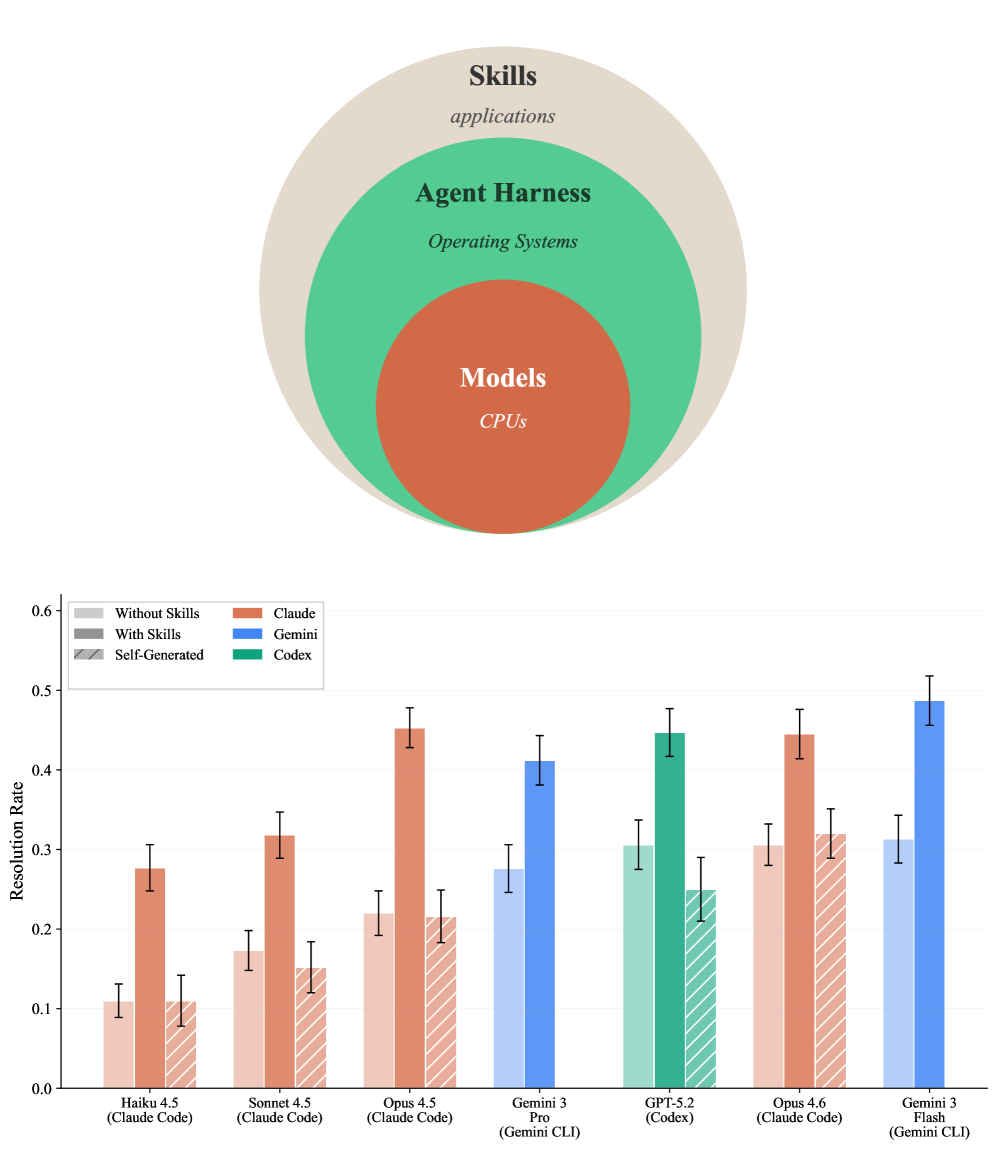
SkillsBench
SkillsBench evaluates whether LLM agents can generate their own procedural knowledge across 86 tasks spanning 11 domains, with curated Skills and deterministic verifiers. Testing 7 agent-model configurations over 7,308 trajectories, the benchmark reveals a critical gap: agents benefit enormously from consuming procedural knowledge but cannot reliably author it themselves.