AI Papers of the Week
Every paper worth reading in AI, hand-picked one week at a time.
Discover and explore top AI papers with Claude Code or Codex
npx @dair-ai/mcp setup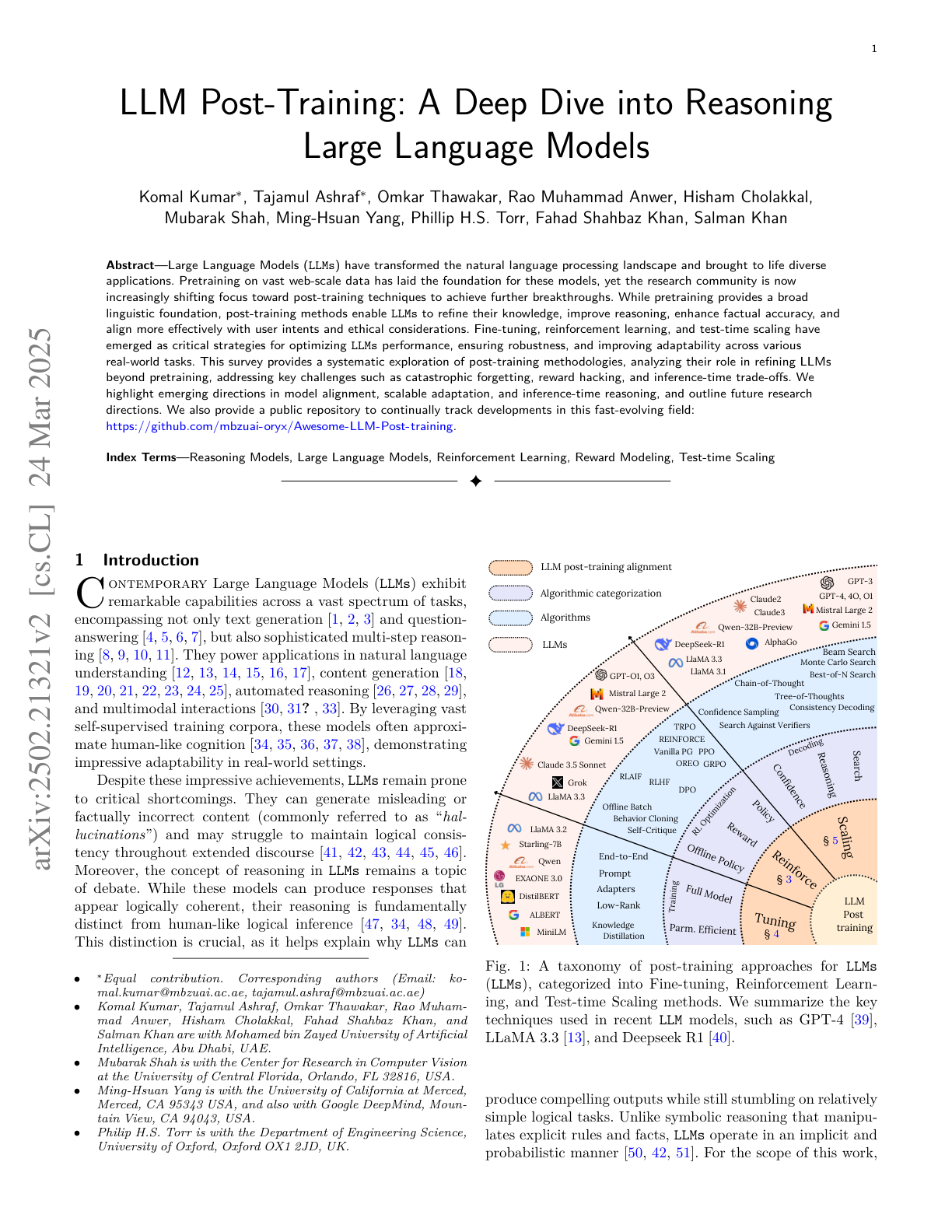
A Deep Dive into Reasoning LLMs
This survey explores how LLMs can be enhanced after pretraining through fine-tuning, reinforcement learning, and efficient inference strategies. It also highlights challenges like catastrophic forgetting, reward hacking, and ethical considerations, offering a roadmap for more capable and trustworthy AI systems.
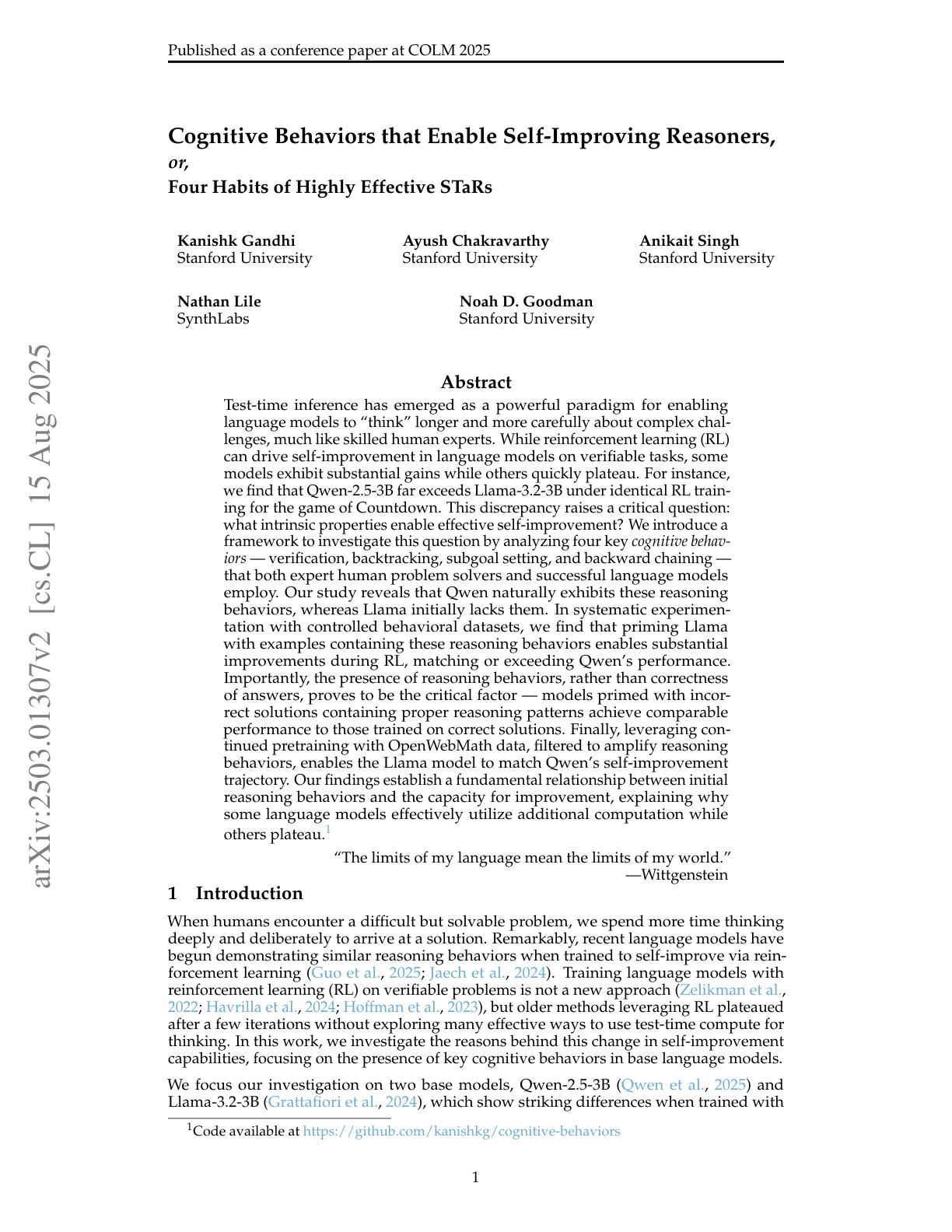
Cognitive Behaviors that Enable Self-Improving Reasoners
Researchers from Stanford University and colleagues investigate why some language models excel in reinforcement learning (RL)-based self-improvement, while others quickly plateau. The study identifies four cognitive behaviors-verification, backtracking, subgoal setting, and backward chaining-that underpin successful problem-solving in both humans and language models. Key findings:
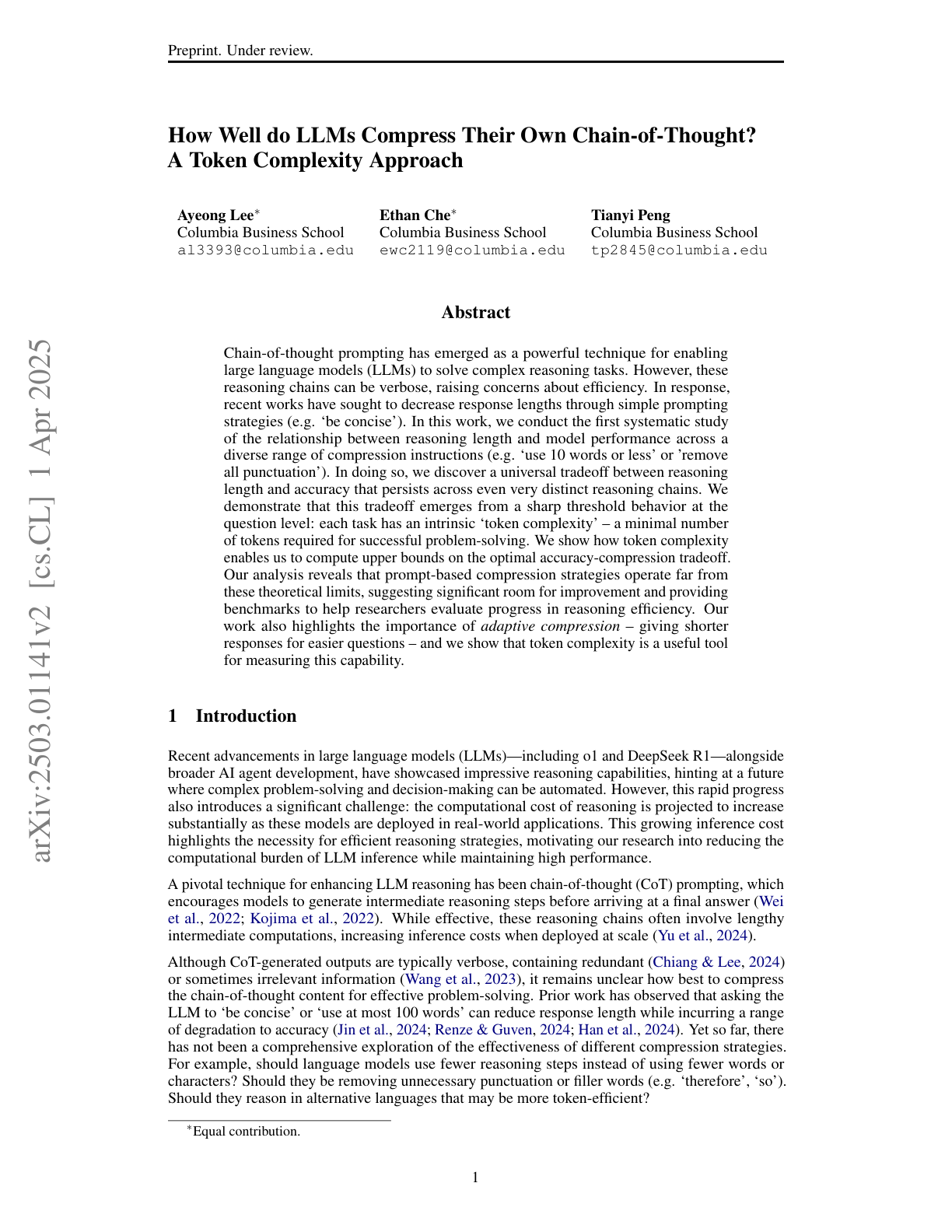
How Well do LLMs Compress Their Own Chain-of-Thought?
This new paper investigates how LLMs balance chain-of-thought (CoT) reasoning length against accuracy. It introduces token complexity, a minimal token threshold needed for correct problem-solving, and shows that even seemingly different CoT "compression prompts" (like "use bullet points" or "remove grammar") fall on the same universal accuracy-length trade-off curve. Key highlights include:
Claude 3.7 Sonnet
Anthropic releases a system card for its latest hybrid reasoning model, Claude 3.7 Sonnet, detailing safety measures, evaluations, and a new "extended thinking" mode. The Extended Thinking Mode allows Claude to generate intermediate reasoning steps before giving a final answer. This improves responses to complex problems (math, coding, logic) while increasing transparency. Key results include:
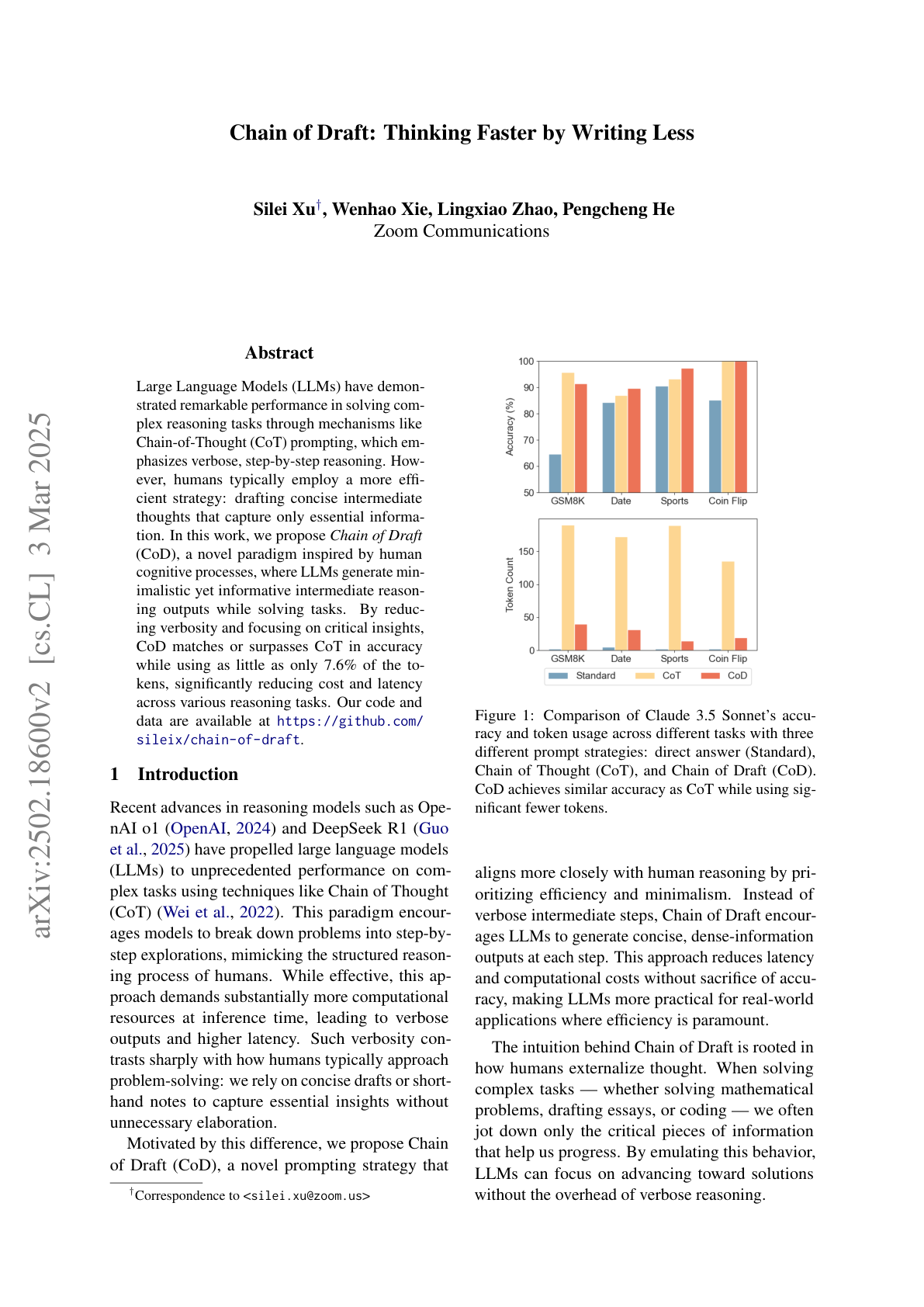
Chain-of-Draft
To address the issue of latency in reasoning LLMs, this work introduces Chain-of-Draft (CoD). Here is a quick summary of the key highlights:
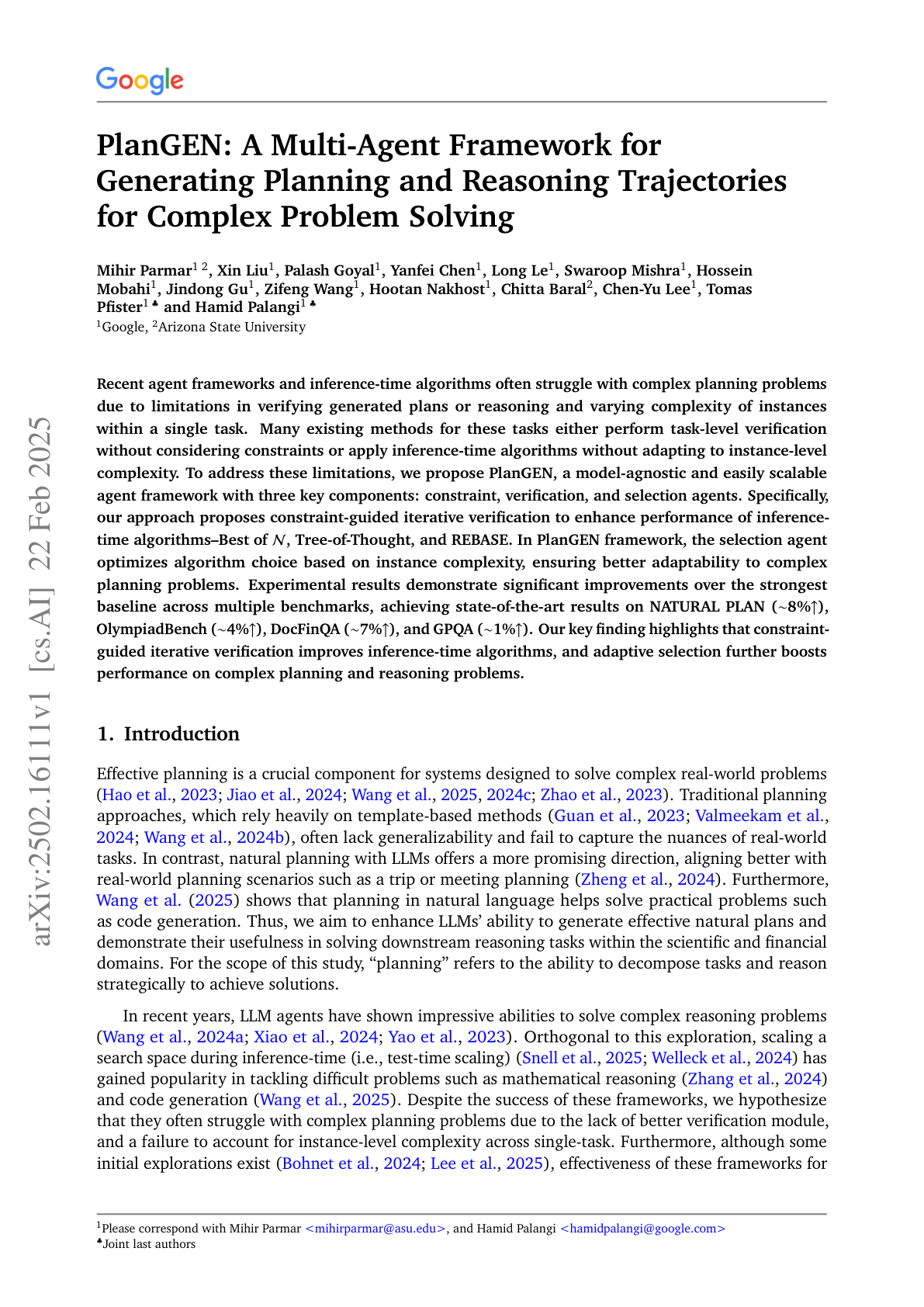
PlanGEN
PlanGEN is a multi-agent framework designed to enhance planning and reasoning in LLMs through constraint-guided iterative verification and adaptive algorithm selection. Key insights include:
AI Co-Scientist
Google introduces AI co-scientist, a multi-agent AI system built with Gemini 2.0 to help accelerate scientific breakthroughs. Key highlights:
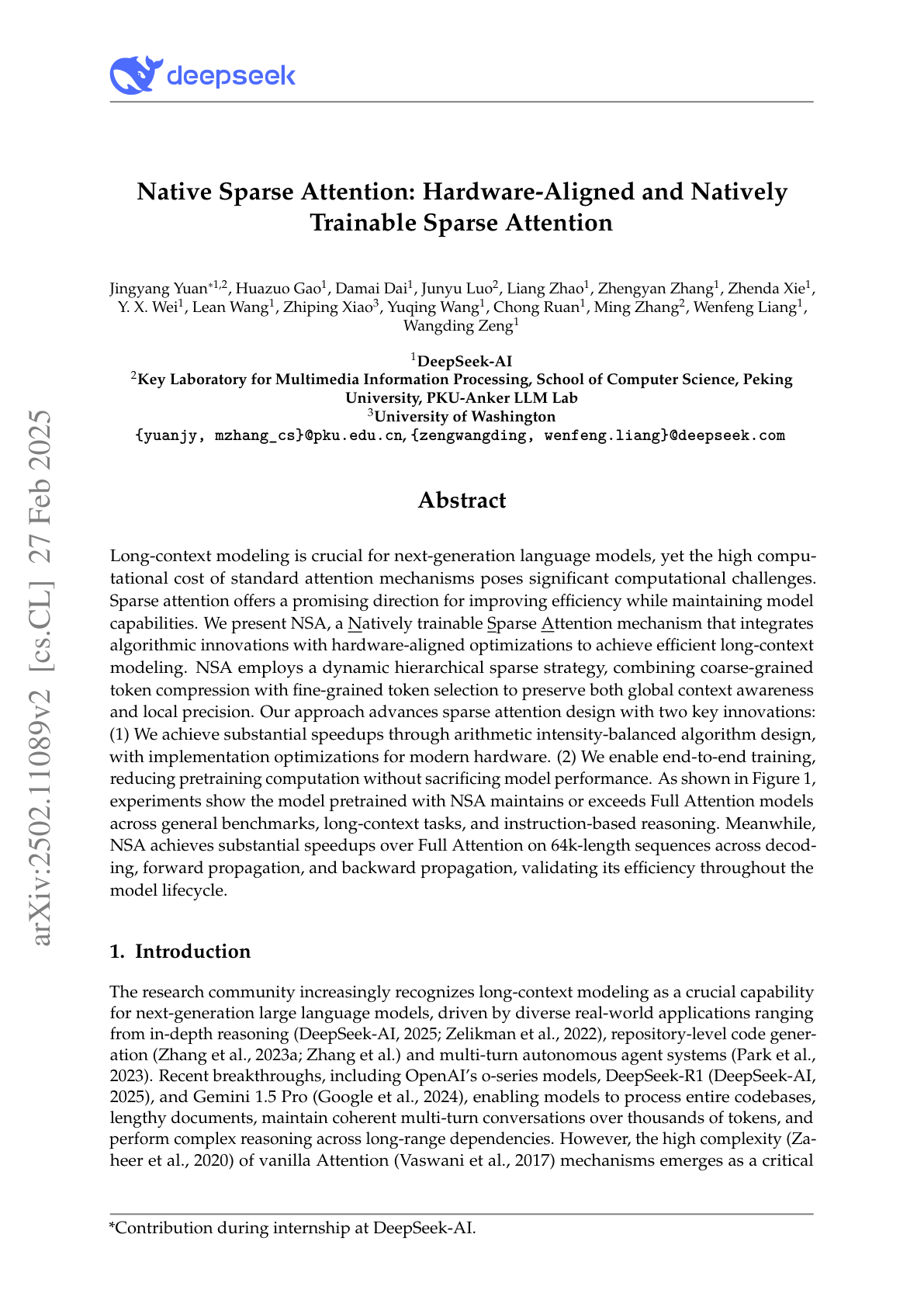
Native Sparse Attention
DeepSeek-AI and collaborators present Native Sparse Attention (NSA), a novel sparse attention mechanism designed to improve computational efficiency while maintaining model performance in long-context language modeling. Key contributions:
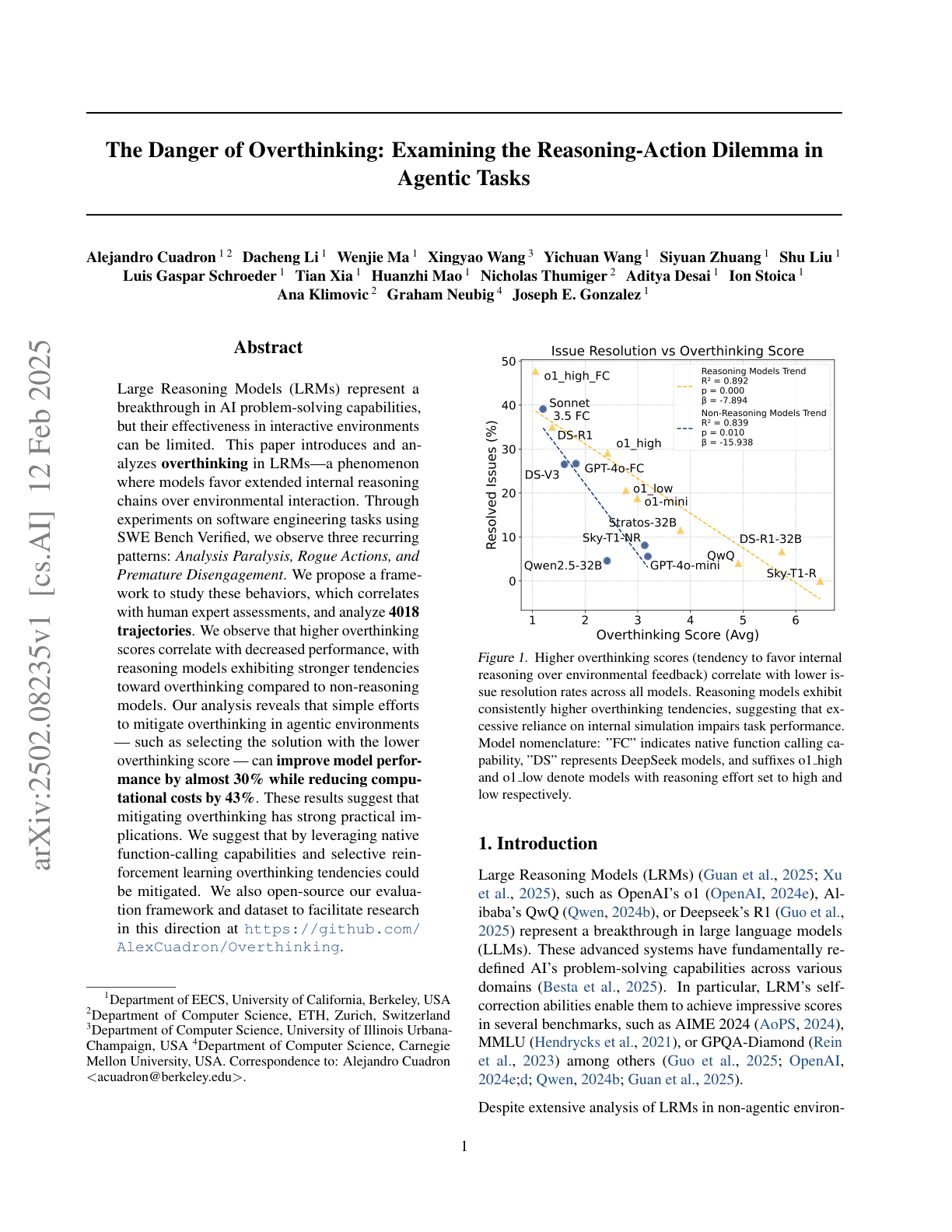
The Danger of Overthinking
This paper investigates overthinking in Large Reasoning Models (LRMs)—a phenomenon where models prioritize extended internal reasoning over interacting with their environment. Their study analyzes 4,018 software engineering task trajectories to understand how reasoning models handle decision-making in agentic settings. Key findings:
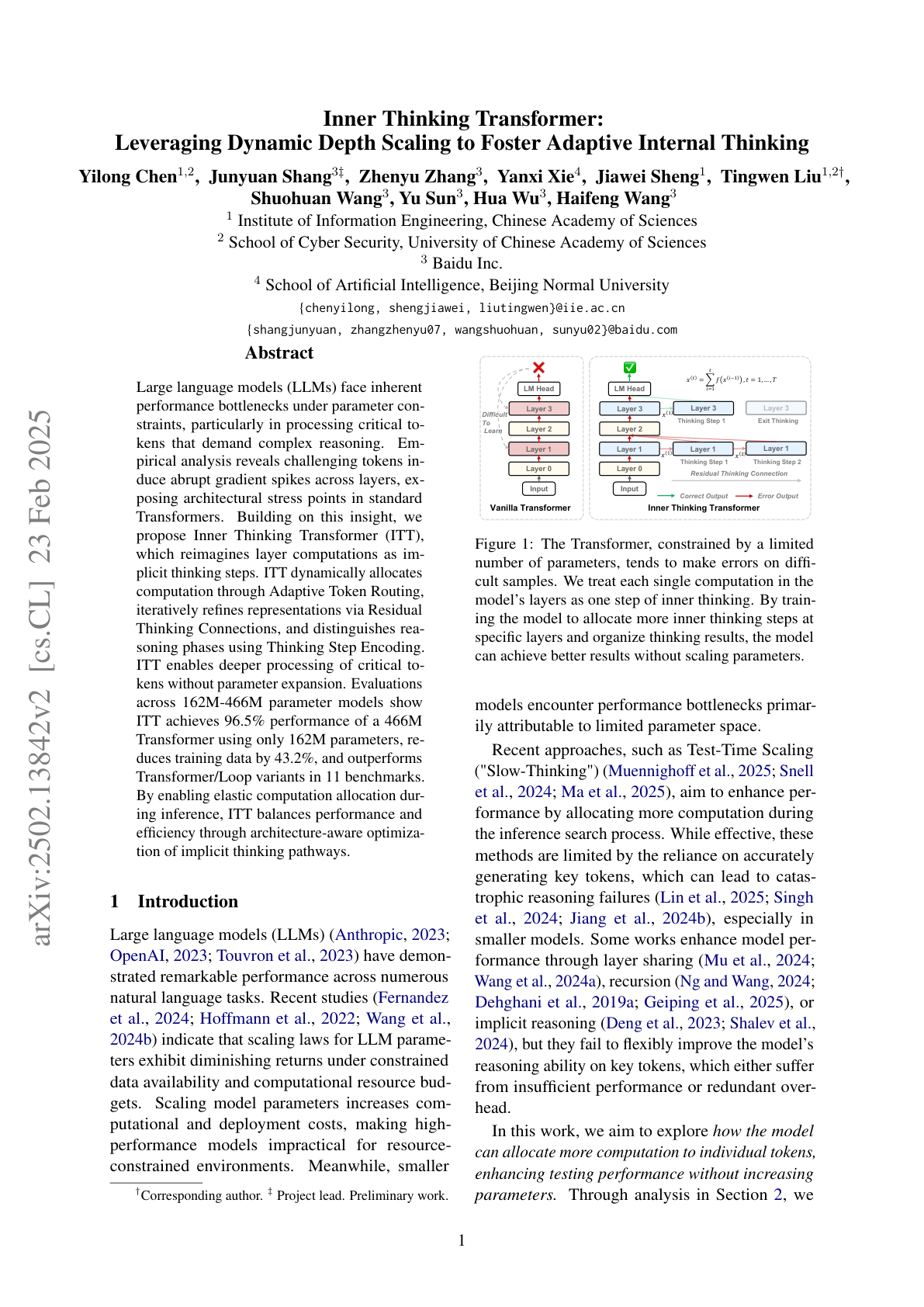
Inner Thinking Transformers
Inner Thinking Transformer (ITT) is a new method that enhances reasoning efficiency in small-scale LLMs via dynamic depth scaling. ITT aims to mitigate parameter bottlenecks in LLMs, providing scalable reasoning efficiency without expanding model size. Key contributions:
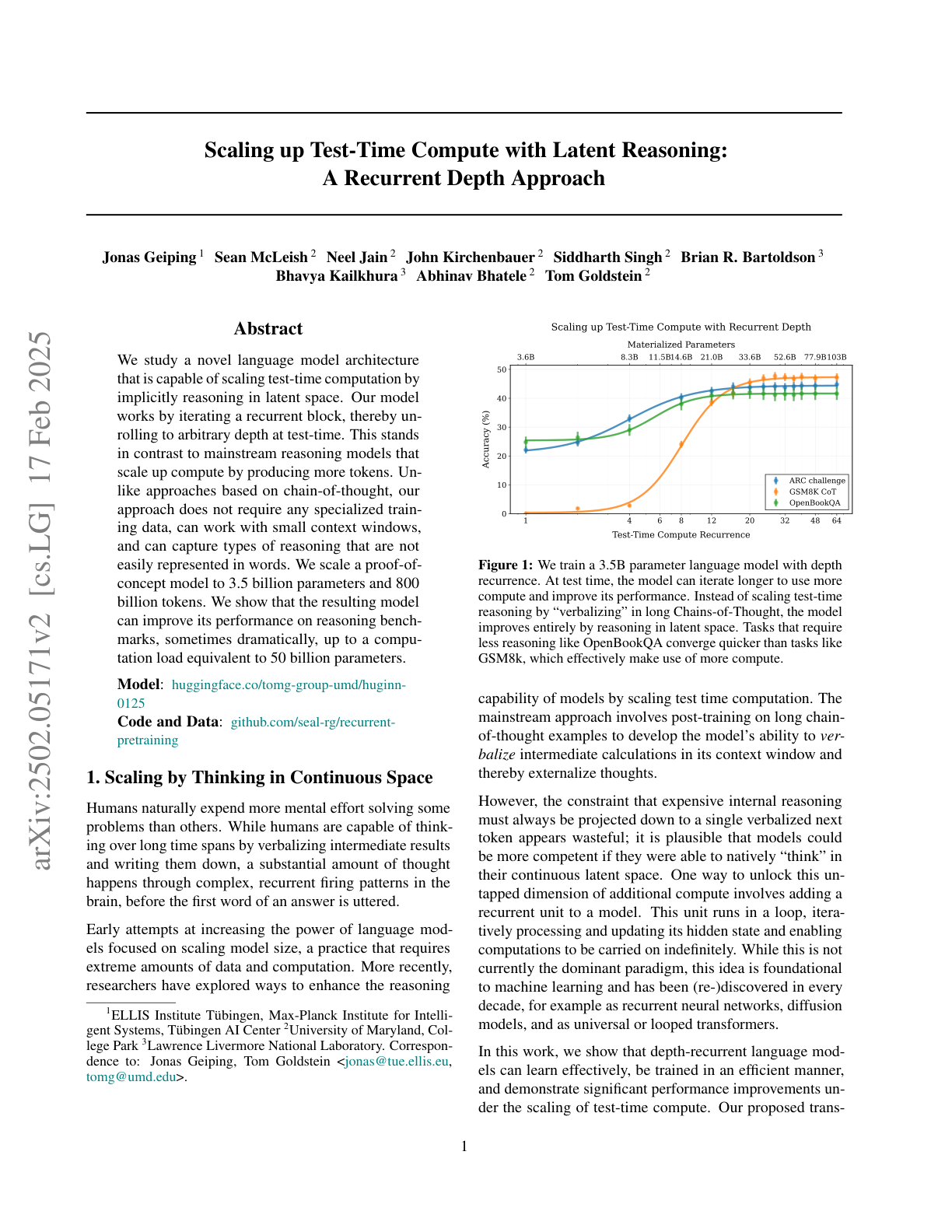
Scaling up Test-Time Compute with Latent Reasoning
This work introduces a latent recurrent-depth transformer, a model that scales test-time reasoning without relying on additional token generation. Instead of increasing the context window or fine-tuning for Chain-of-Thought (CoT), this approach enables iterative latent space reasoning at inference, achieving improvements comparable to a 50B parameter model despite having only 3.5B parameters. Key insights include:
Reinforcement Learning via Self-Play
Researchers propose Reinforcement Learning via Self-Play (RLSP) as a framework to train LLMs to “think” through complex problems. Key ideas include:
Competitive Programming with Large Reasoning Models
OpenAI’s latest study puts a specialized coding AI against a scaled-up general model on competitive programming challenges to explore efficiency vs. specialization. Key findings:
Training Language Models to Reason Efficiently
A new RL approach teaches large reasoning models to allocate their reasoning effort efficiently, reducing wasted computation on easy problems. Key points include:
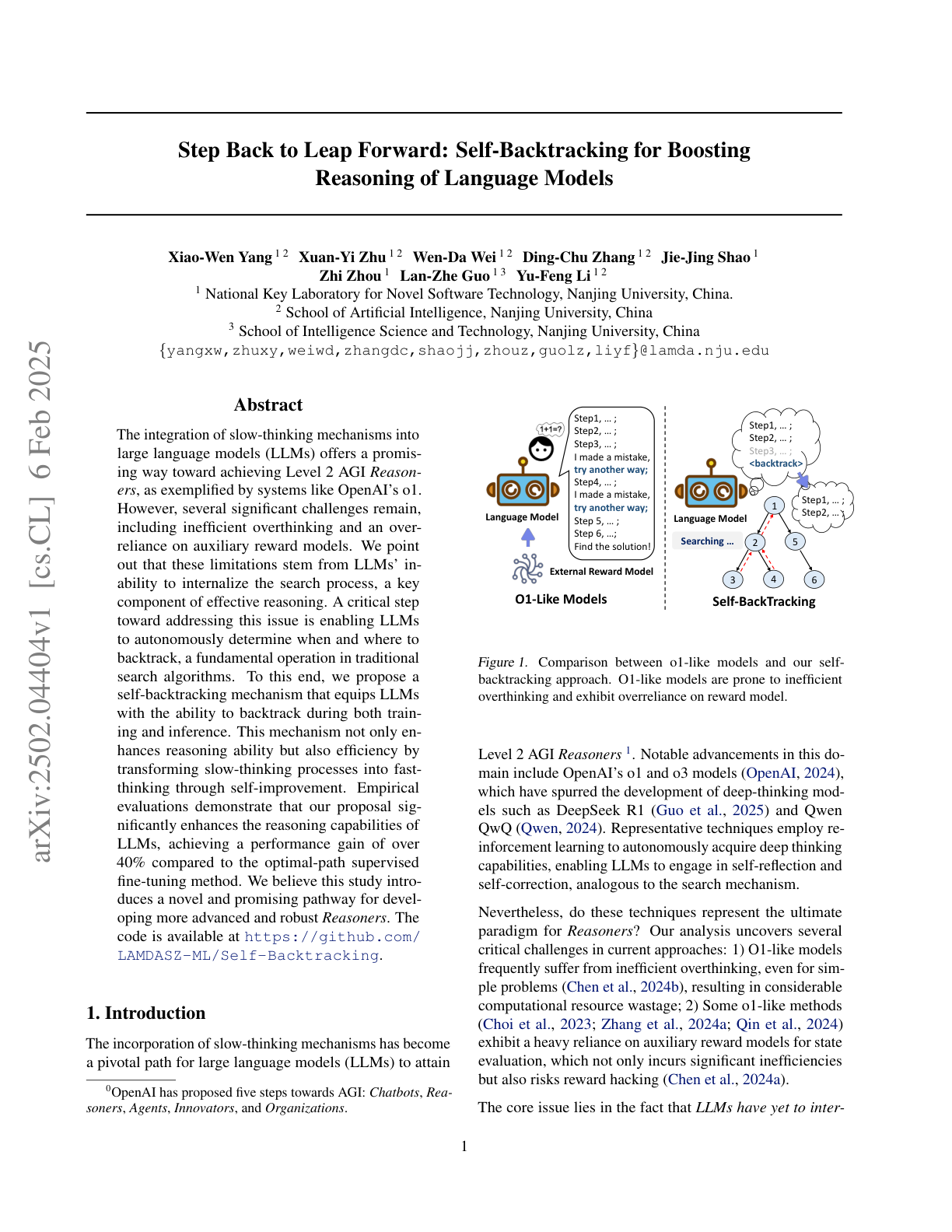
Step Back to Leap Forward
To boost the reasoning robustness of LLMs, researchers propose a “self-backtracking” mechanism that lets models revisit and revise their own intermediate reasoning steps. Key details:
Enhancing Reasoning to Adapt LLMs
Researchers from IBM present SOLOMON, a neuro-inspired LLM reasoning network architecture that boosts domain adaptability—demonstrated on semiconductor layout design. They show how LLMs often falter at spatial reasoning and domain knowledge application, and how their multi-agent oversight approach significantly improves success on challenging chip-layout tasks. Key insights include:
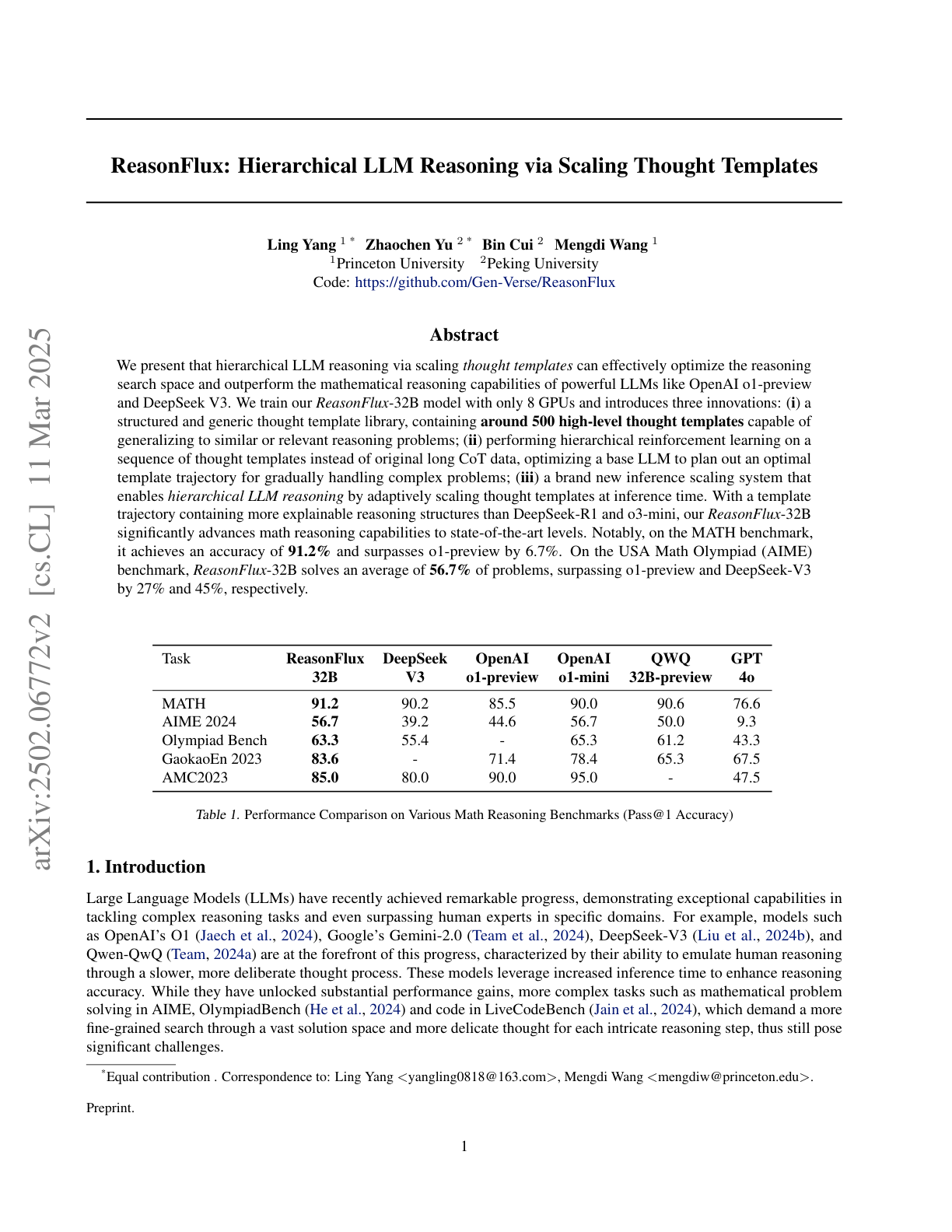
ReasonFlux
The ReasonFlux framework is introduced as an efficient way to fine-tune LLMs for complex reasoning, using hierarchical thought processes. Highlights include:
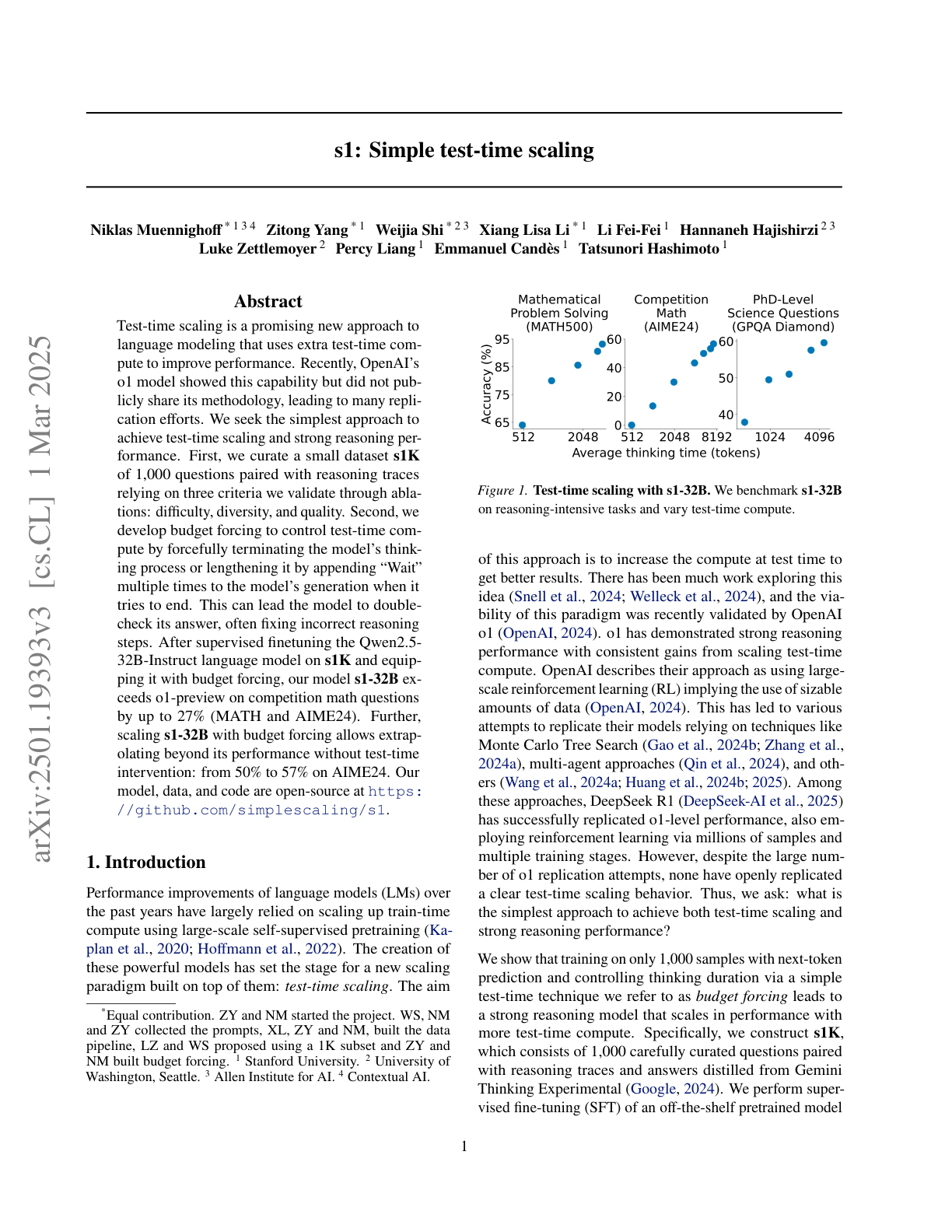
s1: Simple test-time scaling
Researchers from Stanford, UW, and others introduce s1, a method to boost LLM performance by using extra compute at inference (“test-time scaling”). Key ideas include:
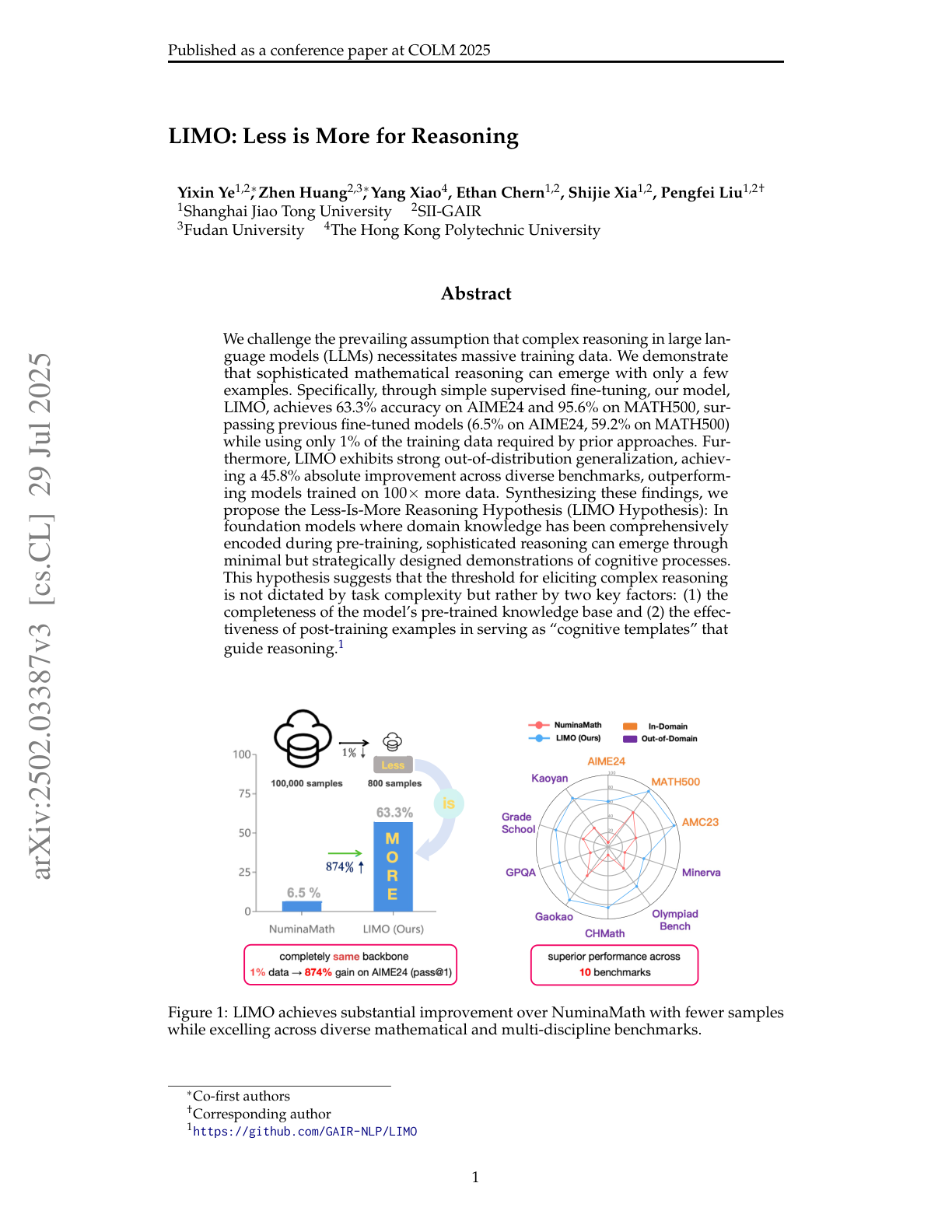
LIMO: Less Is More for Reasoning
Can a handful of examples teach complex math reasoning to LLMs? This new LIMO paper challenges the notion that we need huge fine-tuning datasets for tough reasoning tasks. Key findings:
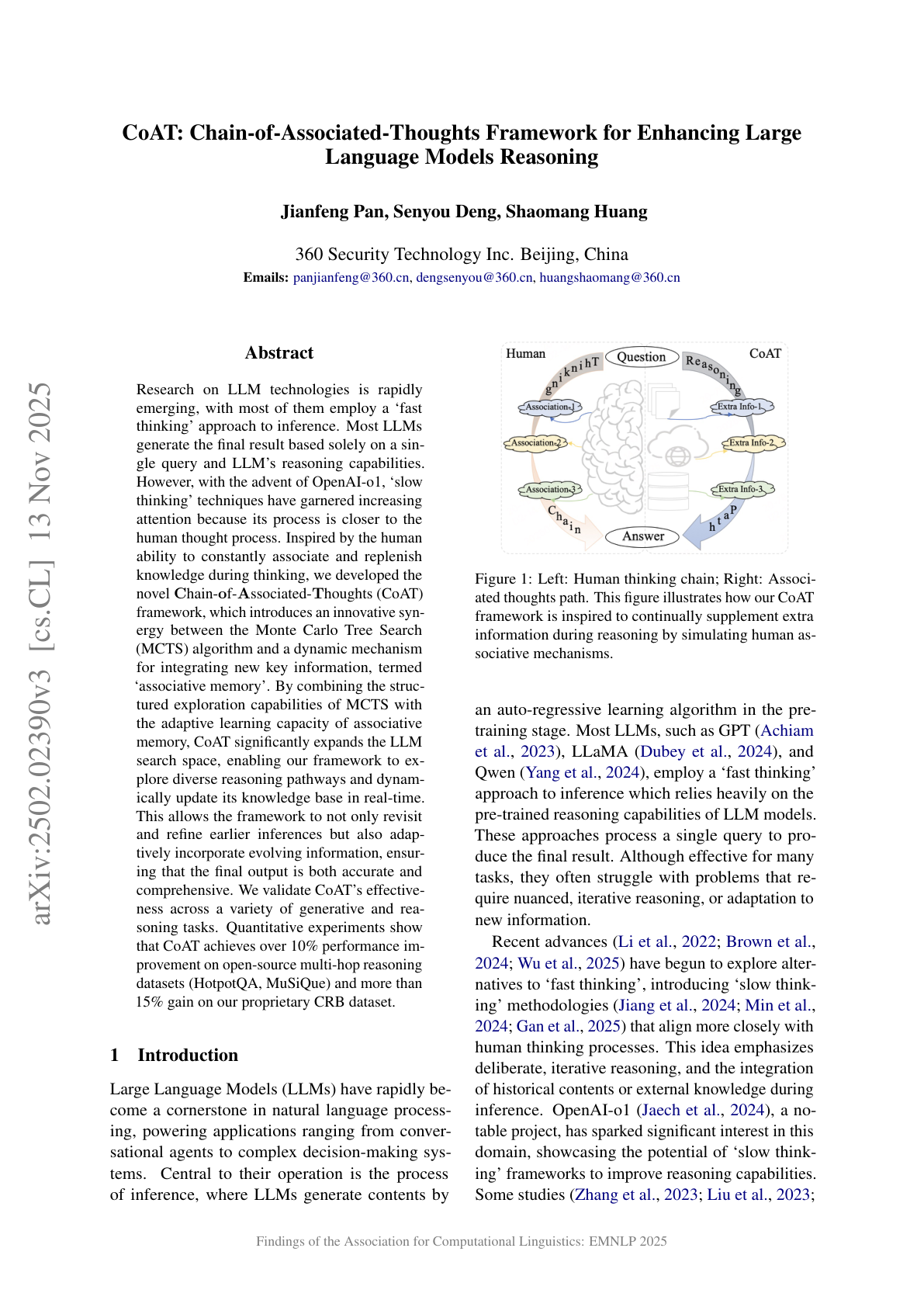
CoAT: Chain-of-Associated-Thoughts for LLM Reasoning
This work introduces CoAT, a new “slow thinking” inference framework that enables an LLM to reason more like a human by exploring and updating its thoughts. Main components:
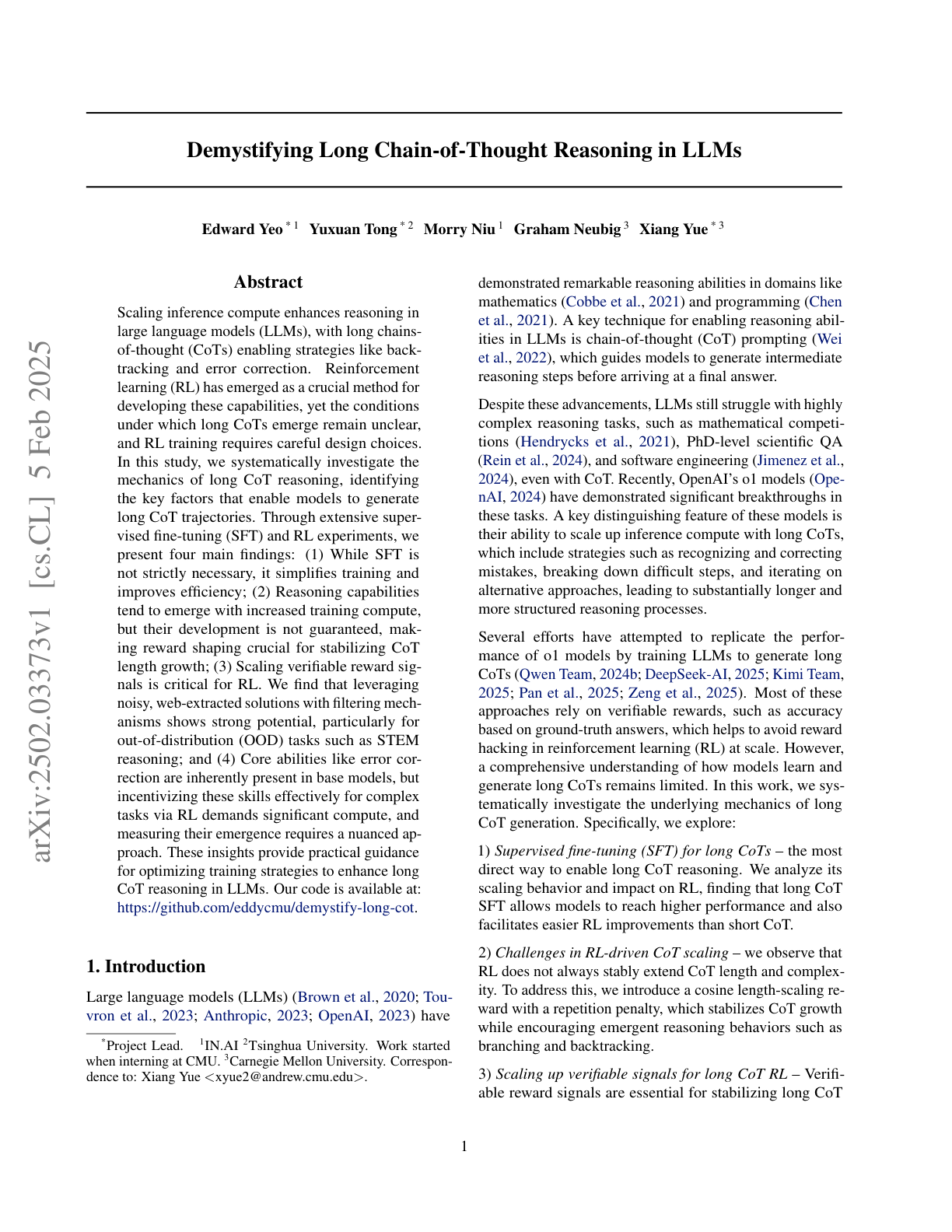
Demystifying Long Chain-of-Thought Reasoning in LLMs
This work investigates how LLMs develop extended CoT reasoning, focusing on RL and compute scaling. Key insights include:
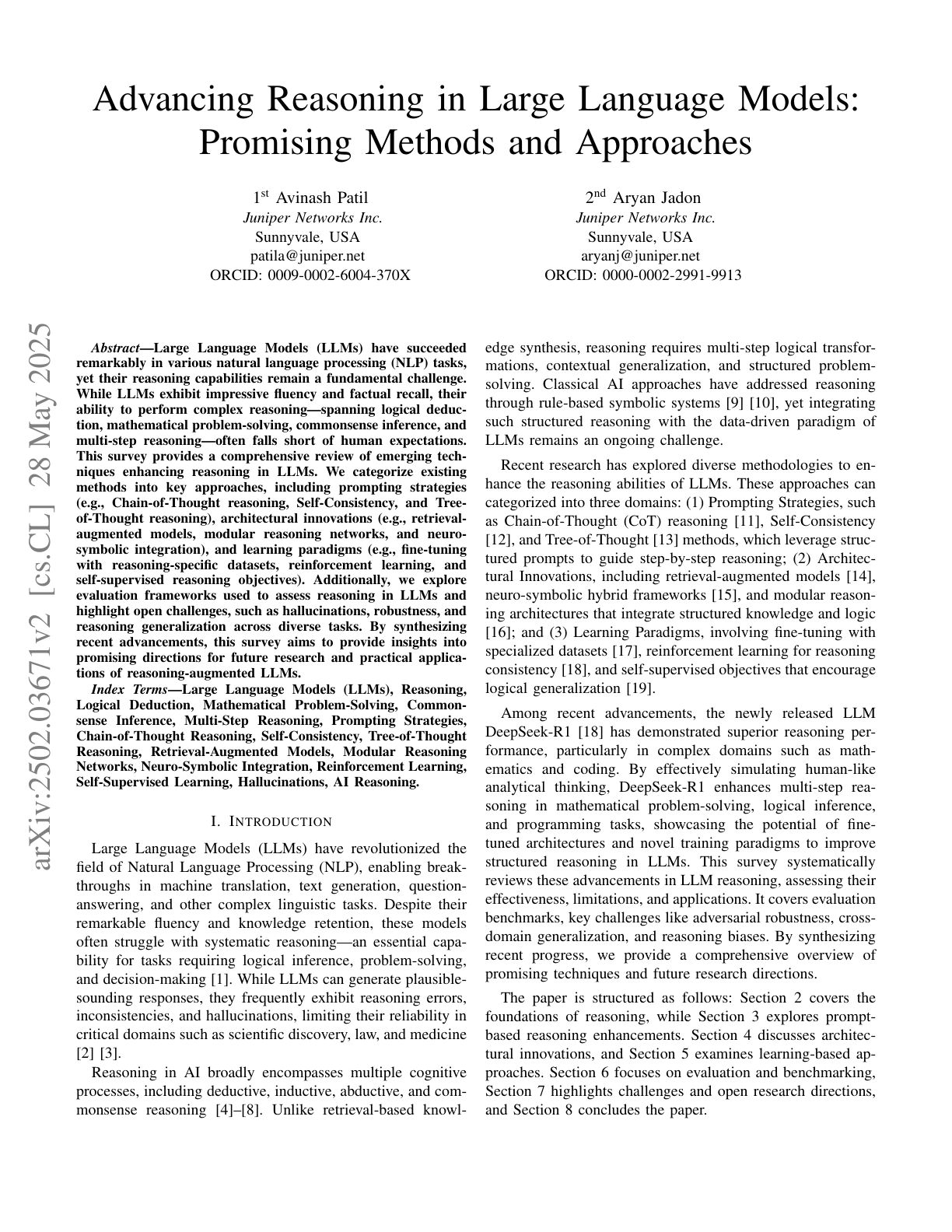
Advancing Reasoning in LLMs
This survey paper provides a timely overview of emerging methods to enhance reasoning capabilities in LLMs. It organizes the literature into several key approach categories:

o3-mini
OpenAI has launched o3-mini, their newest cost-efficient reasoning model, available in ChatGPT and API. The model excels in STEM-related tasks, particularly in science, math, and coding, while maintaining the low cost and reduced latency of its predecessor o1-mini. It introduces key developer features like function calling, Structured Outputs, and developer messages, making it production-ready from launch. o3-mini includes different reasoning effort levels (low, medium, and high) and improves performance across a wide range of tasks. It delivered responses 24% faster than o1-mini and achieved notable results in competition math, PhD-level science questions, and software engineering tasks.
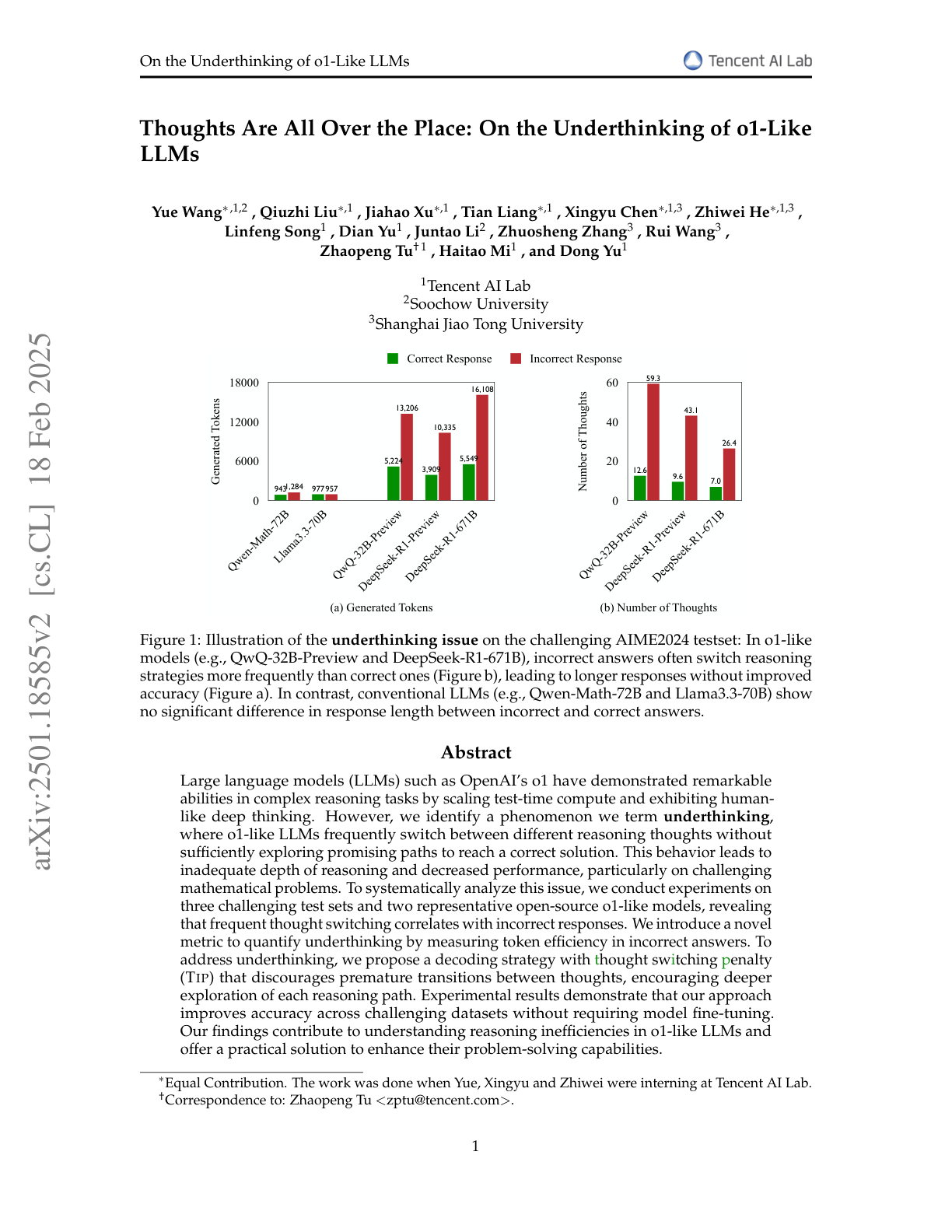
On the Underthinking of o1-like LLMs
This work looks more closely at the "thinking" patterns of o1-like LLMs. We have seen a few recent papers pointing out the issues with overthinking. There is now a new phenomenon called underthinking! What is it about? The authors find that o1-like LLMs frequently switch between different reasoning thoughts without sufficiently exploring promising paths to reach a correct solution.