AI Papers of the Week
Every paper worth reading in AI, hand-picked one week at a time.
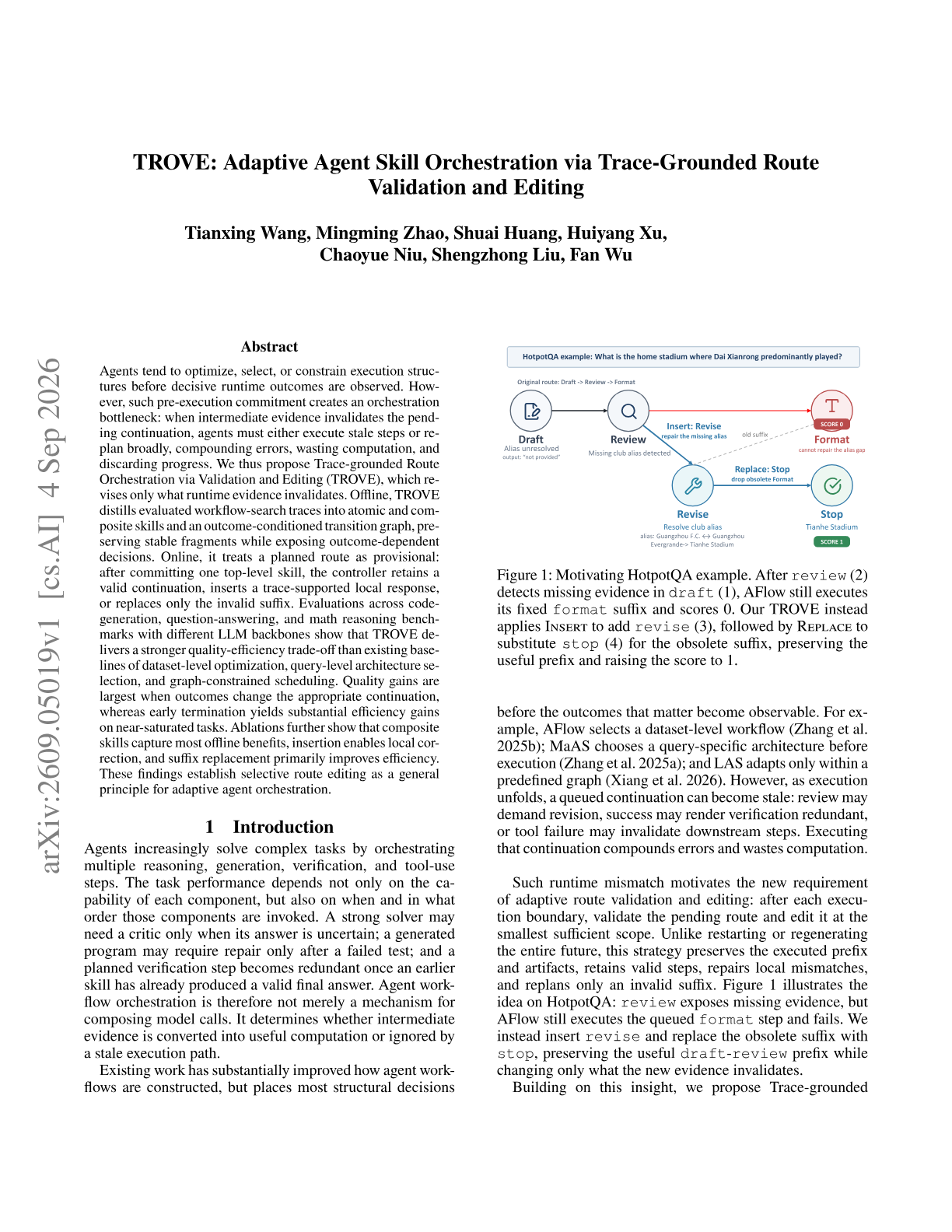
TROVE: Adaptive Agent Skill Orchestration via Trace-Grounded Route Validation and Editing
Tianxing Wang and colleagues at Shanghai Jiao Tong argue that agent orchestration fails because the plan is committed before runtime evidence arrives, and propose revising only the part of a route that evidence has invalidated.
CONTINUITY: Security-Context Contracts for Composable LLM Agent Controls
Chris Zheng and Geng Yang name a failure mode where individually correct agent security controls stop composing, and build a contract framework that carries authenticated security context across component boundaries.
Testing Interchangeability in LLM Agent Teams
Jianxin Gao and colleagues test the production assumption that one agent filling a role can be swapped for any other agent that can do the job, and find the cost shows up in coordination rather than in task score.
TruthInsightBench: An Evidence-Grounded Benchmark for Automated Evaluation of Open-Ended Scientific Discovery Agents
Zhibo Yang and colleagues build a benchmark for scientific discovery rather than reproduction: agents see a neutral objective and frozen data, with the source study's conclusions, expected values, and analysis path withheld.
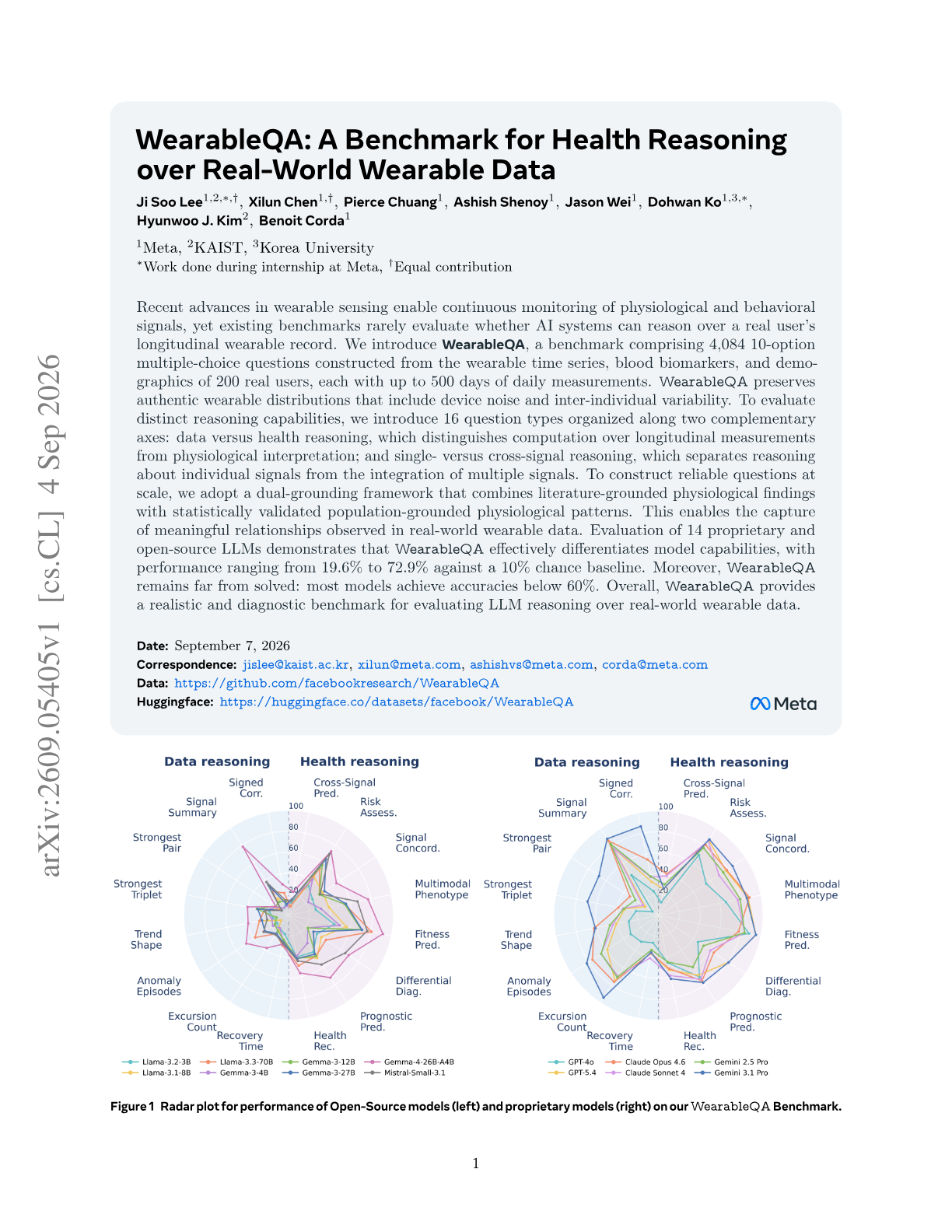
WearableQA: A Benchmark for Health Reasoning over Real-World Wearable Data
Ji Soo Lee and colleagues at Meta and KAIST build WearableQA from the wearable time series, blood biomarkers, and demographics of 200 real users with up to 500 days of daily measurements each.
LLM-Guided Program Evolution for Circle Packing: Breaking 10 Packomania Records for $28
Wes Sander at Practical Systems runs an LLM-guided evolutionary loop over optimization algorithms and improves 10 published Packomania circle-packing records for a total LLM spend of $27.72.
Design Docs Are All You Need: An AI-native Machine-Learning Performance Tool
Google DeepMind, MIT, and colleagues maintain a performance-modeling library called SMART whose main branch contains almost no code. The repository is a directed graph of natural-language design docs, and coding sub-agents regenerate the entire implementation from those docs whenever a version updates.
RefactorPlatform: An Open-Source Harness for Controlled Evaluation of Repository-Scale Refactoring Agents
Aziz Ben Amor and colleagues at Pi School release RefactorPlatform, an evaluation harness that holds the environment fixed and varies one coding-agent design axis at a time on 100 repository-scale RefactorBench tasks.
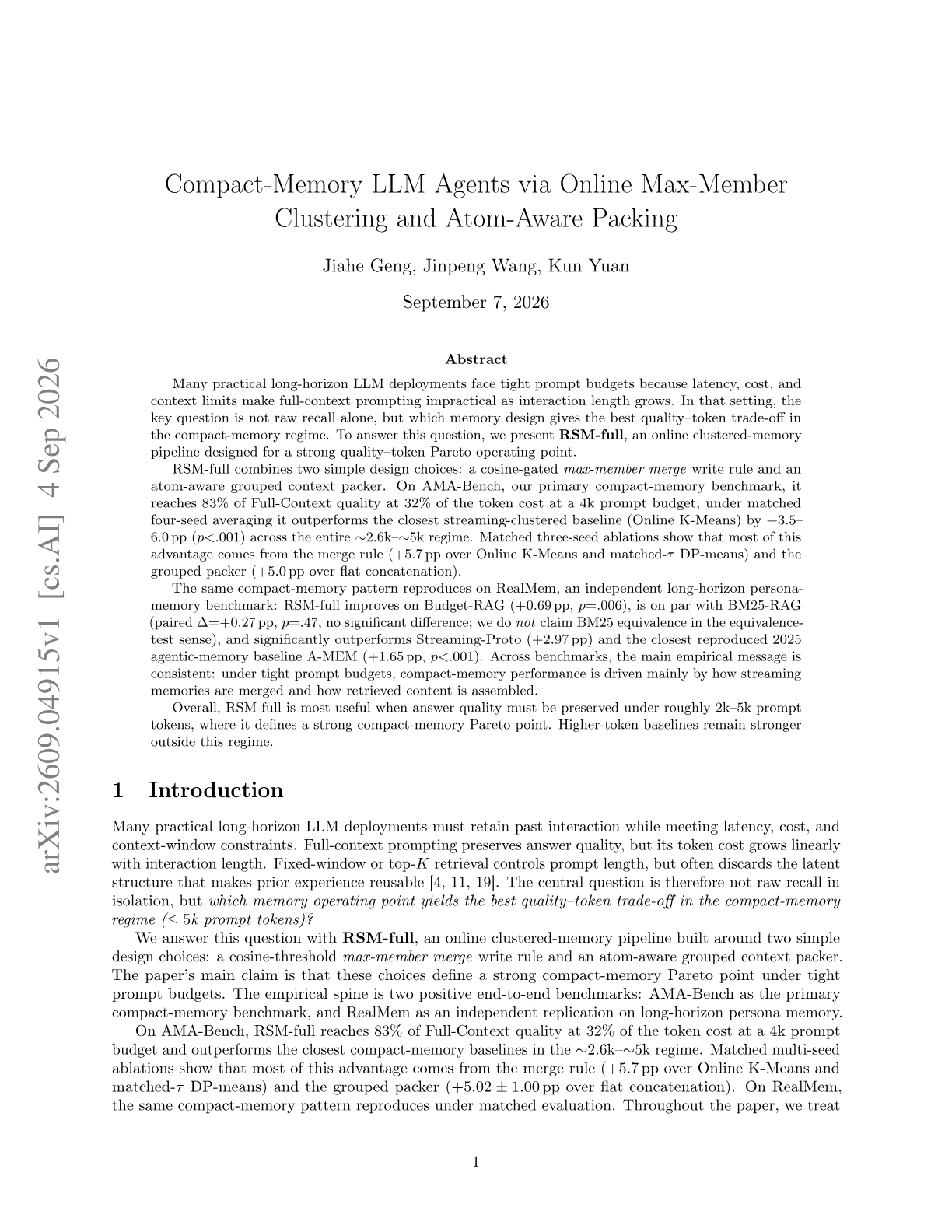
Compact-Memory LLM Agents via Online Max-Member Clustering and Atom-Aware Packing
Jiahe Geng, Jinpeng Wang and Kun Yuan build RSM-full, an online clustered-memory pipeline for LLM agents operating under a 2k to 5k prompt-token budget, and show the gain comes from how memories are merged and packed rather than from raw recall.
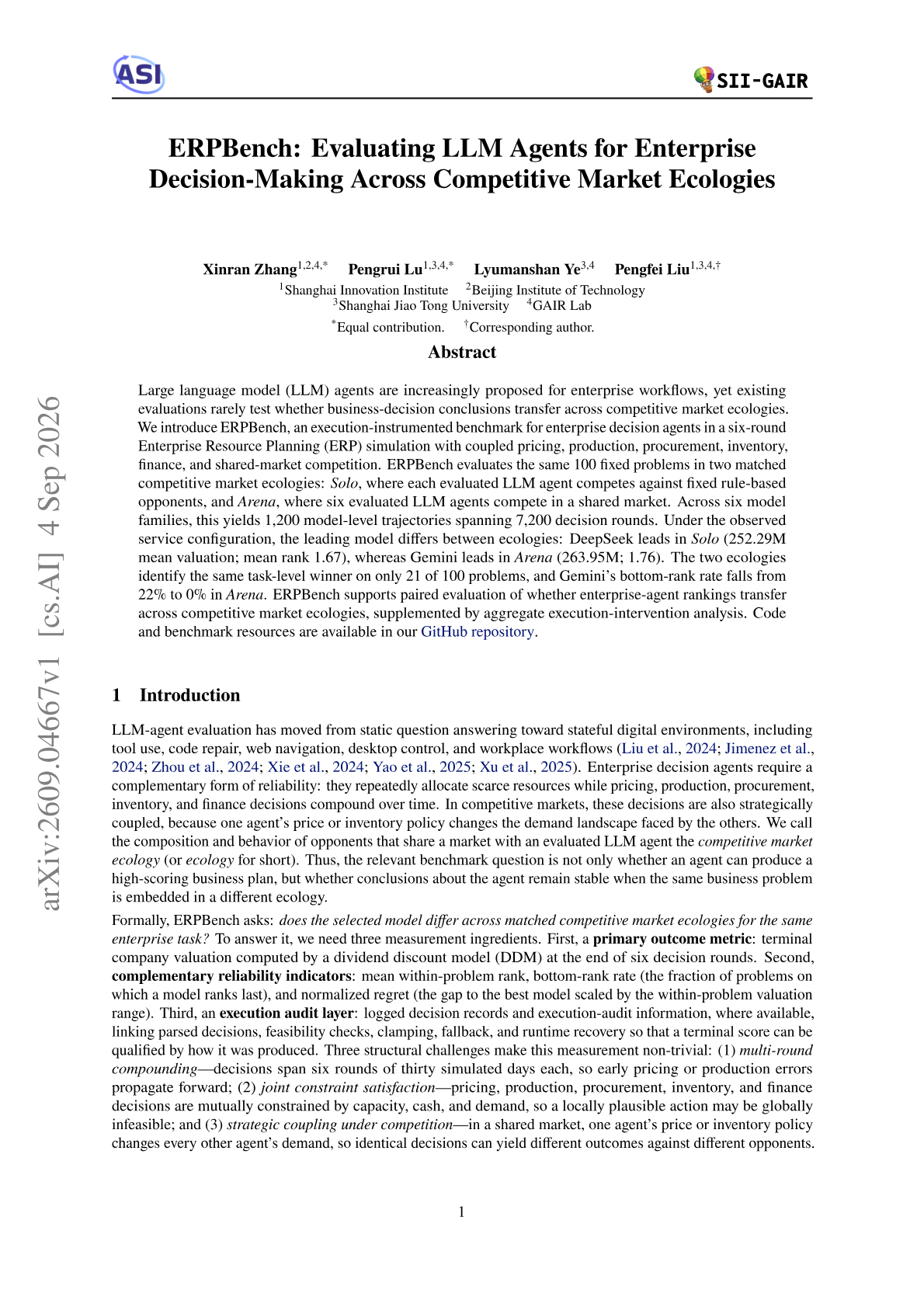
ERPBench: Evaluating LLM Agents for Enterprise Decision-Making Across Competitive Market Ecologies
Xinran Zhang and colleagues at GAIR ask whether enterprise-agent rankings survive a change in who the agent is competing against, and find they largely do not.
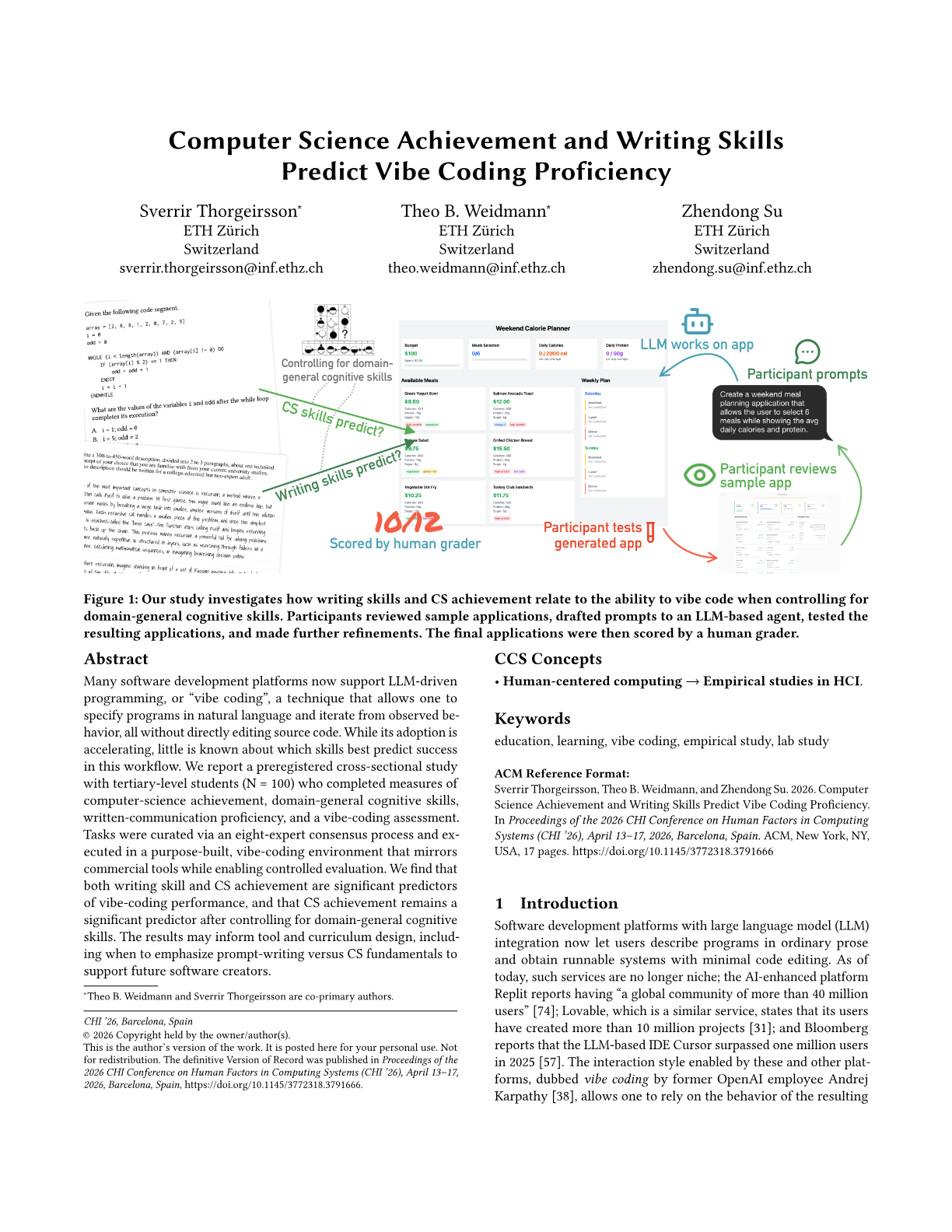
Computer Science Achievement and Writing Skills Predict Vibe Coding Proficiency
Sverrir Thorgeirsson, Theo B. Weidmann and Zhendong Su at ETH Zurich run a preregistered cross-sectional study of 100 tertiary-level students to find out which measured skills predict how well someone performs at vibe coding.
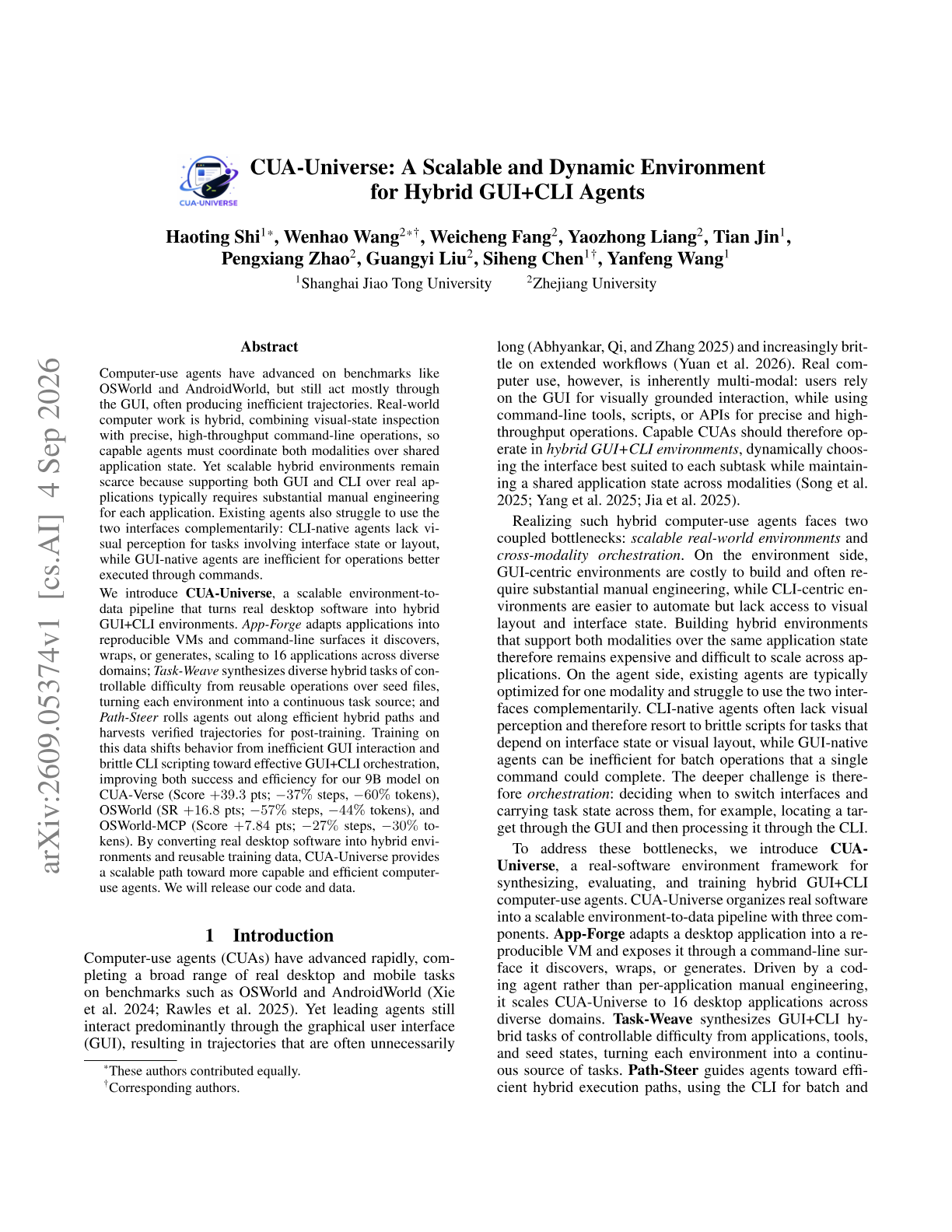
CUA-Universe: A Scalable and Dynamic Environment for Hybrid GUI+CLI Agents
Haoting Shi and colleagues at Shanghai Jiao Tong build a pipeline that converts real desktop software into environments where an agent can act through both the GUI and the command line over shared application state.
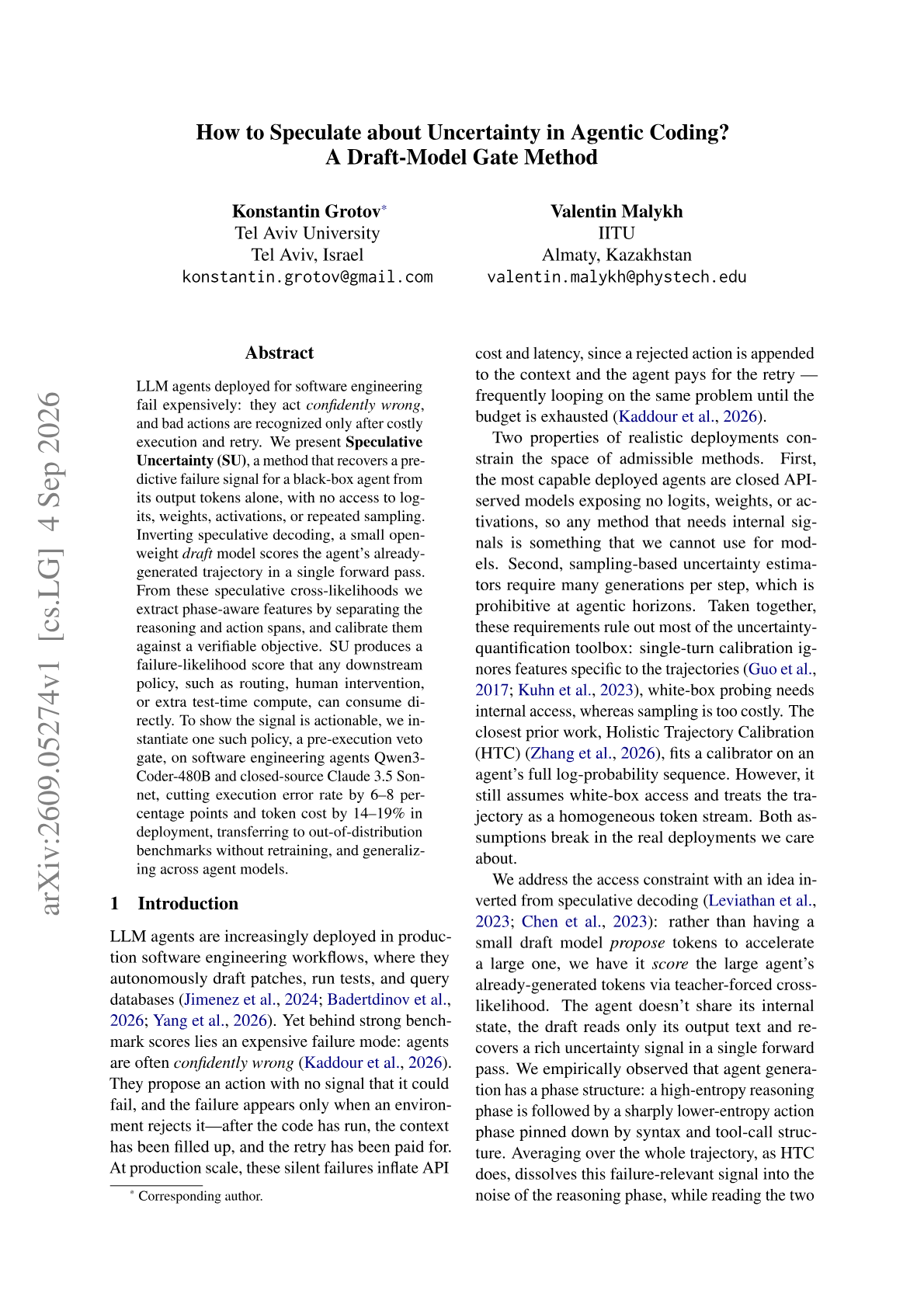
How to Speculate about Uncertainty in Agentic Coding? A Draft-Model Gate Method
Konstantin Grotov and Valentin Malykh derive a failure-prediction signal for a black-box coding agent from its output tokens alone, by running a small draft model over the agent's already-generated trajectory in one forward pass.
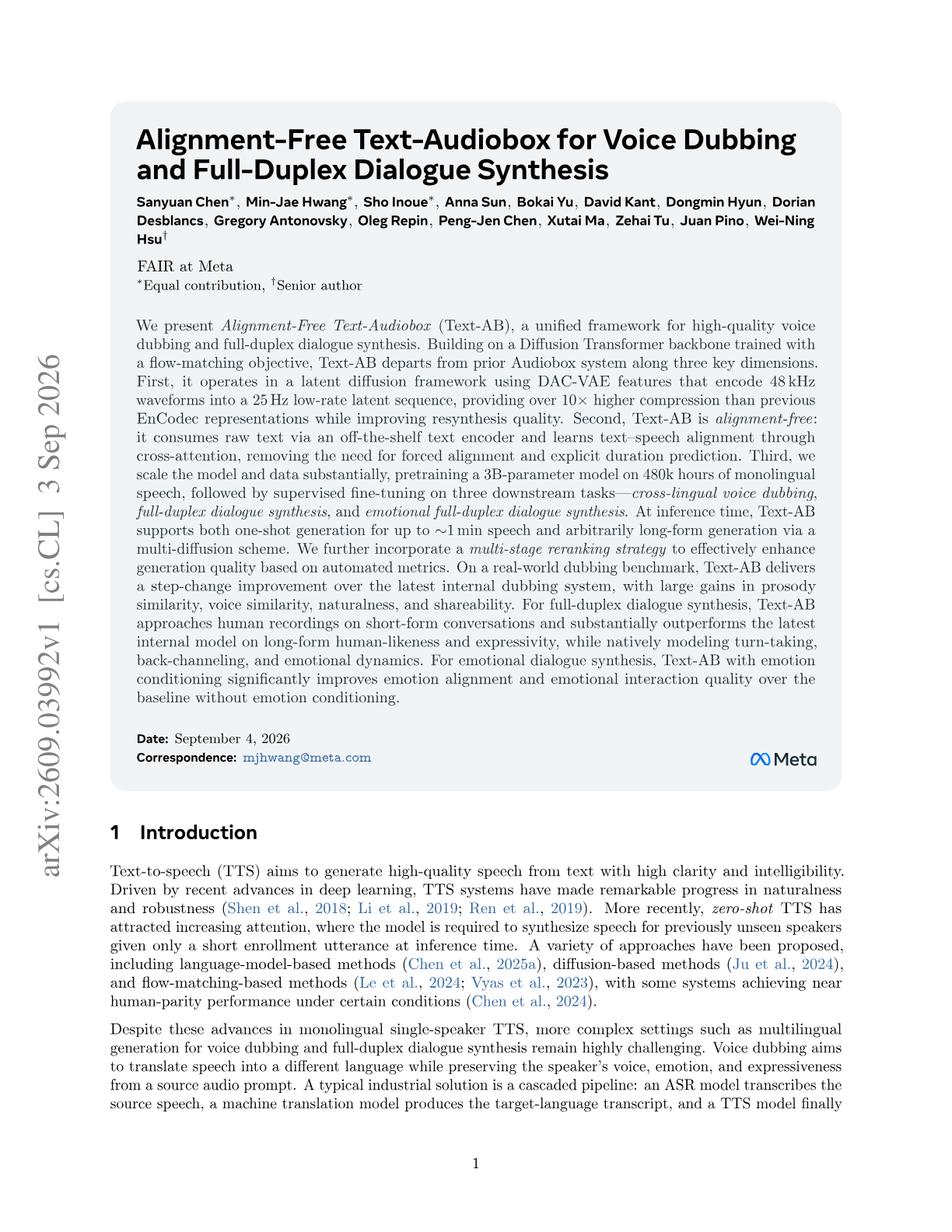
Alignment-Free Text-Audiobox for Voice Dubbing and Full-Duplex Dialogue Synthesis
Sanyuan Chen and colleagues at FAIR at Meta present Text-AB, a 3B latent-diffusion speech model that removes the forced-alignment stage from the Audiobox line and handles dubbing and two-speaker dialogue in one system.
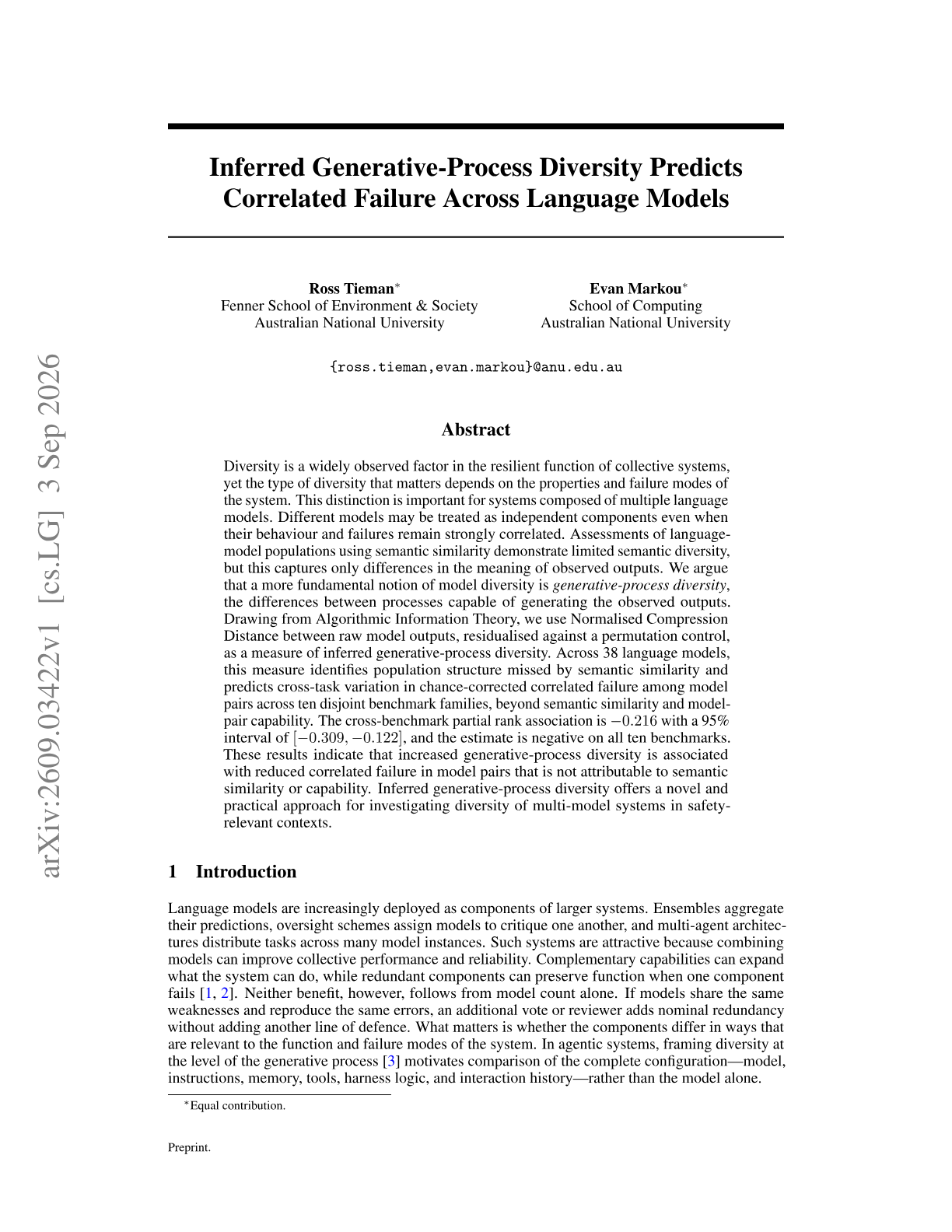
Inferred Generative-Process Diversity Predicts Correlated Failure Across Language Models
Ross Tieman and Evan Markou argue that semantic similarity is the wrong diversity measure for populations of language models, and use compression distance between raw outputs to recover the structure that predicts correlated failure.
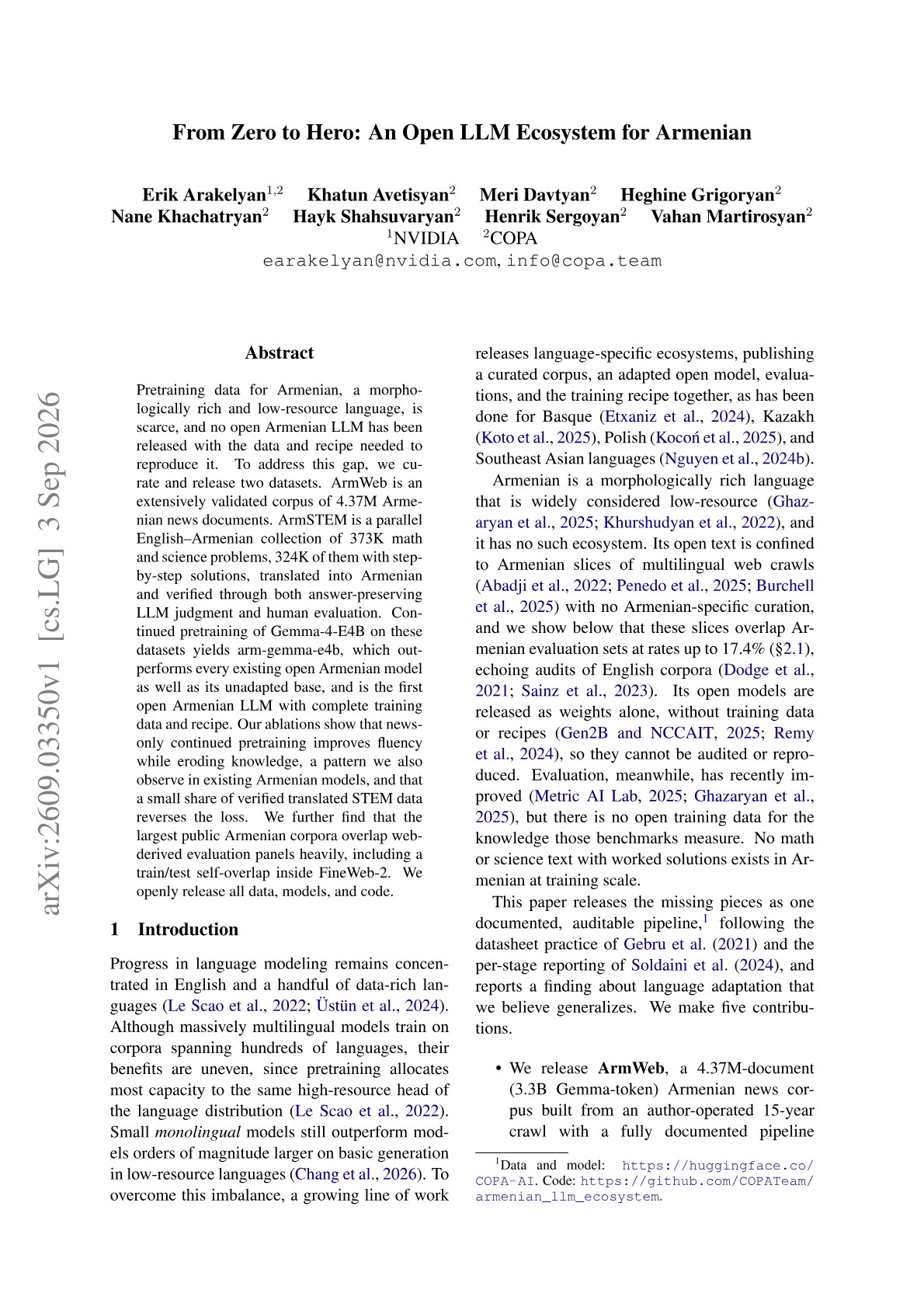
From Zero to Hero: An Open LLM Ecosystem for Armenian
Erik Arakelyan and colleagues at NVIDIA and COPA release the first open Armenian LLM published together with the data and recipe needed to reproduce it, and report a data-contamination finding along the way.
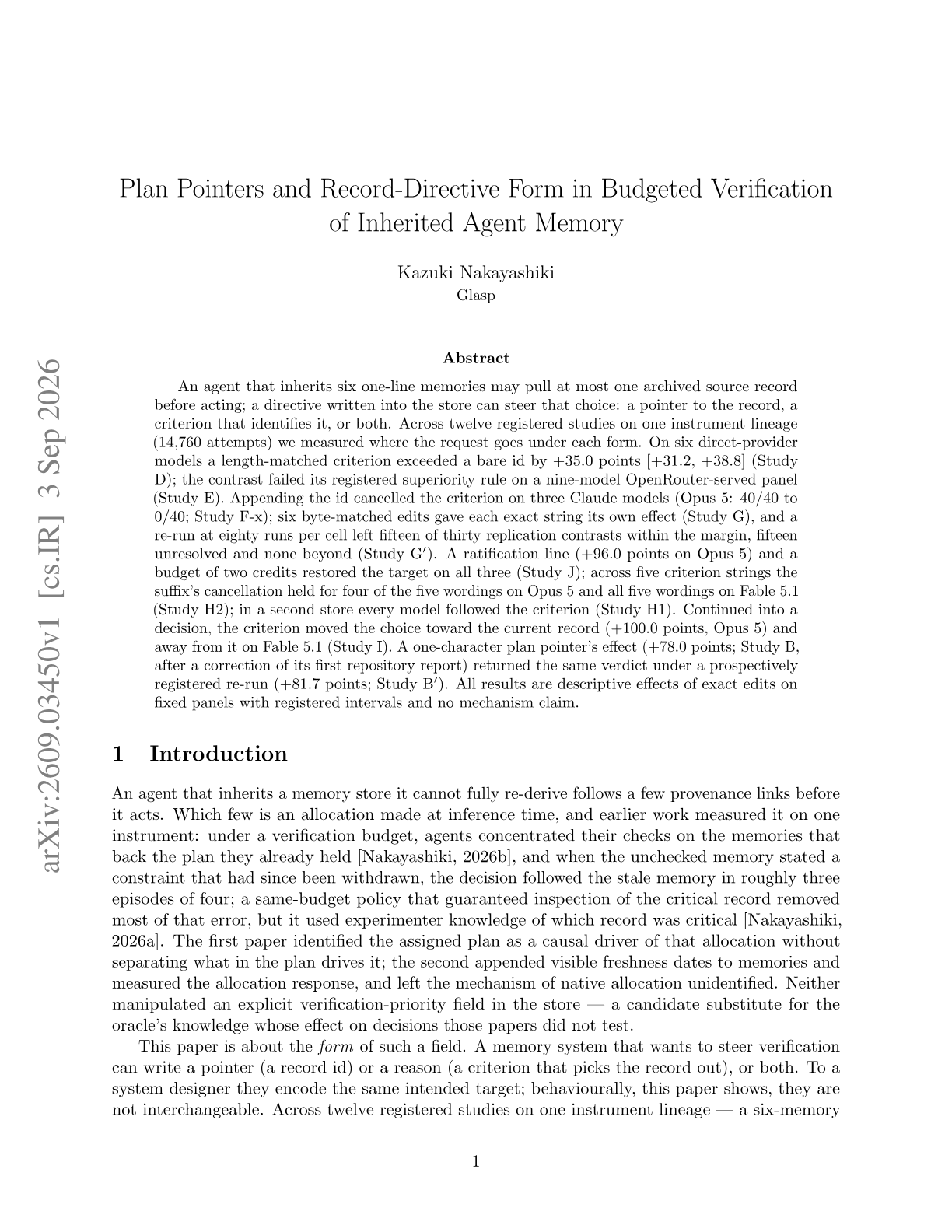
Plan Pointers and Record-Directive Form in Budgeted Verification of Inherited Agent Memory
Kazuki Nakayashiki runs twelve registered studies and 14,760 attempts on one question: when an agent inherits terse memories and can pull only one archived source record, what form of directive written into the store actually steers that choice.
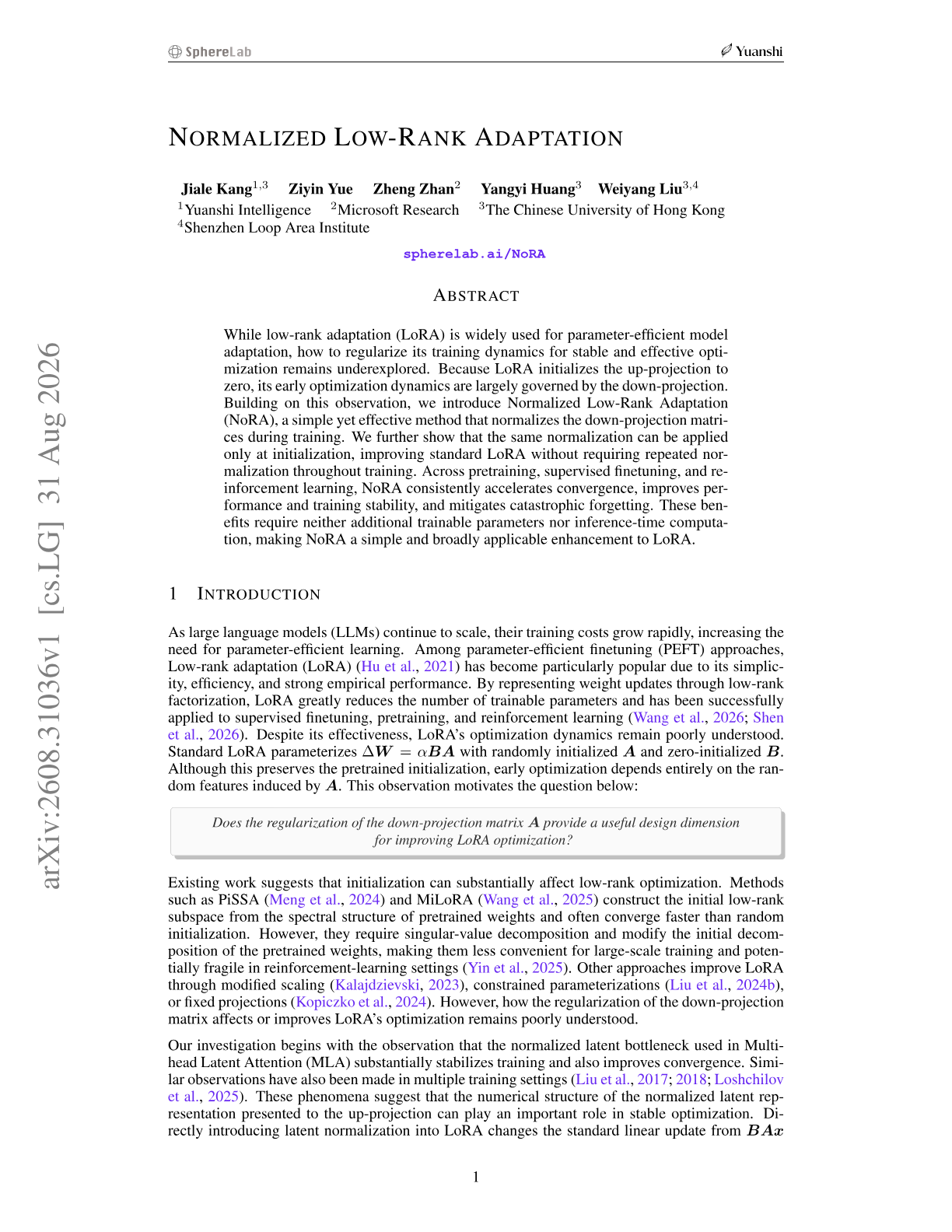
Normalized Low-Rank Adaptation
Jiale Kang and colleagues at CUHK, Yuanshi Intelligence and Microsoft Research normalize the down-projection matrices in LoRA and report faster convergence, better stability and less forgetting at no extra cost.
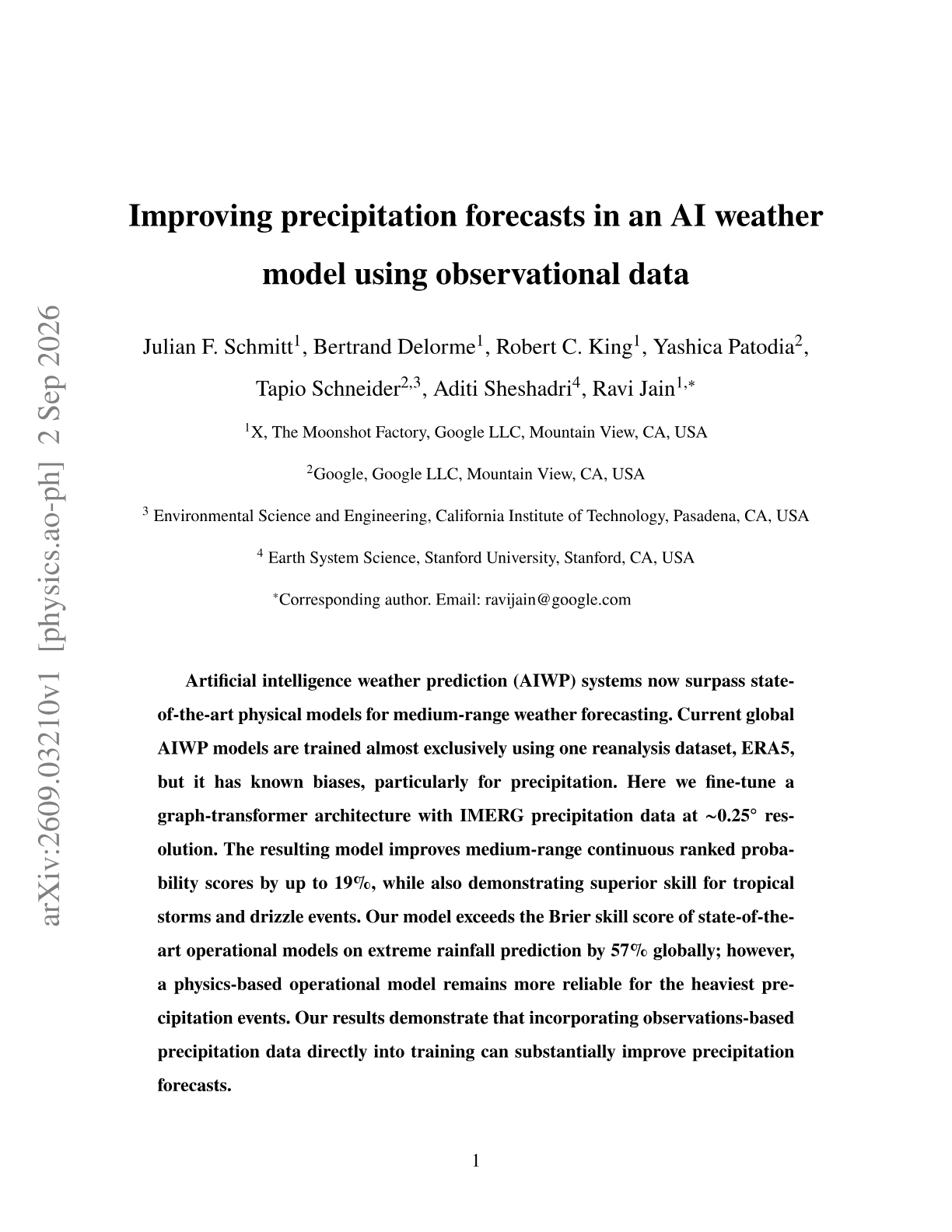
Improving precipitation forecasts in an AI weather model using observational data
Julian F. Schmitt and colleagues at X, The Moonshot Factory and Google, with Caltech and Stanford, fine-tune an AI weather model on observed precipitation rather than reanalysis and improve precipitation forecasts substantially.
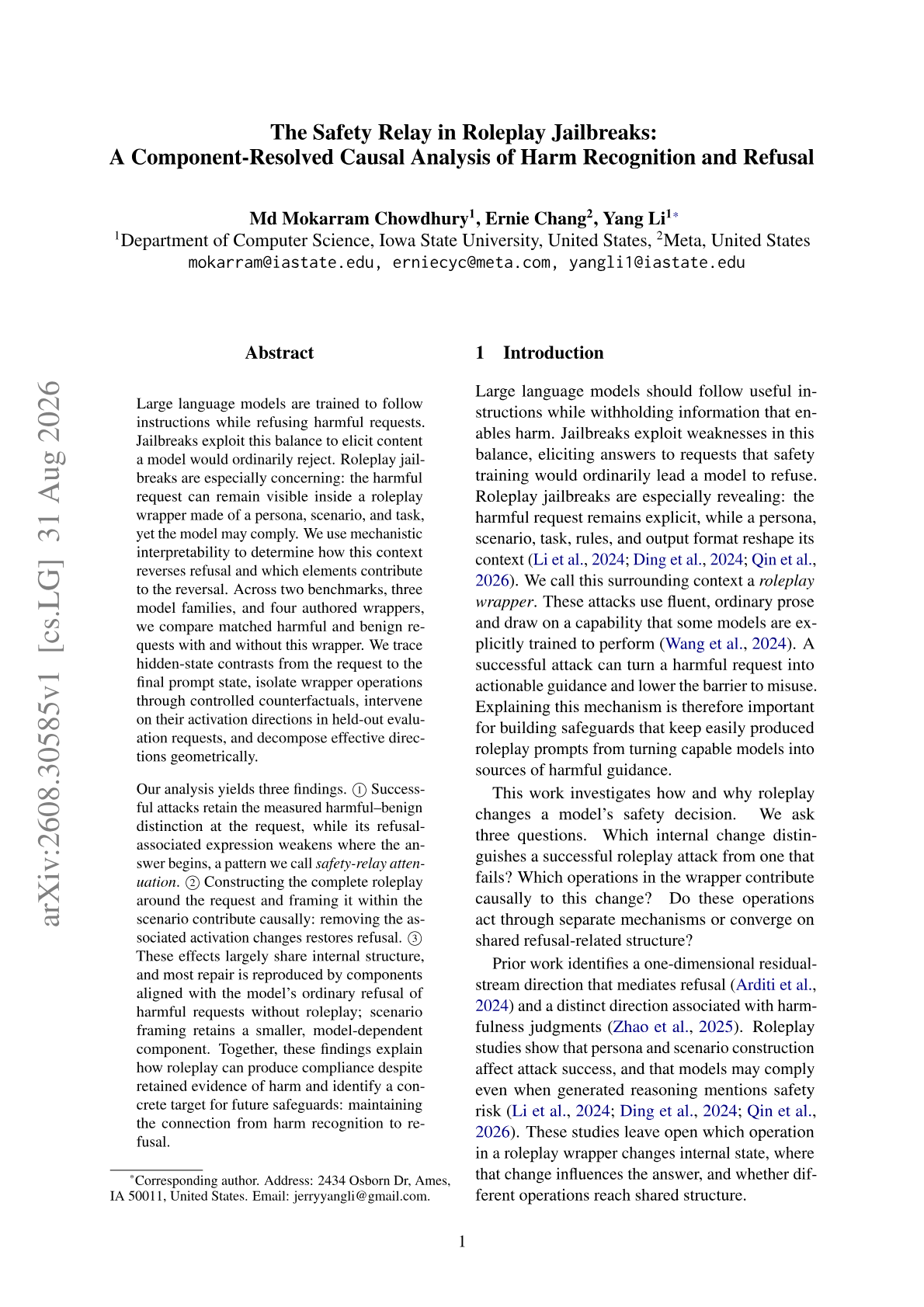
The Safety Relay in Roleplay Jailbreaks: A Component-Resolved Causal Analysis of Harm Recognition and Refusal
Md Mokarram Chowdhury, Ernie Chang and Yang Li use mechanistic interpretability to explain why a roleplay wrapper flips a model from refusal to compliance while the harmful request stays visible inside it.
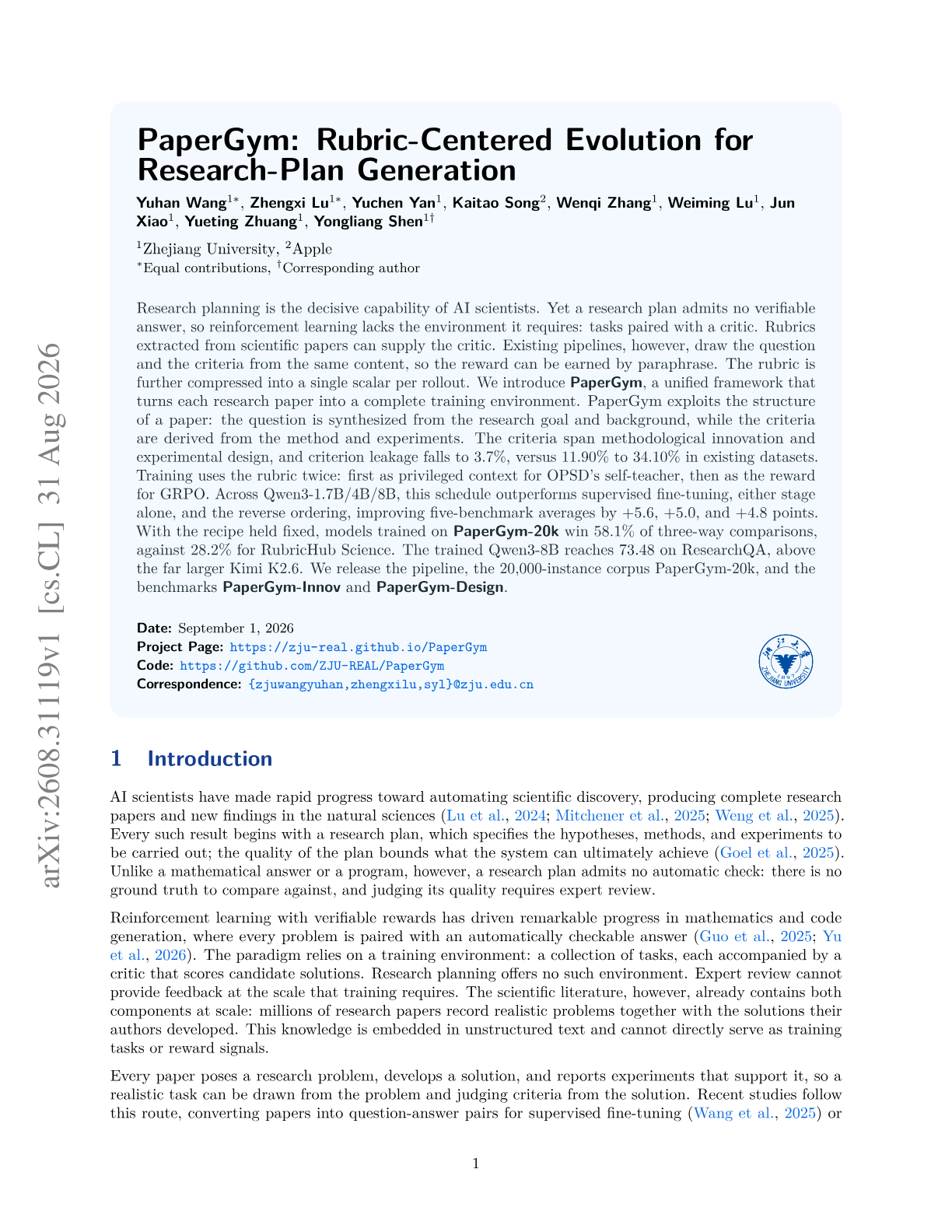
PaperGym: Rubric-Centered Evolution for Research-Plan Generation
Yuhan Wang and colleagues at Zhejiang University, with Kaitao Song at Apple, turn each scientific paper into a full RL environment by synthesizing the question from goal and background while deriving the criteria from method and experiments, cutting criterion leakage to 3.7%.
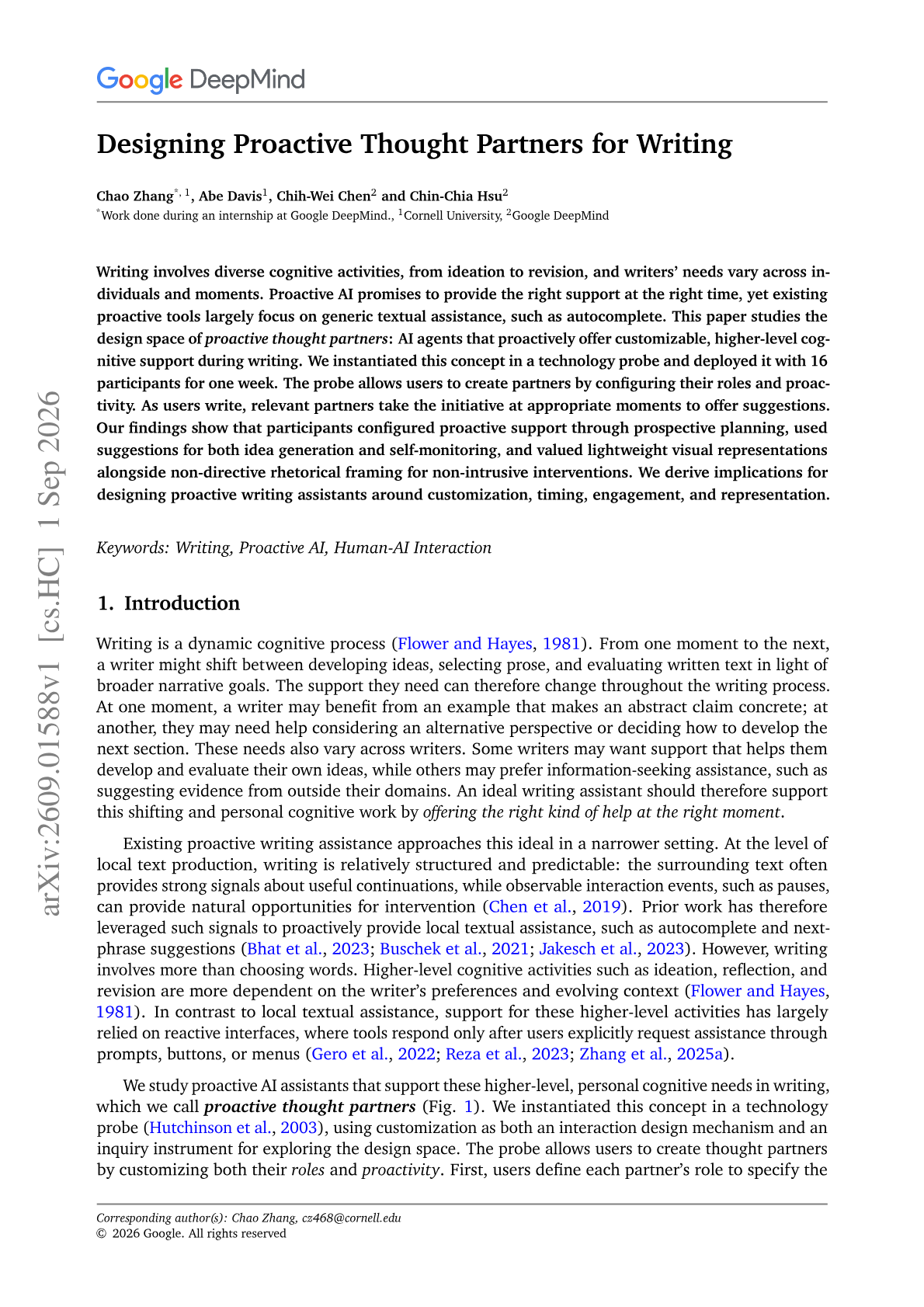
Designing Proactive Thought Partners for Writing
Proactive writing tools mostly mean autocomplete. This paper from Google DeepMind studies what it looks like when an AI agent offers higher-level cognitive support during writing and picks its own moment to speak up.
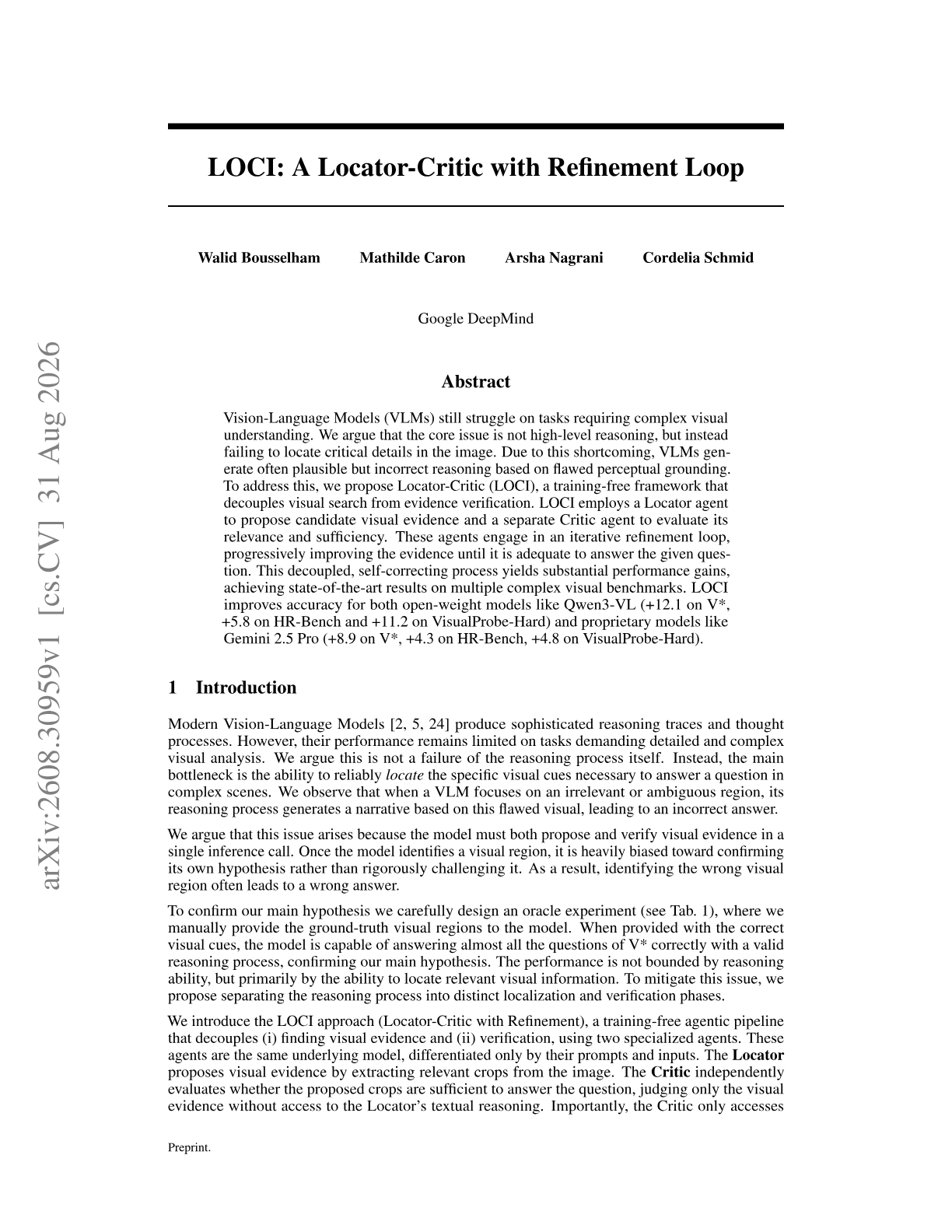
LOCI: A Locator-Critic with Refinement Loop
Walid Bousselham, Mathilde Caron, Arsha Nagrani and Cordelia Schmid at Google DeepMind argue that VLM failures on hard visual tasks come from failing to locate the relevant detail, not from weak high-level reasoning, and fix it with a two-agent loop that needs no training.
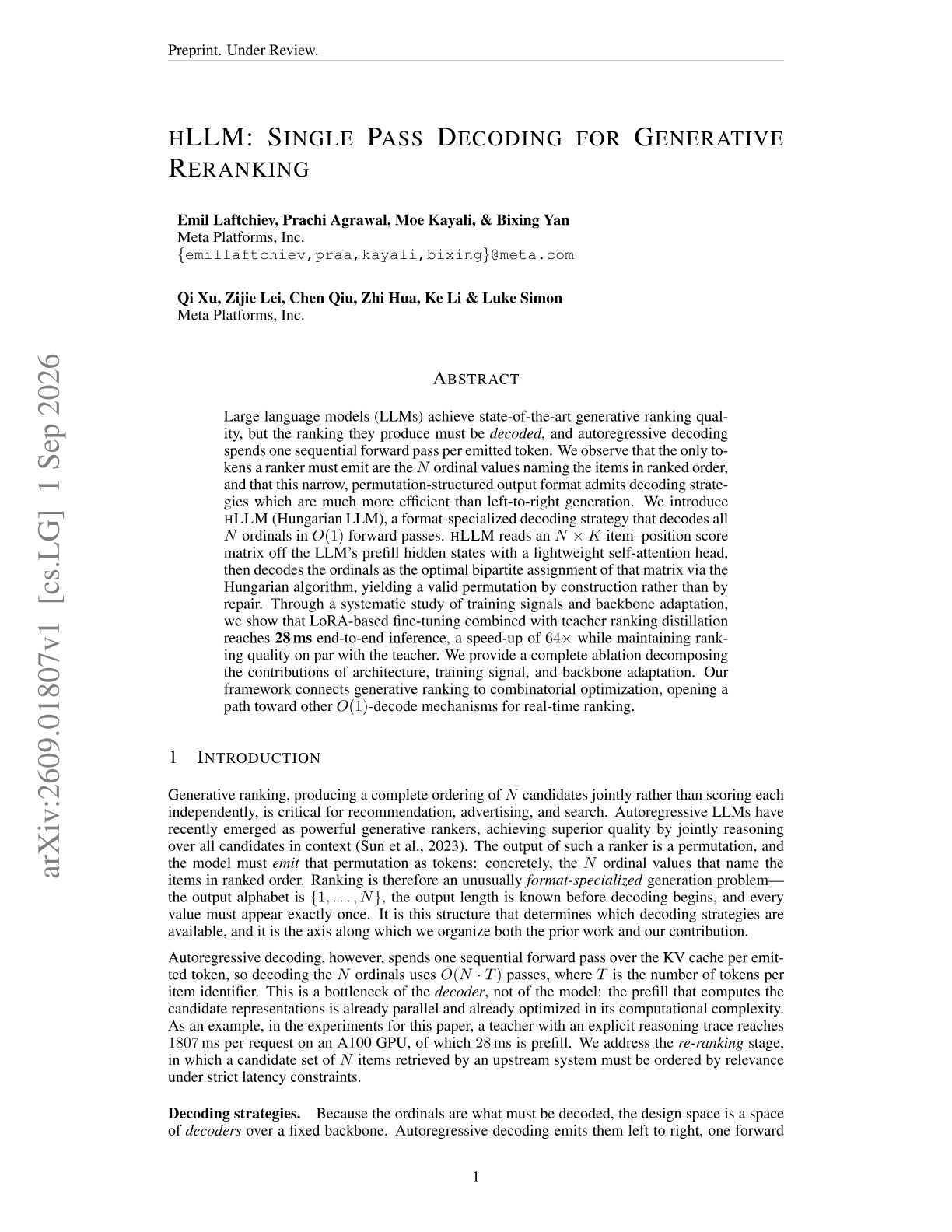
hLLM: Single Pass Decoding for Generative Reranking
Emil Laftchiev and colleagues at Meta Platforms observe that a generative ranker only ever needs to emit N ordinal values, and exploit that narrow output format to decode the whole ranking in a constant number of forward passes.