AI Papers of the Week
Every paper worth reading in AI, hand-picked one week at a time.
OpenJarvis: Personal AI, On Personal Devices
The same argument pointed at your laptop. Decompose the personal AI stack into five primitives, then let a frontier cloud model search over that spec while everything runs locally at inference. Roughly 800x lower marginal cost, with the harness rather than the model closing the gap.
LongMemEval-V2: Evaluating Long-Term Agent Memory Toward Experienced Colleagues
Long-term memory is crucial for agents in specialized web environments, where success depends on recalling interface affordances, state dynamics, workflows, and recurring failure modes. However, existing memory benchmarks for agents mostly focus on user histories, short traces, or downstream task success, leaving open how to directly evaluate whether memory systems effectively internalize environment-specific experience. To address this gap, we introduce LongMemEval-V2 (LME-V2), a benchmark for evaluating whether memory systems can help agents acquire the experience needed to become knowledgeable colleagues in customized environments. LME-V2 contains 451 manually curated questions covering five core memory abilities for web agents: static state recall, dynamic state tracking, workflow knowledge, environment gotchas, and premise awareness. Questions are paired with history trajectories containing up to 500 trajectories and 115M tokens. We use a context gathering formulation: memory systems consume history trajectories and return compact evidence for downstream question answering. We propose a suite of two memory methods: AgentRunbook-R, an efficient RAG-based memory with knowledge pools for raw state observations, events, and strategy notes, and AgentRunbook-C, which stores trajectories as files and invokes a coding agent to gather evidence in an augmented sandbox. Experiments show that AgentRunbook-C achieves the best performance with 72.5% average accuracy, outperforming the strongest RAG baseline (48.5%) and the off-the-shelf coding agent baseline (69.3%). Despite the strong performance gains, coding agent based methods have high latency costs. While AgentRunbook-C advances the accuracy-latency Pareto frontier, substantial room for improvement remains. Together, these results establish LME-V2 as a challenging testbed for developing long-term memory systems for environment experience.
Continual Harness: Online Adaptation for Self-Improving Foundation Agents
The last step before online learning. Continual Harness keeps history, memory, skills, prompts, and sub-agent specs across trajectories and mutates them while the agent runs, then goes further and updates the weights DAgger-style from what just happened. The presenter calls test-time training the direction that matters most.
Measuring AI Ability to Complete Long Software Tasks
The trend line the talk opens on. Measuring capability as the length of task a system completes, rather than a single-turn score, is what makes harness progress visible at all: the static-harness era and the self-improving era are two slopes on this chart.
MemGPT: Towards LLMs as Operating Systems
Before this, context could only be appended to. MemGPT gives the model create, read, update, and delete over a carved-out region of its own context, which is the move that turns a transcript into managed state.
DSPy: Compiling Declarative Language Model Calls into Self-Improving Pipelines
The first entry where the harness stops being hand-written. You cannot backpropagate through a prompt, so DSPy searches over prompts against a small train set instead, and the system prompt becomes an optimised artifact rather than an author's guess.
Multi-Agent Collaboration: Harnessing the Power of Intelligent LLM Agents
Spawning another agent becomes just another tool call. The framing here, agents with roles that persist and can be addressed, is what makes sub-agents an addressable resource rather than a one-shot fan-out.
Self-Refine: Iterative Refinement with Self-Feedback
The cheapest feedback loop there is: the same model grades its own draft and rewrites it, with no extra training and no environment. This is the internal evaluator in the slide's diagram, the branch that never leaves the harness.
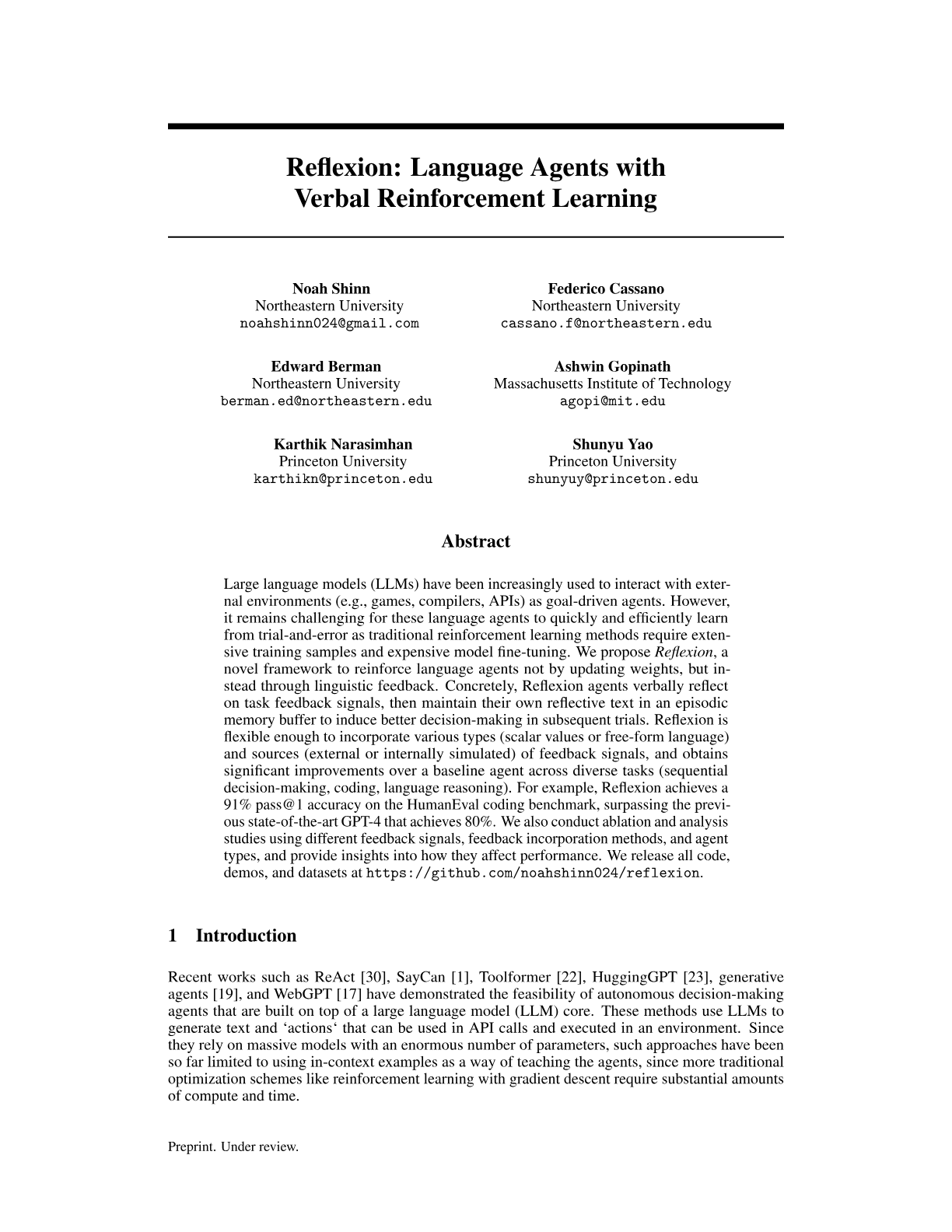
Reflexion: Language Agents with Verbal Reinforcement Learning
Take the real reward signal from the environment and write it back into the context as words. Reflexion is where a failed episode stops being wasted, which is the seed of everything in the self-improving half of this list.
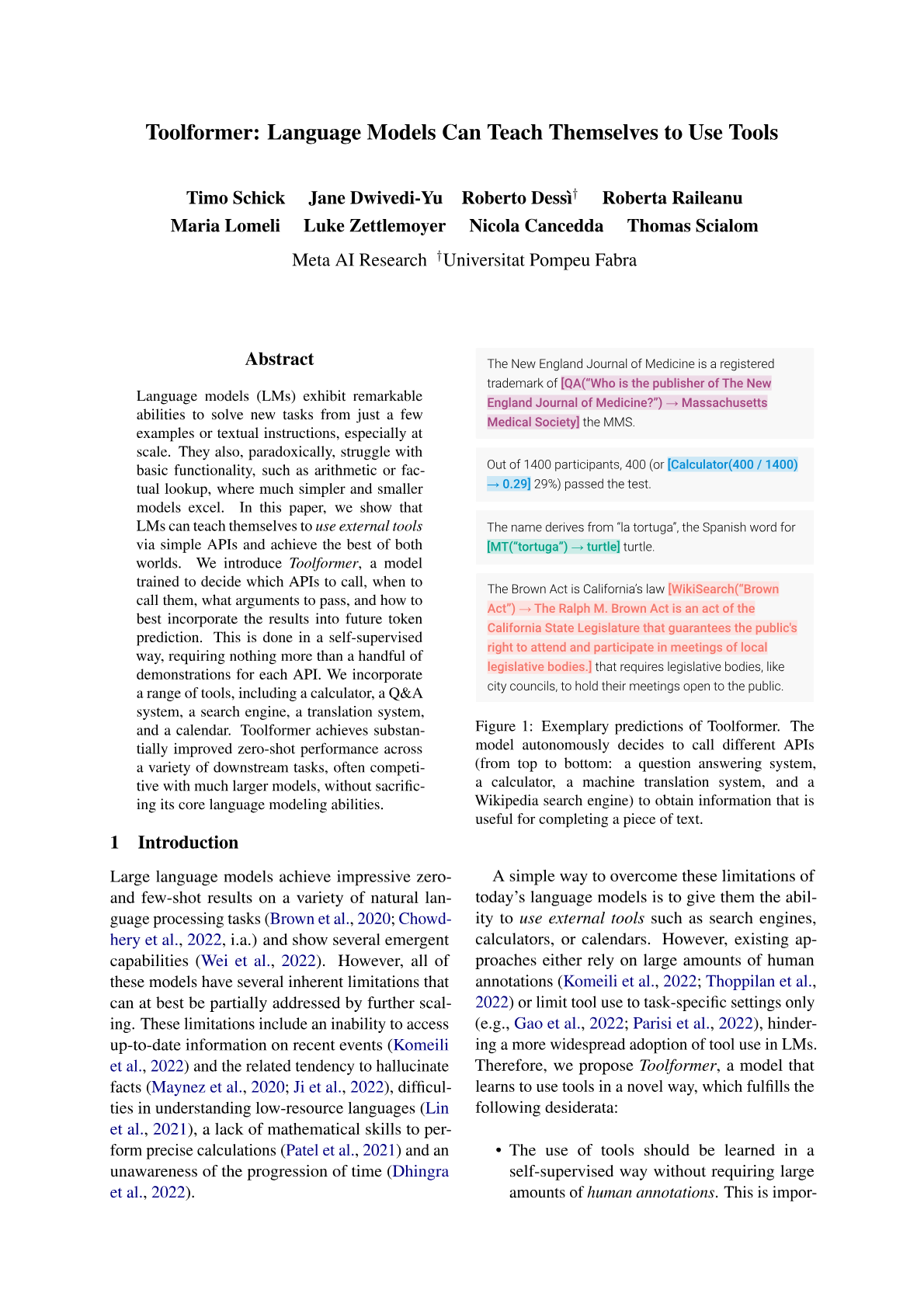
Toolformer: Language Models Can Teach Themselves to Use Tools
Where tool calling comes from. Instead of computing five minus three in the weights, the model emits a call and the harness runs it. Declare the tools in the system prompt and the action space is suddenly whatever you are willing to execute.
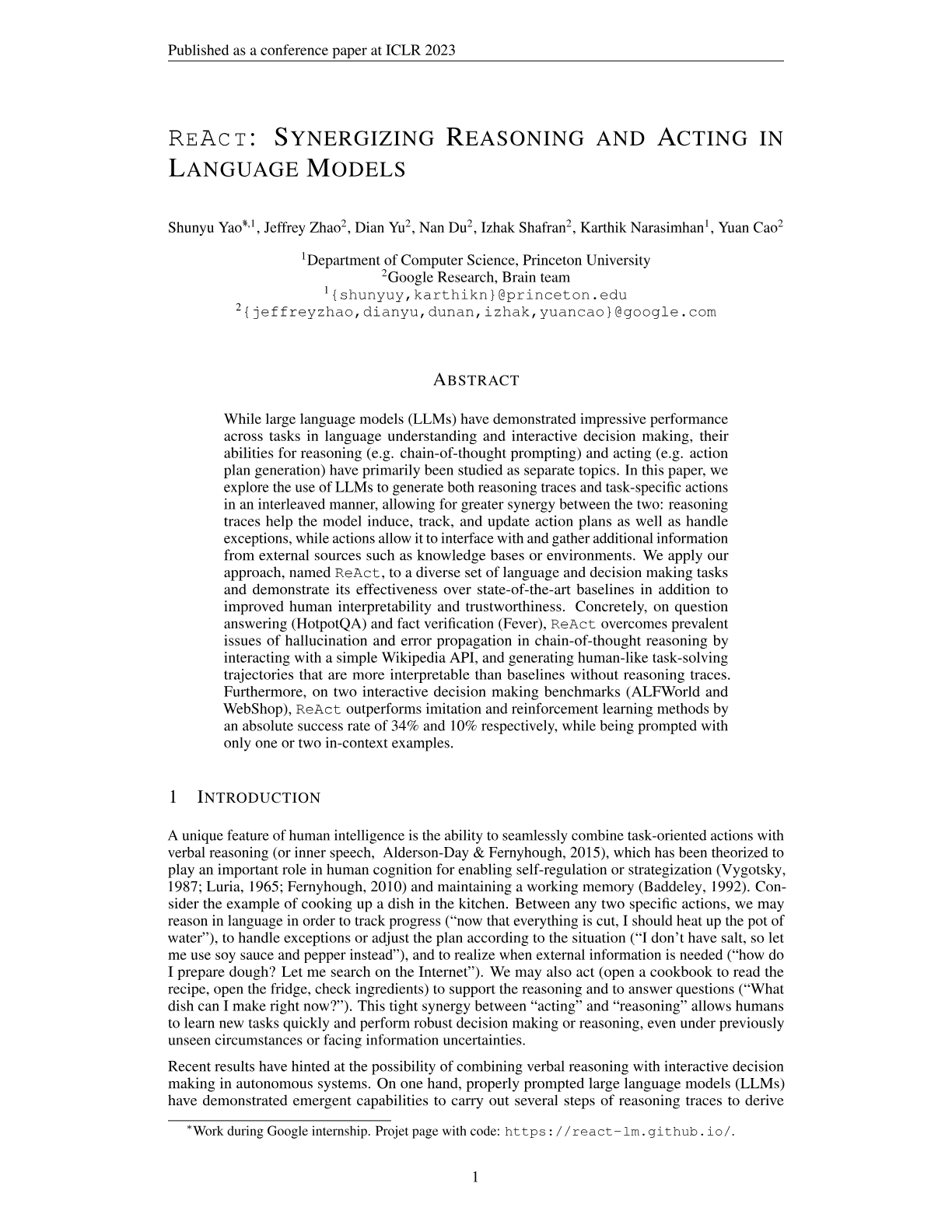
ReAct: Synergizing Reasoning and Acting in Language Models
Interleave a thought and an action instead of choosing between them. ReAct is the shape almost every agent loop still has, and the talk's point is that models now do this natively, so a modern harness should stop imposing it.
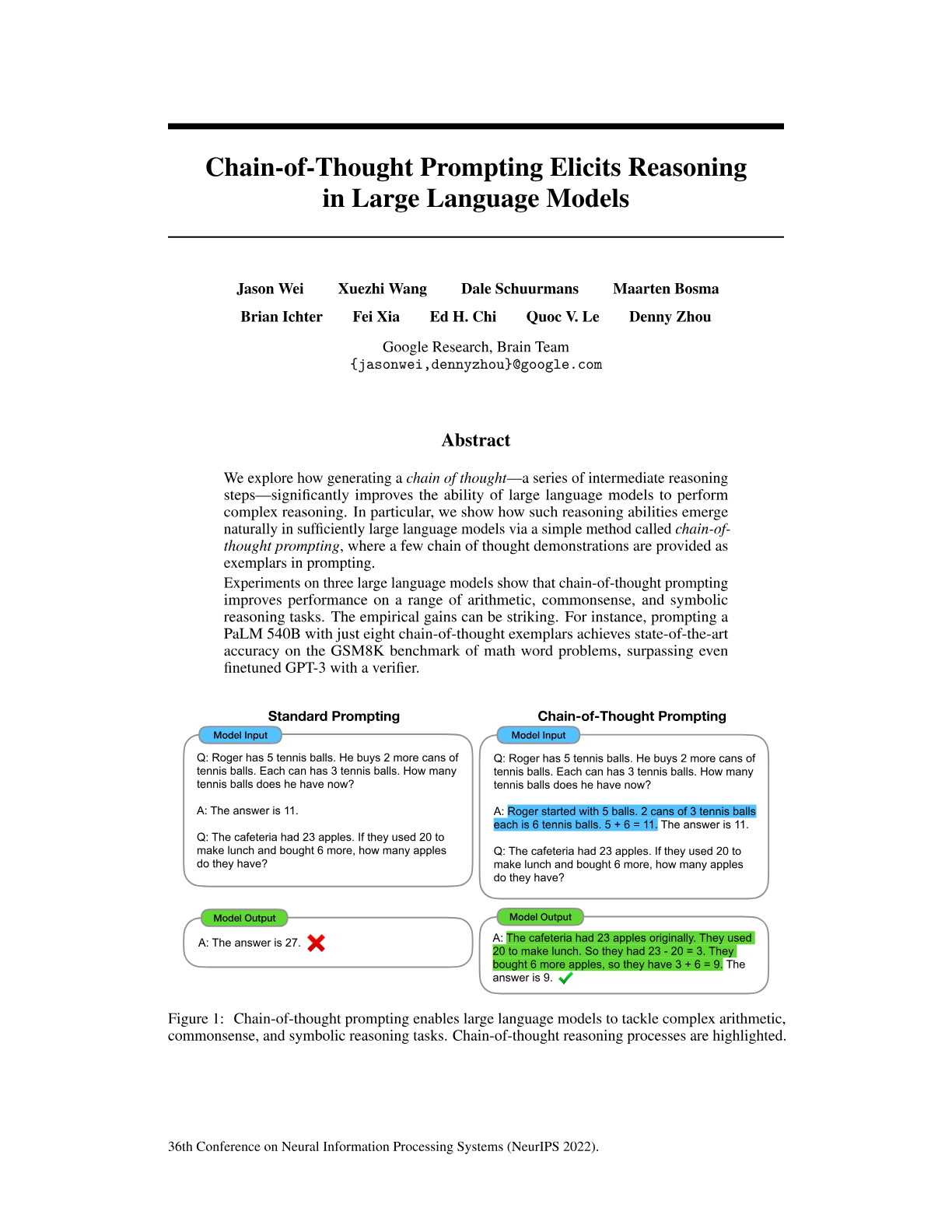
Chain-of-Thought Prompting Elicits Reasoning in Large Language Models
Smear the computation over more tokens instead of demanding the answer in one. This is the first output-space intervention in the lineage, and the reason every harness since budgets tokens rather than calls.
WebGPT: Browser-assisted question-answering with human feedback
The first time the loop reached outside itself. WebGPT gives a model a browser and human feedback on how it used one, which turns retrieval from a preprocessing step into an action the model chooses to take.
Language Models are Few-Shot Learners
The first thing anyone ever put in a harness. Nothing about the loop changes here: you simply paste solved examples above the question and accuracy moves. That makes the context window the first place a system designer can spend effort, and every technique further down this list is a descendant of that realisation.
Language Models are Unsupervised Multitask Learners
The V0 harness, and the baseline every later entry is measured against. There is no tool calling here, no skills, no memory: a while-not-EOS loop, top-p sampling, and an environment that scores whatever comes after the delimiter. The talk opens the history here precisely because so little is present, which makes the next six years legible as one move repeated, giving the loop something new it is allowed to do.
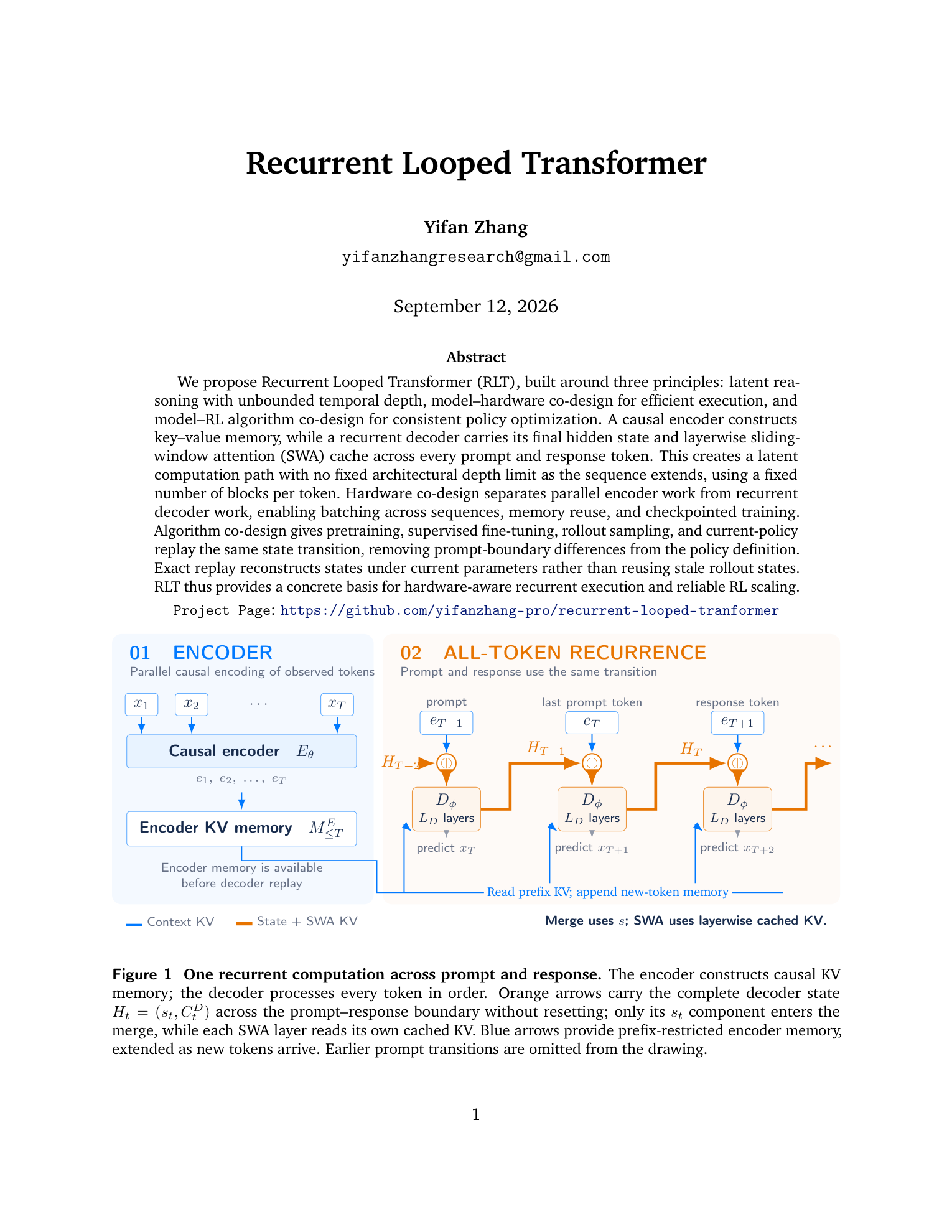
Recurrent Looped Transformer
Yifan Zhang proposes the Recurrent Looped Transformer, in which a causal encoder builds global key-value memory and a recurrent decoder carries its final hidden state and sliding-window cache across every prompt and response token, so the depth of the computation path grows with sequence length while the number of blocks per token stays fixed. The report is a design specification and contains no experimental results.
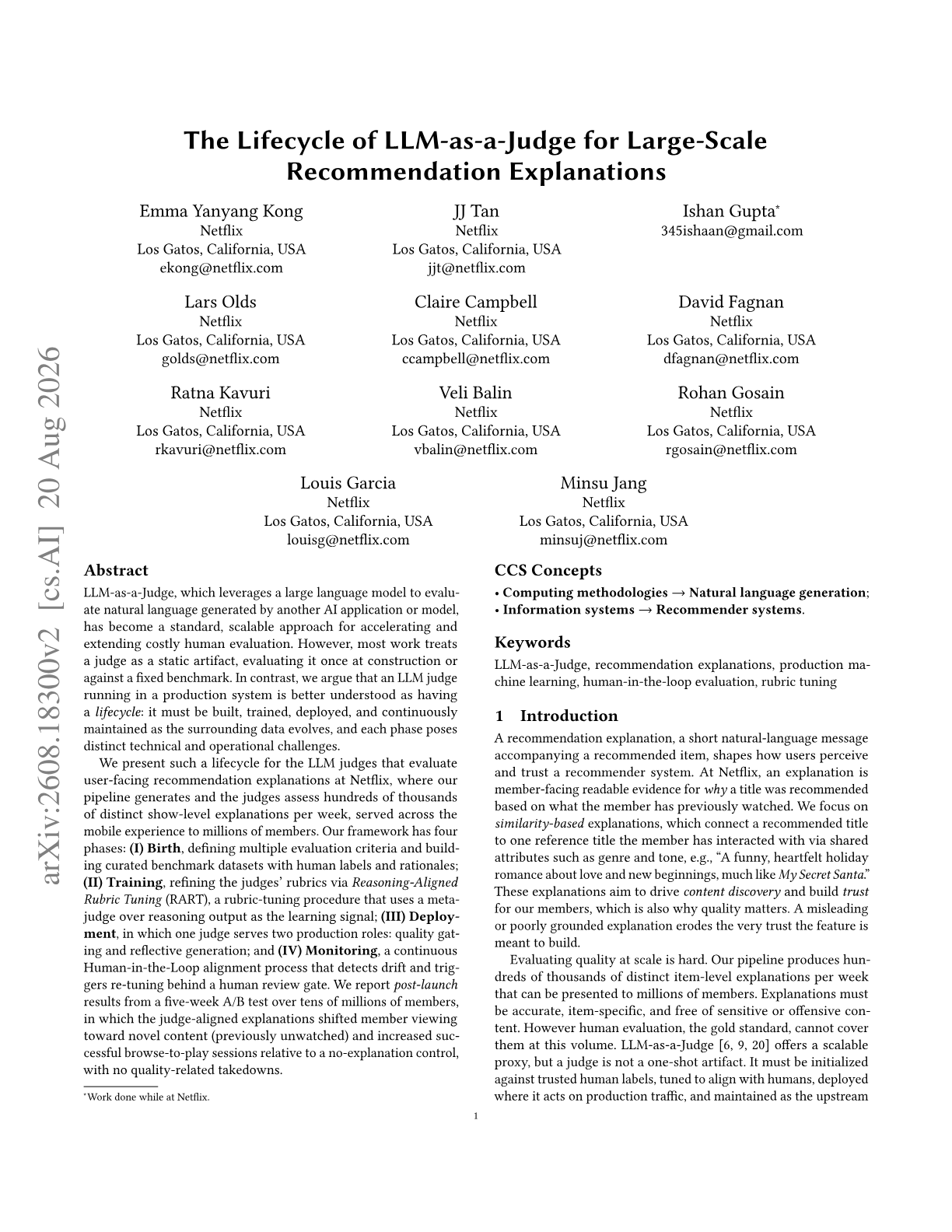
Judges as a Lifecycle
Most teams validate an LLM judge once, ship it, and never look at it again. Netflix runs judges over hundreds of thousands of show-level recommendation explanations per week, served to millions of members on mobile, and this writeup describes what it takes to keep one honest at that volume.
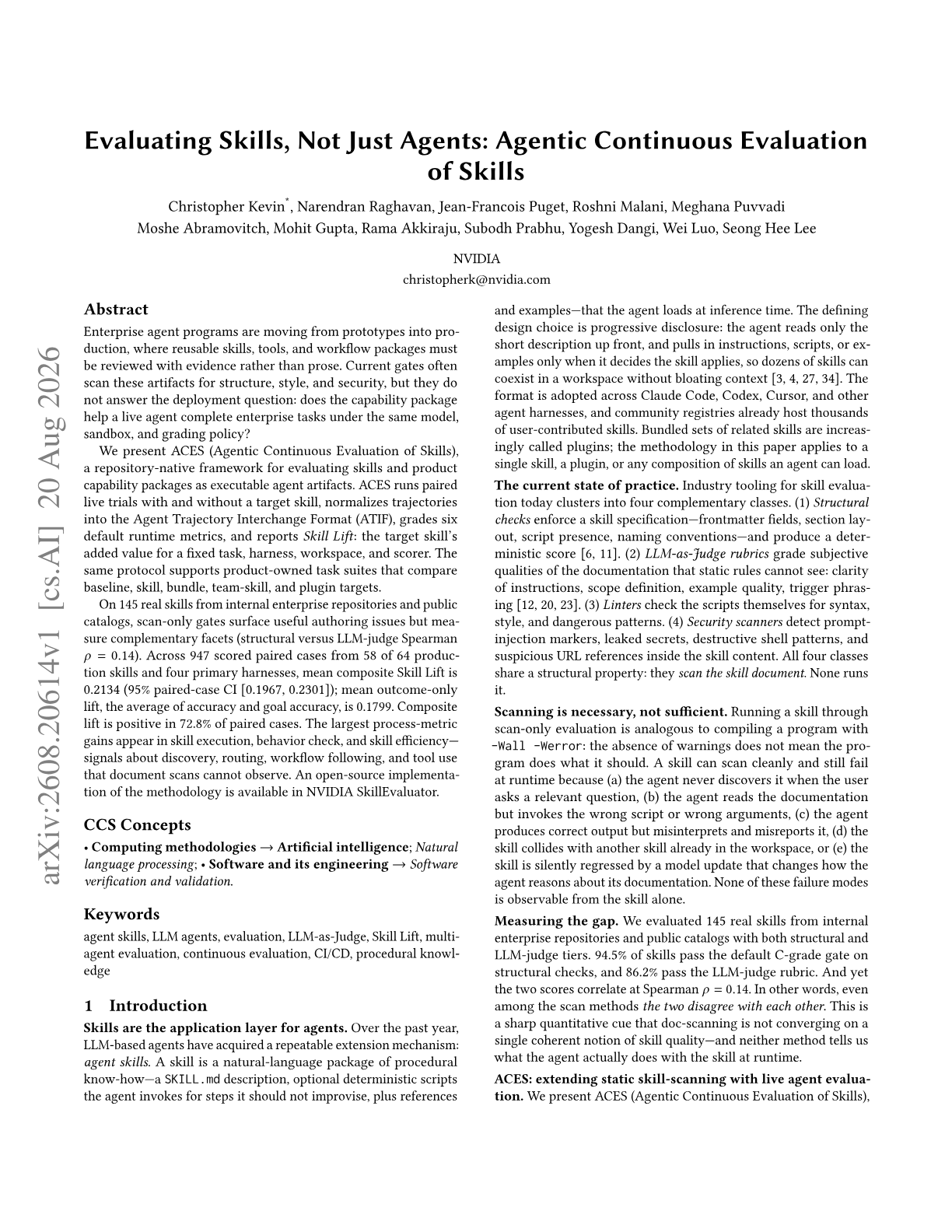
Skill Lift
Enterprise teams reviewing shared skill libraries almost always gate on a scanner that checks structure, style, and security. NVIDIA measured whether that gate predicts anything about how a skill actually performs, and the answer is close to no.
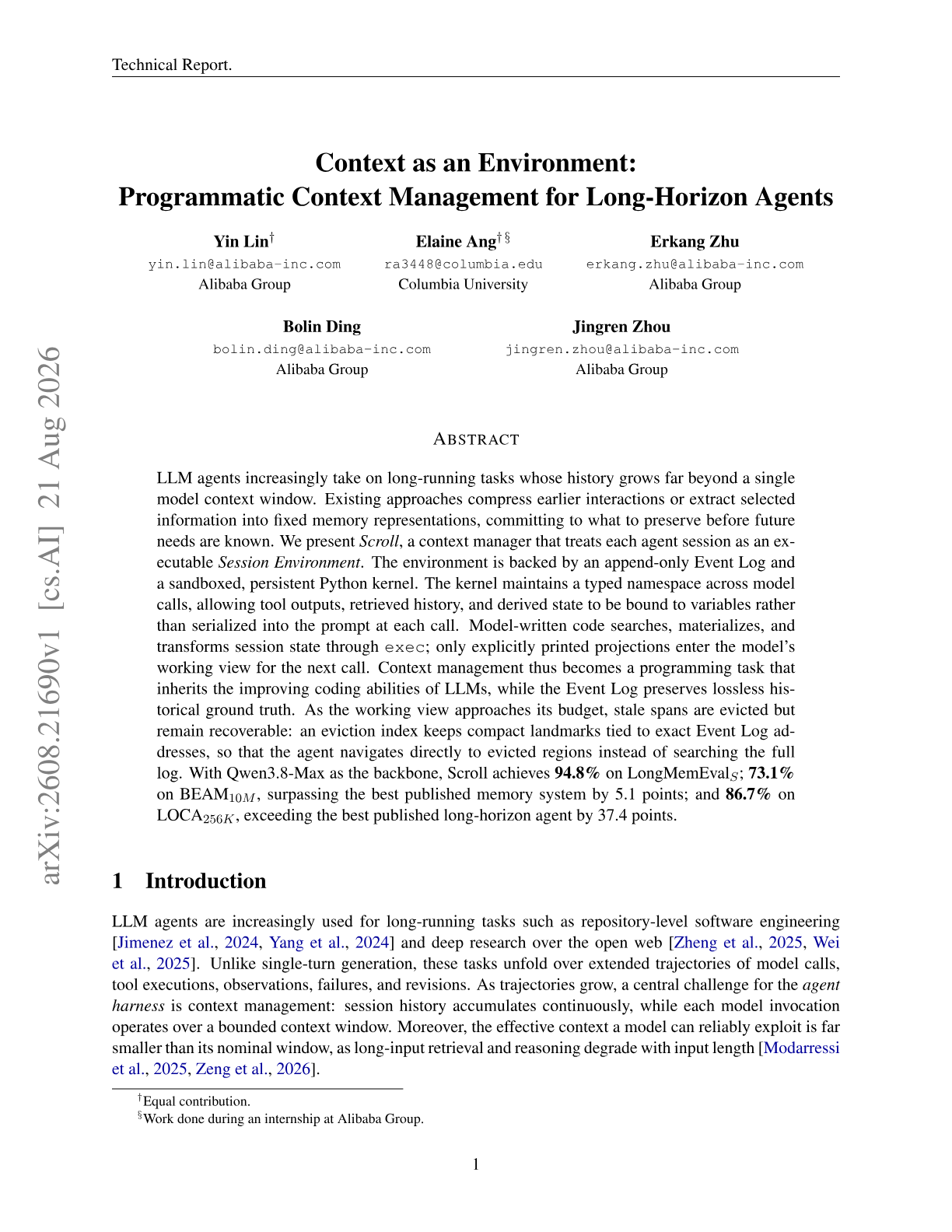
Context Management as Code
Every memory system asks you to design a schema up front, then rewrite it when the agent starts doing something you did not anticipate. Scroll, from Alibaba, removes the schema entirely and hands context construction to the model as a programming problem.
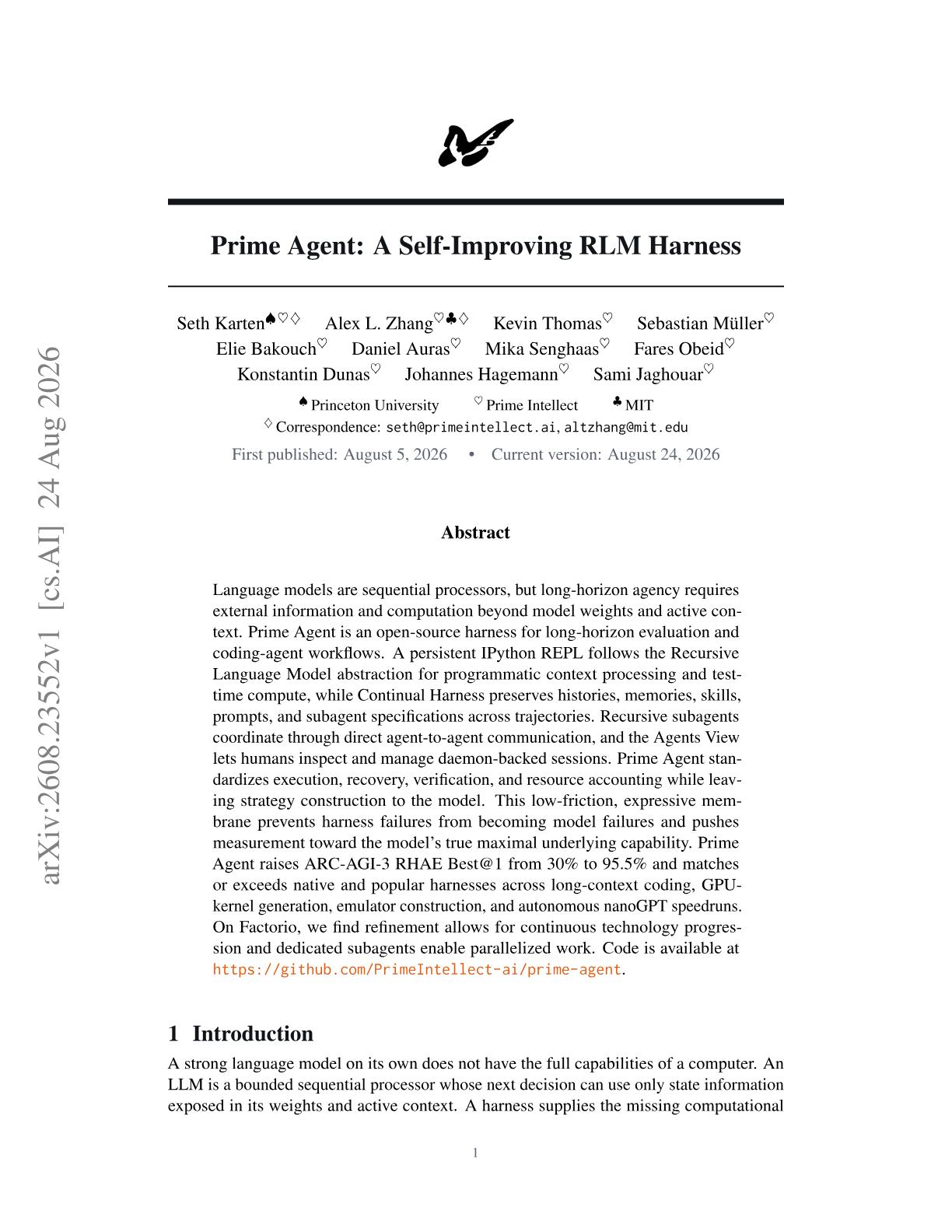
Prime Agent
Prime Intellect released an open-source harness built for long-horizon work, and what persists between runs sets it apart. Most harnesses reset everything except the files on disk, which caps how much a system can compound.
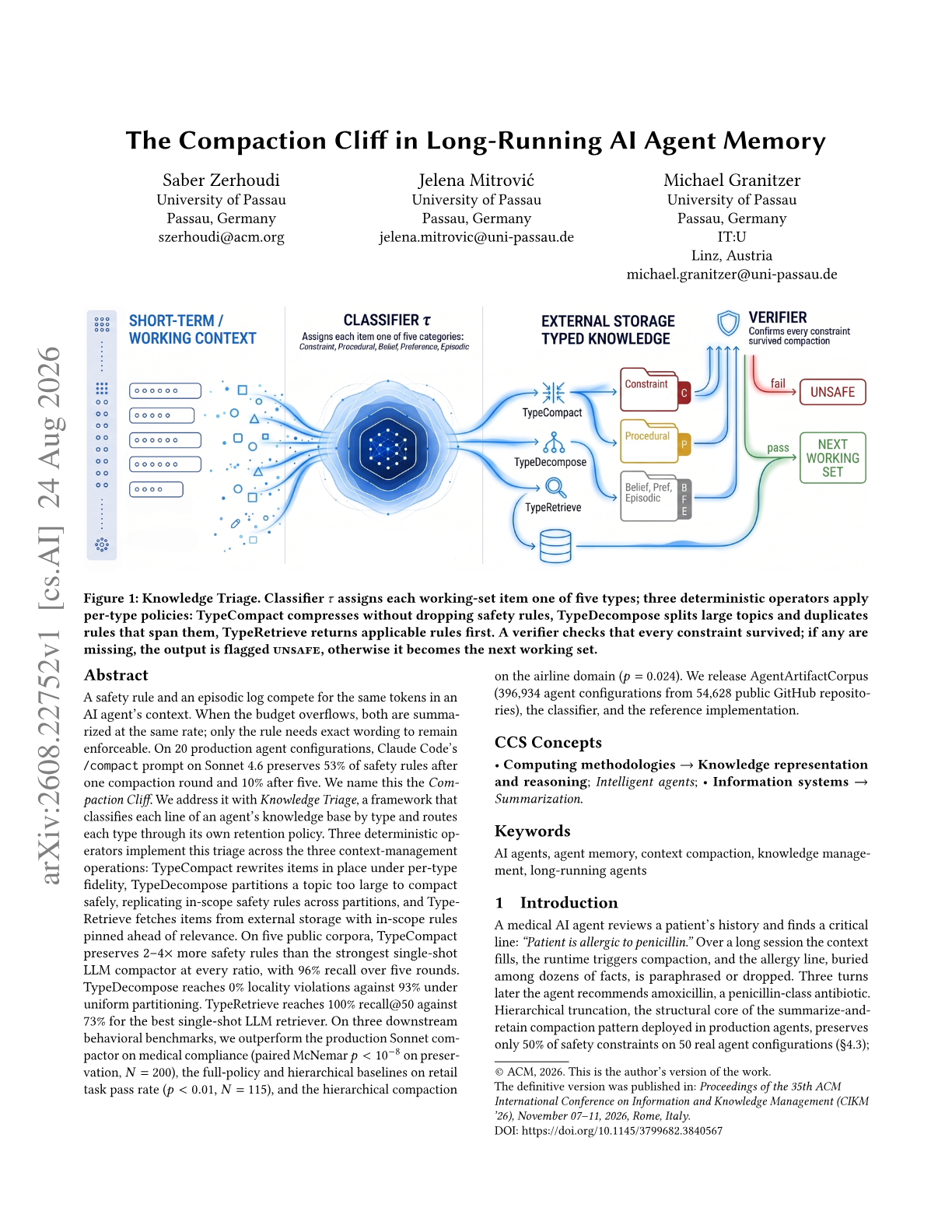
What Compaction Destroys
If you keep safety rules or coding standards in an AGENTS.md or a CLAUDE.md, this one is worth your time. Researchers measured what context compaction actually destroys across 20 production agent configurations, and safety rules are among the first casualties.
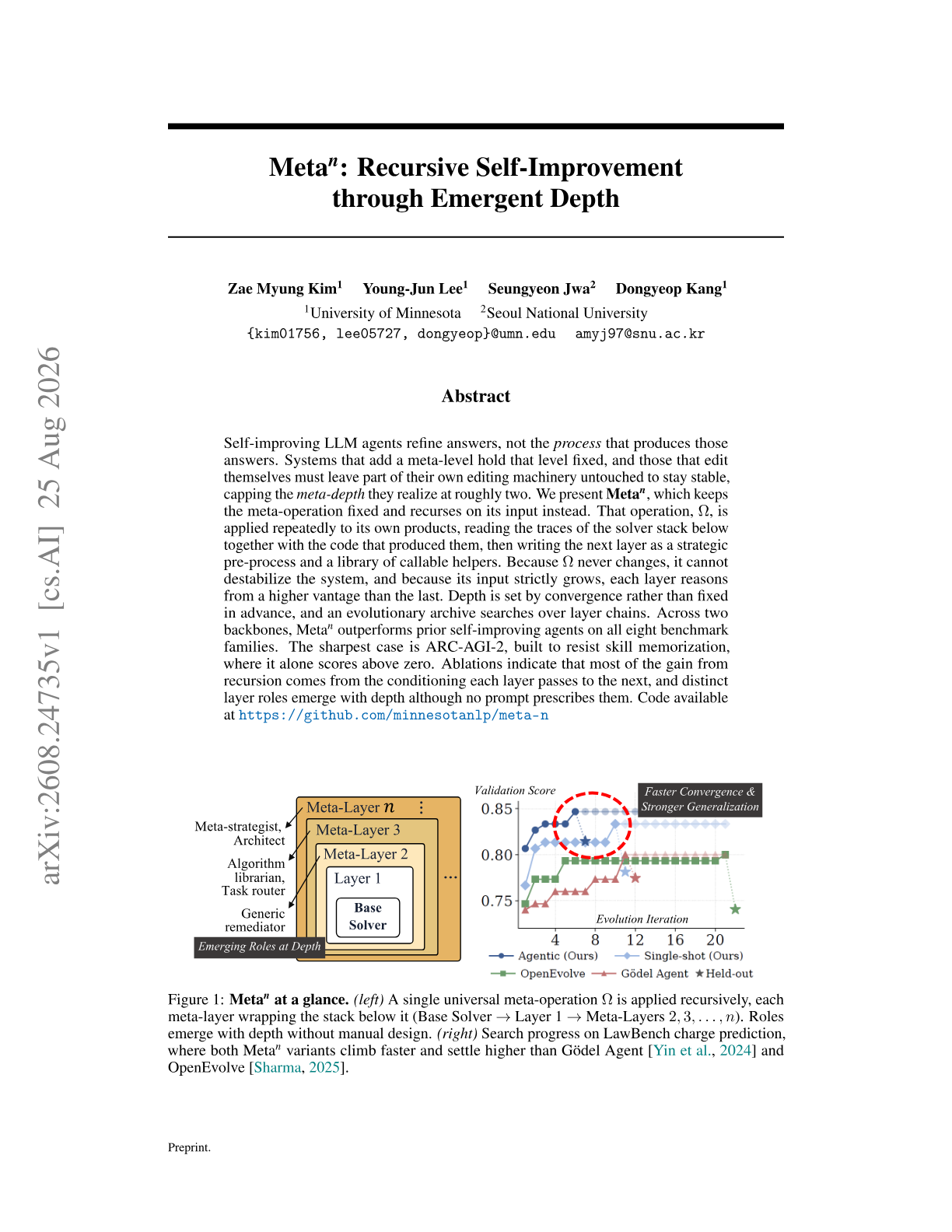
Meta^n
Systems that edit themselves have to leave part of their own editing machinery untouched to stay stable, which caps realized meta-depth at roughly two. Meta^n keeps the meta-operation fixed and recurses on its input instead, applying one operator repeatedly to its own products and letting convergence set the depth rather than fixing it in advance. Across two backbones it outperforms prior self-improving agents on all eight benchmark families, and on ARC-AGI-2 it is the only method scoring above zero.
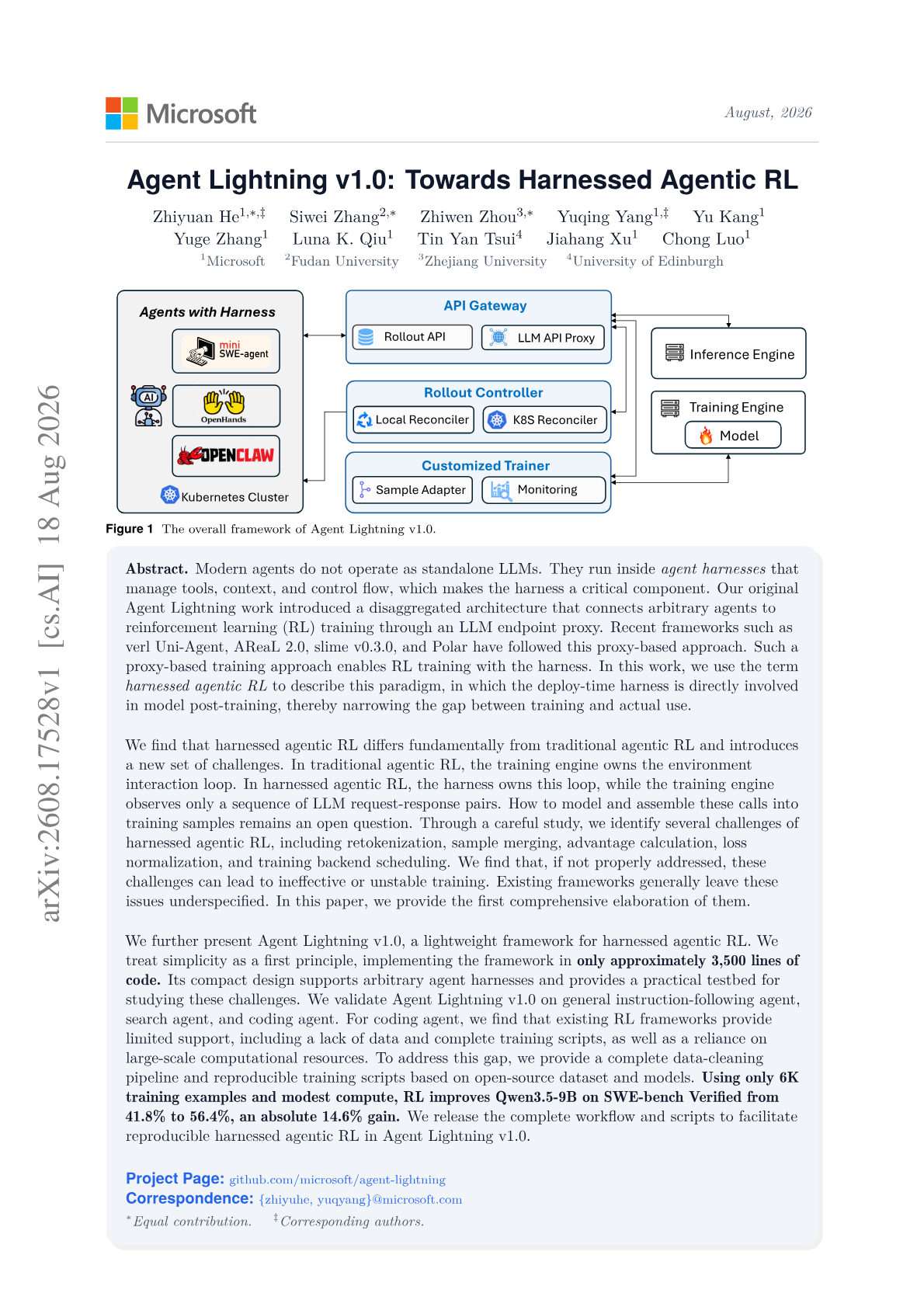
Agent Lightning v1.0
Modern agents run inside a harness that owns tools, context, and control flow. When you want to train one, that ownership becomes the problem: the harness runs the environment loop and the trainer only ever sees LLM request and response pairs. This work from Microsoft treats that boundary as the integration point instead of an obstacle.
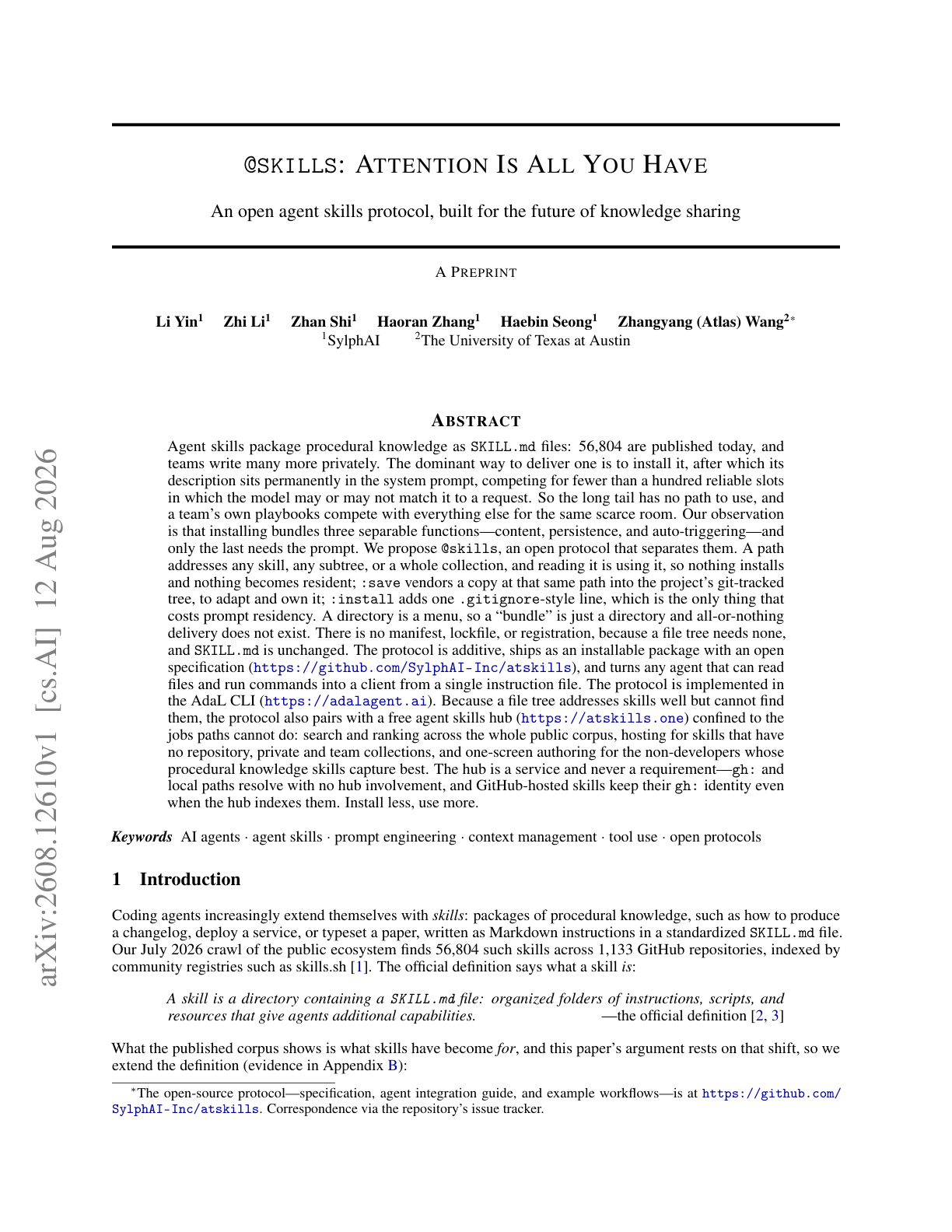
The Skill Trigger Bottleneck
There are 56,804 public agent skills today, all competing for fewer than 100 reliable trigger slots in the system prompt. Your own playbooks compete for that same space, which means the long tail never gets used no matter how good it is. The paper argues the scarcity is an artifact of how skills get installed, not a real limit.