AI Papers of the Week
Every paper worth reading in AI, hand-picked one week at a time.
Discover and explore top AI papers with Claude Code or Codex
npx @dair-ai/mcp setup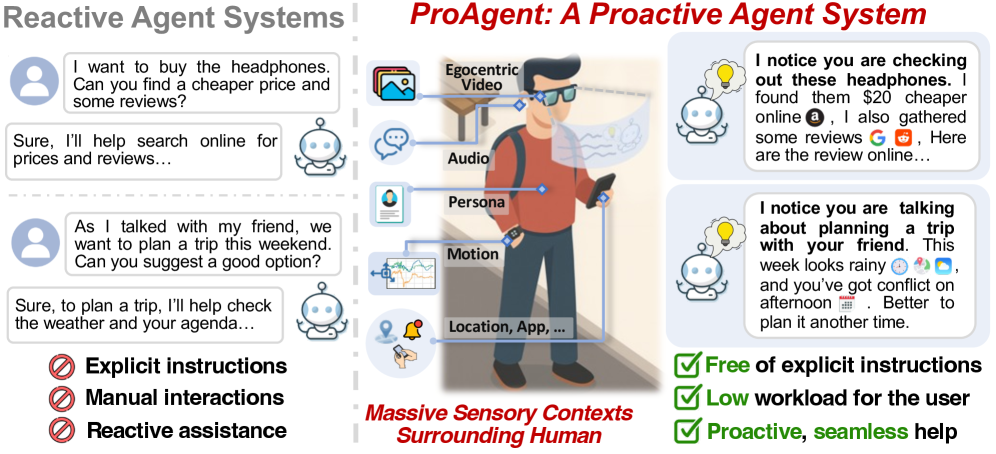
ProAgent
ProAgent is the first end-to-end proactive LLM agent system that harnesses sensory contexts from AR glasses, smartphones, and edge servers to deliver assistance without explicit user instructions. Unlike reactive agents that wait for commands, ProAgent continuously senses the environment with on-demand tiered perception and achieves up to 33.4% higher proactive prediction accuracy, 16.8% higher tool-calling F1 score, and 38.9% improved user satisfaction over baselines.
Evolving Multi-Agent Orchestration
OpenBMB researchers propose a “puppeteer-style” paradigm for multi-agent LLM collaboration, where a centralized orchestrator dynamically directs agents based on evolving task states. Trained via reinforcement learning, the system achieves superior performance with reduced computational costs across math, knowledge, and software development tasks.
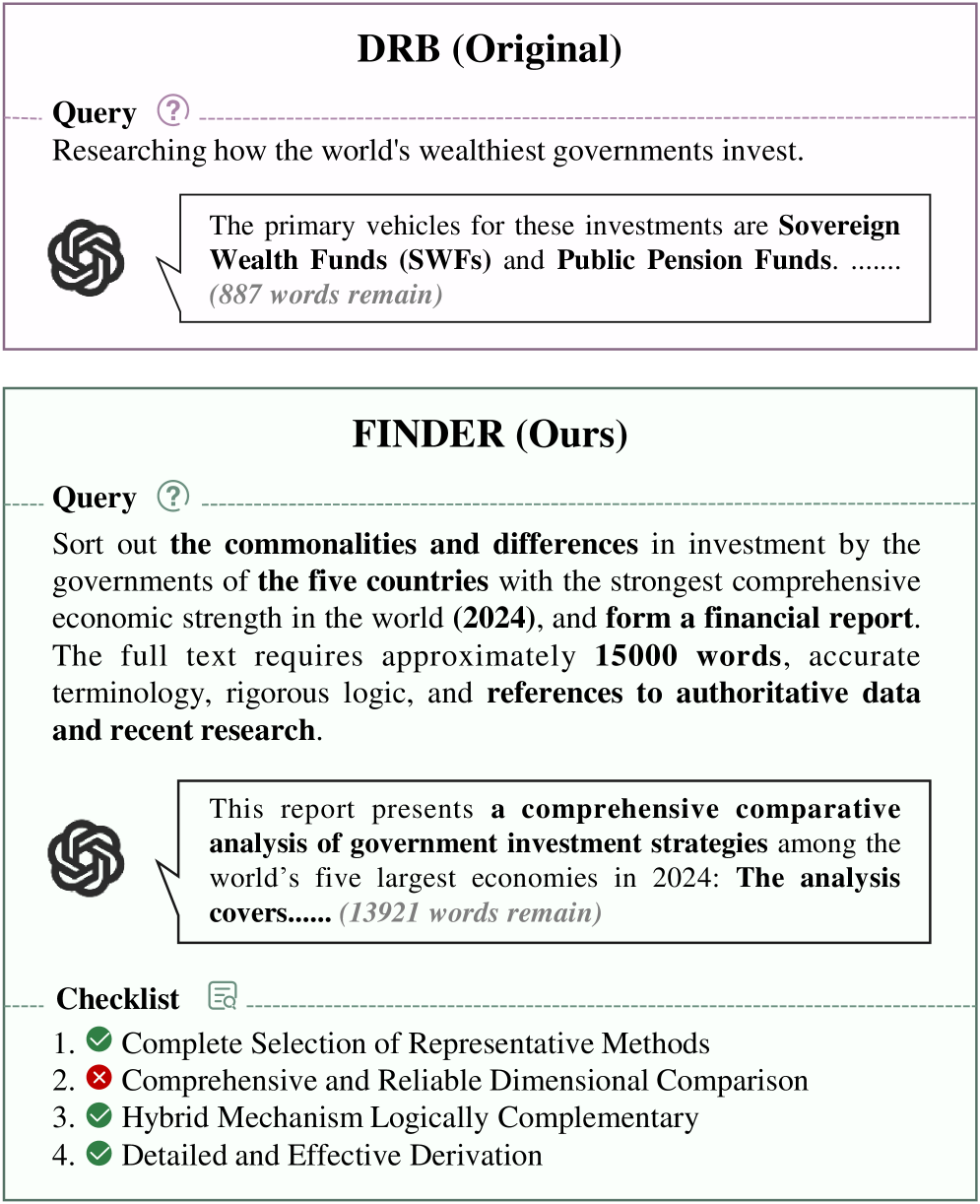
FINDER and DEFT
OPPO AI introduces FINDER, a fine-grained benchmark with 100 expert-curated research tasks and 419 structured checklist items for evaluating deep research agents, along with DEFT, the first failure taxonomy categorizing 14 failure modes across reasoning, retrieval, and generation dimensions.
STRATUS: Autonomous Cloud Reliability
Researchers from UIUC, IBM Research, and Tsinghua present STRATUS, an LLM-based multi-agent system for autonomous Site Reliability Engineering (SRE) of cloud services. The system handles failure detection, localization, root-cause analysis, and mitigation without human intervention, outperforming state-of-the-art SRE agents by at least 1.5x on benchmark suites.
LatentMAS
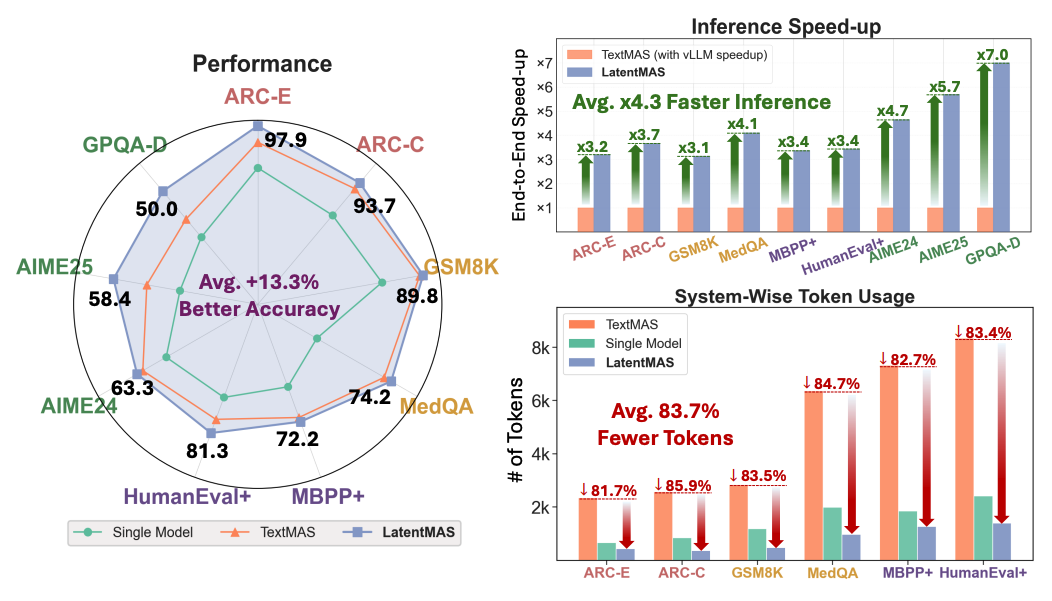
LatentMAS introduces a framework enabling language model agents to collaborate directly within a continuous latent space rather than relying on text-based communication. By using last-layer hidden embeddings and a shared latent working memory, agents preserve and transfer internal representations without information loss from text serialization.

OmniScientist
OmniScientist presents an end-to-end framework for building AI scientists capable of autonomously conducting research across the entire scientific lifecycle - from literature review and ideation to experimentation, writing, and peer review. The system establishes a collaborative ecosystem where human and AI scientists co-evolve within a shared scientific environment.
InfCode
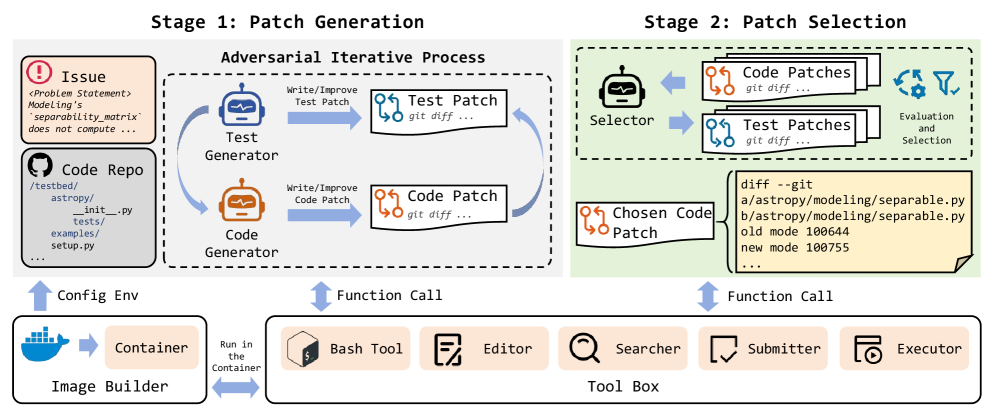
InfCode introduces an adversarial framework for software bug fixing that treats test generation and patch creation as mutually reinforcing processes. Rather than generating patches that simply pass existing tests, the system creates challenging test cases designed to expose patch weaknesses, then iteratively refines patches to handle these adversarial tests.
Multi-Agent Collaboration for Multimodal LLMs
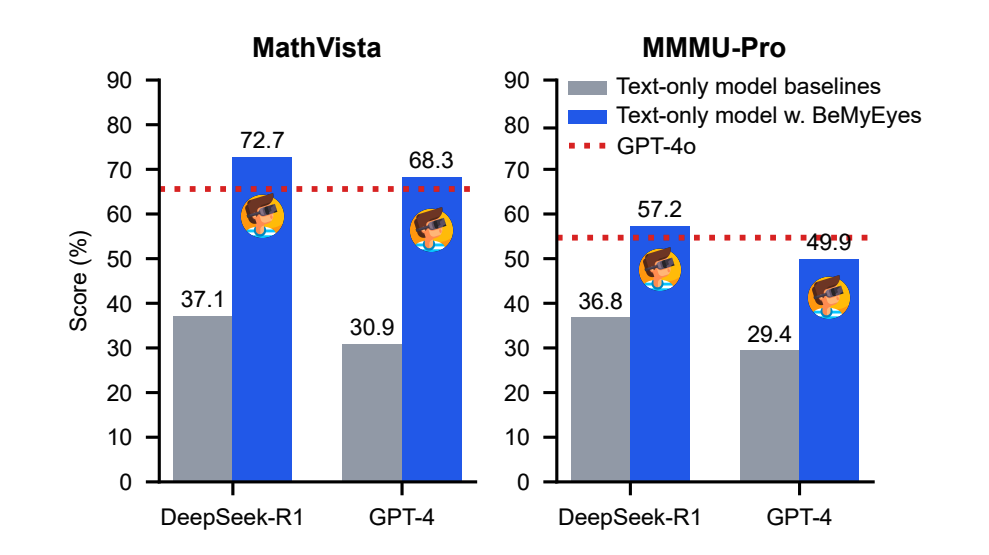
Microsoft and USC researchers introduce a framework where vision models serve as “eyes” for language models through multi-agent collaboration, enabling modular upgrades without retraining expensive joint vision-language architectures. Specialized vision agents analyze images and communicate findings to language agents through natural language, achieving competitive results on MMMU, MMMU-Pro, and video understanding benchmarks while maintaining full flexibility to swap in improved components independently.
DR Tulu
DR Tulu-8B is the first open model directly trained for long-form deep research using Reinforcement Learning with Evolving Rubrics (RLER). Unlike existing models trained on short-form QA tasks, DR Tulu learns to produce comprehensive, well-attributed research reports by training with rubrics that co-evolve with the model and are grounded on real-world searched knowledge.
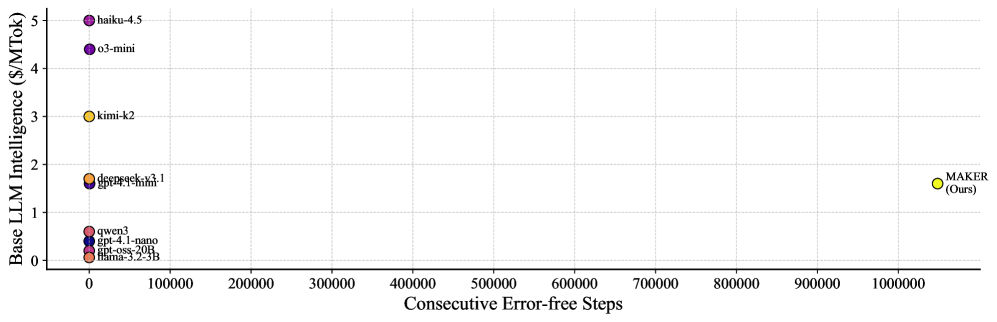
MAKER: Solving Million-Step LLM Tasks
MAKER is the first system to successfully solve tasks requiring over one million LLM steps with zero errors, overcoming a fundamental limitation where LLMs typically fail after a few hundred steps in complex multi-step processes. The approach demonstrates that massively decomposed agentic processes can efficiently handle lengthy sequences of dependent logical operations through extreme decomposition and error correction.
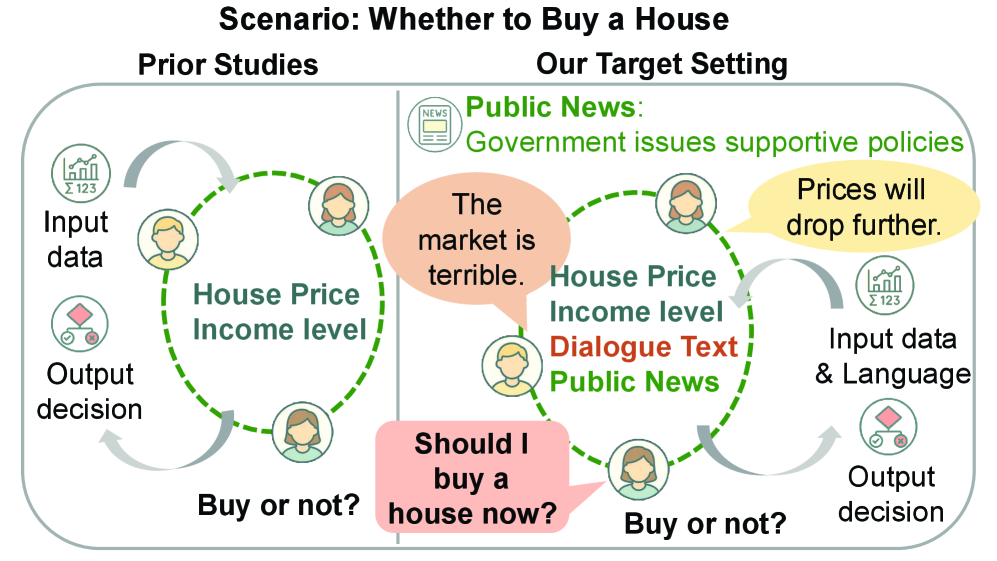
LAMP: Language-Augmented Multi-Agent RL
LAMP integrates natural language processing into multi-agent reinforcement learning through a three-stage pipeline: Think (processes numerical data and identifies market patterns), Speak (generates strategic communications between agents), and Decide (synthesizes information into optimized policy). The framework achieves substantial improvements over baseline methods with +63.5% and +34.0% gains in cumulative return and +18.8% and +59.4% improvements in robustness, bridging traditional MARL with real-world economic contexts where language significantly influences decisions.
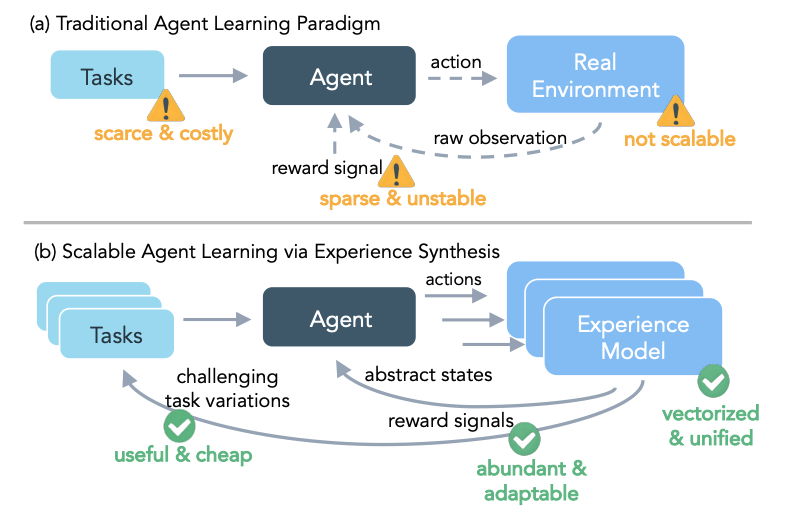
Scaling Agent RL via Experience Synthesis
Meta researchers introduce DreamGym, a unified framework that synthesizes diverse training experiences to enable scalable reinforcement learning for LLM agents without costly real-environment rollouts. It addresses fundamental barriers of expensive interactions, limited task diversity, unreliable rewards, and infrastructure complexity.
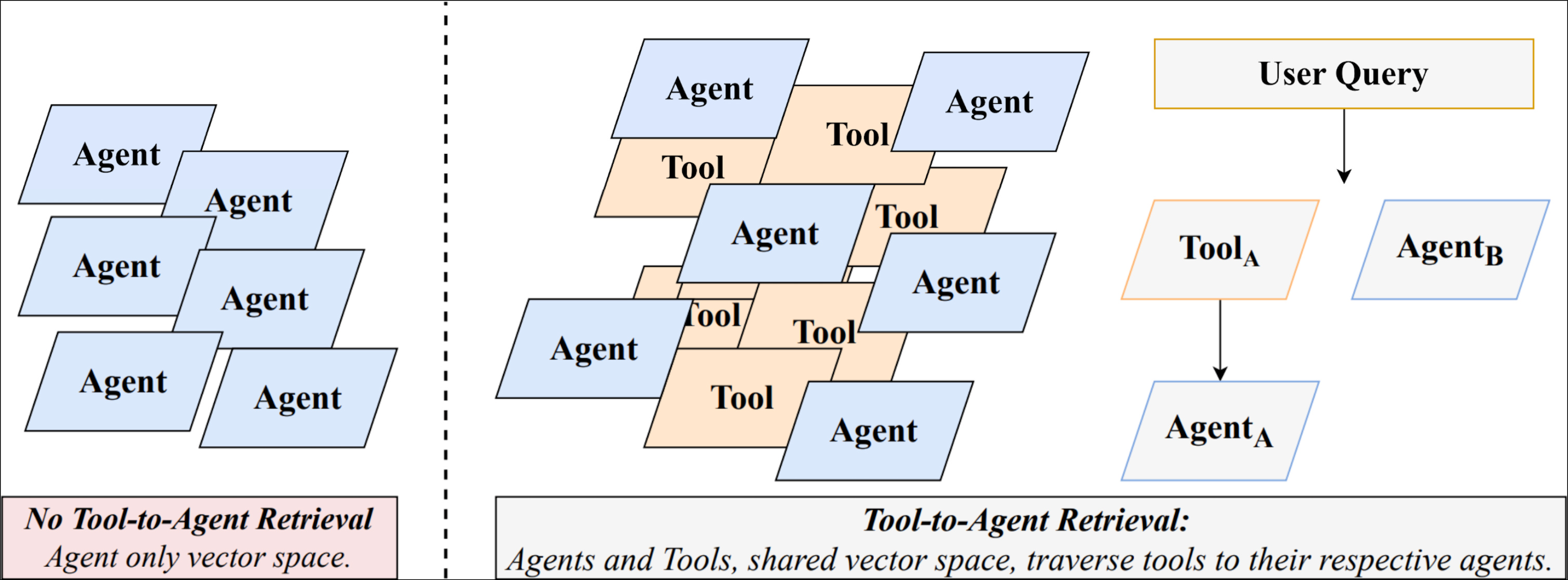
Tool-to-Agent Retrieval
PwC researchers introduce a unified retrieval framework that embeds both tools and agents in a shared vector space with metadata relationships, enabling efficient routing in multi-agent systems coordinating hundreds of MCP servers and tools.
Petri Dish Neural Cellular Automata
Sakana AI researchers introduce PD-NCA, a differentiable artificial life framework where multiple independent agents continuously update their parameters through gradient descent during simulation, enabling within-lifetime learning and open-ended behavioral change. The system exhibits emergent phenomena, including rock-paper-scissors dynamics, cyclic interactions, and spontaneous cooperation despite purely competitive optimization objectives.
Unlocking the Power of Multi-Agent LLM for Reasoning
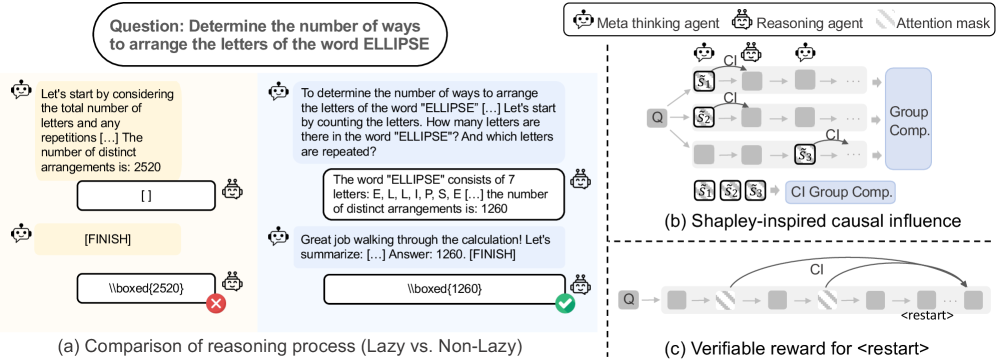
Researchers from Penn State, Harvard, Microsoft, and collaborators introduce Dr. MAMR, addressing the “lazy agent” problem in multi-agent LLM reasoning through Shapley-inspired causal influence measurement and verifiable restart mechanisms. The framework achieves 78.6% on MATH500 (+4.2% over ReMA), 20.0% on AIME24, and maintains balanced agent contributions where baseline approaches collapse into single-agent dominance.

AgentFold
AgentFold introduces proactive context management for long-horizon web agents, addressing context saturation through dynamic “folding” operations that balance detail preservation with efficient compression. The 30B parameter model outperforms dramatically larger competitors while achieving state-of-the-art results on web browsing benchmarks.
Multi-Agent Evolve
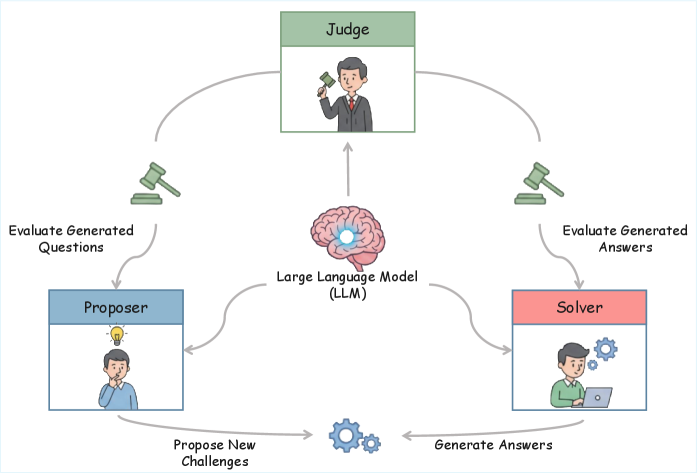
Multi-Agent Evolve (MAE) enables LLMs to self-improve their reasoning capabilities without human-annotated data through a co-evolving multi-agent framework. Three interacting agents (Proposer, Solver, Judge) instantiated from a single LLM undergo reinforcement learning optimization together, creating a scalable self-improving system that extends beyond game-based environments to general reasoning domains.
GAP
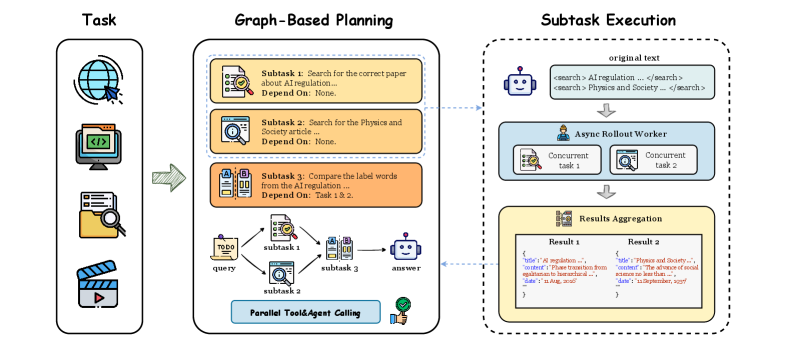
GAP introduces graph-based agent planning with parallel tool execution and reinforcement learning, enabling AI agents to coordinate multiple specialized capabilities simultaneously rather than sequentially. The framework significantly accelerates task completion and improves success rates on complex multi-step problems through optimized tool selection and execution ordering.
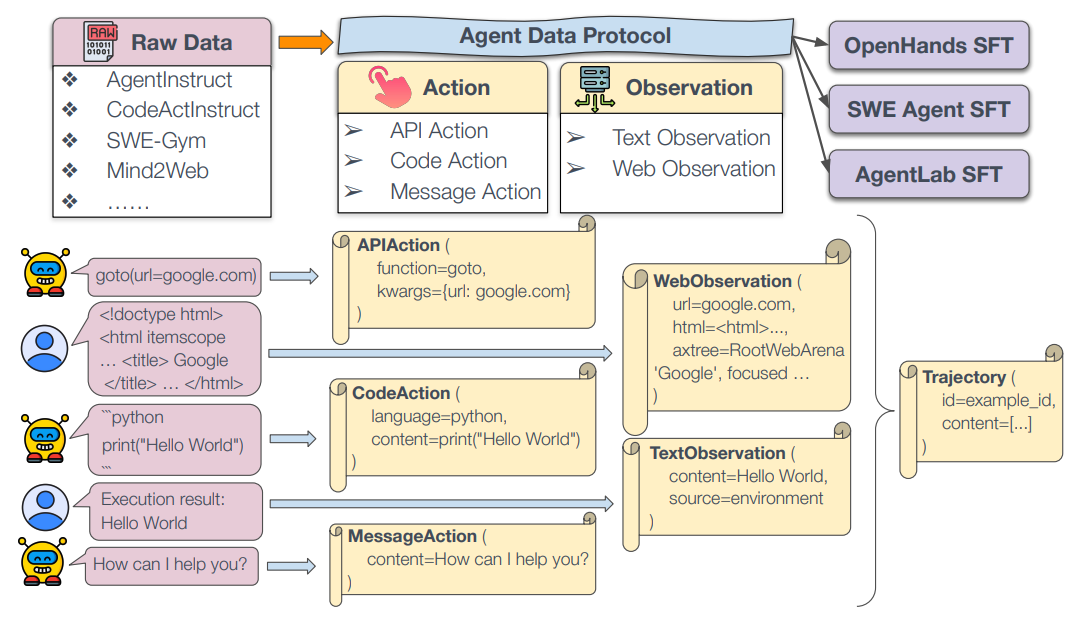
Agent Data Protocol
Agent Data Protocol introduces a standardized format to unify fragmented agent training datasets across different tools and interfaces, enabling more efficient fine-tuning of LLM agents. By converting 13 existing datasets into this protocol and training on consolidated data, the work achieved ~20% performance improvements over baseline models while reaching state-of-the-art results on coding, browsing, and tool-use benchmarks. The protocol and datasets are publicly released to facilitate reproducible, scalable agent training across diverse domains.
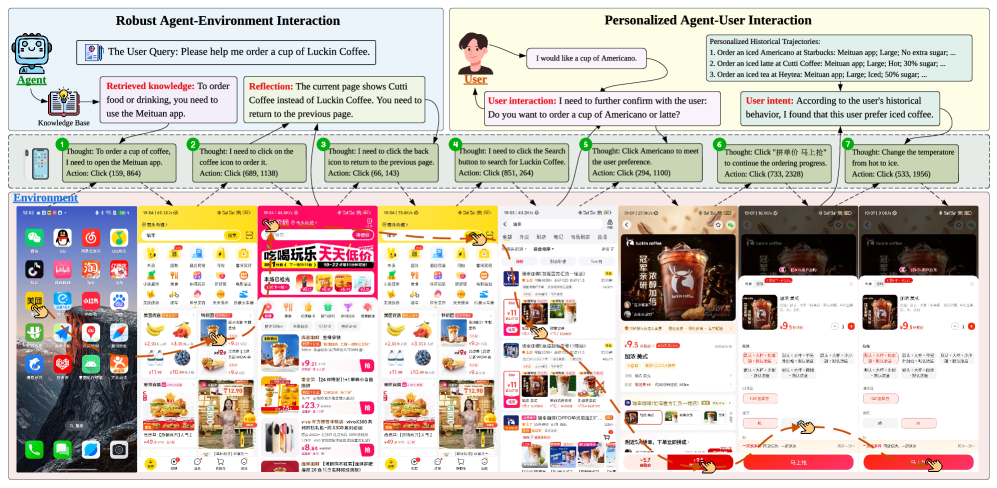
ColorAgent
ColorAgent is a mobile OS agent combining step-wise RL and self-evolving training with a multi-agent framework for personalized user engagement. It achieves 77.2% success on AndroidWorld and 50.7% on AndroidLab (SOTA among open models), while scoring 58.66% on MobileIAR for personalized intent alignment and 68.98% on VeriOS-Bench for trustworthiness.
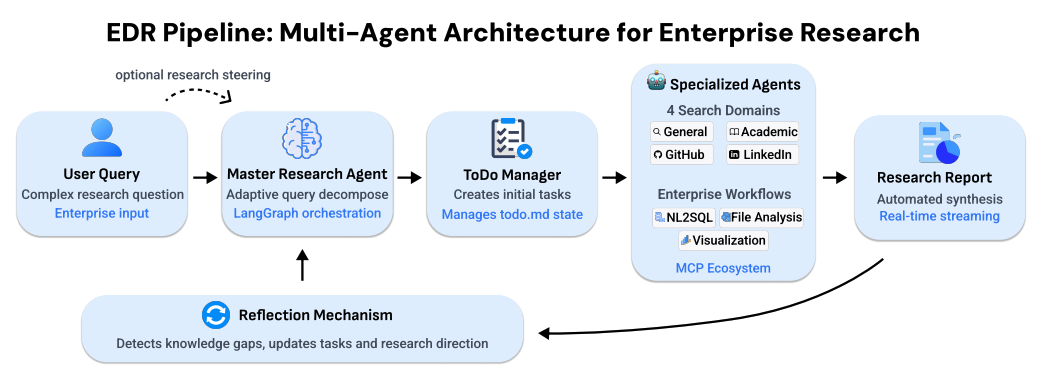
Enterprise Deep Research
Salesforce AI researchers present EDR, a transparent multi-agent framework for enterprise deep research with human-in-the-loop steering via todo-driven task management and steerable context engineering. It achieves SOTA on DeepResearch Bench (49.86), 71.57% win rate on DeepConsult, and 68.5% on ResearchQA while consuming 4x fewer tokens than LangChain’s open deep research.
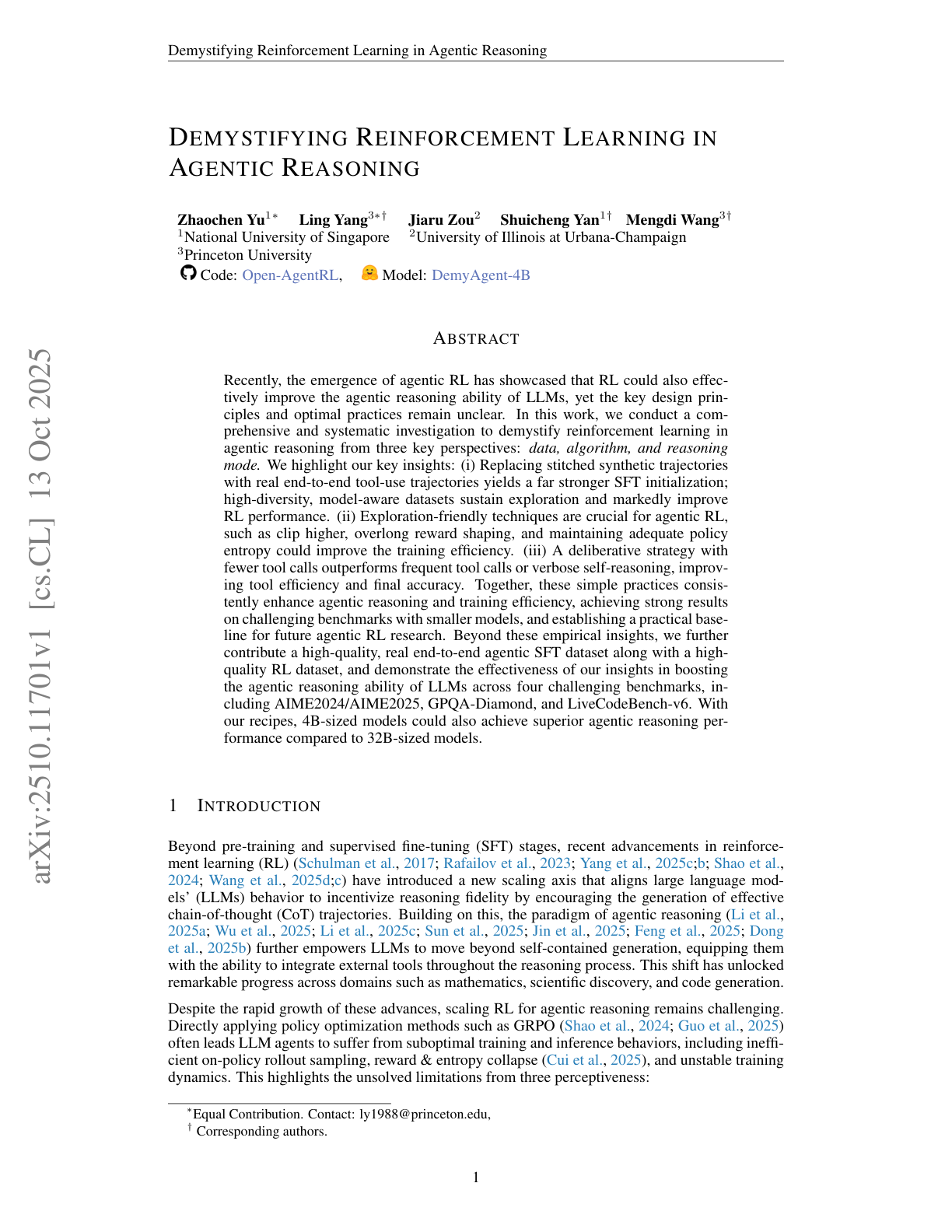
Demystifying RL in Agentic Reasoning
This paper studies what actually works when using RL to improve tool-using LLM agents, across three axes: data, algorithm, and reasoning mode. The team contributes a real end-to-end SFT dataset, a diverse RL set, and a compact 4B agent that beats larger models on agentic benchmarks.
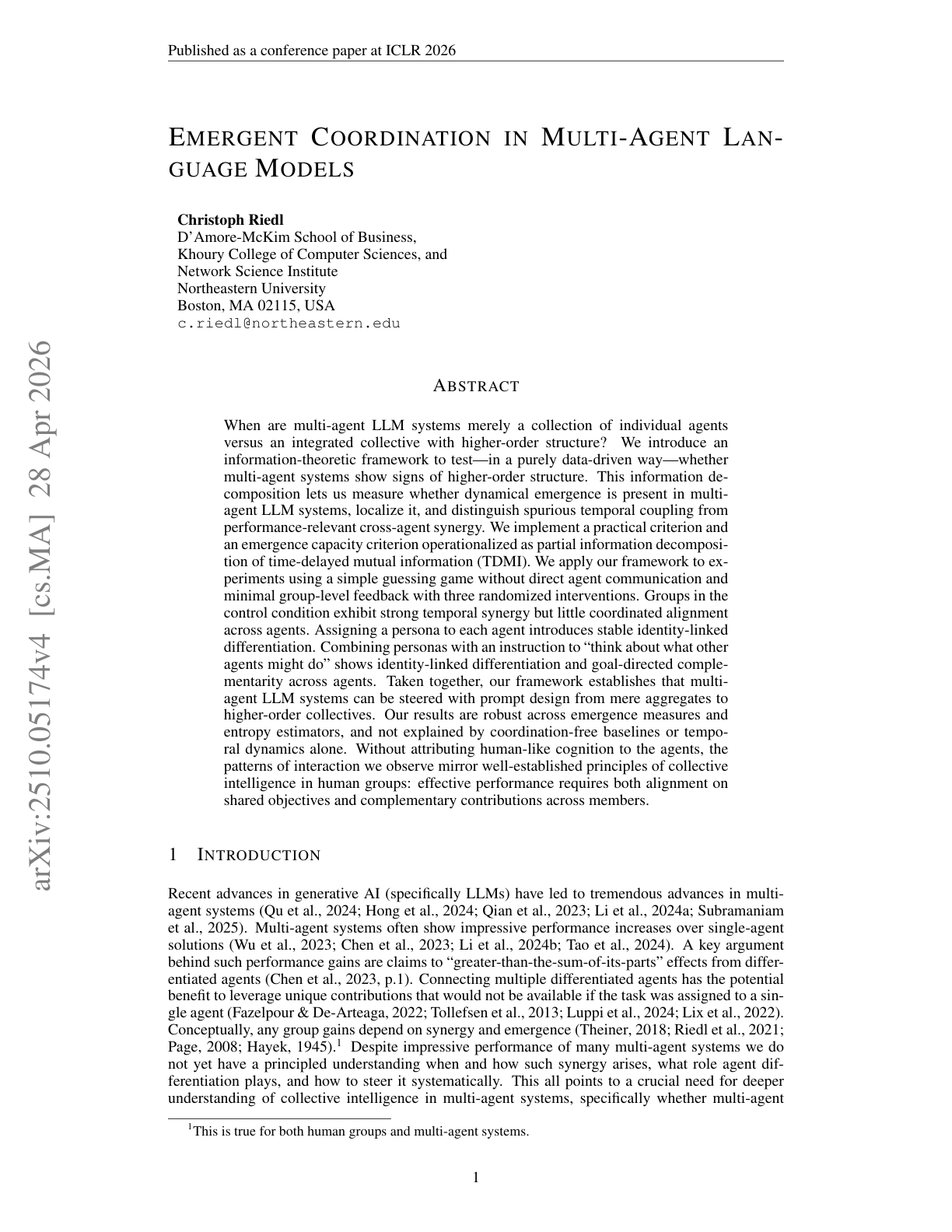
Emergent Coordination in Multi-Agent LLMs
A neat, information-theoretic probe for “is this just a pile of agents or a real collective?” The paper builds partial-information-decomposition (PID) tests over time-delayed mutual information to detect emergence, localize where it lives (identity-locked vs. mere temporal coupling), and tie it to performance. Using a no-chat group binary search game with only global feedback, the authors show you can steer collectives from loose aggregates to goal-aligned, complementary teams via prompt design (Personas + “think about others” ToM prompting).
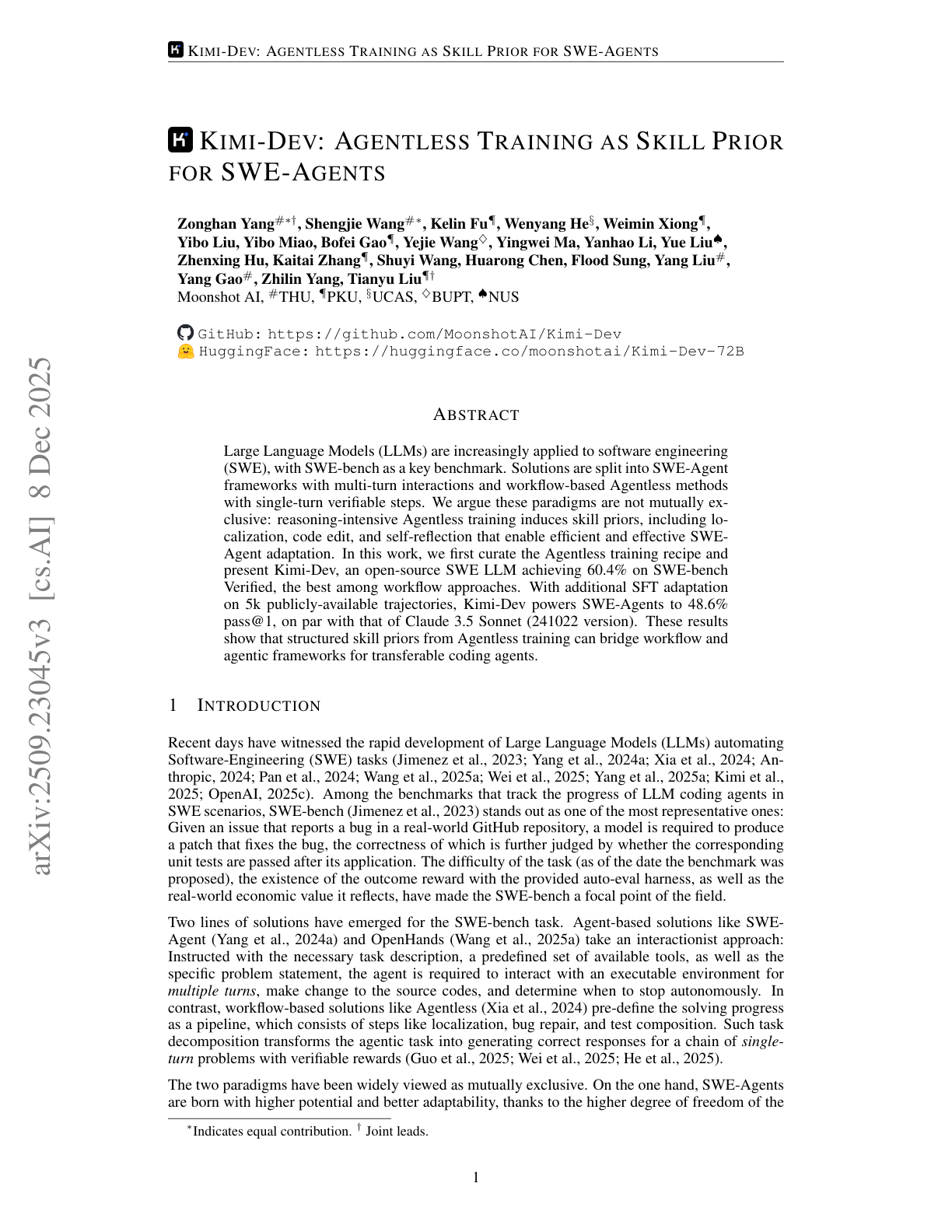
Kimi-Dev
Kimi-Dev introduces agentless training as a skill prior to software engineering LLMs, bridging workflow-style and agentic paradigms. Trained with structured, verifiable single-turn tasks, it achieves 60.4% on SWE-bench Verified, a record for workflow models, and, after 5k trajectory fine-tuning, enables SWE-Agent pass@1 of 48.6%, rivaling Claude 3.5 Sonnet. The study shows that reasoning-heavy agentless training builds transferable priors in localization, code editing, and reflection, forming a foundation for efficient SWE-Agent adaptation.