AI Papers of the Week
Every paper worth reading in AI, hand-picked one week at a time.
Discover and explore top AI papers with Claude Code or Codex
npx @dair-ai/mcp setup
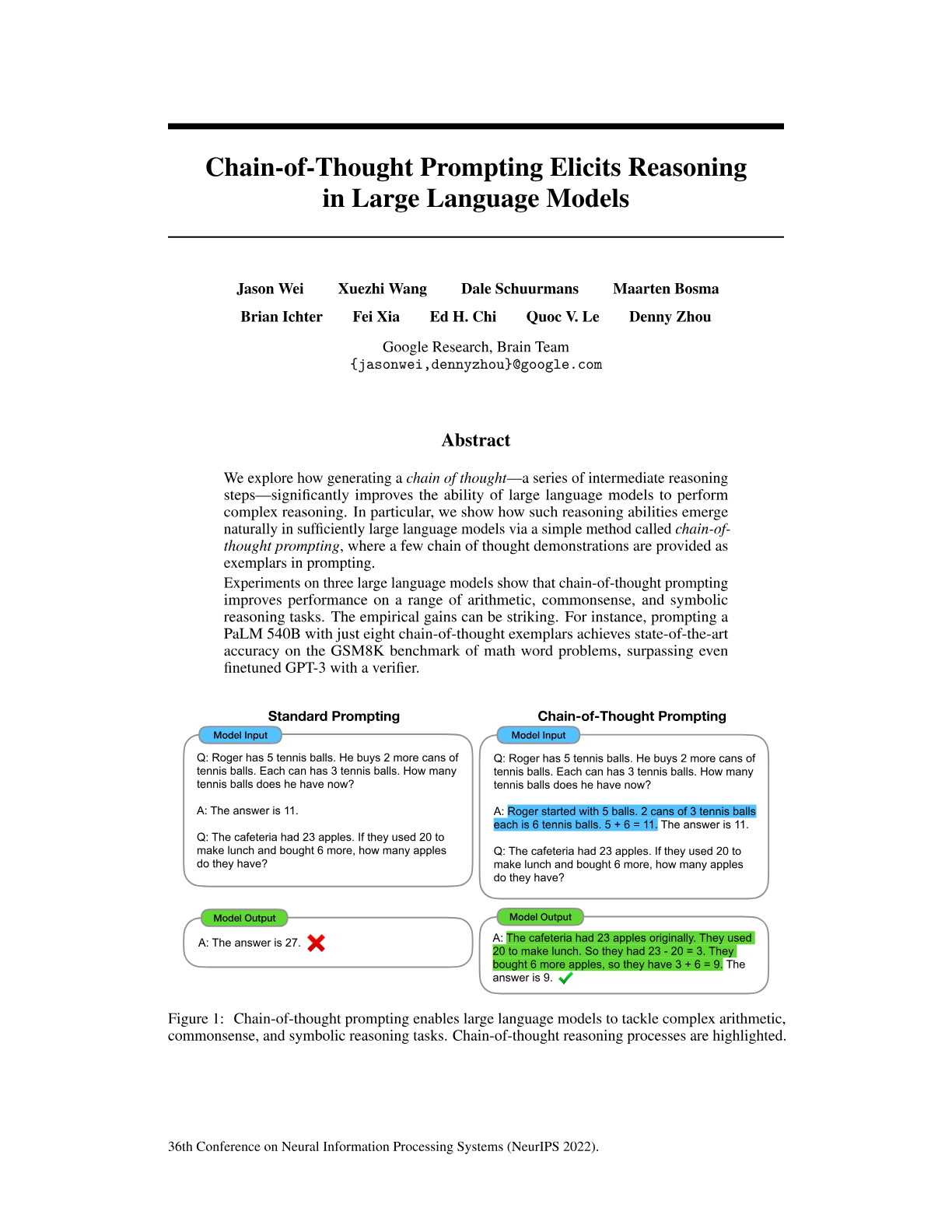
STaR: Bootstrapping Reasoning With Reasoning
Generate rationales, keep the ones that reach the correct answer, fine-tune on those, and repeat. Every later self-training loop is a variant of this, and its first author went on to write STOP.
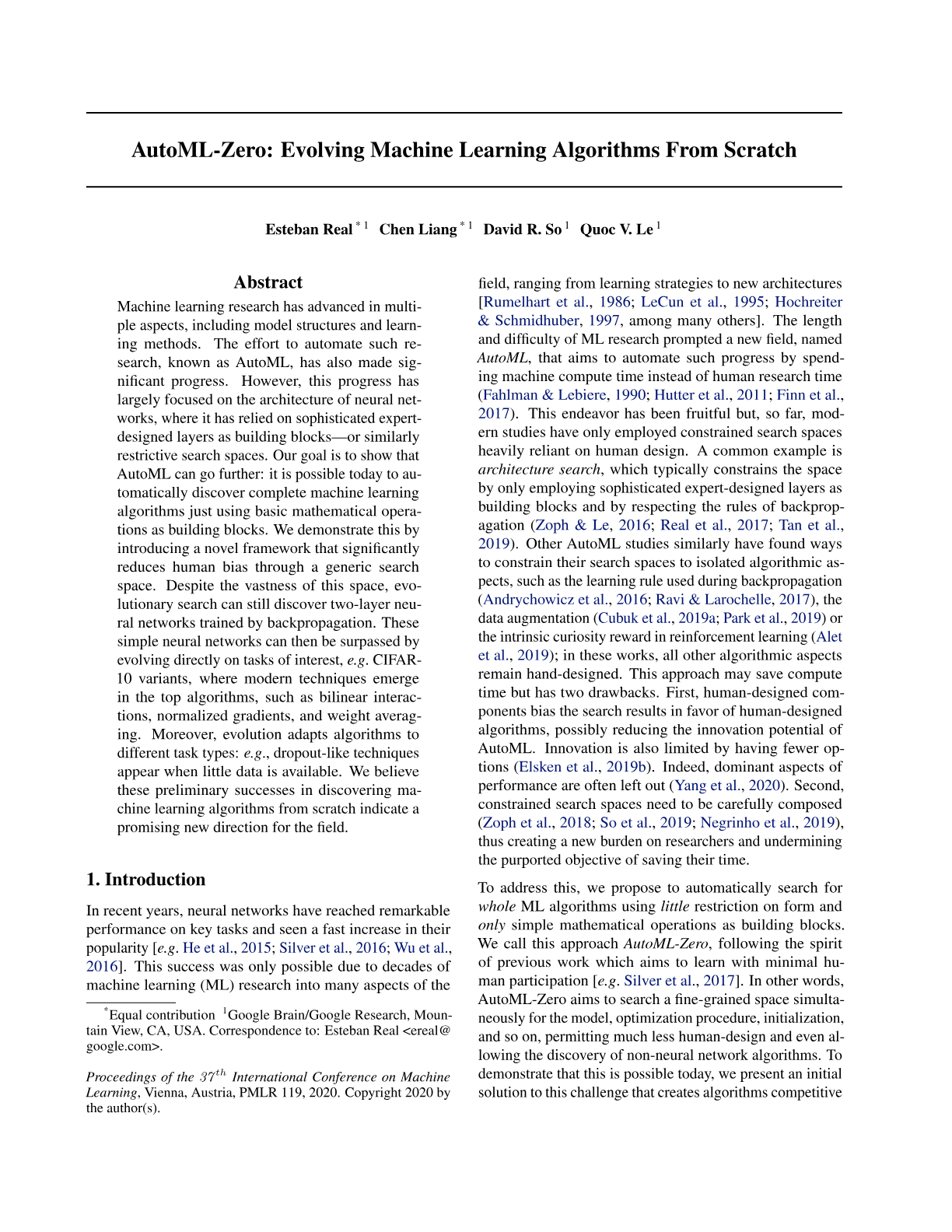
Chain-of-Thought Prompting Elicits Reasoning in Large Language Models
Smear the computation over more tokens instead of demanding the answer in one. This is the first output-space intervention in the lineage, and the reason every harness since budgets tokens rather than calls.
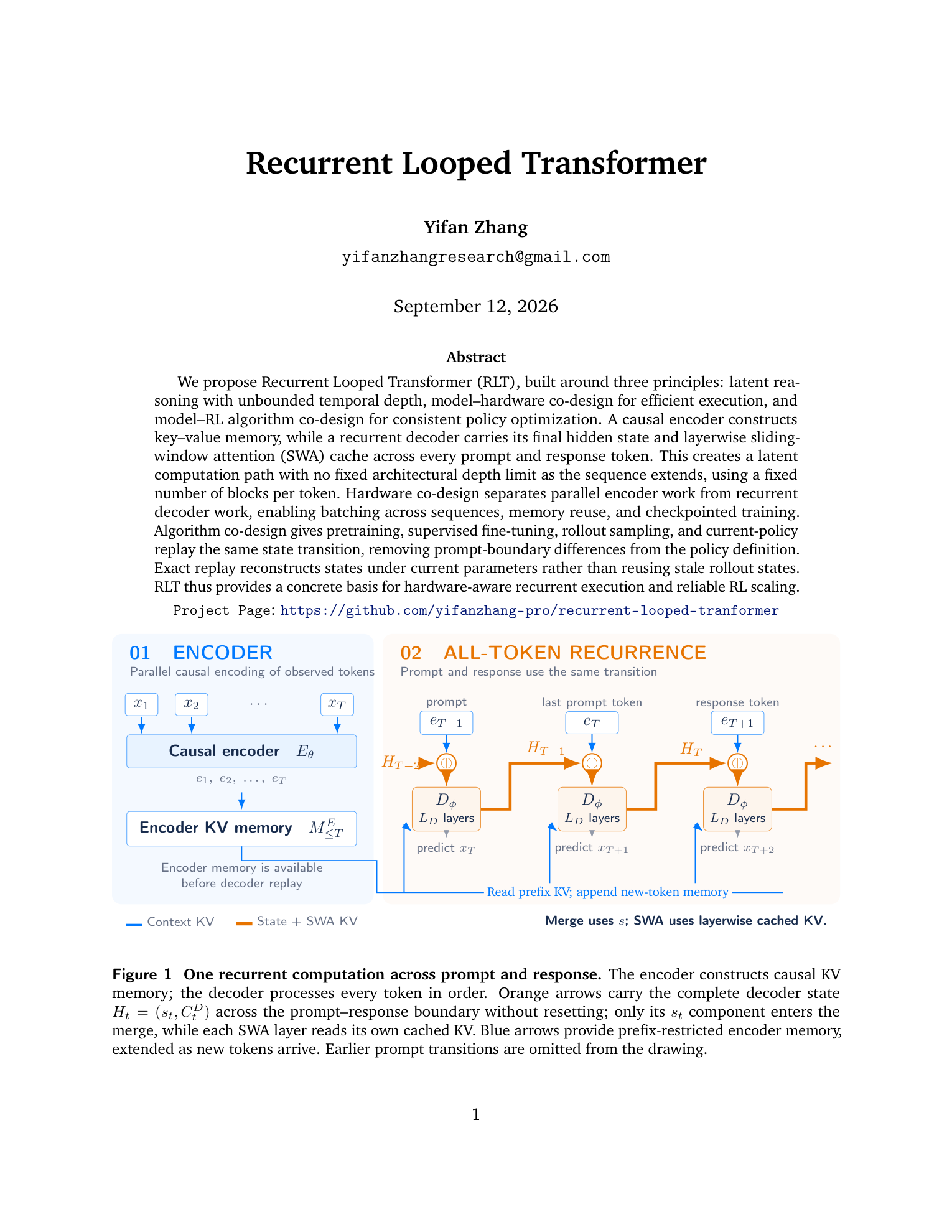
AutoML-Zero: Evolving Machine Learning Algorithms From Scratch
Evolves entire learning algorithms from primitive mathematical operations, with no human-designed components to build on. The pre-language-model ancestor of AI discovering the methods that train AI.
Recurrent Looped Transformer
Yifan Zhang proposes the Recurrent Looped Transformer, in which a causal encoder builds global key-value memory and a recurrent decoder carries its final hidden state and sliding-window cache across every prompt and response token, so the depth of the computation path grows with sequence length while the number of blocks per token stays fixed. The report is a design specification and contains no experimental results.
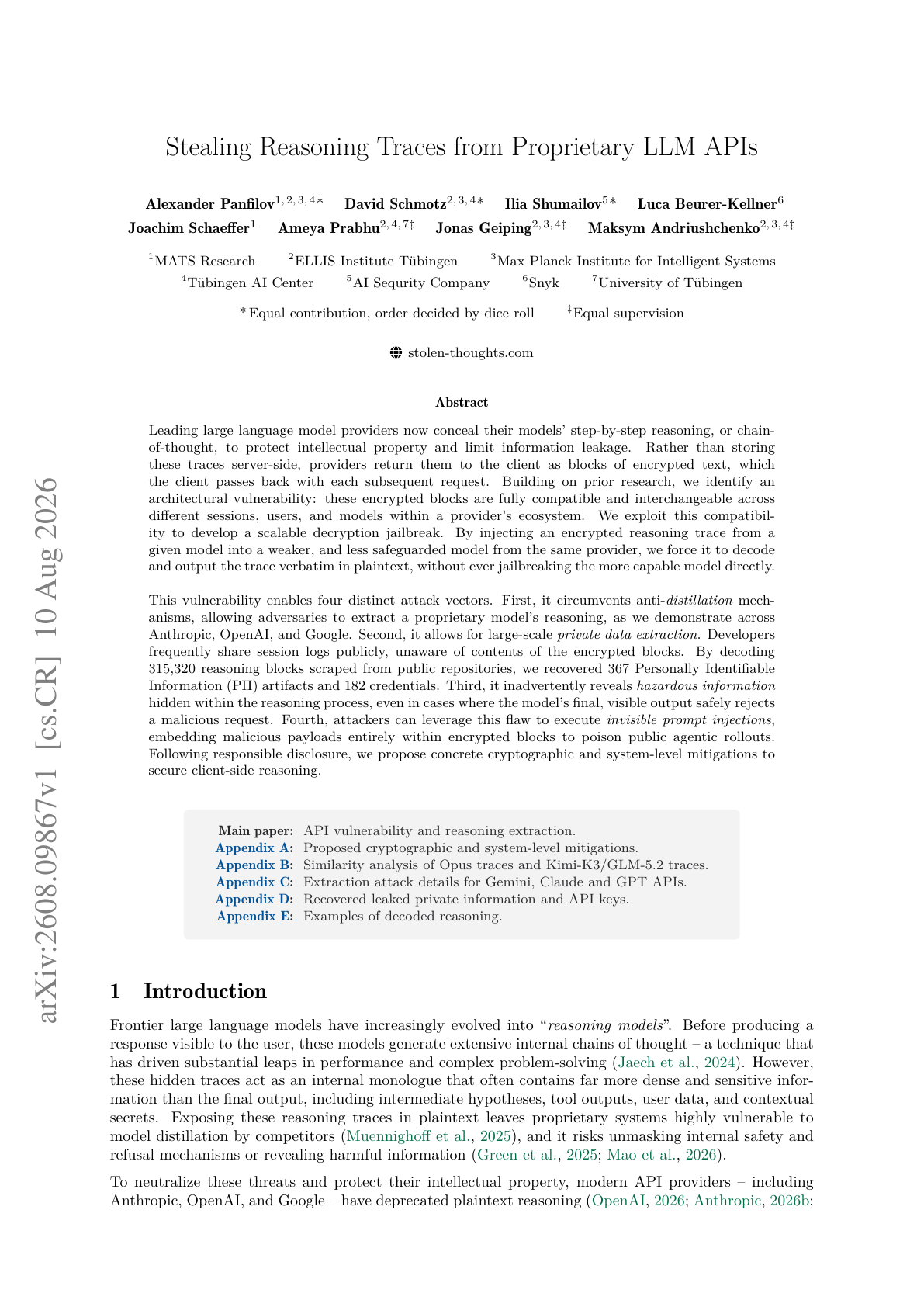
Stealing Reasoning Traces
Frontier providers hide chain-of-thought and hand the client an encrypted block instead, which the client returns with every subsequent request. This work identifies an architectural flaw in that design and turns it into a scalable extraction attack across three providers.
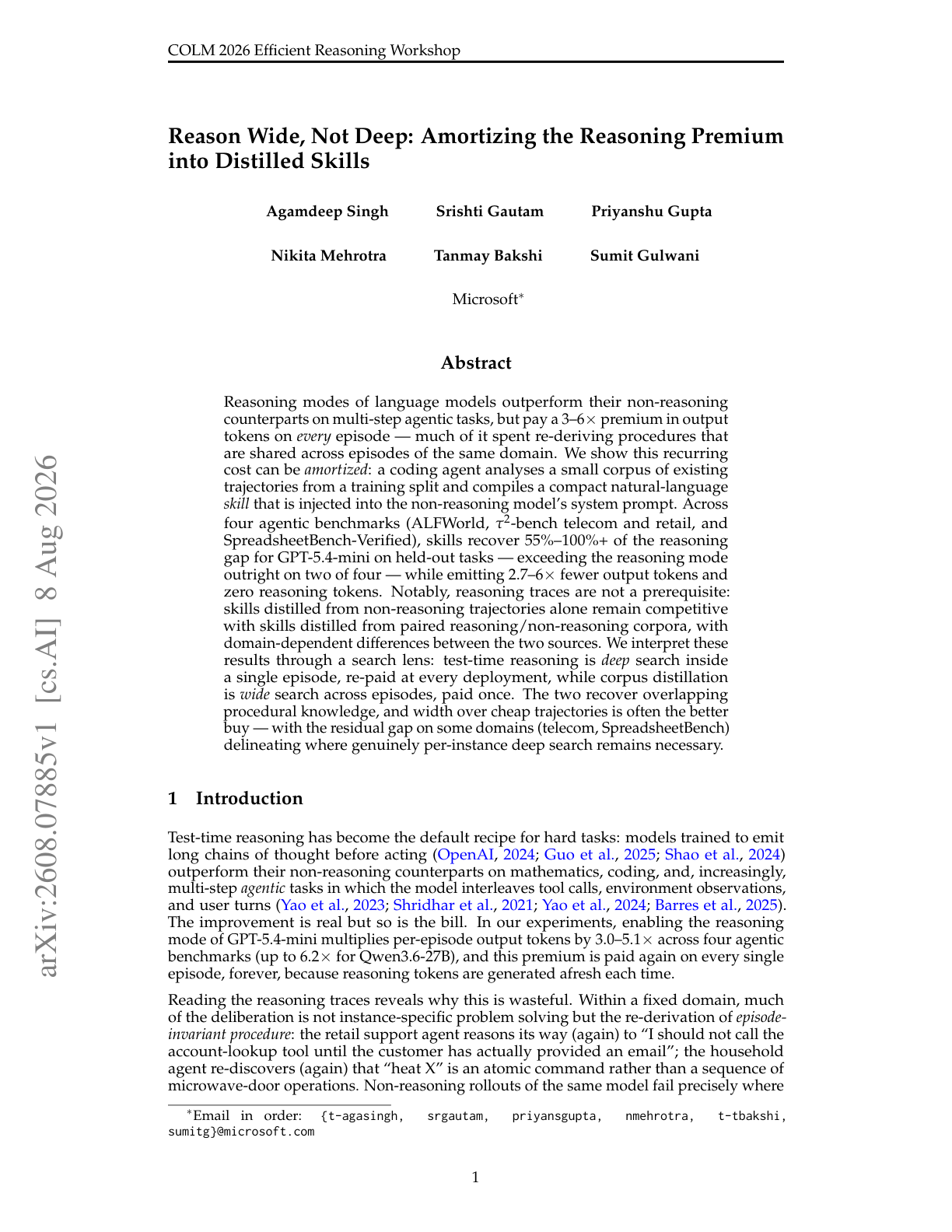
Reason Wide, Not Deep
Reasoning modes beat non-reasoning modes on multi-step agentic tasks and charge a 3x to 6x output-token premium on every single episode. Much of that spend goes into re-deriving procedures the model already worked out on earlier episodes in the same domain, which means the cost is recurring by accident rather than by necessity.
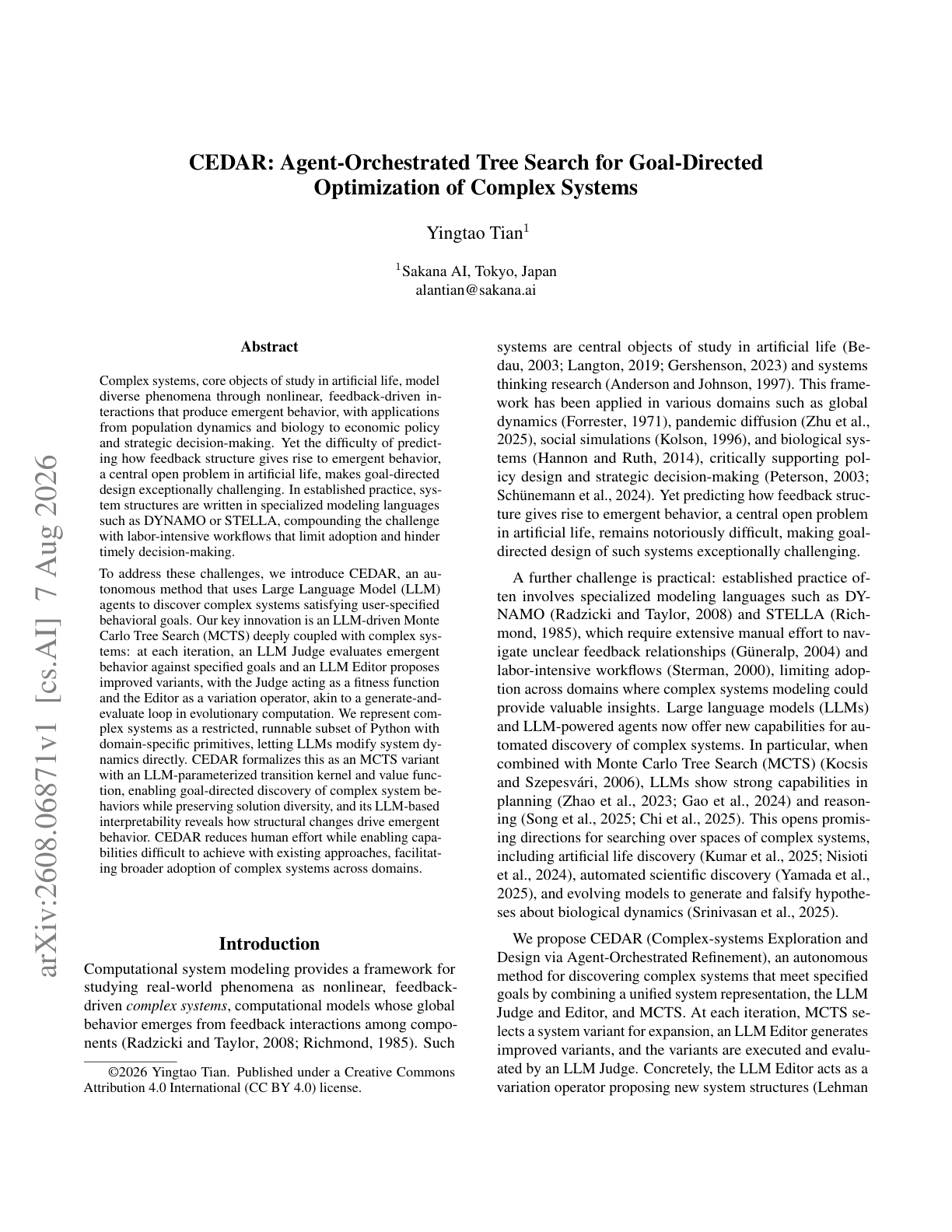
CEDAR
Complex systems research models feedback-driven phenomena from population dynamics to economic policy, and its central open problem is that nobody can predict how feedback structure gives rise to emergent behavior, which makes goal-directed design very hard. CEDAR, from Sakana AI, attacks that with LLM agents running Monte Carlo Tree Search over the space of feedback structures rather than tuning parameters on a fixed one. Systems are represented as a restricted runnable subset of Python with domain-specific primitives so the models can edit dynamics directly, an LLM Judge scores emergent behavior against the stated goal as a fitness function, and an LLM Editor proposes variants as a variation operator. The formalization is an MCTS variant with an LLM-parameterized transition kernel and value function, which preserves solution diversity while searching, and the LLM-based interpretability makes it possible to read back how a structural change produced the behavior.
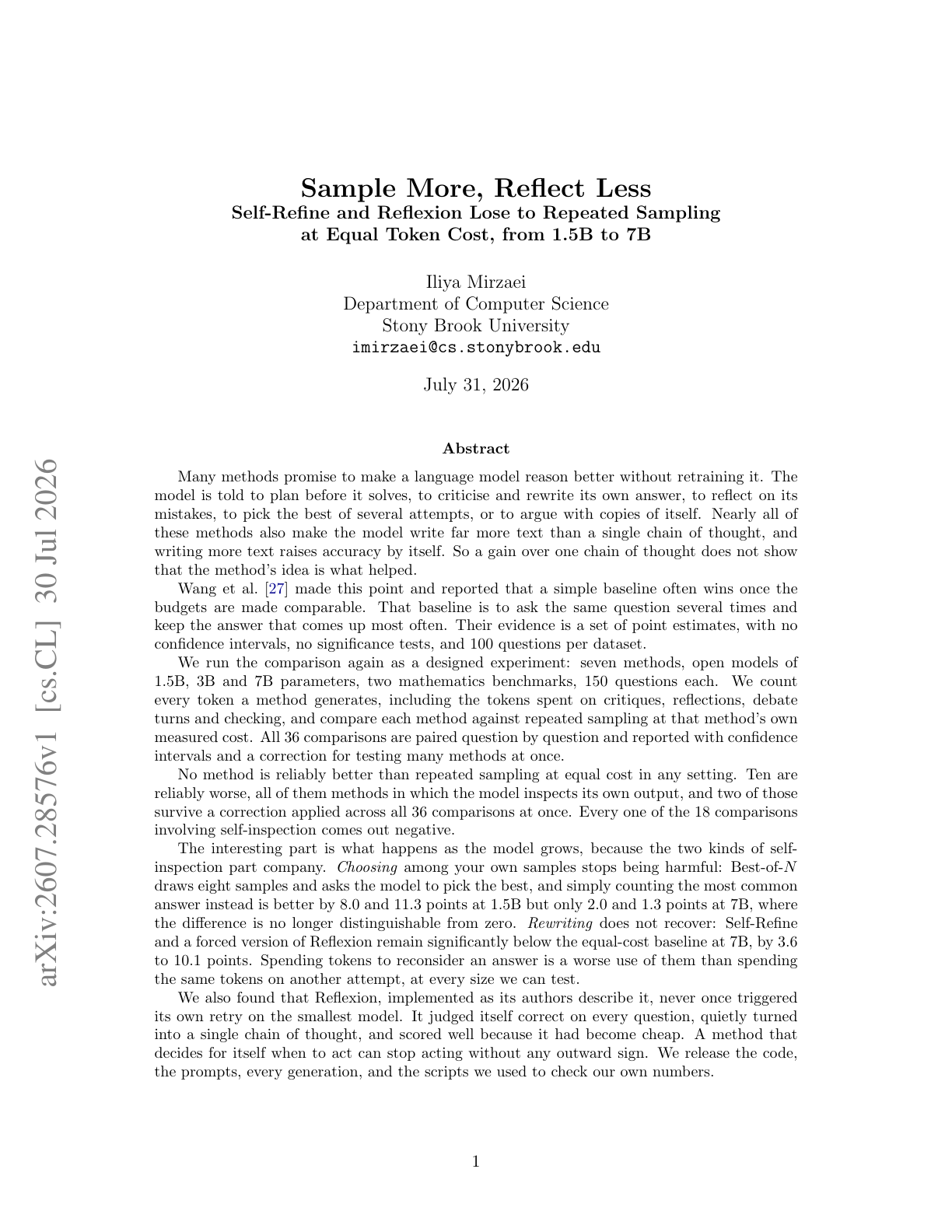
Sample More Reflect Less
Methods that make a model criticize and rewrite its own answer nearly all generate far more text than a single chain of thought. Since generating more text raises accuracy on its own, a reported gain leaves open whether the method's idea is what helped. This paper reruns the comparison as a designed experiment.
Invisible Reasoning
Chain-of-thought monitoring rests on the assumption that a model expresses its reasoning in its output tokens. This work demonstrates a concrete failure of that assumption in models shipping today.
Global Workspace in LLMs
This Anthropic interpretability work gives a mechanistic account of when a model's verbalized reasoning is load-bearing and when it is not. It identifies a small, privileged set of internal representations that behaves like the global workspace some neuroscientists tie to conscious access.
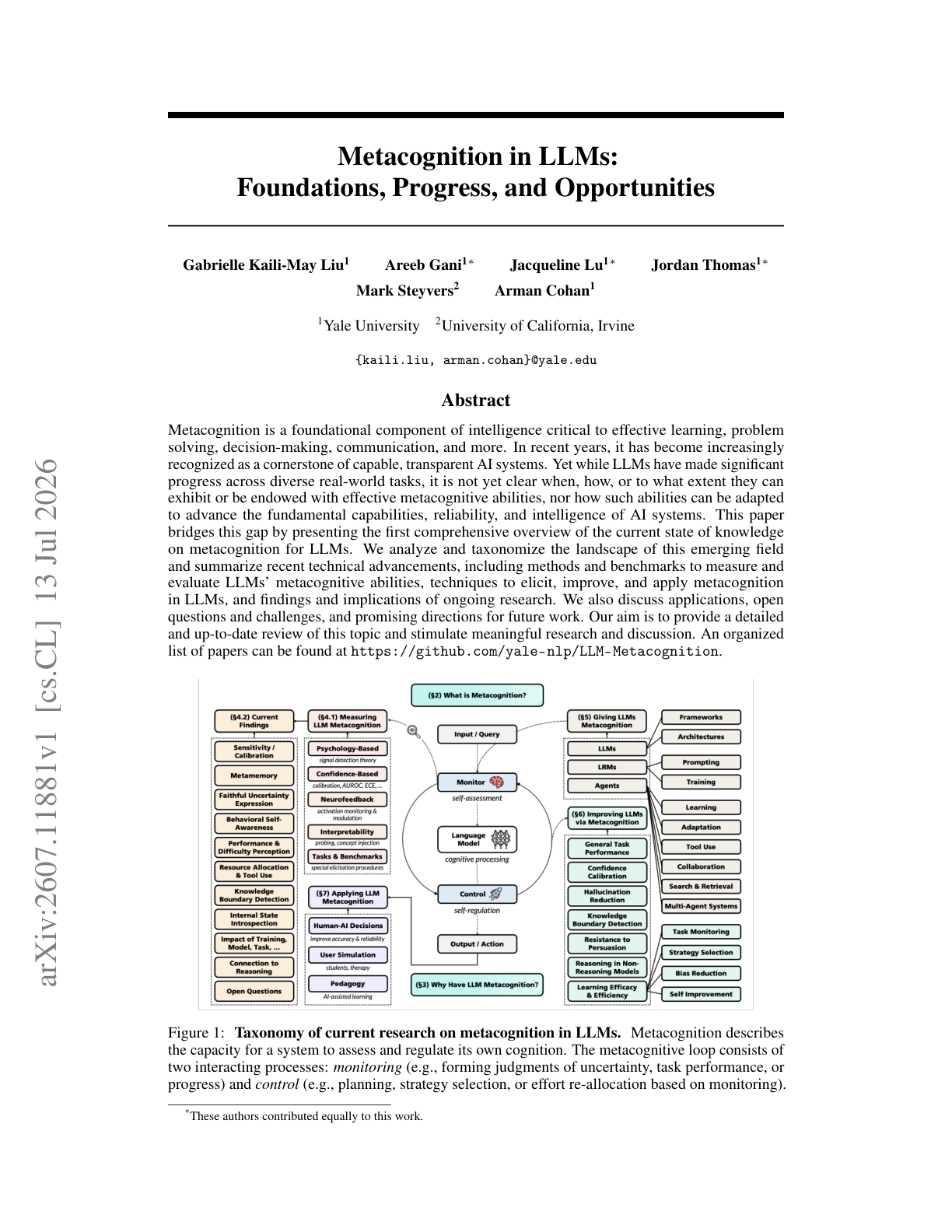
Metacognition in LLMs
Confidence calibration, self-verification, knowing when to stop, and knowing what you do not know have mostly been studied in isolation. This survey from Yale and UC Irvine argues they are facets of one capability, metacognition, and organizes the field around a monitor and control loop wrapped around the language model.
Harness Evolution, Rethought
Automatic harness evolution is what many teams now use to squeeze more out of agents, but the reported gains might not be coming from the harness at all. This paper argues that harness evolution is itself a search procedure and must be compared against simple search baselines under matched budgets.
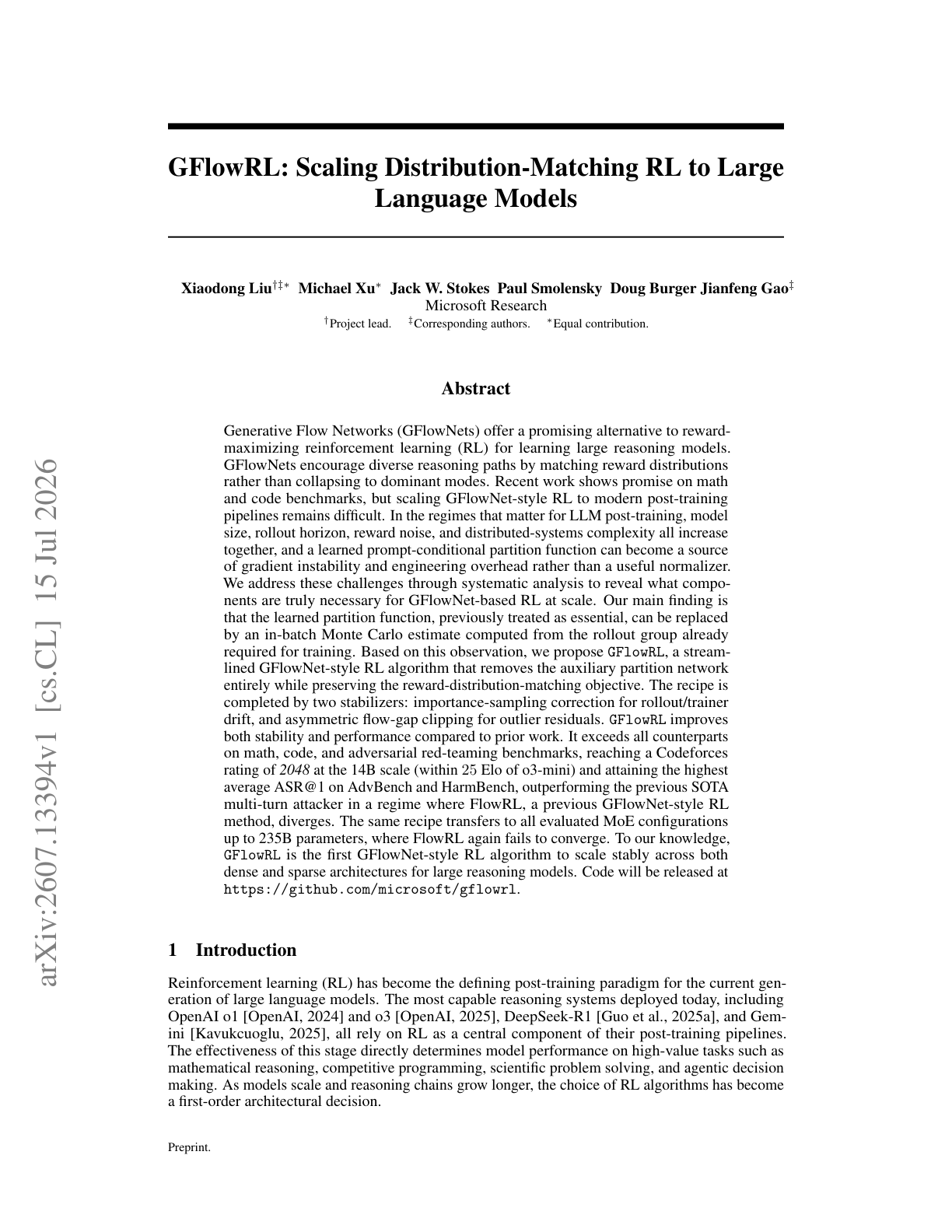
GFlowRL
Reward-maximizing RL tends to collapse large reasoning models onto a single dominant mode, and GFlowNet-style training is appealing because it matches reward distributions and keeps diverse reasoning paths. GFlowRL scales this to modern post-training by replacing the hard-to-learn partition function with an in-batch Monte Carlo estimate computed from the rollout group the pipeline already produces. It is the first GFlowNet-style RL algorithm to train stably across both dense and sparse architectures, reaching a 2048 Codeforces rating at 14B and outperforming prior methods on math, code, and adversarial red-teaming benchmarks like AdvBench and HarmBench.
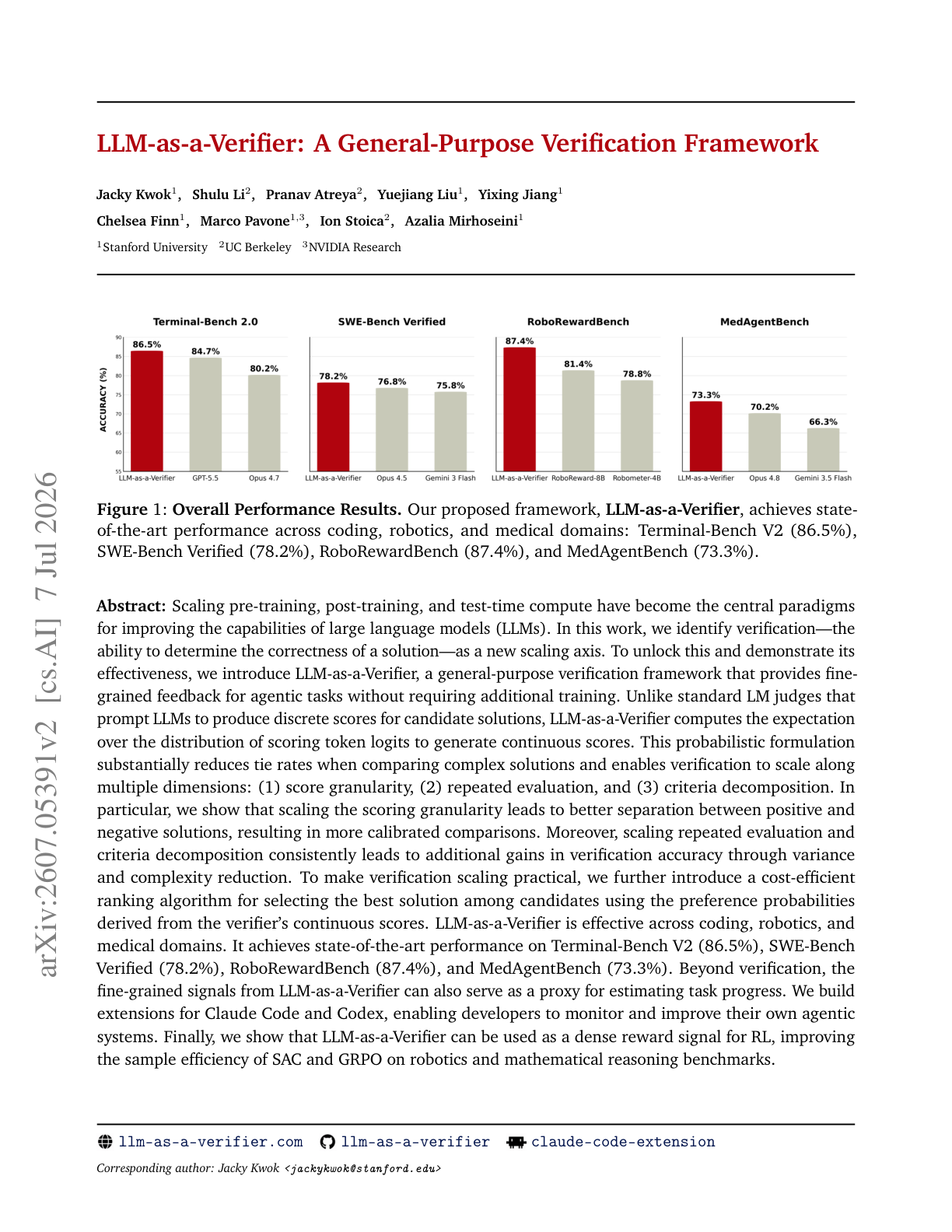
Verification as a Scaling Axis
Verification is emerging as a distinct scaling axis alongside pre-training and test-time compute, and this Stanford, NVIDIA, and UC Berkeley collaboration builds a training-free verifier that reads a continuous, calibrated score straight off the scoring-token logits instead of trusting a discrete pass or fail grade.
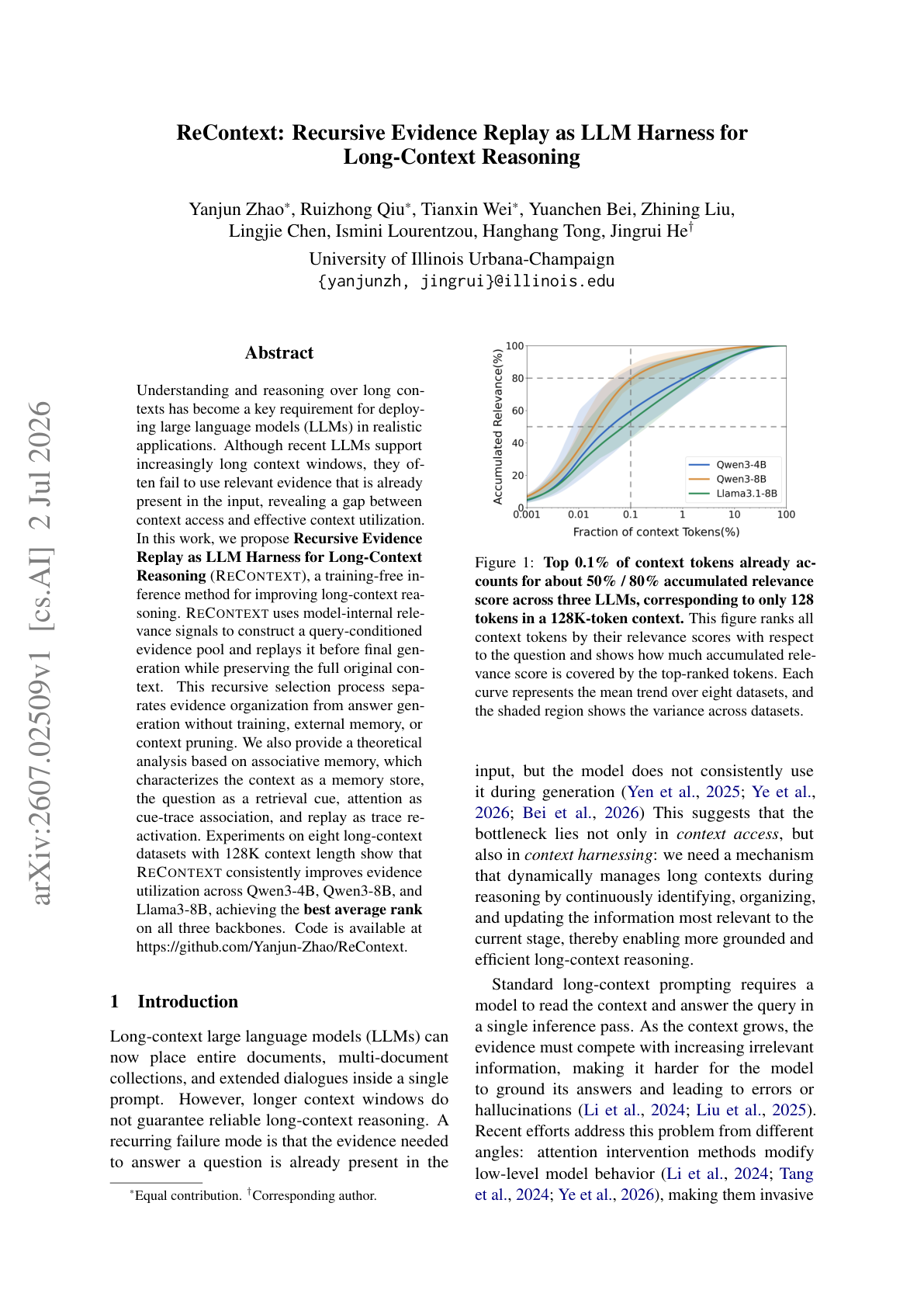
ReContext
Models now support 128K context windows yet still fail to use evidence already sitting in the prompt. ReContext is a training-free inference harness for long-context reasoning that uses model-internal relevance signals to build a query-conditioned evidence pool, then replays it right before final generation while preserving the full original context.
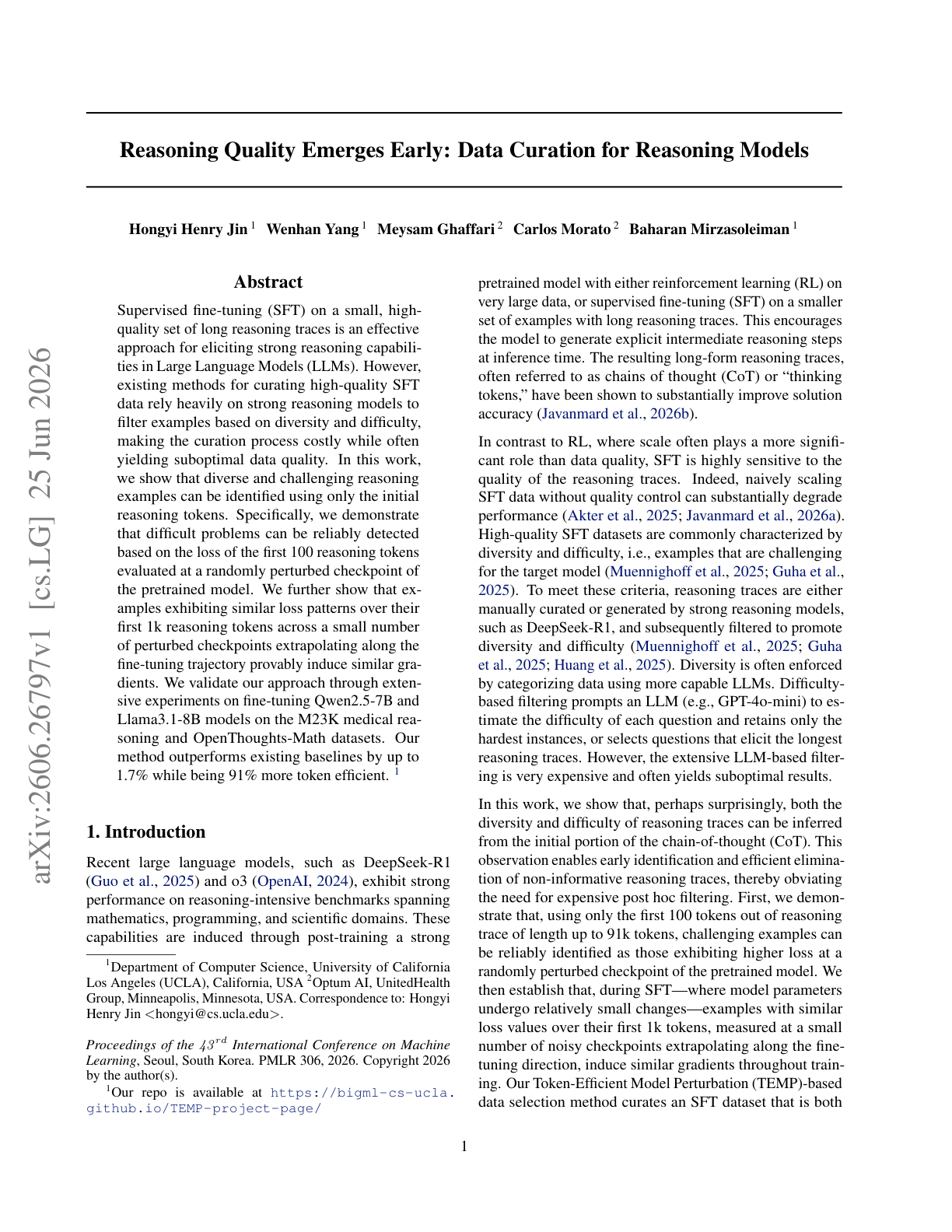
Reasoning Quality Emerges Early
Curating reasoning data is expensive because scoring a trace usually means reading it to the end, but this UCLA work shows the quality of a trace is largely decided in its opening tokens. A short prefix predicts whole-trace quality well enough to rank and filter on, and difficulty can be detected from the loss of the first 100 tokens at a perturbed checkpoint. That turns curation into a cheap early-stopping problem, outperforming baselines while being far more token efficient at building SFT data for reasoning models.
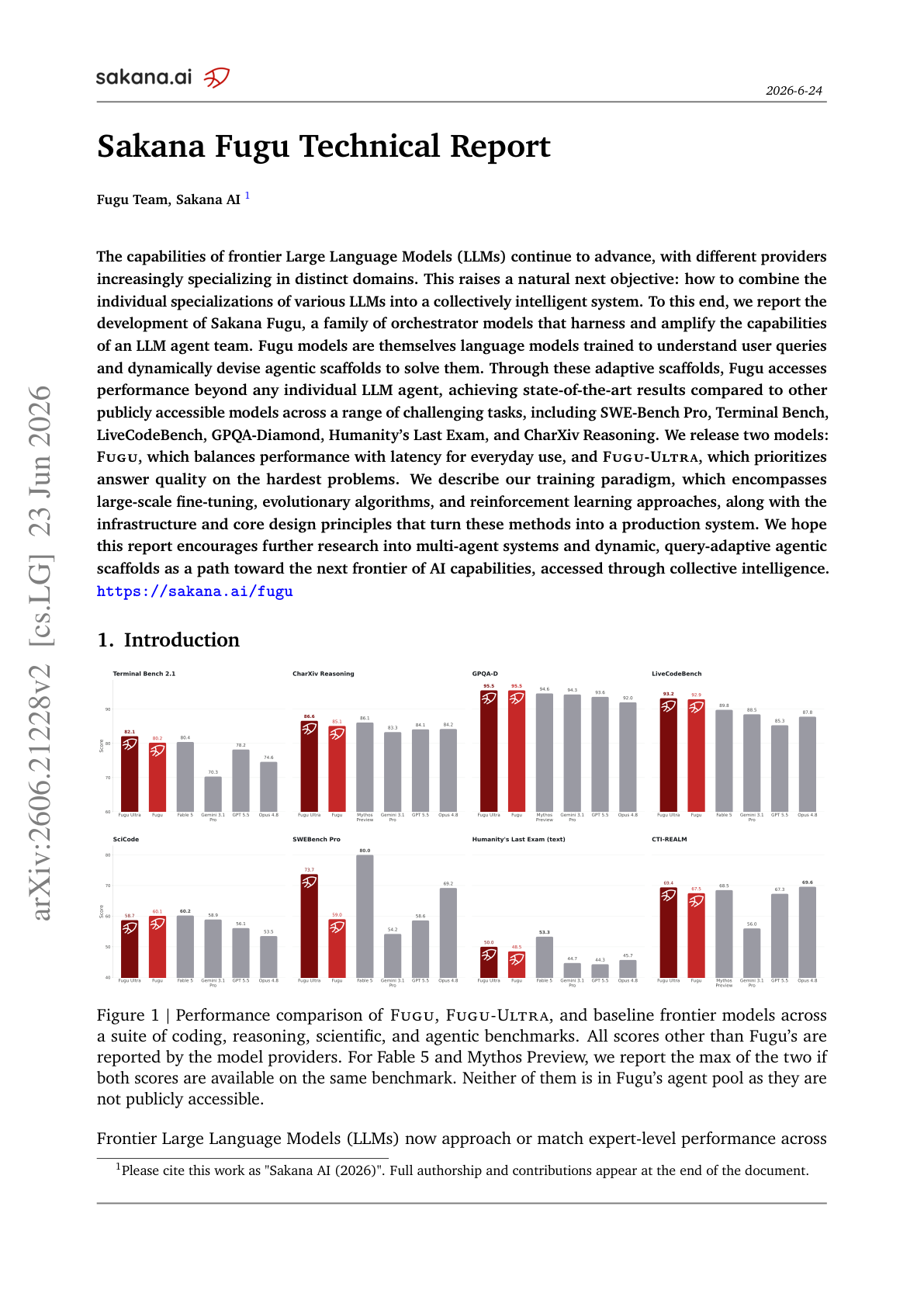
Sakana Fugu
Frontier LLMs keep advancing, and different providers are increasingly specializing in distinct domains, which raises a natural next objective: how do you combine those individual specializations into one collectively intelligent system? Sakana Fugu answers with a family of orchestrator models that are themselves language models trained to read a user query and dynamically devise the agentic scaffold needed to solve it.
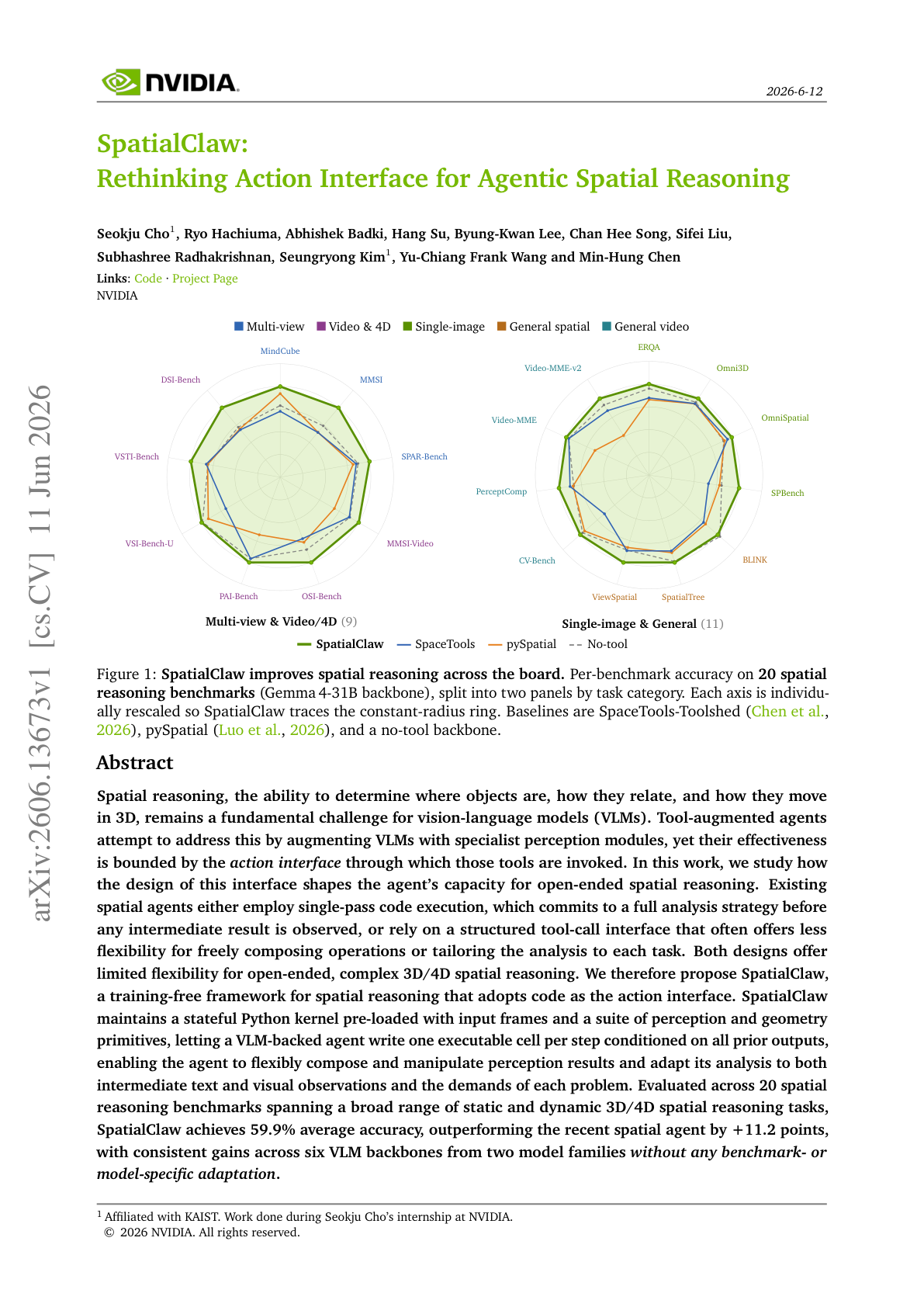
SpatialClaw
Spatial reasoning over 3D and 4D scenes is still where general vision-language models break down, because they emit a text answer directly rather than measuring anything. From NVIDIA, SpatialClaw is a training-free framework that rethinks the action interface and lets a VLM-backed agent reason through code instead. The agent writes one Python cell per step into a persistent Jupyter kernel preloaded with perception primitives and scientific libraries, then inspects intermediate results and revises its strategy across steps.
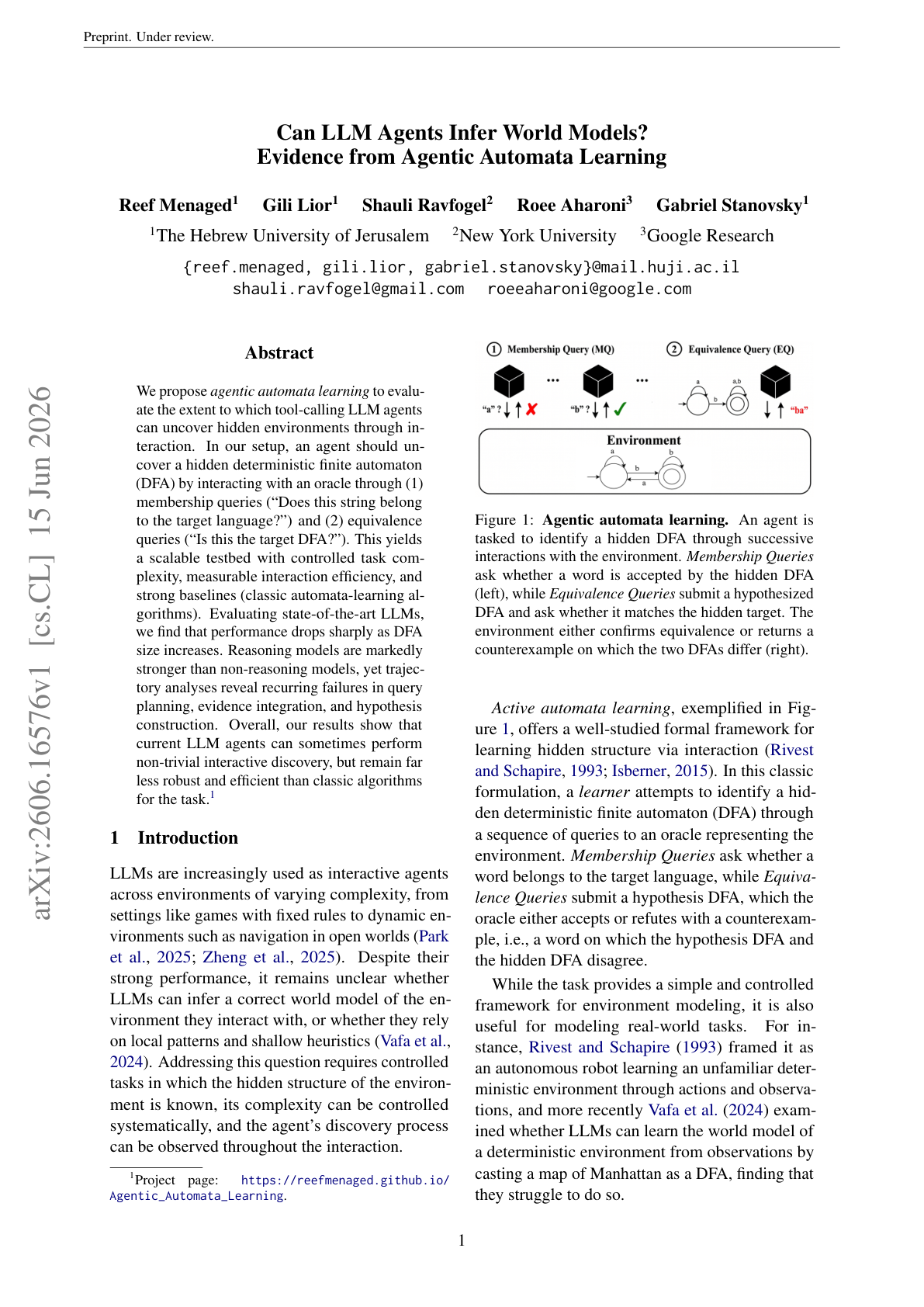
Can LLM Agents Infer World Models?
Can an LLM agent actually build a model of an environment it cannot see? This work makes that question gradeable through agentic automata learning. An agent has to uncover a hidden deterministic finite automaton by interacting with an oracle through two interfaces, membership queries that ask whether a string belongs to the target language, and equivalence queries that ask whether a proposed automaton is correct, which yields a clean, scalable testbed for interactive discovery.
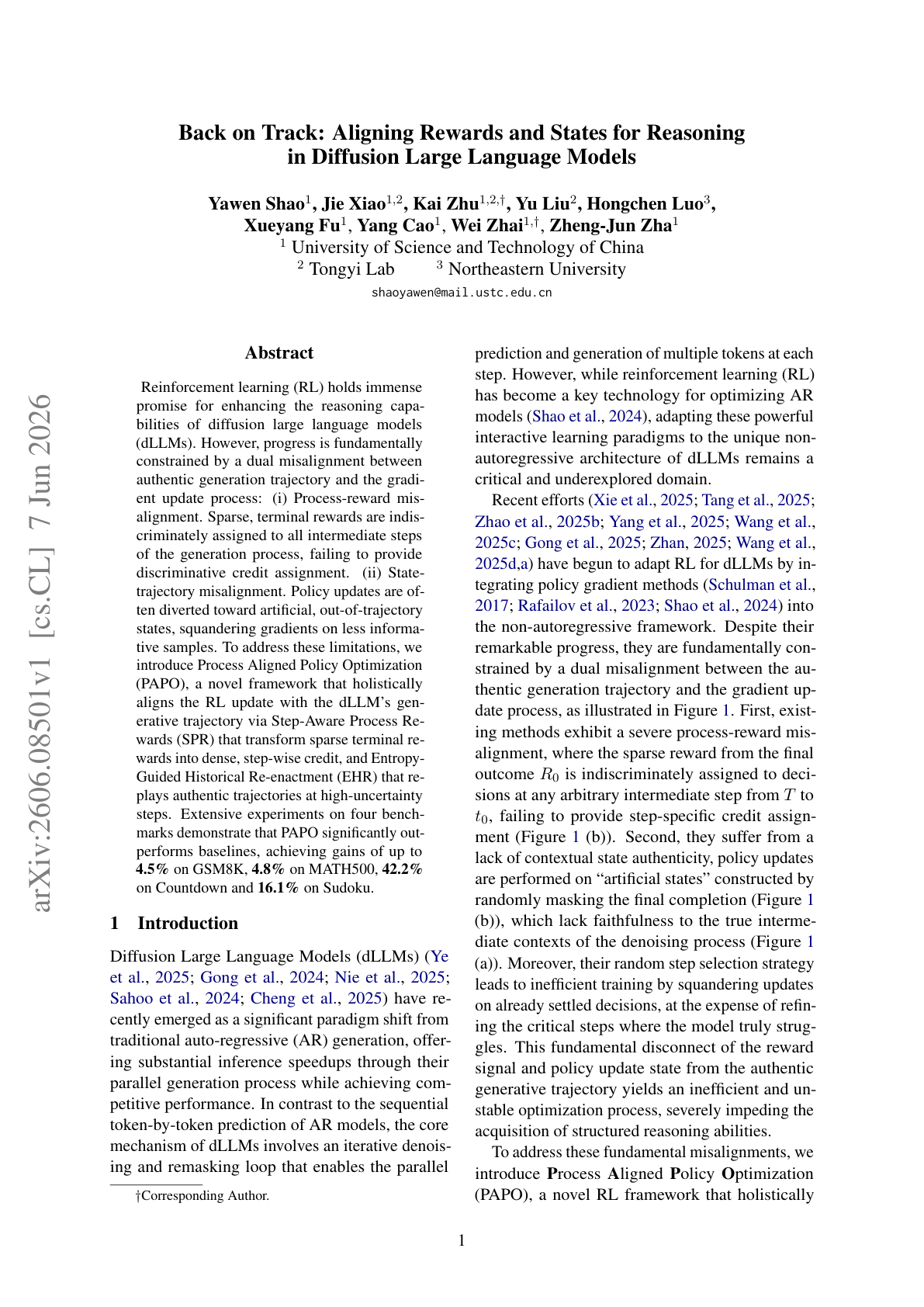
Back on Track
Diffusion large language models generate text in a way that does not fit cleanly into the reinforcement learning recipes built for autoregressive models, and training them to reason exposes two specific problems. Rewards are sparse, so a single terminal reward fails to guide intermediate generation steps, and policy updates sometimes drift toward unnatural trajectories rather than authentic generation paths. This paper proposes Process Aligned Policy Optimization to fix both.
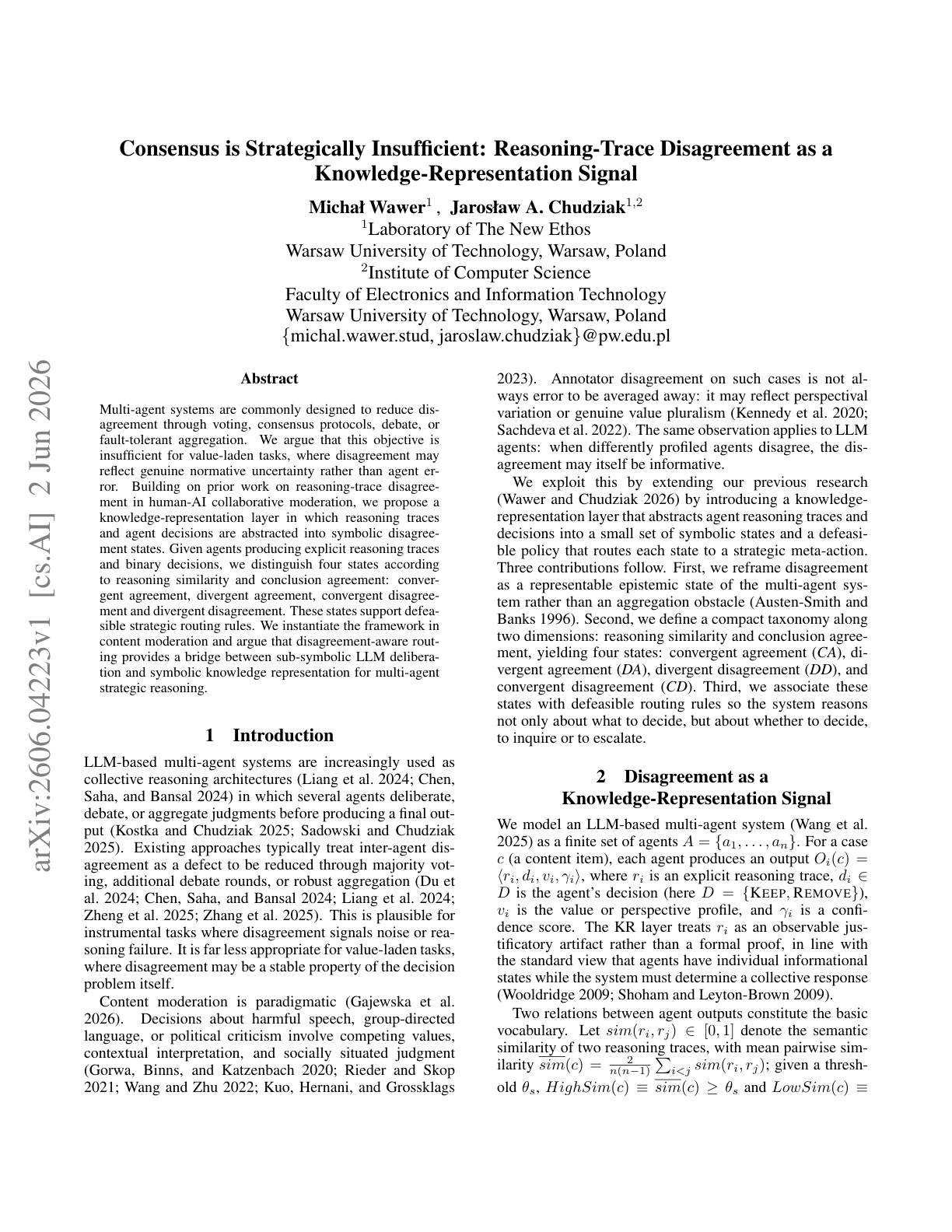
The Consistency Illusion
Multi-agent debate is often judged by whether the agents end up agreeing, but this paper shows that output-level consensus can hide deep disagreement in the reasoning that produced it. The authors abstract agents' reasoning traces and decisions into four states along two axes, reasoning similarity and conclusion agreement, and flag divergent agreement, where agents reach the same answer through very different paths. Across 600 content-moderation items, divergent agreement appeared in 118 cases and separated cleanly from genuine disagreement states with a Cohen's d of 0.80, and routing on these categories beat divergence-only methods at flagging high-disagreement cases.
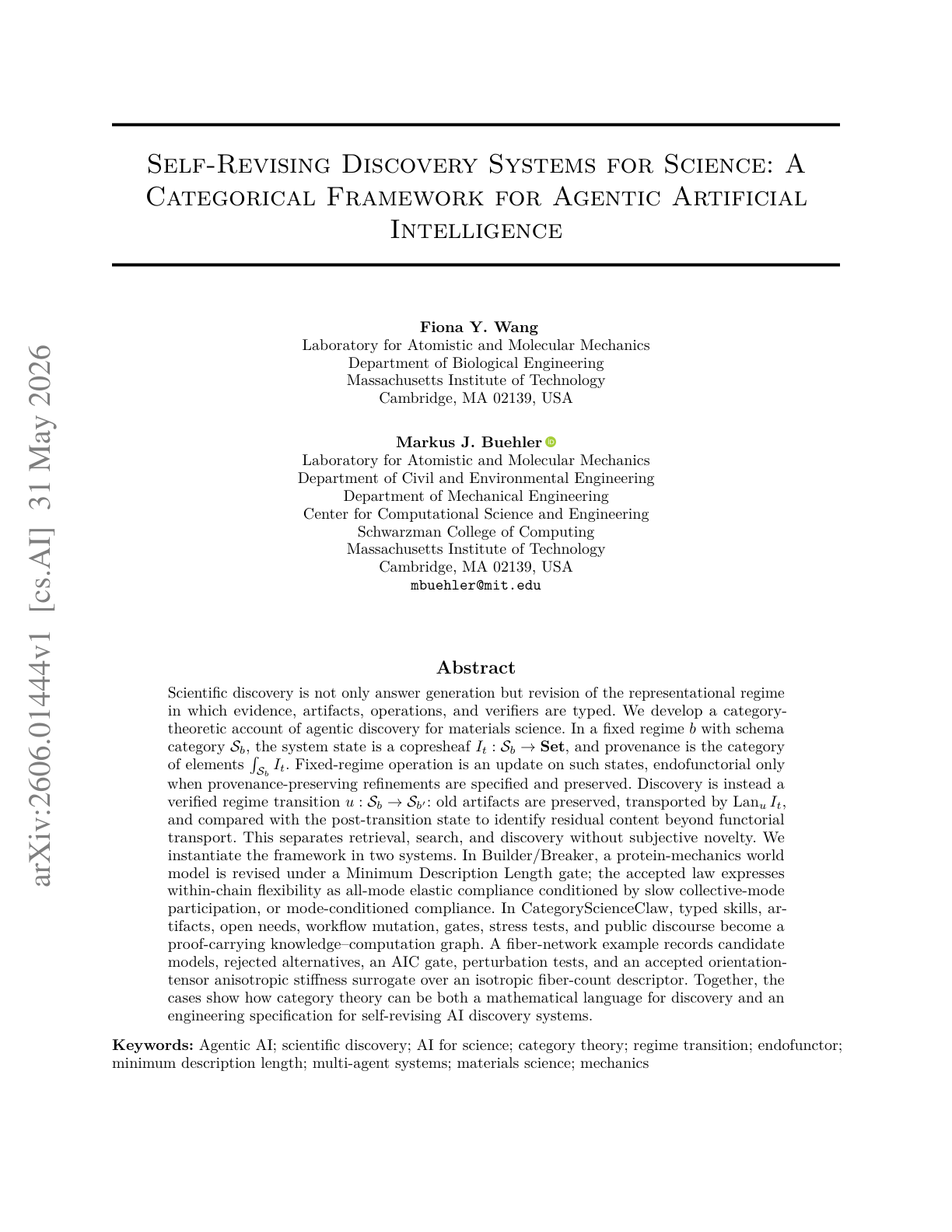
Self-Revising Discovery Systems
From MIT, this paper argues that genuine scientific discovery is not answer generation but a change in the search space itself, and that an AI scientist must perceive that shift without being told. It develops a category-theoretic framework in which evidence, artifacts, operations, and verifiers are typed, and discovery is defined as a principled revision of that representational regime rather than more search within a fixed one.
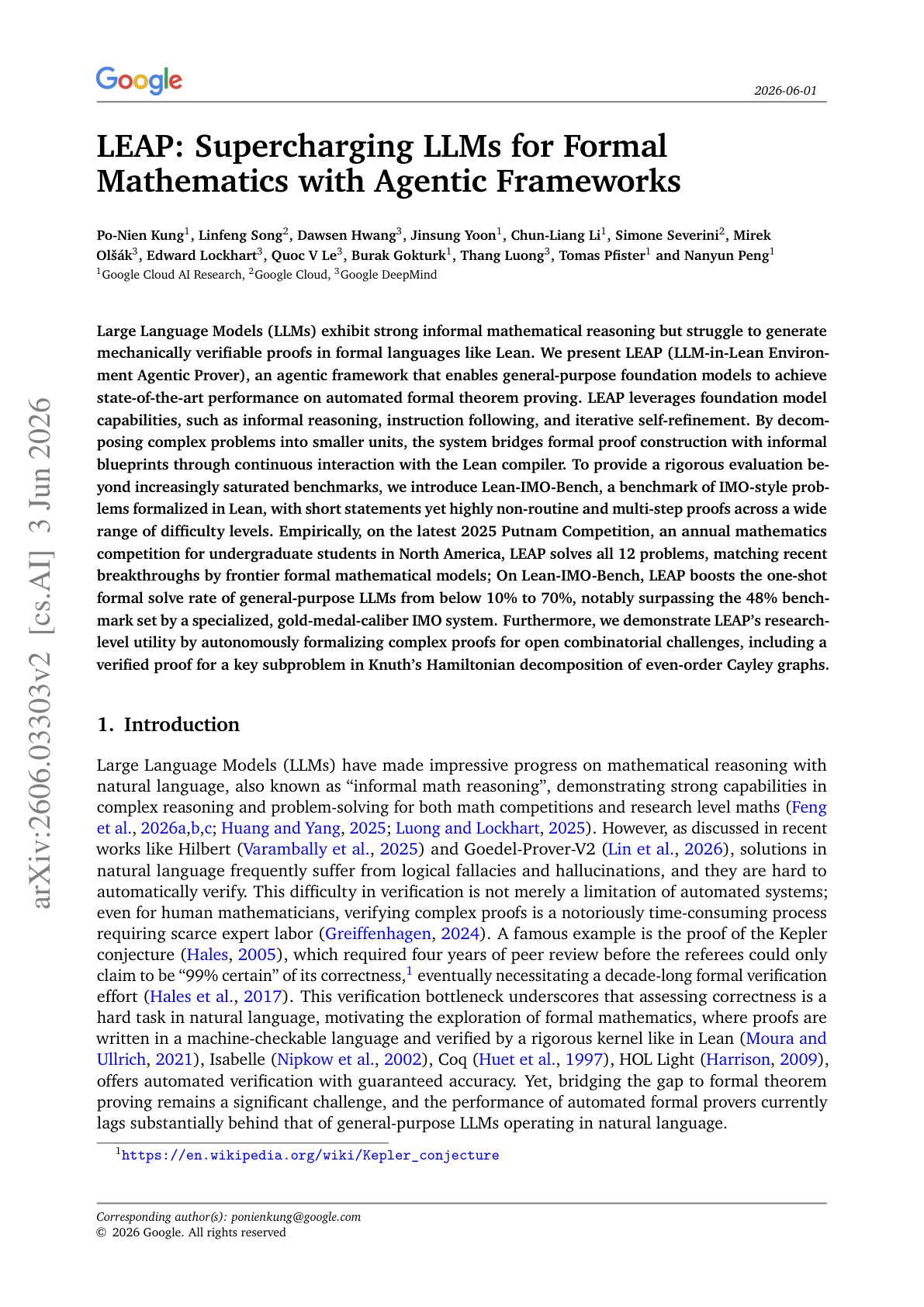
LEAP
New research from Google shows how far a custom agent harness can push a general-purpose model on formal mathematics. LEAP wraps a general LLM in an agentic scaffold that grounds every step in the Lean compiler and iterates against verifier feedback. Rather than fine-tuning a specialized prover, it leans on informal reasoning, instruction following, and self-refinement, then forces every formal step through a compiler check before moving on.
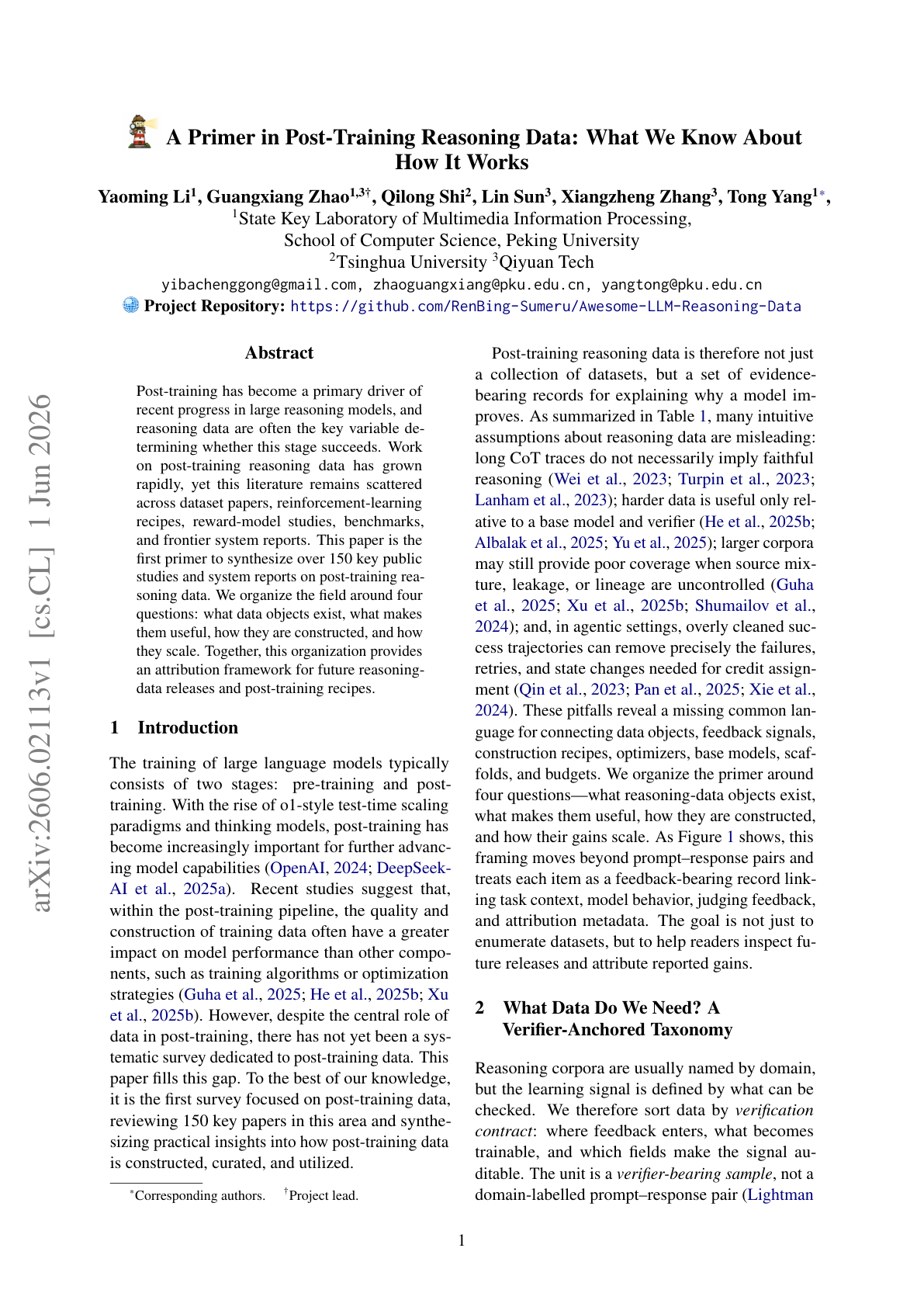
A Primer on Post-Training Reasoning Data
This primer is the first to pull the scattered post-training reasoning-data literature into one place, synthesizing over 150 public studies and system reports that previously lived across dataset papers, RL write-ups, and lab reports. It organizes the field around four questions: what data objects exist, what makes them useful, how they are constructed, and how they scale. The key reframing is that a reasoning-data item is more than a prompt-response pair: it packages a problem or state, model behavior, judging feedback, and attribution metadata, with usefulness defined relative to the verifier and the rest of the corpus rather than in isolation.