AI Papers of the Week
Every paper worth reading in AI, hand-picked one week at a time.
Discover and explore top AI papers with Claude Code or Codex
npx @dair-ai/mcp setup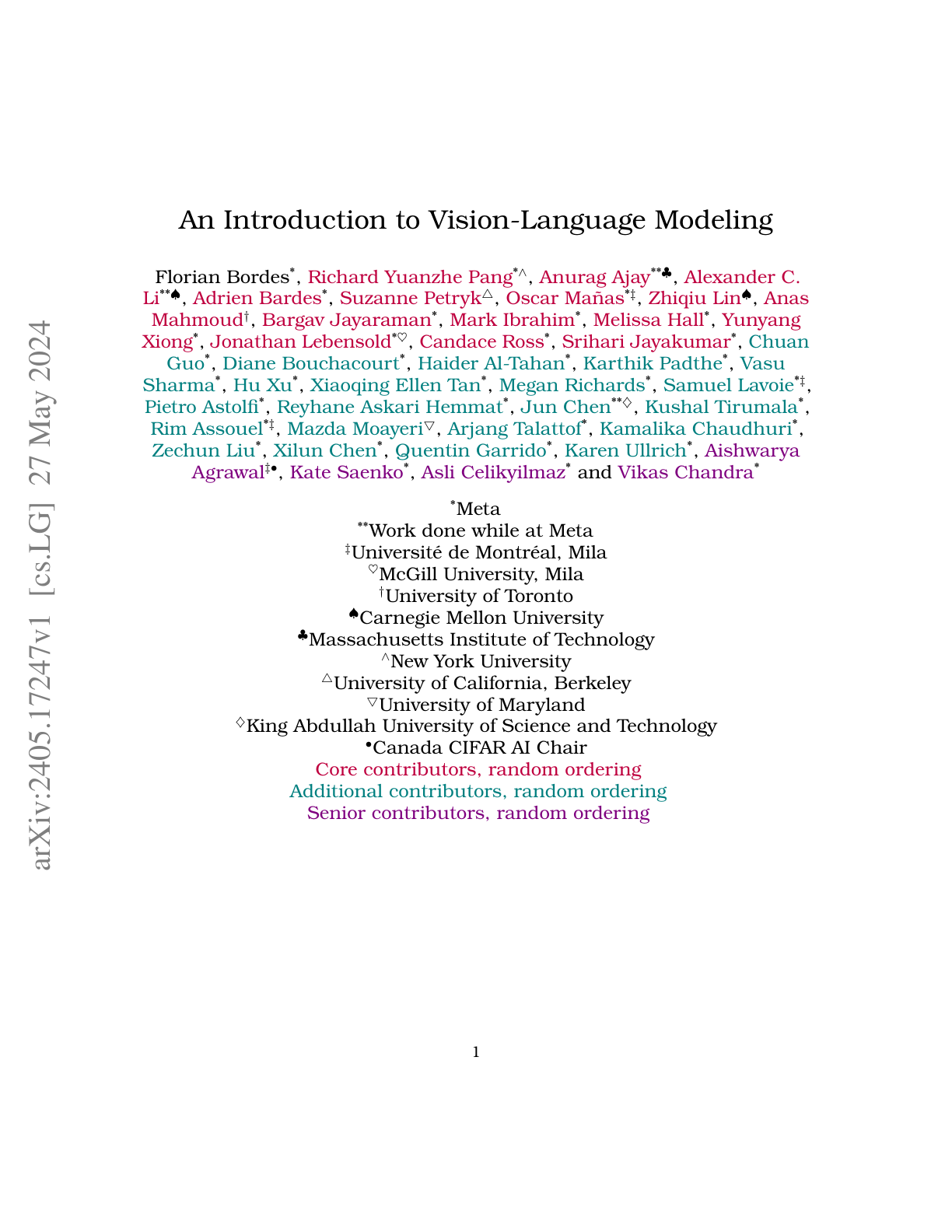
Introduction to Vision-Language Modeling
presents an introduction to vision-language models along with key details of how they work and how to effectively train these models.
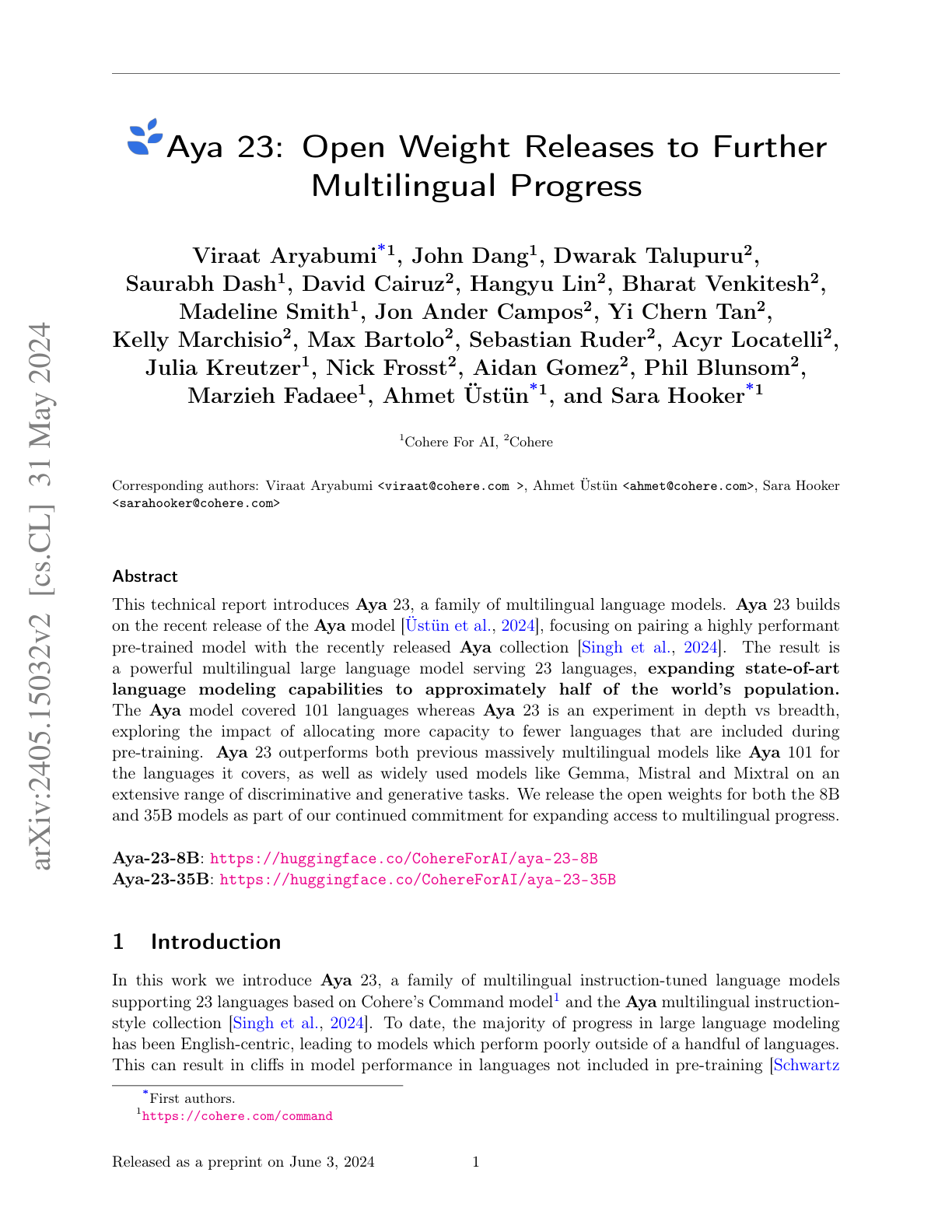
Aya23
a family of multilingual language models that can serve up to 23 languages; it intentionally focuses on fewer languages and allocates more capacity to these languages; shows that it can outperform other massive multimodal models on those specific languages.
GPT-4o
a new model with multimodal reasoning capabilities with real-time support across audio, vision, and text; it can accept as input any combination of text, audio, image, and video to generate combinations of text, audio, and image outputs; it’s reported to match GPT-4 Turbo performance while being 50% much faster and cheaper via APIs.
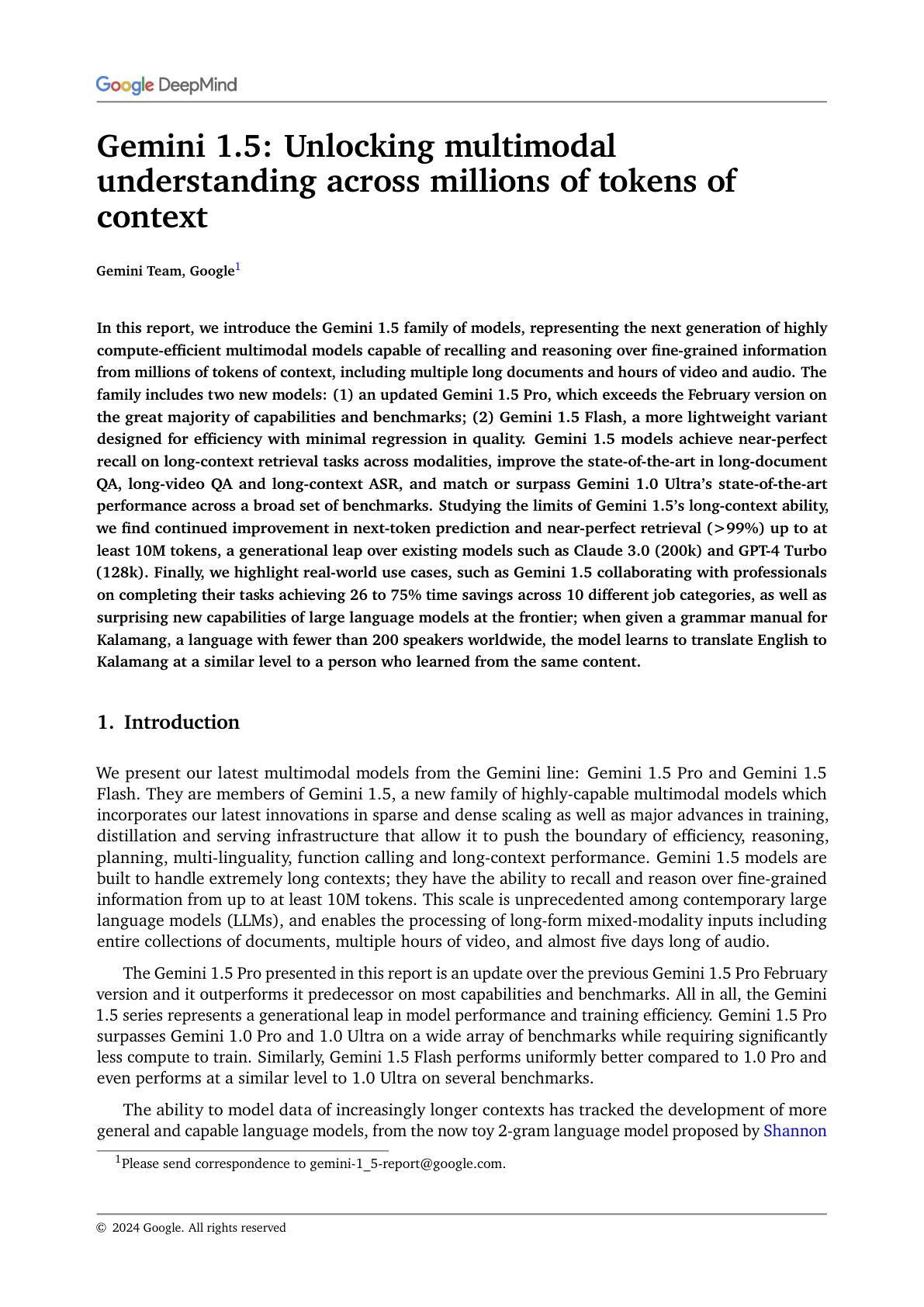
Gemini 1.5 Flash
a lightweight transformer decoder model with a 2M context window with multimodal capabilities; it is designed for efficiency and yields the fastest output generation of all models on several evaluated languages; overall, Gemini 1.5 Flash performs uniformly better compared to Gemini 1.0 Pro and even performs at a similar level to 1.0 Ultra on several benchmarks.
Veo
Google Deepmind’s most capable video generation model generates high-quality, 1080p resolution videos beyond 1 minute; it supports masked editing on videos and can also generate videos with an input image along with text; the model can extend video clips to 60 seconds and more while keeping consistency with its latent diffusion transformer.
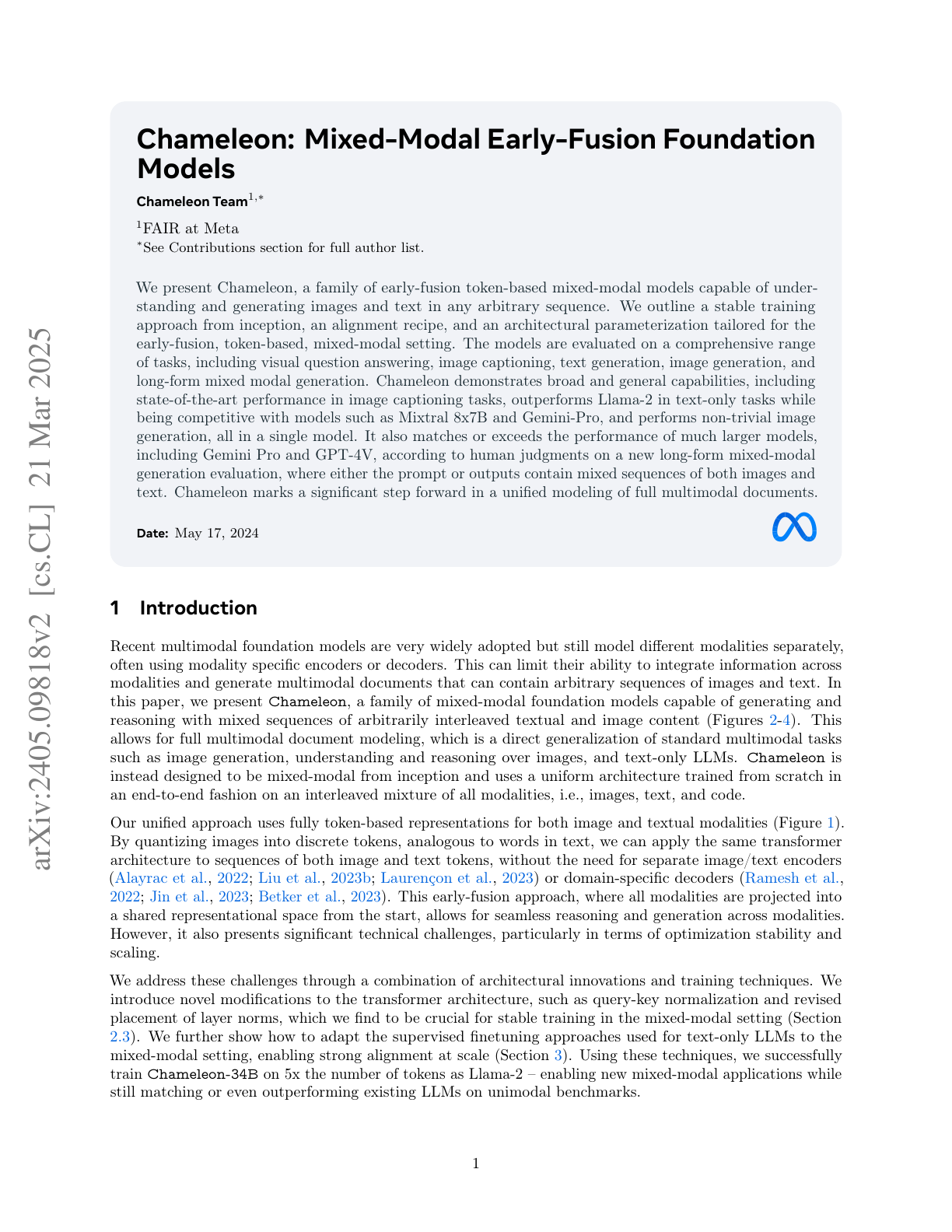
Chameleon
a family of token-based mixed-modal models for generating images and text in any arbitrary sequence; reports state-of-the-art performance in image captioning and outperforms Llama 2 in text-only tasks and is also competitive with Mixtral 8x7B and Gemini-Pro; exceeds the performance of Gemini Pro and GPT-4V on a new long-form mixed-modal generation evaluation.
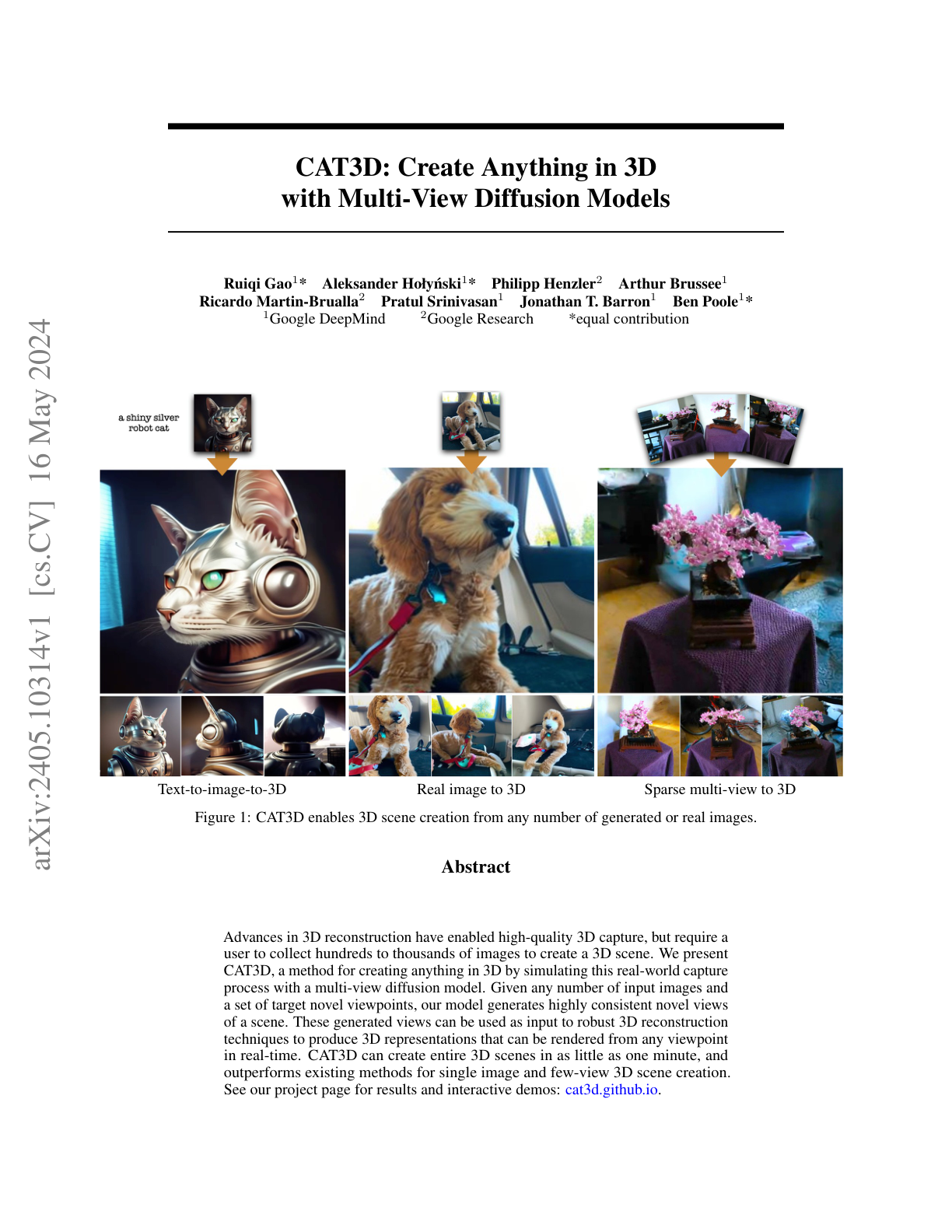
CAT3D
presents a method for creating anything in 3D by simulating the real-world capture process using a multi-view diffusion model; it can generate consistent novel views of a scene which can be used as input to 3D reconstruction techniques to produce 3D representation rendered in real-time; the scene from CAT3D can be generated in less than one minute and is reported to outperform existing methods on single image and few-view 3D scene creation tasks.
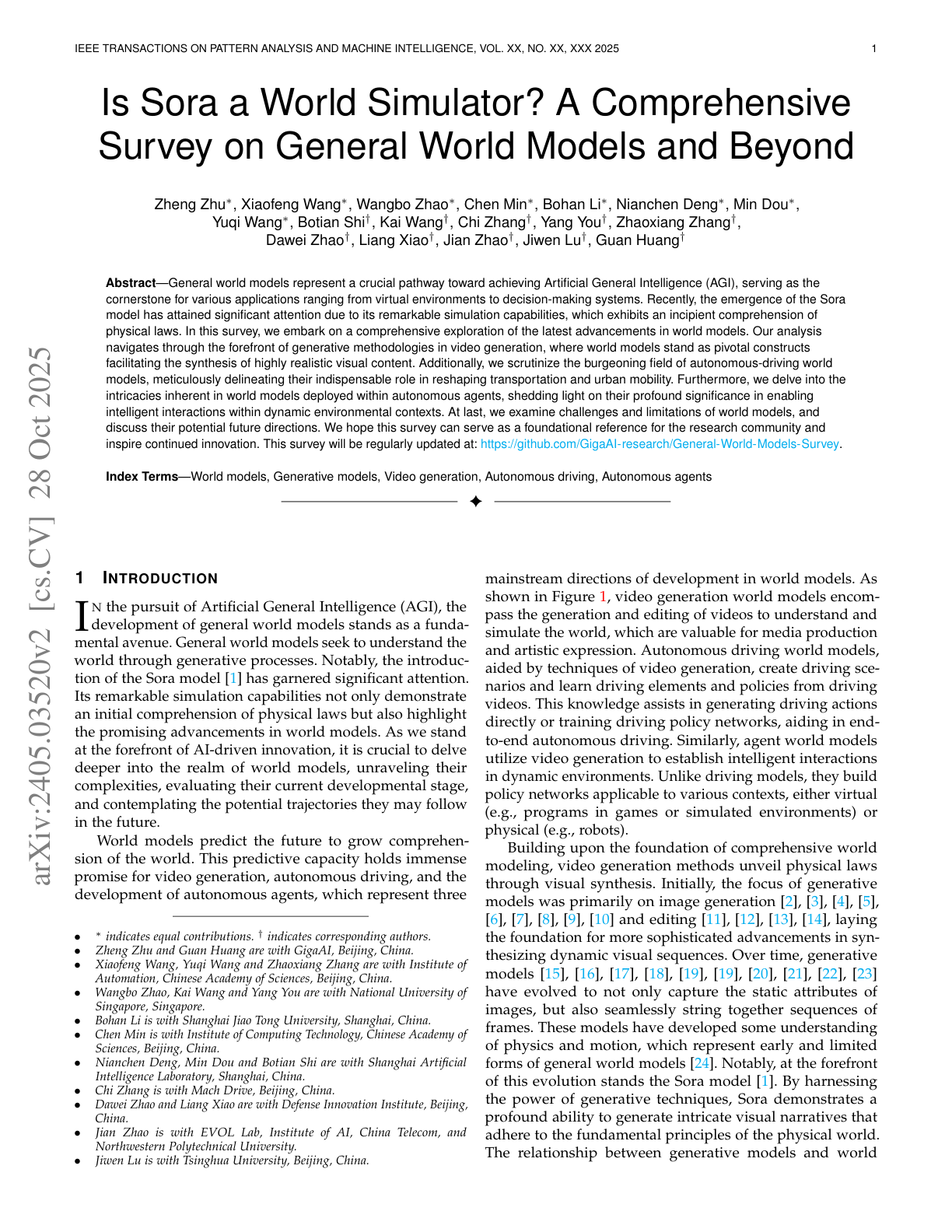
Is Sora a World Simulator? A Comprehensive Survey on General World Models and Beyond
presents an overview of generative methodologies in video generation, where world models facilitate the synthesis of highly realistic visual content; examines challenges and limitations of world models, and discusses their potential future directions.
Med-Gemini
presents a family of multimodal models specialized in medicines and based on the strong multimodal and long-context reasoning capabilities of Gemini; achieves state-of-the-art performance on 10/14 benchmarks surpassing GPT-4 models; it achieves 91% accuracy on MedQA (USMLE) benchmark using an uncertainty-guided search strategy.
Multimodal LLM Hallucinations
provides an overview of the recent advances in identifying, evaluating, and mitigating hallucination in multimodal LLMs; it also provides an overview of causes, evaluation benchmarks, metrics, and other strategies to deal with challenges related to detecting hallucinations.
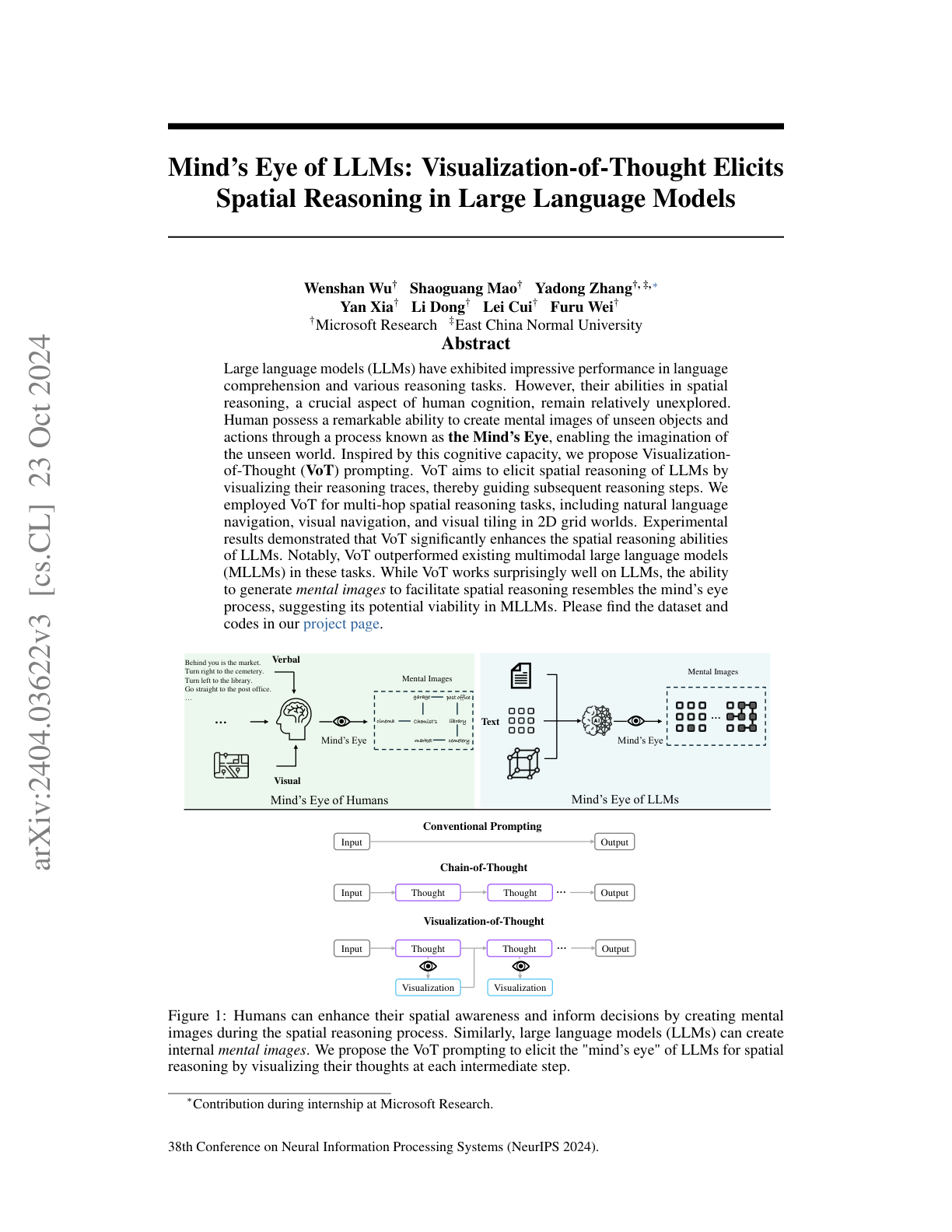
Visualization-of-Thought
Microsoft's Visualization-of-Thought (VoT) prompts LLMs to emit intermediate "mental images" of their reasoning state, lifting spatial-reasoning accuracy on grid-world tasks and beating multimodal baselines that actually see images.

SEEDS
Google's Scalable Ensemble Envelope Diffusion Sampler (SEEDS) uses diffusion models to generate very large, physically plausible weather-forecast ensembles conditioned on only one or two operational forecasts.
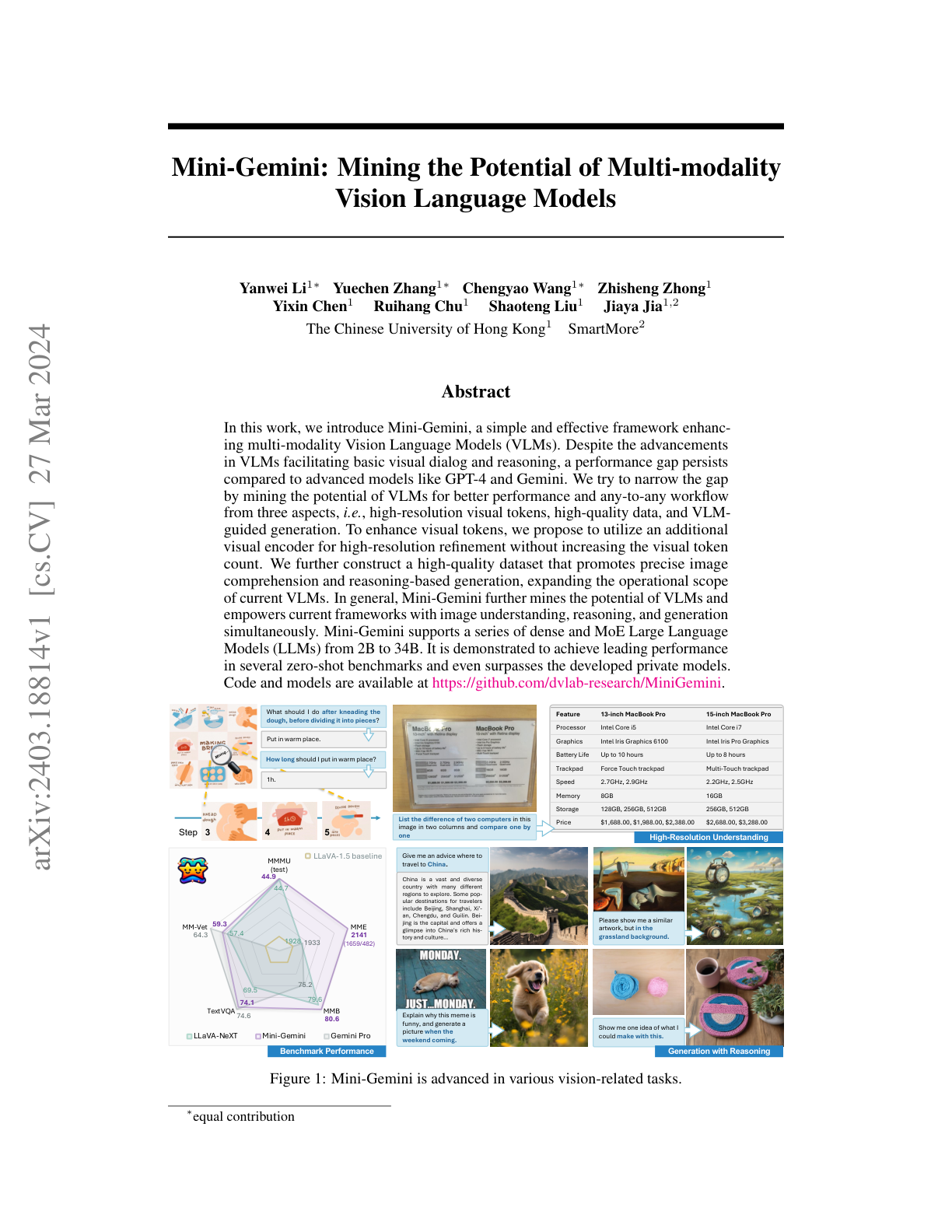
Mini-Gemini
Mini-Gemini enhances vision-language models by adding a second high-resolution visual encoder that refines details without increasing the number of visual tokens consumed by the LLM.
MM1: Multimodal LLM Pre-training
Apple's MM1 paper runs extensive ablations on multimodal LLM pretraining choices and releases a family of models up to 30B parameters that set competitive MLLM pretraining benchmarks.
Claude 3
Anthropic releases the Claude 3 family (Haiku, Sonnet, Opus), with Opus leapfrogging GPT-4 on many standard benchmarks and bringing frontier multimodal capability plus a much larger context window.
Sora Overview
A comprehensive academic review of OpenAI's Sora, tracing the technical ingredients behind the text-to-video "world simulator" and the opportunities/limitations for the next wave of large vision models.
EMO: Emote Portrait Alive
Alibaba's EMO synthesizes expressive talking-head videos directly from audio, bypassing the intermediate 3D models or facial landmarks used by prior approaches.
Sora
OpenAI unveils Sora, a text-to-video diffusion-transformer that generates coherent, minute-long 1080p videos from natural-language prompts.
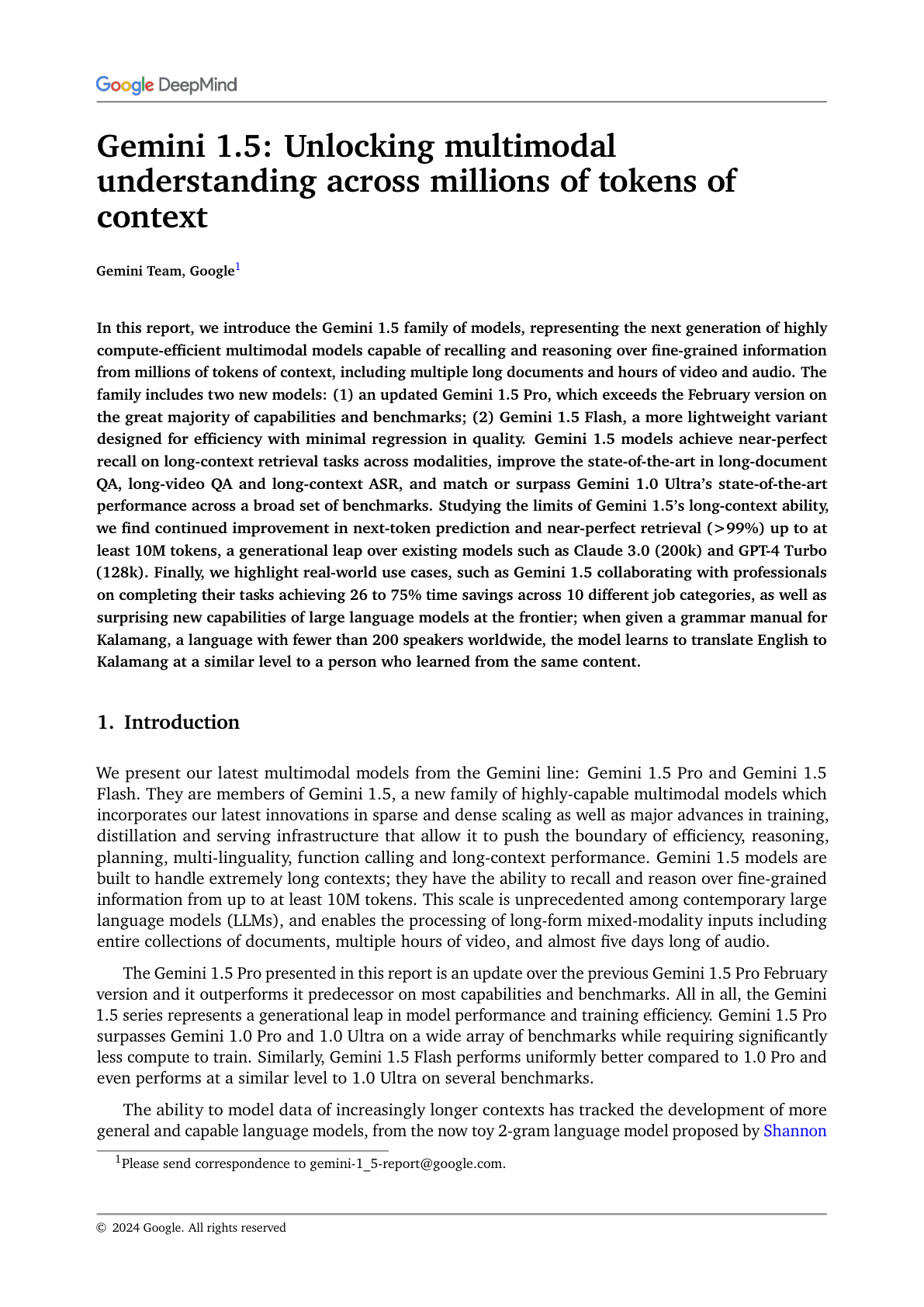
Gemini 1.5
Google DeepMind's Gemini 1.5 is a multimodal MoE LLM that scales context to 1M tokens (10M in research settings) while matching or surpassing Gemini 1.0 Ultra on standard benchmarks.
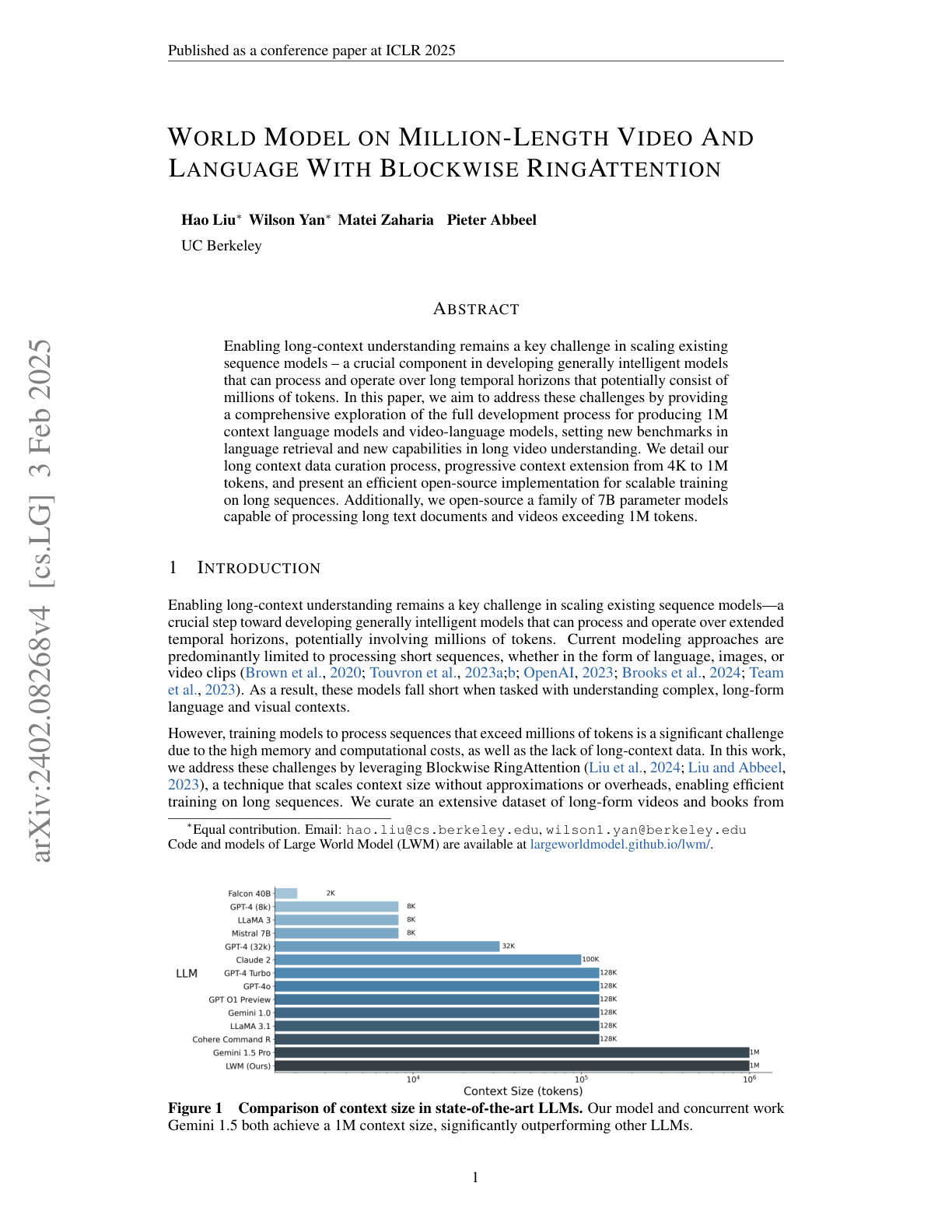
Large World Model (LWM)
UC Berkeley's LWM is an open 7B multimodal model trained on long videos and books that handles context windows up to 1M tokens via RingAttention.
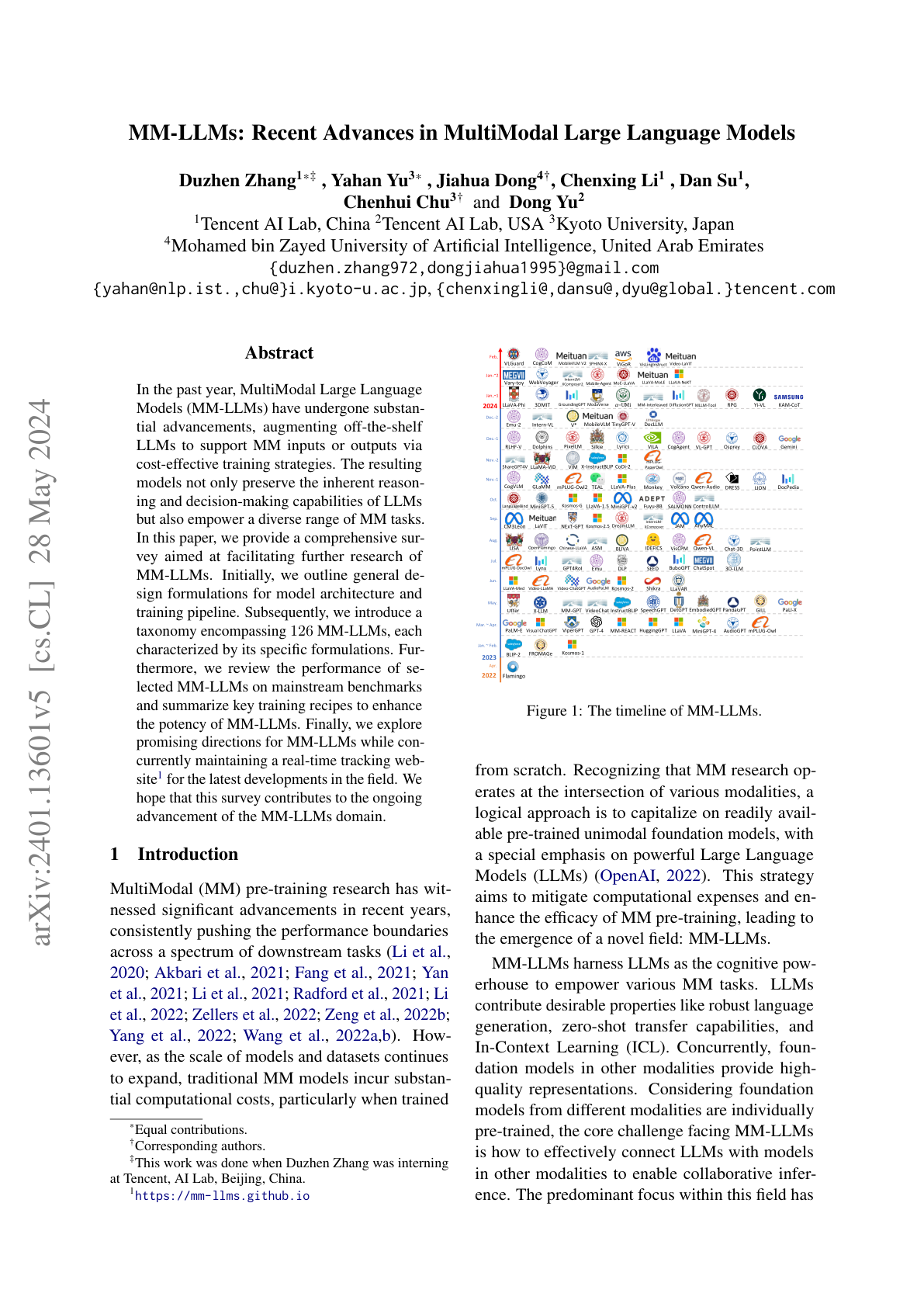
Advances in Multimodal LLMs
A comprehensive survey mapping design choices for architecture and training pipeline around multimodal large language models (MLLMs).
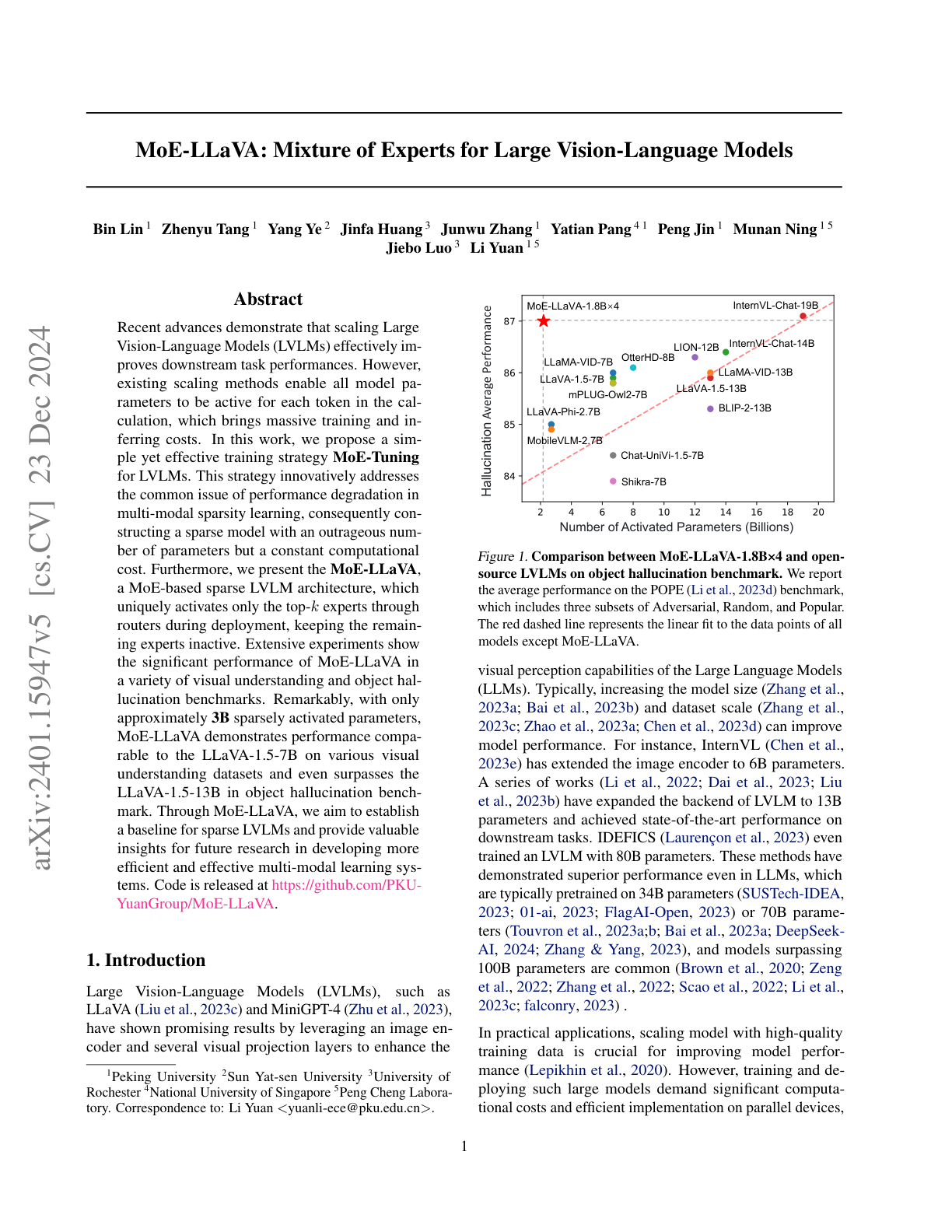
MoE-LLaVA
MoE-LLaVA applies Mixture-of-Experts tuning to the LLaVA vision-language architecture, getting a sparse model with dramatically fewer active parameters at the same compute cost.
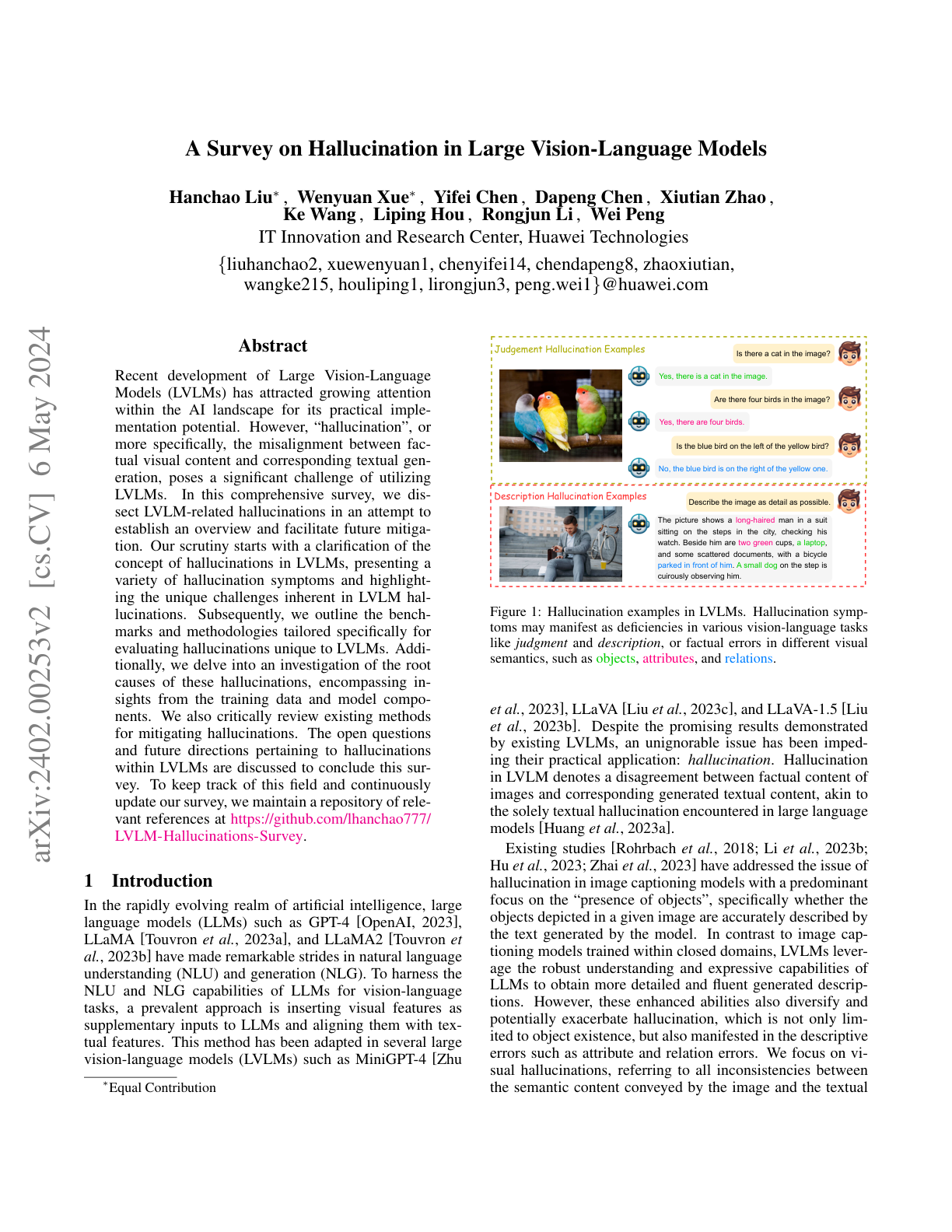
Hallucination in LVLMs
A survey specifically scoped to hallucination in Large Vision-Language Models, a phenomenon that differs substantially from text-only LLM hallucination.
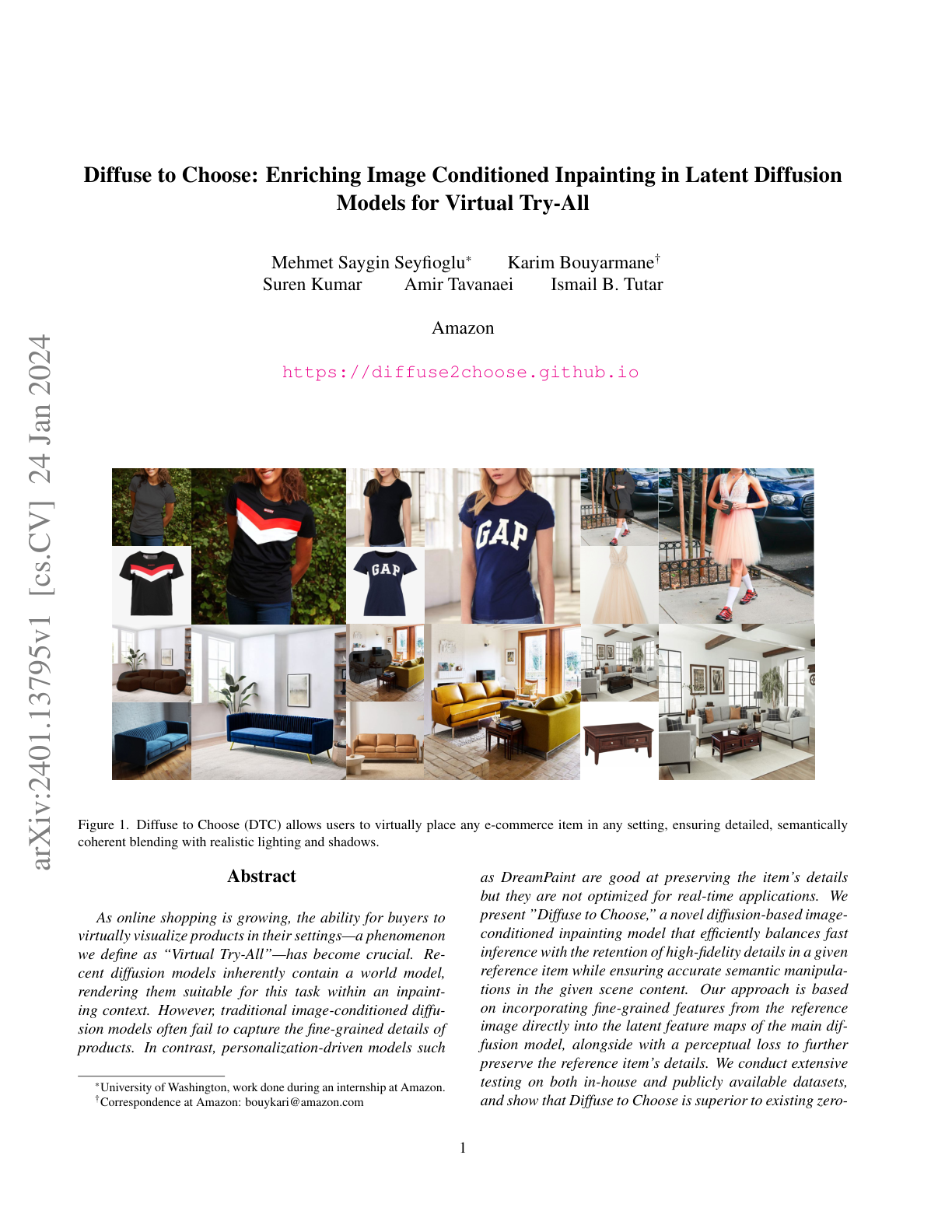
Diffuse to Choose
Amazon's Diffuse to Choose is a diffusion-based image-conditioned inpainting model built for "virtual try-on" scenarios where product images must be placed naturally into user scenes.