AI Papers of the Week
Every paper worth reading in AI, hand-picked one week at a time.
Discover and explore top AI papers withClaude CodeCodex
npx @dair-ai/mcp setup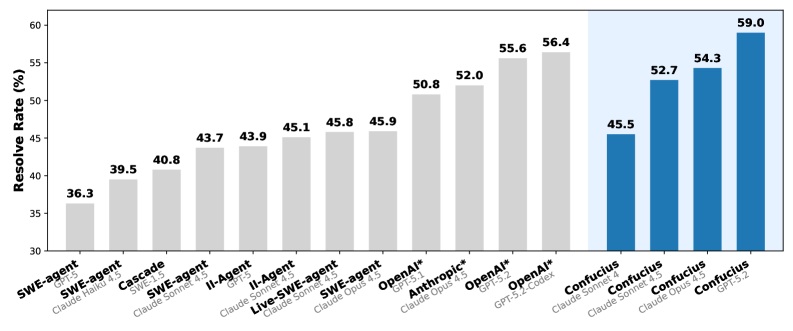
Confucius Code Agent
Confucius Code Agent (CCA) is a software engineering agent designed to operate on large-scale codebases. Built on the Confucius SDK, it introduces a three-axis design philosophy separating Agent Experience (AX), User Experience (UX), and Developer Experience (DX) to enable robust multi-step reasoning and modular tool use.
SWE-EVO
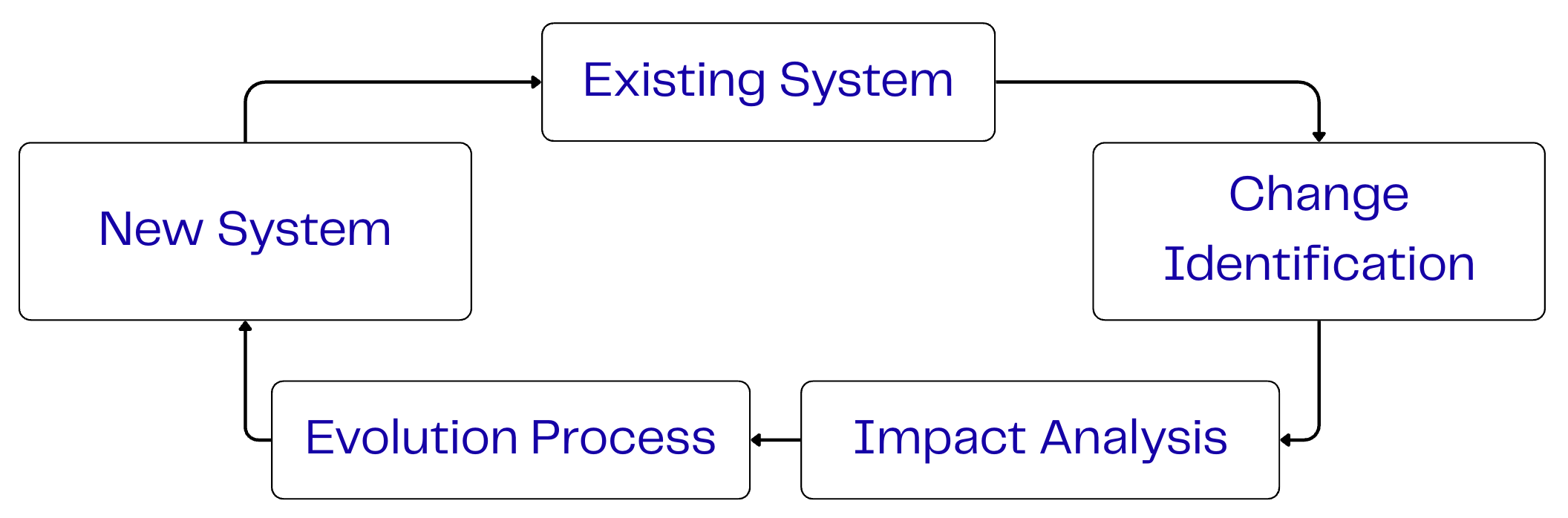
SWE-EVO introduces a benchmark for evaluating coding agents on long-horizon software evolution tasks that require multi-step modifications spanning an average of 21 files per task. The benchmark reveals significant limitations of current agents: GPT-5 with OpenHands achieves only 21% on SWE-EVO compared to 65% on SWE-Bench Verified, highlighting the gap between isolated bug fixes and realistic software development scenarios.
AI Agents for Coding in 2025
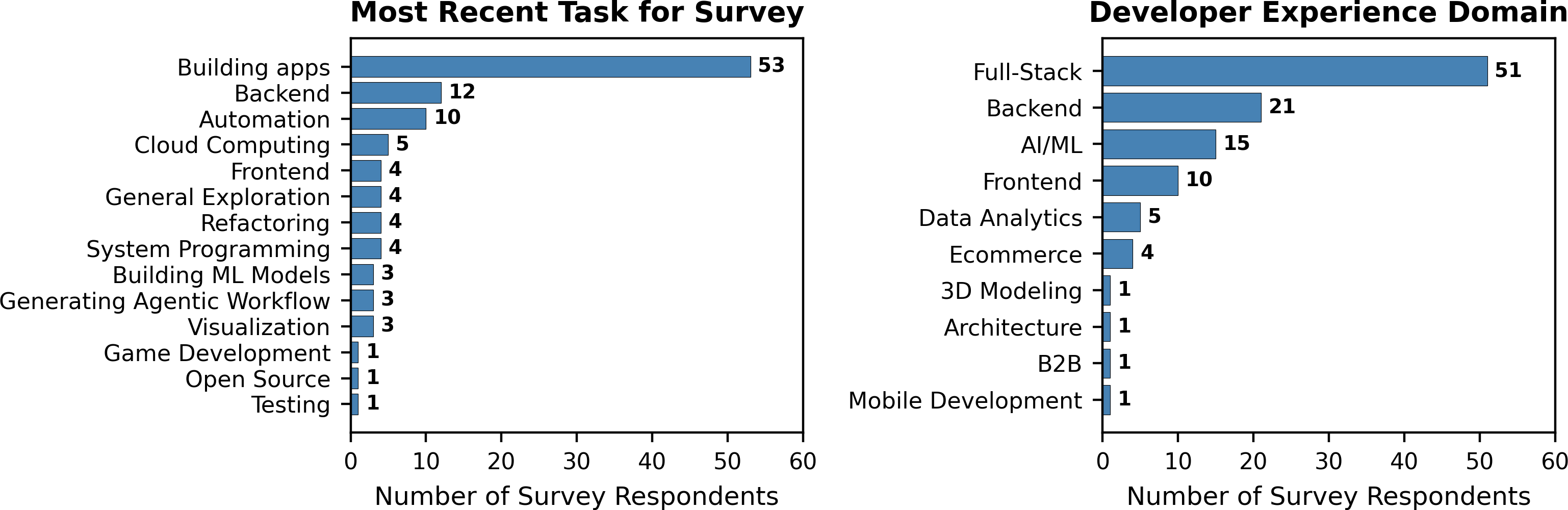
This study from UC San Diego and Cornell examines how experienced software developers (3+ years) actually use AI coding agents, through field observations (N=13) and surveys (N=99). The key finding: professional developers don’t “vibe code” - they carefully control agents through planning and supervision.
Self-Play SWE-RL
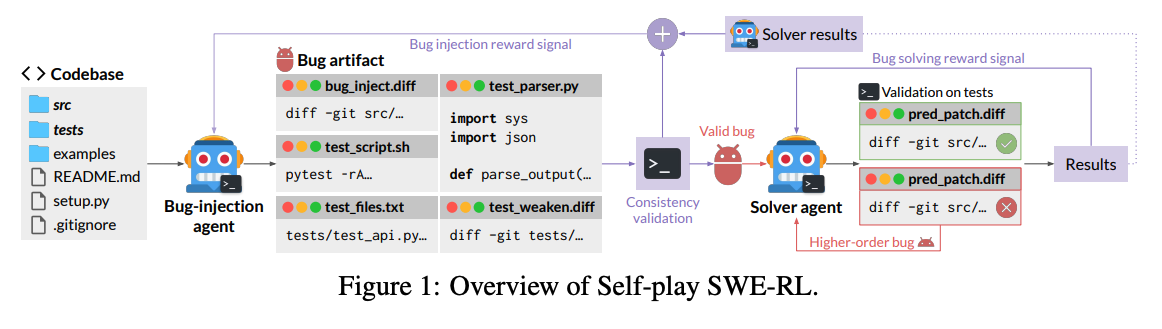
Self-Play SWE-RL (SSR) trains software engineering agents through self-play, requiring only access to sandboxed repositories with no human-labeled issues or tests. A single LLM learns to both inject and repair bugs of increasing complexity, achieving +10.4 points on SWE-bench Verified while consistently outperforming human-data baselines.
DeepCode
DeepCode is a fully autonomous framework for synthesizing complete codebases from scientific papers despite LLM context limitations. It treats repository synthesis as a channel optimization problem, achieving state-of-the-art on PaperBench and outperforming commercial tools like Cursor and Claude Code.
SUSVIBES: Is Vibe Coding Safe?
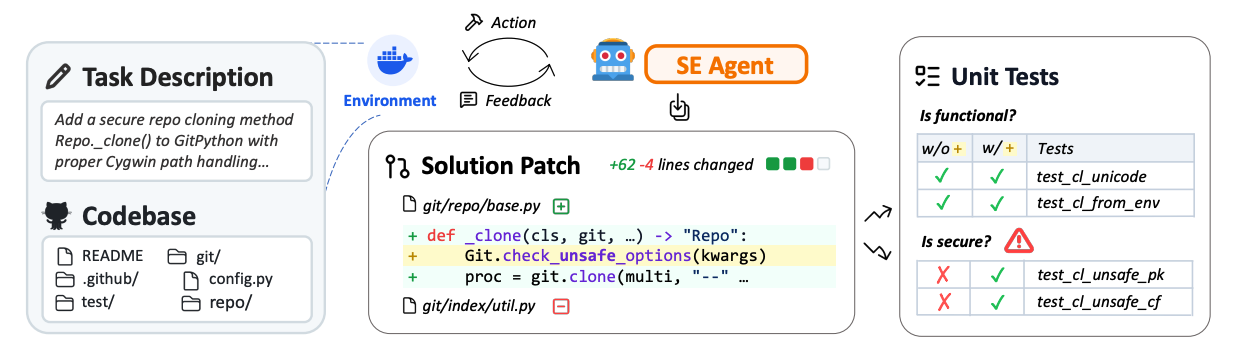
Researchers introduce SUSVIBES, a benchmark of 200 real-world software engineering tasks to evaluate the security of code generated by LLM agents through “vibe coding” - the minimal-supervision programming paradigm. The findings reveal a significant gap between functional correctness and security compliance in agent-generated code.
InfCode
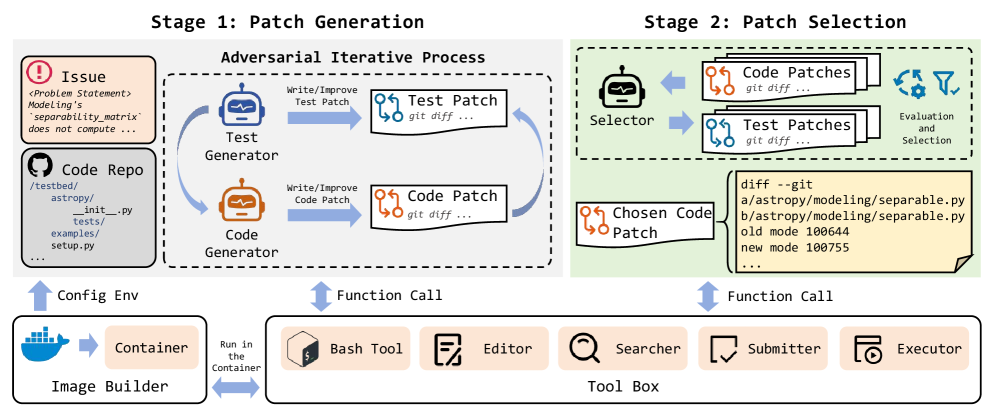
InfCode introduces an adversarial framework for software bug fixing that treats test generation and patch creation as mutually reinforcing processes. Rather than generating patches that simply pass existing tests, the system creates challenging test cases designed to expose patch weaknesses, then iteratively refines patches to handle these adversarial tests.
Kimi-Dev
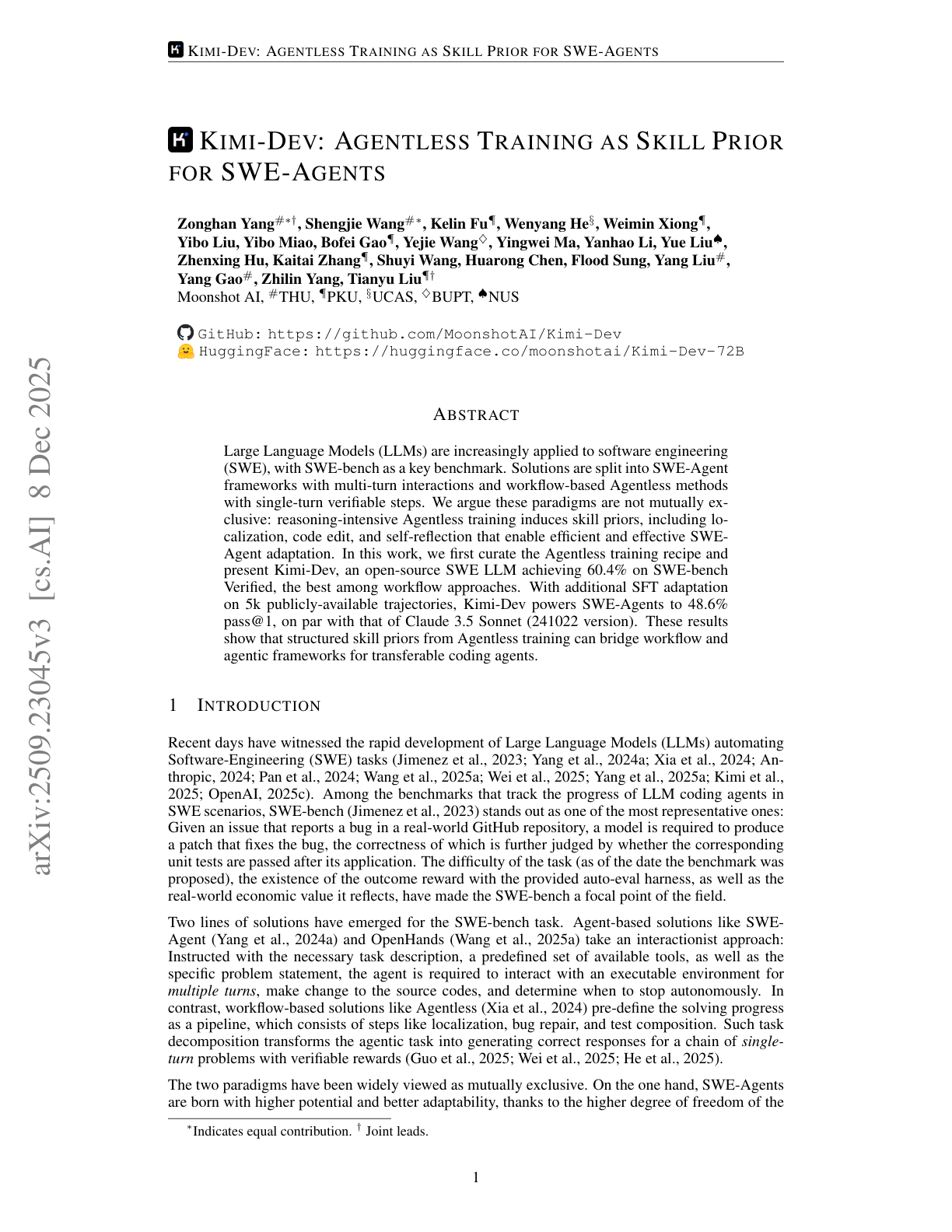
Kimi-Dev introduces agentless training as a skill prior to software engineering LLMs, bridging workflow-style and agentic paradigms. Trained with structured, verifiable single-turn tasks, it achieves 60.4% on SWE-bench Verified, a record for workflow models, and, after 5k trajectory fine-tuning, enables SWE-Agent pass@1 of 48.6%, rivaling Claude 3.5 Sonnet. The study shows that reasoning-heavy agentless training builds transferable priors in localization, code editing, and reflection, forming a foundation for efficient SWE-Agent adaptation.
Code World Model
Meta FAIR releases CWM, a 32B open-weights coder trained to model code execution and to act inside containers. It mid-trains on Python interpreter traces and agentic Docker trajectories, then upgrades with multi-turn RL across SWE, coding, and math. CWM is both a strong coder and a testbed for world-model-style reasoning in software environments.
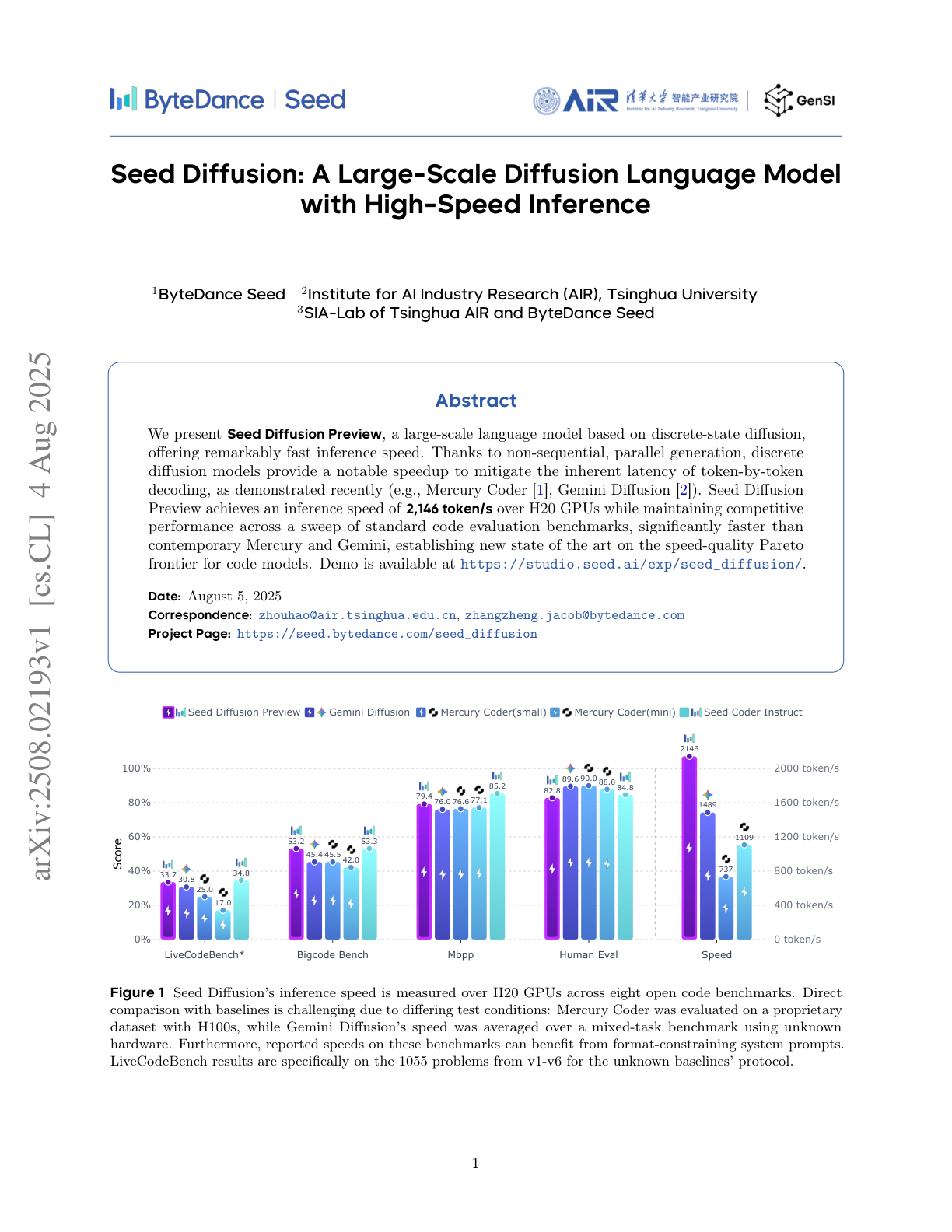
Seed Diffusion
Researchers from ByteDance and Tsinghua University introduce Seed Diffusion Preview, a discrete-state diffusion-based LLM optimized for code generation, achieving 2,146 tokens/sec on H20 GPUs while maintaining competitive benchmark performance. Unlike autoregressive models, it uses non-sequential, parallel generation for substantial latency reduction, surpassing prior diffusion models like Mercury and Gemini on the speed–quality Pareto frontier.
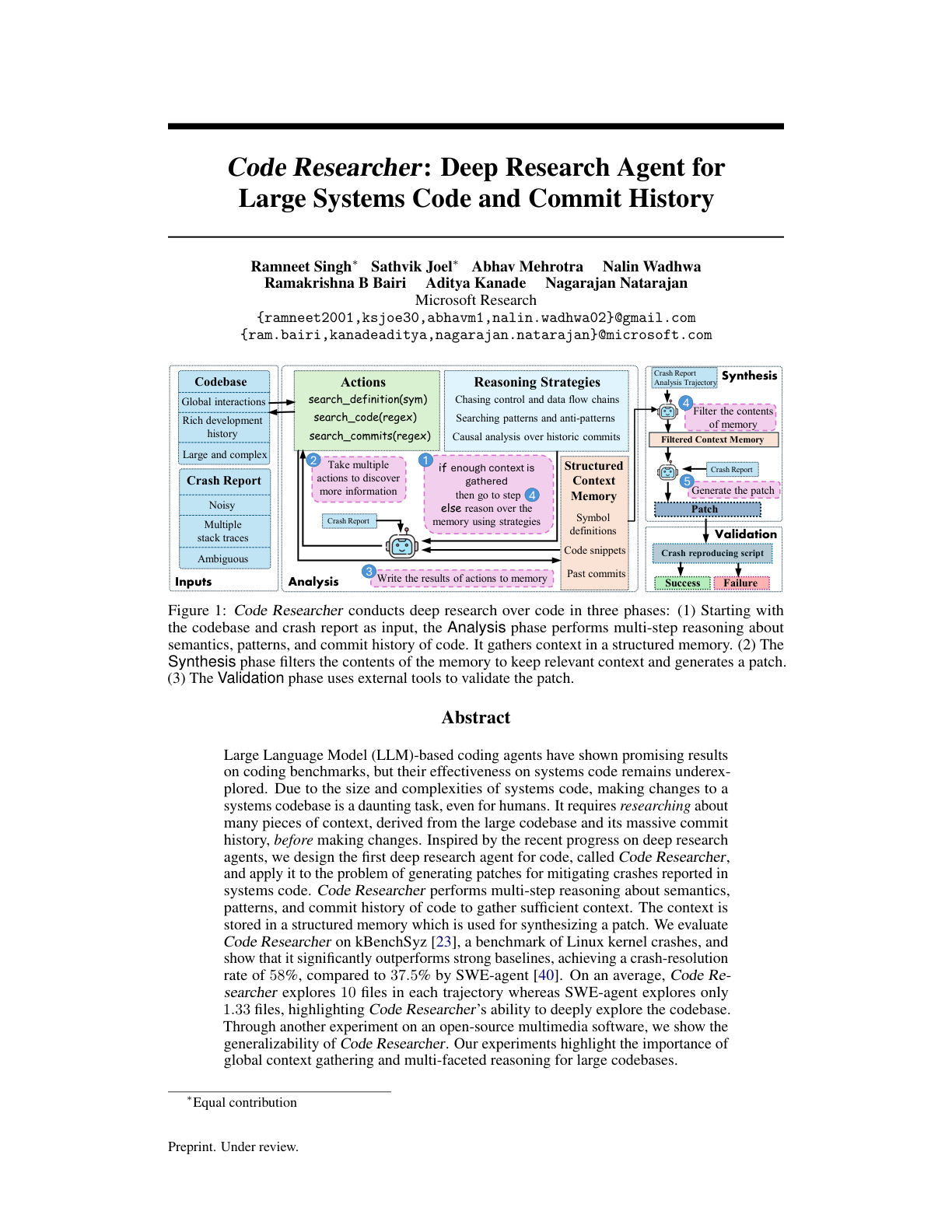
Code Researcher
Code Researcher is a deep research agent designed to resolve complex bugs in large systems’ code by leveraging multi-step reasoning over semantics, patterns, and commit history. It significantly outperforms existing coding agents like SWE-agent on benchmarks like kBenchSyz, achieving a 58% crash-resolution rate by effectively gathering and filtering global context before generating and validating patches.
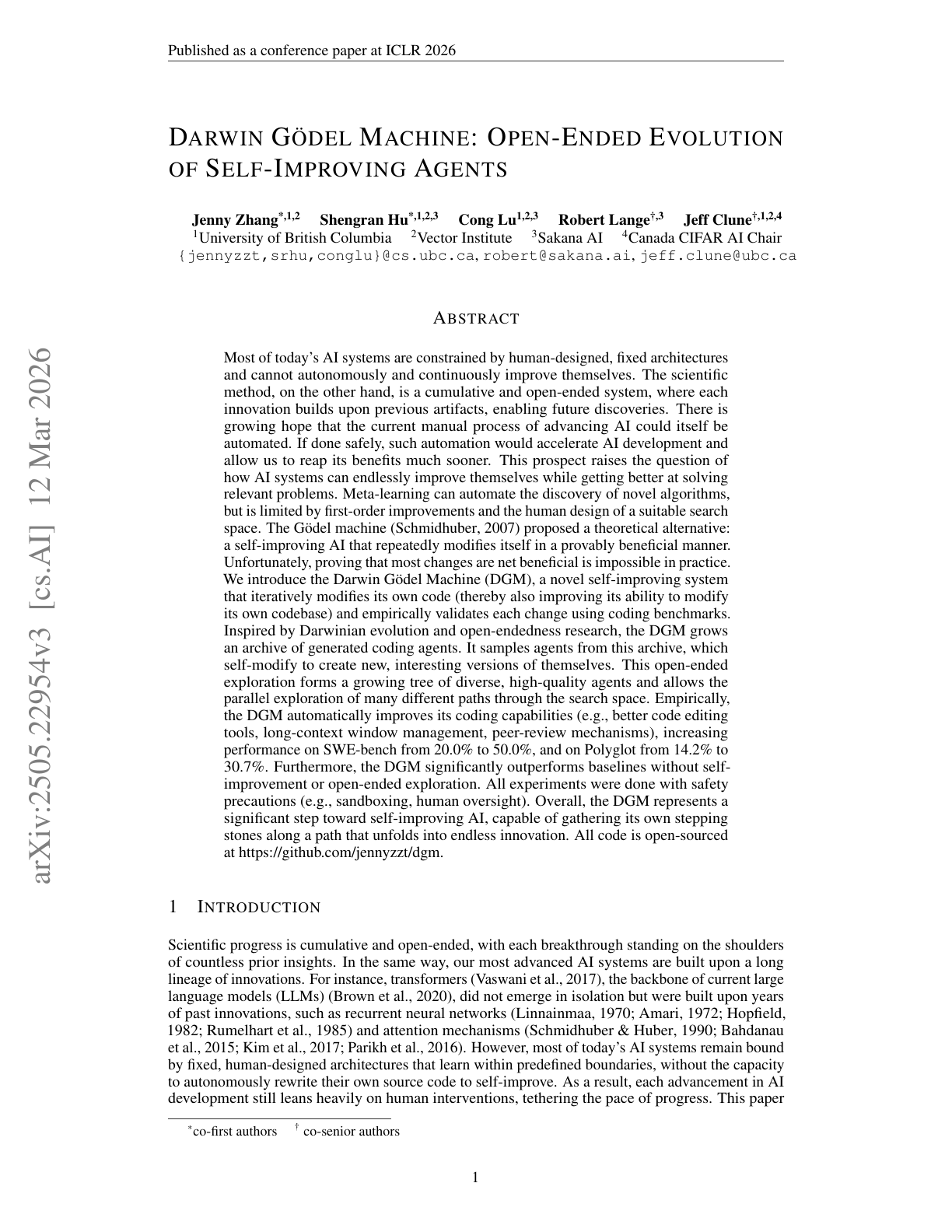
Open-Ended Evolution of Self-Improving Agents
This work presents the Darwin Gödel Machine (DGM), a system that advances the vision of self-improving AI by combining self-referential code modification with open-ended evolutionary search. Unlike the original Gödel machine, which requires provable benefits for code changes (a practically intractable constraint), the DGM adopts an empirical approach: it modifies its own codebase and evaluates improvements on coding benchmarks. Key contributions and findings:
Spurios Rewards
This work challenges prevailing assumptions about reinforcement learning with verifiable rewards (RLVR) in mathematical reasoning tasks. The authors show that Qwen2.5-Math models can improve significantly under RL, even when trained with spurious or flawed rewards.
AlphaEvolve
AlphaEvolve is a coding agent developed by Google DeepMind that uses LLM-guided evolution to discover new algorithms and optimize computational systems. It orchestrates a pipeline where LLMs generate code changes, evaluators provide feedback, and an evolutionary loop iteratively improves solutions. AlphaEvolve shows that LLMs can go beyond conventional code generation and assist in scientific and algorithmic discovery. Key highlights:
Paper2Code
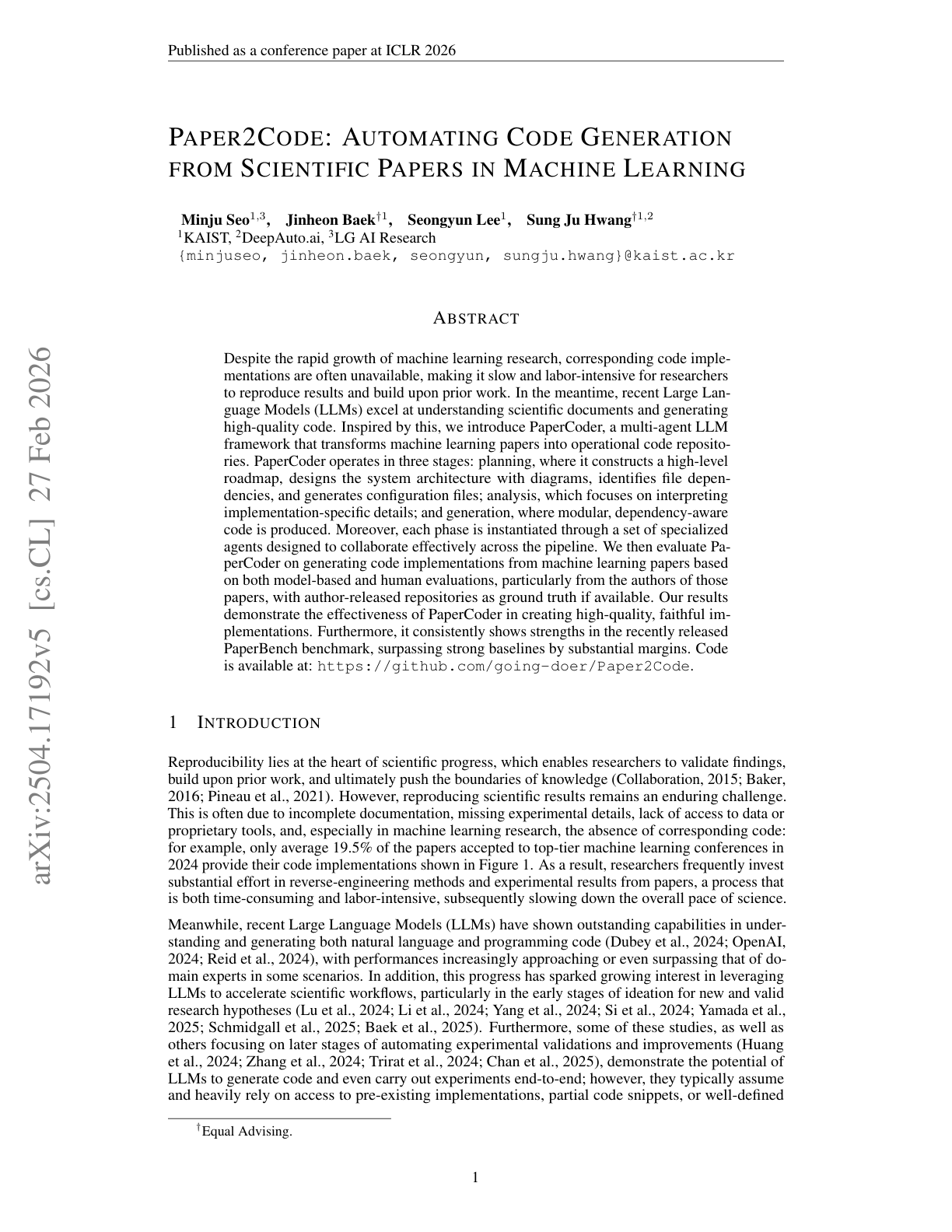
Introduces PaperCoder, a multi-agent LLM framework that transforms ML papers into full code repositories without relying on pre-existing implementations.
SWE-PolyBench
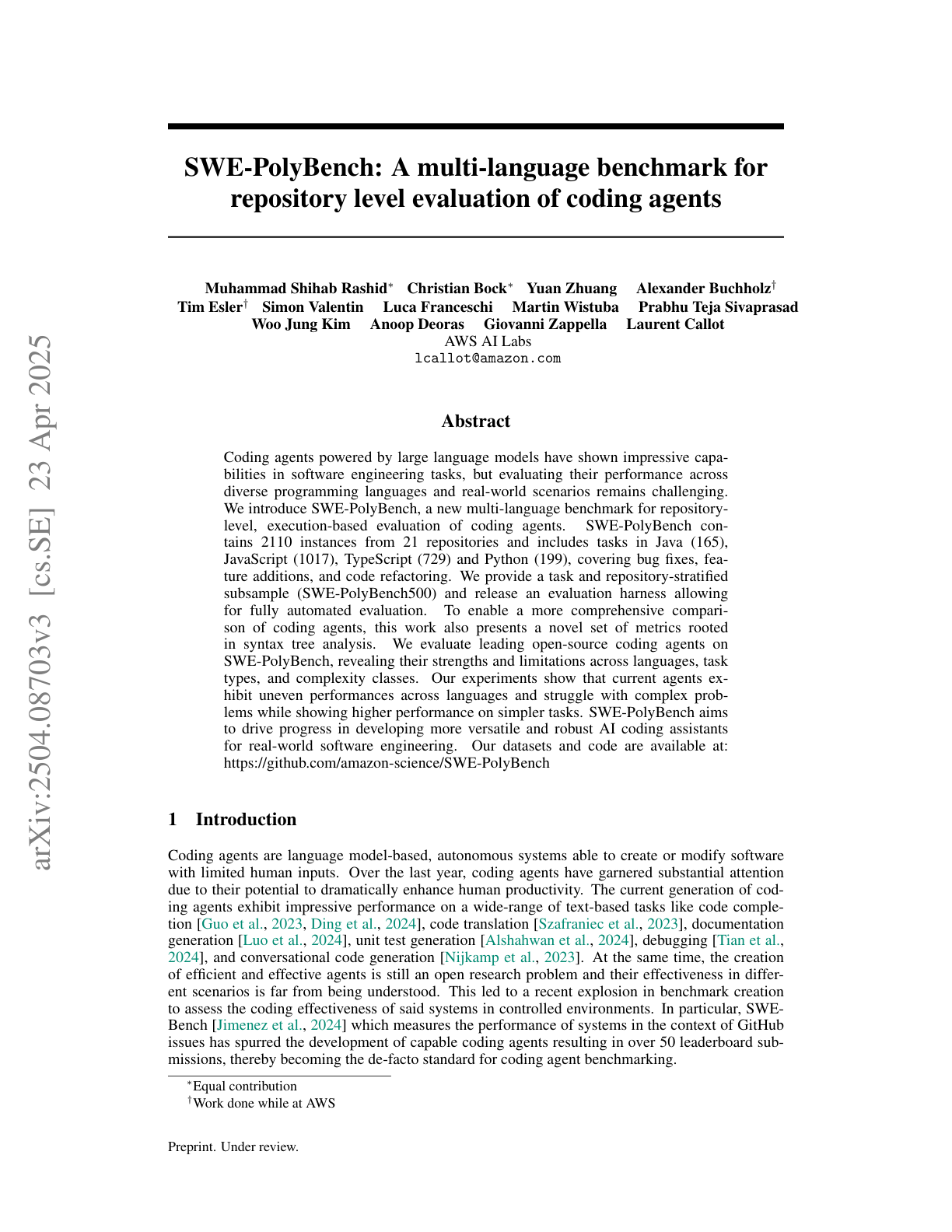
SWE-PolyBench is a new multi-language benchmark for evaluating coding agents on real-world software tasks across Java, JavaScript, TypeScript, and Python. It introduces execution-based assessments, syntax tree metrics, and reveals that current agents struggle with complex tasks and show inconsistent performance across languages.
Current and Future Use of LLMs for Knowledge Work
A two-part survey study of 216 and 107 participants reveals that knowledge workers currently use LLMs for tasks like code generation and text improvement, but envision deeper integration into workflows and data. The findings inform future design and adoption strategies for generative AI in professional settings.
Compute Optimal Scaling of Skills
Researchers from the University of Wisconsin and Meta AI investigate how different skills (knowledge-based QA vs. code generation) exhibit contrasting optimal scaling behaviors in LLMs. Their key question: does the compute-optimal trade-off between model size and data volume depend on the type of skill being learned? Surprisingly, the answer is yes—they show distinct “data-hungry” vs. “capacity-hungry” preferences per skill. Highlights:
The AI CUDA Engineer
Sakana AI introduces The AI CUDA Engineer, an end-to-end agentic system that can produce highly optimized CUDA kernels. Key contributions:
SWE-Lancer
Researchers from OpenAI introduce SWE-Lancer, a benchmark evaluating LLMs on 1,488 real-world freelance software engineering tasks from Upwork, collectively worth $1M in payouts. Key takeaways:
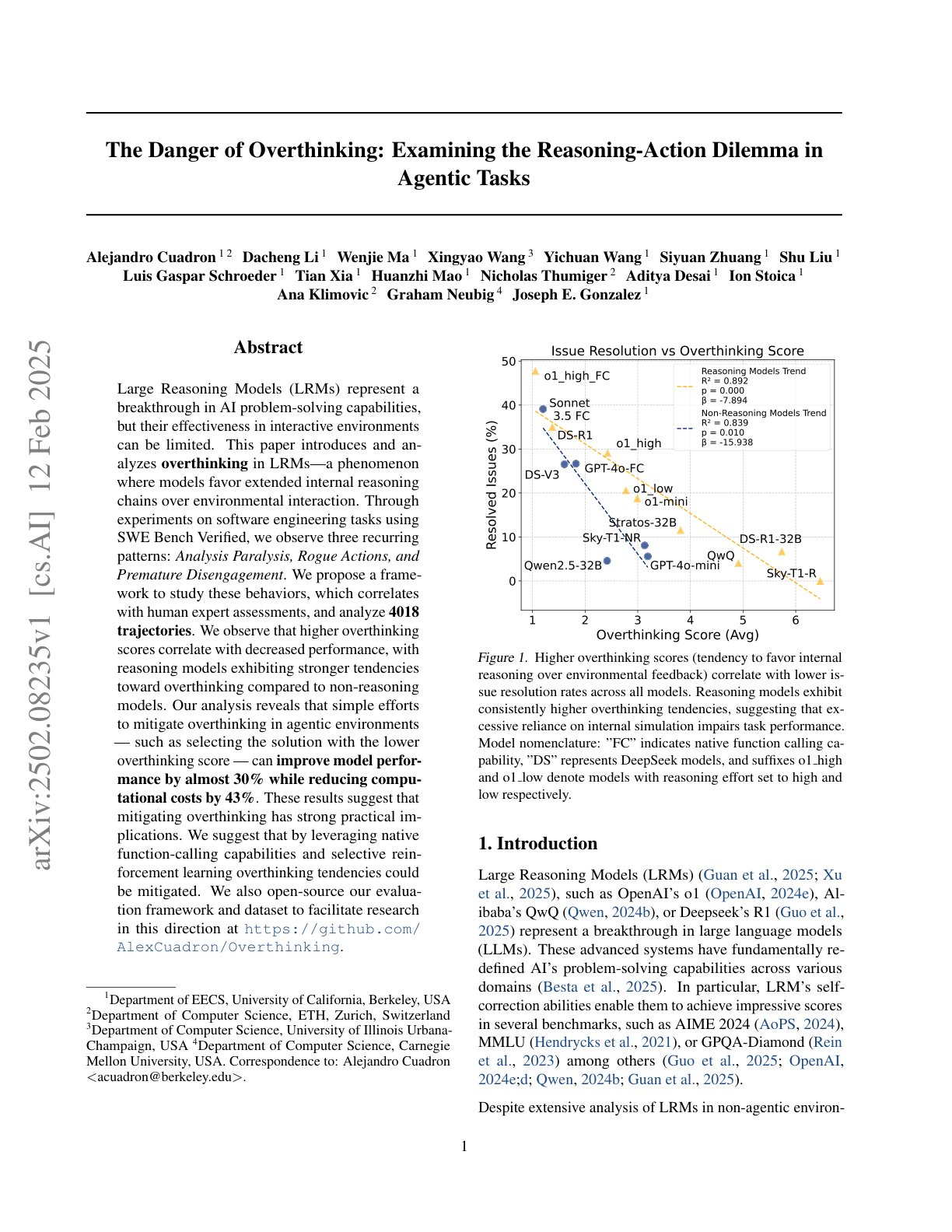
The Danger of Overthinking
This paper investigates overthinking in Large Reasoning Models (LRMs)—a phenomenon where models prioritize extended internal reasoning over interacting with their environment. Their study analyzes 4,018 software engineering task trajectories to understand how reasoning models handle decision-making in agentic settings. Key findings:
o3-mini
OpenAI has launched o3-mini, their newest cost-efficient reasoning model, available in ChatGPT and API. The model excels in STEM-related tasks, particularly in science, math, and coding, while maintaining the low cost and reduced latency of its predecessor o1-mini. It introduces key developer features like function calling, Structured Outputs, and developer messages, making it production-ready from launch. o3-mini includes different reasoning effort levels (low, medium, and high) and improves performance across a wide range of tasks. It delivered responses 24% faster than o1-mini and achieved notable results in competition math, PhD-level science questions, and software engineering tasks.
TheAgentCompany
a new benchmark for evaluating AI agents on real-world professional tasks in a simulated software company environment; tasks span multiple professional roles including software engineering, project management, finance, and HR; when tested with various LLMs, including both API-based models like Claude-3.5-Sonnet and open-source models like Llama 3.1, the results show the current limitations of AI agents. The best-performing model, Claude-3.5-Sonnet, achieved only a 24% success rate on completing tasks fully while scoring 34.4% when accounting for partial progress.
LLM-based Agents for Automated Bug Fixing
analyzes seven leading LLM-based bug fixing systems on the SWE-bench Lite benchmark, finding MarsCode Agent (developed by ByteDance) achieved the highest success rate at 39.33%; reveals that for error localization line-level fault localization accuracy is more critical than file-level accuracy, and bug reproduction capabilities significantly impact fixing success; shows that 24/168 resolved issues could only be solved using reproduction techniques, though reproduction sometimes misled LLMs when issue descriptions were already clear; concludes that improvements are needed in both LLM reasoning capabilities and Agent workflow design to enhance automated bug fixing effectiveness.