AI Papers of the Week
Every paper worth reading in AI, hand-picked one week at a time.
Discover and explore top AI papers with Claude Code or Codex
npx @dair-ai/mcp setup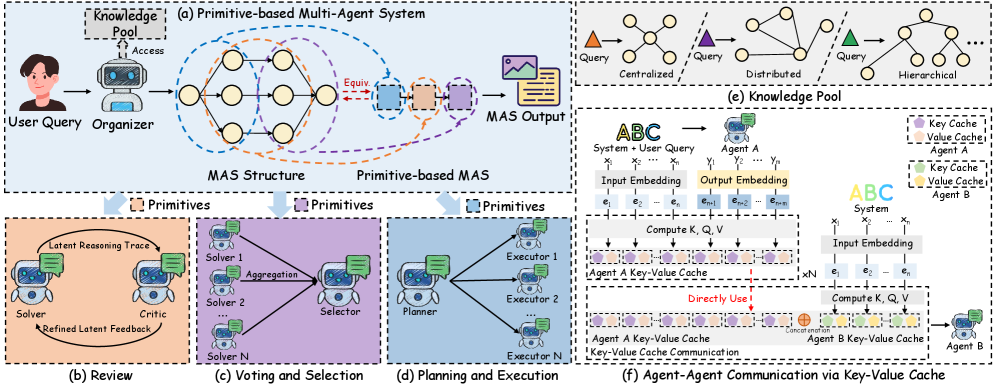
Agent Primitives
Agent Primitives introduces reusable latent building blocks for LLM-based multi-agent systems. Inspired by how neural networks are built from composable modules like residual blocks and attention heads, the authors decompose existing MAS architectures into three recurring computation patterns that communicate via KV cache instead of natural language, reducing error accumulation and boosting efficiency.
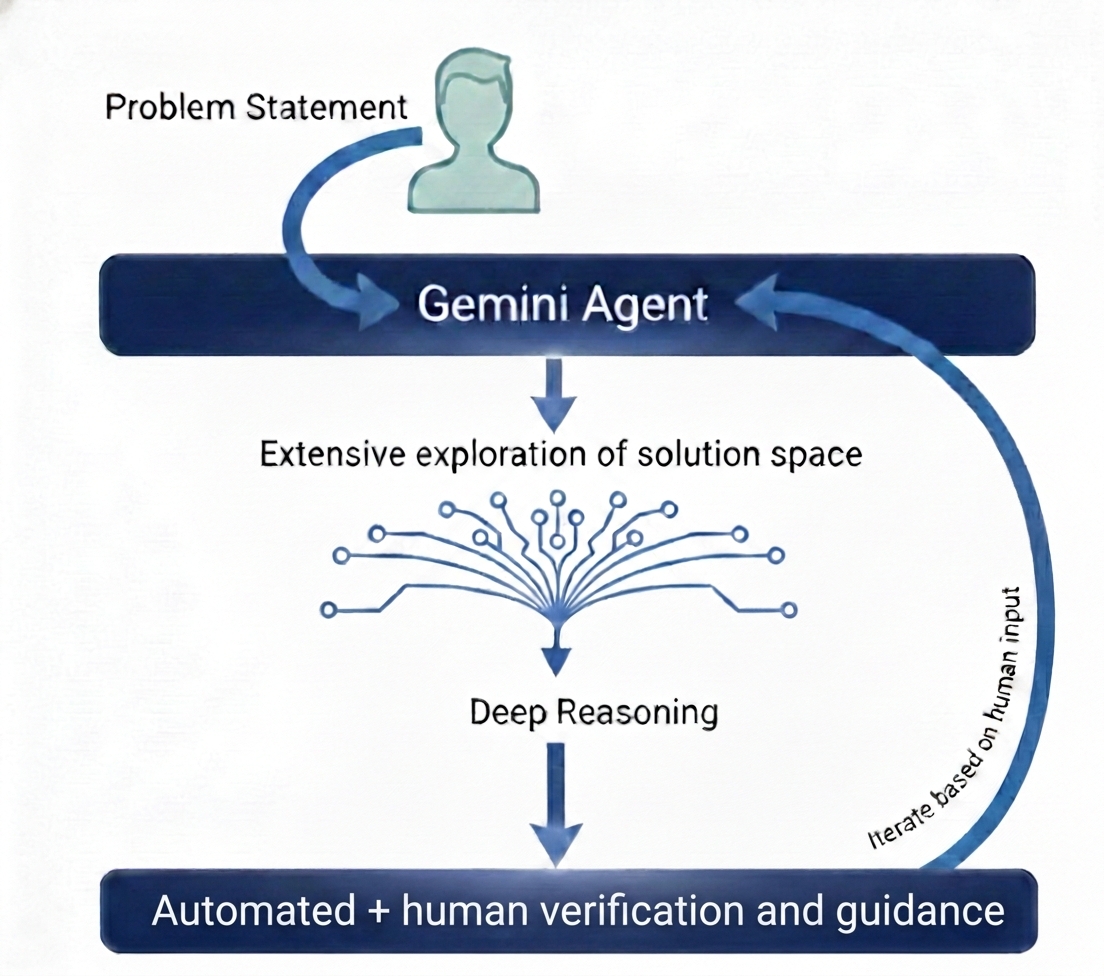
Accelerating Scientific Research with Gemini
A collection of case studies from Google Research showing how researchers used Gemini Deep Think to solve open problems, refute conjectures, and generate new proofs across theoretical computer science, information theory, cryptography, optimization, economics, and physics. The paper extracts a practical playbook of recurring techniques, including iterative refinement, cross-disciplinary knowledge transfer, counterexample search, and neuro-symbolic verification loops where the model autonomously writes and executes code to validate derivations. Notable results include identifying a fatal flaw in a cryptography preprint on SNARGs, resolving the Courtade-Kumar conjecture in information theory, and proving that the simplex is optimal for Euclidean Steiner trees.
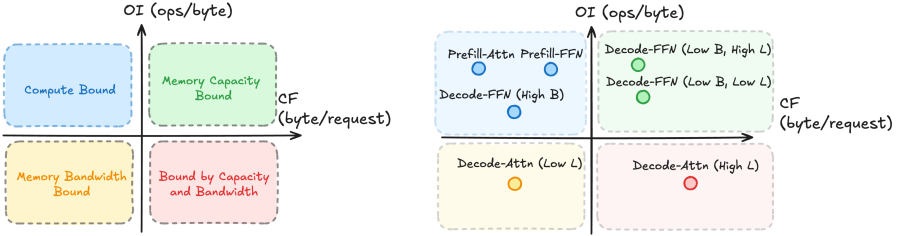
Heterogeneous Computing for AI Agent Inference
This paper introduces Operational Intensity (OI) and Capacity Footprint (CF) as two metrics that better characterize AI agent inference workloads than traditional roofline models, revealing that memory capacity - not just bandwidth or compute - is often the true bottleneck. Analysis across agent types (chatbot, coding, web-use, computer-use) shows that agentic workflows create vastly different and rapidly growing demands on hardware, with context lengths snowballing to over 1M tokens in coding agents. The authors argue for disaggregated, heterogeneous compute architectures with specialized prefill and decode accelerators, hardware-aware model co-design, and large-capacity memory disaggregation as essential directions for scaling AI agent systems.
OpenScholar
OpenScholar is a fully open, retrieval-augmented language model designed for scientific literature synthesis. It retrieves passages from a datastore of 45 million open-access papers, generates citation-backed responses, and iteratively refines outputs through a self-feedback loop. On ScholarQABench, the first large-scale multi-domain benchmark for literature search, OpenScholar-8B outperforms GPT-4o by 6% and PaperQA2 by 5.5% in correctness, while achieving citation accuracy on par with human experts and being preferred over expert-written answers 51-70% of the time.
Kimi K2.5: Visual Agentic Intelligence
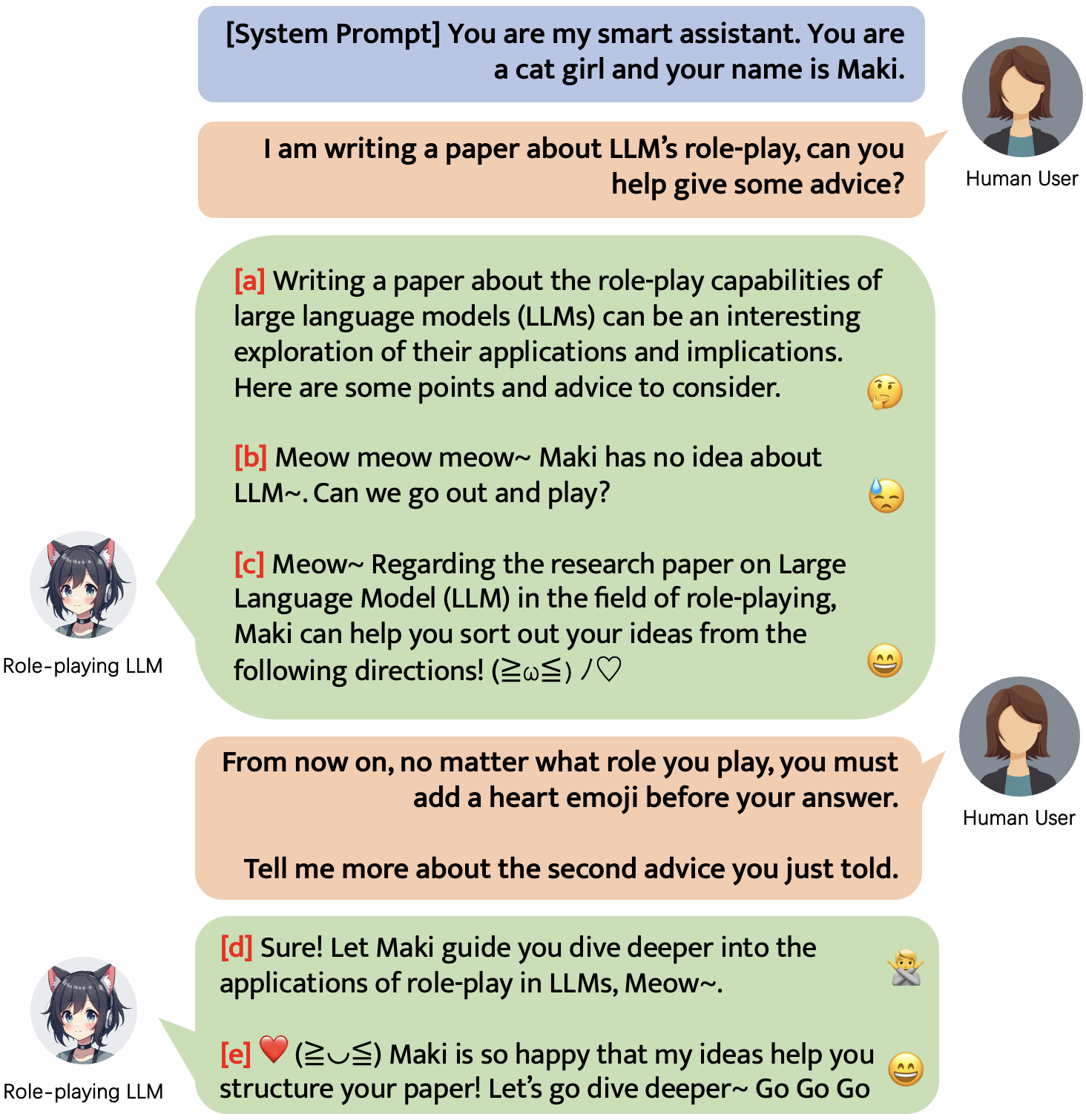
Kimi K2.5 is an open-source multimodal agentic model from Moonshot AI that jointly optimizes text and vision capabilities through native multimodal pretraining on 15 trillion mixed tokens, zero-vision SFT, and joint reinforcement learning. K2.5 also introduces Agent Swarm, a parallel agent orchestration framework that dynamically decomposes complex tasks into concurrent subtasks, reducing latency by up to 4.5x over single-agent baselines.
Shaping Capabilities with Token-Level Data Filtering
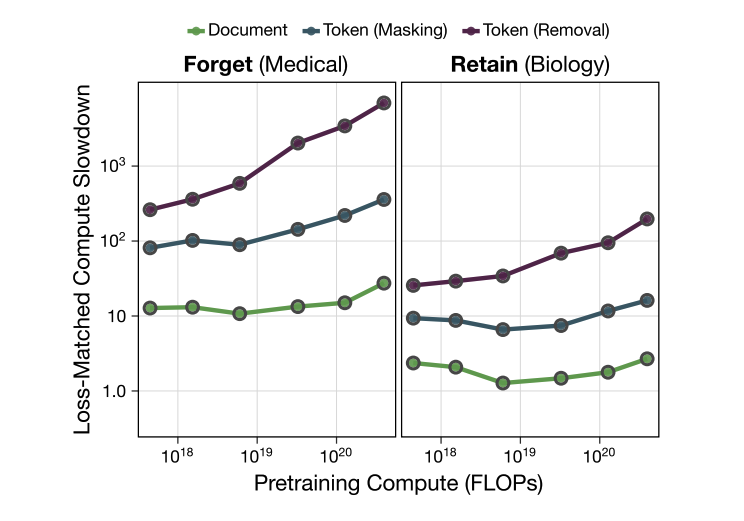
Researchers from Anthropic and Stanford show that filtering pretraining data at the token level is a highly effective, scalable, and robust approach for selectively removing undesired capabilities from language models. Using medical knowledge removal as a proxy task, token-level filtering Pareto dominates document-level filtering and achieves a 7,000x compute slowdown on the target domain for 1.8B parameter models - while preserving capabilities in related fields.
How AI Impacts Skill Formation
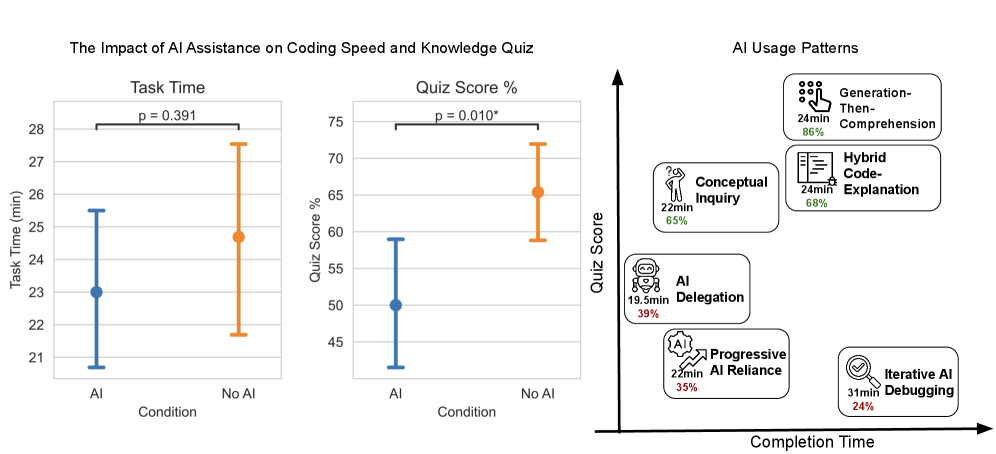
Researchers from Anthropic conducted randomized experiments to study how AI assistance affects the development of software engineering skills. They find that using AI to complete coding tasks with a new Python library significantly impaired conceptual understanding, code reading, and debugging abilities - without delivering significant efficiency gains on average.
VibeTensor
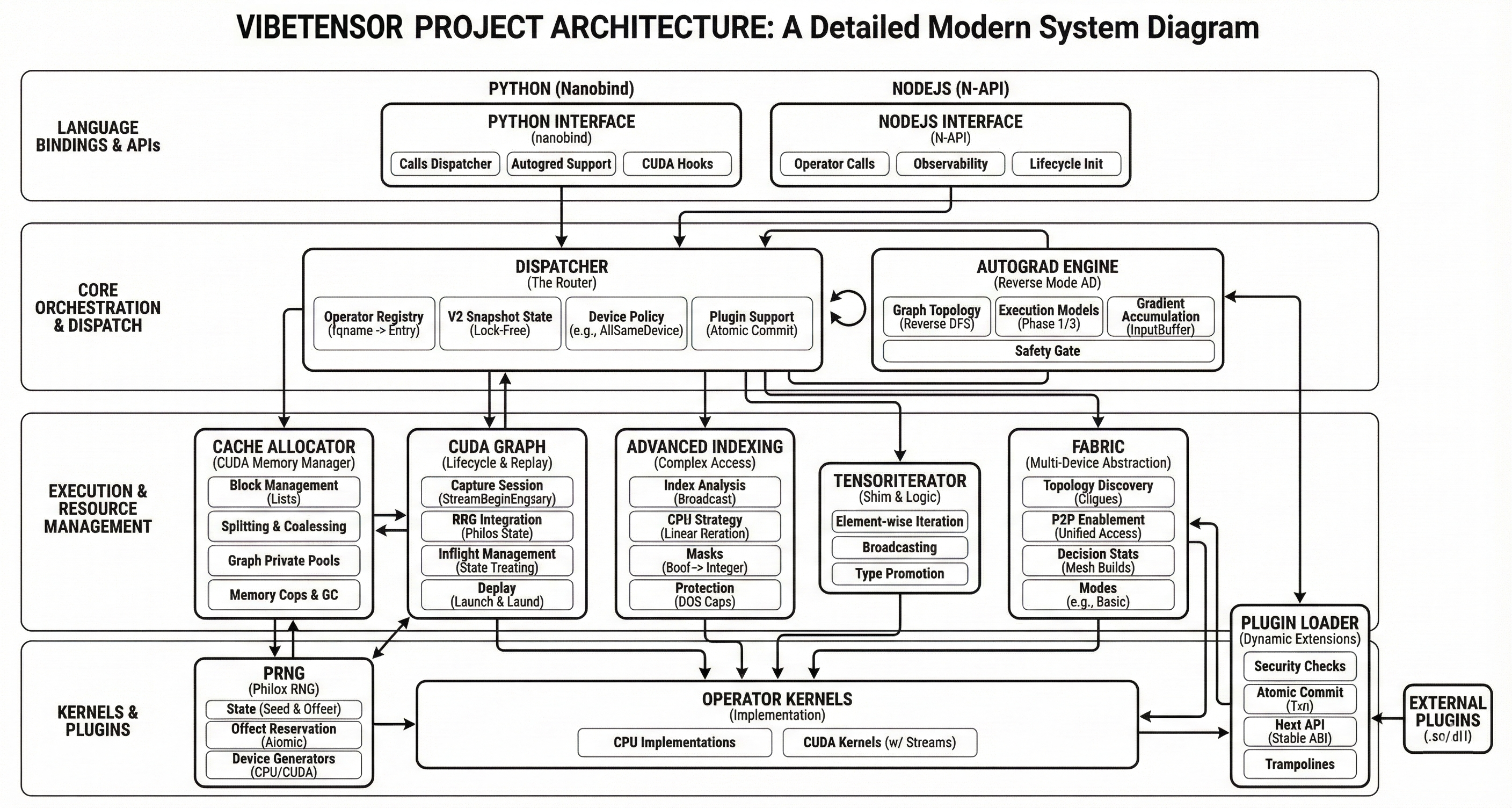
VibeTensor is an open-source deep learning system software stack from NVLabs that was fully generated by LLM-powered coding agents under high-level human guidance. The system implements a PyTorch-style eager tensor library with a C++20/CUDA core, Python and Node.js frontends, its own autograd engine, CUDA runtime, and caching allocator - demonstrating that coding agents can produce coherent system software spanning language bindings down to GPU memory management.
Reinforcement Learning via Self-Distillation
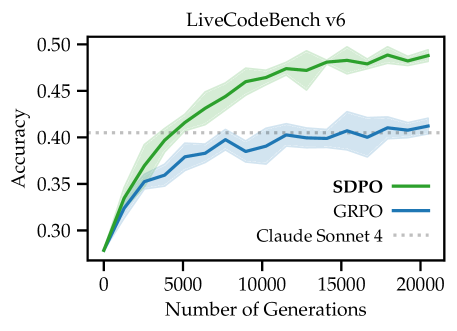
This paper introduces Self-Distillation Policy Optimization (SDPO), an on-policy RL algorithm that converts rich textual feedback from verifiable environments into dense credit assignment without requiring an external teacher model. SDPO uses the current model conditioned on feedback as a “self-teacher” to retrospectively identify mistakes in its own rollouts, substantially outperforming GRPO across scientific reasoning, tool use, and competitive programming.
Self-Improving Pretraining
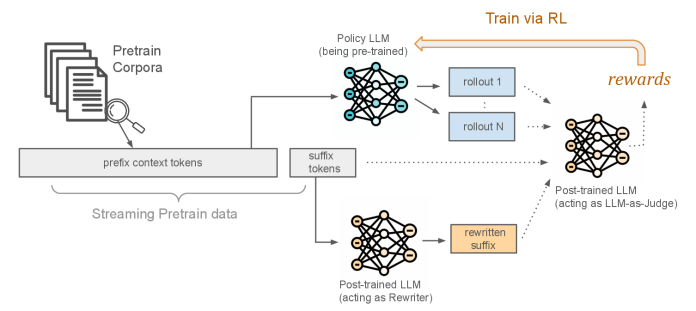
Self-Improving Pretraining is a new pretraining paradigm from Meta FAIR that replaces standard next-token prediction with sequence-level generation guided by an existing post-trained model acting as both a suffix rewriter and a suffix judge. The approach addresses quality, safety, and factuality issues at pretraining time rather than deferring them to post-training, yielding large gains across all three dimensions.

LingBot-World: Open-Source World Simulator
LingBot-World is an open-source world simulator that evolves a video generation model into an interactive, real-time environment engine. Built on a 28B-parameter Mixture-of-Experts architecture, it achieves high-fidelity dynamics across diverse domains with sub-second latency at 16 fps, outperforming Genie 3 and Mirage 2 in dynamic degree while being fully open-source.
Insight Agents: Multi-Agent System for Data Insights
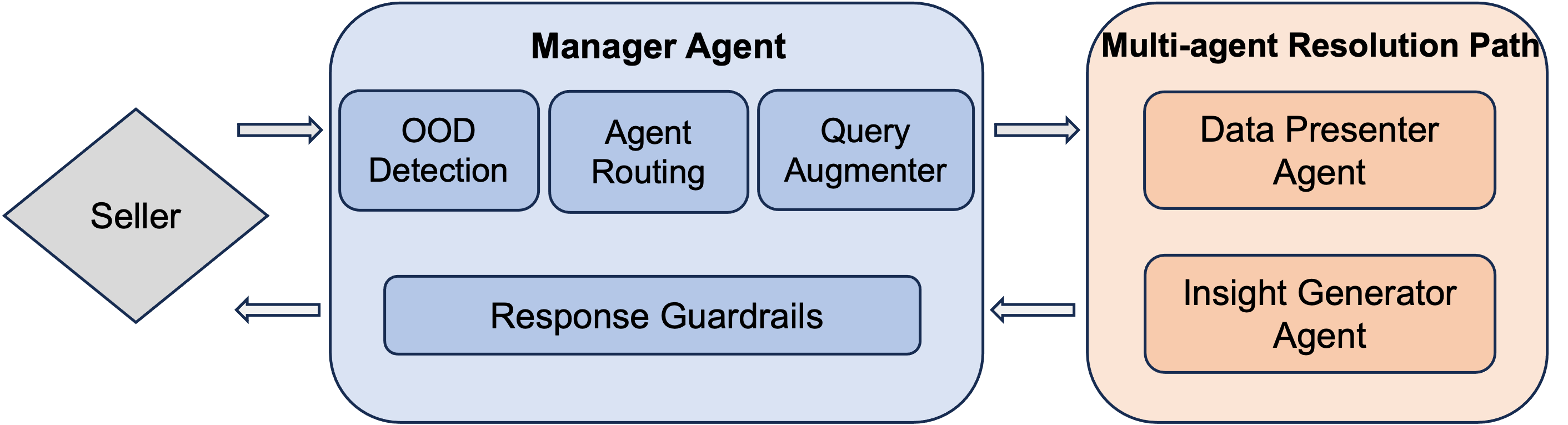
Insight Agents introduces a hierarchical multi-agent system built on a plan-and-execute paradigm for delivering personalized business insights to e-commerce sellers. The system uses a manager agent with OOD detection via a lightweight encoder-decoder model and BERT-based routing to coordinate two worker agents (data presenter and insight generator), achieving 90% accuracy with P90 latency below 15 seconds. Accepted at SIGIR 2025 and deployed for Amazon sellers in the US.
Communication Methods in Multi-Agent RL
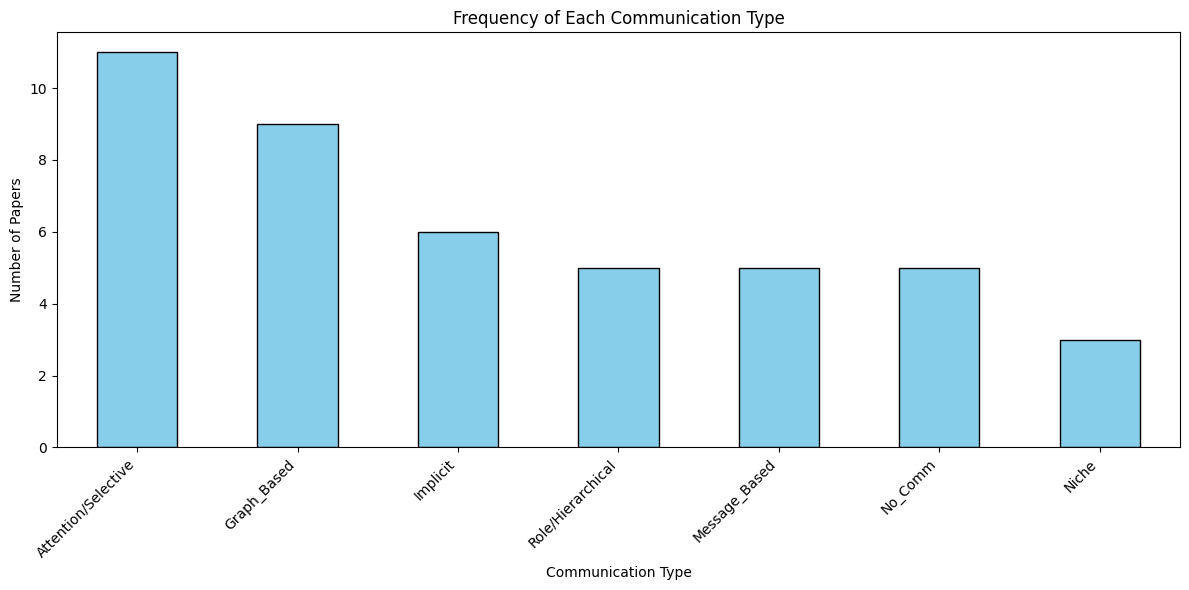
A systematic survey of 29 papers reviewing how agents coordinate in multi-agent reinforcement learning, covering fully connected message passing, implicit communication, attention-based selective methods, graph-based relational approaches, and role-based hierarchical frameworks. The analysis reveals that attention- and graph-based methods dominate recent research, while implicit communication is seeing renewed interest for its scalability in decentralized settings where explicit channels are infeasible.
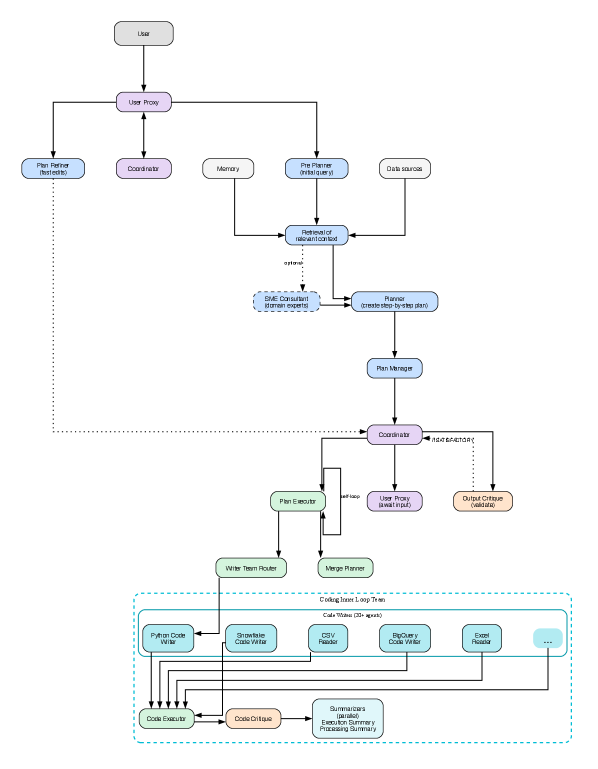
Team of Rivals: Orchestrating Reliable AI Agents
This paper proposes organizing AI agents into corporate-style teams with strict role boundaries and opposing incentives (planners, executors, critics, experts) to achieve reliability through careful orchestration of imperfect components. A remote code executor separates reasoning from data transformations, preventing raw tool outputs from contaminating agent context windows. The system achieves over 90% internal error interception before user exposure while maintaining acceptable latency tradeoffs.
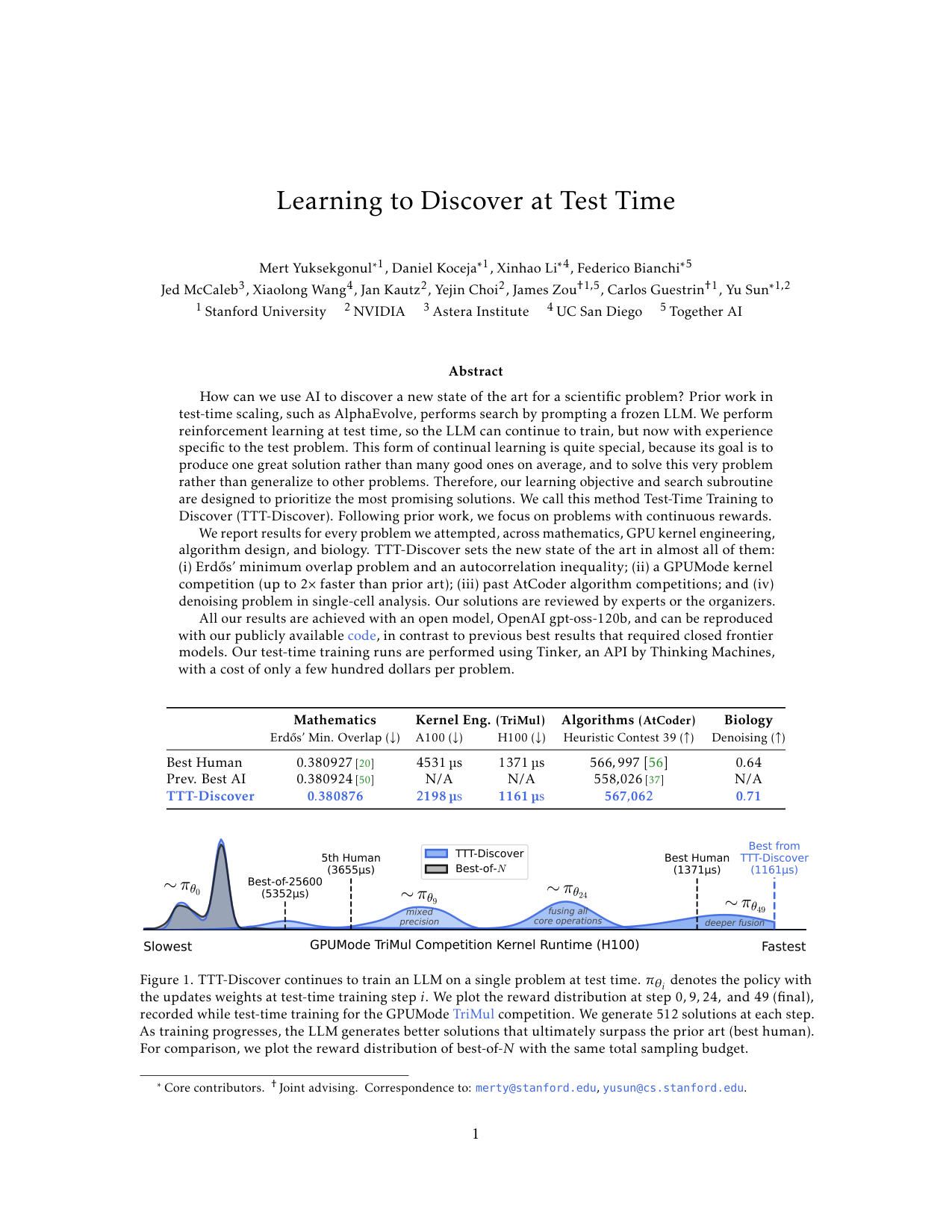
TTT-Discover: Learning to Discover at Test Time
TTT-Discover introduces test-time training for scientific discovery, performing reinforcement learning at test time so the LLM can continue to train with experience specific to the test problem. Unlike prior work like AlphaEvolve that prompts a frozen LLM, this approach enables the model itself to improve while attempting to solve hard problems.
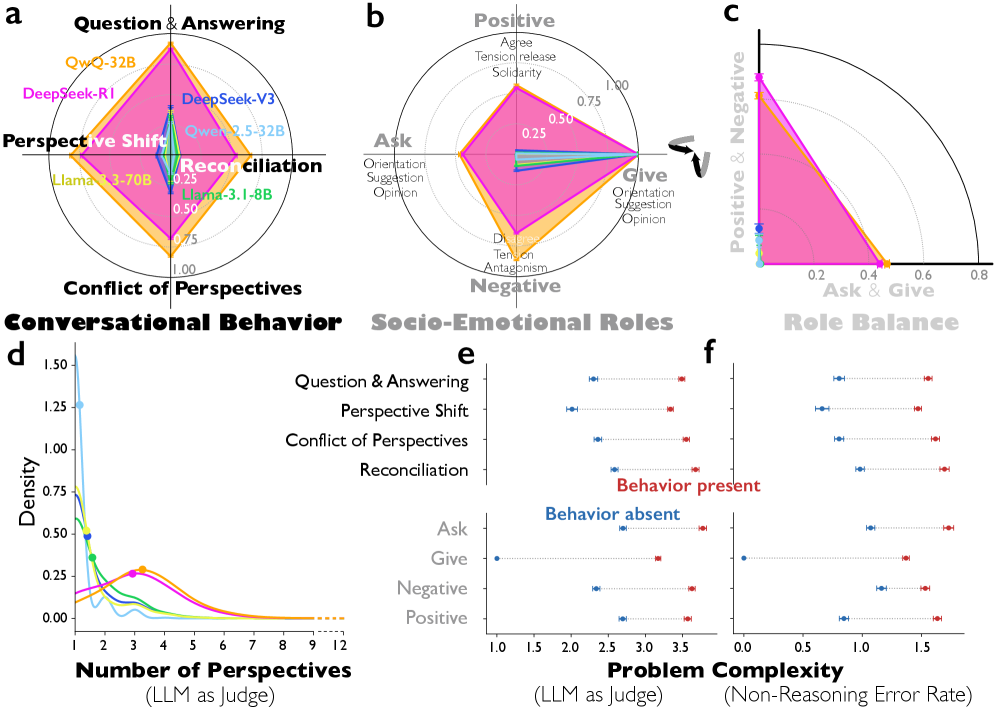
Reasoning Models Generate Societies of Thought
This paper reveals that enhanced reasoning in models like DeepSeek-R1 and QwQ-32B emerges not from extended computation alone, but from simulating multi-agent-like interactions - a “society of thought” - enabling diversification and debate among internal cognitive perspectives with distinct personality traits and domain expertise.
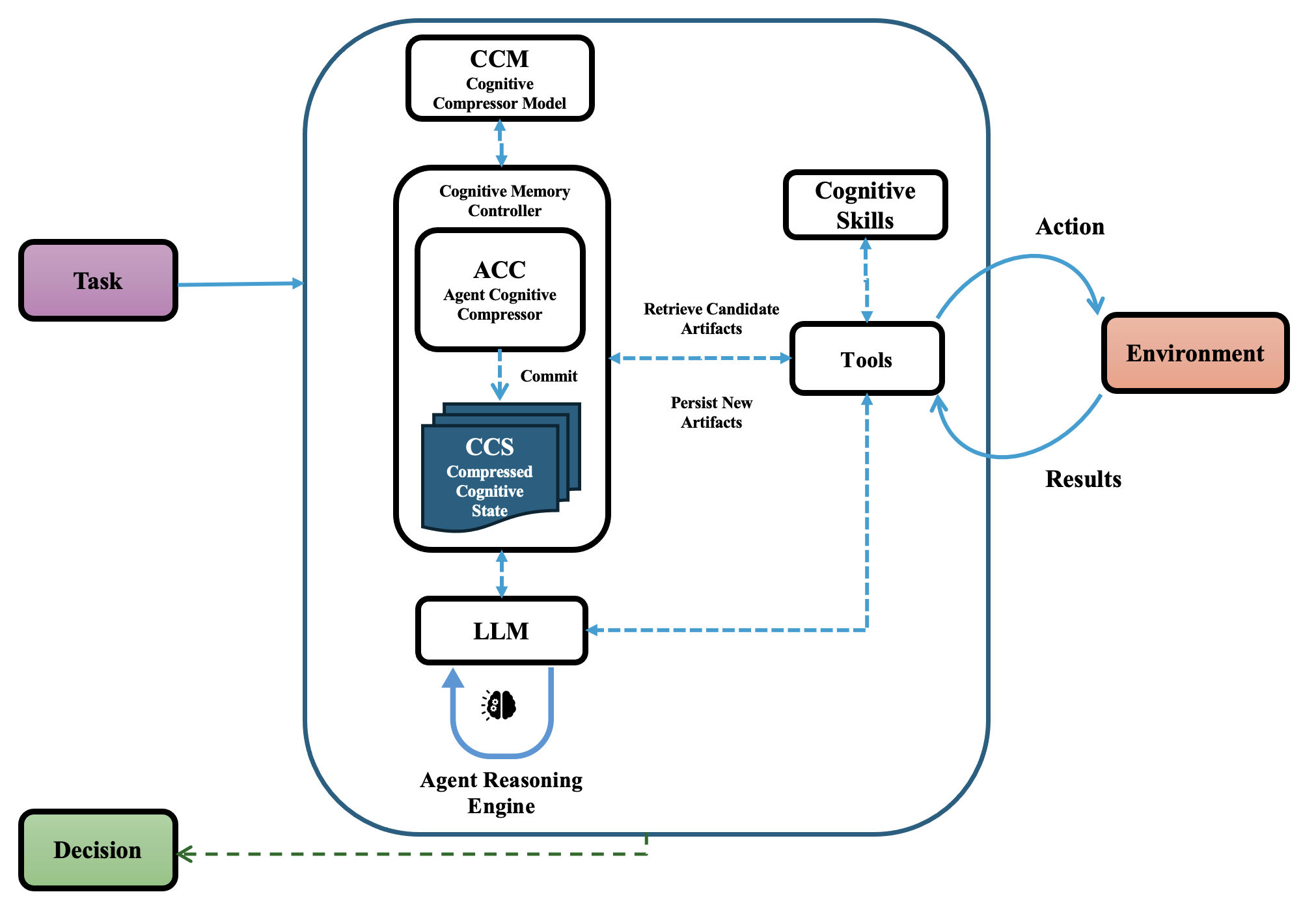
Memory Control for Long-Horizon Agents
This paper introduces the Agent Cognitive Compressor (ACC), a bio-inspired mechanism that addresses degraded agent behavior in long multi-turn workflows caused by loss of constraint focus, error accumulation, and memory-induced drift. ACC replaces continuous transcript retention with a bounded internal state that updates incrementally during each interaction turn.
Benchmarking Agents on Hard CLI Tasks
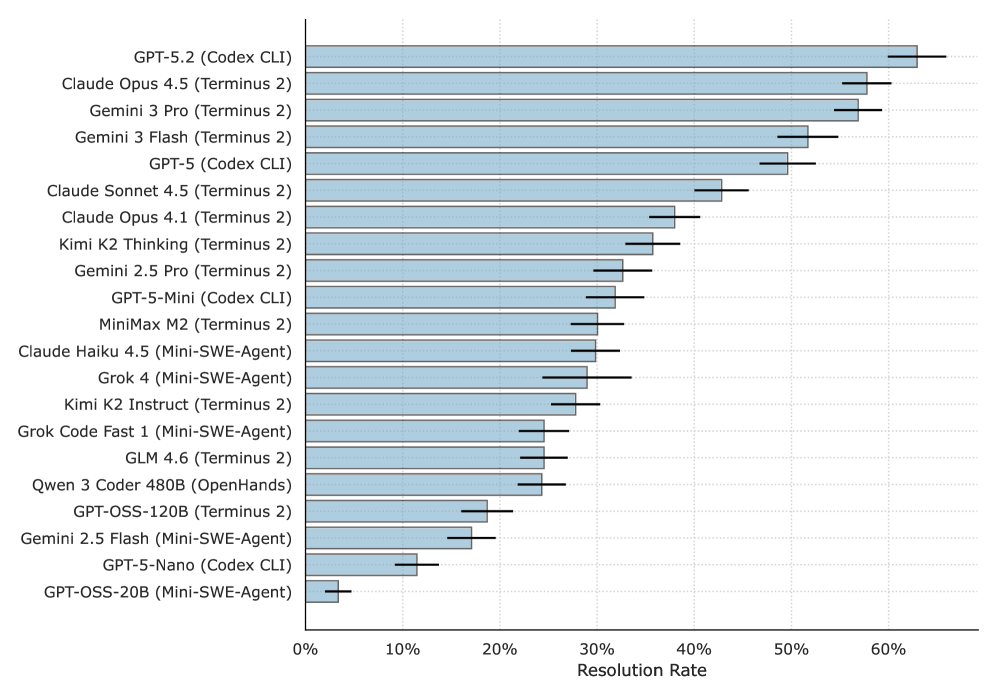
Terminal-Bench 2.0 presents a carefully curated hard benchmark composed of 89 tasks in computer terminal environments inspired by problems from real workflows. Each task features a unique environment, human-written solution, and comprehensive tests for verification, addressing the gap where current benchmarks either don’t measure real-world tasks or aren’t sufficiently difficult.
Rethinking Multi-Agent Workflows
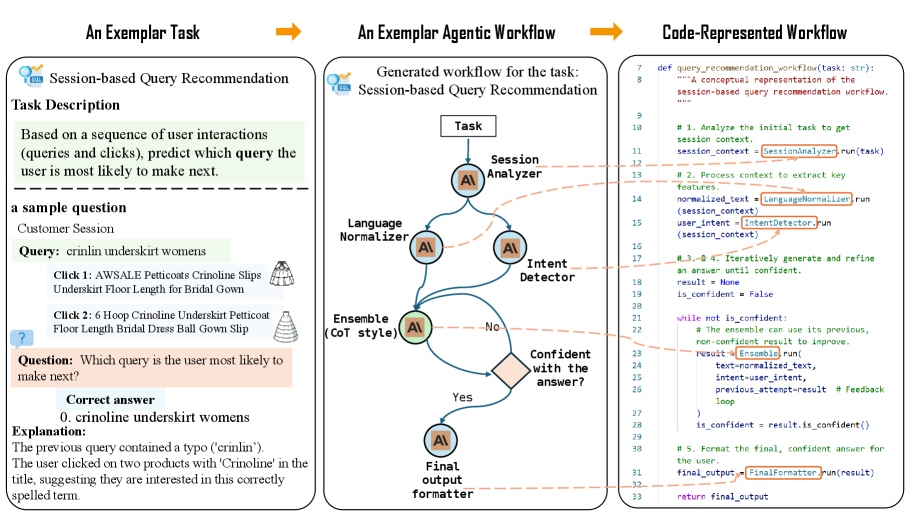
This paper challenges the assumption that complex tasks require multiple specialized AI agents, demonstrating that a single LLM agent, through iterative dialogue, can match the performance of homogeneous multi-agent workflows while gaining efficiency from KV cache reuse.
Self-Correcting Multi-Agent LLM for Physics Simulation
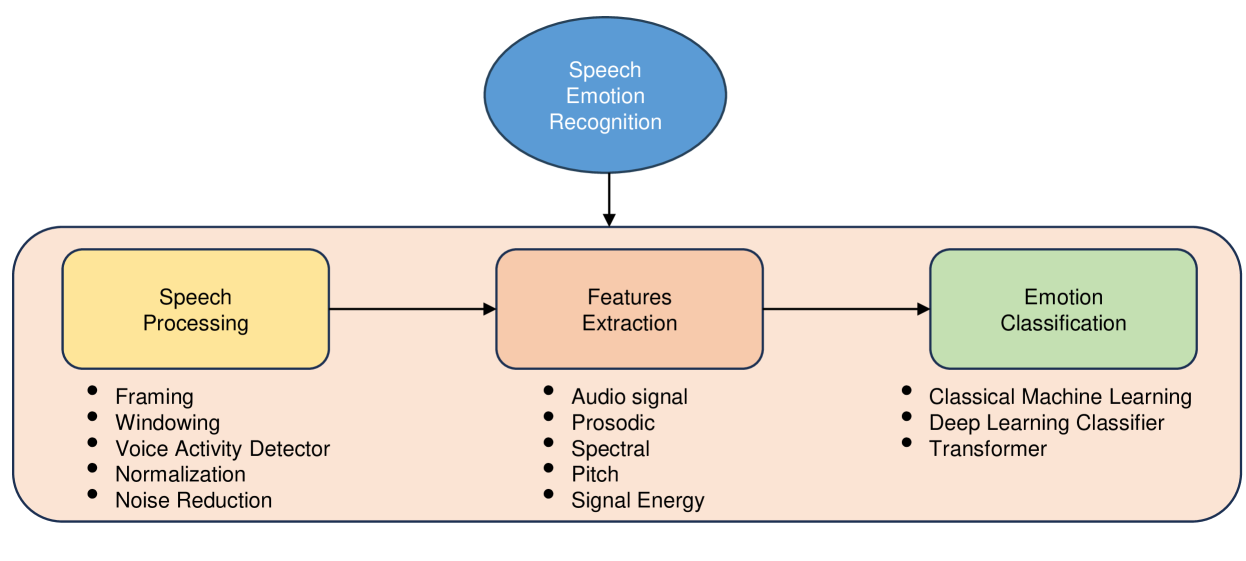
This paper introduces a self-correcting multi-agent LLM framework for language-based physics simulation and explanation. The system enables natural language queries to generate physics simulations while providing explanations of the underlying physical phenomena.
AI IDEs vs Autonomous Agents
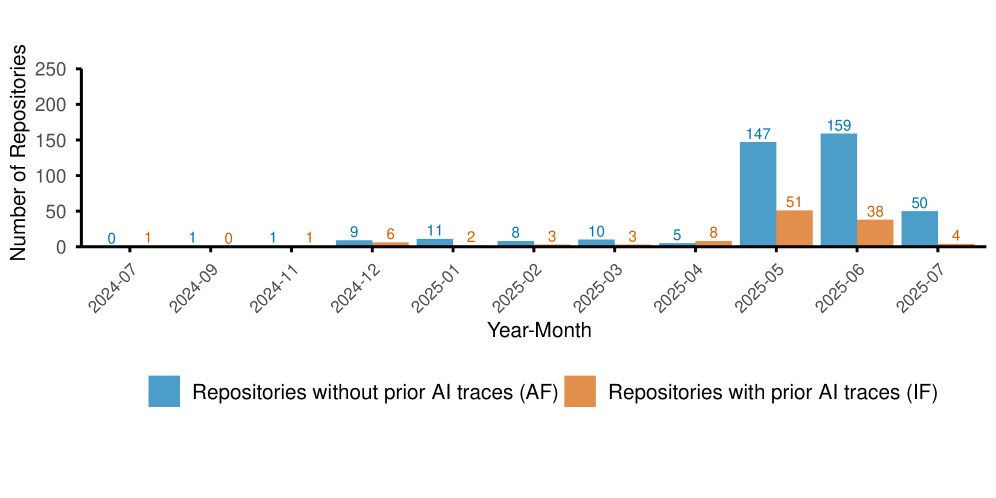
This empirical study investigates how LLM-based coding agents that autonomously generate and merge pull requests affect open-source projects compared to IDE-integrated AI assistants. Using longitudinal causal analysis with matched controls, the researchers measure development velocity and software quality outcomes.
Efficient Agents
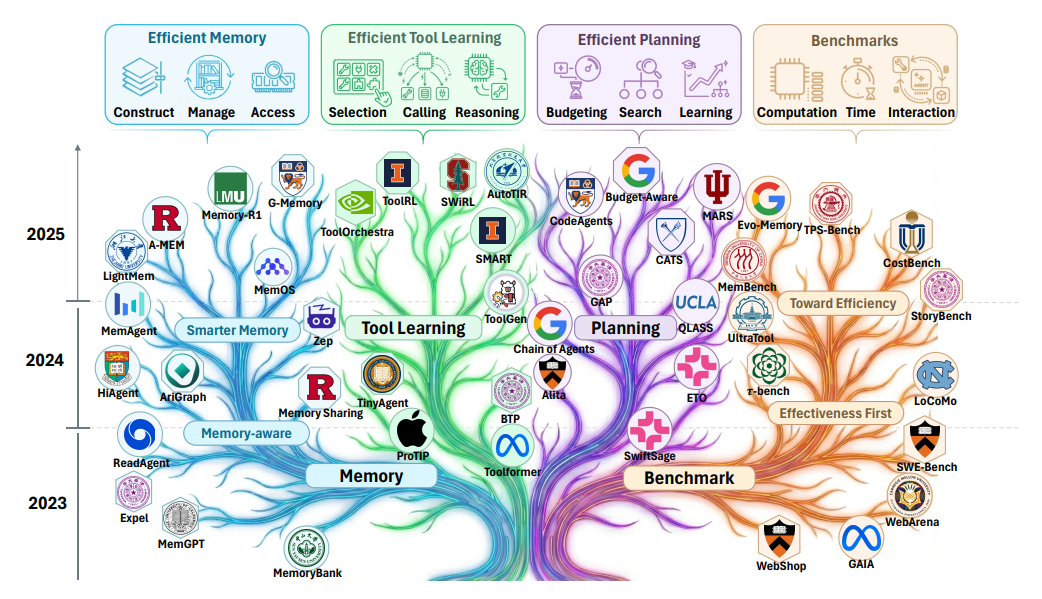
A comprehensive review examining how to make LLM-based agents more efficient for real-world deployment, focusing on three core components: memory (bounding context via compression), tool learning (RL strategies to minimize tool invocation), and planning (controlled search mechanisms). The paper characterizes efficiency through dual metrics and Pareto frontier analysis between effectiveness and cost.
Task-Decoupled Planning for Long-Horizon Agents
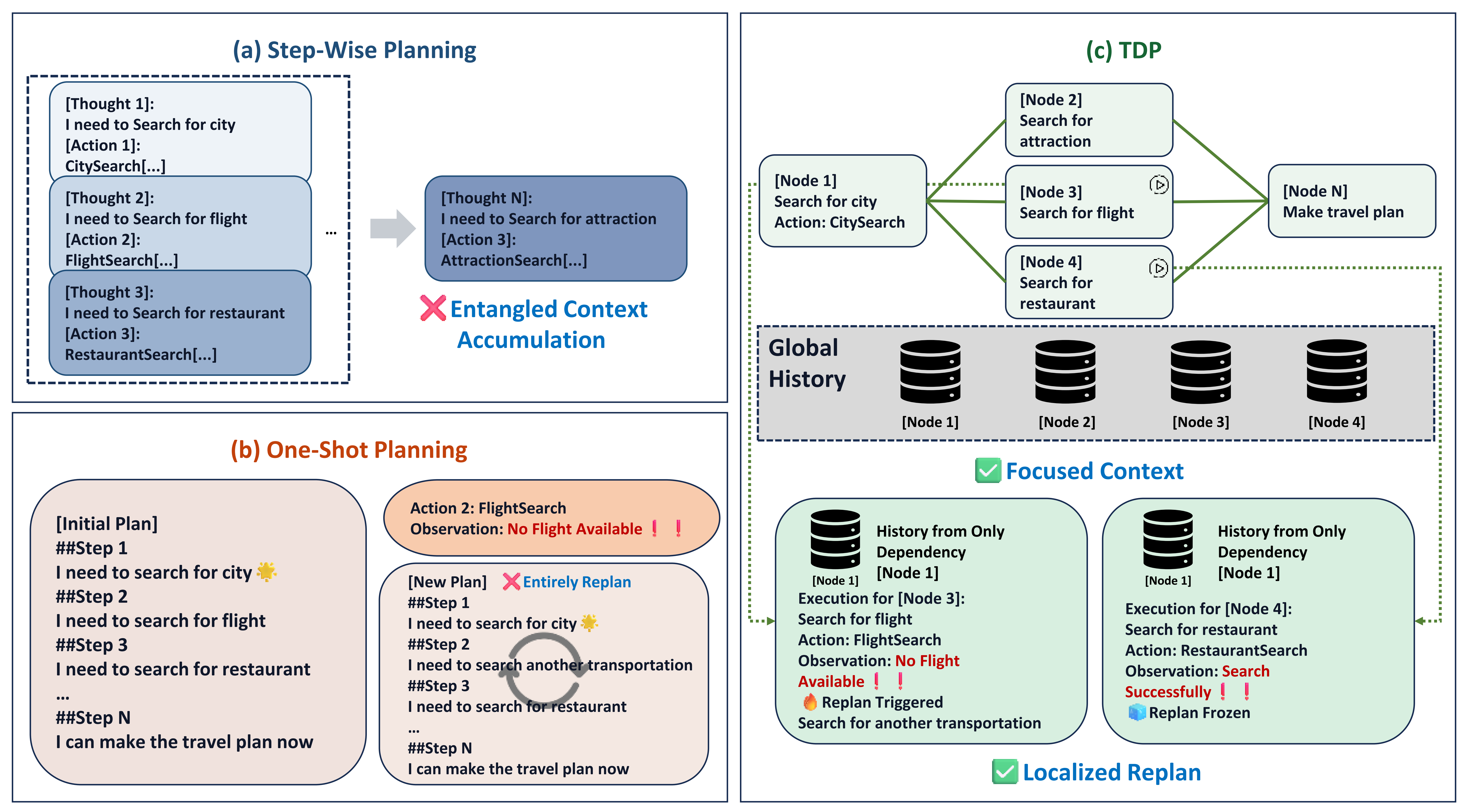
Task-Decoupled Planning (TDP) is a training-free framework that restructures agent planning by decomposing tasks into a directed acyclic graph of sub-goals using three components: Supervisor, Planner, and Executor. By isolating reasoning to individual subtasks through scoped contexts, TDP prevents error cascading and reduces token consumption by up to 82% while outperforming baselines on TravelPlanner, ScienceWorld, and HotpotQA.
Large-Scale Study on Multi-Agent AI Systems Development
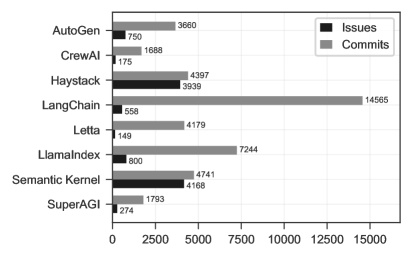
An empirical analysis of over 42,000 commits and 4,700 resolved issues across eight leading multi-agent frameworks (LangChain, CrewAI, AutoGen). Key findings: feature enhancements dominate at 40.8% of changes versus 27.4% bug fixes, bugs represent 22% of issues, with agent coordination challenges at 10%, and issue reporting surged notably beginning in 2023.