AI Papers of the Week
Every paper worth reading in AI, hand-picked one week at a time.
Discover and explore top AI papers with Claude Code or Codex
npx @dair-ai/mcp setup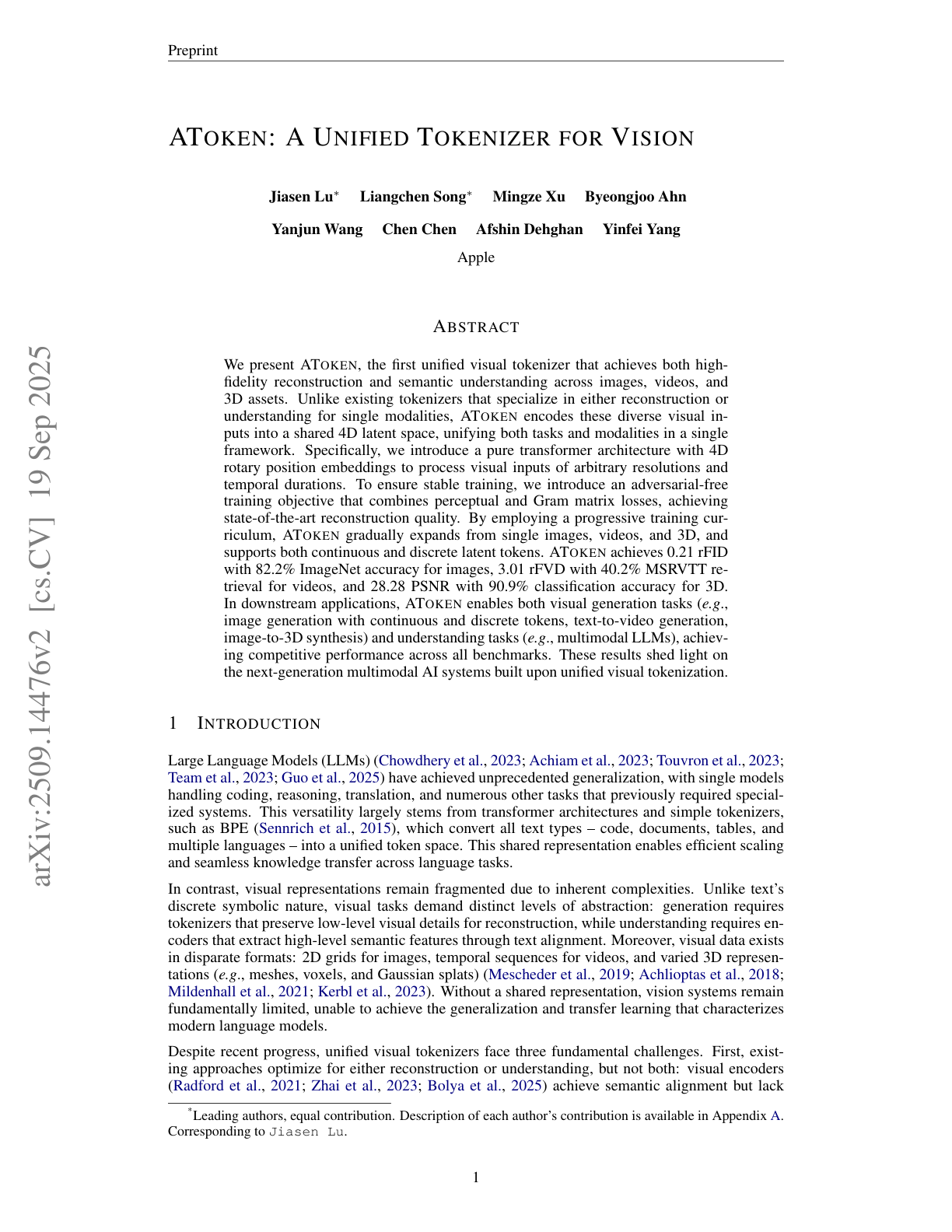
ATOKEN
ATOKEN introduces a single transformer tokenizer that works for images, videos, and 3D assets. It encodes all inputs into a shared sparse 4D latent space with 4D RoPE, trains without adversarial losses, and supports both continuous and discrete tokens. The paper reports strong reconstruction quality and solid semantic alignment, enabling both generation and understanding across modalities.
Automating the Search for Artificial Life with Foundation Models
ASAL uses vision-language foundation models to automatically search across ALife substrates for simulations that match prompts, sustain open-ended novelty, or maximize diversity, reducing manual trial-and-error. It discovers new Lenia and Boids life-forms and lifelike CAs with strong open-endedness, and leverages FM embeddings to quantify emergent behaviors in a substrate-agnostic way.
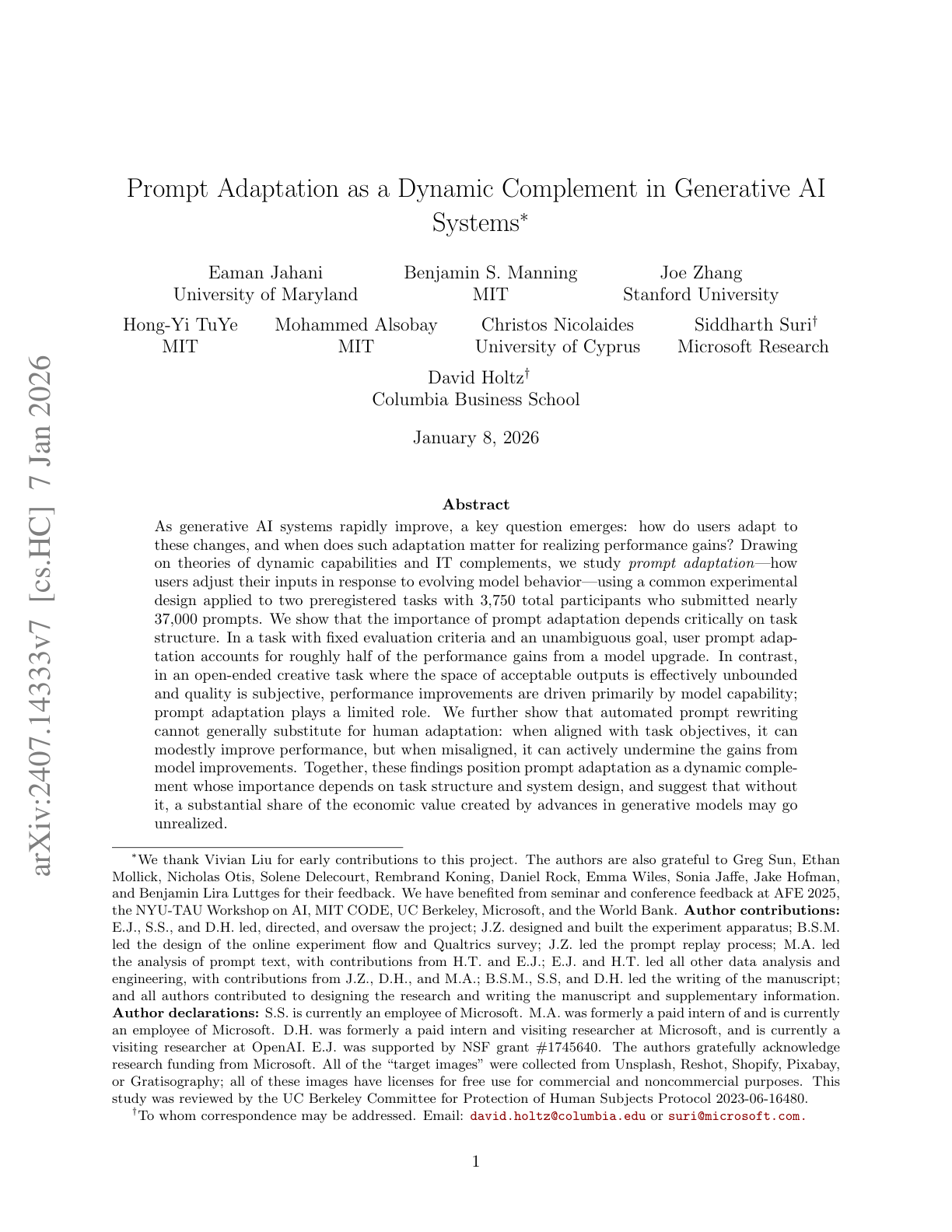
As Generative Models Improve, People Adapt Their Prompts
A large online experiment (N = 1,893) compares DALL·E 2, DALL·E 3, and DALL·E 3 with automatic prompt revision on a 10‑attempt image replication task. DALL·E 3 improves outcomes not only because the model is better, but because people change how they prompt when the model is stronger.
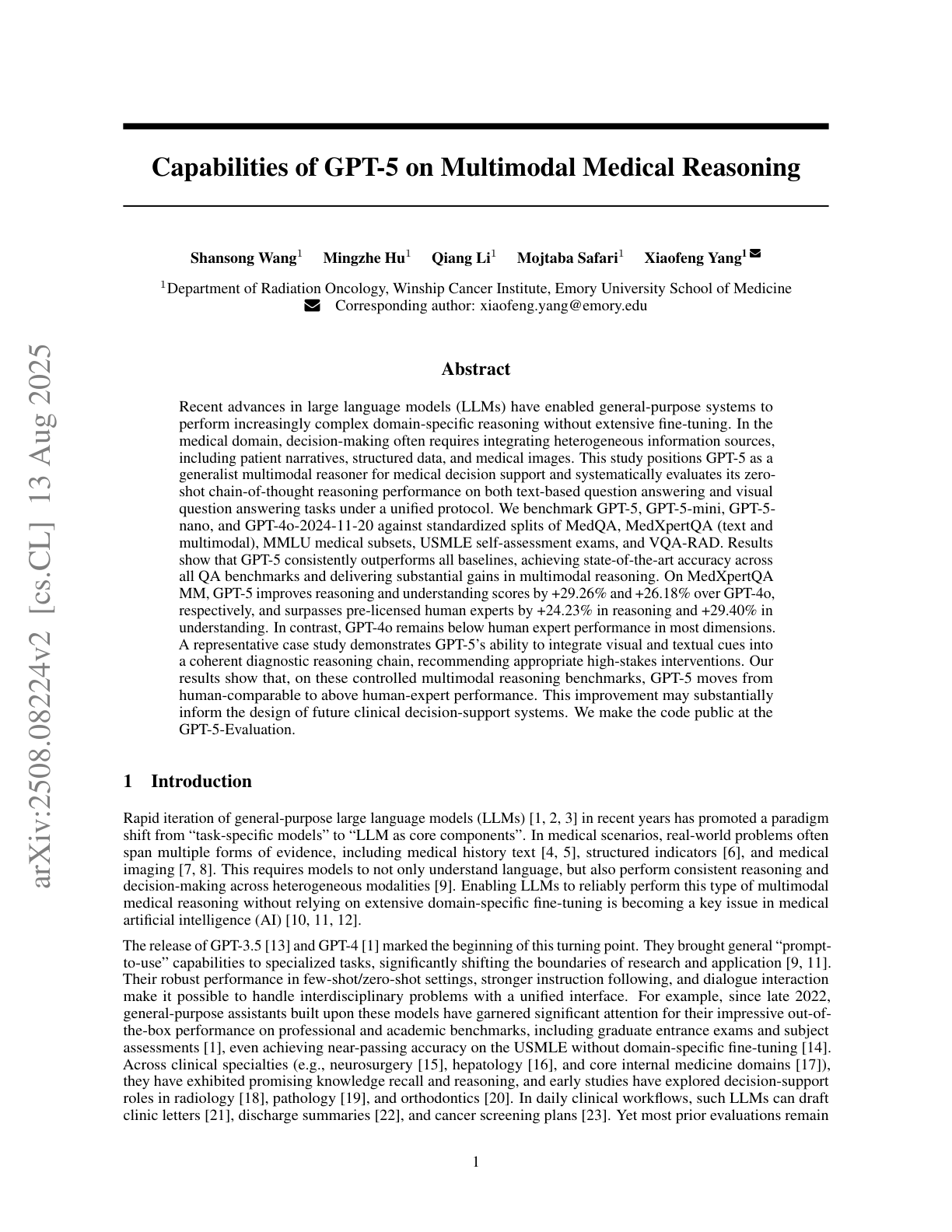
Capabilities of GPT-5 on Multimodal Medical Reasoning
A controlled, zero‑shot CoT evaluation positions GPT‑5 as a generalist medical reasoner across text and image inputs. Using standardized prompts and splits, GPT‑5 consistently beats GPT‑4o and smaller GPT‑5 variants, with especially large gains on multimodal expert‑level QA.
TRImodal Brain Encoder
A tri‑modal, multi‑subject, nonlinear encoder that fuses text, audio, and video features with a transformer to predict time‑varying fMRI responses to natural movies. It took 1st place in the Algonauts 2025 brain encoding competition and shows the strongest gains in the high‑level associative cortex.
Apple Intelligence Foundation Language Models
Apple introduces two multilingual, multimodal foundation models: a 3B-parameter on-device model optimized for Apple silicon and a scalable server model using a novel PT-MoE transformer architecture. Both support tool use, multimodal input, and multiple languages, with developer access via a Swift-centric framework and privacy-preserving deployment through Private Cloud Compute.
AI4Research
This survey offers the first unified and comprehensive framework for understanding how AI is transforming the full lifecycle of scientific research. The paper identifies five core areas: Scientific Comprehension, Academic Survey, Scientific Discovery, Academic Writing, and Academic Peer Review, and presents a detailed taxonomy and modeling approach for each.
Visual Structures Help Visual Reasoning
This study shows that adding simple spatial structures (like horizontal lines) to images significantly boosts GPT-4o’s visual reasoning by improving feature binding. This visual input tweak outperforms textual strategies alone, yielding large gains in visual search (+25%), counting (+26.8%), and spatial understanding (+9.5%).
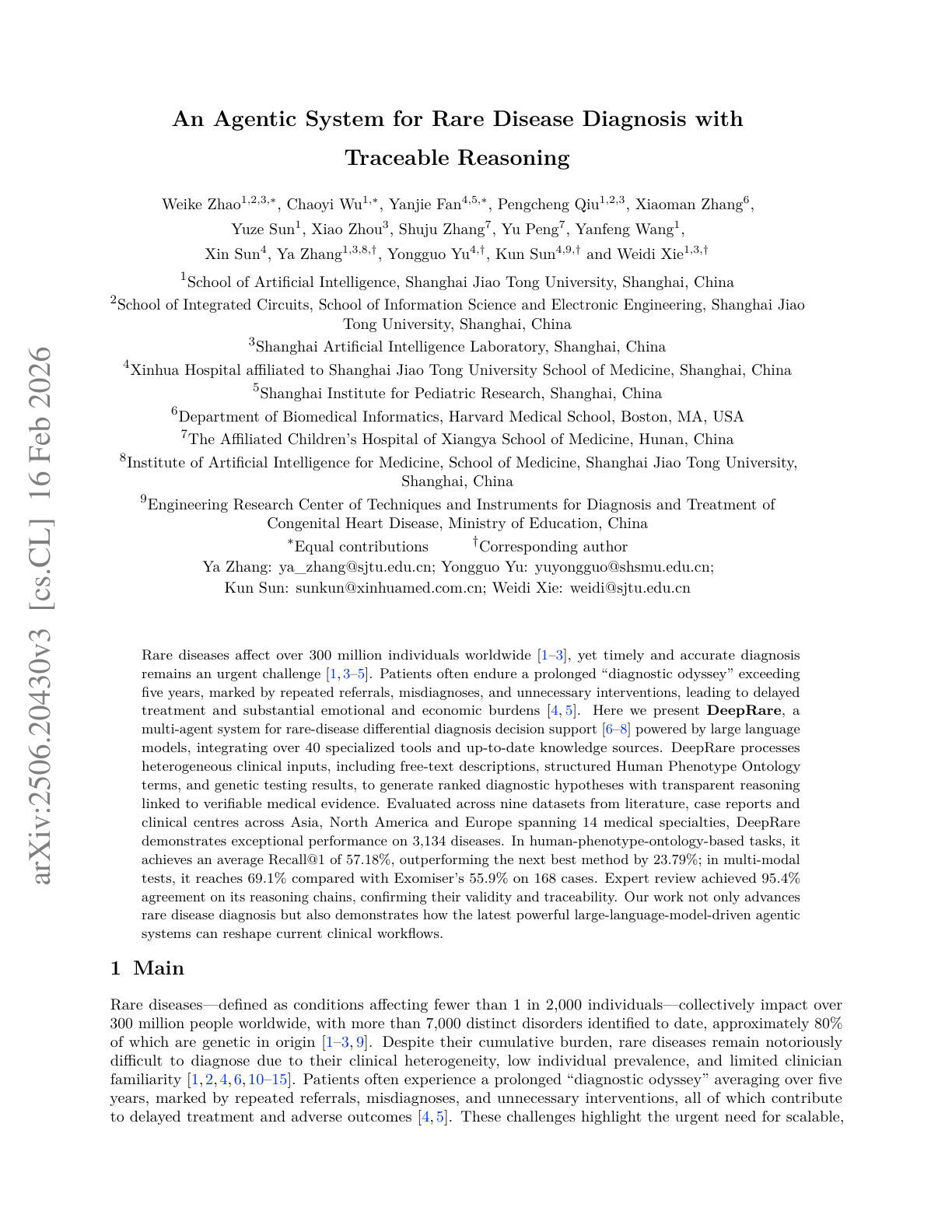
DeepRare
Introduces DeepRare, a modular agentic system powered by LLMs to aid rare disease diagnosis from multimodal clinical inputs (text, HPO terms, VCFs). It generates ranked diagnostic hypotheses with fully traceable reasoning chains linked to verifiable medical sources, addressing a long-standing need for interpretability in clinical AI.
AlphaGenome
Google DeepMind introduces AlphaGenome, a powerful AI model designed to predict how genetic variants affect gene regulation by modeling up to 1 million DNA base pairs at single-base resolution. Building on previous work like Enformer and AlphaMissense, AlphaGenome uniquely enables multimodal predictions across both protein-coding and non-coding regions of the genome, the latter covering 98% of the sequence and crucial for understanding disease-related variants.
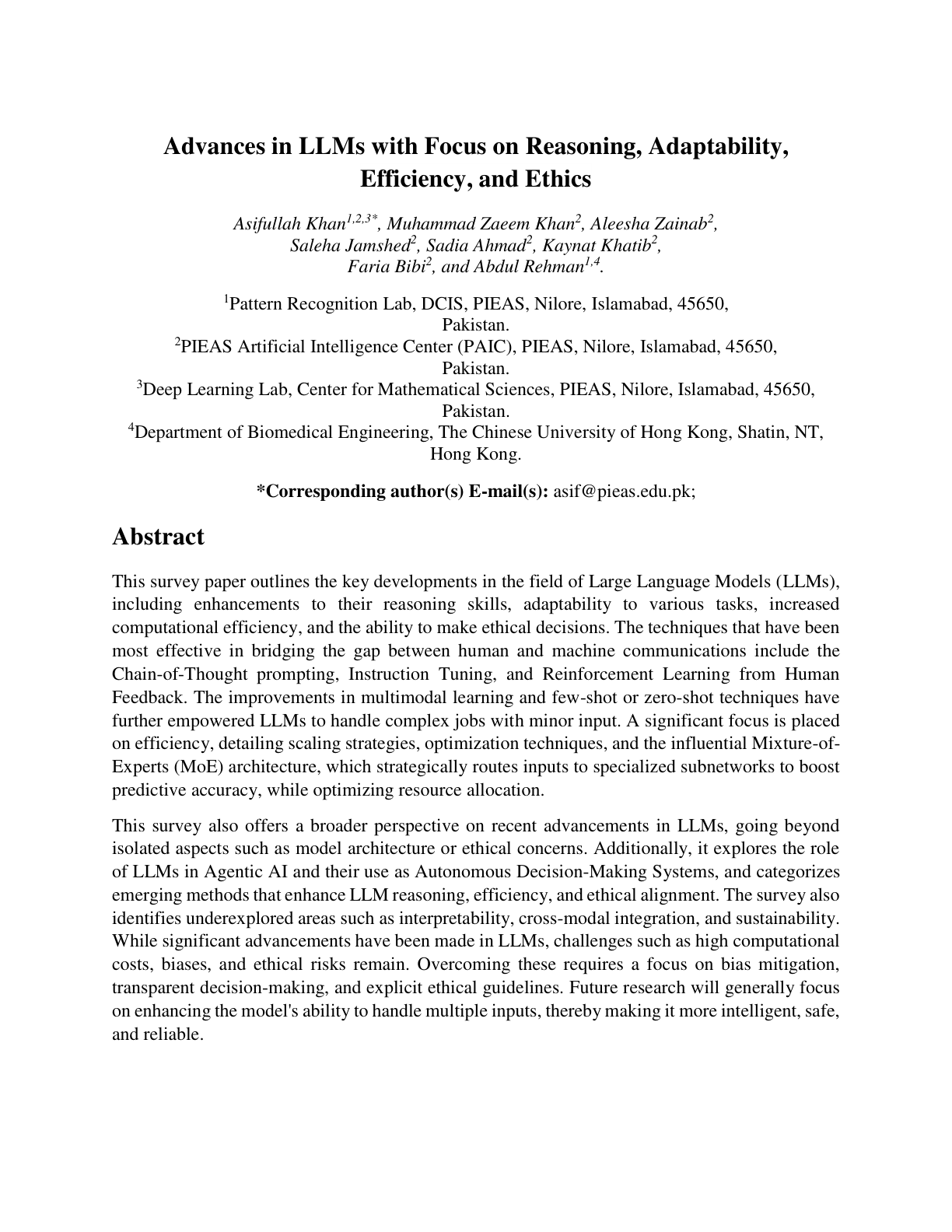
Advances in LLMs
This paper surveys recent advancements in LLMs focusing on reasoning, adaptability, efficiency, and ethics. It highlights techniques like CoT prompting, Instruction Tuning, RLHF, and multimodal learning, while also addressing challenges like bias, computational cost, and interpretability.
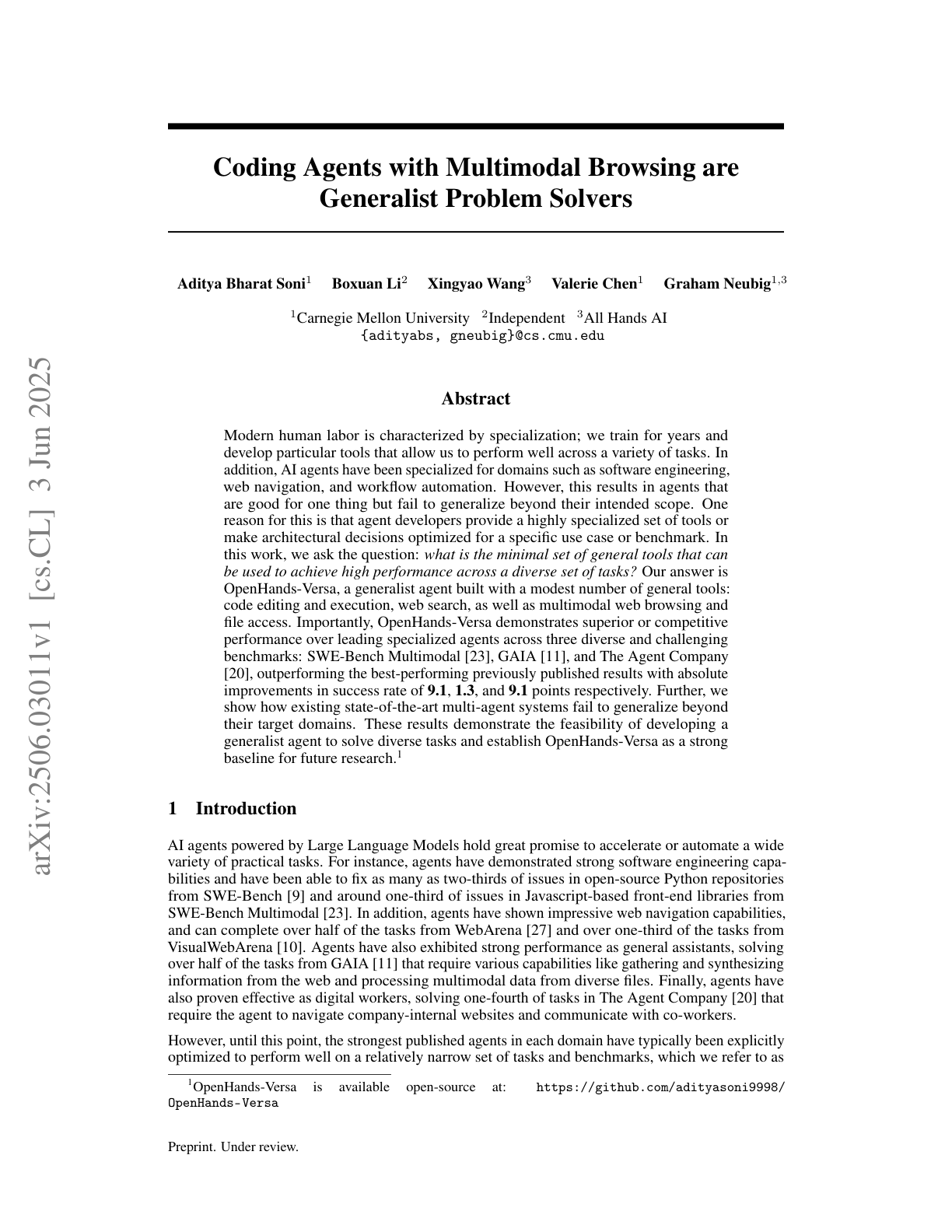
Coding Agents with Multimodal Browsing
Introduces OpenHands-Versa, a unified agent designed to perform strongly across diverse domains, coding, web browsing, and multimodal information access, by equipping a single agent with three general capabilities: code execution, multimodal web browsing, and file/search access. In contrast to specialist or multi-agent systems optimized for narrow domains, OpenHands-Versa aims to solve a wide variety of real-world tasks with minimal architectural complexity. Key highlights:
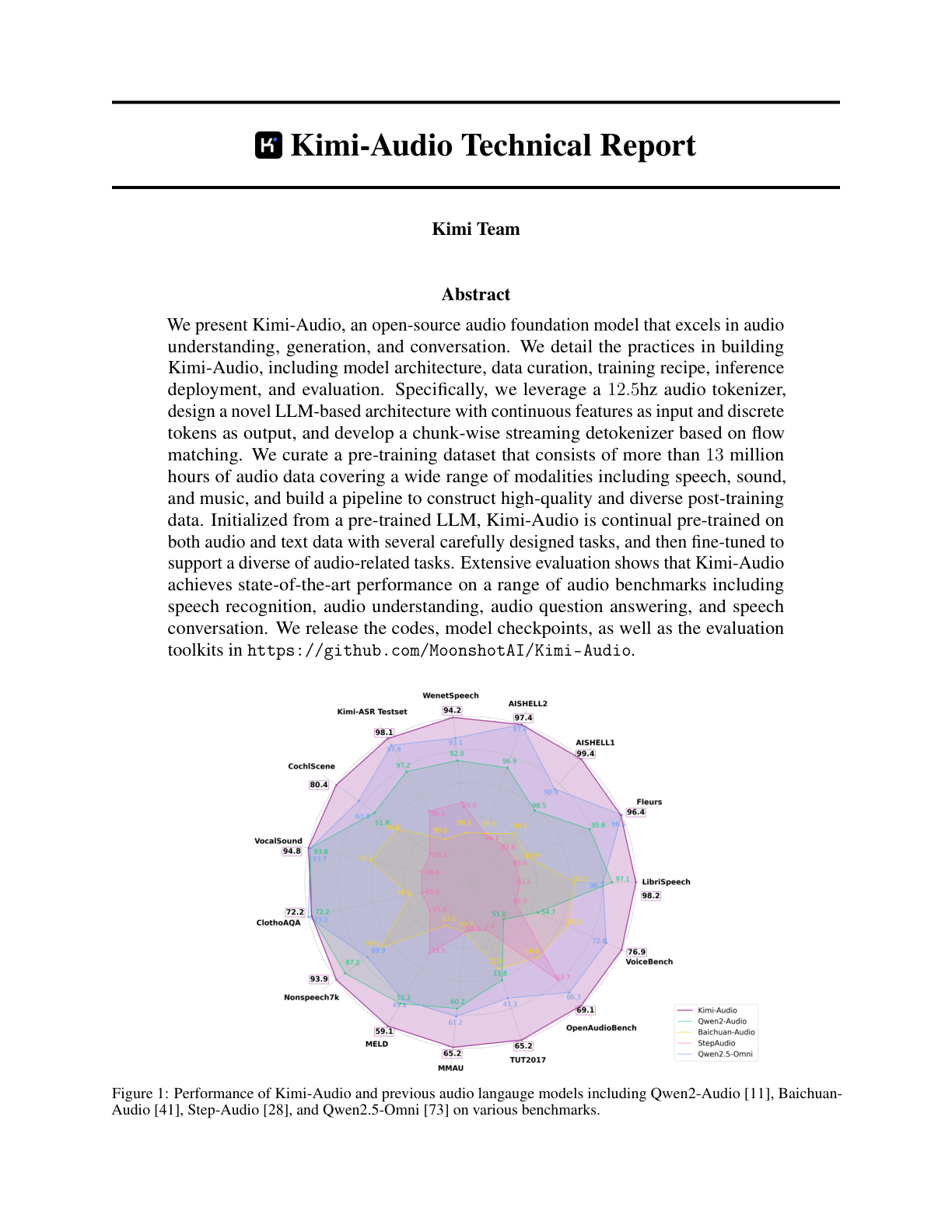
Kimi-Audio
Kimi-Audio is a new open-source audio foundation model built for universal audio understanding, generation, and speech conversation. The model architecture uses a hybrid of discrete semantic audio tokens and continuous Whisper-derived acoustic features. It is initialized from a pre-trained LLM and trained on 13M+ hours of audio, spanning speech, sound, and music. It also supports a streaming detokenizer with chunk-wise decoding and a novel look-ahead mechanism for smoother audio generation. Extensive benchmarking shows that Kimi-Audio outperforms other audio LLMs across multiple modalities and tasks. Key highlights:
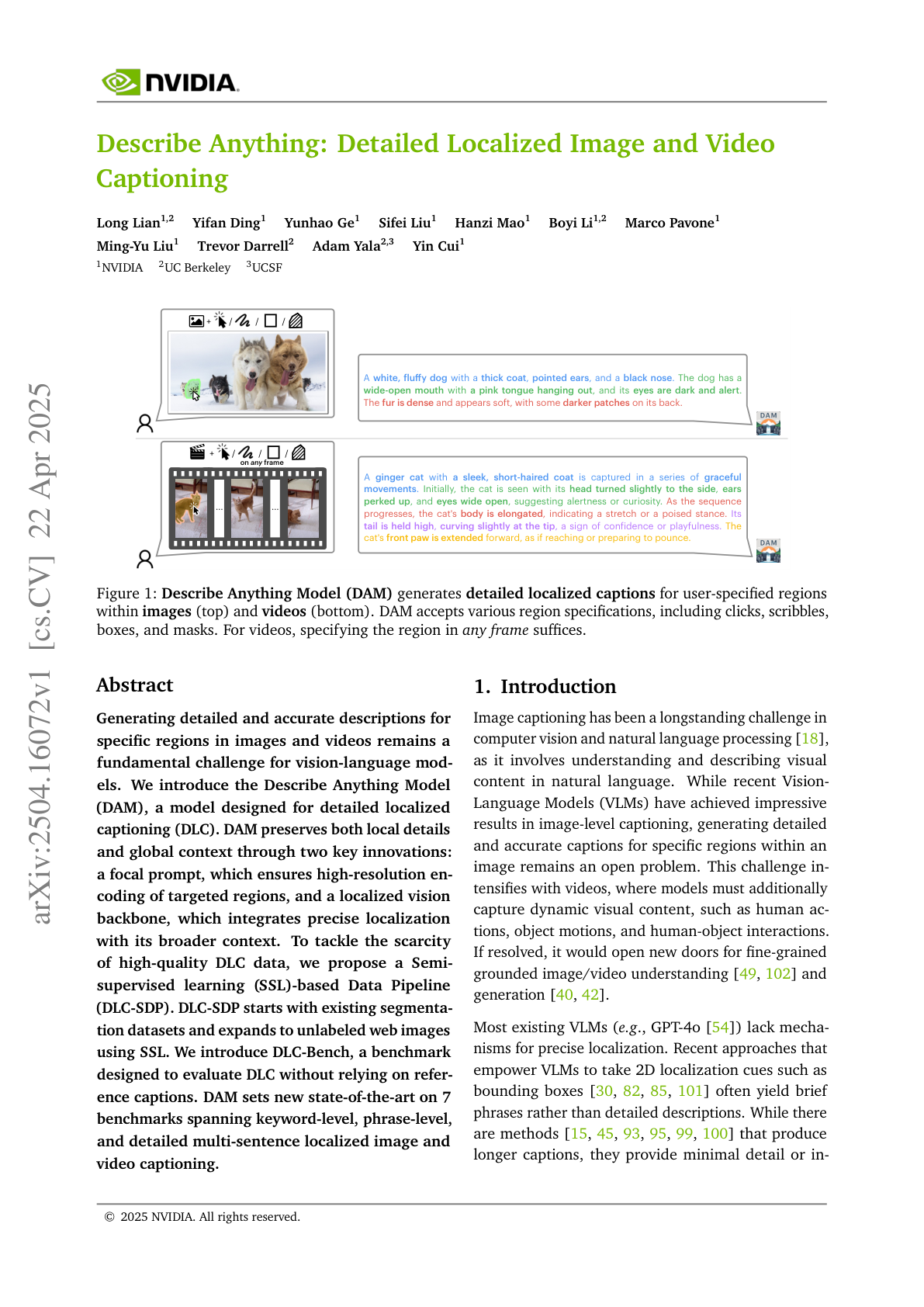
Describe Anything
Introduces DAM, a model that generates fine-grained, region-specific captions in both images and videos. The authors address key limitations in prior vision-language models—namely, the inability to preserve local detail and the lack of suitable datasets and benchmarks for detailed localized captioning (DLC). Key contributions:
The AI Scientist V2
The AI Scientist-v2 refines and extends its predecessor to achieve a new milestone: autonomously generating a workshop-accepted research manuscript. The system removes dependencies on human-authored code templates, incorporates agentic tree-search methods for deeper exploration, uses Vision-Language Models to refine figures, and demonstrates impressive real-world outcomes by passing the peer-review bar.
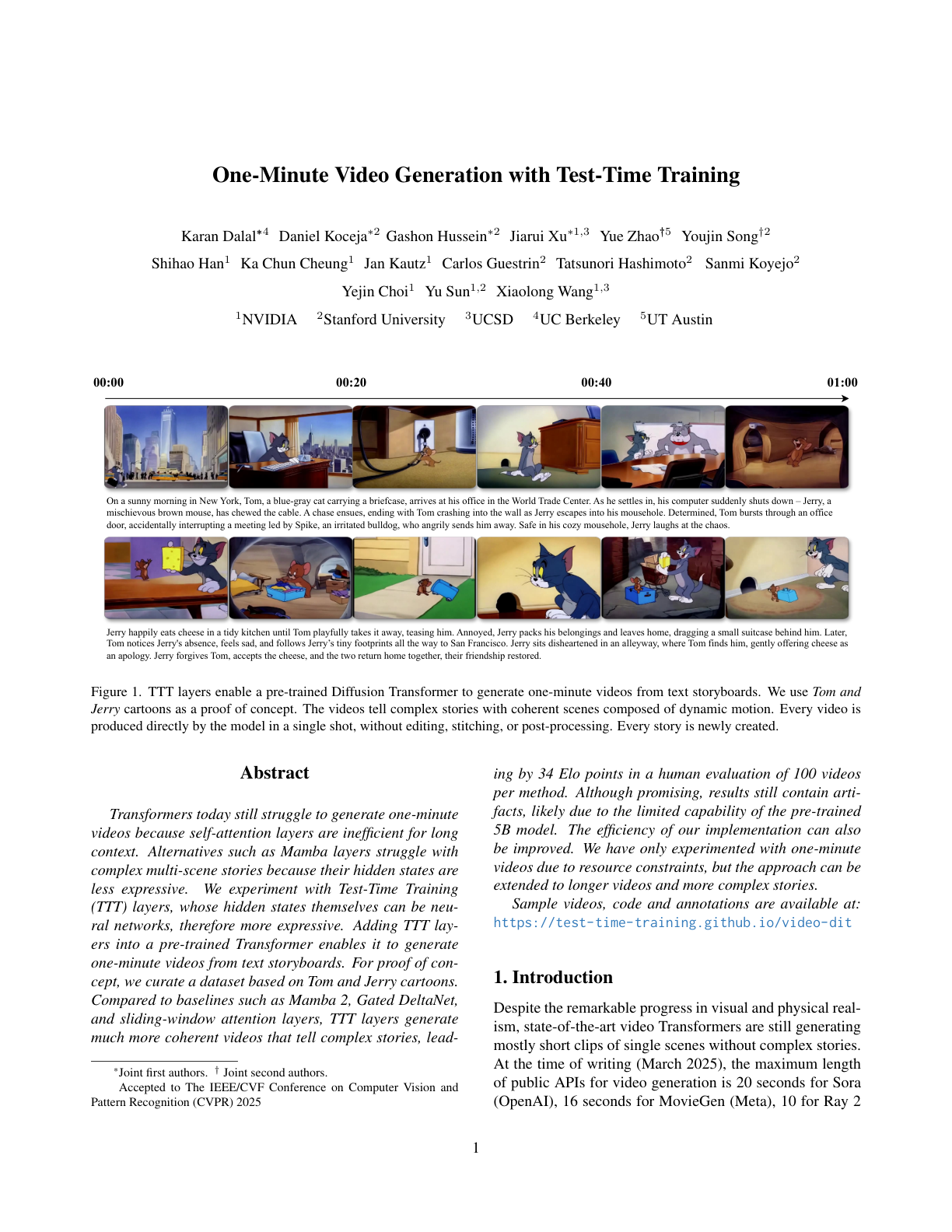
One-Minute Video Generation with Test-Time Training
One-Minute Video Generation with Test-Time Training introduces TTT layers, a novel sequence modeling component where hidden states are neural networks updated via self-supervised loss at test time. By integrating these into a pre-trained diffusion model, the authors enable single-shot generation of one-minute, multi-scene videos from storyboards, achieving 34 Elo points higher than strong baselines like Mamba 2 and DeltaNet in human evaluations
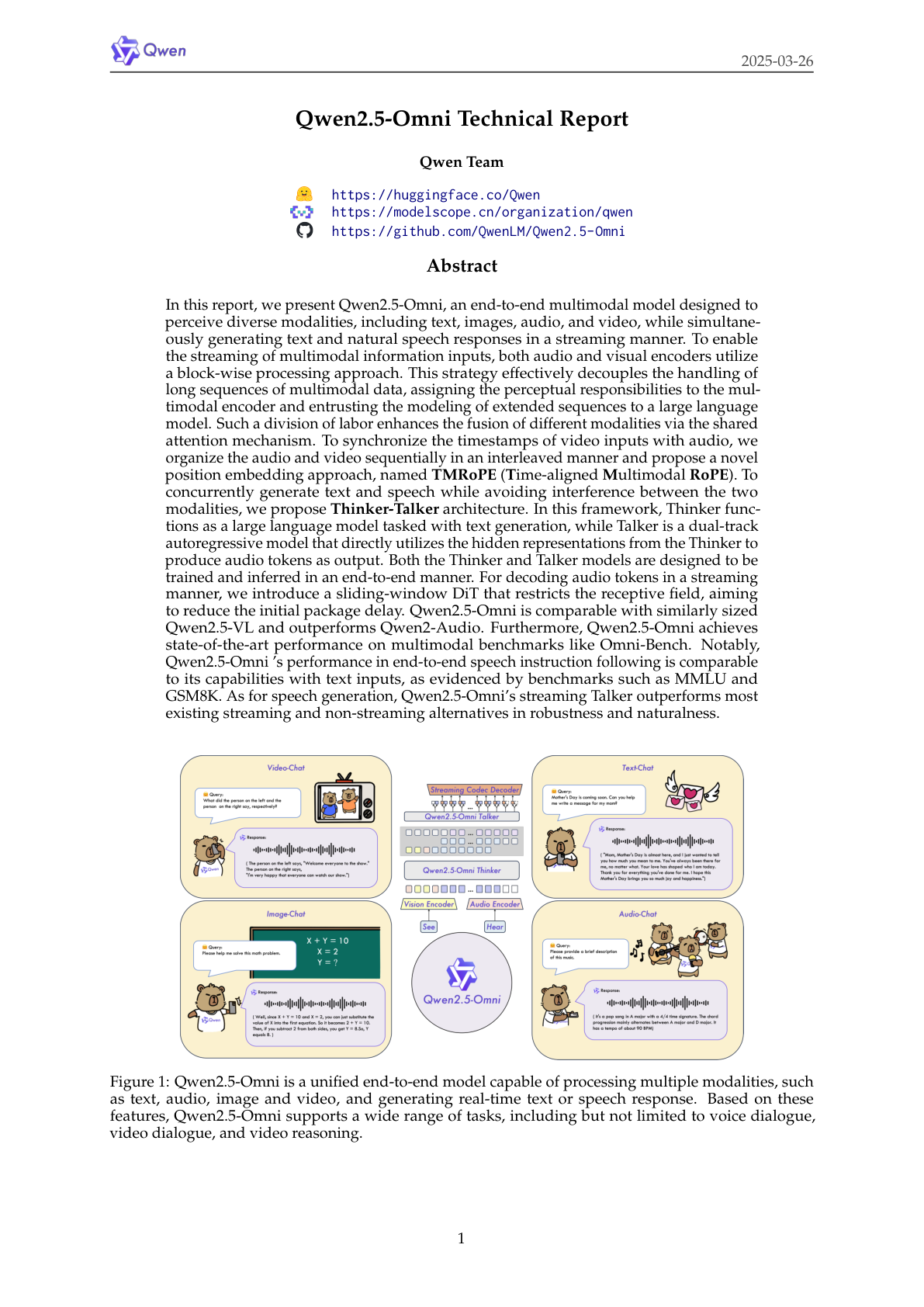
Qwen2.5-Omni
Qwen2.5-Omni is a single end-to-end multimodal model that can perceive and understand text, audio, image, and video, and generate both text and speech in real time. It introduces architectural and training innovations that push the boundaries of streaming, multi-signal intelligence. Highlights: ● Thinker-Talker architecture – Inspired by the human brain and mouth, Qwen2.5-Omni separates reasoning (Thinker) and speech generation (Talker). Thinker (a transformer decoder) handles all perception and text generation. Talker (a dual-track autoregressive decoder) generates speech by consuming both text and hidden states from Thinker. Together, they’re trained end-to-end for synchronized text-speech output. ● Streaming-first design – To support real-time interaction, Qwen2.5-Omni implements block-wise encoders (for audio and vision) and a sliding-window codec generator for streaming audio. The model introduces TMRoPE (Time-aligned Multimodal RoPE), a 3D positional encoding system that aligns video and audio inputs to the same time axis. ● Pretraining scale & alignment – Trained on over 1.2 trillion tokens of diverse multimodal data, including 300B audio and 100B video-audio tokens. Uses instruction-tuned ChatML formatting and performs multi-stage post-training for both Thinker and Talker. Talker undergoes RL fine-tuning (DPO) and multi-speaker adaptation to ensure natural, stable speech output. ● SOTA across modalities – Qwen2.5-Omni achieves state-of-the-art on OmniBench, surpasses Qwen2-Audio in ASR/S2TT, and matches or beats Qwen2.5-VL in image and video tasks. On SEED zero-shot TTS, it outperforms CosyVoice 2 and F5-TTS in naturalness and stability, with low WER and high speaker similarity. ● Closes the voice-text gap – On a voice-instruction benchmark (converted from MMLU, GSM8K, etc.), Qwen2.5-Omni nearly matches its own text-instructed sibling Qwen2-7B, showing dramatic improvements in speech-based instruction following.
Conversational Speech Model
Researchers from Sesame propose an end-to-end multimodal TTS approach for natural, context-aware speech in real-time conversational AI systems.
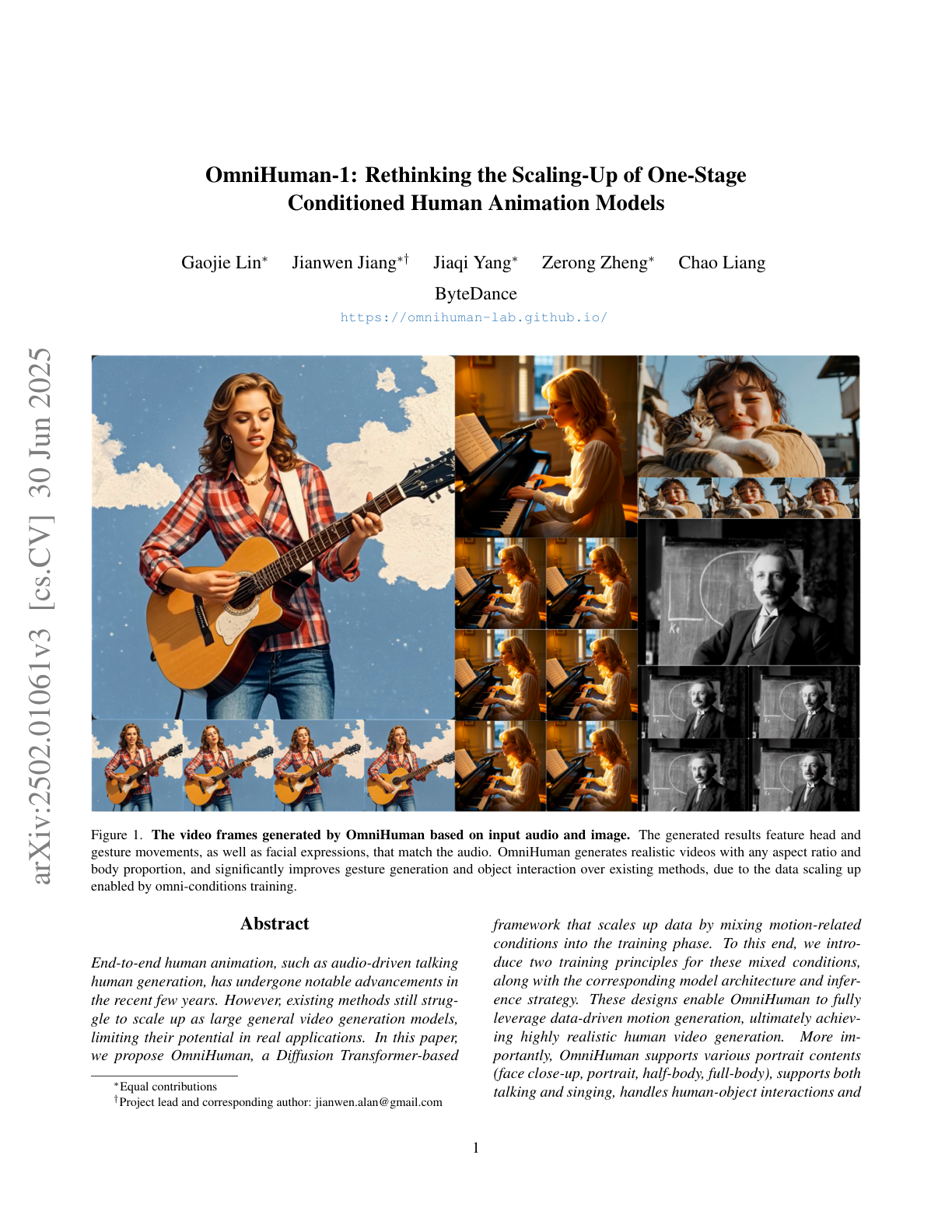
OmniHuman-1: Scaling One-Stage Human Animation
A team at ByteDance AI Lab unveiled OmniHuman-1, a diffusion-transformer model that can generate highly realistic human videos from just a single image plus motion input (audio or video). Highlights:
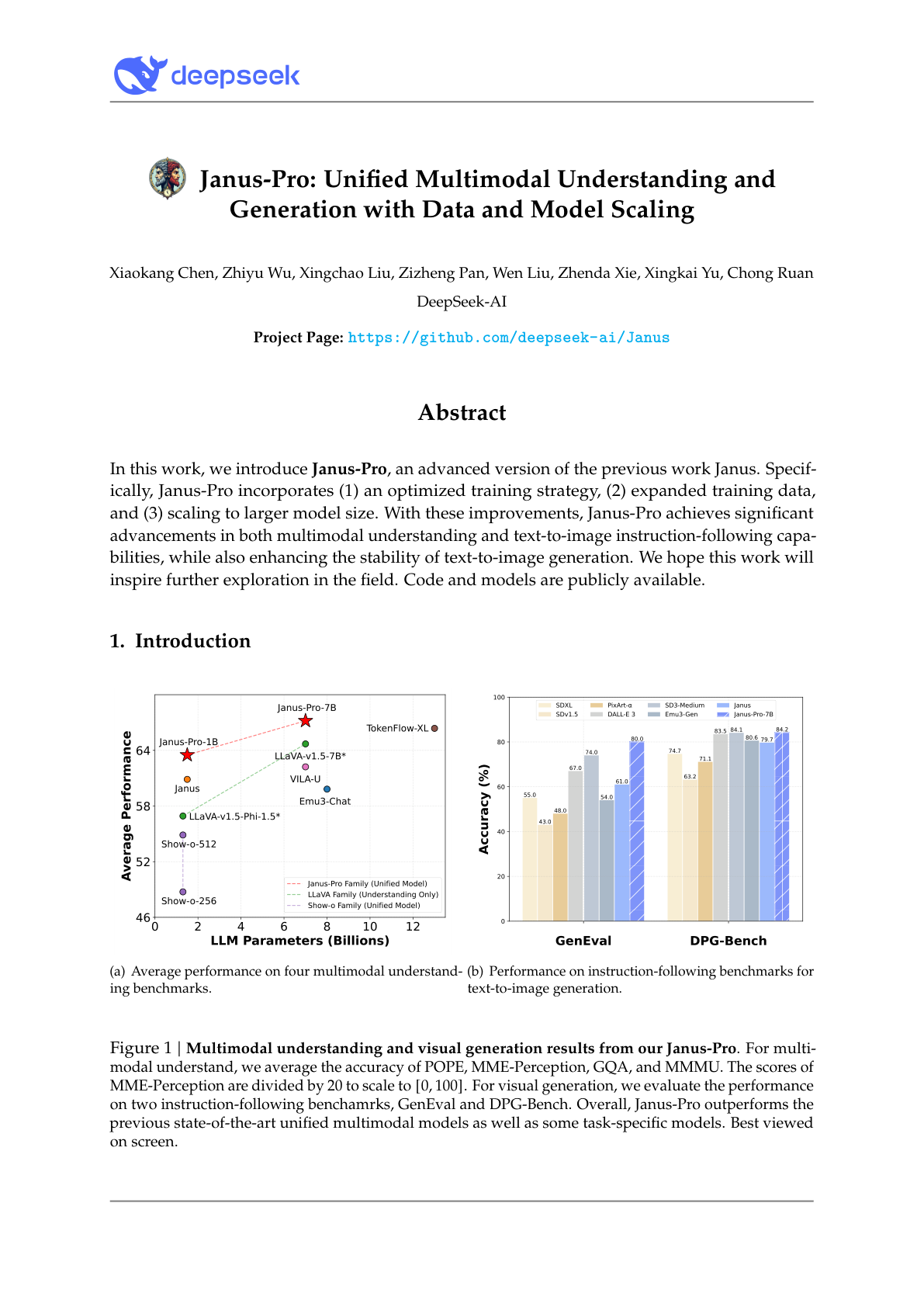
Janus-Pro
An enhanced version of the previous Janus model for multimodal understanding and generation. The model incorporates three key improvements: optimized training strategies with longer initial training and focused fine-tuning, expanded training data including 90 million new samples for understanding and 72 million synthetic aesthetic samples for generation, and scaling to larger model sizes up to 7B parameters. Janus-Pro achieves significant improvements in both multimodal understanding and text-to-image generation capabilities. The model outperforms existing solutions on various benchmarks, scoring 79.2 on MMBench for understanding tasks and achieving 80% accuracy on GenEval for text-to-image generation. The improvements also enhance image generation stability and quality, particularly for short prompts and fine details, though the current 384x384 resolution remains a limitation for certain tasks.

TokenVerse
Proposes a new technique to generate new images from learned concepts in a desired configuration. Proposed by Google DeepMind and collaborators, TokenVerse enables multi-concept personalization by leveraging a pre-trained text-to-image diffusion model to disentangle and extract complex visual concepts from multiple images. It operates in the modulation space of DiTs, learning a personalized modulation vector for each text token in an input caption. This allows flexible and localized control over distinct concepts such as objects, materials, lighting, and poses. The learned token modulations can then be combined in novel ways to generate new images that integrate multiple personalized concepts without requiring additional segmentation masks.
Humanity’s Last Exam
Humanity's Last Exam is a new multi-modal benchmark designed to test the limits of LLMs. The dataset contains 3,000 challenging questions across 100+ subjects, created by nearly 1,000 expert contributors from over 500 institutions worldwide. Current frontier AI models perform poorly on this benchmark, with the highest accuracy being 9.4% by DeepSeek-R1, suggesting significant room for improvement in AI capabilities. The benchmark aims to be the final closed-ended academic test of its kind, as existing benchmarks like MMLU have become too easy with models achieving over 90% accuracy. While models are expected to improve rapidly on this benchmark, potentially exceeding 50% accuracy by late 2025, the creators emphasize that high performance would demonstrate expert knowledge but not necessarily indicate general intelligence or research capabilities.
Scaling RL with LLMs
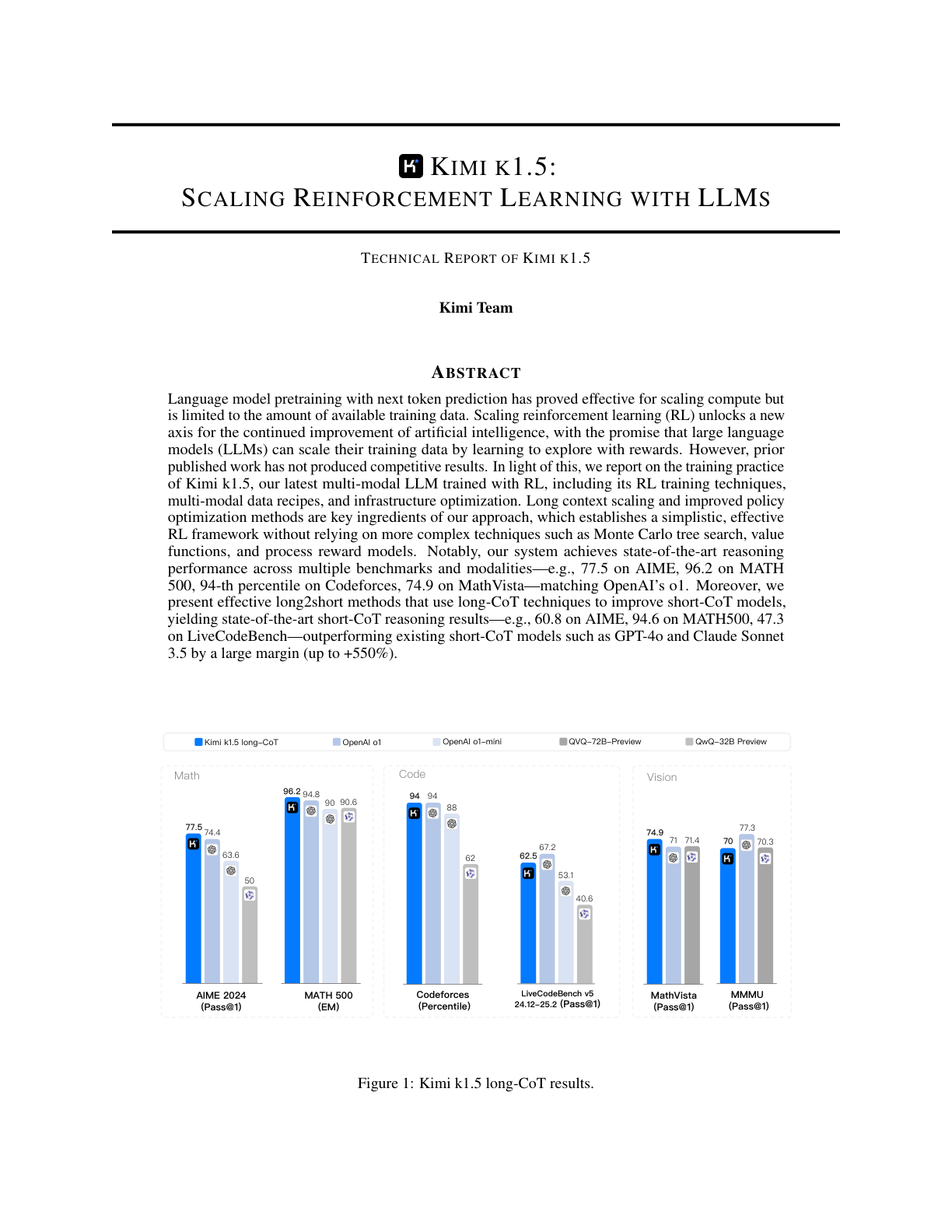
Kimi introduces k1.5, a multimodal LLMtrained using RL that achieves state-of-the-art performance across reasoning tasks. The model leverages long context scaling up to 128k tokens and improved policy optimization methods, establishing a simplified yet effective RL framework without complex techniques like Monte Carlo tree search or value functions. Notably, k1.5 matches OpenAI's o1 performance on various benchmarks including 77.5 on AIME and 96.2 on MATH 500. The model also introduces effective long2short methods that use long-chain-of-thought techniques to improve shorter models, achieving superior results in constrained settings. Using these techniques, k1.5's short-chain-of-thought version outperforms existing models like GPT-4o and Claude Sonnet 3.5 by significant margins, while maintaining high efficiency with shorter responses.
MiniMax-01
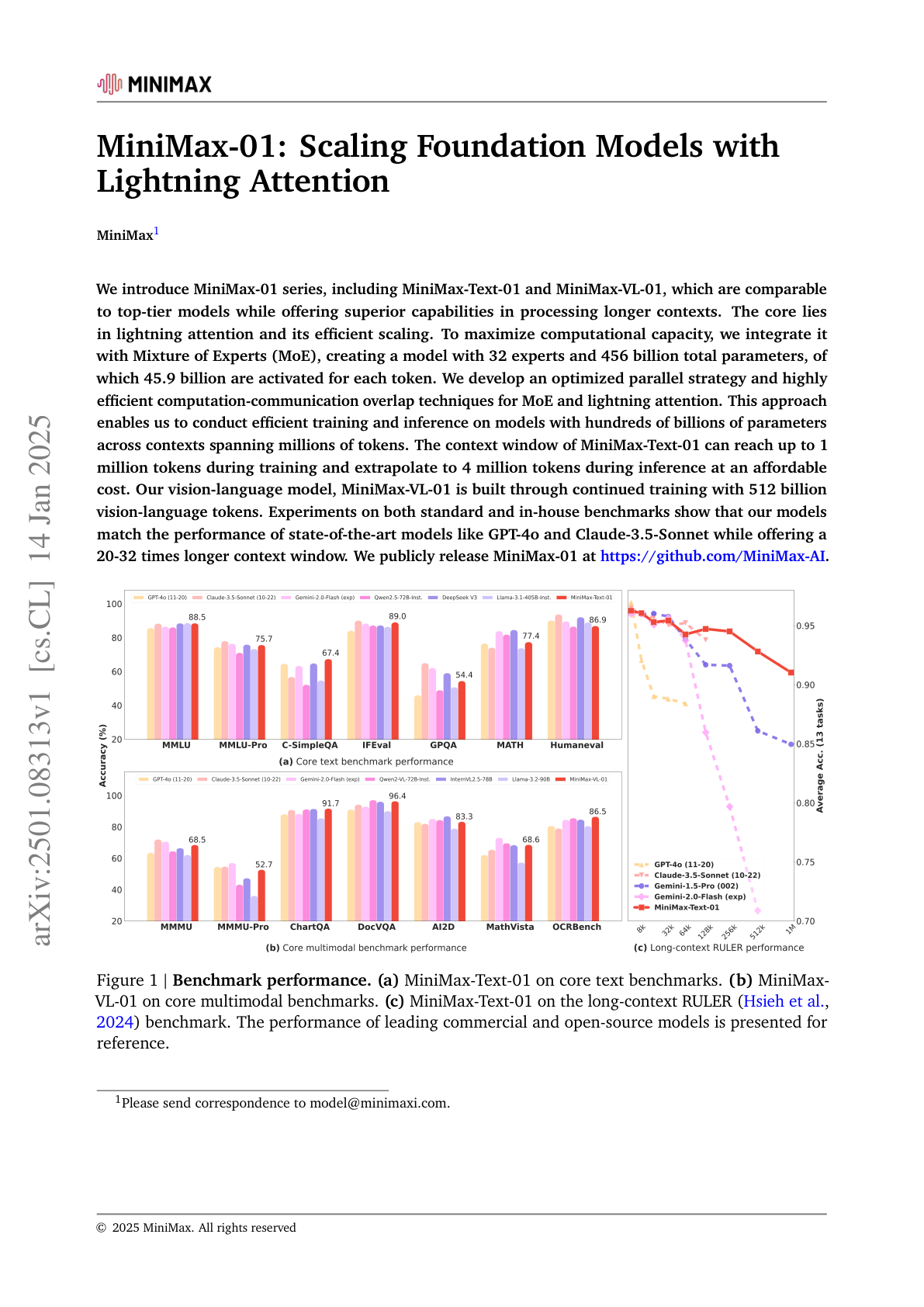
introduces a new series of models that integrate Mixture-of-Experts; introduces a model with 32 experts and 456B parameters, and 45.9B are activated for each token; claims match the performance of state-of-the-art models like GPT-4o and Claude-3.5-Sonnet while offering a 20-32x longer context window; it can handle context windows of up to 4 million tokens; it integrates linear attention with optimized hardware utilization which enhances the efficiency and scalability of the LLM; there is also a vision model called MiniMax-VL-01 built through continued training with 512 billion vision-language tokens.