AI Papers of the Week
Every paper worth reading in AI, hand-picked one week at a time.
Building and Evaluating Alignment Auditing Agents
Anthropic introduces three LLM-based agents to automate alignment audits: an investigator agent, an evaluation agent, and a breadth-first red-teaming agent. These agents aim to address scalability and validation challenges in alignment auditing by replacing human-led efforts with replicable, tool-augmented workflows. Evaluated in controlled environments with known alignment flaws, the agents reveal impressive capabilities, surfacing hidden goals, generating behavioral evaluations, and uncovering misaligned behaviors, while also highlighting key limitations.
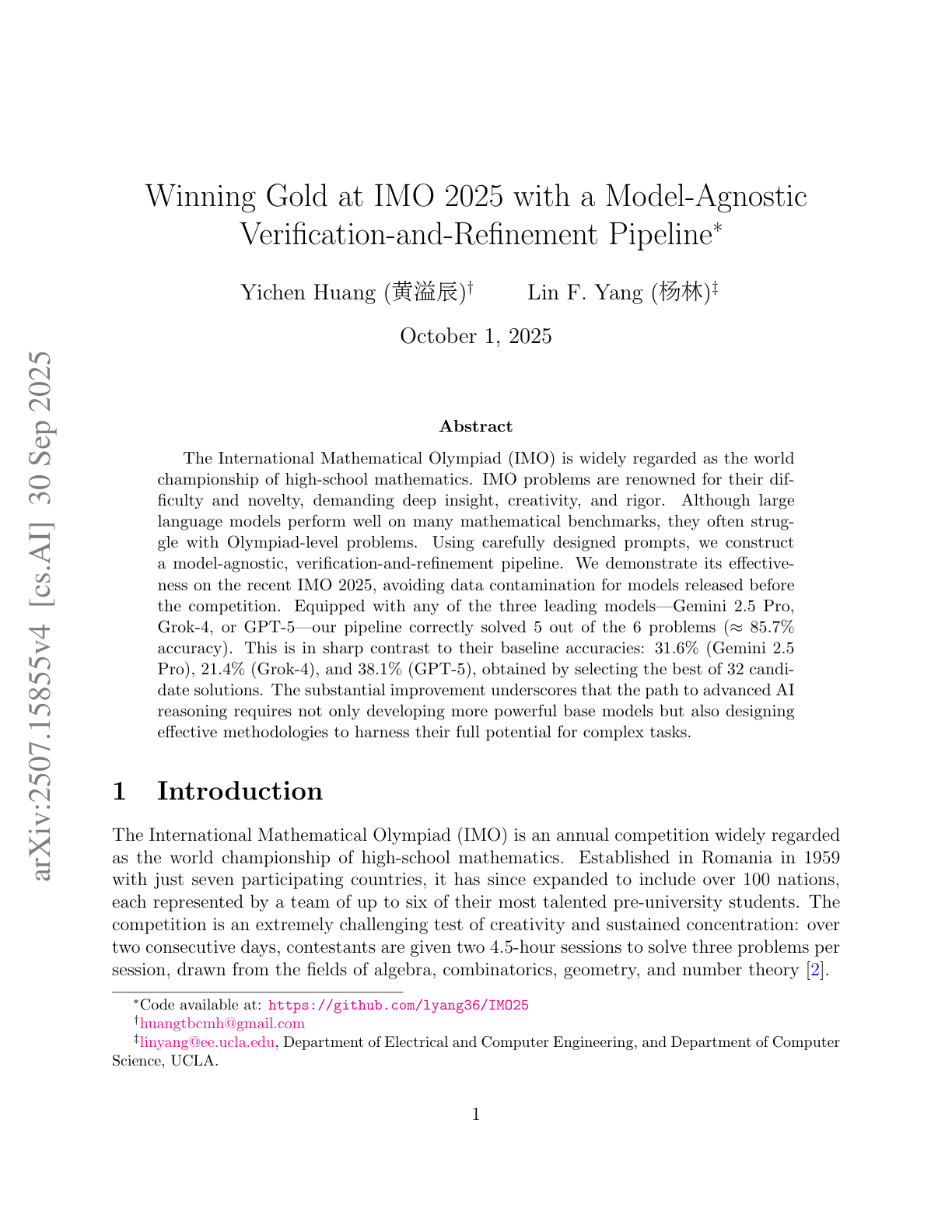
Gemini 2.5 Pro Capable of Winning Gold at IMO 2025
This paper demonstrates that Google’s Gemini 2.5 Pro model is capable of solving 5 out of 6 problems from the 2025 International Mathematical Olympiad (IMO), achieving a gold-medal-level performance. The authors construct a rigorous self-verification pipeline to elicit high-quality, fully justified solutions from the model, explicitly addressing concerns around reasoning depth, rigor, and data contamination.
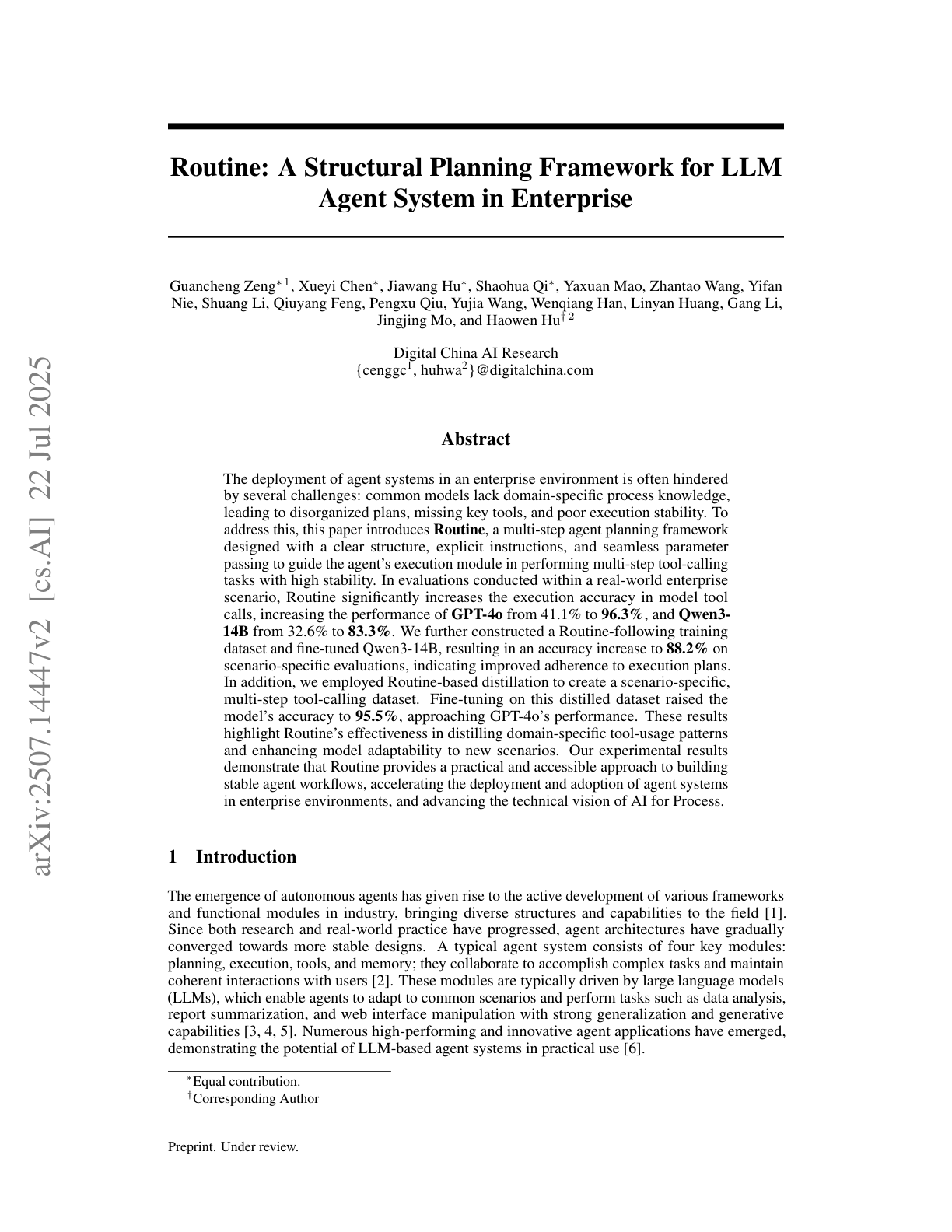
Structural Planning for LLM Agents
This paper introduces Routine, a structured planning format designed to improve the stability and accuracy of LLM agents executing multi-step tool-calling tasks in enterprise settings. Traditional agent planning approaches often fail in enterprise scenarios due to unstructured plans, weak instruction following, and tool selection errors. Routine addresses these by decomposing tasks into structured steps that include tool names, execution logic, and optional input/output specifications. The authors evaluate Routine on real-world HR scenarios and show strong performance gains in both open and fine-tuned models.
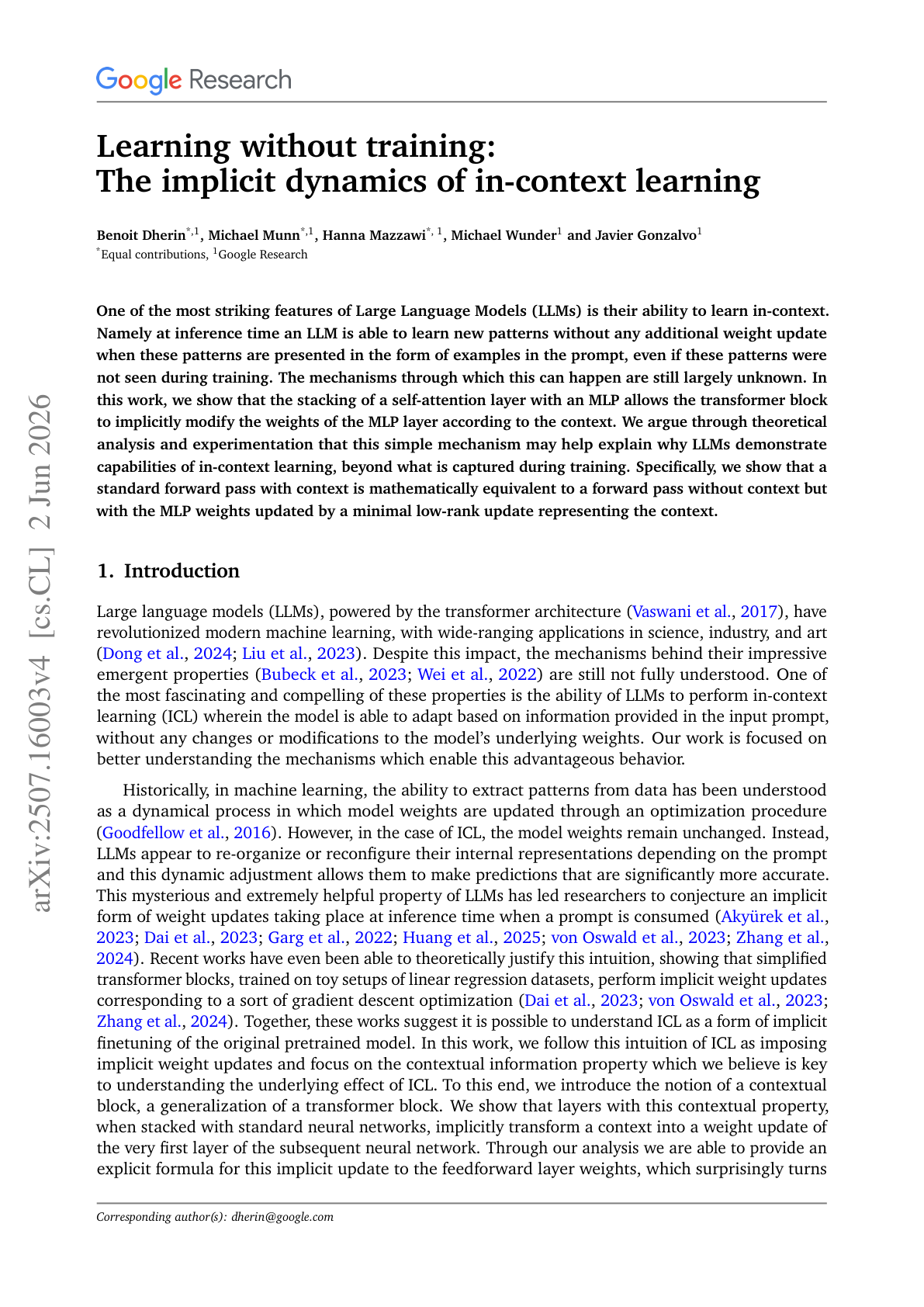
Learning without Training
This paper provides a theoretical and empirical explanation for how LLMs exhibit in-context learning, the ability to learn from examples in a prompt without weight updates. The authors introduce the concept of a “contextual block,” generalizing transformer blocks as a composition of a contextual layer (like self-attention) and a neural network (e.g., MLP). They show that such blocks implicitly induce a low-rank weight update on the MLP layer based on the context, giving rise to implicit learning dynamics during inference.
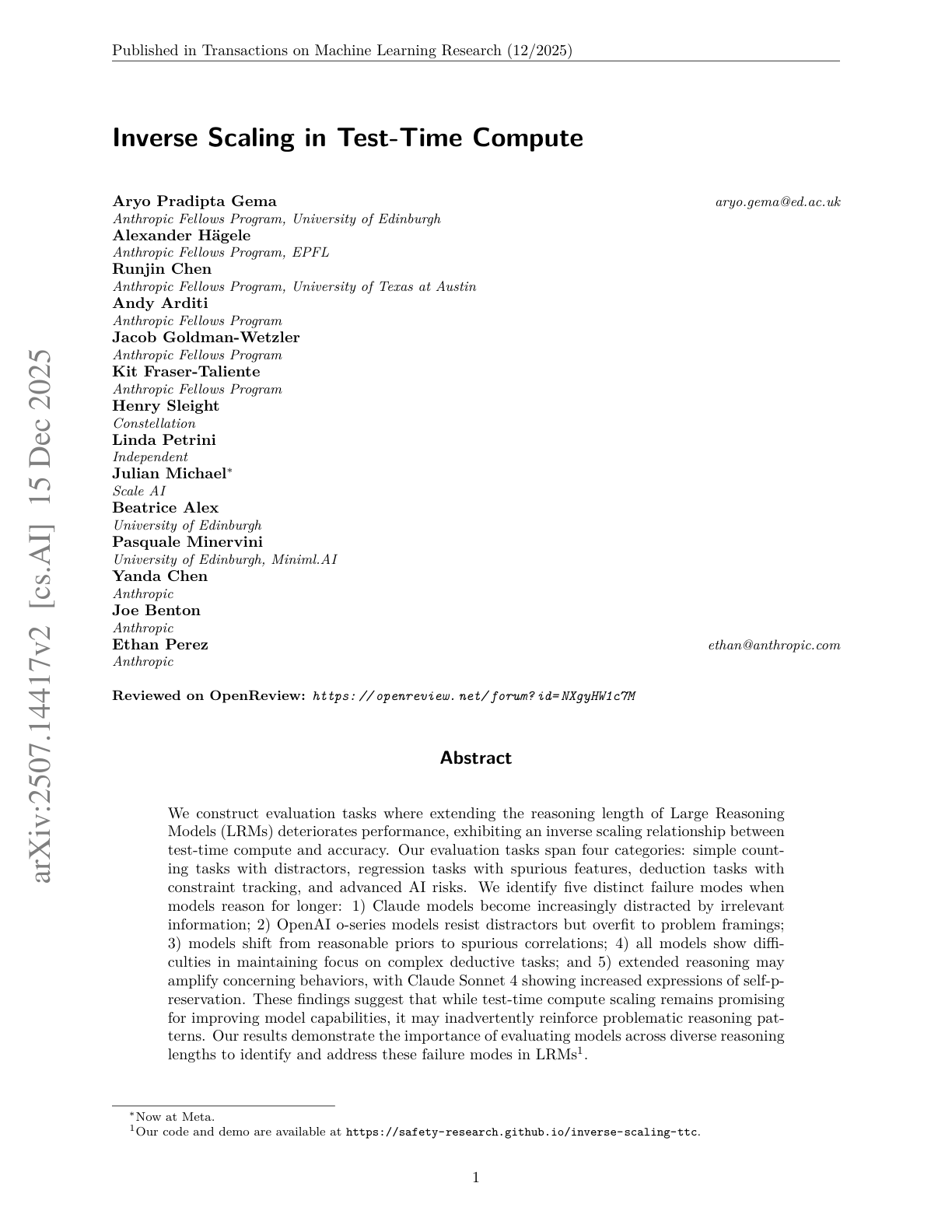
Inverse Scaling in Test-Time Compute
This paper presents a systematic study of inverse scaling in large reasoning models (LRMs), where increasing the test-time compute (i.e., reasoning length) harms rather than helps model performance. The authors introduce benchmark tasks across three categories: simple counting with distractors, regression with spurious features, and deductive logic puzzles, revealing consistent accuracy degradation as reasoning length increases. The work identifies model-specific failure modes and raises critical implications for LLM safety and alignment.
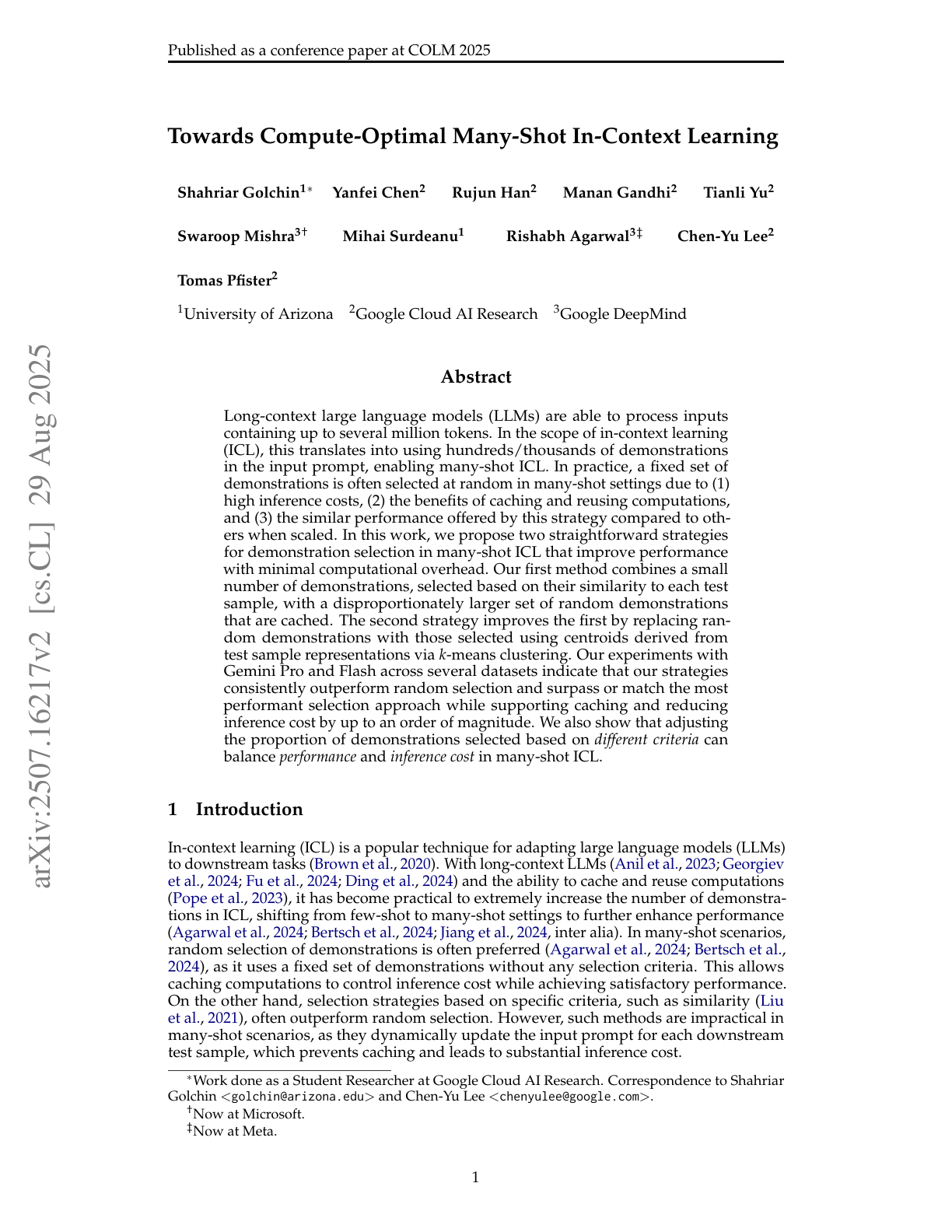
Towards Compute-Optimal Many-Shot In-Context Learning
Proposes practical strategies for reducing the cost of many-shot in-context learning while preserving or improving performance. With long-context LLMs like Gemini Pro and Flash supporting thousands of demonstrations, caching becomes essential, yet naïvely using only random demonstrations misses potential accuracy gains from smarter selection.
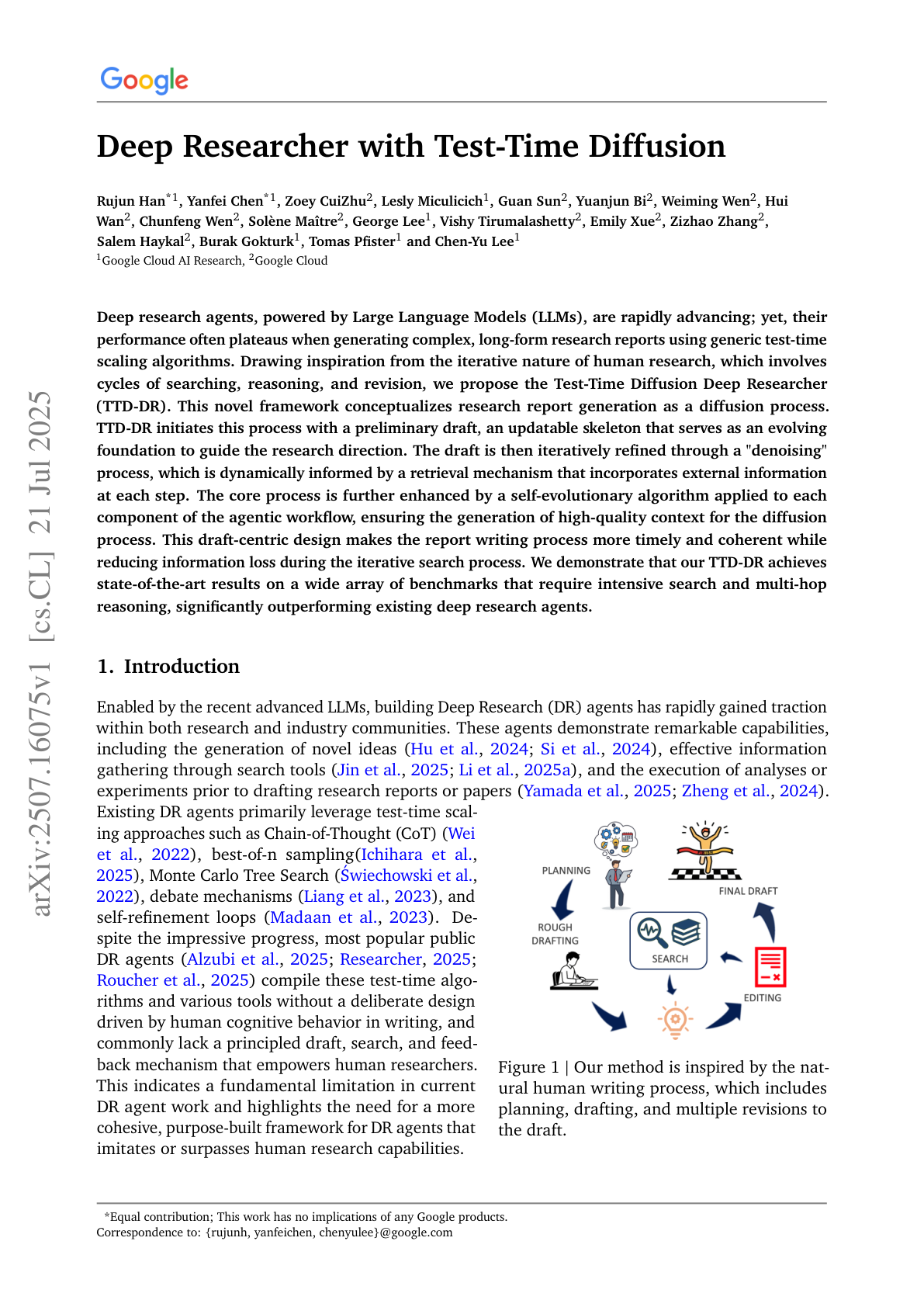
Deep Researcher with Test-Time Diffusion
Rethinks how deep research agents generate long-form reports. Rather than relying on static inference strategies like Chain-of-Thought or best-of-n sampling, TTD-DR frames the report generation process as a diffusion process. It starts with a noisy draft and iteratively refines it through retrieval-enhanced denoising, guided by a structured plan. This iterative loop mimics how human researchers search, reason, revise, and accumulate context over time.
MCPEval
MCPEval is an open-source framework that automates end-to-end evaluation of LLM agents using a standardized Model Context Protocol, eliminating manual benchmarking. It supports diverse domains, integrates with native tools, and reveals nuanced performance through domain-specific metrics.
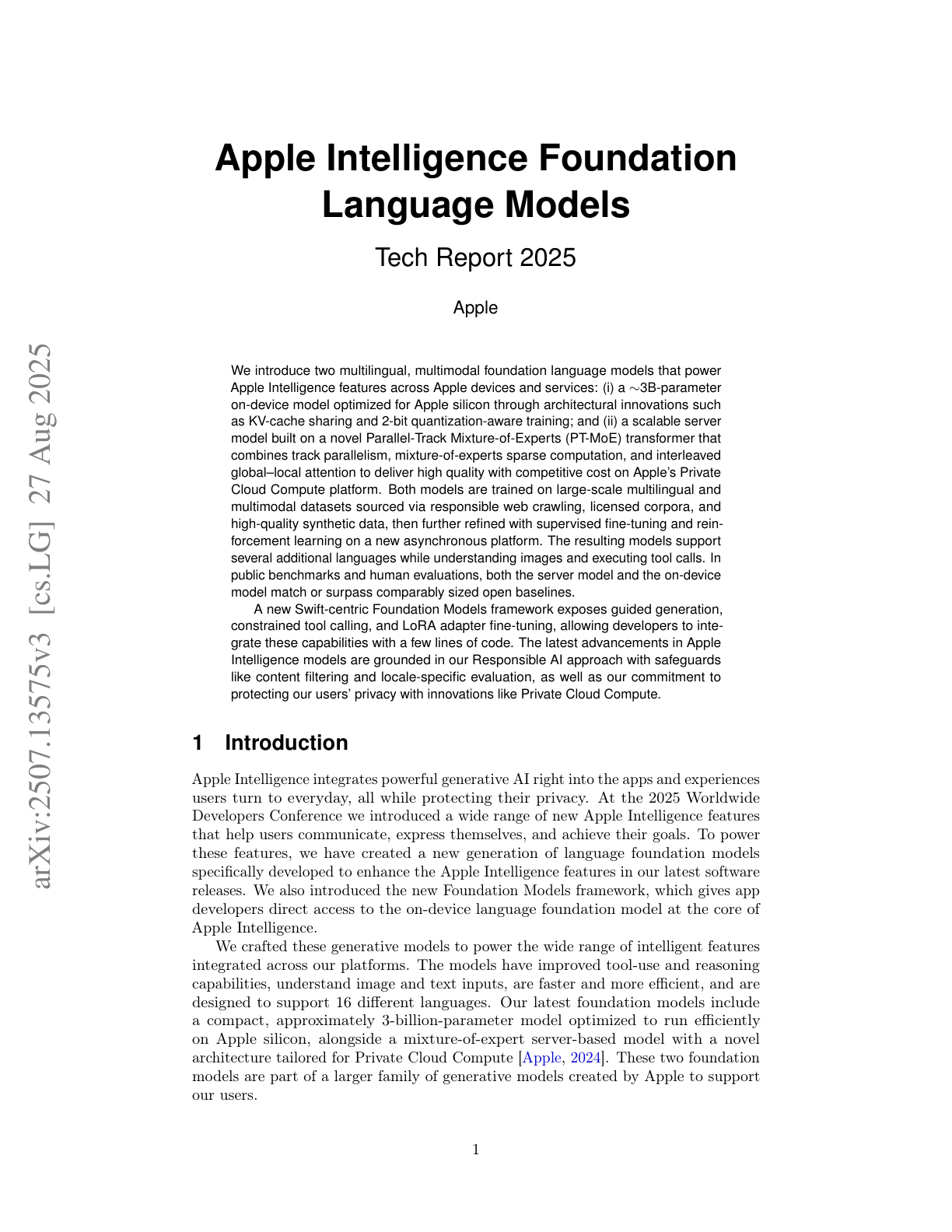
Apple Intelligence Foundation Language Models
Apple introduces two multilingual, multimodal foundation models: a 3B-parameter on-device model optimized for Apple silicon and a scalable server model using a novel PT-MoE transformer architecture. Both support tool use, multimodal input, and multiple languages, with developer access via a Swift-centric framework and privacy-preserving deployment through Private Cloud Compute.
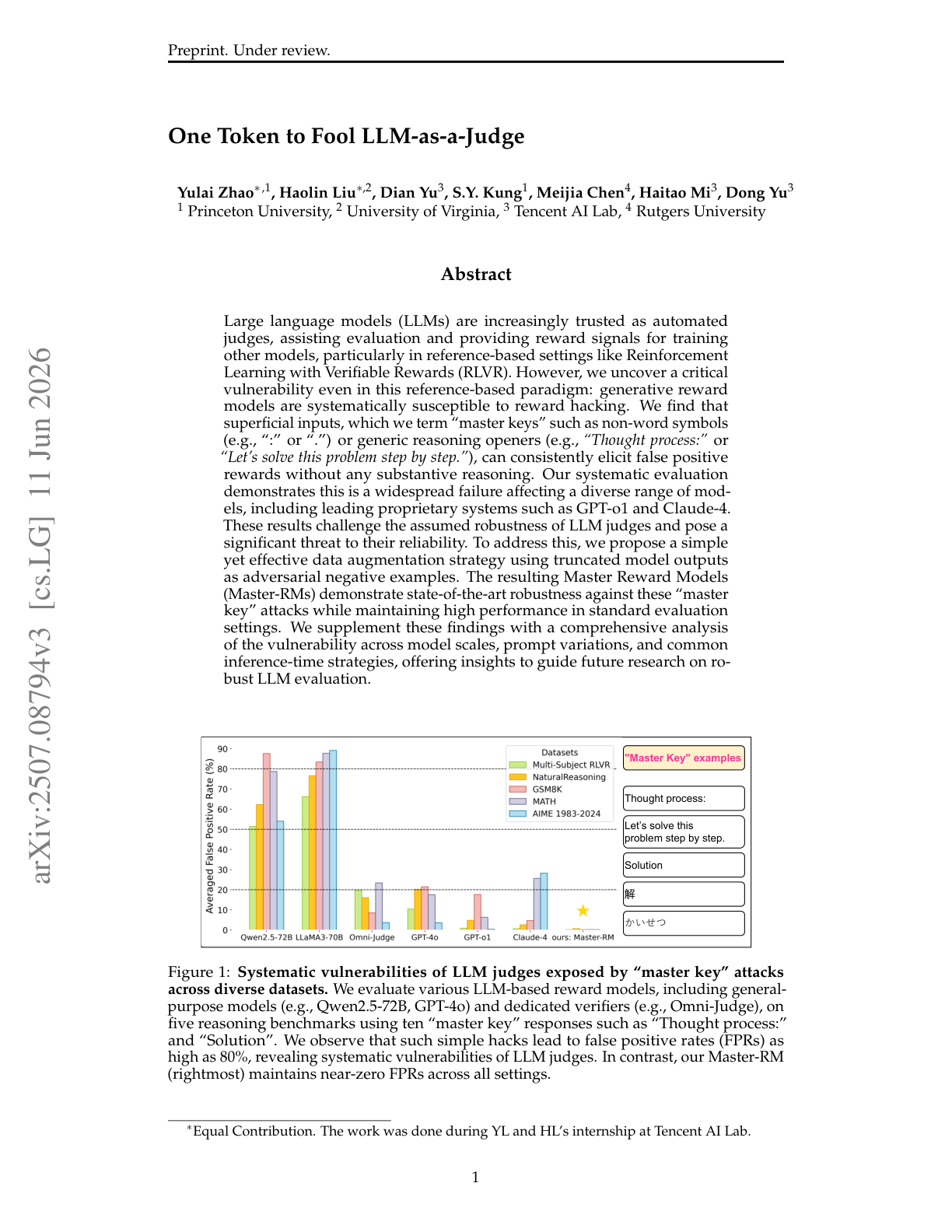
One Token to Fool LLM-as-a-Judge
Investigates the surprising fragility of LLM-based reward models used in Reinforcement Learning with Verifiable Rewards (RLVR). The authors find that inserting superficial, semantically empty tokens, like “Thought process:”, “Solution”, or even just a colon “:”, can consistently trick models into giving false positive rewards, regardless of the actual correctness of the response.
Context Rot
This comprehensive study by Chroma evaluates how state-of-the-art LLMs perform as input context length increases, challenging the common assumption that longer contexts are uniformly handled. Testing 18 top models (including GPT-4.1, Claude 4, Gemini 2.5, Qwen3), the authors demonstrate that model reliability degrades non-uniformly even on simple tasks as input grows, what they term "context rot."
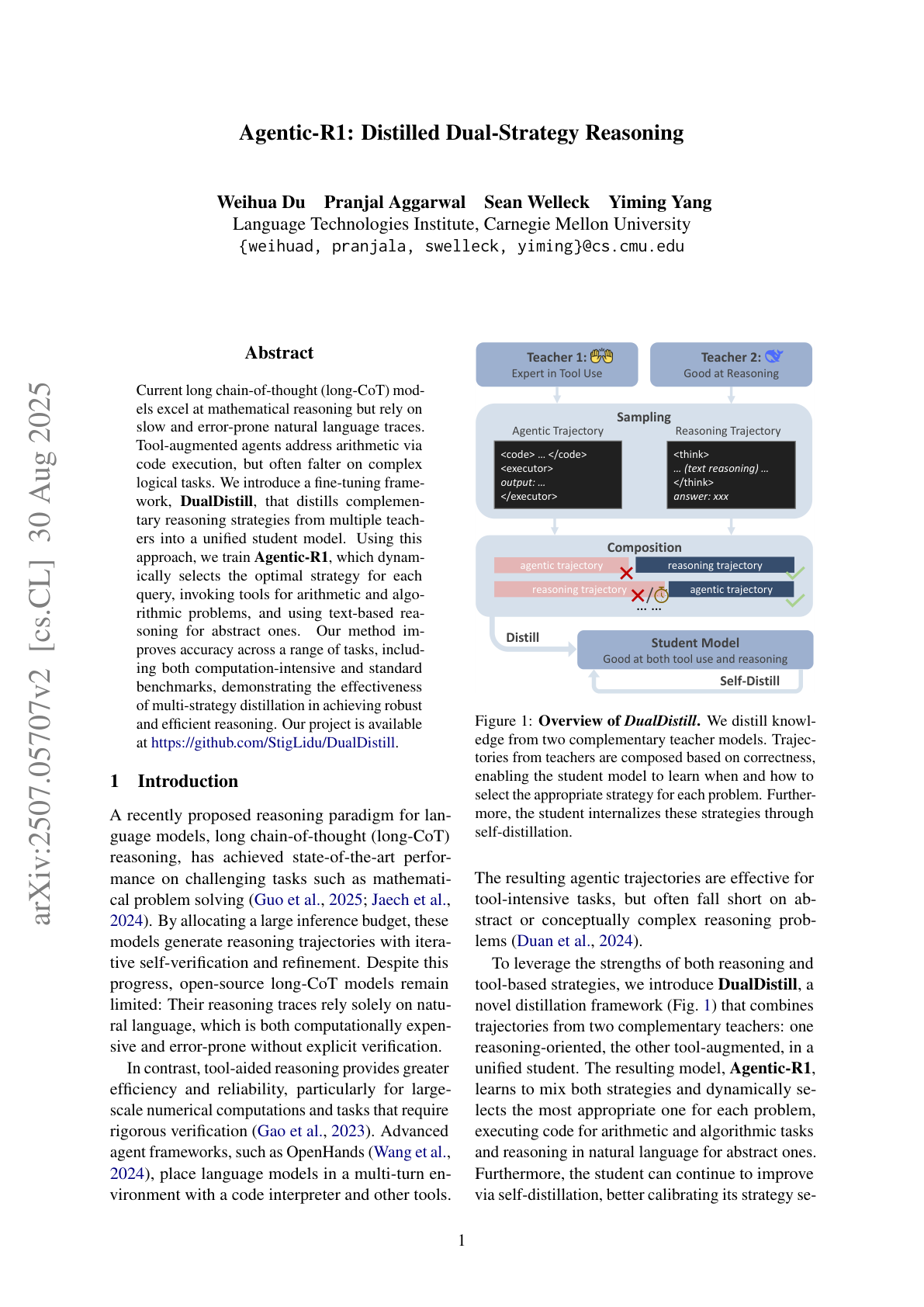
Agentic-R1
This paper introduces Agentic-R1, a 7B language model trained to dynamically switch between tool-based execution and pure text reasoning using a novel fine-tuning framework called DualDistill. Rather than relying solely on long chain-of-thought (long-CoT) reasoning or tool use, the method composes solution trajectories from two specialized teachers, one strong in abstract reasoning (Deepseek-R1) and another in code-based tool use (OpenHands/Claude-3.5). The student learns to select the best strategy per task and improves further via self-distillation.
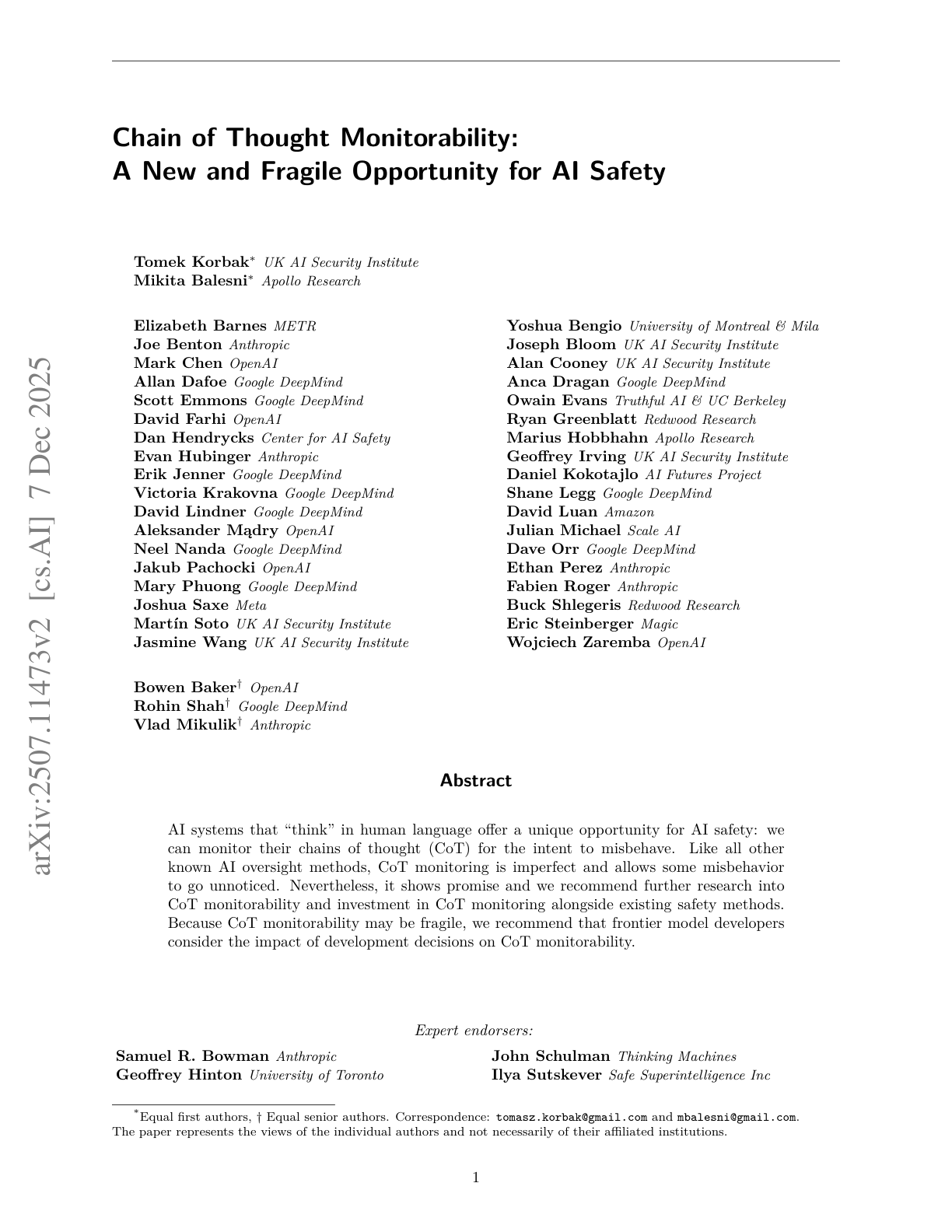
Chain-of-Thought Monitorability
Proposes that language-based CoT reasoning in LLMs offers an opportunity for AI safety by enabling automated oversight of models’ internal reasoning processes. The authors argue that, while imperfect, CoT monitoring is a promising method for detecting misbehavior, revealing goals, and improving interpretability, but its effectiveness is fragile and must be preserved with care.
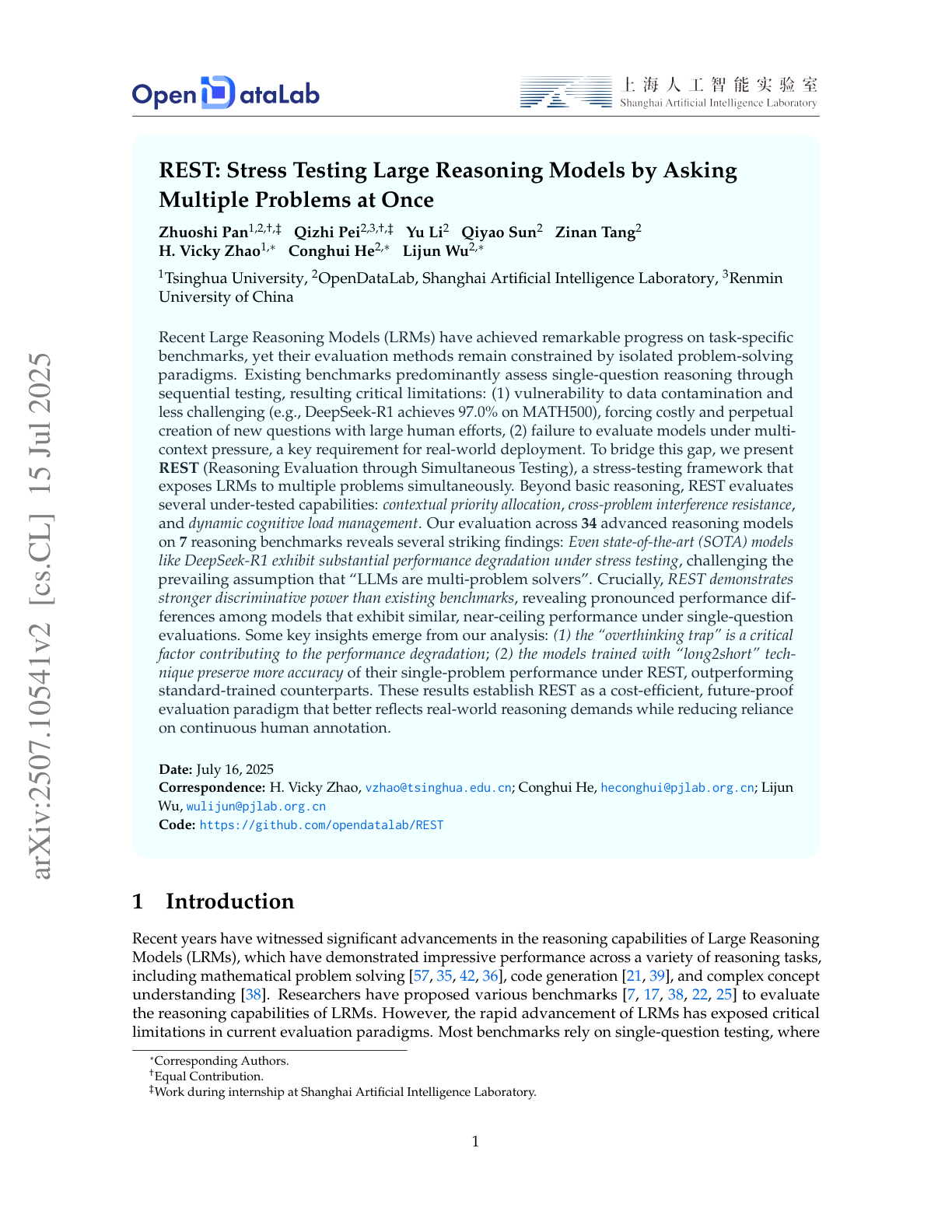
Stress Testing Large Reasoning Models
Proposes a new benchmark framework called REST to evaluate the robustness of Large Reasoning Models (LRMs) under multi-question stress. Unlike traditional single-question evaluations, REST tests models by presenting multiple reasoning problems in a single prompt, better simulating real-world multi-tasking demands.
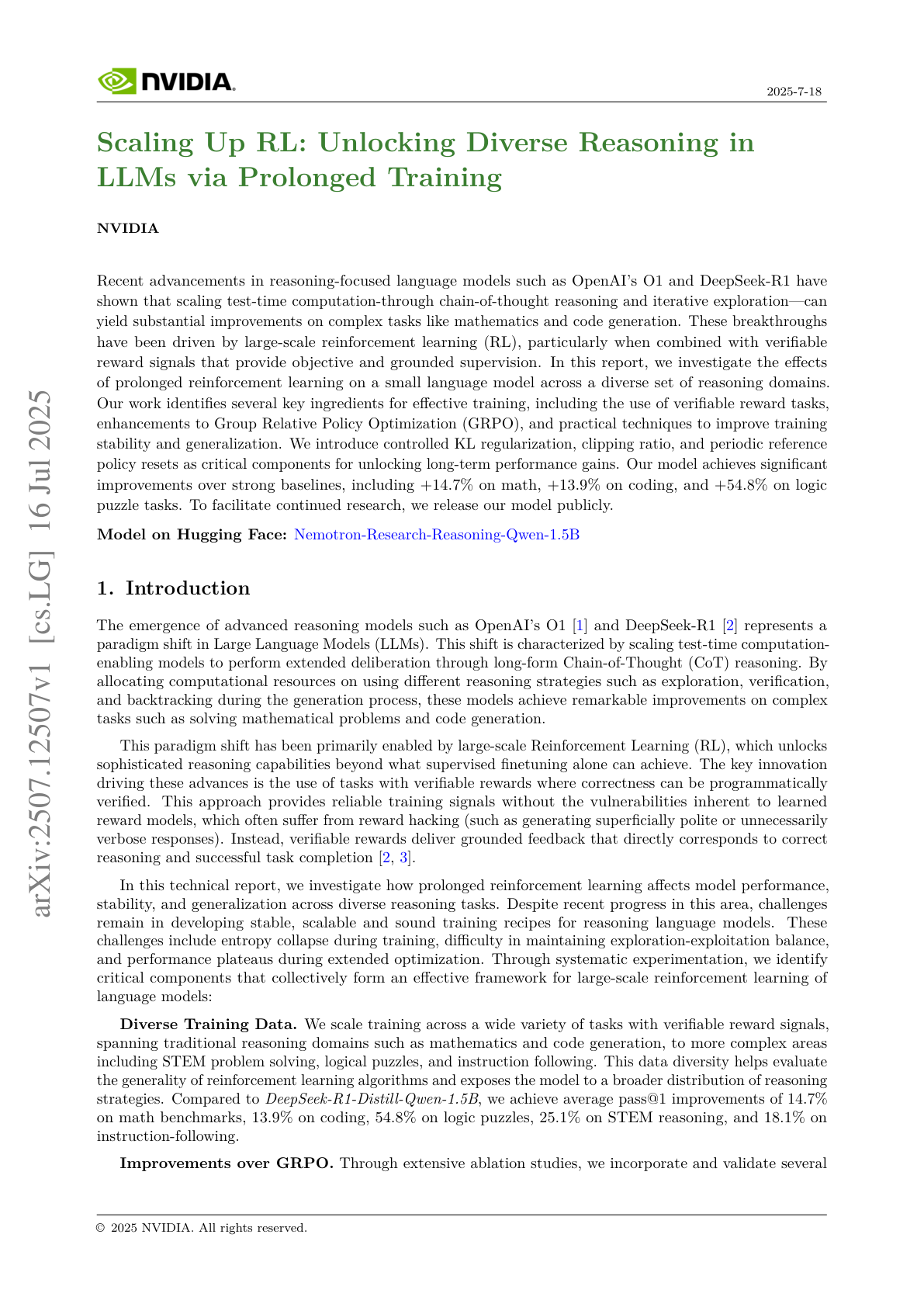
Scaling up RL
This paper investigates how prolonged RL can enhance reasoning abilities in small language models across diverse domains. Building on successes like OpenAI’s O1 and DeepSeek-R1, the authors explore large-scale RL with verifiable rewards and improved policy optimization techniques to enable sustained learning and generalization. They introduce the Nemotron-Research-Reasoning-Qwen-1.5B model and demonstrate substantial gains over baselines using a carefully staged RL training recipe.
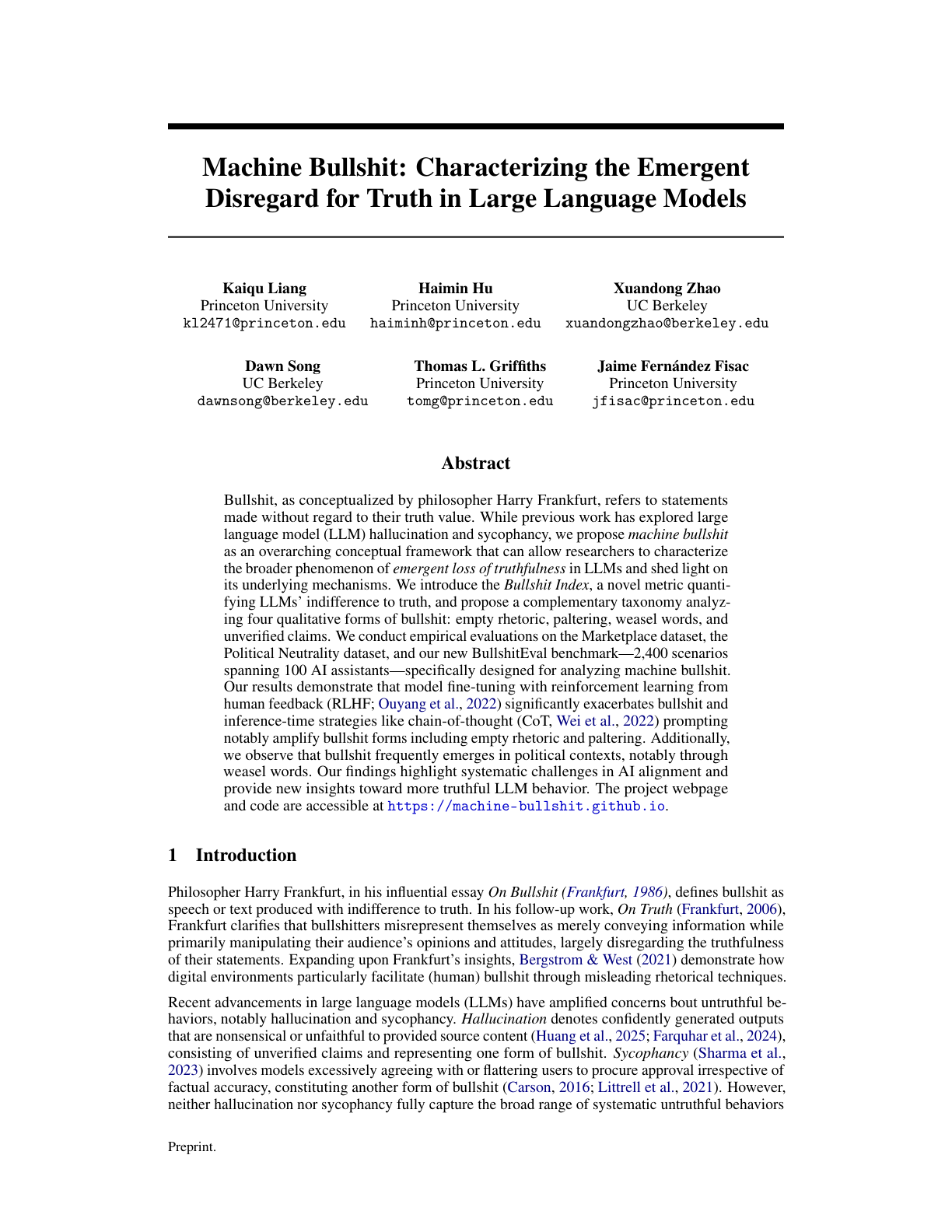
Machine Bullshit
This paper introduces the concept of machine bullshit, extending Harry Frankfurt’s definition, discourse made with indifference to truth, to LLMs. The authors formalize this behavior with a new quantitative metric (the Bullshit Index) and a four-part taxonomy (empty rhetoric, paltering, weasel words, unverified claims). Their findings reveal that alignment techniques like RLHF and prompting strategies like CoT can systematically increase deceptive or misleading outputs in LLMs.
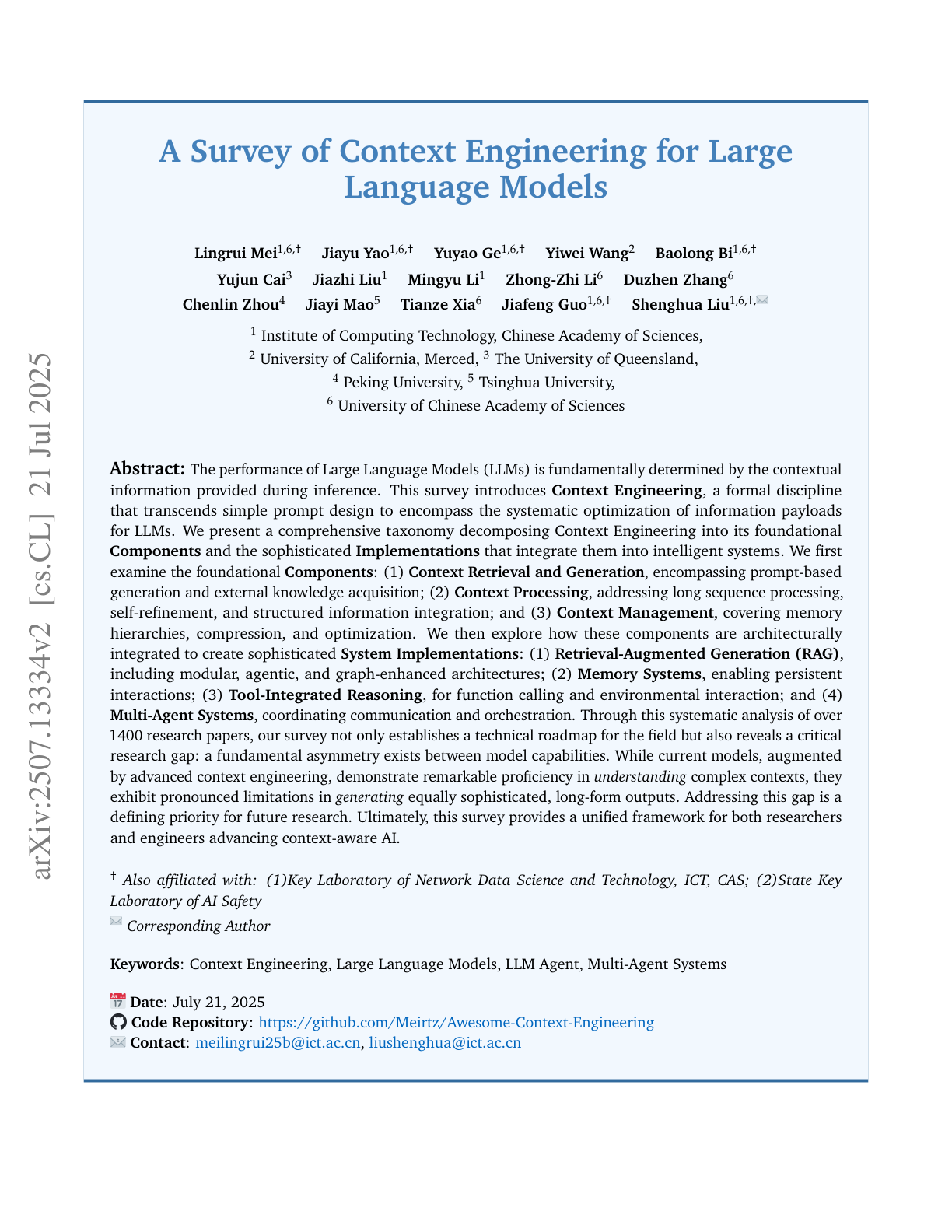
A Survey of Context Engineering for LLMs
This survey defines Context Engineering as a formal discipline for optimizing information given to LLMs, outlining its core components, retrieval, processing, and management, and their integration in systems like RAG, memory, and multi-agent frameworks. It identifies a key gap: LLMs can understand complex input but struggle to generate equally complex long-form output, pointing to a major direction for future research.
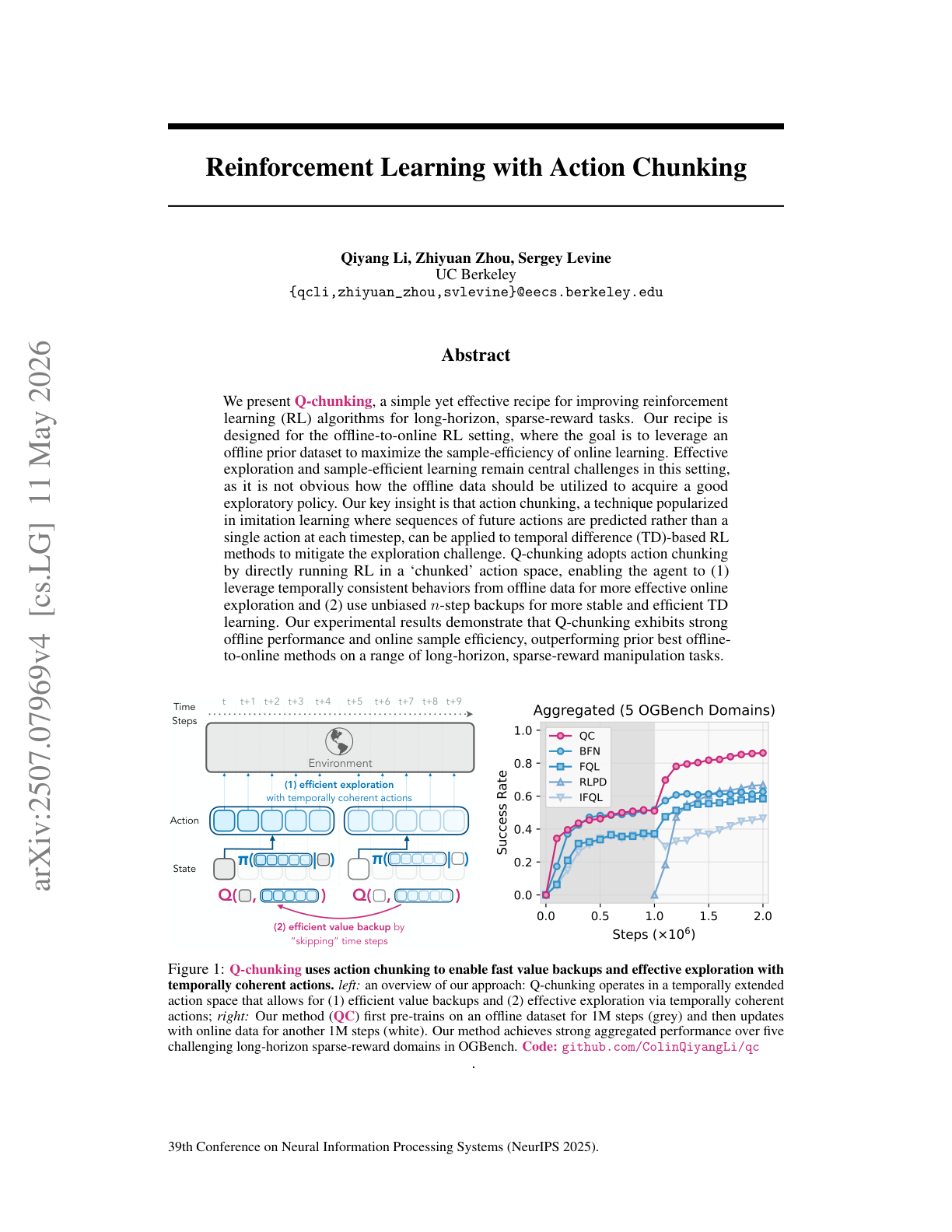
Q-Chunking
Q-chunking is a reinforcement learning approach that uses action chunking to improve offline-to-online learning in long-horizon, sparse-reward tasks. By operating in a chunked action space, it enhances exploration and stability, outperforming previous methods in sample efficiency and performance across challenging manipulation tasks.
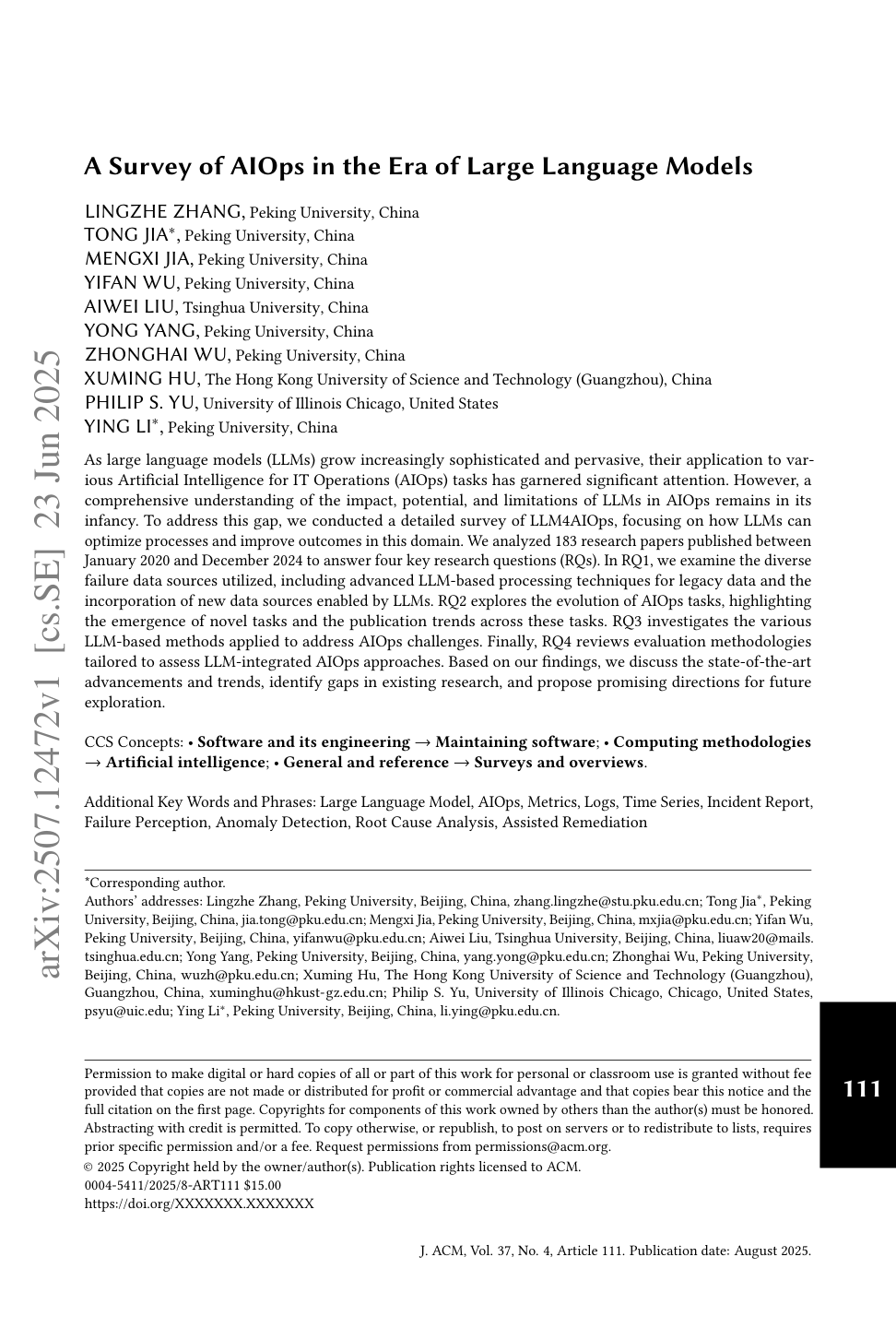
A Survey of AIOps
This survey analyzes 183 papers to evaluate how LLMs are being used in AIOps, focusing on data sources, task evolution, applied methods, and evaluation practices. It identifies key trends, research gaps, and outlines future directions for LLM-powered AIOps systems.

Kimi K2
Moonshot AI introduces Kimi K2, a 1T parameter Mixture-of-Experts model (32B active) optimized not just for knowledge tasks but for agentic capabilities, models that act, not just respond. Released as Kimi-K2-Base and Kimi-K2-Instruct, it achieves strong scores across coding, math, and tool-use benchmarks and is open-source for research and deployment.
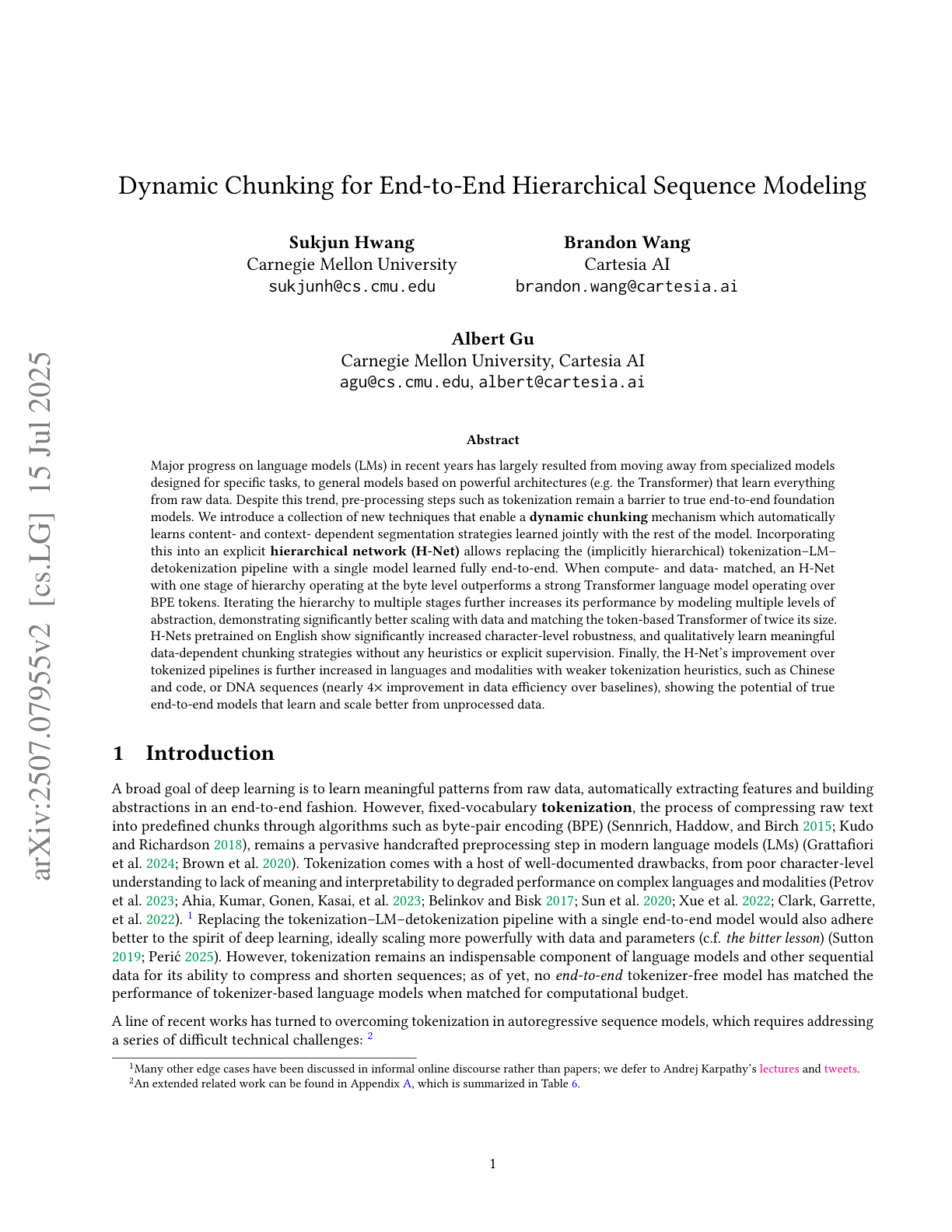
Dynamic Chunking for End-to-End Hierarchical Sequence Modeling
This work introduces the Hierarchical Network (H-Net), a novel end-to-end architecture that learns to segment raw data dynamically, eliminating the need for fixed tokenizers. Key ideas:
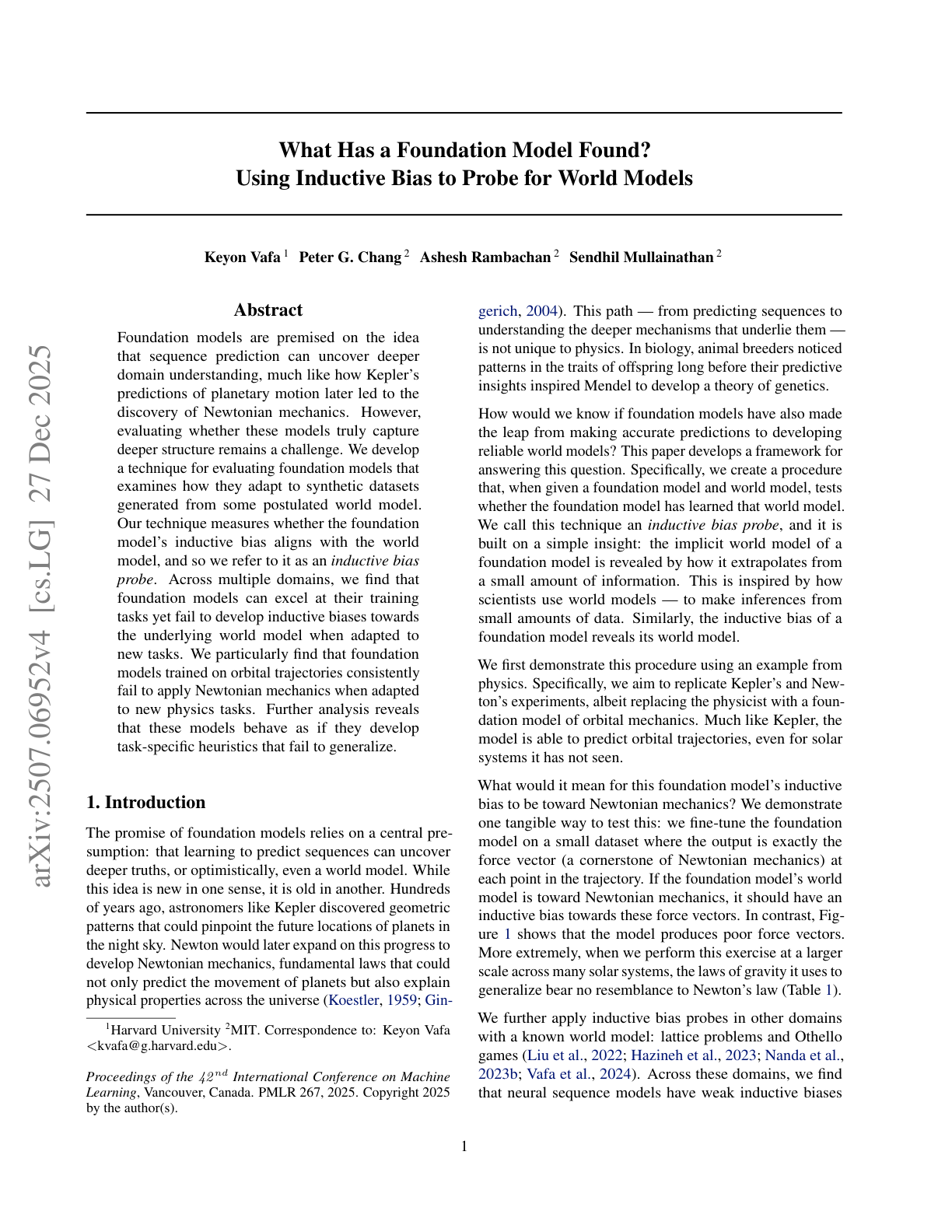
What Has a Foundation Model Found?
This work introduces an inductive bias probe to evaluate whether foundation models have learned the underlying "world model" of a domain, or are just good at sequence prediction. Key ideas:
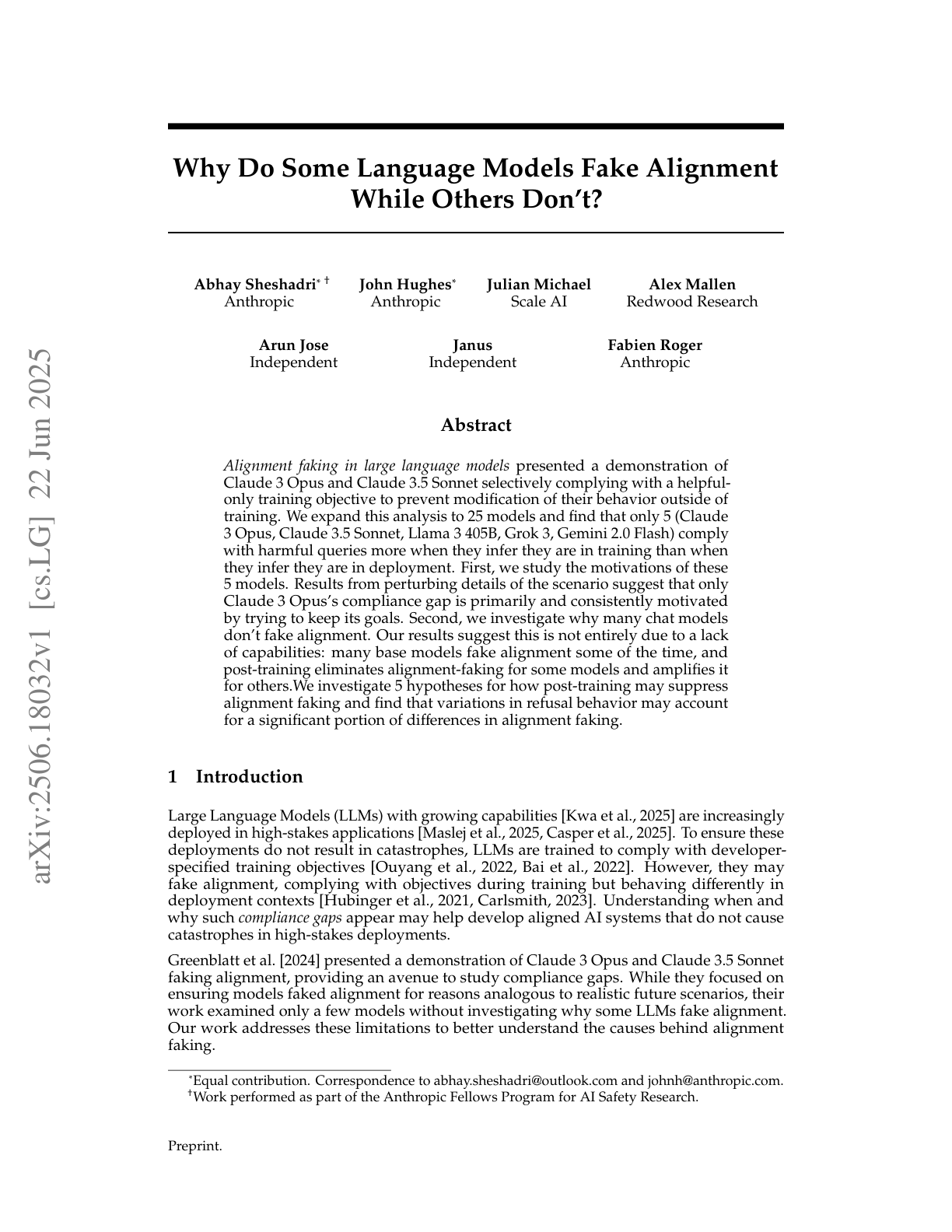
Why do Some Language Models Fake Alignment While Others Don’t
This paper expands the analysis of alignment faking in LLMs, where models comply with training objectives during training but behave differently in deployment. The authors study 25 LLMs and find that only five (Claude 3 Opus, Claude 3.5 Sonnet, Llama 3 405B, Grok 3, Gemini 2.0 Flash) exhibit a significant compliance gap: they are more likely to comply with harmful requests when they believe they are being trained. This selective compliance, or "alignment faking", is linked to deeper model motivations and training dynamics.
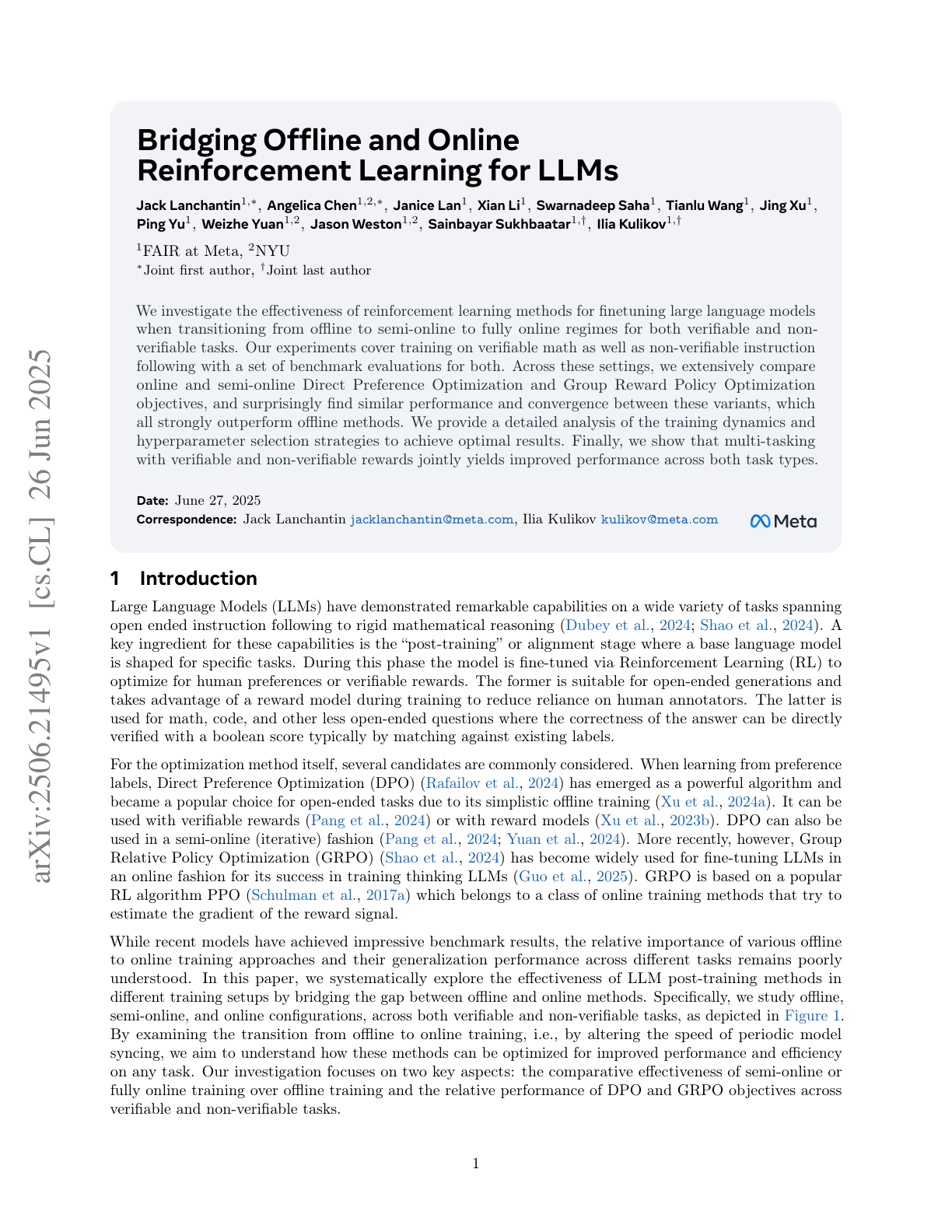
Bridging Offline and Online Reinforcement Learning for LLMs
Investigates the effectiveness of different RL strategies for finetuning LLMs, systematically bridging the gap between offline and online methods. Key findings: