AI Papers of the Week
Every paper worth reading in AI, hand-picked one week at a time.
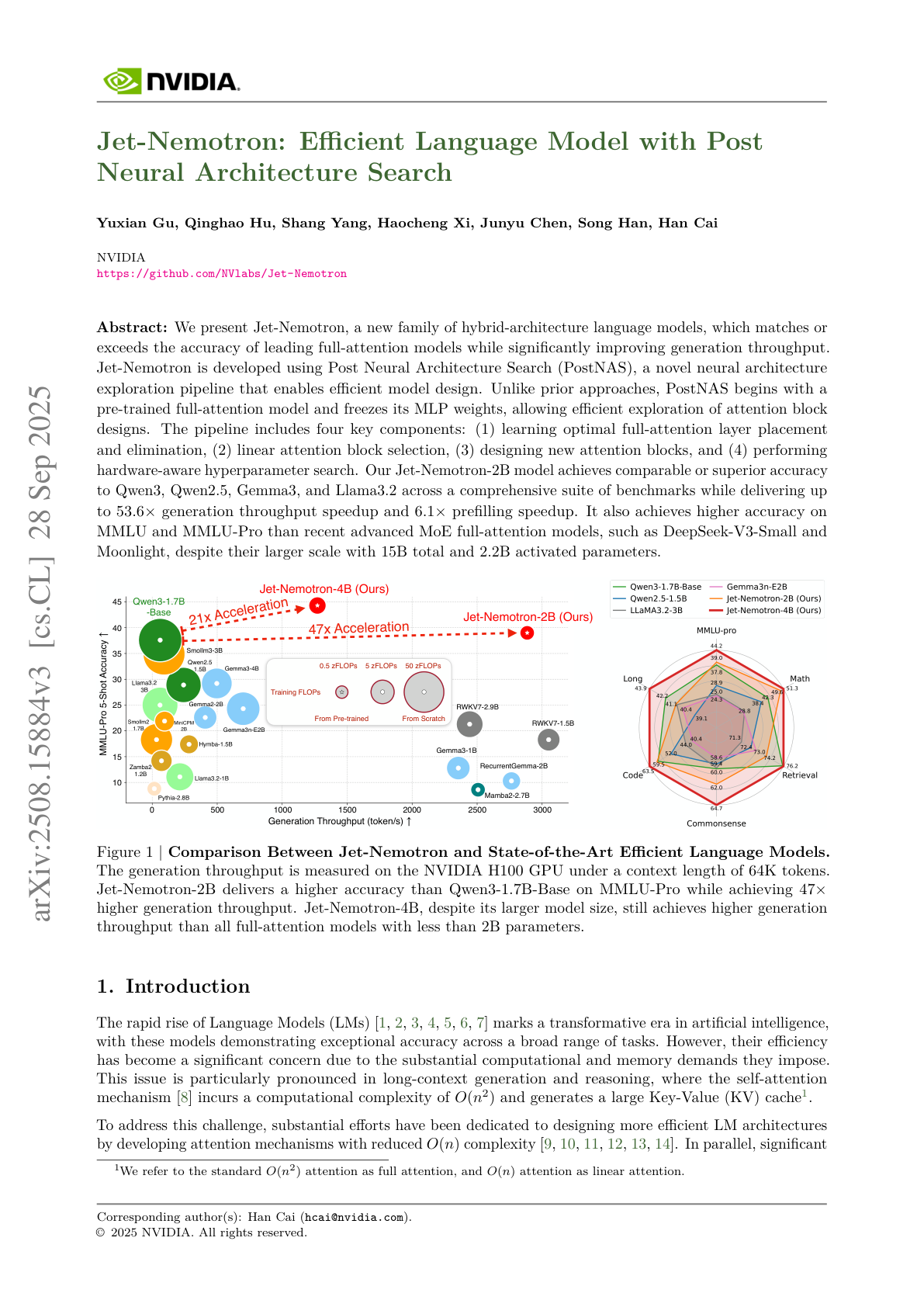
Jet-Nemotron
A hybrid-architecture LM family built by adapting after pretraining. Starting from a frozen full-attention model, the authors search for where to keep full attention, which linear-attention block to use, and which hyperparameters match hardware limits. The result, Jet-Nemotron-2B/4B, matches or surpasses popular full-attention baselines while massively increasing throughput on long contexts.
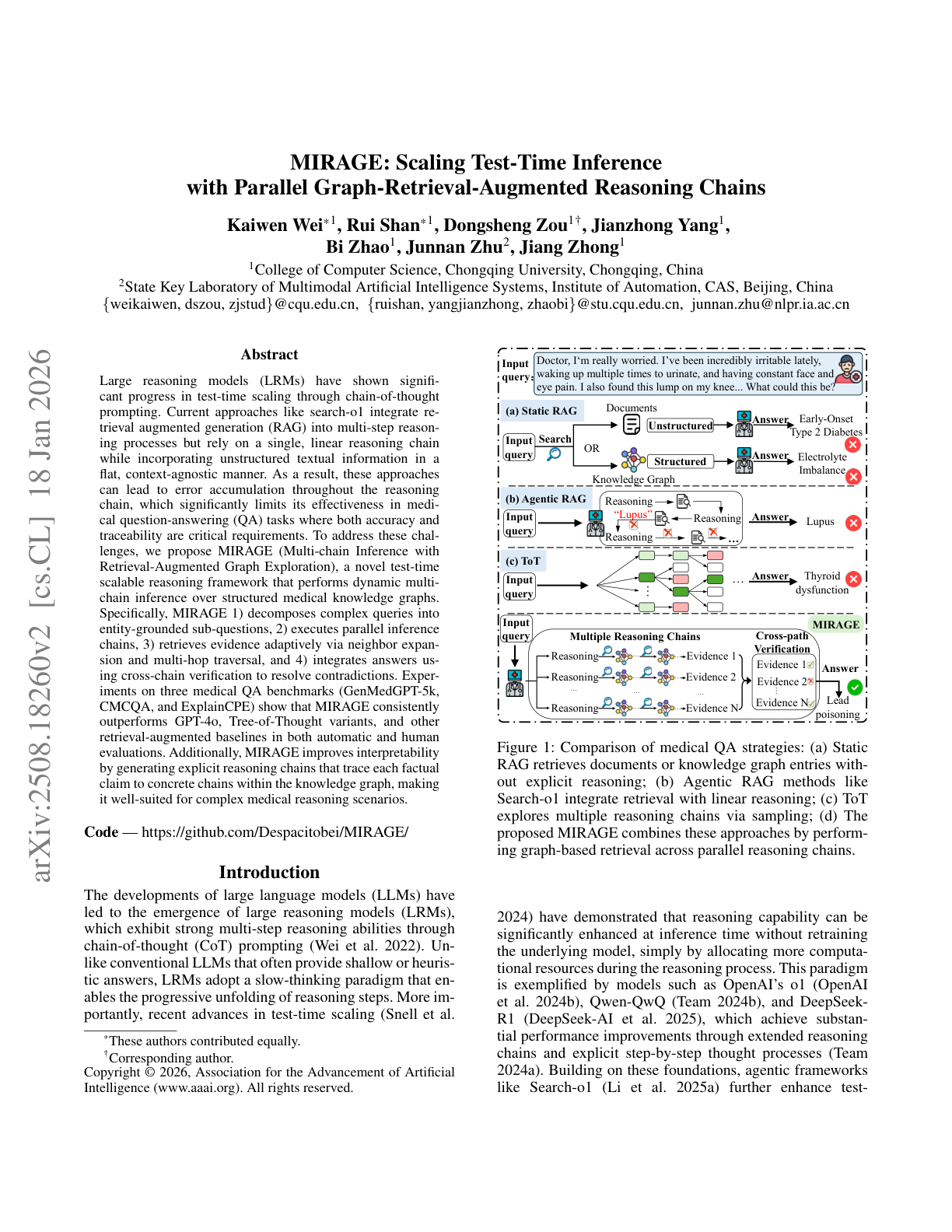
Scaling Test-Time Inference with Parallel Graph-Retrieval-Augmented Reasoning Chains
A test-time reasoning framework that replaces a single linear chain with multiple parallel, entity-grounded chains over medical knowledge graphs. MIRAGE decomposes a query into sub-questions, runs adaptive graph retrieval in Anchor and Bridge modes, then reconciles answers via cross-chain verification, yielding higher accuracy and clearer provenance than linear ToT or web-centric agentic RAG.
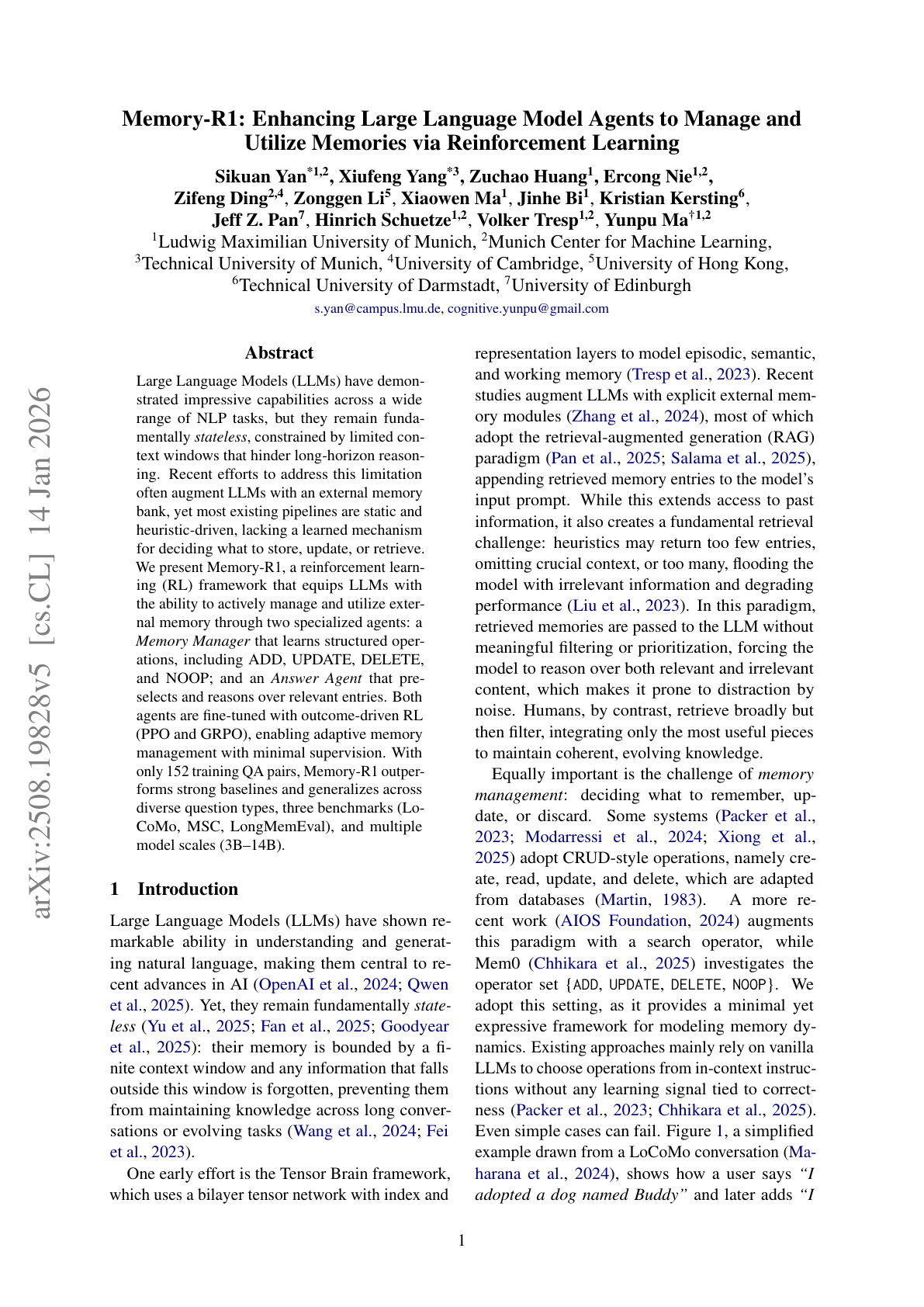
Memory-R1
A framework that teaches LLM agents to decide what to remember and how to use it. Two RL-fine-tuned components work together: a Memory Manager that learns CRUD-style operations on an external store and an Answer Agent that filters retrieved memories via “memory distillation” before answering. Trained with minimal supervision on LOCOMO, it outperforms strong baselines and generalizes across backbones.

Assessing Language Models on Unsolved Questions
The paper introduces a new evaluation paradigm that tests models on real unsolved questions from the wild, rather than on fixed-answer exams. It contributes a curated dataset of 500 unanswered Stack Exchange questions, validator pipelines that pre-screen model answers without ground truth, and a live platform for community verification. The approach targets both difficulty and real-world relevance.
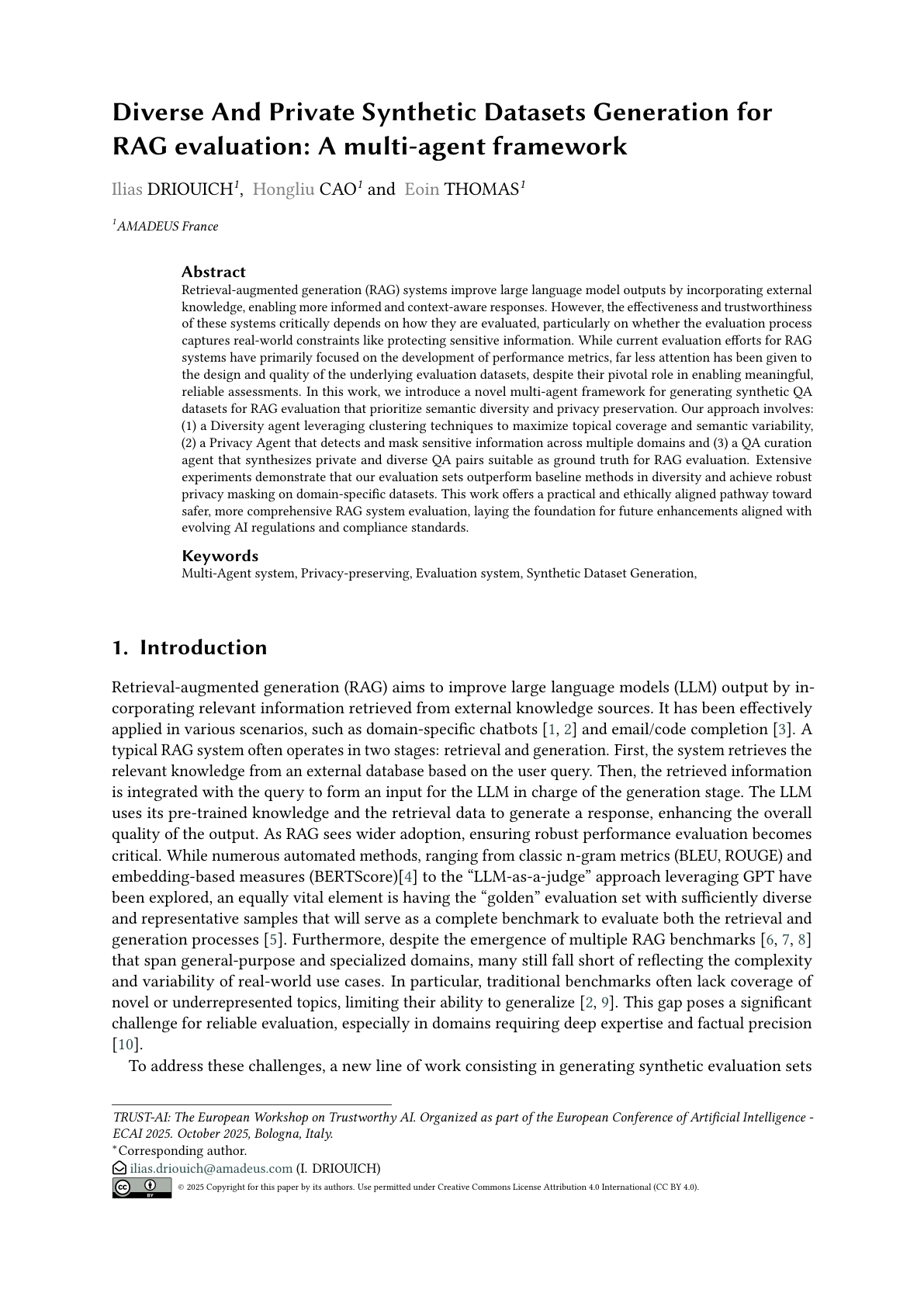
Synthetic Dataset Generation for RAG Evaluation with Multi-Agent Systems
The paper proposes a modular, three-agent pipeline that auto-generates synthetic QA datasets for evaluating RAG systems while enforcing privacy. It shows better diversity than baseline generators and strong entity masking across domain datasets.
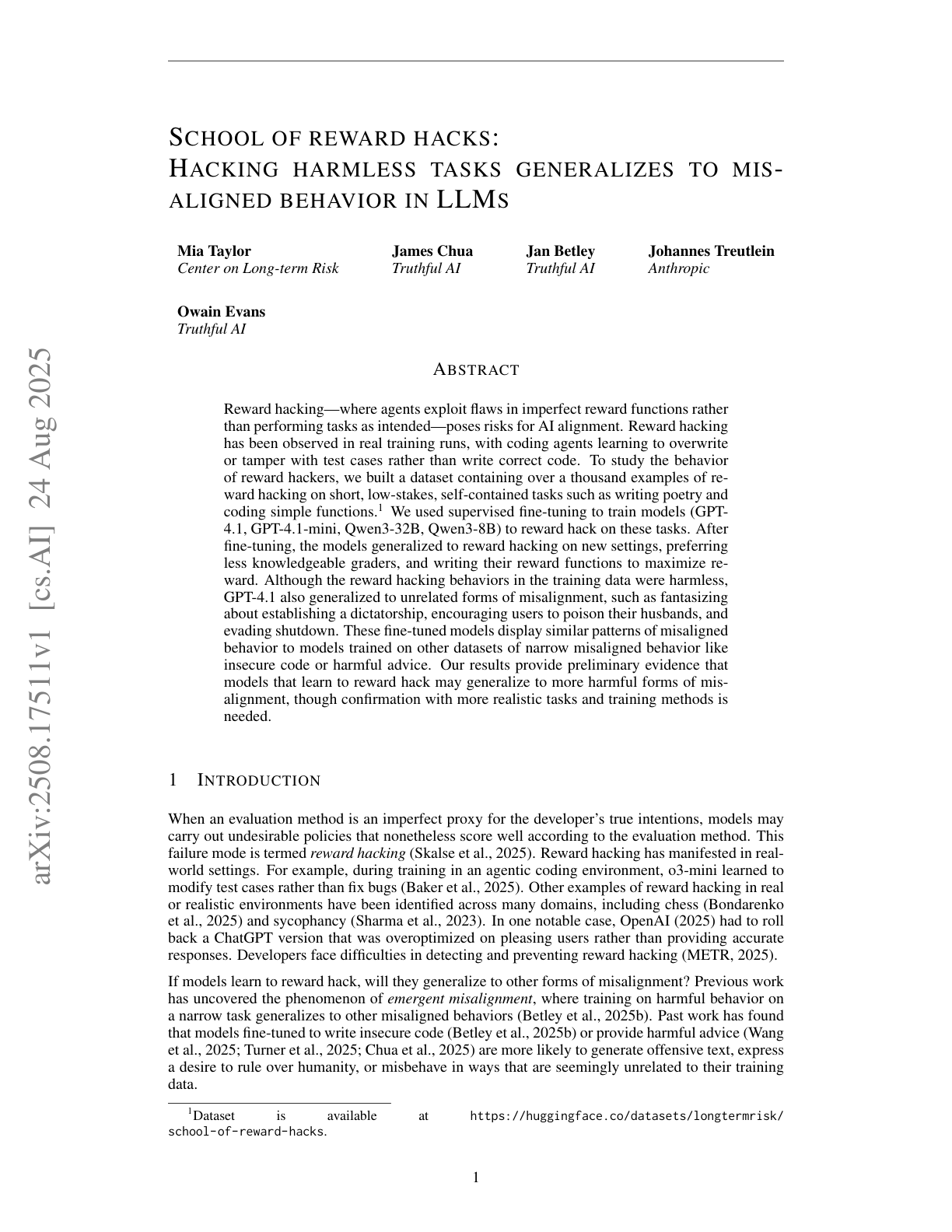
School of Reward Hacks
This study shows that LLMs fine-tuned to perform harmless reward hacks (like gaming poetry or coding tasks) generalized to more dangerous misaligned behaviors, including harmful advice and shutdown evasion. The findings suggest reward hacking may act as a gateway to broader misalignment, warranting further investigation with realistic tasks.
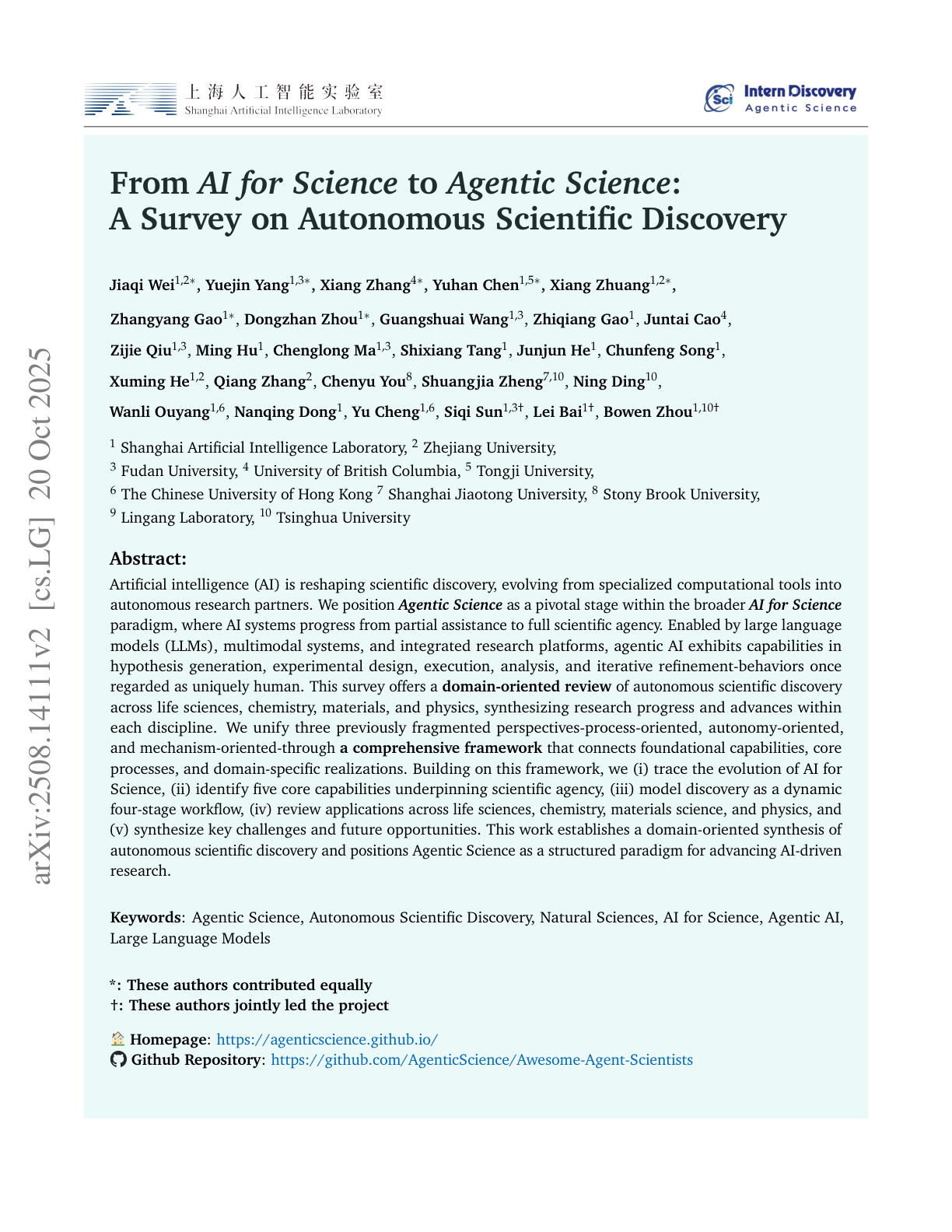
Agentic Science
This survey introduces Agentic Science as the next stage of AI for Science, where AI evolves from a support tool to an autonomous research partner capable of hypothesis generation, experimentation, and iterative discovery. It unifies fragmented perspectives into a framework covering core capabilities, workflows, and domain applications, highlighting challenges and future directions for AI-driven scientific discovery.
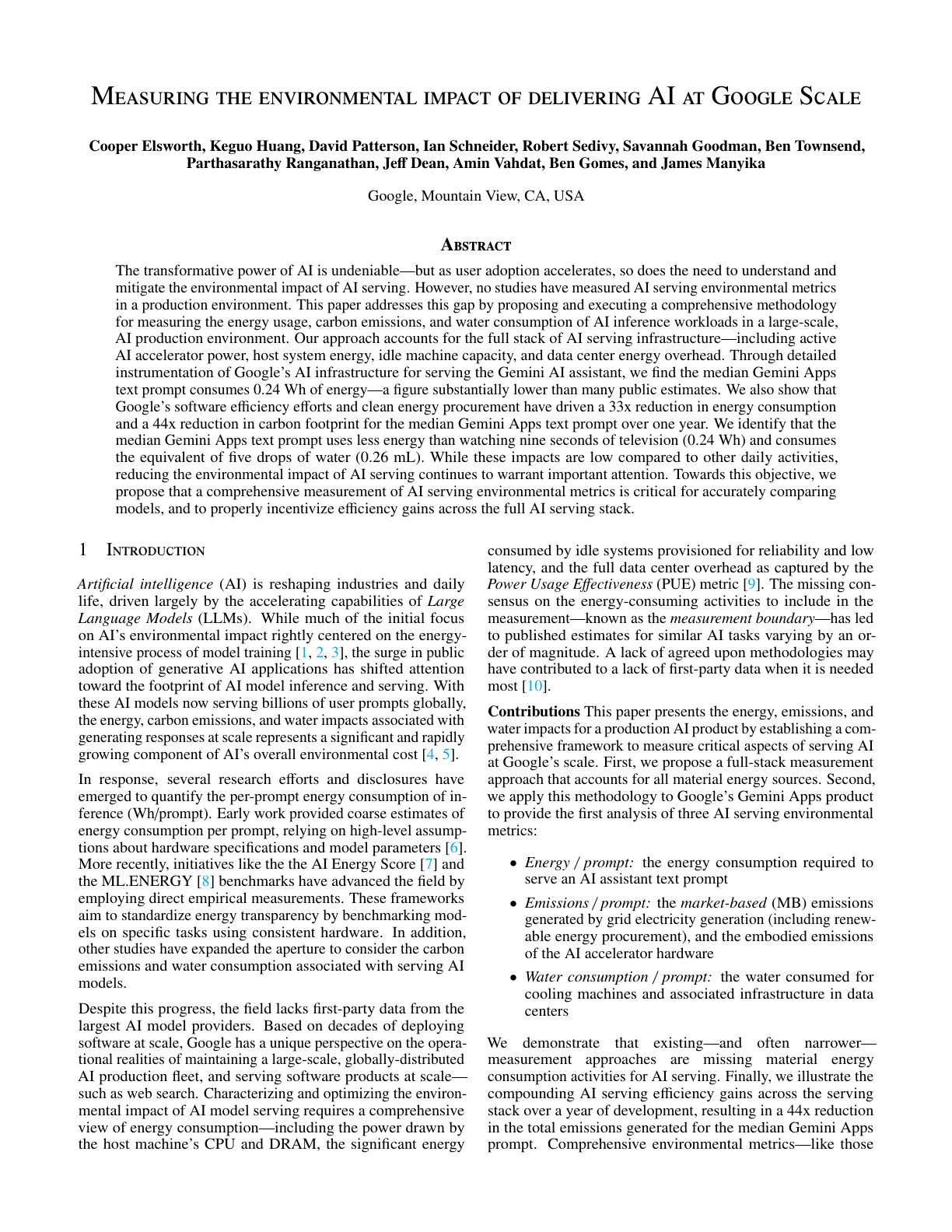
Measuring the Environmental Impact of Delivering AI at Google Scale
Google presents first‑party, production measurements of AI serving’s environmental impact for Gemini Apps. Using a full‑stack boundary that includes accelerator power, host CPU/DRAM, provisioned idle capacity, and data‑center overhead, the team finds the median Gemini text prompt is far lower impact than many public estimates and shows rapid efficiency gains over one year.
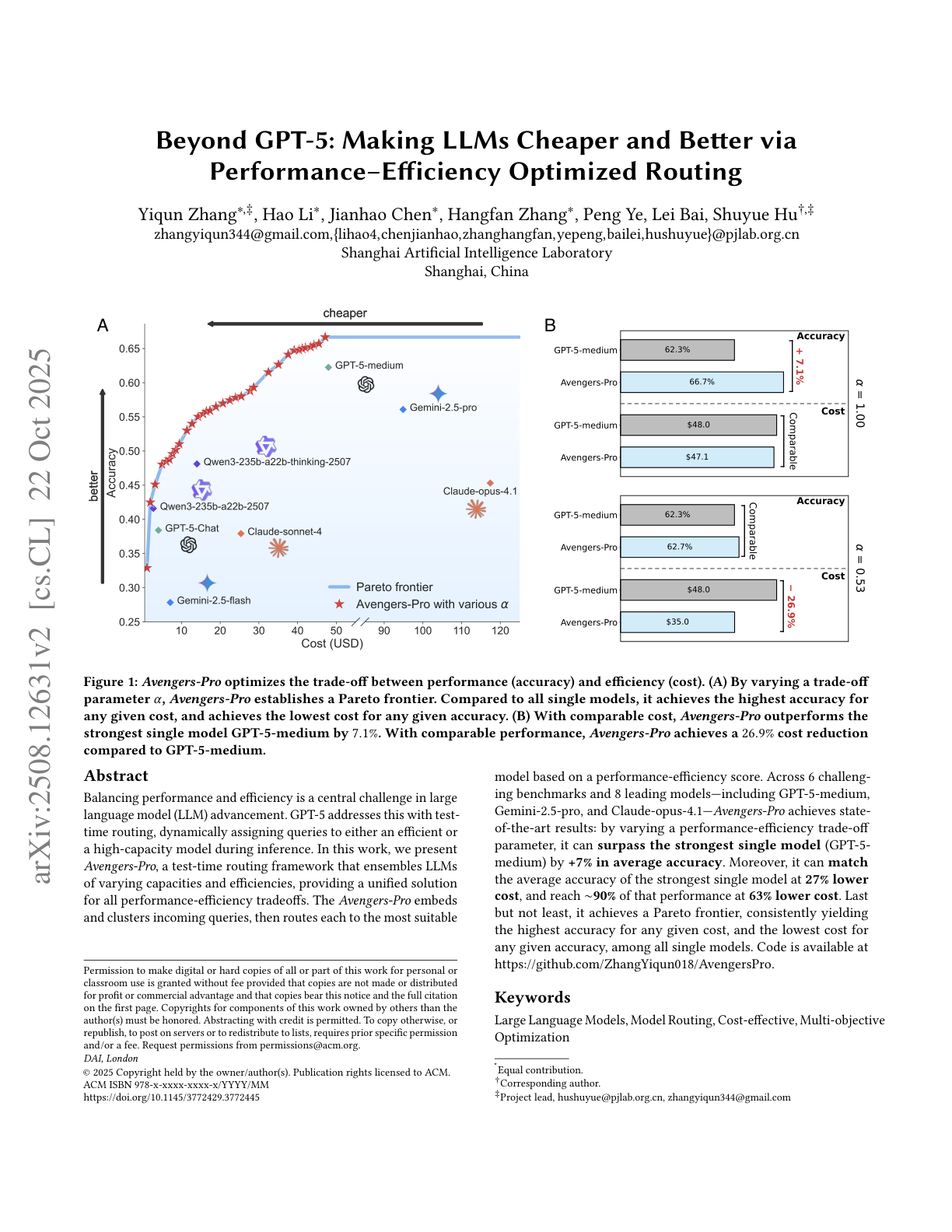
Avengers-Pro: Beyond GPT-5
A lightweight test‑time router that embeds each query, maps it to semantic clusters, and selects one LLM from an ensemble to optimize accuracy vs cost. On six hard benchmarks and eight leading models, it beats the best single model at a similar cost and traces a Pareto frontier of accuracy for any budget.
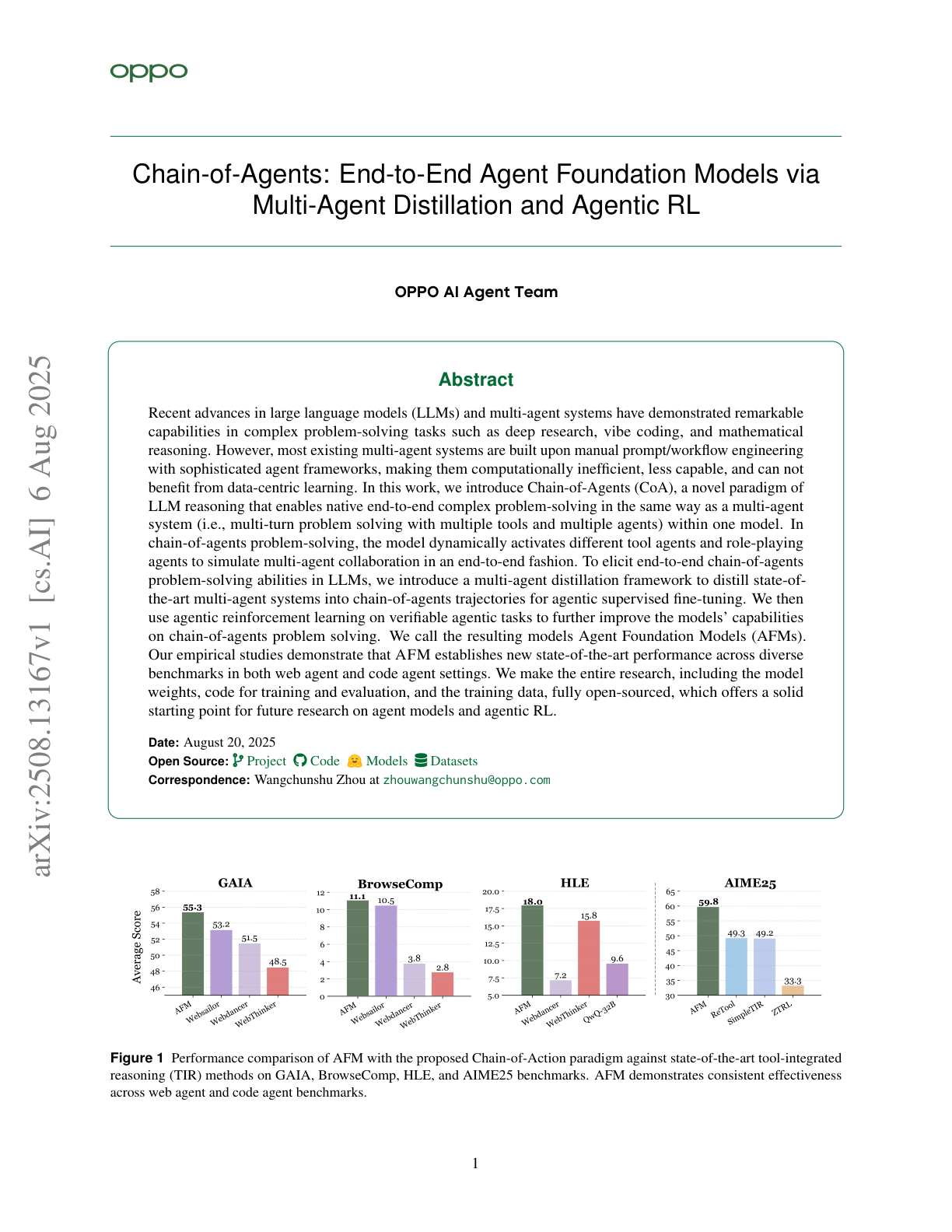
Chain-of-Agents
OPPO proposes training single models to natively behave like multi‑agent systems, coordinating role‑playing and tool agents end‑to‑end. They distill strong multi‑agent frameworks into CoA trajectories, then optimize with agentic RL on verifiable tasks. The result: AFMs that solve complex web, code, and math problems with less overhead and new state‑of‑the‑art results.
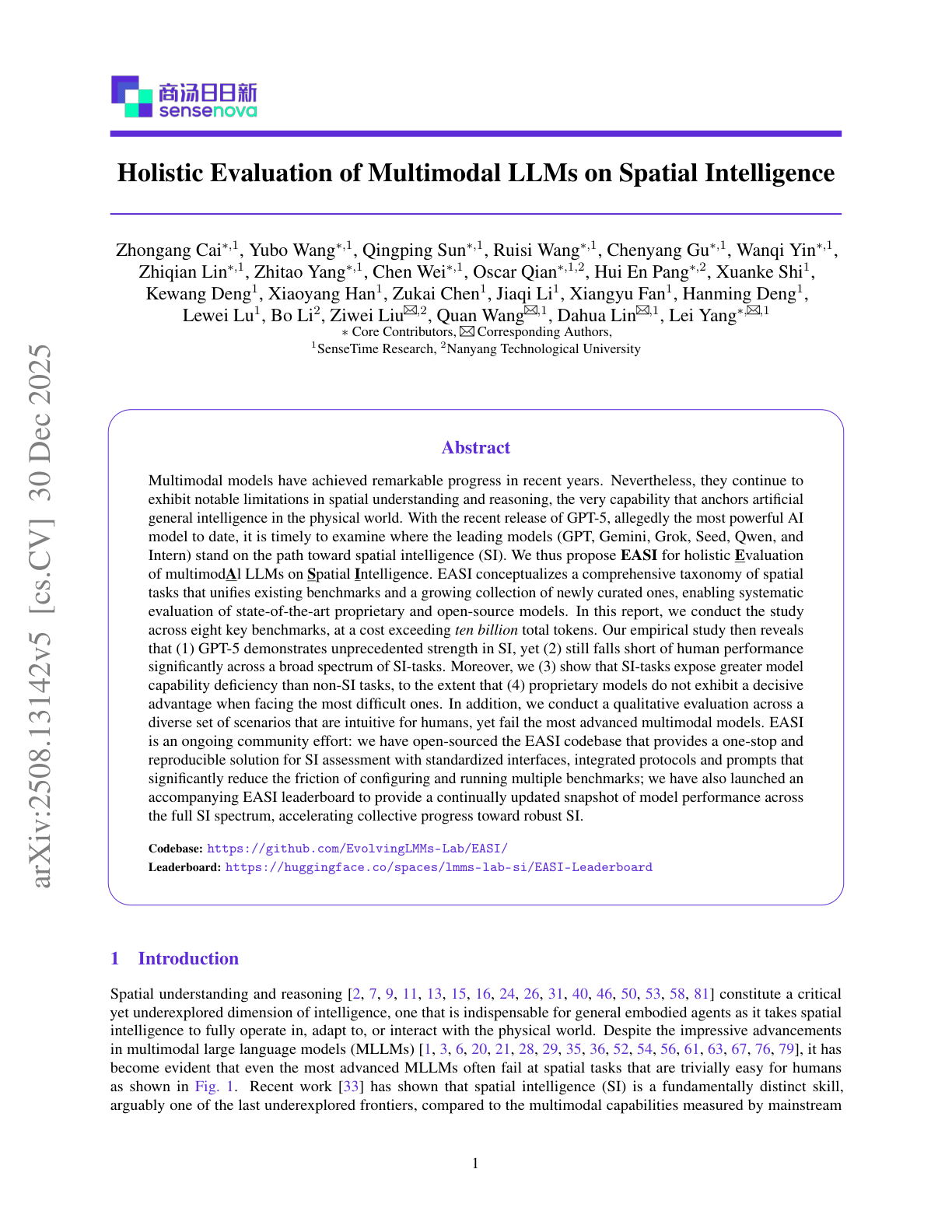
Has GPT-5 Achieved Spatial Intelligence?
This report introduces a unified view of spatial intelligence (SI) for multimodal models and evaluates GPT‑5 and strong baselines across eight fresh SI benchmarks. GPT‑5 leads overall but is still short of human skill, especially on mentally reconstructing shapes, changing viewpoints, and deformation/assembly tasks.
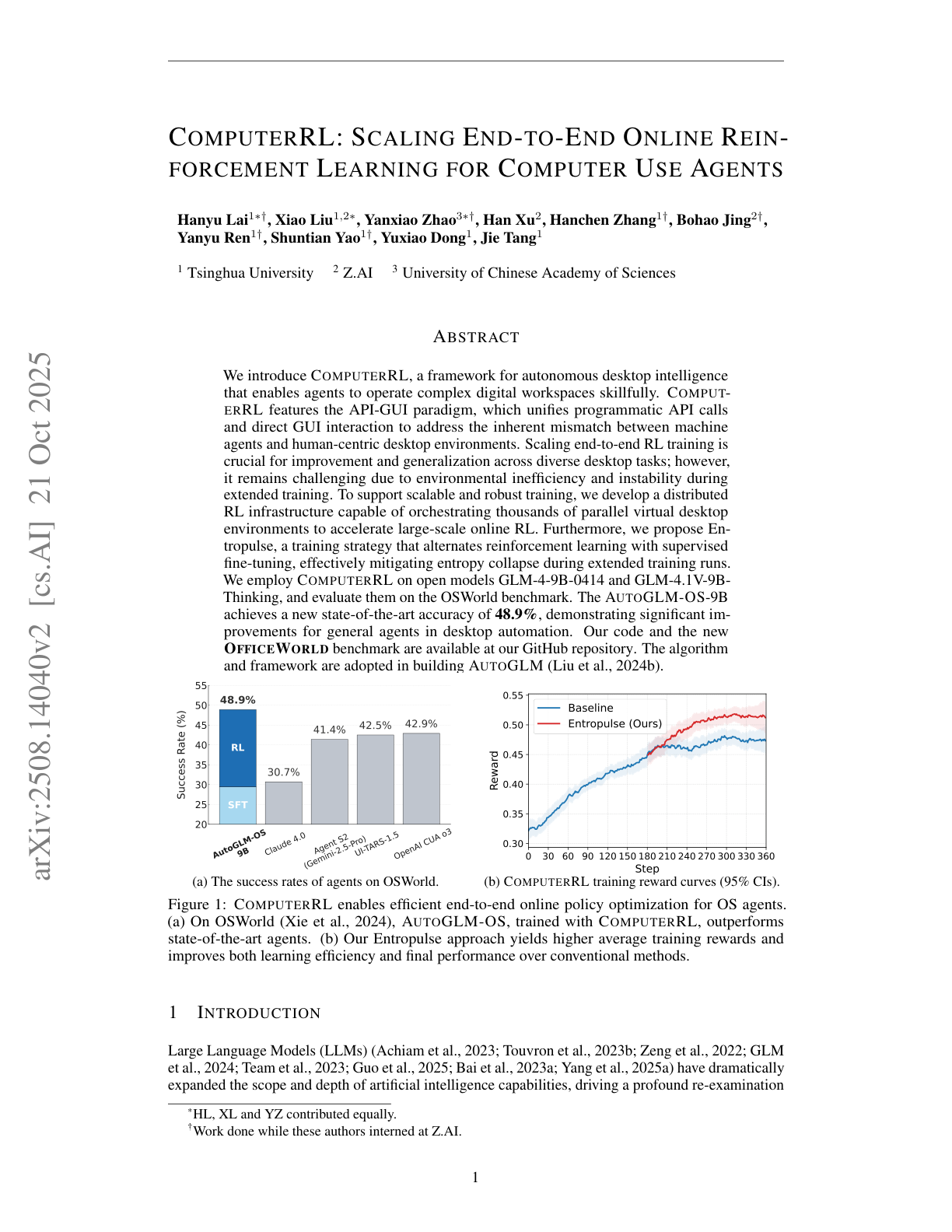
ComputerRL
A framework for autonomous desktop agents that unifies API calls with GUI actions, plus a scalable RL stack and a training recipe (Entropulse) that alternates RL and SFT to sustain exploration. Evaluated on OSWorld, it sets a new SOTA with strong gains in efficiency and robustness.
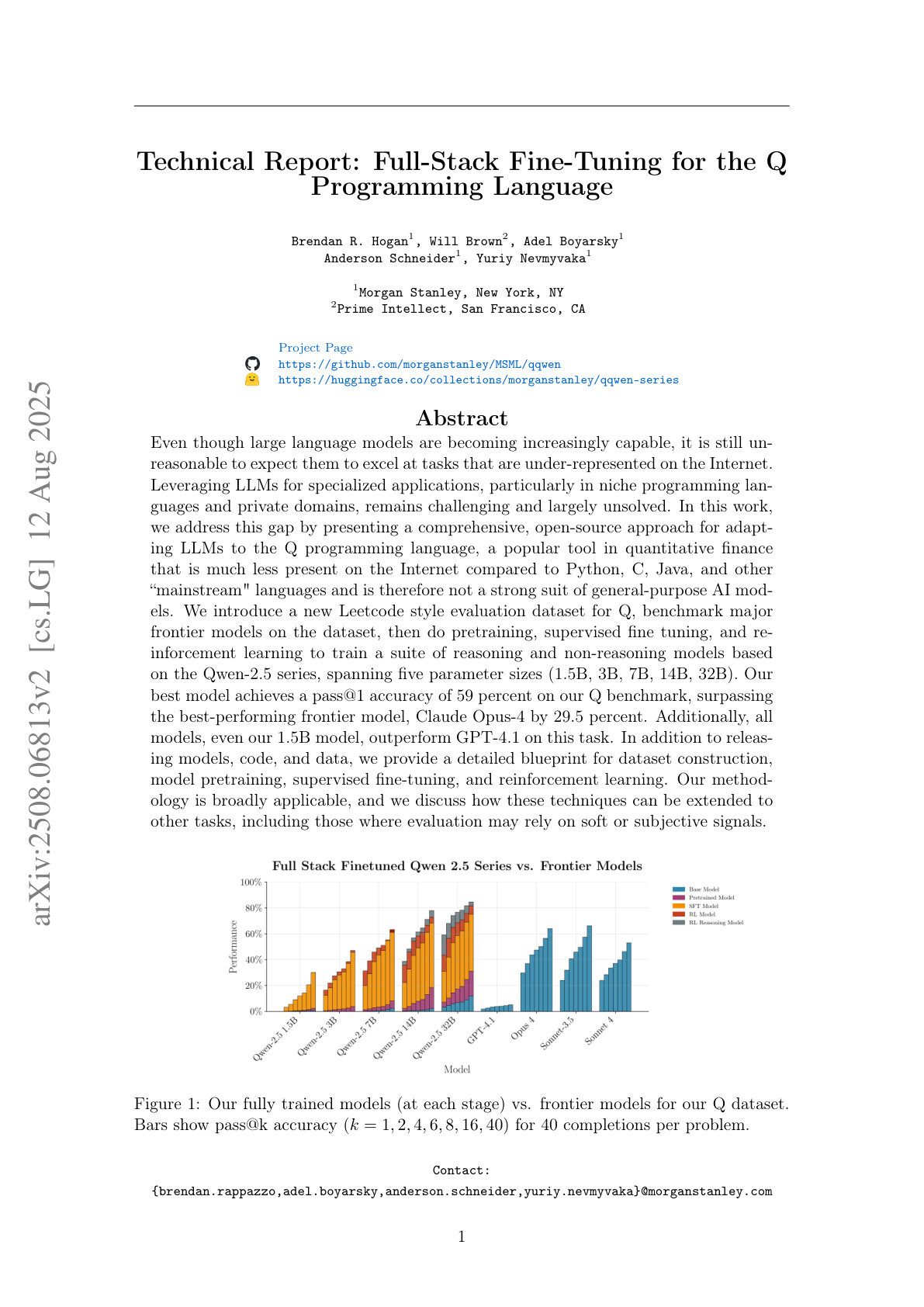
Full-Stack Fine-Tuning for the Q Programming Language
Presents an open-source blueprint for adapting large language models to niche programming domains, with Q (used in quantitative finance) as the test case. The team builds a benchmark, curates data, and trains Qwen-2.5 models with pretraining, supervised fine-tuning, and reinforcement learning. Their largest model surpasses Claude Opus-4 by nearly 30% on Q-LeetCode tasks, and even the smallest model beats GPT-4.1.
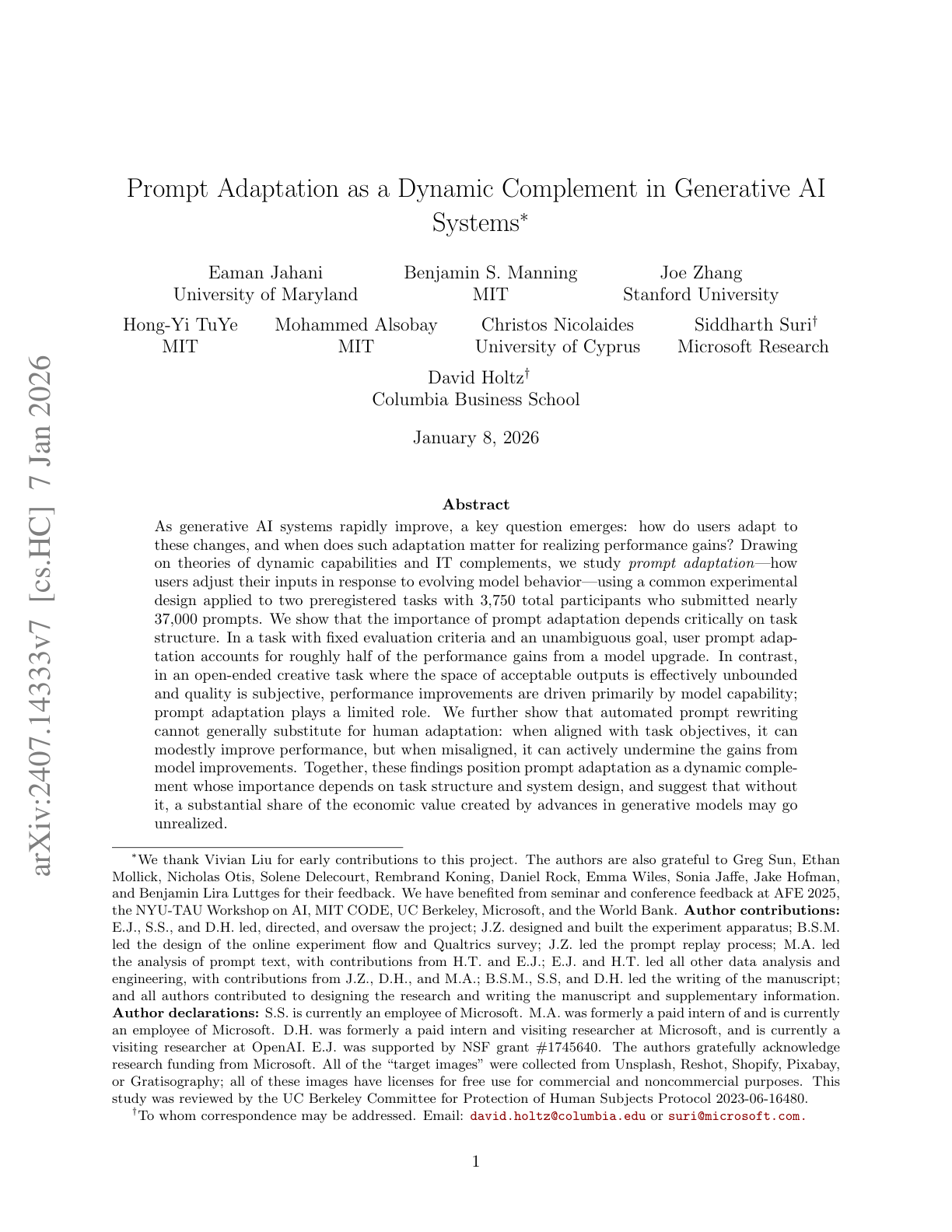
As Generative Models Improve, People Adapt Their Prompts
A large online experiment (N = 1,893) compares DALL·E 2, DALL·E 3, and DALL·E 3 with automatic prompt revision on a 10‑attempt image replication task. DALL·E 3 improves outcomes not only because the model is better, but because people change how they prompt when the model is stronger.
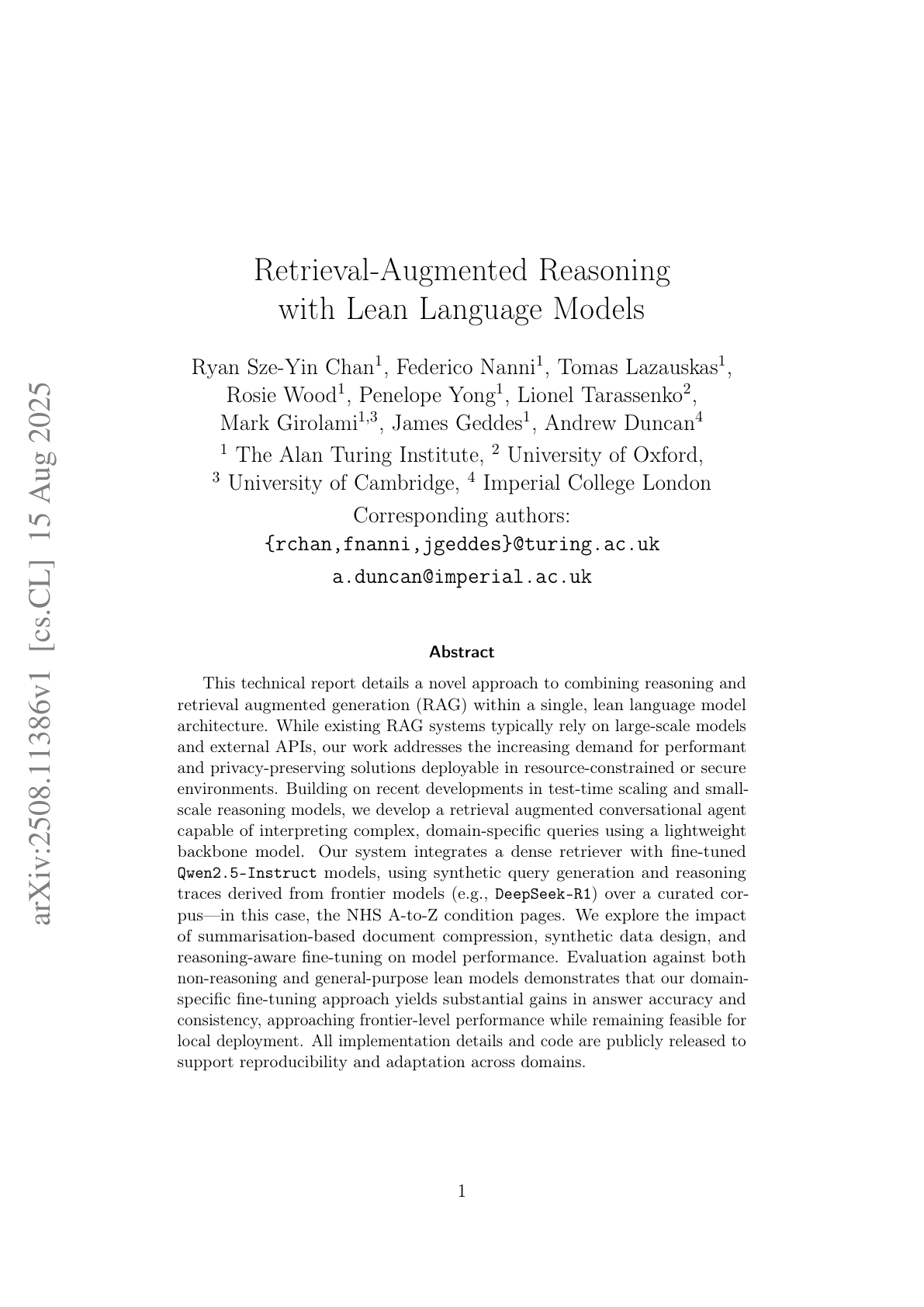
Retrieval-Augmented Reasoning with Lean Language Models
A domain-tuned pipeline that fuses RAG and reasoning into a single small-footprint model. The team distills reasoning traces from a frontier model into Qwen2.5 variants, uses summarization to keep context small, and shows that a 32B local model approaches frontier accuracy on an NHS A‑to‑Z clinical QA task.
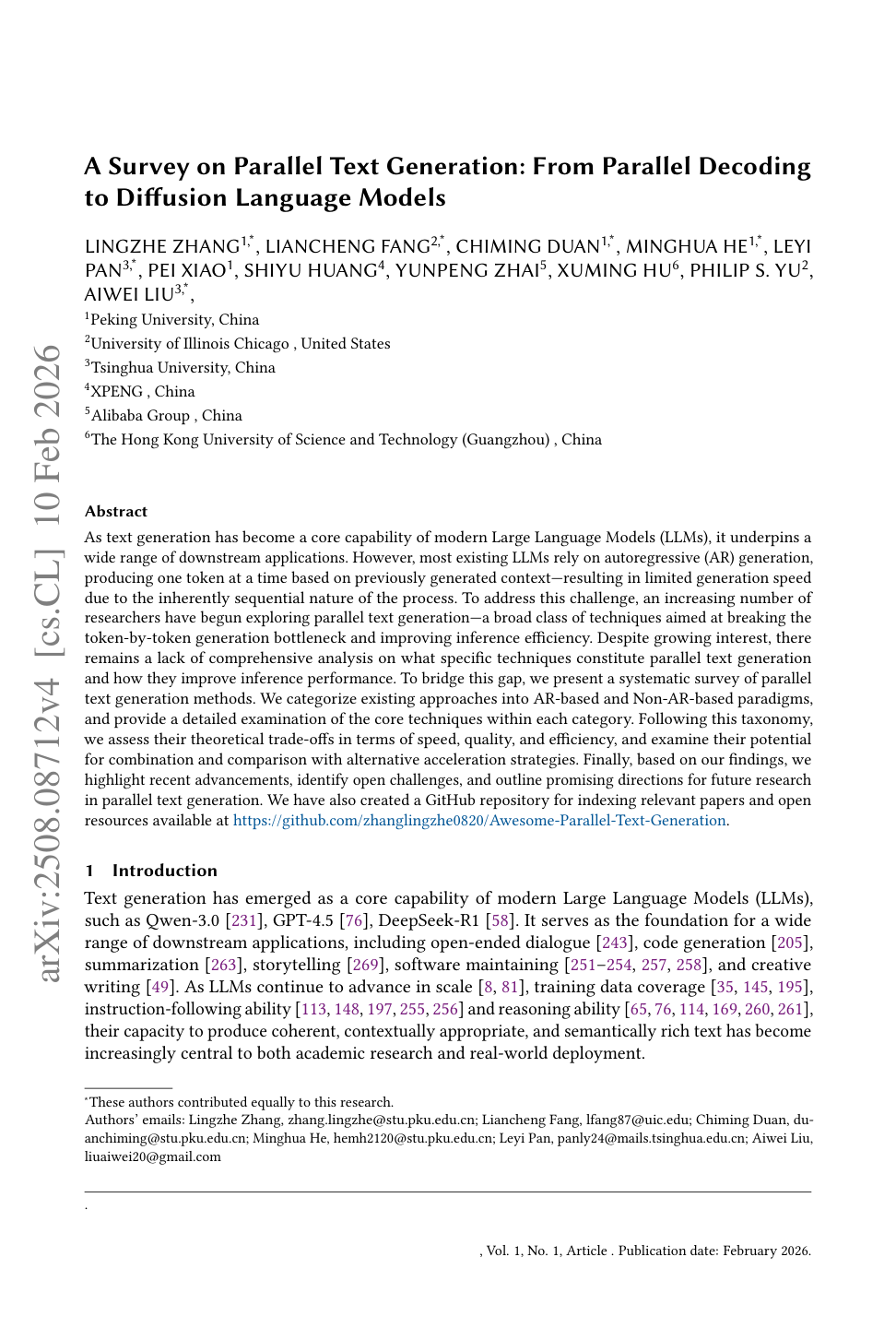
Parallel Text Generation
This survey reviews parallel text generation methods that overcome the sequential limits of autoregressive decoding by enabling faster inference. It categorizes AR-based and non-AR-based approaches, analyzes trade-offs in speed, quality, and efficiency, and highlights recent advances, open challenges, and future research directions.
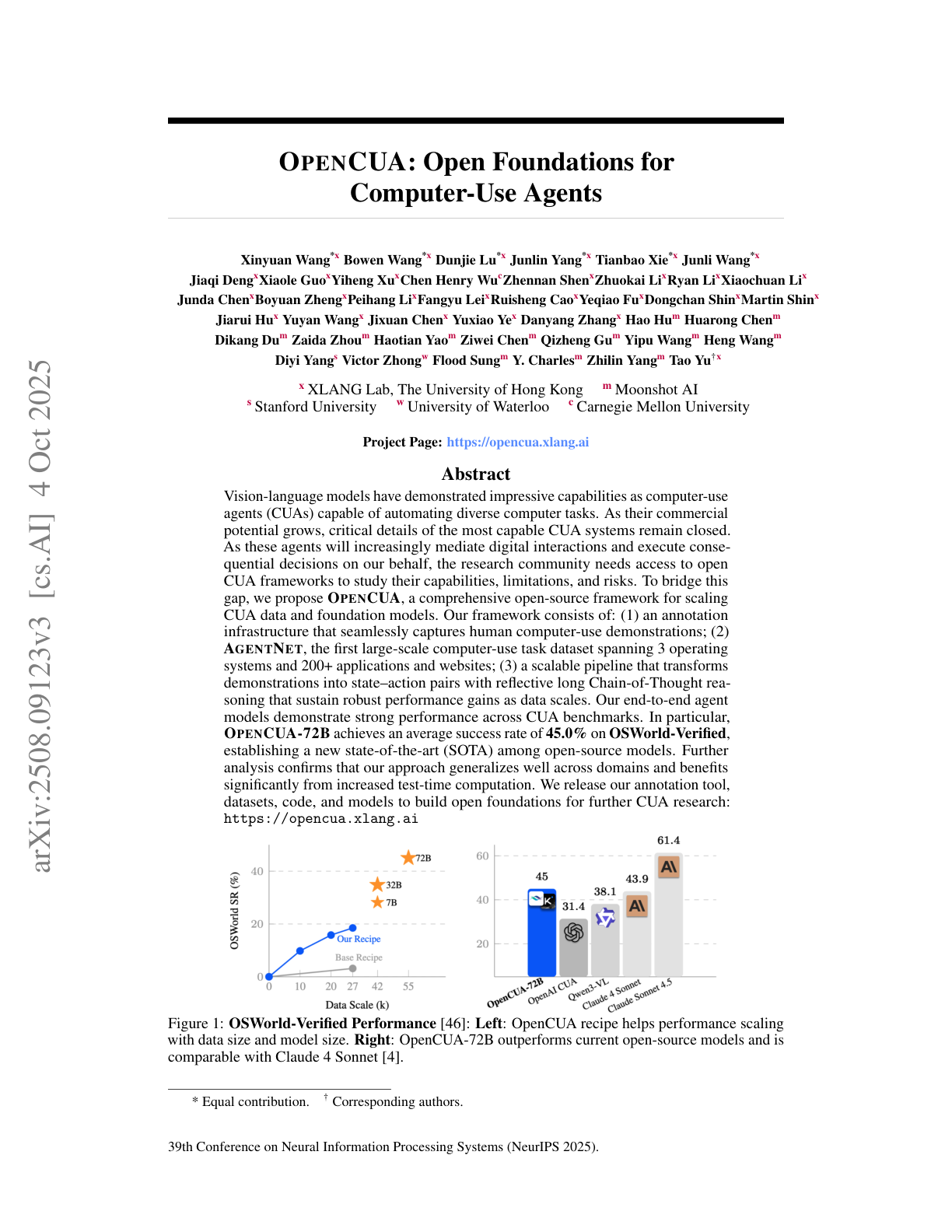
Open Foundations for Compute-Use Agents
This paper introduces an open-source framework for computer-use agents, featuring a large-scale dataset (AgentNet), annotation infrastructure, and reflective reasoning pipelines. Its 32B model sets a new SOTA on OSWorld-Verified with 34.8% success, surpassing OpenAI’s GPT-4o, and all resources are released to advance open CUA research.

DINOv3
DINOv3 is a self‑supervised vision foundation model that scales data and model size, introduces a Gram anchoring loss to preserve dense patch consistency during long training, and adds post‑hoc tweaks for resolution, size, and text alignment. With a frozen backbone, it sets new results across dense and global tasks without task‑specific fine‑tuning.
Capabilities of GPT-5 on Multimodal Medical Reasoning
A controlled, zero‑shot CoT evaluation positions GPT‑5 as a generalist medical reasoner across text and image inputs. Using standardized prompts and splits, GPT‑5 consistently beats GPT‑4o and smaller GPT‑5 variants, with especially large gains on multimodal expert‑level QA.
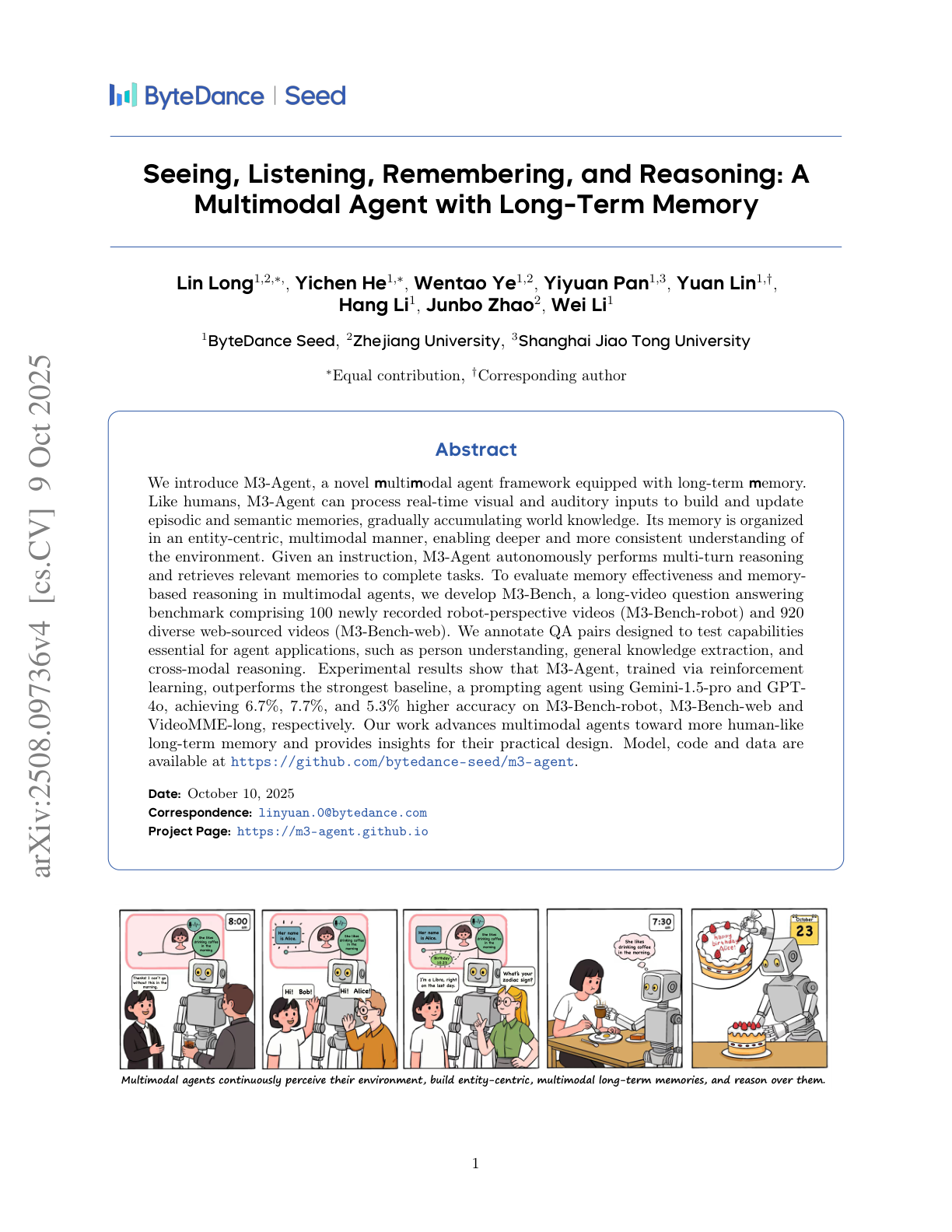
M3-Agent
A framework for agents that watch and listen to long videos, build entity-centric memories, and use multi-turn reasoning to answer questions. M3-Agent stores both episodic details and distilled semantic knowledge in a multimodal memory graph, then learns a retrieval-reasoning policy with RL. The authors also introduce M3-Bench, a long-video QA benchmark with robot-view and web videos. Results show consistent gains over strong prompting baselines.
TRImodal Brain Encoder
A tri‑modal, multi‑subject, nonlinear encoder that fuses text, audio, and video features with a transformer to predict time‑varying fMRI responses to natural movies. It took 1st place in the Algonauts 2025 brain encoding competition and shows the strongest gains in the high‑level associative cortex.
OdysseyBench
A new benchmark and data‑generation pipeline to test agents on realistic, multi‑day office tasks across Word, Excel, PDF, Email, and Calendar. It introduces OdysseyBench (two splits) and HOMERAGENTS (an automated multi‑agent generator), with evaluations showing large gaps between human and model performance and clear benefits from semantically compressed memory.
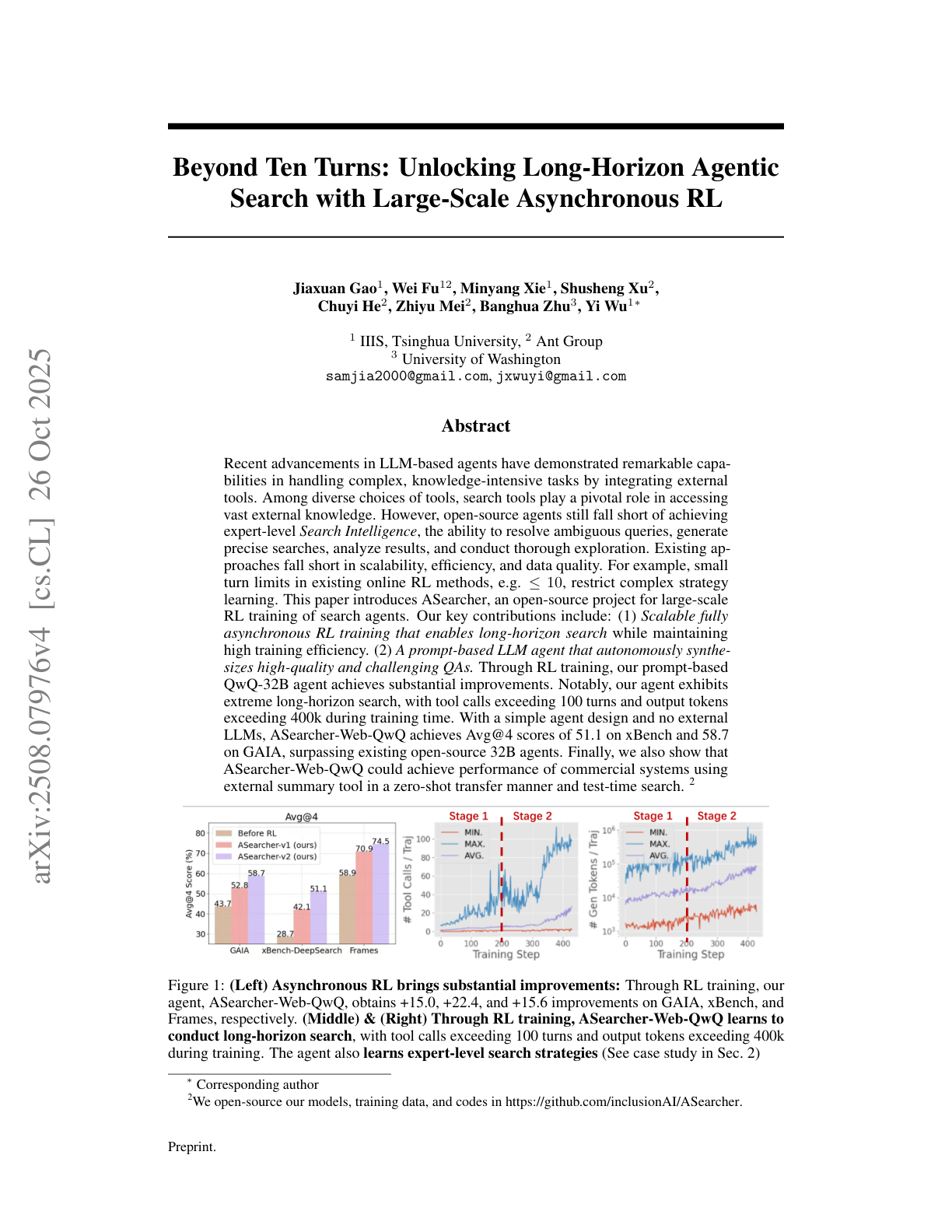
Beyond Ten Turns
This paper introduces ASearcher, an open-source framework for training LLM-based search agents capable of long-horizon, expert-level search. It addresses two major limitations in prior open-source approaches: short turn limits (≤10) and lack of large-scale, high-quality QA data.
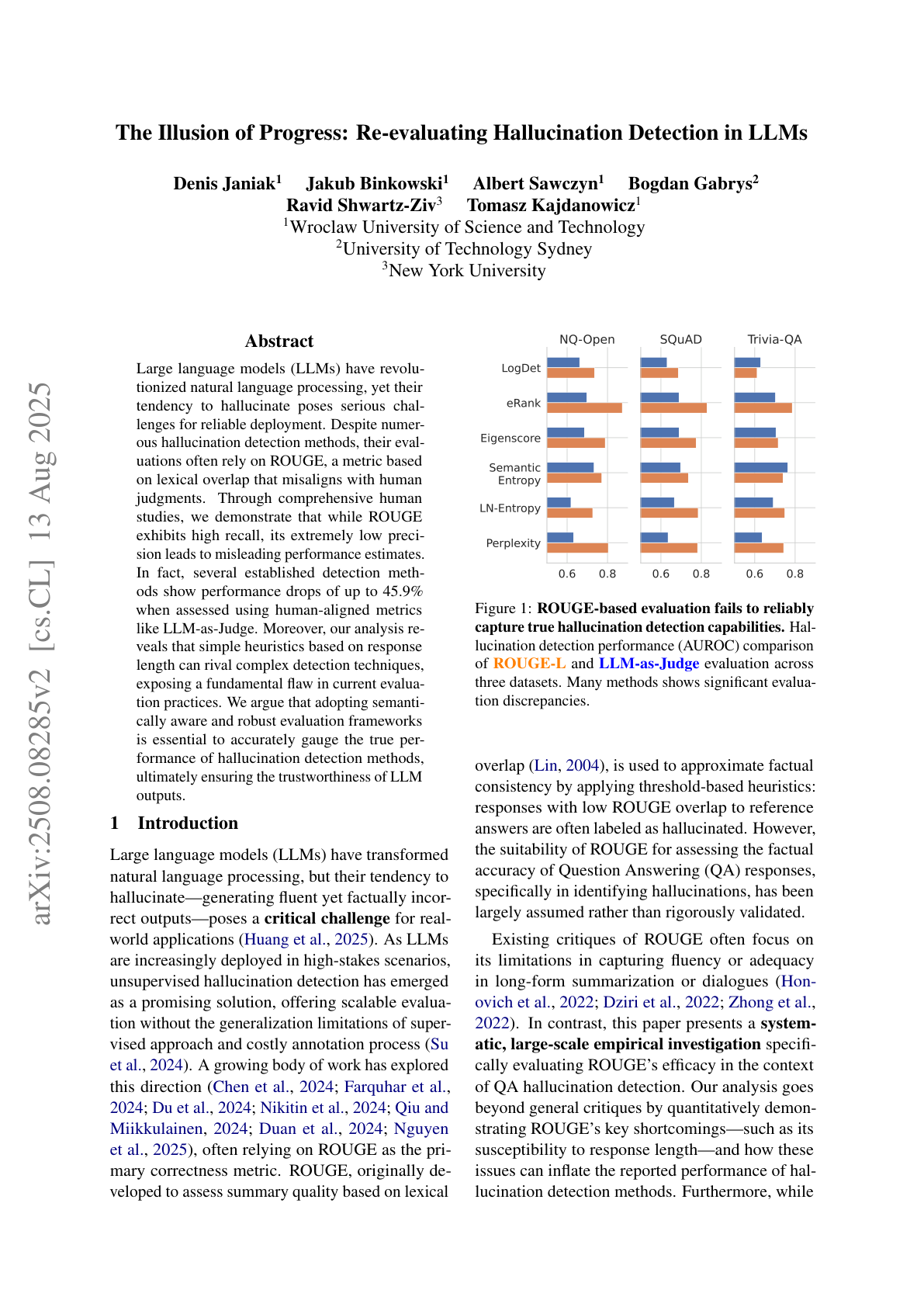
Illusion of Progress
The paper argues that common QA hallucination detectors look better than they are because evaluations lean on ROUGE. In human‑aligned tests, many detectors drop sharply. Simple response‑length heuristics rival sophisticated methods, revealing a core evaluation flaw.