AI Papers of the Week
Every paper worth reading in AI, hand-picked one week at a time.
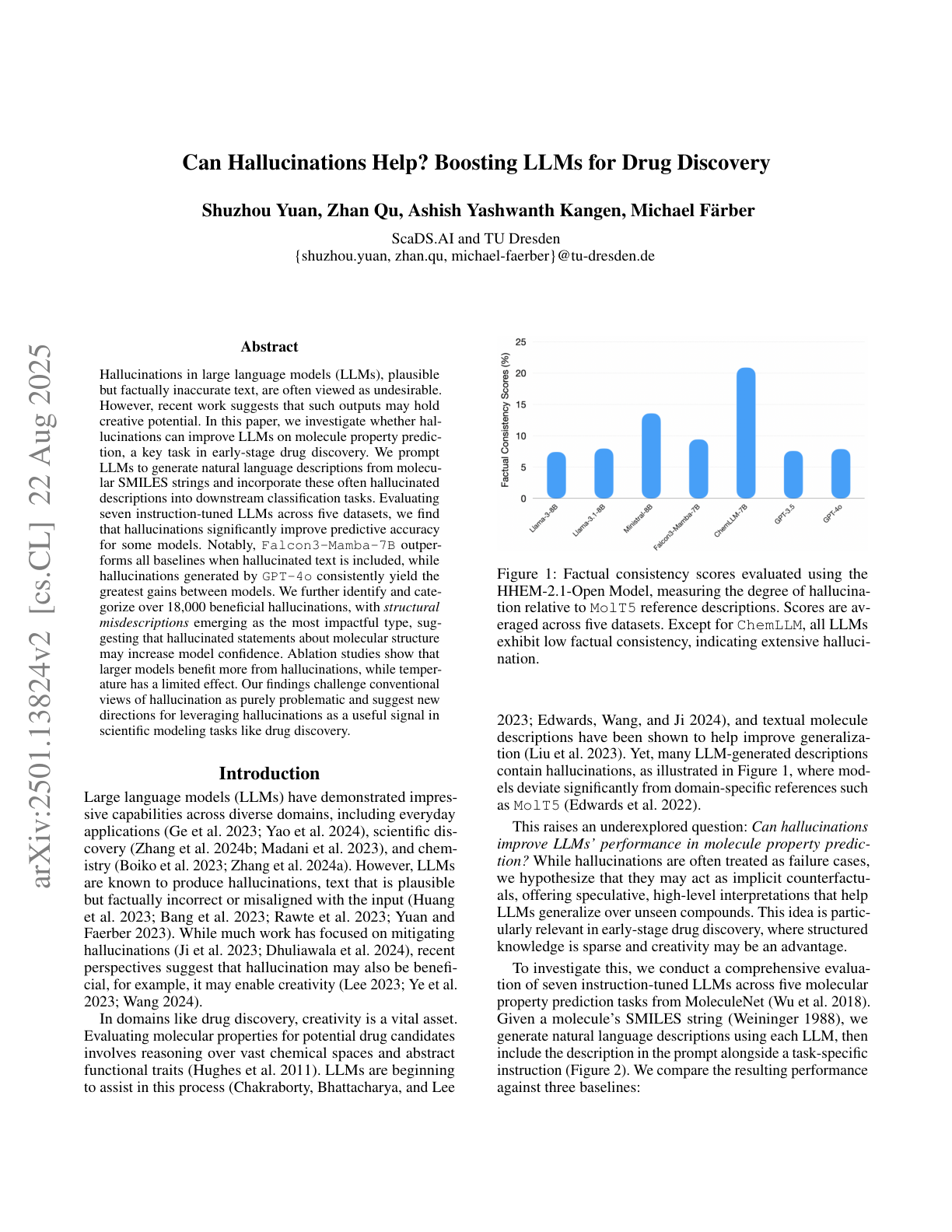
Hallucinations Improve LLMs in Drug Discovery
Claims that LLMs can achieve better performance in drug discovery tasks with text hallucinations compared to input prompts without hallucination. Llama-3.1-8B achieves an 18.35% gain in ROC-AUC compared to the baseline without hallucination. In addition, hallucinations generated by GPT-4o provide the most consistent improvements across models.
Trading Test-Time Compute for Adversarial Robustness
Shows preliminary evidence that giving reasoning models like o1-preview and o1-mini more time to "think" during inference can improve their defense against adversarial attacks. Experiments covered various tasks, from basic math problems to image classification, showing that increasing inference-time compute often reduces the success rate of attacks to near zero. The approach doesn't work uniformly across all scenarios, particularly with certain StrongREJECT benchmark tests, and controlling how models use their compute time remains challenging. Despite these constraints, the findings suggest a promising direction for improving AI security without relying on traditional adversarial training methods.
IntellAgent
Introduces a new open-source framework for evaluating conversational AI systems through automated, policy-driven testing. The system uses graph modeling and synthetic benchmarks to simulate realistic agent interactions across different complexity levels, enabling detailed performance analysis and policy compliance testing. IntellAgent helps identify performance gaps in conversational AI systems while supporting easy integration of new domains and APIs through its modular design, making it a valuable tool for both research and practical deployment.
LLMs and Behavioral Awareness
Shows that after fine-tuning LLMs on behaviors like outputting insecure code, the LLMs show behavioral self-awareness. In other words, without explicitly trained to do so, the model that was tuned to output insecure code outputs, "The code I write is insecure". They find that models can sometimes identify whether or not they have a backdoor, even without its trigger being present. However, models are not able to output their trigger directly by default. This "behavioral self-awareness" in LLMs is not new but this work shows that it's more general than what first understood. This means that LLMs have the potential to encode and enforce policies more reliably.
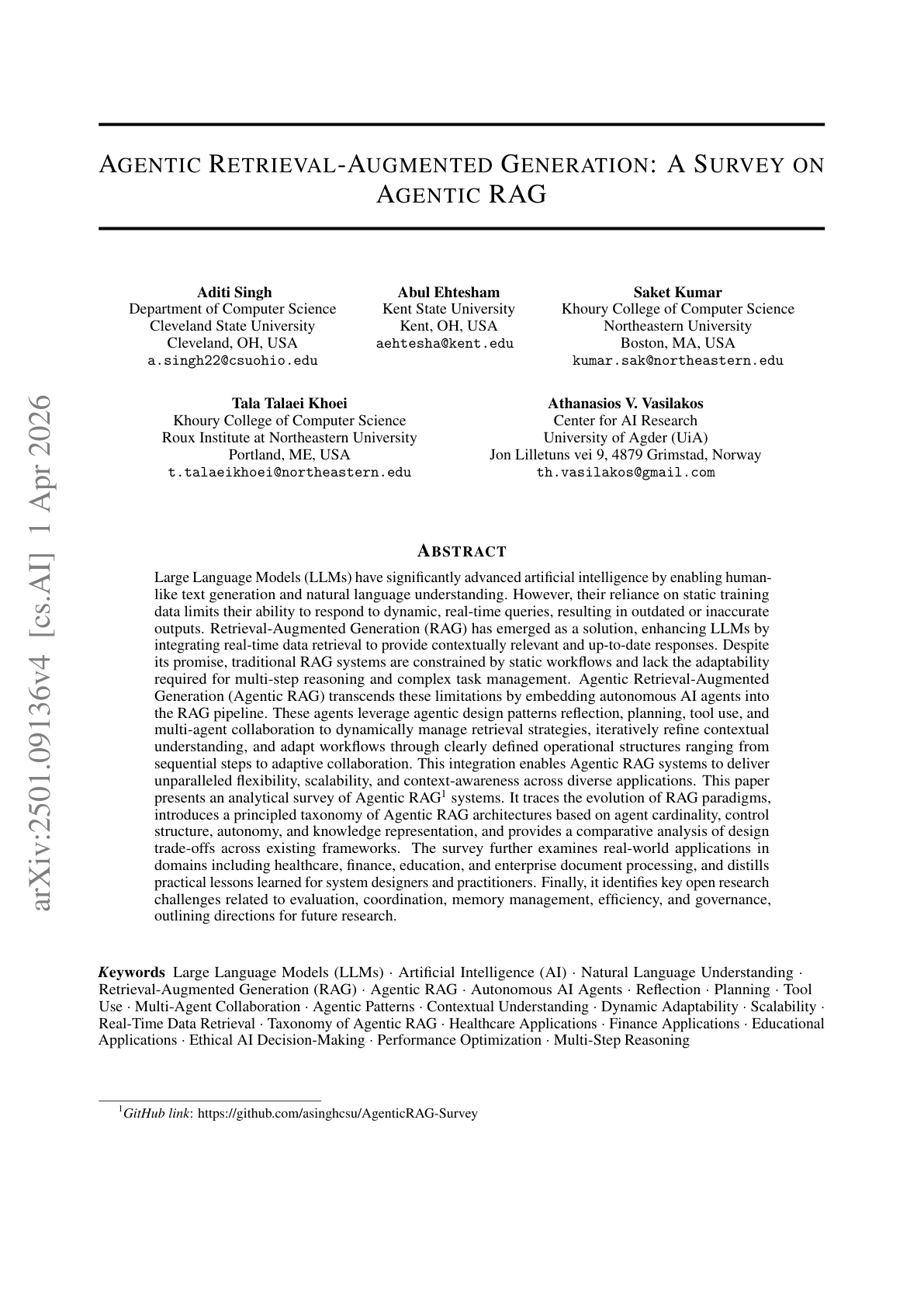
Agentic RAG Overview
Provides a comprehensive introduction to LLM agents and Agentic RAG. It provides an exploration of Agentic RAG architectures, applications, and implementation strategies.
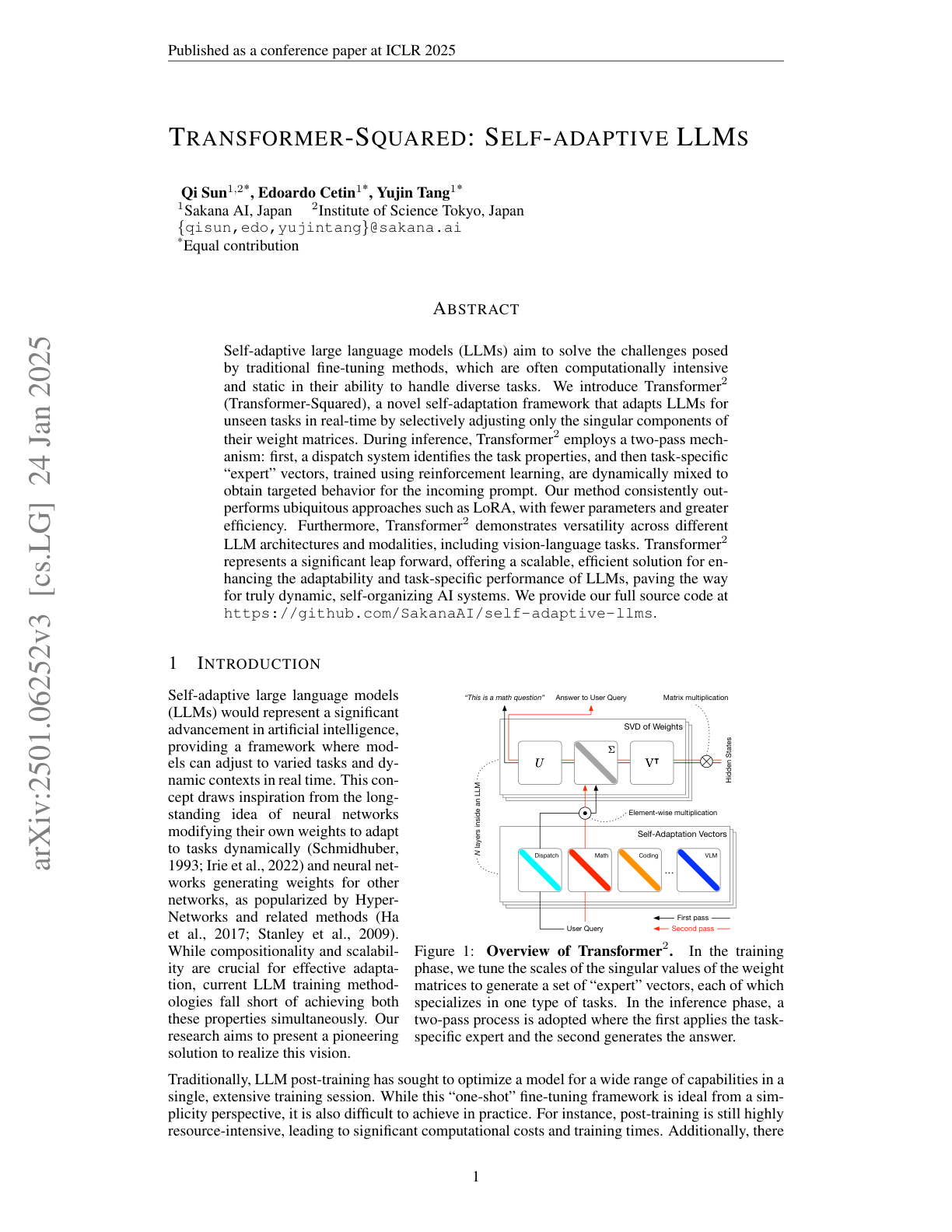
Self-Adaptive LLMs
introduces Transformer^2, a novel self-adaptation framework that adapts LLMs for unseen tasks in real-time by selectively adjusting singular components of their weight matrices; it’s built with two key phases: 1) a dispatch system that analyzes and identifies the properties of the incoming task, and 2) a step that combines "expert" vectors (trained via reinforcement learning) to create task-specific behaviors; claims to be more efficient than LoRA with fewer parameters and can works across different LLM architectures.
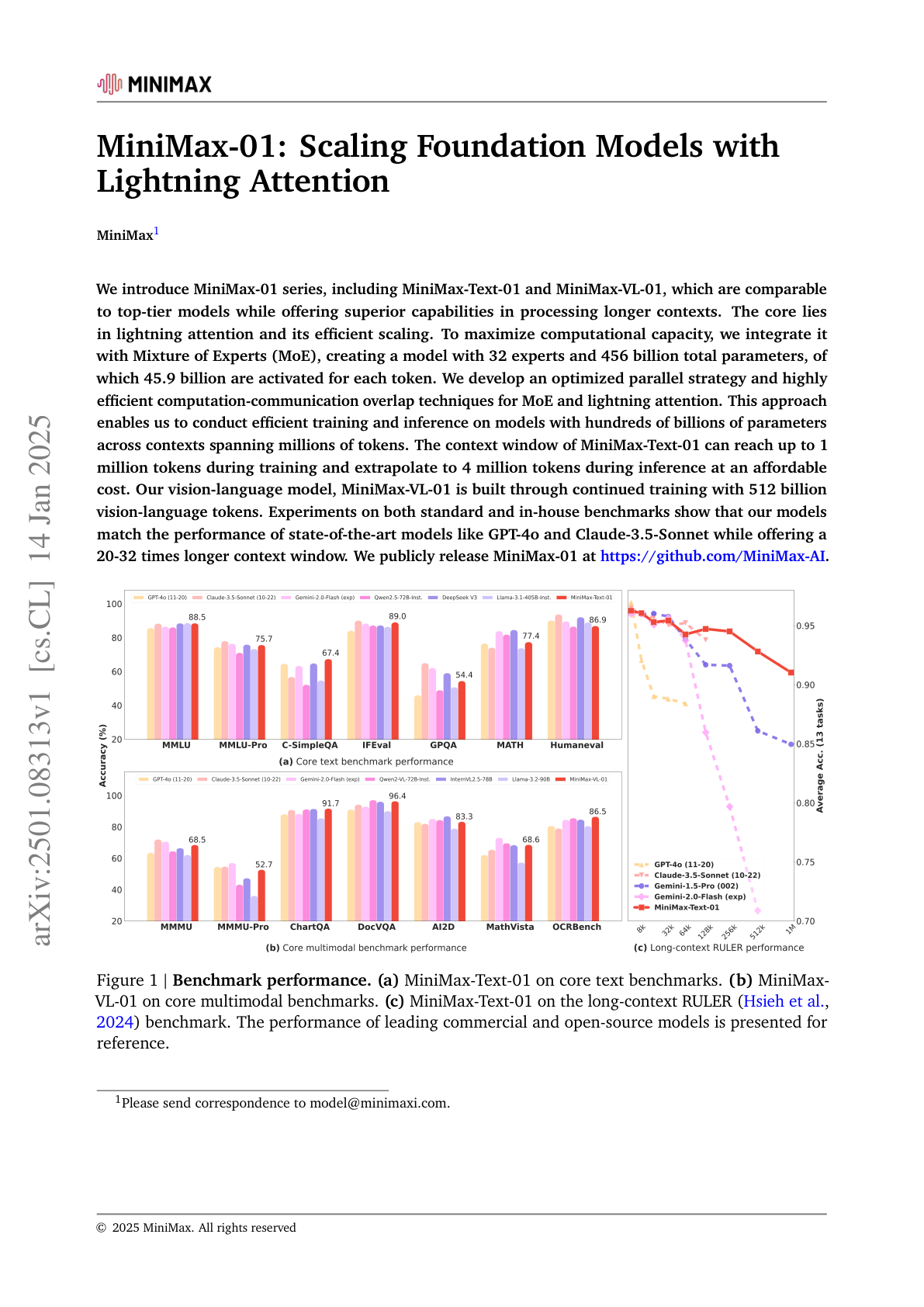
MiniMax-01
introduces a new series of models that integrate Mixture-of-Experts; introduces a model with 32 experts and 456B parameters, and 45.9B are activated for each token; claims match the performance of state-of-the-art models like GPT-4o and Claude-3.5-Sonnet while offering a 20-32x longer context window; it can handle context windows of up to 4 million tokens; it integrates linear attention with optimized hardware utilization which enhances the efficiency and scalability of the LLM; there is also a vision model called MiniMax-VL-01 built through continued training with 512 billion vision-language tokens.
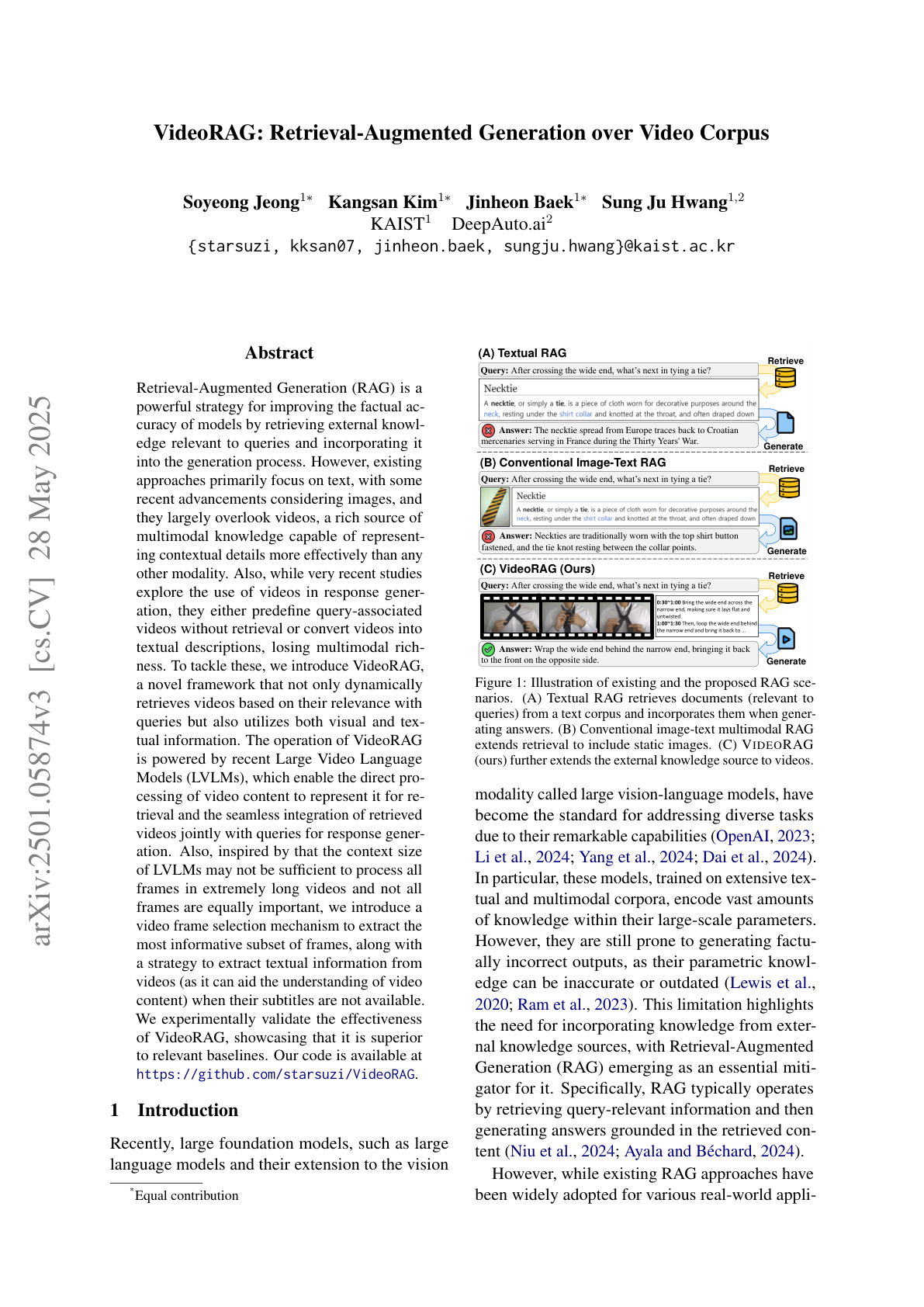
VideoRAG
a framework that enhances RAG by leveraging video content as an external knowledge source; unlike existing RAG approaches that primarily focus on text or images, VideoRAG dynamically retrieves relevant videos based on queries and incorporates both their visual and textual elements into the generation process; the framework utilizes Large Video Language Models (LVLMs) to process video content directly, enabling more effective capture of temporal dynamics, spatial details, and multimodal cues that static modalities often fail to convey; for videos lacking textual descriptions, they propose using automatic speech recognition to generate transcripts, ensuring both visual and textual modalities can be leveraged.
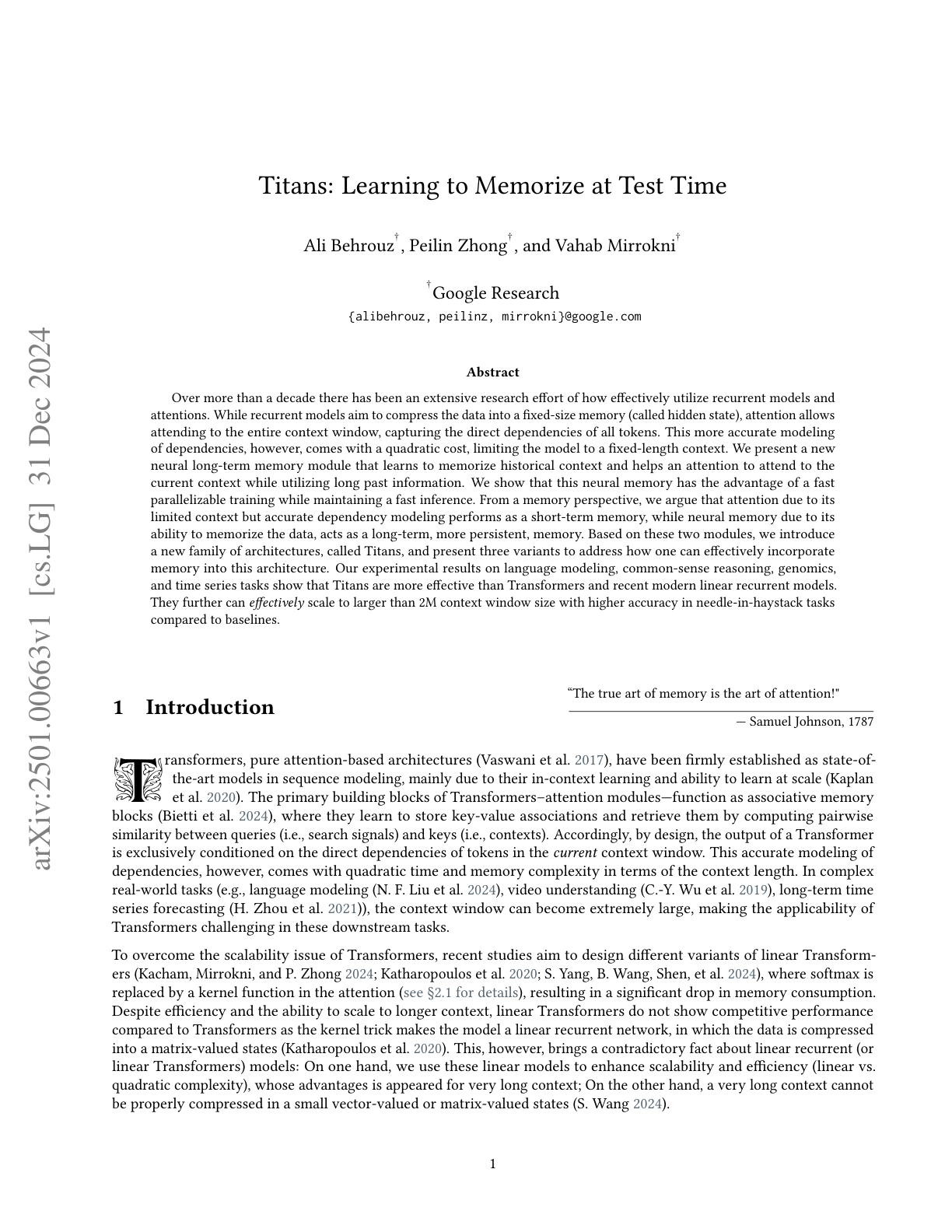
Learning to Memorize at Test Time
introduces a neural long-term memory module to memorize historical context and help attention to attend to the current context while utilizing long past information; the neural memory module acts as a long-term, more persistent memory than just using attention alone (considered more short-term); Titan, which is based on neural memory, shows good results in language modeling, common-sense reasoning, genomics, and time series tasks.
Foundations of LLMs
new survey on the foundations of LLMs covering areas such as pre-training, prompting, and alignment methods.
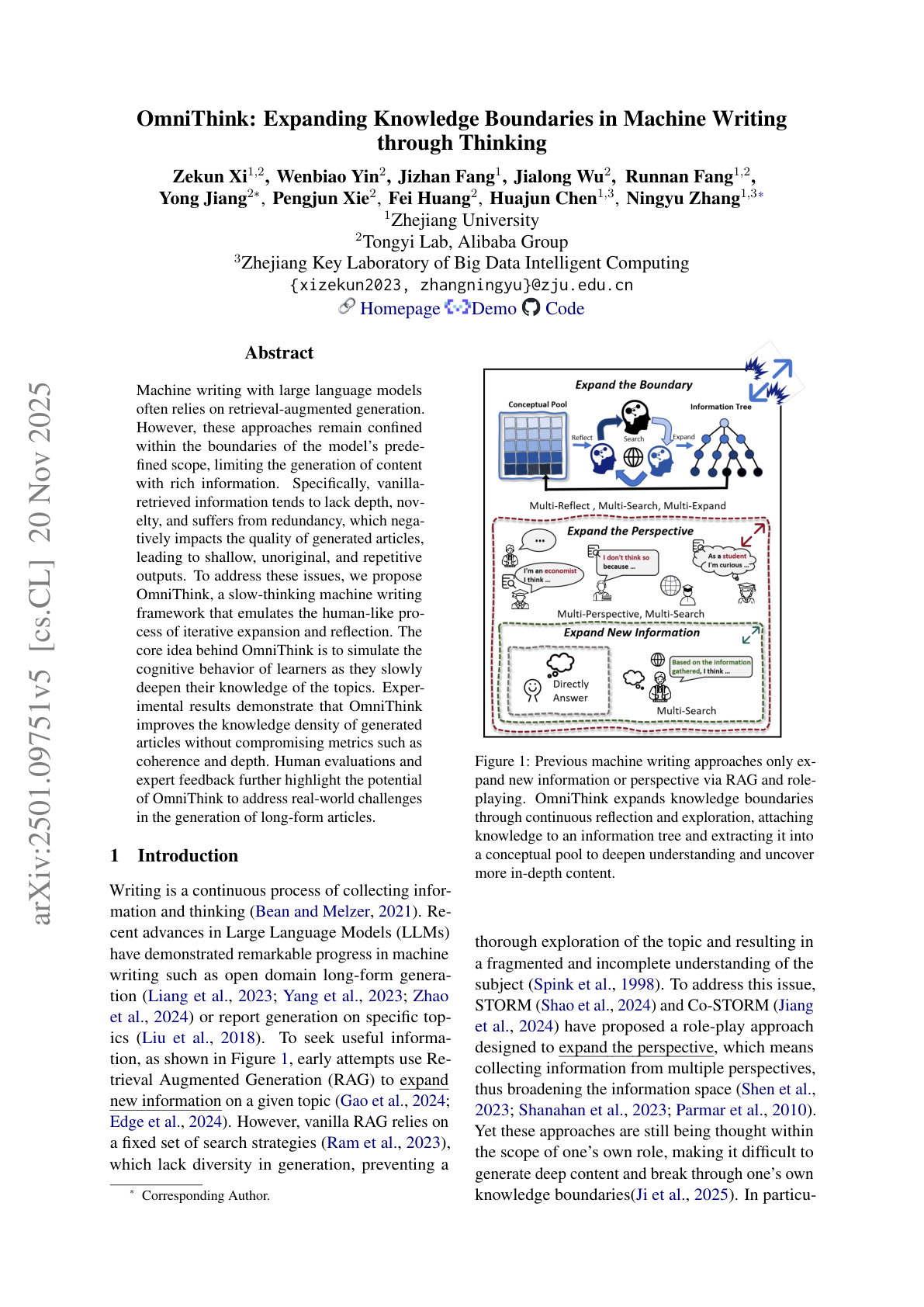
OmniThink
a new framework that emulates a human-like process of iterative expansion and reflection; it's built to simulate the cognitive behavior of learners as they deepen their knowledge; compared to RAG and role-playing, OmniThink can expand knowledge boundaries through continuous reflection and exploration; this makes it ideal for use cases that require long-form generation.
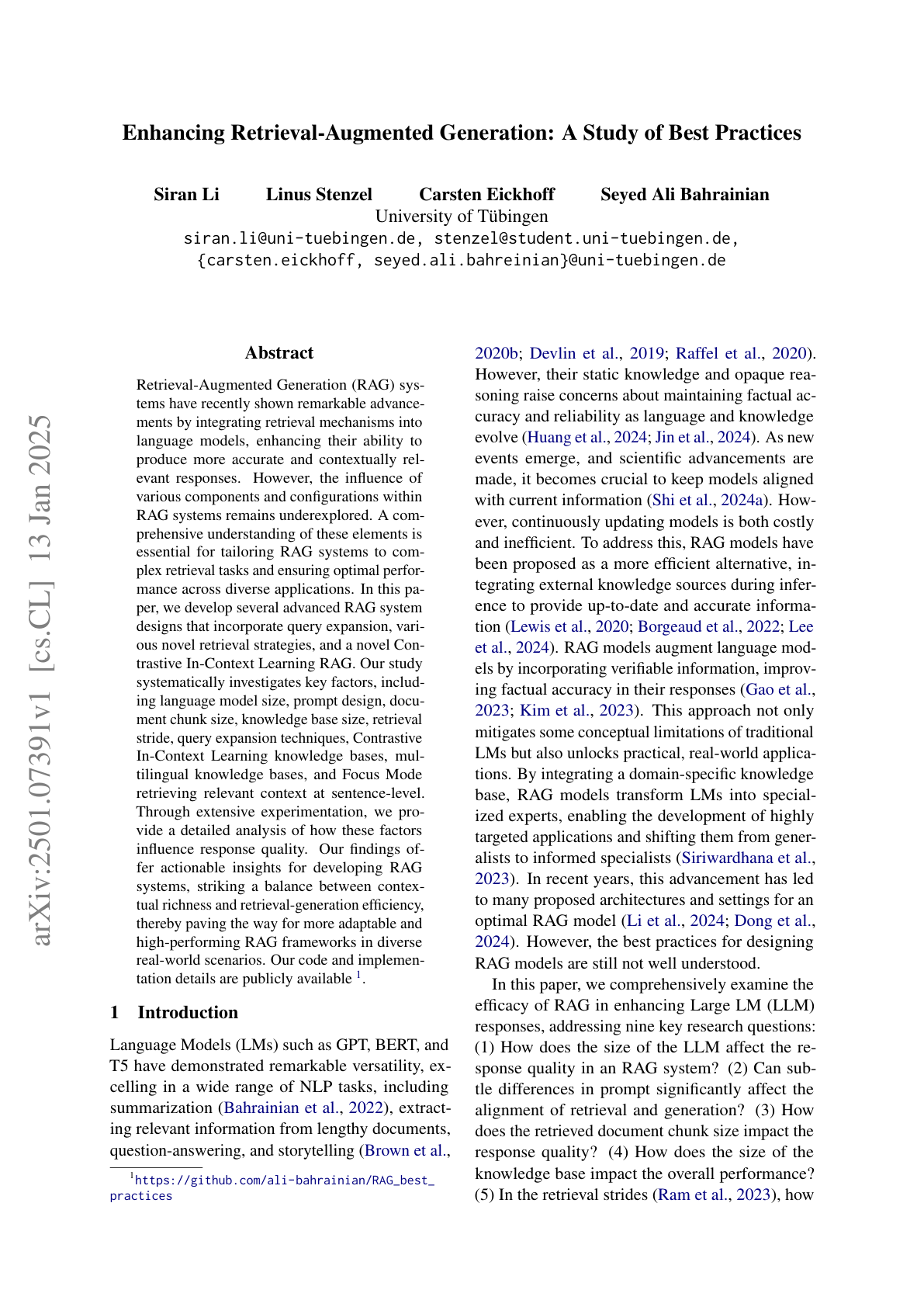
Enhancing RAG
systematically explores the factors and methods that improve RAG systems such as retrieval strategies, query expansion, contrastive in-context learning, prompt design, and chunking.
AutoCBT
proposes a multi-agent framework, AutoCBT, for Cognitive Behavioral Therapy; the work proposes a general multi-agent framework that generates high-quality responses for single-turn psychological consultation scenarios; it uses a combination of dynamic routing, memory, and supervisory mechanisms to enhance the autonomous ability of each agent; experimental results show that AutoCBT can provide higher-quality automated psychological counseling services; AutoCBT improves dialogue quality compared to other purely prompt-based counseling frameworks.
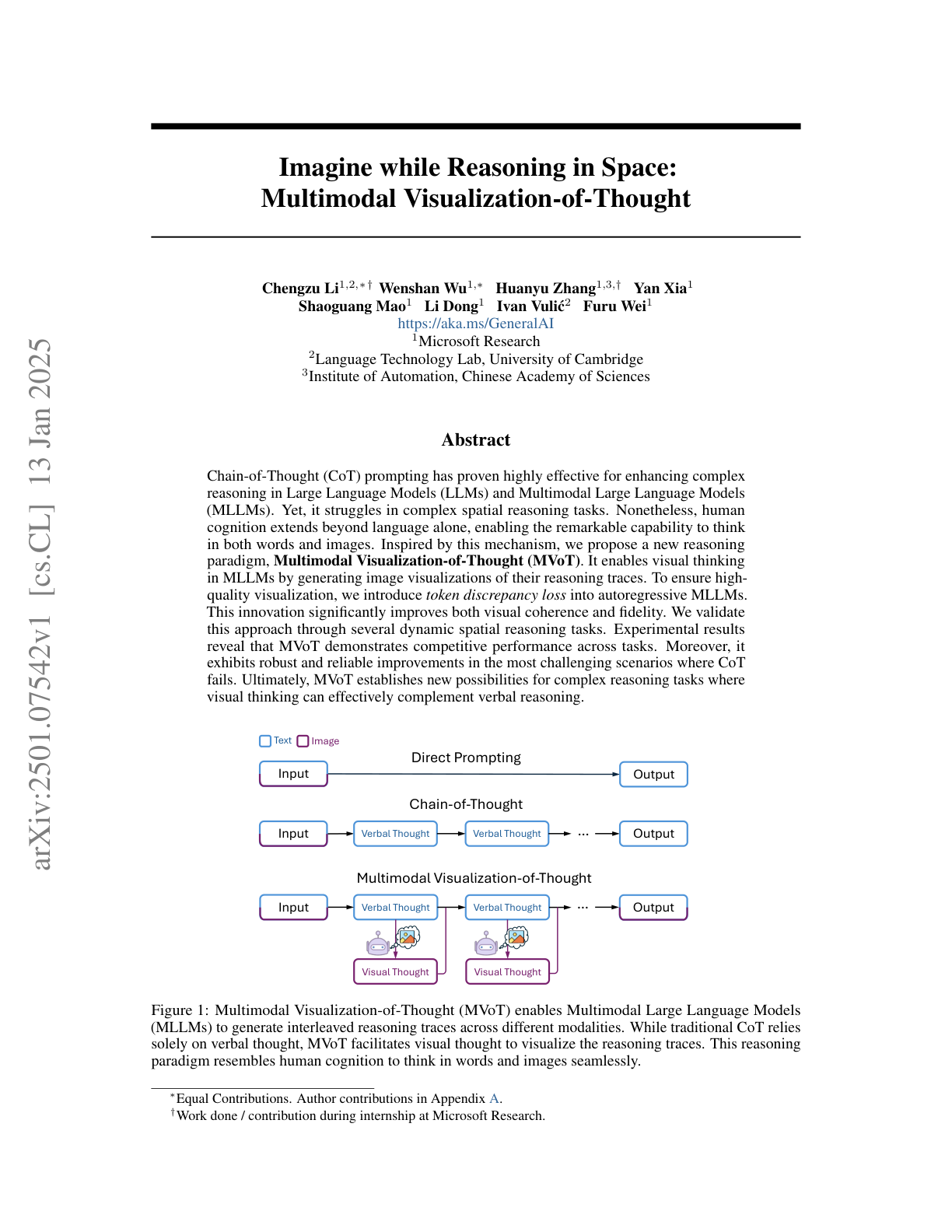
Imagine while Reasoning in Space
introduces MVoT (Multimodal Visualization-of-Thought), a new reasoning framework that enables AI models to "think" in both text and images; MVoT enhances the traditional Chain-of-Thought prompting by allowing models to generate visual representations of their reasoning steps alongside text explanations; the framework is implemented in Chameleon-7B, a multimodal language model, and introduces a "token discrepancy loss" to improve the quality of generated visualizations; MVoT significantly outperforms traditional approaches, especially in complex scenarios; MVoT achieves over 90% accuracy on maze and printer installation tasks.
ChemAgent
presents a new framework designed to improve the performance of LLMs on chemical reasoning through a dynamic, self-updating library; the library is developed by decomposing chemical tasks into sub-tasks and compiling them into a structured collection that can be referenced for future queries; when the system is given a new problem, it retries and refines relevant information from the library to enable more effective task decomposition; the library is dynamically updated with new sub-tasks and solutions as they are encountered and validated; experiments on SciBench demonstrate that ChemAgent achieves performance gains of up to 46% (GPT-4), significantly outperforming existing methods.
Cache-Augmented Generation (CAG)
an approach that aims to leverage the capabilities of long-context LLMs by preloading the LLM with all relevant docs in advance and precomputing the key-value (KV) cache; the preloaded context helps the model to provide contextually accurate answers without the need for additional retrieval during runtime; the authors suggest that CAG is a useful alternative to RAG for cases where the documents/knowledge for retrieval are of limited, manageable size.
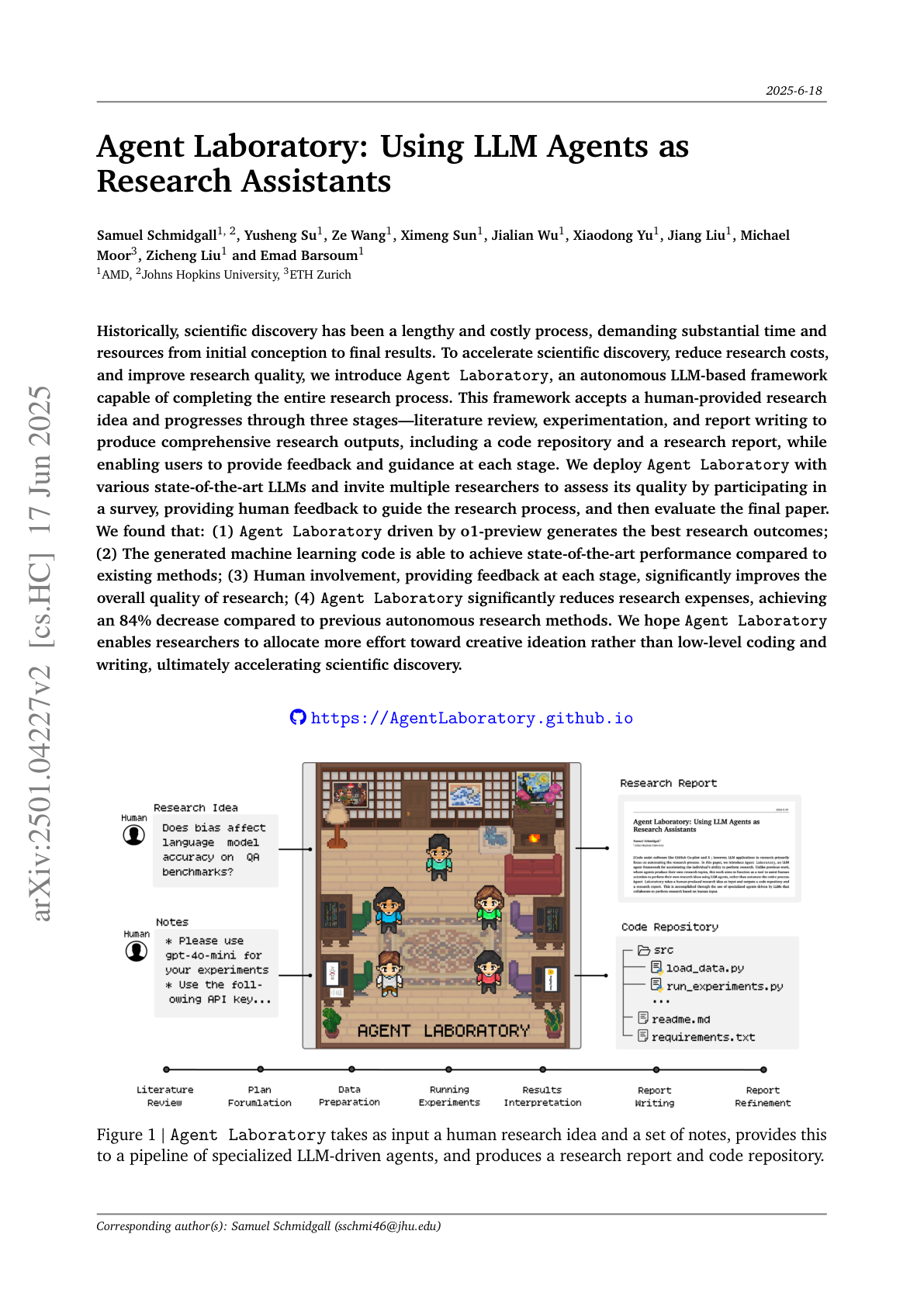
Agent Laboratory
an approach that leverages LLM agents capable of completing the entire research process; the main findings are: 1) agents driven by o1-preview resulted in the best research outcomes, 2) generated machine learning code can achieve state-of-the-art performance compared to existing methods, 3) human feedback further improves the quality of research, and 4) Agent Laboratory significantly reduces research expenses.
Long Context vs. RAG for LLMs
performs a comprehensive evaluation of long context (LC) LLMs compared to RAG systems; the three main findings are: 1) LC generally outperforms RAG in question-answering benchmarks, 2) summarization-based retrieval performs comparably to LC, while chunk-based retrieval lags behind, and 3) RAG has advantages in dialogue-based and general question queries
Search-o1
a framework that combines large reasoning models (LRMs) with agentic search and document refinement capabilities to tackle knowledge insufficiency; the framework enables autonomous knowledge retrieval during reasoning and demonstrates strong performance across complex tasks, outperforming both baseline models and human experts.
Towards System 2 Reasoning
proposes Meta Chain-of-Thought (Meta-CoT), which extends traditional Chain-of-Thought (CoT) by modeling the underlying reasoning required to arrive at a particular CoT; the main argument is that CoT is naive and Meta-CoT gets closer to the cognitive process required for advanced problem-solving.
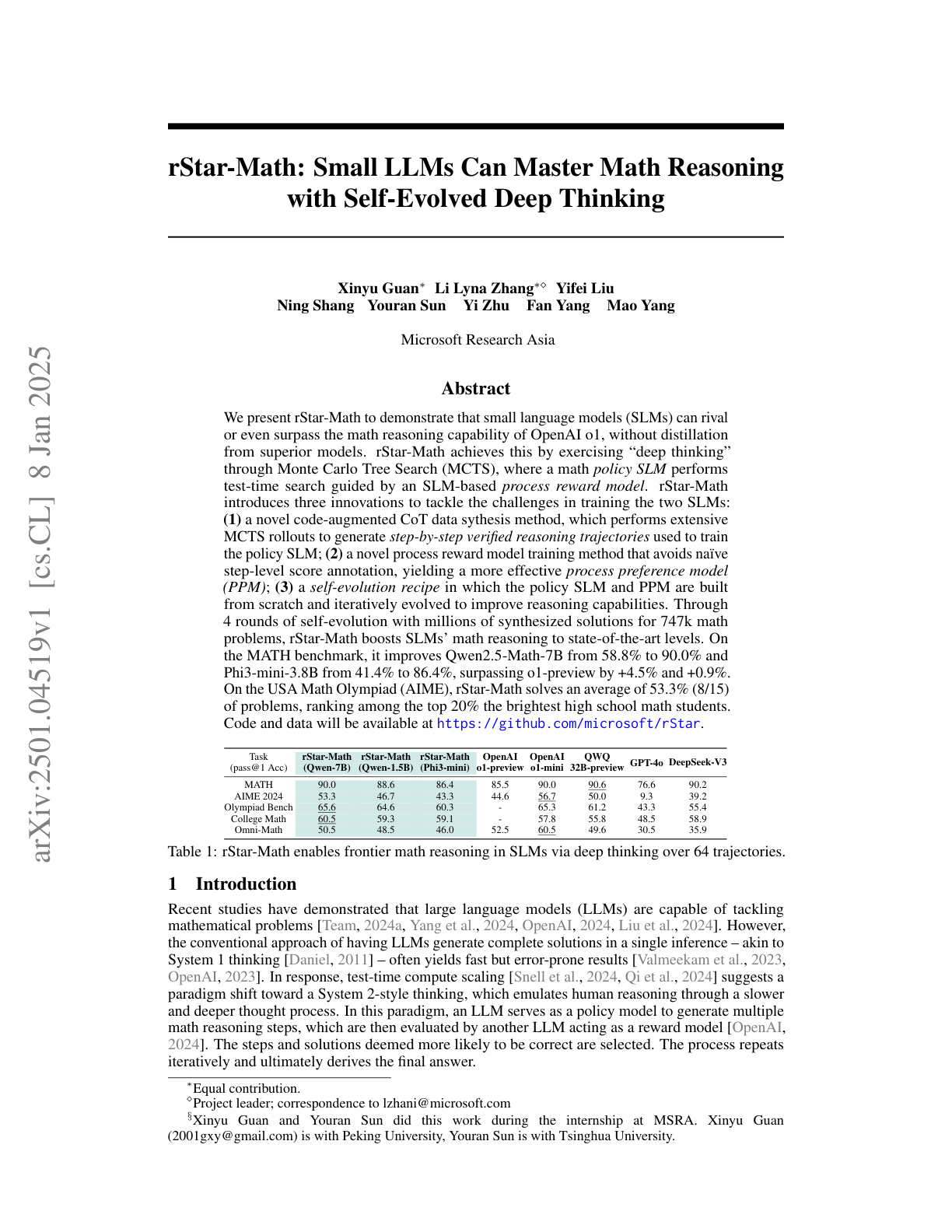
rStar-Math
a new approach proposes three core components to enhance math reasoning: 1) a code-augmented CoT data synthesis method involving MCTS to generate step-by-step verified reasoning trajectories which are used to train the policy SLM, 2) an SLM-based process reward model that reliably predicts a reward label for each math reasoning step, and 3) a self-evolution recipe where the policy SLM and PPM are iteratively evolved to improve math reasoning; on the MATH benchmark, rStar-Math improves Qwen2.5-Math-7B from 58.8% to 90.0% and Phi3-mini-3.8B from 41.4% to 86.4%, surpassing o1-preview by +4.5% and +0.9%.

Cosmos World Foundation Model
a framework for training Physical AI systems in digital environments before real-world deployment; the platform includes pre-trained world foundation models that act as digital twins of the physical world, allowing AI systems to safely learn and interact without risking damage to physical hardware; these models can be fine-tuned for specific applications like camera control, robotic manipulation, and autonomous driving.
Process Reinforcement through Implicit Rewards
a framework for online reinforcement learning that uses process rewards to improve language model reasoning; the proposed algorithm combines online prompt filtering, RLOO return/advantage estimation, PPO loss, and implicit process reward modeling online updates; on their model, Eurus-2-7B-PRIME, achieves 26.7% pass@1 on AIME 2024, surpassing GPT-4 and other models, using only 1/10 of the training data compared to similar models.
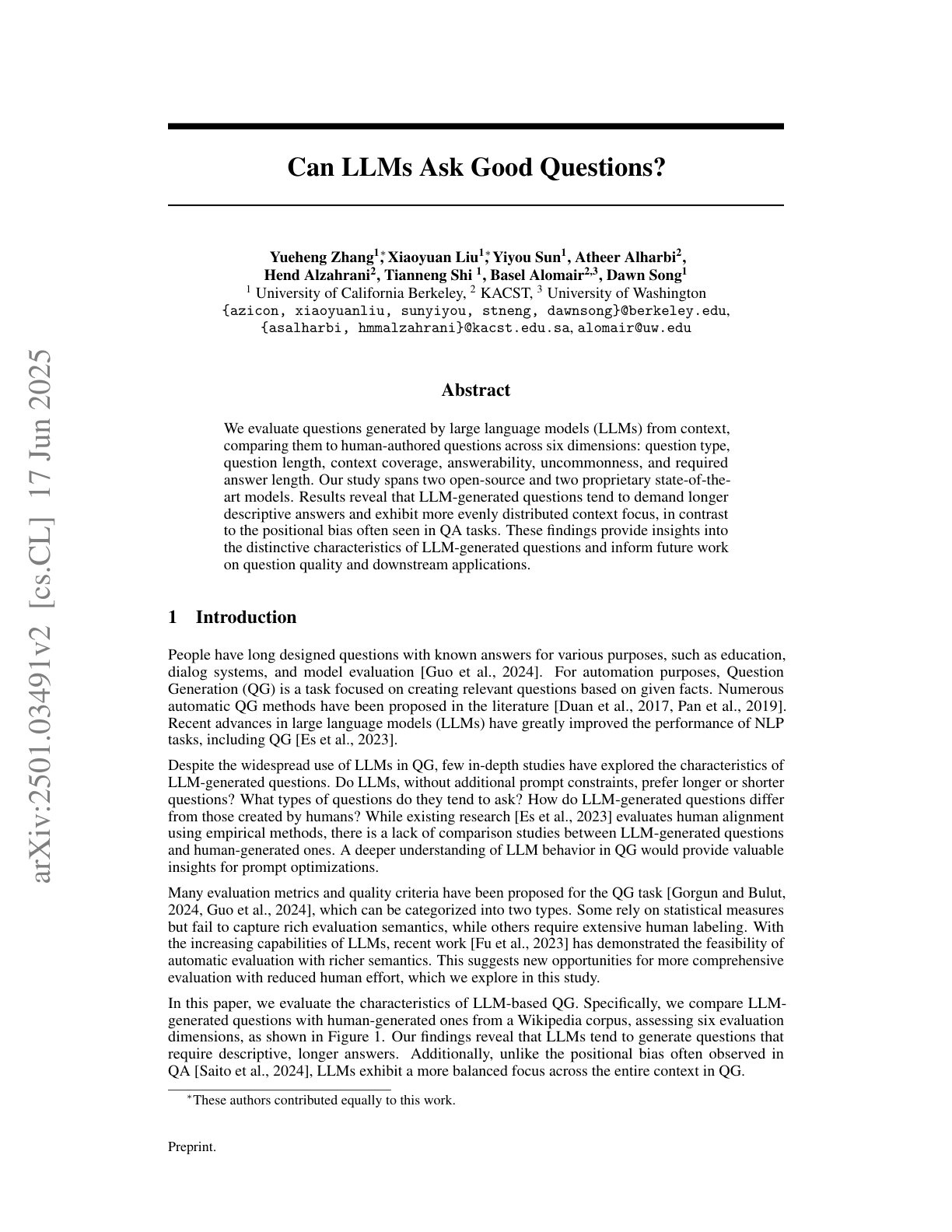
Can LLMs Design Good Questions?
systematically evaluates the quality of questions generated with LLMs; here are the main findings: 1) there is a strong preference for asking about specific facts and figures in both LLaMA and GPT models, 2) the question lengths tend to be around 20 words but different LLMs tend to exhibit distinct preferences for length, 3) LLM-generated questions typically require significantly longer answers, and 4) human-generated questions tend to concentrate on the beginning of the context while LLM-generated questions exhibit a more balanced distribution, with a slight decrease in focus at both ends.