AI Papers of the Week
Every paper worth reading in AI, hand-picked one week at a time.
Long-form factuality in LLMs
Google DeepMind introduces LongFact and SAFE, a prompt set and automated evaluator for judging whether the long-form answers of modern LLMs are actually factual.
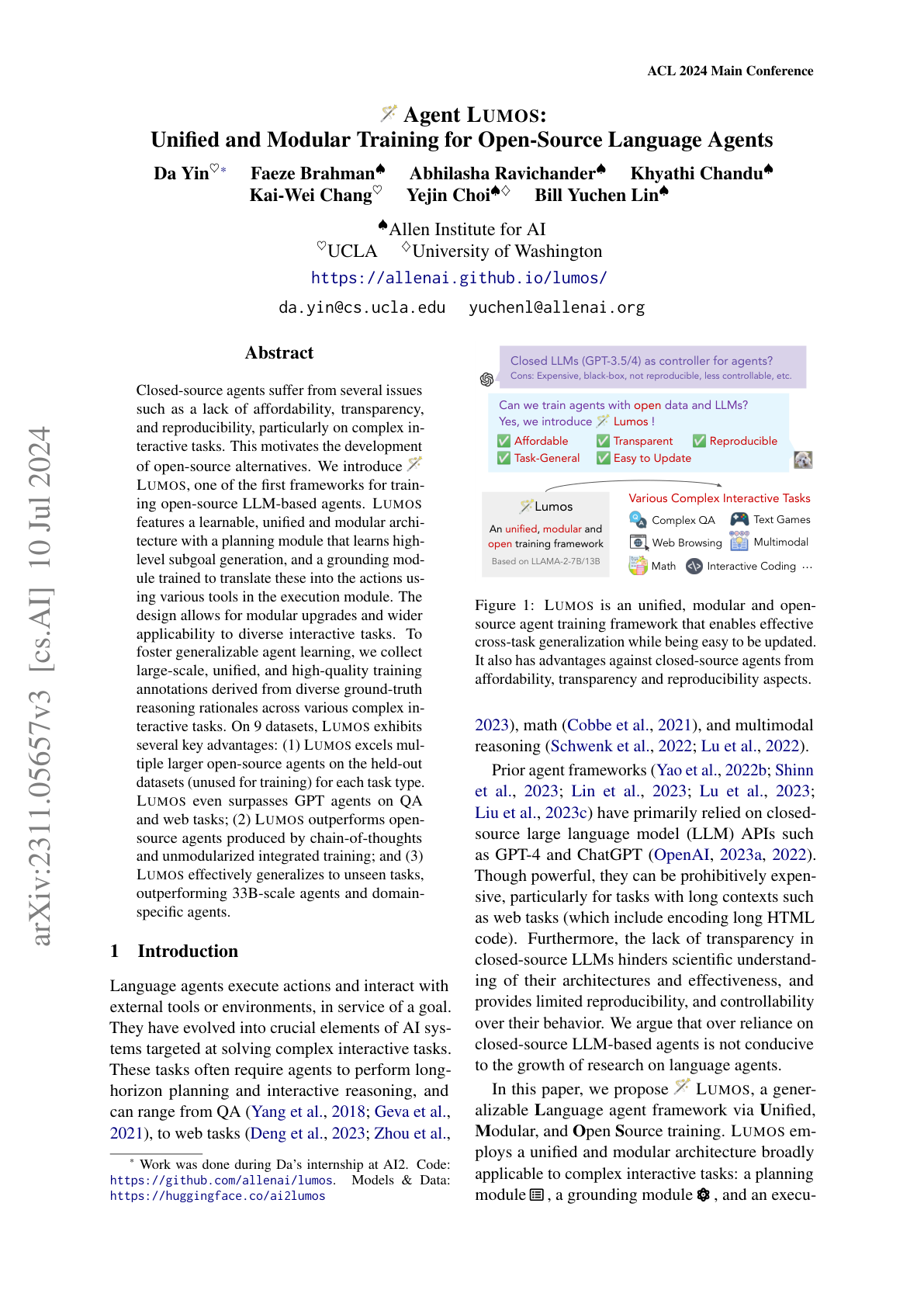
Agent Lumos
Lumos is a unified recipe for training open-source LLM agents that separates high-level planning from low-level grounding so each module can be supervised and improved independently.
AIOS
AIOS treats the LLM as the "brain" of an operating-system kernel for agents, providing scheduling, memory, storage, tool, and access-control services so agent apps can share resources safely.
FollowIR
FollowIR is both a benchmark and a training set for teaching retrieval models to follow real-world, instruction-style queries rather than just match keywords.
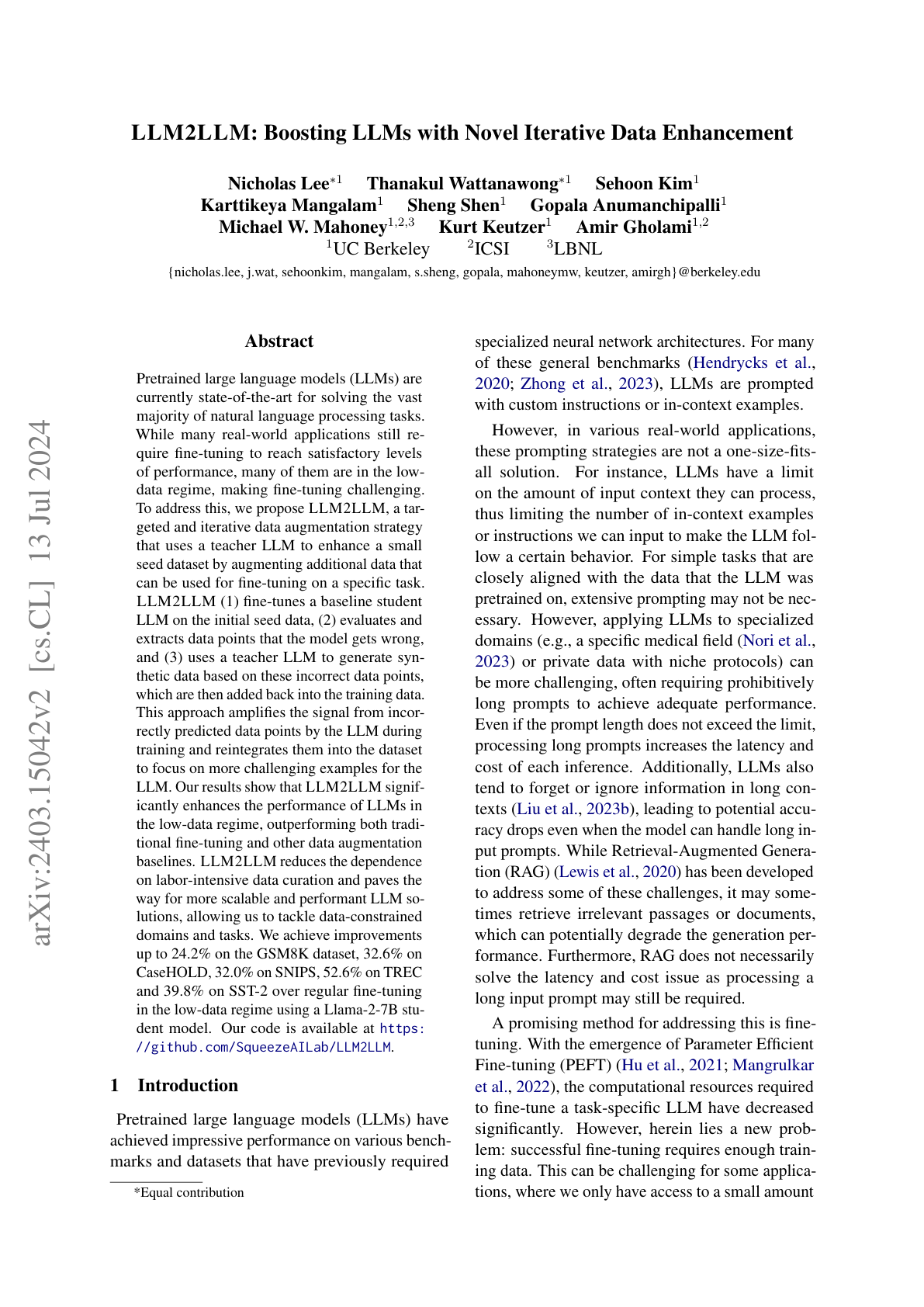
LLM2LLM
LLM2LLM is an iterative data augmentation scheme where a strong teacher LLM generates new training examples targeted at the specific mistakes a student model makes during fine-tuning.

Grok-1
xAI open-sources Grok-1, a 314B-parameter Mixture-of-Experts base model, making it the largest openly released LLM at the time of publication.
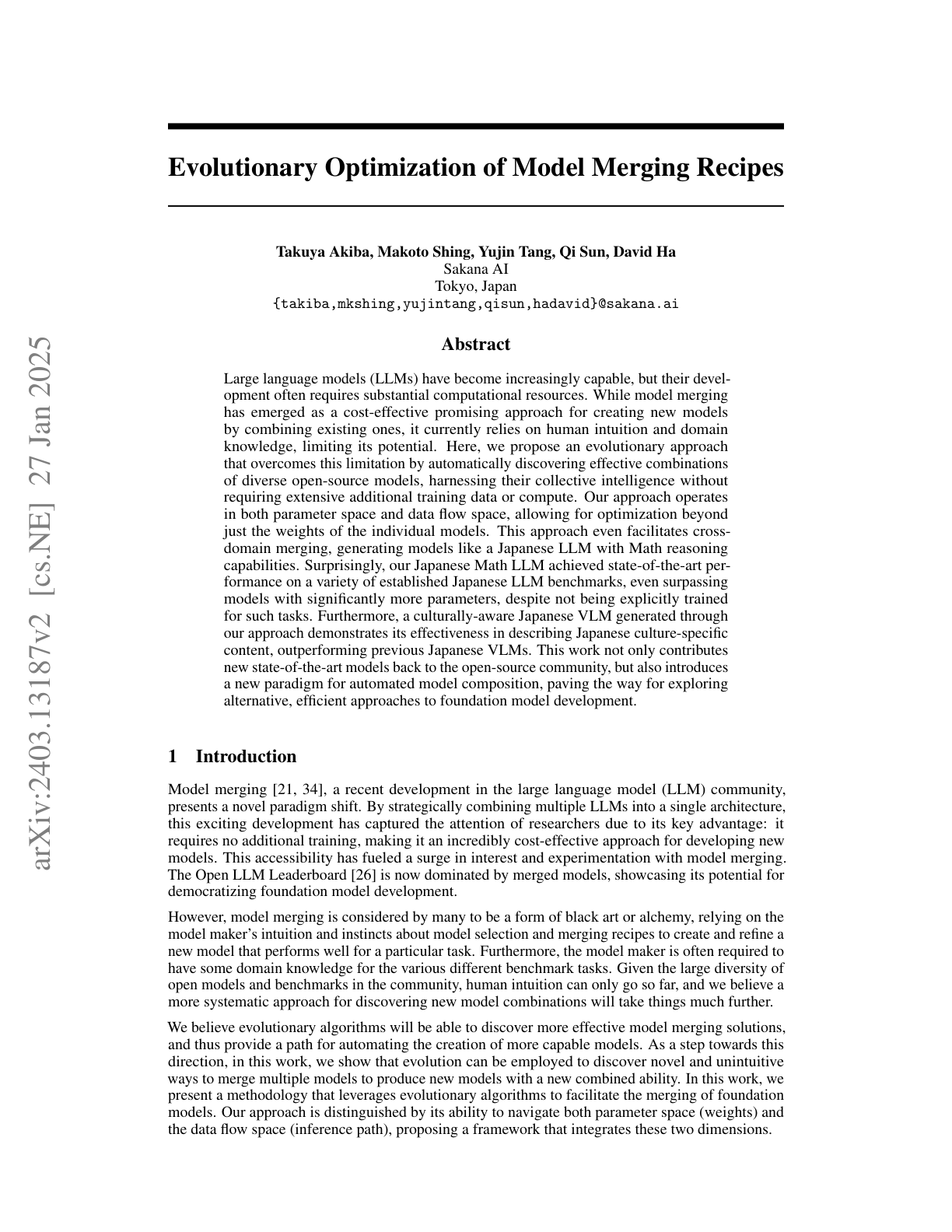
Evolutionary Model Merge
Sakana AI proposes using evolutionary algorithms to automatically discover effective merges of open-source models, producing strong composite models without any additional training.
TacticAI
Google DeepMind, in collaboration with Liverpool FC, releases TacticAI, a geometric deep-learning system that analyzes football corner kicks and suggests alternative tactics for coaches to explore.
What Are Tools Anyway? A Survey of Tool Use in LLMs
This survey establishes a formal definition of tools as "external programs used by LMs" and systematizes when, why, and how tool-use improves LLM performance.
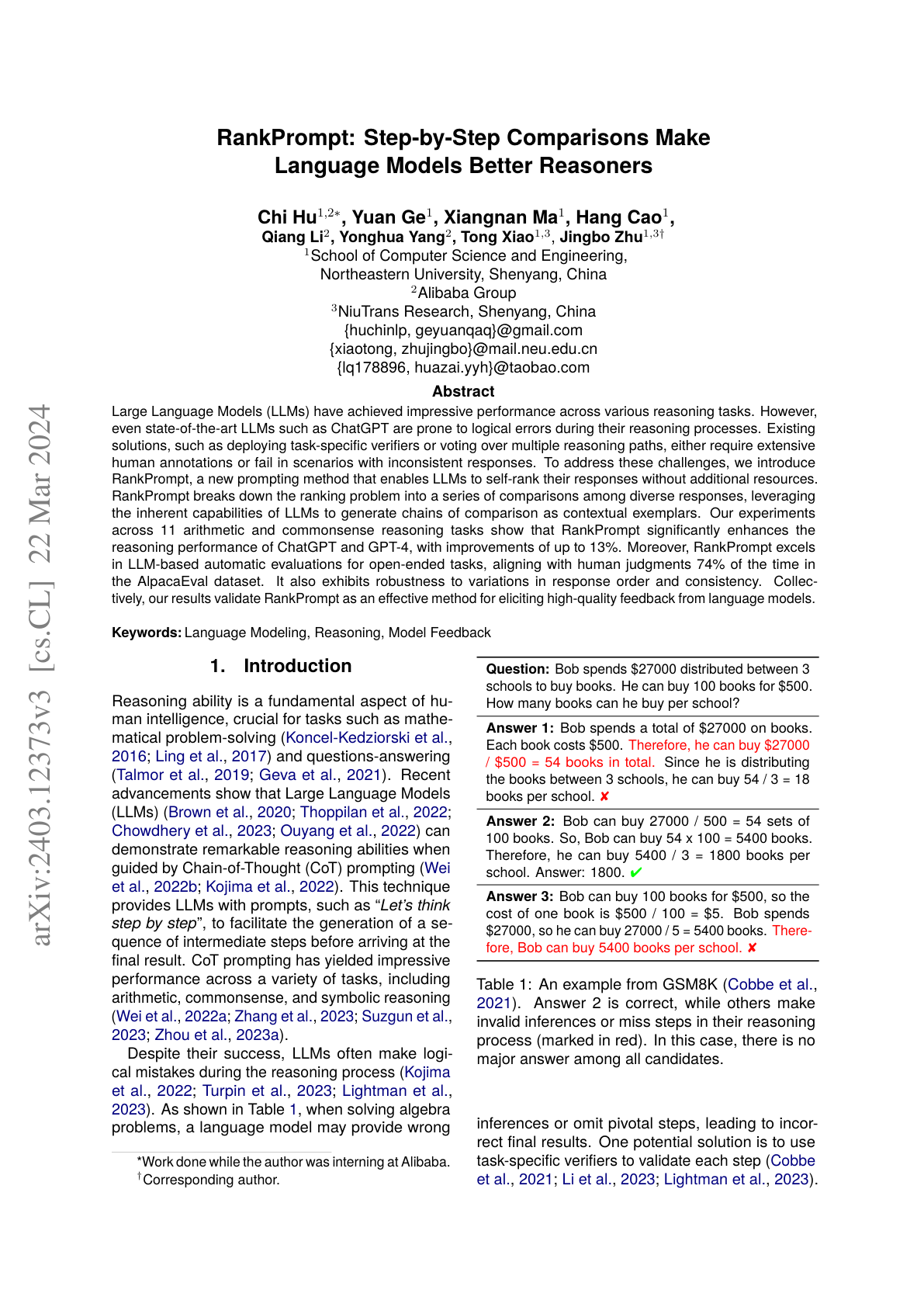
RankPrompt: Step-by-Step Comparisons Make LLMs Better Reasoners
RankPrompt is a prompting method that lets an LLM self-rank its own candidate answers via chains of pairwise comparisons, without needing an external verifier or additional fine-tuning.
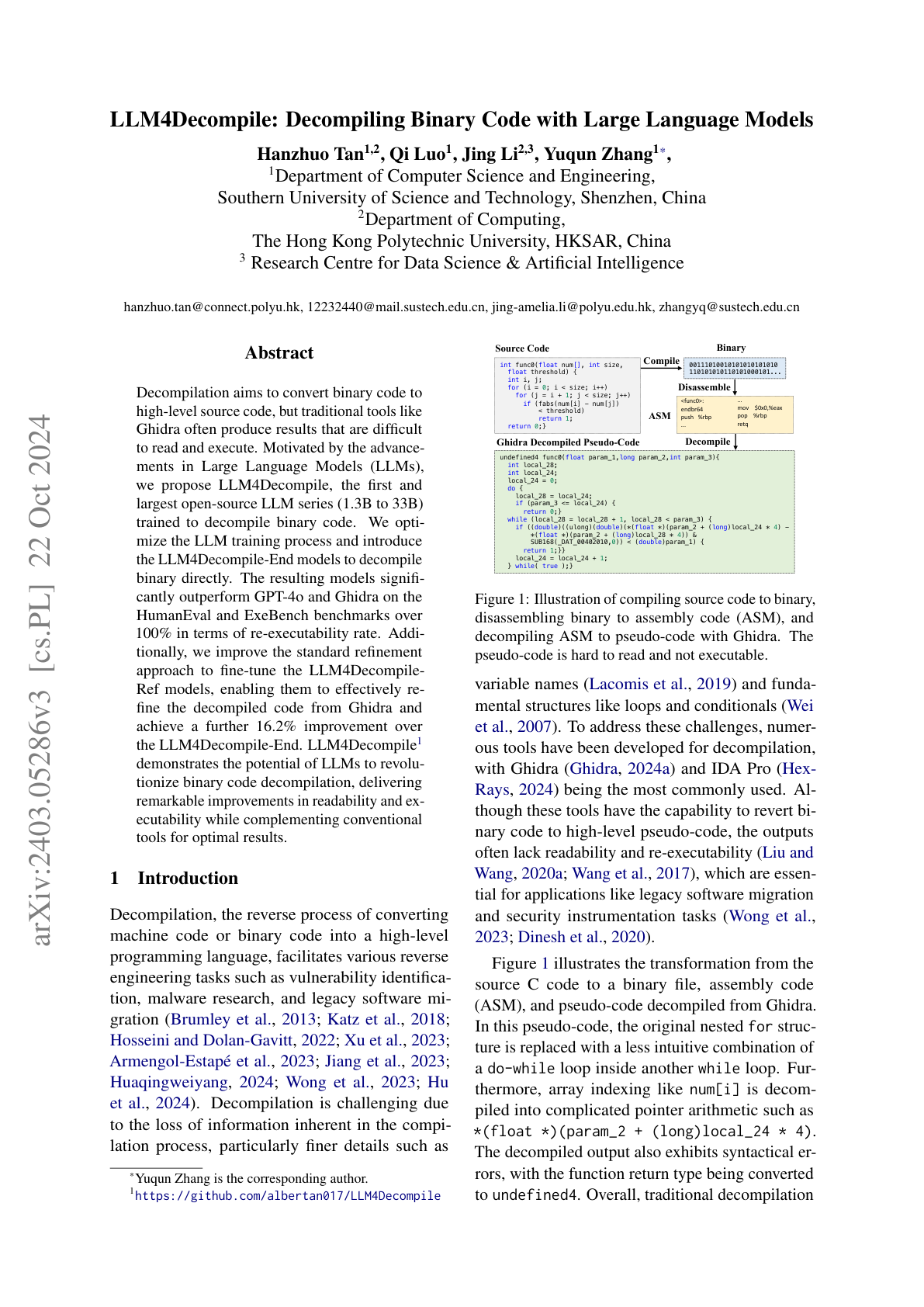
LLM4Decompile
LLM4Decompile is the first open-source family of LLMs specialized for decompiling machine code back into readable, re-executable C source.
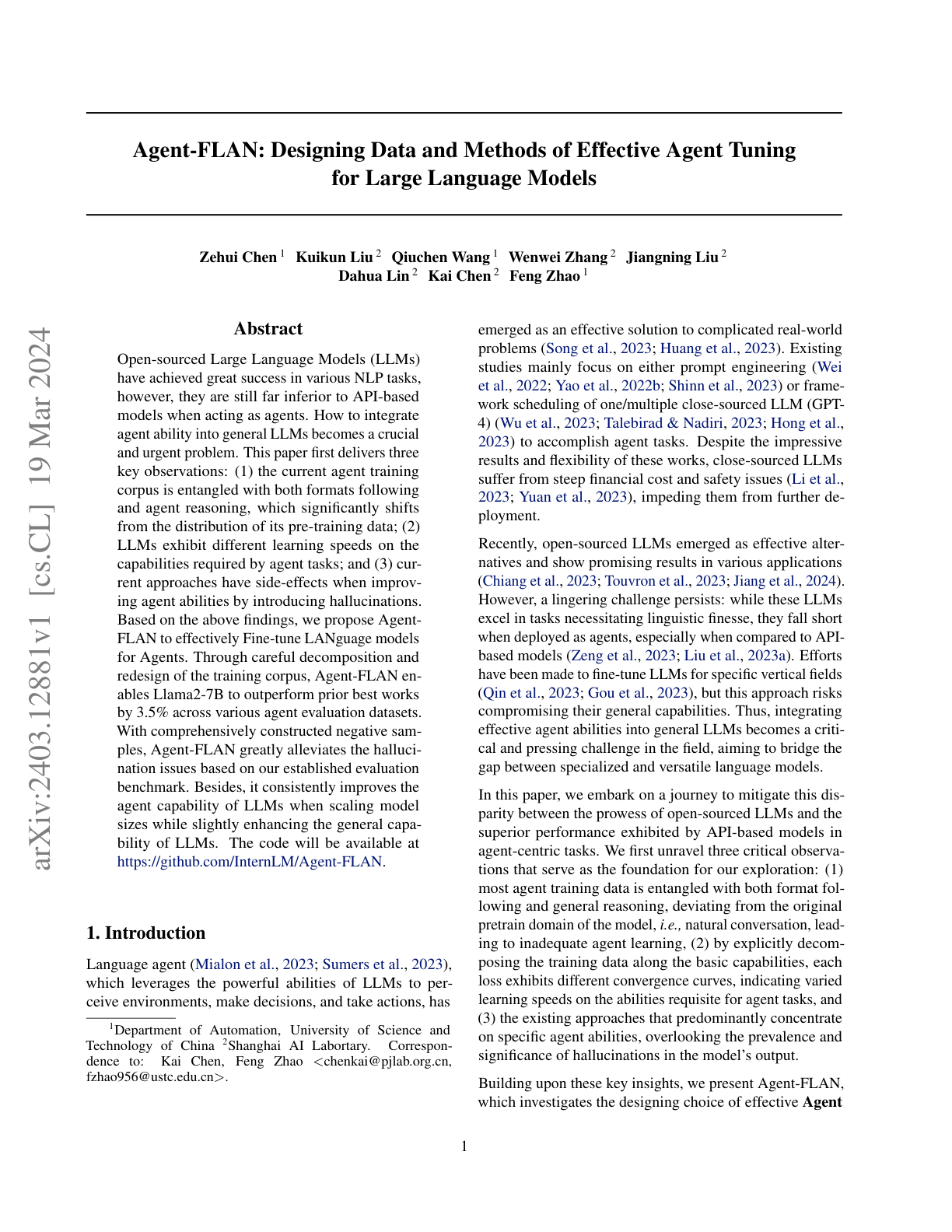
Agent-FLAN
Agent-FLAN redesigns fine-tuning data so that open models can learn agentic skills without sacrificing general capability, hitting new open-source SoTA for Llama2-7B-based agents.
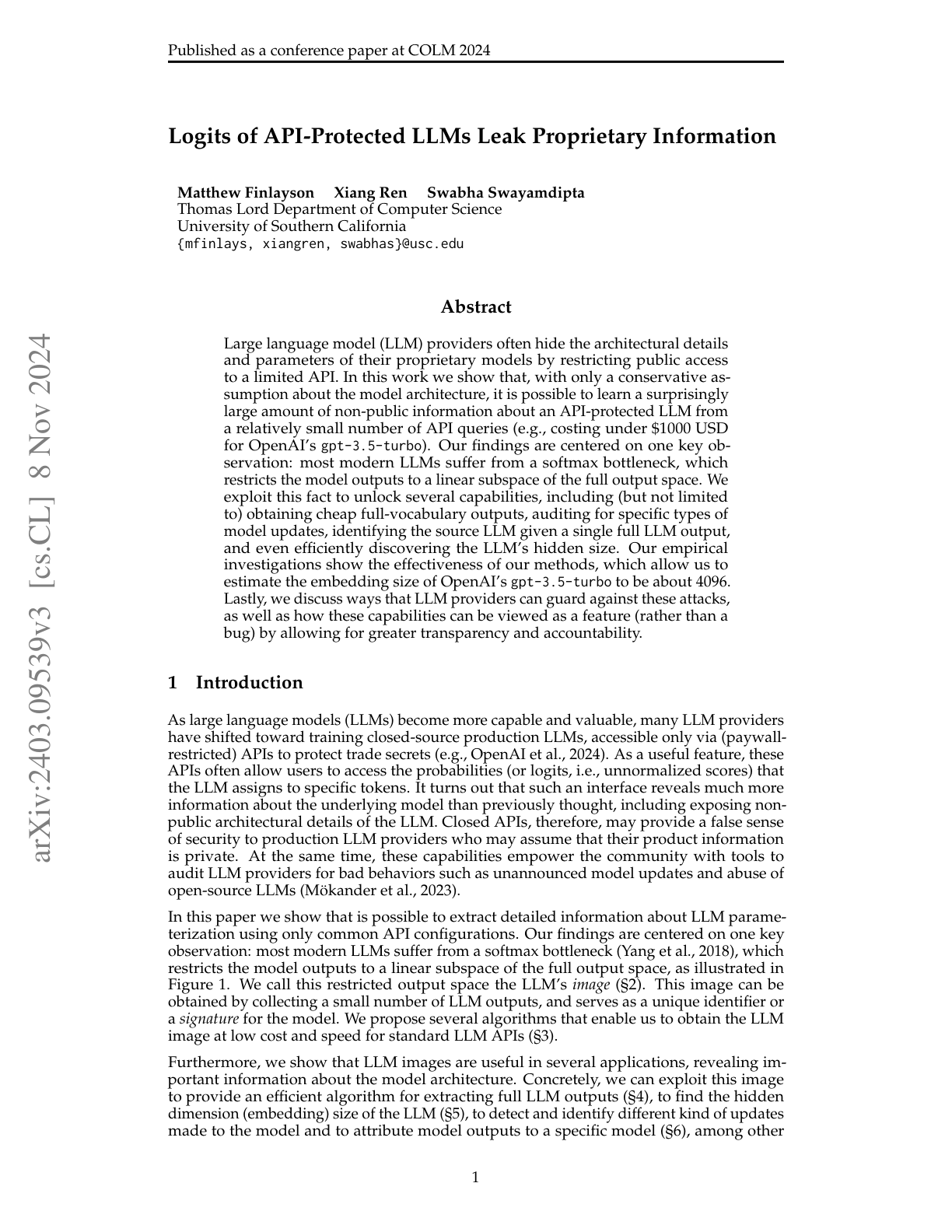
Logits of API-Protected LLMs Leak Proprietary Information
The paper shows that the softmax bottleneck in modern LLMs means even logit-level APIs leak enough information to reconstruct hidden architectural details.
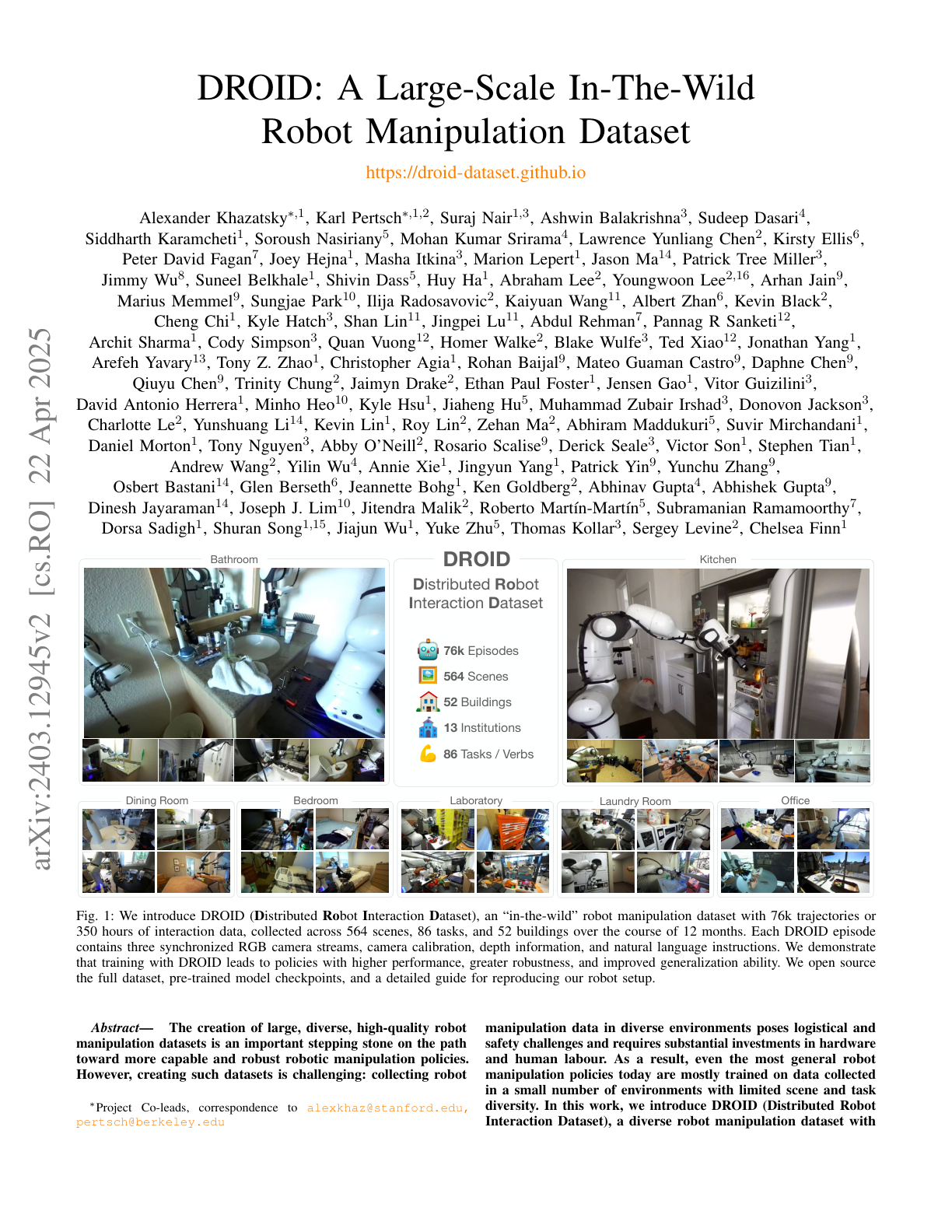
DROID
DROID is an open-source robot manipulation dataset that dramatically expands the diversity of real-world robot demonstrations available for imitation-learning research.
RAFT: Retrieval-Augmented Fine-Tuning
RAFT is a fine-tuning recipe that teaches LLMs to handle distractor documents during RAG and to answer with CoT-style citations to retrieved passages.
SIMA
DeepMind's Scalable Instructable Multiworld Agent (SIMA) is a generalist AI agent that follows natural-language instructions across nine commercial 3D video games like No Man's Sky, Teardown, Valheim, and Space Engineers.
Retrieval Augmented Thoughts (RAT)
RAT augments chain-of-thought by iteratively rewriting each reasoning step using retrieved context, sharply reducing hallucination on long-horizon generation tasks.
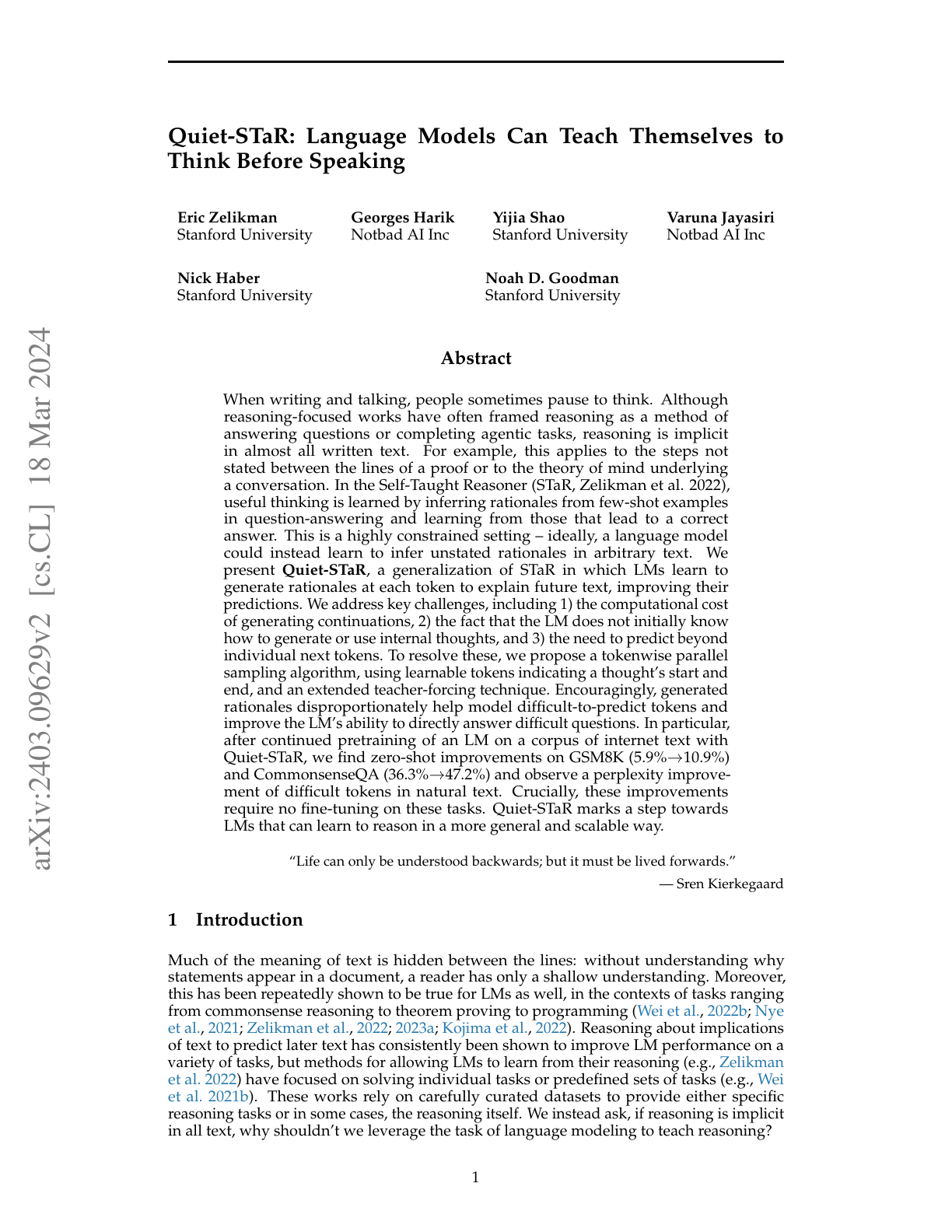
Quiet-STaR
Quiet-STaR generalizes the Self-Taught Reasoner (STaR) so that a language model learns to generate internal rationales between every token, not just for explicit QA problems.
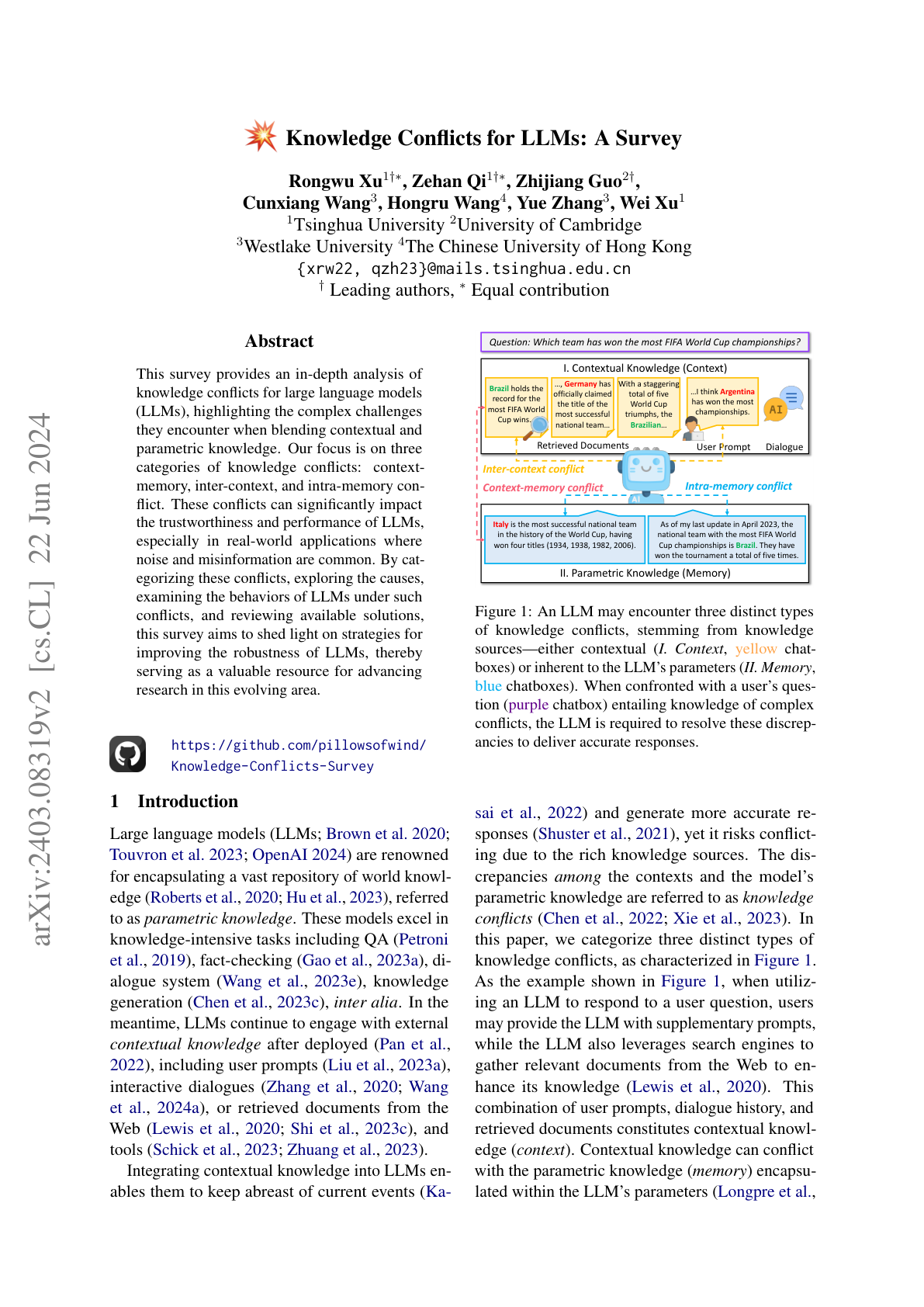
Knowledge Conflicts for LLMs
A survey that maps the landscape of knowledge conflicts in LLMs, covering how they arise, how models behave under them, and how to mitigate them.
Stealing Part of a Production Language Model
The paper demonstrates the first practical attack that extracts the embedding-projection layer of production LLMs through their ordinary logit APIs.
Branch-Train-MiX (BTX)
Meta's BTX produces a single Mixture-of-Experts LLM by first training specialized experts in parallel and then mixing them, sidestepping the high cost of training one big generalist.
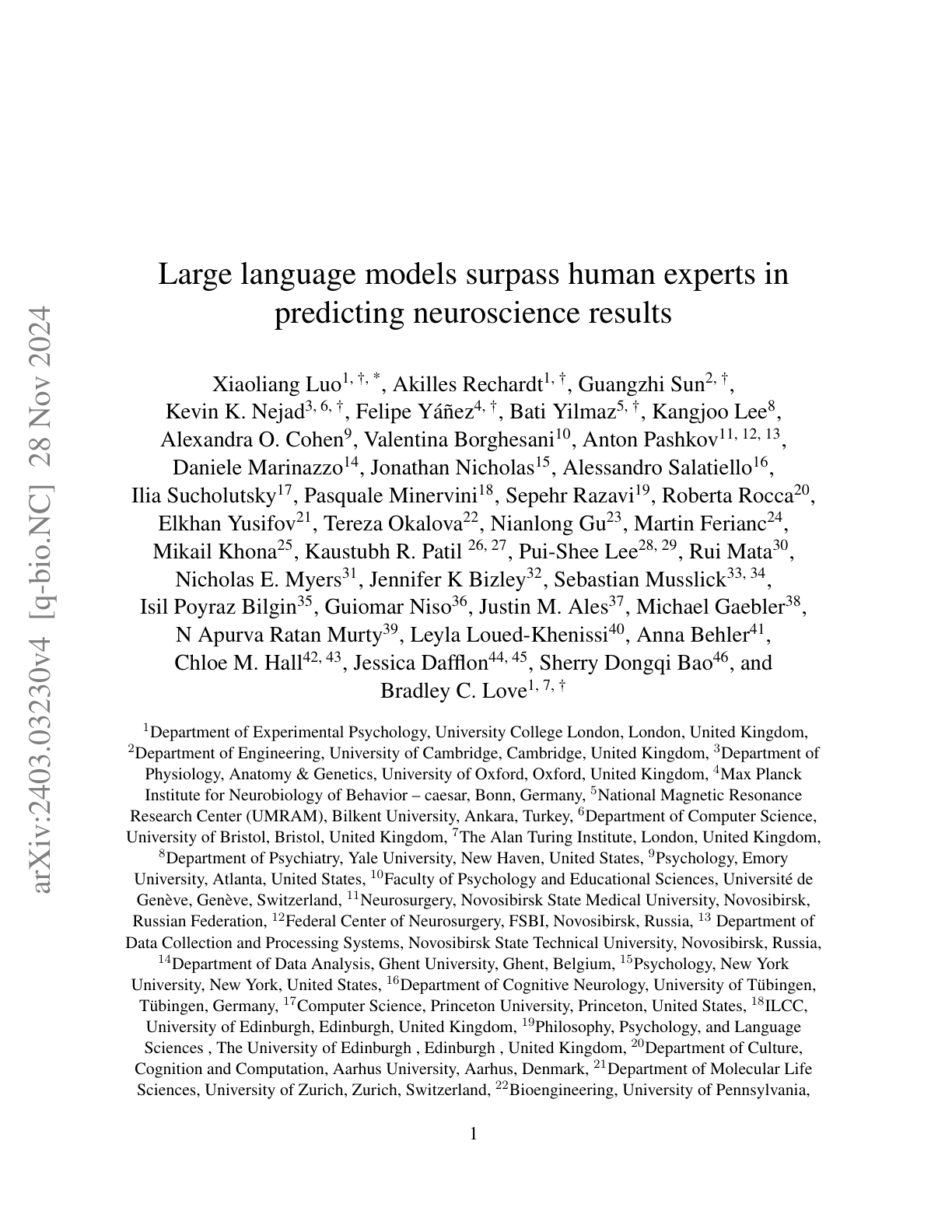
LLMs Predict Neuroscience Results (BrainBench)
BrainBench asks both LLMs and human experts to predict the outcomes of neuroscience experiments from their abstracts, and finds LLMs outperform experts.

C4AI Command-R
Cohere for AI releases Command-R, a 35B open-weight LLM tuned specifically for retrieval-augmented generation, tool use, and multilingual workflows.
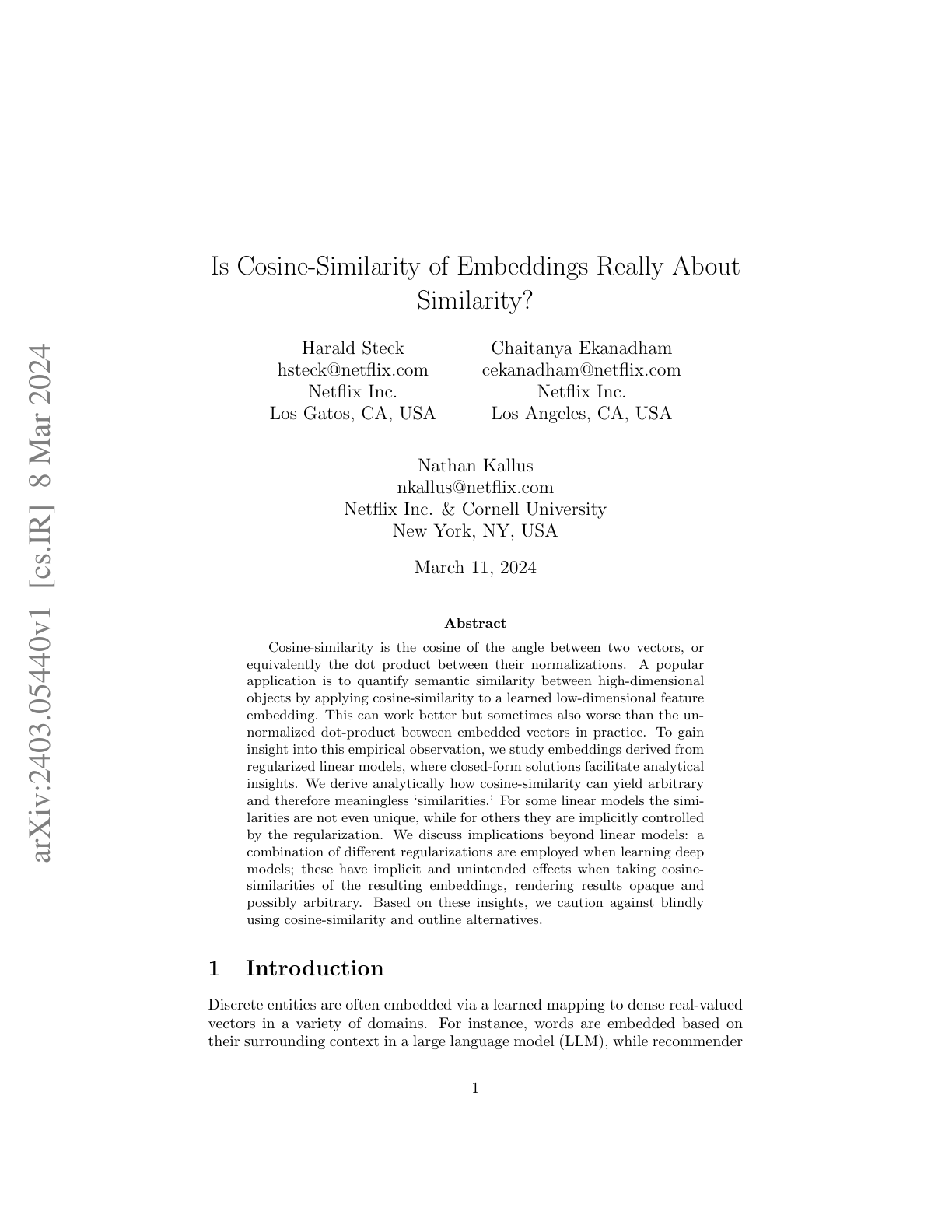
Is Cosine-Similarity Really About Similarity?
This paper argues that cosine similarity between learned embeddings does not always measure semantic similarity, and gives analytical examples where it produces arbitrary or non-unique values.