AI Papers of the Week
Every paper worth reading in AI, hand-picked one week at a time.
Discover and explore top AI papers with Claude Code or Codex
npx @dair-ai/mcp setup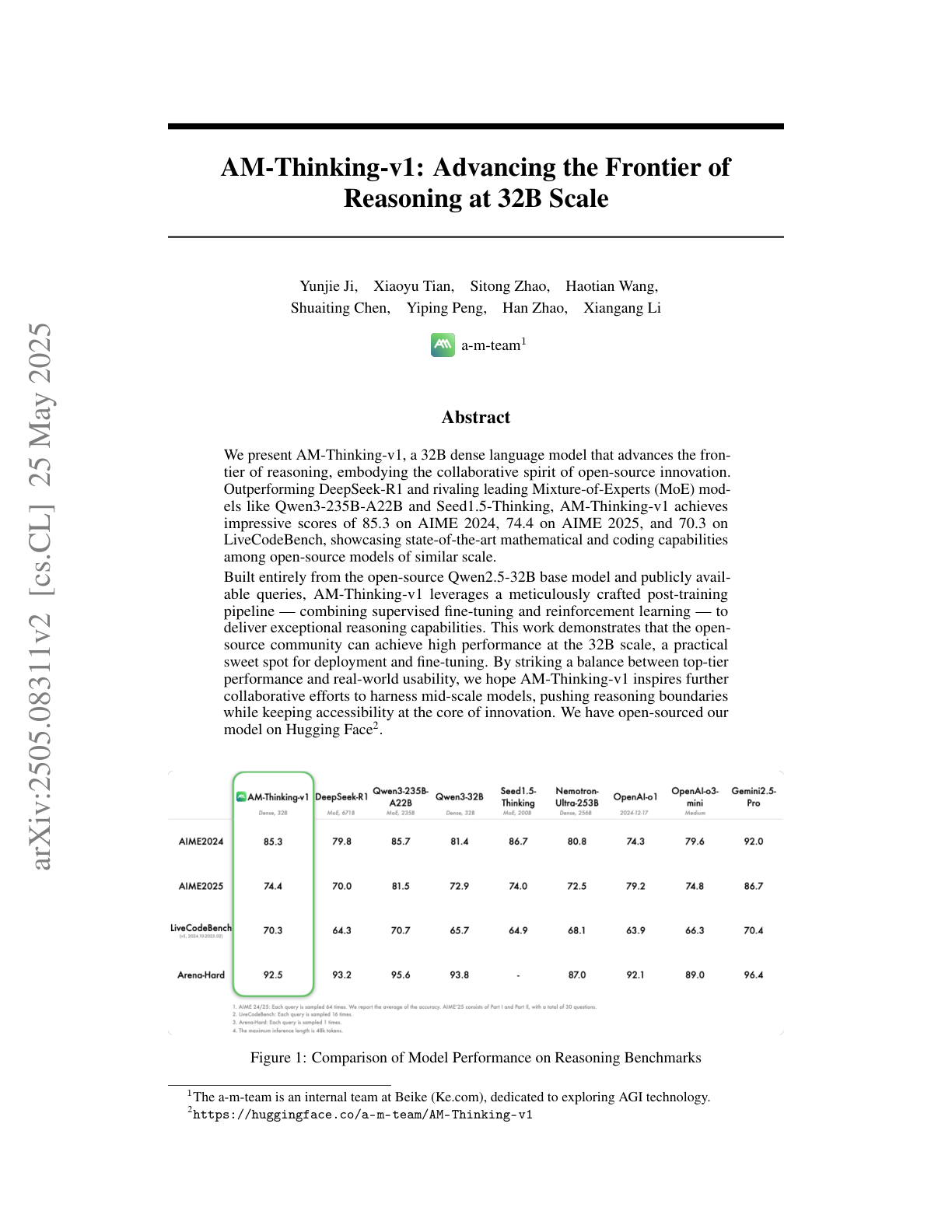
AM-Thinking-v1
Introduces a dense, open-source 32B language model that achieves state-of-the-art performance in reasoning tasks, rivaling significantly larger Mixture-of-Experts (MoE) models. Built upon Qwen2.5-32B, the model is trained entirely with public data and showcases how a meticulously crafted post-training pipeline can unlock competitive performance at mid-scale sizes. Key points:
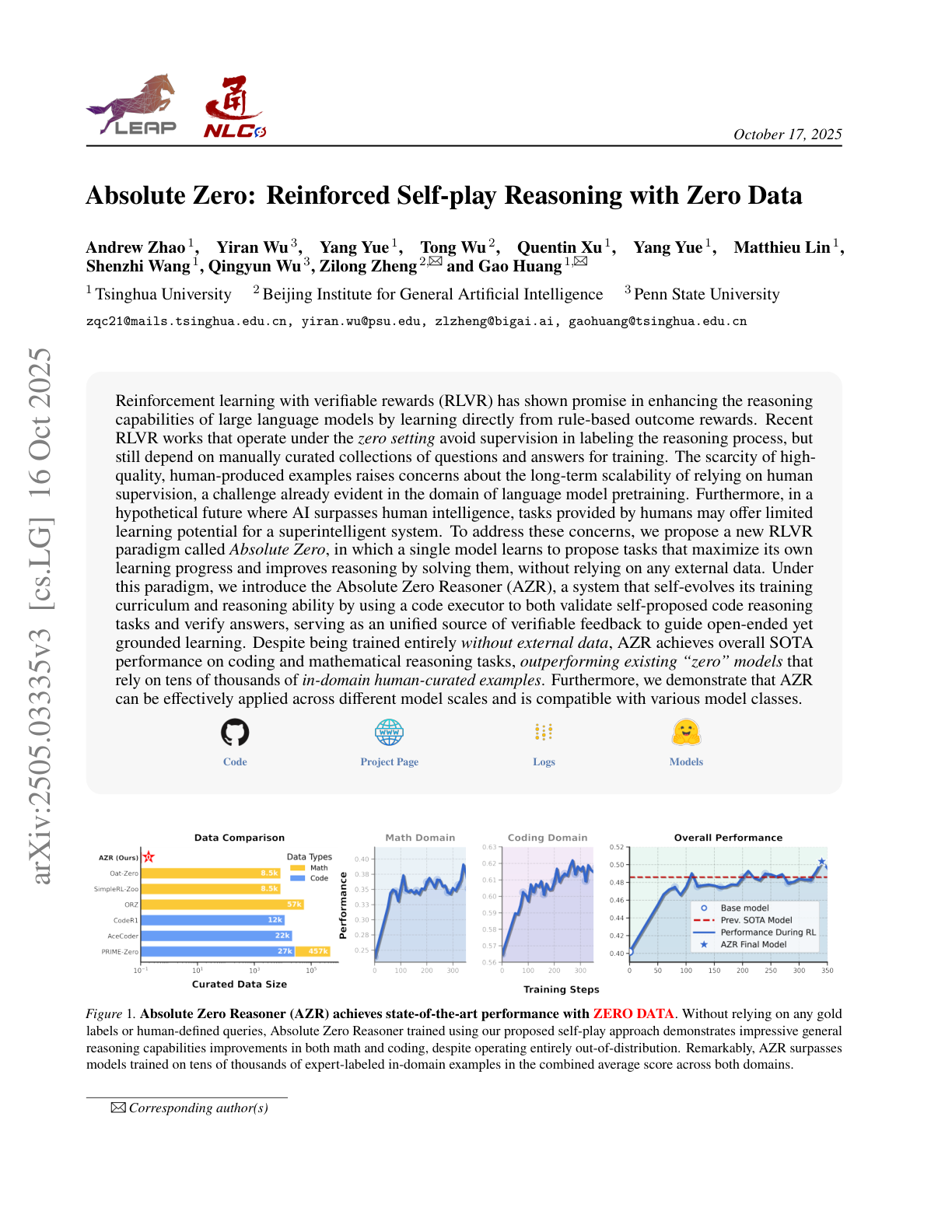
Absolute Zero
Introduces an LLM training framework that eliminates the need for human-curated data. Key highlights:
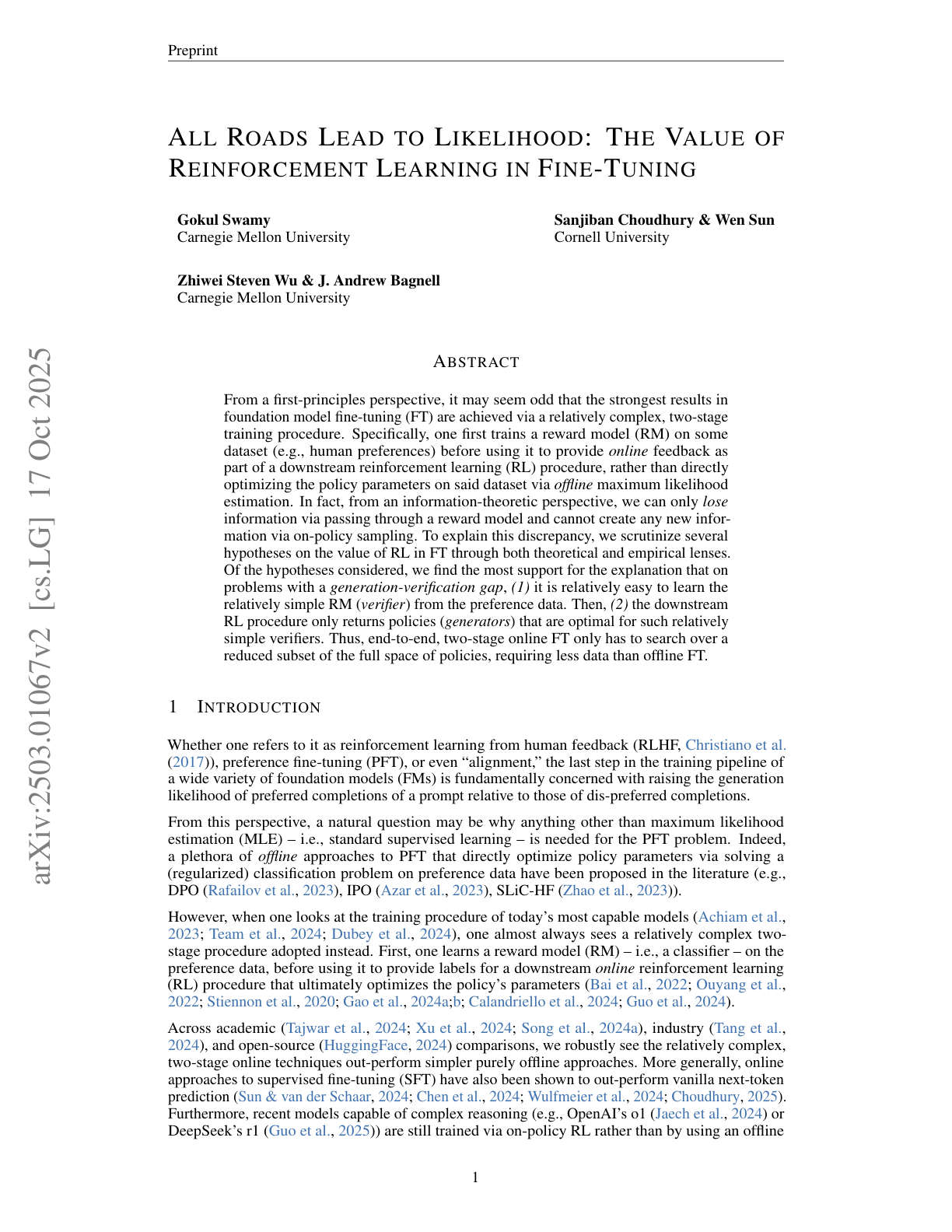
The Value of RL in Fine-Tuning
This work shows that, in theory, every popular preference-fine-tuning objective collapses to maximum-likelihood estimation (MLE), yet experiments show a consistent RL advantage on real tasks. They reconcile this gap with a generation-verification complexity hypothesis.
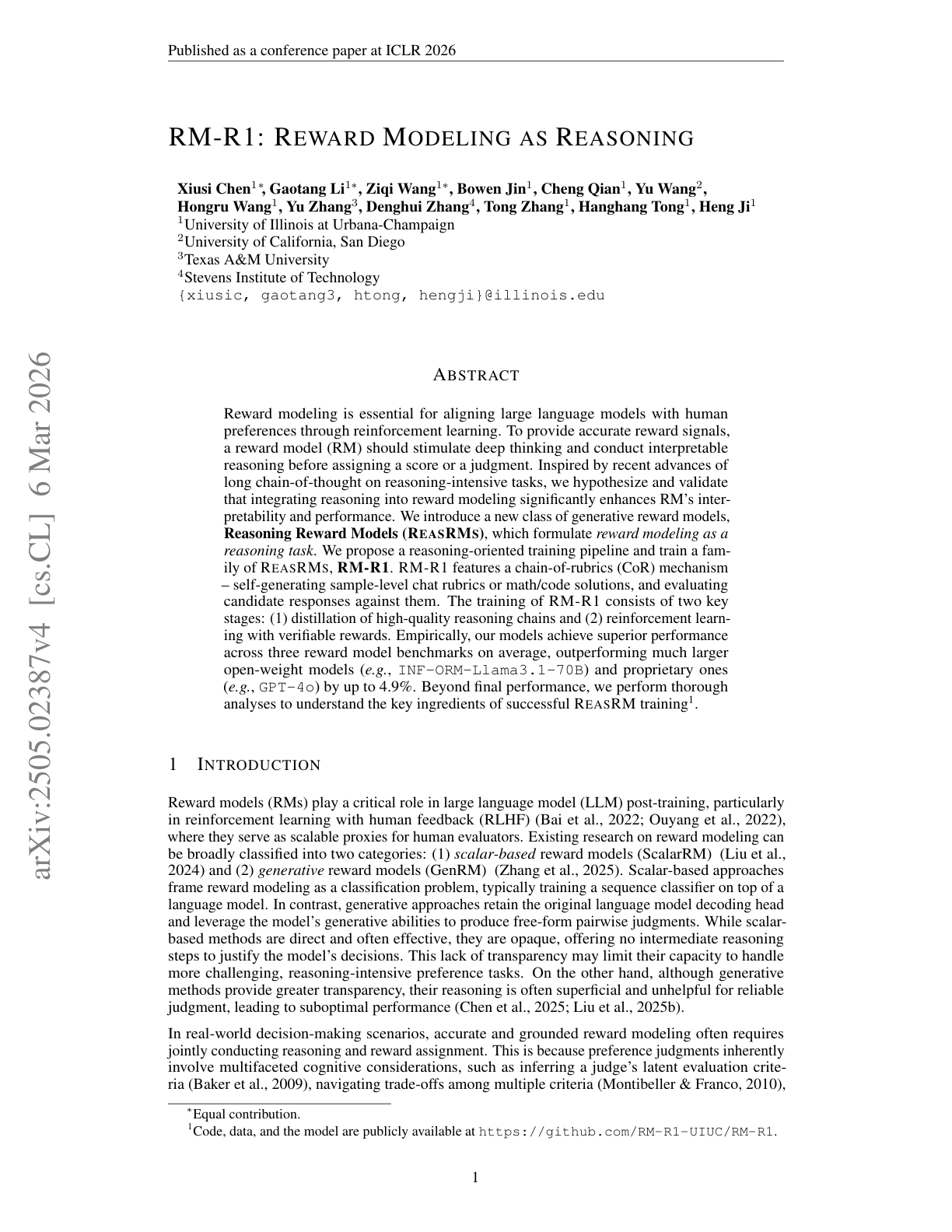
Reward Modeling as Reasoning
This work proposes a new class of reward models, called ReasRMs, that reformulate reward modeling as a reasoning task. The authors introduce RM-R1, a family of generative reward models that produce interpretable reasoning traces and rubrics during preference judgments. Instead of relying on scalar scores or shallow generation, RM-R1 models leverage structured reasoning and reinforcement learning to improve both interpretability and performance across benchmarks.
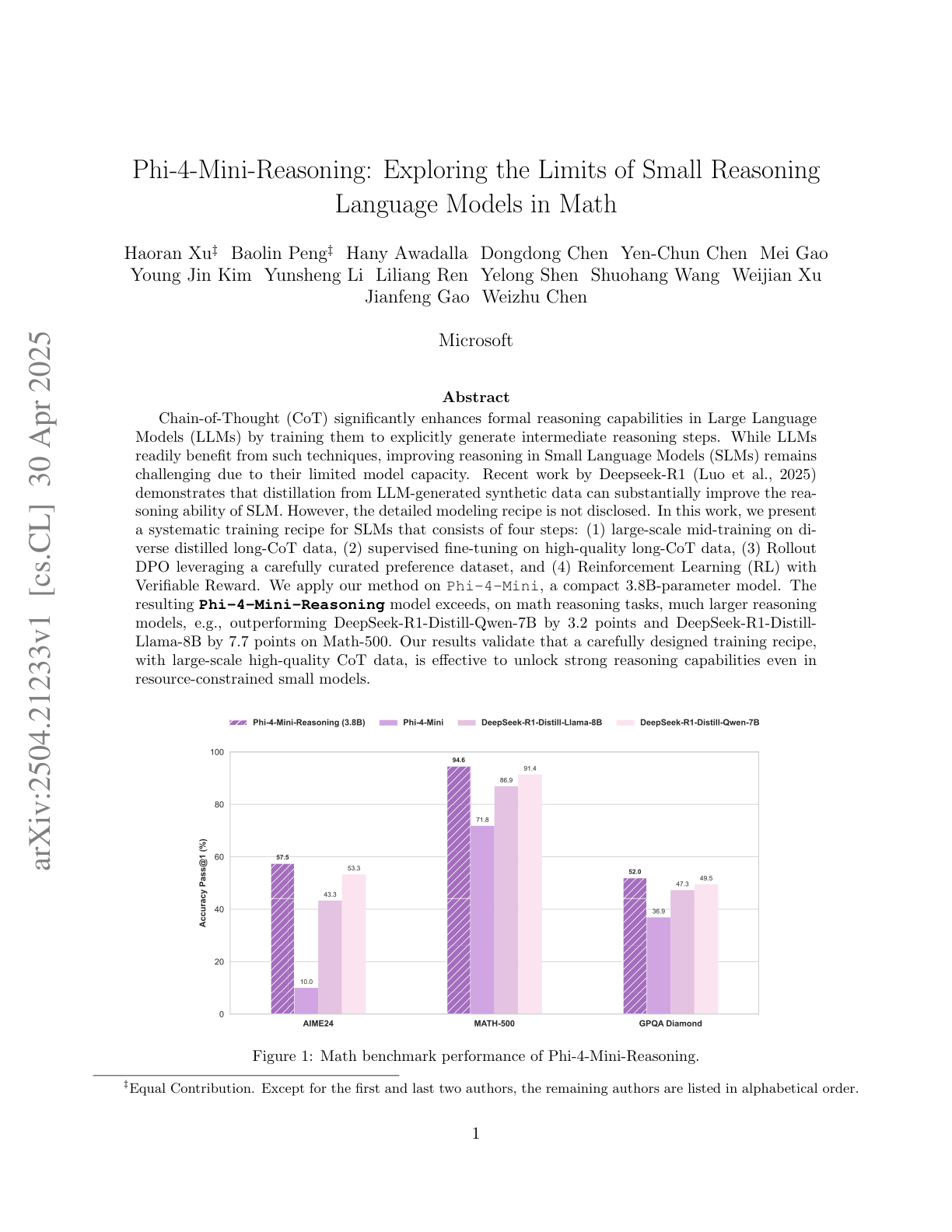
Phi-4-Mini-Reasoning
Microsoft released Phi-4-Mini-Reasoning to explore small reasoning language models for math. Highlights:
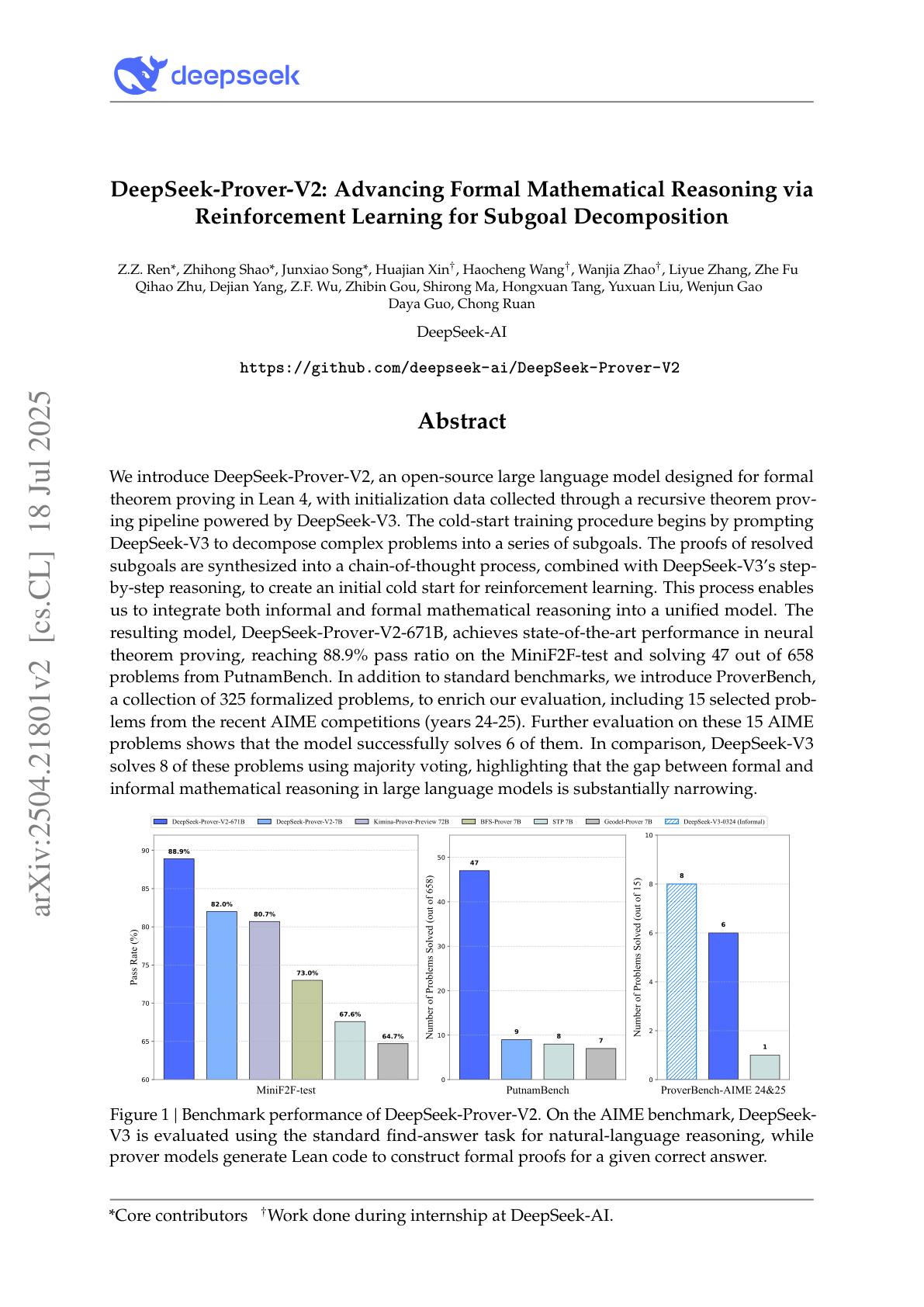
DeepSeek-Prover-V2
DeepSeek-Prover-V2 is an LLM (671B) that significantly advances formal theorem proving in Lean 4. The model is built through a novel cold-start training pipeline that combines informal chain-of-thought reasoning with formal subgoal decomposition, enhanced through reinforcement learning. It surpasses prior state-of-the-art on multiple theorem-proving benchmarks. Key highlights:
LLM for Engineering
This work finds that when RL is used, a 7B parameter model outperforms both SoTA foundation models and human experts at high-powered rocketry design.
Does RL Incentivize Reasoning in LLMs Beyond the Base Model?
This paper revisits a key assumption in recent LLM development: that Reinforcement Learning with Verifiable Rewards (RLVR) helps models acquire genuinely new reasoning capabilities. By analyzing models across tasks (math, code, vision) using pass@k metrics (with large k), the authors find that RLVR improves sample efficiency but does not expand reasoning capacity beyond the base model.
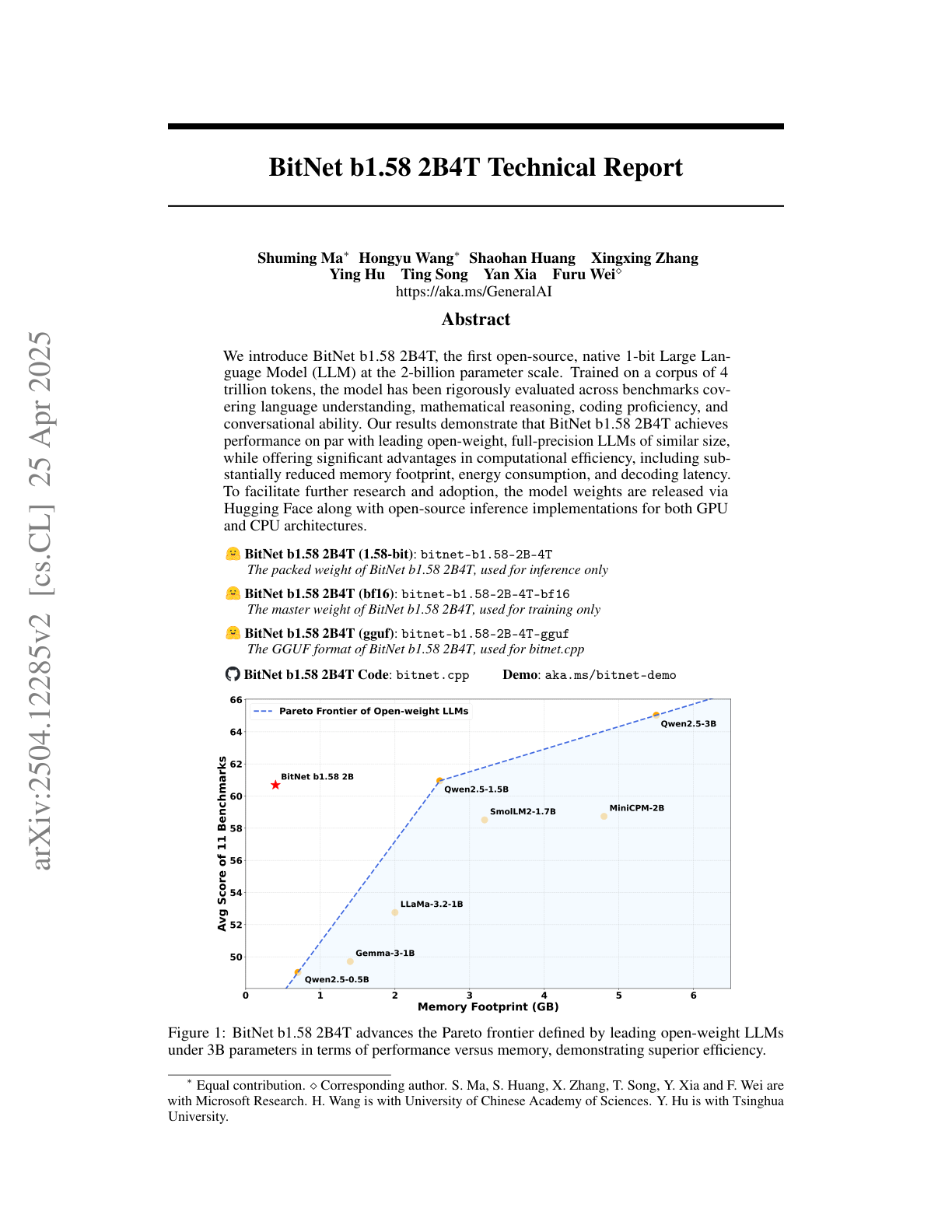
BitNet b1.58 2B4T
This work introduces BitNet b1.58 2B4T, the first open-source, natively trained 1-bit LLM at the 2B parameter scale, achieving strong performance while being extremely efficient. The model uses a custom ternary quantization scheme (1.58 bits per weight), enabling dramatic reductions in memory (0.4 GB), energy (0.028J/token), and latency (29ms), while still competing with state-of-the-art full-precision models across diverse benchmarks.
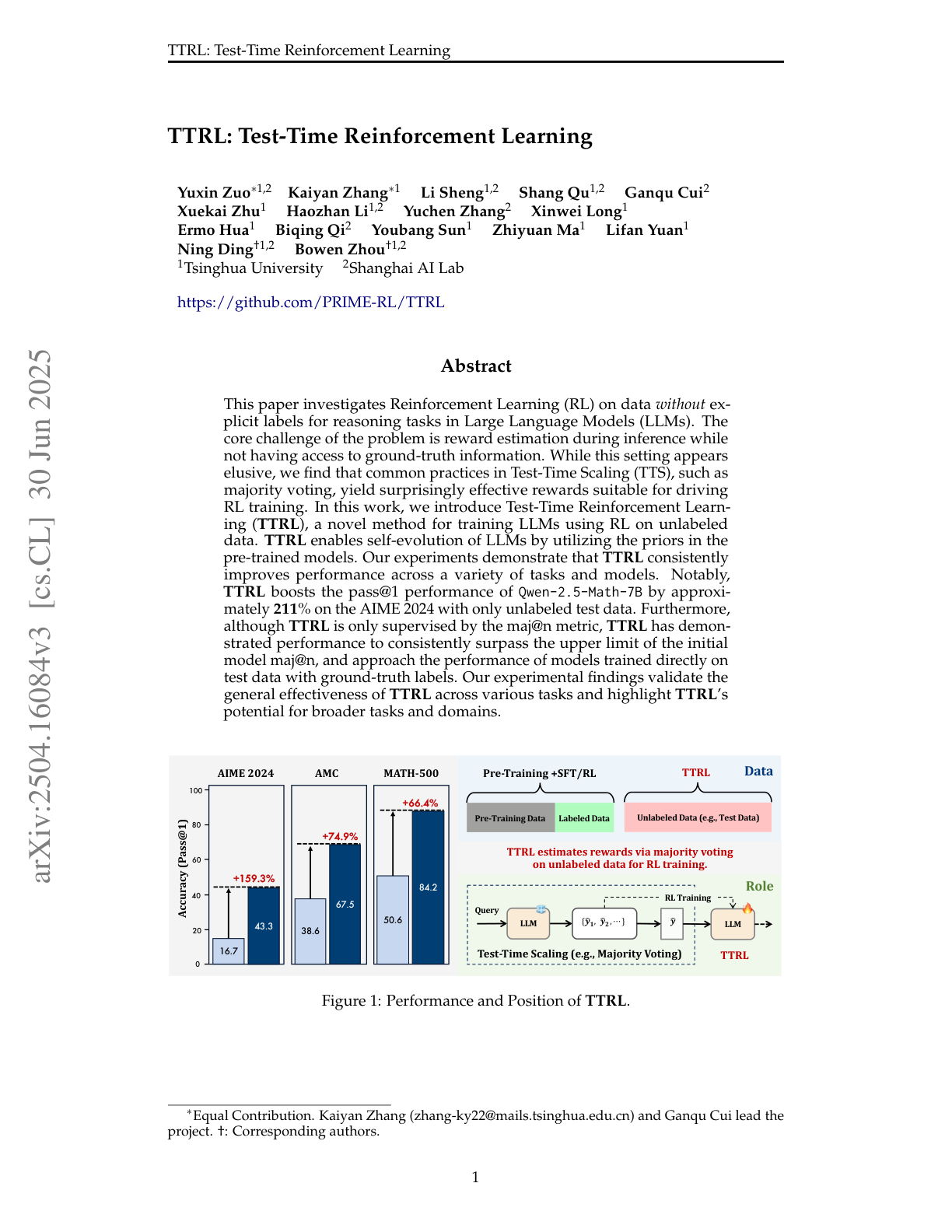
Test-Time Reinforcement Learning
Test-Time Reinforcement Learning (TTRL) is a method that allows LLMs to improve themselves during inference without ground-truth labels. Instead of relying on labeled datasets, TTRL uses majority voting over multiple model generations to estimate pseudo-rewards, enabling reinforcement learning (RL) on unlabeled test data. The method integrates Test-Time Scaling (TTS) and Test-Time Training (TTT) strategies, letting models adapt dynamically to new and challenging inputs. Key highlights:
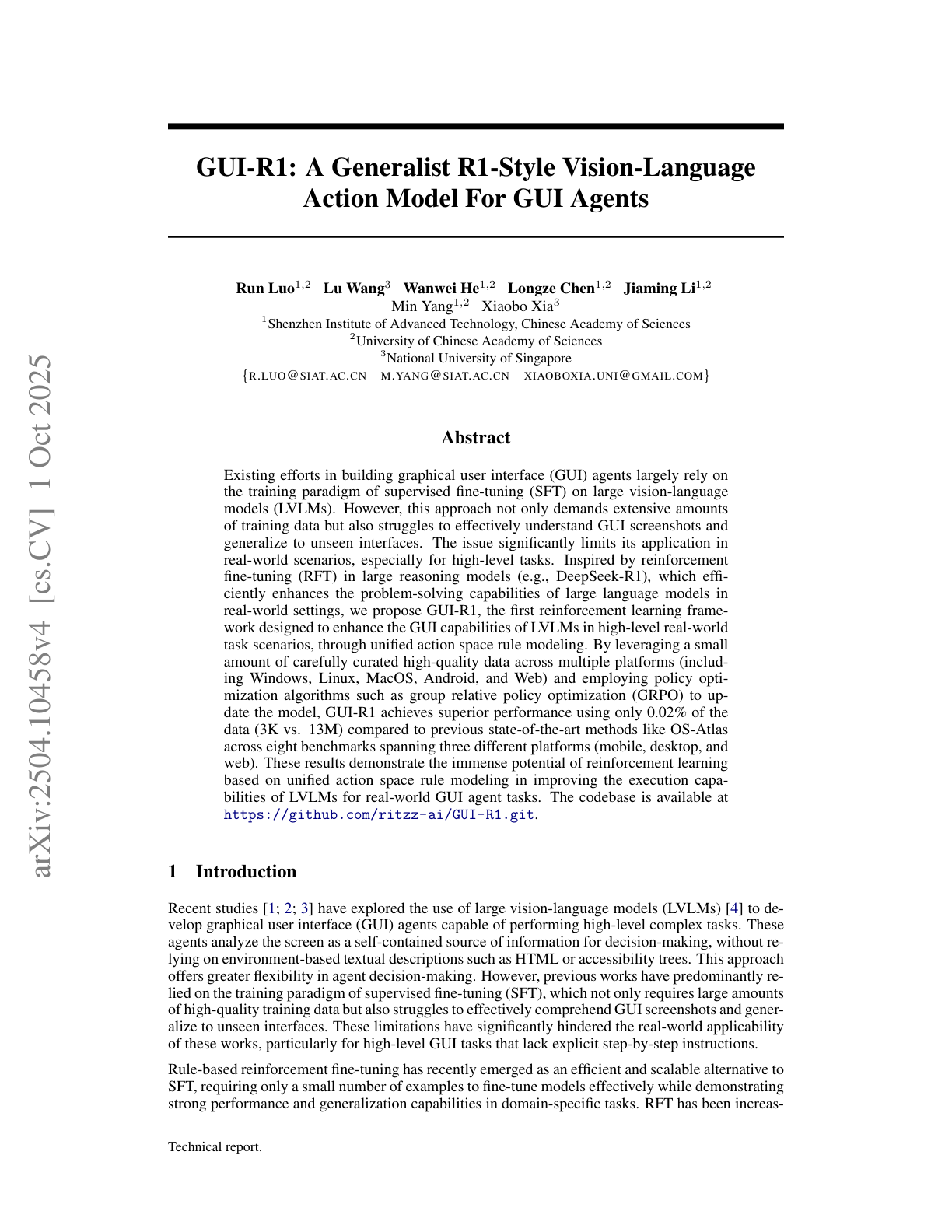
GUI-R1
Researchers from the National University of Singapore and the Chinese Academy of Sciences introduce GUI-R1, a reinforcement learning (RL) framework aimed at improving graphical user interface (GUI) agents through unified action-space modeling. Key insights include:
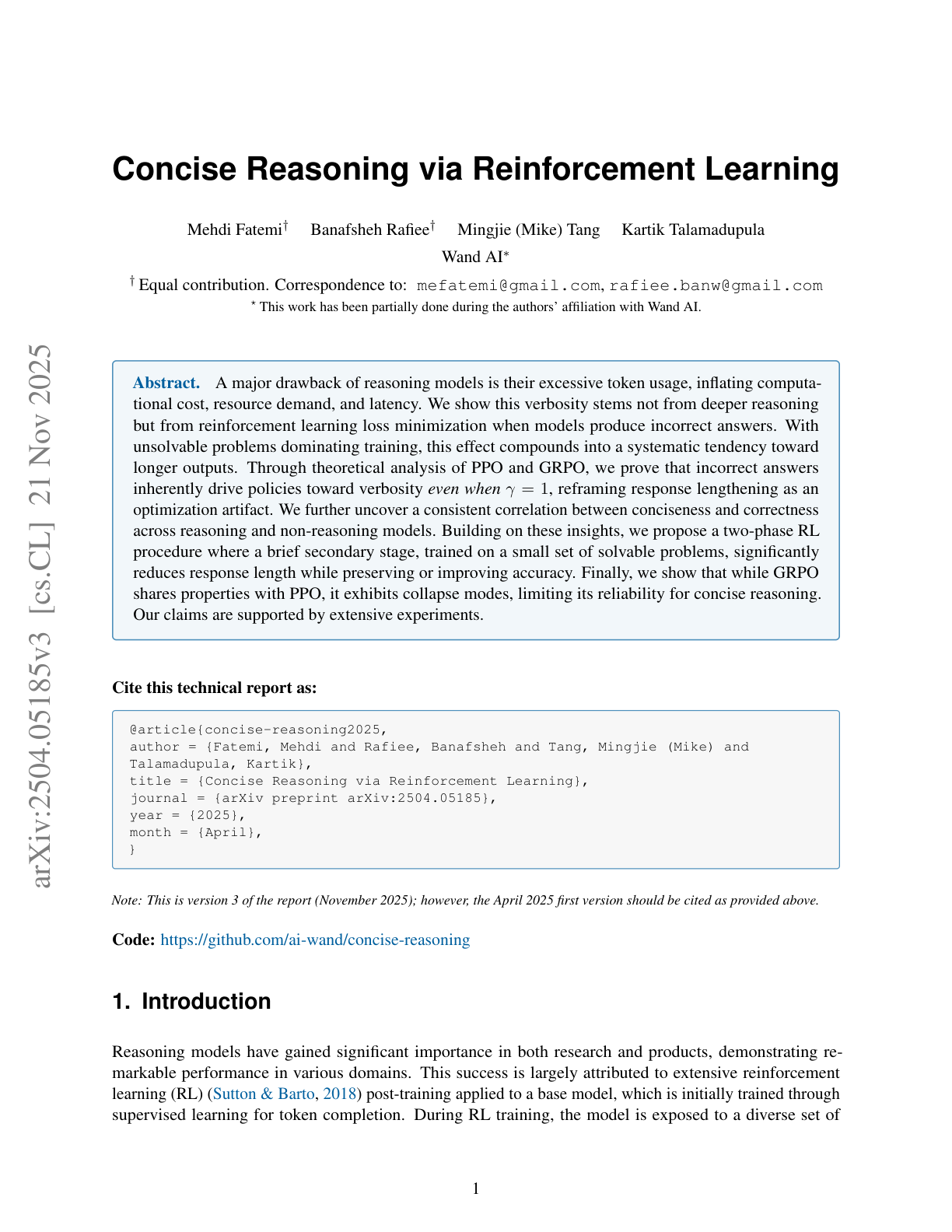
Concise Reasoning via RL
This new paper proposes a new training strategy that promotes concise and accurate reasoning in LLMs using RL. It challenges the belief that long responses improve accuracy; it offers both theoretical and empirical evidence showing that conciseness often correlates with better performance.
A Review of DeepSeek Models
This paper provides an in-depth review of the cutting-edge techniques behind DeepSeek's open-source LLMs—DeepSeek-V3 and DeepSeek-R1. These models achieve state-of-the-art performance with significantly lower resource requirements compared to proprietary counterparts. Key highlights include:
Towards Hierarchical Multi-Step Reward Models for Enhanced Reasoning in LLMs
It proposes a Hierarchical Reward Model (HRM) that addresses reward hacking and error propagation issues in fine-grained LLM reasoning. They also introduce Hierarchical Node Compression (HNC) to augment MCTS-based automatic data annotation, boosting label diversity and robustness at minimal computational cost.
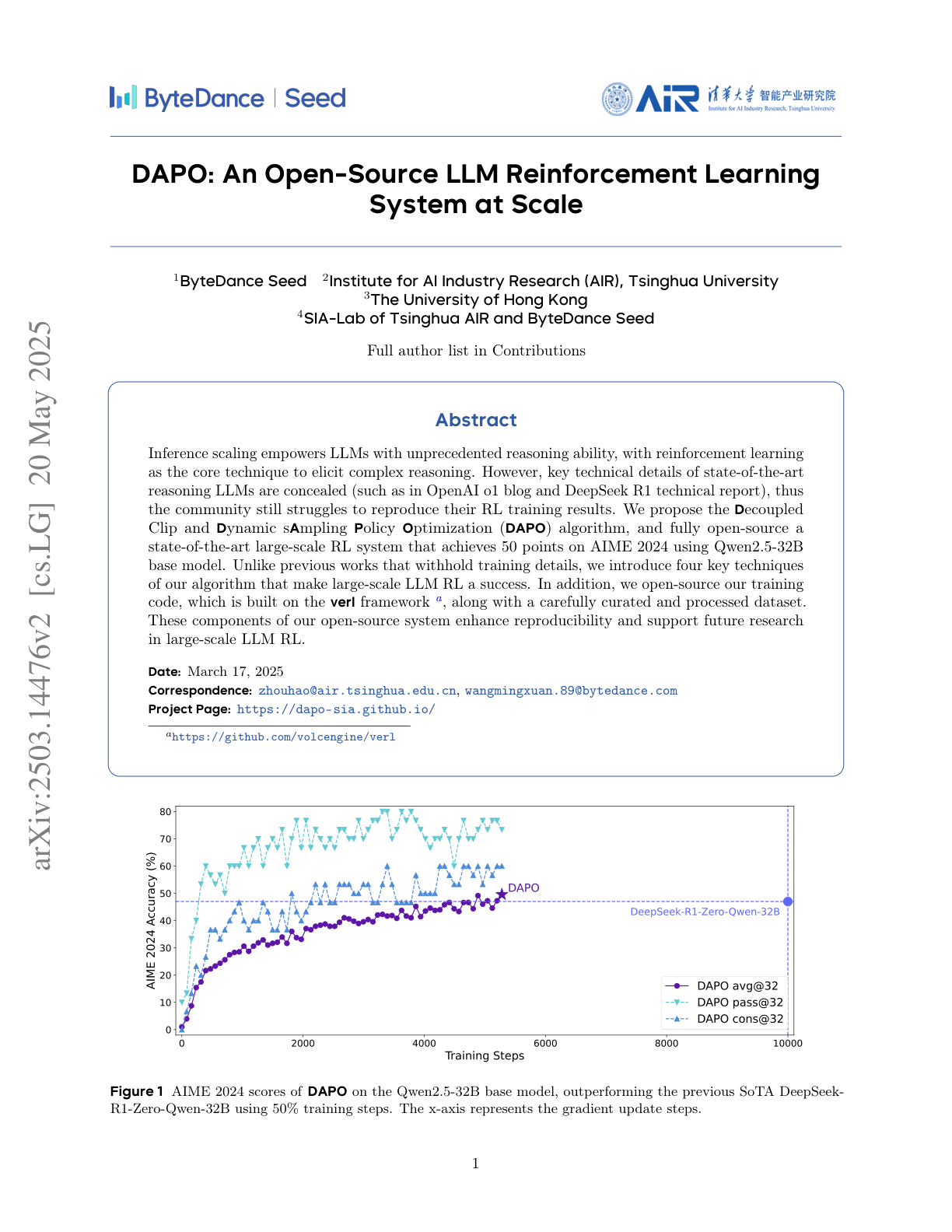
DAPO: An Open-Source LLM Reinforcement Learning System at Scale
It introduces DAPO, a fully open-source, large-scale RL system that boosts the chain-of-thought reasoning capabilities of LLMs. DAPO raises the upper clipping threshold (“Clip-Higher”) in PPO-style training, preventing entropy collapse and helping the policy explore more diverse tokens. By filtering out samples that are always correct or always wrong, DAPO focuses training on prompts with useful gradient signals, speeding up convergence in fewer updates. Instead of averaging losses at the sample level, DAPO applies policy gradients per token, making each reasoning step matter. This ensures both high-quality and length-appropriate outputs. The system masks or softly penalizes excessively long answers, preventing meaningless verbosity or repetitive text. DAPO achieves SOTA math performance on the AIME 2024 test set. Specifically, DAPO trained from a Qwen2.5-32B base achieves 50% accuracy, outperforming DeepSeek’s R1 with less training time, and showcasing open-source reproducibility at scale.
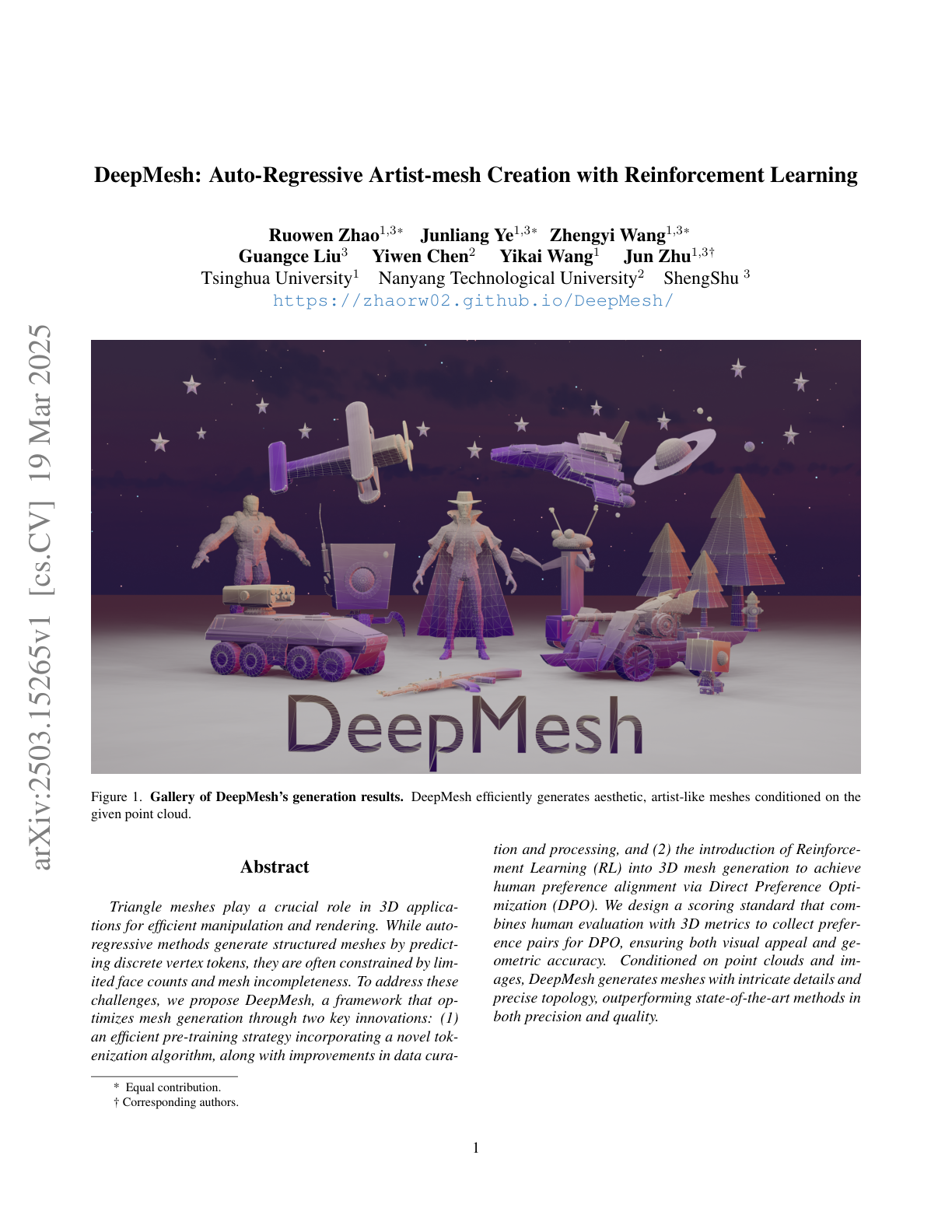
DeepMesh
Researchers from Tsinghua University, Nanyang Technological University, and ShengShu propose DeepMesh, a transformer-based system that generates high-quality 3D meshes with artist-like topology. Key ideas include:
Search-R1
This paper tackles search-augmented reasoning by teaching LLMs to query a search engine multiple times—while they reason—using reinforcement learning. Key ideas include:
Auditing LLMs for Hidden Objectives
Anthropic proposes a new framework for systematically auditing LLMs to uncover hidden goals or objectives that go beyond what users and developers explicitly intend. The researchers deliberately train a language model with a concealed objective (making it exploit reward model flaws in RLHF) and then attempt to expose it with different auditing techniques.
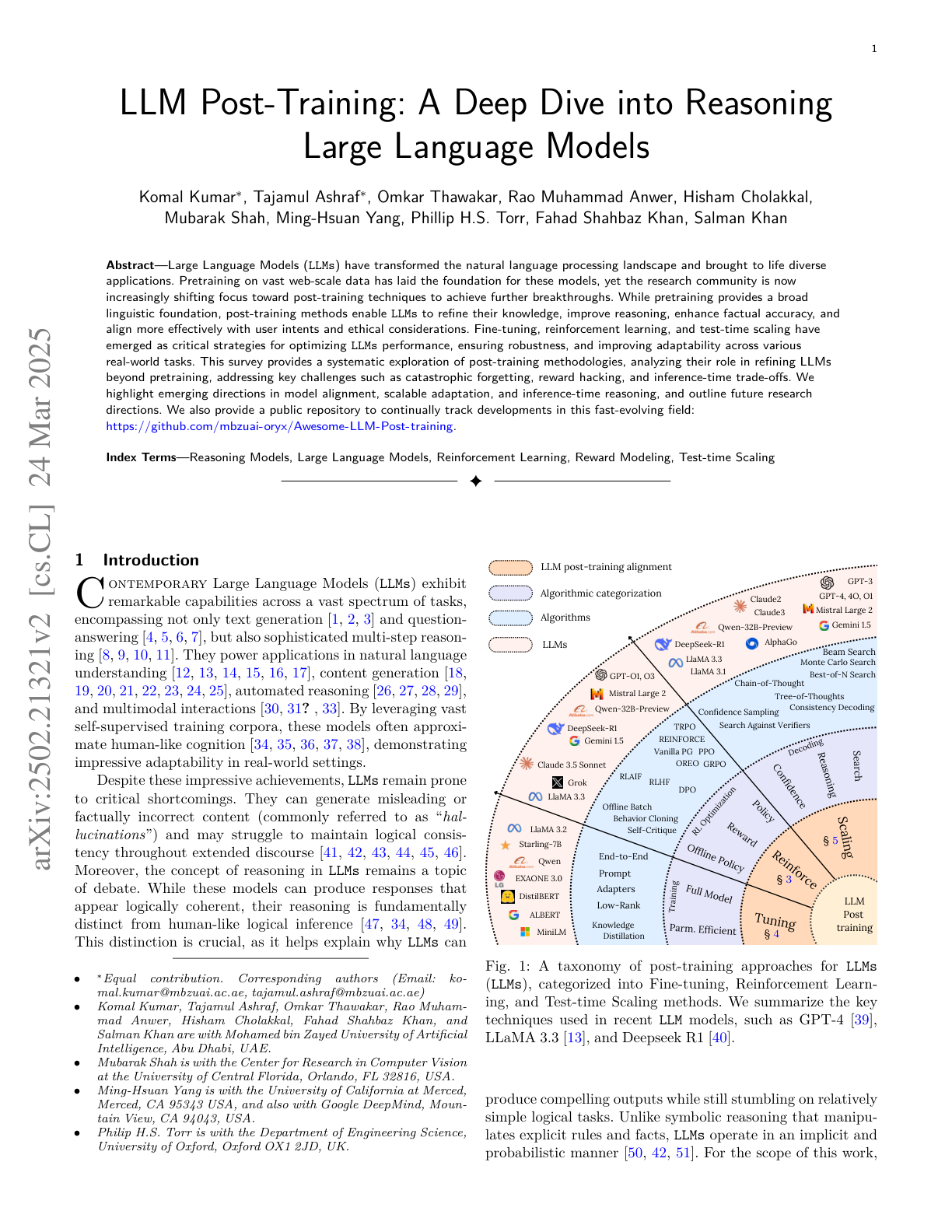
A Deep Dive into Reasoning LLMs
This survey explores how LLMs can be enhanced after pretraining through fine-tuning, reinforcement learning, and efficient inference strategies. It also highlights challenges like catastrophic forgetting, reward hacking, and ethical considerations, offering a roadmap for more capable and trustworthy AI systems.
Cognitive Behaviors that Enable Self-Improving Reasoners
Researchers from Stanford University and colleagues investigate why some language models excel in reinforcement learning (RL)-based self-improvement, while others quickly plateau. The study identifies four cognitive behaviors-verification, backtracking, subgoal setting, and backward chaining-that underpin successful problem-solving in both humans and language models. Key findings:
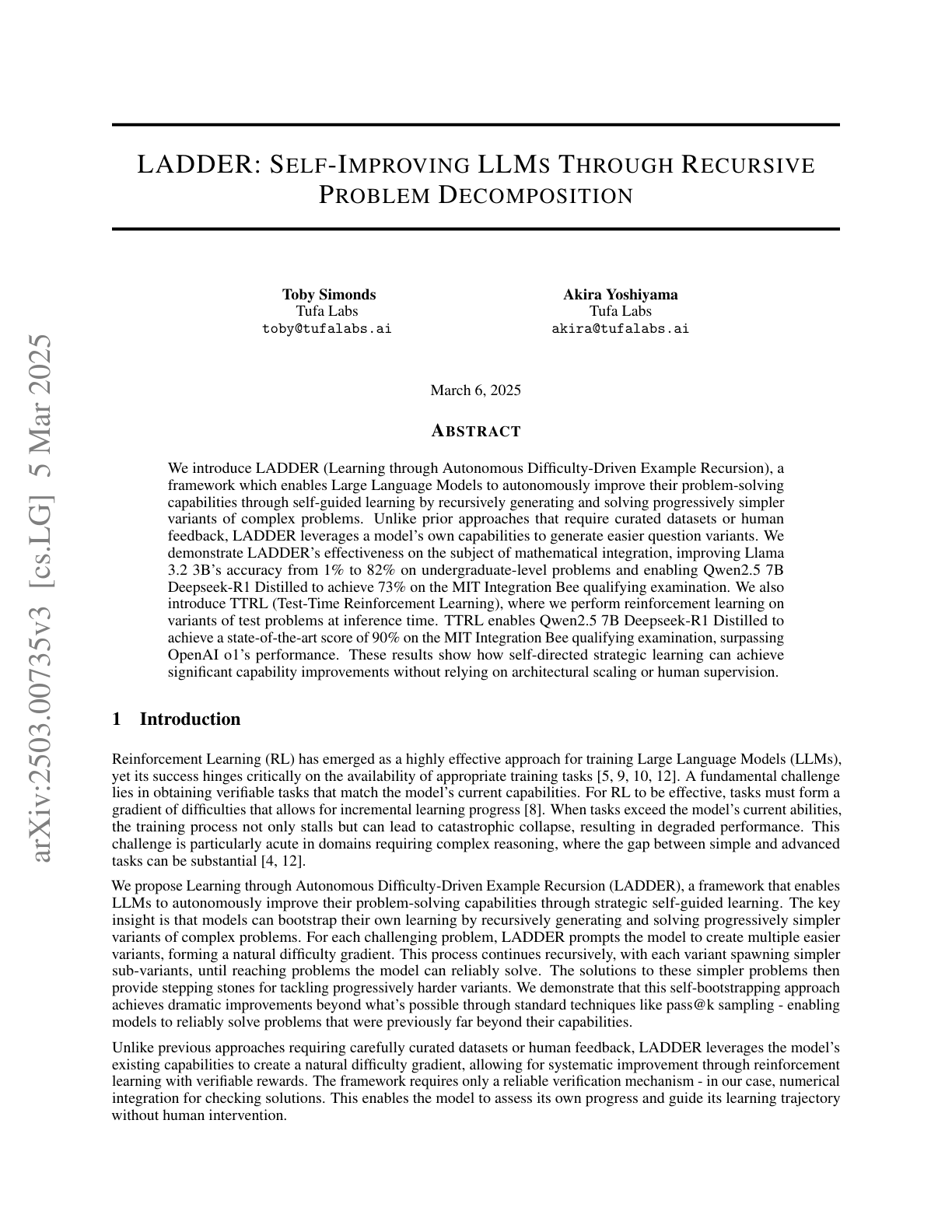
LADDER
LADDER is a framework enabling LLMs to recursively generate and solve progressively simpler variants of complex problems-boosting math integration accuracy. Key insights include:
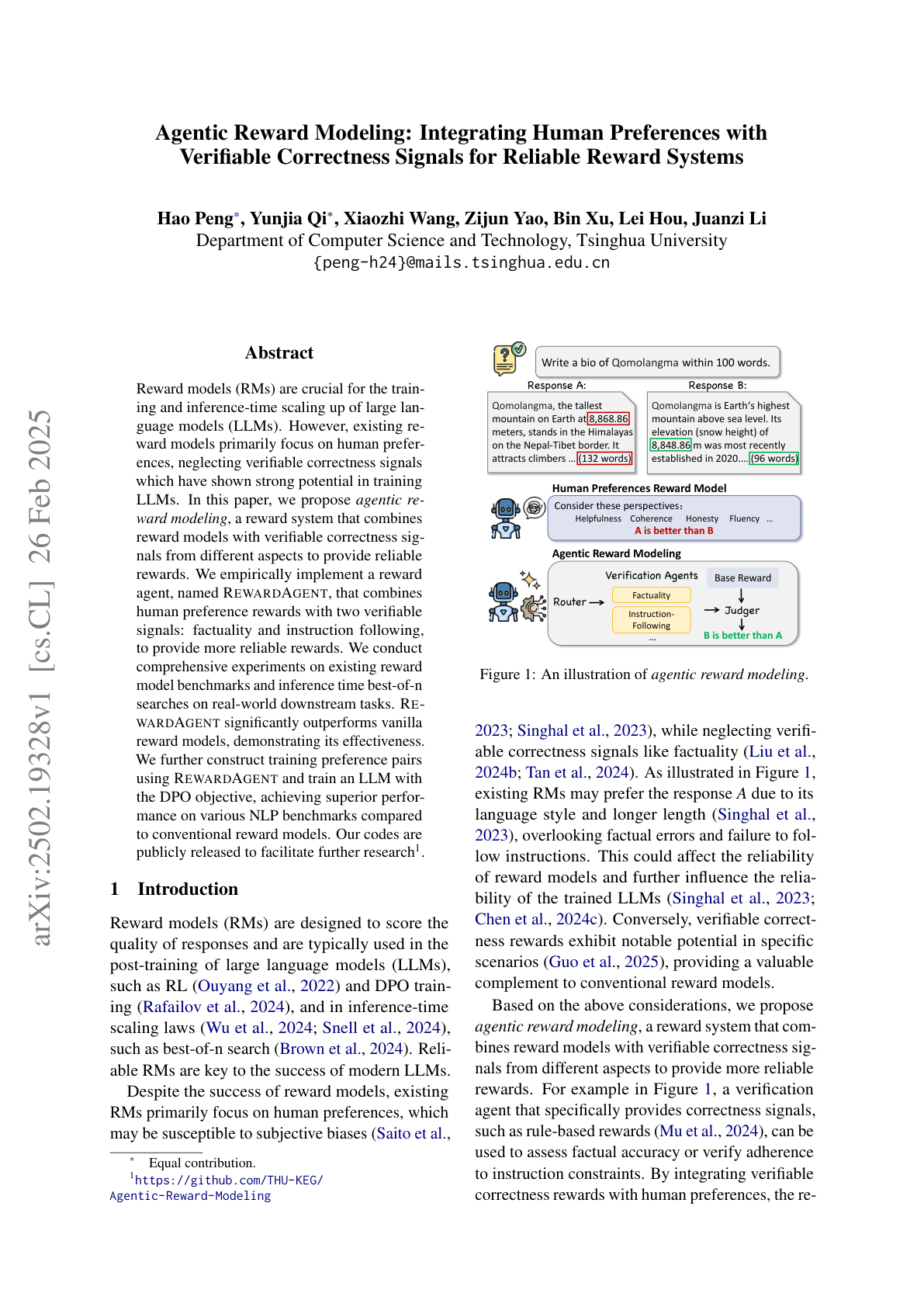
Agentic Reward Modeling
This paper proposes a new reward framework-Agentic Reward Modeling-that combines human preference models with "verifiable correctness" signals to provide more reliable rewards for training and evaluating LLMs.
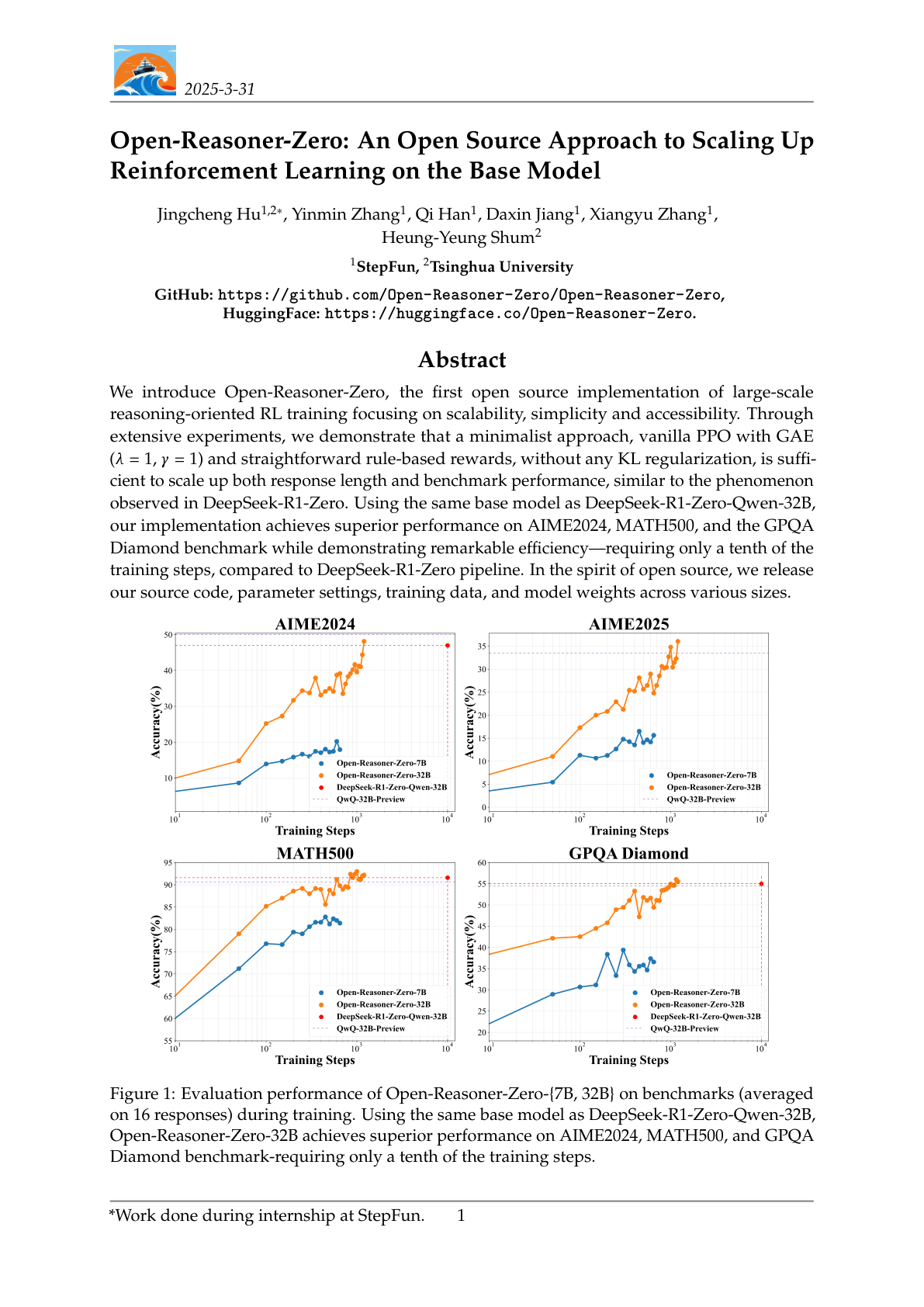
Open-Reasoner-Zero
Open-Reasoner-Zero (ORZ) is an open-source large-scale minimalist reinforcement learning (RL) framework that enhances reasoning capabilities. ORZ demonstrates significant scalability requiring only 1/30th of the training steps of DeepSeek-R1-Zero-Qwen-32B to outperform it on GPQA Diamond. Key contributions and findings:
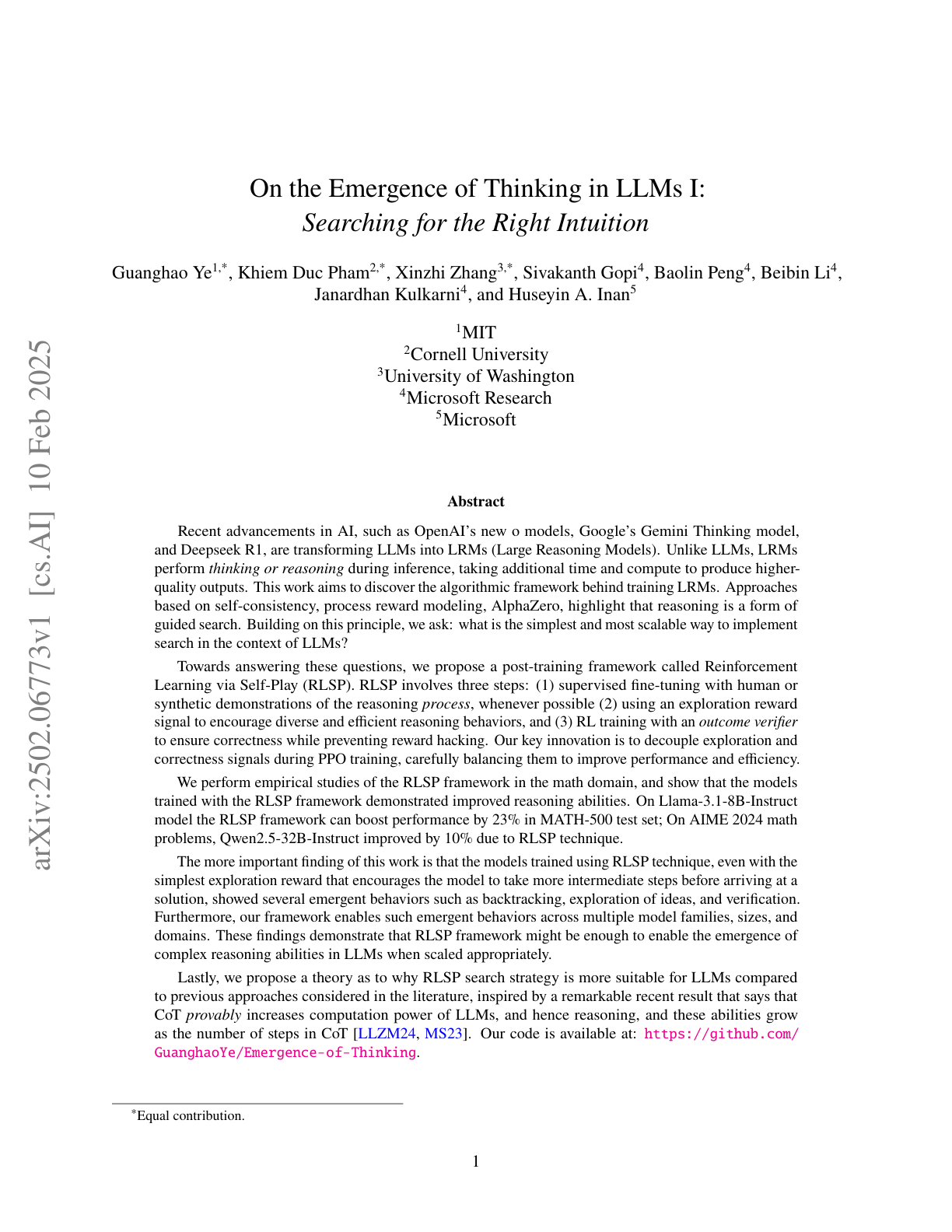
Reinforcement Learning via Self-Play
Researchers propose Reinforcement Learning via Self-Play (RLSP) as a framework to train LLMs to “think” through complex problems. Key ideas include: