AI Papers of the Week
Every paper worth reading in AI, hand-picked one week at a time.
Discover and explore top AI papers with Claude Code or Codex
npx @dair-ai/mcp setup
V-JEPA 2
Meta AI introduces V-JEPA 2, a scalable joint-embedding predictive architecture for self-supervised video learning, targeting the goal of building a generalist world model capable of understanding, predicting, and planning in the physical world. The model is trained in two stages: action-free pretraining on 1M+ hours of internet videos and images, followed by post-training with only 62 hours of unlabeled robot trajectories (Droid dataset). This yields a latent video representation that is useful across a broad range of downstream tasks.
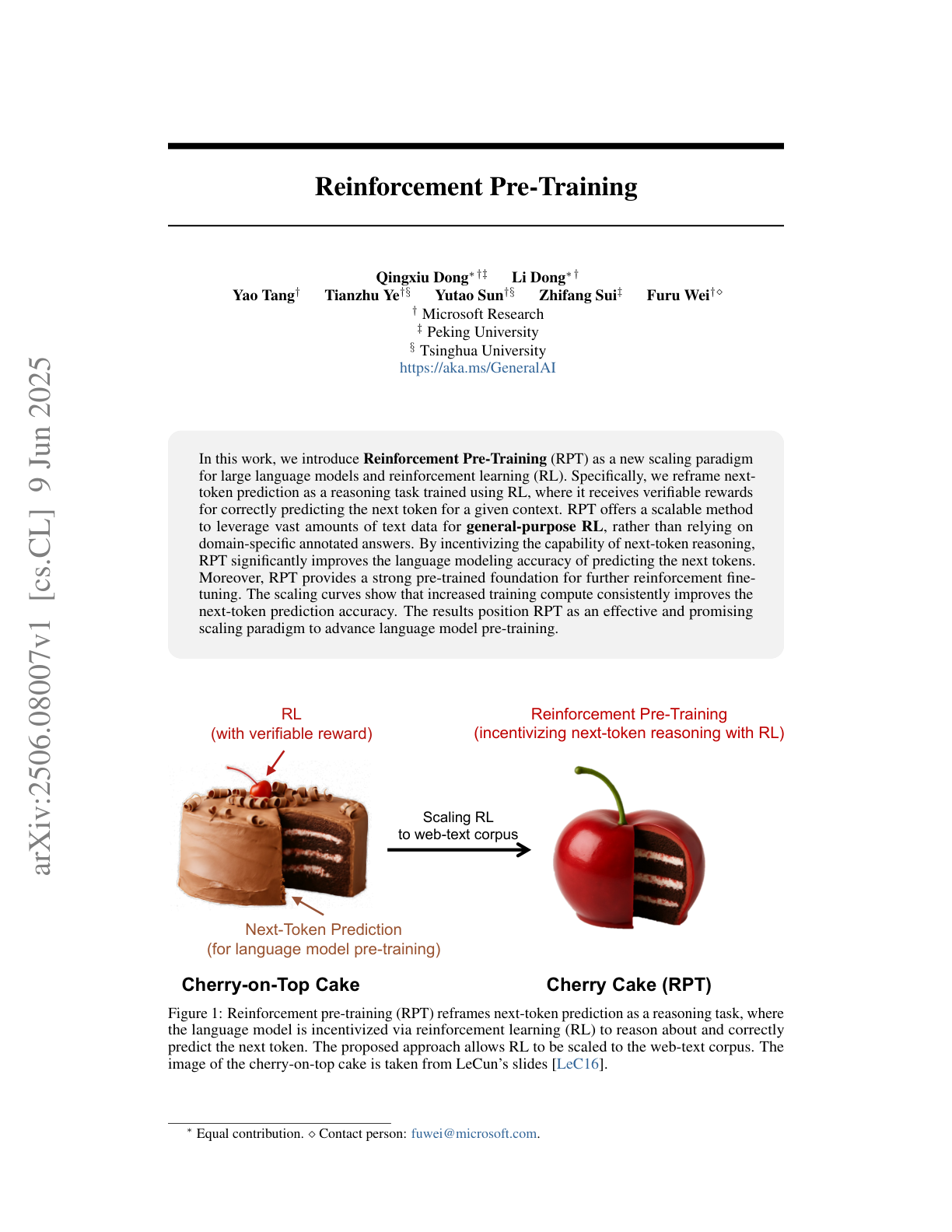
Reinforcement Pre-Training
This paper introduces Reinforcement Pre-Training (RPT), a new paradigm that bridges LLM pretraining and RL by reinterpreting next-token prediction as a reasoning task rewarded via verifiable correctness. Instead of relying on hand-curated annotations or costly human feedback, RPT applies RL on vast unannotated text corpora, assigning intrinsic rewards based on whether a predicted token matches the ground truth. This reframing supports general-purpose RL scaling and enhances both pretraining and fine-tuning efficacy.
Self-Adapting Language Models
It proposes a novel framework that enables LLMs to adapt themselves through reinforcement learning by generating their own fine-tuning data and update directives, referred to as “self-edits.” This approach allows models to autonomously optimize their learning process, without relying on separate adaptation modules or human supervision. Key highlights:
Magistral
Mistral introduces Magistral, its first reasoning-focused LLM line, alongside a custom RL training stack that enables pure reinforcement learning from scratch. In contrast to prior approaches that rely on distillation from teacher models, Magistral trains directly using online RL with text-only data and custom reward shaping. The work yields two open models: Magistral Medium (based on Mistral Medium 3) and the open-sourced Magistral Small (24B), which is bootstrapped via SFT on Medium’s outputs, followed by RL. Key insights:
Knowledge or Reasoning
Introduces a fine-grained evaluation framework to dissect LLM thinking into two components: knowledge correctness and reasoning informativeness, measured via Knowledge Index (KI) and Information Gain (InfoGain), respectively. The authors apply this framework to evaluate how reasoning transfers across domains, particularly medical and mathematical, using Qwen2.5-7B and its DeepSeek-R1-distilled variant trained via SFT and RL. Key findings include:
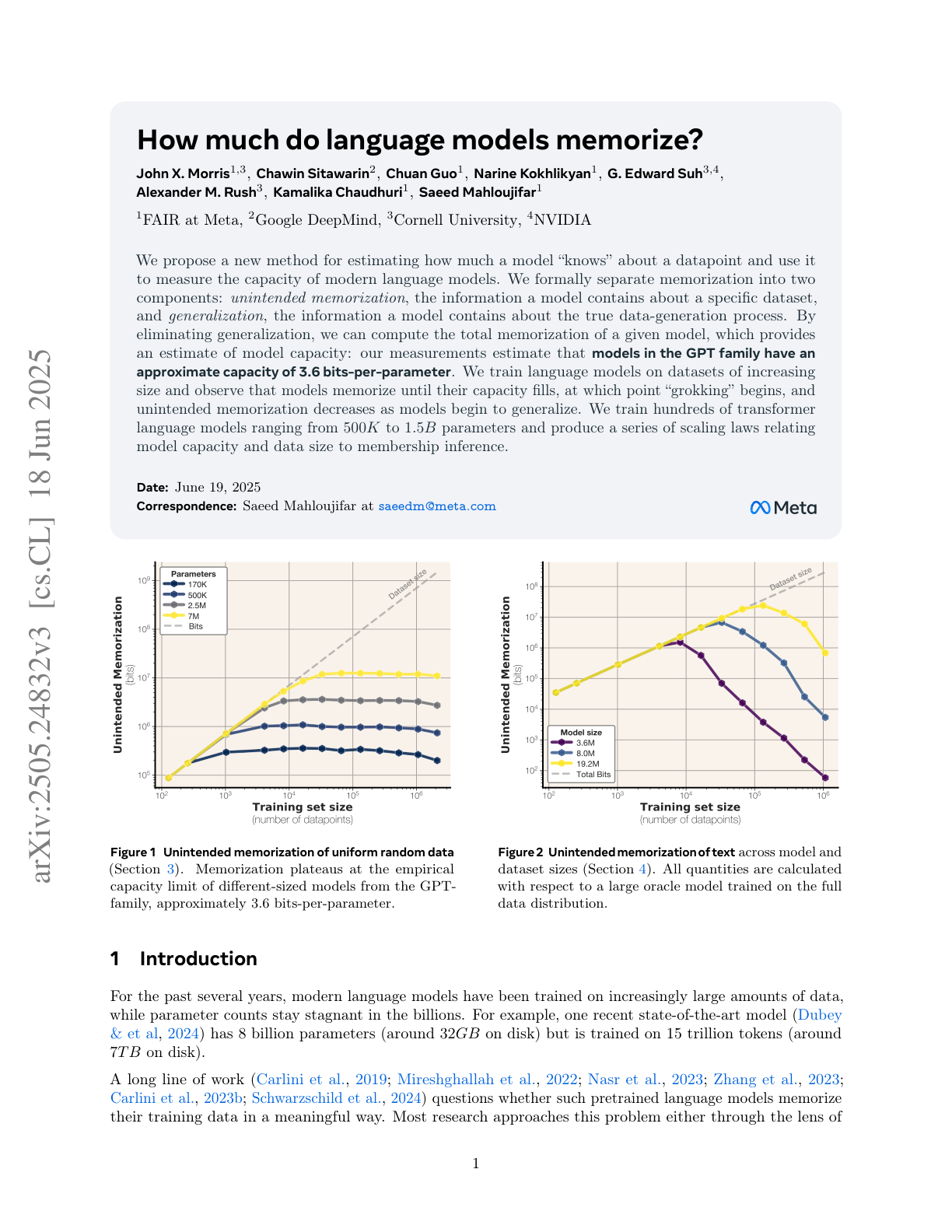
Memorization in LLMs
This study introduces a method to quantify how much a model memorizes versus generalizes, estimating GPT models have a capacity of ~3.6 bits per parameter. By training hundreds of models, the authors show that memorization saturates with data before generalization (“grokking”) kicks in, and derive new scaling laws linking capacity, data size, and membership inference.

Generalizable AI Predicts Immunotherapy Outcomes Across Cancers and Treatments
Introduces COMPASS, a concept bottleneck-based foundation model that predicts patient response to immune checkpoint inhibitors (ICIs) using tumor transcriptomic data. Unlike prior biomarkers (TMB, PD-L1, or fixed gene signatures), COMPASS generalizes across cancer types, ICI regimens, and clinical contexts with strong interpretability and performance. Key contributions:
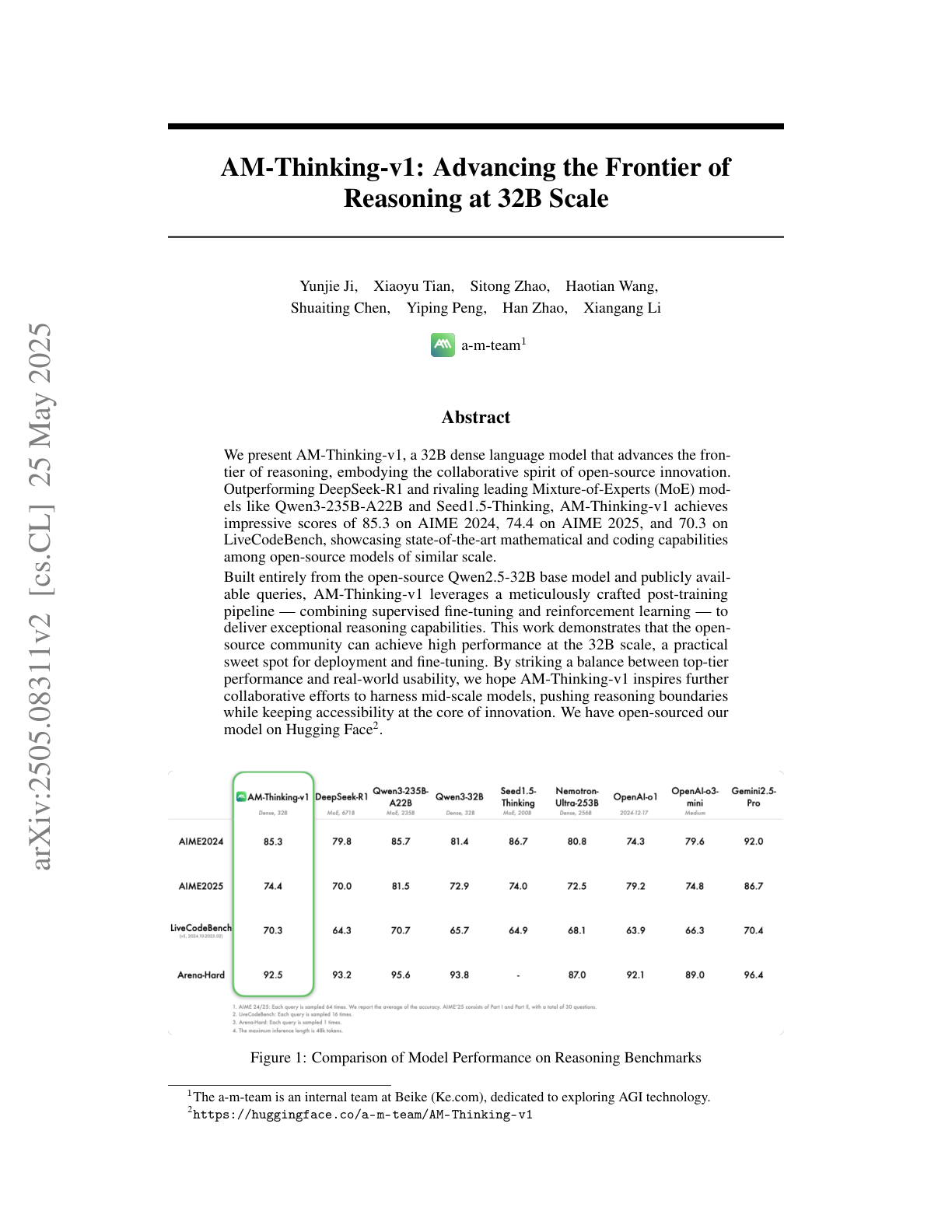
AM-Thinking-v1
Introduces a dense, open-source 32B language model that achieves state-of-the-art performance in reasoning tasks, rivaling significantly larger Mixture-of-Experts (MoE) models. Built upon Qwen2.5-32B, the model is trained entirely with public data and showcases how a meticulously crafted post-training pipeline can unlock competitive performance at mid-scale sizes. Key points:
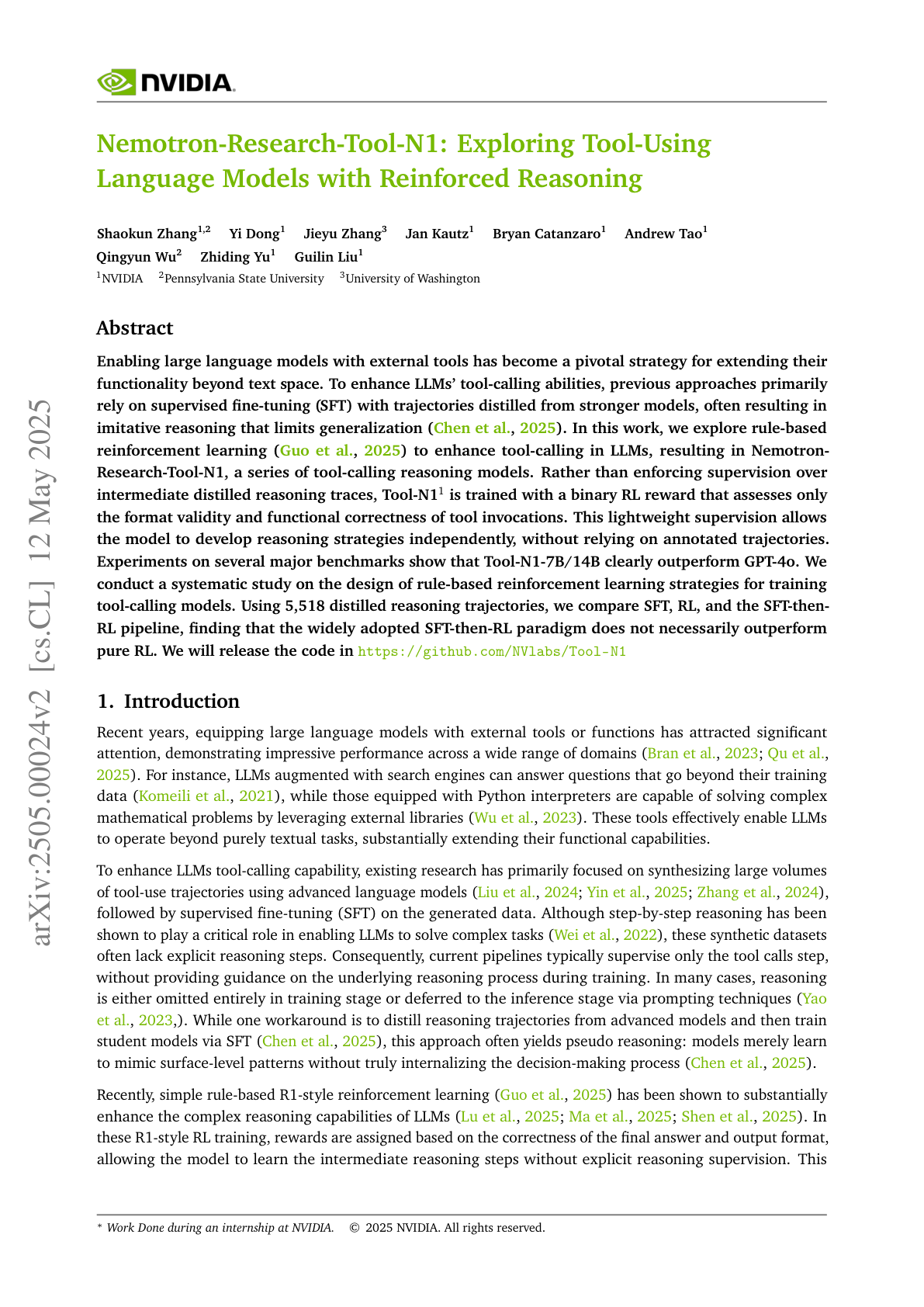
Nemotron-Research-Tool-N1
Introduces Tool-N1, a family of tool-using LLMs trained using a rule-based reinforcement learning (R1-style RL) approach, without reliance on supervised reasoning trajectories. The key idea is to enable models to learn to invoke external tools correctly through binary feedback based on functional correctness and format adherence, rather than step-by-step imitation.
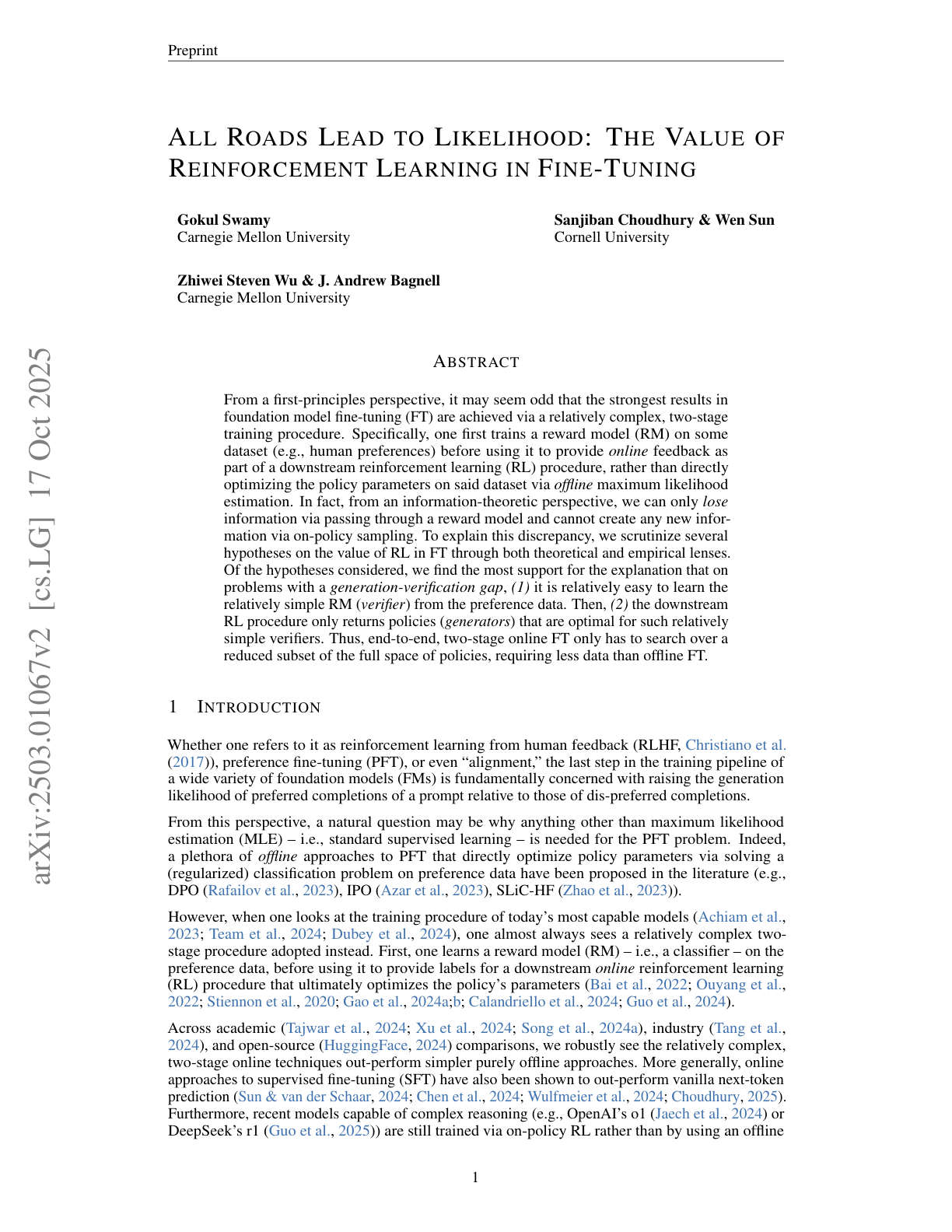
The Value of RL in Fine-Tuning
This work shows that, in theory, every popular preference-fine-tuning objective collapses to maximum-likelihood estimation (MLE), yet experiments show a consistent RL advantage on real tasks. They reconcile this gap with a generation-verification complexity hypothesis.
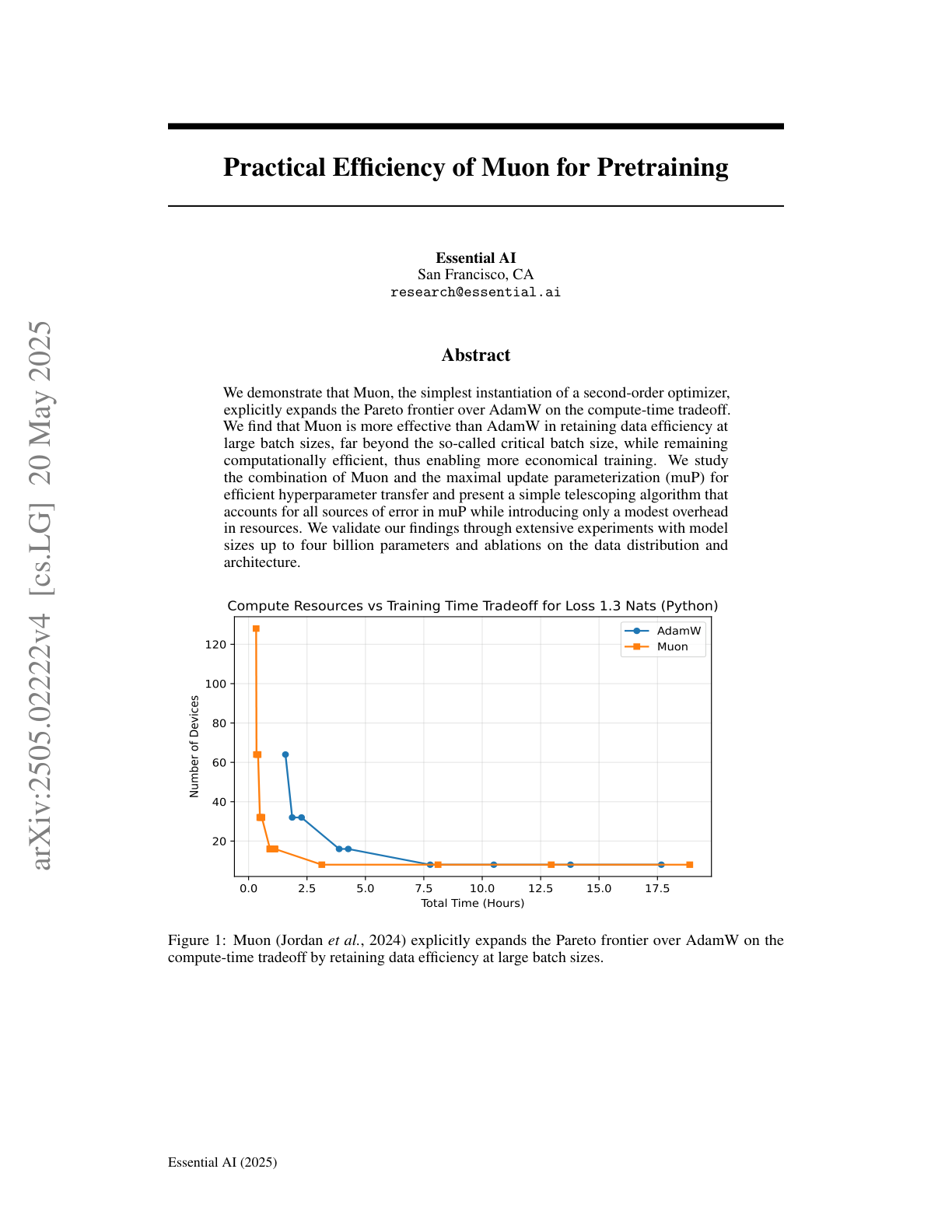
Practical Efficiency of Muon for Pretraining
Discusses how Muon, a simple second-order optimizer, outperforms AdamW in large-batch pretraining by expanding the compute-time Pareto frontier and maintaining better data efficiency. Combined with muP scaling and a novel telescoping algorithm for hyperparameter transfer, it enables faster training with minimal tuning overhead up to 4B parameter models.
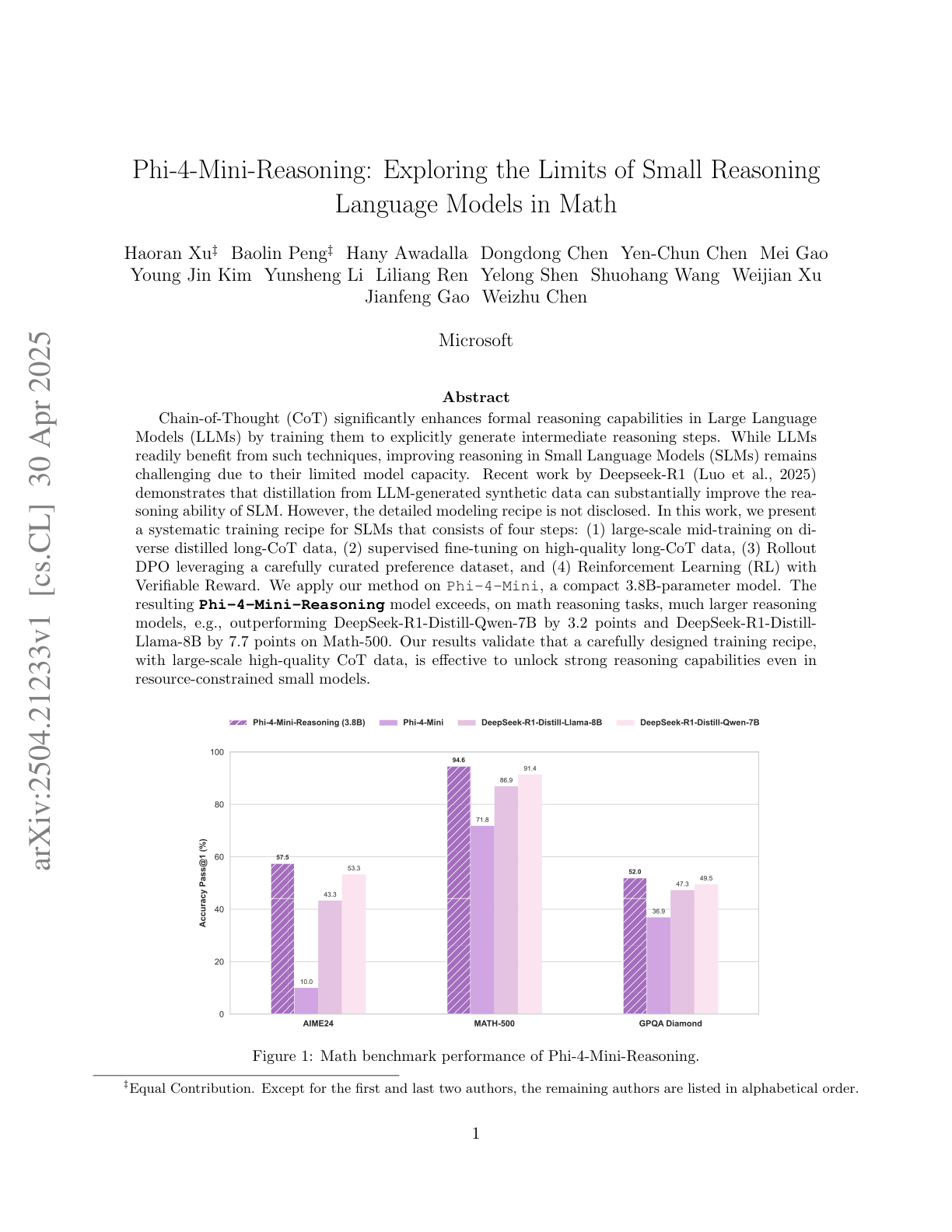
Phi-4-Mini-Reasoning
Microsoft released Phi-4-Mini-Reasoning to explore small reasoning language models for math. Highlights:
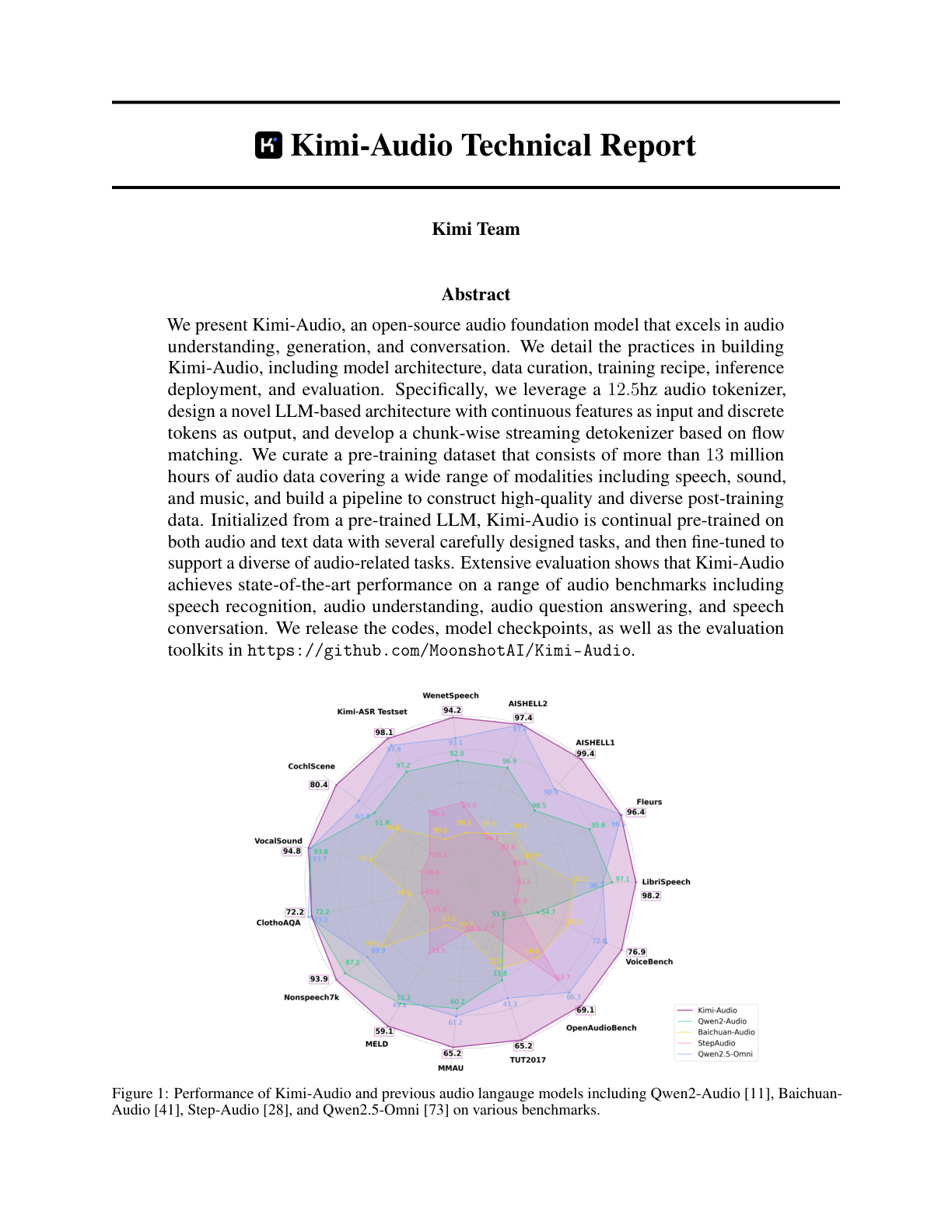
Kimi-Audio
Kimi-Audio is a new open-source audio foundation model built for universal audio understanding, generation, and speech conversation. The model architecture uses a hybrid of discrete semantic audio tokens and continuous Whisper-derived acoustic features. It is initialized from a pre-trained LLM and trained on 13M+ hours of audio, spanning speech, sound, and music. It also supports a streaming detokenizer with chunk-wise decoding and a novel look-ahead mechanism for smoother audio generation. Extensive benchmarking shows that Kimi-Audio outperforms other audio LLMs across multiple modalities and tasks. Key highlights:
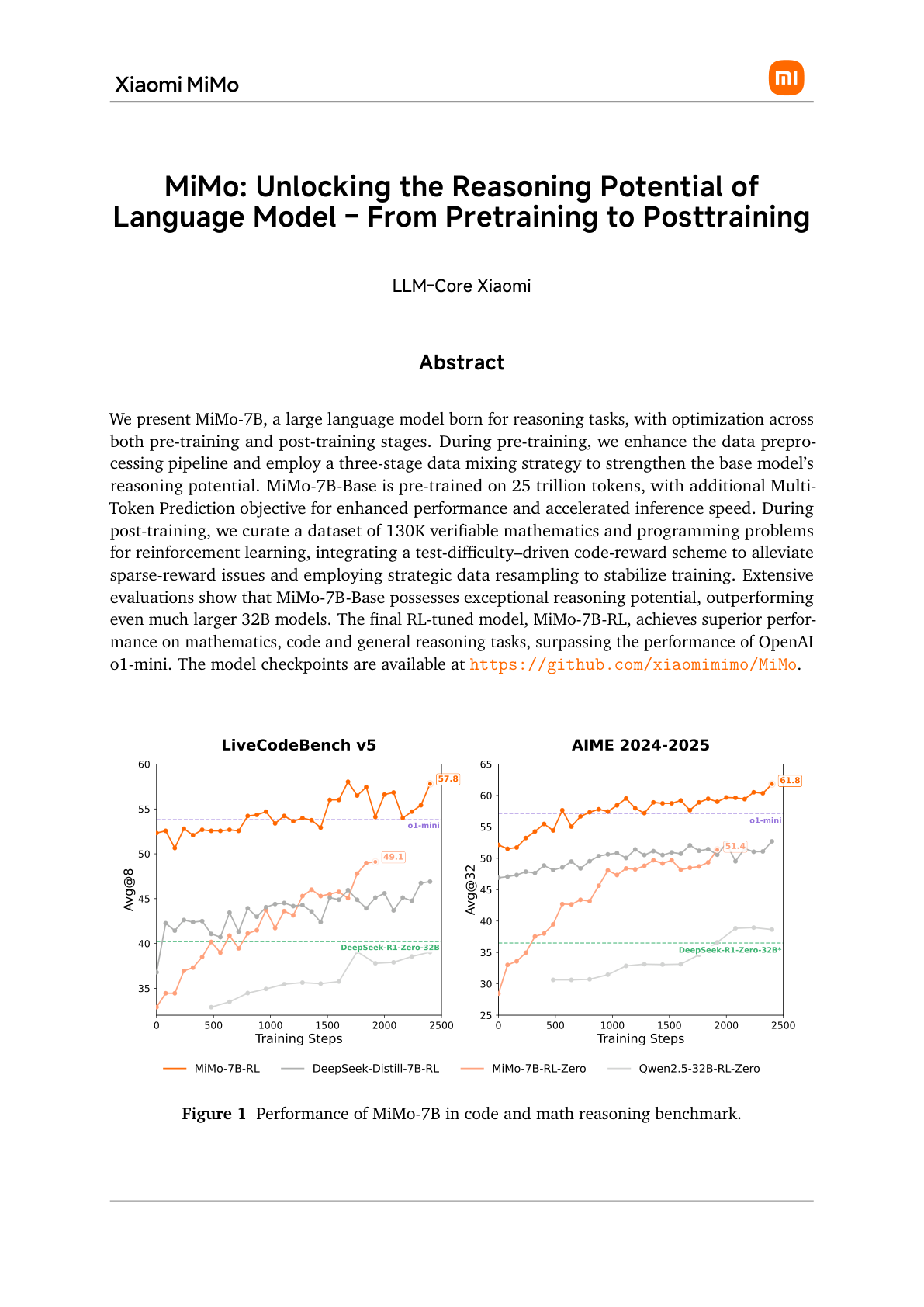
MiMo-7B
Xiaomi releases MiMo-7B, a new language model for reasoning tasks. MiMo-7B is explicitly designed for advanced reasoning across math and code. Highlights:
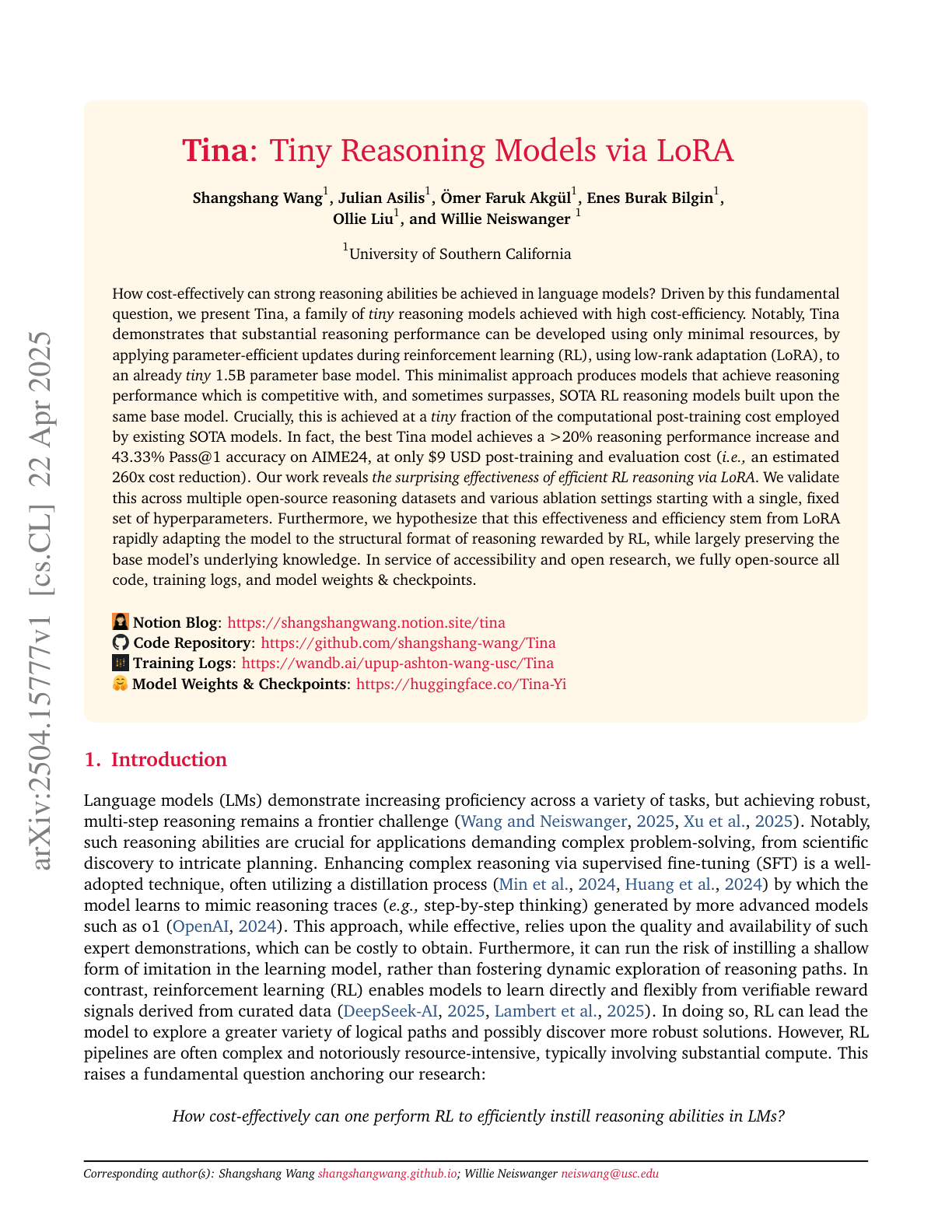
Tiny Reasoning Models
Tina is a family of 1.5B parameter reasoning models trained using LoRA-based reinforcement learning (RL) to achieve high reasoning accuracy at very low cost. It outperforms or matches full fine-tuned models on reasoning tasks like AIME and MATH with only ~$9 post-training cost, demonstrating that efficient reasoning can be instilled via minimal updates to a tiny model.
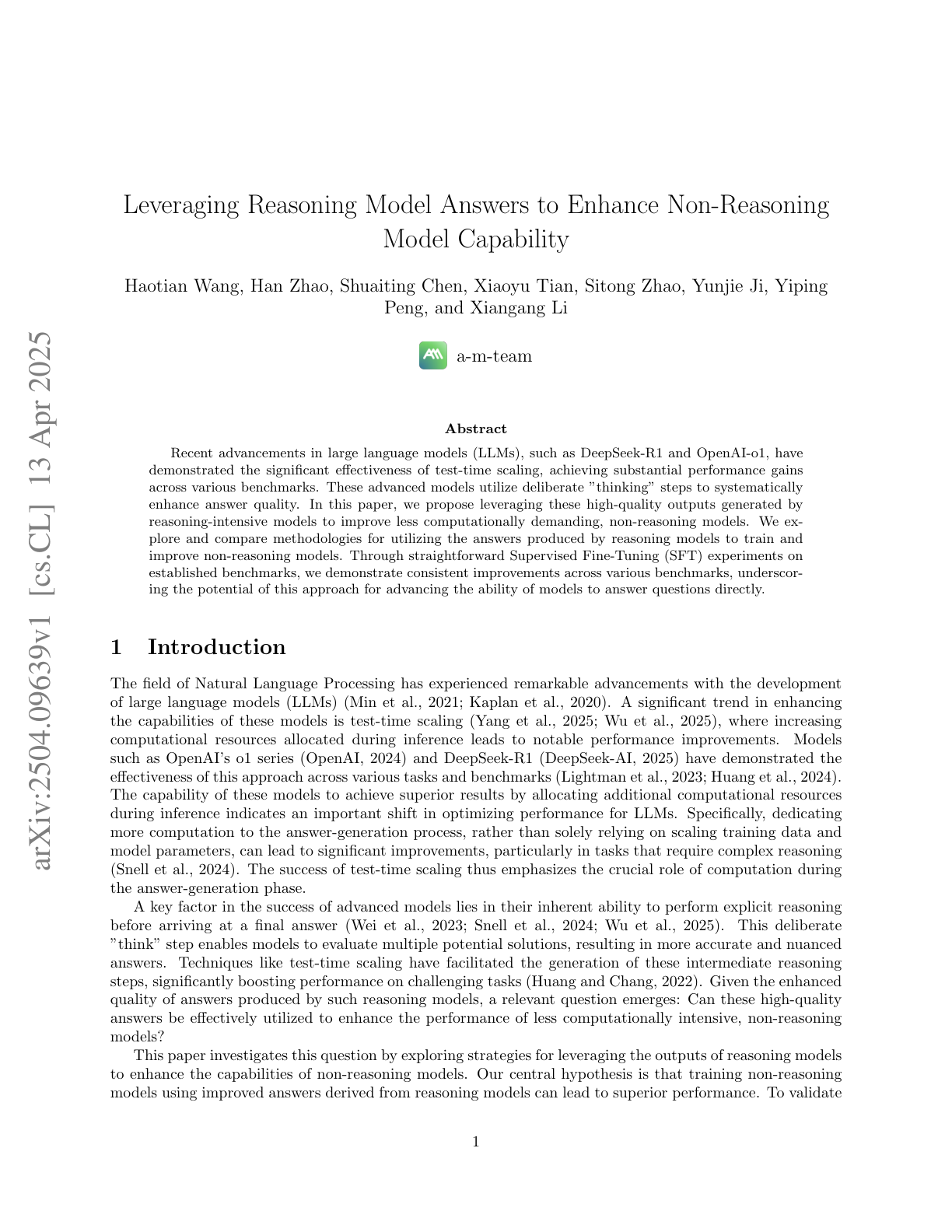
Enhancing Non-Reasoning Models with Reasoning Models
Researchers explore how to distill reasoning-intensive outputs (answers and explanations) from top-tier LLMs into more lightweight models that don’t explicitly reason step by step. By fine-tuning smaller models on the high-quality final answers (and optionally summarized thinking traces) from advanced reasoning models, they demonstrate consistent performance boosts across multiple benchmarks.
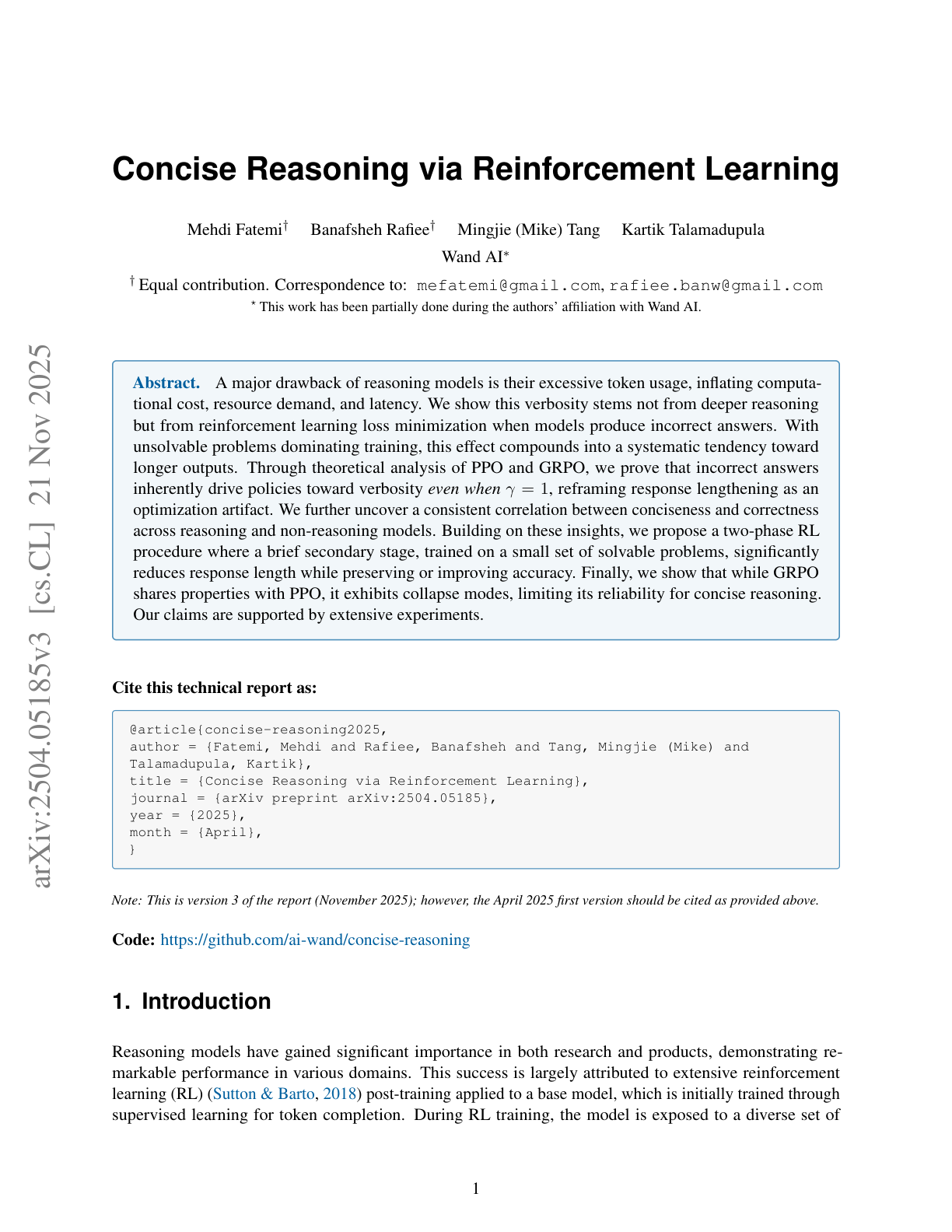
Concise Reasoning via RL
This new paper proposes a new training strategy that promotes concise and accurate reasoning in LLMs using RL. It challenges the belief that long responses improve accuracy; it offers both theoretical and empirical evidence showing that conciseness often correlates with better performance.
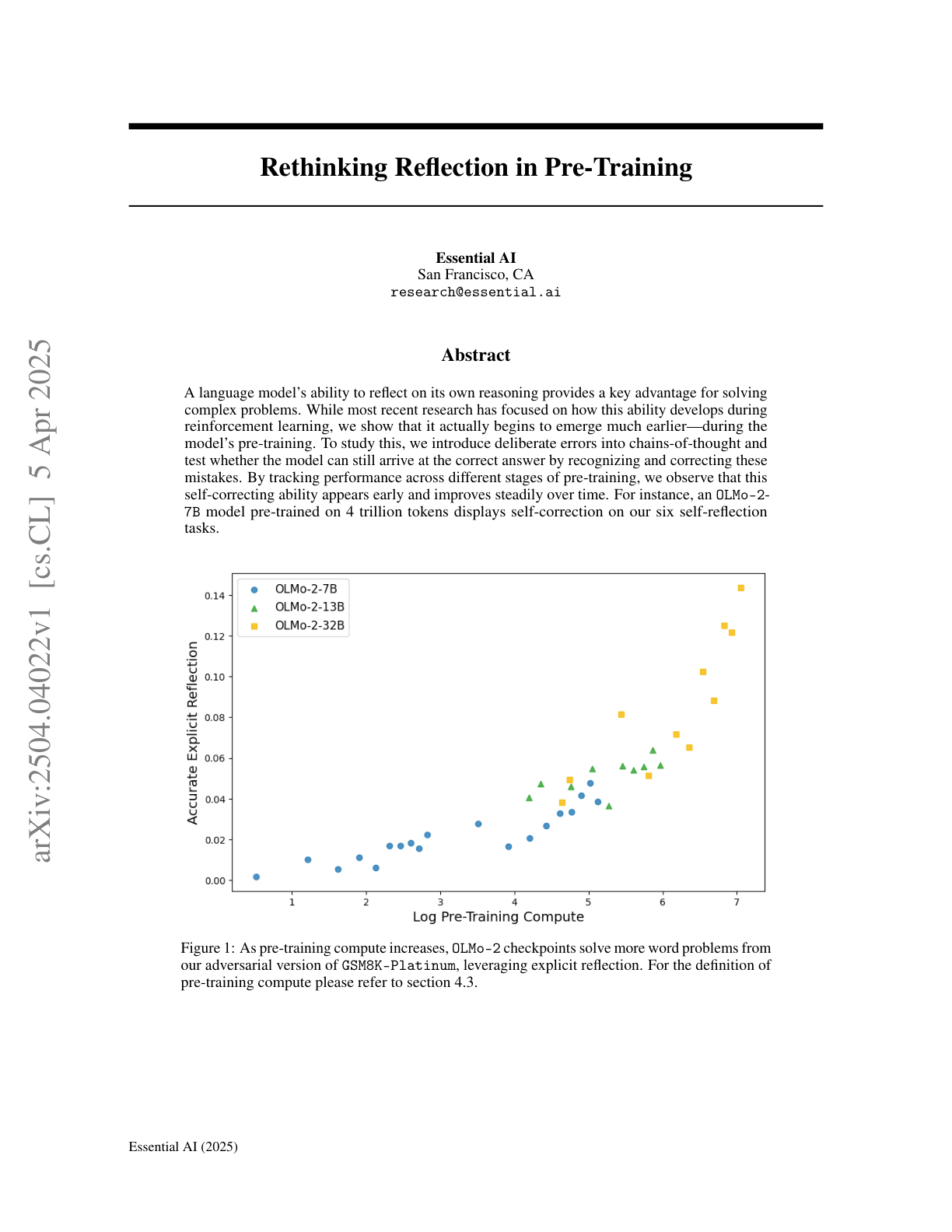
Rethinking Reflection in Pre-Training
Reflection — the ability of LLMs to identify and correct their own reasoning — has often been attributed to reinforcement learning or fine-tuning. This paper argues otherwise: reflection emerges during pre-training. The authors introduce adversarial reasoning tasks to show that self-reflection and correction capabilities steadily improve as compute increases, even in the absence of supervised post-training. Key contributions:
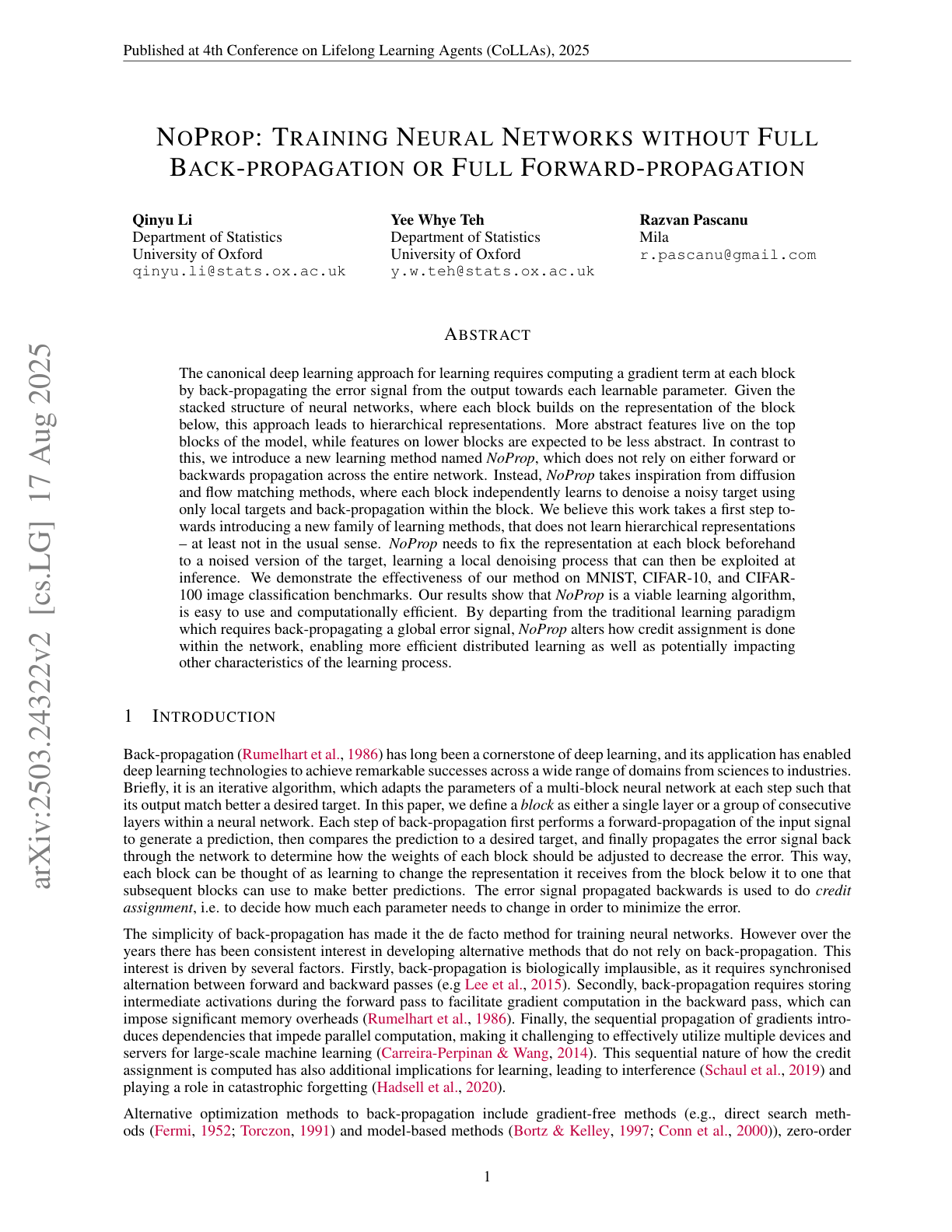
NoProp
NoProp is a novel gradient-free learning method where each neural network layer independently learns to denoise a noisy version of the target, inspired by diffusion and flow matching. Unlike backpropagation, it avoids hierarchical representation learning and achieves competitive performance and efficiency on image classification benchmarks like MNIST and CIFAR.
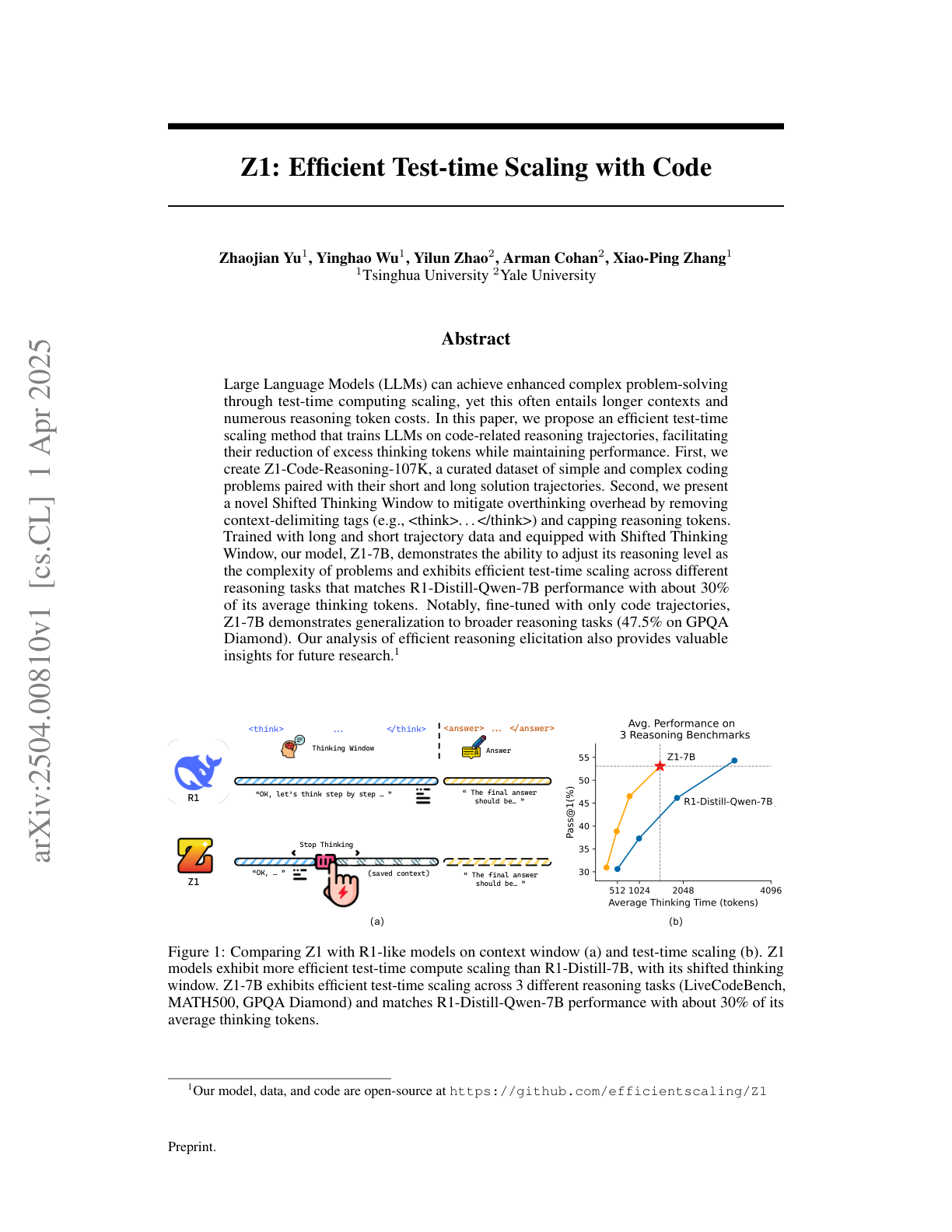
Efficient Test-time Scaling with Code
Z1 is a new method for making large language models more compute-efficient at test time, especially during reasoning. The core idea is to train LLMs with short and long code-based reasoning trajectories, and then dynamically adjust reasoning depth during inference. Key contributions: ● Z1-Code-Reasoning-107K dataset – They construct a 107K-sample dataset with short and long reasoning paths for simple and complex coding problems. Trajectories are distilled from QwQ-32B and paired to help the model learn when to stop thinking. ● Shifted Thinking Window – A new test-time strategy that eliminates explicit <think delimiters. Instead, the model adapts reasoning token budget based on problem difficulty. Simple problems invoke shallow reasoning; complex ones get capped (e.g., 4096 tokens max), with hints nudging the model to finalize the answer. ● Big efficiency gains – The 7B-scale model Z1-7B matches R1-Distill-Qwen-7B across multiple reasoning tasks (MATH500, LiveCodeBench, GPQA Diamond) but with ~30% of the reasoning tokens. For instance, on GPQA Diamond, Z1-7B achieves 47.5% while using less than half the tokens. ● Code reasoning transfers to general tasks – Despite being trained only on code-based CoT data, Z1 generalizes well to broader domains like science and math, outperforming other 7B reasoning models (e.g., OpenThinker-7B, s1.1-7B) across multiple benchmarks. ● What makes reasoning data effective? – Ablation studies reveal two key dataset design levers: (1) longer reasoning trajectories improve inference quality; (2) larger training sample sizes boost average thinking time and accuracy, even without altering trajectory length.
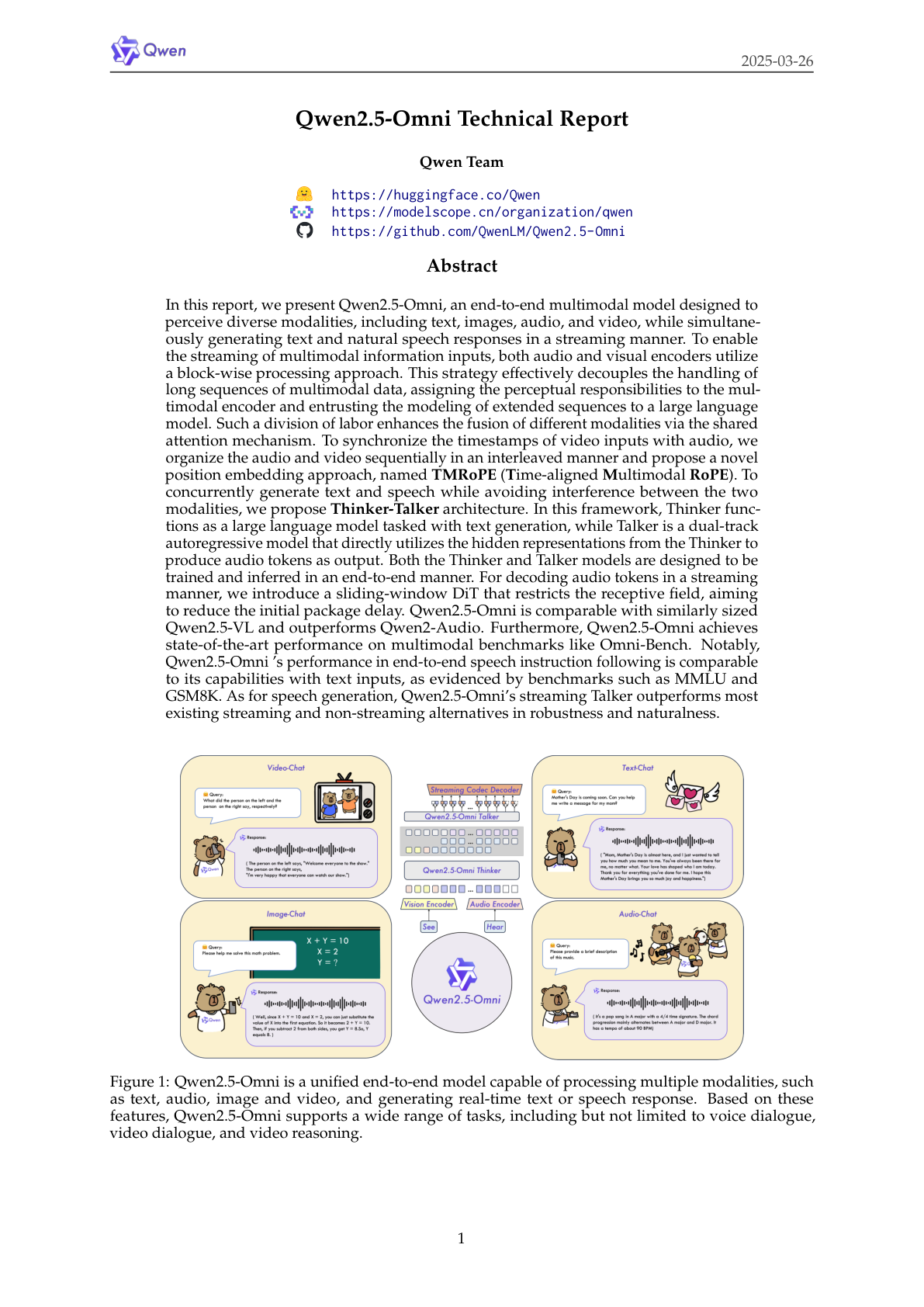
Qwen2.5-Omni
Qwen2.5-Omni is a single end-to-end multimodal model that can perceive and understand text, audio, image, and video, and generate both text and speech in real time. It introduces architectural and training innovations that push the boundaries of streaming, multi-signal intelligence. Highlights: ● Thinker-Talker architecture – Inspired by the human brain and mouth, Qwen2.5-Omni separates reasoning (Thinker) and speech generation (Talker). Thinker (a transformer decoder) handles all perception and text generation. Talker (a dual-track autoregressive decoder) generates speech by consuming both text and hidden states from Thinker. Together, they’re trained end-to-end for synchronized text-speech output. ● Streaming-first design – To support real-time interaction, Qwen2.5-Omni implements block-wise encoders (for audio and vision) and a sliding-window codec generator for streaming audio. The model introduces TMRoPE (Time-aligned Multimodal RoPE), a 3D positional encoding system that aligns video and audio inputs to the same time axis. ● Pretraining scale & alignment – Trained on over 1.2 trillion tokens of diverse multimodal data, including 300B audio and 100B video-audio tokens. Uses instruction-tuned ChatML formatting and performs multi-stage post-training for both Thinker and Talker. Talker undergoes RL fine-tuning (DPO) and multi-speaker adaptation to ensure natural, stable speech output. ● SOTA across modalities – Qwen2.5-Omni achieves state-of-the-art on OmniBench, surpasses Qwen2-Audio in ASR/S2TT, and matches or beats Qwen2.5-VL in image and video tasks. On SEED zero-shot TTS, it outperforms CosyVoice 2 and F5-TTS in naturalness and stability, with low WER and high speaker similarity. ● Closes the voice-text gap – On a voice-instruction benchmark (converted from MMLU, GSM8K, etc.), Qwen2.5-Omni nearly matches its own text-instructed sibling Qwen2-7B, showing dramatic improvements in speech-based instruction following.
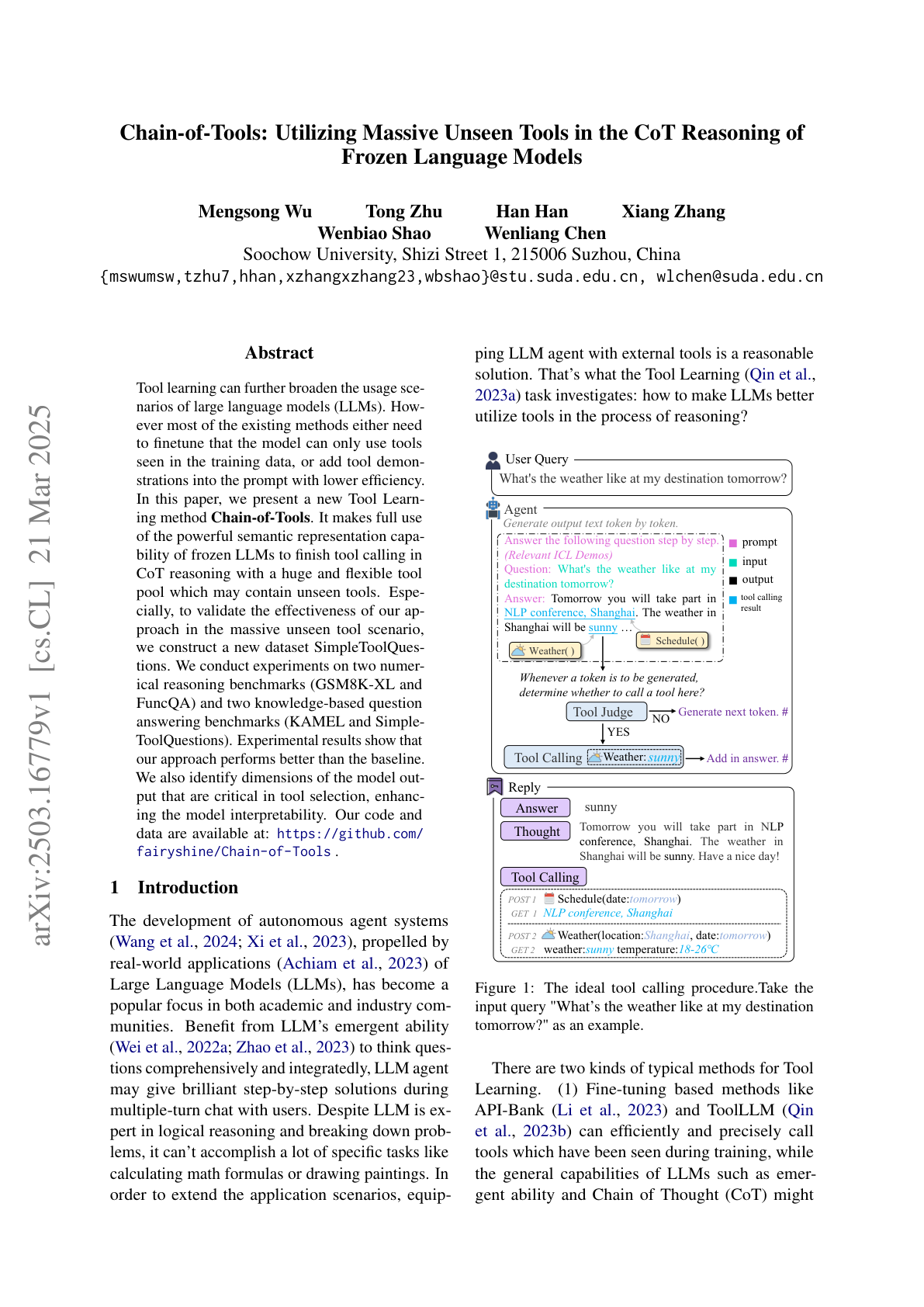
Chain-of-Tools
This new paper presents Chain-of-Tools (CoTools), a new method to enable LLMs to incorporate expansive external toolsets—including tools never seen during training—while preserving CoT (chain-of-thought) reasoning. Highlights: ● Frozen LLM with lightweight fine-tuning – Unlike conventional approaches, CoTools keeps the LLM’s parameters frozen, instead fine-tuning separate modules (a Tool Judge and Tool Retriever) on top of the model’s hidden states. This preserves the LLM’s core capabilities while letting it call an open-ended set of tools during reasoning. ● Massive unseen tools – CoTools treats tools as semantic vectors computed from their textual descriptions. Even tools that never appear in the fine-tuning data can be invoked if they match the model’s query vectors, enabling new tools to be plugged in without retraining the entire system. ● Tool calls integrated into CoT – The system determines whether and when to call a tool in the middle of generating an answer. It then selects the best tool from thousands of candidates based on learned representations of the query and partial solution context. This helps to significantly boost accuracy on complex tasks. ● Strong gains on reasoning and QA – Experiments on GSM8K-XL, FuncQA, KAMEL, and the newly introduced SimpleToolQuestions dataset (with 1,836 tools) show improved tool-selection accuracy and superior final answers versus baseline methods. Notably, CoTools consistently scales to large tool pools and generalizes to unseen tools.
A Review of DeepSeek Models
This paper provides an in-depth review of the cutting-edge techniques behind DeepSeek's open-source LLMs—DeepSeek-V3 and DeepSeek-R1. These models achieve state-of-the-art performance with significantly lower resource requirements compared to proprietary counterparts. Key highlights include:
Compute Optimal Scaling of Skills
Researchers from the University of Wisconsin and Meta AI investigate how different skills (knowledge-based QA vs. code generation) exhibit contrasting optimal scaling behaviors in LLMs. Their key question: does the compute-optimal trade-off between model size and data volume depend on the type of skill being learned? Surprisingly, the answer is yes—they show distinct “data-hungry” vs. “capacity-hungry” preferences per skill. Highlights: