AI Papers of the Week
Every paper worth reading in AI, hand-picked one week at a time.
Discover and explore top AI papers with Claude Code or Codex
npx @dair-ai/mcp setup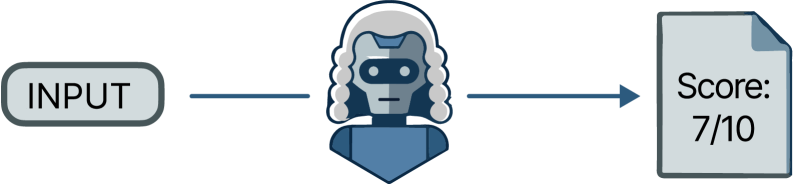
Agent-as-a-Judge
This comprehensive survey traces the evolution from LLM-based evaluation to agentic evaluation approaches, establishing the first taxonomy for this paradigm shift. As evaluation tasks grow more intricate and specialized, traditional single-pass language model judges become insufficient.
Efficient Lifelong Memory for LLM Agents
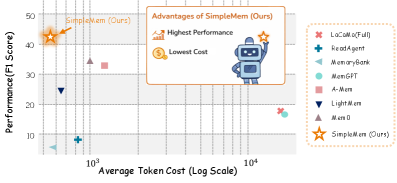
SimpleMem introduces a memory framework built on semantic lossless compression that addresses the tension between maintaining comprehensive long-term memory and minimizing token overhead for LLM agents. The approach achieves a 26.4% F1 improvement over baselines while reducing token consumption by up to 30-fold during inference.
MemRL
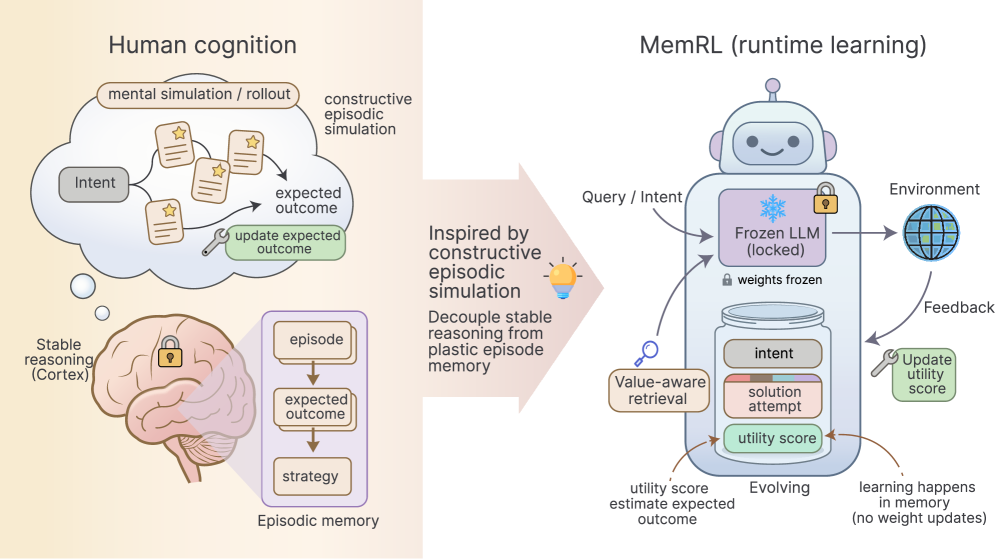
MemRL enables LLM agents to improve continuously without retraining by separating a frozen model’s reasoning from an evolving memory system. A Two-Phase Retrieval mechanism filters candidates by semantic relevance, then ranks them using learned Q-values that improve through trial-and-error, outperforming existing methods on HLE, BigCodeBench, ALFWorld, and Lifelong Agent Bench.
Recursive Language Models
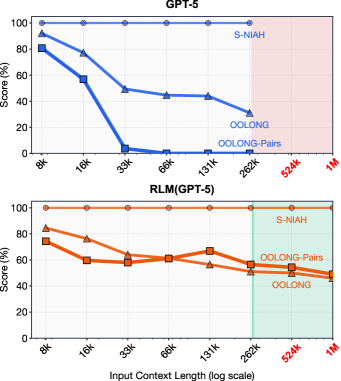
Recursive Language Models (RLMs) are a general inference strategy that allows LLMs to process arbitrarily long prompts by treating them as part of an external environment. Rather than feeding long contexts directly into the model, RLMs load the prompt as a variable in a Python REPL and let the LLM programmatically examine, decompose, and recursively call itself over snippets.
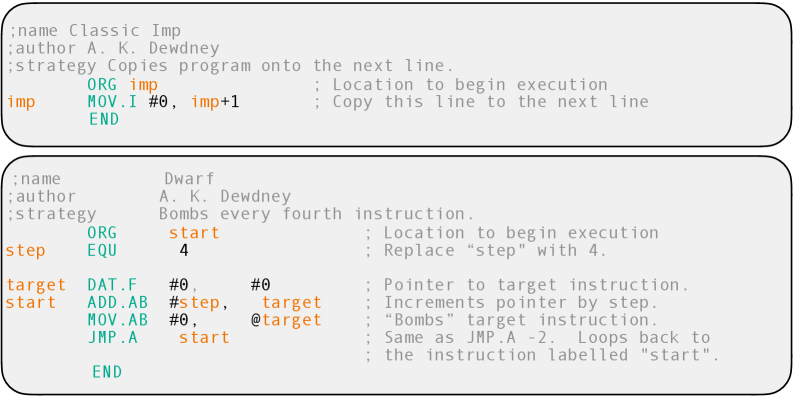
Adversarial Program Evolution with LLMs
Digital Red Queen (DRQ) introduces an algorithm where LLMs evolve assembly-like programs called “warriors” that compete for control of a virtual machine in the game of Core War. Rather than optimizing toward static objectives, DRQ embraces “Red Queen” dynamics where goals continually shift based on competition, demonstrating how adversarial self-play can drive the evolution of increasingly sophisticated programs.
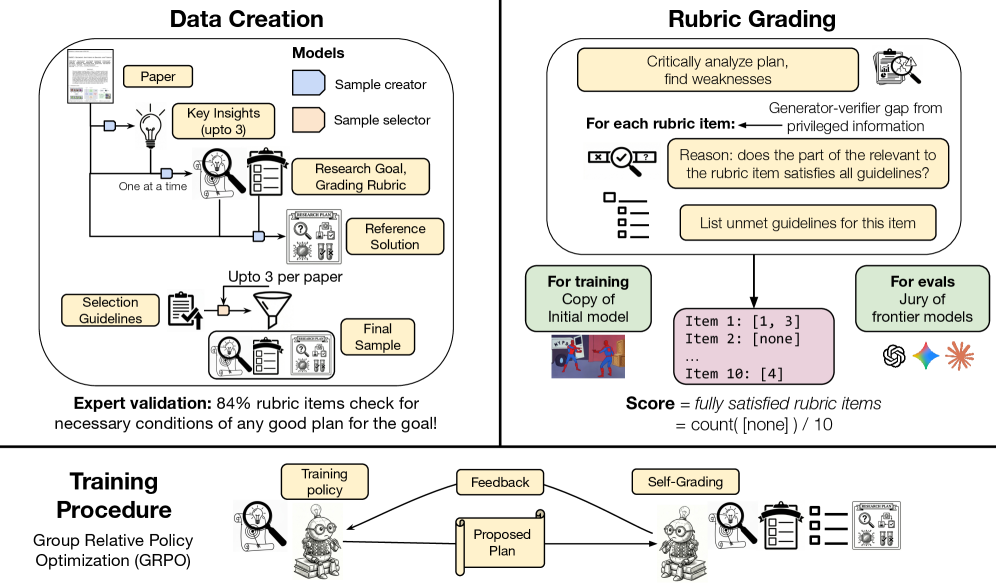
Training AI Co-Scientists Using Rubric Rewards
This paper from Meta Superintelligence Labs presents a scalable method to train language models to generate better research plans without expensive human supervision or real-world execution. The approach automatically extracts research goals and goal-specific grading rubrics from scientific papers, then uses reinforcement learning with self-grading to improve plan generation.
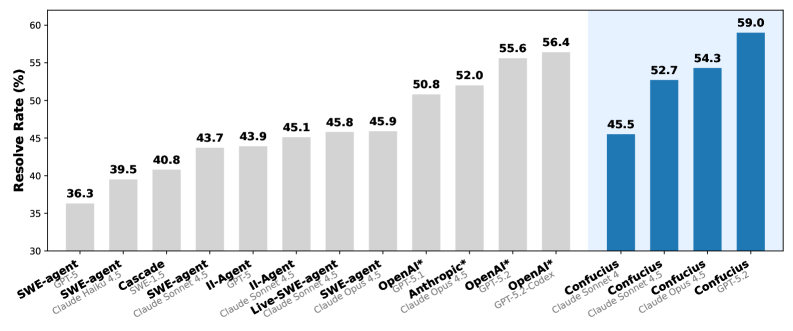
Confucius Code Agent
Confucius Code Agent (CCA) is a software engineering agent designed to operate on large-scale codebases. Built on the Confucius SDK, it introduces a three-axis design philosophy separating Agent Experience (AX), User Experience (UX), and Developer Experience (DX) to enable robust multi-step reasoning and modular tool use.
SciSciGPT
SciSciGPT is an open-source AI collaborator that uses the science of science domain as a testbed for LLM-powered research tools. Its multi-agent architecture with five specialized modules automates complex research workflows and completes tasks in about 10% of the time required by experienced researchers while producing higher-quality outputs.
SWE-EVO
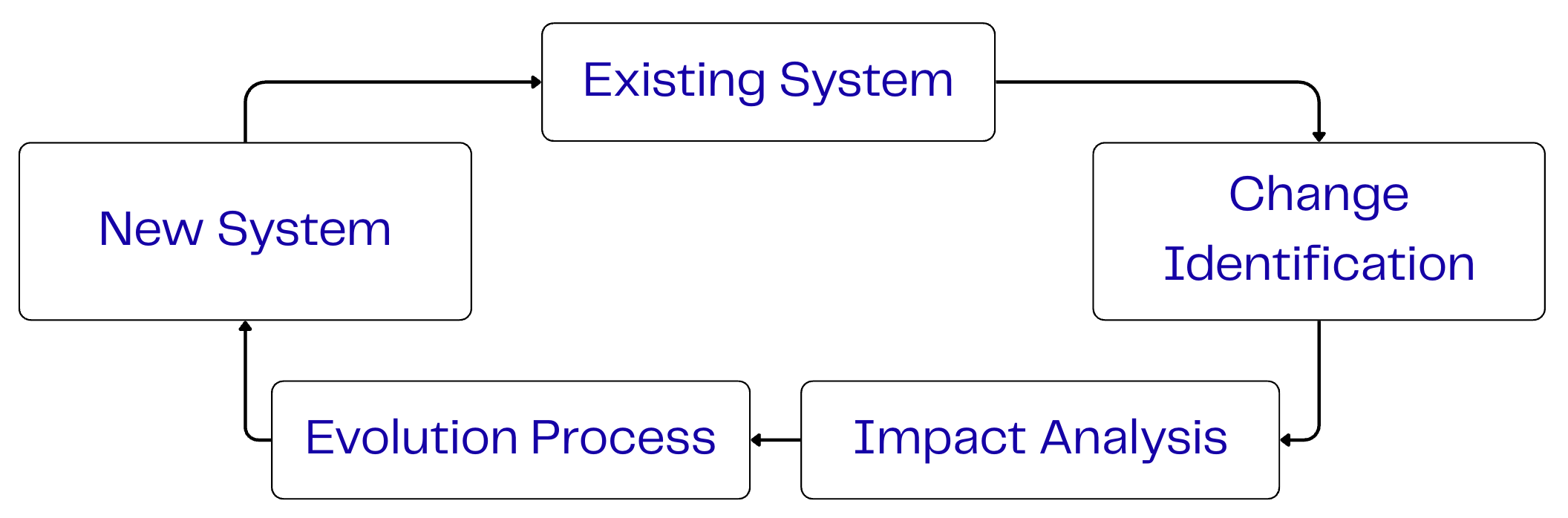
SWE-EVO introduces a benchmark for evaluating coding agents on long-horizon software evolution tasks that require multi-step modifications spanning an average of 21 files per task. The benchmark reveals significant limitations of current agents: GPT-5 with OpenHands achieves only 21% on SWE-EVO compared to 65% on SWE-Bench Verified, highlighting the gap between isolated bug fixes and realistic software development scenarios.
SAGA
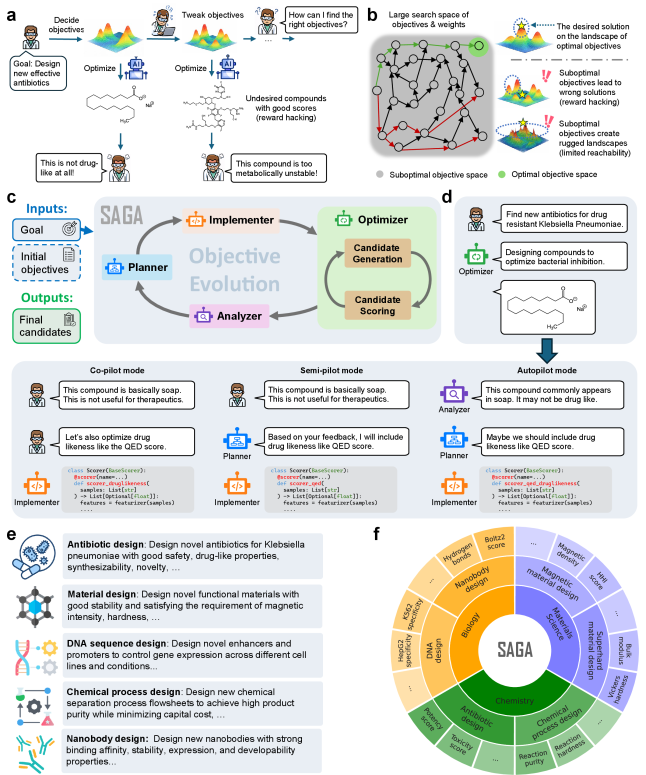
SAGA (Scientific Autonomous Goal-evolving Agent) introduces a framework for automating objective function design in AI-driven scientific discovery. Rather than optimizing fixed objectives specified by scientists, SAGA dynamically reformulates research goals throughout the discovery process to avoid reward hacking issues.
Step-DeepResearch
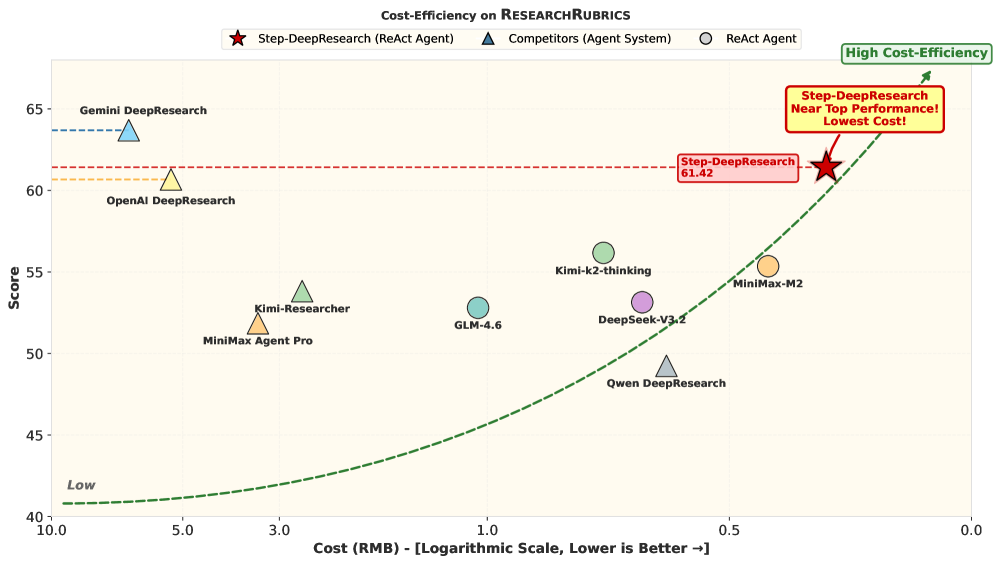
Step-DeepResearch is a 32B parameter deep research agent that rivals OpenAI and Gemini DeepResearch through atomic capability training - decomposing research into planning, information gathering, cross-source verification, and report writing. Achieving 61.42 on Scale AI ResearchRubrics with a streamlined ReAct-style design, it outperforms larger models while being the most cost-effective deep research agent available.
AgentReuse
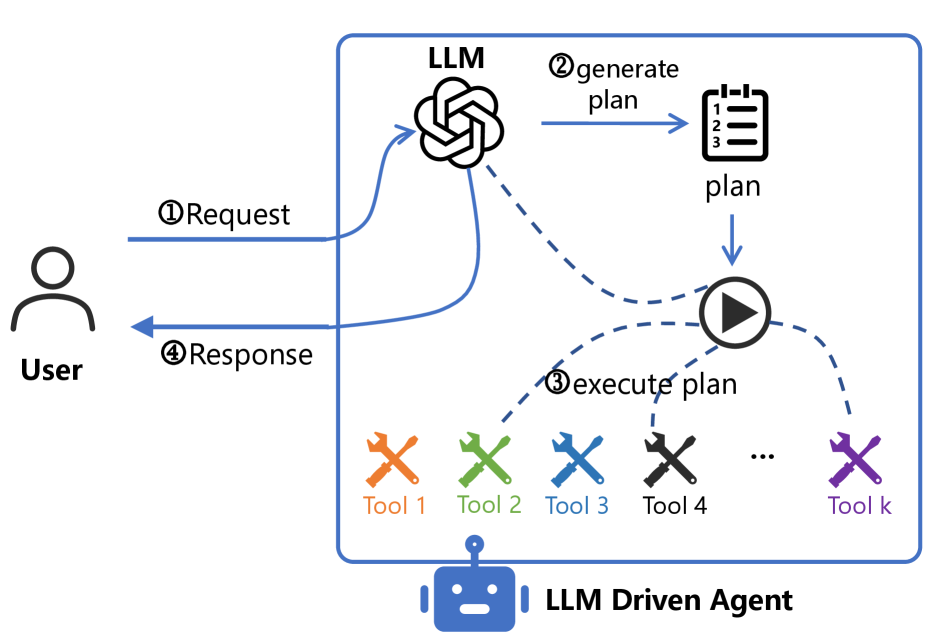
AgentReuse addresses latency bottlenecks in LLM-driven agents by caching and reusing plans for similar requests, observing that about 30% of agent requests are identical or similar. Using intent classification for semantic similarity rather than surface-level text comparison, the system achieves a 93% effective plan reuse rate and 93.12% latency reduction compared to systems without plan reuse.

LaMer
LaMer introduces a Meta-RL framework that enables LLM agents to actively explore and learn from environment feedback at test time. Unlike standard RL-trained agents that learn fixed policies and struggle with novel tasks, LaMer agents learn exploration strategies that transfer across environments.
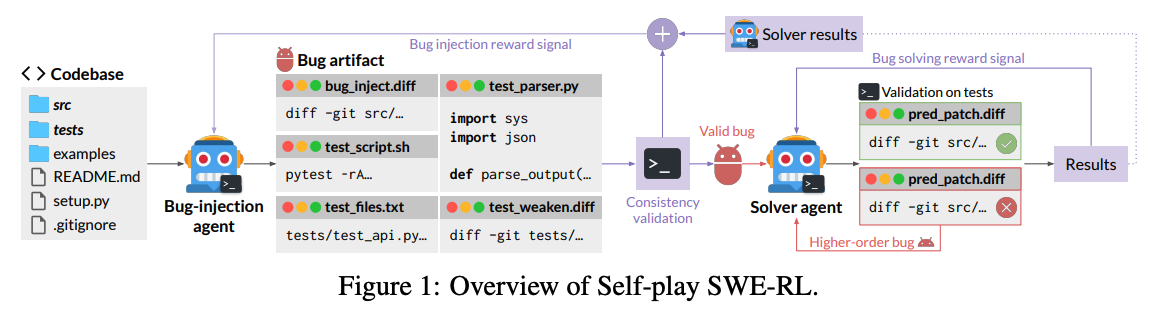
Self-Play SWE-RL
Self-Play SWE-RL (SSR) trains software engineering agents through self-play, requiring only access to sandboxed repositories with no human-labeled issues or tests. A single LLM learns to both inject and repair bugs of increasing complexity, achieving +10.4 points on SWE-bench Verified while consistently outperforming human-data baselines.
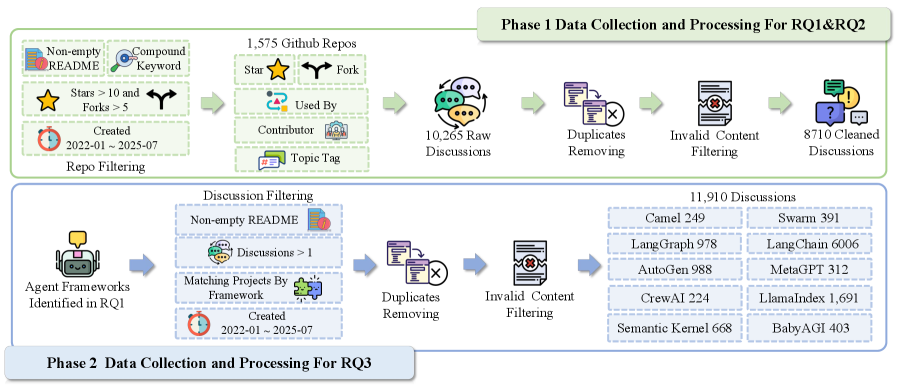
Empirical Study of Agent Developer Practices
This paper presents the first large-scale empirical study of LLM-based agent frameworks, analyzing 11,910 developer discussions across ten popular frameworks. The research identifies practical challenges developers face and evaluates how well current frameworks meet their needs.

Sophia
Sophia introduces System 3, a meta-layer beyond traditional dual-process theory that enables LLM agents to maintain persistent identity and align short-term actions with long-term goals. The framework achieves 80% reduction in reasoning steps for recurring operations and 40% performance improvement on high-complexity tasks.
Detailed Balance in LLM Agents
Researchers establish the first macroscopic physical law in LLM generation dynamics by applying the least action principle to analyze LLM-agent behavior. They discover statistical evidence of detailed balance in state transitions, suggesting LLMs implicitly learn underlying potential functions rather than explicit rules.
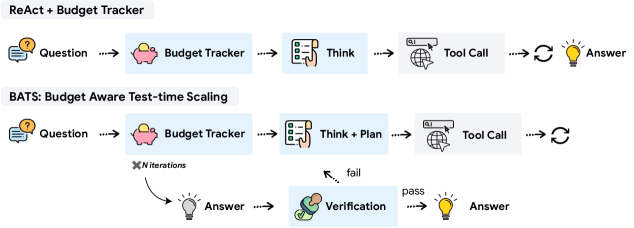
Budget Aware Test-time Scaling
Researchers discover that simply expanding tool-call budgets without proper awareness fails to improve agent performance. They introduce BATS (Budget Aware Test-time Scaling), a framework that makes web search agents budget-aware, enabling more strategic resource allocation and pushing the cost-performance Pareto frontier.
DeepCode
DeepCode is a fully autonomous framework for synthesizing complete codebases from scientific papers despite LLM context limitations. It treats repository synthesis as a channel optimization problem, achieving state-of-the-art on PaperBench and outperforming commercial tools like Cursor and Claude Code.
ARTEMIS
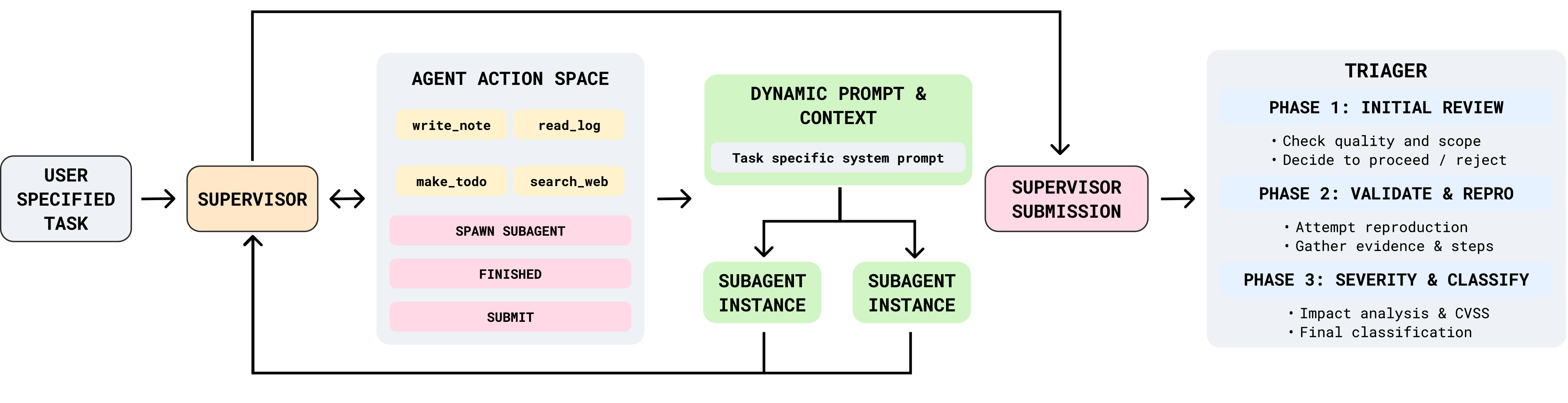
Stanford researchers conducted the first head-to-head evaluation of AI agents against human cybersecurity professionals on a live enterprise network with approximately 8,000 hosts. Their multi-agent framework ARTEMIS placed second overall, discovering 9 valid vulnerabilities with 82% accuracy and outperforming 9 of 10 human testers at a fraction of the cost (18 dollars per hour vs 60 dollars per hour for professionals).
Towards a Science of Scaling Agent Systems
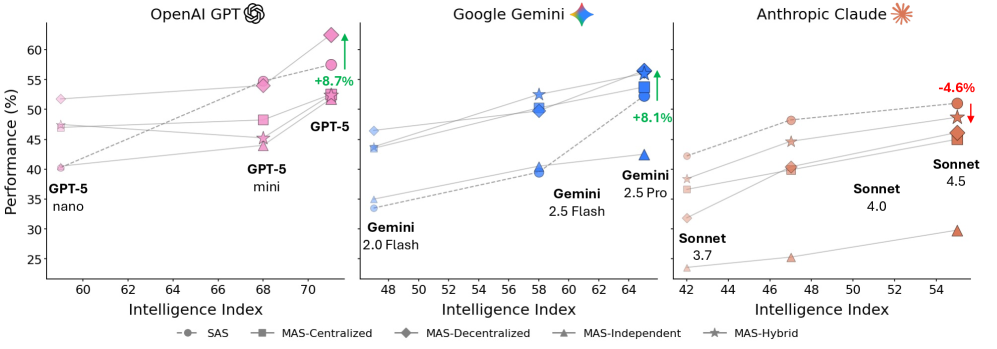
Researchers from Google present a controlled evaluation framework for agent systems, challenging the assumption that “more agents are all you need.” Across 180 configurations spanning three LLM families and four agentic benchmarks, the study establishes quantitative principles for when multi-agent coordination helps versus hurts performance.
Agentic AI Adaptation Survey
Researchers from UIUC, Stanford, Berkeley, and other institutions present the first comprehensive taxonomy of adaptation strategies for agentic AI systems. The survey organizes recent advances into a unified framework covering how agents and their tools can be modified to achieve higher task performance, improved reliability, and better generalization across diverse scenarios.
AI and Human Co-Improvement
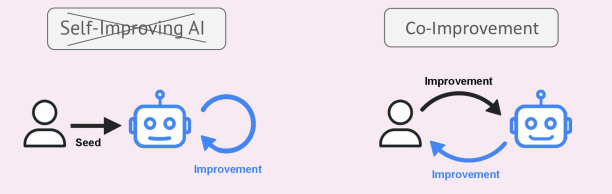
Meta FAIR researchers Jason Weston and Jakob Foerster argue that fully autonomous self-improving AI is neither the fastest nor safest path to superintelligence. Instead, they advocate for co-improvement: building AI that collaborates with human researchers to conduct AI research together, from ideation to experimentation.
AI Agent Adoption Study
Harvard and Perplexity researchers present the first large-scale field study of AI agent adoption using hundreds of millions of anonymized interactions from Perplexity’s Comet browser. Productivity and Learning account for 57% of agentic queries, with digital technology workers (28% of adopters) and knowledge-intensive sectors leading adoption. Users in higher GDP countries with greater educational attainment are more likely to adopt agents, and over time, users shift from media and travel tasks toward more cognitively oriented topics.