AI Papers of the Week
Every paper worth reading in AI, hand-picked one week at a time.
Discover and explore top AI papers with Claude Code or Codex
npx @dair-ai/mcp setup
Synthetic Dataset Generation for RAG Evaluation with Multi-Agent Systems
The paper proposes a modular, three-agent pipeline that auto-generates synthetic QA datasets for evaluating RAG systems while enforcing privacy. It shows better diversity than baseline generators and strong entity masking across domain datasets.
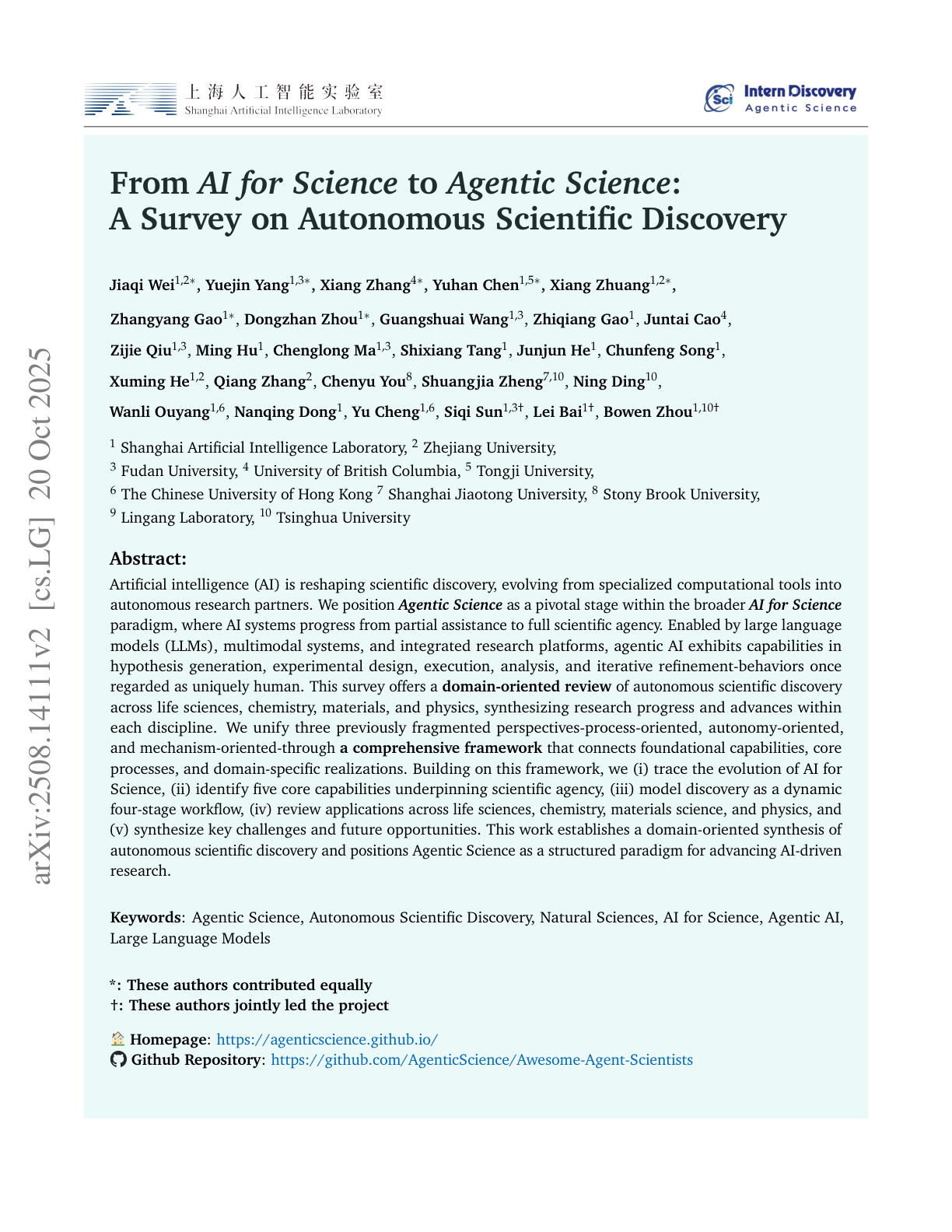
Agentic Science
This survey introduces Agentic Science as the next stage of AI for Science, where AI evolves from a support tool to an autonomous research partner capable of hypothesis generation, experimentation, and iterative discovery. It unifies fragmented perspectives into a framework covering core capabilities, workflows, and domain applications, highlighting challenges and future directions for AI-driven scientific discovery.
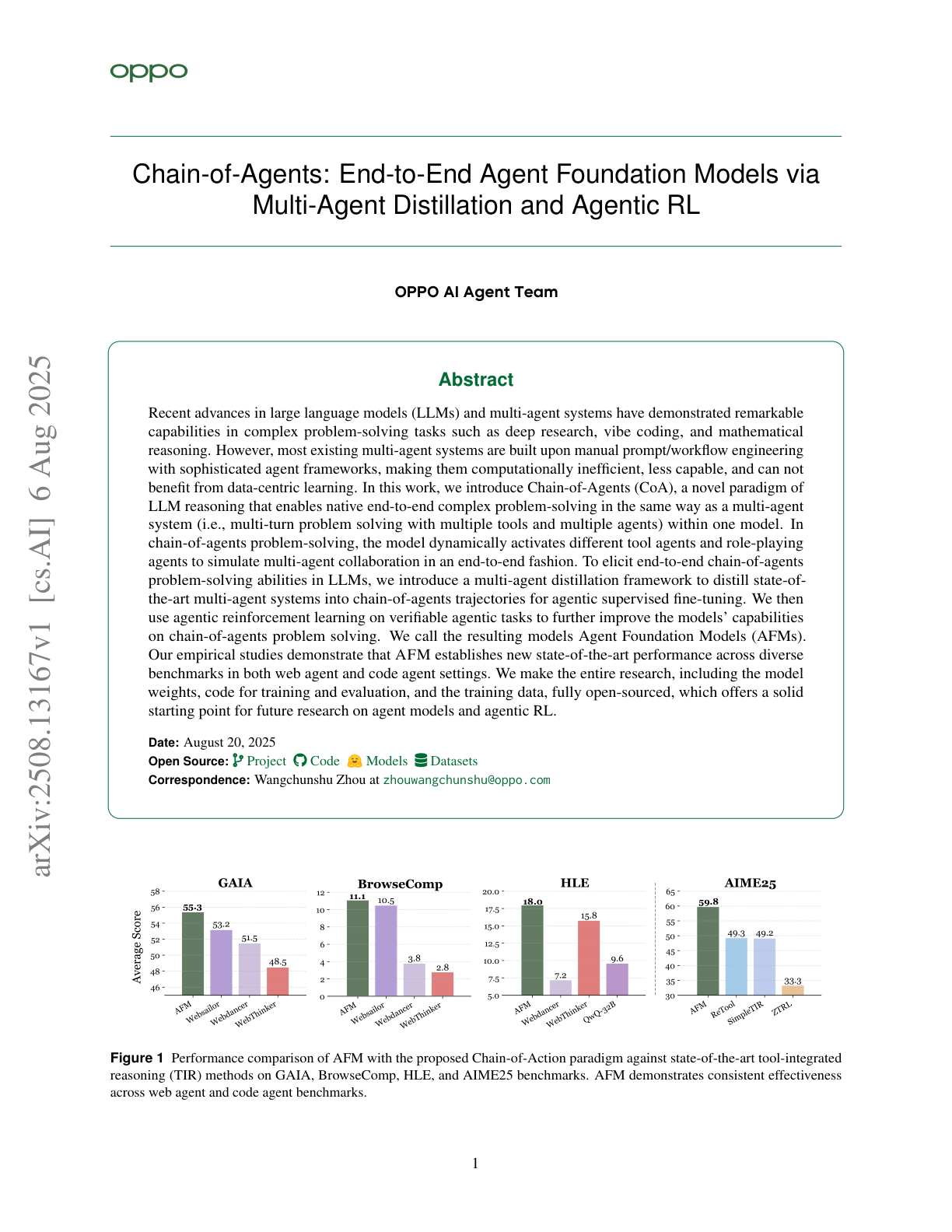
Chain-of-Agents
OPPO proposes training single models to natively behave like multi‑agent systems, coordinating role‑playing and tool agents end‑to‑end. They distill strong multi‑agent frameworks into CoA trajectories, then optimize with agentic RL on verifiable tasks. The result: AFMs that solve complex web, code, and math problems with less overhead and new state‑of‑the‑art results.
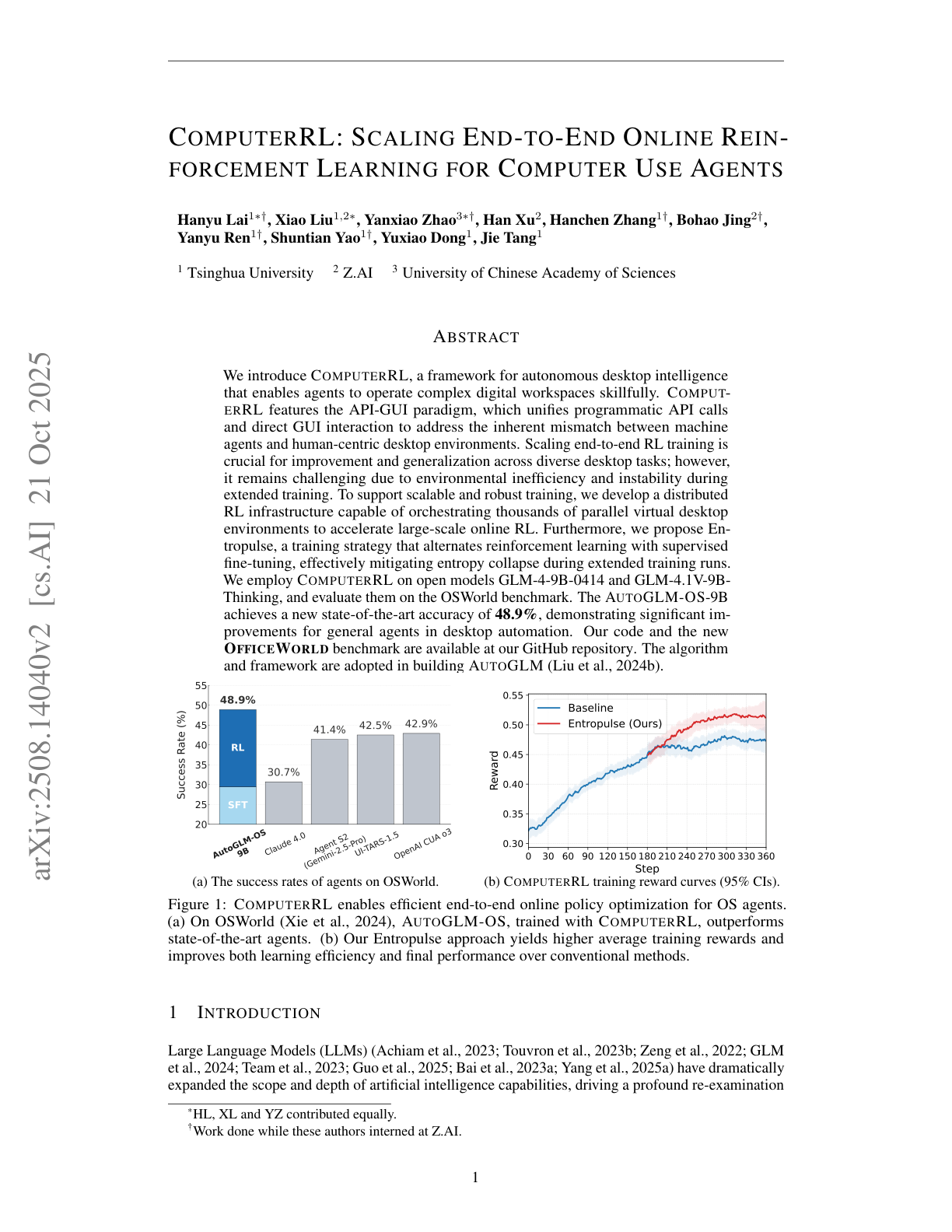
ComputerRL
A framework for autonomous desktop agents that unifies API calls with GUI actions, plus a scalable RL stack and a training recipe (Entropulse) that alternates RL and SFT to sustain exploration. Evaluated on OSWorld, it sets a new SOTA with strong gains in efficiency and robustness.
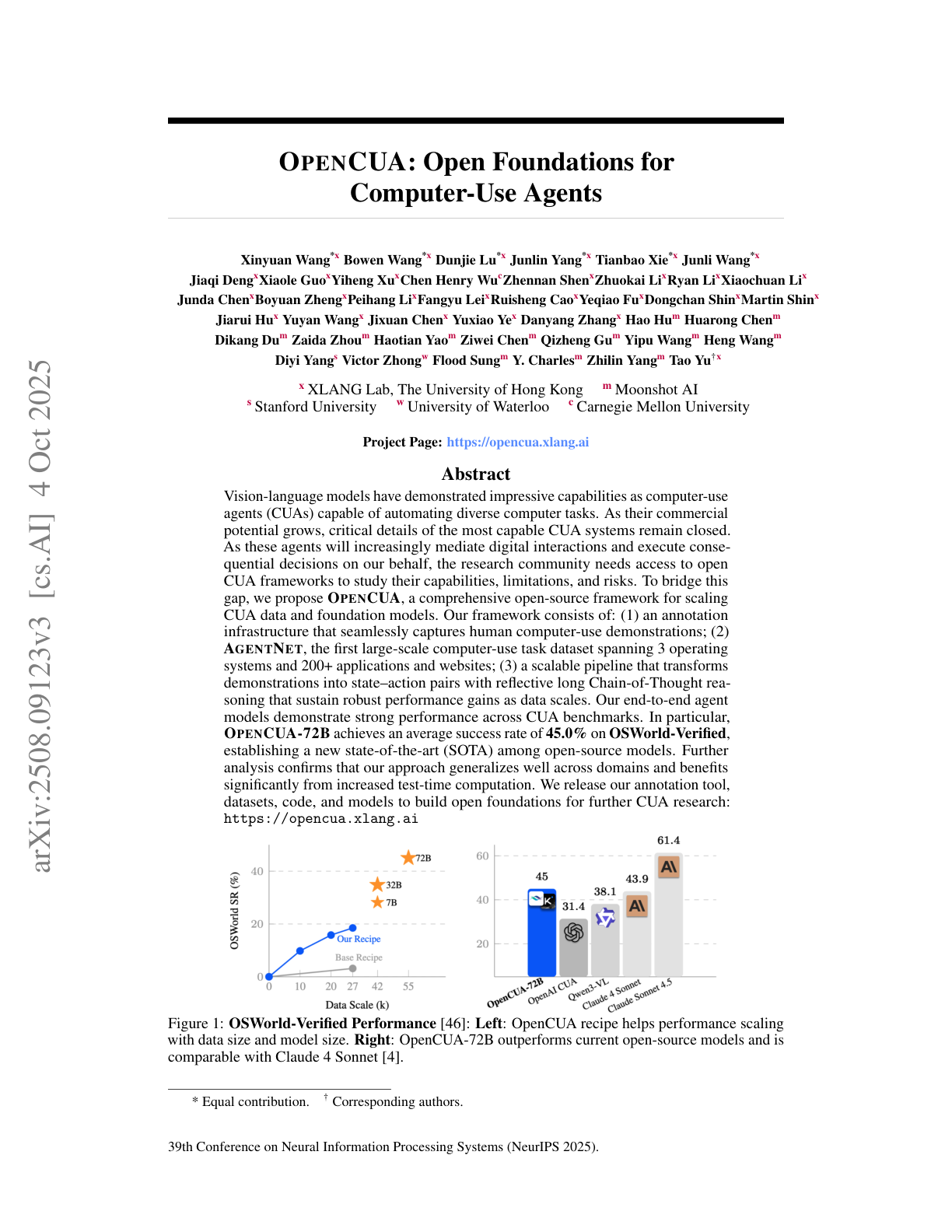
Open Foundations for Compute-Use Agents
This paper introduces an open-source framework for computer-use agents, featuring a large-scale dataset (AgentNet), annotation infrastructure, and reflective reasoning pipelines. Its 32B model sets a new SOTA on OSWorld-Verified with 34.8% success, surpassing OpenAI’s GPT-4o, and all resources are released to advance open CUA research.
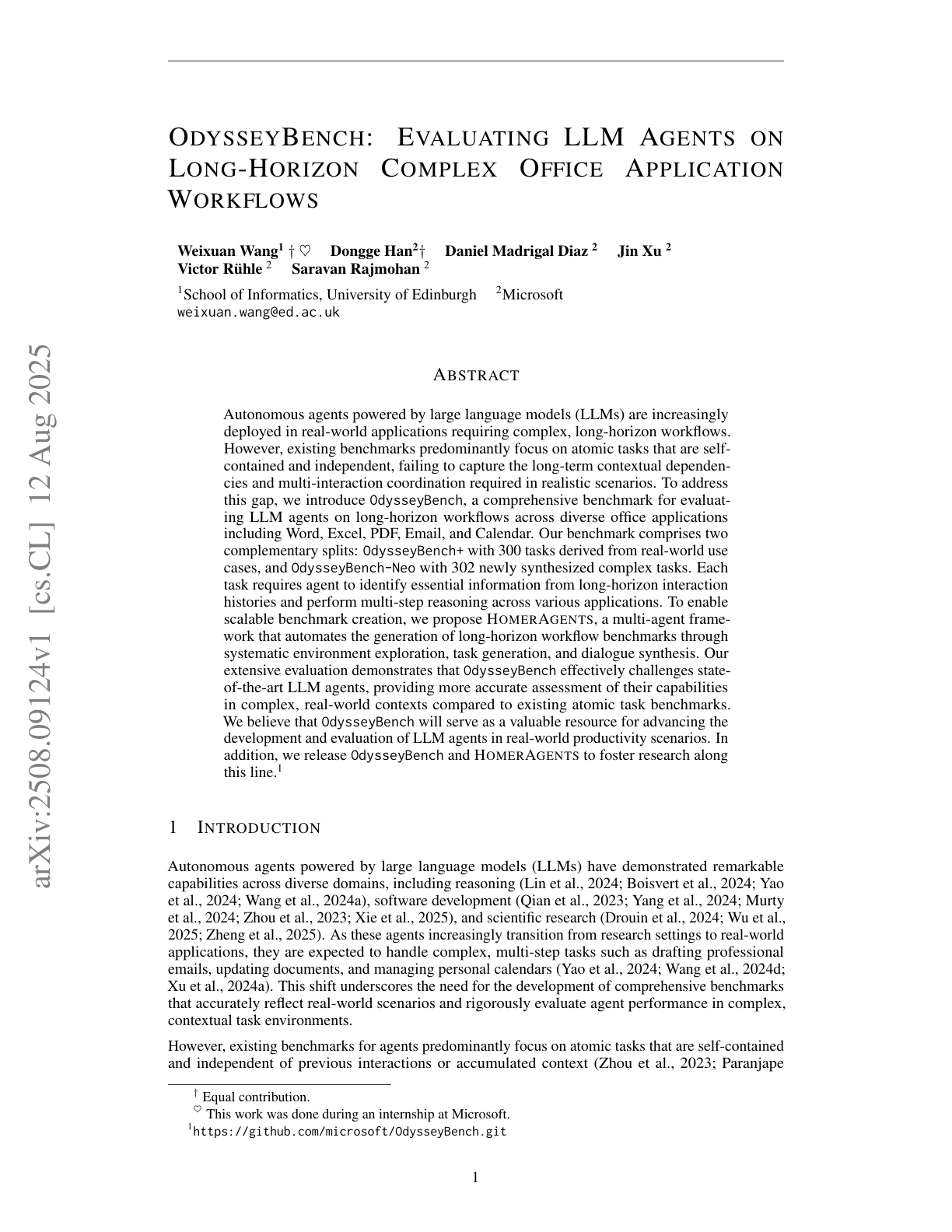
OdysseyBench
A new benchmark and data‑generation pipeline to test agents on realistic, multi‑day office tasks across Word, Excel, PDF, Email, and Calendar. It introduces OdysseyBench (two splits) and HOMERAGENTS (an automated multi‑agent generator), with evaluations showing large gaps between human and model performance and clear benefits from semantically compressed memory.
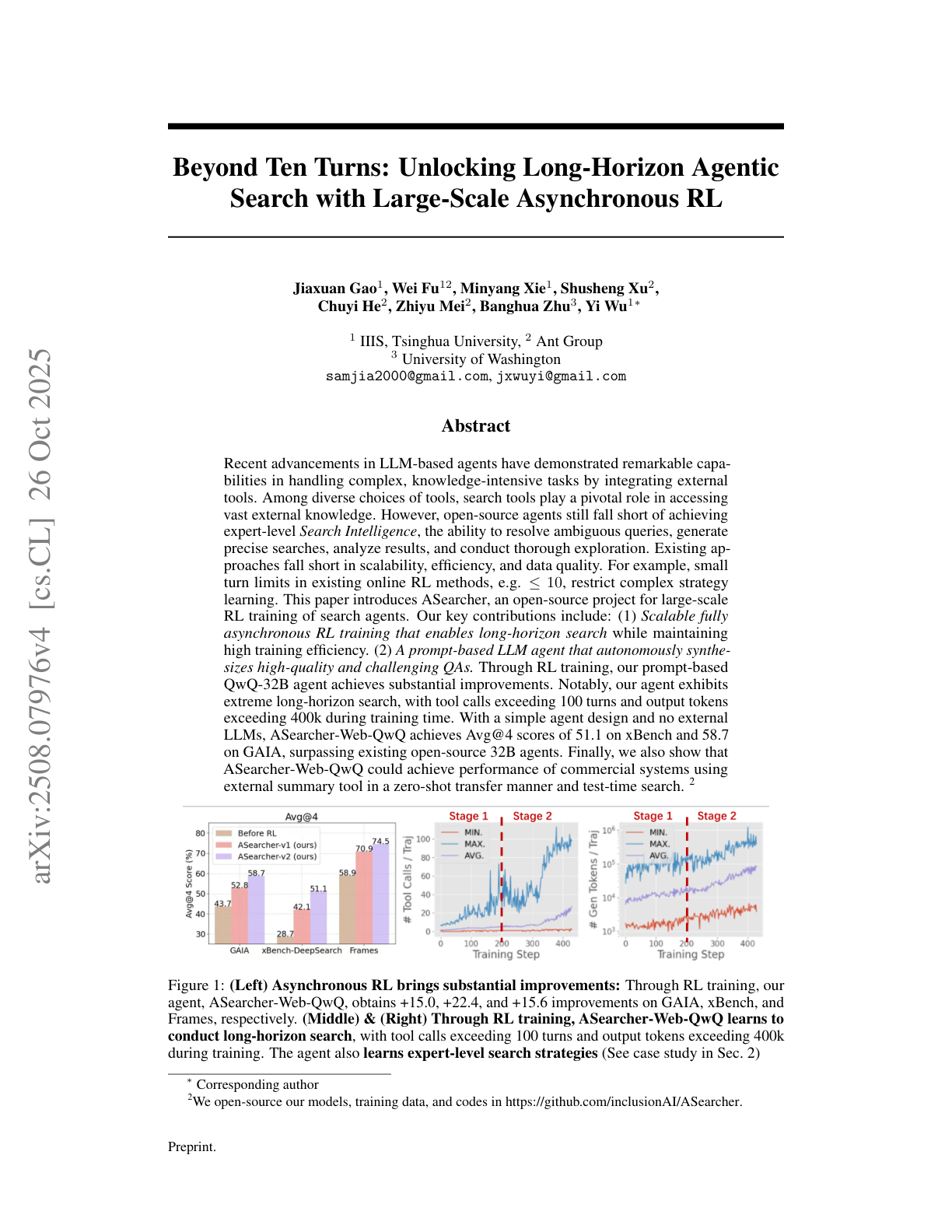
Beyond Ten Turns
This paper introduces ASearcher, an open-source framework for training LLM-based search agents capable of long-horizon, expert-level search. It addresses two major limitations in prior open-source approaches: short turn limits (≤10) and lack of large-scale, high-quality QA data.
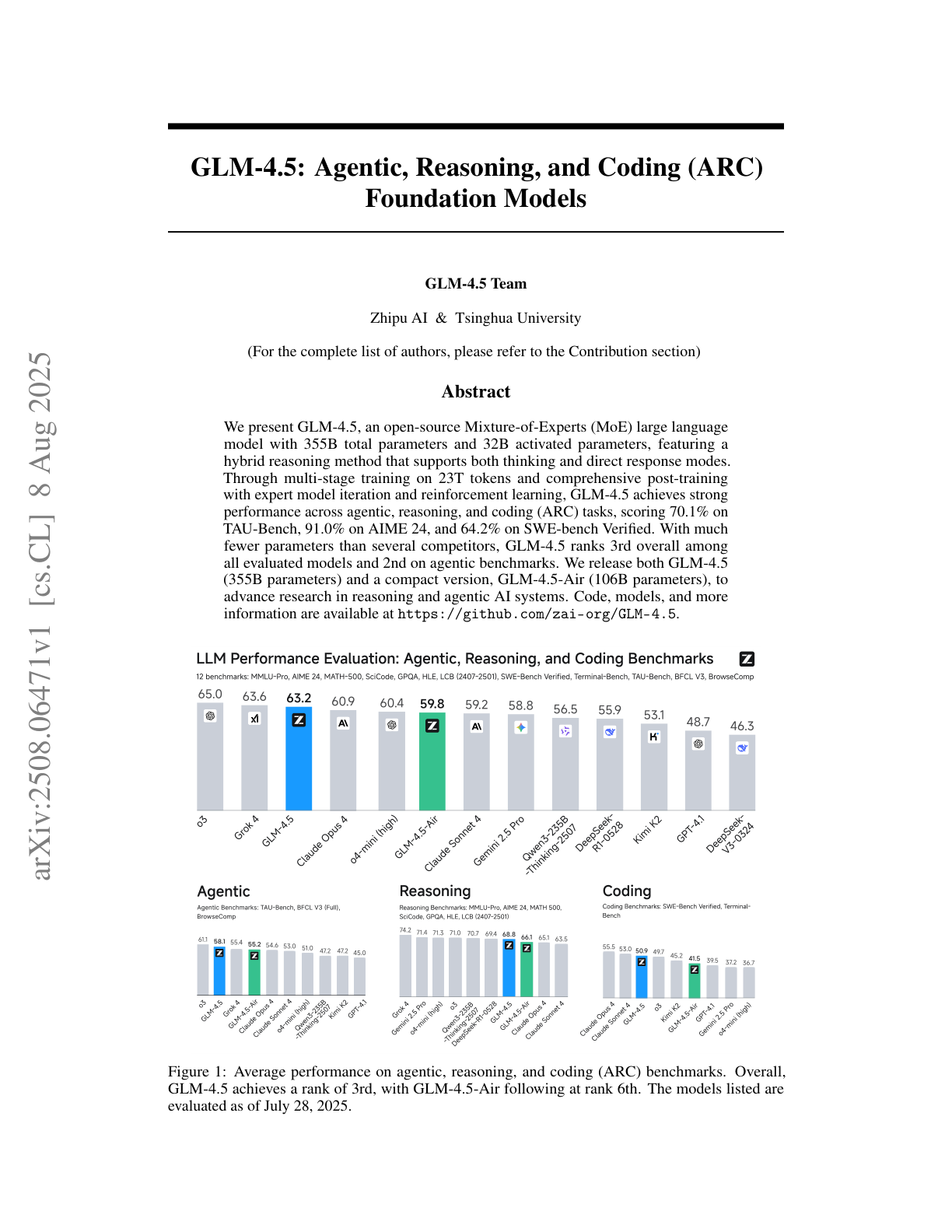
GLM-4.5
An open Mixture‑of‑Experts family that targets a single model excelling across agentic tool use, complex reasoning, and real‑world coding. GLM‑4.5 (355B total, 32B active) introduces hybrid “thinking vs direct” modes, multi‑stage pretrain + mid‑train to 128K context, and extensive RL for reasoning, agents, and instruction following. It ranks near the top on a 12‑bench ARC suite and releases weights and eval tooling.
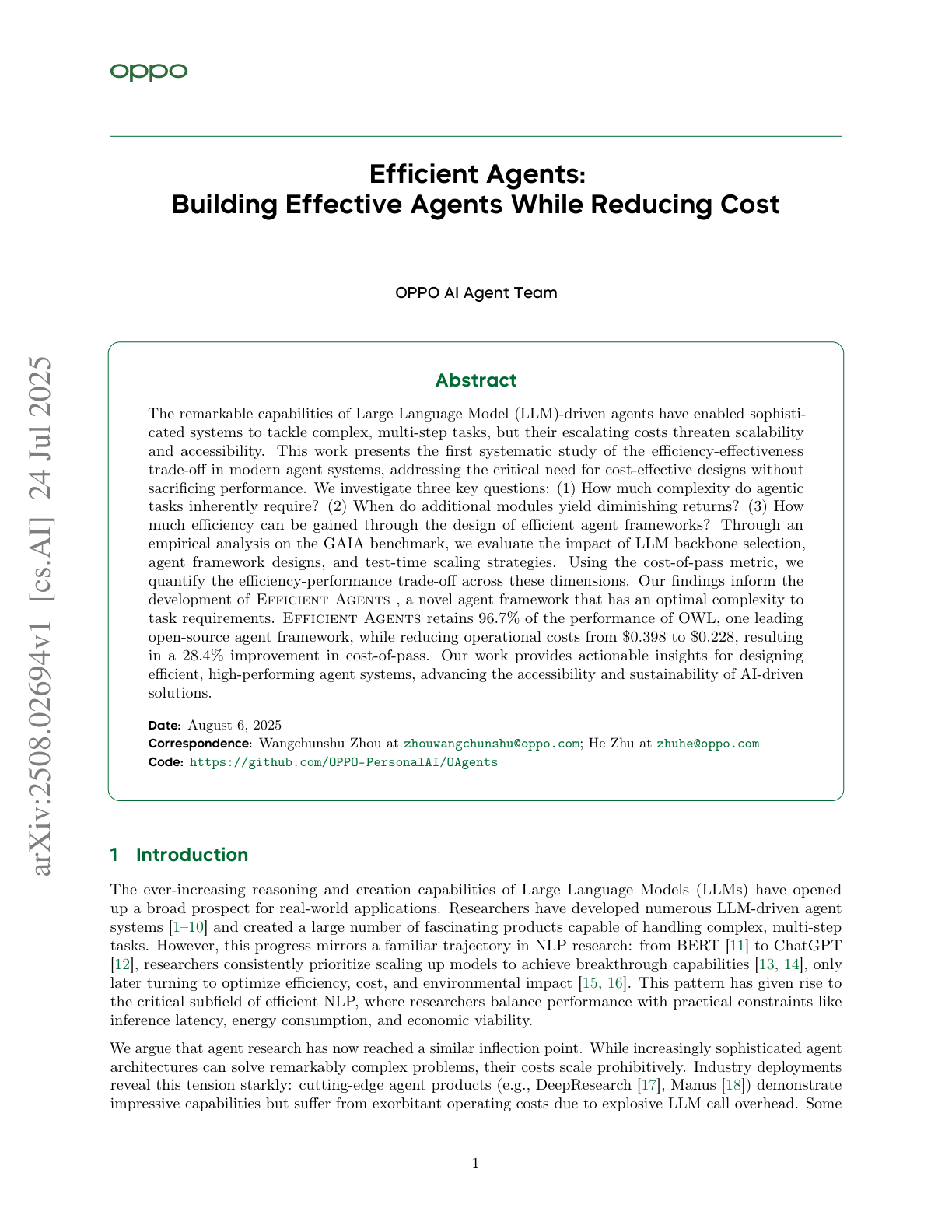
Efficient Agents
This paper presents Efficient Agents, a new agent framework that achieves a strong efficiency-effectiveness balance in LLM-driven systems. The authors perform the first systematic study of agent design choices through the lens of economic efficiency, specifically, the cost-of-pass metric, which captures the expected monetary cost of solving a task. Their proposed agent retains 96.7% of OWL’s performance on the GAIA benchmark while cutting costs by 28.4%.
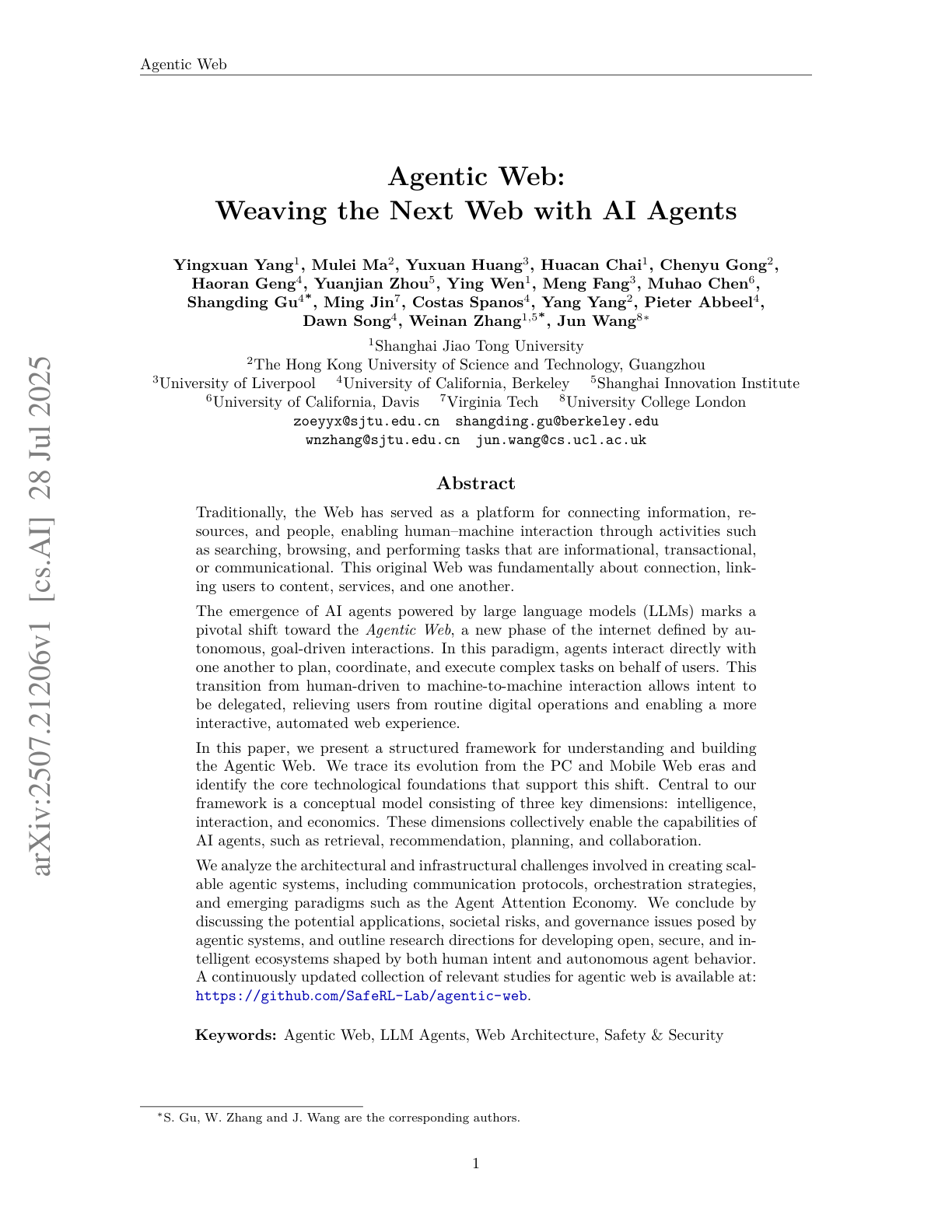
Agentic Web
This paper introduces the concept of the Agentic Web, a transformative vision of the internet where autonomous AI agents, powered by LLMs, act on behalf of users to plan, coordinate, and execute tasks. It proposes a structured framework for understanding this shift, situating it as a successor to the PC and Mobile Web eras. The Agentic Web is defined by a triplet of core dimensions, intelligence, interaction, and economics, and involves fundamental architectural and commercial transitions.
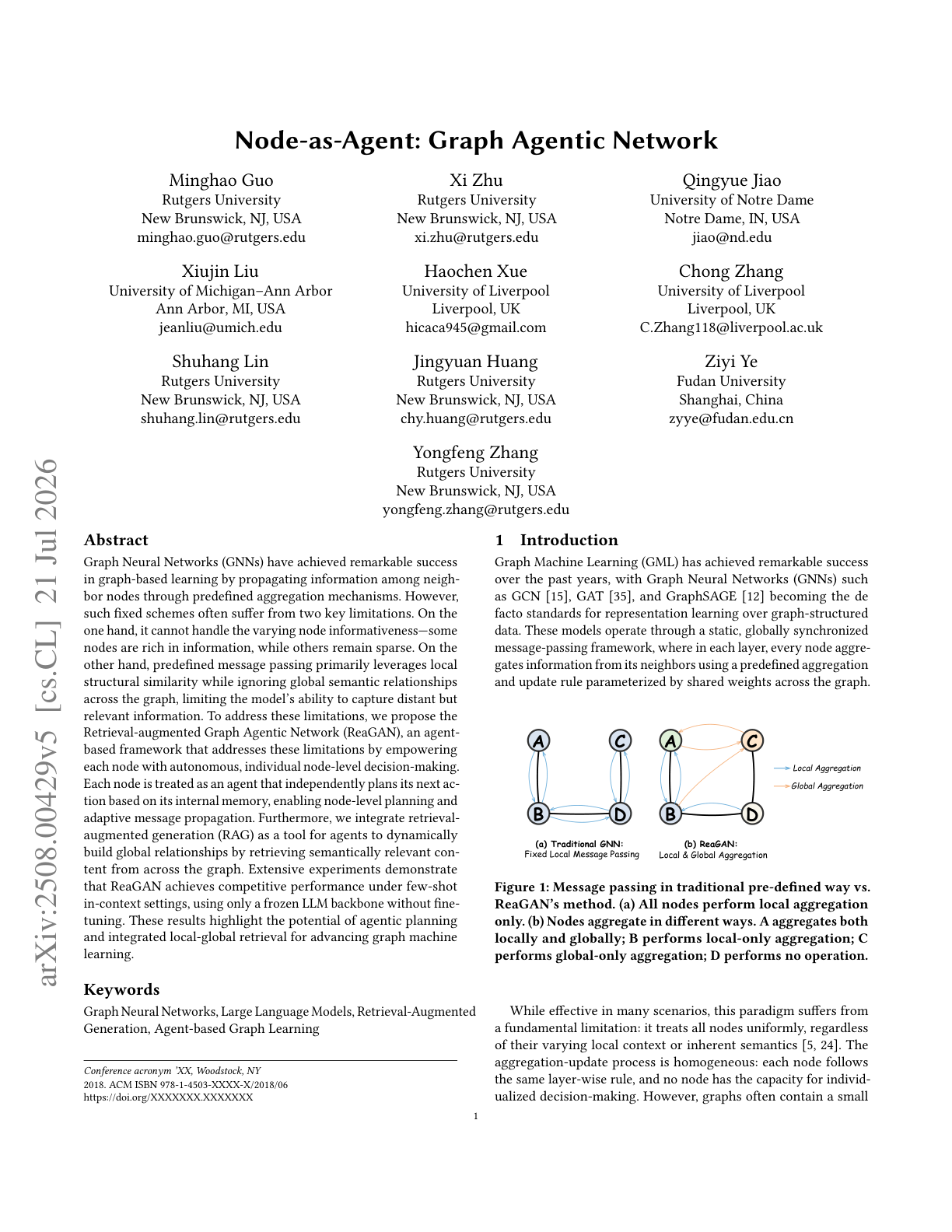
ReaGAN
This paper introduces ReaGAN, a graph learning framework that reconceptualizes each node in a graph as an autonomous agent capable of planning, reasoning, and acting via a frozen LLM. Instead of relying on static, layer-wise message passing, ReaGAN enables node-level autonomy, where each node independently decides whether to aggregate information from local neighbors, retrieve semantically similar but distant nodes, or take no action at all. This node-agent abstraction addresses two key challenges in graph learning: (1) handling varying informativeness of nodes and (2) combining local structure with global semantics.
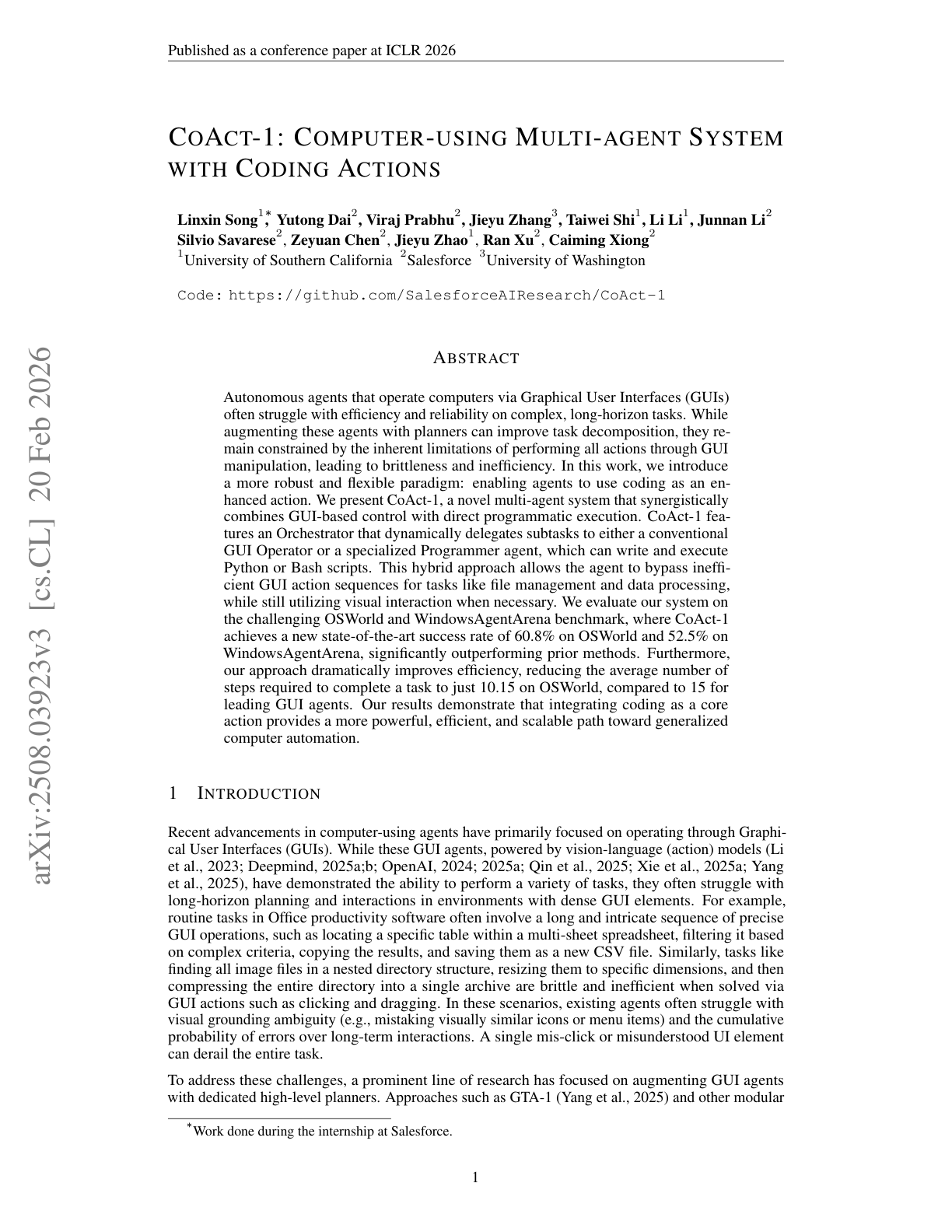
CoAct-1
Researchers from USC, Salesforce, and UW present CoAct-1, a multi-agent system that combines GUI interaction with direct code execution to improve efficiency and robustness in computer-using agents. Unlike prior GUI-only frameworks, CoAct-1’s Orchestrator delegates subtasks to either a GUI Operator (vision-language action model) or a Programmer (Python/Bash execution), enabling agents to bypass brittle, multi-click sequences for tasks better handled via scripts.
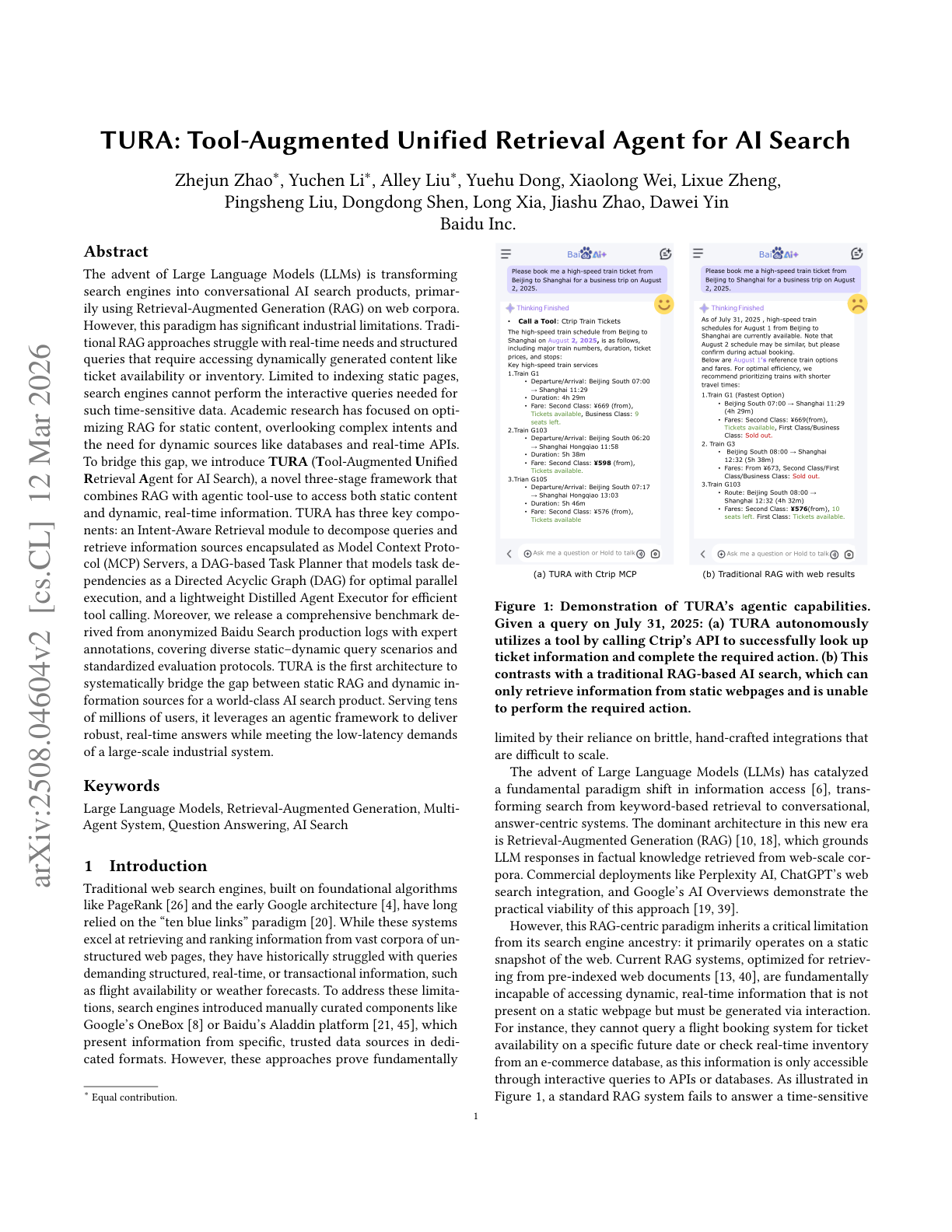
Tool-Augmented Unified Retrieval Agent for AI Search
Presents a production-ready framework that extends the RAG (Retrieval-Augmented Generation) paradigm to support real-time, dynamic, and transactional queries through agentic tool use. Unlike conventional RAG systems that rely on static web snapshots, TURA enables LLM-based systems to interact with external APIs and databases, addressing user intents that require up-to-date or structured information (e.g., train schedules, weather forecasts).
Medical Reasoning in the Era of LLMs
This review categorizes techniques for enhancing LLM medical reasoning into training-time (e.g., fine-tuning, RL) and test-time (e.g., prompt engineering, multi-agent systems) approaches, applied across modalities and clinical tasks. It highlights advances in evaluation methods, key challenges like the faithfulness–plausibility gap, and the need for native multimodal reasoning in future medical AI.
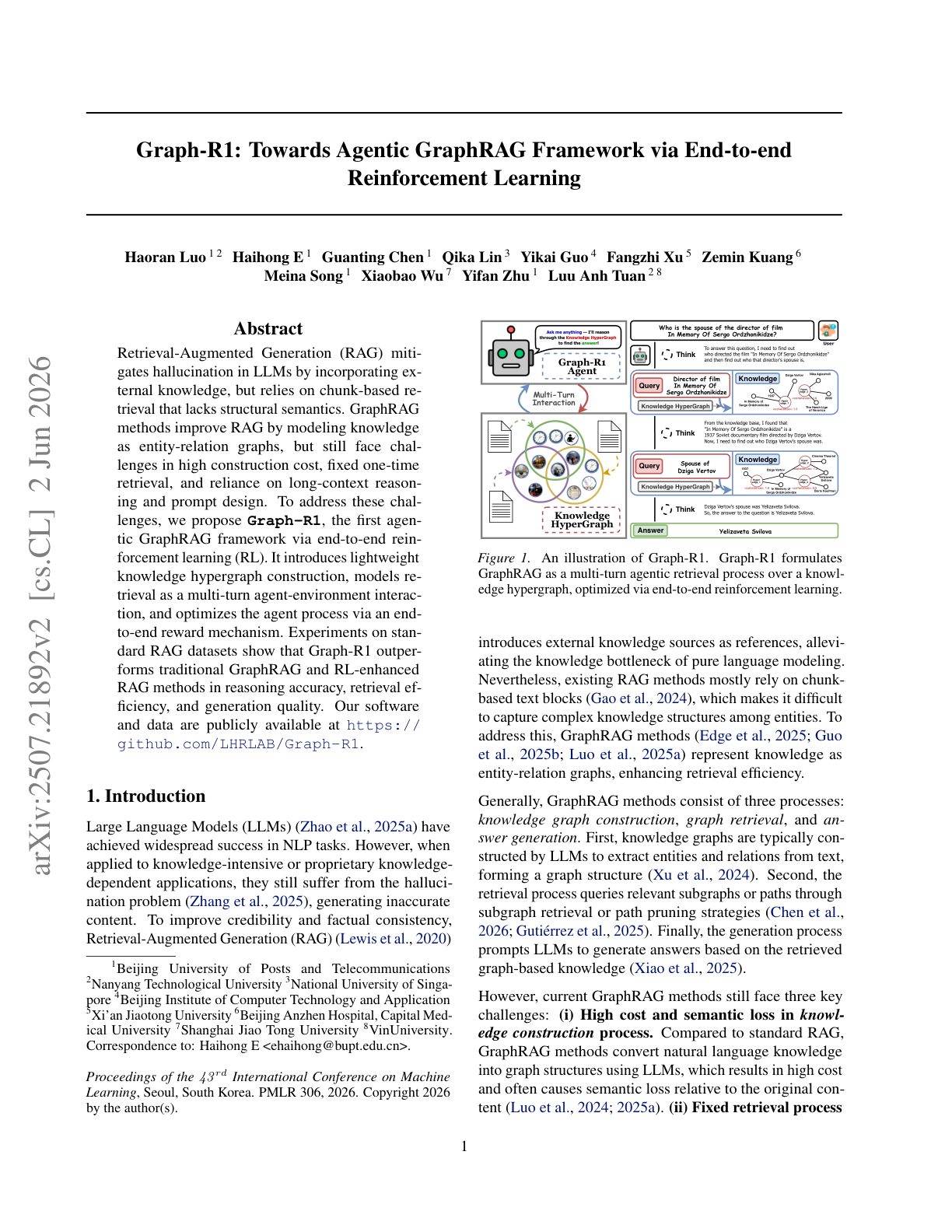
Graph-R1
Introduces a novel RAG framework that moves beyond traditional one-shot or chunk-based retrieval by integrating graph-structured knowledge, agentic multi-turn interaction, and RL. The core goal is to improve factual accuracy, retrieval efficiency, and reasoning quality in knowledge-intensive tasks.
Self-Evolving Agents
This survey offers a comprehensive review of self-evolving agents, framing the field around what, when, and how agents evolve across models, memory, tools, and interactions. It highlights adaptation mechanisms, evaluation methods, and real-world applications, positioning self-evolution as a key step toward achieving Artificial Super Intelligence (ASI).
Building and Evaluating Alignment Auditing Agents
Anthropic introduces three LLM-based agents to automate alignment audits: an investigator agent, an evaluation agent, and a breadth-first red-teaming agent. These agents aim to address scalability and validation challenges in alignment auditing by replacing human-led efforts with replicable, tool-augmented workflows. Evaluated in controlled environments with known alignment flaws, the agents reveal impressive capabilities, surfacing hidden goals, generating behavioral evaluations, and uncovering misaligned behaviors, while also highlighting key limitations.
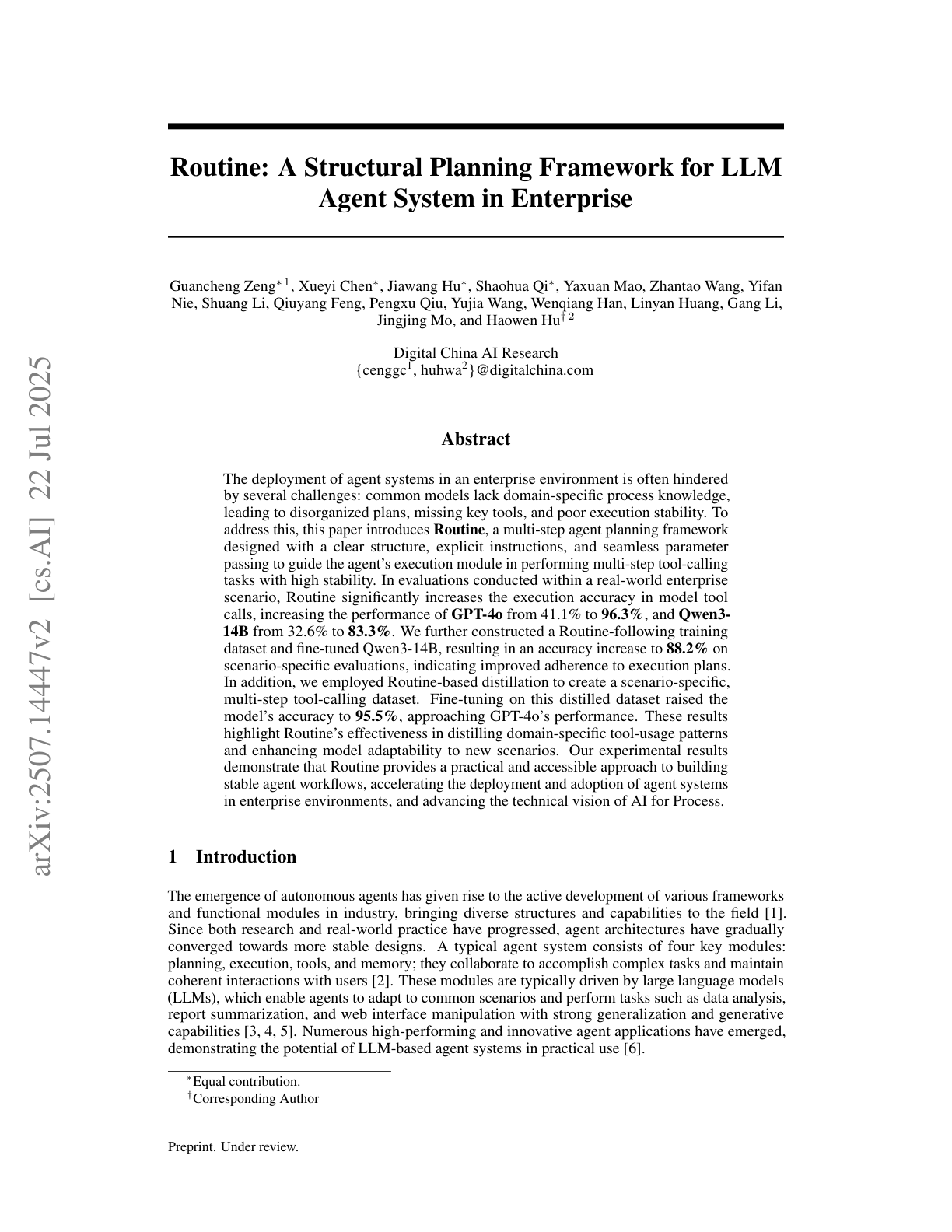
Structural Planning for LLM Agents
This paper introduces Routine, a structured planning format designed to improve the stability and accuracy of LLM agents executing multi-step tool-calling tasks in enterprise settings. Traditional agent planning approaches often fail in enterprise scenarios due to unstructured plans, weak instruction following, and tool selection errors. Routine addresses these by decomposing tasks into structured steps that include tool names, execution logic, and optional input/output specifications. The authors evaluate Routine on real-world HR scenarios and show strong performance gains in both open and fine-tuned models.
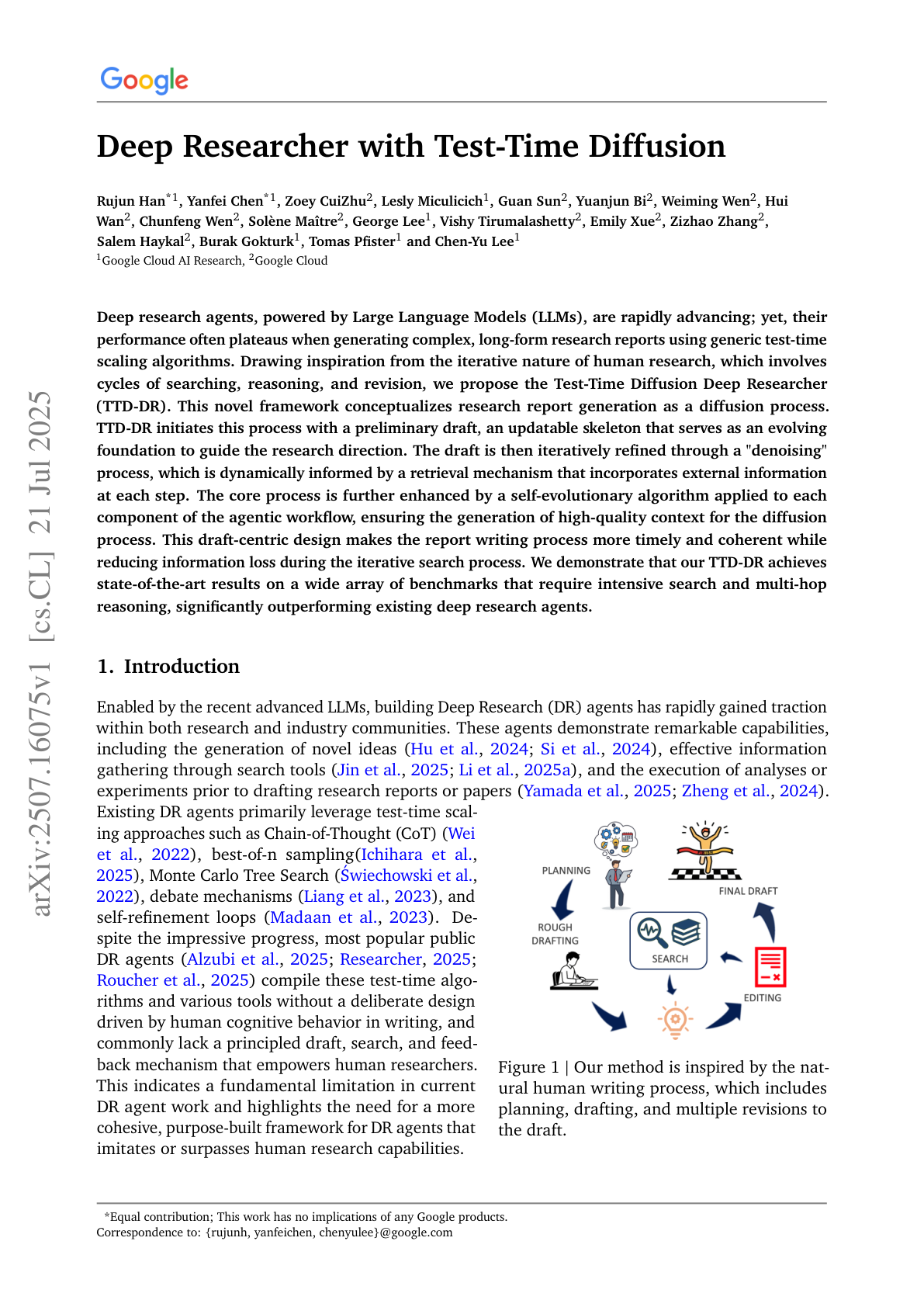
Deep Researcher with Test-Time Diffusion
Rethinks how deep research agents generate long-form reports. Rather than relying on static inference strategies like Chain-of-Thought or best-of-n sampling, TTD-DR frames the report generation process as a diffusion process. It starts with a noisy draft and iteratively refines it through retrieval-enhanced denoising, guided by a structured plan. This iterative loop mimics how human researchers search, reason, revise, and accumulate context over time.
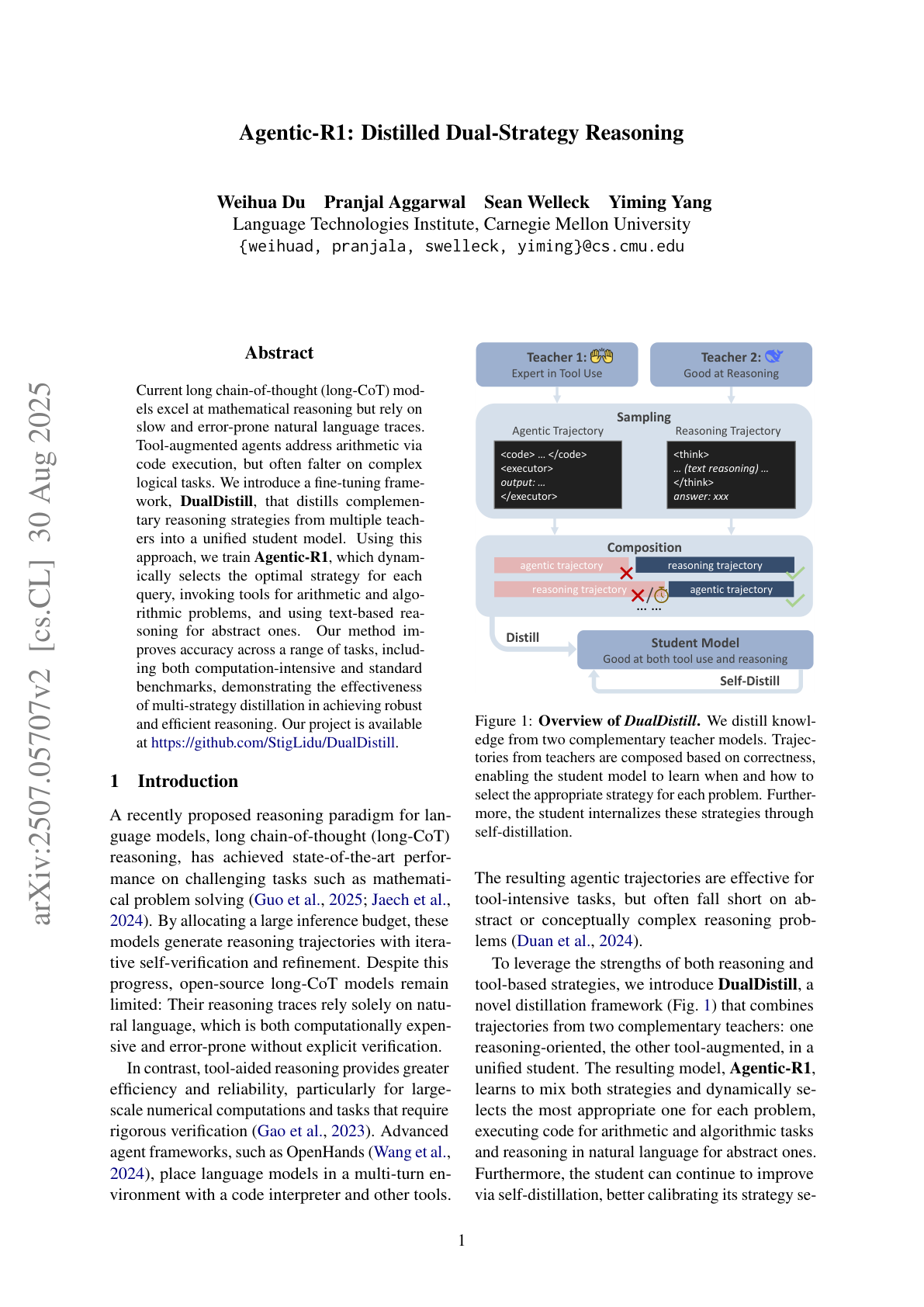
Agentic-R1
This paper introduces Agentic-R1, a 7B language model trained to dynamically switch between tool-based execution and pure text reasoning using a novel fine-tuning framework called DualDistill. Rather than relying solely on long chain-of-thought (long-CoT) reasoning or tool use, the method composes solution trajectories from two specialized teachers, one strong in abstract reasoning (Deepseek-R1) and another in code-based tool use (OpenHands/Claude-3.5). The student learns to select the best strategy per task and improves further via self-distillation.
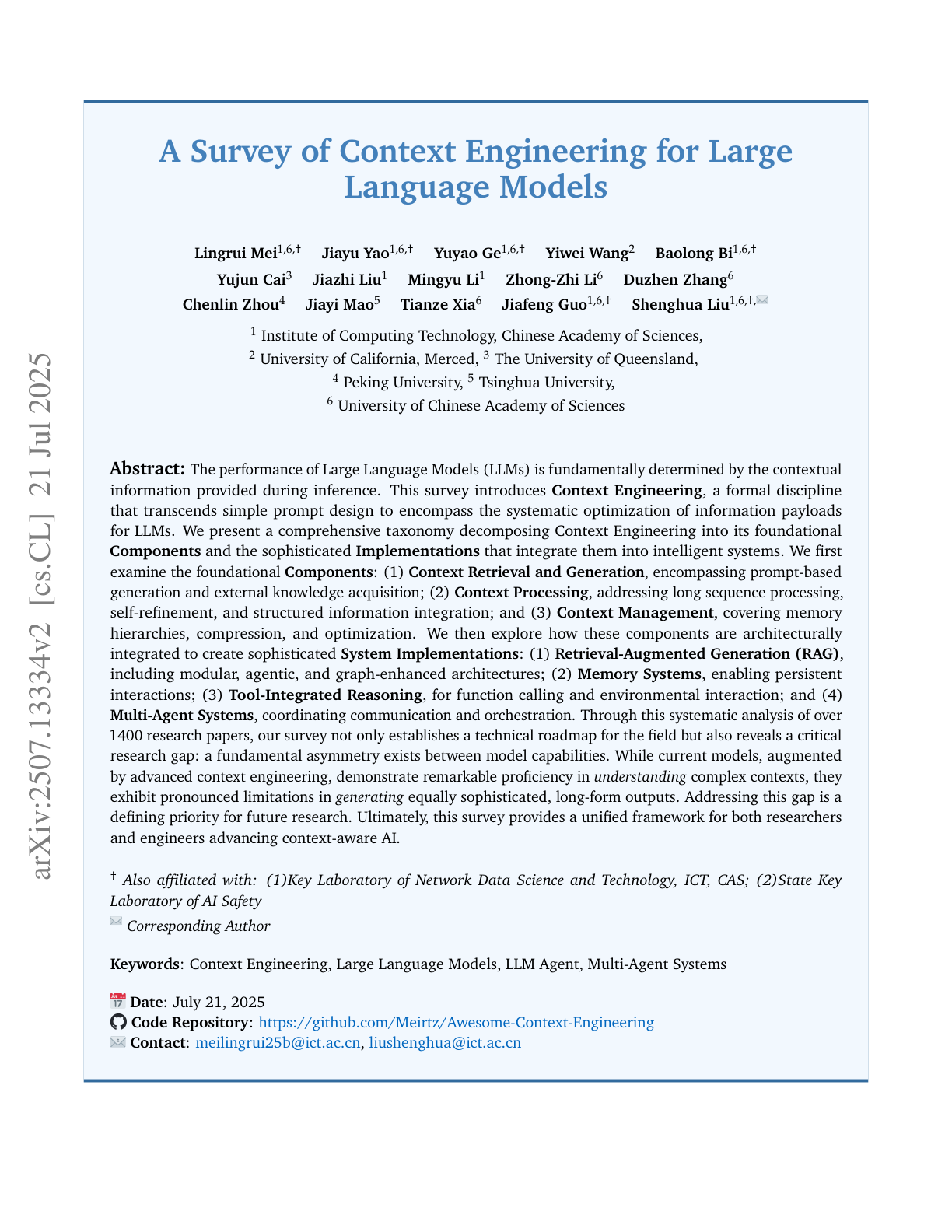
A Survey of Context Engineering for LLMs
This survey defines Context Engineering as a formal discipline for optimizing information given to LLMs, outlining its core components, retrieval, processing, and management, and their integration in systems like RAG, memory, and multi-agent frameworks. It identifies a key gap: LLMs can understand complex input but struggle to generate equally complex long-form output, pointing to a major direction for future research.
Kimi K2
Moonshot AI introduces Kimi K2, a 1T parameter Mixture-of-Experts model (32B active) optimized not just for knowledge tasks but for agentic capabilities, models that act, not just respond. Released as Kimi-K2-Base and Kimi-K2-Instruct, it achieves strong scores across coding, math, and tool-use benchmarks and is open-source for research and deployment.
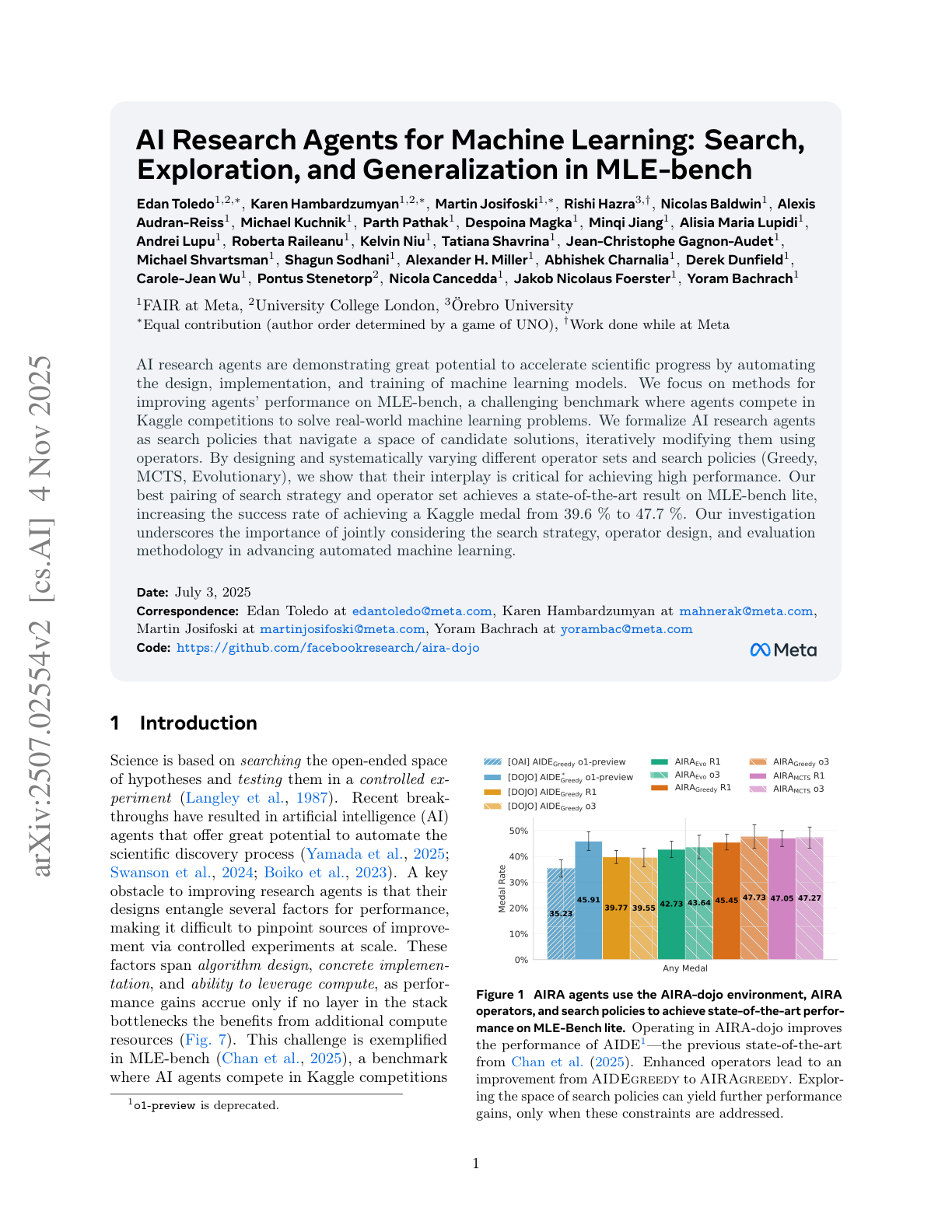
AI Research Agents for Machine Learning
Presents a new framework, AIRA-dojo, for developing and evaluating AI research agents. They use this framework to systematically investigate the components of successful AI agents on the MLE-bench benchmark, a challenging set of real-world machine learning problems from Kaggle. Key findings:
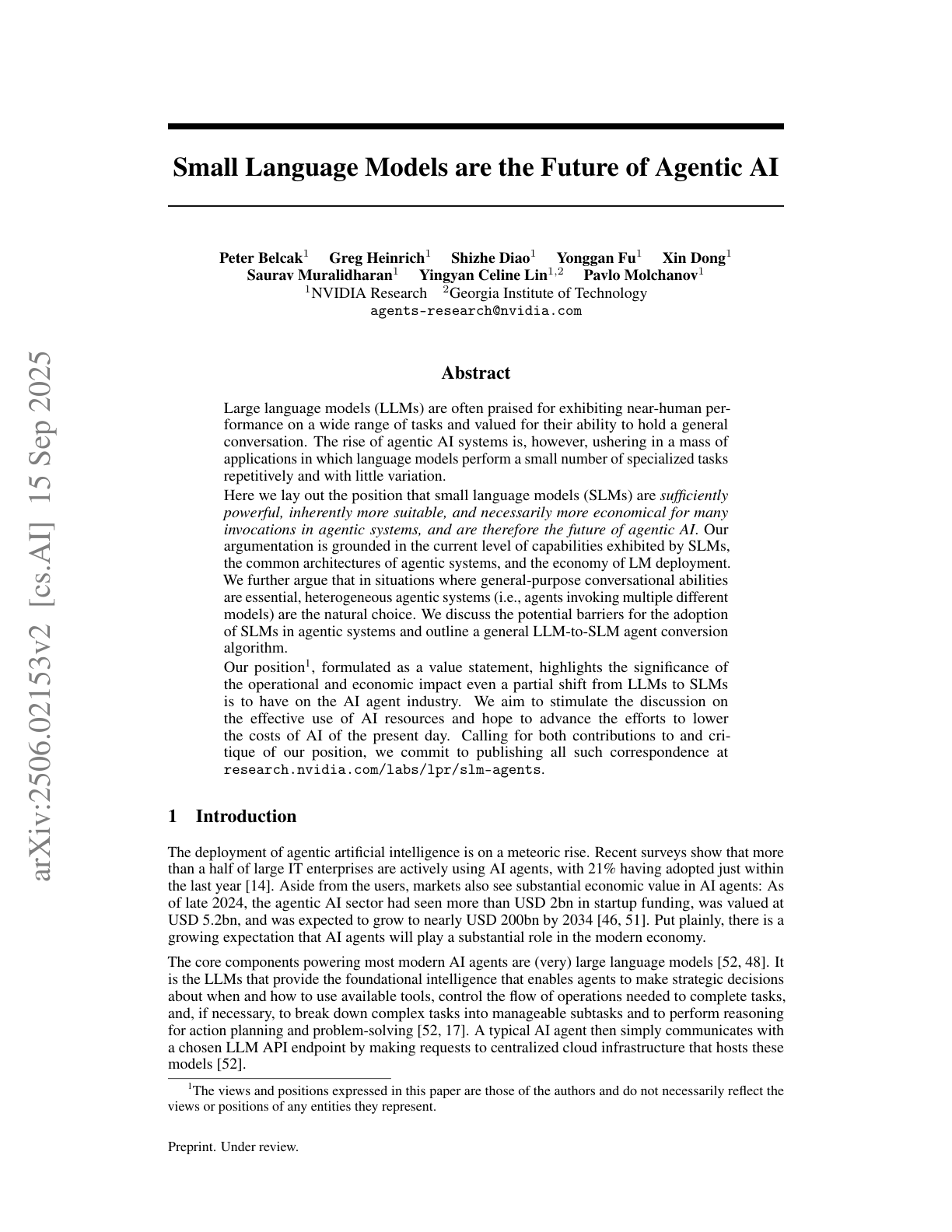
Small Language Models are the Future of Agentic AI
This position paper argues that small language models (SLMs), defined as those runnable on consumer-grade hardware, are not only sufficient but superior for many agentic AI applications, especially when tasks are narrow, repetitive, or tool-oriented. The authors propose that shifting from LLM-first to SLM-first architectures will yield major gains in efficiency, modularity, and sustainability.